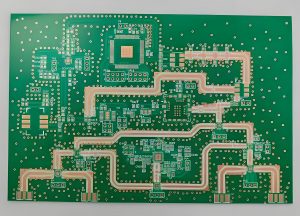
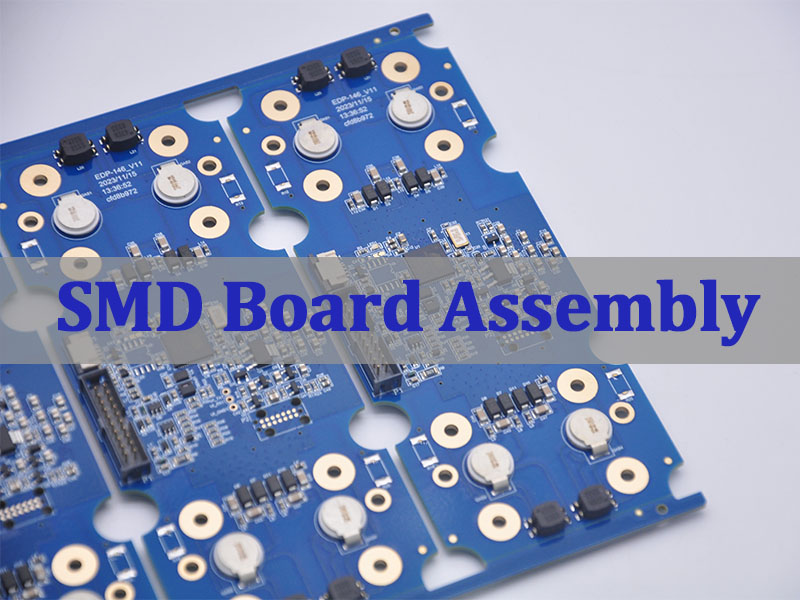
Electronics NPI services help new products reach production without avoidable late-stage surprises. Delays often begin when stack-up issues, unavailable components, assembly constraints, or test requirements are discovered only after production has been scheduled.
EBest Circuit provides electronics NPI services in China covering PCB manufacturability review, PCB fabrication, BOM sourcing, SMT and through-hole assembly, inspection, programming, and customer-defined testing assistance. Send your project package to sales@bestpcbs.com to identify manufacturing and sourcing risks before placing the order.
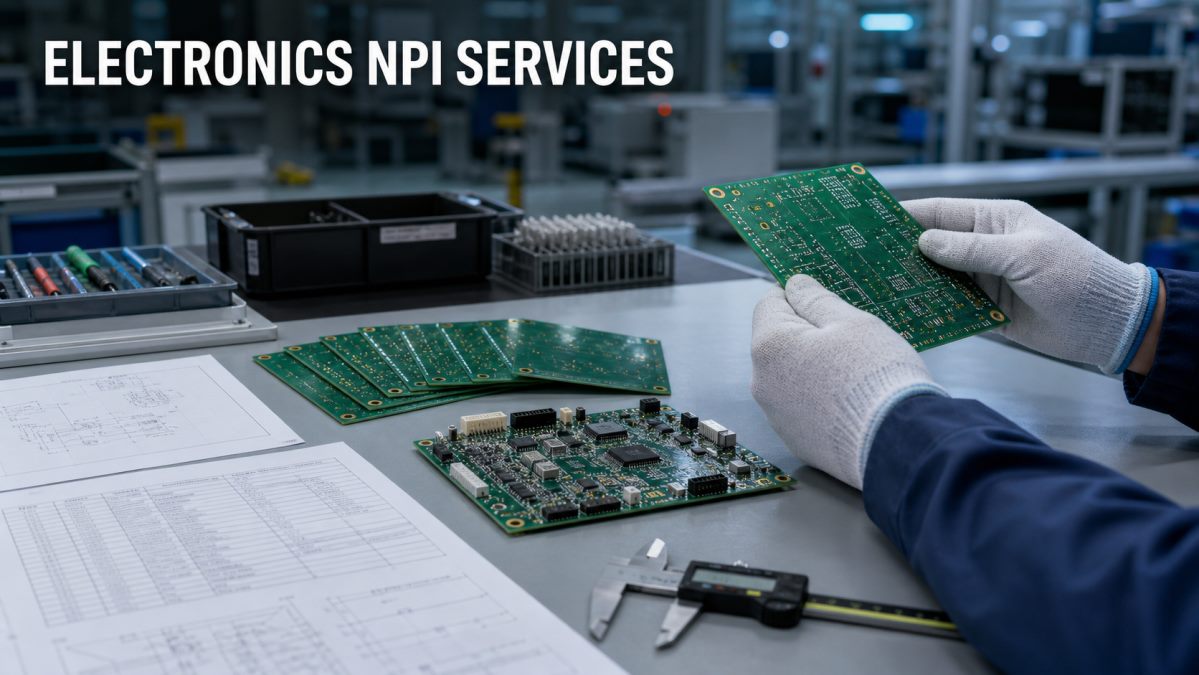
Why Buy Electronics NPI Services in China?
The commercial value is not simply access to lower manufacturing costs. The larger benefit is having PCB fabrication, component sourcing, assembly, inspection, and shipment planning reviewed as one connected order.
When those activities are divided among unrelated suppliers, each handoff creates another place for assumptions to change. The PCB fabricator may approve a stack-up that the assembly supplier has not reviewed. The sourcing company may propose a component substitution without checking package, lifecycle, or assembly constraints. Test requirements may arrive only after the first boards have been assembled.
A coordinated NPI scope can reduce these avoidable handoffs:
- one controlled PCB and PCBA revision for quotation and production;
- earlier confirmation of board materials, stack-up, surface finish, and special processes;
- BOM availability and substitution questions raised before purchasing;
- assembly and inspection requirements reviewed before the pilot build;
- one documented route for engineering questions and customer approvals;
- clearer responsibility for packaging, shipment, and production records.
For overseas customers, this coordination can also reduce repeated communication, separate shipments, and duplicated logistics work. It does not remove the customer’s responsibility for product design, certification, firmware, or final product validation. It gives the released design a clearer path through PCB and PCBA manufacturing.
What Should NPI Contract Manufacturing Include?
A useful NPI quotation should show exactly what the supplier will deliver. Two prices cannot be compared fairly if one covers only bare PCB fabrication while the other includes sourcing, assembly, X-ray inspection, and testing assistance.
Define the manufacturing scope before comparing prices:
- PCB layout manufacturability review against the released data;
- bare PCB fabrication and the agreed material or stack-up;
- BOM sourcing responsibility and approved substitution rules;
- customer-supplied component handling, when applicable;
- SMT and through-hole assembly;
- cleaning, conformal coating, depaneling, or other specified processes;
- AOI, X-ray, electrical inspection, and workmanship acceptance requirements;
- programming or customer-defined functional testing assistance;
- reports, traceability, packaging, and shipment requirements.
EBest Circuit focuses on PCB and PCBA manufacturing execution. Your product-development team can continue managing circuit design, firmware, RF architecture, certification, and final product compliance with its chosen specialists. This division gives each team a clear role while keeping manufacturing questions connected to the actual files and order requirements.
Can Your Supplier Handle the PCB Technologies in Your NPI Builds?
An NPI supplier should be selected for the actual board, not for a general claim such as “we manufacture multilayer PCBs.” A prototype can stall after quotation if the supplier later discovers that the requested bend area, ceramic construction, copper weight, impedance geometry, or material combination does not fit its process.
Confirm technology fit while changes are still manageable:
- FPC and rigid-flex PCB: review bend regions, stiffeners, coverlay openings, flex-to-rigid transitions, and assembly handling;
- HDI PCB: confirm microvia structure, sequential lamination, via filling, registration, and stack-up feasibility;
- high-frequency PCB: confirm the specified laminate, copper profile, stack-up, impedance requirements, and material availability;
- thick-copper PCB: review copper weight, spacing, thermal balance, finished thickness, and assembly implications;
- ceramic PCB: confirm substrate type, metallization, dimensional requirements, and process availability;
- MCPCB: review dielectric construction, copper thickness, thermal path, board flatness, and assembly requirements;
- extra-thin PCB: confirm handling, panelization, warpage control, and thickness tolerance;
- PCBA: review component packages, polarity, clearances, soldering process, inspection access, and test points.
Keep fine-pitch and mixed-technology assembly within one reviewed workflow:
| Assembly item | Capability |
|---|---|
| Minimum SMD component | 01005 |
| Minimum BGA pitch | 0.25 mm |
| Assembly types | SMT, THT, and mixed assembly |
| Component packaging | Reels, cut tape, tubes, trays, and approved loose parts |
These figures are useful starting points, but each project still needs a file review. Pad geometry, stencil design, moisture sensitivity, reflow compatibility, board warpage, and inspection access may affect the final process.
Your product team defines the electrical, thermal, mechanical, and compliance requirements. EBest Circuit reviews whether the proposed construction can be manufactured, identifies conflicts, and requests confirmation before a material or process change is made.
This early check is especially valuable for medical, industrial-control, automotive, communications, AI-hardware, semiconductor, sensor, and LED projects, where a late material or process change can affect more than the PCB price. It may force another assembly trial, another approval cycle, or a revised delivery commitment.
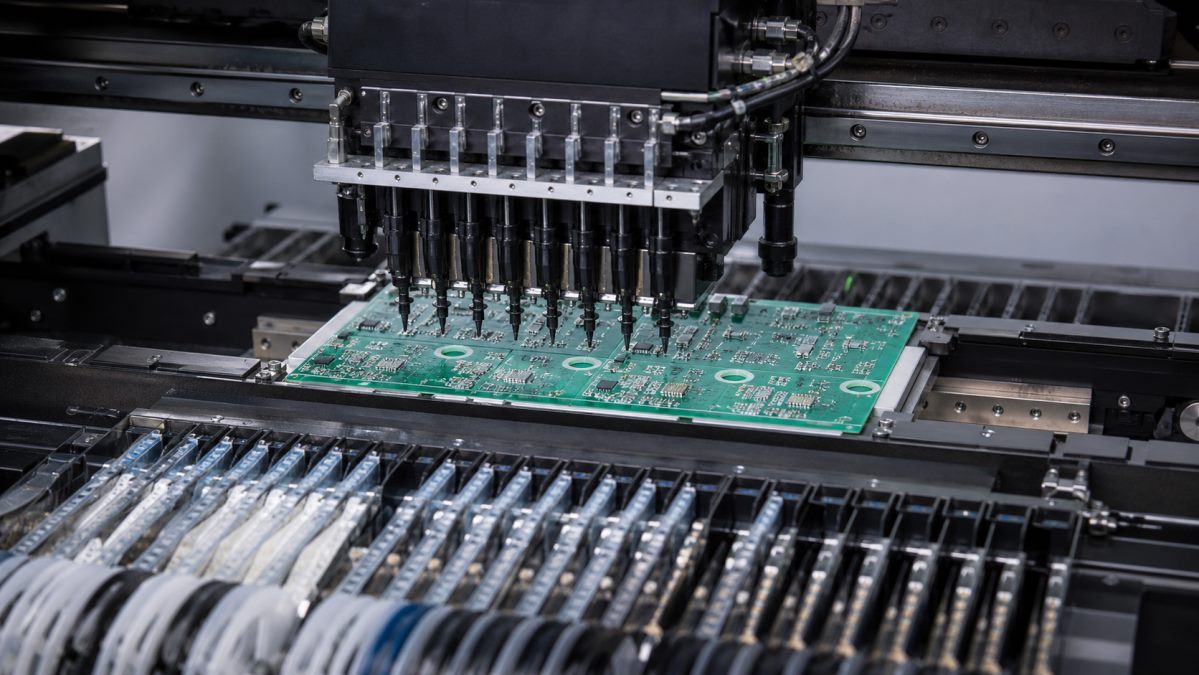
How Will Your Supplier Control the NPI Supply Chain Process?
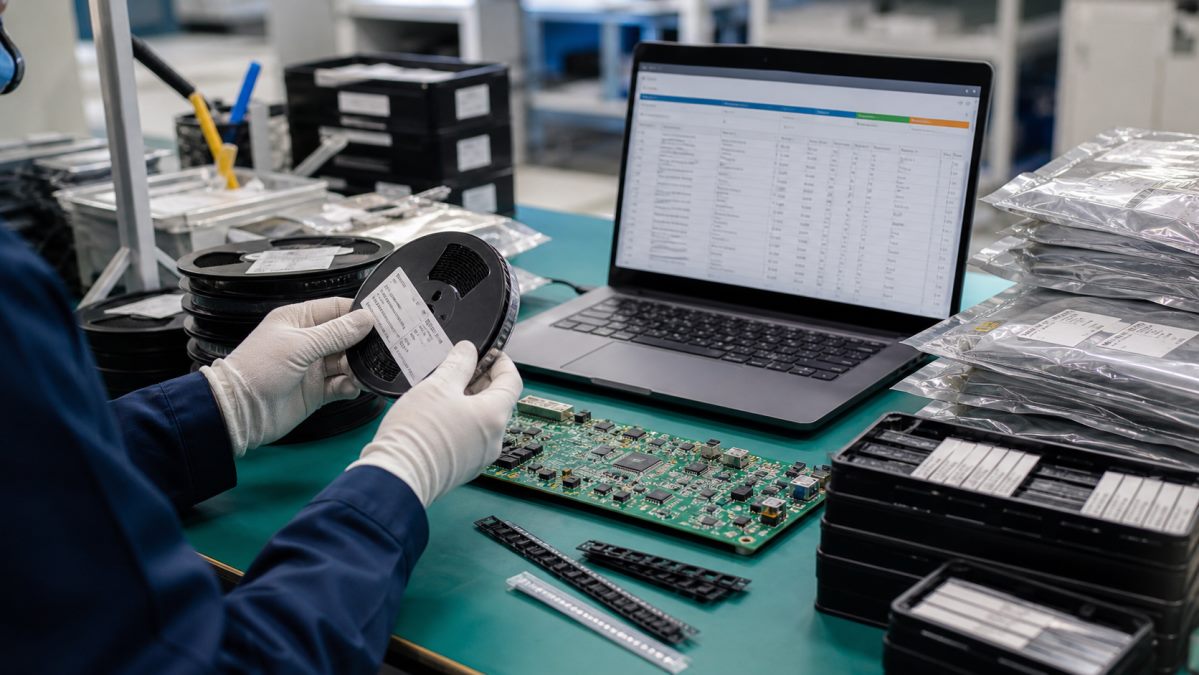
A buildable PCB does not guarantee a buildable PCBA. Component availability, package compatibility, moisture sensitivity, lifecycle status, and approved-alternative rules can stop the order after PCB production has already started.
A controlled NPI supply chain process should make these risks visible before purchasing:
- manufacturer name and exact manufacturer part number for each BOM line;
- quantities, reference designators, and do-not-install items;
- lifecycle, availability, and lead-time review for critical parts;
- package, value, tolerance, voltage, and temperature-rating checks;
- approved alternates and the person authorized to approve deviations;
- customer-supplied parts, expected arrival date, and incoming condition;
- moisture-sensitive and special-storage requirements;
- traceability or date-code requirements;
- shortage, minimum-order, and excess-material assumptions.
A low unit price is not helpful if it depends on an unapproved substitute or an unrealistic component lead time. Ask the supplier to separate confirmed material, proposed alternatives, and unresolved lines in the quotation.
For a pilot order, it is also useful to identify which components may limit repeat production. If a prototype depends on obsolete, broker-sourced, or allocation-controlled parts, your team should know that before approving the production plan.
What Must NPI Prototyping Prove Before Production?
The purpose of NPI prototyping is not merely to produce a small quantity of working boards. It should provide evidence that the released PCB and PCBA package can be manufactured, inspected, and repeated under the agreed conditions.
Use the prototype or pilot build to close practical manufacturing questions:
- Does the fabricated PCB match the approved material, stack-up, thickness, finish, and impedance requirements?
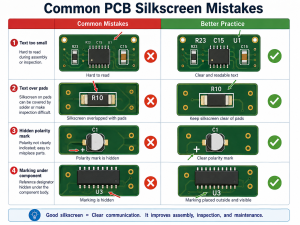
- Do components fit the footprints, polarity markings, and mechanical clearances?
- Can the assembly be soldered without unacceptable bridging, voiding, opens, or thermal damage?
- Are fine-pitch, BGA, QFN, connector, and through-hole areas accessible to the required process and inspection methods?
- Is the panelization suitable for assembly, depaneling, and handling?
- Can the agreed inspection and test steps be completed with the available files, fixtures, firmware, and limits?
- Are deviations, rework, and customer approvals recorded against the correct revision?
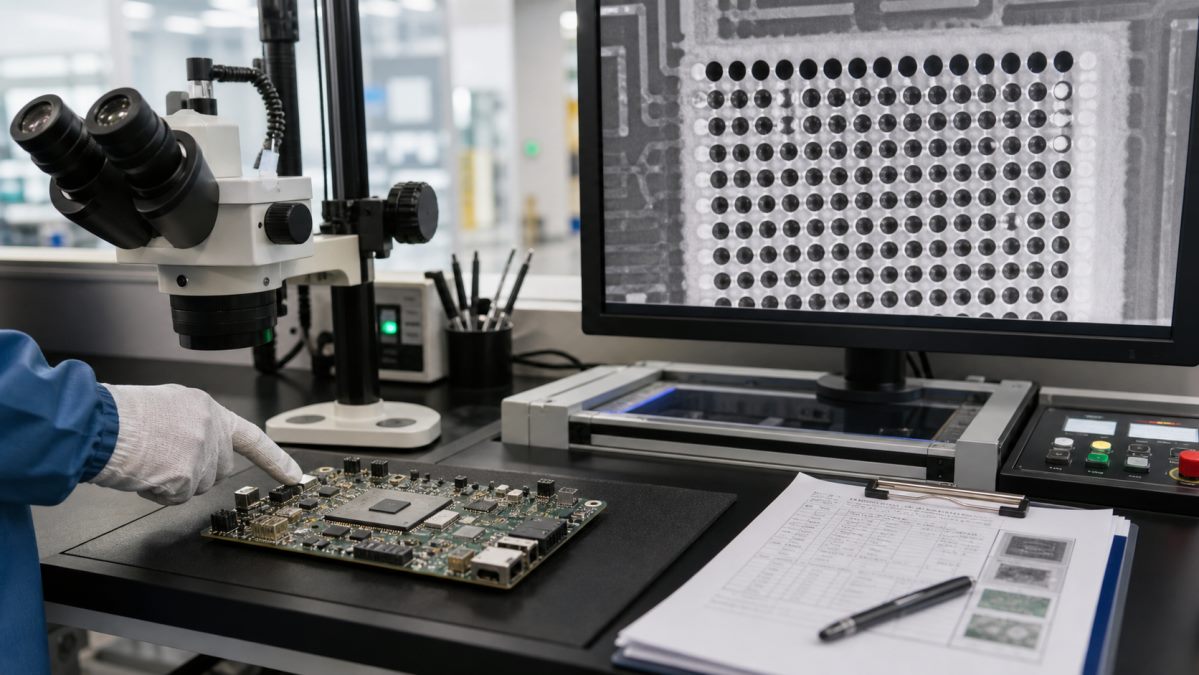
The result should be a decision package, not only a box of boards. Depending on the order, this may include first-article measurements, AOI records, X-ray images, electrical-test results, workmanship findings, functional-test results supplied under the customer’s procedure, and a list of open issues.
Before placing a volume order, confirm which issues are closed, which changes were approved, and which risks remain customer-owned. This makes the production release easier to approve and reduces the chance that an undocumented prototype exception becomes the next lot’s standard process.
How Should You Compare an NPI Manufacturing Service Quote?
The lowest quoted price can become the most expensive option if it excludes material control, engineering review, inspection, or the work needed to make the second build repeatable. Compare the assumptions behind the price, not only the total.
Check these items side by side:
- exact PCB material and construction;
- quoted PCB technology and special-process limits;
- component sourcing scope and substitution policy;
- prototype, pilot, and expected production quantities;
- tooling, stencils, fixtures, programming, and test charges;
- engineering questions and customer-approval route;
- inspection, X-ray, test, and report deliverables;
- certification or qualification documents that can actually be supplied;
- lead time for material, fabrication, assembly, and shipment;
- packaging, freight, duties, and other commercial assumptions;
- control of approved revisions for the next order.
Price pressure is real, but a usable quotation should tell you what will happen after the purchase order is issued. A supplier that identifies an unavailable construction, a risky BOM line, or a missing test fixture before order placement may protect the launch better than a supplier that returns a fast price with silent assumptions.
For complex or high-reliability projects, ask which evidence will support acceptance. Certification claims should be specific and relevant to the ordered scope; they should not replace project-specific manufacturing and inspection records.
What Lead Time Can You Expect for NPI Builds?
An attractive quotation is not useful if the production window misses your launch date. Ask the supplier to separate material availability, PCB fabrication, assembly, inspection, testing, and shipping instead of providing one unexplained delivery estimate.
Use these indicative production times to evaluate whether EBest Circuit may fit your NPI schedule.
PCB fabrication for qualified standard prototypes below 1 m²
| Prototype type | Normal production | Expedited production |
|---|---|---|
| 1–2 layer standard FR-4 | 7–8 days | As fast as 24 hours |
| 4-layer standard FR-4 | 10 days | As fast as 48 hours |
| 6-layer standard FR-4 | 10 days | As fast as 72 hours |
| 8-layer standard FR-4 | 12 days | As fast as 72 hours |
| Single-layer standard MCPCB | 4 days | As fast as 24 hours |
PCBA production after PCBs, components, and assembly files are ready
| Assembly service | Normal production | Expedited production |
|---|---|---|
| PCBA | Approximately 1 week | As fast as 2 days |
These figures refer to production time, not delivery to your facility. The confirmed schedule depends on the files, material and component availability, quantity, process complexity, inspection, testing, and current production capacity.
Put the required arrival date in your RFQ.
Also include the shipping destination and preferred shipping method. EBest Circuit can then separate production time from transit time and check whether normal or expedited service can support your schedule. Expedited production requires confirmation and may involve an additional fee.
Why Use EBest Circuit for PCB Assembly NPI?
EBest Circuit is positioned for customers who already have a released or near-released design and need a manufacturing partner to turn it into a controlled PCB and PCBA order. Our role is to connect manufacturability review, PCB production, sourcing, assembly, and agreed verification activities without claiming ownership of the customer’s complete product design.
Your team can use one manufacturing contact for:
- PCB file and manufacturability review;
- FPC, rigid-flex, HDI, high-frequency, thick-copper, ceramic, MCPCB, extra-thin, and conventional multilayer PCB requirements;
- BOM review and component sourcing;
- SMT and through-hole assembly;
- AOI, X-ray, workmanship inspection, and agreed testing assistance;
- prototype, pilot, and repeat-production quotation support;
- documented engineering questions and customer-approved changes.
This combination is useful when the main commercial risk is not one isolated manufacturing step, but the handoff between steps. One team reviewing the PCB, BOM, assembly, and inspection package can identify mismatched revisions and missing information earlier.
Your specialists can continue managing electrical, mechanical, thermal, RF, firmware, regulatory, and final product-reliability decisions. EBest Circuit reviews the manufacturing package, raises producibility questions, builds to the agreed scope, and supports the inspection and testing activities defined for the order.
What Files Should You Send for an Electronics NPI Services Quote?
A complete RFQ helps the supplier identify process conflicts, material risks, and missing deliverables before pricing. It also makes competing quotations easier to compare because each supplier is reviewing the same released package.
Send the files and commercial details that define the order:
- Gerber or ODB++ fabrication data;
- NC drill files and fabrication drawing;
- approved or reference stack-up;
- controlled-impedance requirements, if applicable;
- BOM with manufacturer part numbers;
- centroid or placement data;
- assembly drawings and polarity references;
- panelization requirements, if already defined;
- prototype quantity and expected production quantities;
- customer-supplied component list and arrival timing;
- approved-alternative and deviation rules;
- workmanship, inspection, X-ray, programming, and test requirements;
- required reports, traceability, packaging, and delivery date.
If a requirement is not yet final, mark it as pending instead of allowing each supplier to make a different assumption. For complex PCBs, identify the features that drive the project, such as flex construction, microvias, ceramic substrate, high-frequency material, thick copper, thermal requirements, or extra-thin finished thickness.
Email the released package to sales@bestpcbs.com. EBest Circuit can review the PCB/PCBA manufacturing scope, identify information needed for quotation, and clarify which fabrication, sourcing, assembly, inspection, and testing activities can be included.
FAQs About New Product Introduction Services
Can EBest Circuit quote bare PCBs without assembly?
Yes. The RFQ can cover bare PCB fabrication only, PCB plus customer-supplied component assembly, or a broader package including BOM sourcing and PCBA. State the required outcome so the quotation matches your purchasing plan.
Can we supply some or all components?
Yes, subject to agreement. Provide the customer-supplied part list, quantities, expected delivery date, packaging condition, moisture-sensitivity information, and rules for shortages or damaged parts.
Can you support a small prototype before production?
Prototype and pilot quantities can be reviewed as part of the quotation. Include the expected follow-on quantity because material purchasing, tooling, panelization, and test planning may differ between a few prototypes and repeat production.
Will EBest Circuit approve component substitutions?
No supplier should approve a design substitution on the customer’s behalf unless that authority is explicitly granted. We can identify sourcing risks and propose alternatives for customer review. The customer or its authorized design owner approves the final substitution.
What inspection and testing can be included?
The available scope depends on the product and the released requirements. It may include PCB electrical testing, AOI, X-ray, workmanship inspection, dimensional checks, programming assistance, and customer-defined functional testing assistance. The quotation should state what is included and what fixtures, firmware, procedures, and acceptance limits the customer must provide.
Do you provide complete product design and certification?
EBest Circuit supports the PCB and PCBA manufacturing portion of NPI. Your chosen specialists can continue handling complete product design, firmware development, certification, and final product approval.
What usually delays an electronics NPI services quote?
Common causes include an incomplete BOM, missing fabrication drawing, unclear PCB revision, no approved stack-up, unspecified substitutions, missing placement data, undefined test scope, and no target quantities. Sending these items together reduces assumptions and shortens the clarification cycle.
Choosing an electronics NPI services partner is ultimately a decision about controllability. A clear scope, confirmed PCB capability, visible supply-chain risks, documented prototype evidence, and a complete RFQ give your team a stronger basis for approving the next build. Send your manufacturing package to sales@bestpcbs.com to discuss the PCB and PCBA scope for your project.