A circuit card vs circuit board comparison can be confusing because engineers, buyers, assemblers, and different industries may use these terms in different ways. In many cases, a circuit board means the bare printed circuit board, while a circuit card may refer to a board used as a plug-in card, or an assembled board with components.
For manufacturing projects, the more important question is not only the name. It is whether the project needs bare PCB fabrication, circuit card assembly, component sourcing, SMT assembly, testing, conformal coating, or final packing. EBest Circuit (Best Technology) supports custom PCB manufacturing and PCBA assembly for engineers who need a practical manufacturing partner. If you are preparing Gerber files, BOM, assembly drawings, stackup notes, or test requirements, you can send them to sales@bestpcbs.com for engineering review before production.
Circuit Card vs Circuit Board: What Is the Real Difference?
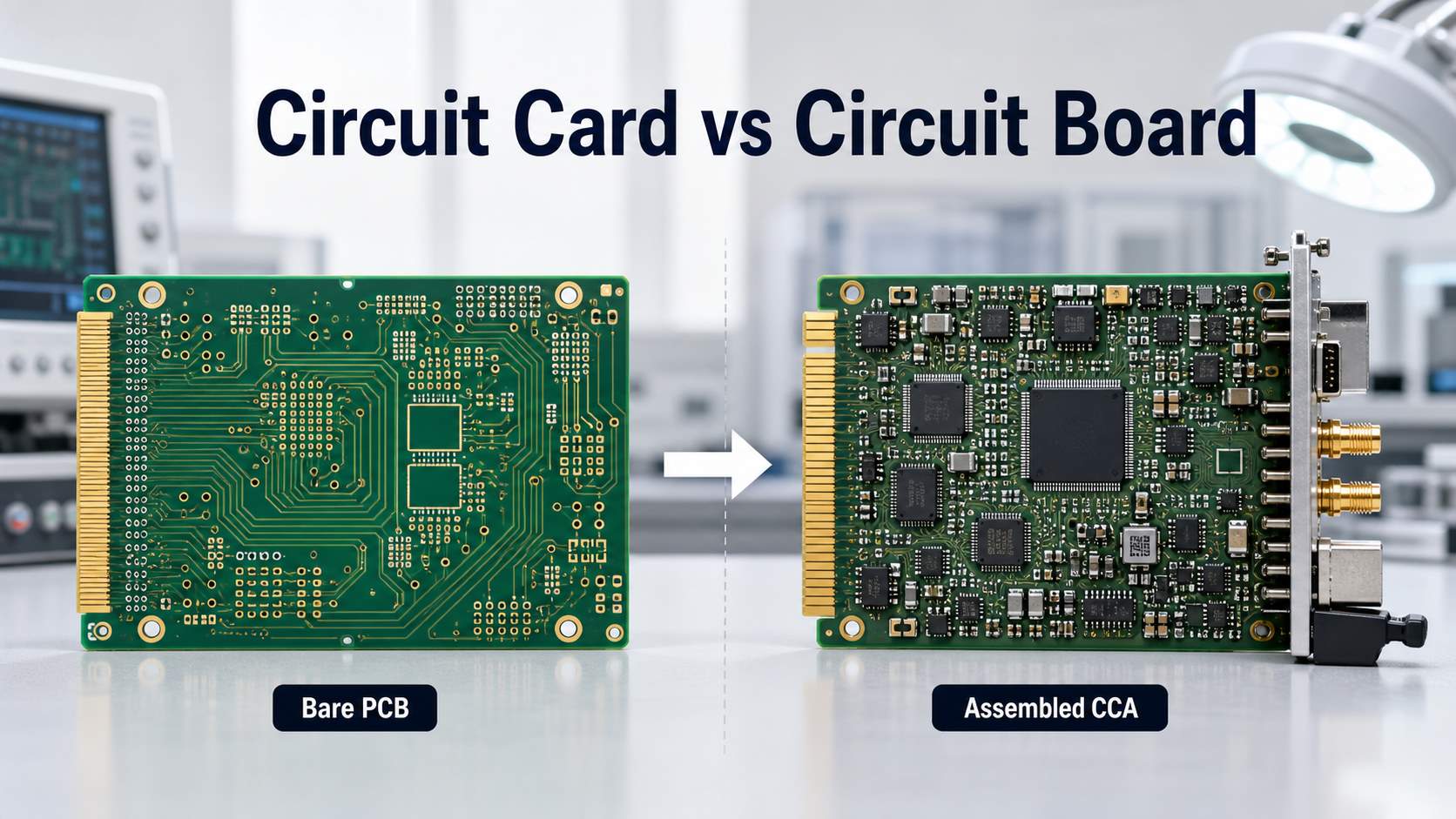
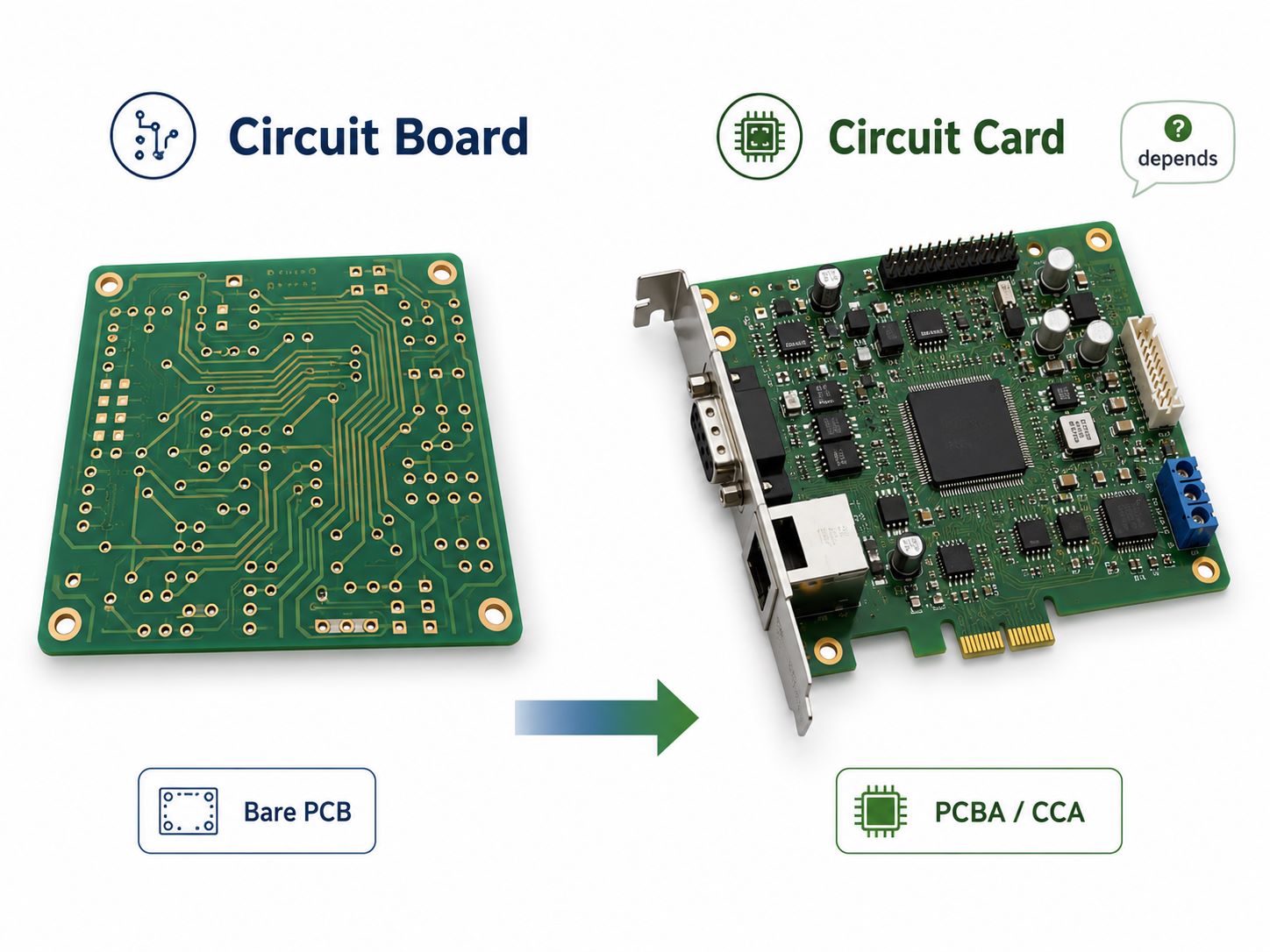
A circuit board usually refers to the physical printed circuit board that carries copper traces, pads, vias, solder mask, and surface finish. Before components are assembled, it is often called a bare PCB.
A circuit card can mean different things depending on the industry. In some documents, it simply means a PCB card. In other cases, especially in purchasing, assembly, industrial electronics, aerospace electronics, and equipment documentation, circuit card often means an assembled electronic card.
The practical difference is this:
| Term | Common Meaning |
|---|---|
| Circuit board | Bare PCB or general board |
| Circuit card | PCB card or assembled card |
| Circuit card assembly | PCB assembled with components |
| PCBA | Printed circuit board assembly |
| PWB | Printed wiring board, often bare board |
So when a customer asks for a circuit card, the manufacturer should not assume the scope immediately. The right question is whether the customer needs only PCB fabrication, or a completed circuit card assembly services.
What Is a Circuit Card Assembly?
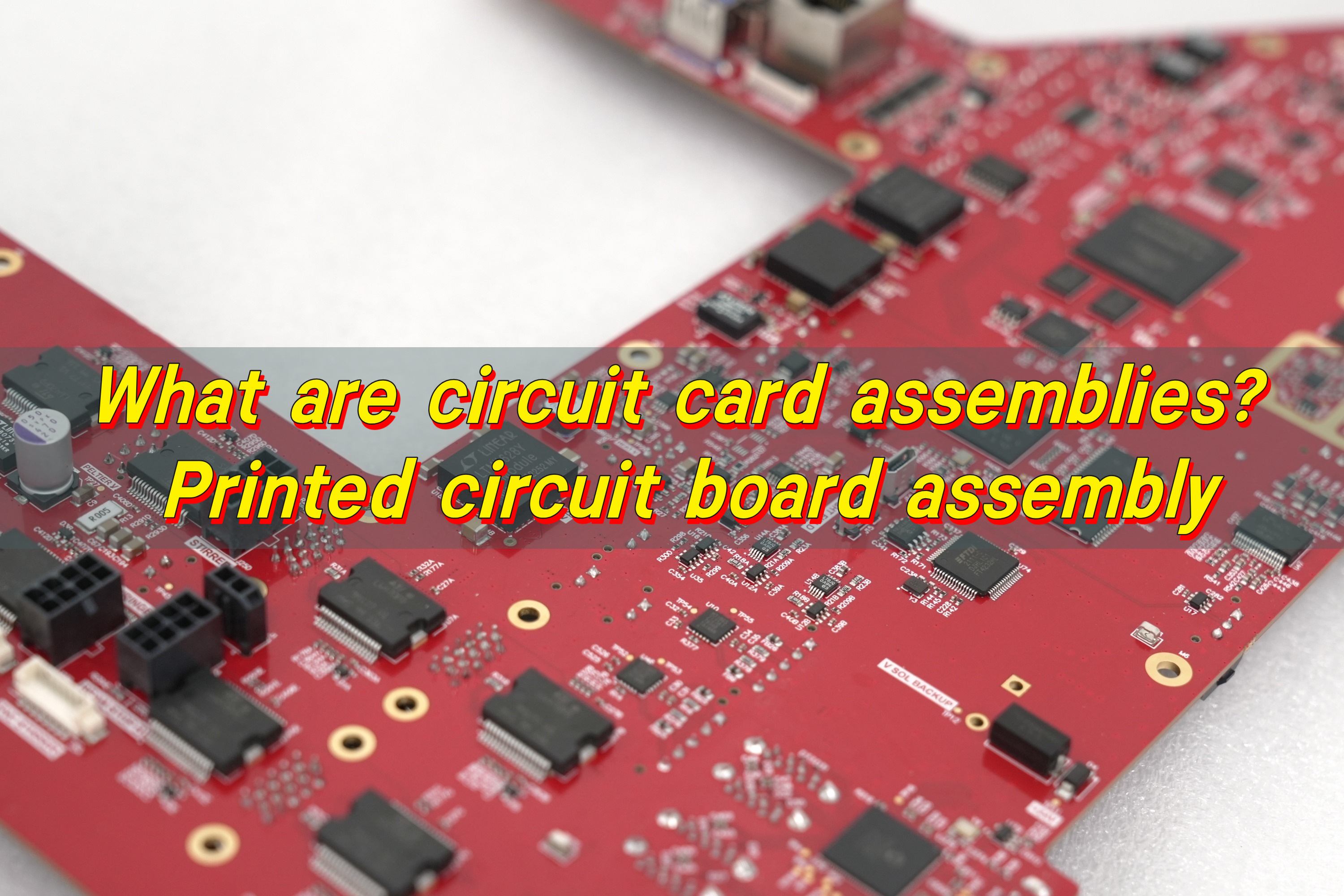
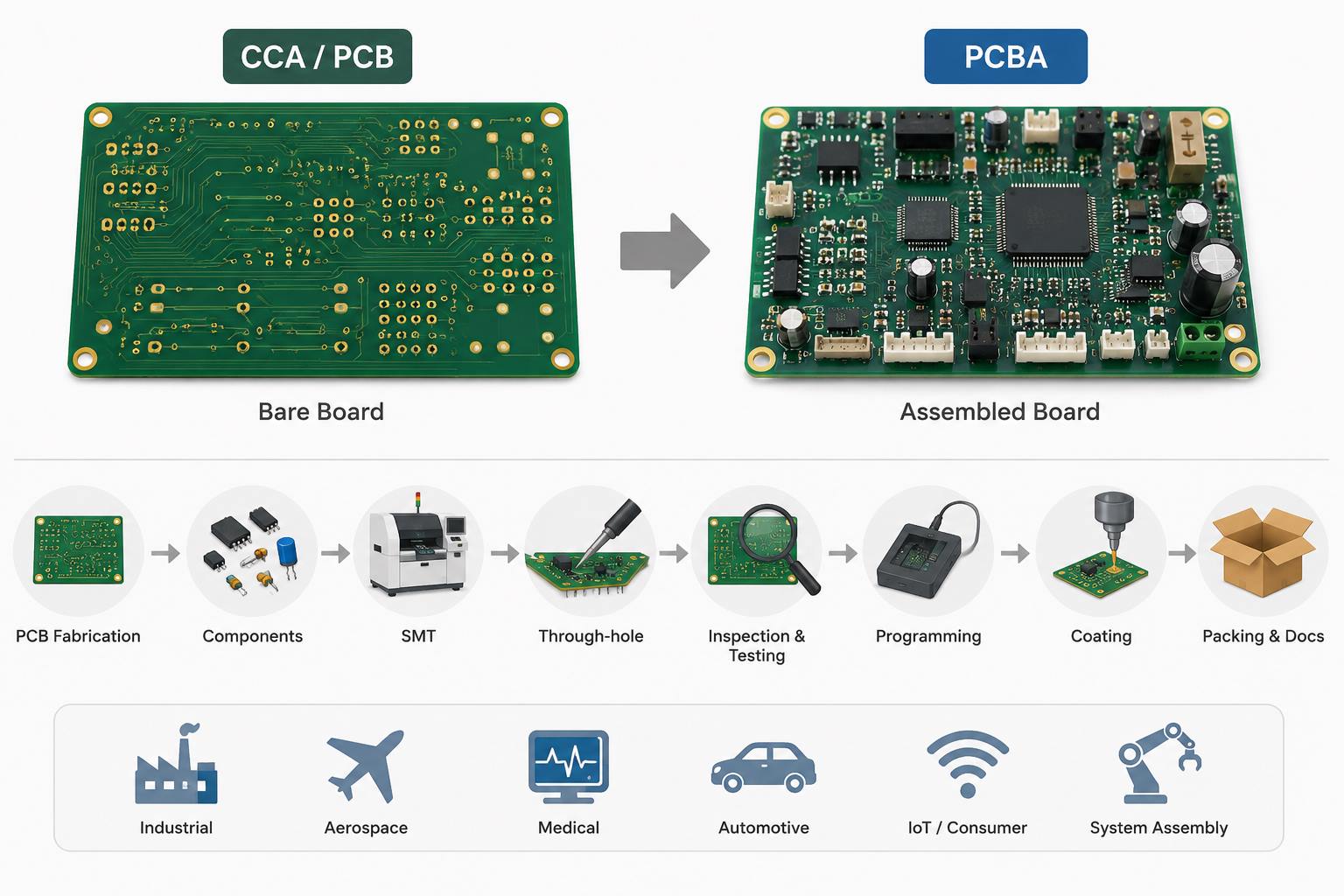
A circuit card assembly, often shortened as CCA, is a printed circuit board after electronic components have been mounted and soldered onto it.
A bare PCB may include:
- FR4, polyimide, ceramic, metal core, or other base material
- Copper traces and planes
- Plated through holes, blind vias, buried vias, or microvias
- Solder mask and silkscreen
- Surface finish such as HASL, ENIG, immersion silver, or OSP
A circuit card assembly may include all of the above, plus:
- ICs, connectors, resistors, capacitors, sensors, and modules
- SMT and through-hole soldering
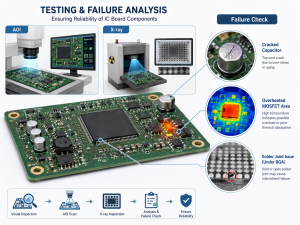
- AOI, X-Ray, electrical testing, or functional testing
- Cleaning, conformal coating, programming, and packing when required
This is why CCA and PCBA are closely related terms. For many practical manufacturing projects, circuit card assembly and PCBA refer to the same production stage: the board is no longer just a bare PCB; it has become an assembled electronic unit.
Circuit Board Card, PCB Card, and Printed Circuit Card Terms
Many buyers search terms such as circuit board card, PCB card, or printed circuit card because they are trying to describe a board that works like a removable or functional electronic card.
These terms may appear in:
- Industrial control systems
- Test equipment
- Communication equipment
- Power control modules
- Medical electronics
- Automotive electronics
- Aerospace electronics
- Embedded computing systems
For example, a plug-in control board inside industrial equipment may be called a circuit card by the equipment manufacturer. A PCB supplier may call the same item a PCB assembly or PCBA. A procurement document may call it a card assembly.
The wording is different, but the manufacturing information still needs to be clear:
| Required File | Why It Matters |
| Gerber or ODB++ | Defines PCB fabrication |
| Stackup drawing | Defines layers and thickness |
| BOM | Defines components |
| Pick-and-place file | Defines placement |
| Assembly drawing | Defines orientation and notes |
| Test requirements | Defines final inspection |
If the files are complete, the manufacturer can identify whether the order is a bare PCB project, a circuit card assembly project, or a turnkey PCBA project.
Printed Wiring Board vs Circuit Card Assembly
Printed wiring board vs circuit card assembly is another common terminology issue.
A printed wiring board, or PWB, is usually another name for a bare PCB. It emphasizes the copper wiring pattern on the board. A circuit card assembly is a later stage, after components are installed.
The difference is simple:
| Item | Bare Board? | Components? |
| PWB | Yes | No |
| PCB | Usually yes | No |
| PCBA | No | Yes |
| CCA | No | Yes |
This distinction matters in RFQs, drawings, and purchase orders. If a buyer sends only Gerber files and asks for circuit cards, the supplier may need to confirm whether the order includes components and assembly. If the buyer sends Gerber, BOM, placement files, and test notes, the project is more likely a circuit card assembly or PCBA order.
For EBest Circuit, this confirmation step is important because PCB fabrication and PCBA assembly require different engineering checks, production planning, lead time, and quality control.
CCA vs PCBA: When Does a PCB Become an Assembly?
A PCB becomes an assembly when components are mounted and soldered onto the board. That is the main difference in CCA vs PCBA discussions.
In many industries, CCA and PCBA are used almost interchangeably. The difference is often based on customer terminology rather than manufacturing reality.
CCA is common in:
- Industrial electronics
- Aerospace electronics
- Equipment maintenance documents
- Contract manufacturing documentation
- System-level assembly projects
PCBA is common in:
- PCB manufacturing
- SMT assembly
- Consumer electronics
- IoT products
- Medical devices
- Automotive modules
From a manufacturing point of view, the key is not which term is used. The key is whether the supplier understands the full build requirement: bare board fabrication, component sourcing, SMT, through-hole assembly, inspection, testing, programming, coating, packing, and documentation.
Circuit Card Assembly Manufacturing Process at EBest Circuit
At EBest Circuit, a circuit card assembly project usually starts with engineering file review. The goal is to find manufacturing and assembly risks before the board enters production.
A typical process includes:
- File review
Gerber, ODB++, BOM, pick-and-place file, assembly drawing, stackup, and special notes are checked before production. - PCB fabrication
The board is manufactured according to material, layer count, copper thickness, surface finish, solder mask, impedance, and tolerance requirements. - Component sourcing
Components can be sourced based on the approved BOM. If there are lifecycle, shortage, or packaging risks, the team can help review alternatives with customer approval. - SMT assembly
Solder paste printing, SPI, component placement, reflow soldering, AOI, and inspection are arranged based on the assembly requirement. - Through-hole or secondary assembly
Connectors, terminals, large components, or special parts can be assembled through manual soldering or selective processes when needed. - Testing and inspection
Electrical testing, AOI, X-Ray for BGA areas, functional testing coordination, programming, or inspection reports can be arranged according to project needs. - Cleaning and packing
Boards are cleaned, inspected, separated, labeled, and packed according to customer requirements.
This process helps reduce the handoff risk between PCB fabrication and assembly. For customers, the value is that one team can keep the PCB notes, BOM notes, assembly notes, and packing notes visible through the full build.
When Should You Use Circuit Card Assemblies for Prototypes?
Circuit card assemblies are useful when the customer needs more than a bare PCB sample. If the project must be powered on, tested, programmed, or installed into a product enclosure, a bare PCB alone is not enough.
A prototype CCA is often needed when:
- The engineer wants to verify product function
- The board includes fine-pitch ICs or BGA components
- The project needs impedance-controlled signals
- The assembly includes connectors, sensors, or modules
- The product requires firmware programming
- The customer needs several ready-to-test units
- The next step may be small-batch production
For prototype and small-batch projects, EBest Circuit can support PCB fabrication, BOM sourcing, SMT assembly, testing coordination, and packing in one workflow. This is especially useful when engineers want to find DFM, BOM, soldering, or test issues before committing to larger production.
How EBest Circuit Supports CCA Electronics from PCB to PCBA
For CCA electronics, manufacturing support should not stop at bare PCB production. Many circuit card projects fail or slow down because different suppliers handle fabrication, component sourcing, assembly, and testing separately.
EBest Circuit supports customers through one-stop PCB and PCBA production:
| Support Area | What We Help With |
| PCB fabrication | FR4, HDI, rigid-flex, FPC, ceramic, MCPCB |
| Engineering review | Stackup, DFM, impedance, panelization |
| Component sourcing | BOM review and purchasing support |
| Assembly | SMT, through-hole, connectors, modules |
| Testing | AOI, X-Ray, electrical and functional checks |
| Documentation | Reports, production notes, packing requirements |
This is valuable for engineers who already have design files and need reliable manufacturing execution. EBest Circuit does not need to take over the customer’s product design. Instead, our team helps turn approved files into manufacturable, assembled, and testable boards.
Circuit Card vs Circuit Board Case Study
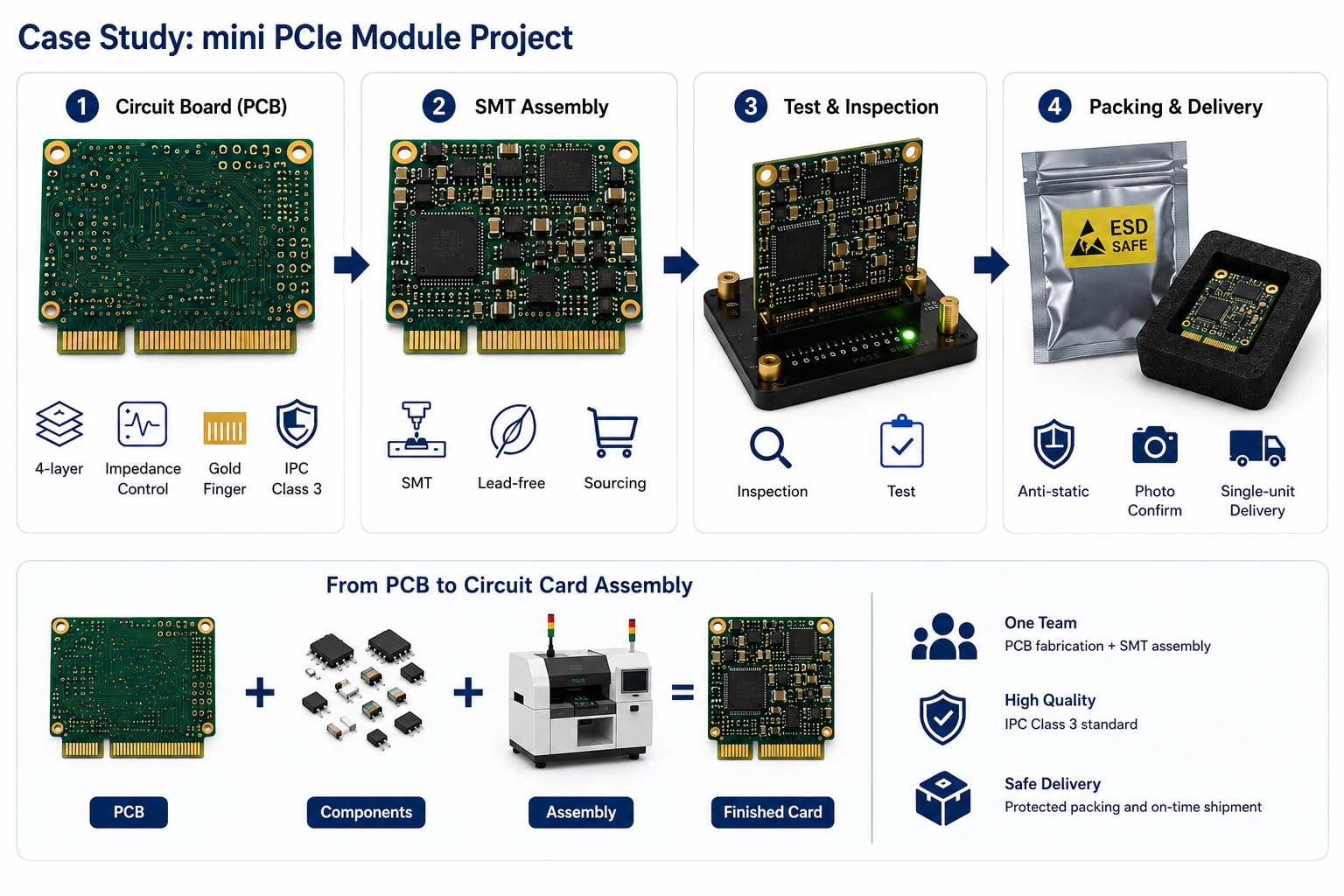
A Canadian customer used the term “card” in a mini PCIe embedded module project, but the real manufacturing scope was more than a bare circuit board.
The project started as a 4-layer FR4 circuit board with 1oz copper, 1.0mm finished thickness, ENIG surface finish, controlled impedance, plugged vias, and hard gold on the gold finger area. Because the board would be used as a plug-in electronic card, EBest Circuit reviewed the stackup, board thickness, gold finger requirement, warpage control, and IPC Class 3 manufacturing notes before production.
After the bare PCB stage, the project became a circuit card assembly. The customer needed SMT assembly, lead-free production, component sourcing by EBest Circuit, anti-static packing, single-unit delivery, and photo confirmation before shipment.
This case shows why the difference between circuit card and circuit board matters:
- Circuit board: the manufactured PCB, including material, copper, impedance, vias, gold fingers, and surface finish.
- Circuit card assembly: the finished assembled unit, including components, SMT process, inspection, packing, and delivery control.
- Project value: one team kept the PCB fabrication notes and assembly notes connected, so the customer did not have to manage separate suppliers for board manufacturing and SMT assembly.
For the customer, the result was not just a PCB. It was a ready-to-use circuit card assembly built around the real product requirements: controlled impedance, gold finger reliability, IPC Class 3 quality expectations, clean assembly, and protected delivery.
FAQs about Circuit Card vs Circuit Board
1. Is a circuit card the same as a circuit board?
Not always. A circuit board often means the bare PCB, while a circuit card may refer to a board used as a card or an assembled board. The exact meaning depends on the customer’s documentation and industry context.
2. What is a circuit card assembly?
A circuit card assembly is a PCB with electronic components assembled onto it. It may include SMT components, through-hole parts, connectors, ICs, testing, cleaning, and packing.
3. Is CCA the same as PCBA?
In many manufacturing projects, CCA and PCBA refer to the same practical stage: an assembled printed circuit board. CCA is often used in equipment, industrial, and aerospace documentation, while PCBA is more common in PCB manufacturing.
4. What files are needed for circuit card assembly?
Common files include Gerber or ODB++, BOM, pick-and-place file, assembly drawing, stackup, special process notes, test requirements, and packing requirements.
5. Can EBest Circuit make both circuit boards and circuit card assemblies?
Yes. EBest Circuit supports bare printed circuit board fabrication, component sourcing, SMT assembly, through-hole assembly, testing coordination, and packing for custom PCB and PCBA projects.
If your team is comparing circuit card vs circuit board for a real project, the best next step is to confirm the manufacturing scope before production. Send your Gerber files, BOM, stackup, assembly notes, test requirements, or purchasing questions to sales@bestpcbs.com. EBest Circuit’s engineering team can help review whether your project needs bare PCB fabrication, circuit card assembly, or full turnkey PCBA support.