

The PCB CCL shortage in 2026 is raising costs and complicating production schedules as AI server demand puts pressure on high-performance laminates. A November supply-chain report shows procurement lead times of 8–10 weeks for several CCL families and 24–32 weeks for selected high-performance materials. Panasonic has announced three rounds of price increases this year, while Kingboard raised prices for certain thin-glass laminates by 15% in October.
Does this mean AI server PCB production will face further delays? Which materials are hardest to source, and how much of the increase will reach finished PCB prices? Recent manufacturer announcements and supplier reports reveal where shortages are occurring, why costs continue to rise, and what engineers and buyers should check before their next production run.

What Is the Latest PCB CCL Shortage Update in November 2026?
As of November 9, 2026, supply shortages remain concentrated in certain CCL grades and fiberglass constructions rather than the entire laminate market. Availability has become less predictable, particularly for PCB designs requiring specific high-performance materials or thin-glass prepregs.
The clearest evidence comes from a November 4 supply-chain update by VersaLogic. Based on information from one of its PCB suppliers, the company reported CCL procurement periods of approximately 8–10 weeks for several material families, rising to 24–32 weeks for selected higher-performance grades. The supplier also identified shortages of 106, 1080, and 2116 glass fabrics, with multiple CCL manufacturers operating under allocation.
Recent capacity announcements point to the same market pressure. On October 30, Panasonic Industry unveiled a major investment in MEGTRON production, followed by Doosan's November 6 announcement of a new CCL expansion project in China. Both companies are increasing production capacity to support demand from AI infrastructure, although much of the additional output will not become available immediately.
The scale of demand is significant. In May, the Taiwan Printed Circuit Association (TPCA) forecast a US$21.5 billion global CCL market in 2026, up 34.2% year over year. This reflects projected market growth in value, not a measured shortage percentage.
For PCB buyers, the distinction matters. A project may remain on schedule if its approved materials are already available, while another could face delays because a single required laminate or prepreg construction cannot be sourced.
Why Is AI Server Demand Tightening High-Speed CCL Supply?
AI servers require complex multilayer PCBs that consume substantial amounts of specialized materials. As data center investment expands, demand for certain high-performance laminates is growing faster than qualified manufacturing capacity can respond.
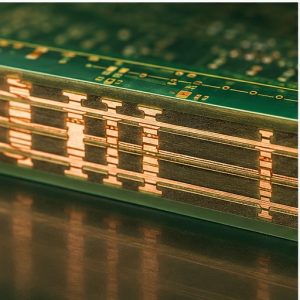
Advanced AI server and networking boards can exceed 40 layers and use large PCB formats. These designs require multiple laminate cores and prepreg layers, often with tightly controlled thickness and electrical specifications. More layers and larger board areas generally increase material consumption, although the actual amount depends on the stackup and panel layout.
High-speed signal requirements further restrict sourcing options. Long electrical channels may require low dielectric loss, controlled dielectric properties, and specific copper foil characteristics. Once a material has been approved for signal integrity and reliability, changing to another grade may require additional engineering evaluation and customer approval.
Upstream manufacturing capacity is another constraint. Certain thin or specialty fiberglass fabrics require dedicated equipment and tightly controlled production processes. Adding CCL production lines cannot immediately increase output if the required glass fabric remains unavailable.
This explains why the shortage extends beyond premium AI server laminates. AI-related demand is not responsible for every supply problem, but competition for upstream fiberglass and other materials can affect conventional multilayer PCBs as well.
Which CCL Materials Are Most Affected by the 2026 Shortage?
The strongest reported supply constraints involve selected high-performance laminate grades and specific fiberglass constructions. There is no evidence that every low-loss laminate or standard FR-4 product is experiencing the same shortage.
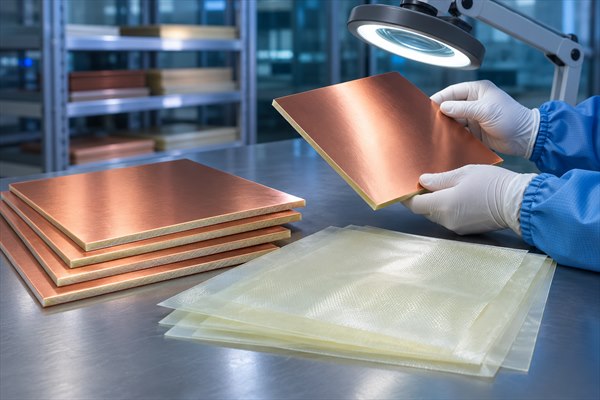
For engineers reviewing PCB stackups, the following distinctions are important.
| Material | Reported Supply Situation | What Buyers Should Verify |
|---|---|---|
| Selected high-performance CCL | Procurement periods of 24–32 weeks reported by one supplier | Exact grade, inventory, allocation |
| Several other CCL families | Procurement periods of 8–10 weeks reported | Manufacturer, thickness, delivery date |
| 106, 1080, 2116 glass fabrics | Shortages reported within one PCB supplier network | Approved prepreg construction |
| M8/M9-class materials | Strong demand; availability differs by grade | Specific product and qualification |
| Conventional FR-4 | Selected constructions exposed to glass supply and cost pressure | Core and prepreg specifications |
The difference between glass fabric and finished laminate is particularly important. The numbers 106, 1080, and 2116 identify glass fabric styles, not complete CCL products. Different resin systems and laminate grades may use these fabrics, so a shortage of one construction does not establish that every related laminate is unavailable.
The same caution applies to M8/M9 terminology. These names are commonly used for high-performance material categories, but actual availability must be checked against a manufacturer's specific product. One approved grade may be available while another faces an extended procurement period.
When checking material availability, provide the manufacturer, laminate grade, core thickness, prepreg construction, copper foil requirements, and order quantity. A general inquiry about high-speed CCL rarely provides enough information for a reliable delivery commitment.
What Are Major CCL Manufacturers Reporting About Supply and Capacity?
Panasonic and Doosan have announced substantial investments in high-performance CCL production, but much of the new capacity will enter operation over the next several years. Their expansion plans suggest continued demand from AI infrastructure while highlighting the time required to increase qualified supply.
Panasonic Industry announced a JPY 92 billion AI-related investment program on October 30, including approximately JPY 67 billion for expanding MEGTRON production in Suzhou, China, and Ayutthaya, Thailand.
The company's Suzhou Phase I facility is scheduled to begin mass production in December 2026, followed by Ayutthaya Phase I in November 2027. Additional expansion phases are planned for August 2028 in Suzhou and April 2029 in Ayutthaya.
Doosan is pursuing a similar expansion strategy. Its KRW 970 billion CCL investment plan, announced in September, includes new production capacity in South Korea and China.
On November 6, Doosan confirmed a KRW 550 billion investment agreement for a new production facility near its existing Changshu plant. The project will be developed in stages, with operations expected to begin progressively in the second half of 2028.
Both manufacturers are targeting materials used in AI accelerators, network switches, optical communication equipment, and other high-performance applications.
These investments may improve supply over time, but new facilities must still complete production ramp-up and any required customer qualification. For buyers planning PCB production in the coming months, confirmed material inventory and supplier allocation remain more important than future capacity announcements.
Why Are CCL Prices Rising in 2026, and What Is the Price Trend?
CCL prices have risen repeatedly in 2026 as manufacturers face higher input costs while demand for selected laminates remains strong. Fiberglass shortages are an important factor, but resin, energy, logistics, and other manufacturing expenses are also contributing.
Kingboard's October price notice illustrates the fiberglass supply problem. The company cited strong demand for thin glass cloth, tight supplies of glass fabric and yarn, and rising upstream costs when announcing a 15% price increase for laminates and prepregs manufactured using 2116 or thinner glass fabrics.
Panasonic's announcements reflect broader cost pressure. Its June notice identified higher costs for petrochemical-derived materials, including resins and solvents, along with international logistics disruptions. Its August notice again pointed to elevated raw material, energy, auxiliary material, and transportation costs.
AI server demand has increased pressure on advanced CCL products, but it would be inaccurate to attribute every material price increase solely to AI infrastructure.
How Have CCL Prices Changed in 2026?
Panasonic announced three separate price adjustments for circuit board materials, taking effect in May, August, and September. Kingboard followed with another adjustment in October.
| Effective Date | Manufacturer | General Multilayer CCL | Low-Loss / Other CCL |
|---|---|---|---|
| May 1, 2026 | Panasonic | +30% | MEGTRON/XPEDION +20% |
| August 1, 2026 | Panasonic | +20% | MEGTRON/XPEDION +10% |
| September 1, 2026 | Panasonic | +30% | MEGTRON/XPEDION +15% |
| October 13, 2026 | Kingboard | +15% for specified thin-glass laminates and prepregs | Depends on covered product |
These figures represent the manufacturers' announced adjustments for specific materials and pricing periods. They cannot simply be added together to calculate a universal annual CCL price increase. Actual transaction prices depend on the applicable commercial terms.
The announcements nevertheless show that material cost pressure persisted through several pricing rounds during 2026.
How Much Will This Add to Finished PCB Costs?
A 20% increase in a laminate grade does not automatically mean a 20% increase in the finished PCB quotation.
CCL is only one part of total fabrication cost. Drilling, plating, imaging, lamination, inspection, testing, and other manufacturing operations also contribute to the final price.
A high-layer-count AI server PCB containing a large amount of specialized low-loss material may be more exposed to certain price increases than a simpler industrial board. Even two PCBs with the same layer count can be affected differently if their dimensions, material specifications, and panel utilization differ.
When a new quotation is higher, ask which laminate has increased in price, whether the same approved grade is still being quoted, and whether the change reflects current purchasing costs or an existing supply agreement.
That provides a more useful basis for evaluating PCB cost changes than the headline material price increase alone.
How Is the CCL Shortage Affecting AI Server PCB Manufacturing?
The main manufacturing risk is that one unavailable material can delay an otherwise production-ready multilayer PCB order. This is especially relevant to complex stackups using several different core thicknesses and prepreg constructions.
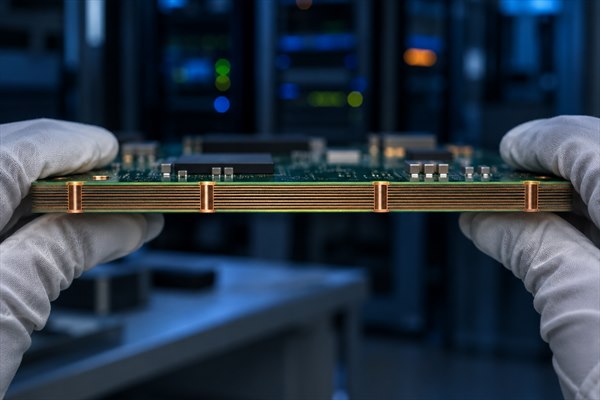
Consider a high-layer-count server PCB requiring multiple approved core and prepreg materials. The manufacturer may have sufficient inventory of most materials, but if one specified prepreg cannot be obtained, the approved layup cannot be completed. Production may be delayed before the board reaches the lamination stage.
Order quantity creates another challenge. A PCB manufacturer may have enough approved material to produce 20 prototype boards but insufficient inventory for a follow-on order of 1,000 units.
Successful prototype fabrication therefore does not guarantee that the same material will be available for mass production.
A proposed material replacement may introduce further delays. A different dielectric system can affect finished thickness, impedance, signal loss, lamination behavior, or reliability assumptions. Any necessary engineering review or qualification work must be completed before the revised construction is approved.
This is why PCB delivery schedules should account for both material readiness and available fabrication capacity. A factory may have an open production slot without having every material required to use it.
Can Engineers Replace Short-Supply CCL Materials Without Compromising PCB Performance?
An alternative CCL may be acceptable, but matching the material category or nominal Dk is not enough to establish interchangeability. High-speed PCB performance depends on the complete dielectric and conductor construction.
Panasonic's MEGTRON 8 family provides a useful example.
At 14 GHz, the manufacturer's published typical values for R-579Y(U) are Dk 3.08 and Df 0.0012, compared with Dk 3.13 and Df 0.0016 for R-579Y(N).
These values are typical test results, not guaranteed limits. Although the materials belong to the same family, their electrical properties differ. Whether those differences matter depends on channel length, operating frequency, and the available signal-loss budget.
Before approving a substitute, the engineering review should cover:
- Electrical properties: Compare Dk and Df at relevant frequencies, then evaluate controlled impedance and channel loss.
- Stackup construction: Confirm core thickness, cured prepreg thickness, glass style, resin content, and copper foil characteristics.
- Thermal and mechanical properties: Review Tg, Td, CTE, dimensional stability, and compatibility with the required assembly cycles.
- Qualification requirements: Determine whether updated simulation, prototype testing, reliability testing, or formal customer approval is required.
The review should use comparable material data and the actual finished stackup. Similar datasheet values alone do not guarantee equivalent PCB performance.
For a design already released to manufacturing, retaining the approved material and adjusting the delivery schedule may sometimes present less risk than introducing an unqualified substitute.
The decision should be based on electrical performance, manufacturing compatibility, and qualification requirements, rather than material availability alone.
What Is the Current Lead Time for High-Speed CCL Materials?
The latest supplier report published on November 4 indicates procurement periods of 8–10 weeks for several CCL families and 24–32 weeks for selected higher-performance materials.
These figures came from one PCB supplier's October update, so they should not be treated as standard lead times for every material or manufacturer.
Actual availability can differ significantly between PCB factories. One manufacturer may already hold enough approved laminate to start production, while another must wait for new material deliveries or allocation confirmation.
Material procurement must also be distinguished from PCB fabrication.
If an approved laminate is already in stock, the normal PCB manufacturing schedule may still be achievable. If the material has not been allocated, even a factory offering quick-turn PCB services cannot guarantee the original shipment date.
When reviewing a quotation, ask for three confirmed dates: material availability, planned production start, and finished PCB shipment.
A single quoted lead time is less useful when material procurement and fabrication depend on different suppliers or unresolved allocations.
How Can PCB Buyers Reduce CCL Supply and Delivery Risks?
The best time to address material shortages is before the PCB order is released, while purchasing requirements and the manufacturing schedule can still be reviewed together.
For AI server and high-speed multilayer PCB projects, buyers should focus on the following checks:
- Confirm the approved material specification: Identify the exact laminate, core, prepreg, and copper foil requirements. Record any alternatives already approved by engineering.
- Verify material availability: Ask whether the required quantity is physically in stock, reserved for the order, or awaiting supplier allocation.
- Check prototype-to-production continuity: If prototypes are being built first, confirm how the same approved material will be secured for volume production.
- Review purchasing terms: Check quotation validity, material pricing assumptions, order quantities, and conditions governing delivery changes.
- Control material substitutions: Any proposed replacement should be evaluated against the released PCB specification before manufacturing proceeds.
- Confirm delivery milestones: Separate material arrival, fabrication, inspection, and shipment dates rather than relying on a generic total lead time.
For repeat orders, sharing a realistic production forecast can help the PCB manufacturer coordinate purchasing arrangements with its material suppliers. However, a forecast does not reserve inventory unless a specific commitment has been agreed.
These checks reduce the risk of discovering a material shortage after a delivery date has already been promised to the end customer.
Will the PCB CCL Shortage Continue Into 2027?
Some CCL supply constraints may continue through 2027, particularly for specialized high-performance grades and fiberglass constructions. However, the market does not have one confirmed recovery date.
VersaLogic's November report included a supplier expectation that tight conditions could persist into 2027 or 2028 while manufacturers expand capacity, introduce new glass-cloth equipment, and complete material qualifications.
That is one supplier's outlook rather than a guaranteed forecast for the entire industry.
The expansion schedules announced by Panasonic and Doosan suggest that additional high-performance CCL production capacity will become available gradually.
Panasonic expects new production milestones in late 2026 and 2027, while significant additional capacity from both companies is scheduled for 2028 and beyond.
The pace of recovery will depend on how quickly new lines reach stable production, whether specialty fiberglass supplies improve, and how much of the additional output is absorbed by AI infrastructure demand.
Standard laminates and advanced low-loss products may recover at different rates.
Buyers planning PCB production in 2027 should therefore monitor approved material grades and actual supplier commitments, rather than assume that broader CCL capacity expansion will resolve every sourcing problem.
FAQs About the 2026 PCB CCL Shortage
Q1: What Is the Difference Between Copper-Clad Laminate and Prepreg?
A1: Copper-clad laminate (CCL) consists of a cured insulating substrate bonded to copper foil, while prepreg is resin-impregnated reinforcement that is not yet fully cured. During multilayer PCB lamination, prepreg bonds cores and copper layers together. Both materials are essential to the stackup, but they have different storage, processing, and handling requirements.
Q2: Does FR-4 Refer to a Specific CCL Material Grade?
A2: No. FR-4 is a broad flame-retardant glass-reinforced epoxy material designation, not a single manufacturer's product. Different FR-4 laminates can have different thermal, electrical, and mechanical characteristics. A purchasing specification should identify the appropriate material properties, grade, and applicable standards rather than relying on the FR-4 designation alone.
Q3: Does a 40-Layer PCB Require 40 Separate CCL Sheets?
A3: No. Forty layers generally refers to 40 conductive copper layers, not 40 separate laminate cores. A multilayer PCB is constructed using a combination of copper-clad cores, prepregs, and sometimes copper foils. The number of cores depends on the stackup and fabrication method, so material consumption cannot be determined from layer count alone.
Q4: What Is Fiber-Weave Skew in High-Speed PCBs?
A4: Fiber-weave skew occurs when signals experience different propagation delays because of variations in the glass and resin distribution within the dielectric. It can affect timing relationships in high-speed differential pairs. The significance depends on routing geometry, material construction, and data rate. Material selection and routing strategies can help manage the risk.
Q5: Can CCL and Prepreg Be Stored Indefinitely Before PCB Manufacturing?
A5: No. Prepreg generally has manufacturer-defined storage conditions and a recommended shelf life, while cured CCL has different handling and storage requirements. Temperature, humidity, packaging condition, and material age can affect suitability for processing. Manufacturers should follow the relevant material supplier's instructions and evaluate any material outside its recommended storage conditions before use.
Q6: What Does a CCL Certificate of Conformity Confirm?
A6: A Certificate of Conformity (CoC) generally confirms that supplied material meets the specifications or requirements identified by the issuer. It does not necessarily provide individual measured test results for every material property. Buyers should check the certificate's scope and request additional test or traceability documentation when required by the project.
Q7: Does RoHS Compliance Mean a CCL Material Is Halogen-Free?
A7: No. RoHS compliance and halogen-free requirements are different. RoHS restricts specified hazardous substances in electrical and electronic equipment, while halogen-free material requirements commonly address chlorine and bromine content under applicable specifications. A RoHS-compliant laminate is not automatically halogen-free. Both claims should be verified against the relevant requirements and supporting documentation.
Q8: Are ABF Package Substrates and AI Server PCB Laminates the Same Material?
A8: No. ABF (Ajinomoto Build-up Film) is a dielectric material used in advanced semiconductor packaging substrates, while conventional PCB CCL is typically a copper-clad reinforced laminate. The materials serve different manufacturing and performance requirements. Although both supply chains can be influenced by AI hardware demand, their production capacities and shortage conditions should be evaluated separately.
The PCB CCL shortage in 2026 is being shaped by strong AI server demand, tight supplies of certain fiberglass constructions, and repeated increases in material and manufacturing costs. For PCB engineers, the priority is protecting the approved stackup and electrical performance; for buyers, it is securing material quantities and delivery commitments before production begins.
If you are planning a high-speed, multilayer, or AI server PCB project, EBest Circuit offers PCB fabrication, assembly, and a free DFM check. Send your Gerber files, approved stackup, material specifications, order quantity, required delivery date, and delivery location to sales@bestpcbs.com for a manufacturing review and quotation.