Bismaleimide triazine has become an important resin system for electronic materials that need more dimensional and thermal stability than conventional PCB laminates can provide. It is particularly well known in semiconductor packaging, where thin substrates, fine interconnections, repeated reflow cycles, and moisture sensitivity place tight demands on the laminate.
However, the terminology around BT materials is often inconsistent. BT resin, BT epoxy, BT laminate, BT PCB, and BT substrate do not mean exactly the same thing. Understanding these distinctions is important before comparing material properties or releasing a PCB or substrate specification.
Key Takeaways
- Bismaleimide triazine, commonly called BT resin, is a high-performance thermosetting resin system used in PCB laminates and semiconductor package substrates.
- BT is a material family rather than one fixed laminate grade. Tg, Dk, Df, CTE, moisture absorption, and other properties vary with resin formulation, reinforcement, fillers, and cure system.
- BT epoxy usually refers to a BT resin system modified or blended with epoxy to improve processability, adhesion, toughness, resin flow, or other manufacturing characteristics.
- BT laminate, BT PCB, and BT substrate are different terms: the first describes the supplied material, while the latter two describe finished electronic structures.
- Compared with standard FR-4, BT materials are commonly selected where dimensional stability, thermal performance, moisture control, and package warpage are more demanding.
- BT resin is widely associated with BGA, CSP, SiP, memory, and other organic semiconductor package substrates.
- BT is not automatically better than FR-4. Standard or high-Tg FR-4 remains more practical for many conventional multilayer PCBs.
- Engineers should specify an exact material manufacturer and grade instead of requesting only “BT material.”
What Is Bismaleimide Triazine (BT Resin)?
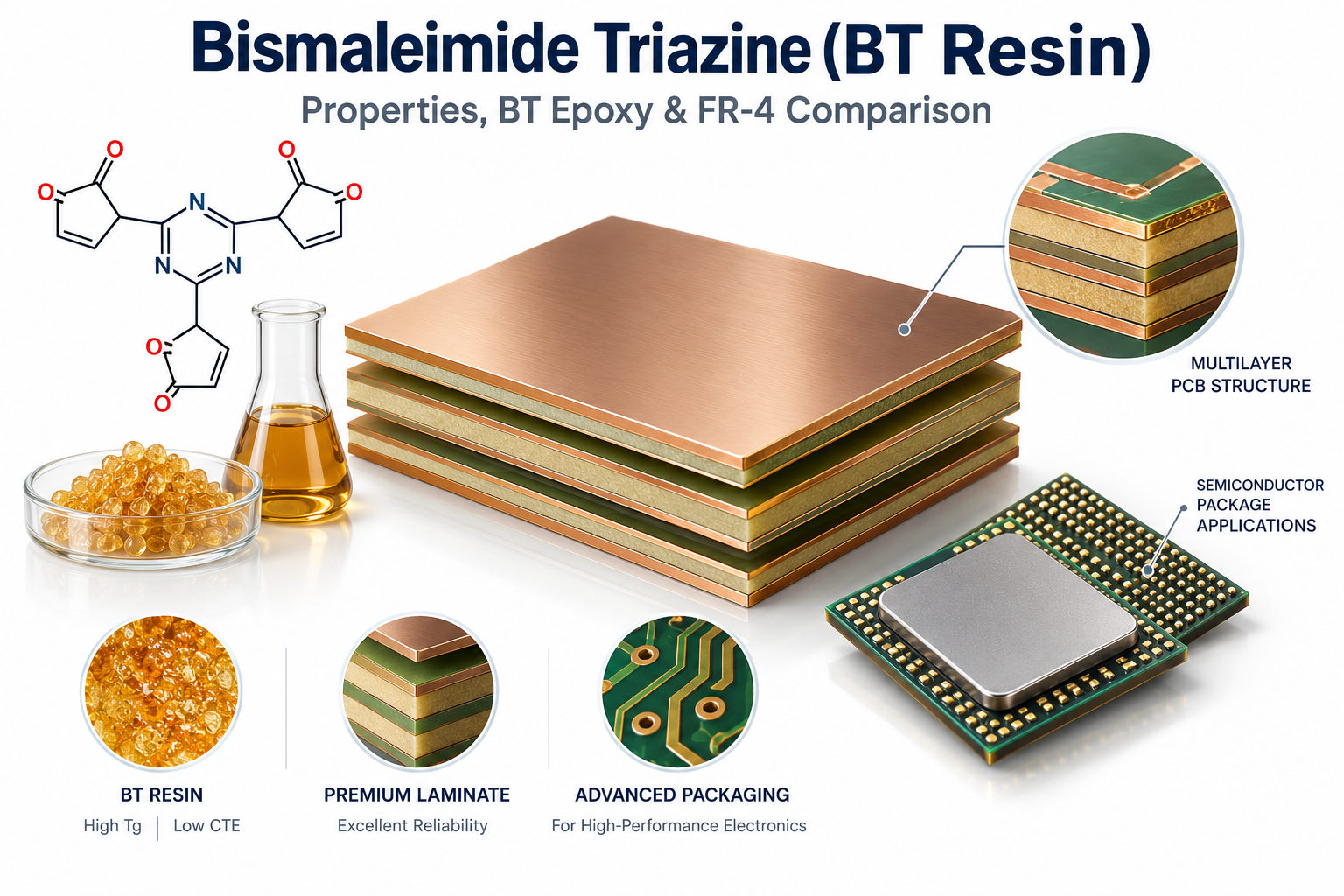
Bismaleimide triazine, or BT resin, is a high-performance thermosetting resin system based primarily on bismaleimide and cyanate-ester chemistry. It is widely used in electronic laminates and organic semiconductor package substrates.
The search phrase bismaleimide triazine BT resin refers to this formulated resin family rather than one universal commercial grade.
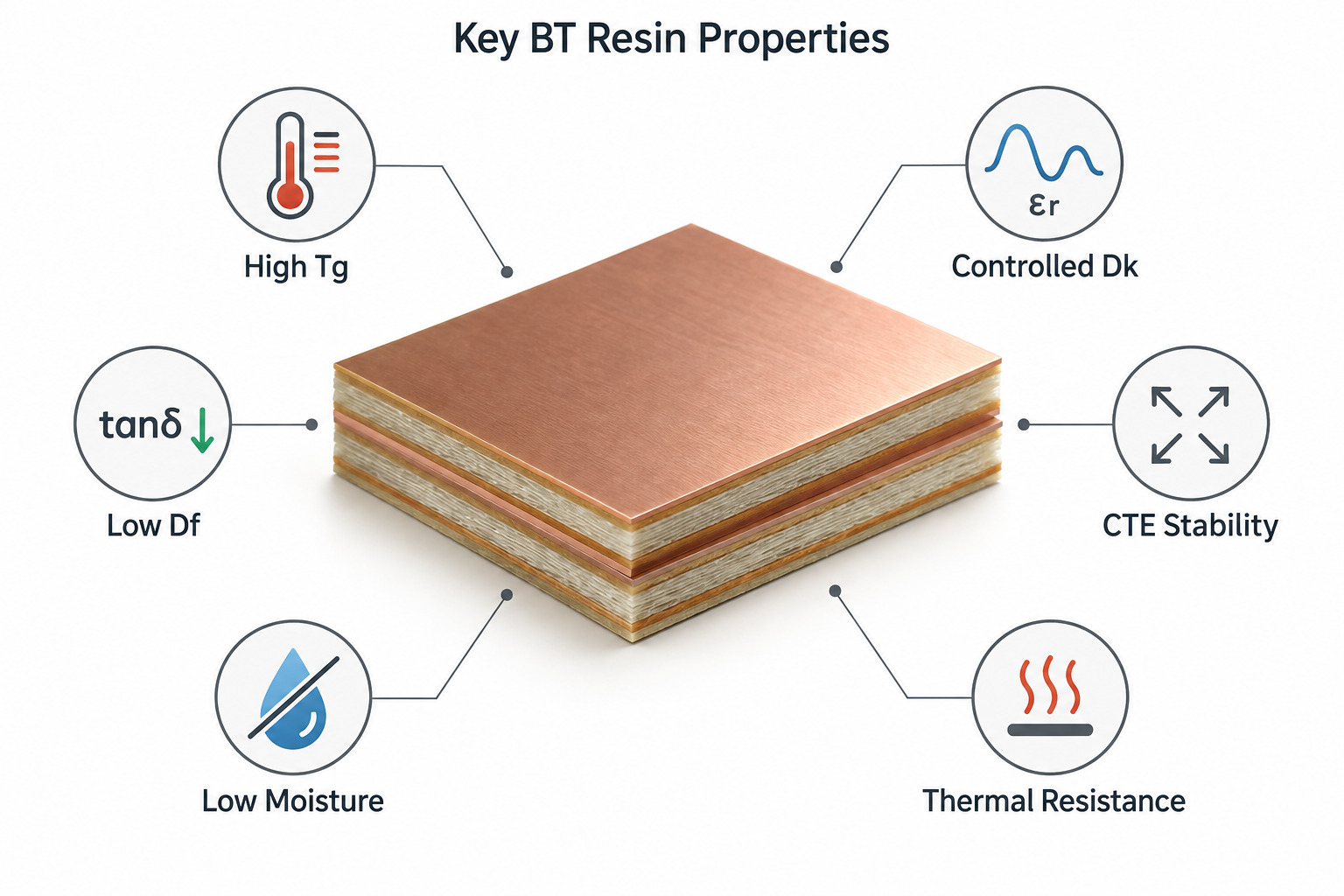
During curing, the reactive resin components form a highly crosslinked three-dimensional network. This structure can provide a useful combination of:
- High glass-transition temperature
- Dimensional stability
- Low moisture absorption
- Thermal resistance
- Electrical insulation
- Controlled dielectric properties
- Good compatibility with multilayer structures
BT resin is not one single chemical compound or one fixed commercial material. Different suppliers can modify the formulation with epoxy, fillers, catalysts, flame retardants, reinforcement, and other additives.
For this reason, an engineer should not assume that every BT laminate has the same Tg, Dk, Df, CTE, or processing conditions.
How Is Bismaleimide Triazine Resin Structured and Cured?
BT resin should be understood as a crosslinked resin system rather than a single molecule with one fixed structure.
A bismaleimide triazine structure is best described as a cured network whose final properties depend on formulation and processing.
Its chemistry generally combines bismaleimide functionality with cyanate-ester chemistry. During curing, cyanate groups can react to form thermally stable triazine-ring structures, while the bismaleimide portion contributes additional crosslinking and heat resistance.
A simplified reaction concept is:
Bismaleimide + Cyanate-Ester Chemistry → Thermal Cure → Crosslinked BT Resin Network
The resulting network can be further modified to balance electrical, mechanical, and processing properties.
Bismaleimide Component
The bismaleimide portion contributes thermal stability and a highly crosslinked structure. Pure BMI systems can be relatively rigid or brittle, so practical electronic formulations are often modified.
Cyanate-Ester Component
Cyanate groups form triazine-ring structures during curing. These structures are associated with high-temperature performance and useful dielectric characteristics.
Modifiers
Commercial BT systems may incorporate epoxy or other modifiers to improve flow, toughness, adhesion, cure behavior, and PCB processing.
Therefore, drawings that show one exact “BT molecule” can be misleading. The material used in an actual laminate is a formulated thermoset system.
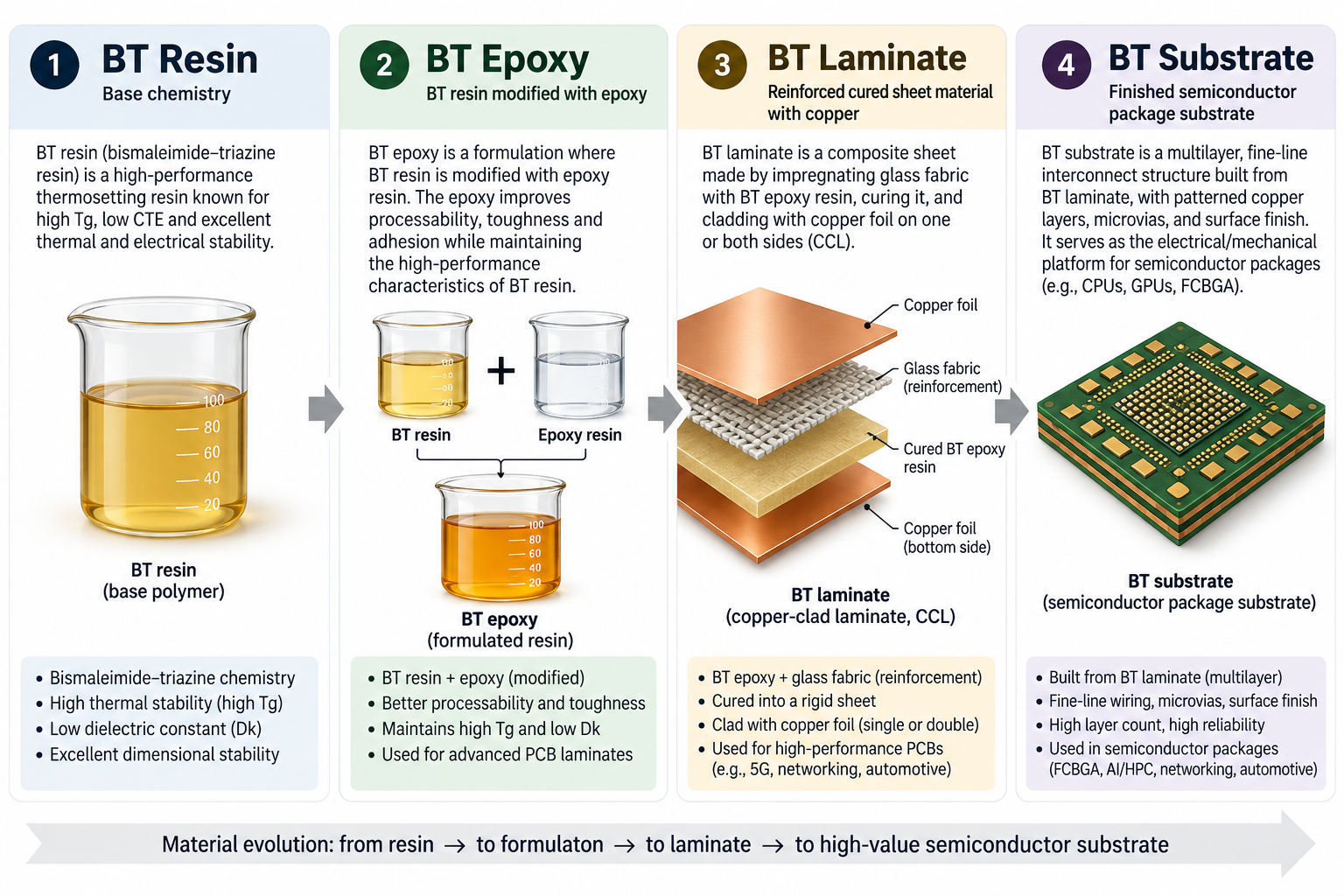
What Is the Difference Between BT Resin, BT Epoxy, BT Laminate and BT Substrate?
These terms describe different stages or forms of the material system.
| Term | Meaning |
|---|---|
| BT resin | Bismaleimide-triazine thermosetting resin chemistry |
| BT epoxy | BT resin system modified or blended with epoxy |
| BT prepreg | Reinforcement impregnated with partially cured BT-based resin |
| BT laminate | Cured reinforced sheet material made with a BT resin system |
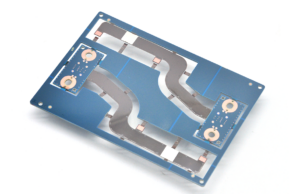
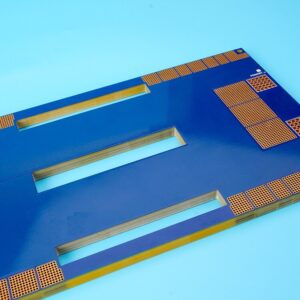
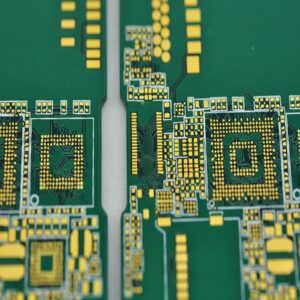
| BT PCB | Printed circuit board fabricated using BT-based laminate |
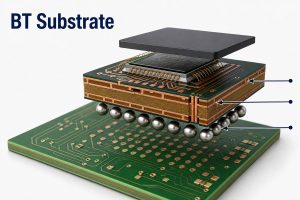
| BT substrate | Finished semiconductor package substrate using BT-based material |
The distinction matters during RFQ and material selection. Asking for “BT resin” does not tell a PCB manufacturer which laminate construction, copper foil, glass style, resin content, or cured thickness to use.
Similarly, a BT substrate is not merely a sheet of BT laminate. It is a finished interconnect structure that can contain fine traces, microvias, solder-mask or build-up layers, package pads, and other features.
For more detail on package construction, SAP/mSAP processing, and BT vs ABF, see our BT Substrate: Material, Process and ABF Comparison guide.
What Properties Matter in a BT Resin Laminate?
The most important BT laminate properties depend on the application. Package substrates may prioritize dimensional stability and moisture behavior, while high-speed boards may place greater emphasis on Dk and Df.
| Property | Why It Matters |
|---|---|
| Tg | Dimensional and mechanical behavior through thermal cycles |
| Td | Thermal decomposition resistance |
| X/Y CTE | In-plane dimensional stability |
| Z-axis CTE | Via and plated-hole reliability |
| Dk | Impedance, propagation velocity, and trace geometry |
| Df | Dielectric contribution to signal loss |
| Moisture absorption | Package reliability and reflow behavior |
| Peel strength | Copper-to-laminate adhesion |
| Flexural/mechanical properties | Thin-substrate handling and package stability |
The values cannot be generalized to every BT material. For example, AGC’s N5000 is a commercially available BT epoxy laminate and prepreg with published dielectric values around Dk 3.6 and Df 0.01 under its specified test conditions.
Those numbers should be treated as one material-grade example, not as a universal BT specification.
Research and commercial formulations can show substantially different Tg and dielectric performance because resin chemistry, fillers, glass reinforcement, resin content, and test method all influence the result.
Always compare exact material grades using the same test method and frequency.
Why Is BT Resin Used for BGA, CSP and IC Package Substrates?
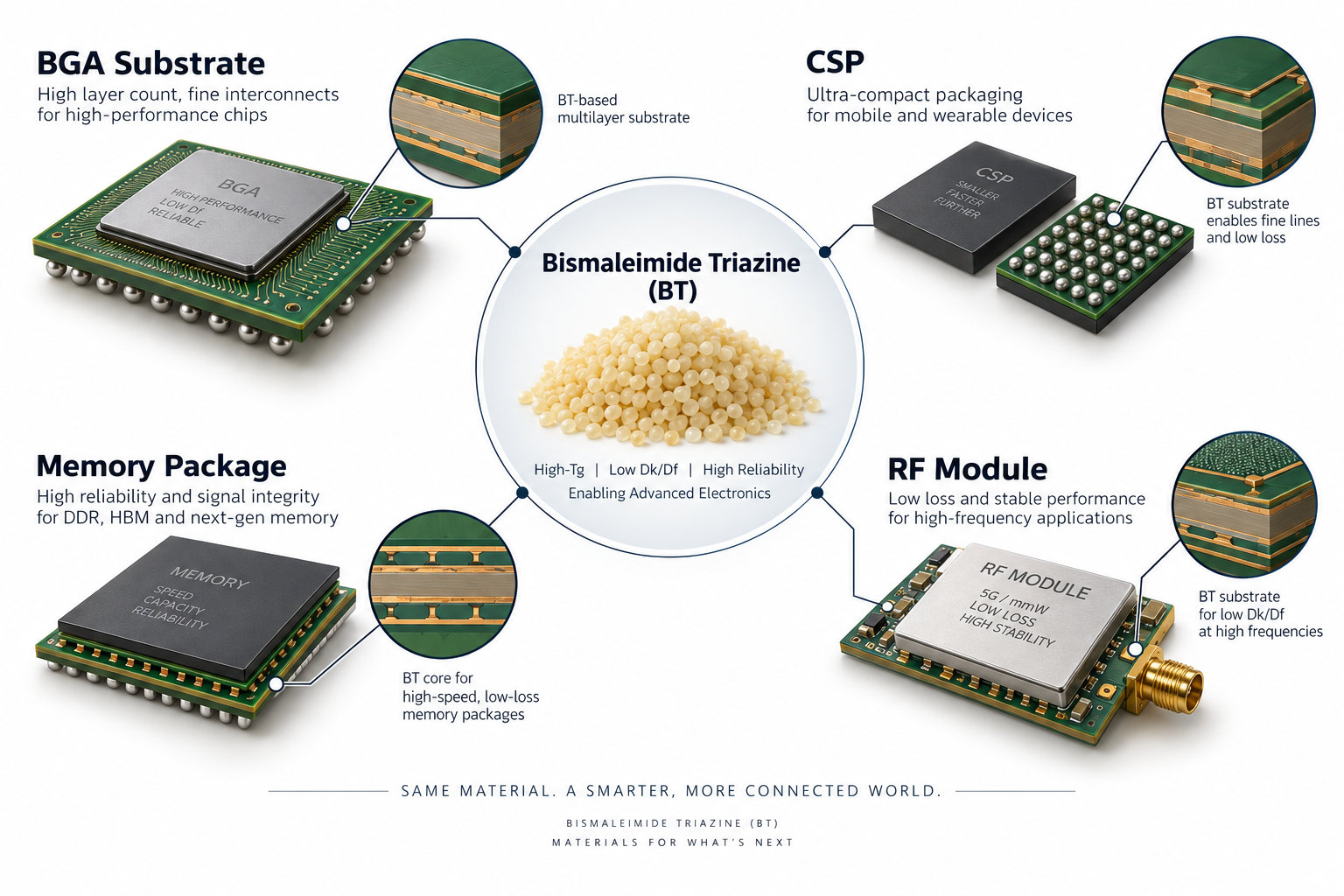
BT resin is widely used in organic package substrates because semiconductor packaging requires more than ordinary PCB electrical insulation.
A bismaleimide triazine substrate uses this material family to support fine package interconnections and repeated thermal cycles.
A package substrate must maintain dimensional control while dealing with:
- Fine-pitch package routing
- Thin core and dielectric structures
- Multiple lead-free reflow cycles
- Silicon-to-substrate CTE mismatch
- Moisture exposure
- BGA or CSP warpage
- Fine via and pad registration
- Package assembly stress
BT-based laminates can provide a useful balance of high-temperature stability, low moisture uptake, mechanical rigidity, and electrical performance.
This is particularly important in thin BGA and CSP structures. Even small dimensional changes can affect solder-ball coplanarity, substrate warpage, trace registration, or package reliability.
BT materials are therefore commonly associated with:
- BGA substrates
- CSP substrates
- Memory packages
- SiP modules
- Flip-chip package structures
- RF and communication modules
The final substrate performance still depends on the exact BT grade, stackup, copper pattern, package size, substrate thickness, and manufacturing process.
BT Resin vs FR-4: What Is the Difference?
FR-4 and BT resin laminates are both organic electronic materials, but they are normally selected for different performance and cost targets.
| Factor | FR-4 | BT Resin Laminate |
|---|---|---|
| Primary use | General PCB manufacturing | Package substrates and higher-reliability structures |
| Resin system | Primarily epoxy-based | BT or BT-epoxy-based |
| Tg | Wide range by grade | Often high, but grade-dependent |
| Dimensional stability | Suitable for conventional PCB | Better suited to demanding package control |
| CTE control | Depends on grade and reinforcement | Low-CTE formulations available |
| Moisture behavior | Grade dependent | Often selected for lower moisture sensitivity |
| Dielectric properties | Standard to low-loss grades available | Grade dependent; can be optimized for package/high-speed use |
| Thin-substrate use | Possible but not its main strength | Common in package substrate applications |
| Processing familiarity | Very mature | More material-specific |
| Material cost | Lower | Generally higher |
The main difference is not simply that BT has a higher Tg. High-Tg FR-4 materials can also provide strong thermal performance.
BT becomes more attractive when several requirements appear together, such as high dimensional stability, low package warpage, moisture resistance, thin substrate construction, repeated reflow reliability, and fine-pitch interconnection.
FR-4 remains the more economical and widely available choice for most conventional PCBs.
Is BT Resin Always Better Than FR-4?
No. BT resin is not automatically a better PCB material than FR-4. It is better suited to certain applications where its material characteristics solve specific reliability or dimensional problems.
Standard or high-Tg FR-4 is usually the practical choice for:
- Industrial control boards
- Consumer electronics
- General multilayer PCBs
- Power-control boards
- Cost-sensitive products
- Conventional SMT assemblies
- Moderate-density HDI designs
BT becomes more attractive when the product requires:
- Semiconductor package substrate construction
- Very thin organic substrates
- Tighter dimensional stability
- Lower package warpage
- Fine-pitch BGA or CSP structures
- Low moisture sensitivity
- Higher package-level thermal reliability
Using BT where ordinary FR-4 already meets the electrical and reliability requirements can increase material cost and supply complexity without creating a meaningful product benefit.
The correct decision should come from the complete stackup, package geometry, thermal cycle, electrical requirements, warpage target, and qualification specification.
Where Is Bismaleimide Triazine Used in Electronics?
Bismaleimide triazine materials are most strongly associated with semiconductor packaging, but their use is not limited to one product type.
A bismaleimide triazine PCB may also be specified when a conventional board needs the qualified thermal or dimensional behavior of a BT laminate.
Common applications include:
- BGA package substrates
- CSP substrates
- Memory package substrates
- System-in-Package modules
- RF modules
- Communication modules
- Selected LED package substrates
- High-reliability electronic modules
- Selected high-frequency PCBs
- Thin multilayer interconnect structures
A BT laminate can also be used for conventional PCB structures when its thermal or dimensional characteristics provide a useful engineering advantage.
However, it should not be assumed that every high-speed PCB needs BT resin. Modern high-speed boards can use multiple material families, including low-loss FR-4 derivatives, PPE/PPO systems, PTFE-based laminates, hydrocarbon ceramics, and other specialty materials.
The application requirement should determine the laminate family, not the material’s reputation alone.
What Are the Manufacturing Challenges of BT Epoxy Laminate?
BT epoxy laminate can require tighter material and process control than a standard FR-4 production flow.
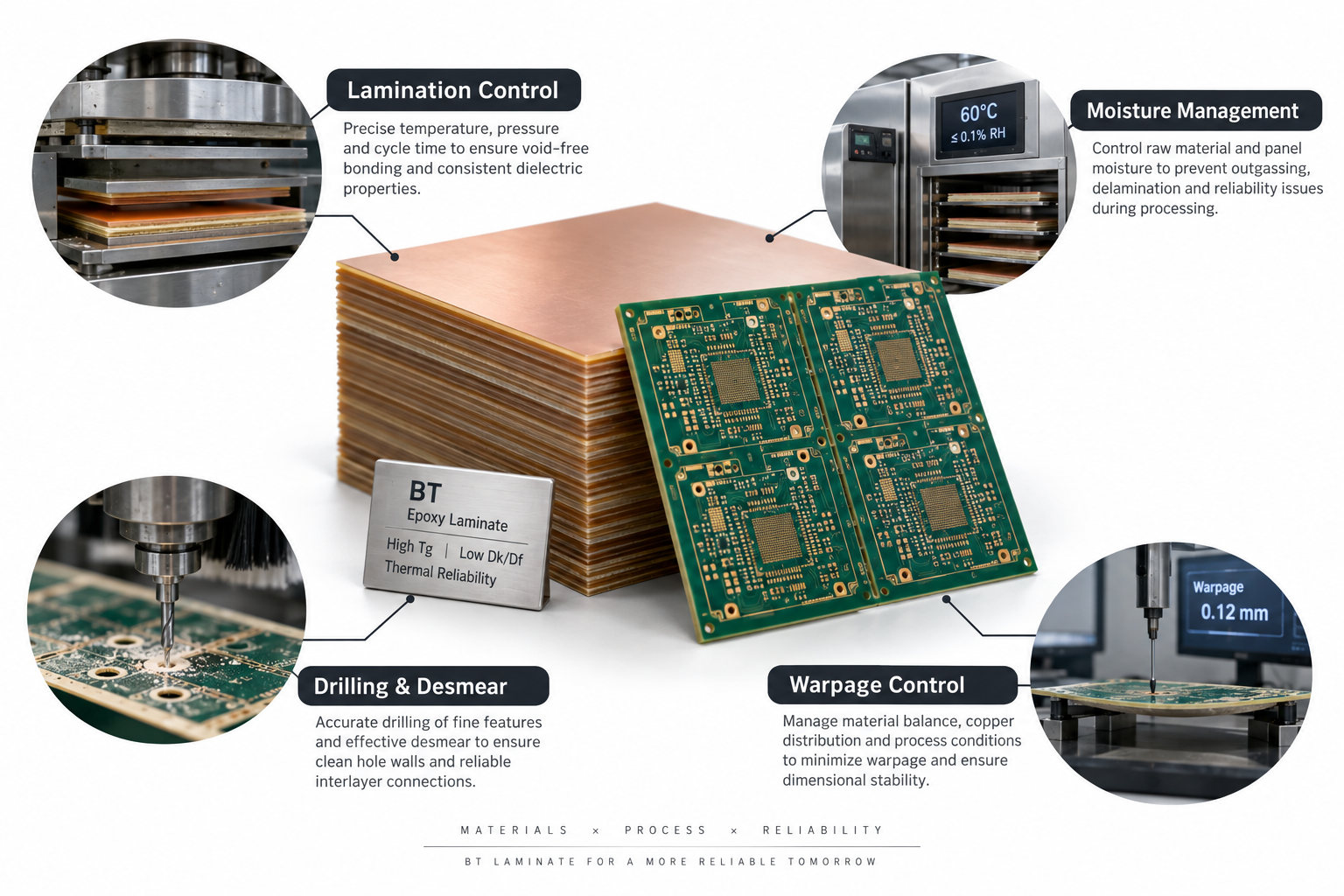
Important manufacturing factors include:
- Material storage
- Moisture control
- Prepreg handling
- Lamination temperature and pressure
- Resin-flow control
- Cure profile
- Dimensional movement
- Drilling parameters
- Desmear conditions
- Copper adhesion
- Thin-board handling
- Warpage control
Moisture Management
Low moisture absorption is an important material characteristic, but storage and handling still matter. Prepreg and thin laminate structures should follow supplier recommendations.
Lamination
BT resin flow and cure behavior differ by formulation. The press cycle should follow the actual laminate supplier’s process window rather than an FR-4 recipe being reused automatically.
Drilling and Hole Preparation
Drill parameters, smear behavior, and desmear chemistry can depend on the cured resin system and glass construction.
Dimensional Stability
Package substrates and thin BT boards may require tighter compensation because small X/Y movement can affect fine-pitch registration.
Warpage
Thin BT-based structures can still warp if copper distribution, build-up symmetry, substrate thickness, package design, or lamination stress is unbalanced. A high-performance resin does not eliminate the need for mechanical stackup control.
How Should Engineers Specify BT Material for PCB Fabrication?
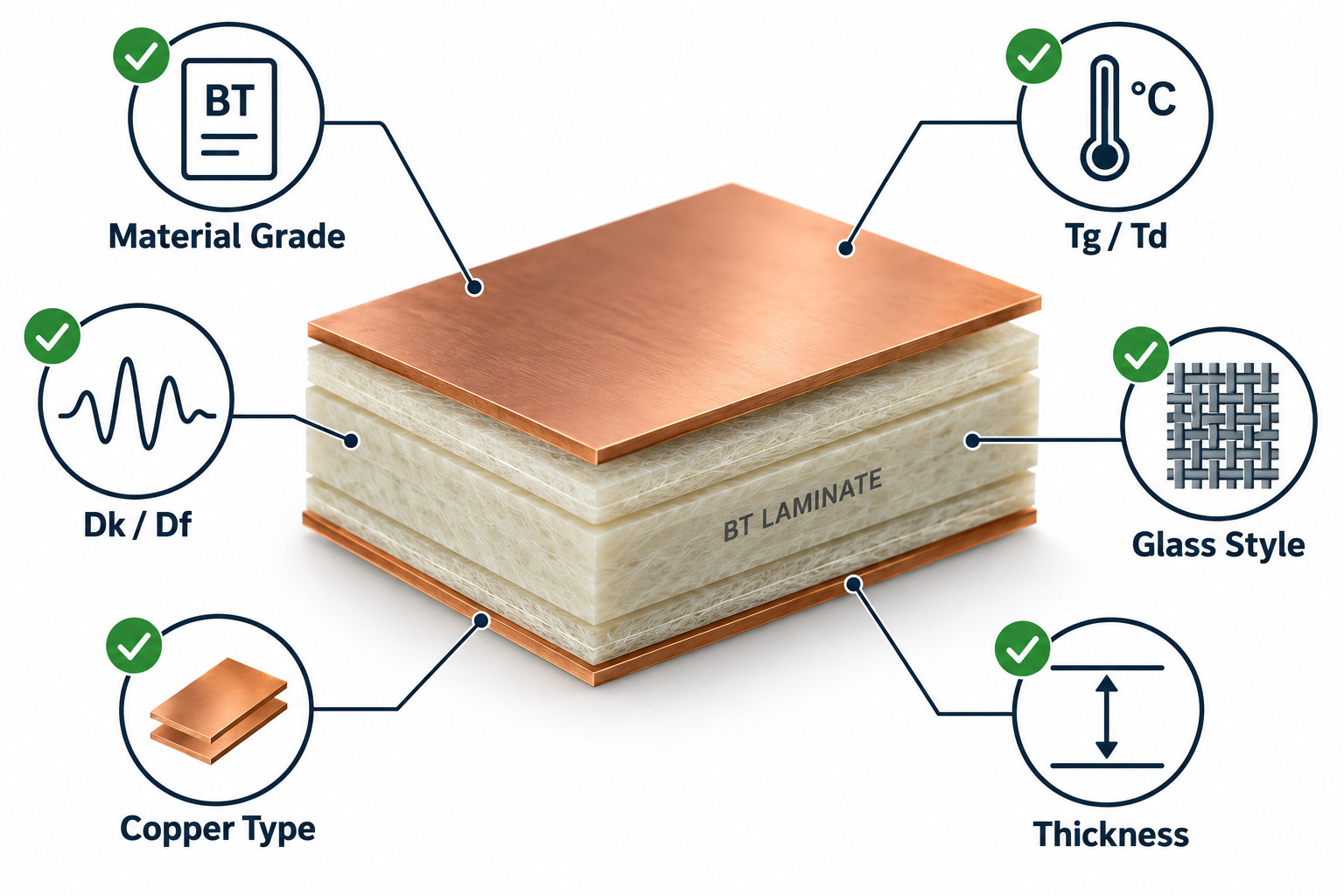
A production drawing should identify the exact BT laminate requirements rather than simply stating “BT material.”
Useful information includes:
- Material manufacturer
- Exact material grade
- Core or prepreg designation
- Finished dielectric thickness
- Glass style
- Resin content
- Copper foil type and weight
- Tg and test method
- Dk and Df test frequency/method
- X/Y and Z-axis CTE where critical
- Moisture requirement
- Finished board thickness
- Surface finish
- Controlled impedance
- Approved alternative materials
For high-frequency designs, Dk and Df values should be tied to the relevant test method and frequency. A Dk value measured by one method should not automatically replace a design Dk obtained through another method.
For thin or packaging-related structures, engineers should also specify dimensional, warpage, and registration requirements where applicable.
“Use BT material” is not enough for a controlled production release. Two BT laminates may differ significantly in processing behavior and electrical performance.
When Should You Choose BT Resin Instead of Another PCB Material?
Material selection should start from the product requirement rather than choosing BT first and designing around it.
| Requirement | Material Direction to Consider |
|---|---|
| General multilayer PCB | Standard or high-Tg FR-4 |
| Cost-sensitive electronics | FR-4 |
| High-reliability conventional PCB | High-Tg / specialty FR-4 |
| BGA/CSP organic package substrate | BT resin commonly considered |
| Thin warpage-sensitive package | BT or another qualified package substrate material |
| Very high-speed PCB | Low-loss FR-4, PPE/PPO, PTFE/hydrocarbon or other high-speed materials |
| Flexible circuit | Polyimide |
| Very high thermal conductivity | Ceramic or metal-based structures |
| Advanced high-density IC build-up | BT core, ABF, or other package-specific systems |
BT is strongest when thermal, moisture, dimensional, and package-level requirements need to be balanced in one organic material system.
It is not necessarily the first choice for ultra-high-frequency transmission, extreme thermal conductivity, flexible construction, or every advanced IC substrate architecture.
The material decision should therefore consider the entire structure: electrical performance, package geometry, process capability, reliability, cost, supply availability, and customer qualification.
FAQ About Bismaleimide Triazine
1. What does BT stand for in PCB materials?
BT stands for Bismaleimide Triazine, a high-performance thermosetting resin system used in electronic laminates and package substrates.
2. Is BT resin the same as BT epoxy?
No. BT epoxy generally refers to a BT resin system that has been modified or blended with epoxy to adjust processing, adhesion, toughness, or other material properties.
3. Is BT resin better than FR-4?
Not for every PCB. BT is most useful when thermal stability, dimensional control, moisture behavior, package warpage, or semiconductor-substrate requirements justify the additional material cost.
4. Is BT resin used for BGA substrates?
Yes. BT resin is widely associated with BGA, CSP, memory, SiP, and other organic semiconductor package substrates.
5. Does every BT laminate have the same Tg and Dk?
No. BT is a material family. Tg, Dk, Df, CTE, moisture absorption, and other values vary by formulation, reinforcement, resin content, and test method.
6. Is a BT substrate the same as an IC substrate?
A BT substrate is one type of organic IC package substrate. Other IC substrates can use ABF and additional material systems depending on package architecture and interconnect density.
Bismaleimide triazine should therefore be specified as a material system, not as a single fixed-property laminate. Resin formulation, epoxy modification, glass reinforcement, copper construction, thickness, and processing conditions all influence how the finished PCB or substrate performs.
For a PCB project requiring BT laminate or another specialty material, EBest Circuit can review the material grade, stackup, dielectric thickness, copper construction, impedance requirements, finished thickness, and manufacturing constraints before fabrication. Send your project files to sales@bestpcbs.com for DFM review.