alternative electronic components are replacement parts considered when the original BOM item is unavailable, expensive, obsolete, long-lead, or unsuitable for production. For buyers, the real question is not only “Can we find another part?” The real question is “Can this alternative be approved, sourced, assembled, inspected, and tested without creating new PCBA risks?”
In PCB and PCBA projects, a substitute component can affect footprint fit, pinout, package height, soldering quality, electrical performance, lifecycle risk, certification requirements, and final product reliability. EBest Circuit (Best Technology) supports component sourcing, BOM review, PCB manufacturing, PCBA assembly, DFM review, and testing support for engineers and buyers who need practical help before production. For BOM review or PCBA project support, contact sales@bestpcbs.com.
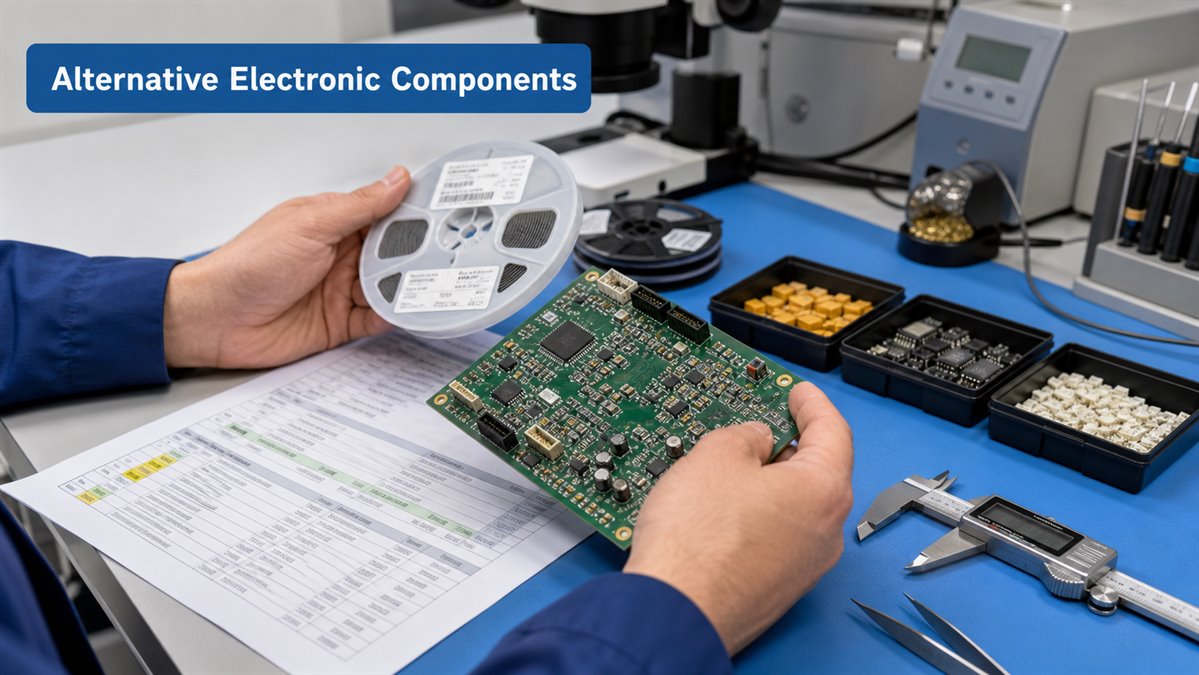
What Are Alternative Electronic Components?
Alternative electronic components are parts that may replace the original component listed in a BOM after technical and sourcing review. They may come from another manufacturer, use a slightly different package, have a different tolerance, or offer similar electrical performance under the project’s required conditions.
They are often considered when the original part has one of these problems:
- Long lead time
- High price
- End-of-life status
- Low distributor stock
- Minimum order quantity issue
- Import or supply chain limitation
- Unstable availability for mass production
- Prototype BOM needing faster sourcing
For a PCBA buyer, an alternative part is not automatically safe just because it has the same value or similar function. A 10k resistor from another brand may be simple to approve, but an IC, connector, MOSFET, regulator, relay, transformer, sensor, or RF part may require much deeper review.
Buyer-focused rule:
A good alternative component should protect schedule and cost without creating assembly, testing, or field reliability problems.
Alternative Electronic Components vs Equivalent Parts
The terms alternative component, equivalent part, alternate part, and drop-in replacement are often used together, but they do not always mean the same thing.
| Term | Practical meaning | Buyer risk level |
| Alternative component | A possible replacement after review | Medium to high |
| Equivalent part | Similar function and specifications | Medium |
| Drop-in replacement | Same footprint, pinout, and usable function | Lower, but still needs approval |
| Alternate part | A second approved option in the BOM or AVL | Lower when pre-approved |
| Substitute component | Any replacement proposed for the original part | Depends on review depth |
A true drop-in replacement should match the original component closely enough that the PCB layout, footprint, assembly process, and product function do not need major changes. But even then, buyers should confirm datasheet details, tolerance, temperature range, package drawing, lifecycle status, and test results.
A part can be electrically similar but mechanically wrong. Another part can fit the footprint but fail under thermal, current, EMI, or endurance requirements. This is why component alternatives should be reviewed by both sourcing and engineering teams before procurement.
How to Find Alternative Electronic Components When Supply Is Limited?
When supply is limited, many buyers search for alternatives through distributor platforms, cross-reference tools, old BOM records, manufacturer recommendations, or supplier suggestions. These tools are useful, but they should be treated as the first step, not the final approval.
Key checks include:
- Confirm the original MPN and manufacturer.
- Check whether the part is active, NRND, EOL, or obsolete.
- Compare authorized distributor stock and lead time.
- Search for same-value and same-package options.
- Review manufacturer cross-reference suggestions carefully.
- Ask the PCBA supplier whether the alternative affects assembly.
- Get customer approval before purchasing substituted parts.
For example, a buyer may find an alternative voltage regulator with the same output voltage and package name. That still does not confirm the pinout, thermal pad size, dropout voltage, output current, stability with existing capacitors, or layout requirements. If the board has already been designed, those details can decide whether the substitute is usable or dangerous.
A practical way to reduce risk is to divide the search into two stages:
| Stage | Goal | What to avoid |
| Sourcing search | Find available candidates | Choosing only by price or stock |
| Engineering review | Confirm fit for PCBA production | Approving without datasheet comparison |
When buyers send the BOM to EBest Circuit for review, our team can help check sourcing availability, identify possible supply risks, and coordinate review points before PCBA production.
When Should Buyers Consider Electronic Component Alternatives?
Buyers should consider electronic component alternatives when the original BOM creates a clear business or production risk. The goal is not to change parts casually. The goal is to keep the project moving while protecting quality.
Common situations include:
- The original part has a lead time of several months.
- A prototype needs to be built quickly for validation.
- The quoted component cost is too high for production.
- The original part is obsolete or close to EOL.
- The distributor stock cannot support repeat orders.
- The project needs a second source for supply stability.
- The first PCBA batch finds a sourcing or soldering issue.
A low-risk case might be a passive component with matching value, tolerance, package size, voltage rating, and temperature range. A high-risk case might be an MCU, power IC, RF part, connector, display module, sensor, transformer, relay, or safety-related component.
A safer decision path is:
- Use alternatives early during prototype review.
- Keep approved alternates in the BOM or AVL.
- Avoid last-minute substitution after PCB fabrication.
- Confirm whether the substitute changes assembly or test requirements.
- Record the approved MPN before purchasing parts.
This makes the BOM easier to quote, easier to source, and easier to repeat in later production.
What Should Be Checked Before Approving Alternative Electronic Components?
Before approving alternative electronic components, buyers should check more than the first line of the datasheet. The approval should connect sourcing, PCB layout, assembly, inspection, and product performance.
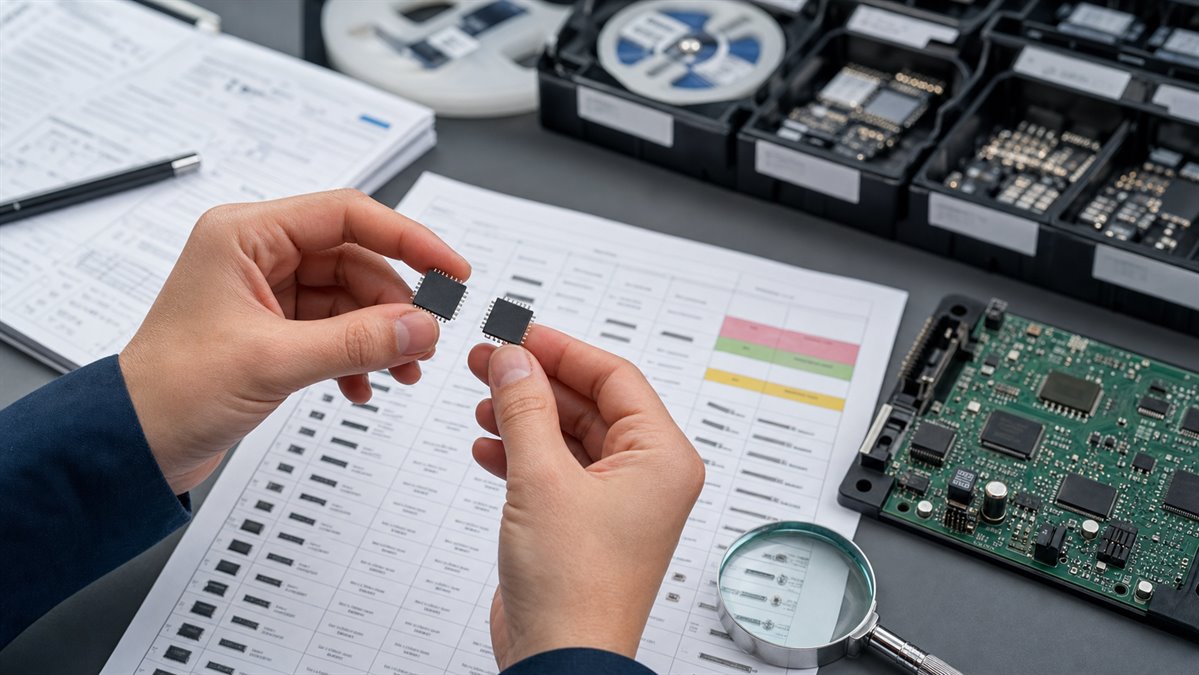
| Review item | What to check | Why buyers care |
| Electrical rating | Voltage, current, power, tolerance | Prevent overheating or wrong performance |
| Package | Size, height, pin count, body shape | Avoid assembly and enclosure mismatch |
| Footprint | Pad size, pitch, thermal pad | Prevent solder defects or non-fit |
| Pinout | Pin order and function | Avoid board failure or damage |
| Lifecycle | Active, NRND, EOL, obsolete | Support repeat production |
| Source | Authorized supplier, traceability | Reduce counterfeit risk |
| Assembly | SMT/THT process, reflow limit | Prevent soldering defects |
| Testing | ICT, AOI, functional test | Confirm board-level result |
For PCBA buyers, the most dangerous replacements are not always the most expensive parts. Sometimes the risky part is a small connector, diode, capacitor, switch, or transistor that looks simple but has a different footprint, polarity, height, or derating requirement.
Approval documents should include:
- Original BOM with MPN
- Proposed alternative MPN
- Datasheets for both parts
- PCB footprint or package drawing
- Customer approval record
- Special assembly notes
- Test requirements after substitution
Without these details, the supplier may be forced to pause the quote, ask repeated questions, or proceed with unclear risk. Clear approval saves time before production.
Alternative Components for BOM Review and PCBA Production
Alternative components should be reviewed before the BOM is released for procurement. If the buyer waits until after the PCB is already fabricated, the substitute may require a board revision, manual rework, or delayed assembly.
In PCBA production, BOM substitution usually affects five practical areas:
- Quotation accuracy
- PCB footprint fit
- Assembly process
- Inspection method
- Repeat production
If the BOM contains obsolete, unclear, or single-source parts, the quotation may look fine at first but fail during procurement. A BOM review can flag these items before the buyer commits to schedule.
A substitute may have the same function but a different pad layout. Even a small package difference can cause tombstoning, insufficient solder, bridging, or poor inspection access.
Some alternatives need different soldering temperatures, handling requirements, moisture sensitivity control, or manual assembly steps. AOI can check markings, orientation, and visible solder joints, but hidden pins, BGAs, bottom-terminated parts, or shielded areas may need X-ray or functional testing.
A one-time shortage fix is different from a stable second-source strategy. If the project will repeat, the approved alternative should be documented in the AVL or BOM notes.
EBest Circuit supports component sourcing together with PCB fabrication and PCB assembly, so buyers can review BOM risk before the project enters production.
Low-Cost Alternatives for High-Demand Electronic Components
Low-cost alternatives for high-demand electronic components can reduce project cost, but they should never be approved by price alone. A cheaper component is only useful if it still meets the electrical, mechanical, assembly, and reliability needs of the product.
A low-cost alternative may be reasonable when:
- The part is passive and specifications match clearly.
- The package and footprint are the same.
- The part has stable supply from reliable channels.
- The application is not safety-critical or high-stress.
- The buyer has approved the datasheet comparison.
- Functional testing confirms board-level performance.
A low-cost alternative is risky when:
- The original part handles power, heat, signal integrity, or protection.
- The substitute has a different tolerance or derating curve.
- The package height affects enclosure fit.
- The part marking or source is unclear.
- The manufacturer has limited traceability.
- The change may affect certification or customer approval.
For example, replacing a common resistor may be straightforward. Replacing a DC-DC converter, MOSFET, crystal, optocoupler, connector, or sensor needs more caution. The wrong choice can save a few cents on the BOM but create failed testing, rework, delayed shipment, or field failure.
Better buyer question:
Do not only ask “Is this cheaper?” Ask “Will this alternative still pass assembly, inspection, testing, and repeat production?”
Alternative Component Sourcing for Obsolete and Hard-to-Find Parts
Obsolete and hard-to-find electronic parts create a different kind of risk. The issue is not only finding stock. The issue is confirming whether the stock is reliable, traceable, and suitable for the PCBA build.
When a part is obsolete or EOL, buyers usually have three choices:
| Option | When it works | Main risk |
| Buy remaining stock | Short-term repair or small batch | Counterfeit or aging inventory |
| Approve an alternative | Prototype or production continuation | Requires technical review |
| Redesign the circuit or PCB layout | Long-term product lifecycle | Higher engineering time and cost |
For BestPCBS customers, the most practical route depends on the project stage. If the board is still in prototype, it may be easier to approve a better alternative before layout is locked. If the board is already in production, the team needs to protect footprint compatibility and testing reliability.
Important review points include:
- Is the original part officially obsolete or only temporarily out of stock?
- Can the current PCB footprint accept the proposed alternative?
- Does the substitute require firmware, calibration, or circuit changes?
- Is the source traceable enough for the product’s quality requirement?
- Should the buyer approve more than one alternate part for future builds?
EBest Circuit can help buyers review BOM shortage issues and coordinate sourcing options, but the final approval should remain clear between the customer and the engineering requirements of the product.
PCBA assembly and testing checks after using alternative components:
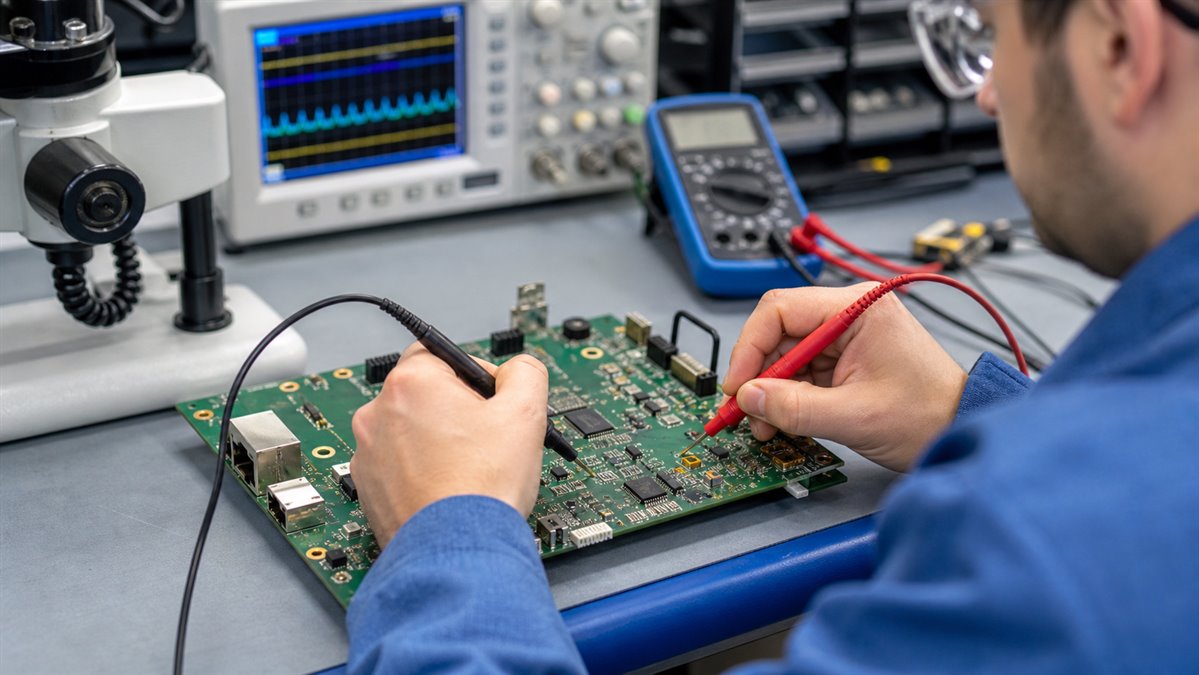
After an alternative component is approved, the PCBA process should still be checked. A substitute may pass BOM review but create assembly or testing differences on the production line.
PCBA checks should include:
- Confirm the approved MPN is used in purchasing.
- Check package size and feeder suitability.
- Confirm polarity and pin 1 direction.
- Review stencil opening if solder volume may change.
- Check whether manual soldering is required.
- Inspect part marking and lot traceability.
- Run AOI, visual inspection, X-ray, or functional testing as needed.
- Record the substitution in production documents.
A common production issue is that the buyer approves a new part but the BOM file, purchase order, assembly drawing, or test instruction still shows the old part. That mismatch can slow down procurement or create confusion during incoming inspection.
For prototype and small-batch PCBA, one practical solution is first-article confirmation. The supplier builds and checks the first board or first panel before continuing with the full batch. This can catch wrong orientation, wrong package height, poor solder joints, or unexpected functional behavior before more boards are assembled.
For production orders, the better approach is controlled documentation. The approved alternative should be clearly listed in the BOM, and any special test requirement should be included before assembly starts.
How EBest Circuit Supports Alternative Electronic Components for PCB and PCBA Projects
EBest Circuit (Best Technology) supports buyers who need alternative electronic components as part of PCB and PCBA projects. Our role is not to make unapproved design decisions for the customer. Our role is to help review manufacturability, sourcing, assembly, and test risks so the customer can approve the right choice with clearer information.
EBest Circuit supports PCB and PCBA projects with:
- BOM review and component sourcing support
- Alternative MPN comparison before procurement
- DFM review for PCB manufacturability
- PCB layout manufacturability review
- PCB fabrication
- SMT assembly
- Through-hole and mixed PCBA assembly
- Incoming material inspection
- Functional testing support
- Prototype, small-batch, and production support
For engineers, this can reduce back-and-forth during quotation. For buyers, it helps control sourcing risk before money is spent on the wrong parts. For project managers, it keeps BOM, PCB, assembly, and testing decisions connected instead of scattered across different suppliers.
Project example:
A North American industrial controller customer needed 120 PCBAs for a pilot build. The original BOM included a DC-DC converter with a 16-week lead time. A lower-cost alternative was available, but the first datasheet review showed a different recommended input capacitor range and a slightly different thermal performance curve.
Instead of approving the substitute only by output voltage, the review focused on the real PCBA risks:
- Input voltage range under customer operating conditions
- Output current and derating at expected enclosure temperature
- Pin compatibility with the existing PCB footprint
- Package height under the metal housing
- Reflow profile and moisture sensitivity
- Functional test points after assembly
The customer approved a different second-source part after reviewing the data. The pilot batch moved forward without changing the PCB layout, and the test plan added a load check for the power rail. For the buyer, the value was not just finding a cheaper part. The value was avoiding a late-stage PCBA failure caused by an incomplete substitution review.
If your project has shortage, EOL, long-lead, or BOM cost pressure, send your BOM, Gerber files, assembly drawing, and test requirements to sales@bestpcbs.com for review.
FAQs About Alternative Electronic Components
Are alternative electronic components always safe to use?
No. Alternative electronic components are only safe after technical review and customer approval. The buyer should confirm datasheet specifications, footprint, pinout, package size, lifecycle, sourcing channel, assembly process, and testing requirements before production.
What is the difference between an alternative component and an equivalent part?
An equivalent part usually means a component with very similar specifications and function. An alternative component is broader. It may be a possible replacement, but it still needs review before it can be used in a PCB or PCBA project.
Can a PCBA supplier choose substitute components directly?
A PCBA supplier can suggest possible substitutes and explain sourcing or assembly risks, but the final approval should be confirmed by the customer. This is especially important for ICs, power parts, connectors, sensors, RF parts, safety-related components, and certified products.
What files should I send for alternative component review?
Send the BOM, original MPN, proposed alternative MPN if available, Gerber files, pick-and-place file, assembly drawing, datasheets, special test requirements, and any enclosure or mechanical restrictions that may affect component height or placement.
How can EBest Circuit help with alternative component sourcing?
EBest Circuit can help review BOM availability, compare possible alternatives, check PCB and PCBA manufacturability risk, coordinate component sourcing, assemble PCBAs, and support inspection and functional testing. For project review, contact sales@bestpcbs.com.
In Conclusion, alternative electronic components can help buyers solve shortage, cost, and obsolete-part problems, but only when the substitute is reviewed before PCBA production. A good approval process checks more than price and stock. It confirms footprint, pinout, package, datasheet limits, sourcing reliability, assembly process, inspection, and functional testing. EBest Circuit (Best Technology) helps engineers and buyers connect BOM review, component sourcing, PCB manufacturing, PCBA assembly, and testing support so alternative parts can be used with better control and fewer production surprises.