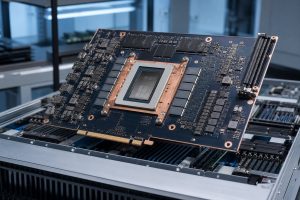
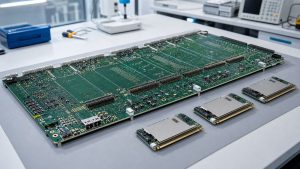
AI hardware PCB manufacturer Canada searches often begin with a location, but the real decision is broader: which supplier can turn your released files into working boards without introducing signal-integrity, thermal, component-sourcing, or production risks? For Canadian AI hardware companies, the right answer may be a domestic manufacturer, a China-based manufacturing partner, or a controlled combination of both.
This guide helps you compare those options based on what reaches your lab: buildable boards, traceable components, documented inspection, agreed testing, and a delivery plan that supports your next milestone. EBest Circuit (Best Technology) provides PCB assembly services in China for international customers, including projects shipped to Canada. Send your Gerber or ODB++ files, BOM, placement data, fabrication drawing, and test requirements to sales@bestpcbs.com for a project-specific review.
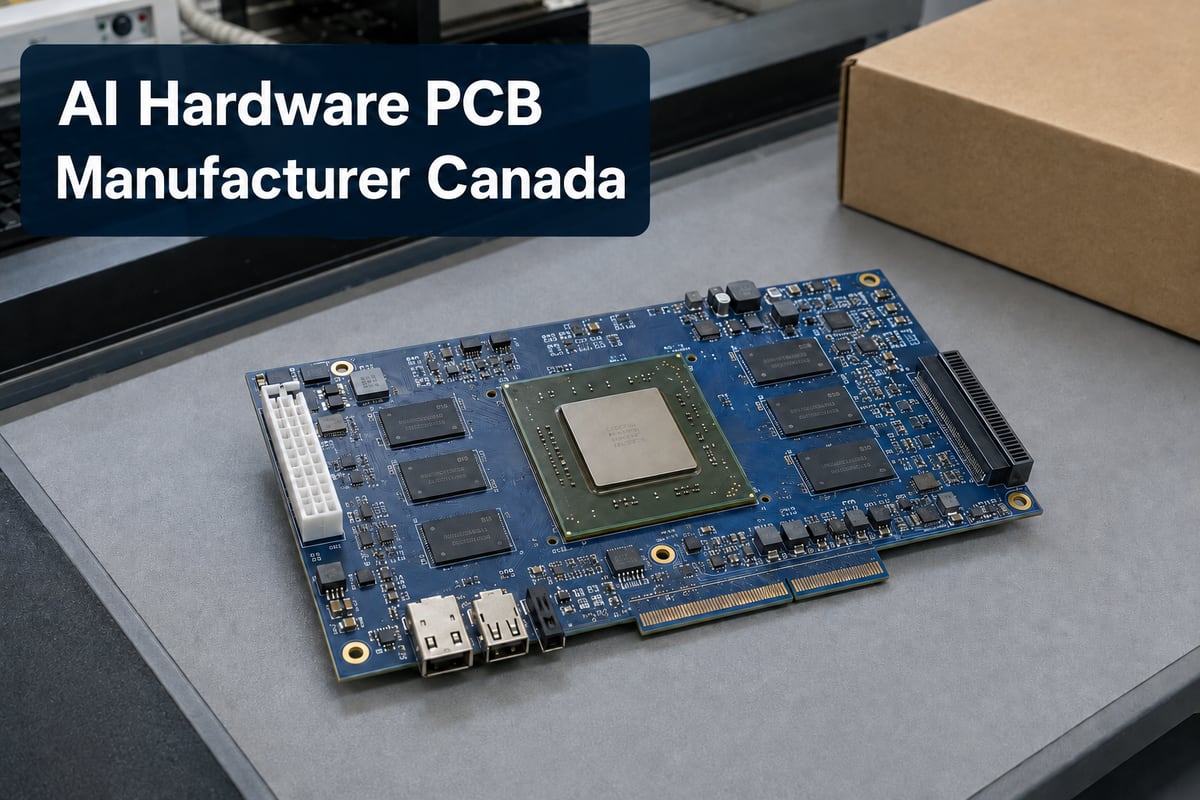
AI Hardware PCB Manufacturer Canada: What Should Buyers Compare?
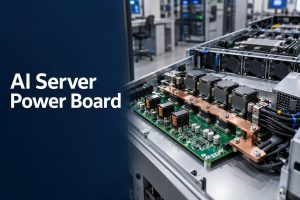
An AI hardware board can combine fast digital interfaces, dense memory routing, high-current power rails, large BGAs, thermal constraints, and expensive or allocation-sensitive components. A low unit price is not useful if the quotation excludes the laminate, inspection, programming, functional test, or documentation your project actually requires.
Compare the manufacturing outcome, not only the supplier location:
- PCB capability: layer count, controlled impedance, HDI structure, via type, copper weight, laminate, finished thickness, surface finish, and applicable tolerances;
- assembly capability: minimum component size and pitch, BGA handling, double-sided SMT, through-hole work, rework controls, and moisture-sensitive-device management;
- material control: approved manufacturers, exact part numbers, authorized substitutions, date-code requirements, shortages, and customer-supplied parts;
- inspection and test: solder paste inspection, AOI, X-ray, electrical test, programming, ICT, functional test, and the records supplied with the order;
- production model: prototype support, engineering communication, repeat-order control, capacity, and the path from pilot builds to recurring production;
- commercial scope: tooling, stencils, fixtures, non-recurring engineering charges, freight, duties, taxes, packaging, and delivery assumptions.
Start by deciding which requirements are mandatory and which can be reviewed as alternatives. This prevents two suppliers from quoting different products under similar descriptions.
Top 10 PCB Manufacturers in Canada for AI Hardware Projects
The following companies have publicly described Canadian PCB assembly or electronics-manufacturing operations. The order is a sourcing shortlist—not an independent audit or a claim that every company specializes exclusively in AI hardware. Confirm current capabilities, certifications, capacity, location, and project fit directly with each supplier.
| Company | Location | Relevant focus |
|---|---|---|
| Syntronic Canada | Ottawa, ON | NPI, PCBA, test, integration |
| NeuronicWorks | Toronto, ON | Turnkey PCBA, DFX, box build |
| Dena Technologies | Burnaby, BC | DFM, SMT, selective soldering |
| MIS Electronics | Richmond Hill, ON | Prototypes, PCBA, testing |
| RLX Solutions | Vaughan, ON | PCB, PCBA, flex, metal-core |
| Circuits Central | Toronto area, ON | Quick-turn, NPI, rework |
| Gen Pack | Hamilton, ON | High-mix PCBA, NPI, box build |
| Cygnus Electronics | Richmond Hill, ON | PCBA, test, final assembly |
| Creative Circuits | Brantford, ON | Mixed assembly, inspection, test |
| Permatech Electronics | North York, ON | Turnkey PCBA, BGA, 0201 |
There is no universal “best” manufacturer. A Canadian facility may be the stronger choice when a contract, program, security policy, funding condition, controlled-goods requirement, or customer commitment requires domestic production. For cost-sensitive prototypes, specialized PCB constructions, consolidated sourcing, or planned volume growth, an overseas partner may offer a better overall fit. The winning option is the one that satisfies the project’s mandatory constraints with the fewest unpriced assumptions.
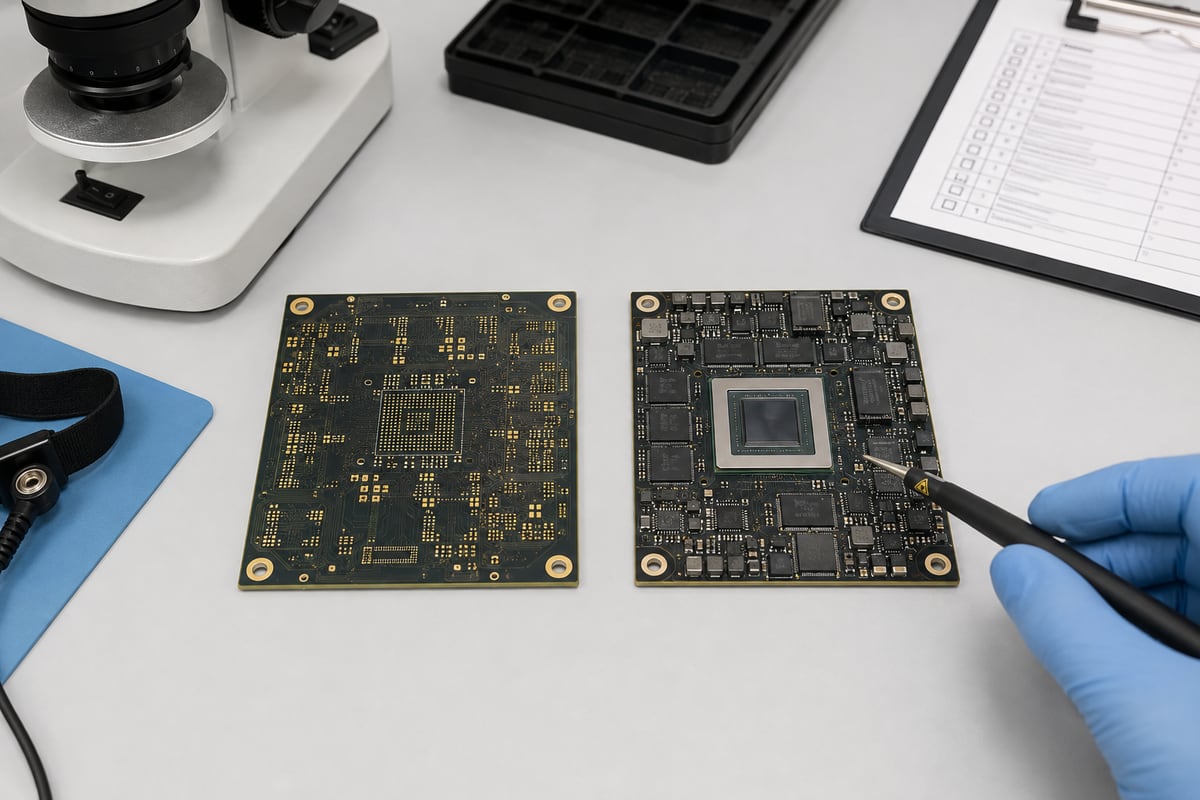
Canada PCB Manufacturer or China PCBA Partner: Which Fits Your Project?
The decision should not be reduced to “local equals fast” or “overseas equals inexpensive.” The right model depends on what your team needs to control and where delays are most likely to occur.
| Priority | Choose Canada when | Consider China when |
|---|---|---|
| Production origin | Canadian production is required | Overseas production is permitted |
| Collaboration | In-person access is essential | Remote approvals are practical |
| Supply scope | Local capability covers the build | One-source PCB, parts, and PCBA helps |
| Prototype | Local material and capacity are ready | Fewer supplier handoffs save time |
| Scale | Domestic cost and capacity fit | Volume or cost favours overseas production |
| Delivered cost | Freight savings justify local pricing | Savings remain after import costs |
Choose from the non-negotiable requirements first. If Canadian production is mandatory, shortlist only suppliers able to document where fabrication, assembly, and testing occur. If overseas production is acceptable, compare the complete delivered scope rather than a factory unit price.
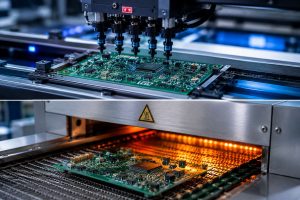
A hybrid strategy can also work. Some teams build early prototypes locally for rapid engineering interaction, then transfer a controlled package to an overseas supplier for pilot or recurring production. Others use an overseas partner from the first quick-turn PCB assembly build so that the stack-up, component approvals, tooling, work instructions, and test approach can carry forward without a second manufacturing transfer.
Which PCB Technologies Fit Your AI Hardware Requirements?
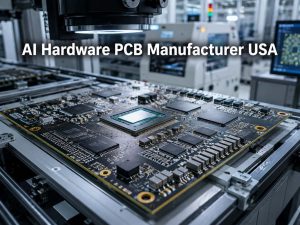
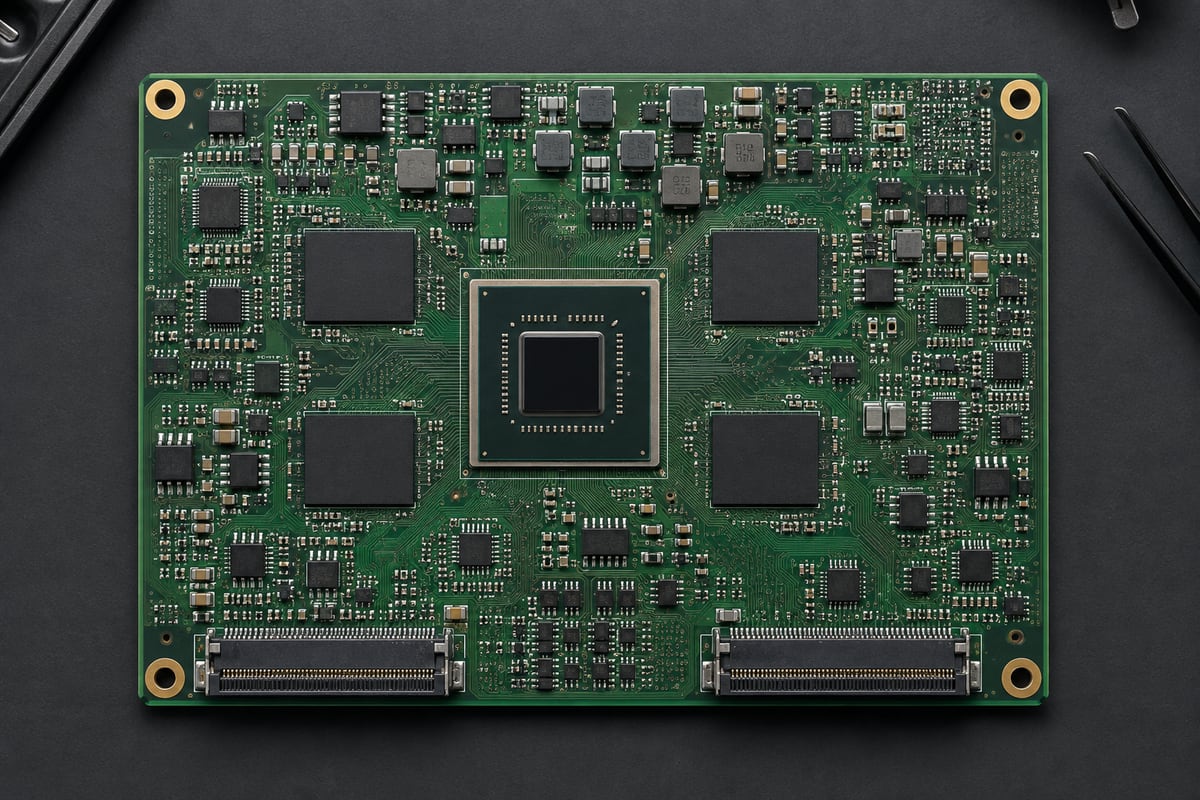
“AI hardware” does not define one PCB construction. A compact vision module, an industrial inference controller, and a server accelerator place very different demands on the board. Your supplier should quote the released electrical and mechanical requirements—not infer a technology from the application name.
Match each performance requirement to a manufacturable specification:
- High-speed digital interfaces: define controlled-impedance structures, target values, tolerances, reference planes, differential geometry, loss targets, and coupon requirements where applicable.
- HDI PCB and dense interconnects: state microvia structure, buildup, via-in-pad requirements, fill and cap expectations, BGA pitch, and any restrictions on stacked or staggered vias.
- Power delivery: identify current levels, copper weight, plane strategy, thermal vias, connector ratings, temperature-rise limits, and high-current acceptance checks.
- Thermal management: provide component loss information, allowable junction or board temperatures, airflow assumptions, heat-sink interfaces, copper distribution, and mechanical constraints.
- Material selection: specify the required laminate or measurable performance targets such as Dk, Df, Tg, decomposition temperature, thickness tolerance, and copper profile.
- Assembly density: identify bottom-terminated components, large BGAs, fine-pitch devices, press-fit parts, heavy components, and any components requiring special support or profiling.
The customer retains responsibility for the product’s electrical, thermal, mechanical, regulatory, and safety requirements. A capable manufacturer should convert the released design into a controlled manufacturing plan, flag conflicts, and document approved adjustments—not silently redesign the product.
What Should PCB Assembly Canada Quotes Include?
A useful PCB assembly Canada quotation lets purchasing compare the same scope across suppliers and lets engineering see what remains unresolved. It should separate recurring unit cost from one-time charges and clearly identify customer responsibilities.
Ask each supplier to show these items clearly:
| Quote section | Confirm before approval |
|---|---|
| Bare PCB | Construction, quantity, test, lead time |
| Components | Exact parts, alternates, shortages, excess |
| Assembly | SMT/THT scope and special processes |
| Inspection and test | Methods, coverage, limits, reports |
| Tooling and NRE | Stencils, fixtures, setup, engineering |
| Logistics | Packaging, freight, customs, destination |
| Schedule | Materials, production, approvals, transit |
Do not ask only for “a turnkey price.” State whether the supplier should provide complete component sourcing, accept a partial consignment, or quote both models. If substitutions are permitted, define who can approve them. If your team must approve the stack-up, DFM questions, first article, X-ray evidence, or test results, include those gates in the schedule.
For a review by EBest Circuit, send the fabrication package, assembly package, BOM, quantities, delivery destination, and required inspection or testing to sales@bestpcbs.com. The quotation can then be aligned with the product you expect to receive rather than built around missing assumptions.
How Does the Right Manufacturer Reduce Risk for Canadian AI Hardware Projects?
The right manufacturer reduces risk before defects consume expensive components or delay a Canadian lab schedule. Inspection at the end cannot compensate for an unbuildable land pattern, an unavailable part, or an undefined impedance structure.
A controlled build should close risks in sequence:
- File and revision review: Confirm that fabrication data, drill files, stack-up, drawings, BOM, placement data, assembly drawings, firmware, and test instructions refer to the same revision.
- DFM and DFA review: Identify annular-ring, solder-mask, spacing, panelization, polarity, courtyard, paste-aperture, thermal, and assembly-access issues before release.
- BOM validation: Check part status, lifecycle, package, value, tolerance, moisture sensitivity, alternates, and procurement constraints before purchasing.
- Manufacturing plan: Define panelization, impedance controls, process materials, solder profile, handling requirements, inspection points, and acceptance criteria.
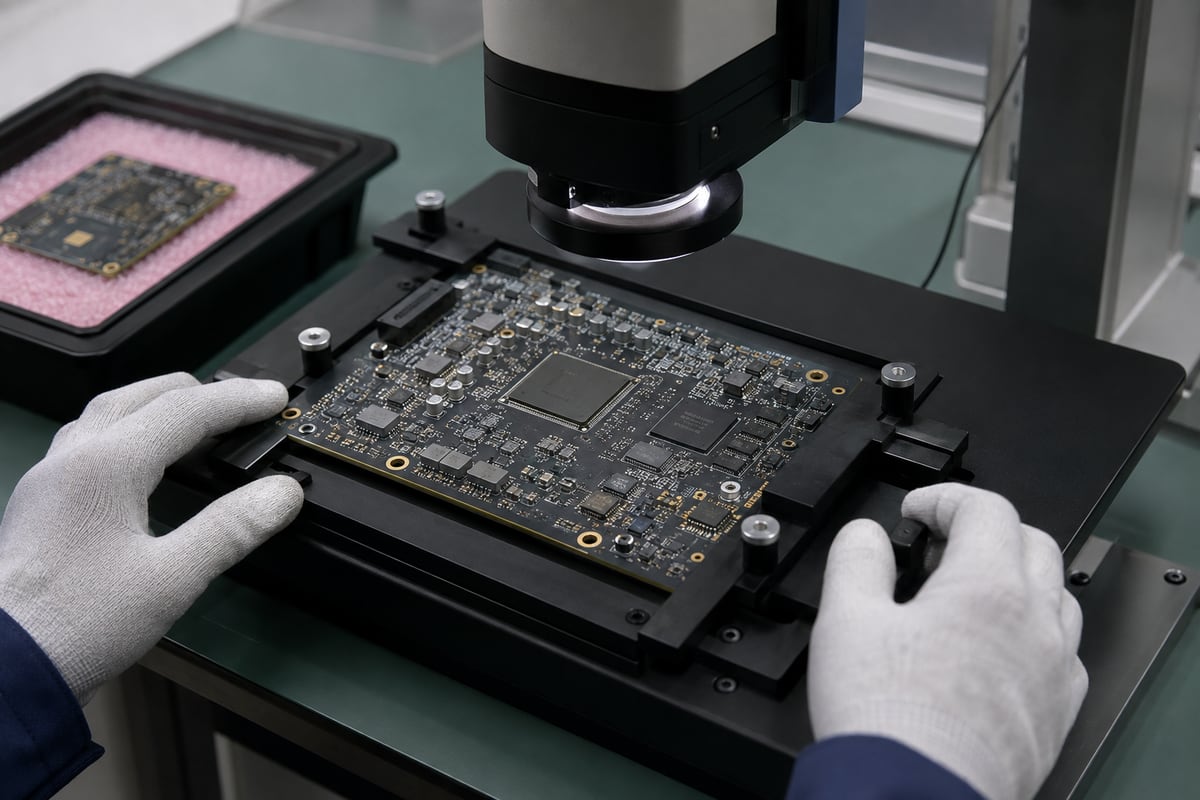
- First-build evidence: Review critical measurements, AOI findings, X-ray images for hidden joints, and any agreed first-article records before expanding the lot.
- Functional verification: Use customer-approved fixtures, firmware, procedures, limits, and test coverage. Record what was tested and what was not.
- Repeat-order control: Preserve approved material, stack-up, programs, work instructions, test revisions, deviations, and corrective actions for the next build.
This approach protects the outcome the customer cares about: fewer preventable respins, less component loss, clearer approval decisions, and a production record that can support the next order.
AI Hardware PCB Case Study for a Canadian Customer
A Canadian AI hardware customer required a 6-layer HDI PCB with a 1+4+1 build-up, 1.6 mm finished thickness, Tg 170 material, and ENIG surface finish. The project also included component sourcing, assembly, and inspection.
| Project item | Specification |
|---|---|
| PCB type | 6-layer HDI |
| HDI structure | 1+4+1 |
| Finished thickness | 1.6 mm |
| Material | Tg 170 |
| Surface finish | ENIG |
| Solder mask / silkscreen | Green / white |
Customer challenge
The customer wanted to avoid separate coordination between the PCB manufacturer, component supplier, and assembly house. The HDI stackup, PCB revision, BOM, placement data, and approved components also needed to remain aligned before production.
EBest Circuit response
EBest reviewed the PCB data, stackup, BOM, placement files, and assembly requirements as one manufacturing package. The 1+4+1 HDI construction and material requirements were confirmed before fabrication, while component alternatives remained subject to customer approval.
PCB fabrication, sourcing, assembly, and inspection were then managed within the same project.
Customer benefit
The customer gained:
- Fewer supplier handoffs across PCB, sourcing, and assembly;
- Better revision control between PCB and PCBA files;
- No uncontrolled component substitutions;
- A clearer path to repeat production using the approved build package.
Why Choose EBest Circuit for AI Hardware PCB Projects in Canada?
For Canadian AI hardware teams that can use overseas manufacturing, EBest Circuit helps simplify complex PCB and PCBA projects by keeping fabrication, sourcing, assembly, and inspection under one coordinated production route.
- Fewer supplier handoffs: PCB fabrication, component sourcing, SMT/THT assembly, and agreed testing can be managed within one project.
- Fewer surprises before production: Stackup, impedance, HDI, BGA, material, and assembly concerns are reviewed before the build moves forward.
- More control over your BOM: Alternative components are submitted for approval instead of being substituted without agreement.
- Inspection matched to the board: SPI, AOI, X-ray, ICT, and functional testing can be selected according to the actual assembly and acceptance requirements.
- Easier transition to repeat production: Approved PCB revisions, BOM changes, materials, and inspection requirements remain connected as the project moves beyond prototypes.
- Broader PCB options in one supply chain: AI hardware projects requiring multilayer, HDI, controlled impedance, high-frequency materials, rigid-flex, or heavier copper can be reviewed together with PCBA requirements.
EBest Circuit is a China-based manufacturer serving Canadian customers, not a Canadian manufacturer. If your project does not require domestic production, this gives you an overseas option for integrated PCB and PCBA production with fewer interfaces to manage.
FAQs About AI Hardware PCB Manufacturing
Is EBest Circuit an AI hardware PCB manufacturer in Canada?
No. EBest Circuit manufactures in China and serves international customers, including projects delivered to Canada. Customers requiring production physically located in Canada should select and verify a domestic manufacturer.
Should an AI hardware prototype be assembled in Canada or overseas?
It depends on domestic-production requirements, engineering access, PCB technology, component availability, budget, schedule, and the planned production model. Compare the complete delivered scope rather than location or unit price alone.
What files are needed for an AI hardware PCB quotation?
Send Gerber or ODB++ data, drill files, fabrication drawing, stack-up or impedance requirements, BOM, centroid data, assembly drawings, quantities, delivery destination, and inspection or test requirements. Include firmware and test procedures only when programming or functional testing is requested.
Can one supplier handle both the PCB and PCBA?
Yes, if the supplier has the required capabilities and the quotation clearly defines fabrication, sourcing, assembly, inspection, testing, and logistics. A combined scope can reduce handoffs, but responsibilities and approval gates must still be documented.
What inspections are useful for dense AI hardware assemblies?
The appropriate plan depends on the design. It may include SPI, AOI, X-ray for hidden joints, visual workmanship inspection, PCB electrical test, dimensional checks, impedance coupons, programming, ICT, or customer-defined functional testing.
Can the manufacturer choose replacement components when the BOM parts are unavailable?
The manufacturer may identify risks and propose alternatives, but the customer or authorized design owner should approve substitutions. Similar descriptions do not guarantee identical electrical, thermal, mechanical, firmware, lifecycle, or regulatory performance.
How should lead time be compared?
Ask suppliers to separate component procurement, PCB fabrication, assembly, inspection, customer approvals, testing, and transit. Confirm what event starts the quoted lead time and how shortages or engineering questions affect it.
How do I request a quote from EBest Circuit?
Email your released project package, quantities, delivery destination, and required schedule to sales@bestpcbs.com. To compare EBest with domestic options, use the same files, acceptance criteria, and commercial assumptions for every supplier. A complete package helps an AI hardware PCB manufacturer Canada search produce quotations that are genuinely comparable.