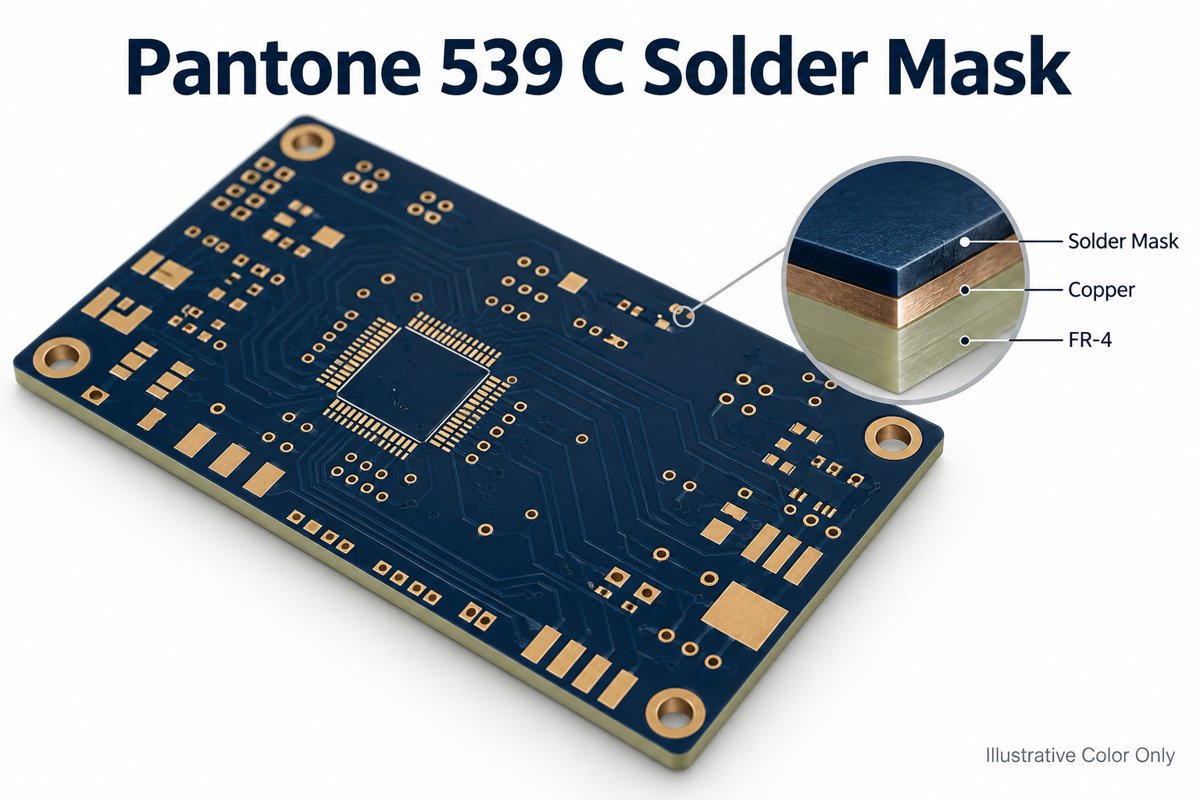
Pantone 539 C solder mask describes PCB solder resist with a deep navy-blue color target. Pantone 539 C identifies the reference shade, rather than a particular solder mask ink. Achieving the intended appearance means selecting a suitable blue material and comparing the finished PCB with a physical reference. Ordinary blue solder mask should not be assumed to produce the same shade.
At EBest Circuit, we offer blue and matte blue solder mask within our PCB manufacturing services. For a Pantone 539 C requirement, we review the available ink and finish options with you, then use sample approval to establish the acceptable board appearance.
Key Takeaways
- Pantone 539 C is a deep blue color reference; the suffix C refers to coated paper, not a PCB coating process.
- Standard blue and a Pantone 539 C match are different requirements. Approve the actual PCB sample rather than relying on the color name.
- Matte and glossy finishes change reflections and perceived appearance, even when both boards are described as dark blue.
- Copper coverage, coating opacity and lighting can make different areas of a board appear different.
- Confirm the shade on a finished board, and check the assembled appearance when the PCB remains visible in the product.
- EBest Circuit supports blue and matte blue options; the acceptable appearance for a 539 C requirement is confirmed through material review and sample approval.
What Color Is Pantone 539 C Solder Mask?
Pantone 539 C is a deep navy blue, giving the board a darker appearance than many bright blue solder mask options. On a PCB, the color is carried by the solder mask layer covering the circuit surface; exposed metal pads and printed markings remain separate visual elements.
The C suffix describes the color reference printed on coated paper. It does not mean that the PCB must have glossy solder mask. Specify the intended PCB finish separately.
This shade can be considered for visible boards where a dark blue appearance is part of the product design, such as a board behind a transparent cover. The illustrations here show the concept, not a color standard: a screen image cannot establish the accepted production shade.
How Is Pantone 539 C Different from Standard Blue Solder Mask?
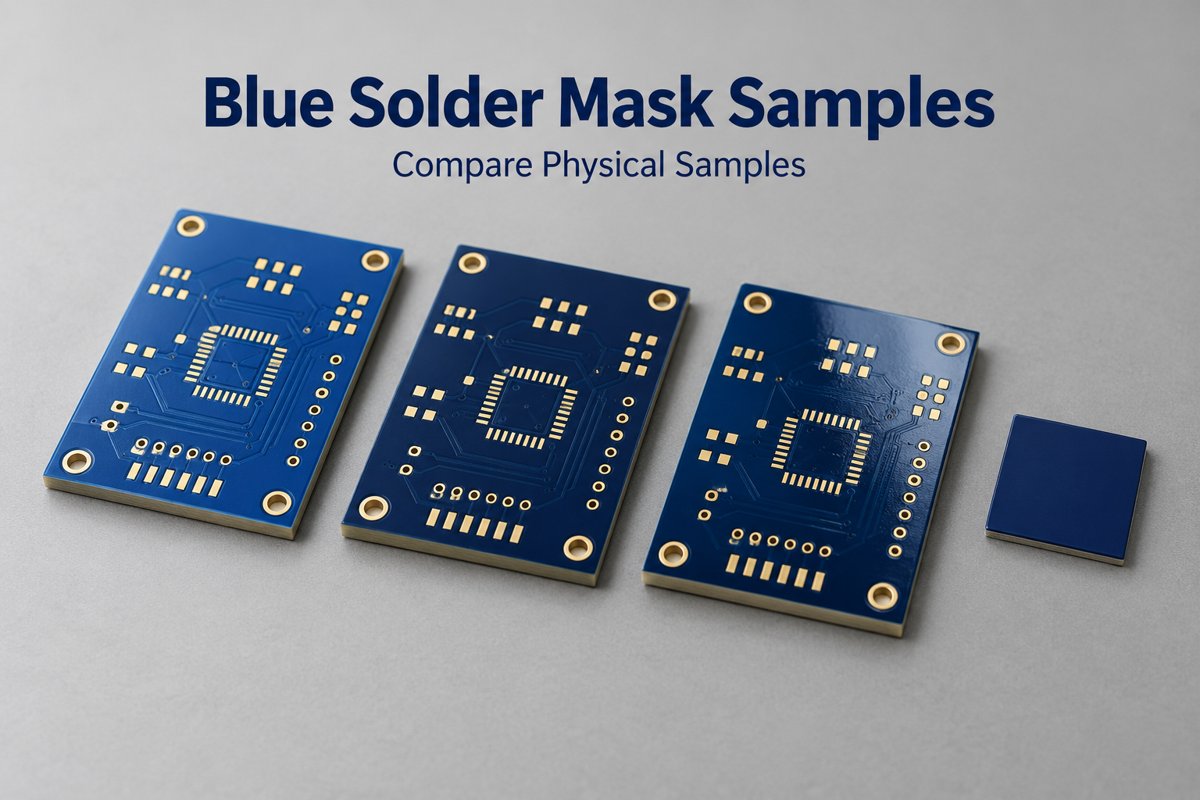
Pantone 539 C names a specific color target, while standard blue identifies a manufacturer’s available blue ink option. Different standard inks can produce noticeably different shades.
| Color description | Meaning for the PCB |
|---|---|
| Standard blue | An available blue solder mask material, with its own finished appearance |
| Dark blue | A broad visual preference, without identifying one exact shade |
| Pantone 539 C | A named reference against which the proposed board sample is compared |
| Approved navy PCB sample | The accepted appearance on the actual board material and finish |
If you simply want a dark blue PCB, an available standard color may meet the requirement. If the board needs to coordinate with an enclosure or a brand color, compare the sample beside that part. Selecting an attractive blue is not the same as matching an established reference.
Should You Choose Matte or Glossy Solder Mask?
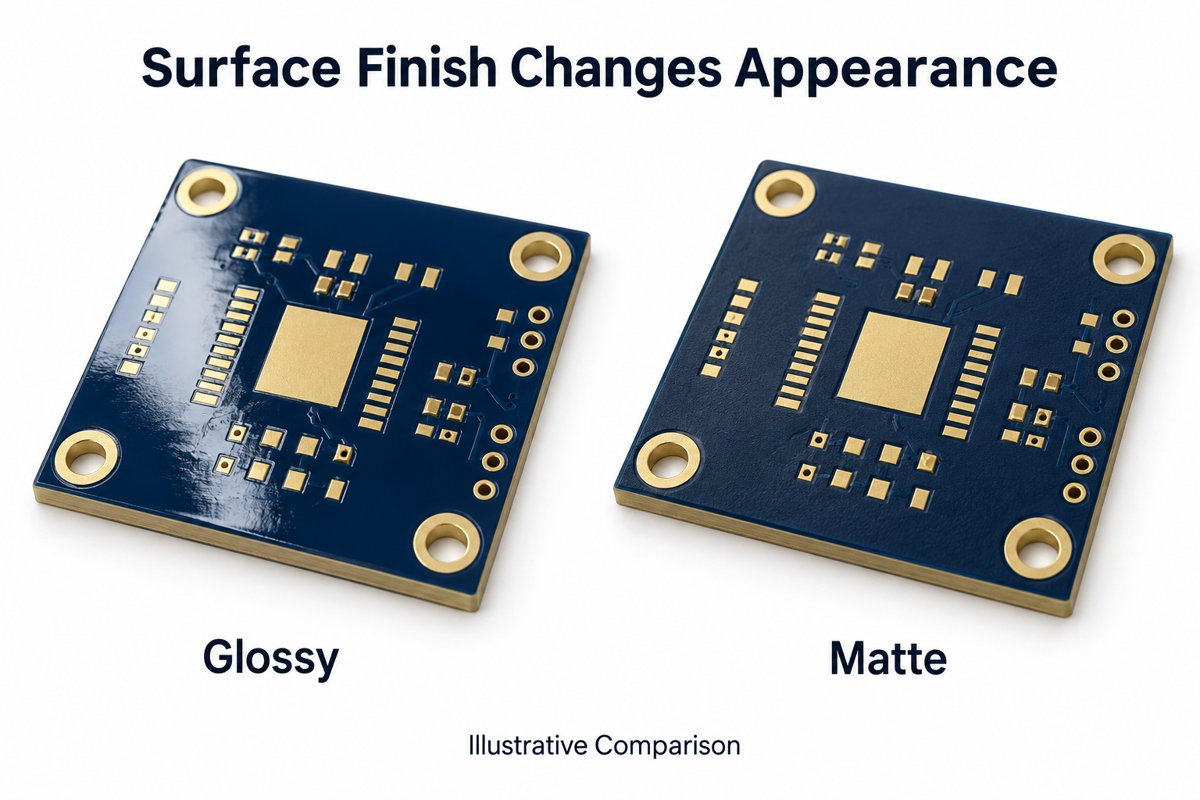
Choose matte when you want subdued reflections, and glossy when you prefer a reflective surface. Neither finish alone establishes a Pantone 539 C match.
| Finish | Appearance |
|---|---|
| Matte blue | Diffuse reflections and a less shiny surface |
| Glossy blue | More distinct highlights that change with viewing angle |
Compare both options under the lighting in which the finished product will be seen. A strong highlight can make part of a glossy board appear much lighter than its surrounding surface. This is particularly noticeable when evaluating photographs rather than holding the sample.
Our FR-4 material records identify KSM-6188 BLM1 as a matte blue solder mask option. That identifies a material to evaluate, not proof of a Pantone 539 C match. The proposed sample remains the basis for the color decision.
Why Can the Same Blue Look Different Across a PCB?
The same blue can appear different where the underlying copper, coating coverage or reflected light changes. A color sample should therefore include representative areas of the intended board, not just one uniform patch.
- Copper and laminate: where the coating is not fully opaque, copper-covered areas and gaps can show different appearances.
- Surface texture: local reflections can change how light or dark the blue looks.
- Coating coverage: changes in the solder mask layer can affect opacity and uniformity.
- Lighting: daylight, office lighting and camera settings can make the same board look different.
Compare samples side by side under the same light and viewing angle. If the reference and sample are photographed separately, differences in exposure or white balance can be mistaken for a material mismatch. Coating thickness should follow the material process rather than being increased simply to make the board look darker.
How Do You Approve a Pantone 539 C PCB Sample?
Approve a finished PCB sample with the proposed solder mask material and surface appearance, compared against the agreed physical color reference.
- Identify the target. Use the Pantone 539 C physical reference or an existing approved board. Include the enclosure or mating part when that is what the PCB needs to match.
- Agree the finish. Select matte or glossy before judging the final shade.
- Compare a representative board. Check both copper-rich areas and laminate gaps, together with visible markings and exposed pads.
- Record the accepted result. Retain the approved sample and the selected material and finish for repeat-order comparisons.
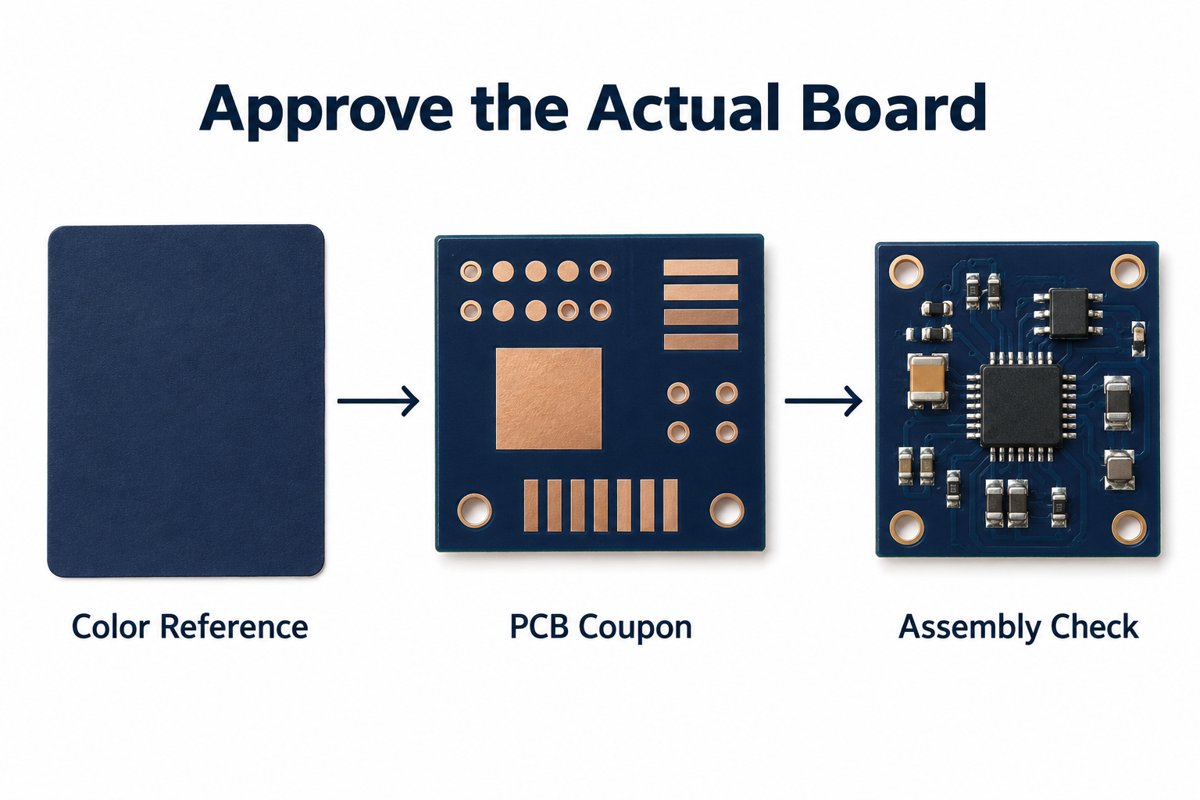
For visual acceptance, agree the lighting and areas to compare. If numerical color measurement is required, also agree the instrument method and permitted difference. Pantone 539 C alone does not specify a universal color-difference tolerance.
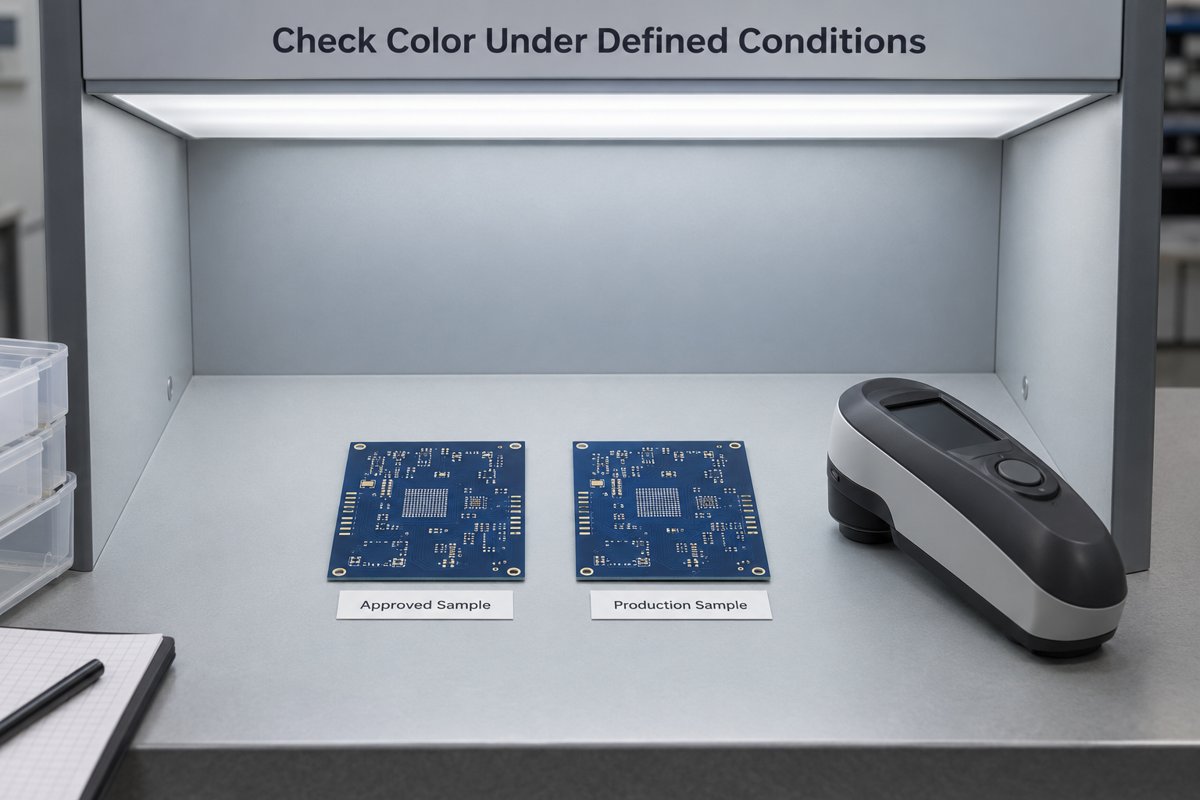
For an exposed assembled board, check the appearance after the intended soldering and cleaning process as well. Flux residue can alter the surface appearance without representing a different ink color. When we provide PCB assembly services, the approved appearance should refer to the condition in which the customer receives the board.
FAQ About Pantone 539 C Solder Mask
1. Can a HEX or RGB value be used for color approval?
Not as the sole acceptance reference. Digital values are useful for screen mockups, but displays and photography do not reproduce a physical PCB consistently. Use a physical reference and the approved board sample for the final decision.
2. Is Pantone 539 U the same as 539 C?
No. U and C identify color appearances on uncoated and coated paper. Keep the specified suffix when communicating the requirement; do not substitute one reference for the other without agreement.
3. Solder mask vs silkscreen: which part should be navy blue?
In this specification, the solder mask is navy blue. Silkscreen is the separate legend used for component references, polarity marks or a logo. Its color should be specified separately.
4. Does changing solder mask colors require changing the layout?
A different color does not automatically require a new layout. If it involves a different ink or process, review its compatibility with existing features. Solder mask expansion describes the opening allowance around pads; it is a geometry requirement, not a way to specify the blue shade.
5. Will every repeat order look identical?
Repeat orders need comparison with the same approved reference. Keep the material and finish consistent and agree acceptable variation. A shared color name alone is not enough to judge whether two batches match.
How Can EBest Circuit Help with Your Dark Blue PCB?
We can help you compare available blue and matte blue solder mask options and establish a sample-based color requirement. Our review starts with the appearance you need: a standard dark blue board, a match to an existing product, or a specific Pantone 539 C target.
Send your color reference, matte or glossy preference, and an existing sample if available to sales@bestpcbs.com. We will review suitable material options with you before the board appearance is approved for production.