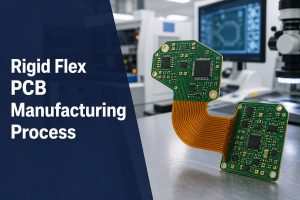
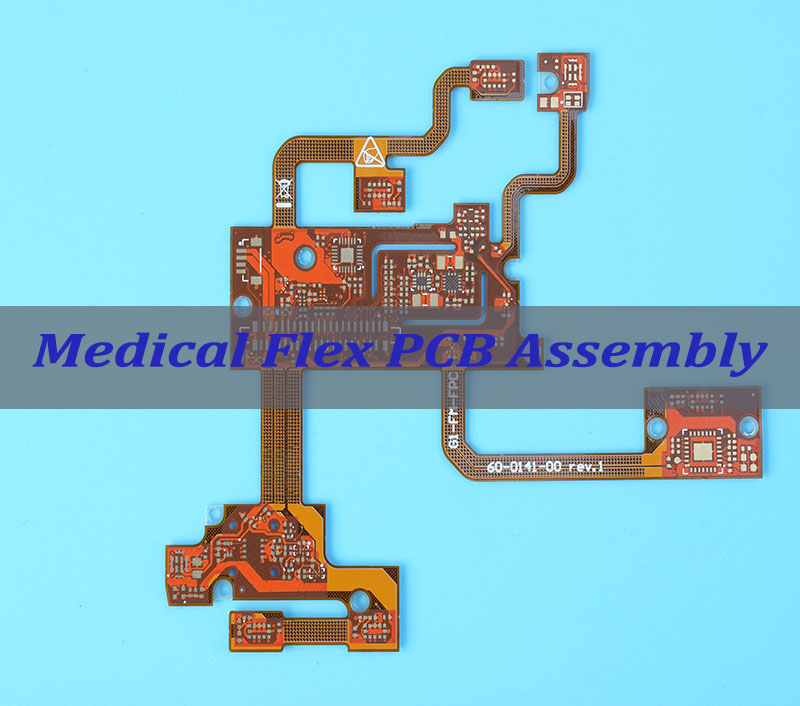
Choosing a rigid-flex PCB manufacturer in Germany involves more than finding a supplier that offers flexible circuits. Your board may need several rigid sections, a thin flexible connection, controlled impedance or HDI routing within a compact enclosure. The useful comparison is which manufacturers can produce that construction—and which production route suits your project.
EBest Circuit offers an overseas manufacturing option for German customers, with experience manufacturing a 10-layer rigid-flex PCB for a German medical product. That project combined adhesiveless polyimide, impedance requirements, resin-plugged holes and drawing-specific stainless steel stiffeners. Alongside PCB fabrication, EBest provides DFM review, component sourcing and assembly support. Send your requirements to sales@bestpcbs.com to discuss your project, or arrange a visit to our factory in China to meet the team and review our manufacturing capabilities.
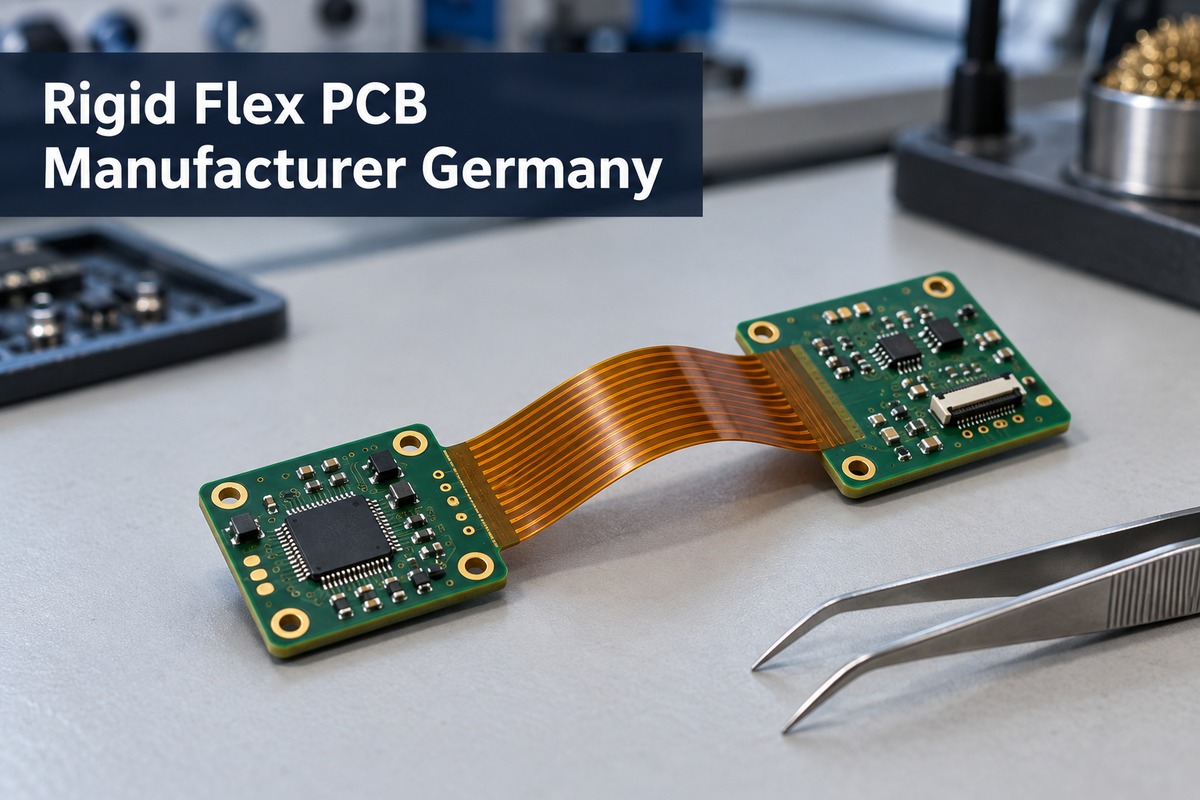
Rigid Flex PCB Manufacturer Germany: 5 Suppliers Compared
These five manufacturers offer rigid-flex PCB production in Germany. The comparison below focuses on their main business, relevant strengths and manufacturing capabilities. The five companies are compared by their capabilities, without ranking them from best to worst.
1. Würth Elektronik (Germany)
- Main Business: PCB manufacturing, including rigid-flex circuits for compact electronic assemblies.
- Advantages: Defined stackup options, physical technology samples and development-stage guidance help customers compare rigid-flex constructions before finalising a design.
- Production Capability: Its rigid-flex technology range includes FR4/polyimide constructions with internal or external flex layers, plus HDI microvia combinations for dense component routing.
2. KSG (Germany; additional production in Austria)
- Main Business: Rigid-flex PCB manufacturing from design development through series production at its own European facilities.
- Advantages: Technical support for stackup and layout review, with optional edge sealing to reinforce demanding rigid-to-flex transitions.
- Production Capability: Its rigid-flex manufacturing capabilities include 2–18 layers, FR4/polyimide materials, symmetric and asymmetric constructions, and HDI compatibility. Available combinations depend on the board design.
3. CONTAG (Berlin, Germany)
- Main Business: High-technology PCB fabrication, including rigid-flex boards and prototype production in Berlin.
- Advantages: A broad choice of flex-section arrangements makes CONTAG relevant for designs that need several flexible layers or complex folding geometry.
- Production Capability: Its rigid-flex manufacturing capabilities include internal and external flex layers, multilayer flexible sections, bookbinder constructions and HDI/SBU combinations.
4. ILFA (Hannover, Germany)
- Main Business: Complex PCB manufacturing, with rigid-flex as a core technology.
- Advantages: Dedicated rigid-flex design rules and experience with mixed-material constructions support projects that need a customised stackup.
- Production Capability: Its rigid-flex technology combines FR4 cores with one or more polyimide flex cores, bonded using low-flow or no-flow prepregs. ILFA also offers HDI manufacturing; the combination required for an individual rigid-flex design needs technical review.
5. ANDUS ELECTRONIC (Berlin, Germany)
- Main Business: PCB fabrication and electronic assembly, including flexible and rigid-flex circuits.
- Advantages: In-house assembly and the integrated alpha-board design team offer a coordinated route from PCB layout to manufactured assemblies.
- Production Capability: Its manufacturing capabilities include rigid-flex, complex multilayer boards, HDI and impedance measurement, alongside in-house assembly. Rigid-flex layer limits and process combinations should be confirmed for the proposed design.
Rigid-flex PCB stackup: What Can German Manufacturers Produce?
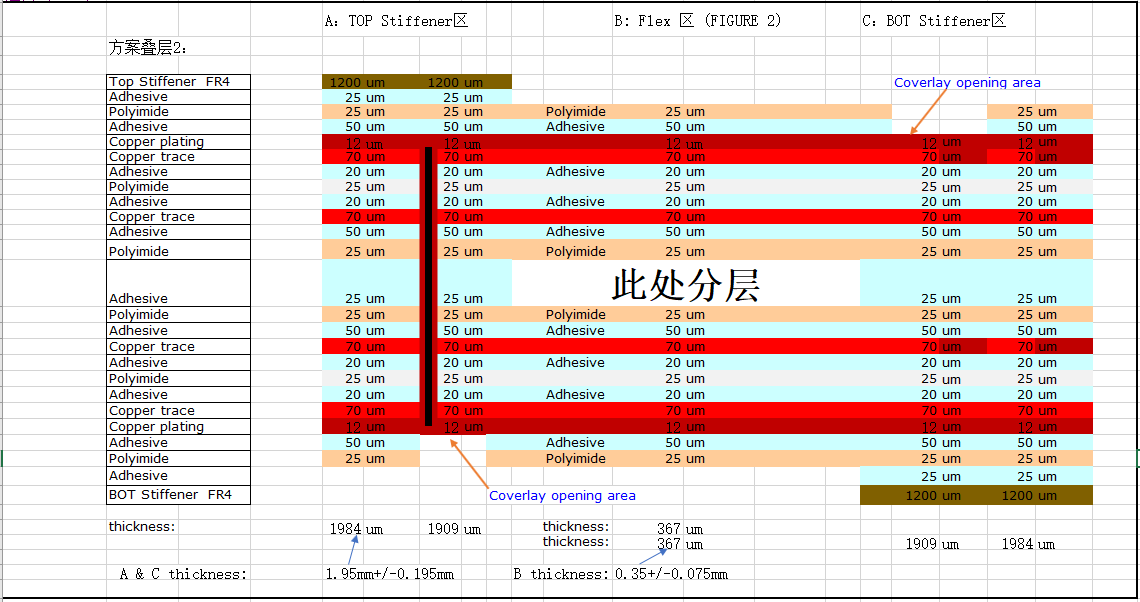
German manufacturers offer rigid-flex constructions with external flex layers, internal flex layers and multilayer flexible sections. The right choice depends on how the board fits inside the product, how many connections pass through the flexible section and whether it bends during installation or repeatedly in use.
External flex layers sit toward the outside of the rigid stack. The exposed flexible section connects the rigid board areas. Würth Elektronik and CONTAG offer this type of construction.
Internal flex layers run through the inside of the rigid sections and emerge between them. Würth Elektronik and CONTAG also support this arrangement, allowing the flexible connection to be incorporated within a multilayer rigid structure.
Multilayer flexible sections accommodate additional routing within the flex area. For more complex folding arrangements, CONTAG offers separated flex layers and bookbinder constructions, in which the flexible layers can follow different bend paths.
KSG offers 2–18-layer rigid-flex constructions, depending on the configuration, including symmetric and asymmetric stackups. The overall layer count must be distinguished from the number of layers in the flexible section: a 10-layer board can have fewer copper layers passing through the bend area.
For a compact medical product, the stackup needs to satisfy both the electrical design and the available space. Flex thickness, copper distribution and the rigid-to-flex transition affect how the board can be folded. A connection bent once during installation requires a different assessment from one that moves repeatedly throughout the product’s life.
Our guide to the rigid-flex PCB manufacturing process explains how the rigid and flexible sections are fabricated and joined into one board.
Which German Suppliers Offer HDI Rigid-Flex PCBs?
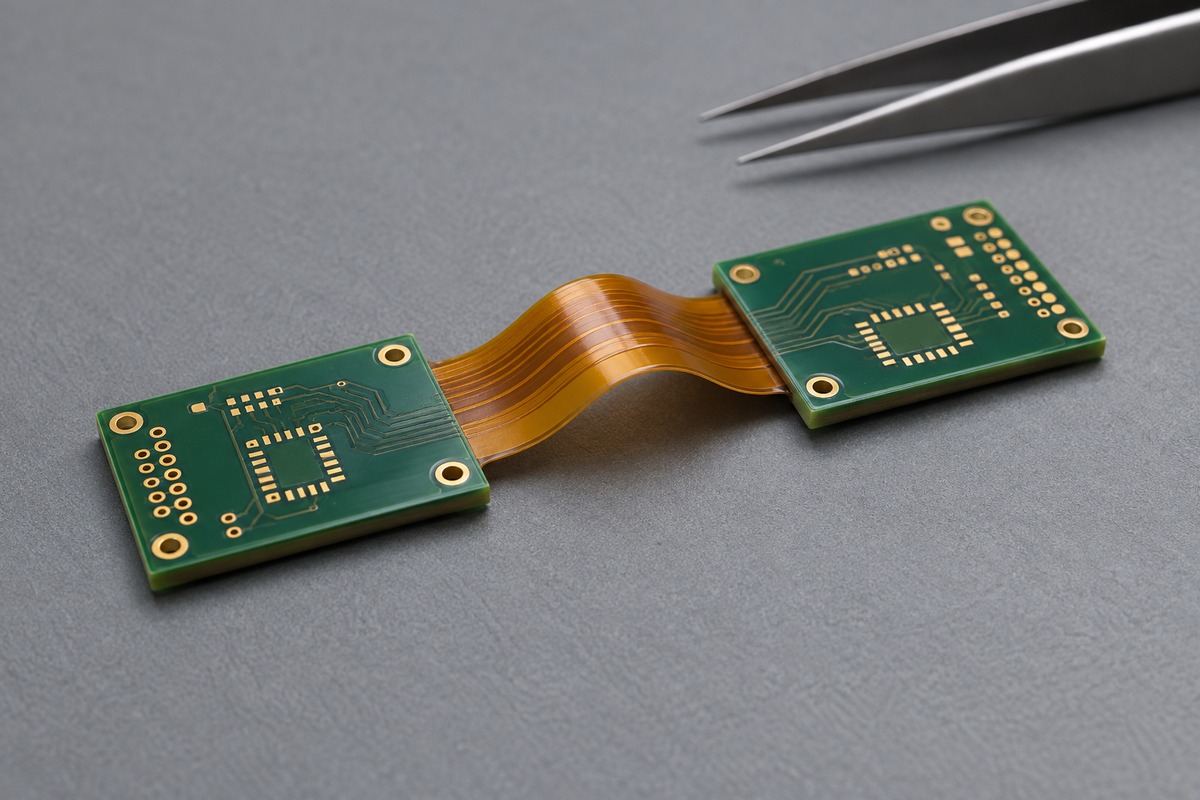
Würth Elektronik, KSG and CONTAG offer rigid-flex constructions that can incorporate HDI technology. Their capabilities provide different starting points for boards that need dense routing alongside flexible connections.
| Manufacturer | HDI rigid-flex capability | Relevance to your design |
|---|---|---|
| Würth Elektronik | Rigid-flex combined with HDI microvias | Fine-pitch component routing in compact rigid sections |
| KSG | HDI-compatible rigid-flex stackups | Projects requiring a coordinated choice of layer structure and interconnect technology |
| CONTAG | HDI/SBU combinations and advanced via arrangements | Complex build-up structures combined with flexible interconnections |
When does HDI help? A densely connected BGA or a small rigid section may need microvias to route signals that conventional through-holes cannot accommodate within the available space. The selected via structure must work with the board’s materials and lamination sequence.
Does a 10-layer rigid-flex board automatically need HDI? No. Layer count and interconnect technology are separate design choices. A 10-layer board may use conventional plated through-holes, while a board with fewer layers may need microvias. Impedance control and resin plugging alone do not make a board an HDI design.
What Certifications Are Needed for Rigid-Flex PCB Projects for German Customers?
The relevant certifications depend on the product’s application and the customer’s supplier requirements. There is no single certification package that applies to every rigid-flex PCB purchased by a German company.
| Certification | Relevant project context |
|---|---|
| ISO 9001 | General quality management |
| ISO 13485 | Medical-device supply chains |
| IATF 16949 | Automotive supply chains |
| AS/EN 9100 | Aviation, space and defence supply chains |
For medical projects, ISO 13485 is particularly relevant because it addresses quality management for medical devices and related services. However, a supplier’s certificate does not by itself approve the finished medical product. The certificate’s scope, covered site and validity must match the work being purchased.
Automotive customers may specify IATF 16949, while aerospace programmes may require a quality system based on 9100. These are application-specific considerations, not universal requirements for German PCB orders.
Board acceptance requirements are a separate matter. The purchase specification can identify the agreed revision and performance class of IPC-6013 for flexible and rigid-flex printed boards. Relevant material compliance documentation, such as RoHS, also serves a different purpose from a quality management certificate.
EBest’s quality certifications include ISO 9001:2015, ISO 13485:2016, IATF 16949 and AS9100D. For a specific project, request the current certificate and applicable scope as part of supplier qualification.
What Lead Times Can EBest Circuit Offer for Rigid-Flex PCB Projects in Germany?
EBest’s rigid-flex production lead times provide a starting point for scheduling:
| Rigid-flex construction | Normal service | Fastest service |
|---|---|---|
| 4 layers | 2 weeks | 1.5 weeks |
| More than 4 layers | Project-specific | Project-specific |
For a 10-layer board, the schedule requires a separate quotation. The four-layer timing should not be carried over to a multilayer medical project with resin plugging, impedance requirements and stainless steel stiffeners.
Production time and arrival in Germany are different milestones. Freight and customs arrangements must be added to the factory schedule. Your required arrival date should therefore be included in the enquiry, alongside the board specification and quantity.
For urgent projects, share your target delivery date when you enquire. EBest can assess the production time for your board and discuss whether an expedited schedule is available.
EBest also provides online WIP updates for production progress. For a German customer coordinating assembly or product builds, that visibility helps connect the factory schedule with the next operation. The order-specific dispatch date and shipping arrangement should be recorded in the quotation or order confirmation.
Case Study: Rigid-Flex PCB Manufacturing for a German Customer
EBest Circuit manufactured a 10-layer rigid-flex PCB for a German customer’s medical product. The design combined a multilayer rigid structure with a thin flexible section and local stainless steel reinforcement.
| Project feature | Specified requirement |
|---|---|
| Board construction | 10-layer rigid-flex; FR4 Tg170 and adhesiveless PI |
| Overall thickness | 1.2 mm ±0.1 mm |
| Flexible section | 0.23 mm thickness |
| Hole treatment | 25 µm PTH copper; resin plugging |
| Local reinforcement | 0.2 mm SUS304 at drawing-defined locations |
| Electrical requirement | Controlled impedance |
Two thickness requirements shaped the construction. The overall board thickness and the much thinner flexible section describe different parts of the same board. They need to be considered together so that the rigid sections fit the product while the flexible connection can follow the intended mechanical path.
The impedance requirement made material and copper selection electrically significant. The project specified 3 mil adhesiveless polyimide, 1 oz outer copper and 0.5 oz inner copper. Those inputs form part of the stackup used to determine impedance geometry, connecting the material specification directly to the electrical design.
Resin plugging and stainless steel reinforcement added drawing-specific manufacturing work. Resin plugging was an explicit hole-treatment requirement. The SUS304 stiffeners had specified positions and a defined thickness, making their placement part of the mechanical design rather than an interchangeable finishing option.
For a similar medical product, this combination is more informative than a layer count alone: the manufacturer must accommodate the thin flexible section, controlled electrical structure and local mechanical reinforcement within one board.
Why Choose EBest Circuit for Your Rigid-Flex PCB Project in Germany?
EBest is a manufacturing option in China for German customers seeking support with a defined rigid-flex design. The strongest reason to consider us is the fit between your board requirements and our demonstrated project experience.
- Relevant medical rigid-flex experience: the German project above involved a 10-layer structure, controlled impedance, resin plugging and local SUS304 reinforcement.
- Support beyond bare-board fabrication: DFM review, component sourcing and assembly services allow related manufacturing stages to be discussed with one supplier.
- Quality certifications for supplier qualification: EBest’s certifications cover general quality management and medical, automotive and aerospace supply-chain contexts.
- Production visibility: online WIP updates provide a way to follow manufacturing progress while coordinating your own build schedule.
The best starting point is your actual stackup, mechanical drawing and intended application. For a board similar to the case study, identify the flex thickness, stiffener positions and impedance requirements early so that the technical review and quotation address the construction you need.
FAQs About Rigid Flex PCB Manufacturer Germany
Are all rigid-flex PCBs sold by German suppliers manufactured in Germany?
No. Some suppliers combine German production with overseas factories or partner networks. A German office or company registration does not establish the production location for an individual order. Ask which factory will make your board.
Does a 10-layer rigid-flex PCB have ten layers in the flexible section?
Not necessarily. The total layer count generally describes the overall board construction. The flex section can contain fewer layers, which should be shown separately in the approved stackup.
Can EBest quote a 10-layer rigid-flex PCB using its four-layer lead time?
The four-layer production schedule does not apply automatically to a 10-layer construction. Boards above four layers require a project-specific schedule based on their materials, processes and current production capacity.
Does ISO 13485 certification mean a medical rigid-flex PCB is automatically approved?
No. ISO 13485 concerns a quality management system. The customer’s board specification, supplier qualification and finished-device requirements still need to be addressed for the particular medical product.
Can a German customer work directly with EBest’s factory in China?
Yes. EBest accepts enquiries for rigid-flex manufacturing from German customers, and the medical project described above is one example. Technical scope, delivery arrangements and any assembly requirements can be discussed before placing an order.
Planning a rigid-flex PCB project for Germany? Send your board files, key specifications and required arrival date to sales@bestpcbs.com for a project-specific review and quotation. You are also welcome to visit our factory in China—email us to arrange a time to meet the team and discuss your board in person.