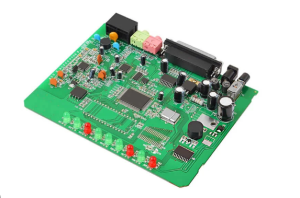
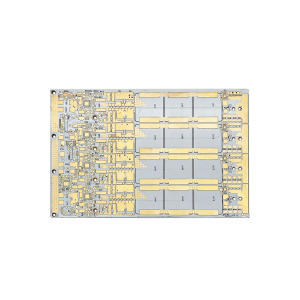
EBest Circuit is one of the UL certified PCB manufacturers in China, combining its company-listed UL credential with PCB fabrication, component sourcing, PCBA assembly, and order-specific traceability. Customers can request the current UL evidence and have the proposed board construction, materials, marking conditions, and assembly route reviewed within one supplier quotation.
Send your stack-up, materials, drawings, quantities, marking requirements, and assembly scope to sales@bestpcbs.com. EBest Circuit can review the requested construction against the proposed UL manufacturing scope and return an order-specific PCB or PCBA quotation.
What Does UL Certification Mean for a PCB Manufacturer?
UL certification indicates that the applicable manufacturing site, PCB construction, material system, ratings, and marking conditions have been evaluated within a defined recognition scope. It supports supplier qualification for the covered configuration; each order still needs to be matched to the current record.
- Production site: Match the legal entity and factory in the UL record with the plant named in the quotation.
- PCB category: Confirm that the record applies to the requested rigid, flexible, rigid-flex, metal-based, or other board category.
- Construction and materials: Compare laminate, prepreg, solder mask, copper build-up, finished thickness, and ratings with the quoted stackup.
- Marking: Obtain the manufacturer’s approval for eligibility, format, location, and lot association before artwork release.
UL’s Recognized Component guidance explains that a recognized PCB is a component used within a larger product. The end-product program and applicable conditions remain separate from the PCB manufacturer’s recognition.
What One-Stop Services Can a UL Certified PCB Manufacturer Provide?
One-stop service combines the engineering and production work needed to move from released PCB data to bare boards or assembled PCBAs through one coordinated project route. The value comes from keeping the stackup, materials, BOM, assembly data, inspection plan, and production revision aligned.
- DFM review: Check Gerber or ODB++, drill data, stackup, materials, impedance inputs, panelization, marking, and UL requirements before fabrication release.
- PCB fabrication: Produce the approved rigid, multilayer, HDI, flexible, rigid-flex, high-Tg, heavy-copper, metal-core, or other project-specific construction.
- Component sourcing: Purchase against the released BOM and approved manufacturer list while holding substitutions for review.
- PCB assembly: Coordinate SMT, through-hole, or mixed assembly, including fine-pitch or BGA requirements when applicable.
- Inspection and testing: Select bare-board electrical test and applicable SPI, AOI, X-ray, ICT, programming, or functional test according to the design.
- Prototype-to-volume support: Carry approved materials, stackups, assembly files, programs, and acceptance requirements into repeat production control.
The DFM output should identify unresolved fabrication notes, material conflicts, marking questions, missing assembly files, inspection access, and customer decisions. Closing these items against one revision prevents fabrication and assembly teams from pricing or building different interpretations of the same project.
What Types of UL Certified PCBs Can Be Manufactured?
The available PCB type must be checked against both the manufacturer’s technical capability and the applicable UL record. Construction name alone cannot confirm that the requested material system, build-up, thickness, rating, and production site are covered.
| PCB Type | What to Confirm |
|---|---|
| Rigid multilayer PCB | Stackup, laminate system, copper construction, finished thickness, rating, and manufacturing site. |
| HDI PCB | Microvia build-up, sequential lamination, materials, finished thickness, and the applicable construction scope. |
| Flexible PCB | Flex materials, adhesive or adhesiveless system, coverlay, copper construction, bend use, and category. |
| Rigid-flex PCB | Rigid and flexible material combination, transition design, lamination route, finished construction, and site. |
| High-Tg or heavy-copper PCB | Exact material grade, copper build-up, thermal process exposure, thickness, and applicable rating. |
| Metal-core PCB | Base-metal construction, dielectric system, copper layer, thermal design inputs, and recognized category. |
Select the board type from routing density, mechanical movement, current handling, heat transfer, dielectric behavior, and assembly needs. The RFQ should then name the exact construction rather than using a family label such as HDI or rigid-flex without a stackup and material definition.
How Can You Verify a PCB Manufacturer’s UL Certification?
Verify the current record, the production site, the PCB category, and the actual construction proposed for the order. A logo on a supplier website is not enough to connect a specific quotation with an active manufacturing scope.
- Check the company and production site: Match the exact legal entity and address with the quotation and purchase order.
- Verify the UL file: Search UL Product iQ certification records by company, file number, or category and note the current status.
- Confirm the PCB category: Make sure the record applies to the requested rigid, HDI, flexible, rigid-flex, or metal-based construction.
- Match the quoted board: Obtain written confirmation covering the stackup, materials, thickness, ratings, marking status, and any exceptions.
Convert the verification result into an order-specific coverage note. Record the quoted legal entity and site, UL file and category, proposed material system, finished thickness, applicable ratings, marking status, and any construction condition that affects the design. Identify every item that remains conditional on final stackup review or UL confirmation. This note gives engineering, purchasing, and incoming quality one common basis for approving the supplier instead of leaving the decision distributed across a database screenshot, quotation, and email thread.
Repeat the check when the production site, laminate family, solder mask, build-up, finished thickness, rating, or marking requirement changes. The question is not whether the supplier still has a UL record in general; it is whether the revised board remains within the applicable construction and marking conditions. Linking the review to change triggers prevents an approved prototype configuration from being assumed valid after a cost reduction or availability-driven substitution.
How Are PCB Materials, Stackups, and UL Requirements Controlled?
The released fabrication package should name the approved material system and construction rather than allowing unrestricted equivalents. A commercially similar material may differ in electrical behavior, processing limits, or the construction recognized for the quoted site.
- Laminate and prepreg: Release the approved manufacturer, grade, and required properties with the stackup; review any alternate before use.
- Solder mask: Control the approved type, color when scope-sensitive, cure route, and production identity.
- Copper and stackup: Tie layer count, copper weights, dielectric sequence, sequential lamination, and finished thickness to the fabrication revision.
- Assembly exposure: Communicate soldering route, thermal-cycle constraints, and rework expectations when they affect the recognized board construction.
- Change control: Record material, source, build-up, site, or process changes and obtain the required technical and UL review before the affected lot is released.
How Is UL Marking Controlled During PCB Manufacturing?
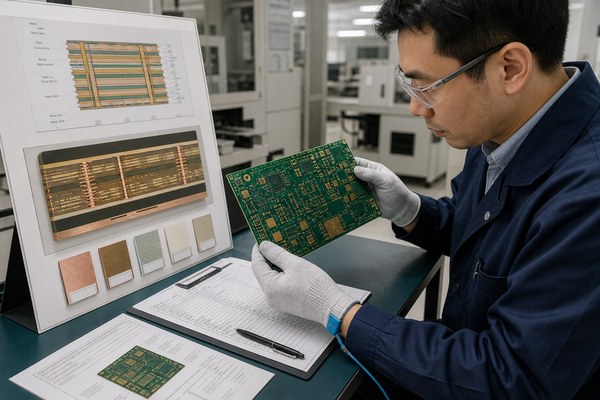
The UL mark is controlled production information that should be released only after the manufacturer confirms order eligibility. The approved artwork, CAM data, first article, and lot record must use the same board identity and revision.
- Eligibility: Confirm the applicable file, category, manufacturing site, construction, and marking conditions before adding the symbol.
- Location and format: Reserve sufficient board area, maintain fabrication clearances, and keep the mark readable after profiling and assembly.
- CAM control: Treat additions, deletions, or relocations as released-data changes rather than informal operator edits.
- First-article check: Verify content, orientation, contrast, legibility, and board revision on the finished PCB.
- Lot connection: Link the marking result with the material lots, production traveler, inspection status, and shipment identity.
What PCB Manufacturing Capabilities Should You Check Before Ordering?
Check whether the factory can manufacture the released construction and verify the features that control performance or acceptance. Request project-specific feasibility rather than relying on a general capability list, and do not assume unverified numerical limits.
- Board construction: Review layer count, overall thickness, copper weights, material family, stackup, panel needs, and surface finish.
- Feature capability: Confirm trace and spacing, drilled and finished hole needs, annular rings, microvias, routing, and dimensional tolerances against the supplied data.
- Signal requirements: Provide controlled-impedance definitions, reference layers, target values, coupon needs, and reporting expectations.
- Special structures: Identify HDI cycles, flex or rigid-flex transitions, heavy copper, metal-core, high-frequency, ceramic, or other special-material requirements.
- Fabrication verification: Define electrical-test coverage, dimensional inspection, microsection or coupon review, and any required release records.
A useful capability response marks each critical feature as accepted, conditionally accepted, or requiring a design change. It should also identify the proposed material, process route, inspection method, and any data still needed before engineering release, giving the buyer a measurable basis for supplier comparison.
Separate nominal capability from the complete manufacturing window. A feature may be individually manufacturable but become unsuitable when combined with a particular copper weight, aspect ratio, material, panel utilization, tolerance, or sequential-lamination route. The supplier’s DFM response should evaluate the released combination and identify the design rule, process step, inspection method, and trade-off behind every requested change. This helps the customer judge whether a revision improves production margin without weakening electrical, mechanical, or UL requirements.
For special constructions, ask how the first build will verify the critical feature. Appropriate evidence may include a stackup confirmation, impedance coupon, dimensional report, microsection, electrical-test result, material identity, or marking inspection, depending on the design. Agree the evidence before fabrication so the first article answers the approval question and does not become a sample that looks acceptable but lacks the records needed for volume release.
What PCB Assembly Services Can a UL Certified Manufacturer Provide?
PCBA service can include BOM review, component sourcing, SMT, through-hole assembly, inspection, programming, and project-specific testing. PCB recognition applies to the covered bare-board construction; assembly scope and end-product compliance require their own manufacturing and acceptance requirements.
- BOM and sourcing review: Check approved manufacturers, lifecycle status, package identity, alternates, consigned parts, and shortage rules before purchasing.
- Assembly data: Release centroid files, drawings, polarity notes, DNP status, stencil requirements, and approved workmanship criteria.
- SMT and through-hole: Plan printing, placement, reflow, manual or selective soldering, and mixed-technology processing according to the assembly.
- Fine-pitch and BGA: Confirm stencil, placement, thermal-profile, inspection-access, rework, and X-ray needs for hidden or closely spaced joints.
- Programming and test: Define firmware, fixture responsibility, interfaces, power conditions, measurement points, pass limits, and required result files.
The assembly quotation should reference the same PCB revision and material baseline used for fabrication. It should also state component ownership, approved alternates, attrition responsibility, inspection methods, programming inputs, test ownership, rework rules, and the records supplied with the completed PCBA lot.
How Are UL PCBs Inspected and Tested Before Shipment?
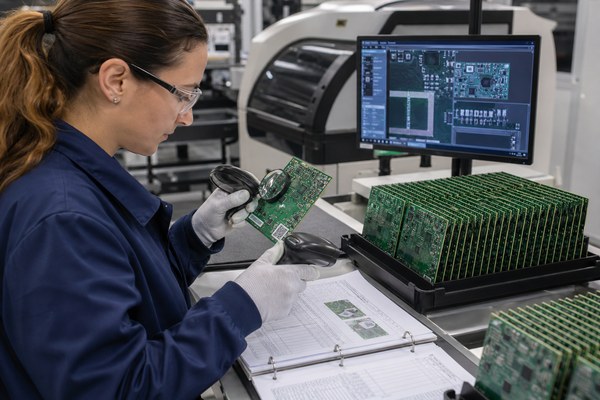
Inspection and test methods should match the bare-board or assembly feature being evaluated and the released acceptance criteria. Not every project requires every method, and an equipment name does not establish coverage without a defined input, result, and lot identity.
- Bare PCB: Use visual and dimensional inspection, electrical testing, impedance verification, and microsection or coupon review when specified.
- Solder-paste printing: Use SPI when package geometry and the approved process plan require paste-volume verification.
- Assembly workmanship: Apply visual inspection and AOI for accessible features and X-ray for applicable hidden joints such as BGA connections.
- Electrical verification: Use ICT, flying probe, programming, or functional testing only when the customer supplies the required conditions and limits.
- Final release: Confirm lot identity, marking, completed checks, exception status, quantity, packaging, and shipment documentation.
How Are Prototype and Volume UL PCB Orders Kept Consistent?
Prototype and repeat orders remain consistent when they use one controlled stackup, material list, CAM revision, marking rule, BOM, assembly package, and acceptance plan. Temporary prototype substitutions should be identified and closed before the production baseline is approved.
- Prototype: Resolve manufacturability, material availability, marking, assembly access, and test-method questions; record every temporary deviation.
- Pilot: Use production-intent materials, tooling, programs, inspection, and traceability where feasible; review repeatability and open exceptions.
- Volume release: Freeze approved files, sources, process route, marking, acceptance criteria, packaging, and required records.
- Repeat production: Compare engineering changes, material notices, BOM alternates, artwork revisions, and site changes with the approved baseline before use.
Use a baseline comparison at every stage. The prototype record should list temporary materials, alternate processes, hand operations, provisional marking, and incomplete tests. The pilot should close or formally approve those differences using production-intent materials, tooling, programs, and inspection. Volume release should then identify the exact files and conditions that may be repeated without further review. This prevents a successful prototype from becoming informal authorization for a different production construction.
When a repeat order changes, route the difference to the correct owner. Engineering reviews stackup, material, and artwork changes; purchasing reviews approved sources and component alternates; quality reviews inspection, traceability, and deviation records; UL eligibility and marking are rechecked when the construction or site is affected. The manufacturer should state the first affected lot and hold release until the required approvals are recorded.
How Should You Choose a UL Certified PCB Manufacturer in China?
Choose a supplier by comparing certificate identity, construction fit, real manufacturing capability, PCBA support, change control, inspection, and quotation scope. Price comparisons are meaningful only when every candidate quotes the same files, materials, marking, testing, documentation, quantities, and delivery assumptions.
- Verify the UL record and site: Match the current legal entity, production address, file, and category with the proposed order.
- Confirm construction coverage: Obtain a written response for the actual stackup, materials, finished thickness, ratings, and marking status.
- Evaluate manufacturing capability: Review the board technology, special processes, tolerances, impedance, finish, and verification required by the design.
- Check PCBA and testing: Confirm sourcing, SMT or through-hole scope, inspection access, programming, fixtures, and result ownership.
- Review scale-up controls: Ask how prototype deviations, material substitutions, BOM changes, and factory transfers are approved before volume use.
- Compare complete quotations: Separate engineering, material procurement, fabrication, assembly, testing, documentation, freight, assumptions, and exclusions.
A buyer comparing UL certified PCB manufacturers should send one controlled requirement package to every candidate and require a written exception list. This prevents a lower price from winning because it uses a different material, omits PCBA testing, excludes marking control, or assumes a production site that was never approved.
Why Choose EBest Circuit for UL Certified PCB and PCBA Manufacturing?
EBest Circuit combines company-listed UL manufacturing support with PCB fabrication, component sourcing, PCBA assembly, inspection, and project-specific testing in China. Customers can coordinate the board construction and downstream assembly through one project team while verifying the applicable site and UL scope.
- UL manufacturing support: Review the proposed PCB construction against the applicable file, site, materials, ratings, and marking conditions.
- One-stop PCB and PCBA service: Coordinate fabrication, sourcing, assembly, inspection, testing, and shipment requirements against the released project files.
- Multiple PCB technologies: Review multilayer, HDI, flexible, rigid-flex, high-Tg, heavy-copper, metal-core, high-frequency, ceramic, and other project-specific needs.
- Prototype-to-volume support: Carry approved stackups, materials, BOM data, programs, and test requirements into production planning.
- Controlled material changes: Hold laminate, solder mask, component, BOM, or process substitutions for the required technical and customer review.
- Global project support from China: Coordinate China-based PCB and PCBA production for customers managing international electronics supply chains.
What Information Is Required for a UL PCB or PCBA Quote?
A useful quote requires the current fabrication package, UL requirement, quantities, and any assembly, inspection, test, marking, and documentation needs. The supplier response should identify confirmed requirements, proposed materials, assumptions, exceptions, and missing inputs.
| Item | Required Information |
|---|---|
| Fabrication data | Gerber or ODB++, drill files, netlist, fabrication drawing, panel or profile needs, and revision identity. |
| Stackup and materials | Layer sequence, copper, dielectric targets, approved grades, finish, impedance inputs, and substitution limits. |
| UL requirement | Target category or rating, marking expectation, manufacturing-site requirement, and requested confirmation documents. |
| Assembly package | BOM, approved manufacturers, centroid data, drawings, polarity notes, firmware, and test requirements. |
| Commercial inputs | Prototype, pilot, and volume quantities, target dates, destination, packaging, and delivery terms. |
Ask for the quotation response to distinguish confirmed scope, proposed alternatives, customer-supplied items, and missing inputs. A proposed laminate or stackup should be shown beside the requested construction with its technical and UL-review status. Assembly, programming, functional testing, certificates, reports, packaging, and freight should be separately visible where they affect price or responsibility. This makes competing quotations comparable and prevents a lower total from concealing omitted verification or downstream PCBA work.
Before production release, convert the accepted response into a controlled order package. Include the approved fabrication revision, material and stackup baseline, marking authorization, BOM and assembly data where applicable, quantities, inspection and test criteria, required shipment records, and changes that need written approval. A complete release package gives the one-stop service model practical value because fabrication, sourcing, assembly, testing, and final documentation work from the same approved definition.
Frequently Asked Questions About UL Certified PCB Manufacturers
Q1: What is a UL certified PCB manufacturer?
A1: It is a manufacturer with a current UL record covering defined PCB categories, constructions, materials, ratings, sites, and production conditions. Verify the exact order against that record rather than relying on a logo or general company statement.
Q2: Is a UL Recognized PCB the same as a UL Listed finished product?
A2: No. A recognized PCB is a component intended for use in a larger product. The end product may require its own evaluation, and the PCB can carry conditions of acceptability that the product designer must address.
Q3: Does every PCB need UL certification?
A3: The requirement depends on the end product, target market, customer specification, and applicable safety evaluation. Define the required PCB category, rating, marking, and documentation before selecting the manufacturing route. Record that decision in the RFQ so every supplier quotes the same compliance scope.
Q4: Can the buyer place a UL mark directly in the Gerber data?
A4: Only after the manufacturer confirms that the order is eligible and approves the format and location. Unapproved marks should not be added during design or CAM preparation, because artwork alone cannot establish valid product recognition.
Q5: What is UL 796 for PCB manufacturing?
A5: UL 796 addresses printed-wiring-board safety requirements and is commonly associated with applicable PWB recognition categories. The current file and category must still be matched to the specific site, construction, materials, thickness, and ratings. Request written confirmation for the exact stackup before production release.
Q6: Can a manufacturer substitute an equivalent laminate?
A6: Review every substitution against the electrical requirements, approved stack-up, and applicable UL scope. A separate material recognition does not prove that the substitute is acceptable in the quoted board construction or finished customer end product.
Q7: What is the difference between UL 796 and UL 94?
A7: UL 796 addresses printed-wiring-board requirements, while UL 94 addresses flammability testing and classifications for plastic materials. Confirm how the required rating and material thickness relate to the actual PCB construction and end-product evaluation. Do not use one reference as a substitute for the other.
Q8: Can a UL certified PCB manufacturer provide PCB assembly?
A8: Yes, when the supplier has the required sourcing, SMT or through-hole, inspection, programming, and test capabilities. PCB recognition covers the applicable bare-board construction; the PCBA route and end-product requirements must be defined separately. Include the BOM, assembly drawings, firmware, fixtures, and acceptance limits in the quotation package.
Q9: How can I find UL certified PCB manufacturers in China?
A9: Search the current UL record and compare the listed entity and production site with each supplier quotation. Then verify construction coverage, manufacturing capability, PCBA scope, inspection, change control, and prototype-to-volume support. Use one requirement matrix so supplier responses remain directly comparable.
Q10: Does UL certification apply to HDI PCBs?
A10: It can apply when the manufacturer’s current scope covers the proposed HDI construction. Confirm the microvia build-up, sequential lamination, material system, finished thickness, rating, and production site for the quoted board. Temporary prototype materials should be identified and closed before volume approval.
EBest Circuit supports buyers comparing UL certified PCB manufacturers with construction review, PCB fabrication, component sourcing, assembly, inspection, testing, and prototype-to-volume coordination.
For a project-specific PCB or PCBA quotation, send your fabrication data, stackup, UL requirements, quantities, BOM, assembly package, and test needs to sales@bestpcbs.com.