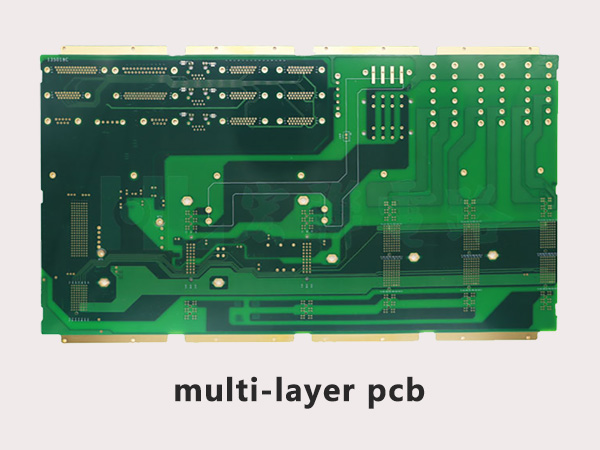
The Panasonic laminate price increase announced on August 6, 2026 takes effect for September 1 shipments on an ex-factory basis. This August 31 update is an execution reminder, not a new price announcement. The change covers several circuit-board material categories, with different rates for general glass-epoxy and low-loss products.
For PCB buyers, the practical questions are which material their approved build uses, when that material ships, and whether a revised quotation still describes the same board. At EBest Circuit, we can review those technical requirements with you before a proposed substitution changes the build.

Which Panasonic PCB Materials Are Included?
Panasonic Industry’s official notice lists the following changes from current material prices:
| Material group | Affected products | Increase |
| General multilayer glass epoxy | Laminate and prepreg | 30% |
| MEGTRON / XPEDION | Laminate and prepreg | 15% |
| LEXCM GX substrate materials | Laminate and prepreg | 30% |
| CEM-3 | Glass-composite materials | 30% |
| FCCL | Flexible circuit-board materials | 15% |
These are Panasonic PCB materials, not replacement control boards for air conditioners or other appliances. Package-substrate materials, flexible materials, and ordinary rigid-board materials should also remain separate entries in a purchasing review. A rate for one category should not be applied to another simply because both are used somewhere in electronics manufacturing.
When Does the September Revision Take Effect?
The stated trigger is shipment from the factory from September 1, 2026. It is not described as a deadline based only on when a customer submits a purchase order.

For a board buyer, the laminate shipment date, PCB production start, and finished-board delivery date are three different milestones. Ask the fabricator which material transaction applies to your order rather than inferring it from your requested PCB delivery date.
- Material already allocated: Confirm the allocation, quantity, and applicable quotation in writing.
- Material still to be purchased: Obtain a current quote and an expected material shipment date.
- Repeat orders or scheduled releases: Check whether each release has its own purchasing and pricing conditions.
A quotation’s validity period is not the same as a stock reservation. If the supplier cannot confirm allocation, do not treat material availability or an earlier price as secured.
Why Is Panasonic Revising Material Prices?
Panasonic cites sustained increases in principal raw materials, together with elevated auxiliary-material, energy, logistics, and other costs. The notice presents the revision as necessary to support continued supply.
That explanation does not provide a PCB-fabricator cost breakdown. A board quotation includes more than the purchased laminate and bonding sheets. The affected material share, processing route, quantities, and contractual terms must be reviewed for the specific order; no finished-PCB price increase can be calculated from the announcement alone.
Nor does a price notice establish that every material grade is unavailable. Treat price, stock allocation, and lead time as separate questions. A higher price is not proof of an earlier delivery slot, and an available sample sheet is not proof of production-volume availability.
What Does This Mean for Panasonic MEGTRON 6 and 7?
Panasonic MEGTRON 6 and Panasonic MEGTRON 7 are material families used in high-performance multilayer boards. They should be identified by the exact laminate and prepreg grades on the approved stackup, not just the family name.
A common percentage adjustment does not make two grades equal in absolute price or technically interchangeable. Their earlier prices, constructions, and processing requirements can differ. A purchasing comparison must retain the grade suffix, copper foil, dielectric construction, panel requirements, and order volume.
For high-speed designs, changing the dielectric system is a signal-integrity decision as well as a cost decision. Channel loss and impedance depend on the board construction and routing, not on the material trade name alone. Our high-speed PCB design guidance explains why the full interconnect needs attention.
If the drawing explicitly specifies a manufacturer and grade, keep that requirement in the quote. Present any alternative as a separate option requiring approval, not as an equivalent silently substituted during purchasing.
What Should You Check in a Panasonic MEGTRON 6 Datasheet?
A Panasonic MEGTRON 6 datasheet is useful for confirming which product a quotation actually refers to. The manufacturer’s documentation distinguishes laminate variants such as R-5775(N), R-5775(K), and R-5775(G), with corresponding R-5670 prepregs. It also identifies typical values and the conditions used to measure them.
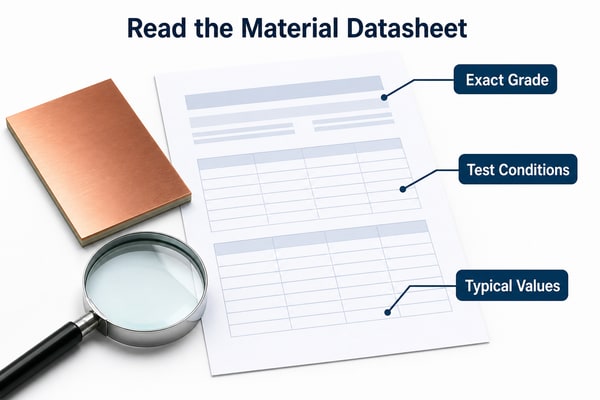
- Exact product: Match the complete grade and suffix, including the associated prepreg.
- Electrical data: Compare Dk and Df only with their frequency, method, and sample conditions stated.
- Thermal data: Check that the property and test method match the assembly requirement being evaluated.
- Copper and construction: Retain the specified foil and dielectric details when comparing transmission performance.
Do not take a typical datasheet result as a guaranteed acceptance limit for every finished board. Define the relevant build and inspection requirements separately. For the role of the bonding material, our PCB prepreg overview provides a useful starting point.
Can a Different Laminate Reduce Cost Without Changing Performance?
Possibly, but that requires evidence for the actual design. A material with a lower quoted sheet price can still require a stackup change, trace-width adjustment, process review, or additional qualification.
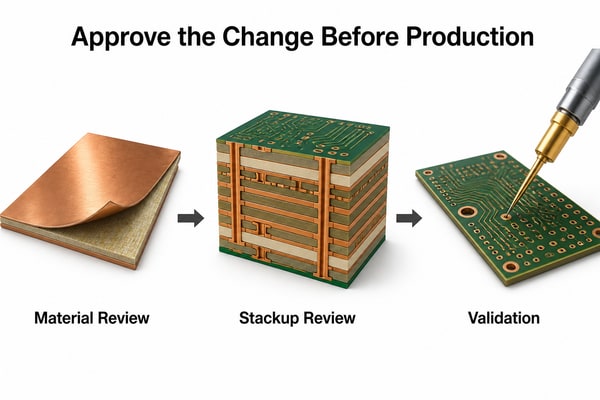
Start by fixing the performance and customer requirements that cannot change. Then compare candidate materials against those requirements, estimate the work needed to approve the change, and obtain written customer acceptance before release.
Our stackup and impedance-control guidance is relevant when dielectric thickness or properties change. Price comparisons should not leave the stackup as an unspecified item to be decided after ordering.
Keeping the existing material may be the better choice when a product is already qualified, the delivery window cannot accommodate validation, or the expected saving is smaller than the change effort. The purpose of a review is to make that tradeoff visible, not to assume that a substitute is always available or worthwhile.
What Should Be Confirmed for September Deliveries?
Ask for a written order confirmation that connects the material, price, and schedule. “Material available” is too broad if the required grade, thickness, copper foil, or quantity is still unresolved.
- Approved laminate and prepreg part numbers, plus any permitted alternatives.
- The material allocation and expected factory shipment relevant to your job.
- The quotation date, validity, and treatment of scheduled releases.
- The expected PCB delivery date after material receipt and fabrication.
- Who approves a material change and what validation is required.
When discussing the Panasonic laminate price increase internally, keep the supplier’s material notice separate from your project’s board quotation. That gives engineering and purchasing the same documented basis for approval.
How Can EBest Circuit Help With Your Material Review?
At EBest Circuit, we support PCB fabrication and PCBA projects, including multilayer and high-speed board requirements. We can review your specified materials and stackup, clarify which requirements must remain fixed, and discuss alternatives that may merit engineering evaluation.
Email sales@bestpcbs.com with your Gerber files, approved stackup, full laminate and prepreg grades, quantities, and target delivery date. Include any customer restrictions on substitution. We will use those requirements to discuss a current quotation and the review needed before changing the build, without treating a material-price headline as a finished-board price.