

Medical instrumentation PCB board fabrication requires precise circuit dimensions, stable signal transmission, and consistent manufacturing quality. For diagnostic instruments, patient monitors, and laboratory equipment, PCB construction directly affects electrical connections, assembly accuracy, and long-term reliability.
EBest Circuit provides custom medical instrumentation PCB board fabrication, including precision multilayer PCBs, HDI structures, engineering support, and optional PCB assembly. We help medical electronics manufacturers address complex fabrication requirements, maintain controlled production specifications, and prepare their PCB designs for reliable manufacturing.
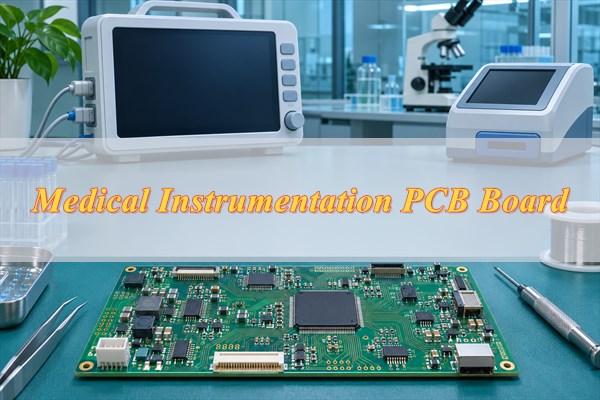
What Medical Instruments Require High-Precision PCB Fabrication?
High-precision PCB fabrication is commonly required in medical instruments that process sensitive measurements, integrate dense electronic circuits, or operate under demanding reliability conditions.
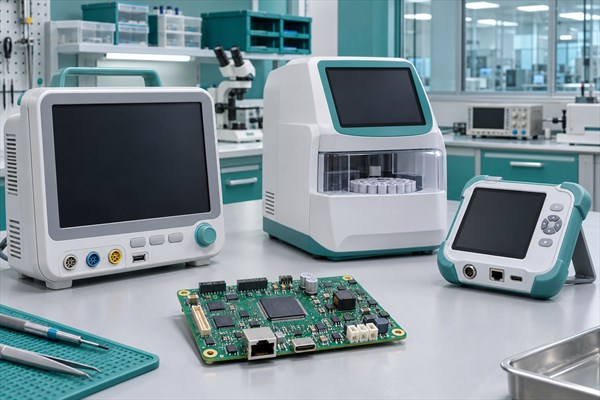
Different medical instruments have distinct PCB manufacturing requirements:
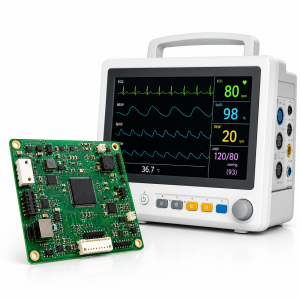
- Patient Monitoring Equipment: ECG, EEG, and multiparameter monitors use PCBs for signal acquisition, processing, and communication. Sensitive analog circuits require careful routing, grounding, and electrical isolation to limit interference.
- Medical Diagnostic Instruments: Blood analyzers, biochemical analyzers, and laboratory testing systems require accurate PCB dimensions, reliable interconnections, and stable performance across measurement and control circuits.
- Medical Imaging Equipment: Ultrasound equipment and imaging control systems may require multilayer PCBs with controlled impedance, high-speed signal routing, and reliable power distribution.
- Portable Medical Instruments: Handheld diagnostic devices and compact monitoring systems often use HDI or rigid-flex PCBs to accommodate dense electronic components within limited space.
Medical instrumentation PCBs must be selected according to the actual circuit design, operating conditions, and equipment requirements rather than the application category alone.
What Are the Key Requirements for Medical Instrumentation PCB Fabrication?
Precision, electrical stability, and manufacturing consistency are the primary requirements for medical instrumentation PCB fabrication. The specifications should be measurable and agreed upon before production.
- Fine-Line Accuracy: Trace width, spacing, and copper thickness must meet the approved fabrication requirements. Narrow traces require appropriate imaging and etching controls, particularly on dense multilayer PCBs.
- Layer Registration: Inner-layer alignment, drill positioning, and annular ring dimensions must remain within specified tolerances to maintain reliable interlayer connections.
- Signal Integrity: High-speed circuits may require controlled impedance, while sensitive analog circuits need suitable grounding and reference-plane structures. The PCB manufacturer must maintain the specified dielectric thickness and trace geometry.
- Electrical Insulation: Conductor spacing, dielectric construction, and isolation boundaries must satisfy the equipment design. Creepage and clearance requirements are determined by the applicable electrical safety specifications.
- Mechanical Accuracy: Finished board thickness, hole dimensions, profile tolerances, and flatness must support accurate component assembly and installation.
- Electrical Reliability: Plated through-holes, vias, and circuit connections must meet the agreed acceptance criteria. Bare-board electrical testing helps identify open and short circuits before assembly.
For medical instrumentation projects, IPC-6012 and IPC-A-600 can provide performance and acceptance criteria for rigid PCBs, while IPC-6013 applies to flexible and rigid-flex constructions. The required standard revision, product class, and additional verification methods should be specified in the manufacturing documentation.
Which PCB Materials and Structures Are Suitable for Medical Instrumentation?
Medical instrumentation commonly uses multilayer FR-4, high-Tg FR-4, HDI, and rigid-flex PCB constructions. Material selection depends on electrical performance, thermal conditions, circuit density, and mechanical design.
| PCB Material or Structure | Main Characteristics | Suitable Medical Applications |
| Multilayer FR-4 PCB | Electrical insulation, multilayer routing, and stable mechanical construction | Patient monitors, diagnostic analyzers, medical control electronics |
| High-Tg FR-4 PCB | Improved thermal stability under suitable manufacturing and operating conditions | Medical equipment with demanding thermal or assembly requirements |
| HDI PCB | Fine-pitch routing, microvias, and high-density interconnections | Compact diagnostic devices, portable medical instruments |
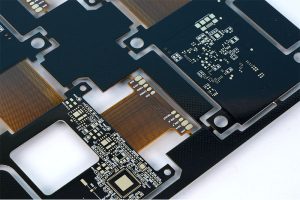
| Rigid-Flex PCB | Integrated rigid and flexible sections for compact three-dimensional connections | Miniaturized medical modules, portable monitoring equipment |
Material properties should be evaluated against the actual design requirements. For example, high-Tg FR-4 may improve thermal stability, but it is not mandatory for every medical instrument. Similarly, HDI construction is useful when component density or routing requirements justify microvias and finer interconnections.
For high-speed circuits, dielectric constant and loss characteristics may also influence material selection. Sensitive low-frequency analog circuits, however, often depend more on appropriate layout, grounding, and interference control than on specialized high-frequency laminates.
What Are the Common Medical Instrumentation PCB Fabrication Challenges and Solutions?
Medical instrumentation PCB fabrication presents manufacturing challenges when fine circuit features, complex multilayer structures, and tight mechanical tolerances must be maintained together.
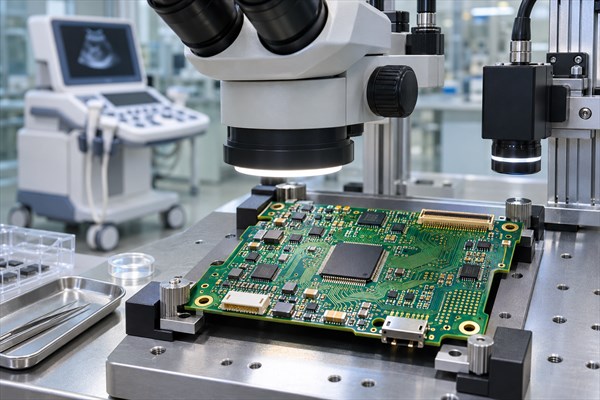
EBest Circuit addresses these issues through engineering review, manufacturing controls, and project-specific inspection.
- Fine-Line Etching Variation: Uneven etching can change trace dimensions and reduce spacing between conductors. We review copper thickness and circuit geometry before fabrication, then apply suitable imaging and etching controls to maintain the required dimensions.
- Multilayer Registration Errors: Layer misalignment can reduce annular rings or affect drilled interconnections. Registration control, lamination alignment, and drilling verification help maintain the intended layer-to-layer connections.
- Controlled Impedance Variation: Differences in dielectric thickness, copper geometry, or finished trace width can shift impedance values. We review the stackup and material parameters before production and use agreed impedance test coupons where required.
- PCB Warpage and Thickness Variation: Thin multilayer constructions may distort because of asymmetric stackups, uneven copper distribution, or thermal processing. Stackup review, copper balance assessment, and thickness inspection help control these risks.
- Plated Through-Hole Reliability: Inadequate hole-wall plating, voids, or poor interlayer connections can affect electrical continuity. Appropriate drilling, desmear, plating controls, and specified microsection inspection help verify plated-hole construction.
- Surface Contamination: Residues and foreign particles can affect solderability and insulation performance. Cleaning, handling, and inspection processes are selected according to the PCB requirements, with additional cleanliness verification when specified.
These measures help maintain dimensional accuracy and electrical consistency, particularly for complex medical instrumentation PCBs intended for repeat production.
What Custom Medical Instrumentation PCB Fabrication Services Does EBest Circuit Provide?
EBest Circuit offers custom medical instrumentation PCB fabrication from engineering review through bare-board production, with assembly and testing support available when required.
Our services include:
- PCB Engineering and DFM Review: Review Gerber files, stackups, copper distribution, hole structures, manufacturing tolerances, and surface finish requirements. Engineering feedback helps identify fabrication constraints before production.
- Custom PCB Fabrication: Manufacture single-sided, double-sided, multilayer, HDI, and rigid-flex PCBs according to approved design specifications, including custom dimensions and material requirements.
- Prototype and Production Support: Provide PCB prototypes for initial design evaluation and support subsequent small-batch or volume production using approved manufacturing files.
- PCB Assembly Services: Support projects requiring component sourcing, SMT assembly, through-hole assembly, and related electronics manufacturing services.
- Inspection and Testing Support: Arrange bare-board electrical testing, dimensional inspection, and additional verification according to project requirements. Assembly-level testing can be included when the necessary test specifications are provided.
Customers can select bare PCB fabrication or combined PCB and PCBA services according to their medical instrumentation project requirements.
How Does ISO 13485 Certification Support Medical Instrumentation PCB Quality?
ISO 13485 provides a medical-device-focused quality management framework for controlled manufacturing, documentation, and traceability. For medical instrumentation PCB projects, its value lies in maintaining consistent production procedures and managing changes to approved requirements.
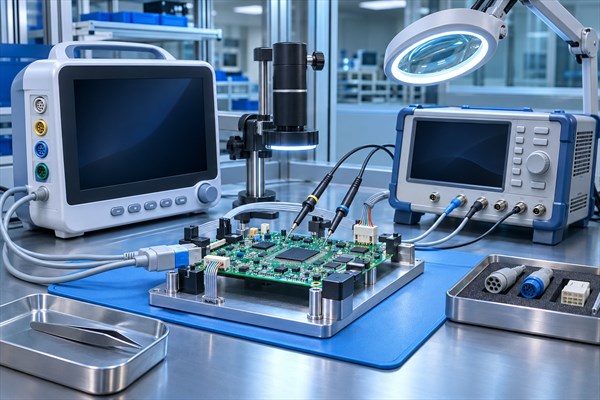
EBest Circuit identifies ISO 13485 among its quality management certifications. Customers should confirm that the current certificate covers the legal entity, manufacturing location, and activities applicable to their project.
The quality controls relevant to medical instrumentation PCB fabrication include:
- Document Control: Manufacturing files, specifications, and revisions are managed to prevent unintended changes to approved PCB designs.
- Material Traceability: Production records can connect manufactured PCB lots to the specified materials, manufacturing batches, and relevant process information.
- Process Control: Defined manufacturing procedures and inspection requirements help maintain consistency across production orders.
- Nonconformance Management: Identified defects and deviations are reviewed and handled through controlled processes before product release.
- Inspection Documentation: Certificates of Conformity, inspection reports, and additional quality records can be arranged according to the agreed manufacturing requirements.
For bare rigid PCBs, IPC-6012 addresses qualification and performance requirements, while IPC-A-600 provides acceptability criteria. IPC-A-610 applies to electronic assemblies rather than bare-board fabrication.
ISO 13485 certification applies to the certified quality management system and its stated scope. It does not certify individual PCBs or establish regulatory approval for a completed medical device.
Why Choose EBest Circuit for Medical Instrumentation PCB Fabrication?
EBest Circuit supports medical electronics manufacturers with engineering communication, controlled fabrication, and coordinated production services. Our focus is on giving customers clear manufacturing requirements and dependable project support.
- Identify Manufacturing Issues Before Production: Receive free DFM feedback on PCB construction, critical dimensions, and potential fabrication constraints before committing the design to manufacturing.
- Get PCB Construction Matched to Your Design: Our engineering team reviews the specified materials, stackup, copper thickness, and via structures to determine a suitable manufacturing approach.
- Maintain Consistent Manufacturing Specifications: Approved design files and production requirements provide a controlled reference for prototypes and subsequent orders.
- Obtain Project-Specific Quality Documentation: Request the applicable inspection records, material information, traceability details, and shipment documentation required by your quality procedures.
- Simplify Project Coordination: Engineering, PCB fabrication, and optional assembly services can be coordinated through EBest Circuit, reducing communication between separate manufacturing providers.
- Receive Support for Complex PCB Requirements: Our team assists with multilayer construction, HDI routing requirements, unusual board dimensions, and manufacturing details that require engineering clarification.
These services help medical instrumentation manufacturers establish clear production requirements and maintain better control over their PCB projects.
How Has EBest Circuit Supported a Medical Instrumentation PCB Fabrication Project?
An eight-layer medical electronics PCB project demonstrates how EBest Circuit supports thin multilayer construction, material selection, and manufacturing preparation for compact electronic modules.
Project Background
A medical electronics customer required an eight-layer FR-4 PCB for a compact medical electronic module. The design had limited available space and needed a thin construction suitable for subsequent PCB assembly.
Project Requirements and Challenges
The customer specified the following manufacturing requirements:
- PCB Structure: 8-layer FR-4 PCB
- Material: Tg170 FR-4
- Finished Thickness: 1.0 mm ±10%
- Inner Copper Thickness: 0.5 oz
- Outer Copper Thickness: 1 oz
- Surface Finish: ENIG, 2 μin gold
- Manufacturing Panel: Maximum 450 × 400 mm
- Additional Requirements: Process edges, fiducial marks, and electronic CoC
The main challenge was accommodating eight circuit layers within the specified board thickness while maintaining an appropriate stackup, copper distribution, and assembly-ready panel design.
EBest Circuit’s Solution
Our engineering team reviewed the multilayer stackup, material selection, copper construction, and panel layout before manufacturing.
The review focused on maintaining the specified finished thickness, preparing a suitable copper distribution, and incorporating the process edges and fiducial marks required for SMT handling.
ENIG was selected according to the customer’s specification to provide a flat, solderable surface for subsequent component assembly.
Project Results
The eight-layer PCB was manufactured according to the customer’s technical requirements and delivered with the specified electronic Certificate of Conformity.
The project demonstrates EBest Circuit’s ability to support thin multilayer medical electronics PCBs with defined material, mechanical, assembly preparation, and documentation requirements.
Frequently Asked Questions About Medical Instrumentation PCB Fabrication
Q1: Do all medical instrumentation PCBs require IPC Class 3?
A1: No. The required IPC acceptance class depends on the equipment’s reliability requirements and the customer’s specifications. Medical applications do not automatically require Class 3. The appropriate class must be agreed upon before manufacturing.
Q2: Can medical instrumentation PCBs contain both analog and digital circuits?
A2: Yes. Analog sensing circuits and digital processing circuits can share a PCB. However, grounding, signal routing, power distribution, and return-current paths must be designed to minimize interference with sensitive measurements.
Q3: Can medical instrumentation PCBs use blind and buried vias?
A3: Yes. Blind and buried vias are suitable for multilayer designs requiring increased routing density. Their construction must be compatible with the selected stackup and manufacturing requirements.
Q4: Is ENIG the only suitable surface finish for medical instrumentation PCBs?
A4: No. ENIG is commonly selected for its flat surface and solderability, but other surface finishes may also be suitable. Selection depends on component packages, assembly processes, storage conditions, and customer specifications.
Q5: Do medical instrumentation PCBs always require halogen-free materials?
A5: No. Halogen-free laminates are selected when required by product specifications, environmental requirements, or customer policies. They are not universally mandatory for medical instrumentation.
Q6: Is conformal coating applied during bare PCB fabrication?
A6: Conformal coating is generally applied after PCB assembly to protect populated electronic assemblies from specified environmental conditions. It is different from the solder mask applied during bare PCB fabrication.
Q7: Can medical instrumentation PCBs include both plated and non-plated holes?
A7: Yes. Plated holes provide electrical interconnections, while non-plated holes are commonly used for mechanical mounting or alignment. Hole types, dimensions, and tolerances should be identified in the manufacturing drawings.
Q8: Can medical instrumentation PCBs use gold fingers for repeated connector mating?
A8: Yes. Gold fingers can be incorporated when repeated connector insertion is required. The plating system, contact geometry, thickness, and durability requirements should be defined according to the connector application.
Q9: Can medical instrumentation PCBs be manufactured with custom board outlines?
A9: Yes. Custom shapes, mounting features, cutouts, and nonstandard board dimensions can be manufactured when compatible with the selected PCB construction and fabrication process.
Q10: Can medical instrumentation PCBs be supplied in panels for automated assembly?
A10: Yes. Panelization can include process edges, fiducial marks, and suitable separation features. The panel design should account for board geometry, component placement, and the assembly equipment’s handling requirements.
How Can You Request a Custom Medical Instrumentation PCB Fabrication Quote?
For custom medical instrumentation PCB board fabrication, send EBest Circuit your PCB design files and manufacturing requirements.
Please include:
- PCB Design Files: Gerber or ODB++ files, drill data, fabrication drawings, and stackup information.
- Manufacturing Specifications: Board dimensions, layer count, copper thickness, materials, surface finish, and special requirements.
- Order Quantity: Prototype quantity, initial production volume, and anticipated repeat orders.
- Quality Requirements: Applicable acceptance standards, inspection requirements, traceability needs, and documentation.
- Assembly Information: BOM, placement files, assembly drawings, and testing requirements if PCBA services are needed.
- Delivery Details: Required delivery date and destination.
EBest Circuit provides high-precision medical instrumentation PCB fabrication, free DFM engineering support, custom multilayer manufacturing, and optional PCB assembly services. Send your project files to sales@bestpcbs.com for a technical review and quotation. Our team will help you evaluate manufacturing requirements and identify a suitable PCB fabrication solution for your medical instrumentation project.