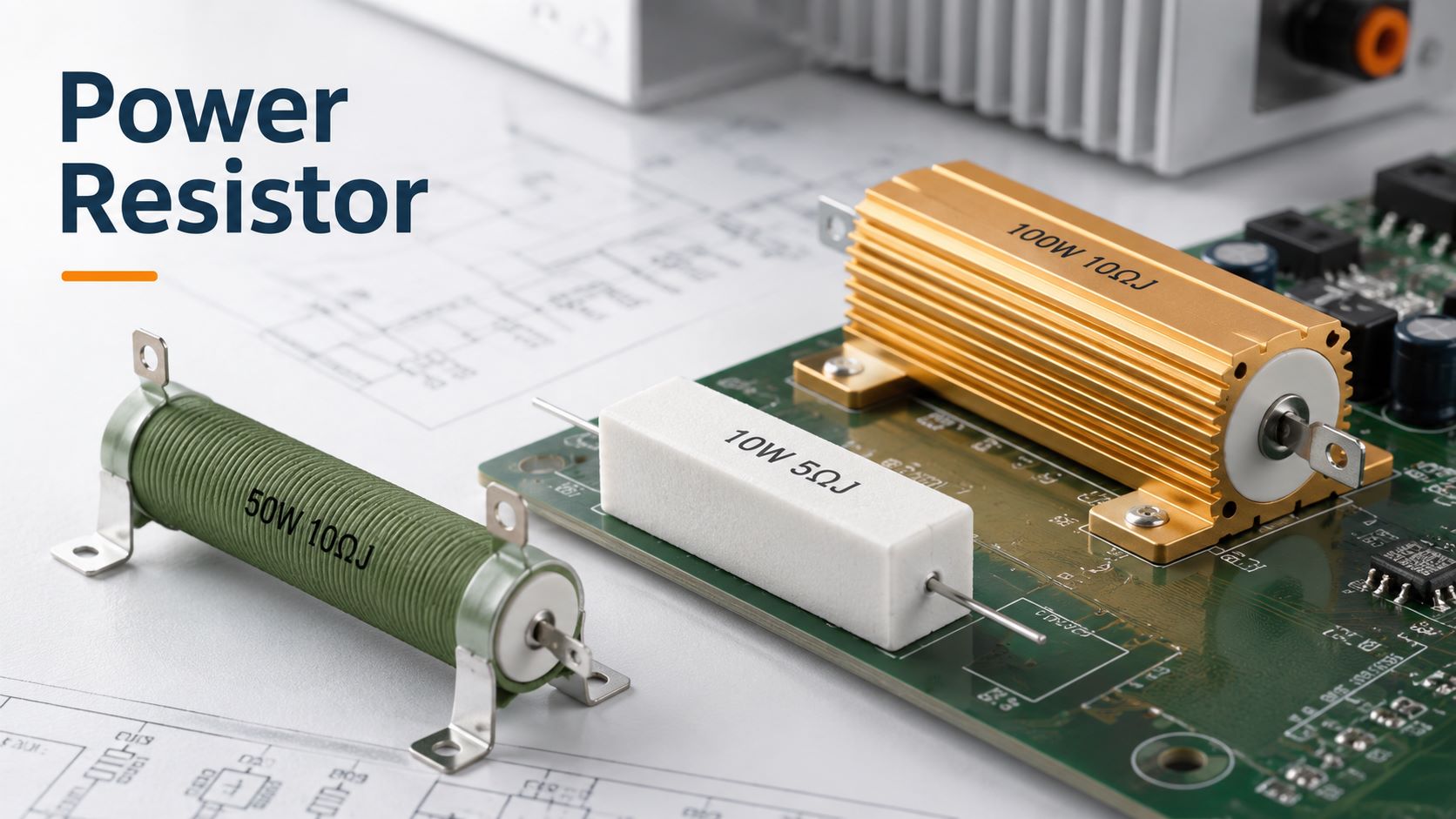
A power resistor is used when a circuit needs to dissipate more electrical energy than a standard signal-level resistor can comfortably handle. These components are common in power supplies, motor drives, battery systems, inverters, charging equipment, and industrial controls, where current, voltage, or transient energy can generate substantial heat.
Choosing the right power resistor involves more than matching the resistance value. Power rating, working voltage, pulse capability, operating temperature, construction, and mounting conditions all affect performance. This guide explains how power resistors work and what to consider when selecting one for a real circuit.
What Is a Power Resistor?
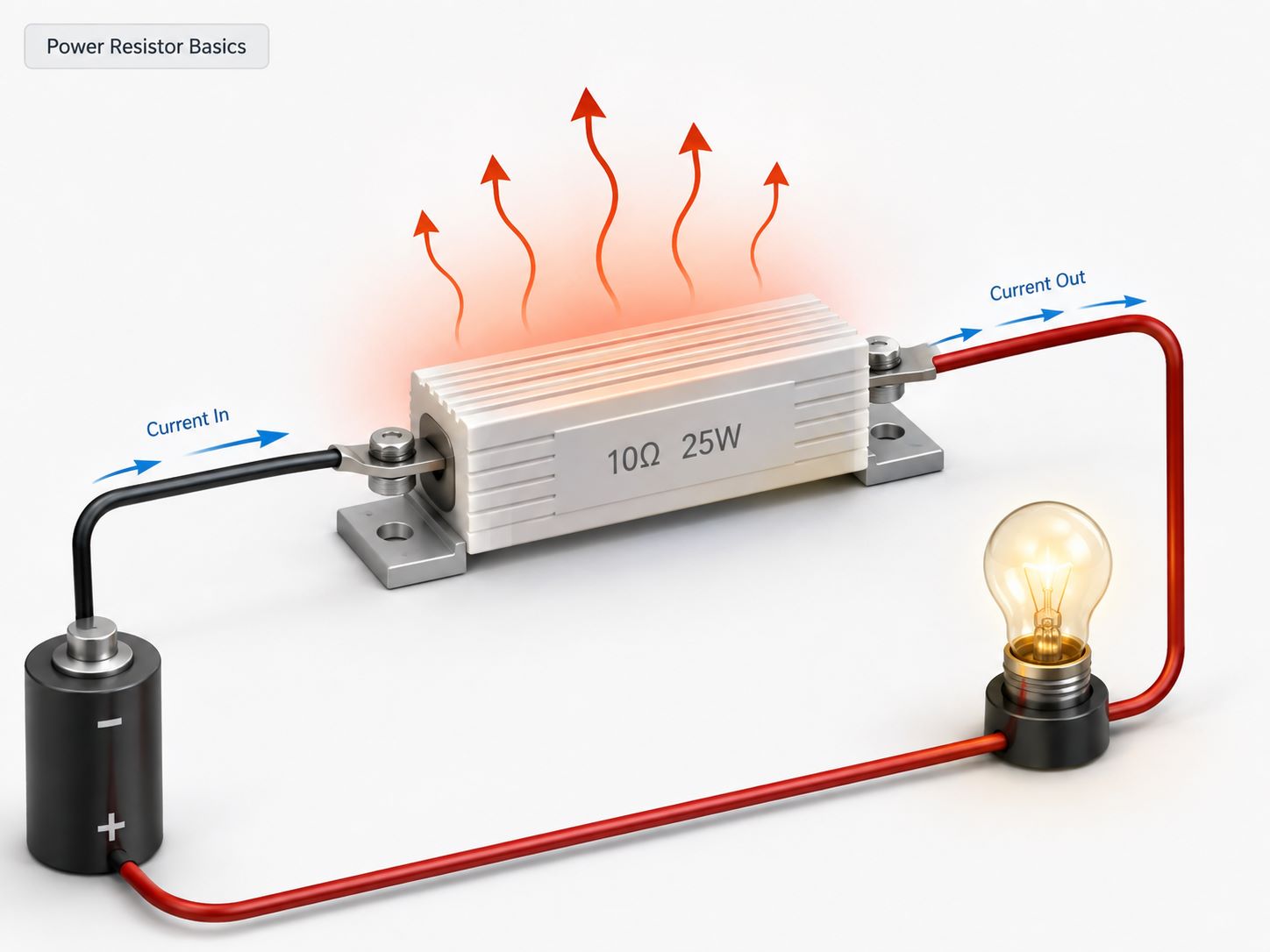
A power resistor is a resistor designed to dissipate relatively large amounts of electrical power as heat while maintaining its specified resistance.
Like other resistors, it limits current or creates a controlled voltage drop. The main difference is its ability to manage a higher thermal load.
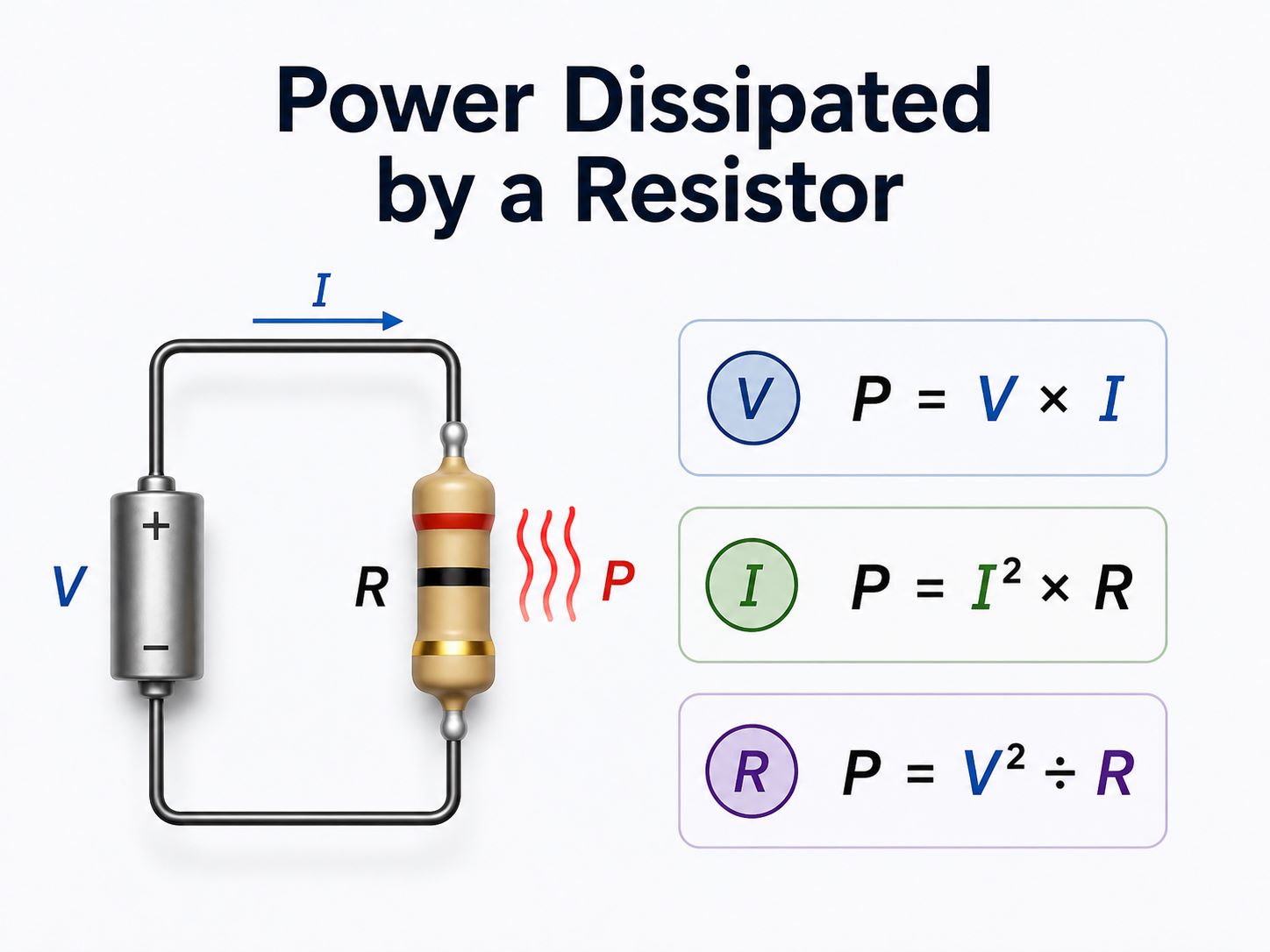
The basic power relationships are:
- P = V × I
- P = I² × R
- P = V² ÷ R
Where P is power, V is voltage, I is current, and R is resistance.
For example, if 2 A flows through a 10 Ω resistor:
P = 2² × 10 = 40 W
The resistor must therefore manage about 40 W of heat under that operating condition.
This does not mean a 40 W resistor should automatically be selected. Continuous operation near the maximum rating may leave little thermal margin, especially inside a warm enclosure or without sufficient airflow.
Power resistors use different constructions to move heat away from the resistive element. Depending on the component, heat may be released into the surrounding air, transferred through the PCB, or conducted into a chassis or heatsink.
When to Use a High Power Resistor?
A high power resistor is appropriate when continuous power, pulse energy, or operating temperature exceeds what a conventional resistor can safely handle.
There is no universal wattage at which a resistor becomes “high power.” The required rating depends on the application.
Typical situations include:
- capacitor discharge;
- inrush current limiting;
- motor braking;
- load testing;
- current limiting;
- repeated pulse absorption;
- high-temperature operation.
A higher wattage rating does not cause a resistor to consume more power. Circuit conditions determine the actual dissipation.
For example, a 100 Ω resistor with 10 V across it dissipates:
P = 10² ÷ 100 = 1 W
A 2 W, 5 W, or 20 W version would still dissipate approximately 1 W in the same circuit. The higher-rated resistor simply provides more thermal capacity.
When choosing a high wattage resistor, however, wattage should not be the only consideration. Maximum working voltage, pulse rating, inductance, physical size, and mounting method can be equally important.
For switching circuits or repetitive pulses, check the manufacturer’s overload or pulse-energy data rather than relying only on the continuous power rating.
Which Type of Resistor Is Used for High Power Applications?
The best resistor for a high-power application depends on continuous wattage, pulse energy, available space, required precision, and thermal conditions.
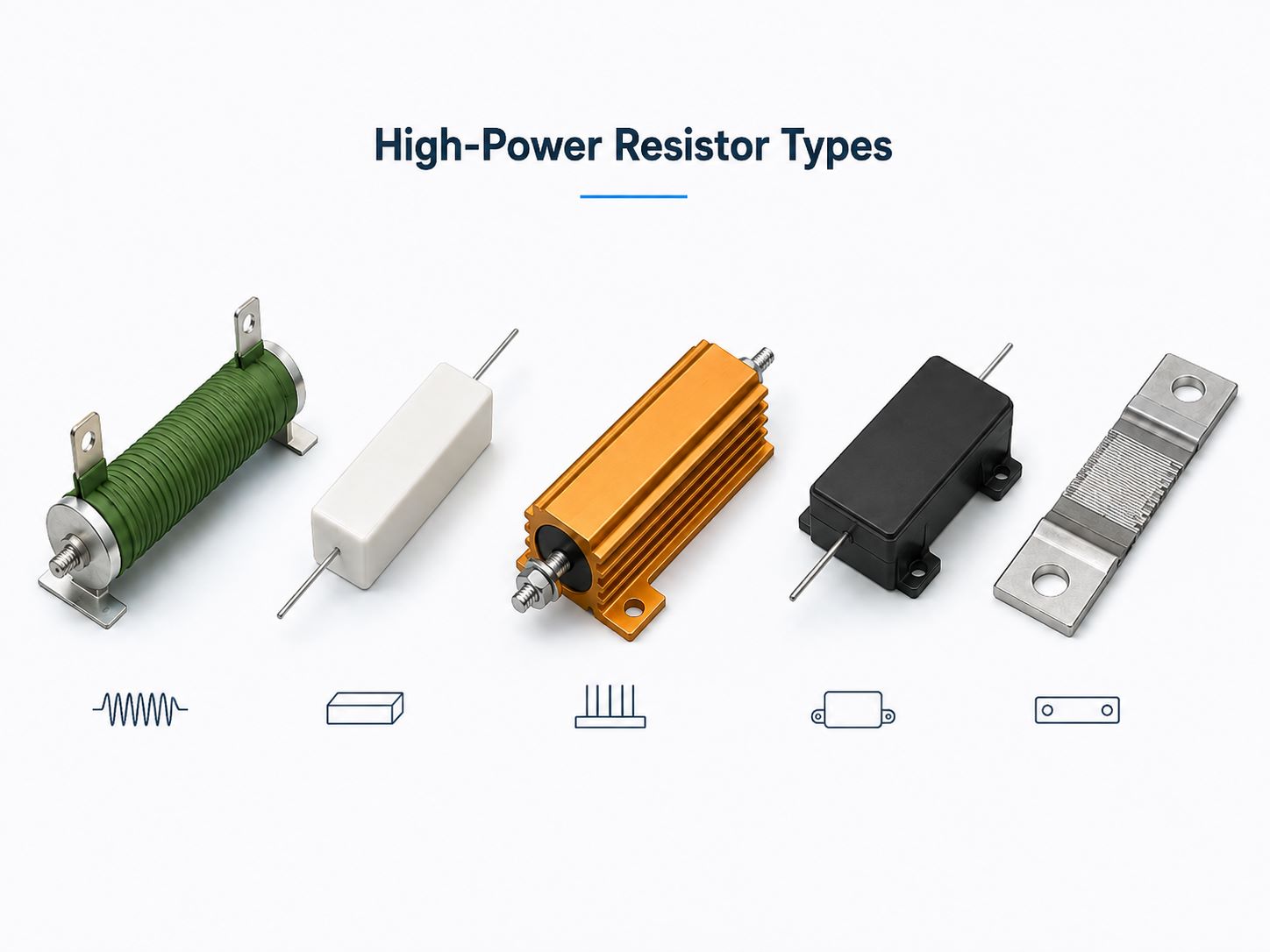
Wirewound resistors
- Wirewound resistors offer good power handling and overload capability. They are widely used in motor drives, power supplies, braking systems, and load banks. Their wound construction can introduce inductance, so low-inductance designs may be preferred in fast-switching circuits.
Ceramic or cement resistors
- A ceramic resistor or cement resistor provides a robust and economical option for current limiting, discharge circuits, snubbers, and general power electronics.
Aluminum-housed resistors
- These resistors transfer heat efficiently into a chassis or heatsink. They are useful when relatively high continuous power must be handled in a compact space.
Thick-film power resistors
- Thick-film designs can combine compact size, relatively high resistance values, and low inductance, making them useful in modern power electronics.
Foil resistors
- A foil resistor is more suitable when power handling must be combined with tight tolerance or low temperature coefficient.
There is therefore no single answer to which type of resistor is used for high power applications. The correct choice depends on whether the main design constraint is heat, pulse energy, precision, size, or high-frequency behavior.
What Is a Resistor Power Rating?
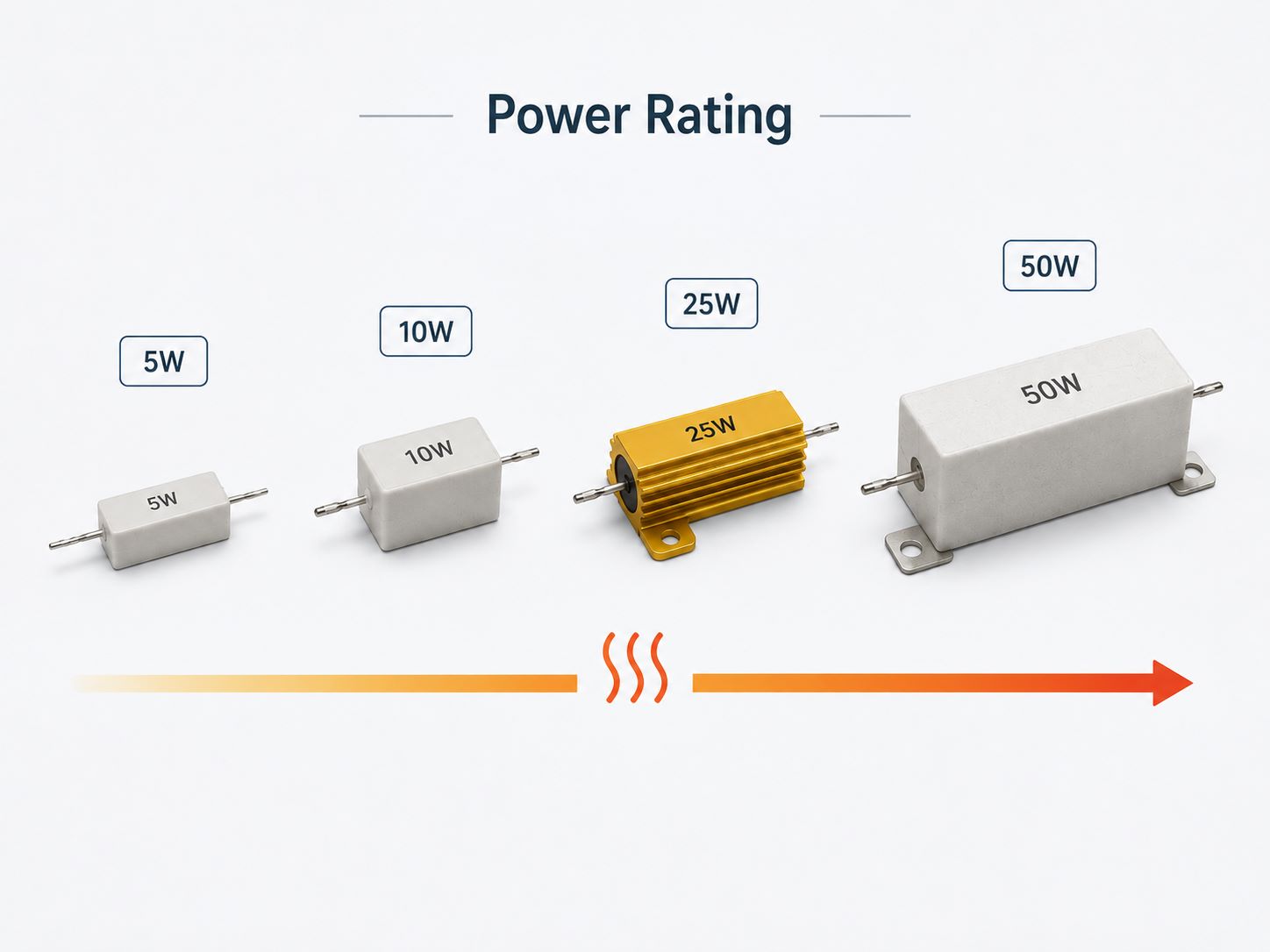
A resistor power rating indicates how much electrical power a resistor can dissipate under specified conditions without exceeding its allowable temperature.
Power ratings are normally expressed in watts. Common values range from fractions of a watt to tens, hundreds, or even thousands of watts for industrial resistor assemblies.
A 50 W resistor rated power, however, does not necessarily mean the component can continuously dissipate 50 W under every condition.
The published rating may assume:
- a defined ambient or case temperature;
- sufficient airflow;
- a particular PCB layout;
- mounting on a metal chassis;
- installation on a specified heatsink.
As temperature increases, allowable power usually decreases. This relationship is shown in the manufacturer’s derating curve.
A practical selection should therefore satisfy:
Actual power dissipation < Allowable power under real operating conditions
The nominal wattage is only the starting point.
Continuous-load designs should also leave suitable thermal margin, while pulse applications require separate verification of pulse duration, repetition rate, and overload capability. A resistor that can dissipate 50 W continuously is not automatically suitable for every short high-energy pulse.
How to Calculate Power Dissipated by a Resistor?
The power dissipated by a resistor can be calculated from voltage, current, and resistance.
Use the equation that matches the values already known:
- P = V × I
- P = I² × R
- P = V² ÷ R
For example, if a 20 Ω resistor carries 1.5 A:
P = 1.5² × 20 = 45 W
This means the resistor dissipates about 45 W.
This power resistor formula works well for steady DC conditions. Pulsed loads require an additional check because average power does not fully describe short-duration thermal stress.
For pulse applications, consider:
- peak power;
- pulse width;
- repetition frequency;
- duty cycle;
- pulse energy.
A resistor may experience very high instantaneous power for a few milliseconds while still showing a much lower average wattage.
For this reason, repetitive pulse applications should be checked against the manufacturer’s pulse-power or pulse-energy curves. This is particularly important in precharge circuits, capacitor discharge systems, motor drives, and switching power supplies.
For steady loads, calculate the actual resistor power first. For pulsed loads, calculate the power and then verify whether the resistor construction can survive the pulse profile.
Do Resistors Have Voltage Ratings?
Yes. Resistors do have voltage ratings, and the voltage limit can become important even when power dissipation remains within the resistor’s wattage rating.
Power and voltage ratings describe different design limits.
For example, a high-resistance component may carry very little current, so its calculated power remains low. At the same time, a high voltage across the resistor may exceed its maximum working-voltage specification.
The voltage associated with resistance and power can be estimated using:
V = √(P × R)
However, the result still needs to be compared with the manufacturer’s specified maximum working voltage.
In practice, the lower limit governs:
- voltage allowed by the power rating; or
- specified maximum working voltage.
High-voltage designs should also consider PCB creepage and clearance, terminal spacing, resistor body construction, contamination, and transient voltage.
When a single resistor cannot withstand the required voltage, several resistors may be connected in series to distribute the voltage stress, provided their power and voltage ratings are both checked.
What Are Power Resistors Used For?
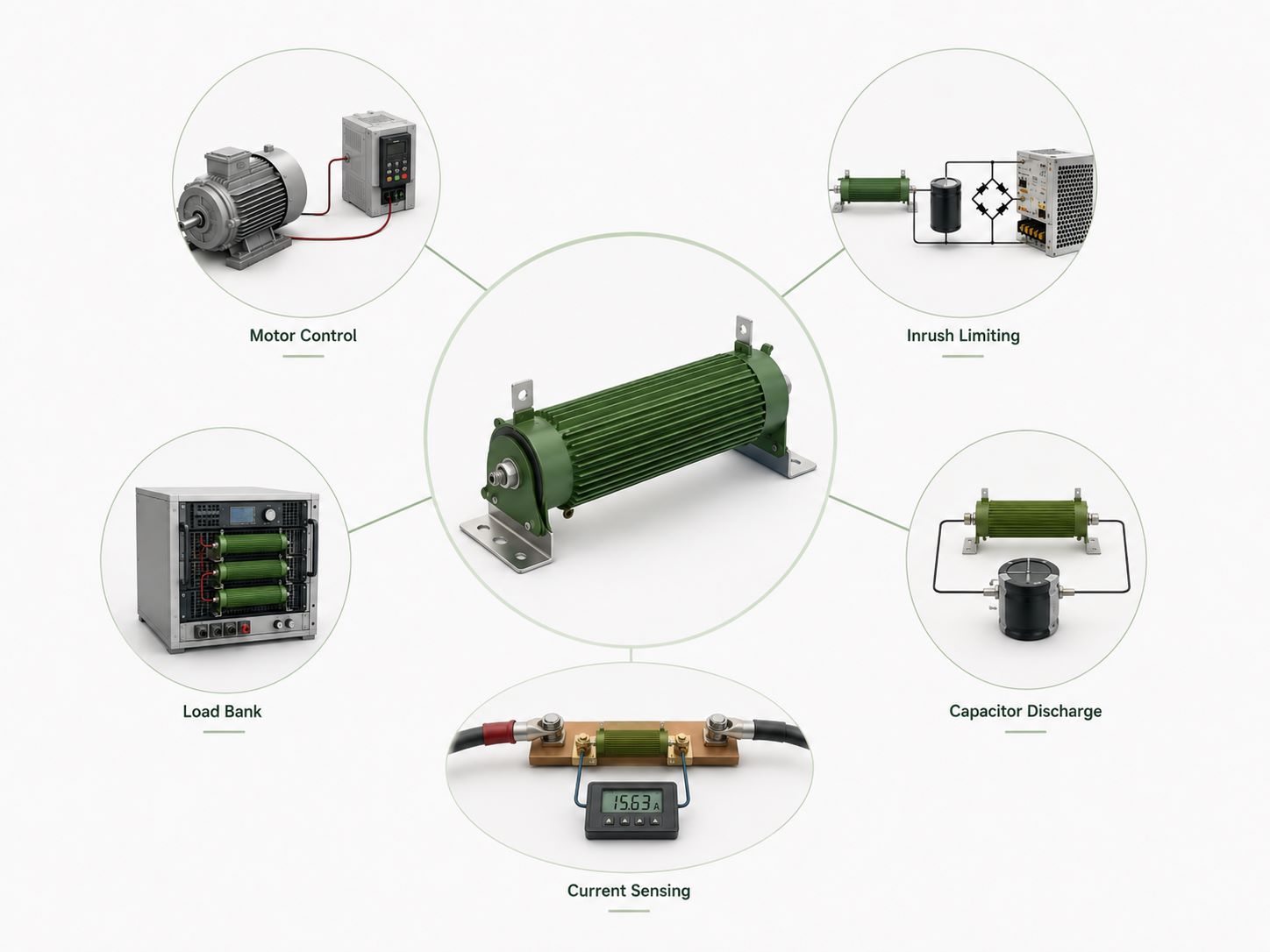
Power resistors are used when electrical energy needs to be limited, discharged, measured, controlled, or converted into heat.
Common power resistor applications include:
Motor braking
- Braking resistors dissipate regenerated energy when a motor decelerates, helping control the DC bus voltage.
Inrush current limiting
- A resistor can temporarily limit the high current drawn when large capacitors are first charged.
Capacitor discharge
- Bleeder and discharge resistors remove stored energy from capacitors after power is disconnected.
Power supplies
- Power resistors can provide minimum loading, voltage balancing, current limiting, and controlled energy dissipation.
Snubber and damping circuits
- Resistors may work with capacitors to suppress ringing or absorb switching transients.
Load banks
- Industrial resistors are commonly used to create controlled loads for testing batteries, generators, chargers, converters, and power supplies.
Current sensing
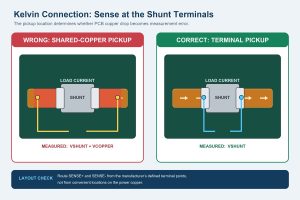
- Low-resistance power resistors can act as shunts, producing a small voltage proportional to current.
The required resistor construction changes with the application. A braking resistor prioritizes energy and heat handling, while a current-sense resistor may prioritize low resistance, accuracy, and temperature stability.
Can I Use a Higher Wattage Resistor?
Yes, in many circuits a higher-wattage resistor can replace a lower-wattage resistor when the other specifications remain suitable.
For example, a 100 Ω, 5 W resistor can often replace a 100 Ω, 2 W resistor. If the circuit produces 1 W of dissipation, the 5 W component still dissipates approximately 1 W. Its higher rating simply provides additional thermal margin.
Before using a higher wattage resistor, check:
- resistance value;
- tolerance;
- maximum working voltage;
- pulse rating;
- temperature coefficient;
- inductance;
- physical size;
- mounting requirements.
This matters because two resistors with the same resistance but different wattage ratings may use different constructions.
A larger wirewound resistor, for example, may introduce more inductance than a smaller low-inductance component. A chassis-mounted resistor may also achieve its published power rating only when installed on an appropriate metal surface.
So, can I use a higher wattage resistor? Usually yes—but wattage should not be considered in isolation.
Choose enough power margin for the real operating environment without unnecessarily increasing size, cost, or parasitic effects.
FAQs About Power Resistor
Is it normal for a power resistor to get very hot?
Yes. Power resistors convert electrical energy into heat, so high surface temperature can be normal. Check the datasheet temperature limit and derating curve rather than judging by touch alone.
How much wattage margin should I leave when choosing a power resistor?
There is no fixed margin for every design. Calculate the actual dissipation first, then select a resistor with enough headroom based on ambient temperature, cooling, duty cycle, and the manufacturer’s derating data.
Can I use several lower-wattage resistors instead of one high-power resistor?
Yes. Series, parallel, or series-parallel networks can share the load, provided the total resistance is correct and each resistor stays within its own power and voltage limits.
Can a power resistor briefly exceed its continuous wattage rating?
Sometimes. Short pulses may exceed the continuous rating if the resistor’s pulse or overload specification allows it. Always check pulse width, energy, repetition rate, and the manufacturer’s pulse curve.
Does a power resistor need a heatsink?
Not always. Some power resistors work in free air, while aluminum-housed or chassis-mounted types may need a heatsink or metal surface to achieve their rated power.
Planning a Power Resistor PCB or PCBA Project? If your project involves power resistors, high-current circuits, thermal design, or PCBA assembly, our engineering team can review your PCB files, BOM, and key requirements before production. You are also welcome to visit our factory to see our PCB and PCBA manufacturing process, production lines, and quality control in person. Send your project details or arrange a factory visit at sales@bestpcbs.com.