In household and commercial billing, an electrical meter usually means an electricity meter that records energy consumption in kilowatt-hours, or kWh.
Older meters use mechanical dials or rotating discs. Newer models use sensing circuits, digital displays, memory, and communication modules. They should not be confused with electrical test meters, such as multimeters or clamp meters, which technicians use for spot measurements.
For utilities and equipment manufacturers, meter accuracy depends on current sensing, voltage measurement, firmware, PCB layout, component stability, calibration, and environmental protection.
What Is an Electrical Meter?
A billing meter measures the electrical energy passing through a connection over time. It may be installed in a home, factory, office, EV charger, solar system, or utility cabinet.
A basic meter records imported energy in kWh. More advanced models may also record:
- Maximum demand
- Exported energy
- Peak and off-peak consumption
- Voltage events
- Power factor
- Reverse energy flow
“Electricity meter” is the clearest term for a billing device. “Energy meter” is common in industrial products, while “electrical meter” may also describe test equipment.
For a PCB or PCBA quotation, state whether the product is a residential meter, DIN-rail monitor, industrial power meter, prepaid meter, smart meter, or test instrument.
What Does an Electricity Meter Measure?
The main measurement is active energy in kWh. One kWh is the energy used by a 1 kW load operating for one hour. Modern meters may also record:
| Measurement | Unit | Practical Purpose |
|---|---|---|
| Active energy | kWh | Standard electricity billing |
| Instantaneous power | W or kW | Shows the present load |
| Voltage | V | Identifies supply variation |
| Current | A | Indicates load demand |
| Maximum demand | kW or kVA | Used in many commercial tariffs |
| Reactive energy | kvarh | Relevant to motors and transformers |
| Power factor | Ratio | Indicates load efficiency |
| Exported energy | kWh | Records solar or battery export |
| Time-of-use energy | kWh by period | Separates peak and off-peak use |
Power is the consumption rate at a given moment; energy is the accumulated total. A 2 kW heater running for 3 hours uses about 6 kWh.
How Does an Electricity Meter Work?
An electronic electricity meter calculates energy by monitoring voltage and current.
The measurement process is usually:
- A voltage divider or isolated sensing network samples the supply voltage.
- A shunt resistor, current transformer, Rogowski coil, or Hall sensor measures current.
- A metering IC or MCU samples both signals.
- The circuit calculates instantaneous power.
- Power is integrated over time to determine energy.
- The result is stored in non-volatile memory and shown on the display.
- A smart meter transmits the data to a utility or energy platform.
Mechanical meters use magnetic fields to rotate an aluminum disc. A gear mechanism converts its rotations into a cumulative reading.
Electronic meter accuracy can be affected by resistor tolerance, sensor linearity, PCB leakage, temperature drift, supply noise, and electromagnetic interference.
What Are the Main Types of Electricity Meters?
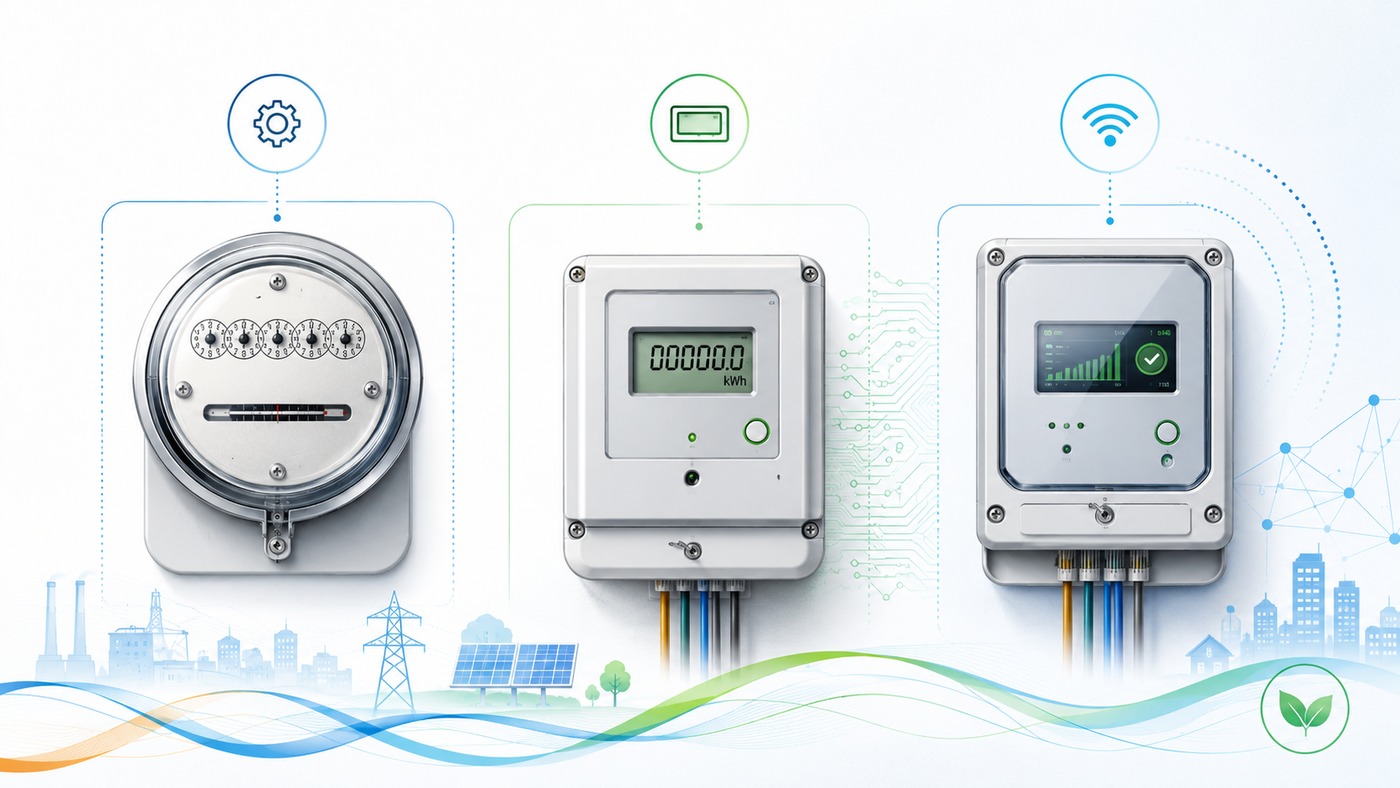
The main types of electricity meter include analog, digital, smart, prepaid, single-rate, dual-rate, single-phase, 3-phase, CT-operated, and bidirectional models. Selection depends on supply type, tariff structure, current range, communication needs, and accuracy class.
| Meter Type | Main Characteristic | Typical Application | Main Consideration |
|---|---|---|---|
| Analog meter | Rotating disc and mechanical dials | Older residential systems | Manual reading |
| Digital meter | Electronic measurement and LCD | Homes and commercial sites | May not support communication |
| Smart meter | Stores and transmits usage data | Utilities and smart buildings | Security and network compatibility |
| Prepaid meter | Uses purchased credit | Rental and controlled-use systems | Payment platform support |
| Single-rate meter | One tariff for all consumption | Standard residential billing | Simple but no off-peak benefit |
| Dual-rate meter | Separate tariff registers | Time-of-use billing | Both readings may be required |
| Single-phase meter | Measures a single-phase supply | Homes and small businesses | Correct voltage and current rating |
| 3-phase meter | Measures all three phases | Factories and large buildings | Phase sequence and load balance |
| CT-operated meter | Uses external current transformers | High-current systems | Correct CT ratio |
| Bidirectional meter | Measures import and export | Solar and battery systems | Clear register identification |
A basic digital meter suits local kWh measurement. Smart functions are worthwhile when the project needs interval data, automated billing, remote monitoring, demand management, or platform integration.
Analog vs Digital vs Smart Electric Meter
The screen is not the deciding factor. A digital meter may be offline; a smart meter adds communication, interval storage, or remote functions.
| Feature | Analog Meter | Digital Meter | Smart Meter |
|---|---|---|---|
| Measurement | Electromechanical | Electronic | Electronic |
| Display | Dials or counters | LCD or LED | LCD plus connected interface |
| Manual reading | Usually required | Usually required | Often automatic |
| Interval data | No | Limited | Common |
| Remote communication | No | Optional | Yes |
| Time-of-use support | Limited | Possible | Common |
| Export measurement | Limited | Model-dependent | Often supported |
| Development complexity | Low | Medium | High |
Smart meters require more firmware, cybersecurity work, EMC control, communication testing, and validation.
How Do You Read an Electricity Meter?
Before taking a reading, confirm that the meter serial number matches the bill.
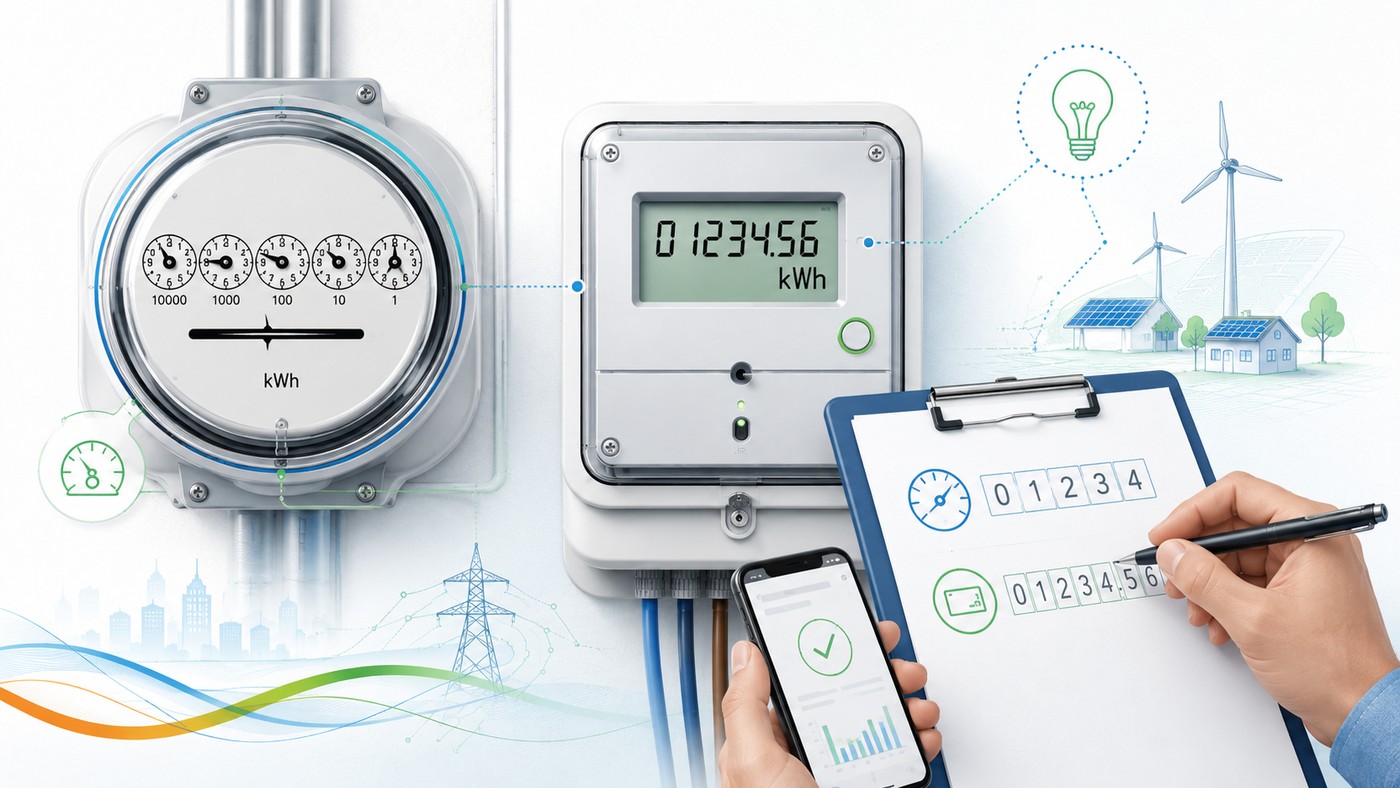
How to Read an Analog Dial Meter
Read the dials from left to right; adjacent dials often rotate in opposite directions.
- When a pointer sits between two numbers, record the lower number.
- When the pointer is between 9 and 0, record 9.
- If a pointer appears to sit directly on a number, check the dial to its right.
- If the right-hand dial has not passed 0, record the lower number.
- Ignore small test dials unless the supplier requests them.
Photograph the display when a pointer position is unclear.
How to Read a Digital Electricity Meter
Record the main digits from left to right. Ignore decimal or red digits unless the supplier asks for them.
Digital displays may rotate through several screens, including:
- Total active energy
- Import energy
- Export energy
- Rate 1 and Rate 2
- Present voltage or current
- Meter serial number
Do not assume the largest number is the billing register. Check the screen code or label.
How to Read a Dual-Rate Meter
A dual-rate meter uses two registers, often labeled Rate 1 and Rate 2, Day and Night, or Peak and Off-Peak.
Press the display button to locate both values, then record them separately. Do not add the readings before submission. The supplier applies a different tariff to each register.
Rate 1 is not always the daytime reading. Confirm the register names on the bill or meter instructions.
How to Read a Smart Electricity Meter
A smart electric meter normally sends readings automatically, but it can still be checked manually.
Use the display button to find the total import register. A solar installation may also show a separate export register. Import is electricity taken from the grid; export is energy sent back.
An in-home display is not the utility meter. For an official reading, use the installed meter unless the supplier states otherwise.
How Do You Calculate Electricity Use from Meter Readings?
Subtract the previous reading from the current reading:
Electricity used = Current reading − Previous reading
For example:
- Previous reading: 38,460 kWh
- Current reading: 38,735 kWh
- Energy used: 275 kWh
At $0.18 per kWh, the energy charge is $49.50, excluding service charges, taxes, or demand charges.
For a dual-rate meter, calculate each register separately. For a CT-operated meter, confirm whether the displayed value already includes the transformer ratio. Some systems show actual energy directly; others require a multiplier.
How Can Smart Meter Data Help Reduce Electricity Use?
Smart electric meter benefits come from exposing avoidable loads; the meter does not save energy by itself.
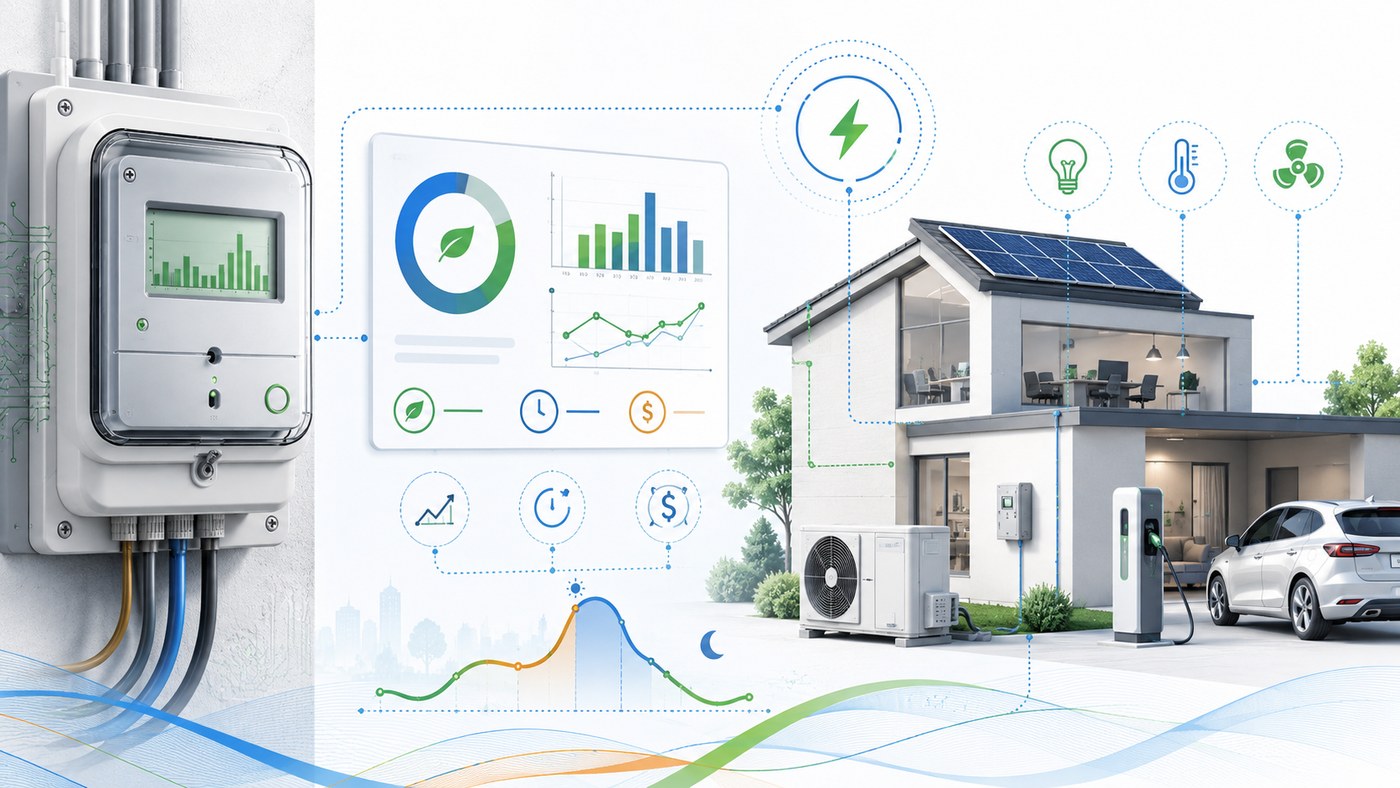
Interval data can reveal:
- High overnight baseload
- HVAC systems running outside scheduled hours
- Compressors or heaters cycling too often
- Equipment left in standby mode
- Unexpected weekend consumption
- High peak-period demand
- Changes after an equipment upgrade
Establish a baseline, change one operating condition, and compare the same period afterward. A workshop, for example, can move battery charging to off-peak hours and compare kWh use and cost.
A sudden increase does not automatically indicate meter failure. Check weather, occupancy, production volume, electric heating, EV charging, and tariff changes first.
What Components Are Inside a Smart Electrical Meter?
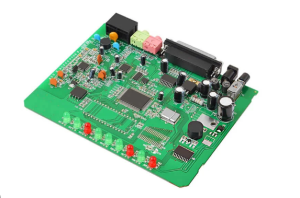
A smart meter combines measurement, control, storage, and communication through its PCB components:
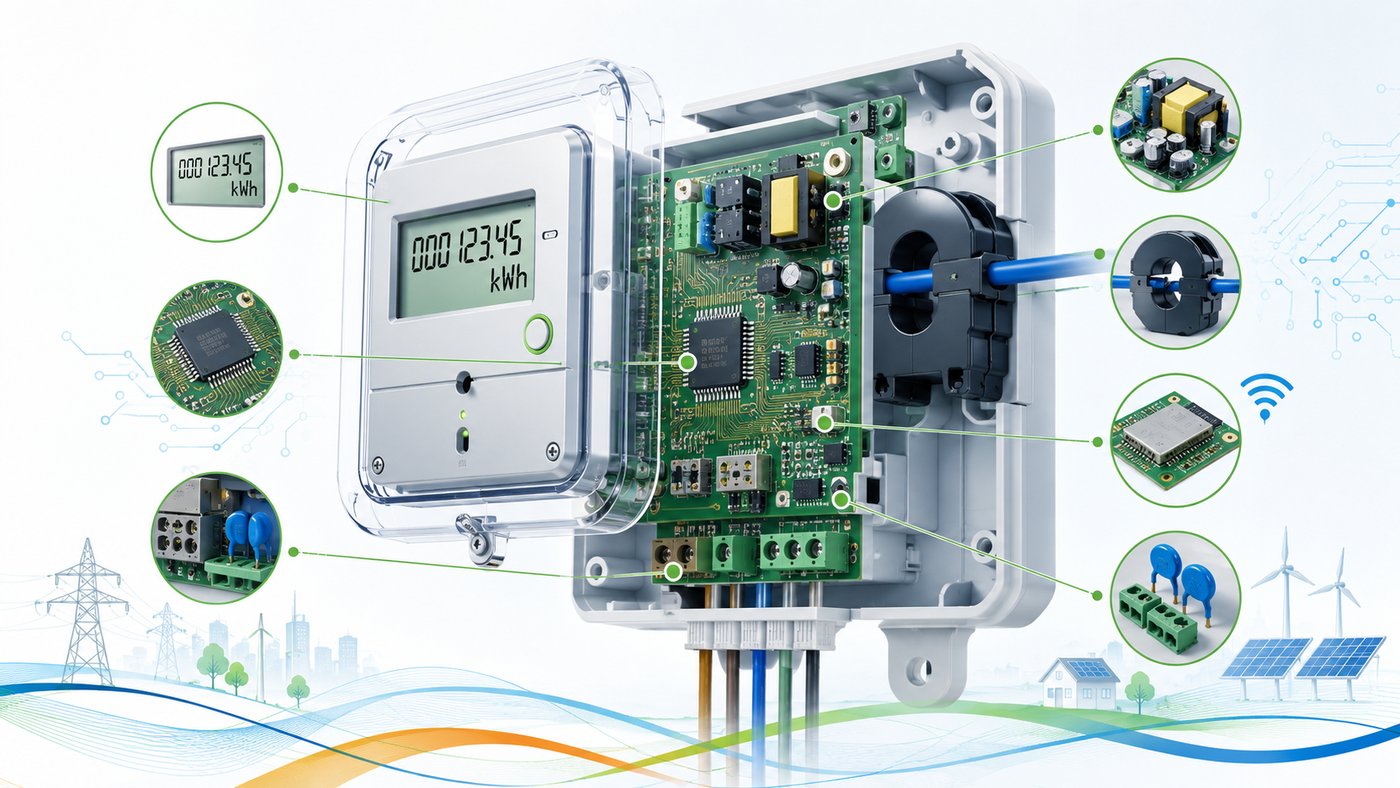
- Metering IC: Calculates voltage, current, power, energy, frequency, and power factor.
- Current sensor: Uses a shunt, current transformer, Hall sensor, or Rogowski coil.
- Voltage sensing network: Scales the mains voltage for measurement.
- MCU: Controls data processing, display, communication, and event logging.
- Memory: Stores calibration values, energy registers, and firmware data.
- Real-time clock: Supports tariffs and timestamped records.
- LCD and driver: Displays readings and status information.
- Communication module: May use RF, cellular, PLC, Wi-Fi, RS-485, or Modbus.
- Power supply: Converts the mains input to stable low-voltage rails.
- Security device: Protects firmware, keys, and communication.
- Protection circuit: Handles surge, ESD, overvoltage, and transients.
The functions may share one PCB or use separate metering and communication boards. Modular designs simplify regional variants but add connector, EMC, and reliability concerns.
What PCB Requirements Matter in Smart Electricity Meter Design?
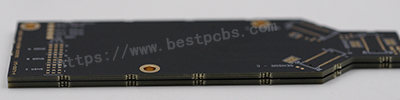
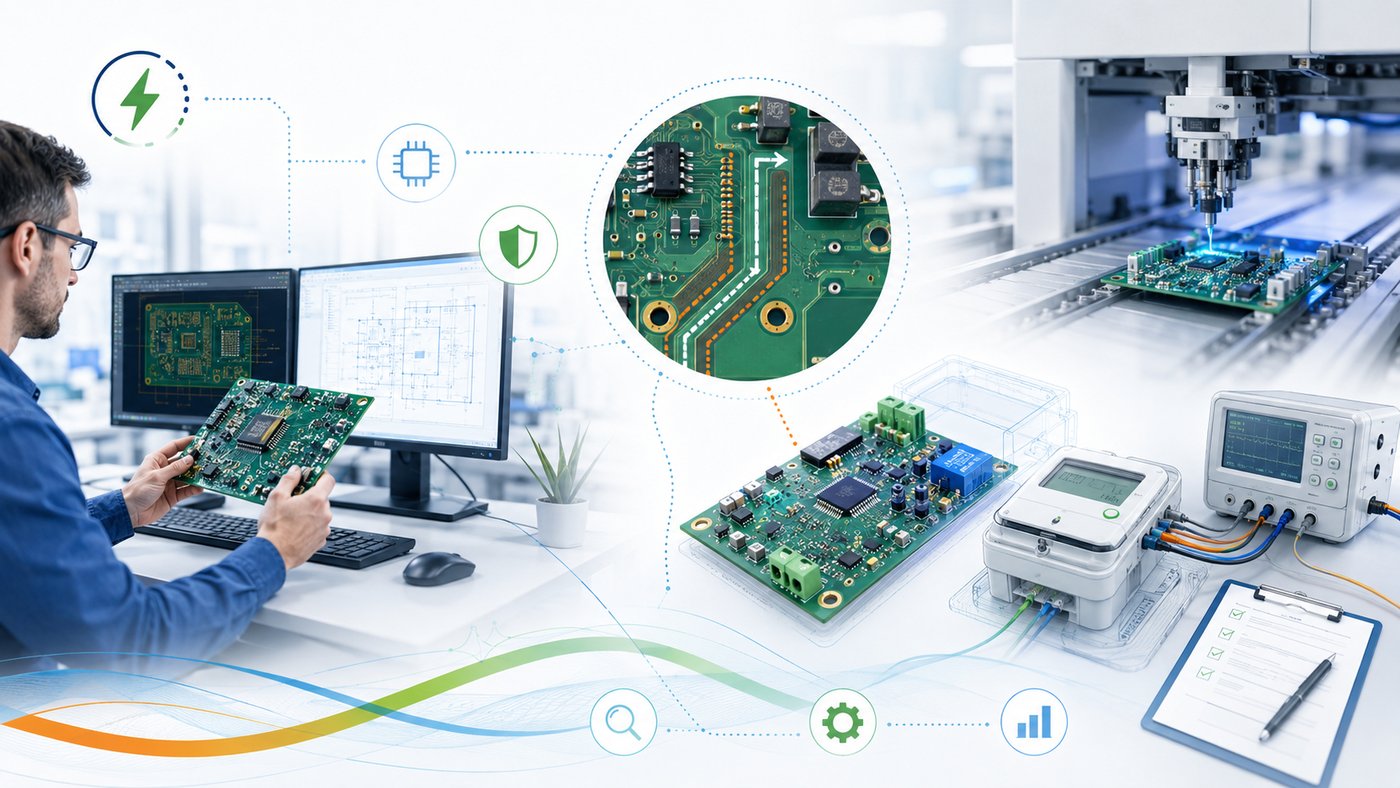
Smart meter PCBs handle mains voltage beside low-level analog signals, so safety spacing, accuracy, EMC, and long-term drift must be controlled together.
Creepage and Clearance
Required distances depend on working voltage, insulation category, pollution degree, material group, altitude, coating, and the applicable standard. Slots can extend creepage in compact layouts but must not weaken the board.
Precision Analog Layout
Keep sensing paths short and away from switching nodes. Low-value shunts often need Kelvin connections. Route differential traces symmetrically and separate them from antennas, relays, display drivers, and DC-DC converters.
High-value resistor networks are sensitive to contamination and PCB leakage. Clean processing, adequate spacing, and suitable coating improve stability.
Component Selection
Important parameters include:
- Initial tolerance
- Temperature coefficient
- Voltage coefficient
- Long-term drift
- Pulse rating
- Humidity performance
The current sensor must avoid excessive heating or saturation, while power components must withstand line transients and operating temperature.
EMC and Surge Protection
Place MOVs, TVS diodes, fuses, chokes, and RC filters close to the power entry. Long traces before protection let transient energy spread through the board.
Manufacturing and Calibration
Fabrication tolerances, residue, substitutions, and rework can affect accuracy. Production should include:
- Controlled programming
- Traceable calibration
- Functional testing
- Serial-number management
- Documented acceptance criteria
For smart meter PCBA projects, EBest Circuit can review Gerber files, BOMs, programming, test specifications, and calibration fixture needs before prototyping. This is particularly useful when high-voltage spacing, precision analog circuits, and wireless communication share one assembly.
Can an Electricity Meter Give an Incorrect Reading?
Meters can fail, but many apparent errors come from billing, tariff, or installation issues.
Check the following first:
- Meter serial number
- Current reading against a dated photograph
- Estimated versus actual billing
- Rate 1 and Rate 2 assignment
- Import versus export register
- Recent changes in heating, cooling, EV charging, or occupancy
- CT ratio or meter multiplier
Technical causes include display damage, wiring errors, communication failure, sensor damage, calibration drift, or incorrect firmware settings.
Do not open, bypass, move, reverse, or modify a utility-owned meter. If the reading remains inconsistent, document the issue and contact the electricity supplier or a qualified electrician.
Formal validation requires a reference energy standard, controlled source, calibrated load, and defined test points.
How Do You Choose the Right Electricity Meter?
Selection starts with the electrical system and use case, not the display.
A buyer should define:
- Single-phase or 3-phase supply
- Nominal voltage and frequency
- Maximum and minimum current
- Direct or CT-operated measurement
- Required accuracy class
- Import-only or bidirectional measurement
- Tariff and time-of-use functions
- Communication protocol
- Data storage interval
- Indoor or outdoor installation
- Operating temperature and humidity
- Enclosure and mounting method
- Regulatory market
- Firmware and cybersecurity requirements
For PCB or PCBA quotation, provide:
- Gerber or ODB++ files
- Drill files and stack-up
- Complete BOM with approved alternatives
- Pick-and-place file
- Assembly drawing
- Programming files
- Calibration procedure
- Functional test specification
- Required standards
- Prototype and production quantities
- Enclosure constraints
- Packaging and traceability rules
For wireless modules, also specify the frequency band, antenna, target region, certification status, and RF test requirements.
Complete documentation exposes cost drivers early, including high-voltage spacing, precision parts, isolation, coating, programming, calibration, traceability, and custom fixtures.
FAQ
1. Is an electrical meter the same as an electricity meter?
Not always. “Electrical meter” is a broad term that may include energy meters, multimeters, clamp meters, and voltage meters. An electricity meter specifically records electrical energy consumption, usually in kWh.
2. Is an electrical meter the same as a multimeter?
No. An electricity meter records accumulated energy use. A multimeter is a portable test instrument used to measure quantities such as voltage, current, resistance, continuity, and frequency.
3. What unit does an electricity meter measure?
The main billing unit is the kilowatt-hour, or kWh. Advanced meters may also display voltage, current, power, demand, power factor, and reactive energy.
4. How do you read an analog electricity meter?
Read the dials from left to right. When a pointer is between two numbers, record the lower number. Check the dial to the right when a pointer appears to sit directly on a number.
5. Do smart electric meters need to be read manually?
Usually not. Smart meters normally send readings automatically. Manual access is still useful for verification, troubleshooting, or checking import and export registers.
6. What is the difference between a digital meter and a smart meter?
A digital meter uses electronic measurement and a digital display. A smart meter also includes communication, data storage, interval measurement, or remote utility functions.
7. How do you calculate kWh from two meter readings?
Subtract the previous reading from the current reading. If the readings are 9,850 kWh and 10,125 kWh, the consumption is 275 kWh.
8. Can an electricity meter record solar power exported to the grid?
A bidirectional meter can record both imported and exported energy. The two values are normally stored in separate registers.
9. Why is my electricity meter reading higher than expected?
Common causes include heating or cooling demand, EV charging, additional occupants, equipment running longer, estimated previous bills, tariff-register confusion, or an unnoticed continuous load.
10. Can I move or open an electricity meter myself?
No. Utility meters contain hazardous voltages and may be owned or controlled by the electricity provider. Contact the supplier or a licensed professional when relocation, inspection, or replacement is required.
Conclusion
An electrical meter records energy use; a smart meter adds interval data, communication, tariff functions, and bidirectional measurement. A reliable design starts with defined ratings, accuracy, certification, and test requirements.
For an electricity meter PCB or PCBA quotation, send the design files, BOM, calibration requirements, and expected quantities to EBest Circuit at sales@bestpcbs.com.