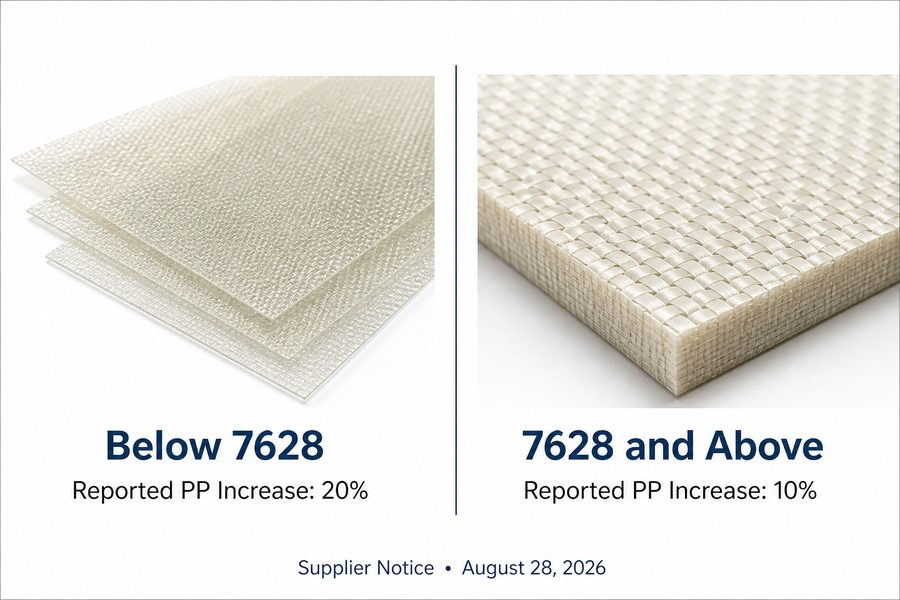
electronic glass cloth moved from a background laminate input to a visible PCB supply-chain issue in 2026. A June supplier notice reported increases of 30% for E-glass cloth and 15% for FLD2 cloth, while an August 28 notice reproduced by industry media reported a 20% adjustment for thin-cloth prepreg below 7628, versus 10% for FR-4 and the notice’s 7628-and-above prepreg group.
These figures do not mean every PCB quotation rises by the same percentage. They show where material pressure is building. The effect on a finished board depends on the laminate system, glass style, resin content, layer count, panel utilization, supplier stock, yield, order quantity, and required delivery date.
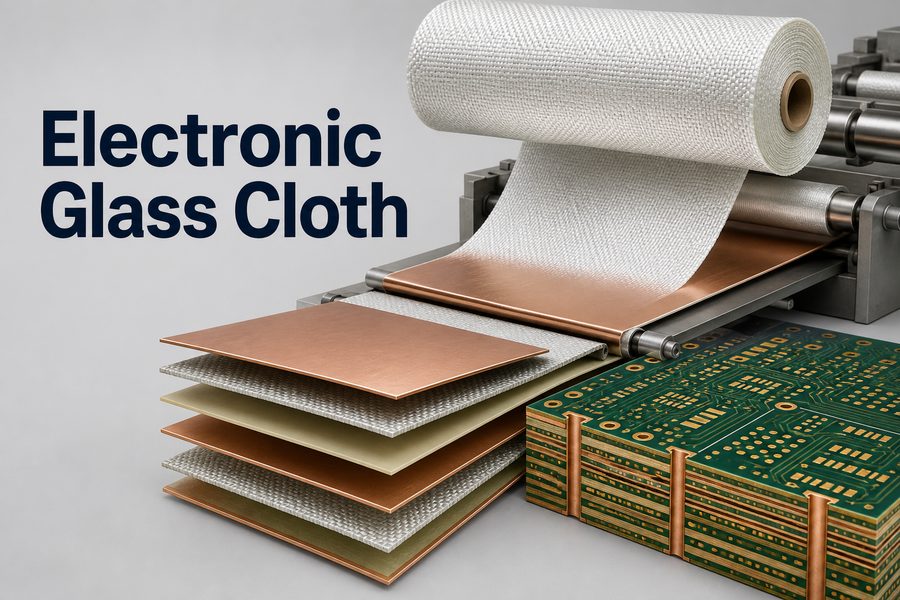
What Is Electronic Glass Cloth in a PCB?
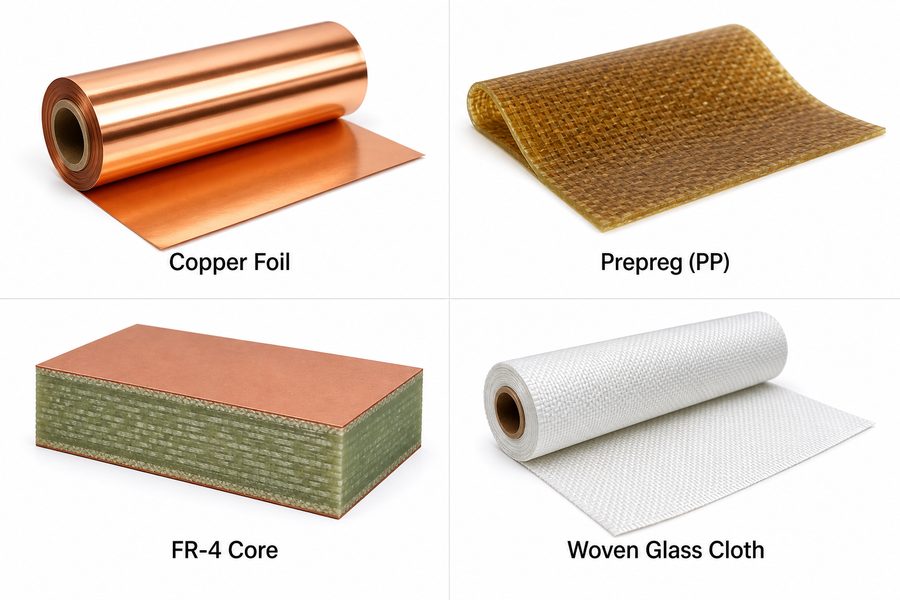
Electronic-grade woven glass fiber fabric is made from fine glass yarn woven into a controlled cloth. Laminate manufacturers combine it with epoxy, polyimide, or another resin system to make rigid cores and prepreg. In an FR-4 construction, the woven reinforcement contributes electrical insulation, dimensional stability, heat resistance, and mechanical strength.
Several terms appear in specifications and searches. They overlap, but they are not always interchangeable:
- Electronic glass cloth and electronic-grade glass fiber cloth identify the electronic-material application.
- Woven glass fabric and glass fiber cloth describe the textile form more broadly.
- Electronic glass fabric is a natural industry variation of the same product category.
- The search phrase e glass cloth normally refers to E-glass composition, not every electronic glass material. Low-Dk or low-CTE specialty glass may use a different composition.
Searches such as glass cloth pcb, glass fabric pcb, and fiberglass cloth pcb usually point to this same reinforcement layer inside a copper-clad laminate or prepreg construction. For a broader material overview, see what copper-clad laminate is in a PCB.
Why Did Electronic Glass Cloth Prices Rise in 2026?
The reported increases were not caused by one isolated factor. Supplier and industry reports point to a combination of glass-yarn cost, energy, transportation, specialized capacity, and demand from AI servers, high-speed switches, semiconductor packages, and other advanced electronics.
The market is also segmented. Standard E-glass, low-Dk glass, low-CTE glass, spread glass, and ultra-thin glass cloth do not share the same production route or availability. A price change for one family must not be presented as a universal increase for every electronic glass product.
What Do the 2026 Supplier Notices Say?
| Date | Material Scope | Reported Adjustment | Application Basis |
|---|---|---|---|
| July 1, 2026 | FULLTECH E-glass glass fiber cloth | +30% | New orders placed on or after the effective date |
| July 1, 2026 | FULLTECH FLD2 glass fiber cloth | +15% | New orders placed on or after the effective date |
| August 28, 2026 | FR-4, all thicknesses in the reproduced notice | +10% | New orders accepted under the notice |
| August 28, 2026 | PP, 7628 and the notice’s thicker-cloth group | +10% | New orders accepted under the notice |
| August 28, 2026 | PP, the notice’s thin-cloth group below 7628 | +20% | New orders accepted under the notice |
The August data comes from a supplier letter reproduced by financial and metals-industry media. Buyers should confirm the exact brand, grade, region, currency, order date, and open-PO treatment with their material source. Our separate Kingboard FR-4 and prepreg update explains that notice in more detail.
How Does Glass Cloth Cost Move Through the PCB Supply Chain?
The price signal passes through several commercial and manufacturing stages before it reaches a finished PCB. A glass-yarn producer supplies yarn to a weaving and treatment operation. The resulting electronic cloth is sold to a laminate manufacturer, which impregnates it with resin to make prepreg or combines it with copper foil to make CCL. A PCB factory then consumes specific core and prepreg constructions during lamination.
Pressure can change at each stage:
- Glass yarn and weaving: fine-yarn availability, energy, yield, and specialist capacity affect cloth supply.
- Laminate production: cloth, resin, copper foil, treatment, and coating costs are combined into a material grade.
- PCB fabrication: the board’s panel area, layer count, bond plies, lamination cycles, and scrap allowance determine how much material is consumed.
- Customer quotation: stock position, volume, quote validity, test scope, and delivery priority determine the final commercial effect.
This chain also explains why two suppliers may quote different changes for the same Gerber package. One may hold qualified inventory bought before the notice, while another may need to purchase new material immediately. Freight, minimum-order quantities, allocation rules, and the remaining shelf life of prepreg can also change the usable cost basis. The comparison is meaningful only when both quotations use the same stack-up, laminate series, glass construction, copper weights, acceptance criteria, quantity, and delivery basis.
Why Is Thin Glass Cloth Under More Pressure?
Thin glass cloth is not merely a lighter version of 7628. Fine yarn, weaving control, fiber opening or spreading, surface treatment, uniform resin impregnation, and thickness tolerance all influence its suitability for electronic laminates. These requirements can limit interchangeable supply.
IPC glass-style numbers such as 106, 1080, 2116, and 7628 identify different constructions. In general, thinner styles support thinner dielectric openings, while 7628 is a heavier cloth. However, the final pressed thickness and electrical behavior still depend on resin content, ply count, resin system, and the laminate manufacturer’s construction. The August notice’s “below 7628” classification is a commercial grouping in that notice, not a complete engineering rule for every supplier.
Which PCB Types May Feel the Impact First?
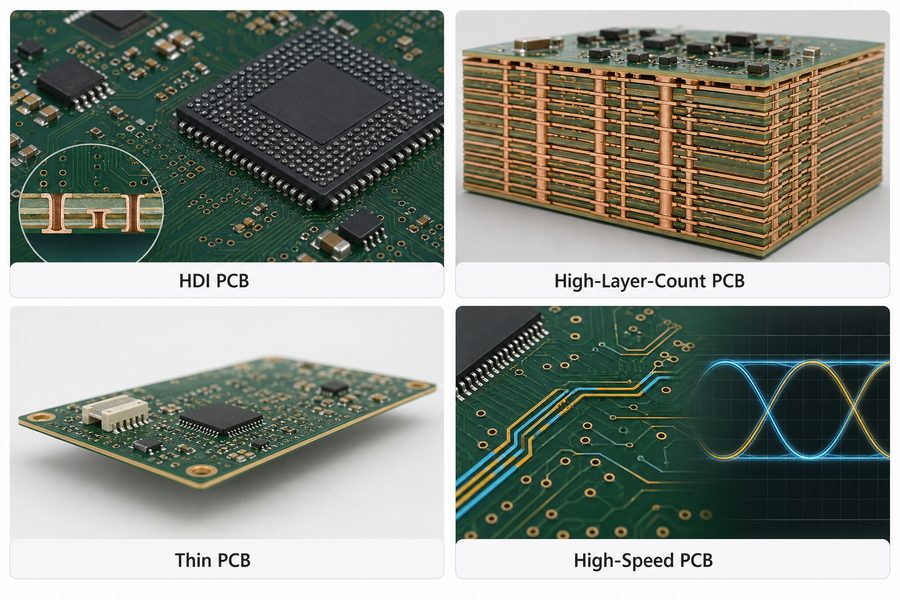
Boards that use more specialized, thinner, or tightly controlled dielectric constructions are more exposed to availability and substitution risk:
- HDI PCB: thin dielectric build-up layers and microvia reliability depend on a controlled material system.
- High-layer-count PCB: many bond plies amplify the effect of prepreg availability, press planning, and material qualification.
- Thin PCB: the overall thickness budget leaves less room to replace one glass style with a thicker construction.
- High-speed PCB: Dk, Df, resin content, glass weave, and trace geometry must remain aligned with the impedance and loss model.
Not every board in these categories uses the same cloth. For example, a high-speed design may require low-Dk glass rather than standard E-glass. A high-speed PCB design therefore needs material review before any cost-driven stack-up change.
Does a 20% PP Increase Mean a 20% PCB Price Increase?
No. The reported percentage applies to a material category under a supplier notice. A finished PCB quotation includes many other inputs and operations. The actual effect varies with:
- board area, panel utilization, layer count, and bond-ply count;
- laminate brand, material family, glass style, resin content, and copper weight;
- drilling, lamination cycles, plating, surface finish, testing, and expected yield;
- supplier inventory, order quantity, quote validity, and requested lead time.
A small standard double-sided FR-4 board and a 24-layer controlled-impedance board will not absorb the same material-cost change. The more useful question is which line items and stack-up layers changed, not whether one headline percentage can be copied into the finished-board price.
Can a Cheaper Glass Style Be Substituted Safely?
Only after engineering review. Two constructions with similar nominal thickness can have different resin content, Dk, Df, local weave behavior, copper geometry, and lamination performance. A substitution can change impedance, insertion loss, skew, CAF risk, drill behavior, and reliability.
Before approving an alternative, compare at least:
- laminate and prepreg manufacturer, series, and approved glass style;
- nominal and pressed dielectric thickness, resin content, and ply count;
- Dk and Df at the relevant frequency and test method;
- Tg, Td, CTE, moisture performance, and CAF requirements;
- controlled-impedance geometry and simulation or coupon acceptance criteria.
This is especially important for fine-feature designs. Our UHDI printed circuit board guide shows why material and stack-up decisions must follow the actual geometry and reliability target.
How Can PCB Buyers Reduce Cost and Lead-Time Risk?
Procurement and engineering teams can act before a shortage becomes a schedule problem:
- Freeze the electrical and mechanical stack-up early enough for material confirmation.
- Separate mandatory material properties from brand preferences that may allow an approved equivalent.
- Share realistic prototype and production forecasts so uncommon glass styles can be planned.
- Ask whether the quotation is based on current inventory, a new material purchase, or an allocation.
- Keep quote validity, open-PO treatment, and delivery assumptions in writing.
- Never approve a high-speed or HDI substitution from a price table alone.
FAQ About Electronic Glass Cloth
Is electronic glass cloth the same as fiberglass?
It is a fiberglass textile made for electronic-material use, but the electronic-grade designation adds controls for yarn, weave, thickness, treatment, and performance. General-purpose fiberglass fabric should not be treated as PCB laminate reinforcement.
Is all PCB glass cloth E-glass?
No. E-glass is common, but low-Dk, low-CTE, and other specialty glass compositions are also used. The required material depends on the laminate family and electrical or mechanical target.
Why does glass style matter to impedance?
Glass style changes the resin-to-glass ratio and local dielectric distribution. Together with pressed thickness and copper geometry, those changes affect the impedance and loss model.
Should buyers reserve thin prepreg earlier?
For HDI, high-layer-count, thin, or high-speed designs, early confirmation is sensible when the stack-up relies on a specific glass style or laminate series. The need depends on actual supplier stock and order timing.
How Can EBest Circuit Support Your PCB Material Review?
At EBest Circuit, we review PCB fabrication requirements together with the stack-up, material system, copper weights, impedance targets, quantity, and delivery plan. If a preferred material is under price or supply pressure, we can identify which requirements are fixed and which alternatives still need technical approval.
For a project affected by electronic glass cloth availability, send your Gerber files, stack-up, material brand or grade, board thickness, copper weights, impedance requirements, order quantity, and target delivery date to sales@bestpcbs.com. We will review the material basis before confirming a quotation or proposing a substitution.