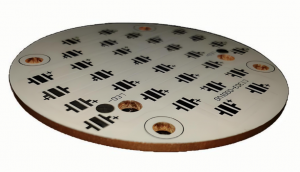
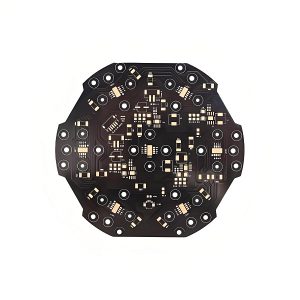
Choosing a copper core PCB supplier is rarely just about finding a factory that can make a metal-base board. Buyers usually already have a thermal-management requirement. The real decision is whether the supplier can manufacture the required copper-core structure, hold the specified material and dimensions, control quality, meet the delivery schedule, and support PCBA when the project goes beyond a bare PCB.
EBest Circuit has 20+ years of PCB and PCBA manufacturing experience, with production support in China and Vietnam and customers across 40+ countries. Our capabilities cover copper core PCB, heavy copper, HDI, rigid-flex, high-frequency PCB and downstream assembly, supported by 4 SMT lines, SPI, AOI, X-ray, ICT and functional testing. PCB fabrication, component sourcing, assembly and testing can be coordinated within one project for customers who want fewer supplier handoffs.
Top 5 Copper Core PCB Suppliers in China to Compare
China has an established copper-base PCB supply chain, but suppliers differ in ordering model, thermal structures, PCBA coverage and suitability for customized projects.
The following five companies are useful suppliers to compare rather than an absolute quality ranking.
| Supplier | Best Fit |
|---|---|
| EBest Circuit | Custom copper PCB + PCBA |
| JLCPCB | Standard online prototypes |
| PCBWay | Prototype and custom builds |
| NextPCB | Copper-core fabrication |
| PCBONLINE | Multilayer and special structures |
JLCPCB is attractive when the design fits a standardized online ordering model. PCBWay also serves prototype and custom PCB buyers with metal-base options. NextPCB publishes dedicated copper-core manufacturing information, while PCBONLINE covers several copper-base PCB structures.
EBest Circuit is better suited to projects that require engineering review, customized copper-core construction, material control, component sourcing, assembly or repeat production.
The useful sourcing question is not simply, “Which supplier is cheaper?”
Which copper core PCB supplier can manufacture the released design without changing the thermal, material or quality requirements that matter to the product?
What Copper Core PCB Manufacturing Capabilities Can EBest Circuit Support?
The fastest way to judge a copper core PCB supplier is to compare your released design with its actual manufacturing limits.
EBest Circuit supports standard and special metal-base PCB processes with the following production ranges:
| Capability | EBest Circuit Capability |
|---|---|
| Thermal conductivity | 1W, 2W, 3W; 3–8W by material confirmation |
| PCB structure | Single-sided, double-sided, 2-layer; special 4-layer builds |
| Special structure | Thermoelectric-separation copper PCB |
| Inner copper | 0.5–3 oz standard |
| Outer copper | 1–3 oz standard |
| Board thickness | 0.8–3.0 mm standard; 4–5 mm by review |
| Min. finished PTH | 0.45 mm standard; 0.30 mm by review |
| Max. PTH aspect ratio | 6:1 |
| Trace / space | 0.20/0.20 mm standard at 1 oz; 0.15/0.15 mm by review |
| Outline tolerance | ±0.15 mm standard; ±0.10 mm special |
| Surface finish | HASL, OSP, ENIG, immersion Ag/Sn, gold finger |
Copper weight is especially important because the achievable trace and spacing change as copper becomes thicker. For example, our regular outer-layer capability is approximately:
- 1 oz: 0.20 / 0.20 mm trace/space
- 2 oz: 0.25 / 0.25 mm
- 3 oz: 0.35 / 0.35 mm
- 4 oz: 0.50 / 0.50 mm, subject to structure review
The thermal material also needs to be specified correctly. We regularly work with 1W, 2W and 3W thermal materials. Higher-conductivity materials in the 3–8 W/m·K range can be evaluated after material availability and construction are confirmed.
For insulation-layer construction, regular PP thickness is around 100–110 μm, while 150 μm and 200 μm options require confirmation.
These numbers give buyers a much faster answer than a generic claim such as “we manufacture copper core PCB.” If your copper weight, board thickness, thermal conductivity, hole size and line width fall within these ranges, the project can move directly into a more detailed DFM review. More demanding specifications can be evaluated against the special-process limits.
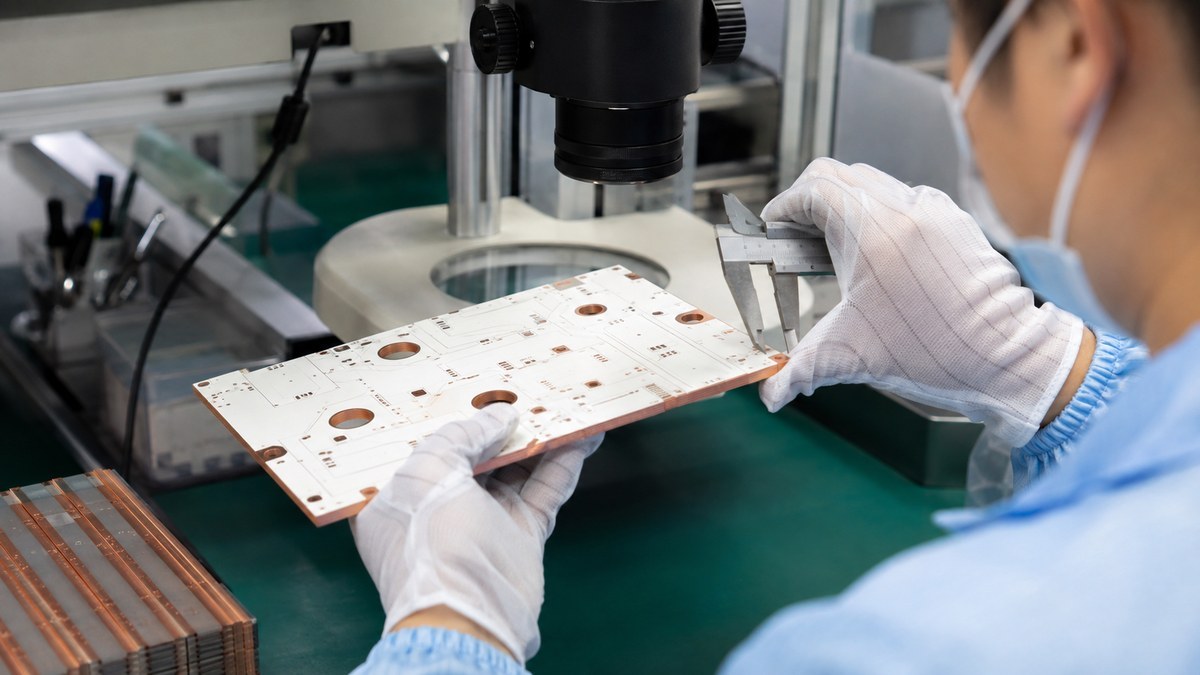
How Is Copper Base PCB Quality Controlled Before Shipment?
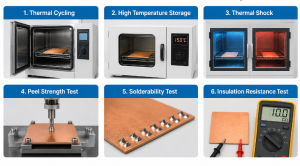
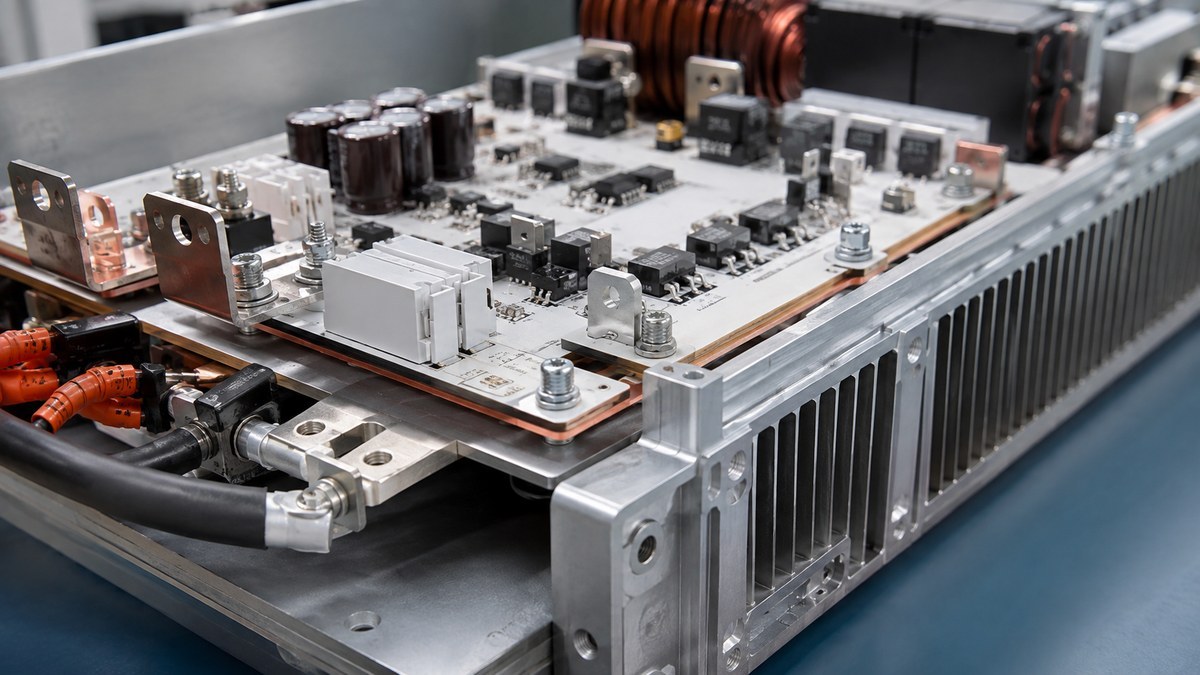
Copper base PCB quality control should result in fewer insulation, dimensional, soldering and mechanical-fit problems after delivery.
At EBest Circuit, attention is focused on the areas that directly affect the finished board:
- Construction consistency: copper thickness, dielectric structure and finished thickness follow the approved specification.
- Electrical isolation: insulated structures must maintain separation between the circuit and metal substrate.
- Hole accuracy: standard PTH diameter tolerance is ±0.075 mm, while NPTH tolerance can reach ±0.05 mm.
- Mechanical fit: standard outline tolerance is ±0.15 mm, with ±0.10 mm available for qualifying requirements.
- Solderability: pads, solder mask and surface finish are checked before assembly.
- Electrical integrity: electrical testing helps detect opens and shorts before shipment.
When the copper core PCB continues into assembly, inspection can extend to SPI, AOI, X-ray, ICT and functional testing according to the board and acceptance requirements.
The benefit is not simply more inspection steps. It is less risk of discovering a PCB problem after higher-value components have already been mounted.
Which Certifications and Standards Matter for Copper Core PCB Production?
Not every copper core PCB needs the same certification set. The relevant requirements depend mainly on the final product and the customer’s supplier-qualification rules.
| Application | Common Requirement |
|---|---|
| Industrial | ISO 9001, IPC |
| Automotive | IATF 16949 |
| Medical | ISO 13485 |
| Aerospace | AS9100D |
| Environmental | RoHS, REACH |
| UL-required products | Applicable UL system |
EBest Circuit supports projects under quality systems including ISO 9001, ISO 13485, IATF 16949 and AS9100D, together with applicable UL, RoHS, REACH and IPC requirements.
The important point is not to require every certificate for every board.
An automotive copper-base PCB may make IATF 16949 part of supplier qualification. A medical project may require ISO 13485, while an aerospace program may use AS9100D as a sourcing gate.
For a general industrial copper core PCB, the applicable IPC requirements, materials and customer acceptance criteria may matter more than an unnecessarily long certification list.
The right certification should qualify the manufacturing route, not simply decorate the supplier page.
How Fast Can Copper Core PCB Prototypes and Production Orders Ship?
For standard PCB builds, EBest Circuit typically plans around 3–5 working days, with expedited production available for qualifying projects.
Copper core PCB lead time may increase when the design includes:
- high-conductivity material requiring special sourcing;
- non-standard copper-base thickness;
- multilayer construction;
- thermoelectric-separation structures;
- special machining;
- additional testing.
For the customer, the real benefit is knowing the realistic ship date before production starts.
We consider engineering review, material readiness, fabrication, assembly and testing when estimating the schedule. A three-day fabrication cycle, for example, has little value if the specified 5 W/m·K material requires additional sourcing time.
For PCBA orders, component availability must also be included before a dependable delivery date can be confirmed.
Can a Copper Core PCB Supplier Also Handle PCBA?
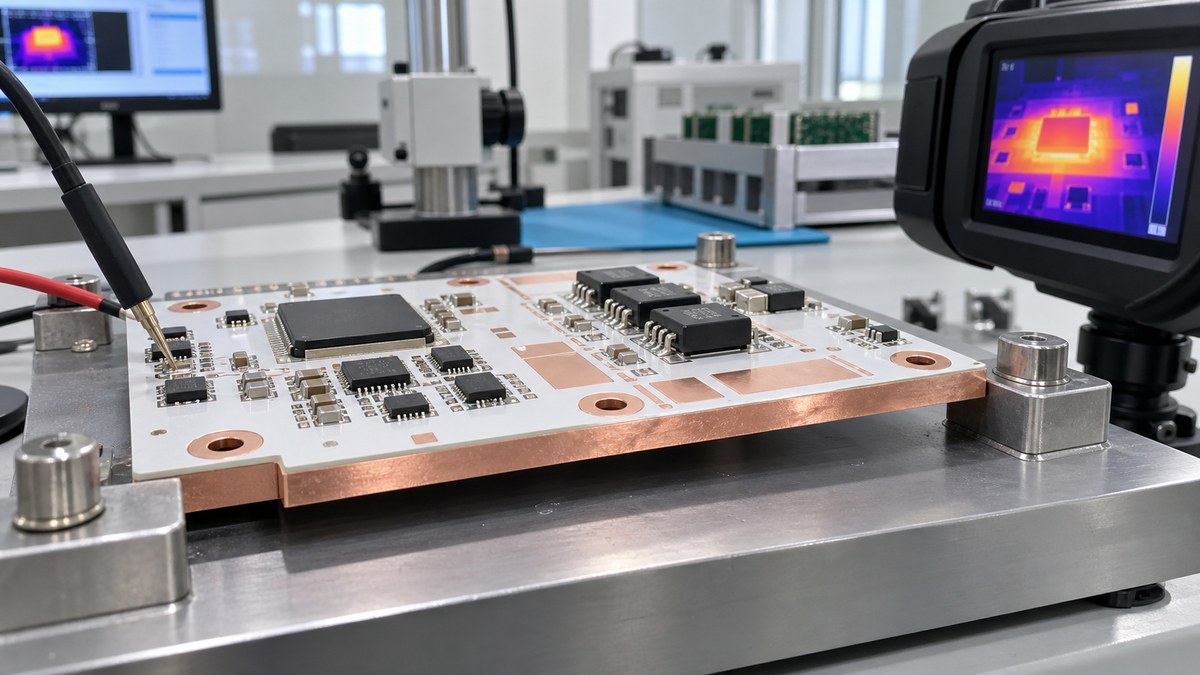
Yes. For many thermal-management products, having one supplier handle both copper core PCB fabrication and assembly can simplify the project considerably.
A copper-base board may later carry LEDs, MOSFETs, power modules, connectors or other heat-generating components. Splitting these stages can leave the customer coordinating:
PCB supplier → component sourcing → SMT house → inspection → testing
EBest Circuit can combine these activities within one manufacturing project.
Customers gain:
- Fewer supplier handoffs: PCB, sourcing, assembly and testing can stay together.
- Faster issue resolution: PCB and assembly questions are handled within the same project.
- Better BOM control: turnkey, partial-turnkey and consigned sourcing are available.
- Inspection matched to the build: SPI, AOI and X-ray can be applied where appropriate.
- Clearer responsibility: PCB-related assembly issues do not need to be negotiated between separate factories.
This approach is particularly useful for LED lighting, power electronics, industrial control and automotive applications where the PCB and mounted devices work together as one thermal system.
Copper Core PCB Case Study: From Thermal Design to Production
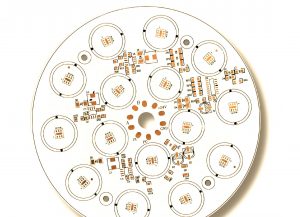
One copper-core lighting project required a 2-layer copper core PCB with downstream assembly.
| Item | Specification |
|---|---|
| PCB | 2-layer copper core |
| Thickness | 1.60 mm ±10% |
| Circuit copper | 1 oz |
| Thermal conductivity | 3 W/m·K |
| Finish | OSP |
| Assembly | Included |
| Application | Pool lighting |
The customer needed more than a bare copper-base board. The 3 W/m·K thermal material, 1.6 mm construction, surface finish and assembly process had to work within the same finished lighting product.
EBest Circuit coordinated PCB fabrication and PCBA within one project rather than transferring the board between separate manufacturers.
For the customer, this meant fewer supplier interfaces and one approved manufacturing package that could support repeat builds.
The project also shows why a copper core PCB should not be specified simply as “use copper.” Thermal dielectric, copper weight, board thickness, surface finish and downstream assembly all affect the finished product.
Why Choose EBest Circuit as Your Copper Core PCB Supplier?
A good copper core PCB supplier should reduce the work and risk the customer has to manage.
With EBest Circuit, buyers gain:
- More design flexibility: standard and special copper-base structures can be evaluated against clearly defined process limits.
- One manufacturing route: PCB fabrication, sourcing, PCBA and testing can stay within one project.
- Fewer surprises before fabrication: thermal material, copper weight, thickness and assembly requirements are reviewed before release.
- Better control over changes: material and component alternatives remain subject to customer approval.
- Easier repeat production: approved construction and production requirements remain connected to future orders.
- Broader quality-system coverage: industrial, automotive, medical and aerospace projects can be supported under relevant quality frameworks.
For international customers, the value is not simply a lower bare-board price. It is knowing what the factory can manufacture, reducing supplier handoffs and keeping responsibility clearer from copper-core PCB fabrication through finished PCBA.
FAQs About Copper Core PCB Suppliers
How do I choose a copper core PCB supplier?
Start with measurable manufacturing limits. Compare the required thermal conductivity, copper weight, board thickness, layer structure, minimum hole, trace/space, surface finish and quality requirements with the supplier’s actual production capability.
Is copper core PCB better than aluminum PCB?
Not in every application. Copper provides stronger heat spreading and can suit more demanding thermal designs, but it is heavier and usually more expensive. Aluminum remains practical for many LED and power-electronics applications where its thermal performance is sufficient.
What thermal conductivity should I specify for a copper core PCB?
Do not judge the PCB by bulk copper conductivity alone. The thermal dielectric and its thickness can strongly affect overall thermal resistance. EBest Circuit regularly supports 1W, 2W and 3W thermal materials, while 3–8 W/m·K materials can be evaluated according to availability and construction.
How thick can a copper core PCB be?
EBest Circuit’s regular metal-base PCB thickness range is 0.8–3.0 mm. Thicknesses of 4.0 mm or 5.0 mm can be evaluated when suitable material is available.
Can copper core PCBs use heavy circuit copper?
Yes. Regular inner-layer copper capability is 0.5–3 oz, while outer layers commonly support 1–3 oz. Higher copper weights require review because trace/space and etching requirements change as copper becomes thicker.
Can one copper core PCB supplier provide both fabrication and assembly?
Yes. EBest Circuit provides copper core PCB fabrication together with component sourcing, SMT/THT assembly, inspection and customer-defined testing, reducing the need to coordinate several manufacturing suppliers.
Ready to Start Your Copper Core PCB Project?
If you are preparing a copper core PCB or PCBA project, send your Gerber files, fabrication drawing, BOM, assembly requirements, and target quantity to sales@bestpcbs.com. Our engineering team can review the stackup, copper-base structure, thermal requirements, manufacturability, assembly needs, and lead time before quotation.