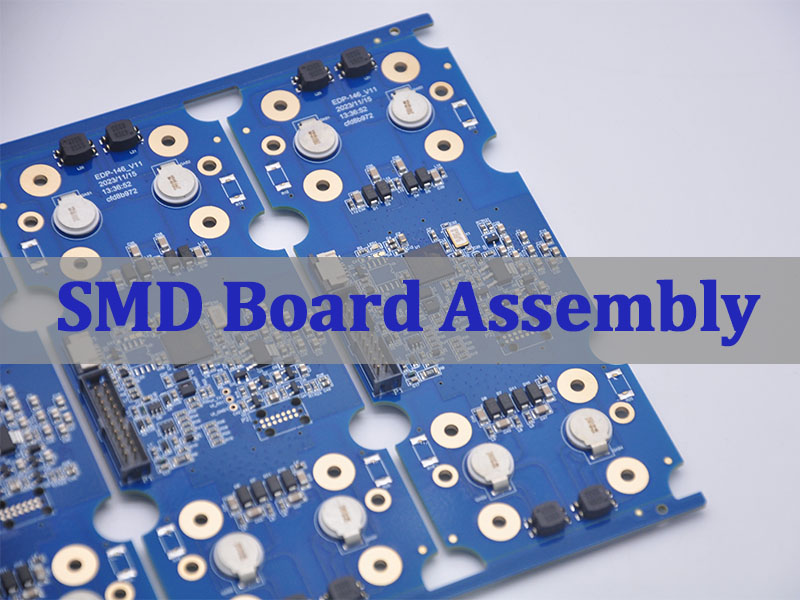


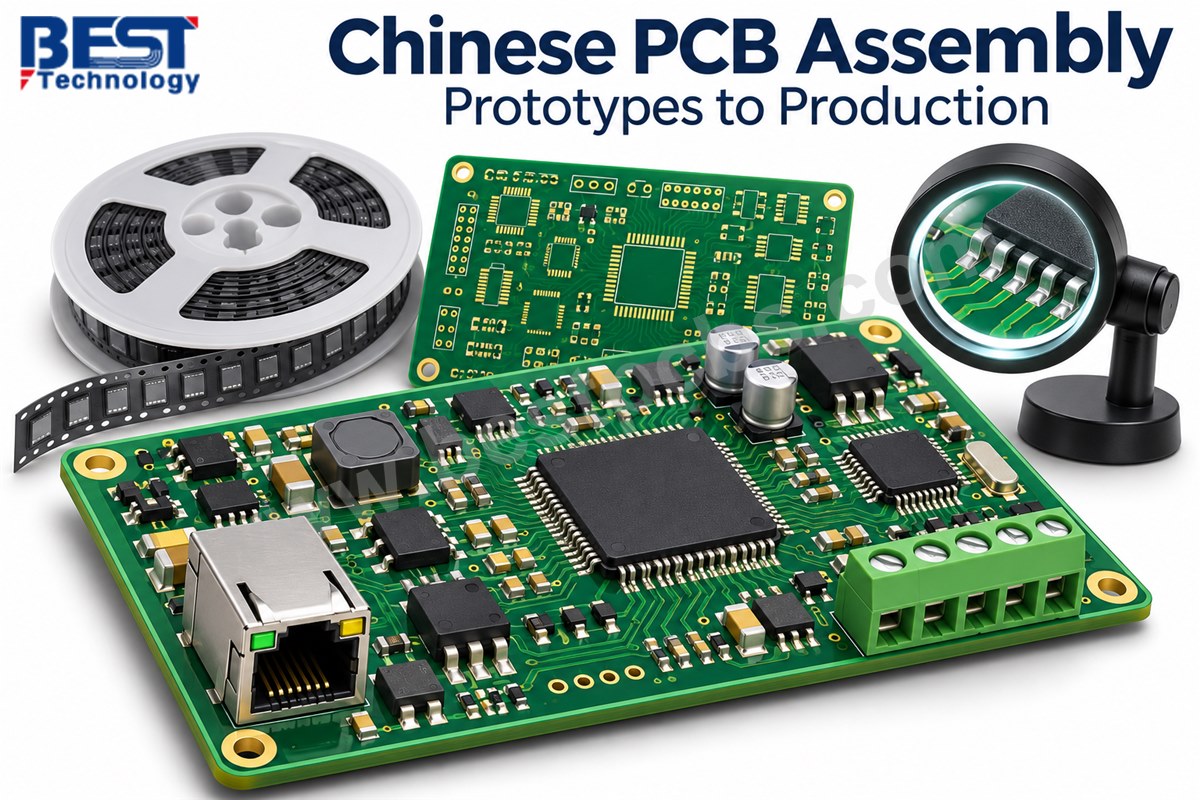
EBest Circuit provides Chinese PCB assembly with no minimum order quantity and free DFM review, bringing PCB fabrication, component sourcing, SMT/THT assembly, and testing into 1 manufacturing project. Overseas OEMs can order a small first batch without committing to production quantities or coordinating separate board and assembly suppliers.
Our 4 SMT lines support assemblies with 01005 components and BGA pitches down to 0.25 mm. You can supply critical ICs while we purchase the remaining BOM items, or choose full turnkey assembly. Before the build, our engineers review manufacturing concerns and component availability so your team can resolve design changes and purchasing decisions before they delay production.
Key Takeaways
- EBest Circuit accepts prototype and low-volume PCBA orders with no MOQ, allowing customers to order the quantity their project needs.
- Free DFM review identifies manufacturing concerns before fabrication and assembly, including footprints, soldering access, and board handling.
- Our 4 SMT lines support 01005 components and BGA pitches down to 0.25 mm, with package and stencil requirements checked for the actual layout.
- Partial turnkey assembly lets customers retain control of critical ICs while we source the remaining approved BOM items.
- SPI, AOI, X-ray, and MES board-level traceability support defect detection and investigation, while functional tests check specified operating behavior.
- A useful overseas quotation separates recurring manufacturing costs, one-time tooling, freight, and import-related charges.
- The delivery plan needs a component-ready date, production schedule, and international transit estimate to establish when boards can reach your facility.
Why Choose PCB Assembly in China?
PCB assembly in China can reduce the coordination required to buy bare boards, source components, and assemble finished hardware when these activities are managed by the same manufacturing partner. For overseas buyers, the practical advantage is a build that can move from PCB fabrication to assembly without transferring materials between suppliers in different countries.
The cost benefit depends on what you buy. A repeat order with stable components can spread setup work across more assemblies, while a small urgent order may spend a larger share of its budget on tooling and express freight. Imported processors or allocated ICs can remain expensive regardless of where the board is assembled.
- Your engineering team can resolve PCB fabrication and component-placement questions through the same project contact.
- Your purchasing team can combine bare boards, approved components, assembly, and testing in 1 order rather than manage separate delivery schedules.
- You can keep scarce or customer-programmed parts under your control and use the manufacturer for the rest of the build.
EBest Circuit’s PCB assembly services support these purchasing arrangements. For a first overseas order, the key decisions are who buys each component, what the finished boards must pass, and when the shipment needs to arrive.
EBest Circuit’s PCB Assembly Capabilities
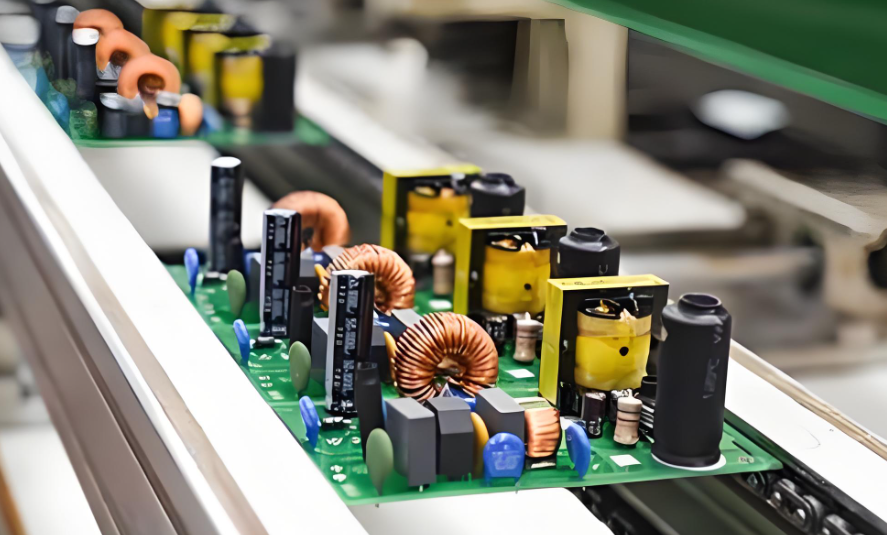
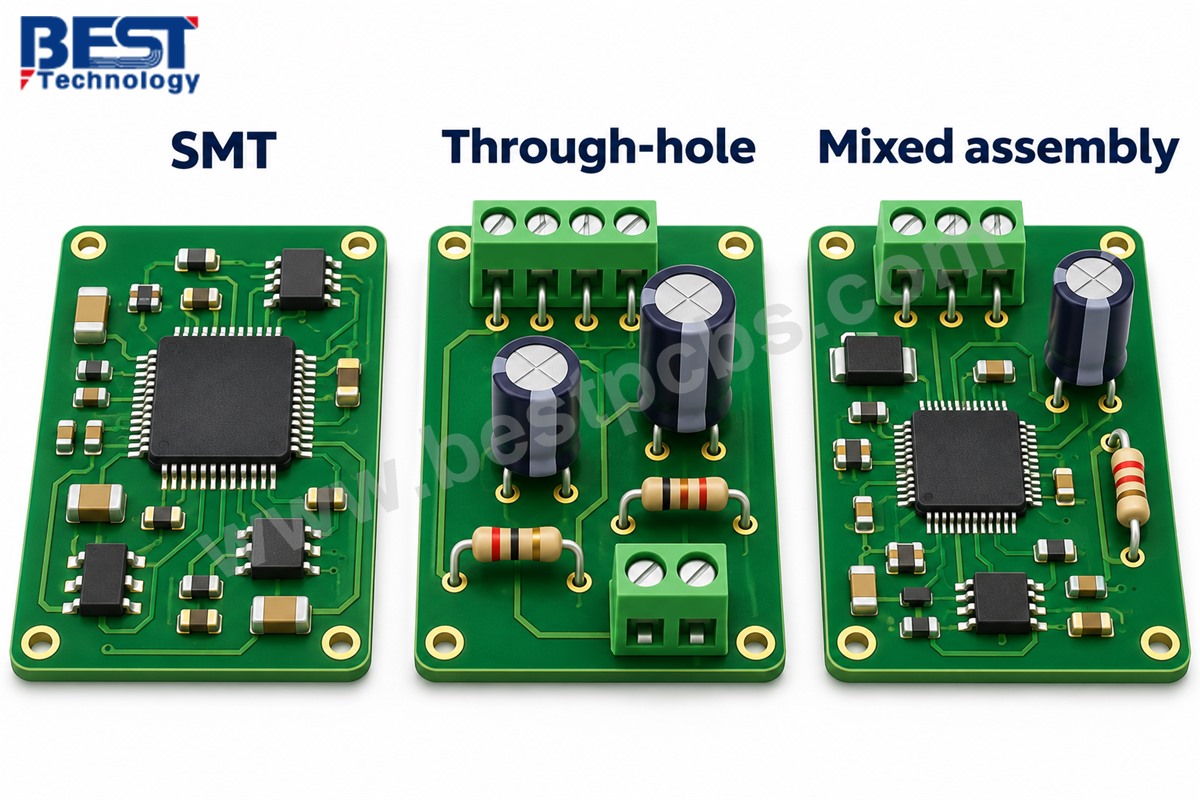
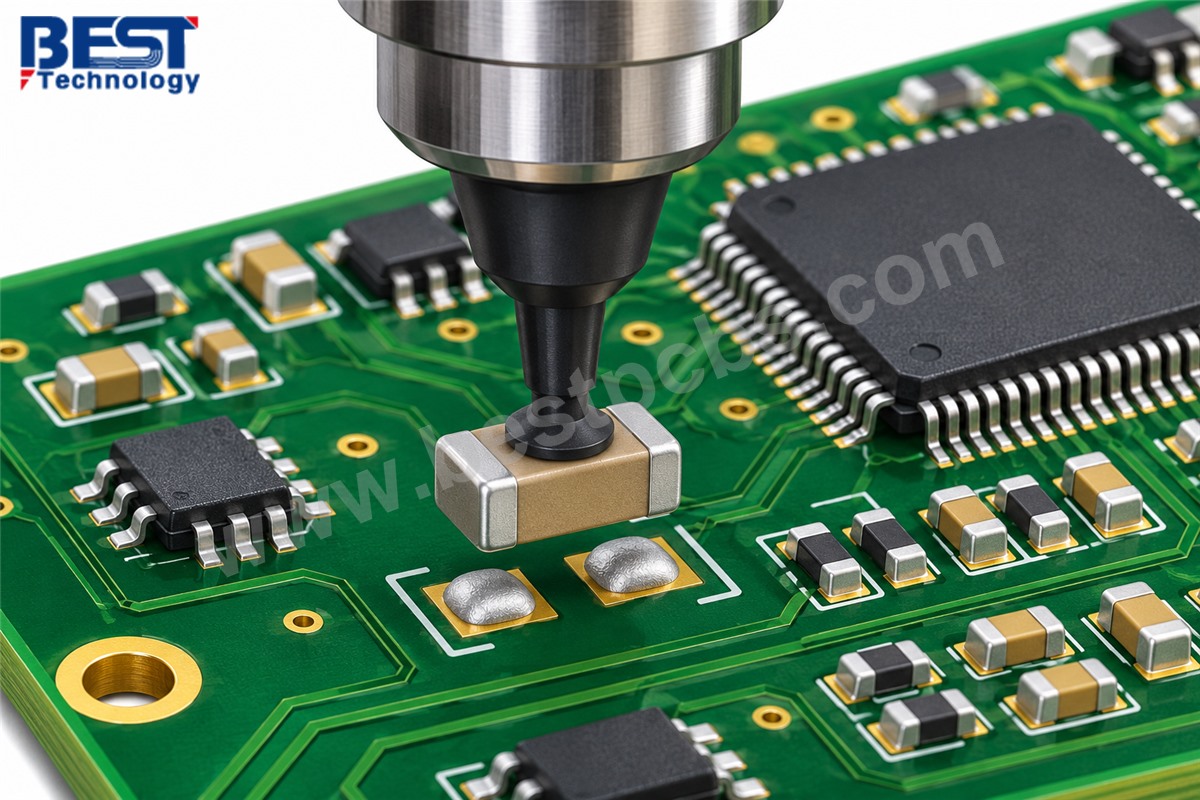
We provide SMT, through-hole, and mixed PCB assembly for boards ranging from compact electronic modules to control and power assemblies. Our capabilities include small passive components, fine-pitch BGA packages, and larger connectors that require different soldering processes on the same board.
| Assembly item | Capability |
|---|---|
| SMT production lines | 4 lines: 2 JUKI and 2 YAMAHA |
| Assembly methods | SMT, THT, and mixed assembly |
| Minimum SMD component | 01005 |
| Minimum BGA pitch | 0.25 mm |
| Component supply formats | Reels, cut tape, tubes, trays, and loose parts |
| Soldering processes | Reflow and wave soldering |
| Inspection equipment | 3D SPI, AOI, and X-ray |
| Test support | Functional testing to agreed project requirements |
The minimum package and pitch values describe our assembly limits; pad design, component spacing, PCB construction, and stencil requirements determine whether a particular layout fits those limits. We review these features before committing to the build.
For example, a control board may combine fine-pitch processing devices with through-hole terminal blocks. SMT equipment places the small components, while a separate through-hole operation completes the connectors. Planning both processes together helps avoid access problems and unnecessary hand soldering.
Turnkey, Partial Turnkey or Consigned PCB Assembly?
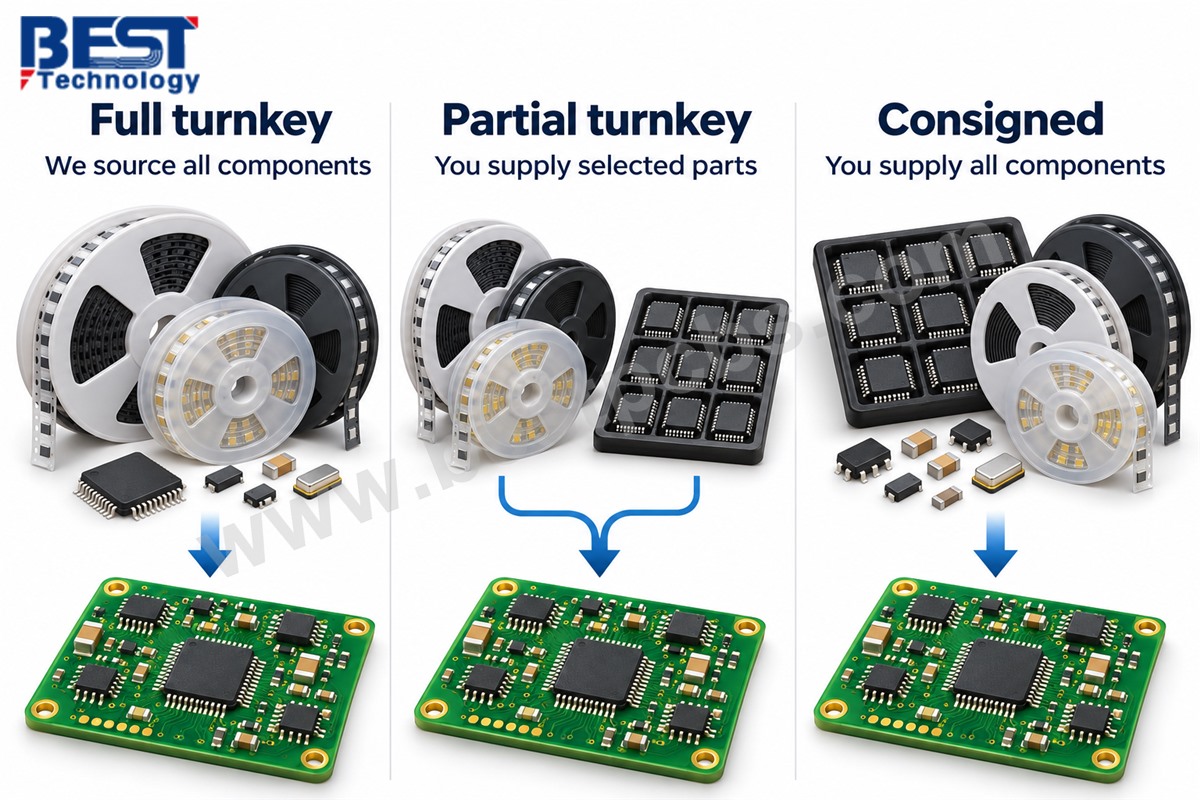
Full turnkey suits customers who want us to source the complete BOM, while partial turnkey and consigned assembly suit teams that already purchase some or all of their components. The choice changes purchasing responsibilities rather than the basic function of the finished board.
| Service model | Component purchasing | Suitable situation |
|---|---|---|
| Full turnkey | We source the BOM components and provide PCB fabrication and assembly. | Your team wants a single supplier to manage the complete build. |
| Partial turnkey | You supply selected components, and we source the remaining items. | You already hold critical ICs, proprietary parts, or allocated stock. |
| Consigned assembly | You supply the components for assembly, with PCB supply agreed separately. | Your purchasing team controls the complete component supply. |
Partial turnkey is often practical when a product uses a customer-programmed device or an expensive processor already held in stock. Your team can retain control of that part while we purchase the resistors, capacitors, connectors, and other approved BOM items.
How Do We Source Components for Your PCB Assembly?
We source components from manufacturers or authorized distributors and check incoming materials against your bill of materials. This gives procurement a defined starting point: the specified manufacturer part number, package, quantity, and approved alternatives.
The BOM needs more than a component description. Several devices can share a resistance value, capacitance, or package size while differing in voltage rating, tolerance, temperature range, or electrical behavior. Exact part numbers help prevent an apparently similar component from becoming an unsuitable substitution.
Our sourcing review focuses on:
- Part identification: Manufacturer part numbers and reference designators connect each purchased item to its position on the board.
- Availability: Stock and supplier lead times reveal which components may delay the build.
- Package compatibility: The ordered package must match the PCB footprint and assembly data.
- Alternative components: When a specified part is unavailable, we can recommend alternatives for your engineering team to evaluate.
Your team should approve substitutions before they enter the build. Even a pin-compatible replacement can require firmware changes or affect analog performance, power consumption, and operating temperature.
Low-Volume PCB Assembly in China with No MOQ
EBest Circuit offers low-volume PCB assembly with no MOQ, so you can order the boards needed for development, customer evaluation, or a limited production run without increasing the quantity to meet a factory minimum.
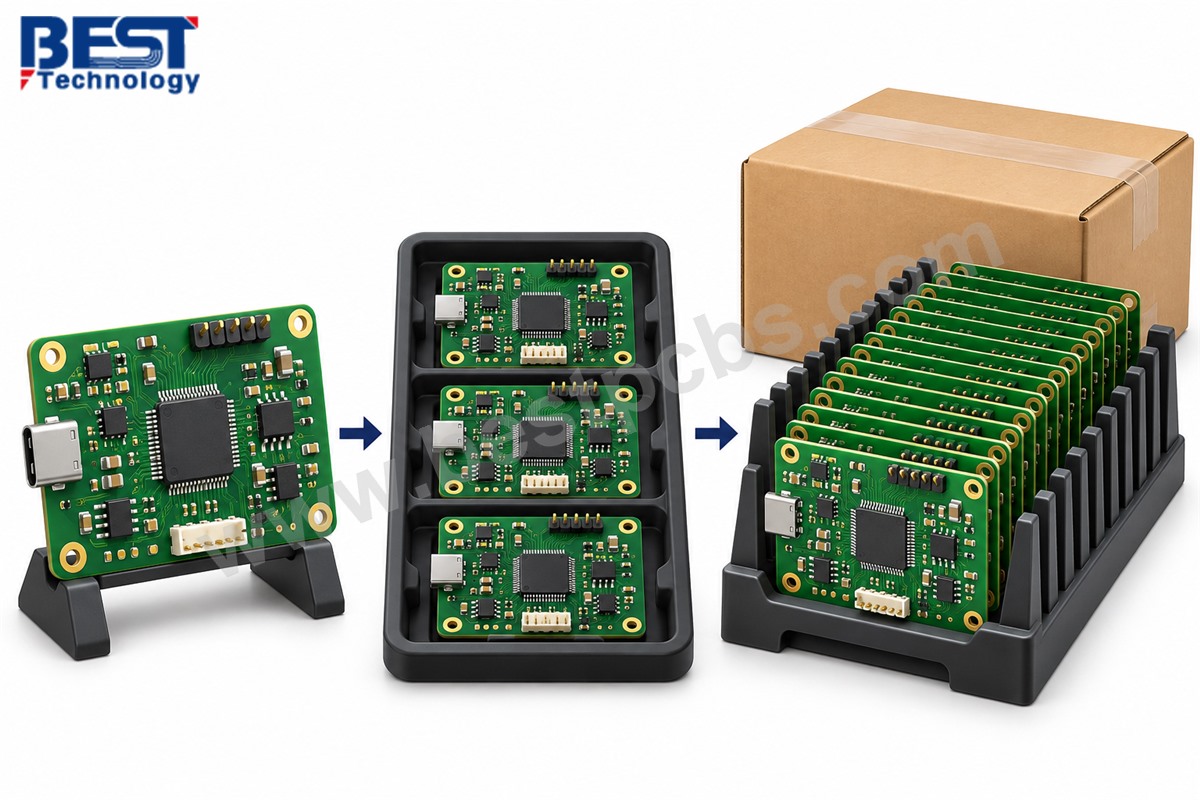
Small orders can include fine-pitch BGA devices, 01005 components, and mixed SMT/THT assembly. For example, an industrial controller may need compact processing components alongside large terminal blocks; a small batch still needs both soldering processes and the inspection suited to its packages.
- You can provide expensive or already-programmed ICs while we procure the remaining components.
- Free DFM review helps identify footprint, pad, clearance, and handling concerns before materials enter production.
- SPI, AOI, and X-ray inspection remain available for the relevant assembly features, with functional testing based on your operating requirements.
- For repeat orders, your updated BOM, board revision, and firmware identify which configuration to build.
No MOQ does not remove setup and tooling costs. A stencil or dedicated test fixture may still be needed for a small order, so a quotation should separate those charges from the cost of each assembled board.
How Do We Inspect and Test Assembled PCBs?
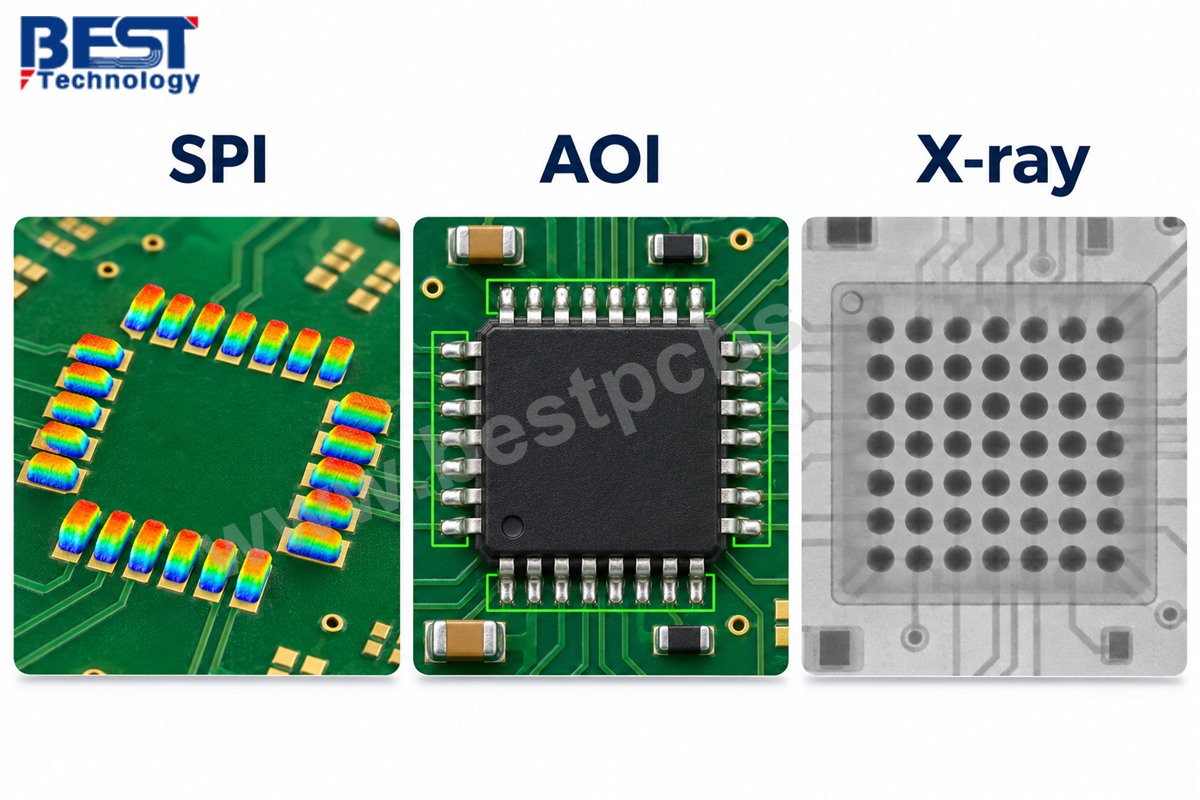
We use SPI, AOI, and X-ray inspection to check different stages of PCB assembly, with functional testing defined around the board’s operating requirements. Each method examines a different part of the build, so the inspection plan follows the components and possible defects on your board.
| Method | What it checks | Typical findings |
|---|---|---|
| Solder paste inspection (SPI) | Paste deposits before component placement | Insufficient paste, excessive paste, and deposit misalignment |
| Automated optical inspection (AOI) | Visible component placement and solder features | Missing or shifted components, visible bridges, and detectable orientation errors |
| X-ray inspection | Joints hidden beneath packages such as BGAs | Solder bridges, voids, and abnormal solder distribution |
| Functional testing | Operation under the specified test conditions | Incorrect outputs, failed interfaces, and operation outside defined limits |
Hidden BGA joints need a different inspection approach from exposed connector leads. Likewise, a board that looks correctly assembled may still need power-up, communication, or signal checks before it can enter your product.
Your firmware, test procedure, and pass/fail limits define what functional testing verifies. For example, a controller may need its supply rails checked, firmware loaded, and communication ports exercised; a power board may need output measurements under a specified load.
Our MES system supports board-level production traceability. If a fault appears later, the affected board’s identification and recorded manufacturing history give the investigation a starting point rather than leaving the team with only a shipment date.
PCB Types We Support for Assembly
EBest Circuit supports multilayer PCB, HDI, RF and high-frequency PCB, high-speed, metal-core PCB, flexible, rigid-flex, and ceramic assemblies. The board construction affects paste printing, soldering, handling, and inspection, so our PCB and assembly teams consider these requirements together.
| PCB type | Assembly considerations and manufacturing support |
|---|---|
| FR-4 and multilayer PCB | Mixed component sizes and large copper areas can create uneven heating; our process review covers the reflow profile, through-hole operations, and board support. |
| HDI PCB | Dense layouts and fine-pitch BGAs require controlled paste deposits and placement clearances; stencil review, precision SMT, and X-ray address these assembly features. |
| RF and high-frequency PCB | RO4003C, RO4350B, and RT/duroid 5880 are available material options; assembly planning covers laminate handling, RF connector placement, and any shield attachment or RF test requirements. |
| High-speed PCB | Fine-pitch processors and connectors need accurate placement and inspection; functional testing can include specified interface checks using the customer’s firmware and test setup. |
| Metal-core PCB | Aluminum or copper bases spread heat during soldering; the soldering profile must account for the board’s thermal response and the temperature limits of its components. |
| Flexible and rigid-flex PCB | Flexible sections need support during printing and placement; carriers and controlled handling help keep the assembly flat and protect bend areas. |
| Ceramic PCB | Al2O3, AlN, and Si3N4 substrates require careful handling; board support and soldering-process review address brittle edges and differences in thermal expansion. |
What Affects Chinese PCB Assembly Cost?
Chinese PCB assembly cost depends on the BOM, order quantity, board construction, assembly operations, and required testing. The component bill can dominate the total when a design uses expensive processors, power devices, or connectors, even if the assembly itself is straightforward.
- Component prices, availability, and purchase quantities determine much of the material cost.
- Double-sided placement, fine-pitch packages, and additional through-hole operations add manufacturing steps.
- PCB layer count, materials, copper requirements, and special features affect fabrication cost.
- Stencils, support fixtures, and test-fixture development add setup costs that may be reusable on an unchanged repeat order.
- Programming and functional testing add time to each board, especially when tests involve multiple interfaces or load conditions.
For illustration, a $150 setup charge contributes $15 per board to a 10-board order, but $1.50 per board to a 100-board order. These figures demonstrate cost allocation, not an EBest Circuit quotation; component and processing costs are additional.
For overseas purchasing, the useful comparison is the delivered cost per usable assembly. The quotation needs to show whether freight, packaging, test fixtures, programming, and destination charges are included. Component minimum purchase quantities can also leave excess stock, so ownership and handling of those parts should be settled with the order.
Cost reduction works best when it removes unnecessary work. Standardizing suitable passive components can simplify purchasing, while accessible test points can reduce the time needed to test each board.
PCB Assembly Lead Times and Overseas Delivery
PCB assembly lead time starts with material readiness and the production work required before shipment; international transit is a separate part of the delivery schedule. A board cannot enter assembly while a required IC or its bare PCB is still unavailable.
Our quick-turn assembly options include a 1–5 day range for urgent orders. Eligibility requires review of the complete files, available boards and components, order quantity, assembly operations, and test preparation; this range does not include component procurement or international shipping.
- PCB fabrication: Layer count, special materials, and additional processes determine when bare boards can be ready.
- Component readiness: The last required BOM item can control the assembly start date, including customer-supplied parts arriving from overseas.
- Assembly: Placement on 1 or 2 sides, through-hole work, and available line capacity determine the production slot.
- Testing: Firmware, instructions, and any test fixtures need to be ready before the planned test operation.
- Shipping: The destination, service selected, and customs clearance affect arrival after dispatch.
For example, a build with completed FR-4 boards, a full component kit, and an existing test fixture is easier to schedule than one waiting for a specialized laminate or a new fixture. These conditions help establish feasibility; they do not automatically qualify an order for the shortest turnaround.
Your requested date should be the date the boards are needed at your facility. That lets us plan material arrival, manufacturing, and shipment against the same target, including any time needed to resolve engineering questions across time zones.
Why Work with EBest Circuit for Your PCB Assembly Project?
EBest Circuit combines no-MOQ ordering, free DFM review, and PCB-to-assembly coordination for customers placing their first overseas build or arranging repeat production. This gives your team a way to evaluate the manufacturing service with a small order before committing to larger quantities.
- Our free DFM review identifies manufacturing concerns while they can still be corrected in the files, including footprints, pad geometry, soldering access, and board-handling requirements.
- We accept small orders without a fixed minimum quantity, including projects that need component purchasing, mixed assembly, or additional testing.
- Our 4 SMT lines include 2 JUKI and 2 YAMAHA lines, supported by 3D SPI, AOI, and X-ray inspection for paste, visible assembly features, and hidden joints.
- MES board-level traceability supports production-history checks when your team needs to investigate a fault or distinguish affected assemblies.
- Your team can retain control of critical components and engineering substitutions while we coordinate the remaining procurement, PCB fabrication, assembly, and testing.
- Box-build and wire-harness services can extend the order beyond the assembled PCB when your product also needs enclosure assembly or interconnections.
For supplier qualification, a useful discussion connects the factory’s capabilities to your actual board: its smallest package, soldering sequence, inspection needs, and test method. Current certificates, their site and activity scope, and relevant production records help your quality team assess the proposed manufacturing arrangement.
Frequently Asked Questions
How do I verify a PCB assembly manufacturer in China?
Verification should cover the manufacturing site, current certification scope, relevant assembly equipment, and records for work similar to your board. A factory visit or live video review can connect the equipment list to the actual operation, while a trial order with defined inspection and test results lets you evaluate execution before a larger commitment.
What are the hidden costs of outsourcing PCB assembly to China?
Common omissions include stencils, fixtures, programming, functional-test development, excess components from minimum purchase quantities, packaging, freight, and import-related charges. The quotation should identify one-time charges, recurring costs, and which destination expenses remain the buyer’s responsibility.
Can I supply only the expensive or long-lead-time components?
Yes. Partial turnkey assembly allows you to supply selected components while we source the remaining approved BOM items. The component list should identify which parts you will provide and when they will be available for assembly.
What happens if a component in my BOM is unavailable?
We can recommend an alternative for your engineering team to review or plan the build around the specified part’s availability. A replacement needs to meet the electrical, package, and operating requirements; matching the footprint alone is not enough.
Do I need to supply firmware for functional testing?
Yes, if the test requires the board to run your application or dedicated test firmware. We also need the programming instructions and expected results; basic electrical checks may not require firmware.
Are PCB fabrication and component costs included in the assembly quote?
A full turnkey quotation includes PCB fabrication, component procurement, and assembly within its stated scope. An assembly-only quotation does not automatically include boards or components, so the purchasing model needs to be clear before prices are compared.
Does the quoted lead time include international shipping?
Assembly or production lead time does not automatically include international transit. The quotation should distinguish the planned dispatch date from the estimated arrival date for your destination and shipping service.
Planning to outsource PCB assembly to China? EBest Circuit offers free DFM review and no MOQ, with PCB fabrication, component sourcing, SMT/THT assembly, and testing coordinated in the same project. Send your Gerber and drill files, BOM, pick-and-place data, target quantity, and delivery requirements to sales@bestpcbs.com for a manufacturing review and quotation; assembly drawings and test instructions help us define the finished-board requirements.