





Prototype circuit board assembly is where a design file becomes real hardware for engineering validation. A bare PCB may pass fabrication checks, but the project is not fully proven until components are sourced, SMT and through-hole parts are assembled, solder joints are inspected, and the finished board can be tested.
EBest Circuit (Best Technology) has supported PCB and PCBA projects since 2006, with experience across prototype builds, small-batch production, and turnkey assembly projects for customers in more than 40 countries and regions. If your prototype project includes Gerber files, ODB++ data, BOM, CPL, assembly drawings, testing notes, or packing requirements, you can send them to sales@bestpcbs.com for engineering review before production.
When Do Engineers Need Prototype Circuit Board Assembly?
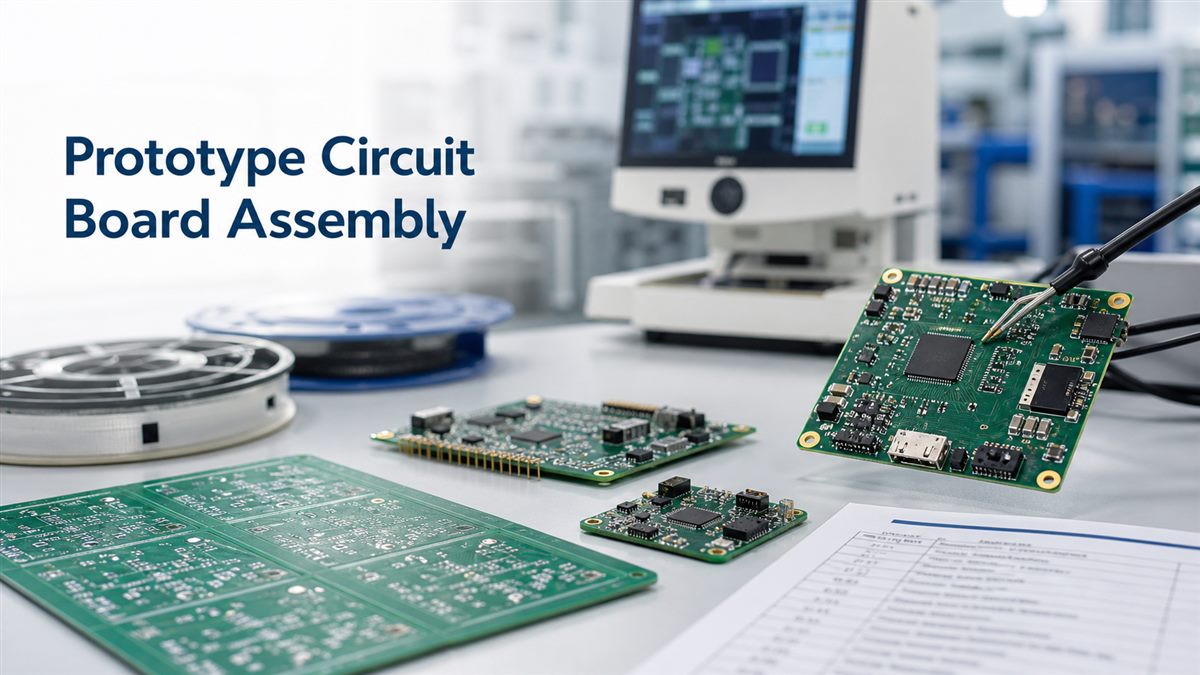
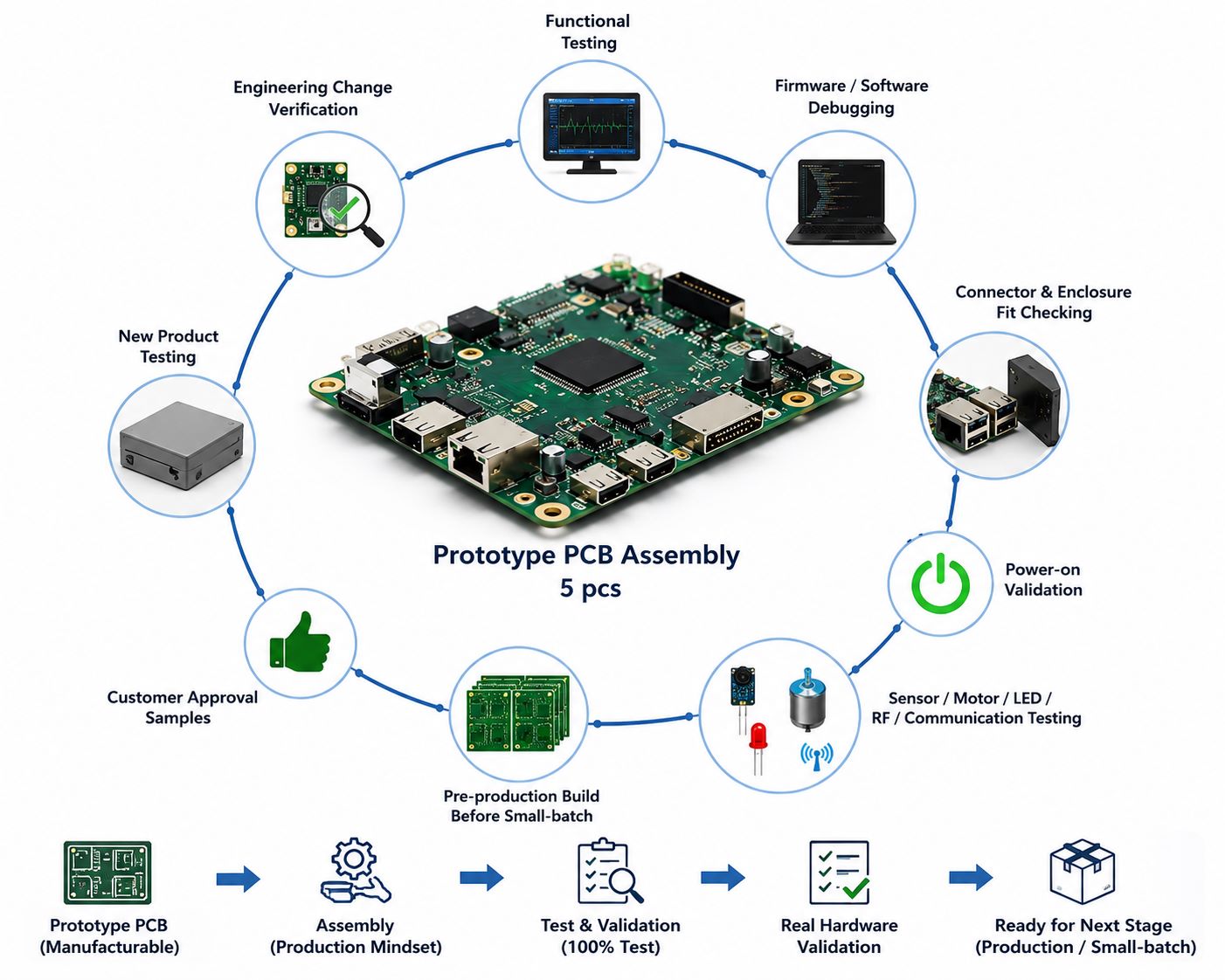
Engineers usually need prototype circuit board assembly when a project has moved beyond bare PCB checking and needs real hardware validation.
Common situations include:
- New product functional testing
- Firmware or software debugging on real hardware
- Connector and enclosure fit checking
- Power-on validation
- Sensor, motor, LED, RF, or communication module testing
- Pre-production build before small-batch orders
- Customer approval samples
- Engineering change verification
A prototype PCB only proves that the board can be manufactured. An assembled prototype checks whether the PCB, components, soldering process, connector direction, test points, and mechanical requirements can work together.
That is why even a 5-piece prototype should be handled with a production mindset.
Prototype Circuit Board Assembly vs Prototype PCB Fabrication
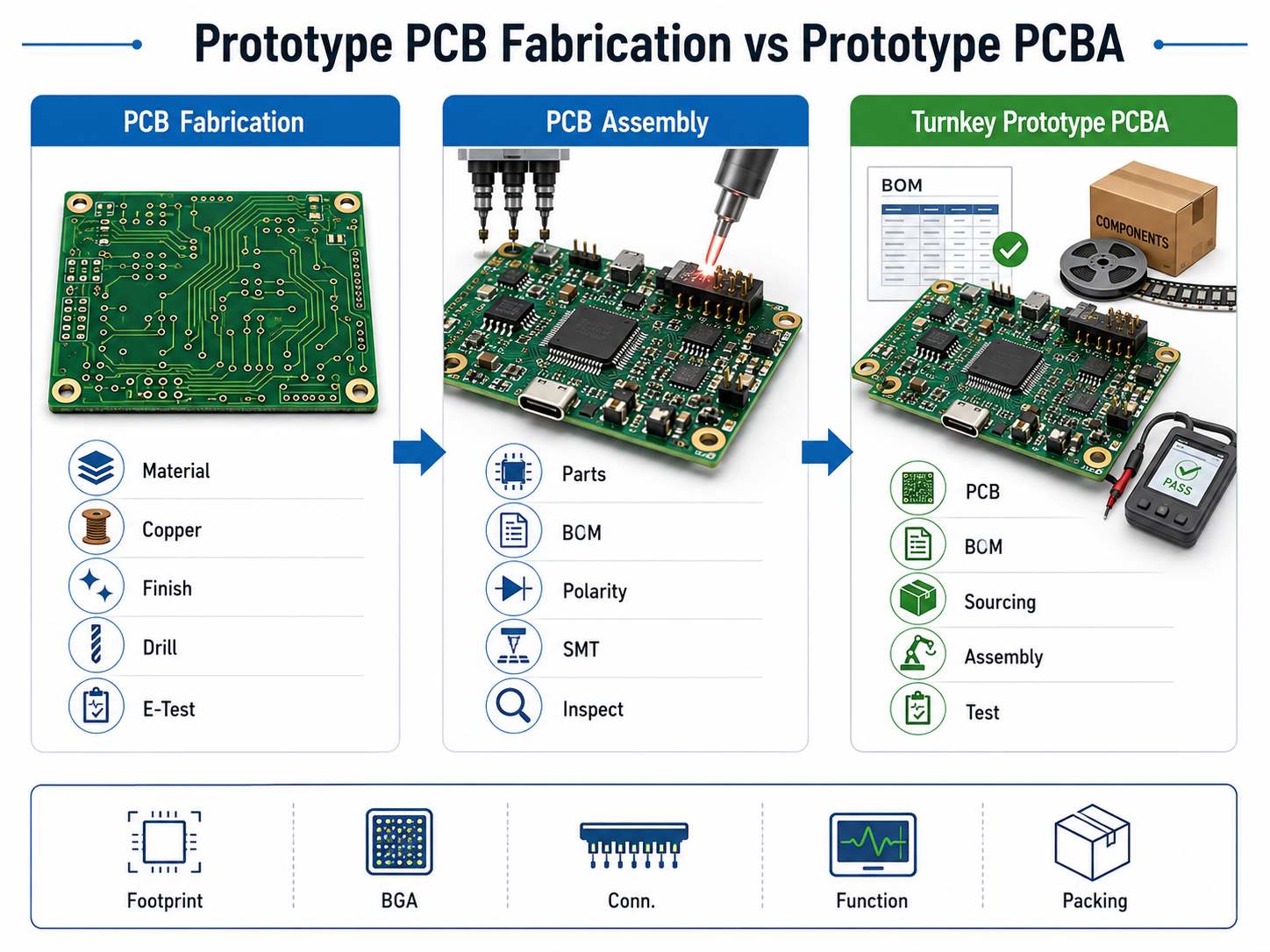
Prototype PCB fabrication and prototype circuit board assembly are related, but they are not the same.
| Item | Main Scope |
|---|---|
| Prototype PCB fabrication | Bare PCB manufacturing |
| Prototype circuit board assembly | PCB + component placement + soldering |
| Turnkey prototype PCBA | PCB + BOM sourcing + assembly + inspection + test support |
For bare PCB fabrication, the key checks are material, copper thickness, solder mask, surface finish, drill size, dimensions, and electrical test.
For assembled prototypes, the risk moves further:
- Are all components available?
- Does the BOM match the PCB footprint?
- Are polarity and connector directions clear?
- Does the panel suit SMT assembly?
- Are BGA or fine-pitch parts inspectable?
- Is functional testing required?
- Does the packing method protect assembled boards?
For engineering teams, the assembled prototype is often the real decision point. It shows whether the project is ready for debugging, customer approval, or the next production build.
Files Needed for Prototype Circuit Board Assembly Services
Clear files reduce quoting delays and assembly mistakes.
| File | Why It Matters |
|---|---|
| Gerber or ODB++ | PCB manufacturing data |
| BOM | Component sourcing and assembly |
| CPL / Pick-and-place | SMT placement position |
| Assembly drawing | Orientation and assembly notes |
| Stackup / impedance notes | Layer and signal requirements |
| PCB drawing | Thickness, tolerance, finish, marking |
| Test instruction | Electrical or functional test |
| Packing requirement | Delivery and handling control |
EBest Circuit reviews these files before production. If a polarity mark is missing, a connector direction is unclear, a footprint does not match the BOM, or a component is hard to source, the issue should be found before SMT starts.
For prototype circuit board assembly services, this file review is not paperwork. It is one of the first quality control steps.
BOM and Component Review Before Prototype PCB Assembly
A prototype PCB assembly project can be delayed by one small component.
Before assembly, the BOM should be checked for:
- Manufacturer part number
- Package type
- Quantity
- Polarity
- Stock status
- Substitute options
- Lead time
- Moisture sensitivity
- Special handling notes
- Customer-supplied or factory-sourced parts
EBest Circuit supports customer-supplied components, BOM sourcing, or a mixed supply method. For turnkey prototype PCBA, the purchasing team and engineering team review the BOM together with the PCB files and assembly data.
This is especially important for urgent prototype projects. If a missing IC, wrong package, or unavailable connector is found after the PCB is ready, the whole validation schedule may be delayed.
SMT, Through-Hole, and Mixed Prototype Circuit Board Assembly
Many prototype circuit board assembly projects use more than one assembly method.
| Assembly Type | Common Parts |
|---|---|
| SMT assembly | ICs, resistors, capacitors, LEDs |
| Through-hole assembly | Connectors, relays, terminals |
| Mixed assembly | SMT parts + plug-in parts |
| BGA assembly | Processors, memory, modules |
| Manual soldering | Special connectors or wires |
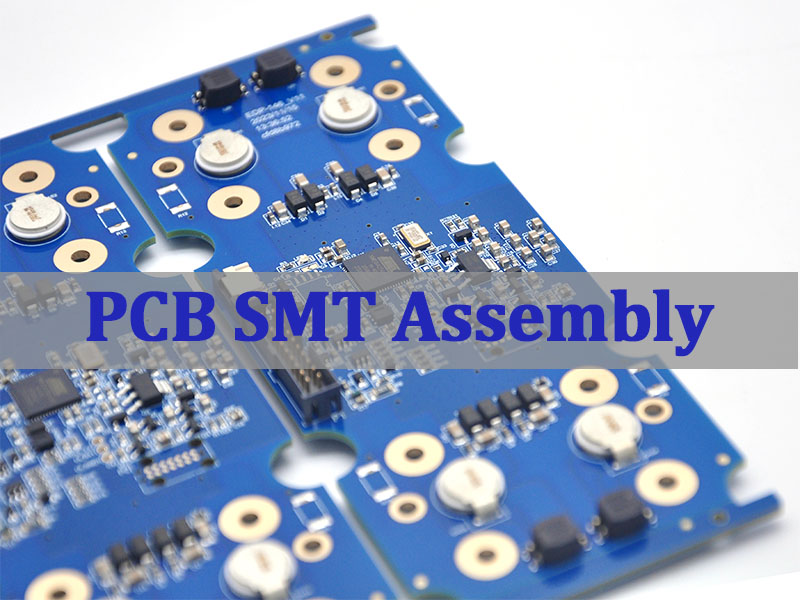
A practical SMT process may include PCB baking, solder paste printing, SPI, pick-and-place, reflow soldering, post-reflow inspection, AOI, X-Ray for BGA, hand soldering, cleaning, testing, labeling, depaneling, and packing.
Small quantity does not remove process risk. One prototype board still needs correct solder paste, stencil control, placement accuracy, reflow control, inspection, and handling.
EBest Circuit pays special attention to:
- Connector orientation
- Polarity marks
- BGA inspection needs
- Fine-pitch solder bridging
- Large component solder volume
- Board cleanliness
- SMT panelization
- Packing after assembly
BGA, Fine-Pitch, and Connector Risks in PCB Assembly Prototype Builds
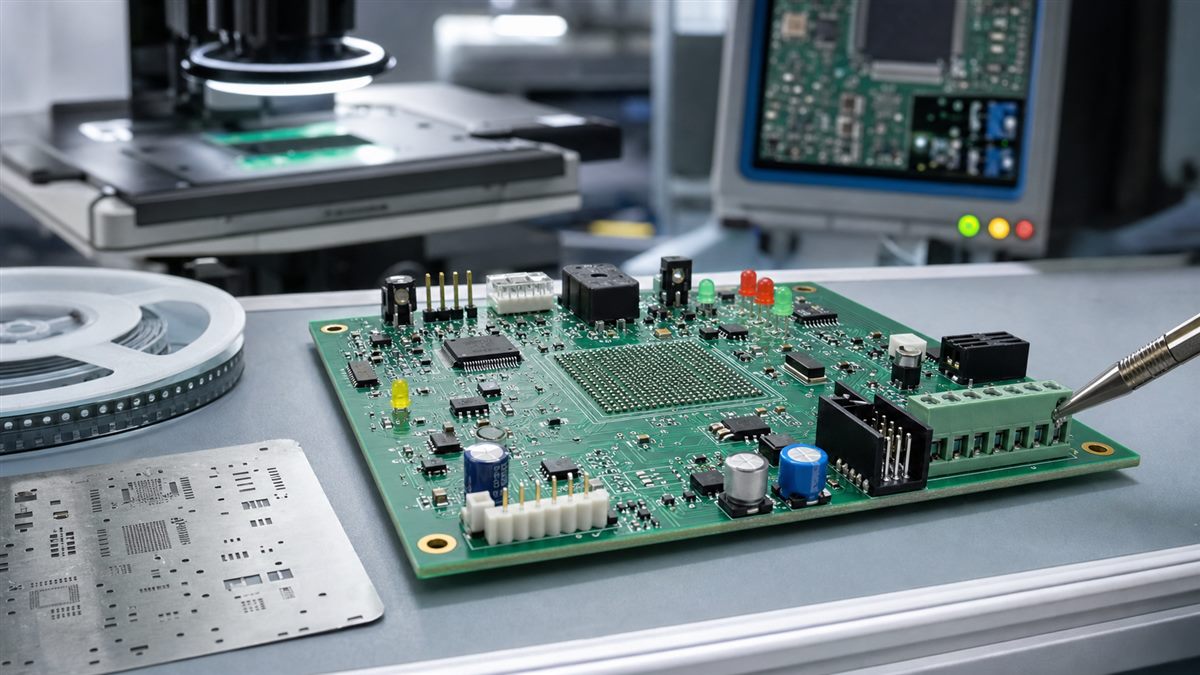
Prototype assembly becomes more demanding when the board includes BGA, fine-pitch ICs, dense connectors, or high-speed interfaces.
Common risks include:
- BGA solder joints hidden under the package
- Solder bridging on fine-pitch ICs
- Small passive components shifting during reflow
- Connector direction errors
- Weak solder joints on heavy connectors
- Impedance-sensitive signal paths
- Insufficient test points
For BGA projects, X-Ray inspection may be needed. For fine-pitch SMT, AOI and visual inspection should be planned. For connector-heavy boards, assembly drawings and direction notes should be confirmed before production.
EBest Circuit does not replace the customer’s circuit design work. The review focuses on PCB manufacturability, assembly process, component package matching, solder mask openings, panelization, inspection, and production notes.
EBest Circuit Prototype Circuit Board Assembly Capabilities
EBest Circuit supports prototype circuit board assembly for engineering validation, small-batch trial production, and projects that may later move into stable production.
| Capability Area | EBest Circuit Prototype Support |
|---|---|
| PCB types | FR4, high Tg, HDI, flex, rigid-flex, ceramic, metal core PCB |
| FR4 prototype range | 0.4-1.6mm standard FR4, H/H or 1oz copper |
| Standard FR4 process | Lead-free HASL, green solder mask, white silkscreen |
| Basic fabrication rules | Min line/space > 8mil, min hole > 0.30mm |
| Fast FR4 prototype | 1-2 layers fastest 24h; 4 layers fastest 48h; 6-8 layers fastest 72h |
| PCBA prototype | SMT, through-hole, mixed assembly, connector assembly |
| Component support | Customer-supplied parts or BOM sourcing support |
| Inspection support | Visual inspection, AOI, X-Ray when needed, test coordination |
| Production review | Gerber/ODB++, stackup, BOM, CPL, drawing, test notes, packing notes |
For a standard FR4 prototype, material and process choices are usually more predictable. For a prototype with BGA, HDI vias, controlled impedance, special laminate, dense connectors, or a complex BOM, EBest Circuit reviews those items before confirming the build plan and schedule. This helps avoid rushed assembly decisions that may create soldering, sourcing, or testing problems later.
Quality Checks for Prototype Printed Circuit Board Assembly
Prototype printed circuit board assembly should be checked at both bare PCB and assembled PCBA stages.
Before assembly, bare PCB checks may include:
- Material and thickness review
- Copper thickness confirmation
- Solder mask and silkscreen check
- Surface finish check
- Open and short circuit test
- Dimensional inspection
- Impedance test when required
After SMT assembly, inspection may include:
- First article inspection
- SPI after solder paste printing
- AOI after reflow
- X-Ray for BGA or hidden solder joints
- Visual inspection
- Through-hole solder joint inspection
- Cleaning check
- Functional test coordination when test files are provided
EBest Circuit has a 10-20 person quality inspection team and supports quality systems including ISO9001, ISO13485, IATF16949, AS9100D, RoHS, REACH, and UL-related quality support.
For prototype projects, inspection is not only used to find defective boards. It also helps confirm whether the next build needs footprint correction, placement adjustment, more test points, cleaner assembly notes, or different packing protection.
Quick Turn Prototype Circuit Board Assembly Lead Time Factors
Quick turn prototype circuit board assembly depends on more than PCB layer count.
Lead time is affected by:
- PCB type and layer count
- Material availability
- Copper thickness
- Surface finish
- BOM availability
- Customer-supplied or factory-sourced components
- BGA or fine-pitch assembly
- SMT stencil preparation
- Test requirements
- Packing requirements
- Engineering questions before production
For standard FR4 prototype PCB fabrication, EBest Circuit can support fast options such as 24 hours for 1-2 layer boards, 48 hours for 4-layer boards, and 72 hours for 6-8 layer boards under suitable specifications.
For assembled prototypes, the schedule also depends on component readiness and assembly complexity. A simple SMT build with available parts can move faster. A BGA assembly, mixed SMT and through-hole board, functional test requirement, or incomplete BOM needs more review before a reliable delivery date can be confirmed.
A good quick-turn supplier should not only promise speed. It should also explain what may affect the schedule before production starts.
Prototype Circuit Board Assembly Case Study
A USA customer came to EBest Circuit with a 4-layer prototype circuit board assembly project for an industrial control module. The customer needed assembled prototypes for power-on testing, firmware debugging, connector verification, and internal approval before moving to a small-batch build.
Project requirements
- Customer region: USA
- Application: Industrial control module
- Build purpose: Engineering validation before small-batch production
- Quantity: 50 pcs prototype assembly batch
- PCB structure: 4-layer FR4 PCB
- Material: FR4 Tg130
- Finished thickness: 1.6mm +/-10%
- Copper thickness: 1oz on all layers
- Surface finish: Lead-free HASL
- Solder mask / silkscreen: Black solder mask, white silkscreen
- Panelization: Factory panelization allowed
- Components: Sourced by EBest Circuit from the approved BOM
- Assembly: SMT assembly
- Delivery requirement: Individually packed after SMT
What the customer cared about
- Whether the BOM could be sourced quickly enough for prototype validation
- Whether connector direction, polarity, and placement could be checked before SMT
- Whether the black solder mask would affect inspection accuracy
- Whether each board could arrive clean, protected, and ready for testing
- Whether the same supplier could support the next small-batch order if validation passed
EBest Circuit solution
- File review before production: Gerber, BOM, CPL, and assembly notes were reviewed together before the build started.
- BOM sourcing coordination: Components were checked and prepared before SMT scheduling, reducing waiting time after PCB fabrication.
- SMT-ready panelization: The panel was prepared for solder paste printing, placement, reflow, AOI inspection, and depaneling.
- Assembly risk control: Connector direction, polarity marks, and placement notes were checked before reflow.
- Inspection before packing: AOI and visual inspection were completed after SMT, with special attention to connector areas and solder joint appearance on the black solder mask.
- Individual packing: Each assembled board was packed separately so the customer’s engineering team could receive, label, and test samples directly.
Output result
- Delivery: 50 assembled prototype boards shipped within the confirmed quick-turn schedule.
- Quality: 99.8% SMT pass rate after inspection and minor rework control.
- Testing readiness: Boards arrived individually packed and ready for power-on testing and firmware debugging.
- Next step: The customer used the prototype batch for engineering validation and prepared the project for the next small-batch production stage.
For this prototype circuit board assembly project, the value was not only producing 50 assembled boards. EBest Circuit helped the customer control the full path from PCB fabrication, BOM sourcing, SMT assembly, inspection, and packing to testing readiness, reducing avoidable delays before the next production decision.
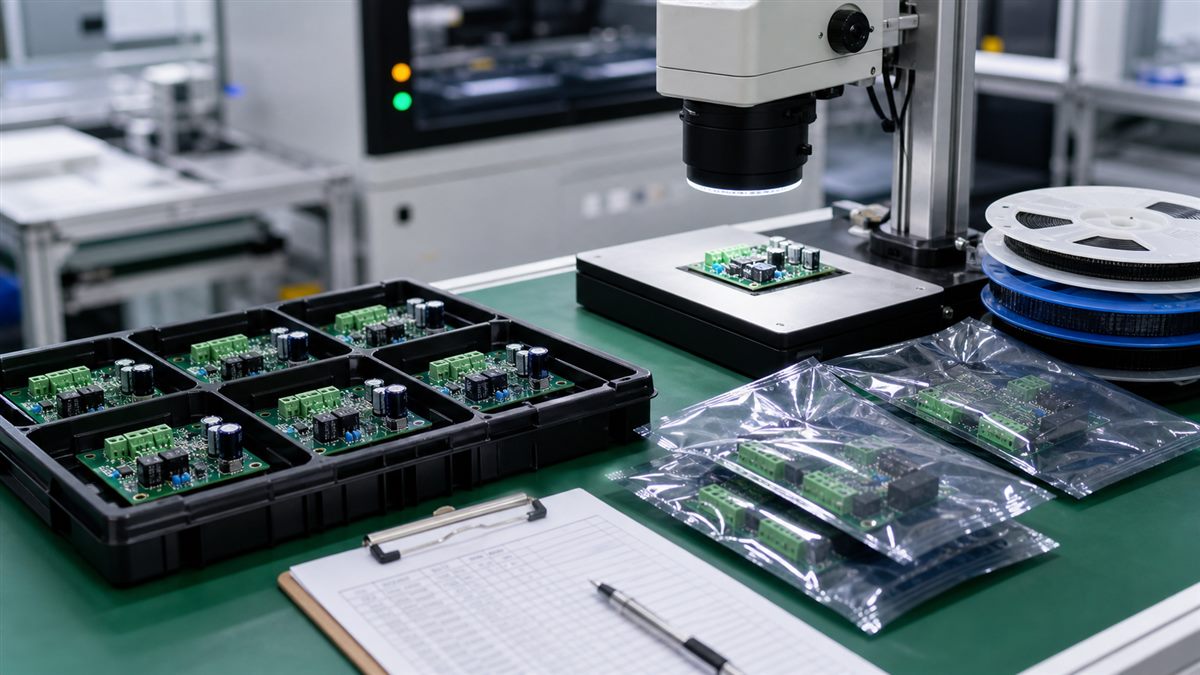
Why Choose EBest Circuit for Prototype Circuit Board Assembly Projects?
Prototype circuit board assembly is a small order, but it often carries a big decision: whether the design can move to testing, customer approval, or small-batch production. EBest Circuit supports this stage with PCB fabrication, BOM sourcing, SMT assembly, inspection, and delivery control in one coordinated workflow.
What EBest Circuit checks before assembly
- Gerber, ODB++, stackup, BOM, CPL, and assembly drawings reviewed together
- Component package, footprint, polarity, and connector direction checked before SMT
- BOM sourcing risk reviewed before production scheduling
- Panelization checked for both PCB fabrication and assembly
- BGA, fine-pitch, connector, and soldering risks reviewed before reflow
- Test notes and packing requirements kept visible through shipment
What supports prototype reliability
- PCB and PCBA manufacturing experience since 2006
- Prototype, small-batch, and production support
- SMT, through-hole, mixed assembly, connector assembly, and BGA assembly support
- AOI, visual inspection, X-Ray when required, and functional test coordination
- 10-20 person quality inspection team
- ISO9001, ISO13485, IATF16949, AS9100D, RoHS, REACH, and UL-related quality support
What helps communication stay stable
- 1 business contact + engineering support for technical questions
- Many engineers, sales members, quality managers, and production leaders have more than 10 years of company experience
- Project notes can stay connected from file review to PCB fabrication, PCB SMT assembly, inspection, packing, and shipment
- Experience serving customers across 40+ countries and regions, with major export markets including the USA, Germany, and Israel
For engineers comparing prototype circuit board assembly manufacturers, the value is not only whether a supplier can assemble a few boards. The stronger question is whether the supplier can catch BOM, SMT, connector, inspection, and delivery risks before the prototype reaches the test bench.
FAQs about Prototype Circuit Board Assembly
1. What is prototype circuit board assembly?
Prototype circuit board assembly is the process of manufacturing a small quantity of PCBs and assembling components onto them for testing, validation, or pre-production review.
2. Is prototype circuit board assembly the same as prototype PCB fabrication?
No. Prototype PCB fabrication produces bare circuit boards. Prototype circuit board assembly includes component placement, soldering, inspection, and sometimes testing.
3. What files are needed for prototype circuit board assembly services?
Common files include Gerber or ODB++, BOM, CPL, assembly drawing, PCB drawing, stackup notes, test instructions, and packing requirements.
4. Can EBest Circuit source components for prototype PCB assembly?
Yes. EBest Circuit can support BOM sourcing, customer-supplied components, or a mixed approach depending on the project requirement.
5. How fast can prototype circuit board assembly be completed?
Lead time depends on PCB complexity, component availability, SMT difficulty, inspection, and test requirements. Standard FR4 prototype fabrication can be fast, but assembled prototypes need BOM and process review before confirming the final schedule.
A prototype build should give you answers, not new uncertainty. If you are preparing a prototype circuit board assembly project, send your Gerber files, BOM, CPL, assembly drawing, or project notes to sales@bestpcbs.com. EBest Circuit can help review the parts, assembly risks, inspection needs, and delivery details before production, so your samples arrive closer to what your engineering team needs for real validation.
You may also like

Tags: prototype circuit board assembly, Prototype PCB Assembly, turnkey prototype PCBA