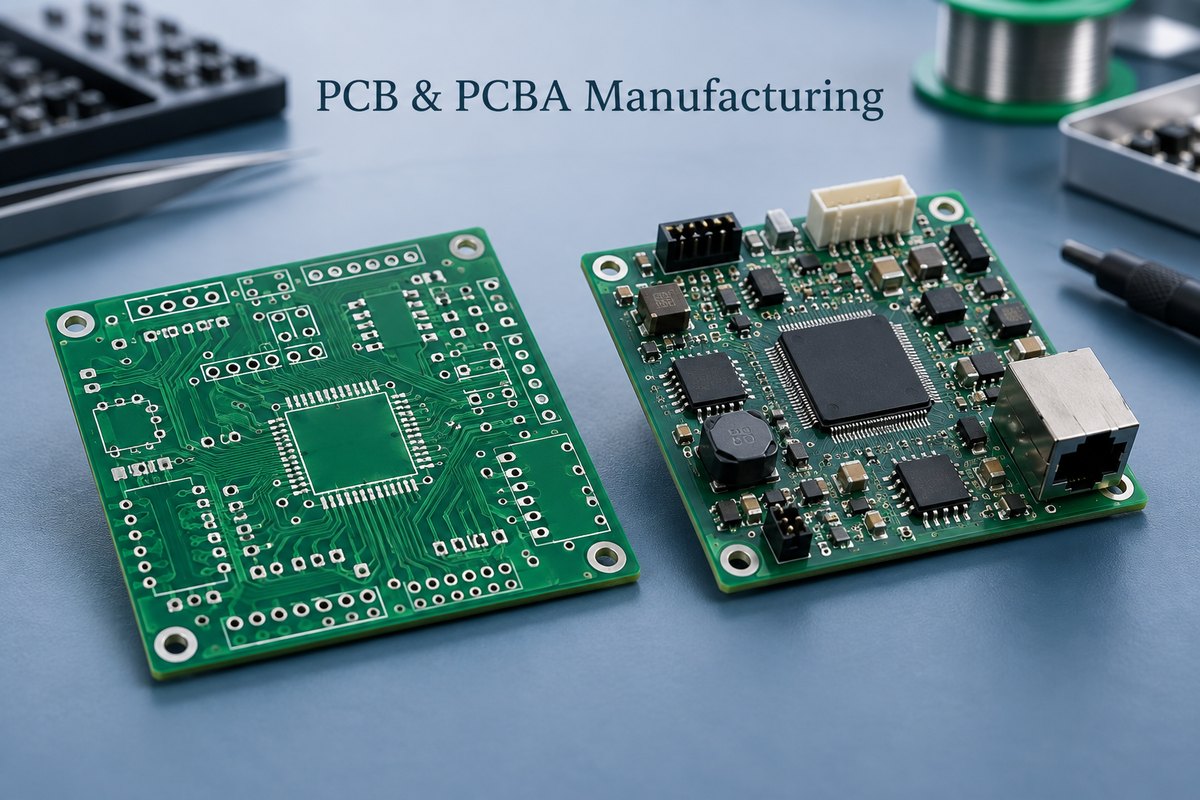
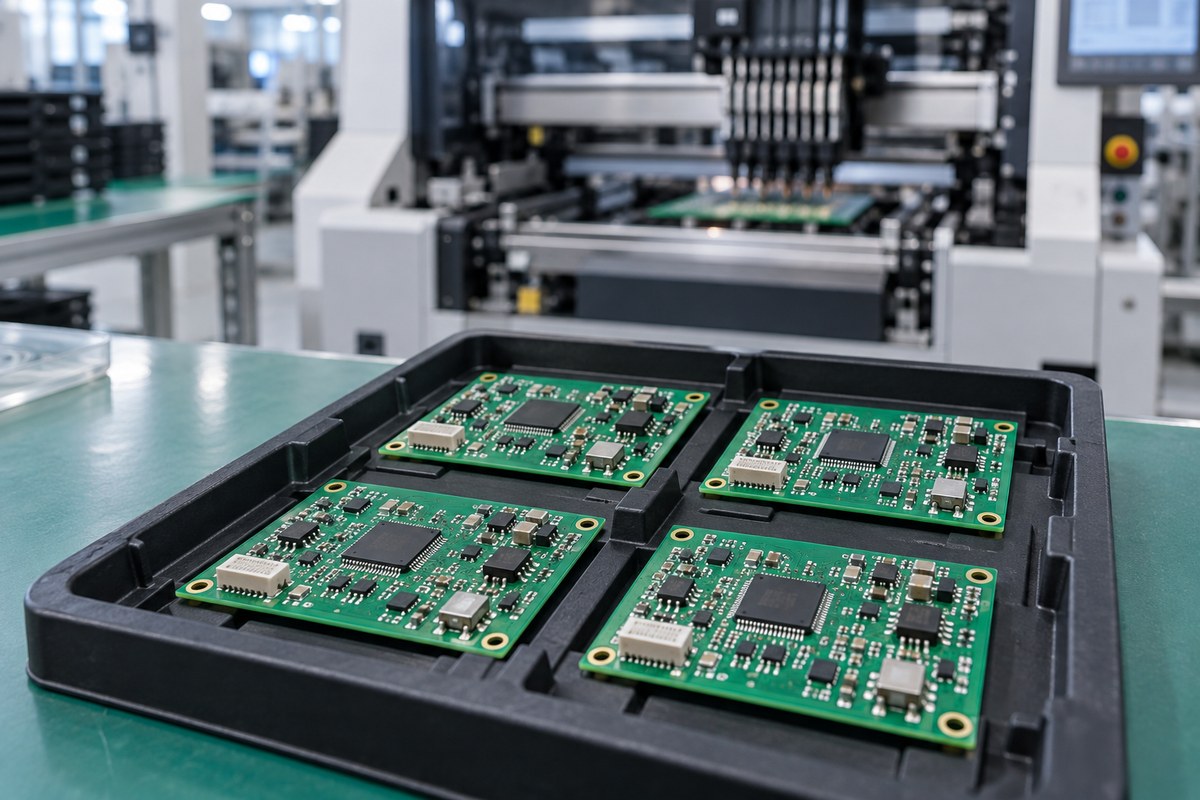
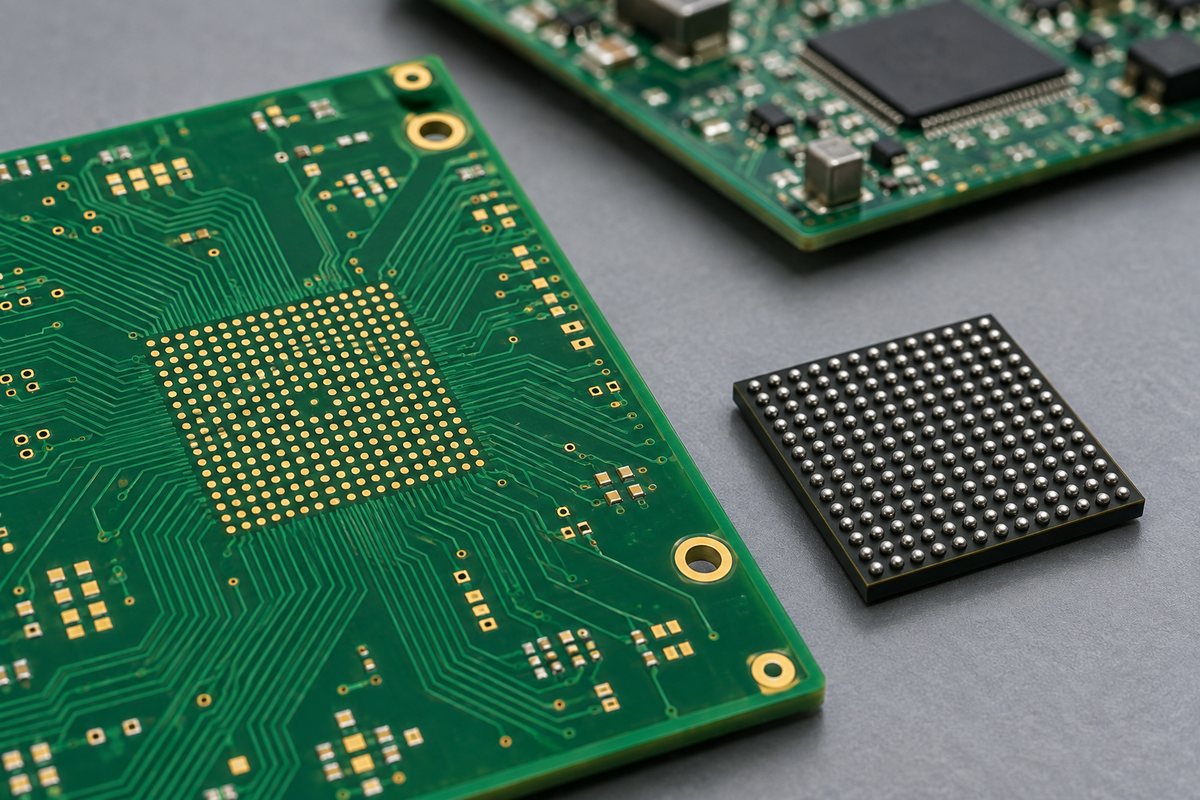
PCB manufacturing PCB manufacturing
Home > Blog

Contract Manufacturer vs OEM Differences: Which to Choose?

March 12th, 2026

What is a Contract Manufacturer (CM)?

A contract manufacturer (CM) is a company hired to build products based on a customer’s design and specifications. The customer provides engineering files, bills of materials, and assembly instructions. The contract manufacturer focuses on production execution.

In electronics manufacturing, this model is common in PCB assembly, device production, and box-build services. The client retains ownership of the product design while the CM handles the manufacturing process. Contract manufacturers operate as production specialists. Their factories often include SMT lines, testing equipment, and supply chain systems designed for high efficiency.

Contract Manufacturer vs OEM Differences: Which to Choose?

Typical services provided by contract manufacturers include:

  • PCB fabrication and PCB assembly
  • Component sourcing and supply chain management
  • SMT and through-hole assembly
  • Functional testing and inspection
  • Product assembly and box-build services
  • Packaging and logistics support

For many companies, working with a CM allows them to scale production without building expensive factories. Engineering teams focus on innovation while manufacturing experts handle production complexity.

What is an Original Equipment Manufacturer (OEM)?

An original equipment manufacturer (OEM) traditionally refers to a company that designs and produces products under its own brand or intellectual property. The OEM is the originator of the product concept. In many industries, OEMs design systems, define product specifications, and control the product lifecycle. The manufacturing stage may happen internally or through external partners.

For example, a company developing a medical imaging device may act as the OEM. It creates the product architecture, develops the software, and owns the technology. Production may still be outsourced to a contract manufacturer.

In electronics and hardware industries, OEMs typically handle:

  • Product design and engineering
  • Intellectual property ownership
  • Brand development and marketing
  • Product certification and compliance
  • Market distribution and customer support

The OEM owns the product identity. Even when manufacturing is outsourced, the OEM remains responsible for the product’s performance and reputation. OEM companies often invest heavily in research and development. Their teams include electrical engineers, mechanical designers, firmware developers, and product managers.

What is the Difference Between OEM and Contract Manufacturer?

The core difference between these two models lies in responsibility and ownership. The OEM creates and owns the product concept. The contract manufacturer builds the product. Both roles are essential in modern supply chains. Many successful products depend on collaboration between the two.

The OEM develops the product. The CM produces it efficiently at scale:

  • OEM – Product creator and brand owner
  • Contract Manufacturer – Production partner executing manufacturing tasks
AspectOEMContract Manufacturer
Product DesignCreated by OEMProvided by customer
Intellectual PropertyOwned by OEMNo ownership
Brand OwnershipOEM brandNo brand involvement
Manufacturing ResponsibilityMay outsourcePerforms production
Engineering ControlFull design authorityManufacturing engineering only
Market StrategyManaged by OEMNot involved
Revenue SourceProduct salesManufacturing service fees

OEM companies prioritize innovation, market positioning, and product differentiation. Contract manufacturers prioritize process efficiency, production quality, and cost optimization. Both roles complement each other. Many large technology companies operate successfully using this partnership model.

Contract Manufacturer vs OEM Differences: Which to Choose?

Contract Manufacturer vs OEM: Who Owns the Design?

Design ownership is one of the most important factors when comparing contract manufacturer vs OEM differences.

In almost every case, the OEM owns the product design. The OEM invests in research and development. It creates the product architecture and defines the functionality. This intellectual property belongs to the OEM. The contract manufacturer receives the design files and uses them to build the product.

Typical documentation provided to a CM includes:

  • PCB Gerber files
  • Assembly drawings
  • Bill of materials (BOM)
  • Test procedures
  • Firmware or software packages

The contract manufacturer does not claim ownership of these assets. It operates under manufacturing agreements that protect the customer’s intellectual property. However, contract manufacturers often contribute engineering suggestions. These recommendations help improve manufacturability and reduce cost.

Common support provided by experienced CMs includes:

  • DFM (Design for Manufacturability) feedback
  • Component substitution advice
  • Process optimization suggestions
  • Assembly yield improvements

Despite these contributions, the final product design still belongs to the OEM. This arrangement protects innovation while allowing production experts to refine the manufacturing process.

What Are the Pros and Cons of Contract Manufacturing?

Contract manufacturing has become a preferred production model across many industries. It allows companies to launch products without building large factories. However, like any strategy, it offers advantages and limitations.

Many companies adopt contract manufacturing because it offers strong operational benefits. Key advantages include:

  • Lower capital investment
  • Access to experienced manufacturing teams
  • Scalable production capacity
  • Faster product launches
  • Reduced operational complexity

Instead of investing millions in equipment, companies can leverage an existing manufacturing ecosystem. Contract manufacturers already operate advanced production lines, quality systems, and supply chain networks. This infrastructure allows faster product ramp-up.

Another advantage is geographic flexibility. Production can be located near component suppliers or logistics hubs. This reduces shipping time and improves supply chain resilience.

Although contract manufacturing offers many benefits, companies should evaluate potential challenges carefully. These may include:

  • Less direct control over production operations
  • Dependence on external manufacturing partners
  • Communication gaps during complex projects

However, these challenges can often be minimized through strong partnerships and clear project management. Many companies maintain engineering teams that work closely with manufacturing partners to ensure smooth collaboration. When communication is effective, contract manufacturing becomes a powerful growth tool.

What Are the Pros and Cons of Working with an OEM?

Working with an OEM presents a different business dynamic. OEM relationships often occur when companies integrate another firm’s technology into their own product. For example, a medical equipment manufacturer may integrate an OEM power module or control board.

OEM relationships often provide access to proven technology and established engineering expertise. Benefits commonly include:

  • Access to specialized technology
  • Reduced product development time
  • Reliable component integration
  • Engineering support from the OEM

Using OEM components allows companies to accelerate product development. Instead of building every subsystem from scratch, they integrate existing modules. This approach is common in industries such as automotive electronics, industrial automation, and telecommunications equipment.

While OEM partnerships are valuable, companies should evaluate certain limitations. These may include:

  • Limited control over design changes
  • Dependency on OEM product availability
  • Potential supply chain constraints

In many cases, companies mitigate these concerns by qualifying multiple suppliers or maintaining engineering alternatives. The key advantage remains clear: OEM partnerships reduce development complexity and accelerate product readiness.

Contract Manufacturer vs OEM Differences: Which to Choose?

How Do Cost and Pricing Differ Between CM and OEM?

Cost structure is another critical factor when examining contract manufacturer vs OEM differences. The pricing model varies significantly between these two roles. Contract manufacturers charge for manufacturing services. Their revenue comes from production activities rather than product ownership.

Typical CM pricing elements include:

  • Assembly labor
  • Equipment usage
  • Component sourcing services
  • Testing and inspection
  • Logistics and packaging

The OEM pays these costs while maintaining control over the product. OEM companies generate revenue differently. They sell the finished product to distributors, integrators, or end users.

Their pricing includes:

  • Product development costs
  • Engineering investment
  • Brand value and marketing
  • Manufacturing expenses
  • Profit margin
Cost FactorOEMContract Manufacturer
Revenue SourceProduct salesManufacturing service fees
Pricing ControlFull controlBased on production costs
R&D InvestmentHighMinimal
Equipment OwnershipMay varyOwned by CM
Profit ModelProduct marginManufacturing margin

Because contract manufacturers specialize in production efficiency, they often achieve lower per-unit manufacturing costs. OEM companies benefit from this efficiency while focusing resources on product innovation and market expansion.

What Is the Difference in Quality Control Between CM and OEM?

Quality control plays a vital role in electronics manufacturing. Both OEMs and contract manufacturers participate in quality assurance, but their responsibilities differ. The OEM defines product requirements and quality standards. The contract manufacturer executes the inspection and testing processes.

Typical responsibilities are distributed as follows:

OEM responsibilities

  • Define product specifications
  • Establish reliability requirements
  • Approve testing procedures
  • Validate design performance

Contract manufacturer responsibilities

  • Perform manufacturing inspections
  • Execute testing procedures
  • Monitor process stability
  • Document traceability records

Professional contract manufacturers often maintain advanced quality systems. These systems typically include:

  • Automated Optical Inspection (AOI)
  • X-ray inspection for hidden joints
  • Functional testing platforms
  • Statistical process control
  • Full production traceability

For regulated industries such as medical electronics or aerospace hardware, certifications are critical.

Quality-driven contract manufacturers often maintain certifications such as:

  • ISO 9001
  • ISO 13485
  • IATF 16949
  • AS9100

These certifications ensure that production processes meet strict industry standards. The OEM remains responsible for final product approval, but the manufacturing partner performs daily quality monitoring.

Contract Manufacturer vs OEM Differences: Which to Choose?

How to Choose Between Contract Manufacturer vs OEM?

Choosing the right model depends on the company’s business strategy, engineering capabilities, and production scale. Companies should evaluate several key factors before making a decision.

  • 1. Product Development Capability

If your company has strong engineering resources, acting as the OEM and outsourcing production may be the best option. This approach allows full control over product innovation. If engineering capability is limited, partnering with OEM suppliers for subsystems may accelerate development.

  • 2. Manufacturing Infrastructure

Building factories requires significant investment. Contract manufacturing eliminates the need for expensive production equipment. This model is especially attractive for startups and fast-growing technology companies.

  • 3. Production Volume

High production volumes often benefit from specialized contract manufacturers. They already operate large-scale production lines optimized for efficiency. Low-volume projects may still benefit from outsourcing because setup costs remain manageable.

  • 4. Time-to-Market Requirements

Launching products quickly can provide a competitive advantage. Contract manufacturers often reduce production ramp time. Their existing infrastructure allows faster manufacturing readiness.

  • 5. Supply Chain Complexity

Electronics manufacturing involves complex supply chains. Experienced contract manufacturers maintain strong supplier networks. This can improve component availability and cost efficiency.

  • 6. Quality and Compliance

Products in regulated industries require strict quality control. Selecting a manufacturing partner with proven certifications ensures compliance with industry standards. Ultimately, the choice is rarely absolute. Many successful companies operate as OEMs while relying heavily on contract manufacturers for production.

Conclusion:

Understanding the contract manufacturer vs OEM differences helps companies make smarter production decisions. An OEM focuses on product creation, intellectual property, and market strategy. A contract manufacturer specializes in efficient and reliable production.

For electronics companies seeking reliable PCB and PCBA production support, working with an experienced manufacturing partner can simplify the entire process.

Best Technology provides comprehensive PCB fabrication and PCBA assembly services for global customers. Our engineering teams support projects from prototype development to mass production, ensuring stable quality and rapid delivery.

If you are exploring manufacturing partnerships or planning a new electronics product, our team will be happy to help. Contact us at: sales@bestpcbs.com

Capacitor Symbol: Meaning, Types, and How to Read It in Circuit Diagrams?

March 12th, 2026

Electronic schematics rely on standardized symbols to represent components. Among them, the capacitor symbol is one of the most frequently used in circuit diagrams. Whether you are designing a PCB, troubleshooting electronics, or studying circuit theory, understanding capacitor symbols is essential.

A capacitor symbol may look simple, but it carries useful information about the component type, polarity, and function in the circuit. Engineers use different capacitor symbols to represent ceramic capacitors, electrolytic capacitors, variable capacitors, and other types.

This guide explains the capacitor symbol meaning, explores different symbol types, and shows how to interpret them correctly in schematic diagrams.

Capacitor Symbol: Meaning, Types, and How to Read It in Circuit Diagrams

What Is a Capacitor Symbol in Electronics?

A capacitor symbol is a graphic used in circuit schematics to show the presence of a capacitor. Instead of drawing the actual part, engineers use a standard symbol to represent the capacitor’s electrical behavior.

A capacitor is an electronic component that stores and releases electrical energy in an electric field. It is built with two conductive plates separated by an insulating material called a dielectric.

In circuit diagrams, the capacitor symbol usually appears as two parallel lines that represent the two conductive plates.

The main functions of capacitors include:

  • Energy storage
  • Noise filtering in power supplies
  • Signal coupling and decoupling
  • Timing control in RC circuits
  • Voltage stabilization

Because capacitors are used in power, analog, digital, and RF designs, the capacitor symbol is one of the most important schematic symbols to understand.

What Does the Capacitor Symbol Mean in a Circuit Diagram?

The capacitor symbol meaning is not limited to showing that a capacitor is present. It also helps indicate how the part behaves in the circuit and, in some cases, what kind of capacitor it is.

What Does the Capacitor Symbol Mean in a Circuit Diagram?

In a schematic, the capacitor symbol often suggests:

  1. The component can store electrical charge.
  2. It may filter ripple, spikes, or signal noise.
  3. It can block DC while allowing AC to pass.
  4. It may work with a resistor to create a timing function.

Engineers read the capacitor symbol together with nearby components. For example, in a power supply, a capacitor often handles smoothing or decoupling. In an audio or analog path, it may be used for coupling. In RF circuits, it may support matching or filtering.

What Does the Standard Capacitor Symbol Look Like?

The standard capacitor symbol is simple and easy to recognize. It is usually drawn as two parallel plates separated by a small gap.

What Does the Standard Capacitor Symbol Look Like?

It may also appear in a horizontal connection style:

What Does the Standard Capacitor Symbol Look Like?

This standard symbol usually means:

  • Two identical conductive plates
  • No polarity requirement
  • Use for non-polarized capacitors

Typical parts shown with this symbol include:

  • Ceramic capacitors
  • Film capacitors
  • Mica capacitors
  • Other non-polarized capacitors

Because these parts can be installed in either direction, the symbol is symmetrical.

Why Are There Different Capacitor Symbols?

Different capacitor symbols exist because capacitors are not all the same. Some are non-polarized. Some are polarized. Some are adjustable. The symbol helps the designer, assembler, and technician identify the right type quickly.

A standard non-polarized capacitor can be connected in either direction. A polarized capacitor must be connected with the correct positive and negative terminals. A variable capacitor allows the capacitance value to be adjusted.

Common symbol differences are shown below:

Capacitor TypeSymbol FeatureTypical Use
Ceramic CapacitorTwo straight platesHigh-frequency filtering and decoupling
Electrolytic CapacitorPolarity marking or curved platePower supply smoothing
Variable CapacitorArrow across the platesTuning and calibration circuits
Polarized CapacitorPositive or negative indicationDC circuits and bulk capacitance

What Is the Polarized Capacitor Symbol?

A polarized capacitor symbol shows that the capacitor must be connected in the correct direction. This is common for electrolytic capacitors and tantalum capacitors.

The symbol often includes one straight plate, one curved plate, and a polarity mark near the positive terminal.

What Is the Polarized Capacitor Symbol?

In many schematics:

  • The straight plate is associated with the positive side.
  • The curved plate is associated with the negative side.

Polarized capacitors are often used in:

  • Power supply filtering
  • Bulk energy storage
  • Amplifier circuits
  • Voltage regulation sections

This is why the keyword capacitor symbol positive negative matters so much in practical circuit work. Correct polarity prevents installation mistakes and improves reliability.

What Is the Variable Capacitor Symbol?

A variable capacitor symbol represents a capacitor whose capacitance can be adjusted. It usually looks like a normal capacitor symbol with an arrow crossing it.

The arrow indicates that the capacitance value can change.

Variable capacitors are commonly used in:

  • RF tuning circuits
  • Radio receivers
  • Oscillators
  • Matching networks

In practical designs, the variable capacitor symbol tells the reader that tuning or calibration is part of the circuit function.

What Is the Difference Between IEC and ANSI Capacitor Symbols?

The two most common symbol standards are IEC and ANSI. Both are widely recognized, but there can be small visual differences depending on the documentation source.

StandardFull NameCommon Use Region
IECInternational Electrotechnical CommissionEurope and many international documents
ANSIAmerican National Standards InstituteUnited States

In many cases, IEC uses clean, simple parallel-plate symbols, while ANSI drawings may show more style variation for polarized parts. Modern EDA software often supports both, so engineers should be familiar with each style.

How Do You Read a Capacitor Symbol in a Schematic?

Reading a capacitor symbol in a schematic involves more than identifying the drawing. You also need to read the reference designator, capacitance value, polarity, and circuit position.

Here is what to look for:

  1. Reference designator: Capacitors are usually labeled with the letter C, such as C1, C12, or C205.
  2. Capacitance value: Common values include 10uF, 100nF, and 1pF.
  3. Polarity marking: Look for a plus sign, curved plate, or other polarity notation.
  4. Placement in the circuit: A capacitor across power rails usually works as a decoupling capacitor. A capacitor in series with a signal path often works as a coupling capacitor.
  5. Type clues: A symmetrical symbol often suggests a ceramic capacitor symbol or other non-polarized part. An arrow suggests a variable type.

When all of these details are read together, the circuit function becomes much clearer.

What Are the Most Common Capacitor Symbols Used in Electronics?

Several capacitor symbols appear regularly in electronic schematics. Each one represents a specific capacitor family or function.

Non-Polarized Capacitor Symbol

This is the most common form. It is widely used for ceramic, film, and general-purpose capacitors.

Ceramic Capacitor Symbol

The ceramic capacitor symbol usually uses the same basic two-plate form as the standard non-polarized symbol. It is common in decoupling, bypass, and high-frequency designs.

Polarized Capacitor Symbol

The polarized capacitor symbol is used for electrolytic and tantalum capacitors where direction matters.

Variable Capacitor Symbol

The variable capacitor symbol includes an arrow and is common in tunable analog and RF circuits.

Trimmer Capacitor Symbol

This symbol is similar to a variable capacitor but is generally used for calibration rather than frequent adjustment.

Capacitor Symbol vs Resistor Symbol: What Is the Difference?

The capacitor symbol and resistor symbol are both basic schematic elements, but they represent very different electrical functions.

ComponentCommon Symbol StyleMain Function
CapacitorTwo parallel platesStores electrical energy
ResistorZigzag line or rectangleLimits current flow

A capacitor affects voltage and time behavior. A resistor controls current and voltage drop. When used together, they form common building blocks such as RC filters, delay networks, and timing circuits.

Conclusion

The capacitor symbol is a small mark with a big role in electronics. It helps engineers identify capacitor types, understand polarity, and interpret circuit function quickly.

Once you understand the difference between the standard capacitor symbol, the ceramic capacitor symbol, the polarized capacitor symbol, and the variable capacitor symbol, reading schematics becomes much easier.

Whether you are working on circuit design, PCB layout design, electronics repair, or engineering education, understanding capacitor symbols is a basic but valuable skill.

EBest Circuit (Best Technology) provides professional PCB fabrication and PCBA assembly services for engineers who need reliable support from prototype to production.

For PCB or PCBA inquiries, please contact: sales@bestpcbs.com

LED Light Circuit Board – Aluminum & MCPCB for LED Lighting

March 12th, 2026

What is an LED light circuit board?

An LED light circuit board is the foundation that supports and powers light-emitting diodes in modern lighting systems. It provides electrical connections, mechanical support, and heat management so LEDs can operate safely and efficiently. Without this board, the small semiconductor LEDs would not be able to receive stable current or maintain long-term reliability.

In simple terms, an LED light board acts as the platform where electronic components are mounted and interconnected. Conductive copper traces on the board guide electrical signals and power to each LED. At the same time, the base material helps spread heat away from the LEDs, which protects them from overheating and performance loss.

LED Light Circuit Board – Aluminum & MCPCB for LED Lighting

Compared with traditional lighting electronics, LED circuit boards require special attention to heat dissipation and current control. LEDs convert a large portion of electrical energy into light, yet some energy still becomes heat. If that heat stays near the LED chip, it may shorten the operating life or reduce brightness over time.

A typical LED light circuit board contains several important parts:

  • LED chips or LED packages mounted on the board surface
  • Copper traces that route power and signals
  • Solder pads used to attach LEDs and other components
  • Base substrate that provides structural strength and thermal conduction

Manufacturers often design these boards in circular, linear, or custom shapes depending on the lighting product. For example, round boards are common in downlights and bulbs, while long narrow boards appear in LED strips or panel lights.

High-quality manufacturing processes are essential to ensure consistent performance. Companies like EBest Circuit (Best Technology) focus on precision PCB fabrication and assembly to support stable LED lighting applications across consumer, industrial, and commercial devices.

How does a LED light board work?

An LED light board works by distributing electrical power through copper traces to a group of LEDs that convert electricity into visible light. Although the principle sounds simple, the design requires careful control of voltage, current, and heat.

LEDs are semiconductor devices that emit light when current flows through them. The circuit board acts as the pathway that guides this electrical current from the power source to each LED component. The working process typically follows several steps. First, electrical power enters the board through connectors or solder points. Then the copper circuitry distributes that power to the LEDs according to the circuit design. Finally, each LED converts electrical energy into light.

Because LEDs require precise current levels, most boards also include electronic components that help regulate power. These components may include resistors, drivers, or control chips depending on the complexity of the lighting system.

The general operating sequence of an LED board can be summarized as follows:

  • Power is supplied from a driver or external power source
  • Copper traces conduct current to each LED package
  • LEDs emit light when the electrical current passes through the semiconductor junction
  • Heat generated by the LEDs transfers into the PCB substrate and dissipates outward

Thermal management plays a major role in this process. LEDs are sensitive to temperature, so the board must move heat away quickly. Materials with strong thermal conductivity help maintain stable LED junction temperatures.

Another key factor is electrical balance. If current distribution is uneven, some LEDs may become brighter than others. This can reduce product lifespan or cause inconsistent lighting output.

Modern LED boards may also integrate smart features such as dimming control, color adjustment, or sensor interfaces. These functions allow lighting products to adapt to different environments while maintaining high efficiency. Overall, the LED light board acts as both an electrical network and a thermal platform. It ensures LEDs receive stable power while maintaining the conditions required for bright, reliable illumination.

LED Light Circuit Board – Aluminum & MCPCB for LED Lighting

What types of PCB are used for LED lights?

Different lighting products require different types of circuit boards. The choice of PCB material affects heat management, durability, cost, and overall lighting performance. Although many PCB technologies exist, only a few are commonly used in LED lighting applications. Each type offers unique advantages depending on the power level and environment of the lighting system.

Below are several widely used PCB types for LED lighting.

  • FR4 PCB
    The FR4 board uses fiberglass reinforced epoxy laminate. It is one of the most common PCB materials in electronics. FR4 boards are affordable and reliable for low-power LED devices.
  • Aluminum PCB
    Aluminum boards are designed for better heat dissipation. A metal base layer transfers heat away from LEDs more efficiently than standard fiberglass materials.
  • MCPCB (Metal Core PCB)
    MCPCBs contain a metal core layer that dramatically improves thermal conductivity. These boards are widely used in high-brightness LED lighting systems.
  • Flexible PCB
    Flexible boards use polyimide material and can bend or fold. They are ideal for curved lighting designs such as LED strips or decorative lighting products.

Each type serves different applications. Lower-power devices may use FR4 boards, while high-power lighting systems often rely on metal-core structures.

PCB TypeMain MaterialThermal PerformanceTypical Applications
FR4 PCBFiberglass epoxyModerateIndicator lights, low-power LEDs
Aluminum PCBAluminum baseHighLED bulbs, floodlights
MCPCBMetal core structureVery highHigh-power lighting modules
Flexible PCBPolyimide filmModerateLED strips, wearable lighting

The choice depends largely on heat management needs and mechanical design requirements. Manufacturers like EBest Circuit (Best Technology) often provide customized PCB solutions that match the exact power level and layout needed for specific LED lighting products. This customization helps ensure consistent performance and reliable long-term operation.

Why use aluminum PCB for LED light circuit boards?

Aluminum PCBs have become one of the most popular solutions for LED lighting systems. Their design helps solve one of the biggest challenges in LED technology: heat management.

LED chips generate heat during operation. If that heat accumulates near the semiconductor junction, it can reduce brightness and shorten the device lifespan. Aluminum PCBs address this issue by transferring heat efficiently through a metal base layer.

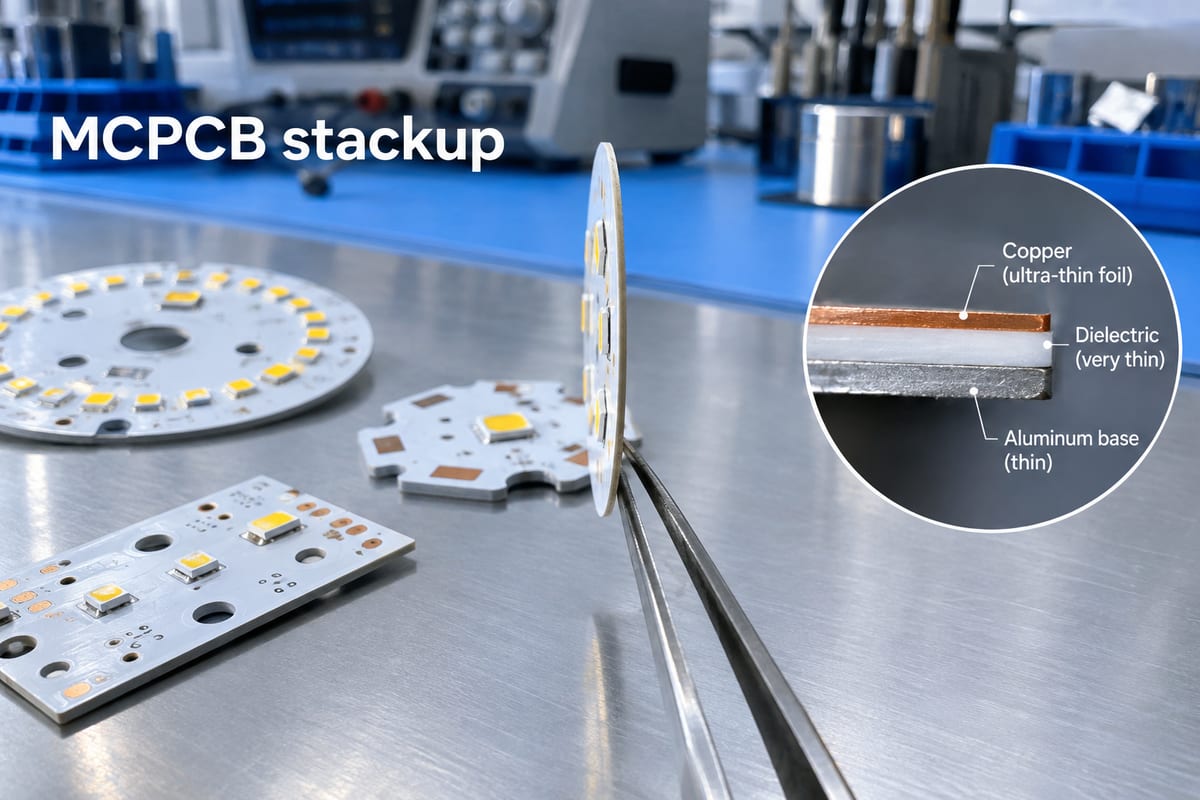
An aluminum LED board typically contains three layers. The top layer holds the copper circuitry and solder pads. Beneath that sits a dielectric layer designed for thermal conduction. The bottom layer is an aluminum base that spreads heat across a larger area. This structure allows heat to move quickly away from the LED components. As a result, the lighting system remains stable even during long periods of operation.

Aluminum LED boards offer several powerful advantages.

  • Excellent thermal conductivity that protects LED chips
  • Strong mechanical stability for high-power lighting products
  • Lightweight structure compared with other metal materials
  • Reliable performance in demanding environments

Another important benefit is cost efficiency. Aluminum PCBs provide strong heat performance while remaining relatively affordable to manufacture. This balance makes them ideal for many commercial lighting products. They are widely used in applications such as LED street lights, stage lighting, industrial lamps, and automotive lighting systems.

In addition, aluminum boards can support high current levels without overheating. This feature makes them suitable for high-brightness LED arrays that require strong illumination output. Manufacturers often combine aluminum PCB technology with precise LED layout design to achieve consistent brightness and energy efficiency. With proper engineering, these boards deliver stable lighting performance for years.

What are the advantages of MCPCB for LED lighting?

MCPCB is a specialized PCB structure designed to provide exceptional heat dissipation for high-power electronic devices. In LED lighting systems, MCPCBs are widely used because they can transfer heat much faster than standard circuit boards. Their internal metal core acts as a thermal pathway that moves heat away from the LEDs.

Most MCPCBs use aluminum as the core material, although copper may also be used in high-performance designs. The metal core sits beneath a dielectric layer that electrically isolates the copper circuitry while still allowing heat transfer.

This structure provides several impressive benefits for LED lighting products.

  • High thermal conductivity improves LED lifespan
  • Stable mechanical strength supports heavy LED components
  • Better temperature control keeps brightness consistent
  • Strong reliability in high-power lighting environments

Another advantage is improved energy efficiency. When LEDs operate at lower temperatures, they convert electricity into light more effectively. That means lighting systems using MCPCBs can deliver stronger illumination while consuming less energy.

MCPCB technology also supports compact lighting designs. Because heat spreads more efficiently, engineers can place LEDs closer together without causing overheating problems.

FeatureAluminum PCBMCPCB
Core MaterialAluminumAluminum or copper
Thermal PerformanceHighVery high
CostModerateHigher
ApplicationsGeneral LED lightingHigh-power LED modules

Companies like EBest Circuit (Best Technology) manufacture high-precision MCPCB boards that support advanced LED lighting solutions across industries including automotive, architectural lighting, and industrial equipment.

LED Light Circuit Board – Aluminum & MCPCB for LED Lighting

What factors affect LED PCB performance?

The performance of an LED circuit board depends on multiple design and manufacturing factors. Even small variations in material quality or layout design can influence lighting efficiency and reliability. One major factor is thermal management. LEDs operate best when their junction temperature remains low. If heat cannot escape efficiently, performance may decline over time.

Another important factor is PCB material selection. Materials with higher thermal conductivity help transfer heat away from LEDs. Aluminum and metal core boards are widely used for this reason.

Several key elements influence LED PCB performance:

  • PCB substrate thermal conductivity
  • Copper trace thickness and layout
  • LED placement density
  • Quality of solder joints
  • Driver circuit design

Thermal vias and heat spreaders also play a major role in improving heat transfer. These design features allow heat to move from the top surface of the board to the metal base layer more efficiently.

Electrical stability is another important consideration. Proper circuit design ensures consistent current distribution across all LEDs. When current remains balanced, lighting output stays uniform and reliable. Manufacturing quality also affects performance. High-precision PCB fabrication reduces the risk of defects such as poor solder connections or uneven copper thickness.

Environmental conditions may also influence LED board reliability. Temperature fluctuations, humidity, and vibration can affect electronic components over time. Durable PCB materials and protective coatings help improve resistance to these environmental stresses.

Experienced manufacturers follow strict quality standards during production. Companies like EBest Circuit (Best Technology) apply advanced fabrication techniques and inspection processes to maintain consistent board performance.

How to make a circuit board for LED lights?

Designing and manufacturing a circuit board for LED lighting involves several steps. Each stage requires careful planning to ensure electrical stability and effective heat management.

The process usually begins with circuit design. Engineers determine the number of LEDs, their arrangement, and the electrical requirements of the lighting system. After the electrical schematic is complete, the layout design stage begins. Engineers create the physical arrangement of components and copper traces on the PCB.

The typical development process includes the following steps.

  • Define LED electrical requirements and power input
  • Create schematic diagrams for the circuit design
  • Design the PCB layout with proper trace routing
  • Select suitable PCB material such as aluminum or MCPCB
  • Manufacture the PCB through fabrication processes
  • Assemble LEDs and components using SMT or reflow soldering
  • Perform testing to confirm brightness and electrical stability

Thermal design is especially important during layout development. Engineers often place LEDs evenly across the board to distribute heat more effectively. Heat sinks may also be integrated into the final lighting product. These structures work together with the PCB to remove excess heat from the system.

After assembly, the board undergoes testing procedures. Engineers check current distribution, brightness levels, and thermal behavior to confirm proper operation. If necessary, adjustments are made to improve performance before full production begins.

Working with experienced PCB manufacturers simplifies this process. Companies such as EBest Circuit (Best Technology) provide design support and fabrication services that help clients develop efficient LED lighting boards from concept to mass production.

How long do LED light boards last?

One of the biggest advantages of LED lighting technology is its long lifespan. When supported by a high-quality circuit board, LED light boards can operate for many years without significant performance loss.

Most LED lighting systems are designed to last between 30,000 and 50,000 hours of operation. Some advanced designs can even exceed this range when thermal management is optimized.

The circuit board plays a critical role in achieving this lifespan. Proper heat dissipation prevents excessive temperature buildup that could damage LED components. Several factors influence how long an LED board will last.

  • LED chip quality
  • Thermal conductivity of the PCB material
  • Operating temperature
  • Power driver stability
  • Environmental conditions

When these elements work together effectively, LED lighting products maintain stable brightness for a very long time.

Thermal management again proves essential. If the board transfers heat efficiently, the LED junction temperature stays within safe limits. This helps protect both the LEDs and surrounding electronic components. Manufacturers often perform accelerated life testing to evaluate long-term reliability. These tests simulate extended operation under controlled conditions to verify product durability.

Well-designed LED boards used in commercial lighting systems often remain functional for more than a decade in normal usage environments. High-quality production also improves longevity. Reliable solder joints, consistent copper thickness, and precise component placement all contribute to stable operation over time.

For this reason, many lighting brands work with specialized PCB manufacturers like EBest Circuit (Best Technology) that focus on quality control and durable board construction.

LED Light Circuit Board – Aluminum & MCPCB for LED Lighting

Where are LED light circuit boards commonly used?

LED light circuit boards appear in a wide range of modern lighting systems. Their compact design, high efficiency, and reliability make them suitable for many industries.

As LED technology continues to advance, the variety of applications keeps expanding. Some of the most common uses include:

  • Residential lighting such as bulbs, ceiling lights, and decorative lamps
  • Commercial lighting including office panels and retail lighting displays
  • Automotive lighting for headlights, signal lights, and interior illumination
  • Industrial lighting used in factories and warehouses
  • Outdoor lighting such as street lights and landscape illumination

LED boards are also widely used in electronic devices. Examples include televisions, display panels, gaming equipment, and smart home products. Architectural lighting is another growing application area. Designers often use LED boards to create flexible lighting solutions that highlight building structures and interior spaces.

Medical equipment, stage lighting, and emergency lighting systems also rely on LED circuit boards for stable and efficient illumination. The versatility of LED boards comes from their adaptable design. Engineers can customize board size, shape, and power level to match specific lighting requirements.

Companies like EBest Circuit (Best Technology) provide custom PCB manufacturing that supports these diverse applications. Our expertise helps clients develop reliable LED lighting modules tailored to different industries.

Summary:

LED light circuit boards form the core of modern LED lighting systems. They provide electrical pathways, structural support, and effective heat dissipation that allow LEDs to perform efficiently and reliably. Different PCB types, including FR4 boards, aluminum PCBs, and MCPCBs, serve various lighting needs. Among them, aluminum and metal core boards offer superior thermal performance for high-power lighting applications.

If you would like to learn more about LED PCB solutions or need customized circuit boards for your lighting products, feel free to contact EBest Circuit (Best Technology) for professional support. Contact: sales@bestpcbs.com

PCB Prototyping Services in Iran | High Precision & ISO-Certified Quality

March 12th, 2026

Struggling with PCB prototyping delays, inconsistent quality, and hard-to-source high-purity materials that derail your projects in Iran? Our PCB prototyping services in Iran deliver high-precision, reliable solutions tailored to your needs, eliminating these common frustrations. Our PCB prototyping services in Iran prioritize accuracy and efficiency, supporting medical, aerospace, and industrial sectors with advanced technology and personalized support to turn your designs into functional prototypes.

PCB Prototyping Services in Iran, https://www.bestpcbs.com/blog/2026/03/pcb-prototyping-services-in-iran/

What Pain Points Do Clients Face with PCB Assembly Manufacturers in Iran?

  • Is unstable lead time a common issue with PCB assembly manufacturers in Iran?
  • Do PCB assembly manufacturers in Iran struggle with high-quality raw material shortages?
  • Are design compatibility issues frequent with PCB assembly manufacturers in Iran?
  • Is inconsistent quality control a problem for PCB assembly manufacturers in Iran?
  • Do PCB assembly manufacturers in Iran lack advanced equipment for high-density designs?

How Do We Solve these Pain Points of PCB Prototyping in Iran?

  • We offer 24-hour expedited service for urgent orders and 48-72 hours for standard prototypes, with a stable production schedule and real-time order tracking to ensure on-time delivery.
  • We maintain a global supply chain to source premium materials (FR4, ceramic, metal cores) directly, eliminating shortages and ensuring consistent quality for all prototypes.
  • Our engineering team provides free DFM reviews to optimize your designs for manufacturability, resolving compatibility issues before prototyping starts.
  • We implement strict AOI and ET testing, plus pre-production, in-process, and post-production inspections, achieving a 99.8% prototype yield with zero defects.
  • We use advanced laser drilling and LDI technology, supporting HDI PCBs up to 12 layers with 3mil line width precision for high-density design needs.

Why Choose EBest for PCB Prototyping Services in Iran?

Founded in 2006 EBest has over 20 years of experience as a trusted partner for PCB prototyping services in Iran. Our core strength is uncompromising quality backed by a robust ISO quality certification system including ISO 9001:2015 and ISO 13485:2016. This system ensures every prototype adheres to strict global standards minimizing defects through rigorous control from material selection to final inspection. You can trust our PCB prototyping services in Iran to deliver reliable high precision results consistently.

Our PCB prototyping services in Iran stand out for fast delivery critical to your project timelines. We offer 24 hour expedited service for urgent orders and 48 to 72 hours for standard prototypes. Our monthly production capacity of 260000 square feet allows efficient handling of all order sizes while maintaining speed. Our streamlined process and dedicated team ensure timely delivery without compromising quality.

We offer free DFM reviews a key advantage of our PCB prototyping services in Iran to optimize your designs for manufacturability. This service reduces errors saves time and ensures prototypes meet your exact specifications from the start. We also accept orders from one piece eliminating the burden of large minimum orders. Our free DFM support flexible order quantities and advanced technology make us the top choice.

What Types of PCB Prototyping Services in Iran Does EBest Offer?

Our PCB prototyping services in Iran cover all major PCB types, tailored to specific industry needs and design requirements.

  • Standard FR4 PCB, Metal Core PCB (MCPCB), Ceramic PCB.
  • Single Sided, Multi-layer, and HDI PCB.
  • Semi Rigid Flex PCB, RF PCB, High TG PCB.
  • Heavy Copper PCB, Extra Thin PCB, Impedance Control PCB.
  • High Speed PCB, Busbar PCB, IC Substrate.
What Types of PCB Prototyping Services in Iran Does EBest Offer, https://www.bestpcbs.com/blog/2026/03/pcb-prototyping-services-in-iran/

What Quality Certifications Does EBest Hold for PCB Prototyping Service in Iran?

EBest’s PCB prototyping services in Iran are backed by industry-leading certifications, ensuring compliance and quality across all projects.

  • IATF 16949: For automotive and industrial PCB requirements.
  • ISO 9001:2015: Global quality management system certification.
  • ISO 13485:2016: For medical device PCB prototyping and assembly.
  • AS9100D: For aerospace industry PCB standards.
  • RoHS & REACH: Environmentally friendly compliance.
  • UL: Safety certification for electronic components.
What Quality Certifications Does EBest Hold for PCB Prototyping Service in Iran, https://www.bestpcbs.com/blog/2026/03/pcb-prototyping-services-in-iran/

How Does EBest Ensure Precision in PCB Prototyping Services in Iran?

We ensure precision in our PCB prototyping services in Iran through proven, actionable measures, with no unnecessary steps or empty promises:

  • We use advanced laser drilling technology with a 0.1mm minimum drill size, ensuring precise hole positioning for high-density and high-frequency prototypes. High-performance lasers enable consistent, accurate processing, a key advantage of our PCB prototyping services in Iran.
  • Our LDI (Laser Direct Imaging) technology achieves 3mil line width and line spacing precision, meeting the strictest design requirements for all prototype types. This level of accuracy is a cornerstone of our reliable PCB prototyping services in Iran.
  • We implement strict impedance control with a ±10% tolerance, ensuring stable signal transmission and preventing performance issues in high-speed or high-frequency PCB prototypes. This precision is integral to our PCB prototyping services in Iran.
  • All prototypes undergo thermal cycle testing (-55℃ to 200℃), verifying their precision and reliability in real-world operating conditions. This rigorous testing ensures the quality clients expect from our PCB prototyping services in Iran.
  • We conduct pre-production material inspections, sourcing only premium FR4, ceramic, and metal core materials. This careful material selection maintains precision and consistency across all prototypes, reinforcing our trusted PCB prototyping services in Iran.
  • Our free DFM reviews optimize designs for manufacturability upfront, eliminating precision errors caused by design flaws before prototyping begins. This proactive support is part of our commitment to exceptional PCB prototyping services in Iran.

How Does EBest Ensure Quality of PCB Prototype in Iran?

EBest guarantees consistent quality in every prototype through practical, results-driven measures, with no redundant processes:

  • We adhere to a strict ISO quality certification system, including ISO 9001:2015 and ISO 13485:2016, which governs every stage of prototyping from material intake to final delivery.
  • All prototypes undergo AOI (Automated Optical Inspection) and ET (Electrical Testing) to detect even the smallest defects, achieving a 99.8% yield rate with zero functional errors.
  • We implement a three-step quality control process pre-production material inspection, in-process testing, and post-production verification to ensure consistency and reliability.
  • Our materials are sourced from trusted global suppliers, with pre-production inspections to confirm purity and performance, eliminating quality issues caused by substandard materials.
  • Our engineering team is highly trained and experienced, with rigorous quality checks during every phase of prototyping to maintain adherence to design specifications.
  • We conduct real-world performance testing, including thermal cycle and environmental stress tests, to ensure prototypes perform reliably in their intended industry applications.
How Does EBest Ensure Quality in PCB Prototyping Services in Iran, https://www.bestpcbs.com/blog/2026/03/pcb-prototyping-services-in-iran/

How Fast Is EBest’s Delivery for PCB Prototyping Services in Iran?

Lead time for FR4 prototypes, with standard specification, less than 1 sq meter.

LayersNormal ServiceFastest Service
17 Days24 H
28 Days24 H
410 Days48 H
610 Days72 H
812 Days72 H
≥10TBDTBD

Lead time for MCPCB prototypes, with standard specification, less than 1 sq meter.

LayersNormal ServiceFastest Service
14 Days24 H
214 Days168 H
421 DaysTBD

Here are Lead time for other boards.

ItemsNormal ServiceFastest Service
FPC48-72 H24 H
Rigid- Flex2 Weeks for 4L1.5 Weeks for 4L
>4L: TBD>4L: TBD
Ceramic3 Weeks2 Weeks

How Does EBest Compare to Other PCB Prototyping Services in Iran?

FeatureEBest PCB Prototyping Services in IranOther Local Providers
Industry Experience20+ years (founded 2006) with global client base5-10 years of limited experience
Delivery Time24-hour expedited; 48-72 hours standard7-10 business days minimum
CertificationsIATF 16949, ISO 9001, ISO 13485, AS9100D, RoHS, ULLimited to 1-2 basic certifications
Quality ControlAOI + ET Testing, 99.8% yield, 3-step inspectionBasic visual inspection only
Production Capacity260,000 sq.ft/month, 1,000+ boards completed monthlyUnder 50,000 sq.ft/month, limited board variety
Design SupportFree DFM reviews, R&D-backed expertiseNo or limited design support
Material SourcingGlobal supply chain, no local shortage issuesDependent on local materials, frequent shortages

FAQs About PCB Prototyping Services in Iran

Q1: What is the minimum order quantity for EBest’s PCB prototyping services in Iran?
A1: There is no minimum order quantity for our PCB prototyping services in Iran. We accept orders from 1 piece up to small batches (50-100 pieces) to support your R&D needs.

Q1: Does EBest provide design support for PCB prototyping in Iran?
A1: Yes, our engineering team offers free DFM reviews and design support for all PCB prototyping services in Iran, helping you optimize your design for manufacturability and performance.

Q3: Are EBest’s PCB prototypes compliant with international standards for export from Iran?
A3: Yes, all our PCB prototyping services in Iran meet international standards (ISO, UL, RoHS, REACH) and ISIRI/VOC requirements, making them suitable for global export.

Q4: How do I submit my design for EBest’s PCB prototyping services in Iran?
A4: Submit your design files (Gerber, DXF, Eagle) via email to sales@bestpcbs.com. Our team will review your design within 24 hours and confirm the timeline.

Q5: Can EBest handle high-frequency and impedance control PCB prototyping in Iran?
A5: Yes, we specialize in high-frequency PCBs and impedance control (±10% tolerance) for PCB prototyping services in Iran, supporting up to 40GHz signal transmission.

Contract Manufacturing Electronic Assembly | Expedited Service

March 12th, 2026

Contract manufacturing electronic assembly is a strategic manufacturing model that helps OEMs turn PCB designs into finished, tested, and scalable electronic products with better speed, process control, and supply chain coordination. This article explains the engineering workflow, thermal calculations, sourcing integration, capability evaluation, production scaling, design support, electro-mechanical assembly, quality control, and global market landscape behind expedited electronic assembly services.

Common Customer Pain Points Often Look Like This:

  • DFM issues are found too late and delay launch.
  • PCB fabrication, sourcing, and assembly are split across too many vendors.
  • Thermal and current limits are not verified early enough.
  • Prototype success does not transfer smoothly into volume production.
  • Supplier communication is slow when urgent changes happen.

How A Manufacturer Responds To Those Pain Points:

  • Review Gerber, BOM, and assembly risks before release.
  • Combine PCB fabrication, sourcing, and PCBA under one workflow.
  • Validate thermal paths and current carrying capacity during engineering review.
  • Build processes that support both low-volume and mass production.
  • Use responsive project management for expedited service execution.

EBest Circuit (Best Technology) is a professional PCB and PCBA manufacturer focused on prototype, low-volume, and medium-batch electronic products that require fast turnaround and dependable engineering support. We provide PCB fabrication, component sourcing, SMT, DIP, testing, and box-build integration with a practical engineering mindset, helping customers shorten development cycles while improving manufacturability and delivery reliability. For project support, pls feel free to contact us via sales@bestpcbs.com.

Contract Manufacturing Electronic Assembly

What Engineering Processes Are Included In Contract Manufacturing Electronic Assembly From DFM To Final Testing?

A strong contract manufacturing electronic assembly process is not just about placing parts on a PCB. It is a controlled engineering chain that starts with design review and ends with validated product output. For expedited service, each step must be linked clearly to the next.

Typical Engineering Flow

StageMain TaskCore Output
DFM ReviewCheck manufacturability riskDFM comments
BOM ReviewVerify parts, alternates, lifecycleBOM optimization
PCB Fabrication PrepConfirm stack-up, finish, panelizationFabrication release
SMT/DIP Process SetupDefine stencil, fixture, profileProcess package
Assembly ExecutionMount, solder, inspectAssembled PCBA
TestingAOI, X-Ray, ICT, FCTTest records
Final InspectionVerify workmanship and labelingShipment approval

Key Engineering Elements

  • DFM Review: pad design, spacing, via structure, solder mask clearance, fiducials, panel strategy.
  • BOM Validation: availability, substitute control, package consistency, MPN conflicts, EOL exposure.
  • Process Engineering: stencil thickness, reflow profile, wave or selective solder settings, fixture design.
  • Inspection Planning: AOI rules, X-Ray criteria, critical polarity checkpoints, hidden joint control.
  • Functional Verification: ICT, flying probe, FCT, burn-in where required.

Why This Matters In Expedited Service

  • Early DFM reduces rework loops.
  • BOM review prevents last-minute sourcing failures.
  • Process setup improves first-pass yield.
  • Testing protects outgoing quality.
  • Documented flow supports repeat orders.

In practical terms, electronics assembly contract manufacturing works best when engineering, purchasing, production, and QA are aligned from day one. That alignment is what turns a rush order into a controlled build rather than a reactive one.

How To Calculate Thermal Dissipation And Current Carrying Capacity In Contract Manufacturing Electronic Assembly Designs?

For expedited builds, thermal and electrical validation cannot be treated as a late-stage check. In contract manufacturing electronic assembly projects, overheating, trace overload, and poor heat spreading can quickly undermine reliability even if assembly quality looks fine.

1) Thermal Resistance Calculation

A simple thermal model begins with:

Contract Manufacturing Electronic Assembly

Where:

  • (R_{\theta}) = thermal resistance (°C/W)
  • (T_j) = junction temperature
  • (T_a) = ambient temperature
  • (P) = power dissipation (W)

Example:
If a device has a junction limit of 125°C, ambient is 45°C, and power is 4 W:

Contract Manufacturing Electronic Assembly

That means the full thermal path from junction to air must stay at or below 20°C/W.

2) PCB Trace Current Carrying Capacity

A widely used engineering expression based on IPC practice is:

Contract Manufacturing Electronic Assembly

Where:

  • (I) = allowable current
  • (\Delta T) = temperature rise
  • (A) = conductor cross-sectional area
  • (k) = layer constant

Quick Design Factors

FactorHigher Value EffectEngineering Impact
Copper ThicknessIncreases current capacityBetter for power lines
Trace WidthLowers resistanceReduces temperature rise
Copper Plane AreaImproves heat spreadBetter thermal stability
Thermal ViasMoves heat verticallyHelps hot components
AirflowImproves coolingLowers junction temp

What Engineers Should Check

  • Power components near thermal bottlenecks
  • Copper thickness on high-current nets
  • Internal vs external trace conditions
  • Via-in-pad or thermal via arrays under power packages
  • Safe margin between actual and allowable temperature rise

An experienced electronic assembly contract manufacturer does not only assemble what is drawn. It also flags thermal imbalance, copper weakness, and layout risks before they become field failures. That is especially important in power supplies, motor control boards, LED drivers, telecom modules, and industrial control systems.

In short, thermal dissipation and current capacity calculations help convert a fast build into a reliable one. Speed without thermal validation is fragile. Speed with engineering discipline is scalable.

How Do Electronic Assembly Contract Manufacturers Handle PCB Fabrication, Component Sourcing, And PCBA Integration?

Customers often struggle when PCB fabrication, procurement, and assembly are managed by separate vendors. A mature electronic assembly contract manufacturer reduces that friction by integrating the full chain into one coordinated workflow.

Integrated Workflow Structure

  • PCB Fabrication: stack-up review, surface finish selection, impedance control, panelization, fabrication release.
  • Component Sourcing: approved vendor purchasing, lead-time control, alternates management, shortage response.
  • PCBA Assembly: SMT, THT, reflow, wave/selective soldering, cleaning, inspection, testing.
  • Logistics Coordination: incoming material control, line kitting, build scheduling, traceable shipment release.

What Good Integration Looks Like

AreaPoor Coordination ResultIntegrated Result
PCB + BOM TimingIdle assembly lineSynchronized material arrival
Shortage HandlingLast-minute delayApproved alternates ready
Engineering ChangeDocument mismatchControlled ECO execution
Build PlanningMixed prioritiesClear production scheduling

Practical Benefits

  • Fewer handoff errors.
  • Faster feedback between sourcing and engineering.
  • Shorter turnaround for prototypes.
  • Better traceability from bare board to final assembly.
  • Easier root-cause analysis when issues appear.

This is where electronic assembly contract manufacturing becomes more than a purchasing model. It becomes an execution model. For expedited service, that execution discipline is often the difference between an on-time build and a delayed launch.

What Manufacturing Capabilities Should You Evaluate In Electronic Assembly Contract Manufacturing Partners?

Not all partners that offer electronic assembly contract manufacturing have the same engineering depth or production fit. A useful evaluation should go beyond brochure language and focus on capability that affects yield, lead time, and product consistency.

Capability Checklist

  • PCB Range: layer count, material system, copper weight, HDI, impedance control.
  • Assembly Range: fine-pitch SMT, BGA, QFN, THT, mixed technology, double-sided assembly.
  • Inspection Tools: AOI, X-Ray, SPI, flying probe, ICT, FCT.
  • Production Flexibility: prototype, NPI, low-volume, repeat batch, mass production.
  • Traceability System: lot control, barcode tracking, process records, test history.
  • Engineering Support: DFM, DFA, BOM review, alternate recommendation, process optimization.

Fast Screening Table

CapabilityWhy It Matters
Fine-Pitch SMTSupports dense modern designs
BGA/X-RayControls hidden solder joints
Prototype + VolumeEnables growth path
Material Sourcing TeamReduces shortage risk
Test EngineeringImproves outgoing reliability
Process TraceabilitySupports regulated industries

Questions Worth Asking

  • Can the supplier support both quick-turn NPI and stable repeat production?
  • Can it manage difficult packages and mixed assembly processes?
  • Does it provide engineering feedback before production starts?
  • How does it respond to shortages and urgent ECOs?
  • What evidence does it provide for quality control?

A reliable partner in electronics assembly contract manufacturing should make your product easier to launch, easier to scale, and easier to control. If it only offers placement capacity without engineering support, the risk remains with the customer.

How Does Electronics Contract Manufacturing Assembly Support Low Volume Prototyping And Mass Production?

One of the biggest challenges in electronics contract manufacturing assembly is moving smoothly from prototype to scale. A rushed prototype may prove function, but it does not automatically prove manufacturability. Good contract assembly service bridges both stages with process continuity.

Low-Volume Prototype Priorities

  • Fast engineering review
  • Manual or semi-automated flexibility
  • Rapid material substitution handling
  • Frequent revision support
  • Quick debug feedback

Mass Production Priorities

  • Stable approved BOM
  • Standardized work instructions
  • Line balancing and fixture planning
  • Yield monitoring
  • Controlled logistics and replenishment

Comparison Table

Build TypeMain GoalTypical Focus
PrototypeVerify designSpeed and flexibility
Pilot RunValidate processRepeatability
Mass ProductionDeliver volumeStability and cost control

How A Good Manufacturer Supports Both

  • Keeps the same engineering data structure from NPI to production.
  • Records process settings that can be reused later.
  • Captures defects early and feeds them back to design.
  • Builds scalable sourcing plans around real demand.
  • Aligns inspection depth with product risk and stage.

This is why contract manufacturing electronics assembly is valuable for OEMs that expect growth. It is not just about assembling today’s boards. It is about building a repeatable path from first article to mature production.

What Engineering Services Are Provided In Contract Design And Manufacturing Electronic Assembly Projects?

In contract design and manufacturing electronic assembly projects, the supplier may contribute far more than assembly labor. The right engineering service can reduce redesign cycles, improve reliability, and speed up qualification.

Common Engineering Services

  • DFM and DFA review
  • BOM optimization
  • Alternate component evaluation
  • PCB stack-up suggestion
  • Thermal and current path review
  • Panelization support
  • Test point planning
  • Fixture and stencil design
  • Process profile development

Service Breakdown

ServiceValue To Customer
DFM ReviewPrevents fabrication and assembly defects
BOM OptimizationImproves availability and cost stability
Thermal ReviewReduces overheating risk
Test PlanningMakes debugging and validation easier
Process SetupImproves yield on first build

Where This Helps Most

  • New product introduction
  • Mixed-technology boards
  • Dense PCBs with thermal load
  • Long-lead or shortage-prone BOMs
  • Products needing fast release

A supplier that supports contract design and manufacturing electronic assembly well is acting as an engineering extension of the customer, not just a production stop. For expedited service, that shared engineering effort saves time where it matters most: before material is committed and before defects multiply.

What Is Electro-Mechanical Assembly For Electronics Contract Manufacturing And Where Is It Used?

Electro-mechanical assembly for electronics contract manufacturing refers to the integration of electronic assemblies with mechanical elements such as enclosures, harnesses, connectors, switches, fans, brackets, displays, and power modules. It takes the product from board level toward system level.

Typical Scope

  • PCB + enclosure integration
  • Cable and wire harness assembly
  • Connector installation
  • Mechanical fastening
  • Display and HMI integration
  • Fan, sensor, and power module mounting
  • Final box-build and system test

Common Applications

  • Industrial control units
  • Medical devices
  • Telecom equipment
  • EV charging modules
  • Security systems
  • Consumer electronics
  • Embedded control products

Typical System-Level Benefits

  • Fewer assembly handoffs.
  • Better fit between PCB and housing.
  • Lower shipping and handling damage risk.
  • Simpler final product logistics.
  • More complete outgoing testing.

When OEMs need more than bare PCBA, this service becomes highly practical. It is especially useful when cable routing, connector access, thermal layout, or final mechanical packaging affects field performance.

How Does Contract Manufacturing Electronics Assembly Ensure Quality And Supply Chain Stability?

For expedited orders, quality and supply chain stability must move together. A fast build with weak sourcing control creates shortage risk. A well-sourced build with weak process control creates field risk. Strong contract manufacturing electronics assembly addresses both.

Quality Control Structure

  • Incoming material inspection
  • SPI for solder paste consistency
  • AOI after SMT
  • X-Ray for BGA and hidden joints
  • ICT or flying probe for electrical checks
  • Functional test for product behavior
  • Final visual and packaging inspection

Supply Chain Stability Methods

  • Approved vendor lists
  • Alternate part strategy
  • Lifecycle monitoring
  • Safety stock for repeat projects
  • Lot traceability
  • Shortage escalation process

Condensed Control Table

Control AreaStabilizing Method
Material QualityIncoming IQC
Solder ProcessSPI + profile control
Hidden JointsX-Ray inspection
Functional ConfidenceICT/FCT
Part ShortagesAVL + alternates
TraceabilityBarcode and batch records

What Customers Should Expect

  • Transparent shortage communication.
  • Evidence-based quality records.
  • Controlled handling of substitutions.
  • Repeatable build documentation.
  • Fast response when corrective action is needed.

This is where electronics assembly contract manufacturing shows its real value. It protects both the schedule and the shipment quality. In expedited service work, those two goals must be managed together, not separately.

Who Are The Largest Electronic Contract Manufacturers For PC Board Assembly In The Global Market?

The largest electronic contract manufacturers for pc board assembly usually operate at massive global scale, serving consumer electronics, automotive, telecom, industrial, and computing markets. They are important benchmarks, but they are not always the best fit for every OEM.

Large Global EMS Players Are Known For

  • Very high production capacity
  • Broad regional manufacturing footprint
  • Mature supply chain influence
  • System-level integration capability
  • Strong process standardization

But Size Is Not The Only Buying Criterion

Large Global EMSAgile Mid-Sized Specialist
Best for huge volumeBest for responsive support
Strong purchasing powerFaster engineering feedback
More layered communicationMore direct project contact
High process maturityBetter fit for NPI and mixed batch

What Many OEMs Actually Need

  • Faster response than a mega-EMS can offer
  • Better support for prototypes and low-volume orders
  • Stronger engineering discussion during DFM and BOM review
  • Easier customization for mixed products
  • A more practical expedited service path

For many PCB-centered projects, the ideal partner is not necessarily the biggest. It is the supplier with the right mix of engineering support, assembly control, sourcing agility, and communication speed.

Ultimately, contract manufacturing electronic assembly is a high-value manufacturing approach that helps OEMs transform PCB designs into reliable products through coordinated engineering review, sourcing control, assembly execution, testing, and scalable production support. This article covered the core workflow from DFM to final testing, thermal and current calculations, integration of PCB fabrication and sourcing, partner evaluation, prototype-to-volume transition, design support, electro-mechanical assembly, quality assurance, and the global EMS landscape.

EBest Circuit (Best Technology) combines PCB fabrication, component sourcing, PCBA assembly, testing, and responsive engineering service to support expedited electronic manufacturing projects with stronger control and better communication. For RF boards, industrial controls, power electronics, medical devices, and other demanding applications, we help customers move faster with practical manufacturing support and dependable execution. If you have any electronics assembly contract manufacturing needs, pls feel free to contact us at sales@bestpcbs.com.

FAQs About Contract Manufacturing Electronic Assembly

What PCB Thickness Is Typically Used In Contract Manufacturing Electronic Assembly Projects?
Most PCB assemblies use board thickness between 1.0 mm and 1.6 mm, with 1.6 mm being the most common standard for industrial electronics. However, compact devices such as IoT modules may use 0.8 mm or thinner boards, while high-power or connector-heavy designs may require 2.0 mm–3.2 mm thickness to improve mechanical rigidity and thermal performance. PCB thickness must also match connector specifications, enclosure tolerance, and impedance requirements.

What Copper Thickness Is Recommended For High-Current PCB Assemblies?
Copper thickness determines how much current a trace can safely carry. In most electronics assembly contract manufacturing projects, standard copper weight is 1 oz (35 μm). For power electronics or motor control boards, engineers may choose 2 oz (70 μm) or 3 oz (105 μm) copper. Heavy-copper PCBs above 4 oz are sometimes used in power converters, LED drivers, and industrial equipment where current paths exceed 10–20 A.

What Is The Typical Reflow Soldering Temperature Profile For SMT Assembly?
In electronic assembly contract manufacturing, the SMT reflow profile depends on the solder alloy used. For common lead-free SAC305 solder, the typical parameters are:

StageTypical TemperatureDuration
Preheat150–180°C60–120 s
Soak180–200°C60–90 s
Reflow Peak235–250°C20–40 s
Cooling−3°C/sec typicalControlled

The peak temperature must remain below most component limits, which are usually 260°C maximum.

What Is The Typical Placement Accuracy In Modern SMT Assembly Lines?
Modern SMT production equipment used in electronics contract manufacturing assembly can achieve placement accuracy between ±30 μm and ±50 μm depending on machine class and component size. High-precision machines used for fine-pitch QFN, CSP, and 0201 components may achieve ±25 μm accuracy. Accurate placement is critical for preventing solder bridging, improving yield, and ensuring consistent assembly quality in high-density PCB designs.

Leaded vs Lead Free Solder: What’s the Difference in PCB Assembly?

March 12th, 2026

Solder is the invisible backbone of modern electronics. Every smartphone, industrial controller, and medical device depends on thousands of tiny solder joints to create electrical connections. For decades, engineers relied on traditional tin-lead solder. Today, however, most electronics manufacturing uses lead-free alloys.

This shift created an ongoing discussion among engineers and manufacturers: leaded vs lead free solder — which one actually performs better in PCB assembly?

Leaded vs Lead Free Solder: What’s the Difference in PCB Assembly?

What Is the Difference Between Leaded vs Lead Free Solder?

The main difference between leaded vs lead free solder lies in the alloy composition. Leaded solder contains lead, while lead-free solder replaces it with other metals such as silver or copper.

Traditional solder used in electronics for decades is a tin-lead alloy, often written as Sn63/Pb37. Lead-free solder removes lead due to environmental regulations. Below is a simple comparison:

PropertyLeaded SolderLead Free Solder
Typical AlloySn63/Pb37SAC305 (Sn96.5/Ag3/Cu0.5)
Melting Temperature~183°C~217-221°C
WettabilityExcellentModerate
Mechanical StrengthGoodHigher strength but more brittle
Environmental ImpactContains toxic leadEnvironmentally safer
Industry ComplianceNot RoHS compliantRoHS compliant

Leaded solder forms smooth and shiny joints. It flows easily during reflow. Many engineers still appreciate its process stability.

Lead-free solder focuses on environmental safety. It reduces heavy metal contamination and supports global electronics regulations.

Today, most commercial electronics rely on lead-free alloys, though leaded solder remains common in specialized sectors.

Why Did the Electronics Industry Move from Leaded to Lead Free Solder?

The transition from leaded to lead-free solder was driven mainly by environmental regulations.

Lead is a heavy metal. If discarded electronics enter landfills, lead may contaminate soil and water. Governments began addressing this concern in the early 2000s.

One of the most important regulations is the RoHS directive (Restriction of Hazardous Substances) introduced in the European Union.

RoHS restricts several materials in electronics, including:

  • Lead (Pb)
  • Mercury (Hg)
  • Cadmium (Cd)
  • Hexavalent chromium
  • Certain flame retardants

Under RoHS rules, most consumer electronics must avoid lead. Because of this regulation, global manufacturers shifted their production processes. Lead-free solder became the industry standard.

The move required major adjustments:

  1. Higher reflow temperatures
  2. New solder alloys
  3. Improved PCB materials
  4. More precise process control

Modern PCBA factories now design equipment and processes around lead-free assembly.

Why Did the Electronics Industry Move from Leaded to Lead Free Solder?

Is Leaded Solder Better Than Lead Free Solder?

The answer depends on the application. In terms of process behavior, many engineers find leaded solder easier to use. It melts at lower temperature and wets copper pads quickly.

However, lead-free solder offers strong environmental benefits and better long-term compliance.

FactorLeaded SolderLead Free Solder
Process stabilityVery stableRequires tighter process control
Reflow temperatureLowerHigher
Environmental safetyLowerHigher
ComplianceLimitedGlobal standard
Mechanical strengthFlexibleStrong but harder

Leaded solder is still preferred in some specialized industries such as:

  • aerospace electronics
  • military equipment
  • high-reliability legacy systems

Lead-free solder dominates consumer electronics, automotive electronics, and industrial equipment. Most new electronic products today are designed around lead-free assembly processes.

What Is the Melting Point of Leaded vs Lead Free Solder?

Melting temperature is one of the most critical differences between leaded vs lead free solder.

The widely used Sn63/Pb37 alloy melts at 183°C. It has a eutectic composition. This means it transitions directly from solid to liquid without a plastic phase.

Lead-free alloys melt at higher temperatures, common lead-free alloys include:

AlloyCompositionMelting Range
SAC305Sn96.5 Ag3 Cu0.5217-221°C
SAC405Sn95.5 Ag4 Cu0.5~217-219°C
SnCuTin-Copper~227°C

Because of the higher melting point, lead-free solder requires:

  • higher reflow oven temperatures
  • more heat-resistant components
  • PCB laminates with higher Tg

Typical peak reflow temperatures for lead-free solder reach 240-250°C.

Why Is Lead Free Solder Harder to Work With?

Many engineers report that lead-free solder is more difficult to work with compared to leaded solder. There are several reasons for this:

1. Higher melting temperature

Lead-free alloys require higher soldering temperatures, which can increase thermal stress on components and PCB materials.

2. Reduced wetting performance

Lead-free solder tends to spread less easily across metal surfaces, making it harder to form smooth solder joints.

3. Oxidation sensitivity

Lead-free alloys oxidize more quickly at high temperatures, which can affect solder joint quality.

4. Different joint appearance

Unlike the shiny joints produced by leaded solder, lead-free joints often appear dull or grainy, which can confuse technicians during inspection.

For these reasons, PCB manufacturers must carefully control:

  • Reflow temperature profiles
  • Flux chemistry
  • Surface finishes such as ENIG or OSP

Lead Free vs Lead Solder: Reliability Comparison

Reliability is a major factor when evaluating lead free vs lead solder. Leaded solder has long been known for its excellent fatigue resistance and mechanical flexibility. Lead-free solder, while environmentally friendly, can be more brittle due to its alloy structure.

Reliability FactorLeaded SolderLead Free Solder
Thermal fatigue resistanceHighModerate
Mechanical flexibilityGoodLower
Operating temperature toleranceModerateHigher
Long-term reliabilityProvenImproving

Despite these concerns, improvements in lead-free alloy formulations and process control have significantly improved reliability in recent years.

What Temperature Should Be Used for Lead Free Solder?

In PCB assembly, lead-free solder requires a carefully controlled reflow temperature profile. For the commonly used SAC305 alloy, the typical reflow profile includes:

Reflow StageTemperature RangePurpose
Preheat150–180°CGradually warm the PCB
Soak180–200°CActivate flux and equalize temperature
ReflowAbove 217°CMelt solder and form joints
Peak240–250°CEnsure complete solder wetting
CoolingControlled dropSolidify solder joints

Maintaining the correct temperature profile ensures strong, reliable solder joints without damaging components.

Can You Mix Leaded and Lead Free Solder?

Mixing leaded and lead-free solder is generally not recommended in production environments. When the two alloys mix, they form unpredictable metallurgical structures that can affect reliability and melting behavior.

Potential problems include:

  • Irregular melting temperatures
  • Weak solder joints
  • Poor wetting performance

In repair or rework situations, technicians may sometimes mix alloys, but it is best practice to fully remove the old solder before applying a different alloy type.

Leaded vs Lead Free Solder in PCB Manufacturing

In modern PCB manufacturing and assembly, lead-free solder is the dominant technology.

Typical processes that use lead-free solder include:

  • SMT reflow soldering
  • Wave soldering
  • Selective soldering

However, certain high-reliability electronics still prefer leaded solder due to its proven long-term reliability. Examples include:

  • aerospace avionics
  • defense electronics
  • specialized medical equipment

These applications often operate under strict reliability requirements, where long-term performance is critical.

How to Choose Between Leaded and Lead Free Solder?

Choosing between leaded vs lead free solder depends on several factors related to your product design, regulatory requirements, and reliability needs. Consider the following points:

Choose lead-free solder if:

  • Your product must comply with RoHS regulations
  • You manufacture consumer electronics
  • Environmental compliance is required

Choose leaded solder if:

  • Your product falls under RoHS exemptions
  • Maximum reliability is required
  • The system operates in harsh environments

Most modern PCB manufacturers support both soldering technologies, depending on customer requirements.

If you are developing a new electronics product or planning PCB assembly, working with an experienced manufacturing partner can make a significant difference.

EBest Circuit (Best Technology) provides complete PCB fabrication and PCBA services, supporting prototypes, small-volume production, and complex electronics projects.

For technical consultation or manufacturing inquiries, feel free to contact: sales@bestpcbs.com

FAQs

1. Is lead free solder better than leaded solder?

    Lead-free solder is better for environmental compliance and regulatory requirements. However, leaded solder is often easier to work with and historically offers excellent reliability.

    2. Why is lead free solder required?

    Lead-free solder is required mainly because of environmental regulations such as RoHS, which restrict the use of hazardous substances like lead in electronic products.

    3. What temperature melts lead free solder?

    Most lead-free solder alloys melt between 217°C and 221°C, depending on the specific alloy composition.

    4. Can lead free solder cause reliability issues?

    Early lead-free solder alloys had reliability concerns, but modern alloys such as SAC305 have significantly improved performance and are widely used in commercial electronics.

    5. Is lead free solder required for RoHS compliance?

    Yes. Products that must comply with RoHS regulations generally require lead-free solder unless the product qualifies for a specific exemption.

    How to Choose the Best PCB Prototype Services in Mexico?

    March 11th, 2026

    The right PCB prototype services in Mexico can streamline your product development, ensure reliable performance, and meet industry-specific requirements. Whether for medical devices, aerospace components, or industrial equipment, PCB prototype services in Mexico offer tailored solutions, from simple single-layer boards to complex multilayer designs. This guide breaks down everything you need to know to select the best provider, verify quality, and navigate key considerations for successful prototyping.

    How to Choose the Best PCB Prototype Services in Mexico, https://www.bestpcbs.com/blog/2026/03/pcb-prototype-services-in-mexico/

    Who Provides PCB Prototype Services in Mexico?

    Company NameAdvantagesPCB Prototyping Services OfferedLead Time
    EBestGlobal PCB expertise, ISO 9001 certified, seamless logistics with Mexico, medical/aerospace experienceSingle-layer to 16-layer PCBs, rigid-flex, metal core, SMT assembly, electrical testingStandard: 4-6 business days; Expedited: 24-72 hours
    PCB Mexico (Mexico City)In-house AOI inspection, 20+ quality tests, expertise in medical and industrial PCBsSingle-layer, double-layer, multilayer (up to 8 layers), rigid PCBs, stencil fabrication, electrical testingStandard: 3-5 business days; Expedited: 24-48 hours
    NWC Circuits (Tijuana)Automated SMT assembly, near-shore logistics, NPI support, industrial and aerospace experienceMultilayer (up to 12 layers), rigid-flex PCBs, quick-turn prototypes, Box Build integrationStandard: 4-6 business days; Expedited: 72 hours
    TT Electronics (Mexicali)ISO 13485 certified, cleanroom manufacturing, medical and aerospace complianceComplex multilayer (up to 16 layers), high-precision PCBs, medical device prototypesStandard: 5-7 business days; Expedited: 48-72 hours
    Micron Corp (Monterrey)DFM/DFX review, BOM scrubs, functional testing, expertise in industrial controlsSingle-layer to 10-layer PCBs, metal core PCBs, SMT/through-hole prototype assemblyStandard: 5 business days; Expedited: 24-72 hours
    Mexican PCB Solutions (Guadalajara)Cost-effective, RoHS compliant, quick-turn capabilities, industrial PCB specializationSingle-layer to 6-layer PCBs, rigid PCBs, stencil making, continuity testingStandard: 3-4 business days; Expedited: 24-48 hours
    AeroMex PCB (Leon)AS9100 certified, aerospace-grade quality, impedance control, traceability documentationMultilayer (up to 14 layers), high-frequency PCBs, aerospace component prototypesStandard: 6-8 business days; Expedited: 72-96 hours
    MedPCB Mexico (Cancun)ISO 13485 certified, cleanroom production, medical device compliance, FAI reportsMultilayer (up to 10 layers), high-precision PCBs, medical imaging device prototypesStandard: 5-7 business days; Expedited: 48-72 hours
    MexPCB Tech (Puebla)Automated production lines, DFM support, competitive lead times, industrial IoT focusSingle-layer to 8-layer PCBs, flexible PCBs, SMT assembly, functional testingStandard: 4-5 business days; Expedited: 24-72 hours
    Border Circuits (Ciudad Juarez)Near-shore advantage, UL certified, quick file validation, industrial and automotive expertiseSingle-layer to 10-layer PCBs, metal core, rigid-flex, automotive PCB prototypesStandard: 4-6 business days; Expedited: 48-72 hours

    What Types of PCB Do PCB Prototype Service in Mexico Offer?

    PCB prototype services in Mexico offer a full range of prototyping types to suit medical, aerospace, and industrial needs, including all key variants requested:

    • Single Sided PCB Prototyping: Basic type with one conductive layer, ideal for simple circuits and entry-level prototypes; quick-turn options available.
    • Multi layer PCB Prototyping: 4+ conductive layers, handled by top Mexican providers up to 16+ layers, suitable for complex aerospace and medical designs.
    • FR4 PCB Prototyping: Most common type, cost-effective with good electrical and mechanical performance for general-purpose use.
    • Metal Core PCB Prototyping: Aluminum/copper core for superior heat dissipation, used for high-power industrial and medical components.
    • Ceramic PCB Prototyping: Ceramic substrates for high thermal conductivity, ideal for high-temperature aerospace and medical applications.
    • Semi Rigid Flex PCB Prototyping: Combines rigid and flexible sections, perfect for tight-fit aerospace and portable medical devices.
    • RF PCB Prototyping: High-performance materials minimize signal loss, suitable for aerospace communication and industrial RF sensors.
    • High TG PCB Prototyping: Heat-resistant FR4 variant, ideal for high-temperature industrial and aerospace electronics.
    • Heavy Copper PCB Prototyping: Thicker copper layers (2 oz+) for high current loads, used in industrial power supplies and medical devices.
    • HDI PCB Prototyping: High-density design with micro-vias, suitable for compact medical, aerospace, and IoT prototypes.
    • Extra thin PCB Prototyping: Ultra-thin substrates (0.2mm or thinner) for lightweight, compact aerospace and medical devices.
    • Busbar PCB Prototyping: Integrates busbar conductors for efficient power distribution in industrial and automotive systems.
    • IC Substrate Prototyping: High-precision boards for IC integration, used in advanced medical, aerospace, and industrial microcontrollers.
    • High Speed PCB Prototyping: Optimized for high-speed signal transmission, suitable for aerospace communication and industrial data processing.
    • Impedance control PCB Prototyping: Maintains precise impedance levels, critical for high-frequency aerospace and medical applications.
    What Types of PCB Do PCB Prototype Service in Mexico Offer, https://www.bestpcbs.com/blog/2026/03/pcb-prototype-services-in-mexico/

    What Quality Certifications Should Reliable PCB Prototype Services in Mexico Have?

    Reliable PCB prototyping services in Mexico must hold industry-recognized certifications to ensure compliance with quality and safety standards. These certifications are crucial for medical, aerospace, and industrial applications.

    • ISO 9001: This is a fundamental quality management system certification. It ensures consistent production processes and rigorous quality control across all prototype orders, laying the foundation for reliable service.
    • ISO 13485: This certification is mandatory for suppliers handling medical device prototypes. It sets stringent standards for risk management and traceability throughout the PCB lifecycle to meet the requirements of the medical industry.
    • AS9100: This certification is required for aerospace prototypes. It meets stringent industry standards, guaranteeing reliability and performance even in the extreme environments typical of aerospace applications.
    • IATF 16949: This certification is designed specifically for automotive application prototypes. It ensures compliance with specific automotive industry quality requirements and is an industry entry standard for automotive PCB suppliers.
    • UL Certification: This certification verifies the PCB’s flame retardancy (compliant with UL94 standards) and electrical safety. UL certification is crucial for prototype products entering the North American market, as the North American market widely adopts common standards such as UL 796 (for rigid PCBs) and UL 746 (for substrates).
    • RoHS/REACH Compliance: This compliance ensures that the prototype product is free of any hazardous substances. RoHS/REACH compliance is mandatory for any prototype product exported to the EU and other global markets, complying with international environmental and safety regulations.

    How to Verify the Quality of PCB Prototypes from Services in Mexico?

    Verifying prototype quality is critical to avoiding costly redesigns and ensuring compliance with industry standards. Follow these targeted steps to confirm PCB prototype services in Mexico deliver reliable, high-quality results:

    • Request AOI and X-Ray Reports: Automated Optical Inspection (AOI) detects short circuits, open tracks, and misalignments on PCB surfaces, while X-ray testing validates internal connections in multilayer boards, essential for complex designs. For medical device prototypes, AOI reports should confirm 0.05mm precision to meet industry requirements.
    • Ask for First Article Inspection (FAI) Reports: FAI formally verifies that the first prototype matches your Gerber files and design specifications. This step is non-negotiable for aerospace prototypes, where even minor deviations can compromise performance and safety.
    • Check Material Traceability: Reliable Mexican providers supply complete material traceability documents, including batch numbers and certification for high-performance materials like Rogers laminates or ceramic substrates. This ensures compliance with medical and aerospace quality standards.
    • Request Sample Testing: Obtain a physical prototype to test for electrical continuity, dimensional accuracy, and surface finish. For industrial equipment prototypes, add tests for resistance to harsh chemicals and temperature fluctuations to ensure durability in operational environments.
    • Review Quality Control Processes: Reputable providers implement 20+ quality tests during production, including automated electrical testing with robotic probes that check 12+ parameters in seconds, ensuring consistent quality across all prototypes.
    • Request AOI and X-Ray Reports: Automated Optical Inspection (AOI) checks for short circuits, open tracks, and misalignments, while X-ray testing verifies internal connections in multilayer boards. For example, medical device prototypes require AOI reports to confirm 0.05mm precision.
    • Ask for First Article Inspection (FAI) Reports: FAI confirms the first prototype matches your Gerber files and design specs. This is critical for aerospace prototypes, where even minor deviations can compromise performance.
    • Check Material Traceability: Reliable providers offer traceability documents for all materials, ensuring compliance with medical and aerospace standards. This includes batch numbers and certification for Rogers or ceramic materials.
    • Request Sample Testing: Ask for a physical sample to test for electrical continuity, dimensional accuracy, and surface finish. For industrial equipment prototypes, test for resistance to harsh chemicals and temperature fluctuations.
    • Review Quality Control Processes: Reputable providers implement 20+ quality tests during production, including electrical testing with robotic probes to check 12+ parameters in seconds.

    How Fast Can PCB Prototyping in Mexico Deliver My Prototype?

    PCB TypeStandard Lead TimeExpedited Lead Time
    1-Layer PCB Prototype2-3 business days24 hours
    2-Layer PCB Prototype3-4 business days24-48 hours
    4-Layer PCB Prototype4-6 business days48-72 hours
    6-10 Layer PCB Prototype5-10 business days72-96 hours
    12+ Layer PCB Prototype8-14 business days96-120 hours

    Can PCB Prototype Services in Mexico Handle Complex Multilayer Boards?

    Yes, top PCB prototype services in Mexico can handle complex multilayer boards with capabilities tailored to medical aerospace and industrial needs. Reputable providers support the IPC 274X Extended Gerber format the industry standard for accurate design transfer. They use software like CAM350 and Ucamco to validate files checking for missing layers incorrect polarities and alignment issues to ensure design integrity.

    Leading providers excel in multilayer board production handling up to 16 layers with micro vias 0.15mm and ultra fine line widths 3 mil for high density designs. These capabilities are ideal for aerospace prototypes which often require 12 layer boards with tight tolerances. They also offer robust support for complex designs including blind buried vias impedance control and fine pitch components 01005 1206 passives.

    These components are critical for sensitive applications like pacemaker PCBs and industrial IoT sensors. Before production providers conduct a thorough file validation process to review Gerber files for manufacturability. They flag potential issues like insufficient trace spacing or incorrect drill sizes that could lead to prototype failure.

    A real world example underscores this capability a Mexican provider recently delivered 10 layer PCB prototypes for an aerospace avionics system. It successfully handled complex Gerber files with 4 mil line widths and blind vias while meeting AS9100 standards. This demonstrates the reliability of Mexican PCB services for even the most demanding complex projects.

    Can PCB Prototype Services in Mexico Handle Complex Multilayer Boards, https://www.bestpcbs.com/blog/2026/03/pcb-prototype-services-in-mexico/

    Do PCB Prototype Services in Mexico Provide DFM Analysis to Avoid Design Errors?

    Yes, most reliable PCB prototype services in Mexico offer design for manufacturability (DFM) analysis as a core service to prevent costly design errors and streamline production. This analysis is tailored to the unique needs of medical, aerospace, and industrial projects, addressing potential issues before they impact prototype quality or lead times. DFM checks are not optional but a critical step to ensure designs are compatible with manufacturing processes, saving time and resources.

    The scope of DFM analysis from Mexican providers covers key design elements including trace spacing, drill size, component placement, solder mask coverage, and panelization. These checks identify specific issues such as unmanufacturable vias, insufficient clearances, or misaligned components that could cause prototype failure. For example, industrial power supply prototypes often require trace width adjustments to avoid overheating, a common issue flagged during DFM reviews.

    Mexican PCB services deliver DFM reports within 24 hours of file submission, providing clear, actionable recommendations rather than vague feedback. Many providers also integrate Design for Excellence (DFX) checks alongside DFM, focusing on long-term reliability and performance. For medical device prototypes, this integration ensures compliance with ISO 13485 and FDA requirements, a non-negotiable for healthcare applications.

    Alongside DFM analysis, reputable providers offer BOM scrubbing to verify bill of materials accuracy, checking for obsolete components or compatibility issues. This is particularly critical for industrial equipment prototypes with long lifecycles, where component availability directly impacts project timelines. A practical example highlights this value: a medical device project’s 6-layer PCB prototype had a solder mask error identified via DFM, saving weeks of redesign.

    How to Choose the Best PCB Prototype Services in Mexico?

    Below a detailed selection guide to the best PCB prototype services in Mexico:

    1. Verify industry-specific certifications: Prioritize providers with ISO 9001 for basic quality management, ISO 13485 for medical device prototypes, and AS9100 for aerospace-grade projects to ensure compliance with sector standards.
    2. Assess technical compatibility: Confirm the provider can handle your PCB type (multilayer, flexible, metal core, etc.) and design complexity, including IPC-274X Gerber file support and micro-via or fine-pitch component capabilities.
    3. Evaluate lead time flexibility: Choose a service with standard lead times aligned to your timeline and reliable expedited options (24-72 hours) for urgent industrial or aerospace project iterations.
    4. Review quality control processes: Request details on AOI, X-ray, and FAI inspections, along with sample reports, to validate that the provider maintains consistent quality across all prototypes.
    5. Check responsive customer support: Ensure the provider offers DFM analysis and feedback within 24 hours, as timely design guidance helps avoid costly errors and delays.
    6. Prioritize sector experience: Select a provider with proven expertise in your industry, such as medical device manufacturing or aerospace avionics, to ensure they understand your unique project needs.
    7. Confirm material traceability: Reliable services should provide complete material documentation, including batch numbers and certifications for high-performance materials like Rogers laminates or ceramic substrates.
    How to Choose the Best PCB Prototype Services in Mexico, https://www.bestpcbs.com/blog/2026/03/pcb-prototype-services-in-mexico/

    FAQs About PCB Prototype Services in Mexico

    Q1: What should I do if my Gerber files are rejected by a PCB prototype service in Mexico?
    A1: First request a detailed DFM report from the provider. This report will highlight specific issues such as missing layers or incorrect drill sizes. Use the report to adjust your design in your EDA software like Altium or Cadence and resubmit. Reputable providers offer free file validation and will assist with minor adjustments to ensure compatibility.

    Q2: How can I ensure my PCB prototype from Mexico meets industrial equipment durability requirements?
    A2: Choose a provider that uses high-quality materials such as high-TG FR-4 or metal core and implements rigorous quality testing including AOI X-ray and environmental testing. Request sample prototypes to test for temperature resistance chemical resistance and mechanical durability. For example industrial sensor prototypes should undergo temperature cycling tests minus 40°C to 85°C to ensure reliability.

    Q3: Do Mexican PCB prototype services offer BOM validation to prevent component issues?
    A3: Yes, most reliable providers include BOM validation as part of their core services. They check for obsolete components incompatible parts and potential supply chain issues to ensure your prototype can be manufactured without delays. This service is especially valuable for industrial projects with long lifecycles where component availability is critical.

    Q4: Can PCB prototype services in Mexico accommodate custom material requests for specialized projects?
    A4: Yes, leading providers can accommodate custom material requests for specialized applications. They offer options like Rogers laminates ceramic substrates and polyimide for high-frequency high-temperature or flexible PCB prototypes. Simply share your material specifications with the provider to confirm compatibility and lead time adjustments.

    Q5: What is the difference between standard and expedited PCB prototyping services in Mexico?
    A5: Standard services follow regular production schedules 3-14 business days and include full DFM analysis and quality checks. Expedited services prioritize your order reducing lead times to 24-120 hours depending on complexity. Expedited orders often skip non-essential steps such as additional cosmetic inspections but maintain core quality standards. Use expedited services for tight deadlines but confirm the provider does not compromise on critical tests such as electrical continuity.

    Box Build Printed Circuit Board Assembly Services

    March 11th, 2026

    Box build printed circuit board assembly services play a critical role in modern electronics manufacturing by integrating PCB fabrication, component assembly, mechanical enclosure installation, wiring harnesses, and system testing into a single streamlined production process. This article explains how box build PCBA works, what technologies and engineering parameters are involved, and how to choose a reliable manufacturing partner for complete electronic product integration.

    EBest Circuit (Best Technology) is an experienced provider of box build printed circuit board assembly services, offering a one-stop solution that covers PCB fabrication, component sourcing, PCBA manufacturing, wiring harness assembly, and full product integration. With more than 20 years of industry mileage, and certifications including ISO9001, ISO13485, IATF16949, and AS9100D, EBest supports demanding projects from industries such as medical devices, industrial control, and aerospace. If you are looking for reliable box build printed circuit board assembly services to support your next electronics project, feel free to contact our engineering team at sales@bestpcbs.com for professional assistance and a fast quotation.
    Box Build Printed Circuit Board Assembly Services

    What Are Box Build Printed Circuit Board Assembly Services?

    Box build printed circuit board assembly services refer to a complete manufacturing process that integrates PCB fabrication, component assembly, wiring, enclosure installation, and final product testing.

    Unlike standard printed circuit board assembly services, which only assemble electronic components onto a PCB, box build services deliver a fully integrated electronic system.

    Typical processes involved in box build manufacturing include the following stages.

    Manufacturing StageKey Function
    PCB FabricationBare PCB manufacturing
    Component ProcurementAuthorized component sourcing
    SMT AssemblyAutomated surface-mount placement
    Through-Hole AssemblyPower and connector soldering
    Cable Harness AssemblyWiring and cable integration
    Mechanical AssemblyMounting PCBA into enclosure
    System IntegrationInstalling modules and subsystems
    Functional TestingElectrical and system verification
    Final PackagingLabeling and shipment preparation

    This comprehensive workflow allows printed circuit board pcb assembly services to evolve from simple board assembly to complete electronic product integration.
    What Processes Are Included in Printed Circuit Board Assembly Services?

    At the core of box build printed circuit board assembly services lies professional PCBA manufacturing. Reliable circuit board assembly services typically include several key production technologies.

    Surface Mount Technology (SMT)

    SMT is the primary assembly method used in modern electronics manufacturing. In this process, miniature electronic components are mounted directly onto PCB pads using automated placement machines.

    The typical SMT workflow includes:

    • Solder paste printing
    • High-speed component placement
    • Reflow soldering
    • Automated optical inspection (AOI)

    Advanced SMT production lines can place more than 50,000 components per hour, ensuring high productivity and precision.

    Typical SMT assembly capabilities are shown below.

    ParameterTypical Capability
    Minimum component size01005
    BGA pitch0.3 mm
    Placement accuracy±30 μm
    Maximum PCB size600 × 500 mm
    Minimum PCB thickness0.4 mm

    These capabilities are commonly required in quick turn printed circuit board assembly services for prototypes and small batch production.
    Through-Hole Technology (THT)

    Although SMT dominates modern electronics manufacturing, many components still require through-hole mounting for mechanical strength or high current handling.

    Examples include:

    • Power connectors
    • transformers
    • large electrolytic capacitors
    • mechanical switches

    These components are soldered using:

    • wave soldering
    • selective soldering
    • manual soldering for complex assemblies

    Combining SMT and THT ensures both electrical performance and mechanical reliability in printed circuit board assembly service operations.

    PCBA Testing and Inspection

    Testing is critical to ensure the quality and reliability of printed circuit board assembly services.

    Common inspection and testing technologies include:

    Test MethodFunction
    AOIDetects solder bridges, polarity errors, and missing components
    X-Ray InspectionVerifies hidden solder joints such as BGA connections
    ICT (In-Circuit Test)Checks electrical continuity and component values
    Flying Probe TestUsed for prototypes without test fixtures
    Functional TestSimulates real operating conditions

    Advanced printed circuit board assembly services USA providers often integrate MES systems to maintain full production traceability.

    What Technical Parameters Define High-Quality Box Build PCBA?

    Beyond assembly processes, several engineering parameters determine the quality and reliability of box build printed circuit board assembly services.

    PCB Current Carrying Capacity

    The current capacity of a PCB trace depends on copper thickness, trace width, and temperature rise.

    A simplified formula derived from IPC-2152 is:

    Box Build Printed Circuit Board Assembly Services

    Where:

    SymbolMeaning
    ICurrent capacity (Amps)
    ΔTTemperature rise
    ACross-section area of copper
    kConstant depending on layer type

    For example, a 1 oz copper trace with a width of 20 mil typically carries around 2–3 A depending on cooling conditions.

    This parameter becomes particularly important in industrial control box build systems where power modules are integrated.

    Signal Integrity and Impedance Control

    High-speed digital signals require controlled impedance traces to avoid signal reflection and distortion.
    Typical impedance targets include:

    Interface TypeTypical Impedance
    USB differential pair90 Ω
    Ethernet100 Ω
    RF signal lines50 Ω
    LVDS100 Ω

    A simplified microstrip impedance equation is:

    Box Build Printed Circuit Board Assembly Services

    Where:

    • (ε_r) is dielectric constant
    • (h) is dielectric thickness
    • (w) is trace width
    • (t) is copper thickness

    Professional printed circuit board pcb assembly services verify impedance using TDR testing.

    Thermal Resistance of Electronic Components

    Thermal performance is another critical engineering parameter.

    The junction temperature of a semiconductor can be estimated using:

    Box Build Printed Circuit Board Assembly Services

    Where:

    SymbolMeaning
    TjJunction temperature
    TaAmbient temperature
    PPower dissipation
    RθJAThermal resistance

    Example:

    If a device dissipates 5W, with thermal resistance 20°C/W, and ambient temperature 40°C, then:

    Box Build Printed Circuit Board Assembly Services

    Such temperature levels require improved thermal management solutions.

    How Does Box Build Assembly Work in Electronics Manufacturing?

    While printed circuit board assembly services focus on electronic boards, box build integrates the entire product.

    A typical workflow includes:

    StepProcess
    1PCB fabrication
    2PCBA assembly
    3wiring harness preparation
    4enclosure installation
    5power module integration
    6system wiring
    7functional testing
    8final packaging

    A typical box build structure may include the following subsystems.

    SubsystemExample Components
    Control boardMCU PCBA
    Power moduleDC-DC converters
    Interface boardEthernet or USB modules
    Mechanical enclosureAluminum chassis
    Cooling systemHeat sink or fan
    Wiring harnessSignal and power cables

    This integrated approach allows assembly services for circuit boards to deliver complete electronic products.

    Thermal Management Design in Box Build Electronics

    Thermal management is a key engineering challenge in box build printed circuit board assembly services, particularly when electronics operate in enclosed environments.

    Aluminum PCB for Heat Dissipation

    Different PCB materials provide different thermal conductivity.

    MaterialThermal Conductivity
    FR-40.3 – 0.4 W/mK
    Aluminum PCB2 – 3 W/mK
    Copper base PCB5 – 8 W/mK

    Aluminum PCBs are widely used in:

    • LED lighting systems
    • power electronics
    • automotive electronics

    Heat Sink Design

    Heat dissipation through convection can be estimated using:

    Box Build Printed Circuit Board Assembly Services

    Where:

    SymbolMeaning
    QHeat transfer
    hHeat transfer coefficient
    ASurface area
    TsSurface temperature
    TaAmbient temperature

    This formula helps engineers design efficient cooling structures for high-power electronic systems.

    Forced Air Cooling

    When power density exceeds 10 W per PCB, passive cooling may be insufficient.

    In such cases, engineers may integrate:

    • cooling fans
    • ventilation openings
    • heat pipes

    These solutions are common in industrial and telecom box build systems.

    What Industries Need Box Build Printed Circuit Board Assembly Services?

    Many industries rely on box build printed circuit board assembly services for complete product integration.
    Industrial Automation

    Industrial control equipment often includes:

    • controller PCBs
    • sensor interface boards
    • power control modules
    • display units

    Box build simplifies system integration.
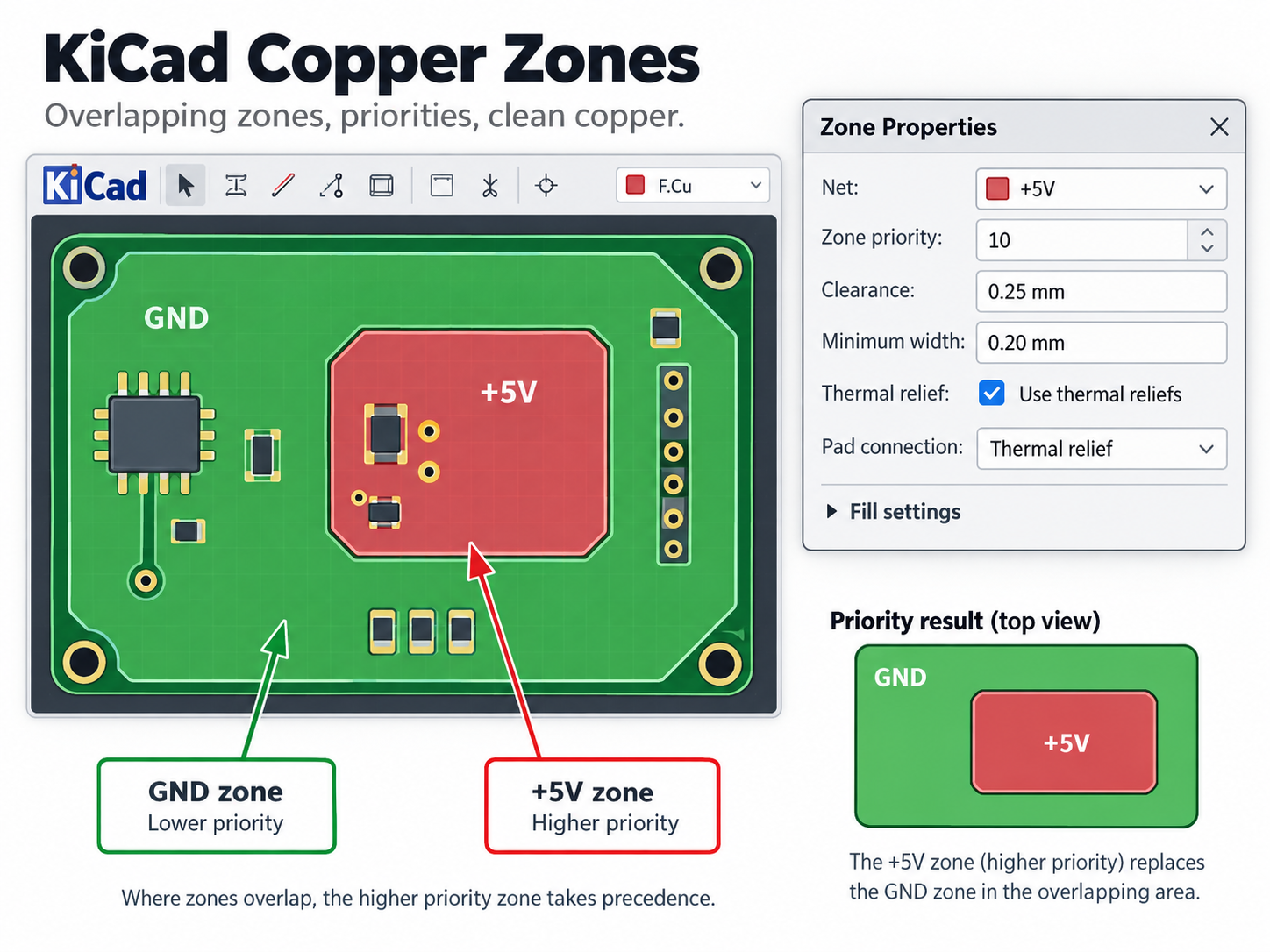
    Medical Electronics

    Medical devices require:

    • strict quality control
    • traceability
    • reliable electronics

    Integrated printed circuit board assembly services ensure regulatory compliance.
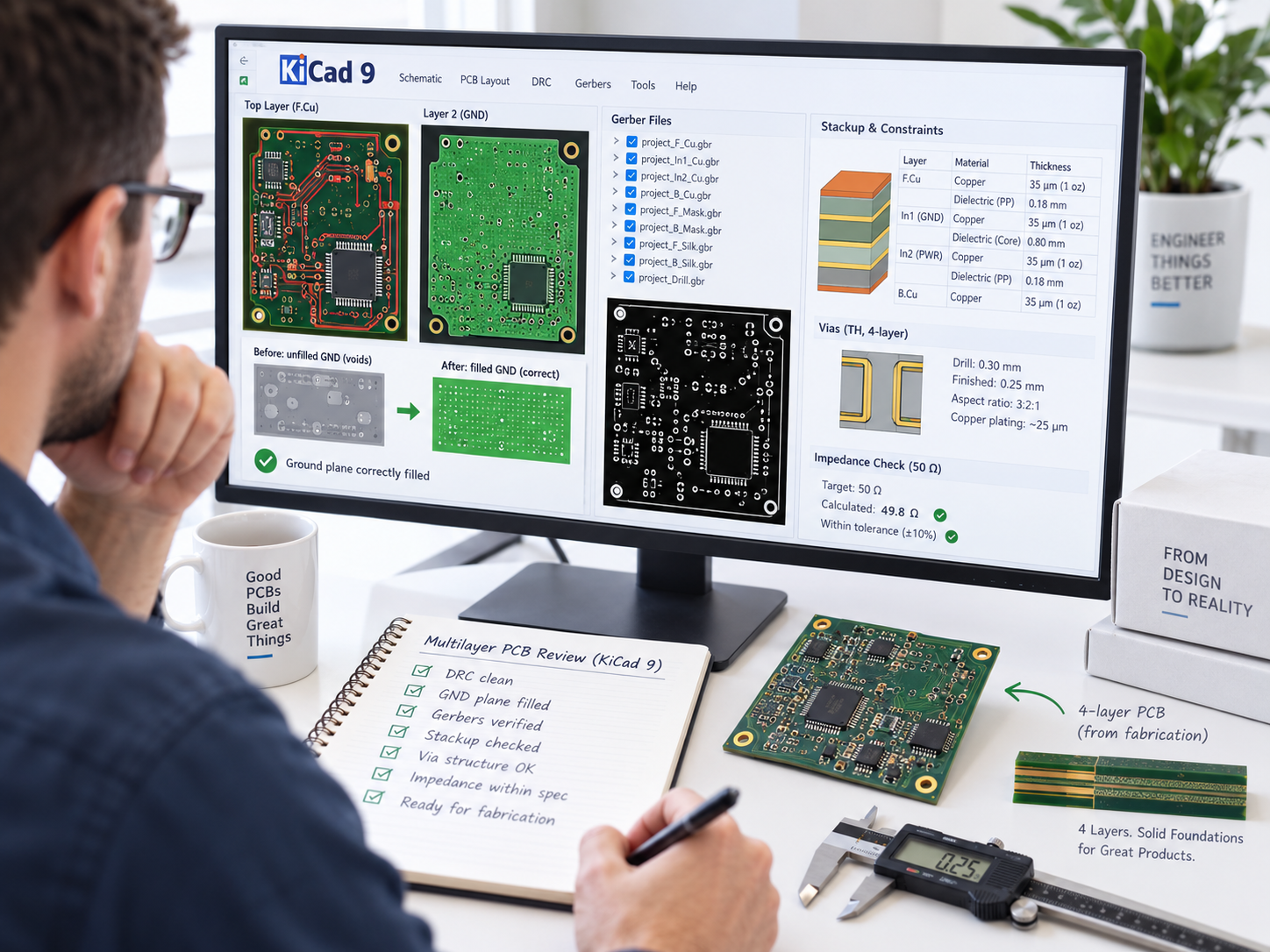
    IoT Devices

    IoT products combine:

    • wireless modules
    • sensors
    • batteries
    • compact enclosures

    Box build allows these devices to be delivered as fully assembled products.

    Automotive Electronics

    Automotive modules often integrate:

    • multilayer PCBs
    • aluminum heat sinks
    • sealed housings
    • wiring harnesses

    Box build assembly ensures these components operate reliably under harsh environments.

    What Is the Difference Between PCBA and Box Build Assembly?

    The difference between PCBA and box build lies in the level of integration.

    Manufacturing TypeDescription
    PCBAAssembly of electronic components onto a PCB
    Box BuildFull product assembly including enclosure, wiring, and system integration

    In many cases, box build printed circuit board assembly services combine both processes to deliver complete electronic products.

    How to Choose a Reliable Printed Circuit Board Assembly Service Provider?

    Selecting a manufacturer for printed circuit board assembly services california, the USA, or overseas requires evaluating several factors.

    Important considerations include:

    • engineering support and DFM analysis
    • advanced SMT manufacturing capability
    • strong component sourcing network
    • complete testing and inspection systems
    • box build integration capability

    A supplier capable of providing quick turn circuit board assembly services USA or Asia-based rapid manufacturing can significantly shorten product development cycles.

    Why Work With a Professional Box Build PCBA Manufacturer?

    A professional partner offering box build printed circuit board assembly services should provide both manufacturing capability and engineering expertise.

    For example, EBest Circuit (Best Technology) provides:

    • over 20 years of PCB and PCBA manufacturing experience
    • free DFM analysis and BOM optimization
    • rapid quick turn printed circuit board assembly services
    • certifications including ISO 9001, ISO 13485, IATF 16949, and AS9100D
    • advanced MES system for full production traceability

    These capabilities enable reliable printed circuit board assembly services for industries such as industrial automation, medical electronics, and aerospace systems. If you are looking for reliable box build printed circuit board assembly services, feel free to contact our engineering team at sales@bestpcbs.com.

    FAQs About Box Build Printed Circuit Board Assembly Services

    What is included in printed circuit board assembly services?

    Typical services include component sourcing, SMT assembly, through-hole soldering, testing, and inspection.

    How long does quick turn circuit board assembly take?

    Prototype quick turn printed circuit board assembly services typically take 3–7 days, depending on PCB complexity and component availability.

    Are China printed circuit board assembly services reliable?

    Many china printed circuit board assembly services providers operate advanced SMT factories and follow international quality standards.

    What industries commonly use box build manufacturing?

    Industries such as industrial automation, medical electronics, telecommunications, and IoT hardware frequently use box build assembly services.

    Premium PCB Prototyping in Pakistan | Fast Delivery With Custom Solutions

    March 11th, 2026

    PCB prototyping in Pakistan turns electronic designs into functional products, and EBest delivers tailored, high-precision solutions built for local needs. Our focus on PCB prototyping in Pakistan means every sample adheres to strict quality standards, with fast turnaround and personalized support to navigate the unique challenges of the region’s electronic manufacturing landscape.

    Premium PCB Prototyping in Pakistan, https://www.bestpcbs.com/blog/2026/03/pcb-prototyping-in-pakistan/

    Are You Facing These Pain Points of PCB Prototyping in Pakistan?

    • Can local PCB prototyping services meet the high precision requirements for medical and aerospace components?
    • Is it possible to get urgent PCB prototypes delivered within 24 hours in Pakistan?
    • Do local providers offer reliable component sourcing for custom PCB prototyping projects?
    • Can PCB prototypes be customized to fit specific industrial equipment or medical device specifications?
    • Are there PCB prototyping services in Pakistan that provide free design checks to avoid production errors?
    • Do local manufacturers maintain consistent quality for small-batch PCB prototyping orders?
    • Can production data for PCB prototypes be tracked to ensure transparency and accountability?

    EBest’s Solutions to Pakistan’s PCB Prototyping Pain Points

    To solve precision challenges in PCB prototyping in Pakistan, we use advanced manufacturing equipment. We include LDI exposure machines, precision laser drilling equipment and automated pressing systems to ensure tight tolerances and consistent quality that meets medical and aerospace industry standards. Our 24-hour expedite service is supported by dedicated production lines. This enables us to deliver urgent PCB prototypes in Pakistan within the required timeframe and keep your projects on track without unnecessary delays.

    We offer end-to-end component sourcing through our rigorously managed global supplier network. All vendors undergo strict qualification audits, sample testing and ongoing performance evaluations to ensure high-quality components for custom PCB prototyping projects. This removes the burden of sourcing from local clients. It saves them time and reduces supply chain risks. Our team also provides fully customized solutions by tailoring PCB prototypes to the unique specifications of industrial equipment, medical devices and other specialized applications.

    Every PCB prototyping order includes free DFM analysis. Our engineers review designs to identify potential flaws such as component spacing issues, impedance mismatches or manufacturing constraints. They also provide actionable adjustments to reduce errors and rework. We maintain consistent quality across all order sizes from small batches to large runs. We use standardized production processes and certified quality management systems including ISO 9001, ISO 13485 and AS9100D. Our MES system enables full production data tracking to let you monitor every stage of the PCB prototyping process for complete transparency.

    Why Choose EBest for PCB Prototyping in Pakistan?

    Here are reasons why choose EBest for PCB prototyping in Pakistan:

    • Our 19+ years of PCB prototyping experience means you get tried-and-tested expertise for your projects in Pakistan, reducing risks of errors and ensuring your prototypes align with your goals from the start.
    • A first article success rate of over 95% saves you time and resources by minimizing rework, avoiding costly delays to your project timeline and ensuring your PCB prototypes work as intended on the first try.
    • Our 24-hour fast prototyping service lets you meet tight deadlines for PCB prototyping in Pakistan, keeping your projects on schedule and preventing costly hold-ups in your product development or launch.
    • A 99.2% order on-time delivery rate ensures your PCB prototypes arrive exactly when you need them, eliminating production bottlenecks that could slow down your operations or delay your projects.
    • With a low MOQ and 1 piece minimum order, you can access high-quality PCB prototyping for small projects, R&D, or trial runs without overspending, perfect for testing designs before scaling up.
    • Customized PCB prototyping services adapt to your unique design needs, whether for medical, aerospace, or industrial applications, so your prototypes fit your specific product requirements perfectly.
    • Free DFM analysis catches design issues early, helping you avoid expensive mistakes, reduce rework costs, and keep your PCB prototyping process smooth and efficient.
    • ISO 9001, ISO 13485, and AS9100D certifications guarantee your PCB prototypes meet global industry standards, ensuring compliance for your products and giving you confidence in their quality.
    • MES system integration for full production data tracking keeps you informed at every step, giving you transparency and control over your PCB prototyping order and peace of mind.
    Why Choose EBest for PCB Prototyping in Pakistan, https://www.bestpcbs.com/blog/2026/03/pcb-prototyping-in-pakistan/

    What Types of PCB Prototyping Service in Pakistan Can We Provide for You?

    Types of PCB prototyping service in Pakistan we can provide for you:

    • Flexible PCBs: Ideal for compact, high-flexibility applications in medical devices and portable electronics.
    • Rigid PCBs: Durable and stable, suitable for industrial equipment, aerospace components, and standard electronic devices.
    • Rigid-Flex PCBs: Combine the flexibility of flexible PCBs with the stability of rigid PCBs, perfect for complex, space-constrained designs.
    • Ceramic PCBs: High-temperature resistance and excellent thermal conductivity, ideal for medical and aerospace applications.
    • Metal Core PCBs (MCPCBs): Superior heat dissipation, suitable for high-power electronic components and industrial equipment.
    • High-Frequency PCBs: Optimized for signal integrity, used in aerospace, communication, and industrial control systems.
    • Additional types: FR4 PCBs, single-sided PCBs, multi-layer PCBs, HDI PCBs, heavy copper PCBs, and impedance control PCBs.

    High-Quality PCB Prototyping in Pakistan: EBest’s Quality Control Process

    Below are our quality control process for high quality PCB prototyping in Pakistan:

    • Pre-production DFM analysis: Free design review by our engineering team to identify potential manufacturability issues. This step ensures PCB prototypes align with design specifications and can be produced efficiently without costly rework.
    • Raw material inspection: All materials including substrates and components undergo rigorous testing. We verify quality consistency and compliance with global industry standards to ensure they meet the durability and performance needs of your PCB prototypes.
    • In-process quality checks: Regular inspections are conducted during printing drilling and assembly. These checks maintain precision control and consistency across every stage of production to avoid defects.
    • SPI (Solder Paste Inspection): 3D optical inspection measures solder paste thickness with a tolerance of less than ±10%. This ensures uniform solder application prevents poor connections and eliminates short circuits or cold solder joints.
    • AOI automatic optical inspection: 9-second per-board analysis uses high-resolution imaging to detect soldering defects component misalignment and other visual anomalies. This fast accurate check ensures no flaws are missed before final testing.
    • Electrical testing: Flying probe testing and functional testing are performed to verify PCB prototype performance and connectivity. These tests confirm all electrical pathways work as intended and meet design requirements.
    • Final inspection: A comprehensive review of all PCB prototypes is completed before delivery. This ensures each unit meets our strict quality standards and aligns with your specific project requirements.
    EBest's Quality Control Process, https://www.bestpcbs.com/blog/2026/03/pcb-prototyping-in-pakistan/

    How EBest Ensures On-Time Delivery for PCB Prototyping Orders in Pakistan?

    This is how we ensures on-time delivery for PCB prototyping orders in Pakistan:

    • Advanced production scheduling: Our MES system integrates with smart scheduling tools to optimize PCB prototyping workflows, aligning order priorities with equipment capacity and production constraints to minimize bottlenecks and ensure efficient, on-schedule processing of every order.
    • Dedicated expedite team: A specialized team focuses solely on urgent orders, prioritizing 24-hour PCB prototyping in Pakistan requests and leveraging streamlined workflows to meet tight deadlines without compromising quality or precision.
    • Supplier collaboration: We maintain long-term partnerships with rigorously vetted component suppliers, conducting regular quality audits and performance evaluations to ensure timely availability of high-quality materials for your PCB prototyping projects.
    • Real-time order tracking: Our MES system lets you monitor every stage of your PCB prototyping order from design review and production to packaging and shipping, providing real-time updates to keep you informed and in control.
    • Contingency planning: We maintain backup production lines and pre-qualified alternative component sources to quickly mitigate delays caused by unexpected equipment issues or supply chain disruptions, keeping your PCB prototyping on track.
    • Streamlined logistics: We partner with trusted shipping providers with proven experience delivering to Pakistan, ensuring fast, reliable transit of your PCB prototypes while maintaining product integrity during shipping.
    How EBest Ensures On-Time Delivery for PCB Prototyping Orders in Pakistan, https://www.bestpcbs.com/blog/2026/03/pcb-prototyping-in-pakistan/

    EBest’s Pakistan Medical PCB Prototyping Project Case Study

    Project Background

    A Pakistan-based medical device manufacturer needed PCB prototypes for a portable patient monitoring device a Class II medical product requiring compliance with ISO 13485 standards. The client struggled with local PCB prototyping services that failed to meet precision requirements and missed delivery deadlines delaying their product launch.

    Project Requirements

    The client required 200 PCB prototypes 4-layer FR4 0.8mm thickness with impedance control 50Ω compatibility with medical-grade components and compliance with Pakistan’s medical device regulations. They needed prototypes delivered within 5 business days to meet product testing timelines with a minimum yield rate of 98%.

    Project Challenges

    The design required 0.3mm tight component spacing and precise impedance control which local providers could not consistently achieve. The client needed free DFM analysis to fix design flaws real-time production tracking for on-time delivery and PCB prototypes compliant with ISO 13485 standards for Pakistan’s medical device registration.

    Our Solutions

    We conducted free DFM analysis identifying 3 design flaws component spacing and impedance mismatches and provided adjustments for manufacturability. We used advanced drilling and printing equipment to achieve 0.3mm component spacing and precise impedance control. Our MES system provided real-time production tracking and we prioritized the order to meet the 5-day deadline using our 24-hour production capacity for critical stages.

    Output Results

    We delivered 200 PCB prototypes in4.5 business days exceeding the client’s timeline. The prototypes achieved a 99.5% yield rate with zero electrical or structural defects. Client testing confirmed prototypes met all medical device specifications and ISO 13485 standards. Post-project feedback noted “EBest’s PCB prototyping service eliminated our delivery and quality concerns allowing us to launch our product on schedule their attention to detail and transparency were unmatched.”

    FAQs About PCB Prototyping in Pakistan

    Q1: Can PCB prototypes for medical devices in Pakistan meet ISO 13485 standards?
    A1: Yes, EBest’s PCB prototyping services for medical devices in Pakistan fully comply with ISO 13485 standards. We follow strict quality control processes from raw material inspection to final testing and provide documentation to support medical device registration in Pakistan. Our medical PCB prototypes have a 99.5% average yield rate ensuring they meet the rigorous requirements of the medical industry.

    Q2: What is the fastest lead time for urgent PCB prototyping in Pakistan?
    A2: EBest offers 24-hour fast PCB prototyping service for urgent orders in Pakistan. Our dedicated expedite team prioritizes these orders leveraging advanced production equipment and streamlined workflows to deliver high-quality prototypes within one day. This service is available for all PCB types including flexible rigid and multi-layer prototypes.

    Q3: Do I need to order large quantities for PCB prototyping in Pakistan?
    A3: No, EBest offers low MOQ with 1 piece minimum order for PCB prototyping in Pakistan. This allows for small-batch orders R&D trials and design testing without excess cost. We maintain the same high quality and attention to detail for all order sizes ensuring even single-piece prototypes meet your specifications.

    Q4: How can I ensure my PCB prototype design is manufacturable?
    A4: EBest provides free DFM analysis for all PCB prototyping orders in Pakistan. Our team reviews your design to identify potential flaws such as component spacing issues impedance mismatches or manufacturing constraints and provides adjustments to ensure manufacturability. This analysis reduces rework saves time and ensures your prototype meets your design requirements.

    Q5: Can I track the production progress of my PCB prototyping order in Pakistan?
    A5: Yes, EBest’s MES system allows full production data tracking for PCB prototyping orders in Pakistan. You can monitor every stage of the production process from design review to final delivery in real time. This transparency ensures you stay informed about your order’s progress and can plan accordingly for your project timeline.

    Choose EBest for Your PCB Prototyping in Pakistan Needs

    Are you ready to start your project? Don’t let delayed prototypes or inconsistent quality slow down your product launch. EBest’s PCB prototyping in Pakistan is built for speed, precision, and peace of mind, whether you need a 24-hour urgent prototype or a full production run, we’ve got you covered. Contact us now to get a quote for your project: sales@bestpcbs.com.

    China Electronic Circuit Board Assembly | Strong Supply Chain

    March 11th, 2026

    China electronic circuit board assembly plays a central role in turning electronic designs into manufacturable, testable, and scalable products for global OEMs. This article explains how a strong supply chain, sound engineering practice, and disciplined PCBA execution help buyers reduce risk, improve reliability, and move from prototype to production.

    What usually makes sourcing and manufacturing difficult for customers?

    • Parts are available on paper, but actual lead times shift too often.
    • DFM issues are found too late, causing rework and delay.
    • PCB, sourcing, assembly, and testing are handled by different vendors.
    • Prototype builds go fast, but volume quality becomes unstable.
    • Traceability is weak, making root-cause analysis slow and costly.

    A strong manufacturer solves these problems with a system, not with promises.

    • Review files early and issue DFM feedback before release.
    • Optimize BOM risk with alternative parts and sourcing strategy.
    • Integrate PCB fabrication, component sourcing, PCBA, and testing.
    • Build stable processes for both prototypes and repeat production.
    • Use digital traceability to track material lots, process status, and product history.

    EBest Circuit (Best Technology) is a professional PCB and PCBA manufacturer focused on helping engineers and OEM teams bring products to market with less friction. With in-house PCB and PCBA factories, DFM pre-check, BOM optimization support, 20 years of manufacturing experience, and a digital workshop with fast traceability, EBest supports prototype, low-volume, and ongoing production projects with stronger execution. For project discussion or quotation, pls feel free to contact us via sales@bestpcbs.com.

    China Electronic Circuit Board Assembly

    Why Do Global Brands Choose A China Electronic Circuit Board Assembly Factory?

    Global brands choose a China electronic circuit board assembly factory for one reason above all: the right supplier can combine engineering support, cost control, production scale, and supply chain depth in one place. In electronics, that combination matters more than low unit price alone.

    A capable China factory is rarely just an assembly shop. The stronger ones operate as manufacturing partners. They support file review, material selection, procurement control, process planning, SMT and THT assembly, testing, and delivery management. This matters because most project failures happen between these steps, not inside one step.

    Here are the main reasons global brands keep sourcing from China:

    • Dense component ecosystem
      China has a deep electronics supply base, which improves access to circuit board electronic components and reduces sourcing friction.
    • Integrated manufacturing flow
      PCB fabrication, stencil making, SMT, DIP, box build, and testing can be coordinated faster.
    • Better prototype-to-production transition
      The same team can often support NPI, pilot run, and repeat orders.
    • Engineering responsiveness
      Strong suppliers do not simply build to print. They flag layout, pad, thermal, and assembly risks early.
    • Cost-to-capability balance
      Buyers often get a better mix of technical support, lead time, and manufacturing value.

    A quick comparison makes this clearer:

    FactorStrong China SupplierFragmented Multi-Vendor Model
    PCB + PCBA coordinationFastSlow
    BOM sourcing visibilityHighLow
    Engineering feedbackEarlyDelayed
    Prototype responseFlexibleOften rigid
    Supply chain leverageStrongLimited

    For buyers, the real attraction is not geography by itself. It is operational concentration. When sourcing, engineering, and manufacturing are aligned, project risk drops. That is why a strong China electronic circuit board assembly factory remains a practical choice for global OEMs.

    How To Choose A Reliable China Electronic Circuit Board Assembly Manufacturer For OEM Projects?

    Choosing a reliable China electronic circuit board assembly manufacturer is a technical and commercial decision at the same time. A good website or a low quote is not enough. Buyers need evidence that the supplier can support the product, not just produce the board.

    Start by checking whether the manufacturer understands your project type. Industrial control, medical electronics, UPS power boards, communication devices, and automotive electronics do not share the same process priorities. The supplier should know what matters for your application, whether that is thermal control, creepage distance, conformal coating, functional test, or long-life solder joint reliability.

    Use the following evaluation points:

    • Engineering review capability
      Ask whether they provide DFM, DFA, and BOM risk review before production.
    • Factory ownership and control
      In-house PCB and PCBA resources usually mean better schedule control and clearer accountability.
    • Certification fit
      ISO9001 is baseline. ISO13485, IATF16949, and AS9100D matter for regulated sectors.
    • Supply chain strength
      A strong sourcing network reduces risk for shortages, alternates, and counterfeit screening.
    • Testing capability
      AOI, X-ray, flying probe, ICT, and functional test planning all matter.
    • Traceability level
      Good traceability supports corrective action and quality consistency.
    • Production flexibility
      The supplier should handle prototype, low-volume, and repeat orders without losing process discipline.

    A useful screening table is below:

    Evaluation PointWhat To AskWhy It Matters
    DFM supportDo you issue a pre-production DFM report?Prevents avoidable defects
    BOM reviewCan you suggest alternates?Reduces sourcing risk
    Process fitHave you built similar products?Improves yield
    Quality systemWhich certifications do you hold?Confirms process maturity
    TraceabilityCan you trace lots and process records?Speeds root-cause analysis
    Delivery modelCan you support prototype and volume?Avoids supplier switching

    If a manufacturer only talks about price, be careful. A reliable OEM partner talks about manufacturability, part risk, process windows, test coverage, and long-term consistency. That is the more meaningful sign of a dependable China electronic circuit board assembly manufacturer.

    What Processes Are Involved In Electronic Circuit Board Assembly?

    Electronic circuit board assembly is a structured manufacturing chain, not a single workstation task. Each stage affects solder quality, electrical reliability, and delivery stability. When buyers understand the process, they can better evaluate suppliers and avoid unrealistic expectations.

    A standard electronic circuit board assembly flow usually includes the following steps:

    1. File Review And Process Preparation
      Gerber, BOM, centroid, assembly drawing, and special notes are checked. This stage confirms package data, polarity, panelization, stencil design, and process route.
    2. Material Procurement And Incoming Inspection
      PCB, ICs, passives, connectors, and mechanical parts are sourced and verified. Part number control is critical here, especially for electronic circuit board components with multiple approved variants.
    3. Stencil Printing
      Solder paste is printed onto pads. Paste volume accuracy directly affects solder joint formation.
    4. SMT Placement
      Pick-and-place machines mount SMD parts according to the programmed coordinates.
    5. Reflow Soldering
      The assembly passes through a controlled temperature profile to form solder joints.
    6. THT / DIP Assembly
      Through-hole parts are inserted and soldered by wave, selective, or hand soldering, depending on design.
    7. Inspection And Testing
      AOI, X-ray, flying probe, ICT, or functional checks verify product quality.
    8. Cleaning, Coating, Final Assembly, And Packaging
      Depending on product needs, waterproofing electronic circuit boards, conformal coating, or box-build steps may follow.

    A simplified process map looks like this:

    StageMain Objective
    DFM + process planningPrevent build risk
    Sourcing + IQCControl material quality
    Solder paste printingEnsure joint consistency
    SMT + reflowBuild core connections
    THT solderingComplete mixed assembly
    Inspection + testCatch defects
    Final assemblyPrepare for delivery

    Some buyers still think soldering electronic circuit boards is the main difficulty. In reality, success depends on how well the full chain is managed. The strongest suppliers treat assembly as a controlled system, not an isolated operation. That is what keeps quality stable in China electronic circuit board assembly projects.

    How To Calculate Current Capacity And Trace Width For Electronic Circuit Boards?

    Current capacity and trace width are basic engineering questions, but they directly affect safety, temperature rise, voltage drop, and long-term reliability in electronic circuit boards. If the trace is too narrow, resistive heating increases. If the trace is overdesigned, routing space is wasted.

    In practice, engineers often estimate width based on IPC guidance, copper thickness, allowable temperature rise, and whether the trace is on an outer or inner layer. Outer layers dissipate heat better, so they usually carry more current at the same width.

    A practical design relationship starts with resistance:

    China Electronic Circuit Board Assembly

    Where:

    • R = trace resistance
    • ρ = resistivity of copper
    • L = trace length
    • A = cross-sectional area

    Power loss follows:

    China Electronic Circuit Board Assembly

    This is why a narrow high-current trace heats up quickly. Higher current and higher resistance both increase dissipation.

    Here is a simple engineering reference for outer-layer traces at moderate temperature rise:

    Copper WeightCurrentTypical Minimum Trace Width
    1 oz1 A0.25 mm
    1 oz3 A0.80 mm
    1 oz5 A1.50 mm
    2 oz5 A0.80 mm
    2 oz10 A2.00 mm

    These are not universal values. Final design still depends on:

    • Ambient temperature
    • Trace length
    • Copper thickness
    • Allowed temperature rise
    • Airflow
    • Internal vs outer layer
    • Safety margin

    For power products such as china oem ups inverter electronic circuit board assembly, this topic is especially important because DC bus traces, battery paths, and switching nodes often carry high current. Engineers may use wider copper pours, heavier copper, parallel traces, or bus-bar support instead of relying on standard routing rules alone.

    A sound rule is simple: calculate first, then validate thermally. Current design for electronic circuit boards should never be based on guesswork if the board handles power.

    How To Calculate Power Loss And Thermal Dissipation In Electronic Circuit Board Design?

    Power loss and thermal dissipation are among the most practical parts of electronic circuit board design. If heat is not managed well, even a board that passes initial test may fail in the field. Thermal design is therefore not a cosmetic improvement. It is a reliability requirement.

    The first step is to identify the main heat sources:

    • Power MOSFETs
    • IGBTs
    • Linear regulators
    • DC-DC converters
    • Shunt resistors
    • Transformers
    • Diodes
    • High-current copper paths

    Basic conduction loss can be estimated by:

    China Electronic Circuit Board Assembly

    For a MOSFET:

    China Electronic Circuit Board Assembly

    For switching devices, total loss also includes switching loss:

    China Electronic Circuit Board Assembly

    Thermal rise can then be estimated from thermal resistance:

    China Electronic Circuit Board Assembly

    Where:

    • ΔT = temperature rise
    • P = power dissipation
    • θ = thermal resistance from device to ambient

    Example:

    If a device dissipates 2 W and the effective thermal resistance is 25°C/W, then:

    If ambient is 40°C, the device junction region may approach 90°C or higher depending on stack-up and cooling conditions.

    Useful thermal control methods include:

    • Wider copper pours for heat spreading
    • Thermal vias under hot packages
    • Thicker copper for high-current sections
    • Metal-core or IMS structures when heat density is high
    • Heatsinks or chassis coupling
    • Spacing optimization around hot parts
    • Airflow path planning

    A compact design summary is below:

    Thermal IssueDesign Action
    High copper lossIncrease width or copper weight
    Hot power deviceAdd thermal vias and copper area
    High local temperatureImprove spacing and airflow
    Repeated overload riskAdd margin in component rating
    Uneven heat spreadUse plane balancing

    For UPS, inverter, and industrial control boards, thermal design must be addressed early. That is especially true for china oem ups pcba inverter electronic circuit board assembly, where switching loss, magnetic heating, and current density all interact. Good thermal design protects not only components, but also solder joints, laminate life, and overall product stability.

    What Are The Key Electronic Circuit Board Components Inside Modern PCBA?

    Modern PCBA is made from far more than a bare electronic printed circuit board. The final assembly is a complete electrical and mechanical system built from many functional blocks. Understanding these blocks helps buyers evaluate both design complexity and sourcing difficulty.

    The key electronic circuit board components usually include the following categories:

    • Integrated Circuits (ICs)
      MCUs, processors, memory, drivers, interface chips, and power controllers.
    • Passive Components
      Resistors, capacitors, inductors, ferrite beads, and filters.
    • Power Devices
      MOSFETs, IGBTs, rectifiers, regulators, and protection parts.
    • Connectors
      Board-to-board, wire-to-board, RF, power, and I/O connectors.
    • Electromechanical Parts
      Relays, switches, fans, and transformers.
    • Protection Components
      TVS diodes, fuses, MOVs, current sensors, and isolation devices.
    • Support Materials
      Solder paste, flux, underfill, conformal coating, and thermal interface materials.

    A quick component-level view:

    Component GroupTypical Function
    MCU / control ICLogic and system control
    Resistor / capacitorBias, filter, timing, energy storage
    Inductor / transformerEnergy conversion
    MOSFET / IGBTPower switching
    ConnectorSignal or power interface
    TVS / fuseProtection

    In sourcing terms, not all components behave the same. Some are stable catalog parts. Others are allocation-sensitive, lifecycle-sensitive, or region-dependent. That is why a strong supply chain matters. A manufacturer with BOM optimization ability can identify risk early and suggest approved alternatives before production is blocked.

    For buyers, this is a practical point. The performance of electronics circuit boards depends not only on design, but also on whether the right parts are sourced, verified, stored, assembled, and tested correctly. In that sense, component control is one of the foundations of successful China electronic circuit board assembly.

    What Is China OEM UPS Inverter Electronic Circuit Board Assembly Used For?

    China OEM UPS inverter electronic circuit board assembly is mainly used in power conversion systems where stable backup power and controlled AC output are required. This includes not only classic UPS products, but also many adjacent applications in energy storage, industrial backup, and power conditioning.

    An inverter PCBA inside a UPS typically handles control, switching, sensing, protection, and power conversion tasks. It may include gate-drive circuits, MCU control, voltage feedback, current sensing, communication interfaces, and protection logic. In more advanced designs, the board also supports battery management, remote monitoring, and fault diagnosis.

    Common application fields include:

    • Data Centers
      UPS systems protect servers and storage from power interruption.
    • Telecom Infrastructure
      Backup power keeps communication networks active during grid loss.
    • Medical Equipment
      Critical systems need continuous and controlled power.
    • Industrial Automation
      PLC cabinets, control systems, and factory equipment often require backup support.
    • Security And Monitoring
      Surveillance and access systems benefit from stable emergency power.
    • Energy Storage And Hybrid Power
      Some inverter platforms share architecture with UPS power stages.

    A simple application table:

    ApplicationWhy Inverter PCBA Matters
    Data center UPSStable backup AC output
    Telecom powerNetwork continuity
    Medical support equipmentHigh reliability requirement
    Industrial controlReduced shutdown risk
    Security systemPower continuity

    From a manufacturing viewpoint, china oem ups inverter electronic circuit board assembly service usually requires closer control than standard consumer boards. These products often involve:

    • Higher voltage spacing
    • Thermal management needs
    • Power-device solder quality
    • Protective coating
    • Burn-in or functional loading
    • Stronger traceability

    This is why buyers in the UPS sector often prefer suppliers with both power-electronics experience and a stronger component network. For this category, manufacturing discipline is as important as assembly capacity.

    How To Test Electronic Circuit Board Reliability Before Product Delivery?

    Testing electronic circuit boards before delivery is not about checking whether the board powers on once. It is about reducing the chance of hidden defects, intermittent failure, and field return. Reliability testing should be layered, with each method targeting a different risk.

    The right test plan depends on the product, but a solid approach often includes the following methods:

    1. AOI (Automated Optical Inspection)
      Detects polarity errors, missing parts, skew, bridging, and visible solder defects.
    2. X-Ray Inspection
      Useful for BGAs, QFNs, hidden solder joints, and void analysis.
    3. Flying Probe Or ICT
      Verifies continuity, isolation, and certain component-level conditions.
    4. Functional Test
      Confirms the board operates under defined input and output conditions.
    5. Burn-In Or Aging Test
      Exposes early-life weaknesses under stress or continuous operation.
    6. Environmental Or Special Tests
      Depending on the project, this may include vibration, humidity, thermal cycling, or waterproofing electronic circuit boards through coating validation.

    A simple test matrix is below:

    Test MethodMain Purpose
    AOIVisible assembly defect screening
    X-RayHidden solder verification
    Flying probe / ICTElectrical continuity check
    Functional testProduct behavior verification
    Burn-inEarly failure screening
    Coating inspectionSurface protection validation

    For engineers asking how to test electronic circuit board assemblies effectively, the answer is to combine process inspection with electrical and functional verification. No single test catches every risk. For example, AOI will not reveal all internal solder voids, and functional test may not reveal latent process weakness if coverage is too narrow.

    That is why testing electronic circuit boards should be planned at design stage whenever possible. Test points, fixture logic, firmware states, and pass/fail thresholds should be prepared early. Good testing is not added at the end. It is built into the product strategy.

    Why Is Contract Manufacturing For Electronic Printed Circuit Board Important For OEM Electronics?

    Contract manufacturing for electronic printed circuit board projects is important because most OEMs do not want to build an internal factory for every product line. They want to focus on design, market access, software, system integration, or brand growth, while relying on specialized manufacturers for execution.

    The value of contract manufacturing goes beyond labor. A strong manufacturing partner provides:

    • Process engineering
    • Procurement control
    • Quality management
    • Capacity flexibility
    • Compliance support
    • Delivery planning
    • Cost structure improvement

    This is especially important when products move through multiple phases. The needs of EVT, DVT, PVT, pilot run, and recurring production are not identical. A contract manufacturing partner can help bridge those phases without forcing the OEM to rebuild the supply chain every time.

    Here is why the model works well for OEM electronics:

    OEM NeedContract Manufacturing Advantage
    Faster market launchExisting process and factory setup
    Lower fixed costNo in-house line investment
    Better sourcing reachStronger supplier network
    Flexible production volumePrototype to mass support
    Quality disciplineEstablished control plans

    For products involving electronic circuit board assembly, OEM buyers also benefit from process knowledge they may not fully maintain in-house. This includes soldering electronic circuit boards, fixture design, traceability systems, thermal process windows, and yield improvement methods.

    The strongest contract manufacturers do more than build. They help prevent risk. That is why contract manufacturing remains important for OEM electronics, especially when reliability, speed, and supply-chain resilience all matter at the same time.

    Why Choose EBest Circuit (Best Technology) For China Electronic Circuit Board Assembly Services?

    Choosing a PCBA partner should come down to whether the supplier can help your team make better manufacturing decisions, not just whether they can place parts on a board. EBest Circuit (Best Technology) is built around that idea.

    For China electronic circuit board assembly services, EBest combines engineering support, in-house manufacturing control, sourcing capability, and practical execution for prototype and low-volume OEM projects. The goal is simple: help engineers move faster while lowering avoidable manufacturing risk.

    Key strengths include:

    • One-Stop Integration
      PCB fabrication, parts sourcing, PCBA assembly, and testing are coordinated in one system.
    • Prototype And Low-Volume Flexibility
      This is valuable for product validation, engineering change, and faster design iteration.
    • Complete Certifications
      ISO9001, ISO13485, IATF16949, and AS9100D support multi-industry requirements.
    • In-House Factory + Supplier Network
      Our PCB and PCBA factories work with 1000+ supply-chain partners to strengthen quality and lead-time control.
    • 20 Years Of Experience
      We have supported 10,000+ engineers and served 1,800+ customers across different industries.
    • Fast PCBA Delivery
      Many projects can be supported with about 1.5-week rapid turnaround, depending on product complexity and material readiness.

    For OEMs looking for electronic circuit board manufacturers that understand both engineering and delivery, EBest offers a more complete model than a simple assembly vendor. For quotation, file review, or project discussion, contact sales@bestpcbs.com.

    In closing, China electronic circuit board assembly is far more than a sourcing phrase; it represents the full path from engineering files and component strategy to manufacturing control, testing discipline, and final product reliability. This article has shown how a strong supply chain supports better OEM outcomes through factory selection, assembly process control, current and thermal calculation, component management, UPS inverter applications, and pre-delivery testing.

    EBest Circuit (Best Technology) stands out with DFM and BOM optimization capability, in-house PCB and PCBA factories, 1000+ supply-chain partners, digital traceability, 20 years of manufacturing experience, and rapid PCBA turnaround for prototype and low-volume projects. To discuss your next China electronic circuit board assembly project, pls contact us via sales@bestpcbs.com.

    FAQs About China Electronic Circuit Board Assembly

    1. How do I choose a reliable China PCBA manufacturer?

    When selecting a China electronic circuit board assembly partner, engineers usually evaluate several criteria: manufacturing capability, quality control system, engineering support, and communication efficiency. Reliable manufacturers typically provide DFM review, component sourcing assistance, automated inspection processes such as AOI or X-ray, and international certifications like ISO9001 or IATF16949.

    2. What files are required for China electronic circuit board assembly?

    To start a PCB assembly project, manufacturers normally require a set of engineering documents. These usually include Gerber files for PCB fabrication, a Bill of Materials (BOM) listing all components, pick-and-place files for SMT machines, and assembly drawings. Providing complete documentation helps avoid manufacturing errors and ensures faster production scheduling.

    3. What should engineers check before sending PCB designs to China for assembly?

    Before submitting a PCB design for assembly, engineers should review manufacturability and testability. Important checks include component spacing, solder mask clearance, footprint accuracy, and thermal management for high-power components. Many professional PCBA suppliers also provide Design for Manufacturing (DFM) feedback to optimize the design before mass production.