NRE cost for PCB pays for the project-specific engineering, tooling and production setup that turns your design files into a repeatable manufacturing package. Understanding the charge helps you compare quotations on the same basis, calculate the effective cost per board and plan prototypes, production quantities and repeat orders more accurately.
EBest Circuit (Best Technology) connects DFM review, tooling preparation, PCB fabrication, component sourcing, assembly and testing through self-owned PCB and PCBA factories. Send your Gerber files, fabrication notes, panel requirements and quantities to sales@bestpcbs.com for a quotation that identifies the NRE scope, confirms manufacturing fit and gives you a project-specific lead-time plan.
What Does NRE Stand for in PCB Manufacturing?
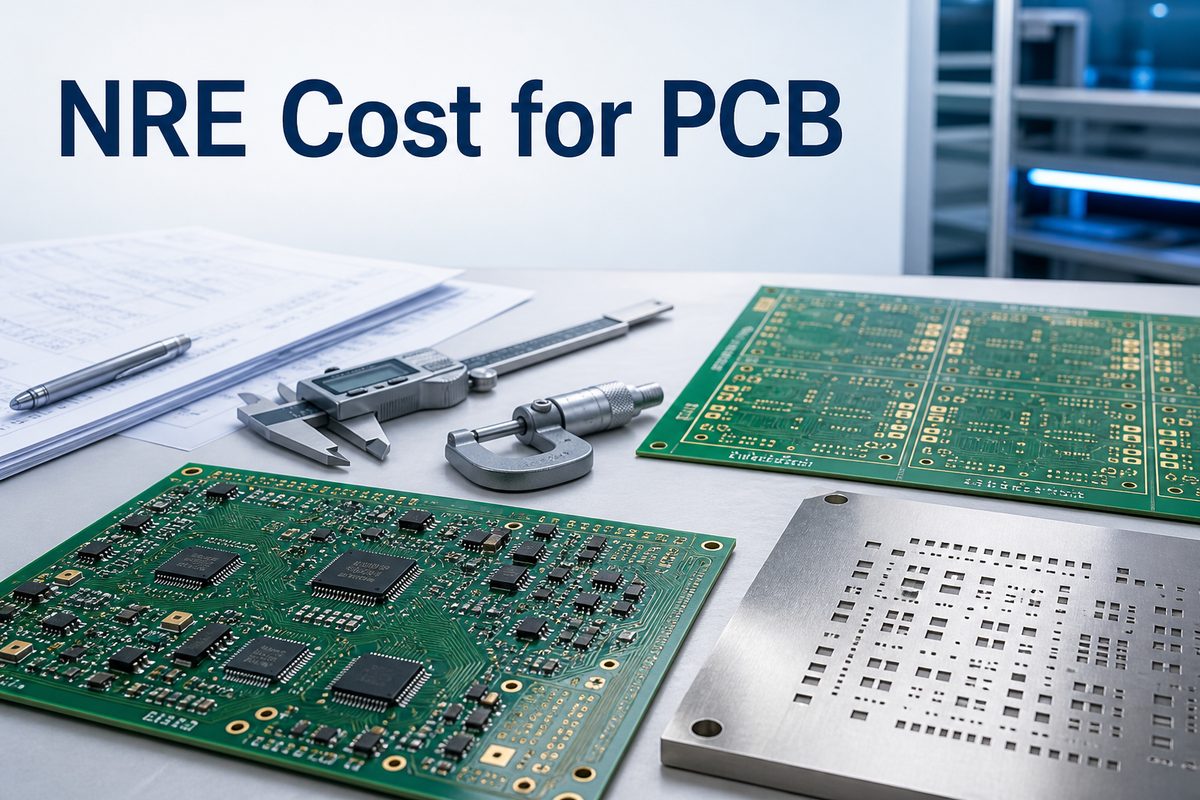
NRE stands for non-recurring engineering. In PCB manufacturing and assembly, it refers to project-specific work completed before or around the first production run but not charged as a normal per-board manufacturing operation.
The word “non-recurring” describes the nature of the work, not an unconditional promise that the fee can never appear again. If the approved PCB revision, assembly data, panel, stencil, programming or test requirements remain unchanged, some setup assets may continue to support repeat orders. A significant change can create new engineering or tooling work.
NRE is therefore best viewed as an investment that converts your design data into a controlled production package. Its exact scope depends on whether you are ordering bare PCBs, assembled PCBAs or a broader turnkey service; the next section shows the deliverables that may be included.
What Does an NRE Charge Cover in a PCB Quote?
A useful PCB quotation should connect the NRE charge to identifiable deliverables. The buyer can then see which costs are one-time setup work and which costs apply to every manufactured board.
For bare PCB fabrication, NRE may cover:
- Gerber or ODB++ data preparation.
- Stackup, drill and routing-program preparation.
- Phototools or other process-specific tooling where required.
- Production panel preparation.
- Electrical-test programming or dedicated test fixtures.
- Engineering review for special structures or controlled requirements.
For PCBA, NRE may also cover:
- Solder-paste stencils.
- Pick-and-place program preparation from the BOM and CPL.
- SPI, AOI or X-ray inspection-program setup where applicable.
- Programming fixtures or procedures.
- ICT, flying-probe or customer-defined functional-test preparation.
- Work instructions and first-build setup.
Not every project requires every item. A simple bare PCB, a mixed-technology PCBA and an assembly requiring a custom functional-test fixture should not carry identical NRE scopes. Ask the supplier to identify the deliverable behind each charge rather than presenting NRE as one unexplained amount.
The quotation should also distinguish the sample or first-panel requirement from the requested production quantities. When buyers request several quantity breaks, they can see both the one-time preparation cost and the recurring unit price before selecting the most suitable prototype, pilot or production batch.
How Is NRE Cost Different From PCB Unit Cost?
NRE cost and PCB unit cost answer different purchasing questions.
| Cost type | What it pays for | How it behaves |
|---|---|---|
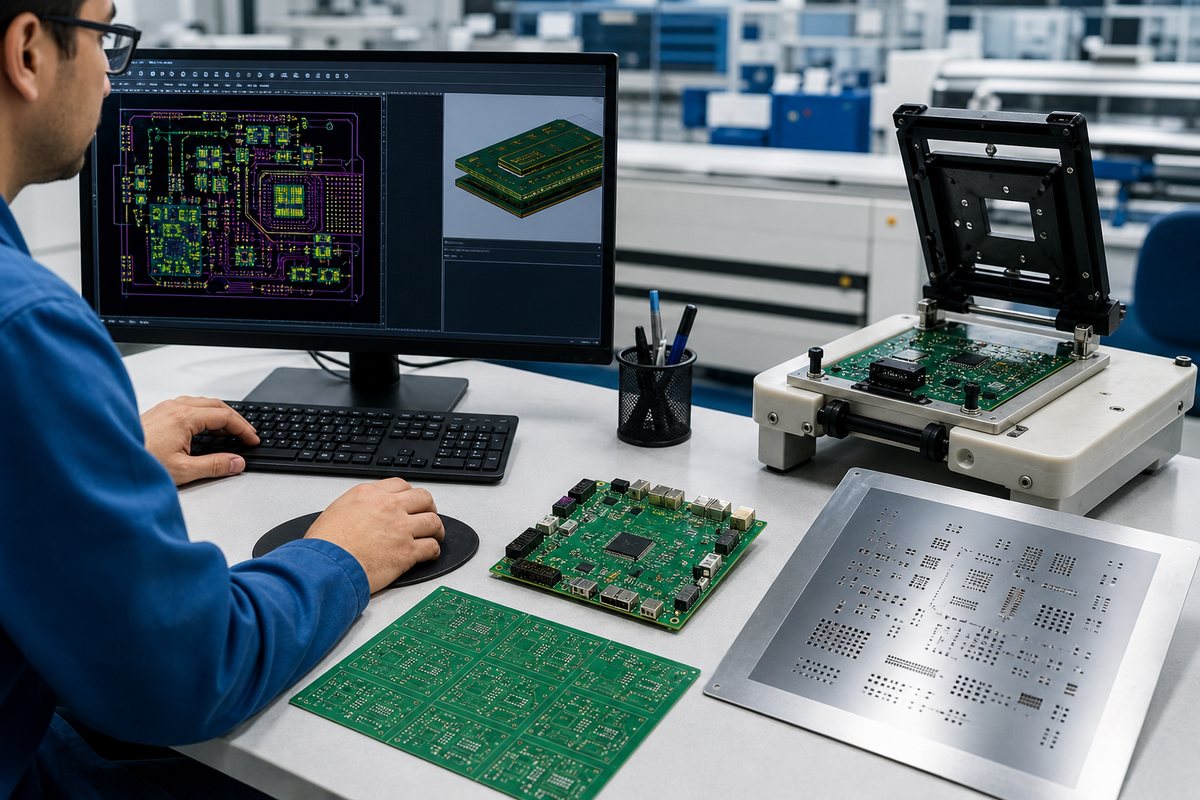
| NRE cost | Project-specific engineering, programming, tooling and setup | Usually fixed or semi-fixed for the defined revision and scope |
| PCB unit cost | Material and fabrication for each bare board | Changes with board specifications and quantity |
| PCBA unit cost | Components, placement, soldering, inspection and recurring test work | Changes with BOM, assembly complexity and quantity |
To compare offers fairly, calculate the effective cost per usable board:
Effective cost per board = recurring unit cost + total NRE ÷ accepted board quantity
This prevents a quotation with a low headline unit price but a high setup charge from appearing automatically cheaper. It also prevents a quotation with NRE included in the unit price from appearing expensive when another supplier lists the same work separately.
The commercial format can vary. One supplier may show every setup item, another may combine them under “tooling,” and another may amortize them into the unit price. The correct comparison is the complete cost for the same files, quantity, inspection scope, test coverage and delivery requirement.
Which PCB Requirements Determine NRE Cost?
NRE is driven by the preparation needed to make your specific design production-ready. Clear input data allows the supplier to define that work more accurately.
The main factors include:
- PCB complexity: Layer count, controlled impedance, blind or buried vias, rigid-flex construction and special materials can require additional CAM or process preparation.
- Board and panel format: Finished dimensions, routing, V-scoring, breakaway rails and mixed arrays affect production-panel work and tooling.
- Assembly complexity: Double-sided assembly, fine-pitch packages, BGA devices, press-fit parts and mixed SMT/THT processes influence stencils, programming and work instructions.
- Test scope: Standard electrical testing, flying probe, ICT and functional testing require different data, fixtures and preparation.
- Programming requirements: Firmware loading, device configuration and serial-number handling may need dedicated procedures or fixtures.
- Documentation requirements: First-article records, traceability, special inspection reports or customer-controlled formats can add project-specific engineering work.
- Revision readiness: Complete, consistent Gerber, BOM, CPL, drawing and test files reduce clarification and reprogramming.
Complexity should not be removed merely to reduce NRE if it is needed for the product. The better goal is to ensure that every charge supports a necessary production control or deliverable.
How Does Order Quantity Change NRE Cost per PCB?
Order quantity normally does not change the cost of creating one stencil or preparing one machine program as much as it changes how that cost is distributed. The same NRE amount has a larger effect on a small prototype batch and a smaller effect on each board in production.
For illustration, assume that a project has USD 300 of NRE:
| Accepted quantity | Total NRE | NRE allocated per board |
|---|---|---|
| 10 boards | USD 300 | USD 30.00 |
| 100 boards | USD 300 | USD 3.00 |
| 1,000 boards | USD 300 | USD 0.30 |
This example only shows NRE allocation; it does not include recurring PCB, component, assembly, testing or logistics costs.
The practical buying decision is not always “order more.” Engineers may still need a small prototype batch to validate the design. A better approach is to request pricing at the quantities that match your development plan—for example, prototype, pilot and expected production volume. This shows how the same setup investment contributes to the effective cost at each stage.
When several small boards can share a technically suitable production array, PCB panelization may also improve material handling and production efficiency. The array still needs to meet fabrication, assembly and depaneling requirements, so panelization should be reviewed as an engineering decision rather than used only to fill open space.
When Can Repeat Orders Reuse PCB Tooling?
Repeat orders can gain more value from the original NRE investment when the production package remains stable and the supplier can reuse suitable tooling, programs and approved data.
Reuse is more likely when the following remain unchanged:
- PCB revision and Gerber or ODB++ data.
- BOM and approved component packages.
- CPL coordinates, rotation and assembly side.
- Panel dimensions and breakaway method.
- Stencil aperture requirements.
- Inspection and test criteria.
- Programming files and device configuration.
Confirm what the supplier retains, how long physical tooling is stored and whether it remains suitable for the new order. Stencils and fixtures are reusable only while their condition and production requirements remain compatible. Machine programs may also continue supporting production, while a component-package or coordinate change may require revision and verification.
A stable release package gives both the buyer and supplier a clear reference. Include the PCB revision on purchase orders and confirm that the repeat order uses the previously approved manufacturing data.
How Can You Reduce NRE Costs?
The most effective savings come from making each engineering and tooling activity useful across the intended production path.
- Release consistent files: Align the Gerber or ODB++ data, BOM, CPL, drawings and test instructions before quotation.
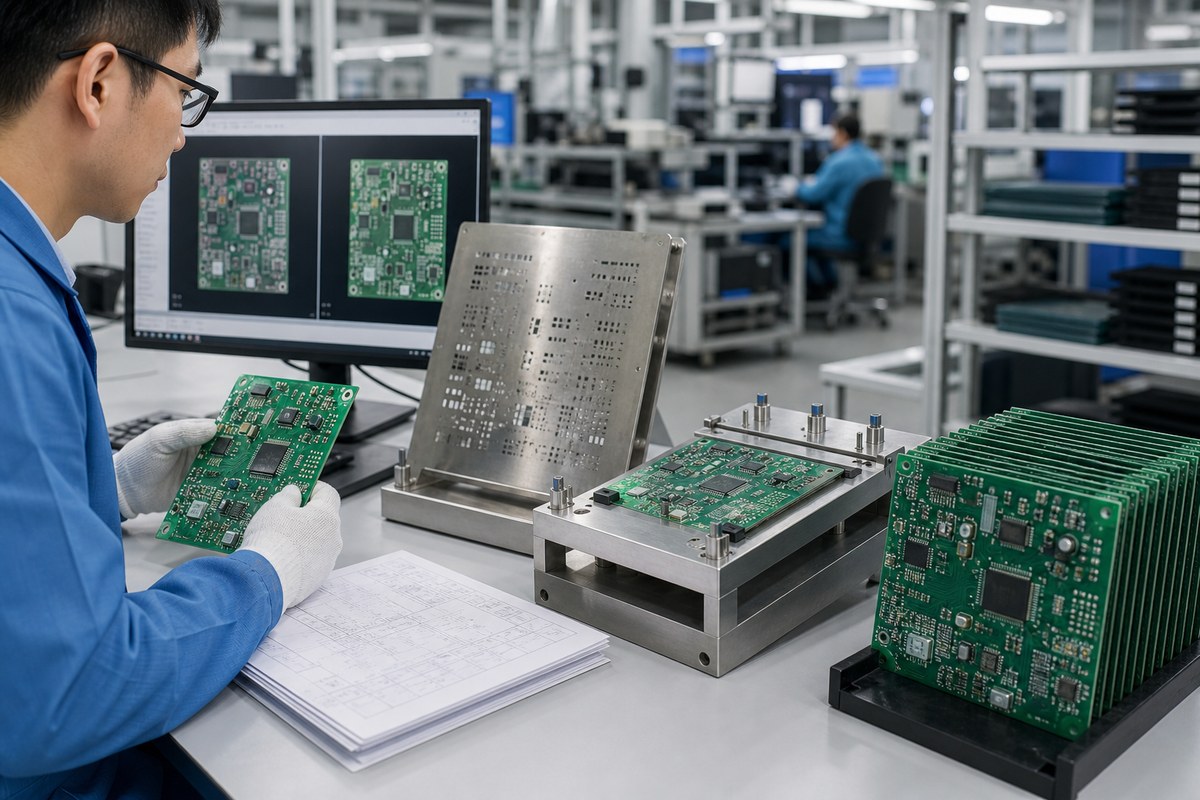
- Use DFM before tooling: Resolve manufacturability and assembly questions before the stencil, fixture or final machine program is prepared.
- Define the test purpose: Select test coverage that matches the product and production stage instead of requesting an undefined “full test.”
- Plan prototype and production quantities together: Ask how the setup package will support the next build if the design is approved.
- Confirm reusable assets: Identify whether stencils, fixtures and programs can be retained for repeat orders.
- Control revisions: Give every released dataset a clear revision and communicate changes before production preparation begins.
- Review panelization early: Confirm array size, rails, fiducials, tooling holes and depaneling before the panel becomes part of the production package.
For early-stage products, prototype PCB assembly can validate the release package before a larger quantity is authorized. This keeps the initial engineering and tooling investment useful as the project moves from prototype to repeat production.
What Should an NRE Fee Show in a PCB Quote?
A buyer-friendly quote makes the one-time work easy to understand and easy to compare.
Request confirmation of:
- The NRE item and its production purpose.
- The approved revision and input files on which the quote is based.
- Whether the charge includes a stencil, fixture, programming, test preparation or other engineering setup.
- Unit prices for the sample, pilot and planned production quantities.
- Which tools, programs and approved data can support repeat orders.
- The changes or tooling conditions that would require additional NRE.
- Whether NRE is separate from or included in the recurring unit price.
- When the quoted lead time begins and whether it includes tooling and first-build approval.
- Whether the supplier's proven PCB or PCBA capabilities match the project.
When comparing suppliers, keep the scope constant. A quotation that includes a test fixture, first-build documentation and controlled traceability is not directly comparable with one that includes only basic board fabrication. The clearer quote is often more useful because it shows what will be ready before production and what evidence or tooling will remain available afterward.
What NRE Engineering Support Does EBest Provide?
EBest helps customers turn one-time engineering and tooling costs into a production package that can support prototypes, approval builds and repeat orders.
- A clearer production package: One business contact works with three engineering specialists to review Gerber files, BOMs, CPLs, panel requirements and test instructions before tooling is released. You can see which NRE items create stencils, programs, fixtures or manufacturing data that may support future orders.
- One production path: Our self-owned PCB and PCBA factories connect fabrication, component sourcing, SMT or through-hole assembly, inspection and testing. Approved data and tooling can move from prototype validation into production without transferring the project between unrelated suppliers.
- Controlled repeat production: ISO 9001, ISO 13485, IATF 16949 and AS9100D quality systems support different project requirements. MES traceability connects approved revisions with material batches, production records and finished products.
Lead time is confirmed with the NRE scope because tooling, programming and test preparation can affect the production start date. For standard FR-4 prototypes under one square meter, normal lead time is typically 7–12 days depending on layer count, with expedited options from 24–72 hours. Standard PCBA projects can generally be planned around one week, while urgent quick-turn PCBA may be reviewed for service as fast as two days when files, components and test requirements are ready. Final timing is confirmed against the actual project rather than treated as an automatic commitment.
Send the current Gerber or ODB++ files, fabrication drawing, panel requirement, revision and planned quantities. For PCBA, also include the BOM, CPL, assembly drawing, programming files and test requirements. EBest can then identify the one-time preparation, reusable production assets and recurring production scope for your quotation.

FAQs About NRE Cost for PCB
What does NRE stand for in PCB manufacturing?
NRE stands for non-recurring engineering. It covers project-specific preparation such as engineering review, CAM work, tooling, stencils, machine programming or test-fixture preparation before or around production.
Is PCB NRE paid only once?
It is generally associated with one defined design revision and production scope. Suitable tools and programs may support repeat orders, but design changes, new test requirements, worn tooling or supplier retention policies can create additional work.
Why does NRE have a larger effect on prototype pricing?
The fixed setup amount is distributed across fewer boards. The same NRE allocated across a production quantity contributes much less to the effective cost of each board.
Does a larger order always reduce the total NRE charge?
Not necessarily. A larger order usually reduces the NRE allocated per board, while the total setup charge may remain similar. Additional panels, fixtures or production requirements can change the total scope.
Can a PCB supplier remove the NRE fee?
A supplier may include NRE in the unit price, discount part of it or reuse existing tooling, but the underlying preparation still has a cost. Compare the complete project total and included deliverables rather than judging the quote only by whether an NRE line is visible.
Send your current PCB or PCBA data to sales@bestpcbs.com for a quotation that separates project-specific preparation from recurring production costs. EBest Circuit will review the files, quantity, assembly scope and test requirements so you can see what the initial setup supports and how it fits your prototype and production plan. Start with a clear review of your NRE cost for PCB.