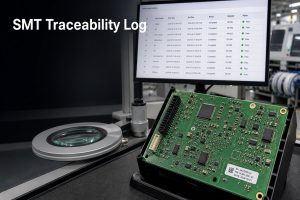
Traceability in electronics manufacturing helps PCBA buyers verify materials, production history, inspection results, test records, and shipment batches when choosing a reliable manufacturer in China. For customers, it is not just a factory management term. It directly affects component control, production consistency, failure analysis, and long-term product reliability. In PCBA manufacturing, strong traceability helps confirm whether the correct components were used, which production batch made the boards, what SMT process records were captured, and whether AOI, X-ray, functional test, rework, and shipment records can be reviewed when needed.
At Best Technology, our SMT production lines have been fully connected to an MES system, helping us manage material usage, process records, inspection data, and batch traceability in a more structured way. This gives customers clearer manufacturing visibility and stronger quality control from components to shipment. If your PCBA project requires stable quality and clear process control, you can send your Gerber files, BOM, assembly drawings, and testing requirements to sales@bestpcbs.com.
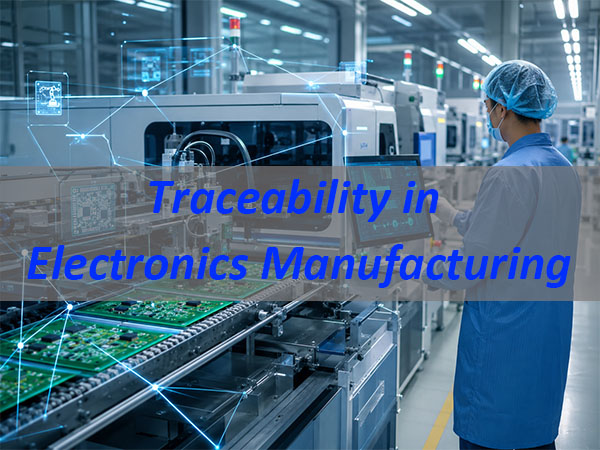
What Is Traceability in Electronics Manufacturing?
Traceability in electronics manufacturing is the ability to follow materials, production steps, inspection data, testing results, and shipment records across the full manufacturing process.
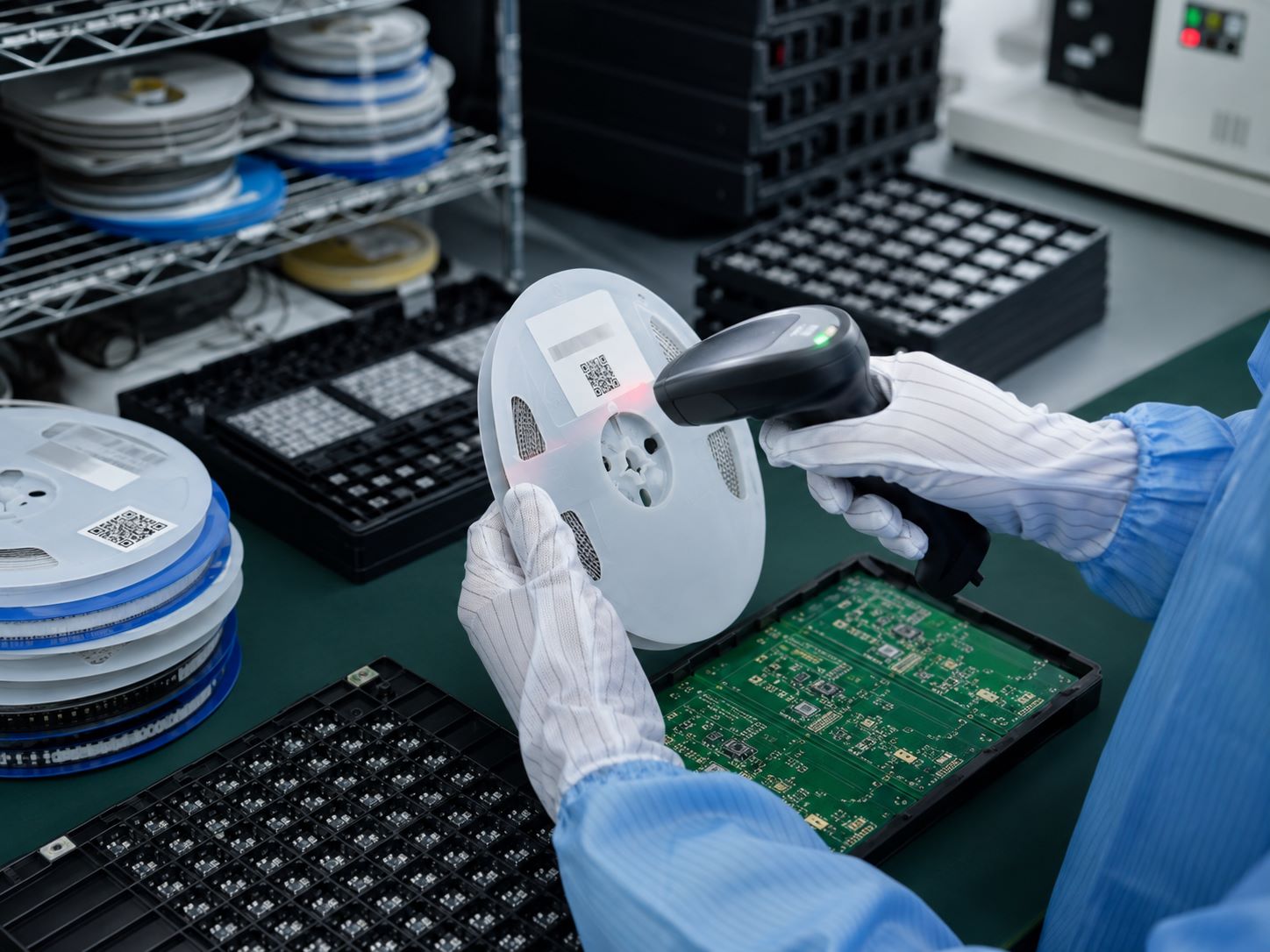
For PCBA manufacturing, traceability usually begins before assembly. It starts when components and bare PCBs arrive at the factory. The manufacturer should check part numbers, manufacturers, date codes, lot numbers, quantities, packaging condition, and incoming inspection results.
Then traceability continues through SMT assembly, DIP assembly, inspection, testing, rework, packing, and shipment.
Buyer takeaway:
Traceability tells you whether a PCBA supplier can explain how your boards were built, not just whether they can build them.
A traceable PCBA process may include:
- Component lot records
- PCB batch records
- SMT line records
- Solder paste batch records
- Reflow profile records
- AOI inspection results
- X-ray inspection records
- Functional test data
- Rework and repair history
- Final packing and shipment labels
For buyers, this creates transparency. Instead of receiving only finished boards, you receive products backed by process evidence.
MES makes this process more organized. It helps connect production information with the actual manufacturing workflow, especially during SMT assembly, where material setup, machine operation, inspection, and process control all affect final PCBA quality.
Why Traceability Matters When Choosing a PCBA Manufacturer?
A PCBA project involves many hidden variables. A finished board may contain hundreds of components, multiple soldering steps, several inspection stages, and different test requirements. Without traceability, it is difficult to know where a problem started.
This matters when choosing a PCBA manufacturer because quality is not only about the final appearance of the board. Quality also depends on how well the supplier controls materials, process changes, testing data, and production consistency.
For buyers, traceability reduces uncertainty.
It helps answer important sourcing questions:
- Did the supplier use approved components?
- Were alternative parts approved before production?
- Were inspection results recorded?
- Can the supplier separate one production batch from another?
- Can the supplier support failure analysis after delivery?
This is especially valuable when working with an overseas PCBA supplier. Distance and time zone differences can make production less visible. A strong traceability system gives buyers a clearer view of what happened inside the factory.
For high-reliability projects, traceability is not optional. It supports quality control, customer audits, corrective actions, and long-term product maintenance.
A supplier with MES-enabled SMT production usually has better control over production data than a factory that relies only on manual records. MES helps standardize how production information is collected, stored, and reviewed. This is important when customers need stable quality across prototypes, small batches, and mass production.
How PCBA Traceability Works with MES?
PCBA traceability works by linking each production stage to a work order, batch number, barcode, QR code, or serial number.
The exact method depends on the project. Some products only need batch-level traceability. Others need unit-level traceability, where each PCBA has its own unique serial number and test record.
With MES, the traceability flow becomes more connected. Instead of keeping separate records in different places, the system helps link production information to the actual work order and production batch.
A typical MES-supported PCBA traceability flow includes:
1. Incoming material control
The factory checks components, PCBs, solder paste, and other materials before production.
2. Material labeling and storage
Approved materials are labeled by part number, lot number, date code, and storage requirement.
3. Work order management
The production order is created and linked with BOM information, material usage, assembly requirements, and process flow.
4. SMT production tracking
The factory records the SMT line, machine program, feeder setup, solder paste batch, stencil, and reflow profile.
5. Inspection tracking
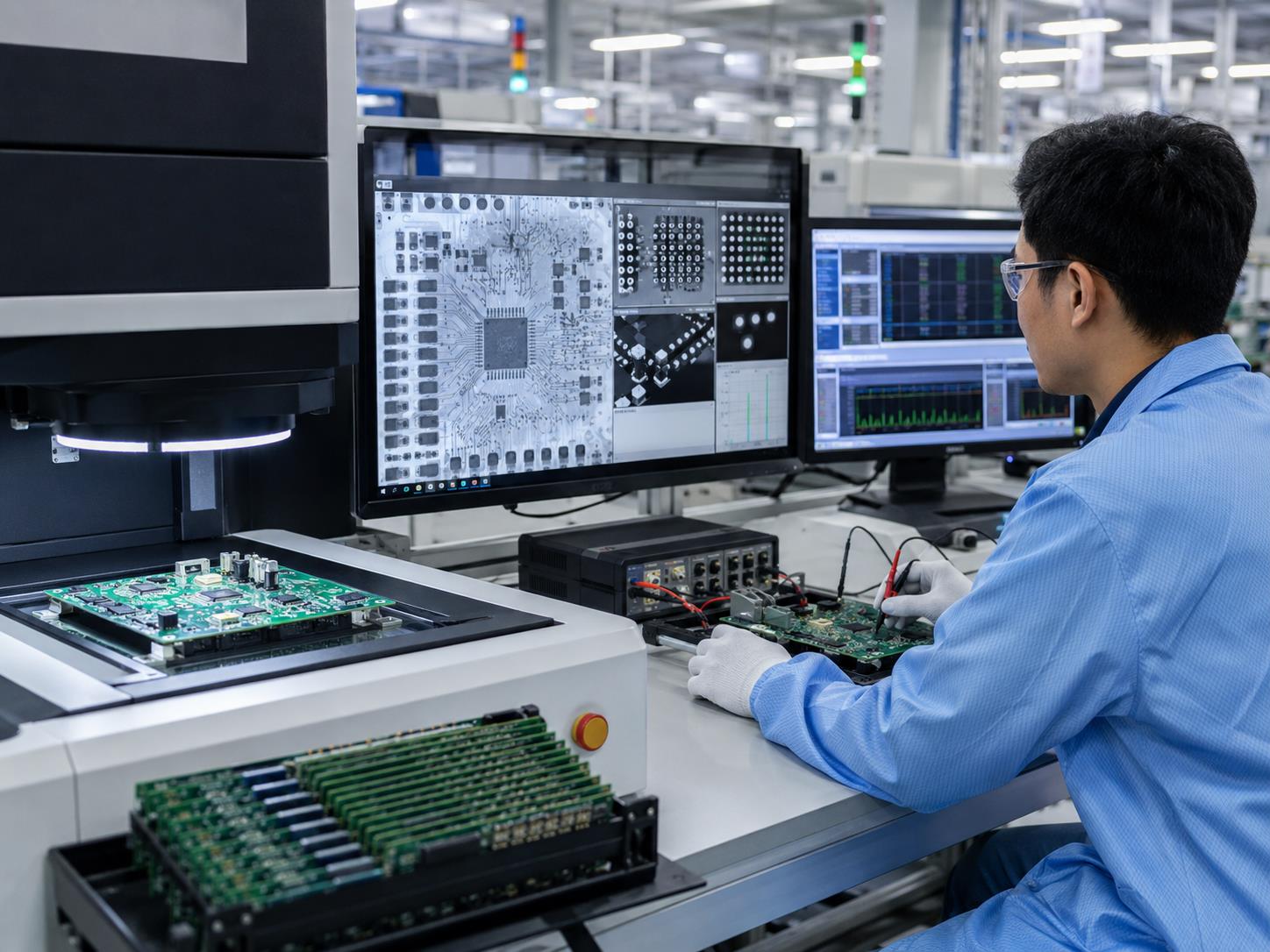
SPI, AOI, X-ray, visual inspection, and other inspection results are recorded and linked to the production batch when required.
6. Testing records
ICT, flying probe, firmware programming, and functional test results can be connected to the batch or individual board depending on project requirements.
7. Rework records
Any repair action should be recorded, retested, and linked to the PCBA history.
8. Shipment tracking
Finished boards are packed and shipped with clear batch or serial number information.
Buyer takeaway:
A good China PCBA manufacturer should know which materials, process settings, inspection results, and test data belong to your production batch. MES helps make this information easier to control and retrieve.
What PCBA Records Should Be Tracked?
Not every PCBA project needs the same traceability depth. A simple prototype may only need basic records. A medical, automotive, or industrial product may need much more detailed tracking.
However, most reliable PCBA manufacturers should be able to track the following core records.
| Area | Key Records Buyers Should Care About |
|---|---|
| Materials | MPN, supplier, lot number, date code |
| SMT Process | SMT line, solder paste, stencil, reflow profile |
| Inspection | SPI, AOI, X-ray, visual inspection |
| Testing | ICT, functional test, firmware version |
| Shipment | Batch number, serial number, packing label |
This table is not meant to cover every factory document. It gives buyers a simple way to judge whether a supplier has practical traceability.
The most important point is consistency. Records should not exist only when a problem occurs. They should be part of the normal production process.
With MES used across SMT lines, production records can be managed in a more structured way. This is especially helpful for tracking material usage, line information, production status, inspection data, and batch history.
For more demanding projects, buyers may also request:
- Incoming quality inspection records
- Moisture-sensitive component control records
- Solder paste thawing records
- First article inspection reports
- X-ray images for BGA or QFN parts
- Functional test logs
- Rework reports
- Final quality inspection reports
- Certificate of conformity if required
Buyer takeaway:
The more critical the product, the more detailed the traceability records should be. MES gives the manufacturer a stronger foundation for managing those records.
Component Traceability
Component traceability is one of the most important parts of PCB assembly quality control.
Many PCBA problems are caused by component issues, not assembly alone. Wrong parts, mixed lots, expired materials, poor storage, unapproved substitutions, or counterfeit components can all affect final product reliability.
A responsible PCBA manufacturer should control components from receiving to assembly.
This includes checking:
- Customer-approved BOM
- Manufacturer part number
- Component brand
- Package type
- Electrical rating
- Date code
- Lot number
- Supplier source
- Storage condition
The key risk for buyers is not only “wrong value.” It is “wrong approved part.”
For example, two capacitors may have the same capacitance but different voltage ratings, dielectric materials, or temperature behavior. Two connectors may look similar but have different plating, height, or locking structure. A substitute IC may have the same function but different firmware compatibility or lifecycle status.
That is why component substitutions should be controlled carefully. A PCBA manufacturer should not replace critical components without customer approval.
MES can support component traceability by linking material usage with the production order. When a batch is produced, the manufacturer can better review which material lots were used and whether they were connected to the correct work order.
Good component traceability helps buyers confirm:
- Which components were used
- Whether they matched the approved BOM
- Which supplier provided them
- Which lot was installed
- Whether the same lot was used in other orders
Buyer takeaway:
Component traceability helps prevent wrong parts, mixed materials, and unapproved substitutions. MES makes the material-to-production link more visible.
MES Traceability in SMT Assembly
SMT assembly is one of the most important stages for PCBA traceability. It is also one of the most data-intensive stages.
During SMT production, many details can affect quality: solder paste condition, stencil use, feeder setup, placement accuracy, machine program, reflow profile, inspection result, and operator control. If these details are only managed manually, records may become fragmented or difficult to retrieve later.
MES helps make SMT traceability more systematic.
For buyers, this matters because SMT problems are often process-related. Solder bridges, tombstoning, missing parts, wrong polarity, open circuits, insufficient solder, BGA defects, and placement errors may all require process review.
With MES-supported SMT traceability, a manufacturer can manage key production data such as:
- Work order information
- SMT line assignment
- Material usage records
- Solder paste batch information
- Stencil information
- Machine program records
- Production time
- Inspection results
- Rework status
- Batch history
This does not mean every project needs the same reporting depth. But it does mean the factory has a stronger system for controlling production information.
At Best Technology, our SMT lines are fully connected to MES. This helps us improve production visibility, reduce manual record gaps, and support more efficient traceability for customer projects.
Buyer takeaway:
MES-supported SMT production gives buyers more confidence because the assembly process is controlled through a structured manufacturing system, not scattered manual records.
PCBA Testing Traceability
Testing is more useful when the test result can be traced.
A simple “pass” or “fail” is not enough for many projects. Buyers need to know which board was tested, what test was performed, when it was tested, and what result was recorded.
PCBA testing traceability may include:
- AOI inspection results
- X-ray inspection records
- ICT or flying probe results
- Functional test data
- Firmware programming version
- Test fixture information
- Repair and retest records
For SMT assembly, AOI can identify missing components, polarity errors, solder bridges, tombstoning, offset parts, and visible soldering defects. X-ray inspection is useful for hidden solder joints such as BGA, QFN, LGA, and bottom-terminated components.
Functional testing is often more customer-specific. It may check power-on behavior, voltage output, current consumption, communication function, LED response, button response, signal quality, firmware operation, or sensor performance.
When these results are traceable, the supplier can provide stronger support during quality review.
For example, if a customer reports a communication failure, the supplier can check whether that board passed functional testing, which firmware version was loaded, and whether similar boards from the same batch had the same issue.
MES can also help connect inspection and testing information with production history. This gives the engineering team a clearer path when reviewing defects, checking batch quality, or preparing customer reports.
Buyer takeaway:
Testing traceability gives buyers more than a verbal promise. It gives production evidence. When combined with MES, that evidence is easier to organize and review.
Traceability for High-Reliability Electronics
Traceability becomes more important when PCBAs are used in high-reliability products.
These products often require better process control, clearer records, and faster failure analysis. Common examples include:
- Medical devices
- Automotive electronics
- Industrial control systems
- Power electronics
- Communication equipment
- Aerospace-related electronics
- Safety-related electronic systems
In these applications, a PCBA may work inside equipment that runs for years. A small quality issue can create field failures, maintenance costs, or customer complaints.
For high-reliability projects, buyers may need stronger traceability such as:
- Unit-level serial number tracking
- Full functional test records
- Component lot traceability
- Long-term document retention
- Controlled engineering changes
- Detailed repair history
- Process change approval
Batch-level traceability may be enough for some products. But for critical applications, unit-level traceability is often more useful. It allows each PCBA to be connected to its own test data and production history.
MES is especially valuable for high-reliability electronics because these products require consistent process control. When material, SMT, inspection, testing, and rework records are better connected, the manufacturer can respond faster to quality reviews and failure analysis requests.
Buyer takeaway:
High-reliability products need traceability because quality issues must be found, contained, and corrected quickly. MES helps support that control with a more structured production record system.
What Buyers Should Check?
When evaluating a PCBA manufacturer, do not only ask, “Do you have traceability?” Most suppliers will say yes.
A better approach is to ask practical questions.
Ask about MES implementation
- Are the SMT lines connected to an MES system?
- This is a strong sign that the supplier has invested in structured production management instead of relying only on manual records.
Ask about material control
- Can the supplier track component lot numbers, date codes, suppliers, and approved MPNs?
- This helps confirm whether the factory controls the real components used in production.
Ask about substitution control
- Will the supplier get approval before using alternative components?
- This is important when the market has shortages, long lead times, or discontinued parts.
Ask about SMT process records
- Can the supplier track SMT line, solder paste batch, stencil, reflow profile, and production date?
- This helps support soldering quality and process review.
Ask about inspection data
- Can AOI or X-ray results be linked to the production batch or serial number?
- This is important for BGA, QFN, LGA, fine-pitch ICs, and high-density PCB assemblies.
Ask about functional testing
- Can test results be saved and connected to each PCBA or production lot?
- This matters for products that require firmware, calibration, communication testing, or customer-specific test procedures.
Ask about rework records
- Can the supplier record defect type, repair action, replaced component, operator, and retest result?
- Rework is common in PCBA manufacturing, but it must be controlled.
Ask about record retention
- How long can the supplier keep production records?
- Different projects need different retention periods. High-reliability products usually require longer documentation support.
Buyer takeaway:
A real traceability system should be explainable, repeatable, and supported by records. If SMT production is supported by MES, the supplier usually has a stronger foundation for traceability.
How Traceability Helps Failure Analysis?
When a PCBA fails, the most important question is not only how to repair it. The more important question is why it failed.
Traceability helps the supplier investigate the root cause more efficiently.
A traceable production history allows the engineering team to check:
- Which components were used
- Which batch the board came from
- Which SMT line produced it
- Which inspection results were recorded
- Whether the board had rework history
- Whether similar failures appeared in the same batch
- Whether the issue may relate to material, process, design, or handling
This is much more useful than guessing.
MES strengthens this process because production information is easier to retrieve and compare. If several boards show the same failure, the engineering team can review whether they share the same work order, material lot, SMT line, process condition, inspection result, or test history.
For example, if several boards show the same power failure, the supplier can check whether they used the same power IC lot, same soldering process, or same functional test setup. If only one unit failed, the supplier can review its individual repair and test history.
Traceability also helps contain risk. Once the likely cause is found, the supplier can identify which boards are affected and which boards are not.
That means the customer does not need to treat the entire shipment as uncertain.
Buyer takeaway:
Traceability helps turn a quality issue into a controlled engineering investigation. MES makes that investigation faster, clearer, and better supported by production data.
FAQs about Traceability in Electronics Manufacturing
Q1: What is the main purpose of traceability in PCBA manufacturing?
The main purpose is to connect materials, production processes, inspection results, testing records, and shipment information. This helps manufacturers control quality and investigate issues quickly.
Q2: How does MES improve PCBA traceability?
MES helps connect production orders, material usage, SMT process data, inspection results, and batch history. This makes traceability more structured and easier to review.
Q3: Is traceability only needed for mass production?
No. Prototypes and small batches can also benefit from traceability. It helps track engineering changes, compare different builds, and avoid confusion during product development.
Q4: What is batch-level traceability?
Batch-level traceability tracks a group of PCBAs produced under the same work order, material batch, or production run.
Q5: What is unit-level traceability?
Unit-level traceability gives each PCBA its own serial number, barcode, or QR code. Test results and repair history can then be linked to each individual board.
Q6: Why is component traceability important?
It helps confirm which components were used, where they came from, and whether they matched the approved BOM. It also helps prevent wrong parts and unapproved substitutions.
Q7: Can traceability help after delivery?
Yes. If a customer reports a failure, traceability helps the manufacturer review material records, process history, inspection data, and test results.
Q8: What records should buyers ask for?
Buyers can ask for component lot records, SMT process records, AOI reports, X-ray records, functional test results, rework records, and shipment batch information.
Q9: Does traceability increase cost?
Detailed unit-level traceability may add some management cost. However, it can reduce failure analysis time, recall risk, and communication cost.
Q10: Is traceability useful for turnkey PCBA service?
Yes. Turnkey PCBA includes component sourcing, PCB fabrication, assembly, testing, and shipment. Traceability is valuable because the supplier controls more stages.
Q11: What type of products need stronger traceability?
Medical electronics, automotive electronics, industrial control equipment, power electronics, communication devices, and long-life electronic products usually need stronger traceability.
All in all, traceability in electronics manufacturing helps buyers understand how a PCBA was built, tested, repaired, and shipped. It connects components, process records, inspection data, testing results, and final delivery information into one clear manufacturing history.
For customers choosing a China PCBA manufacturer, this is a practical way to reduce sourcing risk. A supplier with strong PCBA traceability can help prevent wrong parts, control production batches, support quality analysis, and respond faster when issues appear.
MES makes this advantage stronger. At Best Technology, our SMT production lines have been fully connected to MES, helping us manage production data, material usage, inspection records, and batch traceability more systematically. This gives customers better visibility into the manufacturing process and stronger support when quality records are needed.
Best Technology provides PCB fabrication, component sourcing, turnkey PCBA assembly, inspection, testing, and shipment support for customers in industrial, medical, automotive, communication, power electronics, and consumer electronics fields. For projects that require stable quality and clear process control, you can send your Gerber files, BOM, assembly drawings, and testing requirements to sales@bestpcbs.com. Our team will review your project and help confirm the right PCBA manufacturing and traceability plan before production.