The right memory depends on more than capacity. Speed, bandwidth, interface, voltage, package, endurance, operating temperature, and PCB layout can all affect whether a device works reliably in the final system. This guide explains the main memory chip types, how they work, where they are used, and what engineers should check before selecting one.

What Is a Memory Chip?
A memory chip is an integrated circuit used to store binary data for a processor or electronic system.
Inside the IC are memory cells that represent data as binary 0 and 1. The way those cells hold information depends on the memory technology.
Memory chips generally fall into two groups:
- Volatile memory stores data only while power is present. DRAM and SRAM are the main examples.
- Non-volatile memory keeps data after power is removed. NAND flash, NOR flash, and EEPROM belong to this group.
A single electronic product often uses several memory types at once. A computer, for example, may use DRAM as working memory, SRAM inside the processor as cache, and NAND flash for long-term storage.
What Are the Main Types of Memory Chips?
The main memory chip types are DRAM, SRAM, NAND flash, NOR flash, and EEPROM. Each is optimized for a different balance of speed, density, retention, and cost.

| Memory Type | Volatile? | Main Advantage | Typical Use |
|---|---|---|---|
| DRAM | Yes | High density | PC, server, smartphone |
| SRAM | Yes | Fast access | CPU/GPU cache, buffers |
| NAND Flash | No | High-capacity storage | SSD, phone, memory card |
| NOR Flash | No | Fast random reading | Firmware, embedded systems |
| EEPROM | No | Flexible small-data rewriting | Configuration, calibration |
DRAM
Dynamic Random Access Memory is widely used as system memory because it provides high capacity at a practical cost per bit.
A DRAM cell stores information using electrical charge that must be refreshed repeatedly. Common DRAM families include:
- DDR4 and DDR5 for computers and servers
- LPDDR for smartphones and low-power electronics
- GDDR for graphics
- HBM for AI accelerators and high-performance computing
SRAM
Static Random Access Memory stores data in transistor-based latch circuits. It does not require the refresh process used by DRAM.
SRAM is fast but uses more silicon area per bit, so it is normally used in smaller capacities for:
- CPU and GPU cache
- FPGA memory
- Network buffers
- High-speed control logic
NAND Flash
A NAND flash memory chip provides high-density non-volatile storage.
It is commonly found in:
- SSDs
- Smartphones
- USB drives
- Memory cards
- Embedded storage
NAND is usually read and programmed in pages and erased in larger blocks. SLC, MLC, TLC, and QLC NAND store different numbers of bits per cell, which changes density, endurance, performance, and cost.
NOR Flash
NOR flash is non-volatile memory designed for efficient random reading. It is often used where a processor needs direct access to firmware or executable code.
Typical applications include:
- Boot firmware
- Automotive electronics
- Industrial controllers
- Embedded systems
EEPROM
EEPROM is used for relatively small amounts of data that must survive a power cycle and may need occasional rewriting.
Typical data includes:
- Calibration values
- Product serial numbers
- Device settings
- Configuration parameters
How Does a Memory Chip Work?
A memory chip works by storing binary values in memory cells and using address, control, and data circuits to read or change those values.

When a processor requests data, the memory controller identifies the required address. Internal circuitry then selects the corresponding cells and returns their stored values. During a write operation, the selected cells are changed instead.
The storage mechanism differs by technology:
- DRAM stores electrical charge in capacitors and requires periodic refresh.
- SRAM keeps each bit in a transistor latch while power remains available.
- Flash memory stores charge inside specially designed transistor structures, allowing data to remain without power.
The memory controller also manages timing and data transfer between the processor and memory. In high-speed systems, usable performance depends on both the memory device and the quality of the electrical interface.
Volatile vs Non-Volatile Memory Chips: What Is the Difference?
Volatile memory loses its data when power is removed, while non-volatile memory keeps stored information without continuous power.
| Factor | Volatile Memory | Non-Volatile Memory |
|---|---|---|
| Retains data without power | No | Yes |
| Common types | DRAM, SRAM | NAND, NOR, EEPROM |
| Main purpose | Active working data | Storage, firmware, settings |
| Typical example | DDR5 system memory | NAND SSD storage |
DRAM and SRAM are volatile because their main job is to provide fast access to data while a system is operating.
NAND, NOR, and EEPROM serve a different purpose. They preserve operating systems, files, firmware, calibration information, and other data after shutdown.
Neither category replaces the other. Most electronic products combine volatile and non-volatile memory because they solve different problems.
Where Are Memory Chips Used?
Memory chips are used in computers, smartphones, AI servers, vehicles, cameras, industrial equipment, and embedded electronics.

Computers
A typical computer uses several memory technologies:
- DDR4 or DDR5 DRAM for system memory
- SRAM for processor cache
- NAND flash for SSD storage
- Non-volatile memory for firmware and configuration
Smartphones
A memory chip for a phone commonly includes:
- LPDDR DRAM for active applications and the operating system
- NAND flash through UFS or eMMC for apps, photos, video, and user files
High package density and fast interfaces also make PCB routing, power delivery, and thermal design important in mobile hardware.
AI Servers
AI accelerators require very high memory bandwidth. HBM is widely used because it places stacked DRAM close to the processor and supports wide, high-speed interfaces.
AI servers also use large amounts of DDR5 DRAM and enterprise NAND storage.
Automotive Electronics
Memory chips are used in:
- ADAS computers
- Digital cockpits
- Infotainment
- Gateways
- Battery management systems
- Electronic control units
Automotive designs may place added emphasis on temperature range, qualification, data integrity, and long-term availability.
Cameras
Cameras often use DRAM as an image buffer during photo or video processing. NAND flash or removable memory cards provide permanent storage.
Embedded and Industrial Equipment
Embedded systems may combine SRAM or DRAM with NOR flash, NAND, or EEPROM depending on how much working memory, executable code, and configuration storage the product needs.
What Specifications Matter When Choosing a Memory Chip?
The most important memory chip specifications are type, capacity, speed, interface, voltage, package, temperature range, endurance, retention, and lifecycle availability.

Engineers should check:
- Memory type: DRAM, SRAM, NAND, NOR, or EEPROM must match the actual function.
- Capacity: Confirm the required working or storage space.
- Bandwidth and data rate: High-performance processors can become memory-bandwidth limited.
- Latency: Cache, networking, and real-time systems may require very fast access.
- Interface: DDR, LPDDR, SPI, QSPI, UFS, eMMC, and other interfaces are not interchangeable.
- Voltage: Both core and I/O voltages must match the system.
- Package: BGA, FBGA, WLCSP, TSOP, and other packages impose different PCB routing and assembly constraints.
- Temperature range: Industrial and automotive products may require wider operating limits than consumer devices.
- Endurance: NAND and EEPROM have finite program/erase cycles.
- Retention: Check how long stored data must remain valid.
- ECC: Servers and reliability-sensitive equipment may require error-correcting memory.
- Lifecycle: Long-production programs should consider availability and second-source options.
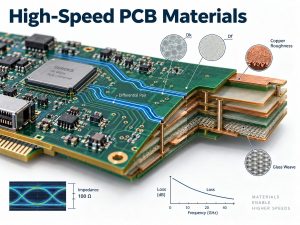
Package and interface selection can directly affect PCB design. High-speed DDR routing may require controlled impedance, stable reference planes, tight length control, carefully planned vias, and solid power integrity. Fine-pitch BGA packages may also need HDI structures or microvias for breakout.
A replacement chip should therefore be checked for pinout, timing, voltage, package, interface, and initialization requirements—not only capacity.
Top 10 Memory Chip Manufacturers Worldwide
The major memory chip manufacturers worldwide include Samsung Electronics, SK hynix, Micron, Kioxia, SanDisk, CXMT, YMTC, Nanya Technology, Winbond Electronics, and Macronix.
They do not all compete in the same segment. Some focus on DRAM and HBM, while others are stronger in NAND, NOR, or specialty memory.
| Manufacturer | Main Memory Products | Main Markets |
|---|---|---|
| Samsung Electronics | DRAM, HBM, NAND | AI, server, mobile, PC, storage |
| SK hynix | DRAM, HBM, NAND | AI, server, mobile, storage |
| Micron Technology | DRAM, HBM, NAND, NOR | Data center, automotive, PC, mobile |
| Kioxia | NAND Flash | SSD, mobile, data center |
| SanDisk | NAND Flash | SSD, enterprise, removable storage |
| CXMT | DRAM | PC, consumer, server |
| YMTC | 3D NAND | SSD, embedded storage |
| Nanya Technology | DRAM | PC, consumer, networking |
| Winbond Electronics | NOR, specialty DRAM, SLC NAND | Embedded, industrial, automotive |
| Macronix | NOR Flash, SLC NAND | Embedded, industrial, automotive |
1. Samsung Electronics
Samsung manufactures DRAM, HBM, NAND, and mobile memory for servers, AI hardware, smartphones, PCs, and storage products.
2. SK hynix
SK hynix is a major DRAM and NAND supplier and has a particularly strong presence in HBM for AI accelerators and high-performance computing.
3. Micron Technology
Micron supplies DRAM, HBM, NAND, NOR, and other memory products for data centers, automotive electronics, industrial systems, PCs, and mobile hardware.
4. Kioxia
Kioxia focuses mainly on NAND flash used in SSDs, mobile devices, embedded storage, and data-center products.
5. SanDisk
SanDisk is closely associated with NAND-based storage, including client SSDs, enterprise storage, and removable memory products.
6. CXMT
ChangXin Memory Technologies, or CXMT, manufactures DRAM and has expanded its presence in PC, consumer, and server memory markets.
7. YMTC
Yangtze Memory Technologies specializes in 3D NAND flash for SSD and embedded-storage applications.
8. Nanya Technology
Nanya is a Taiwan-based DRAM manufacturer serving computing, consumer, and specialty memory applications.
9. Winbond Electronics
Winbond focuses on specialty memory, including NOR flash, specialty DRAM, and SLC NAND for embedded, industrial, automotive, and networking products.
10. Macronix
Macronix is best known for NOR flash and SLC NAND used for firmware, code storage, and long-lifecycle embedded systems.
For sourcing, the best manufacturer depends on the required memory technology. A supplier strong in HBM may not be the best fit for an industrial NOR flash or EEPROM application.
Why Are Memory Chip Prices Rising and Supply Tightening?
Memory chip prices rise when demand grows faster than available DRAM, NAND, or HBM production capacity. AI servers are currently one of the strongest demand drivers.

AI accelerators consume large amounts of HBM, while AI servers also require substantial DDR5 DRAM and enterprise NAND. As manufacturers allocate more wafer and packaging capacity to these products, supply in other memory segments can tighten.
Other factors include:
- Increasing HBM demand from AI accelerators
- Higher server DRAM consumption
- Growing enterprise SSD demand
- Capacity shifts toward higher-value memory
- Long lead times for new semiconductor fabs
- Limited short-term flexibility in advanced packaging and memory production
Memory pricing does not move uniformly. DRAM, NAND, NOR, and specialty memory each have different supply cycles, so purchasing teams should monitor the specific technology used in their BOM rather than treat the entire memory market as one category.
Memory Chip FAQs
1. Is a memory chip the same as RAM?
No. RAM is one type of memory chip. DRAM and SRAM are RAM technologies, while NAND flash, NOR flash, and EEPROM are other types of memory chips.
2. What is the difference between RAM and flash memory?
RAM is volatile working memory, while flash memory is non-volatile storage. RAM loses its data after power is removed; flash memory keeps it.
3. What data is stored in the CMOS memory chip?
CMOS memory traditionally stores BIOS configuration data, including hardware settings and boot-related information. Modern motherboards may keep these settings in flash or other non-volatile memory instead.
4. Is NAND flash a memory chip?
Yes. NAND flash is a non-volatile memory chip used for high-density storage in SSDs, smartphones, USB drives, and memory cards.
5. What memory chips are used in smartphones?
Most smartphones use LPDDR DRAM for working memory and NAND flash for permanent storage. UFS or eMMC is commonly used to manage the NAND storage interface.
6. What is the difference between a memory chip and a memory module?
A memory chip is an individual semiconductor IC, while a memory module combines several memory chips on a PCB. A desktop DDR5 DIMM is a common example of a memory module.
Memory chips with fast interfaces and dense BGA packages place real demands on the PCB beneath them. Stackup, impedance, routing, via design, power integrity, assembly, and inspection all need to support the selected component.
If your PCB or PCBA uses DDR, LPDDR, flash memory, dense BGA packages, HDI routing, or controlled impedance, EBest Circuit can review the design before production. Send your Gerber files, BOM, stackup requirements, assembly files, and quantity to sales@bestpcbs.com for DFM review and quotation.