Isola DE104 is a low-Tg modified FR-4 laminate and prepreg system for PCB projects that need stable manufacturing, clear material data and controlled cost. It is mainly used in standard multilayer PCB designs where high-Tg or low-loss materials are not required.
The key point is simple: this material is suitable for moderate thermal stress, general signal requirements and cost-sensitive PCB production. Before approval, engineers should check Tg, Dk, Df, copper weight, reflow profile, stackup structure and final reliability targets.
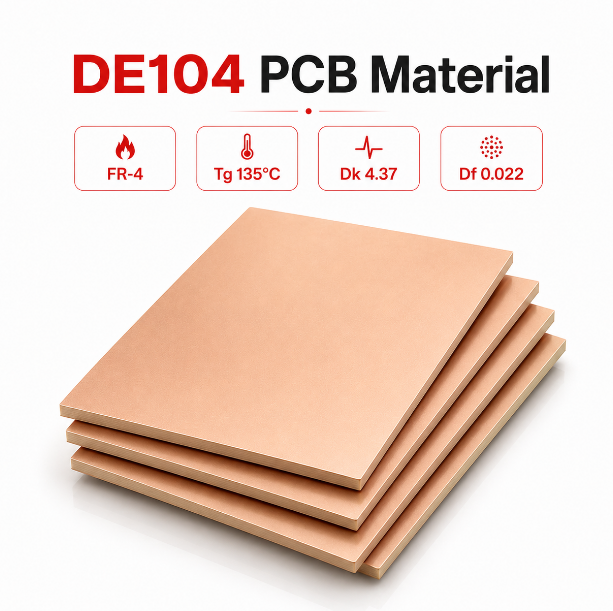
What Is Isola DE104 PCB Material?
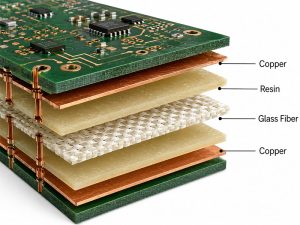
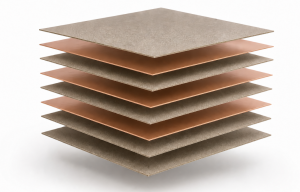
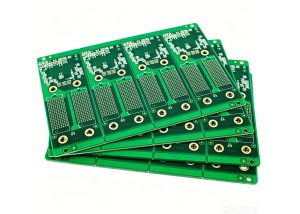
Isola DE104 PCB material is a low-Tg FR-4 laminate and prepreg system used for rigid and multilayer PCB fabrication. It uses E-glass reinforcement and an epoxy resin system designed for standard FR-4 processing.
This material is selected when a PCB project needs named material traceability, predictable production and lower cost than many high-Tg FR-4 alternatives. It can be used as copper-clad laminate core or prepreg bonding layer in multilayer stackups.
In practical PCB manufacturing, this FR-4 system is not designed for extreme thermal stress or ultra-low signal loss. It is a dependable option for commercial, industrial and general electronic products.
What Are the Material Properties of Isola DE104 Laminate and Prepreg?
Isola DE104 laminate and prepreg are low-Tg modified FR-4 materials for standard rigid and multilayer PCB fabrication.
- Material type: Low-Tg modified FR-4 laminate and prepreg.
- Glass system: E-glass fabric with epoxy resin.
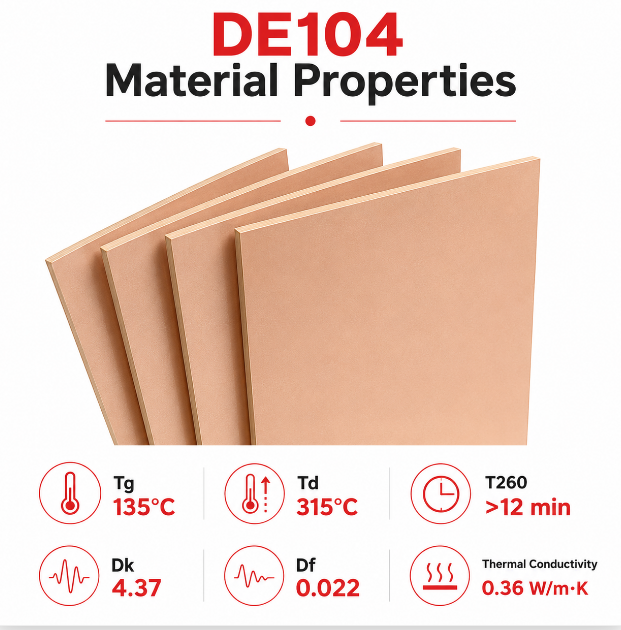
- Tg: 135°C, suitable for moderate thermal stress.
- Td: 315°C, showing resin decomposition resistance.
- T260: More than 12 minutes, useful for soldering heat evaluation.
- Dk: 4.37 at 1 GHz, suitable for standard impedance PCB designs.
- Df: 0.022 at 1 GHz, not a low-loss RF material.
- Thermal conductivity: 0.36 W/m·K, suitable for general PCB insulation.
- Moisture absorption: 0.3%, so storage and baking control still matter.
- Flammability: UL 94 V-0.
- Compliance: Supports IPC-4101 /21, RoHS and UL E41625 checks.
- Laminate use: Used as PCB core material.
- Prepreg use: Used for bonding layers in multilayer PCB stackups.
What Is the Tg Temperature of Isola DE104?
The Tg temperature of Isola DE104 is 135°C by DSC. Tg means glass transition temperature, where the resin starts changing from a rigid glassy state to a softer state under heat.
This value matters because PCB materials expand faster above Tg. During lead-free reflow, rework or high-temperature operation, Z-axis expansion can increase stress on plated through holes, vias and innerlayer connections.
A Tg of 135°C can work for many standard PCB projects. However, thick PCB, heavy copper PCB, double-sided assembly and repeated reflow may need a higher-Tg laminate for better reliability margin.
What Are the Dk, Df and Thermal Conductivity of DE104?
DE104 has Dk 4.37, Df 0.022 at 1 GHz and thermal conductivity of 0.36 W/m·K. These values affect impedance, signal loss and heat transfer.
| Frequency | Dk | Df |
|---|---|---|
| 100 MHz | 4.46 | 0.020 |
| 500 MHz | 4.40 | 0.021 |
| 1 GHz | 4.37 | 0.022 |
| 2 GHz | 4.35 | 0.023 |
| 5 GHz | 4.32 | 0.024 |
Dk affects impedance and signal speed. This material can support standard controlled impedance PCB designs when the stackup is calculated with real dielectric thickness, copper thickness and glass style.
Df affects dielectric loss. A Df of 0.022 at 1 GHz is acceptable for industrial control boards, consumer electronics and moderate-speed digital circuits. It is not suitable for RF, microwave or strict high-speed loss control.
Thermal conductivity affects heat transfer through the dielectric layer. At 0.36 W/m·K, this material is not a heat-spreading substrate. For power PCB, heat should be handled through copper area, thermal vias, stackup design and layout.
Isola DE104 Datasheet Overview
The Isola DE104 datasheet shows that this material is a low-Tg FR-4 option with clear thermal, electrical and compliance data.
| Item | Data |
|---|---|
| Material class | Low Tg FR-4 laminate and prepreg |
| Tg | 135°C |
| Td | 315°C |
| T260 | >12 min |
| Dk at 1 GHz | 4.37 |
| Df at 1 GHz | 0.022 |
| Thermal conductivity | 0.36 W/m·K |
| Moisture absorption | 0.3% |
| Flammability | UL 94 V-0 |
| IPC recognition | IPC-4101 /21 |
| UL file | E41625 |
| RoHS | Compliant |
Tg and Td show thermal margin. This helps judge whether the PCB can handle assembly heat, rework and operating temperature.
Dk and Df affect impedance and signal loss. They should be checked before controlled impedance PCB production.
Thermal conductivity is only moderate. This material can support general PCB applications, but it should not be selected as a thermal management material.
Compliance data helps reduce sourcing risk. Buyers should confirm material name, laminate type, prepreg construction and testing requirements before production.
What Applications Commonly Use DE104 PCB Material?
DE104 PCB material is used in products that need standard FR-4 processing, moderate reliability and controlled PCB cost.
Common applications include:
- Industrial control PCB: Control modules, relay boards, automation controllers and signal interface boards.
- Consumer electronics PCB: Cost-sensitive electronics with normal operating temperature.
- Home appliance control boards: Washing machines, air conditioners, kitchen appliances and household control systems.
- Power supply control PCB: Feedback boards, control circuits and low-to-medium power management sections.
- LED control modules: LED driver control boards, dimming modules and lighting control circuits.
- Instrumentation PCB: Measurement devices, monitoring equipment and general electronic instruments.
- Communication support boards: Non-RF control sections, interface boards and moderate-speed signal boards.
- Office electronics: Printers, scanners, access devices and commercial electronic equipment.
- General multilayer PCB: Standard multilayer boards that need named FR-4 material control.
- Mixed-signal PCB: Moderate-speed analog and digital circuits with reviewed impedance.
For RF circuits, high-speed backplanes, aerospace electronics or safety-critical automotive systems, higher-grade laminate should be reviewed first.
DE104 vs Standard FR-4: What Is the Difference?
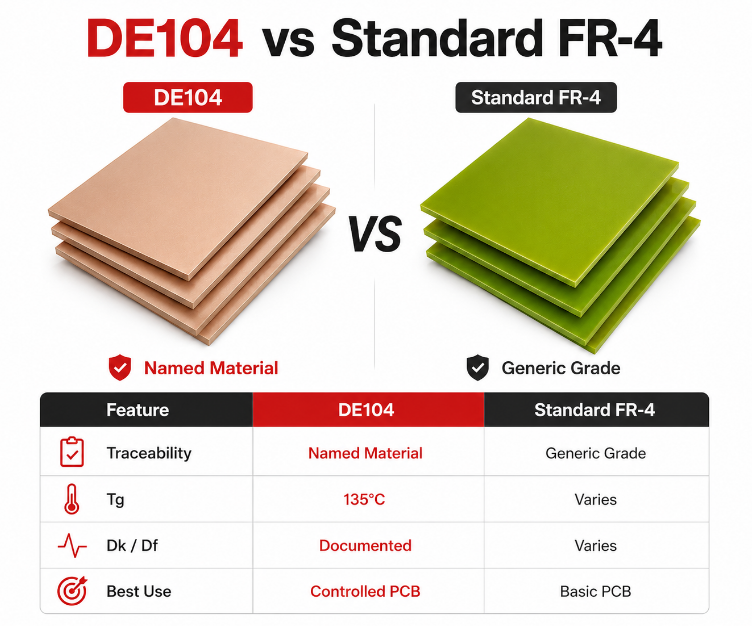
DE104 is a named Isola FR-4 material. Standard FR-4 is a broad material category with different suppliers, grades and performance levels.
| Item | DE104 | Standard FR-4 |
|---|---|---|
| Material identity | Named Isola material | Generic category |
| Tg | 135°C | Supplier dependent |
| Td | 315°C | Varies by grade |
| Dk at 1 GHz | 4.37 | Varies by grade |
| Df at 1 GHz | 0.022 | Varies by grade |
| Thermal conductivity | 0.36 W/m·K | Supplier dependent |
| IPC recognition | IPC-4101 /21 | Depends on grade |
| UL recognition | UL E41625 | Depends on supplier |
| Traceability | Stronger | Often weaker |
| Cost | Moderate | Usually lower |
| Best use | Controlled standard PCB | Basic low-cost PCB |
DE104 gives better traceability than unknown FR-4. It is useful when the project requires material approval, datasheet review, impedance calculation or batch consistency.
Generic FR-4 can work for simple low-cost PCB projects. However, if reliability, material control or customer documentation matters, a named laminate is safer.
DE104 vs FR406: Which Material Should You Choose?
Choose DE104 for cost-sensitive standard PCB builds. Choose FR406 when higher Tg, stronger thermal margin and better reliability are required.
| Item | DE104 | FR406 |
|---|---|---|
| Material class | Low Tg FR-4 | High Tg FR-4 |
| Tg | 135°C | 170°C |
| Td | 315°C | 300°C |
| Dk | 4.37 | 3.93 |
| Df | 0.022 | 0.0167 |
| IPC recognition | IPC-4101 /21 | IPC-4101 /21 /24 /26 |
| Thermal margin | Moderate | Higher |
| Signal loss | Higher | Lower |
| Typical cost | Lower | Higher |
| Best fit | Standard PCB | Higher-reliability PCB |
Choose DE104 when:
- Cost control matters.
- Operating temperature is moderate.
- Layer count is not too high.
- Signal speed is not demanding.
- Standard FR-4 processing is enough.
Choose FR406 when:
- Lead-free assembly stress is high.
- Layer count is higher.
- Via reliability is critical.
- Lower signal loss is required.
- Long-term reliability is more important than material cost.
Selection rule: use DE104 when standard performance is enough; use FR406 when thermal and reliability margin matter more.
How Does DE104 Compare with Other Low Tg FR-4 Materials?
DE104 offers better material control than many unknown low-Tg FR-4 options.
Compared with unknown low-Tg FR-4, its advantages include:
- Clear Tg, Dk, Df and thermal values.
- Recognized laminate and prepreg system.
- Better material traceability.
- Predictable multilayer PCB processing.
- Suitable cost for volume production.
However, it is still a low-Tg FR-4 material. For high-temperature use, repeated reflow, severe thermal cycling or low-loss signal requirements, a higher-grade material should be selected.
What Should You Check Before Choosing DE104 PCB Material?
Before choosing DE104 PCB material, check whether the board’s real working conditions match the material limits.
- Operating temperature: Check ambient temperature, component heat and enclosure heat. If the PCB often works near high temperature, Tg 135°C may not provide enough margin.
- Reflow profile: Check peak temperature, time above liquidus and rework count. Thick PCB, heavy copper and double-sided assembly increase thermal stress.
- Layer count: More layers increase Z-axis expansion risk. High-layer-count PCB may need a higher-Tg laminate.
- Stackup balance: Review copper distribution and dielectric thickness. Poor balance can cause warpage and registration issues.
- Copper weight: Heavy copper affects resin flow, drilling quality and lamination filling. Dense copper areas need enough prepreg resin.
- Controlled impedance: Use actual pressed thickness, copper thickness and glass style. Do not rely only on one Dk value.
- Via reliability: Check hole size, aspect ratio and plating thickness. Microsection testing is useful for high-reliability PCB.
- Compliance: Confirm UL, RoHS, IPC class and customer material approval before production.
- Prepreg handling: Check shelf life, storage condition and moisture control. Poor handling can affect lamination quality.
- Testing plan: Confirm electrical test, AOI, impedance coupon, microsection and thermal stress test if required.
- Material availability: Check stock before locking the stackup. If the exact construction is unavailable, approve an alternative before production.
- Factory capability: Choose a PCB factory that can review material risk, stackup feasibility and process control before quoting.
What Affects Isola DE104 PCB Cost?
Isola DE104 PCB cost is affected by material stock, PCB structure, process difficulty and inspection requirements.
- Material availability: Exact laminate and prepreg stock can affect both price and lead time.
- Layer count: More layers increase lamination, alignment, AOI and production risk.
- PCB thickness: Thick boards need more drilling control and lamination planning.
- Copper weight: Heavy copper increases etching difficulty, resin filling demand and drilling wear.
- Board size: Large panels affect material utilization, warpage control and packaging cost.
- Trace and spacing: Fine lines reduce yield and require tighter inspection.
- Hole size and aspect ratio: Small holes and high aspect ratio increase drilling and plating difficulty.
- Controlled impedance: Impedance PCB needs stackup calculation, coupon design and measurement.
- Surface finish: HASL, ENIG, immersion silver and other finishes have different costs.
- Inspection level: Microsection, impedance test, thermal stress test and full electrical test add cost.
- Order quantity: Prototype unit cost is higher because setup and engineering cost are spread over fewer boards.
- Shipping method: Export packaging, vacuum sealing and shipping speed affect final landed cost.
For accurate pricing, send Gerber files, drill files, stackup, copper weight, surface finish, impedance requirements, IPC class and quantity together.
FAQs About Isola DE104 PCB Material
Q1: Can this material be replaced by another FR-4 laminate?
A1: Yes, but the replacement must be approved first. It should match Tg, Dk, Df, thickness, copper weight and IPC recognition. For impedance PCB, even a small Dk change can affect final trace width and impedance.
Q2: How can buyers prevent wrong material use?
A2: Ask for the approved material name, laminate type, prepreg construction and stackup before production. For batch orders, request material traceability, impedance records and microsection reports.
Q3: Does the PCB need baking before assembly?
A3: It depends on storage time, packaging and moisture exposure. If boards were stored in humid conditions, baking can reduce moisture-related defects such as blistering or delamination.
Q4: What inspection records are useful for batch orders?
A4: Useful records include electrical test, AOI, microsection, impedance coupon data and final inspection report. These help confirm that the PCB matches the approved stackup.
Q5: Can it be used for fine-pitch BGA PCB?
A5: Yes, but the stackup must be reviewed. Key checks include warpage control, via reliability, solder mask registration and reflow stress. Complex HDI or dense BGA boards may need higher material margin.
Q6: Is it suitable for outdoor electronics?
A6: It can be used in some outdoor products if the enclosure, coating and humidity protection are suitable. For harsh outdoor use, review moisture resistance, coating, surface finish and thermal cycling.
Q7: What causes delamination risk?
A7: Common causes include moisture absorption, excessive reflow heat, poor lamination, wrong rework process and weak material handling. The risk is higher in thick PCB, heavy copper PCB and multilayer PCB.
Q8: Why does copper balance matter?
A8: Poor copper balance can cause warpage, uneven thickness and registration problems. The factory should review copper distribution, prepreg flow and stackup symmetry before production.
Q9: Can it support high-volume PCB production?
A9: Yes, if the material construction and process are fixed. For repeat orders, keep the same stackup, approved material list and inspection standard to maintain batch consistency.
Q10: What should be checked for impedance PCB?
A10: Check pressed dielectric thickness, copper thickness, glass style, resin content and impedance tolerance. A test coupon is recommended because final impedance depends on the finished PCB stackup.
Q11: Can it be used in automotive electronics?
A11: It may be used for non-critical automotive PCB applications. For high-temperature or safety-critical automotive electronics, check thermal cycling, long-term reliability and customer approval standards first.
Q12: What is the best way to request a quote?
A12: Send Gerber files, drill files, stackup, copper weight, PCB thickness, surface finish, quantity, IPC class and testing requirements. For assembly, also send BOM and Pick and Place file.
Conclusion
DE104 is a cost-effective Isola FR-4 material for standard PCB projects that need clear datasheet values, stable production and named material traceability. It is suitable for multilayer PCB, industrial control boards, appliance control boards, consumer electronics and moderate-speed mixed-signal PCB.
Choose this material when the project has moderate thermal stress, normal signal requirements and standard FR-4 process needs. If the PCB has high layer count, repeated lead-free reflow, strict signal integrity or severe thermal cycling, review FR406 or another higher-grade laminate before production.
A good PCB supplier should not only quote a price. The factory should review stackup, copper weight, prepreg construction, impedance, inspection plan and material availability before fabrication. This helps reduce redesign risk, delivery delay and batch quality problems.
EBest Circuit is a China source PCB factory supporting custom multilayer PCB fabrication, controlled impedance PCB, PCB assembly and global delivery. Send your Gerber files, stackup and quantity to sales@bestpcbs.com. Our team will review your project and provide a fast PCB quotation.