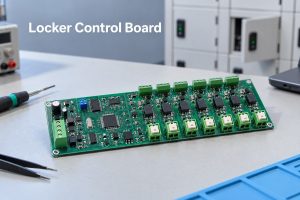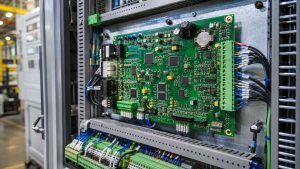


The manufacturing quality of a fire alarm circuit board directly affects alarm signal transmission, power stability, and long-term equipment reliability. Insufficient copper thickness, defective plated through-holes, inadequate trace spacing, or poor solder joints can cause malfunctions in fire alarm systems.
How can you ensure that custom fire alarm PCBs meet your design requirements and maintain consistent quality from prototyping to mass production? EBest Circuit provides custom fire alarm PCB manufacturing and one-stop PCBA services, including multilayer PCB fabrication, free DFM checks, SMT/THT assembly, quality inspection, and functional testing.
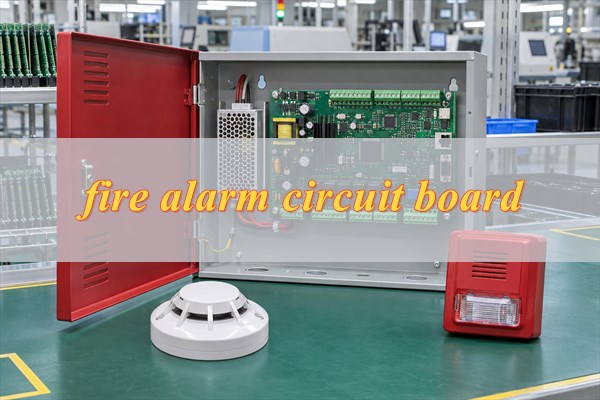
What Types of Fire Alarm Circuit Boards Are Used in Fire Safety Systems?
Fire alarm circuit boards are used in fire detection, alarm control, power management, communication, and audible or visual notification equipment. Each application has different requirements for PCB layer count, copper thickness, trace accuracy, electrical insulation, and assembly.
| Fire Alarm PCB Type | Main Function | Key PCB Manufacturing Requirements |
| Fire Alarm Control Panel PCB | Centralized fire alarm monitoring and control | Multilayer construction, power and signal separation, terminal block pads |
| Smoke Detector PCB | Smoke signal detection and processing | Compact routing, low-noise signal areas, accurate SMT pads |
| Heat Detector PCB | Temperature monitoring and alarm detection | Sensor-area layout, thermal characteristics, soldering consistency |
| Addressable Fire Alarm PCB | Device addressing and communication | Communication routing, reference planes, reliable interface connections |
| Fire Alarm Power Supply PCB | Power conversion and backup power management | Copper thickness, current capacity, thermal management, electrical clearance |
| Fire Alarm Sounder PCB | Audible and visual alarm output | Driver current paths, output connections, mechanical mounting features |
These fire alarm circuit boards can use double-sided or multilayer FR-4 constructions, depending on circuit complexity, electrical performance, and mechanical requirements.
What Are the Key Design Requirements for Custom Fire Alarm Circuit Boards?
Custom fire alarm PCBs must address copper current capacity, signal integrity, electrical insulation, thermal stability, and mechanical connection reliability. These requirements directly affect PCB manufacturability and long-term performance.
- Copper Thickness and Trace Width: Signal traces can be designed according to routing density and manufacturing capabilities, while power and high-current output traces require appropriate copper thickness and width. For example, a 100 mm long, 1 mm wide trace with 1 oz copper (approximately 35 μm nominal thickness) has a theoretical resistance of about 0.049 Ω at 20°C. Actual current capacity must also be evaluated using IPC-2152 guidance, considering copper location, heat dissipation, and allowable temperature rise.
- Signal Routing and Noise Control: Fire detection signal traces should be arranged to minimize unwanted coupling from high-current switching paths. In multilayer PCBs, properly assigned signal layers and continuous reference planes help maintain return-current paths and reduce interference. Communication traces must also meet the electrical and signal integrity requirements of the selected interface.
- Electrical Clearance and Insulation: Different voltage sections of a fire alarm control PCB must maintain suitable clearance and creepage distances. These values depend on working voltage, insulation requirements, pollution degree, and applicable safety standards. The PCB manufacturer’s minimum trace spacing must not be used as a substitute for safety clearance requirements.
- PCB Materials and Thermal Stability: FR-4 is suitable for many fire alarm circuit boards. For power PCBs operating at elevated temperatures or handling higher current loads, laminate Tg, copper thickness, and board construction should be selected according to operating temperatures, thermal cycling, and reliability requirements. Localized heating and potential PCB deformation must also be considered.
- Pad Design, Hole Dimensions, and Mechanical Structure: Relays, terminal blocks, and other through-hole components require appropriate finished-hole sizes, pad dimensions, and mechanical support. Mounting holes, board-edge clearances, and enclosure interfaces must also be designed to prevent excessive mechanical stress during installation or field wiring.
Before releasing a fire alarm PCB for manufacturing, verify copper thickness, trace width, insulation clearances, finished-hole tolerances, stackup, and laminate specifications to ensure the design meets both electrical and manufacturing requirements.
What Are the Common Fire Alarm PCB Design and Manufacturing Challenges and Solutions?
The main manufacturing challenges for fire alarm PCBs involve plated through-hole quality, trace accuracy, pad dimensions, PCB flatness, and production consistency. Poor control of these features can lead to open circuits, short circuits, soldering defects, or reduced board reliability.
- Defective Plated Through-Holes: Multilayer fire alarm PCBs rely on plated through-holes for interlayer electrical connections. Drill misalignment, inadequate hole-wall preparation, or copper plating defects can affect connection reliability. Controlling drilling accuracy, hole-wall treatment, and plating conditions helps prevent these defects. Electrical testing and cross-section analysis, when required, can be used to verify the finished structure.
- Trace Width and Etching Deviations: Over-etching and under-etching can change finished trace dimensions and spacing. Severe deviations may cause open circuits or shorts. Etching conditions should be matched to copper thickness, and finished trace dimensions must meet the specified tolerances.
- Incorrect Pad and Finished-Hole Dimensions: Terminal blocks and through-hole components require suitable pad and hole geometry. Undersized holes can prevent proper insertion, while oversized holes may make soldering more difficult to control. Finished-hole dimensions, annular rings, and component lead tolerances should be checked before PCB fabrication.
- PCB Warpage and Dimensional Errors: Multilayer constructions, uneven copper distribution, and unsuitable panelization can increase the risk of board deformation. Stackup balance, lamination conditions, copper distribution, and thermal processing should be controlled. Mounting-hole positions and board outlines must also be checked to ensure proper installation in the equipment enclosure.
- Inconsistent PCB Quality Between Production Batches: Variations in trace width, hole dimensions, copper thickness, or surface finish can affect subsequent assembly and board performance. Controlled manufacturing files, in-process inspection, and final acceptance checks help ensure that each batch meets the same approved specifications.
For fire alarm PCBs requiring SMT/THT assembly, pad geometry, component placement, and soldering compatibility should also be confirmed before fabrication to prevent bare-board manufacturing issues from affecting PCBA production.
How Are Fire Alarm Circuit Boards Manufactured and Assembled?
Custom fire alarm circuit board manufacturing follows five main stages: DFM review, PCB fabrication, bare-board inspection, SMT/THT assembly, and final testing.
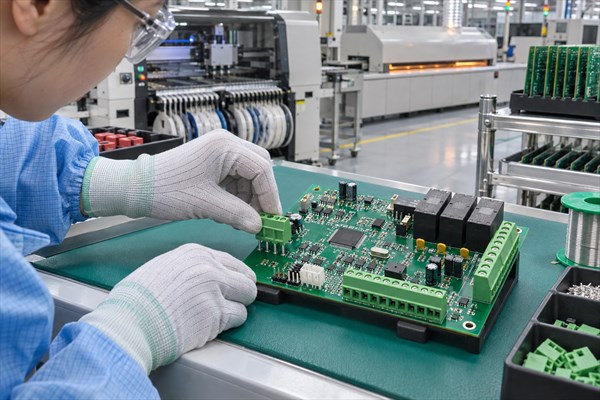
1. PCB File Review and DFM Check
Gerber files, drill data, stackup specifications, and manufacturing requirements are reviewed to confirm PCB layer count, board thickness, copper weight, trace spacing, hole dimensions, and surface finish compatibility.
EBest Circuit supports standard 1–10-layer FR-4 PCB manufacturing, with minimum trace width and spacing down to 4/4 mil (approximately 0.10/0.10 mm) under suitable copper conditions. The standard minimum finished mechanical hole diameter is 0.20 mm. Actual manufacturing feasibility depends on the complete PCB construction.
For fire alarm control boards, particular attention is given to high-current traces, terminal block holes, and mixed-technology assembly requirements.
2. Bare PCB Fabrication
The approved PCB design proceeds through circuit imaging, etching, drilling, through-hole plating, lamination, solder mask application, and surface finishing, as required by the board construction.
For multilayer fire alarm control PCBs, interlayer alignment, plated-hole integrity, copper thickness, and finished trace dimensions must be controlled to meet the manufacturing specifications.
3. Bare PCB Inspection
Finished boards are inspected for board thickness, hole dimensions, trace width and spacing, solder mask, surface finish, and overall dimensions.
Electrical testing is performed to identify unintended open circuits and shorts. Boards that meet the agreed acceptance requirements are released for assembly.
4. SMT and THT Assembly
Electronic components are mounted onto the inspected PCBs according to the approved BOM and assembly files.
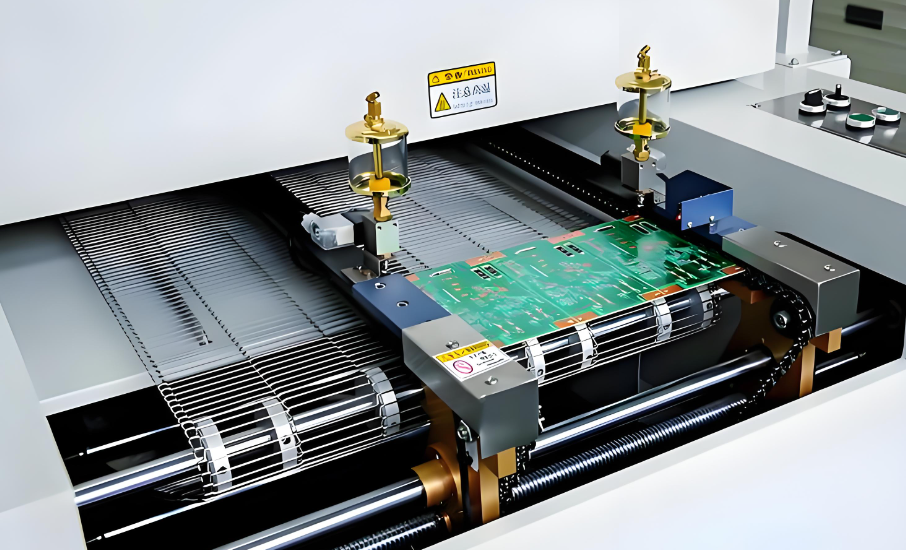
SMT assembly includes solder paste printing, automated component placement, and reflow soldering. Through-hole components are installed using suitable THT soldering processes.
EBest Circuit provides single-sided, double-sided, and mixed SMT/THT assembly services for different fire alarm PCB constructions.
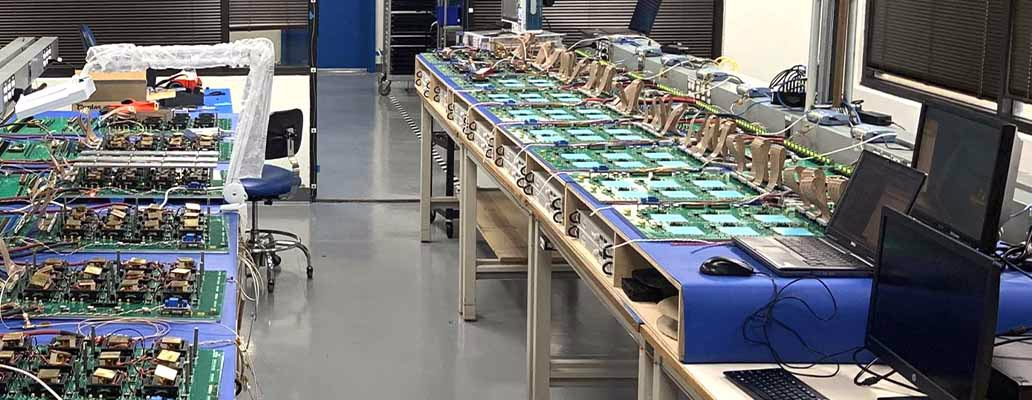
5. PCBA Inspection and Testing
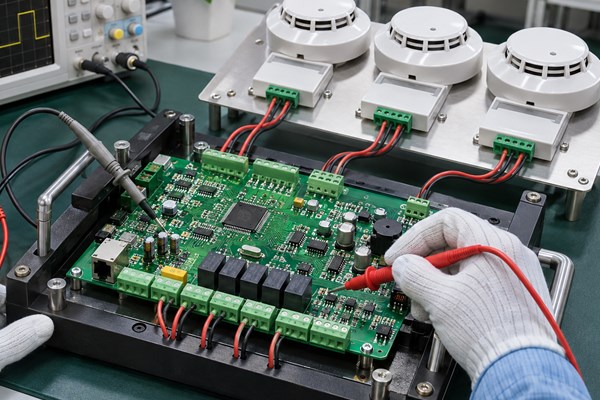
Completed fire alarm PCBAs undergo the specified solder-joint inspections and electrical checks. Board-level functional testing can be performed according to customer-provided test procedures and acceptance requirements.
After inspection and acceptance, the assemblies are labeled, packaged, and prepared for shipment.
Why Choose EBest Circuit for Fire Alarm PCB Manufacturing and One-Stop PCBA?
Choosing the right fire alarm circuit board manufacturer helps OEM customers reduce PCB manufacturing defects, avoid design-to-production mismatches, and maintain consistent quality between prototype and repeat orders.
EBest Circuit supports these objectives through the following manufacturing services:
- Get Custom PCBs That Match Your Design Requirements: Fire alarm control boards, detector PCBs, and power supply PCBs can be manufactured according to their specified layer count, copper thickness, finished-hole dimensions, and routing requirements. For multilayer or fine-line designs, manufacturing feasibility can be evaluated against the complete PCB construction rather than individual specifications alone.
- Identify PCB Manufacturing Risks Before Production: A free DFM check helps identify unsuitable trace spacing, finished-hole dimensions, pad geometry, stackup issues, and manufacturing tolerances. This allows potential fabrication problems to be addressed before production, reducing avoidable scrap, rework, and design revisions.
- Maintain Consistent PCB Specifications From Prototype to Mass Production: Manufacturing is based on approved Gerber files, stackup specifications, and acceptance requirements. Controlled production documentation and inspection help reduce variation in trace dimensions, plated-hole structures, and finished board specifications between orders.
- Reduce Coordination Between PCB Fabrication and PCBA Assembly: In addition to bare PCB manufacturing, EBest Circuit can coordinate component sourcing, SMT/THT assembly, and functional testing according to project requirements. You can manage PCB and assembly specifications through one supplier instead of coordinating several separate manufacturing stages.
- Receive PCB Quality Inspection Based on Your Acceptance Requirements: Bare-board quality can be verified through visual, dimensional, and electrical inspections, while PCBA inspection and testing can be arranged as specified. This gives your engineering and purchasing teams a clearer basis for production acceptance.
From custom PCB prototypes to repeat production orders, EBest Circuit coordinates fabrication, assembly, and quality inspection according to your approved fire alarm PCB specifications, helping reduce supplier management work and manufacturing quality risks.
How Does EBest Circuit Ensure On-Time Delivery for Fire Alarm PCB Orders?
EBest Circuit reduces delivery delay risks by confirming PCB manufacturing requirements early, coordinating materials and production schedules, controlling critical fabrication stages, and planning inspection and shipment activities.
- Confirm PCB Manufacturing Files Before Production: Gerber files, stackup details, copper thickness, drill specifications, and surface finish requirements are reviewed before fabrication to avoid delays caused by inconsistent or incomplete manufacturing information.
- Coordinate PCB Materials and Production Capacity: Manufacturing is scheduled according to laminate type, layer count, process complexity, and order quantity. Special materials or manufacturing processes are reviewed in advance to confirm availability and production feasibility.
- Control Critical Production Stages: Circuit imaging, drilling, plating, lamination, and final inspection are coordinated according to the agreed production schedule. Quality issues affecting subsequent operations are addressed before they disrupt later stages.
- Coordinate Assembly and Shipment: For orders requiring PCBA services, PCB completion is aligned with component availability, SMT/THT assembly, and functional testing so that finished bare boards are not unnecessarily delayed before assembly.
The final lead time is confirmed according to the fire alarm PCB layer count, laminate, copper thickness, manufacturing processes, order quantity, and delivery destination. Projects involving PCBA assembly also require confirmation of component procurement and testing arrangements.
How Does EBest Circuit Control Fire Alarm PCB Quality and Verify Performance?
Fire alarm PCB quality control focuses on circuit integrity, plated through-hole reliability, insulation performance, dimensional accuracy, and assembly quality. Bare-board inspection and PCBA functional testing are separate processes and should not replace one another.
| Inspection Stage | Key Inspection Items | Verification Methods |
| PCB Circuit Fabrication | Trace width, spacing, shorts, and open circuits | Circuit inspection and electrical testing |
| Drilling and Through-Hole Plating | Hole diameter, hole position, and plated-hole integrity | Dimensional inspection and cross-section analysis when required |
| Multilayer PCB Fabrication | Layer alignment, lamination quality, and board thickness | Dimensional and applicable process inspections |
| Finished Bare PCB | Solder mask, surface finish, outline, and electrical integrity | Visual, dimensional, and electrical testing |
| PCBA Assembly | Solder joints, component placement, polarity, and hidden connections | SPI, AOI, and X-ray when specified |
| Board-Level Function | Power, alarm inputs, communication, and output functions | Functional testing according to customer specifications |
For fire alarm control PCBs with plated through-holes, electrical testing can detect open circuits and shorts but cannot independently verify copper plating thickness or internal hole structure. When plated-hole reliability is a critical requirement, appropriate process inspection or cross-section analysis should be specified.
For assembled fire alarm PCBAs, functional testing must define the input voltage, test conditions, expected outputs, and pass/fail criteria.
For example, a fire alarm control board may require verification of alarm inputs, fault detection, and relay outputs. However, the actual voltages, resistance values, and acceptance thresholds must come from the customer’s approved test specifications.
Bare PCB and assembly acceptance can reference applicable IPC-A-600, IPC-A-610, and J-STD-001 requirements, with the relevant standard revisions and acceptance classes clearly specified.
Passing PCB manufacturing inspection does not mean a complete fire alarm product is certified to UL 864 or EN 54. Product-level certification must be evaluated separately against the applicable requirements.
What Should Be Verified Before Moving Fire Alarm PCBs From Prototype to Mass Production?
Before a fire alarm PCB moves from prototyping to mass production, the OEM should confirm the approved manufacturing specifications, process repeatability, and production acceptance requirements.
- Confirm the PCB Manufacturing Revision: Prototypes and production boards should use approved Gerber files, drill data, stackup information, and manufacturing specifications. Changes to copper thickness, laminate, hole dimensions, or circuit structures require review of the affected manufacturing requirements.
- Verify Critical Dimensions and Structures: Prototype trace dimensions, finished-hole sizes, board thickness, outlines, and other critical features must meet the customer’s drawings. If plated-hole integrity or special structures require additional control, the corresponding inspection methods should be specified.
- Confirm Manufacturing Process Stability: Trace, drilling, lamination, or solder-mask issues identified during prototyping should be resolved before volume production. Reworking an individual prototype does not demonstrate that the underlying manufacturing process is stable.
- Define Mass Production Inspection Requirements: Establish the visual, dimensional, electrical, and structural inspection requirements, together with applicable acceptance standards and production records.
- Verify Assembly Compatibility: For fire alarm PCBs requiring PCBA services, prototype assembly should confirm pad geometry, finished-hole dimensions, board outlines, and soldering compatibility. This helps identify assembly problems before larger quantities of bare PCBs are manufactured.
Completing these checks allows mass production to proceed using validated PCB manufacturing files and acceptance requirements rather than relying only on whether the original prototype functions correctly.
FAQs About Custom Fire Alarm Circuit Boards
Q1: Can I order bare fire alarm PCBs without component assembly?
A1: Yes. EBest Circuit provides both bare PCB fabrication and PCBA assembly services. Customers can order custom fire alarm circuit boards without component installation.
Q2: What surface finishes are available for fire alarm circuit boards?
A2: Common options include ENIG, lead-free HASL, and OSP. The appropriate finish depends on pad pitch, assembly method, storage requirements, and product specifications.
Q3: Can custom fire alarm PCBs have irregular shapes or cutouts?
A3: Yes. Custom board outlines, slots, mounting holes, and other mechanical features can be manufactured according to customer drawings, subject to fabrication review.
Q4: Can thicker copper be used for fire alarm circuit boards?
A4: Yes. Copper weights such as 2 oz and other specified thicknesses can be evaluated according to current and thermal requirements. Thicker copper also affects achievable trace spacing, plated-hole requirements, and manufacturing tolerances.
Q5: Can I choose a custom solder mask color for my fire alarm PCB?
A5: Yes. Different solder mask colors can be specified according to manufacturing requirements. The selected color should be checked for its effect on lead time, appearance requirements, and any special markings.
Q6: Can fire alarm circuit boards be manufactured in panels?
A6: Yes. PCB panelization can be arranged according to board-edge clearances, tooling features, V-scoring or breakaway tabs, and mechanical stress during depanelization.
Q7: Can serial numbers or QR codes be added to fire alarm PCBs?
A7: Yes. Silkscreen markings, labels, or other identification methods can be evaluated according to the required code format, location, readability, and traceability specifications.
Q8: Can custom fire alarm PCBs use halogen-free or specified laminate materials?
A8: Yes. Halogen-free and other specified laminates can be evaluated for availability and manufacturing compatibility. Customers should provide the required material grade or performance specifications.
Q9: Can I order small quantities of custom fire alarm circuit boards?
A9: Yes. EBest Circuit supports PCB prototyping and small-batch manufacturing. The available quantity and lead time depend on the PCB specifications and production requirements.
How Can You Request a Quote for Custom Fire Alarm PCB Manufacturing and Assembly?
Looking for a custom fire alarm circuit board manufacturer with one-stop PCBA services? Send your Gerber files, PCB specifications, order quantity, required delivery date, and delivery location to sales@bestpcbs.com. For SMT/THT assembly, please also include your BOM and assembly files. EBest Circuit offers a free DFM check to review PCB manufacturability, critical fabrication requirements, assembly needs, and estimated lead time. Request a project-specific quotation for your fire alarm PCB prototypes, small batches, or mass production orders.