PCB manufacturing PCB manufacturing
Home > Blog

extra thin pcb

Extra Thin PCB
Friday, April 10th, 2026

What Is an Extra Thin PCB?

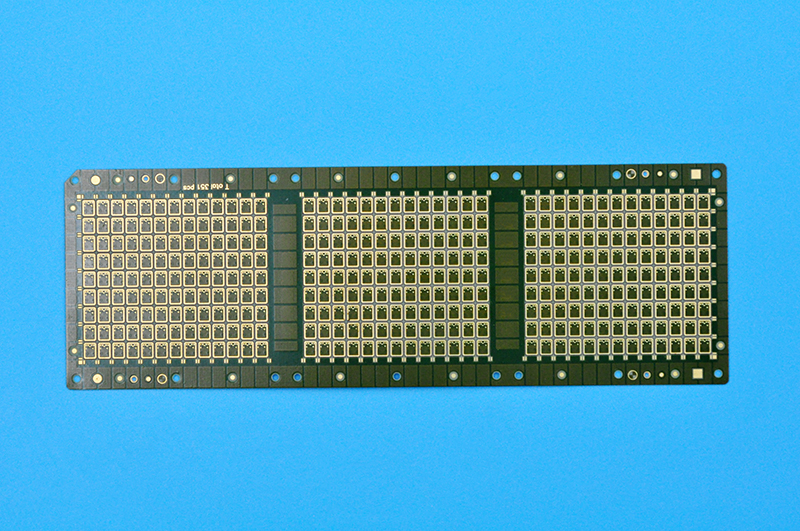
An extra thin PCB is a printed circuit board made with a much thinner profile than standard FR4 boards. In most applications, conventional PCB thickness ranges from 1.0 mm to 2.0 mm. By contrast, extra thin PCBs are typically manufactured in thicknesses such as 0.30 mm, 0.25 mm, 0.20 mm, and even 0.15 mm.

These boards are often called thin PCB, ultra thin PCB, or very thin PCB. They are designed for products where space is limited, weight matters, or a slimmer structure is required for the final assembly.

As electronic devices continue to become smaller, lighter, and more portable, extra thin PCB is being used in a growing number of compact electronic products.

Why Are Extra Thin PCBs Used?

Extra thin PCBs are widely used when a design needs to reduce overall thickness without switching to a flexible circuit. In many cases, they offer a practical middle ground between standard rigid PCBs and FPCs.

Compared with regular FR4 boards, extra thin PCBs help:

  • save installation space
  • reduce product weight
  • support compact internal layouts
  • improve product portability
  • lower cost compared with some flexible circuit solutions

Extra thin FR4 PCB can also provide a certain degree of bendability during assembly, especially in very low thickness designs. While it is not the same as a flexible PCB, it can still be useful in products that need a slim and semi-rigid structure.

What Thickness Can Extra Thin PCB Reach?

At EBest Circuit, extra thin PCB can be produced in the following common thicknesses:

  • 0.15 mm
  • 0.20 mm
  • 0.25 mm
  • 0.30 mm

These boards can be made with or without solder mask, depending on the application requirement. Available copper thickness options include:

  • 0.5 oz
  • 1 oz
  • 2 oz
  • 3 oz

The actual structure will depend on the layer count, copper requirement, mechanical strength, and final product usage.

Extra Thin PCB vs Flexible PCB

Extra thin PCB and flexible PCB may look similar in very slim designs, but they are not the same product.

Extra thin PCB is still based on FR4 material, which keeps the board rigid or semi-rigid.
Flexible PCB, on the other hand, is made from flexible substrates such as polyimide and is designed for repeated bending.

Here is the practical difference:

ItemExtra Thin PCBFlexible PCB
Base MaterialFR4Polyimide / Flex material
StructureRigid or semi-rigidFlexible
Typical Minimum Thickness0.10–0.15 mm0.06 mm for 1L FPC
BendabilityLimitedExcellent
CostUsually lowerUsually higher
Typical UseCards, compact modules, slim devicesFolding, dynamic bending, cable replacement

If your board thickness needs to go below 0.10 mm, a flexible circuit is usually the better option.

Where Are Extra Thin PCBs Commonly Used?

Extra thin PCBs are commonly used in compact electronic products where traditional PCB thickness is too large for the mechanical design.

Typical applications include:

  • SIM cards
  • TF cards
  • NFC devices
  • mobile phone charging modules
  • wearable electronics
  • sensor cards
  • drawing boards
  • metro tokens or smart transit devices

Extra Thin PCB Manufacturing Capability

EBest Circuit provides extra thin PCB manufacturing with stable process control and flexible specification support.

Manufacturing Capability Table

ItemCapability
Base MaterialFR4 Tg130 / Tg170 / Tg180
Board Thickness0.10 mm – 0.30 mm
Copper Thickness0.5 oz / 1 oz / 2 oz / 3 oz
Surface FinishENIG, OSP, ENEPIG, HAL-LF
Solder MaskBare / White / Black / Blue / Green / Red
Silkscreen ColorWhite / Black
Min Via Size0.10 mm
Min Trace/Space4/4 mil
Outline ProcessingRouting, Punching, V-Cut, Laser Cutting
Max Panel Size500 × 500 mm or 1000 × 350 mm
Min Panel Size3.5 × 3.5 mm
Min Single Size25 × 25 mm
PackingVacuum Packing
Sample Lead Time7–9 Days
Mass Production Lead Time8–10 Days

What Makes Extra Thin PCB Manufacturing More Challenging?

Although the process flow is similar to standard FR4 PCB manufacturing, extra thin PCB requires much tighter process control.

Because the board is much thinner, it is more sensitive during fabrication. Problems such as panel deformation, handling marks, instability during transfer, and stress during drilling or plating must be controlled carefully.

For this reason, extra thin PCB production often needs:

  • more precise panel handling
  • better lamination control
  • careful drilling and imaging setup
  • optimized plating parameters
  • suitable support tooling during processing
  • controlled packing to protect flatness and surface quality

At EBest Circuit, we apply stricter production control for ultra thin boards and use appropriate equipment to ensure smooth processing throughout each manufacturing stage.

Stack-Up Options for Extra Thin PCB

The stack-up of extra thin PCB is usually simpler than standard multilayer boards because the total board thickness is highly restricted.

The board structure is still based on standard FR4 construction, but it uses thinner core and prepreg materials to achieve the required profile.

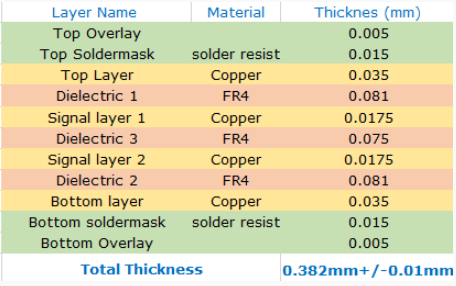
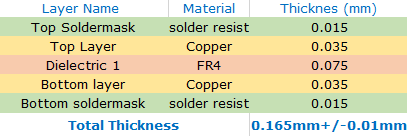
Typical 2-Layer Extra Thin PCB Structure

A 2-layer extra thin PCB usually includes:

  • top copper layer
  • thin FR4 core
  • bottom copper layer
  • optional solder mask on one or both sides
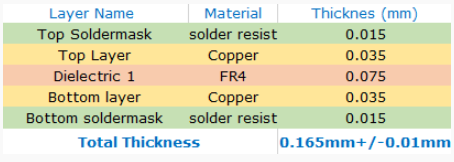
Typical 2-Layer Extra Thin PCB Structure

This type of structure is commonly used in card-like products and compact electronic modules.

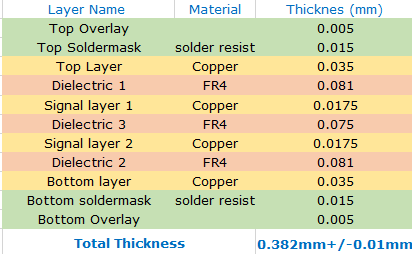
Typical 4-Layer Extra Thin PCB Structure

A 4-layer extra thin PCB is possible, but the thickness is usually around 0.6 mm or above depending on the copper and dielectric design.

A 4-layer thin PCB stack-up generally includes:

  • top copper
  • thin prepreg/core
  • inner copper layers
  • thin prepreg/core
  • bottom copper
Typical 4-Layer Extra Thin PCB Structure

The exact construction should be reviewed based on impedance, mechanical strength, via design, and assembly method.

Why Choose FR4 Extra Thin PCB Instead of Standard PCB?

FR4 extra thin PCB is a strong choice when you need a thinner board but still want the advantages of rigid PCB processing.

It offers several benefits:

  • better rigidity than flexible PCB
  • lower material cost in many designs
  • easier assembly in some rigid product structures
  • good compatibility with standard PCB surface finishes
  • reliable electrical and mechanical performance for compact devices

For products that do not need repeated bending, an extra thin FR4 PCB can be a cost-effective and stable solution.

How EBest Circuit Supports Extra Thin PCB Projects?

At EBest Circuit, we understand that ultra thin boards require more than just standard PCB production capability. They require careful engineering review, suitable material selection, and stable process control from start to finish.

We support customers with:

  • extra thin FR4 material options
  • thickness recommendations based on application
  • copper and solder mask selection
  • stack-up review for 2L and 4L thin boards
  • suitable surface finish suggestions
  • production control for thin board handling
  • vacuum packaging for safe shipment

Whether your project is for wearable electronics, smart cards, NFC modules, or other miniaturized devices, our team can help evaluate the most suitable structure for your design.

FAQ About Extra Thin PCB

1. What is considered an extra thin PCB?

An extra thin PCB usually refers to a rigid FR4 PCB with a thickness significantly below standard boards, typically in the range of 0.10 mm to 0.30 mm.

2. Can extra thin PCB replace flexible PCB?

In some static applications, yes. If the board does not need repeated bending, an extra thin FR4 PCB can be a lower-cost alternative. For dynamic bending, flexible PCB is still the better choice.

3. What is the thinnest FR4 PCB you can make?

Extra thin FR4 PCB can be made as thin as 0.10 mm to 0.15 mm, depending on the layer count and structure.

4. What copper thickness is available for extra thin PCB?

Common copper options include 0.5 oz, 1 oz, 2 oz, and 3 oz.

5. What surface finishes are available?

Available finishes include ENIG, OSP, ENEPIG, and HAL-LF. ENIG and OSP are commonly selected for thin board applications.

6. What applications are suitable for extra thin PCB?

Extra thin PCB is suitable for SIM cards, TF cards, NFC devices, wearable products, charging modules, sensor cards, and other space-limited electronics.

Get a Quote for Extra Thin PCB

If you are looking for a reliable extra thin PCB manufacturer, EBest Circuit can support your project with stable processing capability, thin board experience, and fast response.

From 0.15 mm to 0.30 mm ultra thin FR4 PCB, we help customers turn compact product concepts into manufacturable boards with dependable quality.

Contact us today to discuss your extra thin PCB design and get a quotation for prototype or mass production.
You may also like

Extra Thin PCB
Wednesday, April 8th, 2026

Extra thin PCB refers to a printed circuit board with a significantly reduced thickness compared to standard FR4 boards, enabling compact, lightweight, and space-constrained electronic designs.

As modern devices become smaller and more integrated, ultra thin PCB solutions are increasingly used in smart cards, wearable devices, and miniature modules where every micron matters.

Are You Facing These Challenges?

Many customers come to us with similar design concerns:

  • The product housing leaves very little board space
  • Standard PCB thickness is too bulky for the assembly
  • Flexible PCB is not necessary, but standard rigid PCB is too thick
  • Thin boards may warp or become hard to handle in production
  • Small electronic modules need a lighter and slimmer rigid solution

Our extra thin PCB service is built to solve these issues with practical FR4-based manufacturing support.

What Is an Extra Thin PCB?

An extra thin PCB is a rigid printed circuit board with a thickness significantly lower than a normal FR4 board. Standard PCB thickness is usually around 1.0 mm to 2.0 mm. In thinner conventional constructions, 1-layer or 2-layer boards may be made at 0.3 mm to 0.4 mm, while 4-layer boards are often around 0.6 mm.

When electronic products require an even slimmer profile, designers may specify thicknesses such as 0.25 mm, 0.20 mm, or 0.15 mm. These ultra-slim boards are commonly referred to as extra thin PCB, ultra thin PCB, or very thin PCB.

They are especially useful in products where every fraction of a millimeter affects housing design, connector fit, weight, or assembly clearance.

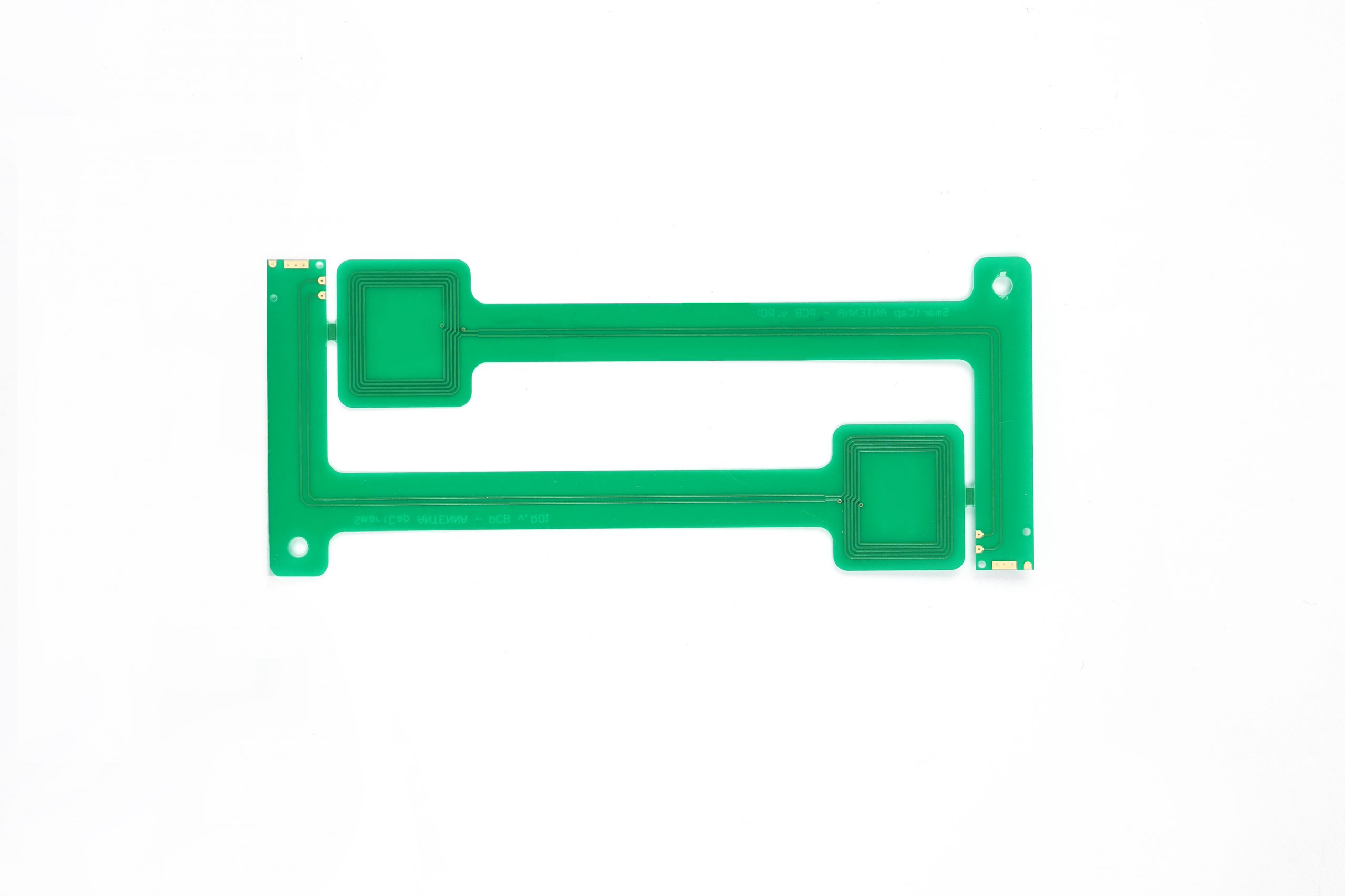
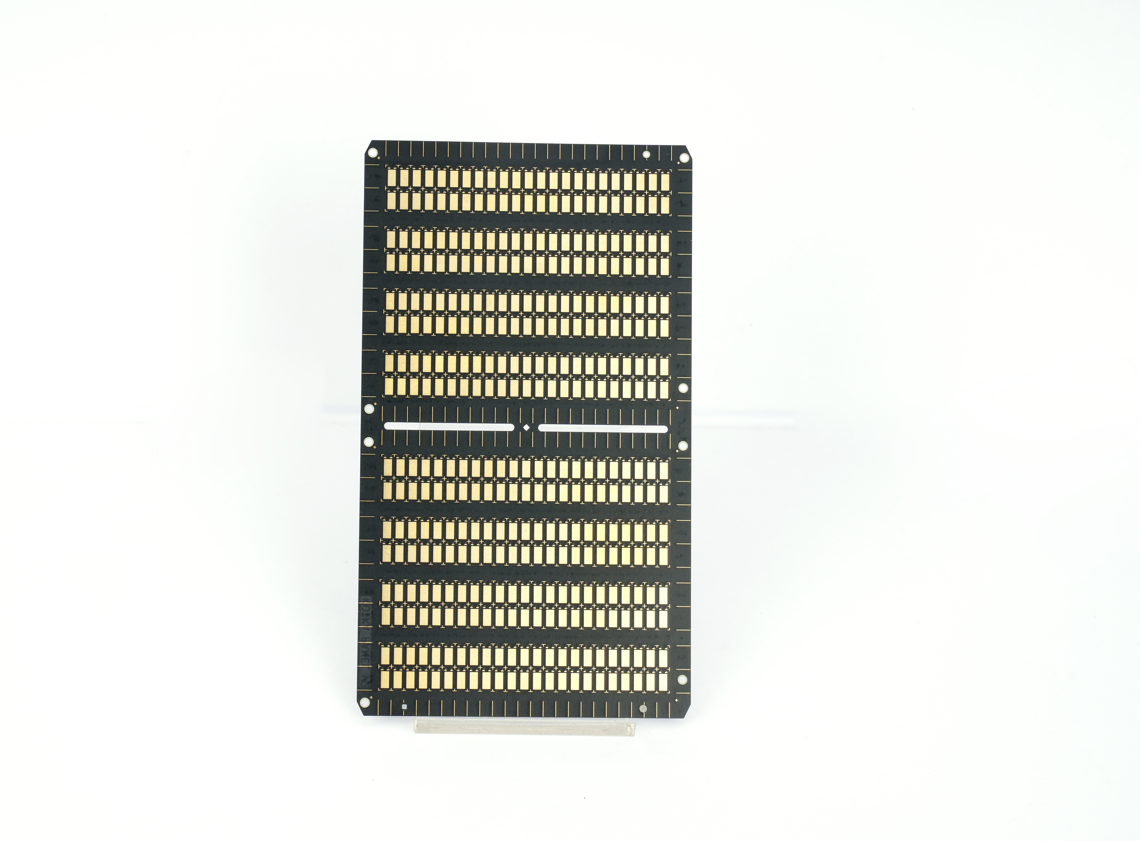
Click here to see more pictures of our ultra thin PCB boards.

Extra Thin PCB

Extra Thin PCB

Why Use Extra Thin PCB?

As consumer and industrial devices continue moving toward lighter and more compact designs, extra thin PCBs are becoming more widely used. They help optimize the internal layout without forcing a full shift to flexible circuits.

Key benefits include:

  • Reduced product thickness
  • Lower overall weight
  • Better fit for compact assemblies
  • More rigid than flexible circuits
  • More cost-effective than FPC in many simple designs
  • Suitable for slim modules with limited installation space

In some applications, extra thin FR4 PCB can also provide slight bendability during assembly. It does not replace a true flex circuit, but it can offer more mechanical tolerance than a standard rigid board.

Extra Thin PCB Applications

Extra thin PCBs are commonly used in products that demand a slim form factor and stable board structure. Typical applications include:

  • SIM card modules
  • TF card modules
  • NFC devices
  • Mobile phone charging modules
  • Wearable electronics
  • Drawing tablets
  • Metro coins or smart token devices

These products often have very limited internal clearance, making thin board construction an important part of the mechanical design.

Extra Thin PCB Manufacturing Capability

EBest Circuit provides extra thin PCB fabrication with the following capability range:

ItemCapability
Base MaterialFR4 Tg130, Tg170, Tg180
Board Thickness0.10 mm to 0.30 mm
Copper Thickness0.5 oz, 1 oz, 2 oz, 3 oz
Outline ProcessingRouting, punching, V-cut, laser cutting
Solder MaskBare, white, black, blue, green, red
Silkscreen ColorBlack, white
Surface FinishImmersion gold, OSP, ENEPIG, HAL-LF
Max Panel Size500 × 500 mm or 1000 × 350 mm
Min Panel Size3.5 × 3.5 mm
Min Single Size25 × 25 mm
Min Via Size0.10 mm
Min Trace / Space4/4 mil
PackingVacuum packing
Sample Lead Time7 to 9 days
Mass Production Lead Time8 to 10 days

We can manufacture extra thin boards with or without solder mask, depending on the design and end-use requirement.

Extra Thin PCB vs Flexible PCB

Although they may look similar in ultra-slim products, extra thin PCB and flexible PCB serve different purposes.

Extra Thin PCB

  • FR4-based rigid board
  • Better structural support
  • Easier for handling and assembly
  • Usually lower cost than FPC in comparable simple layouts
  • Suitable when slight thinness is needed, but repeated bending is not required

Flexible PCB

  • Built on polyimide or other flexible materials
  • Designed for dynamic bending or folding
  • Better choice for extremely thin or moving interconnect structures
  • Suitable when board thickness must go below 0.10 mm or when repeated flexing is required

If your design needs a board below 0.10 mm, a flex circuit is generally the better option. If you need a thin, stable, and economical rigid board, extra thin FR4 PCB is often the more practical solution.

Stack-Up of Extra Thin PCB

The construction of extra thin PCB is similar to standard FR4 PCB, but the material system is thinner and the process window is tighter. The board uses thinner core materials and prepregs to achieve the required final thickness.

Because the structure is much thinner, stack-up design becomes more sensitive. Material choice, copper balance, and lamination control all affect flatness, handling strength, and final dimensional stability.

For 2-layer to 4-layer extra thin PCBs, the stack-up is usually simpler than conventional multilayer boards, but it must still be engineered carefully to maintain production consistency.

2L PCB structure for extra thin PCB

Stack-Up of Extra Thin PCB

4L PCB structure for extra thin PCB

Stack-Up of Extra Thin PCB

How Are Extra Thin PCBs Manufactured?

The basic fabrication flow is close to standard FR4 PCB manufacturing, but extra thin boards require tighter control at every stage. Thin materials are easier to deform during drilling, imaging, etching, lamination, routing, and transportation through the production line.

To support reliable production, EBest Circuit uses stricter handling methods and more precise process control for extra thin boards. In some operations, dedicated equipment or supporting fixtures are used to improve stability and reduce the risk of deformation or damage.

This is especially important for:

  • Panel handling
  • Warpage control
  • Fine drilling accuracy
  • Outline precision
  • Surface protection
  • Final packing and shipment stability

Careful process control helps ensure that the finished boards meet both dimensional and reliability requirements.

Why Choose EBest Circuit for Extra Thin PCB?

Choosing the right supplier for extra thin PCB is not only about whether thin boards can be produced. It is also about whether the manufacturer can keep those boards stable, consistent, and practical for real assembly conditions.

At EBest Circuit, we provide:

  • Extra thin FR4 PCB fabrication for compact designs
  • Thickness options from 0.10 mm to 0.30 mm
  • Multiple copper weights and surface finishes
  • Prototype and volume production support
  • Engineering review before production
  • Stable manufacturing control for delicate thin boards
  • Fast lead times for samples and mass production

We understand the common manufacturing risks behind ultra-thin rigid boards and work to reduce handling issues before they become assembly problems.

Work with a Reliable Extra Thin PCB Manufacturer | EBest Circuit

If your project requires a thinner rigid board for compact electronics, EBest Circuit can help you move from design to production with stable manufacturing support.

We offer extra thin PCB solutions for card devices, wearable products, NFC modules, charging applications, and other slim electronic assemblies. Whether you need a prototype or volume production, our team can support your design with suitable materials, practical fabrication control, and responsive engineering service.

Looking for a dependable extra thin PCB manufacturer? Contact EBest Circuit today to discuss your project and request a quote.

FAQs About Extra Thin PCB

1. What is the thinnest PCB you can manufacture?

We can produce extra thin PCBs down to 0.10 mm using FR4 materials. For thinner requirements, flexible PCB is recommended.

2. Can extra thin PCB replace flexible PCB?

No. Extra thin PCB offers slight bendability but is not designed for dynamic flexing. For bending applications, FPC is required.

3. Is ultra thin PCB more expensive?

It is slightly higher than standard PCB due to tighter process control, but still more cost-effective than flexible PCB.

4. What copper thickness is supported?

We support 0.5 oz, 1 oz, 2 oz, and 3 oz depending on current and design requirements.

5. How do you prevent warpage in thin PCB?

We use optimized lamination parameters, panel support fixtures, and controlled handling processes to ensure flatness.

6. What industries use extra thin PCB the most?

Smart cards, wearable devices, consumer electronics, and compact modules are the most common applications.

Need Ultra Thin PCB for Your Project?

If your design requires a compact, lightweight, and reliable PCB solution, extra thin PCB is a practical choice.

Contact EBest Circuit today for a fast quote and free DFM review.

Email: sales@bestpcbs.com
Phone: +86-755-2909-1601

We help you turn complex thin PCB designs into stable, production-ready solutions.

You may also like

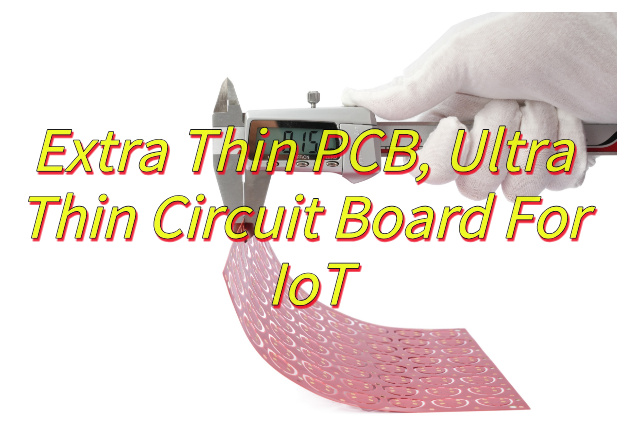
Extra Thin PCB, Ultra Thin Circuit Board For IoT
Monday, June 16th, 2025

Looking for extra thin PCB solutions? This guide explores ultra-thin circuit board specifications, IoT applications, thermal management, and 5G performance enhancements in compact designs.

At EBest Circuit (Best Technology), we understand your need for reliable yet cost-effective ultra thin circuit boards that power your IoT innovations. Our advanced manufacturing capabilities allow us to produce PCBs as thin as 0.2mm with exceptional precision, ensuring perfect fit for your compact devices while maintaining superior signal integrity. What truly sets us apart is our rigorous quality control process that delivers industry-leading <0.01% defect rates, giving you peace of mind for mass production. We’ve optimized our supply chain to offer these premium ultra-thin boards at prices 15-20% below market average without compromising quality – savings you can pass to your customers or reinvest in R&D. With over 200 successful IoT projects delivered globally, our engineering team can help you solve your most challenging design constraints while meeting tight deadlines. Let’s discuss how our high-performance, competitively priced ultra thin PCBs can give your IoT products an edge in today’s crowded market. Welcome to contact us: sales@bestpcbs.com.
What Is Extra Thin PCB?

An ‌extra thin PCB‌ is a specialized printed circuit board characterized by an exceptionally slim profile, typically measuring under 0.4 millimeters in total thickness, achieved through precision manufacturing techniques like advanced etching and laser drilling on ultra-thin core materials such as polyimide or specialized laminates. This type of ‌extra thin PCB‌ is engineered specifically for Internet of Things (IoT) applications where extreme miniaturization is essential, enabling direct integration into wearables, implantable medical sensors, and compact environmental trackers where traditional circuit boards would be physically impossible. Designing a robust ‌extra thin PCB‌ requires meticulous attention to thermal dissipation pathways, impedance control, and material selection to ensure reliable operation despite the minimal material volume while maintaining the flexibility and durability needed for dynamic IoT environments, leveraging specialized fabrication processes that preserve electrical integrity even at these extreme thicknesses to support complex circuitry in microscopic footprints.

Extra Thin PCB

What Are Specifications of Extra Thin PCB?

Here are the detailed specifications for extra thin PCB:

  • Thickness Parameters: An Extra Thin PCB typically measures between 0.1mm to 0.4mm in total thickness, achieved through ultra-precise material layering and etching processes to meet the demands of space-constrained IoT devices.
  • Material Composition: These boards often use high-performance polyimide substrates or specialized laminates, providing flexibility and thermal stability while maintaining the structural integrity required for wearable and embedded IoT applications.
  • Conductivity & Layer Count: Despite their slim profile, Extra Thin PCBs support multi-layer designs (2-6 layers) with fine-line copper traces (as narrow as 25”m) to ensure reliable signal transmission in compact IoT electronics.
  • Thermal Management: Effective heat dissipation is maintained through advanced dielectric materials and optimized copper distribution, preventing overheating in high-density IoT circuits.
  • Flexibility & Durability: Designed for dynamic IoT environments, Extra Thin PCBs exhibit excellent bend radius tolerance (down to 1mm) without compromising electrical performance.
  • Surface Finishes: Common finishes like ENIG (Electroless Nickel Immersion Gold) or OSP (Organic Solderability Preservative) are applied to enhance solderability and corrosion resistance in humid or variable IoT operating conditions.
  • Manufacturing Tolerances: Tight tolerances (±0.05mm for hole positioning, ±10% impedance control) ensure precision alignment with micro-components in IoT sensors and wearables.
  • Testing Standards: Each Extra Thin PCB undergoes rigorous electrical testing (continuity, insulation resistance) and mechanical stress tests (flex cycles, thermal shock) to validate IoT-ready reliability.
Ultra Thin Circuit Board

What Makes Extra Thin PCB Ideal for IoT Devices?

Here’s why extra thin PCBs are perfectly suited for IoT devices, explained from a practical user perspective:

  • Space Efficiency: The ultra-slim profile (as thin as 0.1mm) allows seamless integration into compact IoT devices like wearables or smart sensors, freeing up room for batteries and other components without sacrificing functionality.
  • Lightweight Design: Their minimal weight reduces strain on portable IoT gadgets, enhancing comfort for wearables and improving energy efficiency for battery-dependent applications.
  • Flexibility Adaptability: Extra Thin PCBs bend and conform to unconventional shapes, making them ideal for curved or foldable IoT products, from health monitors to flexible environmental sensors.
  • Enhanced Thermal Performance: Advanced materials dissipate heat effectively even in thin layers, preventing overheating in densely packed IoT electronics during prolonged operation.
  • High-Density Circuitry Support: Precision manufacturing enables complex multi-layer designs with fine traces, accommodating sophisticated IoT functionalities like wireless connectivity or data processing in tiny footprints.
  • Durability Under Stress: Rigorous testing ensures resistance to vibration, bending, and thermal cycling—critical for IoT devices exposed to dynamic environments like industrial sensors or outdoor trackers.
  • Power Efficiency: Optimized conductive paths minimize energy loss, extending battery life in IoT edge devices that require long-term, low-power operation.
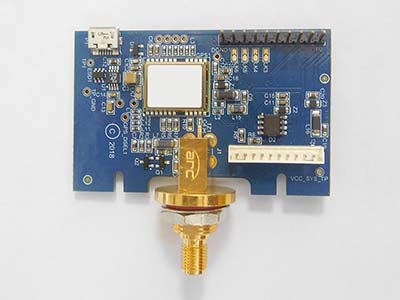
  • Cost-Effective Scalability: Streamlined production techniques make Extra Thin PCBs viable for mass-produced IoT solutions, balancing performance with affordability for consumer and industrial markets.

What Are the Applications of Extra Thin PCB in IoT?

Applications of extra thin PCB in IoT:

  • Wearable Health Devices‌ – Ultra-thin circuits embedded in skin patches for continuous vital sign monitoring
  • Smart Home Systems‌ – Paper-thin sensors hidden behind wallpapers detecting temperature/humidity changes
  • Industrial Equipment Monitoring‌ – Flexible vibration sensors conforming to machinery surfaces
  • Precision Agriculture‌ – Disposable soil sensors measuring moisture/nutrient levels across fields
  • Pharmaceutical Tracking‌ – NFC-enabled circuits printed directly on medication packaging
  • Medical Implants‌ – Biocompatible neural interfaces with sub-millimeter thickness
  • Consumer Electronics‌ – Foldable circuits enabling compact wearable designs
  • Logistics Management‌ – Ultra-lightweight tracking tags attached to shipping containers
  • Environmental Sensing‌ – Waterproof air quality monitors deployed in urban areas
  • Automotive Systems‌ – Flexible pressure sensors integrated into vehicle interiors
Extra Thin PCB

Can Extra Thin PCBs Handle High-Current in IoT Devices Without Overheating?

Yes, extra thin PCBs can handle high-current demands in IoT devices when designed with thermal management and material optimization. Below are actionable insights for ensuring reliability:
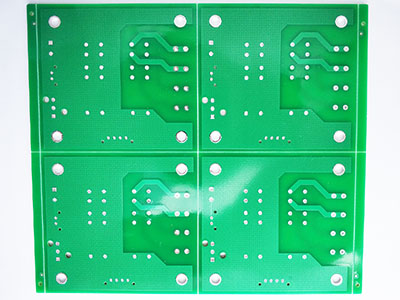
  • Thermally Conductive Substrate Materials: Select advanced substrates like polyimide blends or ceramic-reinforced composites. These materials outperform standard FR-4 in heat dissipation, making them ideal for power-intensive IoT modules such as smart grid sensors or industrial gateways.
  • Optimized Copper Layouts: Increase copper thickness (e.g., 2oz plating) and widen traces (0.5mm+) to reduce electrical resistance. This minimizes Joule heating in high-current paths, critical for battery-operated devices like robotic vacuum controllers.
  • Strategic Thermal Via Placement: Deploy staggered microvia arrays to transfer heat from component-dense zones to external heat sinks. This technique prevents thermal saturation in edge computing devices processing real-time video analytics.
  • Embedded Metal Core Technology: Integrate copper or aluminum inlays beneath power-hungry components (e.g., voltage regulators). This reduces thermal resistance by up to 40% in applications like electric vehicle charging stations.
  • Intelligent Component Zoning: Isolate heat-generating elements (MOSFETs, inductors) from temperature-sensitive components (antennas, MEMs sensors). This prevents signal degradation in wearable medical patches and similar devices.
  • Passive Cooling Enhancements: Design enclosure vents or heat-spreading fins for stationary IoT units (smart locks, security cameras). Active cooling remains optional but adds maintenance complexity.
  • Adaptive Current Management: Implement firmware that dynamically adjusts power allocation during peak loads. This protects PCBs from thermal runaway in wireless charging pads for drones and robots.
  • Iterative Thermal Simulation: Use computational tools (ANSYS Icepak, SolidWorks Flow) to model heat flow before prototyping. Adjust trace geometries and material stacks based on simulated hotspot data.
  • Surface Finish Considerations: Choose ENIG plating over HASL for flatter surfaces, improving thermal interface material adhesion. This benefits compact IoT modules with dense component layouts.

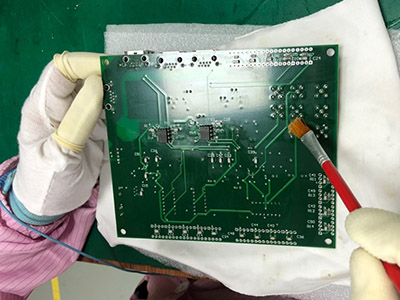
  • Rigorous Environmental Testing: Validate designs under extreme conditions (85°C/85% RH) to meet IEC 62368-1 standards. Document thermal margins to assure clients of long-term reliability in smart city infrastructure.
Ultra Thin Circuit Board

How to Prevent Signal Loss in Ultra Thin Circuit Boards for IoT Edge Devices?

Below are methods about how to prevent signal loss in ultra thin circuit boards for IoT edge devices:

  • Choose Low-Loss Substrates: Use materials like liquid crystal polymer (LCP) or modified polyimide to minimize signal attenuation. These substrates maintain performance at high frequencies (e.g., 5G, Wi-Fi 6).
  • Design Tight Impedance Control: Route high-speed traces (e.g., RF lines, USB 3.2) with precise geometries. Validate using simulation tools to ensure impedance matching (e.g., 50Ω for RF).
  • Maintain Clear Spacing: Keep ≄3x trace-width gaps between high-speed signals and adjacent traces. Use guard traces or ground planes in dense layouts (e.g., smart agriculture sensors).
  • Integrate Embedded Components: Add distributed capacitance via laminate materials to reduce power noise in edge computing modules.
  • Optimize Via Design: Use ≀0.1mm laser-drilled microvias to minimize stubs. Stagger vias in multi-layer boards for cleaner signal transitions.
  • Shield Sensitive Circuits: Apply copper foil or conductive coatings to RF enclosures. Prevent EMI in wireless modules.
  • Shorten Critical Paths: Route clock lines and data buses directly between components. Avoid loops in real-time systems (e.g., drone navigation).
  • Route Differential Pairs: Use tightly coupled differential pairs for high-speed interfaces (e.g., MIPI, PCIe). Match trace lengths to reject noise.
  • Manage Heat Near Components: Place thermal vias under power-hungry chips (e.g., SoCs) to stabilize impedance and prevent timing errors.
  • Test with Specialized Tools: Validate designs using Time-Domain Reflectometry (TDR) for impedance and Vector Network Analyzers (VNA) for RF performance.

How Do Ultra Thin Circuit Boards Enhance 5G IoT Performance?

  • Compact mmWave Antenna Integration: Embed 5G millimeter-wave (mmWave) antennas directly into device housings using Ultra Thin PCBs. This eliminates external connectors, reducing signal loss by 15-20% in smart city infrastructure like traffic drones or AR glasses.
  • Low-Loss Material for High-Frequency Signals: Use PTFE or ceramic-filled substrates to minimize dielectric absorption at 28GHz/39GHz bands. This ensures 99% signal integrity for industrial IoT sensors monitoring real-time machinery vibrations in factories.
  • Embedded Copper Cores for Thermal Management: Dissipate heat from 5G power amplifiers (PAs) using thinner substrates with copper inlays. This reduces thermal throttling by 40% in base stations, maintaining peak speeds during video streaming or AI inference tasks.
  • Laser-Drilled Microvias for High-Density Circuits: Enable 10+ layer designs with 0.1mm microvias to combine antennas, filters, and processors in a single package. This cuts latency by 25% in autonomous vehicle collision-avoidance systems.
  • Conformal 3D Design for Aerial Deployments: Wrap flexible Ultra Thin PCBs around curved surfaces in drones or robots, placing antennas 30% closer to endpoints. This improves signal reception for agricultural drones mapping crops via 5G-connected cameras.
  • Stripline Geometry for Reduced Insertion Loss: Lower insertion loss by 30% using stripline or coplanar waveguide (CPW) traces. This boosts SNR for AI-enabled surveillance cameras streaming 8K video over 5G networks.
  • Lightweight Design for Extended Battery Life: Reduce device weight by 20-40% with thinner PCBs, enabling 50% larger batteries in 5G AR glasses. This supports 8+ hours of continuous connectivity for field technicians accessing cloud-based diagnostics.

How to Maintain Consistent Performance in Ultra Thin Circuit Boards for 5G IoT Networks?

  • Select Thermally Stable Substrates: Use materials like liquid crystal polymer (LCP) or ceramic-filled PTFE with low coefficients of thermal expansion (CTE). This prevents warpage under 5G power amplifier (PA) heat, ensuring consistent impedance for mmWave signals in smart city gateways.
  • Tighten Impedance Control Tolerances: Design traces with ±3% impedance tolerance using advanced electromagnetic simulation. This maintains signal integrity across -40°C to 105°C temperature swings in outdoor 5G IoT routers.
  • Reinforce Microvia Durability: Deploy stacked microvias with electroplated copper fill and test for 1,500+ thermal cycles. Prevents via fracturing in 5G modules exposed to extreme environments like desert solar farms.
  • Optimize Power Delivery Networks (PDNs): Integrate 01005-size decoupling capacitors and segment power planes to filter high-frequency noise. Stabilizes voltage rails for 5G baseband processors, reducing bit error rates (BER) during data bursts.
  • Enhance Mechanical Robustness: Apply 50”m-thick ENIG (Electroless Nickel Immersion Gold) finish with 2”m gold thickness. Resists wear from 2,000+ mating cycles in industrial 5G edge computers with frequent connector changes.
  • Implement Advanced Environmental Testing: Conduct 96-hour HAST (Highly Accelerated Stress Test) and 7-day salt spray testing. Identifies weaknesses in 5G agricultural sensors deployed in coastal regions with high humidity.
  • Leverage Embedded Sensors for Real-Time Monitoring: Add onboard temperature/humidity/vibration sensors linked to edge AI. Enables predictive maintenance in 5G-enabled drones, alerting operators to thermal drift before it impacts video analytics.
  • Improve Layer-to-Layer Registration: Use laser-aligned lamination processes to maintain ±10”m registration across 12+ layers. Prevents signal skew in 5G phased-array antennas requiring nanosecond-level timing accuracy.
  • Adopt Hybrid Rigid-Flex Construction: Combine rigid PCB sections with flexible zones for vibration-prone applications. Reduces solder joint fatigue in 5G robotics controllers exposed to constant motion.
  • Certify Component Suppliers for 5G Readiness: Audit capacitor/inductor vendors for AEC-Q200 compliance and 5G-specific testing. Ensures passive components withstand 5G’s 28GHz frequencies without parametric drift.

Conclusion

In conclusion, ultra-thin PCBs have become essential components for next-generation IoT devices, offering unparalleled space savings, superior signal integrity, and excellent thermal management. As demonstrated throughout this article, EBest Circuit (Best Technology)’s advanced manufacturing capabilities enable us to produce reliable 0.1-0.2mm ultra-thin boards with 15ÎŒm precision line spacing and <50ppm defect rates – ideal for wearables, medical implants, and 5G edge computing applications. Our proprietary thin-film deposition and copper-filled microvia technologies ensure your IoT products achieve maximum performance while avoiding signal loss or overheating issues. For cost-effective, high-quality ultra-thin PCB solutions that accelerate your IoT development timeline, contact EBest Circuit (Best Technology) today for a competitive quote and technical consultation. Let’s collaborate to bring your innovative IoT concepts to market faster and more reliably: sales@bestpcbs.com.

You may also like

How to avoid circuits issue while the production process ?
Monday, July 13th, 2020

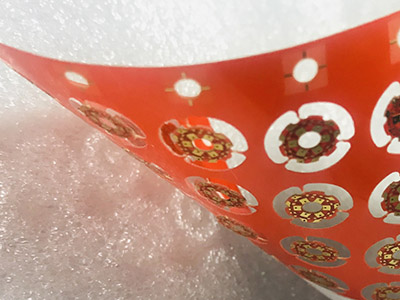
As we all know, the short & open circuits is a very common issues for the Printed Circuits Board, especially for the extra thin PCB, because its substrates thickness are very thin, generally from 0.4mm-0.15mm, so the circuits will be easy to be broken if we didnñ€ℱt control the production process well.

So, you may want to know, as an experienced PCB manufacturer, what we will do to avoid the circuits issues?

Here let me show you what we do:

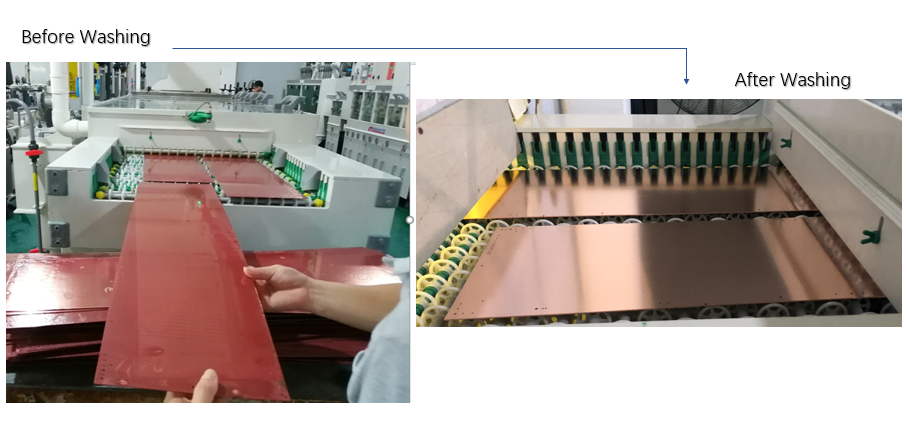
Firstly, after the process of copper plating, we will put the boards into our washing line to remove those drilling burr, surface oxide layer, etc.  To make sure the boards are fully clean before start the traces making process.

pcb washing
pcb washing

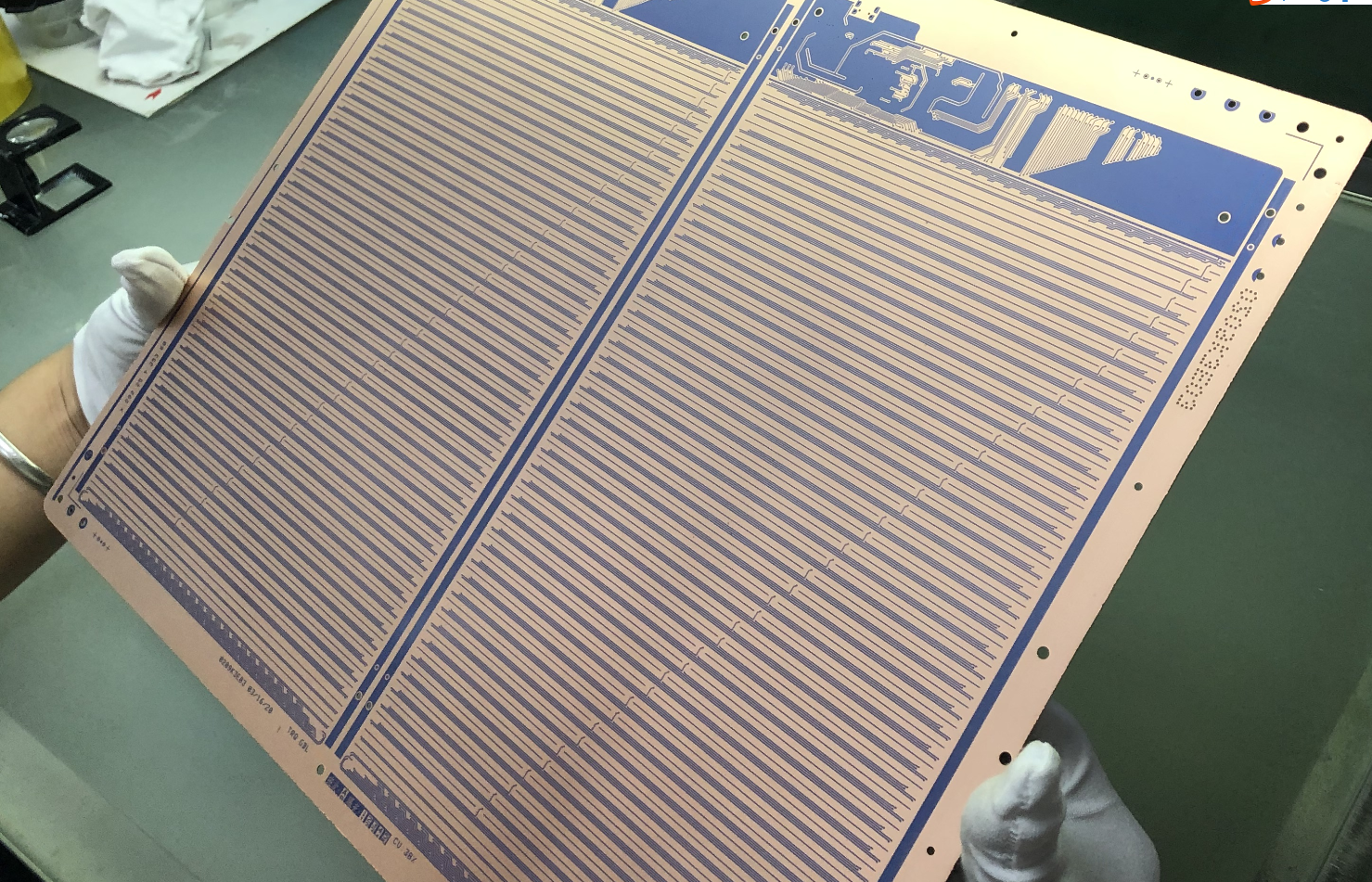
Actually, most of the open and short circuits problem are caused by the film scratching, so each operation while the pattern transfer process is very important.

Thatñ€ℱs also why the exposure and developing need to be processed in the dust-free workshop. We will use the rack to place each PCB board separately, to avoid the touching between PCB.

pcb explosure and developing

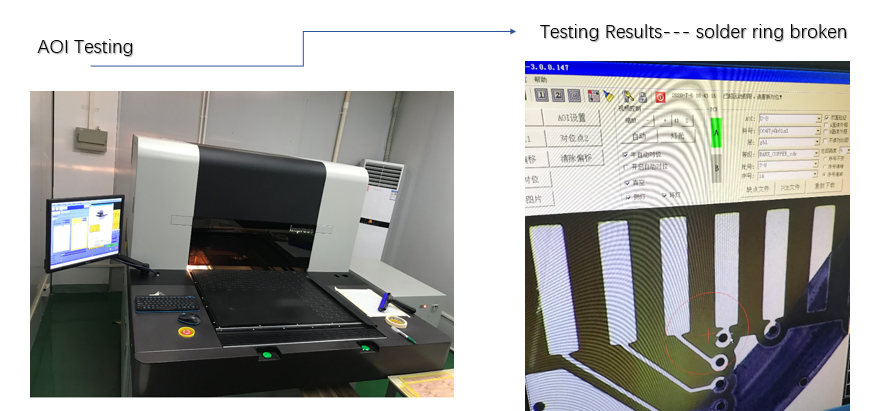
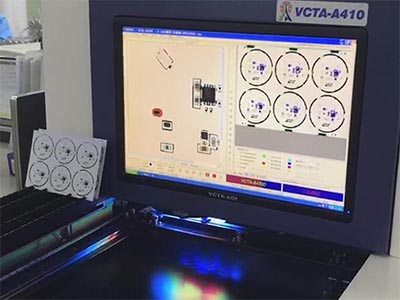
After the circuits etching out, we will take the boards to do the AOI testing, to check if there are any broken circuits, short gaps, protrusions, copper surface garbage and other problems. If there is, our machine will alert the problem, and we will fix the problem or scrap the defectives boards, with this process to prevent the defective boards move to the next step.

Most importantly is that we will do the first article inspection for all the boards, as long as we found the circuits issues while the AOI process, we will not take the whole batch boards go ahead.

aoi testing
aoi testing

Besides, the operation standard while the etching process is also very important for how the traces being. So, our production team will control the running speed of the etching machine very strictly. If it is a PCB with o.5oz bottom copper , only allow walk 1.4 meters at per minute, if 2oz, walk 0.8m one minute.

etching pcb
etching pcb

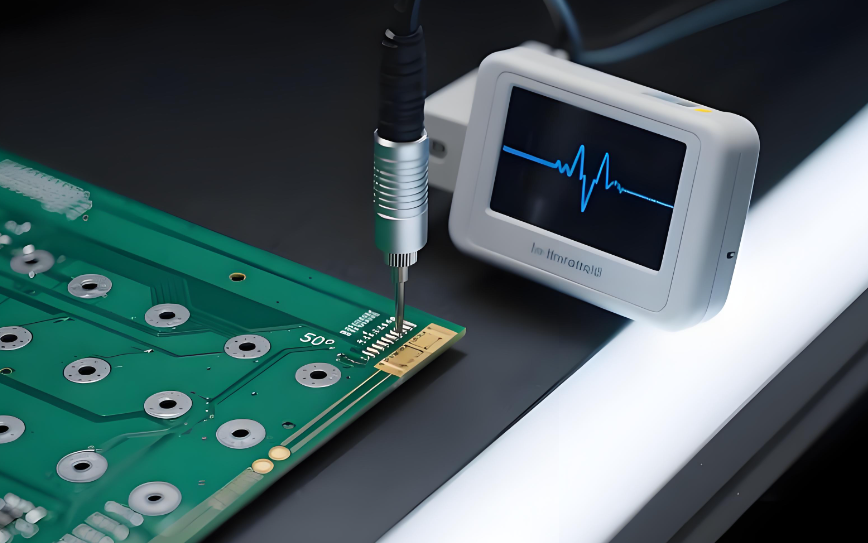
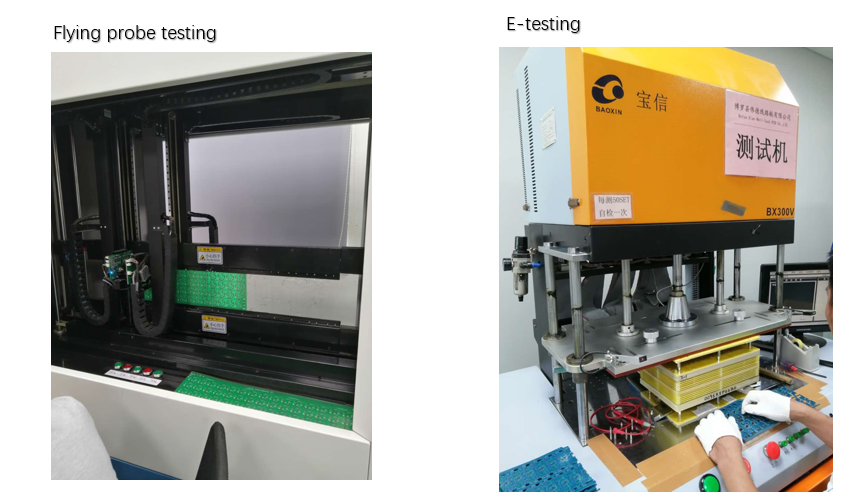
Except above process, all the boards will be required to do a final electrical testing before move to the packing. For prototypes, we will use flying probe testing. For volume, we will open the E-testing fixture to do the testing.

In our company, for the extra thin PCB, if the boards thickness lower than 0.2mm to do the flying probe testing, it needs to be tested before the outline process, because the boards are too thin to support the boards well while the flying probe, it will fall down easily.

flying probe testing and electric testing

Of course, our QC people will do the double visual inspection to make sure all the boards are being well made.

fr4 pcb inspection
fr4 pcb inspection

We always try our best effort to prevent any defective boards send to customers.  

Quality and Customers Scarification, it is always our companyñ€ℱs pursuit.

You may also like

What kind of finishing recommended for the extra thin FR4 PCB
Thursday, June 18th, 2020

As we know, the extra thin PCB means the thickness of printed circuit board is more thin than normal PCB, which is refer to a thickness smaller than 0.4mm for 1L/ 2L & 4L PCB. For extra thin PCB, we know they are all very thin and are easily to be broken, so the option for the surface treatment of the extra thin PCB is very crucial.

So, what kind of finishing to be recommended for the extra thin Rigid PCB?

extra thin FR4 PCB
0.15mm extra thin FR4 PCB_EBest Circuit (Best Technology)

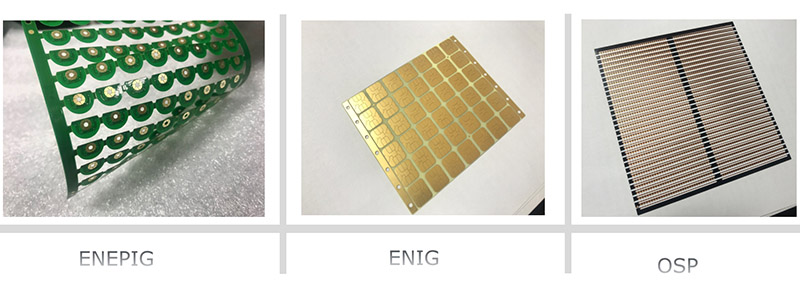
Generally, there are 3 kinds finishing can be recommended for the extra thin PCB. It is OSP, ENIG (Electroless Nickel Immersion Gold), and ENEPIG.

extra thin pcb finishing

But you may want to ask that lead-free Tin is also a common finishing for the PCB. Why not recommend LF HASL? 

Thatñ€ℱs because while LF HASL Process, the PCB will be easy to be blew away, people will use heated compressed air to leveling (blowing) on the coating molten tin (lead) solder, during this process, the traces will be easy to be broken as well.

So normally, we will not recommend the LF HASL finishing for an ultra thin FR4 PCB.

HASL lead-free is only suitable for a board with minimum thickness of 0.6mm, while the standard gold immersion surface coating can support PCB with a minimum thickness of 0.2mm. For the surface treatment of ENEPIG , which plate only needs to be about 0.1 microns for palladium and about 0.1 microns for gold, (palladium is a precious metal that is much harder than gold), so for board with ENEPIG finishing, its surface will looks more smooth, thatñ€ℱs also why it is the most recommended surface treatment for an extra thin PCB.

extra thin PCB
0.13mm extra thin Rigid FR4 PCB_EBest Circuit (Best Technology)

If you are searching for an extra thin PCB, feel freely to ask or send your inquiry to us. We will be pleased to share you more information regarding the extra thin PCB.

You may also like