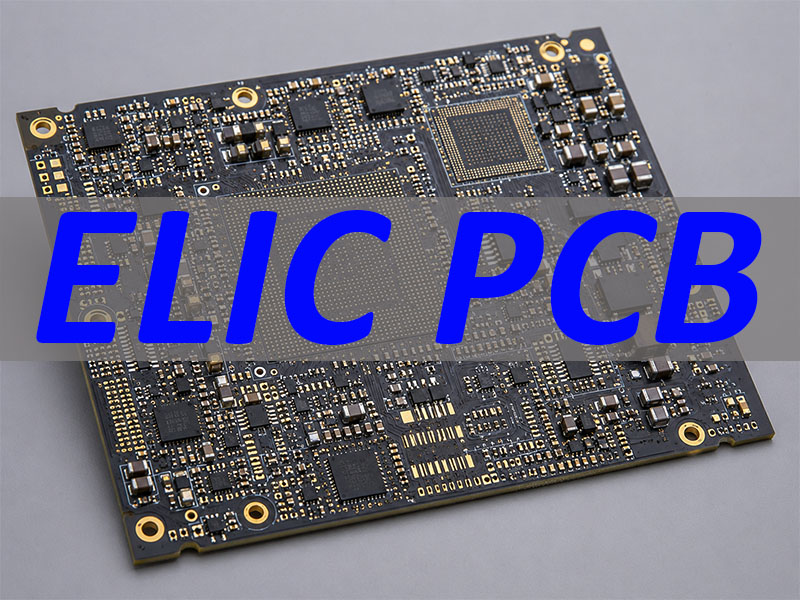
ELIC PCB means Every Layer Interconnect PCB. It is an advanced HDI PCB structure that uses laser microvias, copper-filled vias, and layer-to-layer interconnection to support compact, high-density electronic products. Compared with standard multilayer PCB or basic HDI PCB, ELIC PCB gives engineers more routing space in a smaller board area.
EBest Circuit (Best Technology) supports ELIC PCB and advanced HDI PCB projects through DFM review, manufacturability review, PCB layout support based on customer-provided inputs, PCB fabrication, PCBA assembly, component sourcing, testing coordination, and production traceability. We do not provide full circuit design, RF design, or product design services. Our role is to help customers turn approved design inputs into manufacturable and production-ready PCB/PCBA projects. For engineering review or quotation support, please send your Gerber files, stack-up, BOM, drawings, and project requirements to sales@bestpcbs.com.
What Is ELIC PCB?
ELIC PCB is a high-end HDI board where different layers can be connected through laser-drilled and copper-filled microvias. It is also commonly called any-layer HDI PCB.
In simple terms:
- Standard multilayer PCB mainly uses through holes.
- Standard HDI PCB uses blind vias, buried vias, and microvias in selected layers.
- ELIC PCB allows high-density interconnection across layers with filled microvias.
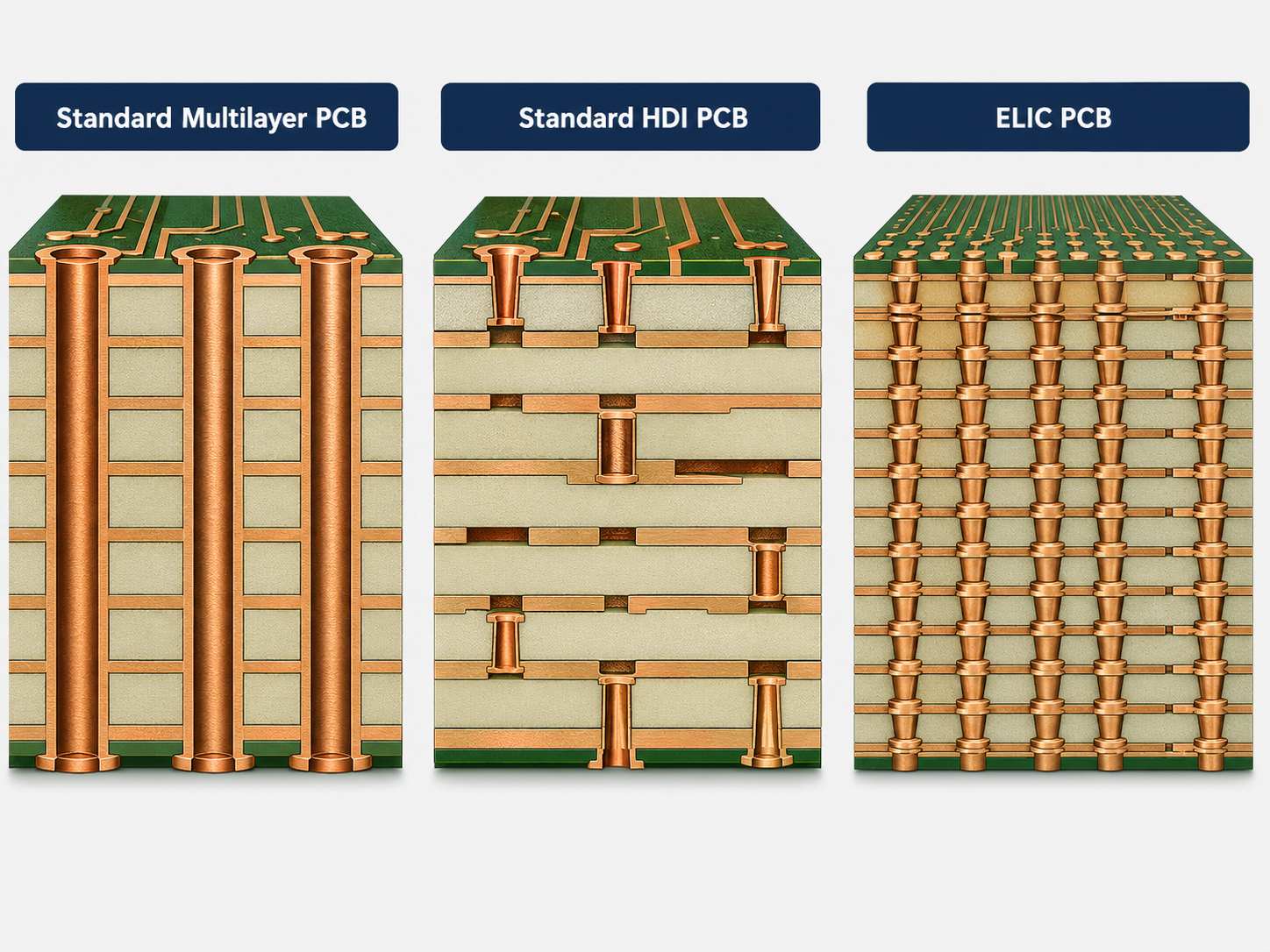
The real value of ELIC PCB is not just “more layers.”
It is more routing freedom in less space.
ELIC PCB is usually used when a product needs:
- compact board size;
- high component density;
- fine-pitch BGA fanout;
- short signal paths;
- thinner PCB structure;
- stable high-speed signal routing;
- high-reliability interconnection;
- more functions in limited space.
A typical ELIC PCB may include:
- laser microvias;
- stacked microvias;
- copper-filled microvias;
- via-in-pad structures;
- fine line and spacing;
- multiple lamination cycles;
- high-density routing between layers.
For customers, the key question is not only “What is ELIC PCB?”
The more practical question is:
Can the manufacturer control microvia quality, copper filling, lamination, registration, testing, and assembly readiness?
That is where a precision ELIC PCB manufacturer becomes important.
What Is the ELIC PCB Process?
The ELIC PCB process is more demanding than standard multilayer PCB manufacturing. It requires accurate laser drilling, copper filling, sequential lamination, and strict process control.
A simplified process includes:
- Inner Layer Fabrication
Inner copper layers are imaged, etched, inspected, and prepared for lamination. - Lamination
Core materials and prepregs are pressed together under controlled temperature and pressure. - Laser Microvia Drilling
Small microvias are drilled by laser between adjacent layers. - Microvia Metallization
The laser-drilled holes are cleaned and prepared for copper deposition. - Copper-Filled Microvias
Microvias are filled with copper to support stacked or any-layer interconnection. - Sequential Build-Up
Additional layers are built step by step. Each cycle needs alignment, lamination, drilling, plating, and inspection. - Outer Layer Imaging and Etching
Final outer circuits are formed after the internal structures are completed. - Surface Finish
ENIG, ENEPIG, OSP, immersion silver, or other finishes may be selected based on assembly and reliability needs. - Inspection and Testing
AOI, electrical testing, X-ray, impedance testing, and microsection inspection may be required.
For ELIC PCB, the main manufacturing risks often come from:
- microvia reliability;
- copper filling quality;
- stacked via alignment;
- layer-to-layer registration;
- multiple lamination control;
- fine line and spacing control;
- board thickness control;
- impedance consistency;
- warpage control;
- SMT assembly yield.
EBest Circuit (Best Technology) can review customer files before production and check manufacturability risks related to microvias, stack-up, pad structure, surface finish, and assembly requirements.
ELIC PCB vs Standard HDI PCB: What Is the Difference?
ELIC PCB belongs to the HDI PCB family, but it is more advanced than many standard HDI structures.
| PCB Type | Main Structure | Typical Use |
|---|---|---|
| Standard Multilayer PCB | Mainly through holes | General electronics |
| Standard HDI PCB | Blind vias, buried vias, selected microvias | Compact electronics |
| ELIC PCB | Any-layer interconnect with filled microvias | High-density advanced electronics |
The main difference is interconnection freedom.
Standard HDI PCB may use structures such as:
- 1+N+1 HDI;
- 2+N+2 HDI;
- blind vias;
- buried vias;
- local microvias.
ELIC PCB goes further. It allows dense interconnection between layers through filled microvias, helping the board achieve a more compact layout.
This structure can help:
- reduce PCB size;
- shorten signal paths;
- support fine-pitch BGA components;
- improve routing efficiency;
- reduce through-hole occupation;
- allow more functions in a smaller board area.
However, ELIC PCB also increases manufacturing difficulty. Compared with standard HDI PCB, it needs stronger control over:
- laser drilling;
- microvia copper filling;
- lamination cycles;
- layer registration;
- stacked via reliability;
- inspection and testing.
ELIC PCB should be selected when the design truly needs high-density routing, miniaturization, or any-layer interconnection. If a standard HDI PCB can meet the product requirement, ELIC may not be necessary.
Where Is ELIC PCB Used?
ELIC PCB is used when products need high density, small size, short interconnect paths, and reliable performance.
Common applications include:
- Smartphones and Wearable Devices
These products need very small PCBs with high component density. ELIC helps save board space while supporting complex routing. - Camera Modules
Camera modules often use fine-pitch components and compact interconnection structures. - Medical Electronics
Portable monitors, diagnostic modules, and compact medical devices may use advanced HDI structures to save space and improve assembly density. - Communication Modules
High-density communication boards may need short signal paths, controlled routing, and stable interconnection. - High-Density Sensor Modules
Sensor products often combine small packages, limited board space, and strict connection reliability. - Aerospace Electronics
Some aerospace modules need compact structure, weight reduction, and high-reliability interconnection. - Miniaturized Industrial Electronics
Industrial modules are becoming smaller while still requiring stable performance and long service life. - Advanced Consumer Electronics
Thin, compact devices with fine-pitch ICs and dense assembly may require ELIC PCB or advanced HDI PCB.
ELIC PCB is not used for every product. It is most valuable when ordinary multilayer PCB or standard HDI PCB cannot provide enough routing space or interconnection flexibility.
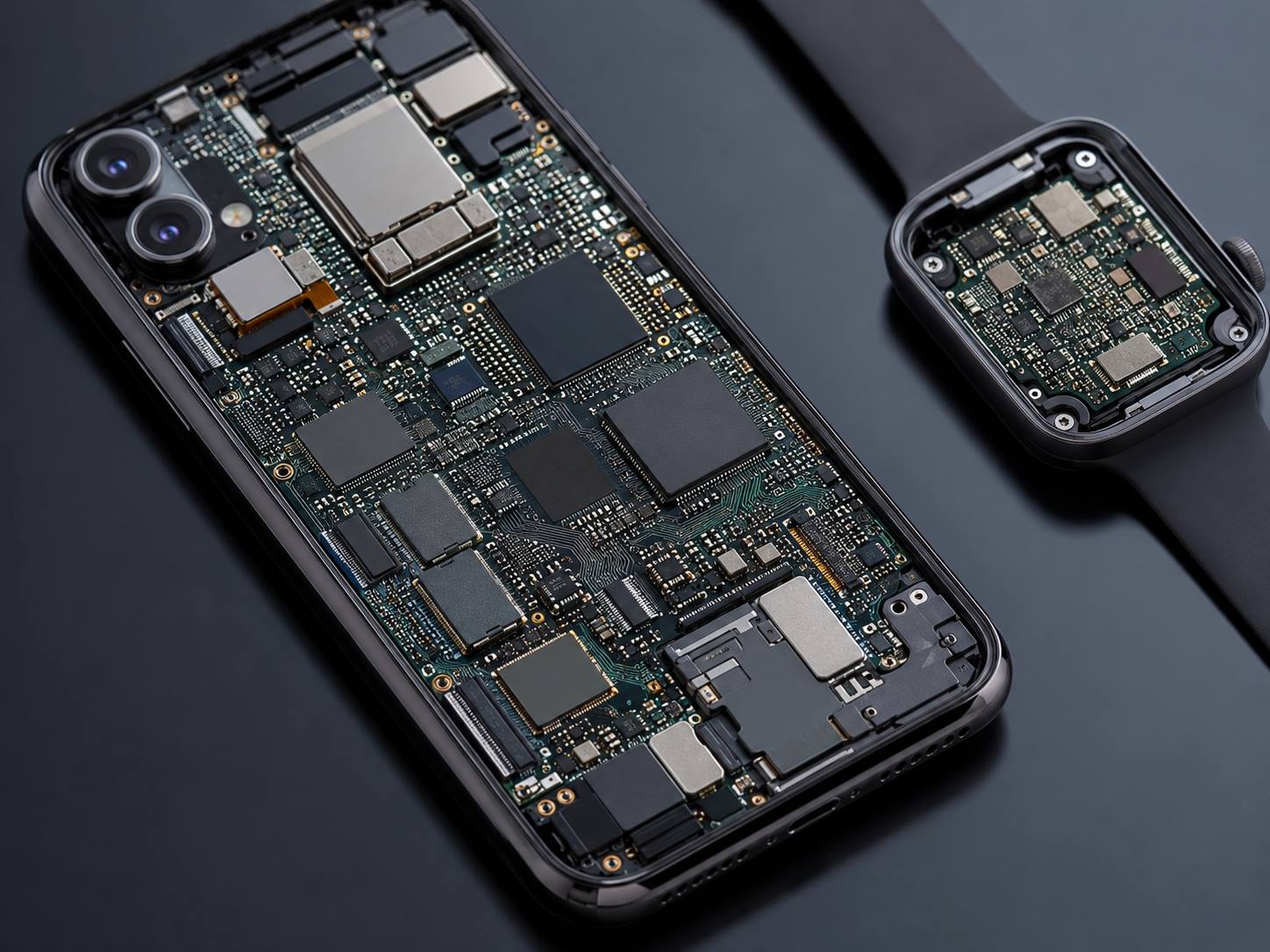
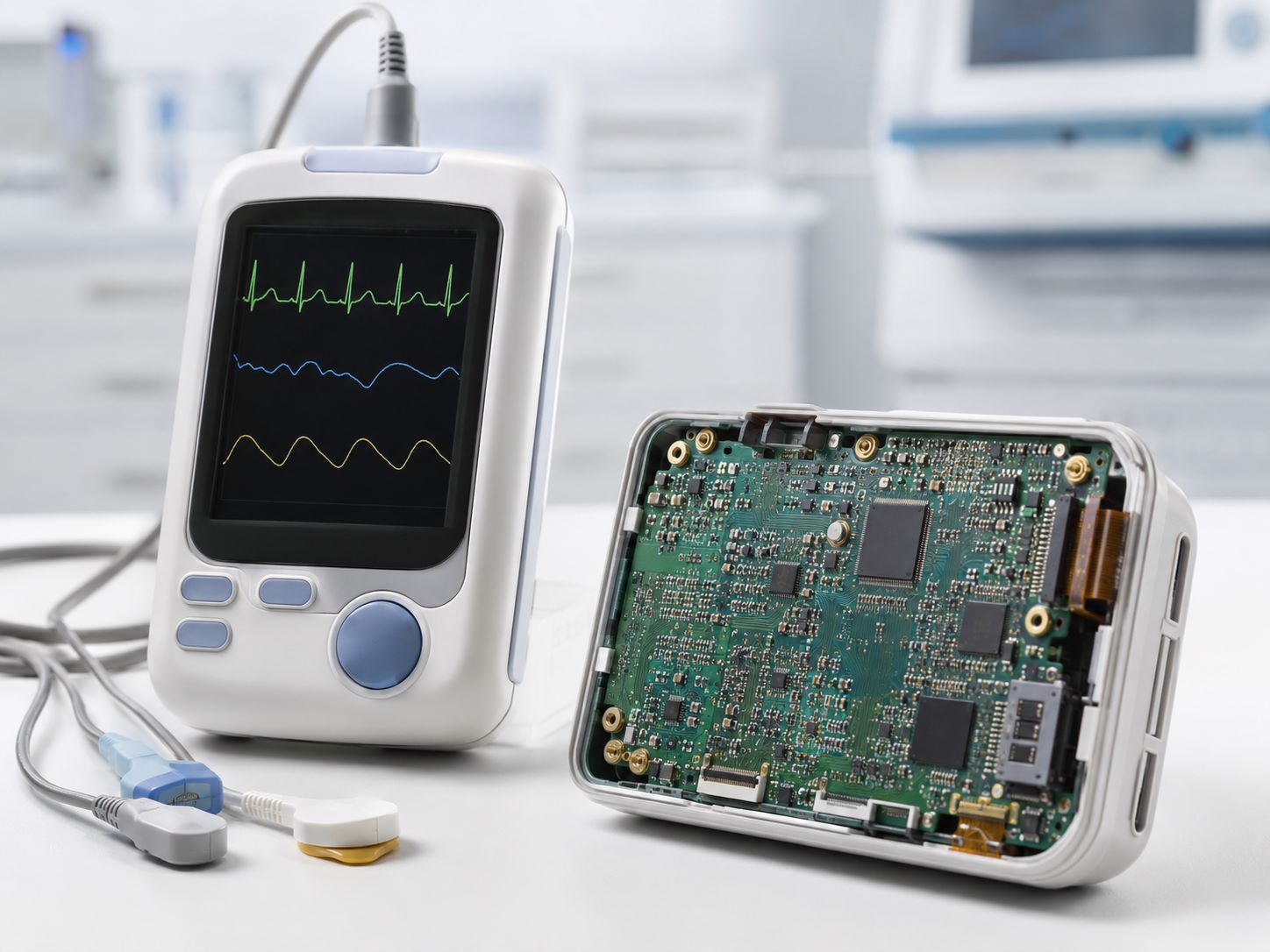
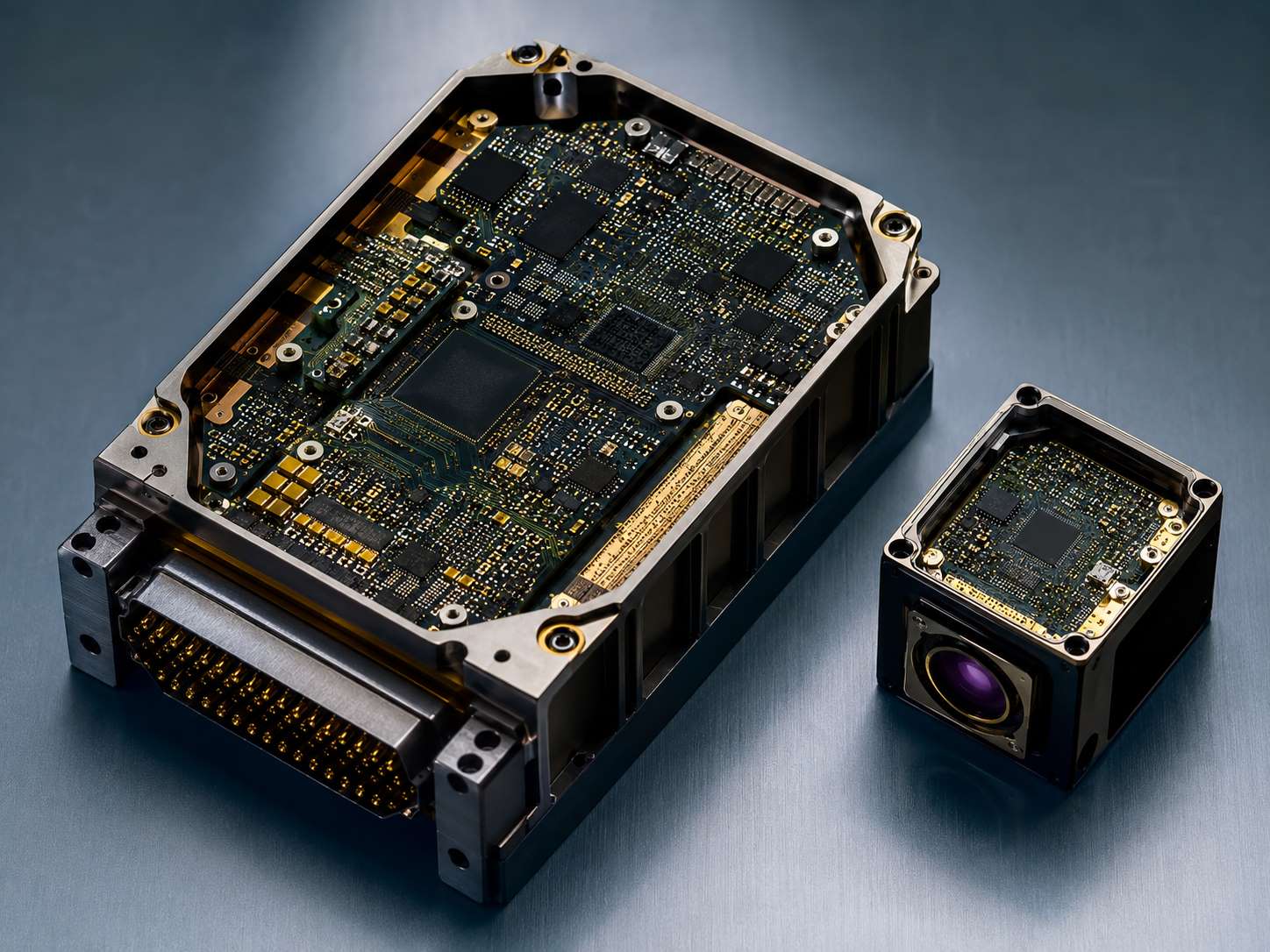
Case Study: ELIC PCB Manufacturing from EBest Circuit (Best Technology)
This case is based on a representative ELIC PCB manufacturing scenario from EBest Circuit (Best Technology). Customer details and product information are generalized to protect confidentiality, while the board specifications are presented in a practical format for engineers and buyers.
Project Overview
The project required an 8-layer ELIC FR4 PCB for a compact high-density electronic module. The board needed any-layer interconnection, laser microvias, copper-filled vias, BGA via-in-pad, controlled impedance, and SMT-ready panel delivery.
This was not a standard HDI board. The key requirement was to create reliable interconnection between adjacent layers while keeping the PCB thin, dense, and suitable for fine-pitch component assembly.
Customer Requirements
The customer needed a compact PCB with:
- 8-layer any-layer HDI structure;
- laser microvias between adjacent layers;
- copper-filled microvias;
- BGA via-in-pad with resin filling and planarization;
- controlled impedance with impedance report;
- black solder mask and white silkscreen;
- ENIG 1u” surface finish;
- panel delivery with 3 Mark points for SMT assembly.
The project required close control of microvia reliability, layer registration, copper filling, impedance, pad flatness, and SMT assembly readiness.
EBest Circuit (Best Technology)’s Support
EBest Circuit (Best Technology) reviewed the customer-provided files from a manufacturability perspective before production.
Our support focused on:
- DFM review;
- ELIC stack-up manufacturability review;
- laser microvia and copper filling process review;
- via-in-pad resin filling and planarization control;
- controlled impedance manufacturing;
- SMT panel optimization;
- electrical testing and impedance report;
- PCBA assembly readiness review.
Where layout adjustment was needed, EBest Circuit (Best Technology) supported PCB layout work based on the customer’s approved design inputs. This was layout support, not full circuit design, RF design, or product design.
Project Result
The project was completed as an 8-layer ELIC PCB with any-layer interconnect structure. The board supported fine-pitch BGA assembly, controlled impedance, and SMT-ready panel delivery.
This case shows why ELIC PCB manufacturing depends on more than layer count. Microvia structure, copper filling, lamination control, impedance, surface finish, and assembly preparation must be reviewed together before production.
Case Board Specifications
| Item | Specification |
|---|---|
| PCB Type | 8L ELIC FR4 PCB / Any-Layer HDI PCB |
| Material | High-Tg FR4, Tg 170°C |
| Finished Thickness | 0.97mm |
| Copper Weight | 0.5oz |
| Interconnect Structure | Every Layer Interconnect |
| Microvia Structure | Adjacent-layer laser microvias from L1-L2 to L7-L8 |
| Via Process | Copper-filled laser microvias |
| Minimum Microvia Size | 0.1mm |
| BGA Area | Via-in-pad with resin filling and planarization |
| Surface Finish | ENIG 1u” |
| Solder Mask / Silkscreen | Black solder mask, white silkscreen |
| Impedance Control | 50Ω single-ended, 90Ω / 100Ω differential impedance |
| SMT Delivery Requirement | Panel delivery with 3 Mark points on the panel edge |
| Testing Requirement | Electrical test and impedance report |
Top 10 ELIC PCB Manufacturer Supplier Reference in China
The following list is not an official ranking. It is a supplier reference for customers comparing ELIC PCB, any-layer HDI PCB, and advanced HDI PCB manufacturing options in China. Before selecting a supplier, customers should still confirm the real project details, including microvia structure, copper filling, layer count, line width and spacing, stack-up, testing requirements, assembly needs, and production volume.
| Company | Company Positioning |
|---|---|
| EBest Circuit (Best Technology) | Engineer-oriented one-stop PCB and PCBA service provider |
| Avary Holding | Large-scale HDI PCB manufacturer |
| DSBJ / Multek | High-end interconnect PCB manufacturer |
| WUS Printed Circuit | High-speed and HDI PCB manufacturer |
| Kinwong | Automotive and HDI PCB manufacturer |
| Shengyi Electronics | High-reliability HDI PCB manufacturer |
| Suntak Technology | Multilayer and HDI PCB supplier |
| MADPCB | Prototype-to-production HDI PCB supplier |
| WellPCB | Online HDI PCB manufacturing service provider |
| PCBWay | Online prototype and small-batch PCB platform |
This supplier reference can help customers build an initial shortlist. However, ELIC PCB projects should not be sourced only by company size or website claims. A better way is to ask whether the supplier can support the exact ELIC structure in your files, including laser microvias, stacked vias, copper filling, sequential lamination, impedance control, inspection, and PCBA assembly if required.
For customers who need both advanced PCB manufacturing and assembly support, EBest Circuit (Best Technology) can provide DFM review, PCB layout support based on customer inputs, ELIC/HDI PCB fabrication, PCBA assembly, component sourcing, testing coordination, and MES-based production traceability. This makes the project easier to manage from prototype validation to batch production.
Why Choose EBest Circuit (Best Technology) as Your ELIC PCB Manufacturer?
Choosing an ELIC PCB manufacturer is not only about finding a PCB factory. It is about finding a team that understands the manufacturing risks behind advanced HDI structures.
EBest Circuit (Best Technology) supports customers in several practical areas.
ELIC and HDI PCB Manufacturing Support
We can support advanced PCB projects involving:
- ELIC PCB;
- any-layer HDI PCB;
- multilayer HDI PCB;
- blind and buried vias;
- laser microvias;
- copper-filled microvias;
- via-in-pad structures;
- fine line and spacing;
- high-density BGA breakout.
DFM Review
Before production, EBest Circuit (Best Technology) can review:
- Gerber files;
- stack-up;
- via structure;
- annular ring;
- line width and spacing;
- solder mask clearance;
- copper balance;
- surface finish;
- panelization;
- testing requirements.
This helps reduce avoidable manufacturing risks before the board enters production.
PCB Layout Support Based on Customer Inputs
EBest Circuit (Best Technology) can support PCB layout work when the customer provides the required inputs, such as:
- schematic;
- netlist;
- component placement requirements;
- mechanical outline;
- connector locations;
- impedance requirements;
- routing rules;
- keep-out areas;
- assembly requirements.
Our role is to prepare or adjust manufacturable PCB layout files based on customer-provided design inputs. We do not position this as full PCB design, circuit design, RF design, or product design.
PCB Fabrication and PCBA Assembly
Many ELIC PCB projects also require assembly support. EBest Circuit (Best Technology) can support:
- PCB fabrication;
- component sourcing;
- SMT assembly;
- through-hole assembly;
- assembly process review;
- AOI inspection;
- X-ray inspection when needed;
- electrical testing;
- functional testing coordination.
Quality and Traceability
For high-reliability projects, documentation and traceability matter.
EBest Circuit (Best Technology) can support:
- production quality records;
- incoming material control;
- process tracking;
- MES-based traceability;
- inspection records;
- testing coordination;
- prototype to batch production support.
Industry Support
Our PCB and PCBA services are suitable for projects in:
- medical electronics;
- industrial control;
- communication equipment;
- automotive electronics;
- aerospace electronics;
- sensor modules;
- compact electronic devices;
- high-density electronic assemblies.
If your project needs ELIC PCB manufacturing, HDI PCB fabrication, or PCBA assembly support, send Gerber files, stack-up, BOM, drawings, and requirements to sales@bestpcbs.com. As an advanced HDI PCB manufacturer, EBest Circuit (Best Technology) can review manufacturability, production feasibility, assembly needs, and quotation details.
FAQs About ELIC PCB
1. What does ELIC PCB mean?
ELIC PCB means Every Layer Interconnect PCB. It is an advanced HDI PCB structure that allows high-density interconnection across layers through laser microvias, usually with copper filling.
2. Is ELIC PCB the same as HDI PCB?
ELIC PCB belongs to the HDI PCB family, but it is more advanced than many standard HDI structures. It is often understood as any-layer HDI PCB.
3. What is the main advantage of ELIC PCB?
The main advantage is high-density interconnection in a compact board area. It helps reduce board size, improve routing freedom, and support fine-pitch components.
4. Does ELIC PCB use laser microvias?
Yes. ELIC PCB usually uses laser-drilled microvias, and these microvias are often copper-filled to support stacked interconnect structures.
5. Is ELIC PCB more expensive than standard HDI PCB?
Usually yes. ELIC PCB requires more complex processes, such as laser drilling, copper filling, sequential lamination, tighter registration control, and more inspection.
6. What products use ELIC PCB?
ELIC PCB is used in compact and high-density electronics, such as smartphones, wearable devices, camera modules, medical electronics, communication modules, sensor modules, aerospace electronics, and advanced consumer electronics.
7. What files are needed for an ELIC PCB quotation?
Customers should provide Gerber files, stack-up, drill files, fabrication drawing, BOM if assembly is needed, impedance requirements, board thickness, copper thickness, surface finish, testing requirements, and application notes if available.
8. Can EBest Circuit (Best Technology) provide PCB design for ELIC PCB projects?
EBest Circuit (Best Technology) does not provide full PCB design, circuit design, RF design, or product design services. We can support PCB layout work when the customer provides complete design inputs, and we can provide DFM review for PCB fabrication and assembly.
9. Can EBest Circuit (Best Technology) support ELIC PCB fabrication and assembly?
Yes. EBest Circuit (Best Technology) can support ELIC/HDI PCB manufacturability review, PCB fabrication, PCBA assembly, component sourcing, testing coordination, and production traceability.
10. How can I get an ELIC PCB quotation?
Send your Gerber files, stack-up, BOM, drawings, and project requirements to sales@bestpcbs.com. EBest Circuit (Best Technology) will review manufacturability, assembly needs, testing requirements, and quotation details.
ELIC PCB is a manufacturing-intensive structure that requires strong process control. Microvia reliability, copper filling, layer registration, lamination control, testing, and assembly support all affect the final result. EBest Circuit (Best Technology) supports ELIC PCB and advanced HDI PCB projects from DFM review to PCB fabrication, PCBA assembly, testing, and production traceability. For engineering review or quotation support, please send your Gerber files, stack-up, BOM, drawings, and project requirements to sales@bestpcbs.com.