Custom etched flex circuits are widely used in compact electronic products where space, weight, and wiring reliability matter. In this article, we will explain what custom etched flex circuits are, how they are made, which materials are commonly used, and what buyers should consider before placing an order.
From medical devices and sensors to automotive electronics, wearable products, and industrial modules, flexible circuits help electronic products become smaller, lighter, and easier to assemble. At EBest Circuit, we support these projects with fast-turn prototypes, in-house manufacturing, and engineering review before production. Our team can evaluate material selection, bend areas, stiffener design, and manufacturability early in the process to help reduce development risks and speed up time to market. Have a custom flex circuit or flex PCB assembly project in mind? Pls feel free to contact our team at sales@bestpcbs.com for a quick engineering review and quotation.
What Are Custom Etched Flex Circuits?
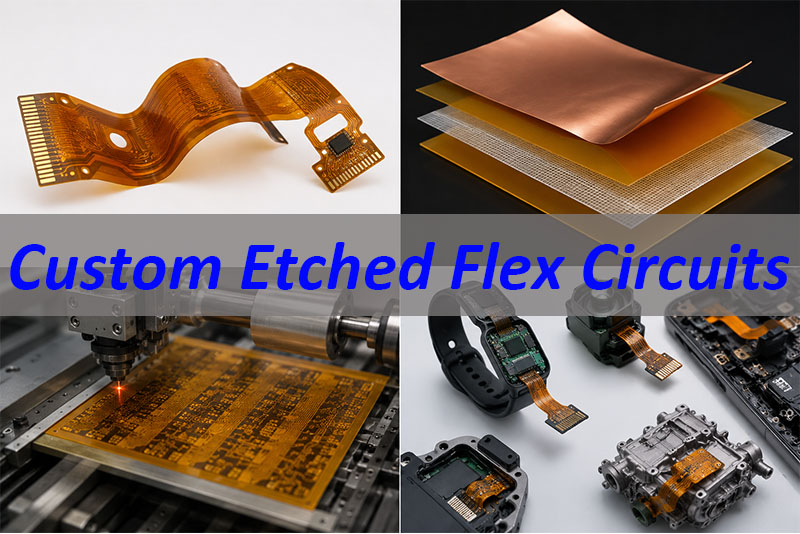
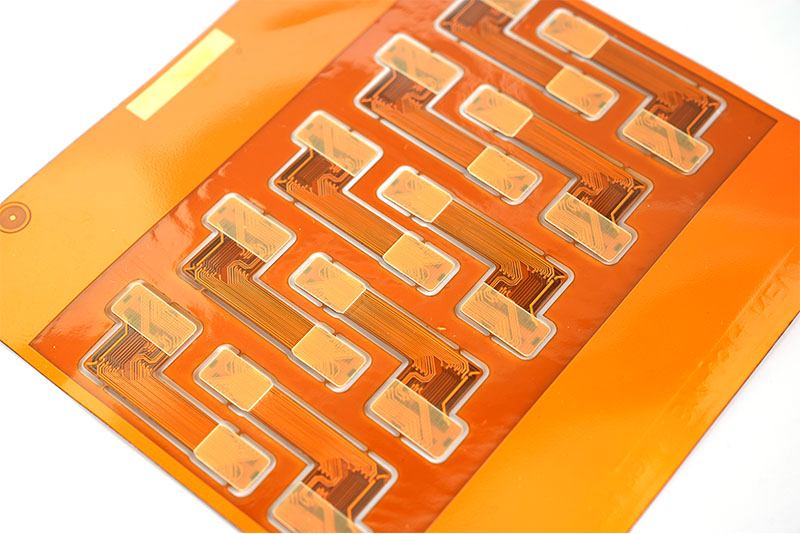
Custom etched flex circuits are flexible printed circuits made by chemically etching copper traces on a flexible base material. The most common base material is polyimide, which offers good heat resistance, flexibility, and dimensional stability.
Unlike standard off-the-shelf cables, custom etched flex circuits are designed according to a specific product layout. The circuit shape, copper trace width, hole position, connector area, stiffener, surface finish, and coverlay opening can all be customized.
A typical flex circuit may include:
- Flexible polyimide substrate
- Copper conductive traces
- Adhesive or adhesive-less copper structure
- Coverlay insulation layer
- Stiffeners for connector or component areas
- Pads, vias, slots, and mounting holes
- Surface finish such as ENIG, OSP, immersion silver, or tin
The main purpose of a custom flex circuit is to provide a reliable electrical connection in a small or movable space. It can replace bulky wires, reduce manual assembly, and support a cleaner internal product structure.
Why Are Flex Circuits Etched Instead of Wired?
Flex circuits are etched because etching allows precise copper patterns to be formed on a thin flexible substrate. This process creates a flat, repeatable, and compact circuit path.
Traditional wires are useful in many products, but they may occupy more space and require manual routing. When a product becomes smaller or more complex, wire harnesses can create assembly problems. Wires may cross each other, need extra fixing, or increase the risk of connection errors.
Etched flex circuits solve these issues by turning the circuit path into a controlled copper pattern. Each trace is placed exactly where it should be. This improves repeatability and makes assembly easier.
Etched flex circuits are especially useful when a product requires:
- Thin and lightweight interconnection
- Consistent circuit layout
- Reduced manual wiring
- Bending or folding inside the enclosure
- Stable signal transmission
- Cleaner internal product design
- Easier mass production
For compact electronics, etched flex circuits often provide a more practical solution than individual wires.
What Materials Are Used in Custom Etched Flex Circuits?
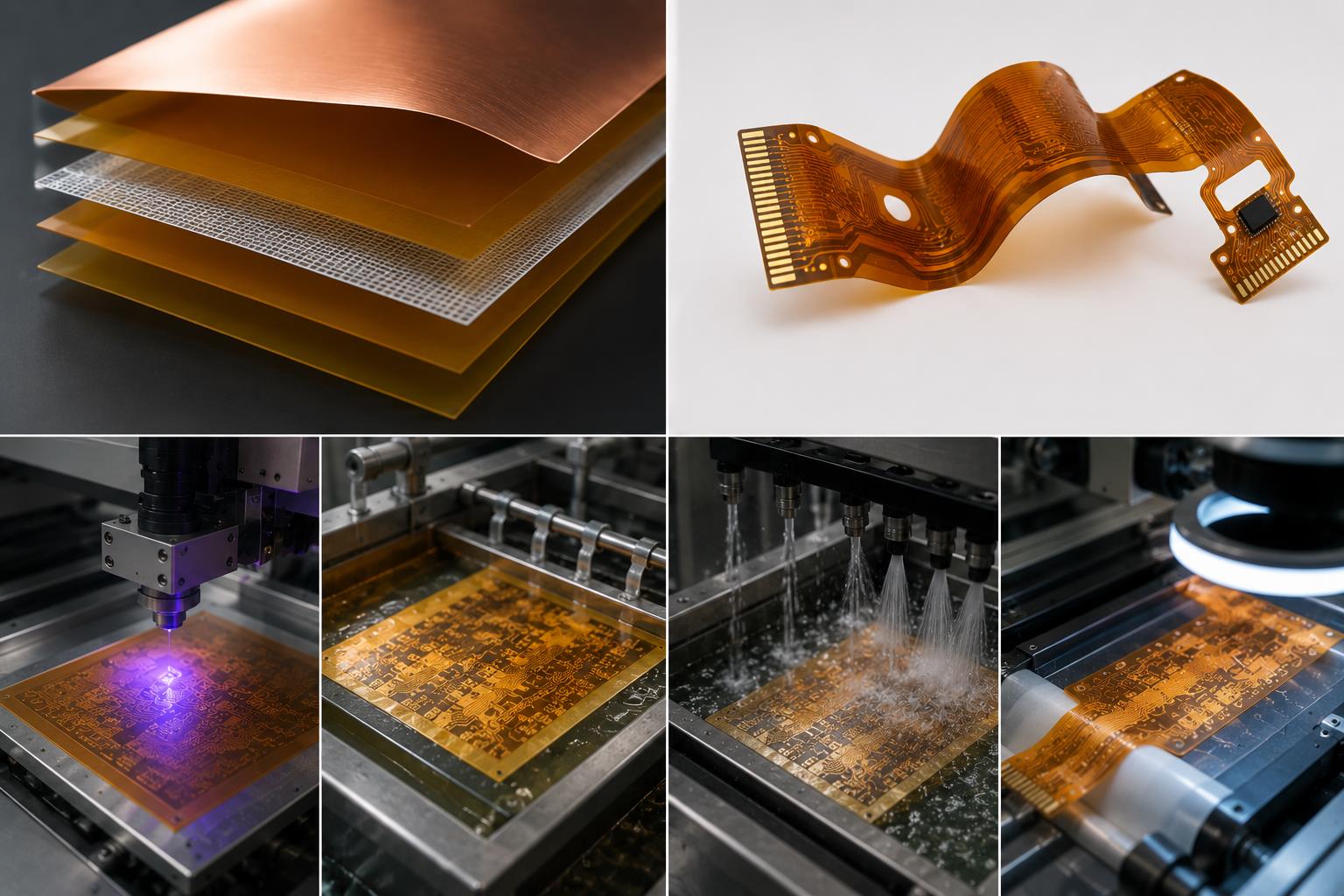
Material selection has a strong effect on the flexibility, durability, cost, and electrical performance of a flex circuit. The most common materials include polyimide film, copper foil, coverlay, adhesive, stiffeners, and surface finishes.
- Polyimide is the most widely used base material for flex circuits. It provides good thermal resistance and mechanical flexibility. It can handle bending and folding better than many rigid materials.
- Copper foil forms the conductive traces. Rolled annealed copper is often used for dynamic bending applications because it has better flexibility. Electro-deposited copper is commonly used for applications where bending demand is lower.
- Coverlay protects the copper traces and provides insulation. It is usually made from polyimide film with adhesive. Openings are created in the coverlay for solder pads, test points, and connector areas.
- Stiffeners are added to areas that need mechanical support, such as connector zones or component mounting areas. Common stiffener materials include FR4, polyimide, and stainless steel.
- Surface finish protects exposed copper pads and supports solderability. ENIG is common when good flatness, oxidation resistance, and fine-pitch compatibility are required.
Choosing the right material is not only about cost. It should match the product’s bending radius, working temperature, assembly process, and reliability requirements.
How Are Custom Etched Flex Circuits Manufactured?
The manufacturing process of custom etched flex circuits starts from design review and material preparation. Before production, engineers need to check the Gerber files, stack-up, trace width, spacing, bending area, stiffener position, and assembly requirements.
A standard process may include the following steps:
1. Engineering review
- The manufacturer checks whether the design can be produced reliably. Important points include minimum trace width, spacing, hole size, pad design, bend area, and panel layout.
2. Material preparation
- Polyimide copper-clad material is selected according to the project requirements. The copper thickness and substrate thickness must match the electrical and mechanical needs.
3. Imaging and exposure
- The circuit pattern is transferred onto the copper surface through photoimaging.
4. Copper etching
- Unwanted copper is removed by chemical etching. The remaining copper forms the designed circuit traces.
5. Drilling and punching
- Holes, slots, and special shapes are created according to the design. For some projects, laser drilling may be used.
6. Coverlay lamination
- A coverlay layer is laminated onto the circuit to protect the copper traces. Openings are left for solder pads and connection points.
7. Surface finish
- The exposed pads receive surface finish treatment, such as ENIG, OSP, immersion silver, or tin.
8. Stiffener bonding
- FR4, polyimide, or metal stiffeners are bonded to selected areas for support.
9. Electrical testing
- The finished flex circuits are tested for open circuits, short circuits, and electrical continuity.
10. Final inspection and packaging
- The products are inspected for appearance, dimension, pad quality, and cleanliness before shipment.
A well-controlled process helps custom etched flex circuits maintain stable performance from prototype to mass production.
Where Are Custom Etched Flex Circuits Commonly Used?
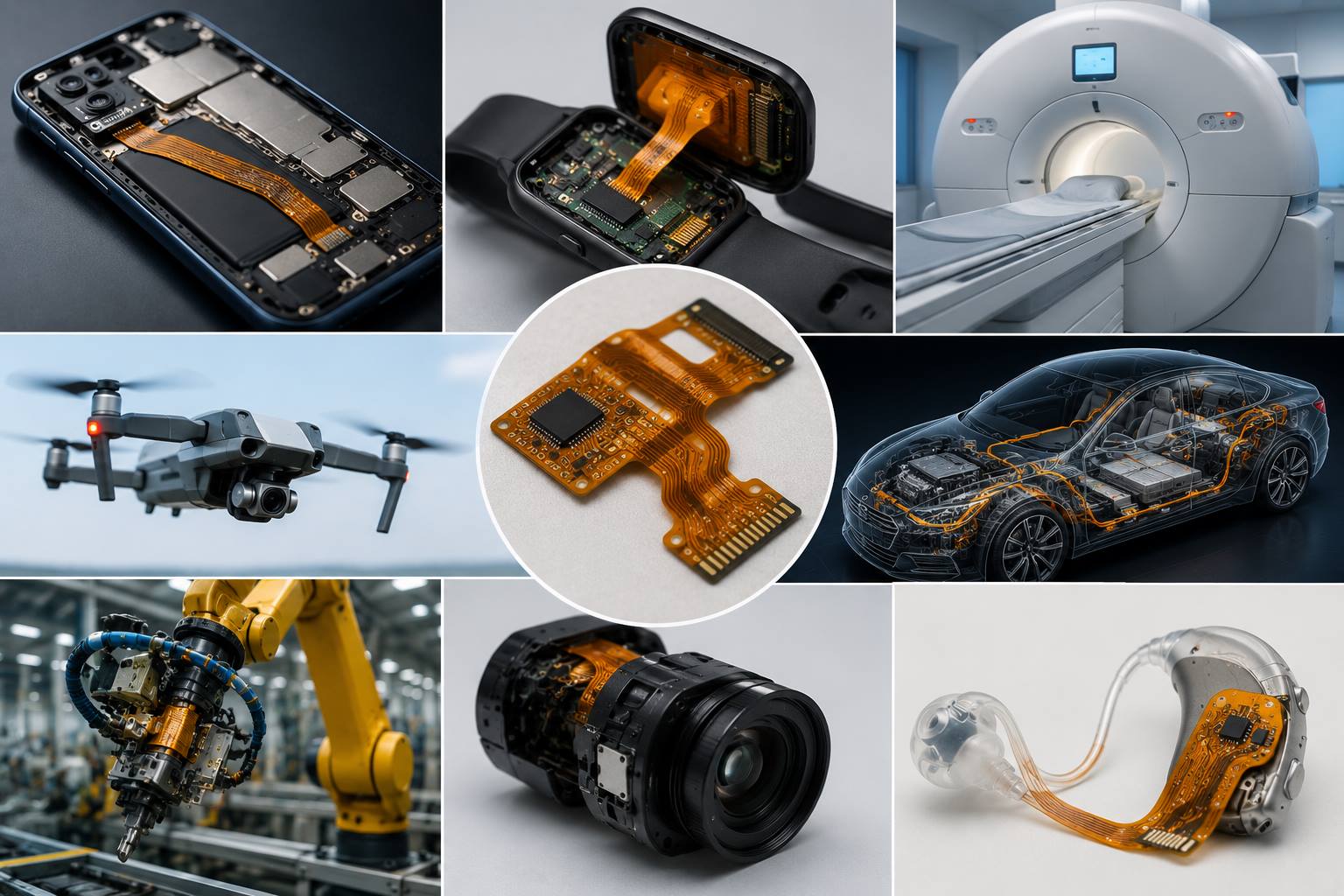
Custom etched flex circuits are used in many industries because they help products become thinner, lighter, and easier to assemble.
- In medical devices, flex circuits are used in handheld instruments, diagnostic equipment, sensors, and compact monitoring devices. These products often require stable connections in limited internal space.
- In automotive electronics, they are used in lighting systems, dashboard modules, sensors, battery systems, and control units. Flex circuits help reduce wiring complexity and support compact module design.
- In consumer electronics, they are common in cameras, wearables, smart devices, displays, and compact control modules. Flex circuits allow designers to connect parts across curved or folded spaces.
- In industrial electronics, they are used in control panels, sensors, measurement tools, and automation equipment. These applications often need durable interconnection and stable performance.
- In aerospace and communication equipment, flex circuits can help reduce weight and improve layout efficiency. They are useful in products where every gram and every millimeter matters.
Because custom etched flex circuits can be designed around the product structure, they are suitable for both standard electronic products and special engineering projects.
What Are the Advantages of Custom Etched Flex Circuits?
Custom etched flex circuits offer several practical advantages for electronic product design and manufacturing.
- First, they save space. A flexible circuit is thin and flat, so it can fit into areas where traditional wires may be difficult to route.
- Second, they reduce weight. This is important for portable devices, drones, medical products, aerospace electronics, and compact modules.
- Third, they improve assembly efficiency. A flex circuit can replace multiple wires and connectors, which helps reduce manual wiring time.
- Fourth, they provide repeatable circuit layout. Every circuit path is designed and produced according to the same pattern, which supports stable production quality.
- Fifth, they allow bending and folding. This gives product designers more freedom when working with curved spaces or compact enclosures.
- Sixth, they can improve reliability when properly designed. Fewer loose wires and fewer manual connection points can reduce assembly-related risks.
For buyers, the main value is not only the flexible circuit itself. The real value is better product integration, cleaner assembly, and more stable production.
EBest Circuit Case Study: Custom Etched Flex Circuits for Compact Electronics
For one compact electronics project, EBest Circuit manufactured a 2-layer custom etched flex circuit designed for limited internal space and stable connection performance. The customer needed a thin FPC structure, reliable gold finger connection, local reinforcement, and controlled electrical resistance within the circuit path.
The project requirements included:
- Circuit type: 2-layer FPC
- Copper: 1/2oz rolled annealed copper
- Base material: Adhesive-less flexible material
- Finished board thickness: 0.1mm
- Gold finger area: 0.35mm total thickness with stiffener
- Surface finish: Immersion gold, 1μ”
- Stiffener design: 2 pcs × 1.0mm FR4 stiffener and 1 pc × 0.5mm FR4 stiffener
- Printing: White ink on both sides
- Electrical requirement: Resistance controlled between 30–70 ohms
The main challenge was to keep the circuit thin and flexible while strengthening the connector area. The 0.1mm main body helped the flex circuit fit into a compact enclosure. At the same time, the FR4 stiffeners provided mechanical support in selected areas, especially around the gold finger connection.
The use of 1/2oz rolled annealed copper helped improve flexibility compared with standard copper options. The adhesive-less base material also supported a thinner and more stable structure, which is important for compact electronics with bending or folding requirements.
To meet the customer’s assembly and appearance needs, EBest Circuit added double-sided white ink printing. This made the circuit easier to identify during assembly and helped match the product’s internal design requirements.
The resistance control requirement of 30–70 ohms also made this project more than a standard FPC order. Our engineering and production teams needed to pay attention to copper trace design, etching accuracy, and process consistency to keep the electrical performance within the required range.
This case shows how custom etched flex circuits can solve several design needs in compact electronics:
- Save space inside a small enclosure
- Reduce loose wiring and manual assembly
- Keep the main circuit area thin and flexible
- Strengthen connector and assembly areas with stiffeners
- Support specific electrical resistance requirements
- Improve product consistency from prototype to production
For EBest Circuit, the value of this project was not only making a flexible circuit. It was about balancing thin structure, bendability, connector strength, appearance, and electrical performance in one custom etched flex circuit design.
Why Choose EBest Circuit (Best Technology) for Custom Etched Flex Circuits?
Choosing the right manufacturer is important for custom etched flex circuits. The project usually involves more than simple PCB production. It needs engineering review, material selection, process control, and clear communication.
EBest Circuit, also known as Best Technology, supports customers with factory-direct manufacturing and engineering assistance. For custom etched flex circuit projects, we can help review design files, check manufacturability, suggest suitable materials, and support prototype or batch production.
Our advantages include:
Factory-direct production
Customers can communicate directly with the manufacturing team, which helps reduce delays and improve project efficiency.
Engineering support
We review key design details such as trace width, spacing, bend area, coverlay opening, and stiffener position before production.
Custom capability
We support different shapes, copper thicknesses, coverlay designs, stiffener materials, surface finishes, and connector areas.
Prototype to production support
Whether the project is in early design verification or ready for volume production, we can provide flexible manufacturing support.
Quality control
Electrical testing, dimensional inspection, and visual inspection help ensure that each batch meets the required standard.
For buyers who need custom etched flex circuits, EBest Circuit can provide both manufacturing service and practical engineering feedback. This helps reduce design risk and supports smoother production.
FAQs About Custom Etched Flex Circuits
What is a custom etched flex circuit?
A custom etched flex circuit is a flexible printed circuit made by etching copper traces on a flexible substrate, usually polyimide. It is designed according to a specific product layout.
What is the main benefit of using etched flex circuits?
The main benefit is compact and reliable interconnection. It can replace wires, save space, reduce weight, and simplify assembly.
Are custom etched flex circuits suitable for bending?
Yes. They are designed for bending and folding, but the bending radius, copper type, material thickness, and trace direction must be considered during design.
What material is commonly used for flex circuits?
Polyimide is the most common base material because it has good flexibility, heat resistance, and dimensional stability.
Can components be assembled on custom etched flex circuits?
Yes. Components can be assembled on flex circuits, but the design may need stiffeners or reinforced areas to support soldering and mechanical strength.
What surface finish is recommended for flex circuits?
ENIG is commonly used because it provides good flatness and oxidation resistance. Other finishes may also be selected based on cost and application.
What files are needed for a custom etched flex circuit quote?
Gerber files are usually required. A drawing, stack-up, material requirement, copper thickness, surface finish, quantity, and special notes are also helpful.
How can I reduce the cost of custom etched flex circuits?
Cost can be reduced by optimizing panel utilization, using suitable materials, avoiding unnecessary tight tolerances, and confirming the design before production.
Can EBest Circuit make prototypes before mass production?
Yes. EBest Circuit can support prototype production and help customers verify the design before moving to larger batch production.
Why should I choose EBest Circuit for custom etched flex circuits?
EBest Circuit provides factory-direct production, engineering review, custom manufacturing options, and quality control from prototype to production.
Custom etched flex circuits help compact electronic products become lighter, thinner, and easier to assemble, but reliable performance depends on the right material selection, including the use of a high-quality polyimide circuit board, as well as proper bend design, stiffener structure, surface finish, and process control. With 20 years of flexible circuit manufacturing experience, EBest Circuit supports customers from prototype to volume production with engineering review, fast-turn samples, and strict quality control. Send your Gerber files, drawings, or specifications to sales@bestpcbs.com for a fast engineering review and quotation.