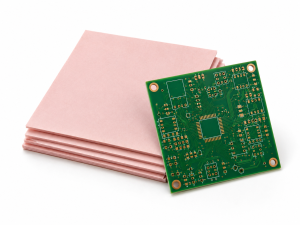
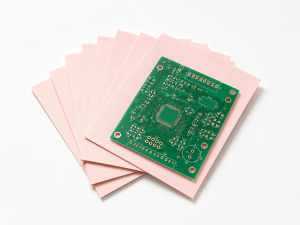
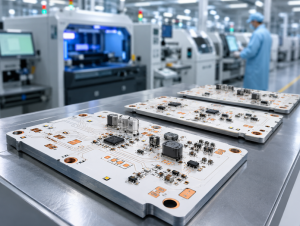
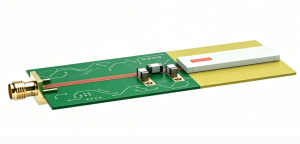
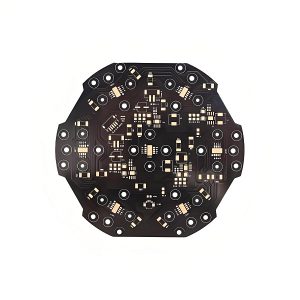
Copper base PCB materials are used for circuit boards that need strong thermal conductivity, high current capacity, mechanical stability, and reliable operation under heat stress. Compared with standard FR4 and aluminum-based boards, copper base PCBs provide better heat spreading because copper has excellent thermal and electrical performance. They are commonly used in power electronics, high-power LED modules, automotive lighting, charging systems, motor drives, industrial controls, and thermal management applications.
What Are Copper Base PCB Materials?
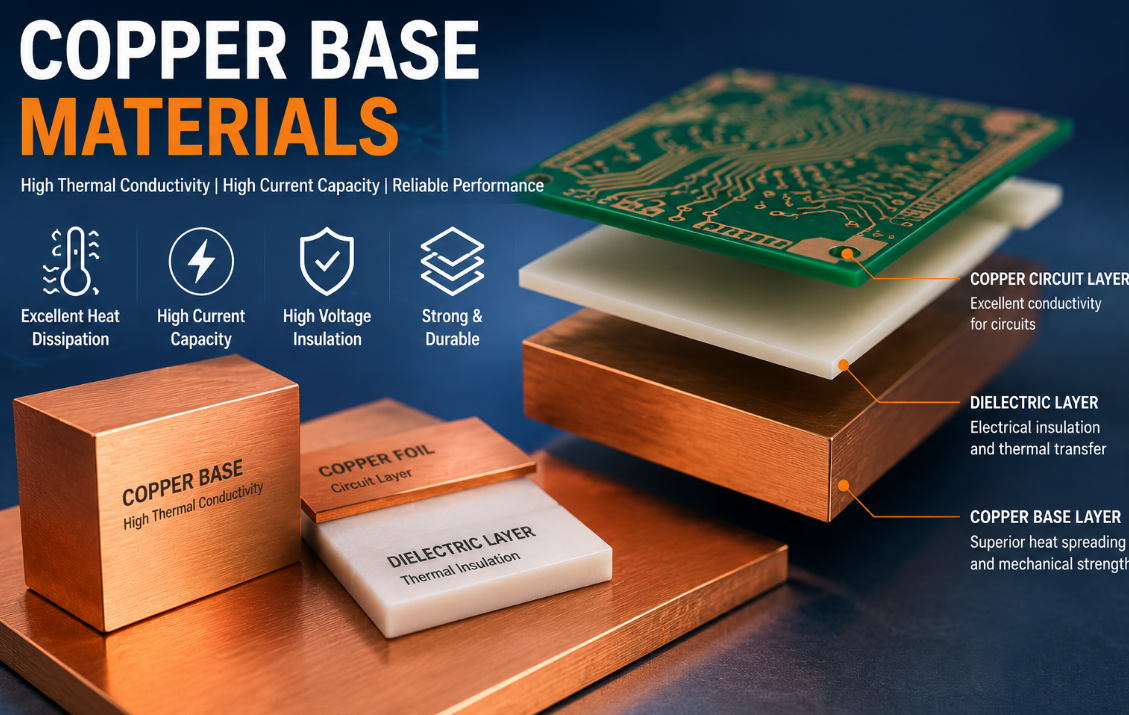
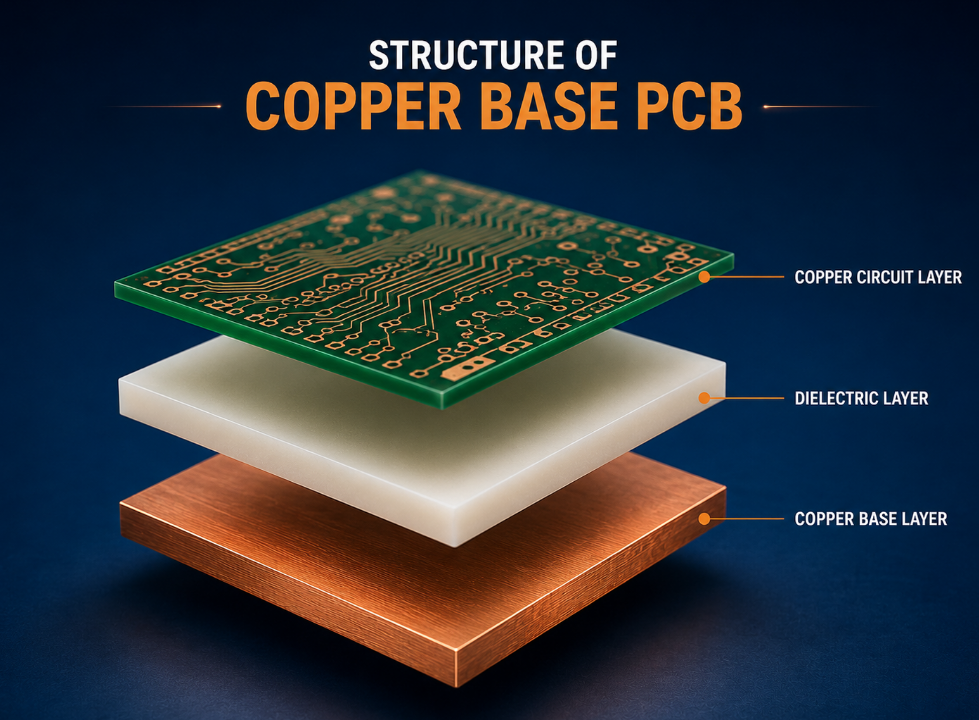
Copper base PCB materials refer to the material stack used to build a copper metal core PCB. A typical structure includes a copper circuit layer, a thermally conductive dielectric layer, and a copper base substrate. The copper circuit layer carries electrical signals or power, the dielectric layer provides insulation and heat transfer, and the copper base spreads heat away from components.
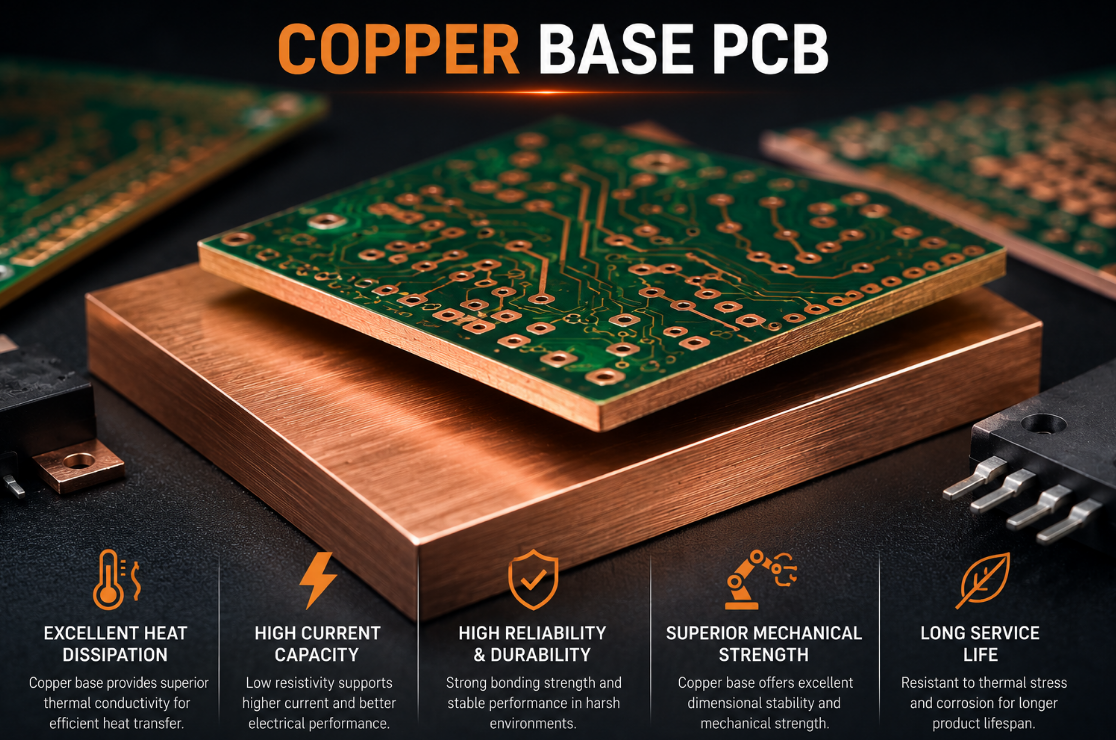
Unlike a standard FR4 PCB, a copper base PCB is designed mainly for thermal management and high-power reliability. The copper base acts as a strong heat spreader, helping reduce hot spots around LEDs, MOSFETs, IGBTs, power modules, and other heat-generating components.
For industrial projects, choosing the right copper base PCB materials affects thermal resistance, breakdown voltage, soldering reliability, board flatness, mechanical strength, surface finish quality, and long-term service life.
Why Are Copper Base PCB Materials Important?
Copper base PCB materials are important because high-power electronics often fail when heat cannot be removed fast enough. Excessive heat may cause component aging, solder joint fatigue, dielectric breakdown, copper delamination, unstable output, and reduced product lifetime.
Copper has better thermal conductivity than aluminum, which makes copper base PCBs useful when the design has higher heat density, smaller space, higher current, or stricter temperature limits. This is especially valuable for power modules, LED lighting, automotive electronics, and industrial power control systems.
In batch production, material consistency is also critical. A copper base PCB may look simple, but small differences in dielectric thickness, copper base quality, copper foil thickness, surface finish, and lamination control can affect real thermal performance.
How Do Copper Base PCB Materials Work?
Copper base PCB materials work by building a fast heat transfer path from the component to the copper base. Heat moves from the component pad into the copper circuit layer, passes through the thermally conductive dielectric layer, and spreads into the copper substrate.
The dielectric layer is the key bridge between electrical insulation and thermal transfer. It must isolate the copper circuit from the copper base while still allowing heat to pass efficiently. If the dielectric layer is too thick or has poor thermal conductivity, the board may not perform as expected.
The copper base then spreads heat across a larger area. This helps reduce local hot spots and supports better contact with a heatsink, metal housing, cooling plate, or thermal interface material. In real products, performance also depends on component layout, copper pad size, mounting pressure, solder quality, airflow, and enclosure design.
What Is the Structure of a Copper Base PCB?
A common copper base PCB has three main functional layers: copper circuit layer, dielectric insulation layer, and copper base layer. Some designs also include solder mask, surface finish, silkscreen, plated holes, and protective coating.
| Layer | Main Function | Key Selection Points |
|---|---|---|
| Copper circuit layer | Carries current and forms pads/traces | Copper thickness, trace width, current capacity |
| Dielectric layer | Provides insulation and heat transfer | Thermal conductivity, breakdown voltage, thickness |
| Copper base layer | Spreads heat and supports the board | Copper grade, thickness, flatness, thermal performance |
| Solder mask | Protects copper circuits | Heat resistance, adhesion, insulation, color |
| Surface finish | Protects exposed copper pads | Solderability, shelf life, assembly compatibility |
For high-power products, the dielectric layer and copper base thickness are often the most important material choices. They directly affect heat flow, voltage safety, and long-term reliability.
What Types of Copper Base PCB Materials Are Common?
Copper base PCB materials can be divided by structure, thermal performance, copper thickness, insulation type, and application requirement. The most common types include standard copper base materials, high thermal conductivity copper base materials, high-voltage insulation copper base materials, and heavy copper copper-base materials.
Standard copper base materials are used for power boards, LED modules, and industrial products that need better thermal performance than aluminum or FR4.
High thermal conductivity materials are used in compact power electronics, high-brightness LED modules, and products where heat concentration is severe.
High-voltage insulation materials are selected when the circuit must pass voltage withstand testing or operate under higher voltage stress.
Heavy copper copper-base materials are used for high-current circuits, power conversion, charging systems, motor drivers, and energy control products where both current and heat are major concerns.
What Copper Base Materials Are Used in Copper Base PCBs?
The copper base is usually made from high-purity copper or copper alloy depending on thermal performance, mechanical strength, machinability, and cost. Common choices include C1100 copper, C1020 oxygen-free copper, T2 copper, and selected copper alloys.
| Copper Base Type | Typical Features | Common Use |
|---|---|---|
| C1100 copper | High thermal and electrical conductivity | Power boards, LED thermal boards |
| C1020 oxygen-free copper | High purity, stable conductivity, low oxygen content | High-reliability thermal applications |
| T2 copper | Good conductivity, common industrial availability | General copper base PCB projects |
| Copper alloy | Better mechanical strength, lower conductivity than pure copper | Structural or special mechanical applications |
For most thermal PCB projects, the copper base is selected for heat spreading, flatness, thickness stability, machining quality, and bonding reliability. If the board must contact a heatsink or housing, surface flatness becomes especially important.
What Dielectric Materials Are Used in Copper Base PCB Materials?
The dielectric layer is usually a ceramic-filled thermally conductive polymer system. It must provide electrical insulation while transferring heat from the copper circuit layer to the copper base. This layer is often more important than the copper base itself because it controls the main thermal bottleneck.
Important dielectric properties include thermal conductivity, dielectric breakdown voltage, thickness, adhesion strength, glass transition temperature, thermal aging resistance, and moisture resistance.
| Dielectric Property | Why It Matters |
|---|---|
| Thermal conductivity | Controls heat transfer from circuit layer to copper base |
| Dielectric strength | Prevents electrical breakdown between circuit and base |
| Thickness | Affects both heat transfer and insulation safety |
| Adhesion strength | Reduces delamination risk during thermal cycling |
| Heat resistance | Improves reliability during soldering and operation |
| Moisture resistance | Protects insulation under humid conditions |
A common selection mistake is focusing only on copper thickness while ignoring dielectric performance. In real operation, a poor dielectric layer can limit the full advantage of a copper base PCB.
What Copper Thickness Is Used in Copper Base PCB Materials?
Copper thickness affects current capacity, heat spreading, etching accuracy, soldering performance, and cost. Common copper foil thicknesses include 1 oz, 2 oz, 3 oz, 4 oz, and heavier copper options. The copper base itself may be much thicker, often selected based on mechanical and thermal needs.
| Copper Thickness | Typical Use | Key Consideration |
|---|---|---|
| 1 oz | LED and general control circuits | Good for standard current and finer traces |
| 2 oz | Power supplies and LED drivers | Better current capacity and heat spreading |
| 3 oz to 4 oz | High-current power boards | Requires wider spacing and stronger etching control |
| Heavy copper | Motor drives, chargers, energy systems | Higher cost and more complex processing |
For high-current designs, copper thickness should be selected together with trace width, temperature rise target, insulation distance, solder mask capability, and assembly process. More copper is helpful, but overusing heavy copper can increase cost and manufacturing difficulty.
How Do Copper Base PCB Materials Compare with Aluminum PCB Materials?
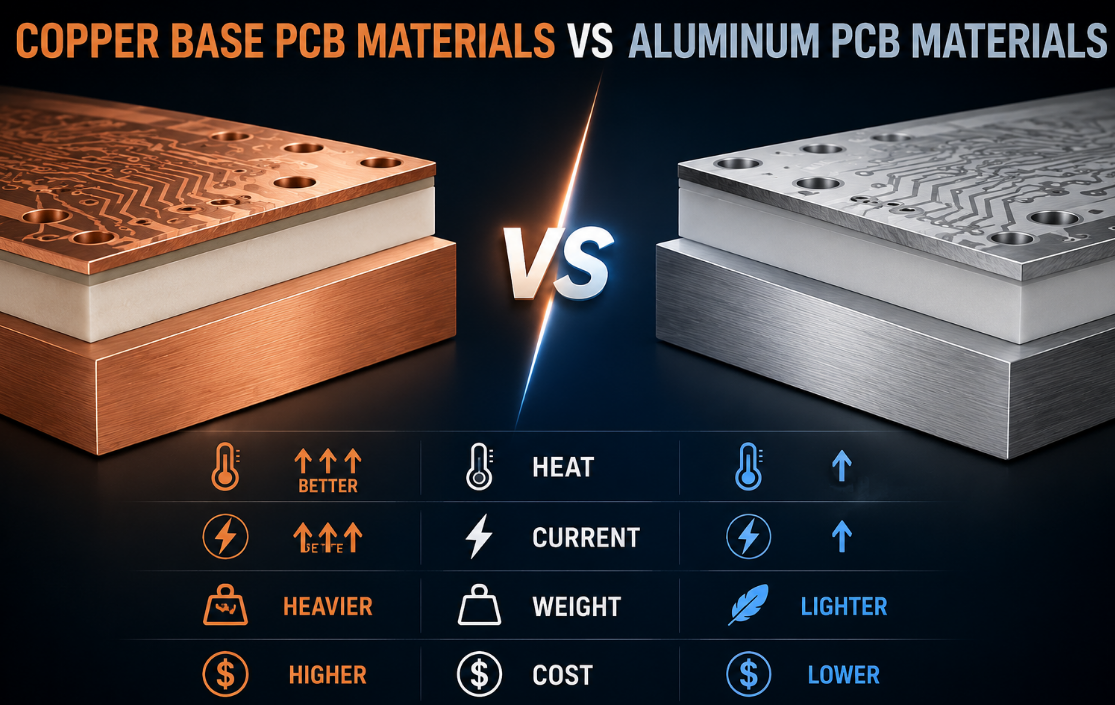
Copper base PCB materials and aluminum PCB materials are both metal core solutions, but they are used for different thermal and cost targets.
| Comparison Item | Copper Base PCB Materials | Aluminum PCB Materials |
|---|---|---|
| Thermal conductivity | Higher heat spreading performance | Good but lower than copper |
| Current capacity | Better for high-current designs | Suitable for many LED and power boards |
| Mechanical weight | Heavier | Lighter |
| Material cost | Higher | More cost-effective |
| Machining difficulty | More demanding | Easier and more common |
| Best use | High-power, compact, high-heat products | LED lighting, general power products |
| Cost control | Higher project cost | Better for budget-sensitive projects |
Copper base PCB materials are usually chosen when heat density is too high for aluminum-based boards. Aluminum PCB materials are still a good choice when the project needs balanced performance and cost.
How Do Copper Base PCB Materials Compare with Ceramic PCB Materials?
Copper base PCBs and ceramic PCBs are both used for thermal applications, but their material behavior is different. Copper base boards provide excellent heat spreading and mechanical toughness, while ceramic boards provide strong insulation and high thermal stability.
| Comparison Item | Copper Base PCB Materials | Ceramic PCB Materials |
|---|---|---|
| Heat spreading | Excellent through copper base | Excellent through ceramic substrate |
| Electrical insulation | Depends on dielectric layer | Ceramic itself provides insulation |
| Mechanical behavior | Tough and metallic | Hard but brittle |
| Cost | Usually high but practical for many power boards | Often higher for advanced ceramics |
| Current handling | Strong for high-current circuits | Depends on metallization and structure |
| Best use | Power, LED, automotive, industrial control | RF, laser, medical, aerospace, power modules |
Copper base PCBs are often selected when the project needs high thermal spreading, high current, mechanical durability, and practical assembly compatibility. Ceramic PCBs are selected when insulation stability, low expansion, or advanced thermal performance is more critical.
What Thermal Conductivity Is Needed for Copper Base PCB Materials?
The required thermal conductivity depends on component power, temperature limit, board size, copper area, dielectric thickness, cooling method, and operating environment. Copper itself has very high thermal conductivity, but the final PCB performance depends heavily on the dielectric layer.
For many copper base PCB designs, the dielectric layer is the main thermal bottleneck. A thinner high-performance dielectric can improve heat transfer, but it must still meet voltage and insulation requirements.
The better way to select materials is to evaluate total thermal resistance, not only the thermal conductivity of one layer. The full stack-up, component layout, soldering quality, contact surface, and heatsink design all influence the final temperature.
What Electrical Properties Should Be Checked?
Copper base PCB materials must provide reliable current carrying ability and electrical insulation. Because the copper base is conductive, the dielectric layer must safely isolate the circuit layer from the metal substrate.
Important electrical properties include breakdown voltage, insulation resistance, creepage and clearance distance, copper thickness, current capacity, leakage risk, and voltage withstand testing performance.
| Electrical Property | Why It Matters |
|---|---|
| Breakdown voltage | Prevents insulation failure between circuit and copper base |
| Insulation resistance | Reduces leakage current risk |
| Copper thickness | Supports current carrying capacity |
| Creepage and clearance | Improves safety for high-voltage designs |
| Hi-pot performance | Confirms insulation reliability before shipment |
| Surface finish quality | Supports stable soldering and electrical contact |
A copper base PCB can conduct heat very well, but it can fail if the insulation system is not suitable. For high-power designs, thermal and electrical requirements must be reviewed together.
What Surface Finishes Are Used with Copper Base PCB Materials?
Surface finish protects exposed copper pads and supports soldering. Common surface finishes include HASL, lead-free HASL, ENIG, OSP, immersion tin, and immersion silver. The right choice depends on component type, pad flatness, shelf life, soldering process, and cost.
| Surface Finish | Advantages | Common Use |
|---|---|---|
| HASL | Cost-effective and widely used | General power and LED boards |
| Lead-free HASL | RoHS-friendly solderability | Export and compliant products |
| ENIG | Flat surface, good shelf life, stable soldering | Precision assembly and high-reliability boards |
| OSP | Clean and economical | Short storage and fast assembly |
| Immersion tin | Good flatness and solderability | Selected power and connector designs |
| Immersion silver | Good conductivity and solderability | High-performance applications |
For copper base boards with high current or high power density, surface finish should be selected with assembly reliability in mind. ENIG is often preferred for flatness and stable solder joints, while HASL may be used for cost-sensitive projects.
What Manufacturing Processes Are Used for Copper Base PCBs?
Copper base PCB manufacturing includes material preparation, drilling, imaging, etching, lamination, solder mask printing, surface finishing, profiling, testing, and final inspection. Compared with standard FR4 or aluminum PCBs, copper base PCBs require stronger process control because copper is heavier, softer, more conductive, and more demanding to machine.
Common production steps include cutting copper-clad laminate, drilling mounting holes, forming copper circuits, applying solder mask, processing surface finish, routing board outline, testing insulation, checking flatness, and inspecting appearance.
For thicker copper bases, drilling and profiling quality are especially important. Burrs, scratches, poor bonding, or dielectric damage can affect assembly, insulation, and thermal contact.
What Quality Tests Are Needed for Copper Base PCB Materials?
Copper base PCB materials should be tested for thermal, electrical, mechanical, and assembly reliability. Quality inspection should not only check whether the circuit is open or short. It should also confirm insulation strength, material bonding, flatness, and surface quality.
| Test Item | Purpose |
|---|---|
| Visual inspection | Checks scratches, stains, solder mask defects, and exposed copper |
| Dimensional inspection | Confirms outline, hole size, thickness, and tolerance |
| Electrical test | Verifies circuit continuity and isolation |
| Hi-pot test | Checks dielectric withstand voltage |
| Insulation resistance test | Confirms electrical isolation stability |
| Peel strength test | Checks copper adhesion and bonding reliability |
| Flatness inspection | Supports heatsink contact and assembly fit |
| Thermal cycling | Evaluates material reliability under repeated heating and cooling |
For high-power products, thermal testing after assembly is also helpful. Real load testing can reveal whether the selected material stack and cooling design are suitable.
What Common Problems Happen with Copper Base PCB Materials?
Common problems include poor insulation, dielectric breakdown, delamination, board warpage, copper burrs, poor solderability, weak bonding, scratches on copper base, and unstable thermal contact.
Poor insulation may happen if the dielectric layer is too thin, damaged, or unsuitable for the voltage requirement. Delamination may result from weak adhesion, poor lamination, moisture stress, or severe thermal cycling. Burrs around copper edges may affect assembly safety and insulation clearance.
Many failures are caused by the combination of wrong material selection, aggressive thermal load, poor mechanical mounting, unsuitable surface finish, and weak process control. For high-power products, material selection should be verified during prototype testing before full production.
How to Choose the Right Copper Base PCB Materials?
Choosing the right copper base PCB materials starts with the real application. Confirm power level, current load, operating voltage, maximum temperature, board size, component layout, cooling method, insulation requirement, and assembly process.
For LED modules, focus on thermal conductivity, surface reflectivity, dielectric stability, and soldering reliability. For power electronics, focus on copper thickness, current capacity, insulation strength, thermal resistance, and heat cycling reliability. For automotive and industrial applications, focus on temperature cycling, vibration resistance, corrosion protection, and batch consistency.
The best material is not always the most expensive material. The right material is the one that meets thermal, electrical, mechanical, cost, and production requirements at the same time.
What Factors Affect the Cost of Copper Base PCB Materials?
Copper base PCBs are usually more expensive than aluminum PCBs because copper material cost is higher and processing is more demanding. Cost depends on copper base thickness, copper foil thickness, dielectric thermal conductivity, dielectric thickness, surface finish, board size, tolerance, test requirements, and order quantity.
| Cost Factor | Why It Affects Price | Cost Control Suggestion |
|---|---|---|
| Copper base thickness | More copper increases material cost | Use thickness based on real thermal need |
| Heavy copper circuits | Requires more material and process control | Match copper thickness to current demand |
| Dielectric grade | Higher thermal and voltage performance costs more | Choose according to real application stress |
| Surface finish | ENIG and special finishes cost more | Select based on assembly and reliability needs |
| Board outline | Complex routing increases machining time | Simplify unnecessary shapes |
| Testing | Hi-pot, thermal cycling, and special tests add cost | Apply critical tests where required |
| Quantity | Small batches have higher setup cost | Plan prototype and batch production together |
A low-cost material may create higher total cost if it causes overheating, insulation failure, rework, or field complaints. Cost control should focus on safe optimization, not material downgrading.
Where Are Copper Base PCB Materials Commonly Used?
Copper base PCB materials are used in products that require high thermal performance, high current capacity, and reliable long-term operation.
High-power LED lighting: industrial lights, automotive lights, stage lights, UV LED modules, and compact lighting systems.
Power electronics: converters, inverters, power supplies, regulators, charging modules, and MOSFET power boards.
Automotive electronics: headlights, battery control units, charging systems, power distribution boards, and thermal control modules.
Industrial control: motor drives, automation modules, high-current control boards, and machine electronics.
Energy systems: solar inverters, battery packs, energy storage equipment, and charging stations.
Thermal management modules: compact designs where heat must move quickly from the circuit to a metal body or heatsink.
What Should You Confirm Before Ordering Copper Base PCBs?
Before ordering copper base PCBs, confirm copper base thickness, copper foil thickness, dielectric thermal conductivity, dielectric thickness, voltage requirement, operating temperature, surface finish, solder mask color, board outline, tolerance, and inspection standard.
You should also provide complete production files, including Gerber files, drill files, stack-up notes, drawings, material requirements, quantity, surface finish, testing requirements, and application details. For assembly projects, BOM and placement files should also be provided.
For high-power or high-voltage projects, prototype validation is strongly recommended. Testing the board under real load helps confirm whether the material stack, heat path, and mechanical mounting design are suitable before batch production.
Why Choose EBest for Copper Base PCB Manufacturing?
EBest Technology provides one-stop PCB solutions, including PCB design, PCB prototype, mass production, component sourcing, PCB assembly, and box-build assembly. Its product range includes standard FR4 PCB, multilayer PCB, metal-based PCB, ceramic PCB, flexible PCB, rigid-flex PCB, and high frequency PCB, supporting customers with different electronic manufacturing needs.
For copper base PCB projects, EBest can support engineering review, material selection, prototype validation, batch production, assembly coordination, quality inspection, and global delivery. This is useful when a project involves high-power components, thermal design, mechanical housings, connectors, and final product assembly.
EBest also supports quality and compliance systems such as IATF 16949, ISO 9001:2015, ISO 13485:2016, AS9100D, REACH, RoHS, and UL-related requirements. These capabilities help customers manage industrial, automotive, medical, aerospace, and export-oriented projects with more confidence.
FAQs About Copper Base PCB Materials
Q1: What are copper base PCB materials made of?
A1: Copper Base PCB Materials usually include a copper circuit layer, a thermally conductive dielectric layer, and a copper base substrate. The copper circuit carries current, the dielectric provides insulation and heat transfer, and the copper base spreads heat away from components.
Q2: Why use copper base PCB materials instead of aluminum PCB materials?
A2: Copper base PCB materials are used when a project needs higher thermal spreading, higher current capacity, and stronger heat control than aluminum PCBs can provide. They are common in high-power LED, power electronics, automotive lighting, and industrial control products.
Q3: What is the most important layer in a copper base PCB?
A3: The dielectric layer is often the most critical because it controls both insulation safety and heat transfer. Even with a strong copper base, poor dielectric performance can cause overheating, electrical breakdown, or delamination during long-term operation.
Q4: What copper thickness should I choose for a copper base PCB?
A4: The right copper thickness depends on current load, trace width, temperature rise, and board size. Standard designs may use 1 oz or 2 oz copper, while power boards may require 3 oz, 4 oz, or heavier copper for better current capacity.
Q5: Are copper base PCBs suitable for high-voltage applications?
A5: Yes, but the dielectric layer must have enough breakdown voltage, insulation resistance, and creepage clearance. High-voltage designs should define operating voltage, surge voltage, test voltage, and safety requirements before material selection.
Q6: Are copper base PCBs more expensive than aluminum PCBs?
A6: Yes. Copper base PCBs usually cost more because copper material is more expensive and processing is more demanding. They are usually selected when the project needs higher thermal performance or higher current capability that justifies the cost.
Q7: Can copper base PCB materials be used for LED lighting?
A7: Yes. Copper base PCB materials are suitable for high-power LED lighting, especially when LED density is high or the product has limited cooling space. They help reduce hot spots and support brightness stability and longer service life.
Q8: What surface finish is recommended for copper base PCBs?
A8: Common options include HASL, lead-free HASL, ENIG, OSP, immersion tin, and immersion silver. ENIG is often selected for flat pads, better shelf life, and stable soldering, while HASL may be used for cost-sensitive designs.
Q9: Why do copper base PCBs delaminate?
A9: Delamination may happen because of weak bonding, poor dielectric material, moisture stress, high soldering temperature, or repeated thermal cycling. Proper material selection, lamination control, and thermal design help reduce this risk.
Q10: What tests are needed for copper base PCBs?
A10: Important tests include electrical test, hi-pot test, insulation resistance test, dimensional inspection, visual inspection, peel strength test, flatness inspection, and thermal cycling. For high-power boards, real load thermal testing is also recommended.
Q11: Can copper base PCBs support PCB assembly?
A11: Yes. Copper base PCBs can support SMT assembly and selected through-hole assembly, depending on design structure. Assembly planning should consider heat absorption, soldering profile, component placement, surface finish, and board flatness.
Q12: What files are needed for a copper base PCB quotation?
A12: Provide Gerber files, drill files, copper thickness, copper base thickness, dielectric requirements, surface finish, solder mask color, board thickness, quantity, drawings, voltage requirement, and application details. For assembly, also provide BOM and placement files.
Conclusion
Copper base PCB materials are used when a circuit board needs strong heat spreading, high current capacity, reliable insulation, and stable long-term performance. The key is not only choosing a copper base, but also selecting the right dielectric layer, copper foil thickness, surface finish, and testing requirements.
For engineering projects, do not choose materials by thermal conductivity alone. Review thermal resistance, voltage safety, current load, mounting method, operating environment, and production consistency before confirming the stack-up. For procurement, work with a manufacturer that can support material review, prototype testing, batch control, assembly coordination, and reliable delivery.
If you need copper base PCB materials , copper base PCB manufacturing, PCB assembly, OEM production, ODM development, sample testing, batch production, or custom engineering solutions, please contact our team at sales@bestpcbs.com for technical support and quotation service.