PCB manufacturing PCB manufacturing
Home > Blog

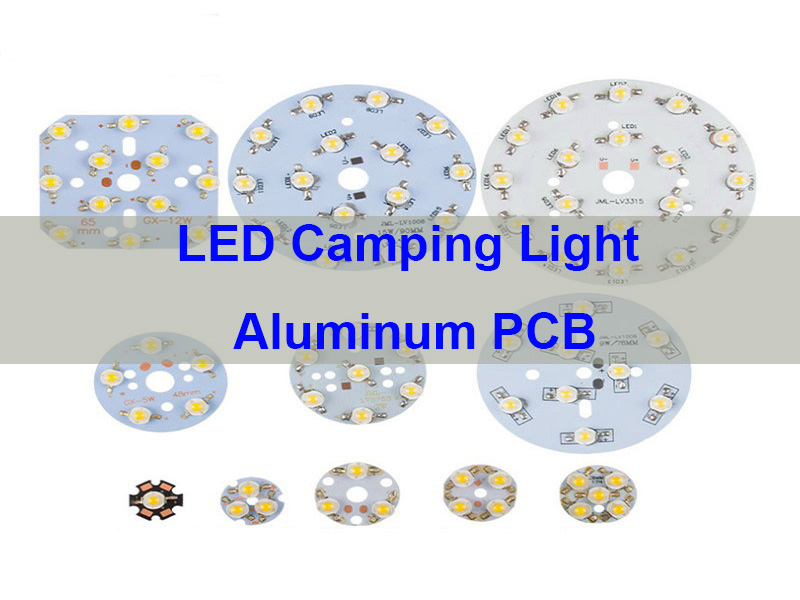
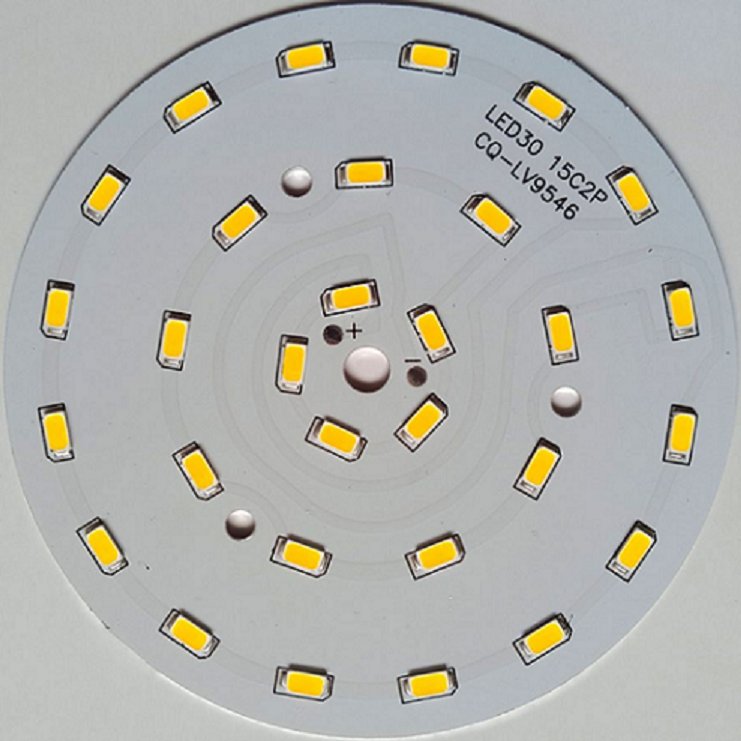
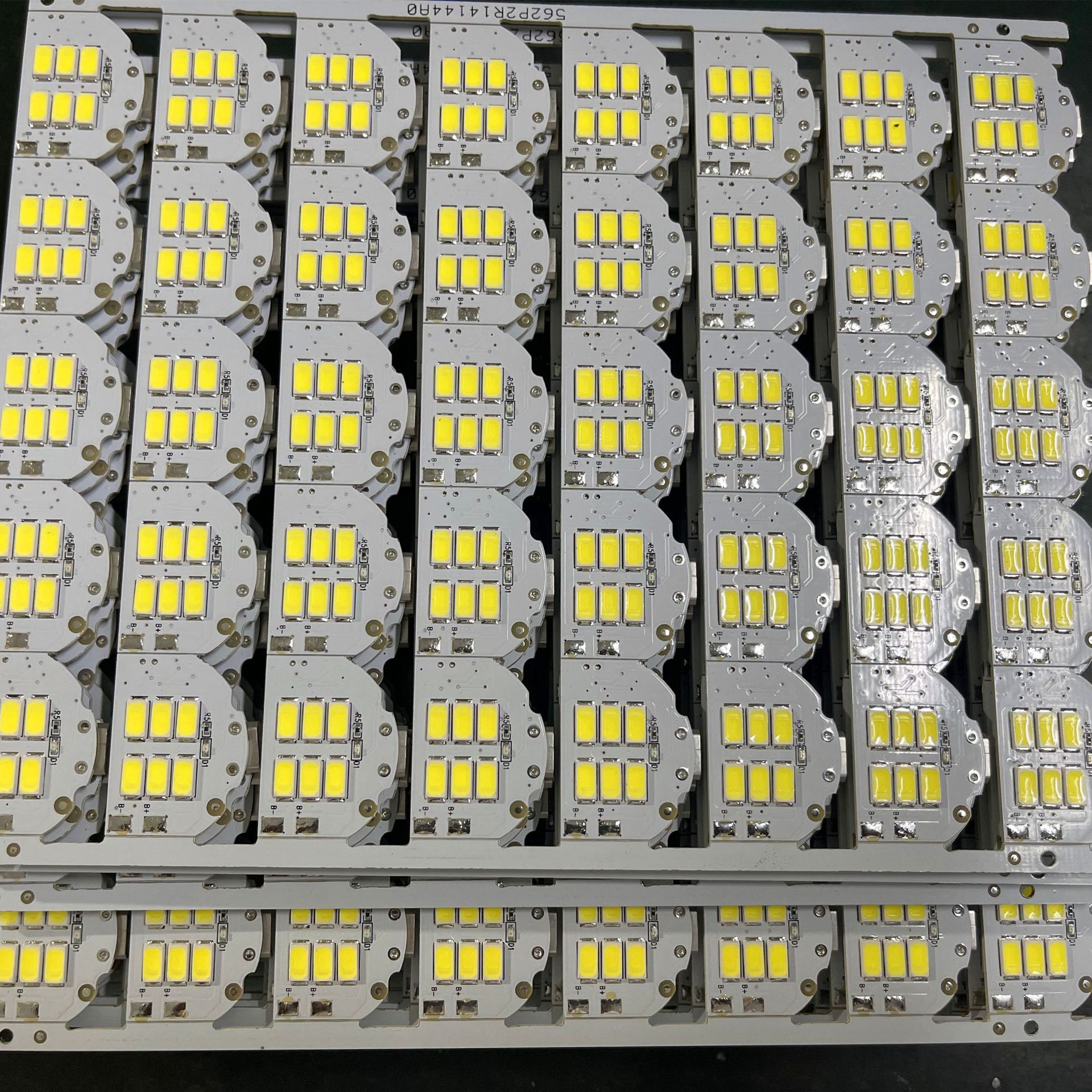
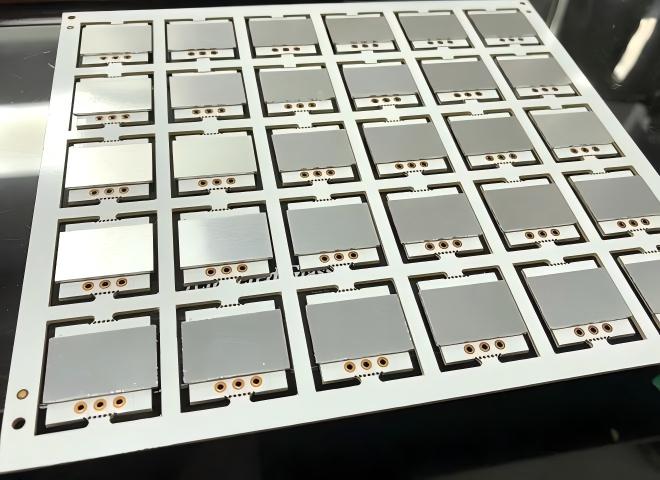
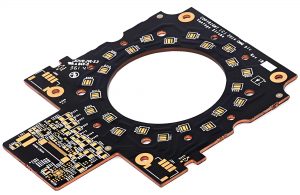
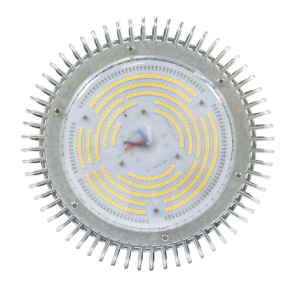
LED Camping Light Aluminum PCB – High Thermal for Outdoor Adventures

March 18th, 2026

LED Camping Light Aluminum PCB is the backbone of reliable outdoor lighting, ensuring efficient heat dissipation, stable brightness, and extended product lifespan in harsh environments. This article explains how to design, manufacture, and select high-performance aluminum PCBs for camping lighting applications.

Common Challenges in Camping LED Lighting

  • Heat buildup causing LED lumen degradation
  • Unstable solder joints under outdoor temperature cycles
  • Short battery life due to inefficient thermal design
  • Poor waterproof reliability in humid environments
  • Inconsistent brightness due to PCB layout issues

How Aluminum PCB Solves These Problems

  • High thermal conductivity base improves heat dissipation
  • Stable metal substrate enhances mechanical strength
  • Optimized copper layout ensures uniform current distribution
  • Better heat spreading increases LED lifespan
  • Reliable structure supports outdoor durability

EBest Circuit (Best Technology) is a trusted manufacturer specializing in LED Camping Light Aluminum PCB, delivering compact, high-thermal-performance solutions tailored for portable outdoor lighting. We understand that uneven heat dissipation can shorten lifespan and reduce battery efficiency, so our designs focus on optimized thermal paths and stable miniaturization to ensure consistent performance. For high-brightness and portable requirements, our engineering team balances PCB size and heat conductivity to achieve both efficiency and durability.

With stable mass production capability and strict quality control, we help customers maintain consistent quality while ensuring reliable supply for large-volume orders. Our advanced materials and structural optimization also enhance moisture resistance and thermal reliability, making our solutions well-suited for demanding outdoor environments. Need a reliable LED Camping Light Aluminum PCB partner? Please feel free to contact us at +86-755-2909-1601 anytime.

LED Camping Light Aluminum PCB

What Is LED Camping Light Aluminum PCB and Why Is It Critical?

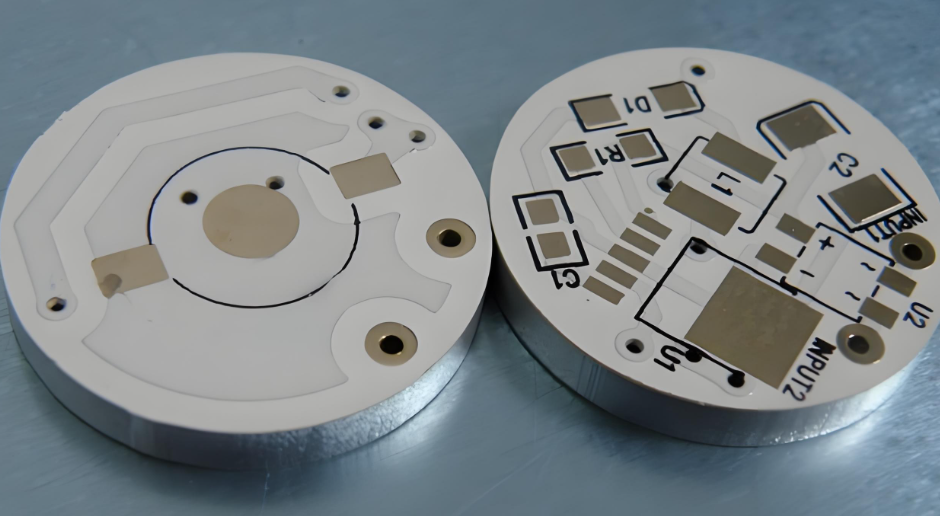
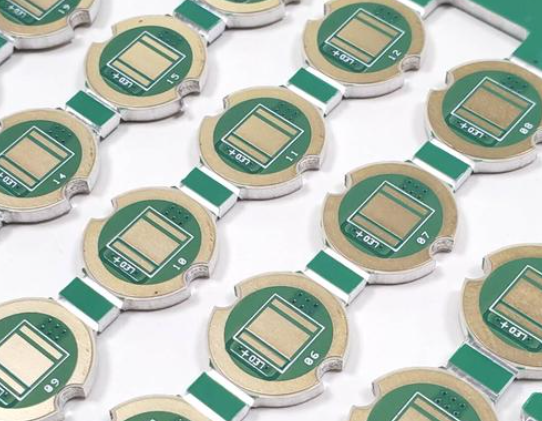
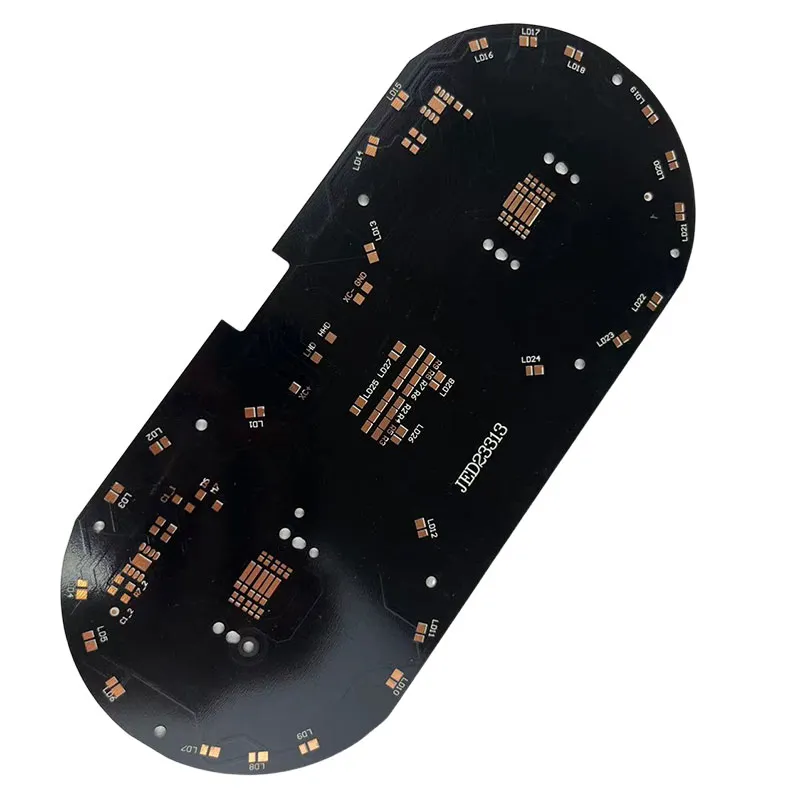
LED Camping Light Aluminum PCB is a metal-core PCB designed to efficiently dissipate heat generated by high-power LEDs. It ensures stable operation in outdoor environments.

Compared to traditional FR-4, aluminum PCB offers:

  • Better thermal conductivity
  • Higher mechanical strength
  • Improved LED lifespan

What Certifications and Services Support Aluminum PCB LED Camping Light Production?

CategoryDetails
CertificationsISO9001, ISO13485, IATF16949, AS9100D
PCB CapabilityAluminum PCB, MCPCB, multi-layer thermal PCB
AssemblySMT, DIP, mixed assembly
TestingAOI, X-ray, functional testing
TraceabilityMES system with full traceability

What Problems Do Users Face in LED Camping Lighting and How Do We Solve Them?

Many users struggle with overheating, unstable brightness, and limited durability in camping led lights. These issues directly affect product performance and user satisfaction.

Key Issues

  • Heat accumulation reduces LED efficiency
  • PCB warping under outdoor conditions
  • Uneven light distribution
  • Poor solder reliability

Our Engineering Solutions

  • Optimized thermal path design with aluminum base
  • Controlled reflow profile for stable solder joints
  • Uniform copper distribution for current balance
  • Enhanced substrate thickness for durability

Need a reliable Aluminum PCB LED Camping Light solution? Please feel free to contact us at +86-755-2909-1601 anytime to discuss your project details.

How Does Aluminum PCB Improve Camping LED Lights Performance?

Aluminum PCB enhances camping lighting performance by quickly transferring heat away from LEDs, preventing thermal buildup.

  • Reduces junction temperature
  • Maintains consistent brightness
  • Extends LED lifespan

What Is the Difference Between Aluminum PCB and FR4 for Camping Lights?

ParameterAluminum PCBFR4 PCB
Thermal ConductivityHighLow
Heat DissipationExcellentLimited
DurabilityStrongModerate
ApplicationLED lightingGeneral electronics
LED Camping Light Aluminum PCB

How to Design Aluminum PCB for LED Camping Lantern?

Designing a high-performance LED camping lantern PCB requires a structured approach that balances thermal management, current distribution, and long-term reliability. The core objective is to control LED junction temperature (Tj), because it directly impacts lumen output, efficiency, and lifespan.

Thermal Calculation: How to Estimate LED Junction Temperature

Before layout, engineers should calculate the expected junction temperature:

Tj = Ta + (Pd × Rth)

Where:

  • Tj = LED junction temperature (°C)
  • Ta = ambient temperature (°C), typically 40–60°C for outdoor use
  • Pd = power dissipation per LED (W)
  • Rth = total thermal resistance (°C/W), including junction-to-board and board-to-ambient

For example, a 3W LED with total thermal resistance of 10°C/W at 50°C ambient:
Tj = 50 + (3 × 10) = 80°C

Keeping Tj below 85°C significantly improves LED lifetime.

Copper Trace Design: How to Size Current-Carrying Paths

Wide copper traces are essential for handling current and minimizing resistive heating.

Trace width can be estimated using IPC-2152 guidelines:

I = k × (ΔT0.44) × (A0.725)

Where:

  • I = current (A)
  • ΔT = allowable temperature rise (°C)
  • A = cross-sectional area (milÂČ)

Practical guideline:

  • 1A current → ≄1 mm trace width (1 oz copper)
  • High-power lantern (>10W) → use 2–3 oz copper

This reduces voltage drop and prevents localized overheating.

LED Placement Strategy: Thermal Balance and Light Uniformity

LED layout directly affects both thermal distribution and lighting performance.

Key principles:

  • Maintain equal spacing to avoid heat concentration
  • Place high-power LEDs near thermal vias or heat-spreading zones
  • Avoid clustering LEDs in one area

Thermal spreading angle in aluminum PCB is typically ~45°, meaning heat diffuses outward through the metal base. Proper spacing ensures uniform temperature across the board.

Dielectric Layer Selection: Core Thermal Path Optimization

The dielectric layer is the bottleneck of heat transfer in aluminum PCB.

Thermal resistance of dielectric layer:

Rth = t / (k × A)

Where:

  • t = dielectric thickness (mm)
  • k = thermal conductivity (W/m·K)
  • A = heat transfer area

Design recommendations:

  • Use dielectric with k ≄ 2.0 W/m·K for high-power camping lights
  • Keep thickness between 50–100 ÎŒm

Thinner dielectric improves heat transfer but must maintain electrical insulation.

Grounding and Heat Spreading: Dual-Purpose Design

Ground planes in aluminum PCB serve both electrical and thermal roles.

Best practices:

  • Use large copper ground planes under LEDs
  • Connect LED thermal pads directly to ground copper
  • Increase copper coverage to improve heat spreading

This reduces thermal resistance and improves EMI stability.

System-Level Thermal Design: Interface with Heat Sink

Aluminum PCB alone is not enough; heat must transfer to the external environment.

Thermal path:
LED → Copper → Dielectric → Aluminum base → Thermal interface material (TIM) → Housing

Key considerations:

  • Use thermal grease or pad (TIM) with low thermal resistance
  • Ensure flat mounting surface to avoid air gaps
  • Increase contact area with housing

Even a 0.1 mm air gap can increase thermal resistance significantly.

Reliability Design for Outdoor Conditions

Camping lanterns operate in harsh environments, so PCB design must account for:

  • Temperature cycling (-20°C to 60°C)
  • Moisture exposure
  • Mechanical vibration

Design enhancements:

  • Use thicker aluminum base (1.5–2.0 mm)
  • Apply conformal coating
  • Reinforce solder joints for thermal cycling resistance

What Are the Key Materials Used in Camping Light LED Aluminum PCB?

Material selection defines the thermal efficiency, electrical stability, and long-term reliability of a LED Camping Light Aluminum PCB. In high-power outdoor lighting, the PCB is not just a carrier—it acts as a critical thermal management system.

A typical aluminum PCB stack-up consists of three main layers: aluminum base, dielectric layer, and copper circuit layer. Each layer plays a different but interconnected role in heat transfer and electrical performance.

Aluminum Base – Core Heat Dissipation Path

The aluminum substrate is the primary heat spreader, responsible for transferring heat away from LEDs to the external environment.

Key parameters:

  • Thickness: typically 1.0–2.0 mm
  • Thermal conductivity: ~ 150–200 W/m·K

Why it matters:

  • Heat from LEDs quickly spreads laterally through the aluminum
  • Reduces hotspot formation
  • Improves overall thermal uniformity

Engineering insight:
The thicker the aluminum base, the better the mechanical strength and heat spreading capability, but it also increases weight. For portable camping lights, 1.2–1.6 mm is often the optimal balance.

Dielectric Layer – The Thermal Bottleneck

The dielectric layer sits between copper and aluminum and is the most critical factor in thermal performance.

Its thermal resistance can be estimated as:

Rth = t / (k × A)

Where:

  • t = dielectric thickness
  • k = thermal conductivity
  • A = heat transfer area

Typical values:

  • Thickness: 50–100 ÎŒm
  • Thermal conductivity: 1.0–3.0 W/m·K

Why it matters:

  • This layer controls how efficiently heat moves from copper to aluminum
  • Even small improvements in k significantly reduce junction temperature

Design recommendation:

  • Use ≄2.0 W/m·K dielectric for high-power LED camping lights
  • Keep thickness as thin as possible while maintaining insulation

Copper Layer – Electrical Conduction and Heat Spreading

The copper layer forms the circuit and also acts as a secondary heat spreader.

Key parameters:

  • Thickness: 1–3 oz (35–105 ÎŒm)

Why it matters:

  • Carries current to LEDs
  • Spreads heat before it reaches dielectric
  • Affects voltage drop and efficiency

Engineering considerations:

  • Wider traces reduce resistive loss
  • Thicker copper improves current capacity
  • Large copper areas under LEDs enhance thermal spreading

Practical guideline:
For high-power camping LED lights, using 2 oz copper can significantly improve both electrical and thermal performance.

How These Materials Work Together as a System

The effectiveness of an Aluminum PCB for LED Camping Light depends on how well these layers cooperate:

Heat transfer path:
LED → Copper → Dielectric → Aluminum → Air / Housing

Key insight:

  • The aluminum spreads heat
  • The dielectric controls heat transfer speed
  • The copper distributes both current and heat

If any layer is poorly designed, the entire thermal system becomes inefficient.

Material Selection Tips for Outdoor Camping Lighting

  • Choose high thermal conductivity dielectric (≄2 W/m·K)
  • Optimize aluminum thickness for strength and weight balance
  • Use thicker copper for high-current designs
  • Ensure compatibility with outdoor conditions (humidity, temperature cycling)

Why Material Selection Directly Impacts Product Lifespan

LED lifespan is strongly tied to junction temperature:

  • Every 10°C increase in junction temperature can reduce LED lifetime significantly
  • Proper material selection can lower Tj by 10–20°C, dramatically improving reliability

Which Industries Use LED Camping Light Aluminum PCB?

IndustryApplication
Outdoor EquipmentCamping lamps and lanterns
Emergency LightingPortable lighting systems
AutomotiveVehicle outdoor lighting
Consumer ElectronicsRechargeable LED devices

How to Ensure Reliability in Outdoor Camping Lighting PCB?

Ensuring long-term reliability in a LED Camping Light Aluminum PCB requires a combination of thermal optimization, material robustness, and process stability. Outdoor environments introduce temperature fluctuations, humidity, vibration, and dust—all of which can accelerate failure if not properly addressed.
Thermal Design – Control LED Junction Temperature

Thermal stability is the first priority because LED degradation is directly linked to junction temperature (Tj).

Key approach:

  • Maintain Tj below 85°C for long lifespan
  • Use high thermal conductivity dielectric (≄2.0 W/m·K)
  • Ensure proper heat transfer path: LED → Copper → Dielectric → Aluminum

Engineering insight:
Reducing thermal resistance by even 1–2°C/W can significantly improve reliability in continuous-use camping lights.

Material Selection – Build Mechanical and Environmental Stability

Outdoor lighting PCBs must withstand mechanical stress and environmental exposure.

Recommended material strategies:

  • Aluminum base thickness: 1.2–1.6 mm for structural strength
  • High Tg dielectric to resist thermal cycling
  • Corrosion-resistant materials for humid environments

Why it matters:
Material mismatch (CTE differences) can cause solder joint fatigue under repeated heating and cooling cycles.

Conformal Coating – Protection Against Moisture and Dust

Camping environments often involve rain, humidity, and condensation.

Typical coating types:

  • Acrylic (cost-effective, easy rework)
  • Silicone (best for wide temperature range)
  • Polyurethane (strong moisture resistance)

Design considerations:

  • Coating thickness: 25–75 ÎŒm
  • Ensure full coverage of exposed copper and solder joints

Result:
Prevents corrosion, leakage current, and short circuits.

Thermal Cycling and Reliability Testing – Validate Real Conditions

Reliability must be verified through testing, not assumptions.

Common tests:

  • Thermal cycling: -40°C to +85°C, 100–500 cycles
  • Burn-in test: continuous operation at elevated temperature
  • Humidity test: 85°C / 85% RH

Purpose:
Simulates real outdoor conditions and identifies early failure risks.

Soldering Process Control – Prevent Hidden Failures

Solder joint integrity is critical in aluminum PCB assembly.

Key control points:

  • Reflow profile optimization (avoid excessive thermal stress)
  • Use of SAC305 or high-reliability solder alloys
  • Controlled cooling rate to prevent micro-cracks

Engineering insight:
Aluminum PCB has different thermal expansion compared to FR4, so improper soldering can lead to long-term fatigue failures.

System-Level Reliability – Beyond the PCB

Reliability is not only about the PCB itself.

Additional considerations:

  • Use thermal interface materials (TIM) between PCB and housing
  • Ensure proper mechanical mounting
  • Avoid air gaps that increase thermal resistance

What Surface Finish Is Best for LED Camping Light Aluminum PCB?

Surface finish plays a key role in solderability, corrosion resistance, and long-term durability of LED Aluminum PCB Camping Light products. The choice depends on application requirements, environmental exposure, and assembly process.

ENIG (Electroless Nickel Immersion Gold) – High Reliability Choice

ENIG is widely used in high-performance LED lighting applications.

Structure:

  • Nickel layer: 3–6 ÎŒm
  • Gold layer: 0.05–0.1 ÎŒm

Advantages:

  • Excellent flatness for SMT assembly
  • Strong oxidation resistance
  • Stable contact performance over time

Engineering benefit:
ENIG ensures consistent solder joints and is ideal for high-density or precision LED layouts.

HASL (Hot Air Solder Leveling) – Standard and Robust Option

HASL is a traditional and widely used surface finish.

Types:

  • Leaded HASL
  • Lead-free HASL

Advantages:

  • Good solderability
  • Strong mechanical bonding
  • Suitable for through-hole or simple SMT designs

Limitations:

  • Less flat surface compared to ENIG
  • Not ideal for fine-pitch components

ENIG vs HASL – Quick Engineering Comparison

ParameterENIGHASL
Surface FlatnessExcellentModerate
SolderabilityHighGood
Oxidation ResistanceStrongModerate
ApplicationHigh-performance LEDStandard lighting

How to Choose the Right Surface Finish?

Selection depends on your product positioning:

  • High-end camping lights → ENIG recommended
  • Standard consumer products → HASL sufficient
  • Fine-pitch LED arrays → ENIG preferred
  • Cost-sensitive designs → HASL acceptable

Engineering Recommendation

For most LED Camping Light with Aluminum PCB applications:

  • Use ENIG for better long-term stability and outdoor durability
  • Use HASL only when design complexity is low and requirements are moderate

Looking for High-Reliability LED Camping Light Aluminum PCB?

If you are sourcing LED Camping Light Aluminum PCB, selecting a partner with proven thermal design and manufacturing capability is critical. EBest Circuit (Best Technology) delivers high-performance aluminum PCBs optimized for outdoor LED lighting.

Key Parameters for LED Camping Aluminum PCB

  • Thermal Conductivity: 1.0–3.0 W/m·K
  • Base Material Thickness: 1.0–2.0 mm aluminum
  • Copper Thickness: 1–3 oz
  • Surface Finish: ENIG / HASL
  • Operating Temperature Range: -40°C to 125°C

Looking to improve product reliability and reduce failure rates? Contact us at sales@bestpcbs.com for your next metal core circuits project.

Why Choose Us for LED Camping Light Aluminum PCB

  • Quality: Full-process inspection including AOI and X-ray
  • Lead Time: Fast delivery with stable production scheduling
  • Service: Free DFM and engineering support
  • Supply Chain: Integrated PCB + PCBA + sourcing
  • Experience: 20+ years serving global customers
LED Camping Light Aluminum PCB

If you are looking for a reliable LED Camping Light Aluminum PCB supplier, EBest Circuit (Best Technology) provides complete solutions from design to mass production. Pls feel free to contact us at sales@bestpcbs.com to start your project anytime.

FAQs About LED Camping Light Aluminum PCB

What is LED Camping Light Aluminum PCB?
LED Camping Light Aluminum PCB is a metal-core PCB designed to provide efficient heat dissipation and stable performance for outdoor LED lighting applications.

Why use Aluminum PCB for camping LED lights?
Aluminum PCB improves thermal management, ensuring longer LED lifespan and consistent brightness in outdoor conditions.

How to design LED Camping Light with Aluminum PCB?
Design requires optimized copper layout, proper LED spacing, and high thermal conductivity materials to ensure efficient heat dissipation.

What is the best thickness for Aluminum PCB for LED camping light?
Typically 1.0–2.0 mm aluminum base depending on thermal requirements and mechanical strength.

How to improve reliability of camping LED lights?
Use high-quality materials, optimize thermal design, and ensure stable manufacturing processes.

What surface finish is best for LED Aluminum PCB Camping Light?
ENIG is preferred for high reliability, while HASL is suitable for standard designs.

You may also like

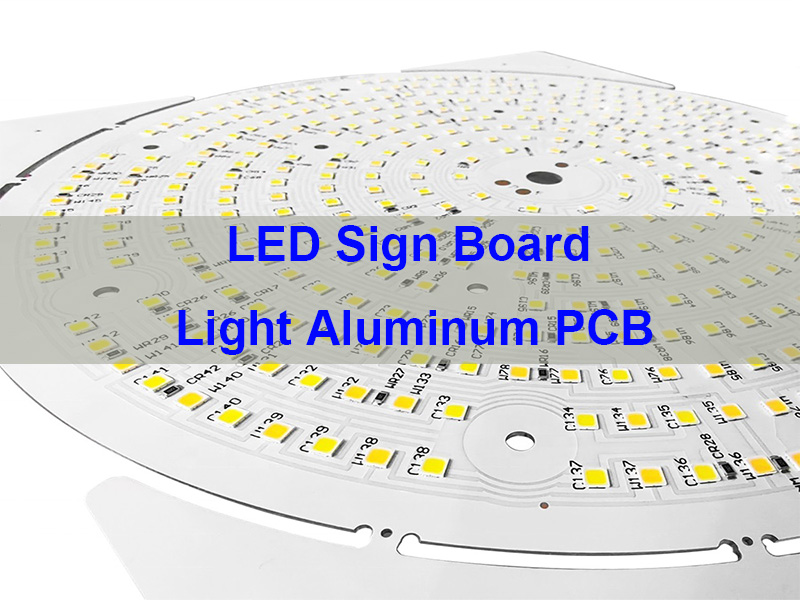
LED Sign Board Light Aluminum PCB Solutions for Outdoor Advertising

March 18th, 2026

LED Sign Board Light Aluminum PCB is the core technology behind modern illuminated signage, delivering superior heat dissipation, longer lifespan, and stable brightness. This article explains how to design, manufacture, and optimize LED aluminum PCB sign boards for reliable and scalable applications.

EBest Circuit (Best Technology) is a specialized MCPCB manufacturer of LED Sign Board Light Aluminum PCB, with over 20 years of experience in thermal management and outdoor lighting applications. We focus on delivering high-reliability aluminum PCBs designed for harsh environments, offering strong waterproof performance, UV resistance, and stable heat dissipation to ensure long-term operation of outdoor advertising systems. Our engineering team optimizes thermal conductivity and circuit layout to maintain consistent brightness and prevent light decay, helping your LED signage stand out with uniform illumination. With in-house fabrication, assembly, and strict quality control systems, we ensure stable batch consistency and reliable supply for large-scale projects. From material selection to final testing, every step is engineered to meet the demanding requirements of outdoor LED sign boards. Pls feel free to call us anytime at +86-755-2909-1601 to discuss your LED aluminum PCB project.

LED Sign Board Light Aluminum PCB

Why Choose a Reliable LED Sign Board Light Aluminum PCB Manufacturer?

LED Sign Board Light Aluminum PCB requires strict control of thermal performance, soldering quality, and long-term reliability. EBest Circuit (Best Technology) provides a complete solution from PCB fabrication to assembly, ensuring stable LED brightness and extended service life.

Core Parameters You Should Care About:

  • Thermal conductivity: 1.0–3.0 W/m·K (standard aluminum base)
  • Copper thickness: 1–3 oz for high current LED circuits
  • Board thickness: 1.0–1.6 mm aluminum substrate
  • Surface finish: HASL / ENIG for stable soldering
  • Operating temperature: -40°C to 125°C

Why choose EBest Circuit (Best Technology)?

  • Quality: Strict AOI + X-ray inspection ensures stable LED solder joints
  • Lead time: Fast turnaround within 1.5 weeks for PCBA
  • Service: professional engineering team supports full lifecycle optimization
  • Supply chain: Integrated sourcing avoids component shortages

If you are sourcing LED Aluminum PCB Sign Light Board, working with a vertically integrated manufacturer significantly reduces risk and improves product consistency. You are warmly welcome to contact us at sales@bestpcbs.com to arrange a factory visit.

LED Sign Board Light Aluminum PCB

What Is an LED Light PCB and Why Use Aluminum Substrate?

LED Light PCB is a circuit board designed specifically to power and control LED components. Aluminum PCBs are preferred because they dissipate heat efficiently, preventing LED degradation.

Key advantages:

  • Excellent heat transfer from LED junction to base
  • Improved LED lifespan and brightness consistency
  • Reduced risk of thermal runaway
  • Compact design for LED sign boards

How Does Aluminum PCB Improve LED Sign Board Performance?

The answer is simple: thermal management. Heat is the primary failure factor in LED sign boards.

Performance comparison:

ParameterFR4 PCBAluminum PCB
Thermal conductivity0.3 W/m·K1.0–3.0 W/m·K
LED lifespanLowerHigher
Heat dissipationPoorExcellent
ReliabilityModerateHigh

This is why Aluminum Board LED PCB Sign Light dominates outdoor and high-brightness signage.

What Services and Certifications Do We Provide for LED Aluminum PCB Sign Light Board?

CategoryDetails
PCB FabricationAluminum PCB, MCPCB, multi-layer LED boards
AssemblySMT, DIP, automated through-hole assembly
TestingAOI, X-ray, functional testing
CertificationsISO9001, ISO13485, IATF16949, AS9100D
TraceabilityMES system with 5-second tracking

What Are the Most Common Challenges in LED Sign Board Aluminum PCB Projects?

Many users face similar issues when developing LED Sign Light Aluminum PCB Board.
Typical challenges:

  • Uneven brightness across LED arrays
  • Overheating leading to early failure
  • Poor soldering reliability on aluminum base
  • Design not optimized for manufacturability
  • Inconsistent supply quality

How we solve them:

  • Thermal simulation and optimized copper layout
  • Controlled reflow profiles for aluminum substrates
  • DFM analysis before production
  • Stable component sourcing system

Looking for a stable pcb led solution? EBest Circuit (Best Technology) ensures consistency from prototype to volume production.

How to Design an Efficient LED Sign Board Light Aluminum PCB?

Design is the foundation of performance. A well-designed Led board sign ensures uniform light output and long-term reliability.

Design guidelines:

  • Use wide copper traces for current distribution
  • Ensure uniform LED spacing
  • Optimize thermal vias (if multilayer)
  • Avoid hotspots through balanced layout

How Is LED Aluminum PCB Manufactured Step by Step?

The quality of an LED aluminum PCB depends on process control at every stage, especially for single-sided thermoelectric separation copper-base boards. The full workflow is divided into panel fabrication and baseboard fabrication, followed by lamination and finishing.

Panel Fabrication Process

The panel defines the electrical circuit and current path. Its precision directly impacts LED brightness uniformity and reliability.

Process flow:

Cutting
Raw material is cut into production panels with controlled size and edge quality.

Baking
Panels are baked to remove moisture and stabilize material performance.

Circuit Formation
Circuit patterns are transferred onto copper, defining pads and traces.

Circuit QC (Visual Inspection)
Quick inspection to identify obvious defects like misalignment or missing patterns.

Etching
Unwanted copper is removed, forming the final circuit layout.

Etching QC (Visual + AOI + Testing)
Multi-level inspection ensures circuit integrity and detects opens/shorts early.

PP Lamination (Pure Glue)
Adhesive layer is applied for bonding with the aluminum base.

Drilling / Targeting
Positioning holes are created to ensure alignment accuracy.

Routing Slot (Boss Position)
Mechanical routing defines the convex platform structure.

Pending Lamination (Panel & Baseboard)
Panel is prepared and ready for bonding with the baseboard.

Baseboard Fabrication Process

The baseboard provides mechanical strength and heat dissipation. This stage ensures thermal stability and surface protection.

Process flow:

Cutting
Aluminum base is cut to required size.

Single-Side High-Temperature Film (If Needed)
Protective film is applied if not pre-coated.

Board Grinding
Surface is refined to improve adhesion and flatness.

Circuit Boss Formation (Dry Film / Wet Film)
Convex structure is formed for thermoelectric separation.

Etching
Material is etched to define structure and copper features.

Lamination (Panel & Baseboard)
Panel and baseboard are bonded—this is the key structural step.

Film Stripping
Temporary films are removed after lamination.

Targeting
Alignment is rechecked for accuracy.

Board Grinding
Surface is refined again for better coating performance.

Solder Mask (Standing → Baking → Exposure → Developing)
Protective layer is applied to prevent oxidation and short circuits.

Solder Mask QC
Inspection ensures proper coverage and alignment.

Legend Printing
Text and markings are added for identification.

Baking Cure
Final curing strengthens coatings and improves durability.

Surface Finish (OSP / ENIG / ENEPIG / Lead-Free HASL)
Surface treatment ensures solderability and corrosion resistance.

Profiling (Drilling / V-CUT / Routing)
Final board shape is defined.

Testing
Electrical testing verifies circuit performance.

FQC
Final inspection checks overall appearance and structure.

FQA
Quality assurance confirms readiness for shipment.

Vacuum Packaging
Boards are sealed to prevent moisture and contamination.

Warehousing
Products are stored with traceability.

Shipment
Finished boards are delivered to customers.

Why This Process Matters for LED Sign Boards

Each step ensures that the LED Sign Board Light Aluminum PCB delivers:

  • Stable heat dissipation
  • Consistent brightness
  • Strong structural bonding
  • Reliable outdoor performance

A well-controlled process is the foundation of long-lasting LED signage.

What Industries Use LED Aluminum PCB Sign Boards the Most?

LED letter sign board applications are expanding rapidly across industries.

IndustryApplication
AdvertisingOutdoor signage, billboards
RetailStorefront LED sign boards
AutomotiveLED lighting modules
Smart cityTraffic signals, display panels

How to Ensure Long-Term Reliability of LED Sign Light Aluminum PCB Board?

Reliability depends on materials, process, and testing.

Key factors:

  • High thermal conductivity dielectric layer
  • Stable solder joints with controlled reflow
  • Proper coating for outdoor protection
  • Full functional testing

How Does Automated Through Hole Assembly Improve LED PCB Quality?

Automation ensures consistency and reduces human error.

Benefits:

  • Higher production efficiency
  • Stable solder quality
  • Reduced defect rates

What Are the Key Differences Between LED PCB Types?

TypeApplicationAdvantage
FR4 PCBLow-power LEDLow cost
Aluminum PCBHigh-power LEDThermal performance
Ceramic PCBExtreme conditionsBest thermal stability

How to Choose the Right LED Aluminum PCB Manufacturer?

Choosing the right partner directly impacts product quality.

Selection criteria:

  • Experience in LED PCB manufacturing
  • Full in-house production capability
  • Strong engineering support
  • Certifications and traceability systems
LED Sign Board Light Aluminum PCB

If you are looking for a reliable LED Sign Board Light Aluminum PCB manufacturer, EBest Circuit (Best Technology) provides complete solutions from design to assembly. Pls feel free to contact us anytime at sales@bestpcbs.com to start your project with a trusted partner.

FAQs About LED Sign Board Light Aluminum PCB

What is LED Sign Board Light Aluminum PCB?
It is a metal-core PCB designed to support LED lighting with efficient heat dissipation and stable performance.

Why use aluminum PCB for LED signs?
Aluminum improves thermal management, extending LED lifespan and maintaining brightness.

What thickness is best for LED aluminum PCB?
Typically 1.0–1.6 mm depending on application and thermal requirements.

How to improve LED PCB heat dissipation?
Use high thermal conductivity materials, optimize copper layout, and ensure proper mounting.

What surface finish is best for LED PCB?
ENIG provides better reliability, while HASL is cost-effective for standard applications.

Can aluminum PCB support high current LEDs?
Yes, with proper copper thickness and thermal design.

You may also like

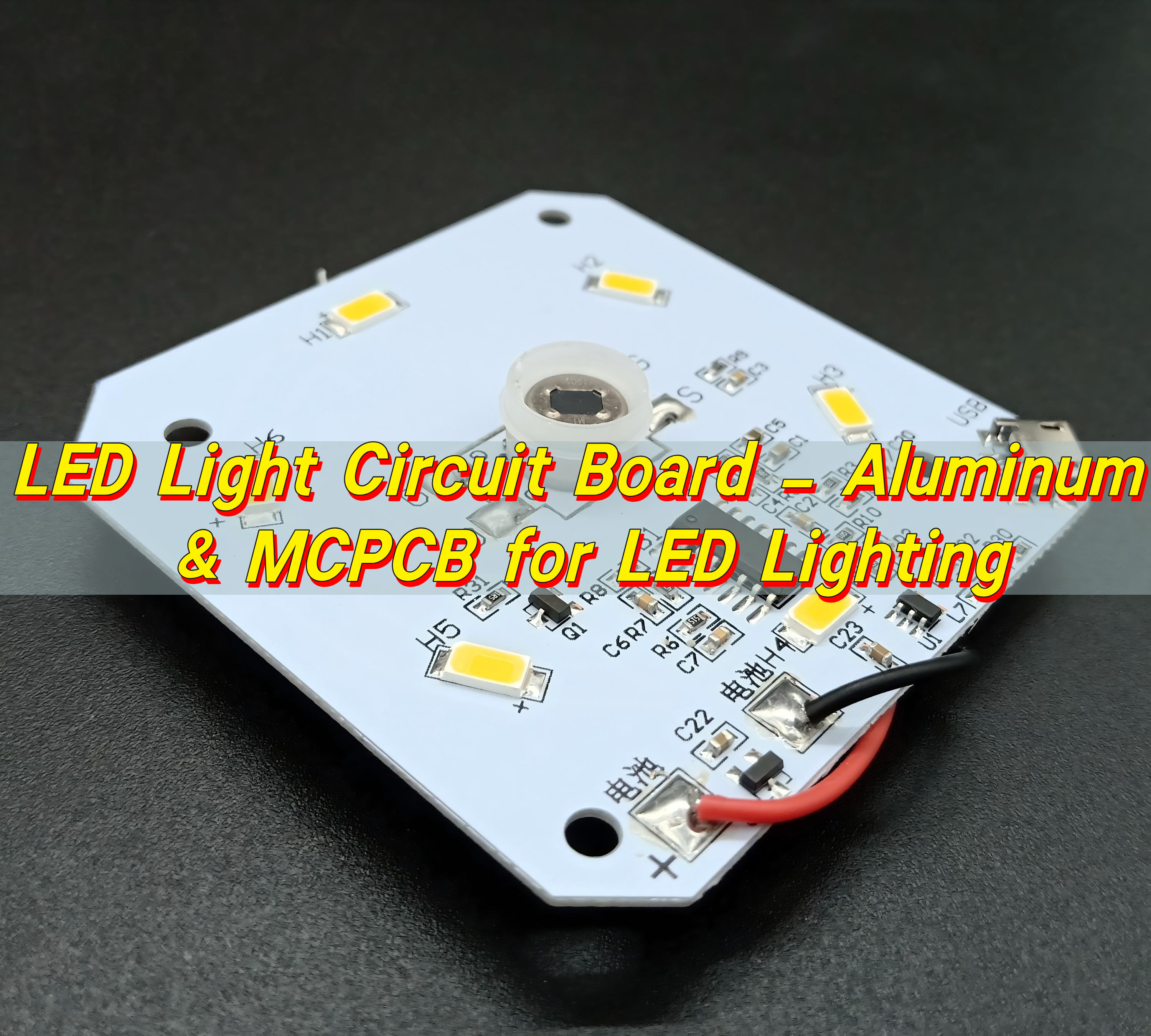
LED Light Circuit Board – Aluminum & MCPCB for LED Lighting

March 12th, 2026

What is an LED light circuit board?

An LED light circuit board is the foundation that supports and powers light-emitting diodes in modern lighting systems. It provides electrical connections, mechanical support, and heat management so LEDs can operate safely and efficiently. Without this board, the small semiconductor LEDs would not be able to receive stable current or maintain long-term reliability.

In simple terms, an LED light board acts as the platform where electronic components are mounted and interconnected. Conductive copper traces on the board guide electrical signals and power to each LED. At the same time, the base material helps spread heat away from the LEDs, which protects them from overheating and performance loss.

LED Light Circuit Board – Aluminum & MCPCB for LED Lighting

Compared with traditional lighting electronics, LED circuit boards require special attention to heat dissipation and current control. LEDs convert a large portion of electrical energy into light, yet some energy still becomes heat. If that heat stays near the LED chip, it may shorten the operating life or reduce brightness over time.

A typical LED light circuit board contains several important parts:

  • LED chips or LED packages mounted on the board surface
  • Copper traces that route power and signals
  • Solder pads used to attach LEDs and other components
  • Base substrate that provides structural strength and thermal conduction

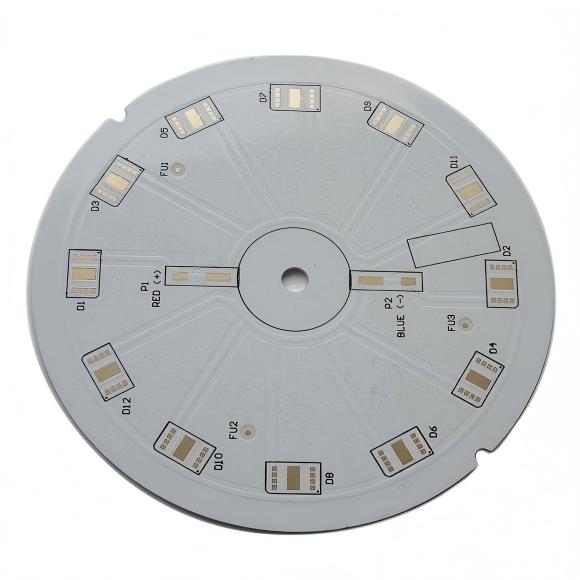
Manufacturers often design these boards in circular, linear, or custom shapes depending on the lighting product. For example, round boards are common in downlights and bulbs, while long narrow boards appear in LED strips or panel lights.

High-quality manufacturing processes are essential to ensure consistent performance. Companies like EBest Circuit (Best Technology) focus on precision PCB fabrication and assembly to support stable LED lighting applications across consumer, industrial, and commercial devices.

How does a LED light board work?

An LED light board works by distributing electrical power through copper traces to a group of LEDs that convert electricity into visible light. Although the principle sounds simple, the design requires careful control of voltage, current, and heat.

LEDs are semiconductor devices that emit light when current flows through them. The circuit board acts as the pathway that guides this electrical current from the power source to each LED component. The working process typically follows several steps. First, electrical power enters the board through connectors or solder points. Then the copper circuitry distributes that power to the LEDs according to the circuit design. Finally, each LED converts electrical energy into light.

Because LEDs require precise current levels, most boards also include electronic components that help regulate power. These components may include resistors, drivers, or control chips depending on the complexity of the lighting system.

The general operating sequence of an LED board can be summarized as follows:

  • Power is supplied from a driver or external power source
  • Copper traces conduct current to each LED package
  • LEDs emit light when the electrical current passes through the semiconductor junction
  • Heat generated by the LEDs transfers into the PCB substrate and dissipates outward

Thermal management plays a major role in this process. LEDs are sensitive to temperature, so the board must move heat away quickly. Materials with strong thermal conductivity help maintain stable LED junction temperatures.

Another key factor is electrical balance. If current distribution is uneven, some LEDs may become brighter than others. This can reduce product lifespan or cause inconsistent lighting output.

Modern LED boards may also integrate smart features such as dimming control, color adjustment, or sensor interfaces. These functions allow lighting products to adapt to different environments while maintaining high efficiency. Overall, the LED light board acts as both an electrical network and a thermal platform. It ensures LEDs receive stable power while maintaining the conditions required for bright, reliable illumination.

LED Light Circuit Board – Aluminum & MCPCB for LED Lighting

What types of PCB are used for LED lights?

Different lighting products require different types of circuit boards. The choice of PCB material affects heat management, durability, cost, and overall lighting performance. Although many PCB technologies exist, only a few are commonly used in LED lighting applications. Each type offers unique advantages depending on the power level and environment of the lighting system.

Below are several widely used PCB types for LED lighting.

  • FR4 PCB
    The FR4 board uses fiberglass reinforced epoxy laminate. It is one of the most common PCB materials in electronics. FR4 boards are affordable and reliable for low-power LED devices.
  • Aluminum PCB
    Aluminum boards are designed for better heat dissipation. A metal base layer transfers heat away from LEDs more efficiently than standard fiberglass materials.
  • MCPCB (Metal Core PCB)
    MCPCBs contain a metal core layer that dramatically improves thermal conductivity. These boards are widely used in high-brightness LED lighting systems.
  • Flexible PCB
    Flexible boards use polyimide material and can bend or fold. They are ideal for curved lighting designs such as LED strips or decorative lighting products.

Each type serves different applications. Lower-power devices may use FR4 boards, while high-power lighting systems often rely on metal-core structures.

PCB TypeMain MaterialThermal PerformanceTypical Applications
FR4 PCBFiberglass epoxyModerateIndicator lights, low-power LEDs
Aluminum PCBAluminum baseHighLED bulbs, floodlights
MCPCBMetal core structureVery highHigh-power lighting modules
Flexible PCBPolyimide filmModerateLED strips, wearable lighting

The choice depends largely on heat management needs and mechanical design requirements. Manufacturers like EBest Circuit (Best Technology) often provide customized PCB solutions that match the exact power level and layout needed for specific LED lighting products. This customization helps ensure consistent performance and reliable long-term operation.

Why use aluminum PCB for LED light circuit boards?

Aluminum PCBs have become one of the most popular solutions for LED lighting systems. Their design helps solve one of the biggest challenges in LED technology: heat management.

LED chips generate heat during operation. If that heat accumulates near the semiconductor junction, it can reduce brightness and shorten the device lifespan. Aluminum PCBs address this issue by transferring heat efficiently through a metal base layer.

An aluminum LED board typically contains three layers. The top layer holds the copper circuitry and solder pads. Beneath that sits a dielectric layer designed for thermal conduction. The bottom layer is an aluminum base that spreads heat across a larger area. This structure allows heat to move quickly away from the LED components. As a result, the lighting system remains stable even during long periods of operation.

Aluminum LED boards offer several powerful advantages.

  • Excellent thermal conductivity that protects LED chips
  • Strong mechanical stability for high-power lighting products
  • Lightweight structure compared with other metal materials
  • Reliable performance in demanding environments

Another important benefit is cost efficiency. Aluminum PCBs provide strong heat performance while remaining relatively affordable to manufacture. This balance makes them ideal for many commercial lighting products. They are widely used in applications such as LED street lights, stage lighting, industrial lamps, and automotive lighting systems.

In addition, aluminum boards can support high current levels without overheating. This feature makes them suitable for high-brightness LED arrays that require strong illumination output. Manufacturers often combine aluminum PCB technology with precise LED layout design to achieve consistent brightness and energy efficiency. With proper engineering, these boards deliver stable lighting performance for years.

What are the advantages of MCPCB for LED lighting?

MCPCB is a specialized PCB structure designed to provide exceptional heat dissipation for high-power electronic devices. In LED lighting systems, MCPCBs are widely used because they can transfer heat much faster than standard circuit boards. Their internal metal core acts as a thermal pathway that moves heat away from the LEDs.

Most MCPCBs use aluminum as the core material, although copper may also be used in high-performance designs. The metal core sits beneath a dielectric layer that electrically isolates the copper circuitry while still allowing heat transfer.

This structure provides several impressive benefits for LED lighting products.

  • High thermal conductivity improves LED lifespan
  • Stable mechanical strength supports heavy LED components
  • Better temperature control keeps brightness consistent
  • Strong reliability in high-power lighting environments

Another advantage is improved energy efficiency. When LEDs operate at lower temperatures, they convert electricity into light more effectively. That means lighting systems using MCPCBs can deliver stronger illumination while consuming less energy.

MCPCB technology also supports compact lighting designs. Because heat spreads more efficiently, engineers can place LEDs closer together without causing overheating problems.

FeatureAluminum PCBMCPCB
Core MaterialAluminumAluminum or copper
Thermal PerformanceHighVery high
CostModerateHigher
ApplicationsGeneral LED lightingHigh-power LED modules

Companies like EBest Circuit (Best Technology) manufacture high-precision MCPCB boards that support advanced LED lighting solutions across industries including automotive, architectural lighting, and industrial equipment.

LED Light Circuit Board – Aluminum & MCPCB for LED Lighting

What factors affect LED PCB performance?

The performance of an LED circuit board depends on multiple design and manufacturing factors. Even small variations in material quality or layout design can influence lighting efficiency and reliability. One major factor is thermal management. LEDs operate best when their junction temperature remains low. If heat cannot escape efficiently, performance may decline over time.

Another important factor is PCB material selection. Materials with higher thermal conductivity help transfer heat away from LEDs. Aluminum and metal core boards are widely used for this reason.

Several key elements influence LED PCB performance:

  • PCB substrate thermal conductivity
  • Copper trace thickness and layout
  • LED placement density
  • Quality of solder joints
  • Driver circuit design

Thermal vias and heat spreaders also play a major role in improving heat transfer. These design features allow heat to move from the top surface of the board to the metal base layer more efficiently.

Electrical stability is another important consideration. Proper circuit design ensures consistent current distribution across all LEDs. When current remains balanced, lighting output stays uniform and reliable. Manufacturing quality also affects performance. High-precision PCB fabrication reduces the risk of defects such as poor solder connections or uneven copper thickness.

Environmental conditions may also influence LED board reliability. Temperature fluctuations, humidity, and vibration can affect electronic components over time. Durable PCB materials and protective coatings help improve resistance to these environmental stresses.

Experienced manufacturers follow strict quality standards during production. Companies like EBest Circuit (Best Technology) apply advanced fabrication techniques and inspection processes to maintain consistent board performance.

How to make a circuit board for LED lights?

Designing and manufacturing a circuit board for LED lighting involves several steps. Each stage requires careful planning to ensure electrical stability and effective heat management.

The process usually begins with circuit design. Engineers determine the number of LEDs, their arrangement, and the electrical requirements of the lighting system. After the electrical schematic is complete, the layout design stage begins. Engineers create the physical arrangement of components and copper traces on the PCB.

The typical development process includes the following steps.

  • Define LED electrical requirements and power input
  • Create schematic diagrams for the circuit design
  • Design the PCB layout with proper trace routing
  • Select suitable PCB material such as aluminum or MCPCB
  • Manufacture the PCB through fabrication processes
  • Assemble LEDs and components using SMT or reflow soldering
  • Perform testing to confirm brightness and electrical stability

Thermal design is especially important during layout development. Engineers often place LEDs evenly across the board to distribute heat more effectively. Heat sinks may also be integrated into the final lighting product. These structures work together with the PCB to remove excess heat from the system.

After assembly, the board undergoes testing procedures. Engineers check current distribution, brightness levels, and thermal behavior to confirm proper operation. If necessary, adjustments are made to improve performance before full production begins.

Working with experienced PCB manufacturers simplifies this process. Companies such as EBest Circuit (Best Technology) provide design support and fabrication services that help clients develop efficient LED lighting boards from concept to mass production.

How long do LED light boards last?

One of the biggest advantages of LED lighting technology is its long lifespan. When supported by a high-quality circuit board, LED light boards can operate for many years without significant performance loss.

Most LED lighting systems are designed to last between 30,000 and 50,000 hours of operation. Some advanced designs can even exceed this range when thermal management is optimized.

The circuit board plays a critical role in achieving this lifespan. Proper heat dissipation prevents excessive temperature buildup that could damage LED components. Several factors influence how long an LED board will last.

  • LED chip quality
  • Thermal conductivity of the PCB material
  • Operating temperature
  • Power driver stability
  • Environmental conditions

When these elements work together effectively, LED lighting products maintain stable brightness for a very long time.

Thermal management again proves essential. If the board transfers heat efficiently, the LED junction temperature stays within safe limits. This helps protect both the LEDs and surrounding electronic components. Manufacturers often perform accelerated life testing to evaluate long-term reliability. These tests simulate extended operation under controlled conditions to verify product durability.

Well-designed LED boards used in commercial lighting systems often remain functional for more than a decade in normal usage environments. High-quality production also improves longevity. Reliable solder joints, consistent copper thickness, and precise component placement all contribute to stable operation over time.

For this reason, many lighting brands work with specialized PCB manufacturers like EBest Circuit (Best Technology) that focus on quality control and durable board construction.

LED Light Circuit Board – Aluminum & MCPCB for LED Lighting

Where are LED light circuit boards commonly used?

LED light circuit boards appear in a wide range of modern lighting systems. Their compact design, high efficiency, and reliability make them suitable for many industries.

As LED technology continues to advance, the variety of applications keeps expanding. Some of the most common uses include:

  • Residential lighting such as bulbs, ceiling lights, and decorative lamps
  • Commercial lighting including office panels and retail lighting displays
  • Automotive lighting for headlights, signal lights, and interior illumination
  • Industrial lighting used in factories and warehouses
  • Outdoor lighting such as street lights and landscape illumination

LED boards are also widely used in electronic devices. Examples include televisions, display panels, gaming equipment, and smart home products. Architectural lighting is another growing application area. Designers often use LED boards to create flexible lighting solutions that highlight building structures and interior spaces.

Medical equipment, stage lighting, and emergency lighting systems also rely on LED circuit boards for stable and efficient illumination. The versatility of LED boards comes from their adaptable design. Engineers can customize board size, shape, and power level to match specific lighting requirements.

Companies like EBest Circuit (Best Technology) provide custom PCB manufacturing that supports these diverse applications. Our expertise helps clients develop reliable LED lighting modules tailored to different industries.

Summary:

LED light circuit boards form the core of modern LED lighting systems. They provide electrical pathways, structural support, and effective heat dissipation that allow LEDs to perform efficiently and reliably. Different PCB types, including FR4 boards, aluminum PCBs, and MCPCBs, serve various lighting needs. Among them, aluminum and metal core boards offer superior thermal performance for high-power lighting applications.

If you would like to learn more about LED PCB solutions or need customized circuit boards for your lighting products, feel free to contact EBest Circuit (Best Technology) for professional support. Contact: sales@bestpcbs.com

You may also like

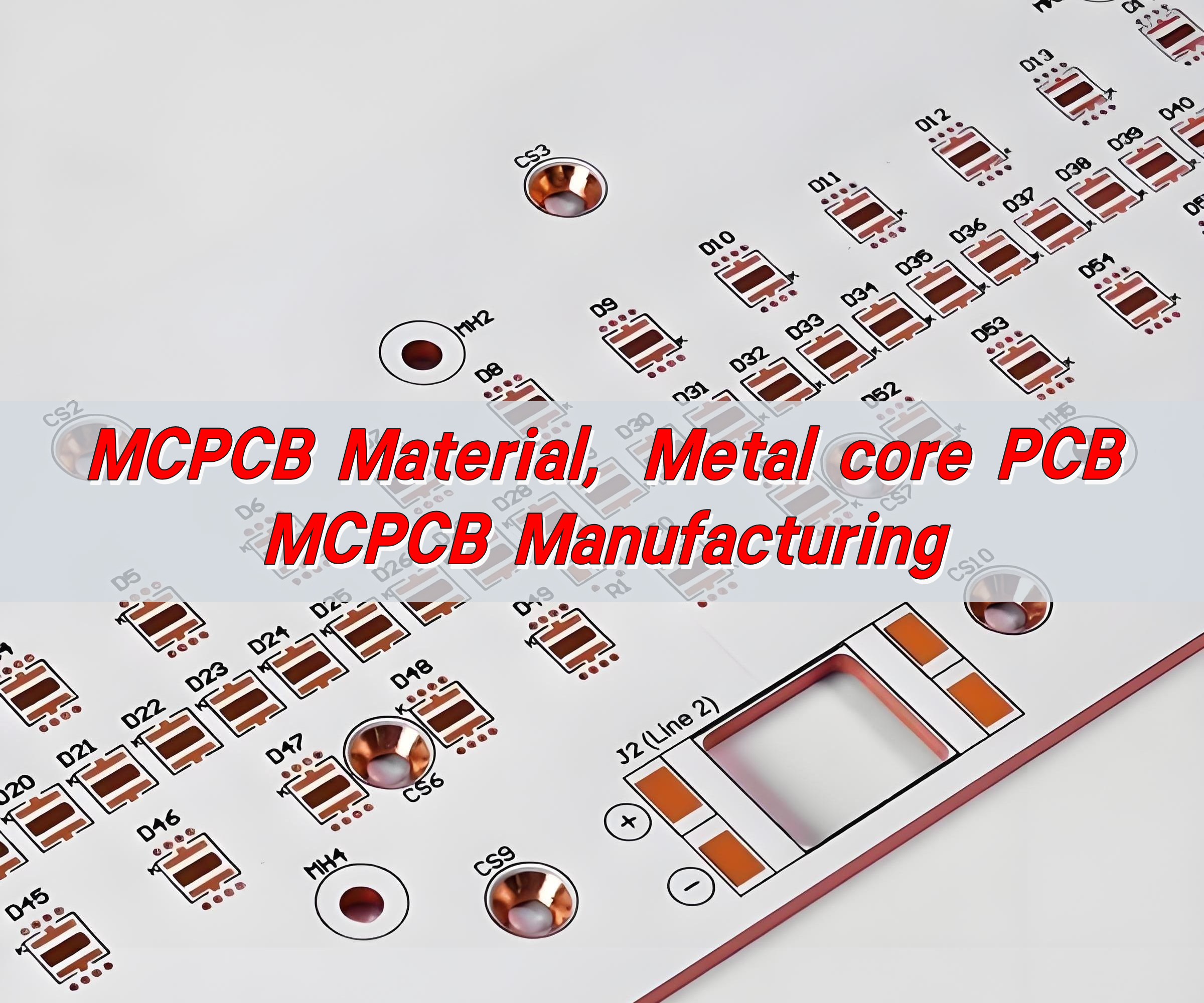
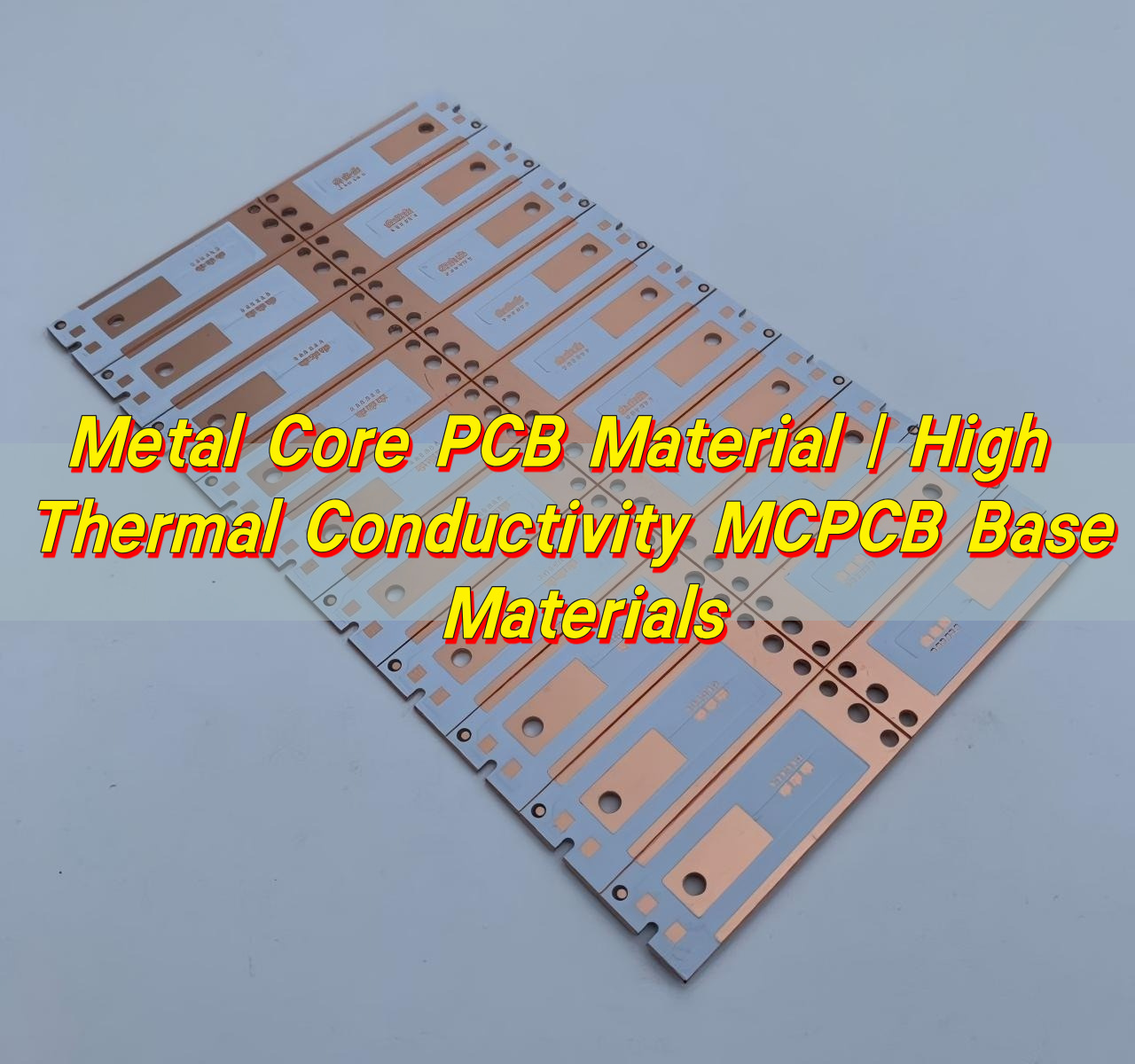
Metal Core PCB Material | High Thermal Conductivity MCPCB Base Materials

March 6th, 2026

Electronic devices continue to shrink while power density keeps rising. Excess heat can shorten component life, reduce performance, and cause signal instability. Because of this, designers often select metal core PCB material instead of conventional laminates when thermal control becomes critical.

A metal core circuit board integrates a thermally conductive metal base beneath the dielectric and copper circuitry. This structure creates a direct path for heat to travel away from components. Compared with standard FR-4 boards, metal core PCBs can dissipate heat more efficiently and maintain better thermal balance during operation.

Metal Core PCB Material | High Thermal Conductivity MCPCB Base Materials

These boards are widely used in high-power LED lighting, automotive electronics, power converters, industrial control systems, and communication equipment. As power levels increase and device footprints shrink, engineers increasingly rely on aluminium core PCB, copper core PCB, and IMS PCB (Insulated Metal Substrate) technologies to stabilize thermal performance.

EBest Circuit (Best Technology)’s metal core PCB material provides excellent thermal conductivity, high stability and reliable performance for LED, power and high‑heat electronic applications.

What materials are used in metal core PCB?

A typical metal core PCB material structure consists of three primary layers. These layers work together to transfer heat efficiently from components to the metal substrate. Each layer performs a specific thermal and electrical function that ensures stable circuit performance.

The typical MCPCB stack structure includes:

  • Copper circuit layer
  • Thermal dielectric layer
  • Metal base layer

1. Copper Circuit Layer

The top layer contains copper traces that form the electrical circuit. This layer functions similarly to the copper layer in standard PCBs. Thicker copper improves current carrying capability and also spreads heat across the board surface. Copper thickness usually ranges from:

Copper ThicknessTypical Use
1 oz (35 ÎŒm)Standard LED and low-power circuits
2 oz (70 ÎŒm)Power LED modules
3 oz – 4 ozHigh-current power electronics

2. Thermal Dielectric Layer

The dielectric layer is a critical part of metal core PCB material. It electrically isolates the circuit from the metal base while still allowing heat to pass through. High thermal conductivity dielectric materials allow heat to move quickly from components into the metal base. Typical dielectric properties include:

PropertyTypical Range
Thermal conductivity1 W/mK – 10 W/mK
Thickness50 ÎŒm – 150 ÎŒm
Breakdown voltage2 kV – 6 kV

Common dielectric fillers include:

  • Ceramic particles
  • Aluminum oxide
  • Silicon compounds

These fillers increase thermal conductivity while maintaining insulation strength.

3. Metal Base Layer

The bottom layer of a pcb metal core acts as the primary heat sink. It spreads heat over a large surface area and transfers it to the external environment. Aluminum is widely used because it provides strong thermal performance at a reasonable cost. Copper offers the highest thermal conductivity but is heavier and more expensive. The most common base materials are:

Metal Base TypeThermal Conductivity
Aluminum~200 W/mK
Copper~385 W/mK
Steel~50 W/mK

How to choose metal core PCB material?

Selecting the right metal core pcb material depends on several engineering factors. The design must balance thermal performance, mechanical strength, electrical insulation, and manufacturing cost.

1. Thermal conductivity requirement

Heat dissipation is the main reason for using IMS PCB technology. The thermal conductivity of the dielectric layer determines how quickly heat moves into the metal base. Higher conductivity improves cooling performance. Typical ranges include:

Thermal ConductivityApplication
1–2 W/mKStandard LED lighting
3–5 W/mKAutomotive lighting
5–10 W/mKHigh-power electronics

2. Electrical insulation performance

Although the metal base conducts heat well, it must remain electrically isolated from the circuit layer. Reliable insulation prevents short circuits and protects sensitive components. Designers must verify:

  • Dielectric breakdown voltage
  • Insulation resistance
  • Long-term reliability under temperature cycling

3. Mechanical stability

Mechanical strength is also important when selecting metal core PCB materials. Aluminum substrates provide good rigidity while keeping board weight low. Copper base boards offer superior strength but increase overall board mass.

4. Manufacturing compatibility

Manufacturers evaluate whether the material supports standard processes such as:

  • SMT assembly
  • reflow soldering
  • drilling and routing
  • surface finishing

A stable material simplifies production and improves yield.

Metal Core PCB Material | High Thermal Conductivity MCPCB Base Materials

What material is the MCPCB made of?

An MCPCB (Metal Core Printed Circuit Board) typically combines three major materials: copper circuitry, thermal dielectric, and a metal substrate. However, within this structure, several variants exist depending on the application.

Aluminum Core PCB

An aluminium core PCB is the most widely used type of MCPCB. Aluminum offers excellent thermal conductivity while remaining lightweight and cost-effective. Typical aluminum grades used include:

  • 5052 aluminum
  • 6061 aluminum
  • 1060 aluminum

Advantages of aluminum core PCB include:

  • Lightweight structure
  • Good heat dissipation
  • Low material cost
  • Stable mechanical properties

Because of these benefits, aluminum core boards dominate LED lighting and power modules.

Copper Core PCB

A copper core PCB uses a solid copper substrate instead of aluminum. Copper has almost double the thermal conductivity of aluminum. This allows heat to move even faster away from components. However, copper boards are heavier and more expensive. Copper core PCBs are often used in:

  • high-power LEDs
  • RF power amplifiers
  • motor drivers
  • automotive electronics

IMS PCB (Insulated Metal Substrate)

An IMS PCB refers to a board where a dielectric layer isolates the circuit from the metal base. Most metal core PCBs fall into this category. The IMS structure allows designers to combine electrical insulation with thermal efficiency.

Typical IMS stack: Copper layer → thermal dielectric → aluminum base. This structure provides excellent heat dissipation while maintaining electrical isolation.

Metal Core PCB Material | High Thermal Conductivity MCPCB Base Materials

How thick is the metal core PCB?

The metal core pcb thickness varies depending on the design requirements. Engineers must consider both electrical performance and heat transfer efficiency. A typical MCPCB includes several thickness parameters.

Total board thickness. Thicker boards often improve mechanical strength. Common board thickness values include:

Board ThicknessApplication
1.0 mmThin LED modules
1.6 mmStandard MCPCB
2.0 mmHigh-power lighting
3.2 mmPower electronics

Metal core thickness. The metal base itself can vary significantly. A thicker metal base improves heat spreading capacity.

Metal Core ThicknessTypical Range
Aluminum base0.8 mm – 3.0 mm
Copper base1.0 mm – 4.0 mm

Dielectric thickness. The dielectric layer usually ranges between: 50 ÎŒm – 150 ÎŒm. A thinner dielectric improves thermal transfer but must still provide reliable electrical insulation.

Why is thermal conductivity important in metal core PCB material?

Thermal conductivity determines how quickly heat moves through a material. In electronic circuits, efficient heat removal protects components and stabilizes performance. High temperatures can reduce LED brightness, affect semiconductor switching speed, and shorten component lifespan.

A well-designed metal core PCB material structure solves this problem by creating a direct thermal path. Because the metal base spreads heat efficiently, the board avoids localized hot spots.

Heat flows through the following stages:

  • Component generates heat
  • Heat enters copper circuit layer
  • Heat moves through dielectric layer
  • Heat spreads across metal substrate
  • Heat dissipates into air or heat sink

Typical thermal conductivity comparison:

MaterialThermal Conductivity
FR-40.3 W/mK
Aluminum base~200 W/mK
Copper base~385 W/mK

What are benefits of metal core PCB material?

The advantages of metal core pcb materials extend beyond thermal performance. Engineers often select them because they improve reliability and design flexibility. Several benefits stand out. These advantages make pcb metal core technology suitable for high-power electronics.

  • 1. Excellent heat dissipation

Metal substrates rapidly transfer heat away from components. This reduces thermal stress and improves long-term reliability.

  • 2. Improved circuit stability

Stable temperatures keep semiconductor devices operating within their optimal range.

  • 3. High mechanical strength

Metal substrates increase board rigidity and durability.

  • 4. Compact product design

Efficient heat transfer allows designers to place components closer together.

  • 5. Longer product lifespan

Lower operating temperature helps protect LEDs, ICs, and power components.

  • 6. Reduced external cooling requirements

Many MCPCB designs operate without large heat sinks.

What is the difference between metal core PCB and FR4?

A metal core PCB vs FR4 comparison highlights the fundamental differences between the two technologies.

FR-4 is a fiberglass epoxy laminate commonly used in conventional PCBs. While it offers good electrical insulation, it has limited thermal conductivity. Metal core boards replace the fiberglass base with a thermally conductive metal substrate. In applications with high power density, metal core circuit boards offer clear advantages.

Below is a comparison of the two materials.

FeatureMetal Core PCBFR-4 PCB
Base materialAluminum or copperGlass fiber epoxy
Thermal conductivityHighLow
Heat dissipationExcellentLimited
Mechanical strengthStrongModerate
WeightHeavierLightweight
Typical applicationsLEDs, power electronicsConsumer electronics
Metal Core PCB Material | High Thermal Conductivity MCPCB Base Materials

Where is metal core PCB material used?

Because of its thermal advantages, metal core PCB material appears in many modern electronic systems. Industries rely on MCPCBs to manage heat in compact designs. Common applications include:

LED lighting, High-power LEDs generate substantial heat. MCPCBs help maintain consistent brightness and extend LED life.

Examples include:

  • street lighting
  • automotive headlights
  • industrial lighting

Automotive electronics, Vehicles require reliable thermal management for components such as:

  • engine control modules
  • power converters
  • lighting systems

Power electronics, Power supplies and converters generate high heat density. Metal core boards stabilize thermal performance in:

  • motor drives
  • DC-DC converters
  • industrial power modules

Communication systems, RF amplifiers and communication equipment often use copper core PCB structures to dissipate heat from power devices.

Consumer electronics, Compact devices such as projectors and audio equipment also benefit from MCPCB technology.

At EBest Circuit (Best Technology), we specialize in manufacturing high-quality metal core PCBs and thermal management circuit boards for demanding applications. Our engineering team supports customers from design review to production, ensuring each board meets strict performance standards.

If you are developing high-power electronic products and need reliable metal core PCB materials, feel free to contact our team. Email: sales@bestpcbs.com

You may also like

What is Empty Circuit Board? Empty Circuit Board vs Assembled PCB

March 5th, 2026

An empty circuit board is the starting point of almost every electronic product. Before chips, resistors, and connectors appear on a board, engineers begin with a bare platform that carries electrical pathways and mechanical structure. This base platform is the empty circuit board, also called a bare PCB.

EBest Circuit (Best Technology) has more than 19 years of PCB fabrication and assembly experience. Our engineering team supports projects from design review to final assembly. With integrated PCB fabrication and PCBA production, customers receive consistent quality, fast delivery, and practical engineering support throughout the process.

What Is an Empty Circuit Board?

An empty circuit board refers to a printed circuit board before electronic components are mounted. It contains copper traces, vias, pads, and insulating substrate materials. These elements form the electrical network that later connects components.

In manufacturing terms, an empty circuit board is often called:

  • Bare PCB
  • Blank PCB
  • Fabricated PCB

The board becomes a finished electronic module only after component assembly. That stage is known as PCBA (Printed Circuit Board Assembly).

What Materials Are Used in an Empty Circuit Board?

The materials inside an empty circuit board determine electrical performance and durability. Most boards combine insulating substrate materials with conductive copper layers.

1. Substrate Materials

The substrate forms the structural foundation of the PCB. Common substrate materials include:

  • FR4 fiberglass epoxy – the most widely used PCB material
  • High-TG FR4 – suitable for higher thermal environments
  • Polyimide – used for flexible circuits
  • Aluminum core – used for heat dissipation
  • Ceramic materials – used in high-frequency electronics

Among these options, FR4 remains the standard choice because it balances cost, strength, and electrical insulation.

2. Copper Layers

Copper forms the conductive pathways on the board. These traces connect electronic components. Copper thickness is measured in ounces (OZ) per square foot. Typical copper thickness values include:

Copper WeightThicknessApplication
0.5 oz~17 ”mFine-line circuits
1 oz~35 ”mStandard electronics
2 oz~70 ”mPower electronics
3 oz+100 ”m+High-current circuits

Higher copper thickness improves current capacity and thermal performance.

3. Solder Mask

Solder mask is the colored protective layer on top of the PCB. It prevents solder bridging during assembly. Common colors include:

  • Green
  • Black
  • Blue
  • White
  • Red

Green remains the most common color because it offers good contrast for inspection.

4. Surface Finish

The copper pads require protective coating. Surface finishes prevent oxidation and improve solderability. Typical finishes include:

  • HASL (Hot Air Solder Leveling)
  • ENIG (Electroless Nickel Immersion Gold)
  • ENEPIG
  • Immersion silver
  • OSP coating

Each finish has advantages depending on product requirements.

How Is an Empty Circuit Board Manufactured?

Manufacturing an empty circuit board involves multiple precision processes. Each step builds part of the board structure. Below is a simplified overview of the process.

1. Design File Preparation

Engineers prepare design files using PCB design software. These files define trace routing, drill holes, and board dimensions. Typical design files include:

  • Gerber files
  • Drill files
  • Stack-up specifications

2. Material Preparation

3. Inner Layer Imaging

4. Etching

5. Lamination

6. Drilling

7. Copper Plating

8. Solder Mask Application

9. Surface Finish

10. Electrical Testing

If you want to know more the manufacturing process of empty circuit board, you can watch below video from our PCB fabrication workshop:

What Are the Different Types of Empty Circuit Boards?

Empty circuit boards are not all built the same. Engineers select different PCB structures based on circuit complexity, signal speed, thermal conditions, and mechanical requirements. Below are the most common types of empty circuit boards used in modern electronics manufacturing.

1. Single-Layer Empty Circuit Board

    A single-layer circuit board contains one conductive copper layer on one side of the substrate. All components and traces appear on the same surface.

    Typical applications include:

    • LED lighting modules
    • Power adapters
    • Small household electronics
    • Simple control boards

    However, routing space is limited because all connections must exist on one layer.

    2. Double-Layer Empty Circuit Board

    A double-layer circuit board contains copper layers on both the top and bottom surfaces of the substrate. Electrical connections between the two layers are created using plated through holes (vias).

    Double-layer PCBs are widely used in:

    • consumer electronics
    • industrial control systems
    • communication devices
    • embedded modules

    Because they provide more routing space than single-layer boards, they remain a practical solution for medium-complexity designs.

    3. Multilayer Empty Circuit Board

    A multilayer PCB contains three or more copper layers stacked together through lamination. Some advanced boards may include 8, 12, or even more layers.

    Common applications include:

    • smartphones and tablets
    • computer motherboards
    • networking equipment
    • high-speed communication systems

    Although multilayer PCBs require more manufacturing steps, they enable compact designs and higher performance.

    4. Flexible Circuit Boards

    A flexible PCB uses polyimide or similar flexible substrate materials instead of rigid fiberglass. The board can bend, twist, or fold without damaging the circuit. Flexible boards reduce connector usage and improve space utilization in compact devices.

    Typical applications include:

    • wearable electronics
    • camera modules
    • medical instruments
    • portable consumer devices

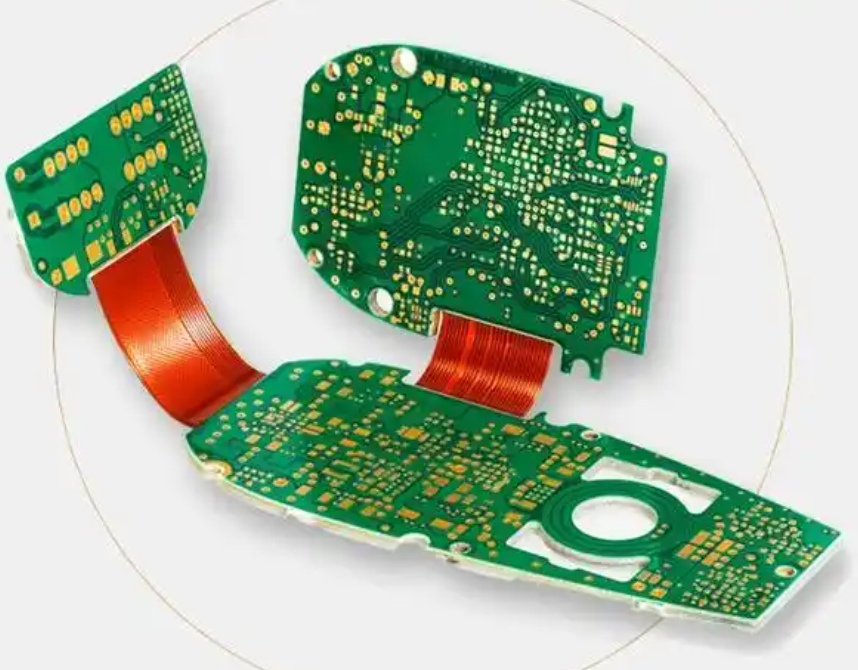
    5. Rigid-Flex Circuit Boards

    A rigid-flex PCB combines rigid circuit board sections with flexible interconnections in a single structure.

    Rigid-flex boards are often used in:

    • aerospace electronics
    • medical equipment
    • military systems
    • advanced communication devices

    Although the design and manufacturing process are more complex, rigid-flex PCBs offer excellent durability and compact integration.

    Rigid-Flex Circuit Boards

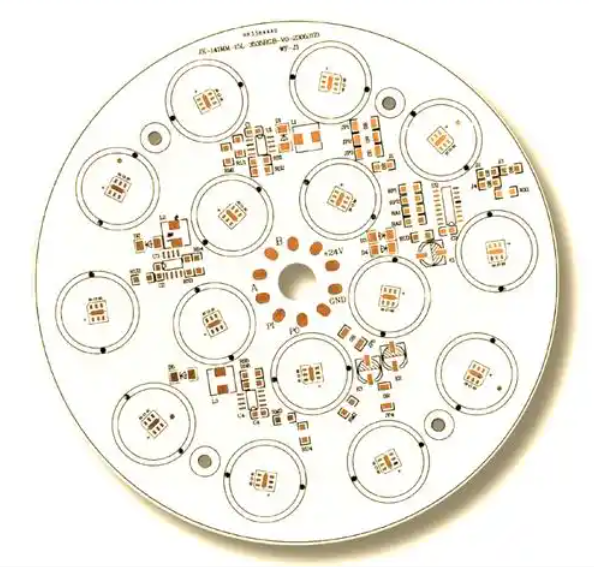
    6. Metal Core Circuit Boards

    A metal core PCB (MCPCB) uses a metal base layer, usually aluminum or copper, instead of standard fiberglass. Metal core boards are widely used in:

    • high-power LED lighting
    • automotive lighting systems
    • power converters
    • industrial power modules

    Because thermal performance is critical in these applications, metal core boards provide a reliable solution.

    Metal Core Circuit Boards

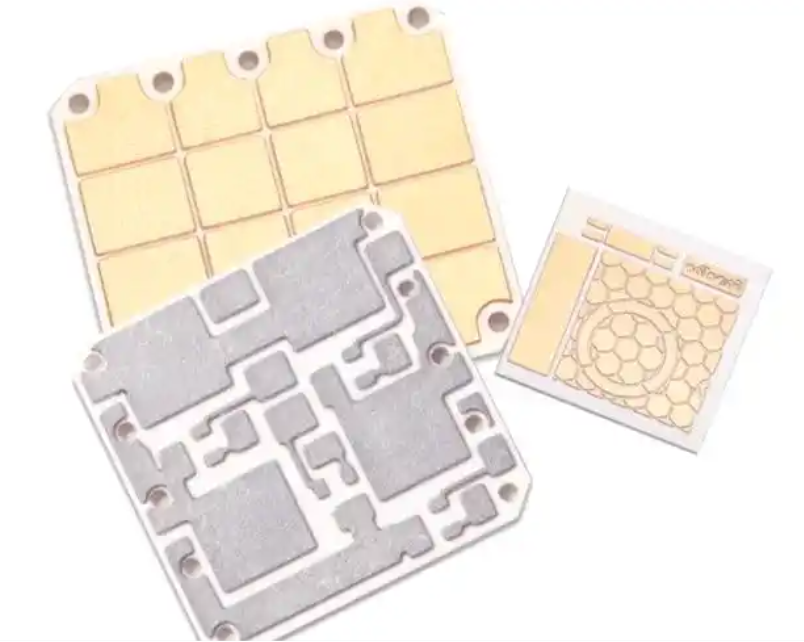
    7. Ceramic Circuit Board

    A ceramic PCB uses ceramic materials such as aluminum oxide (Al₂O₃) or aluminum nitride (AlN) as the substrate instead of fiberglass. Ceramic materials provide excellent thermal conductivity, electrical insulation, and dimensional stability.

    Key advantages include:

    • excellent heat dissipation
    • high electrical insulation strength
    • stable performance at high temperatures
    • low signal loss at high frequencies

    Ceramic PCBs are widely used in:

    • RF communication modules
    • power semiconductor modules
    • laser equipment
    • automotive electronics
    • aerospace electronics

    Although ceramic boards are more expensive than standard FR4 PCBs, they deliver superior performance in demanding environments.

    Ceramic Circuit Board

    Where Are Empty Circuit Boards Used?

    Empty circuit boards serve as the base platform for almost all electronic products. Before components are mounted, the board provides routing paths, grounding structures, and mechanical support for the final system.

    Common applications include:

    • Consumer electronics – smartphones, smart home devices, wireless earbuds, and wearable gadgets
    • Computer hardware – motherboards, graphics cards, memory modules, and storage controllers
    • Automotive – engine control units, battery management systems, infotainment modules, and sensor interfaces
    • Industrial automation systems – PLC controllers, motor drivers, robotics control boards, and industrial power supplies
    • Communication equipment – routers, base stations, RF communication modules, and network switches
    • Medical devices – patient monitoring systems, diagnostic equipment, imaging systems, and portable healthcare electronics
    • LED lighting systems – commercial lighting, automotive lighting, and architectural illumination.

    How Much Does an Empty Circuit Board Cost?

    The cost of an empty circuit board varies widely. Several factors influence manufacturing price, major cost factors including:

    1. Board size

    2. Layer count

    3. Material type

    4. Copper thickness

    5. Surface treatment

    6. Production quantity

    Here is a general cost for empty circuit boards:

    PCB TypeTypical Cost Range
    Single layer$1 – $5
    Double layer$3 – $15
    Multilayer PCB$20 – $200+

    These values vary depending on complexity and quantity. Working with an experienced manufacturer helps control cost while maintaining quality.

    Empty Circuit Board vs Assembled PCB

    An empty circuit board and an assembled PCB represent two different stages in electronic manufacturing. The empty board provides the physical and electrical platform. The assembled PCB transforms that platform into a working electronic module. Below is comparison chart between them:

    ItemEmpty Circuit Board (Bare PCB)Assembled PCB (PCBA)
    DefinitionPCB structure without electronic componentsPCB with components soldered and fully functional
    Manufacturing StagePCB fabricationPCB assembly
    Main ProcessesLamination, drilling, plating, etching, solder mask, surface finishSMT placement, reflow soldering, wave soldering, inspection
    Electrical FunctionProvides conductive pathways but no active functionalityFully operational circuit
    Components InstalledNoneResistors, capacitors, ICs, connectors, sensors
    Typical Layer Count1–20+ layers depending on designSame as PCB but populated with parts
    Manufacturing TimeUsually 3–7 days for prototypes5–10 days depending on component sourcing
    Testing MethodElectrical continuity testFunctional test, AOI, X-ray inspection
    Cost StructureMostly determined by material, layer count, board sizeIncludes PCB cost, components, assembly labor
    WeightVery light since no components are installedHeavier due to electronic parts
    Application StageUsed during early design, testing, and prototypingUsed in final electronic products
    Production ComplexityMedium complexity fabricationHigher complexity due to placement accuracy
    Typical UseEngineering validation and prototypingConsumer electronics, industrial equipment, automotive electronics

    From a manufacturing perspective, the empty circuit board acts as the foundation of the electronic system. Once components are installed through SMT or THT assembly processes, the board becomes a functional PCBA ready for integration into a product.

    Why Choose EBest as Your Empty Circuit Board & Assembled PCB Manufacturer?

    Best Technology (EBest Circuit) is a PCB and PCBA manufacturer with 19 years of industry experience, headquartered in Shenzhen, one of the world’s most important electronics manufacturing hubs. To better support global customers and ensure flexible supply chains, we have established production facilities in both China and Vietnam, allowing us to provide stable manufacturing capacity and competitive lead times.

    Our advantages include:

    • 19 Years of PCB & PCBA Manufacturing Experience
    • Professional R&D and engineering team
    • 1+3 engineering support model
    • One-stop PCB Fabrication and PCBA Assembly
    • Rapid prototype and production turnaround
    • Full Digital Manufacturing System
    • No MOQ, flexible order quantities
    • Global customer support experience across North America, Europe, and Asia
    • ISO 9001, ISO 13485, IATF 16949, and AS9100D certificated

    If you are planning a new electronics project or looking for a dependable PCB manufacturing partner, feel free to contact our engineering team.

    📩 sales@bestpcbs.com

    We are always ready to support your next circuit board project.

    FAQs

    1. Is an empty circuit board the same as a PCB?

    Yes. An empty circuit board is commonly called a bare PCB. It includes copper traces and pads but no electronic components.

    2. What thickness do empty PCBs usually have?

    Typical PCB thickness ranges from 0.8 mm to 1.6 mm. Thinner boards exist for compact electronics, while thicker boards provide higher mechanical strength.

    3. What files are required to manufacture a PCB?

    Manufacturers usually require the following files:

    • Gerber files
    • Drill files
    • PCB stack-up information
    • Bill of materials (for assembly)

    These files define the complete board structure.

    You may also like

    Amplifier PCB Circuit | High-Fidelity Low-Noise Audio PCB Design

    February 3rd, 2026

    Need professional amplifier PCB circuit design? We provide optimized PCB circuit solutions with precise wiring and impedance matching for high-performance audio amplifiers. Get custom quote here.

    Amplifier PCB Circuit | High-Fidelity Low-Noise Audio PCB Design

    What Is a PCB in an Amplifier?

    PCB in an amplifier is the physical platform that connects and supports all electronic parts required to boost an audio signal. It holds active devices such as transistors or ICs, passive parts like resistors and capacitors, and power components that deliver current to the load.

    In an audio amplifier, the PCB does far more than provide mechanical support. It controls impedance, limits interference, and manages heat. From a functional view, an amplifier PCB usually integrates several blocks. These blocks work together on the same board.

    Input traces handle tiny signals and need isolation. Output paths carry high current and need wide copper and short routes. The PCB ties these together in a controlled and repeatable way.

    What Are the Different Types of Amplifier PCBs?

    Amplifier PCBs vary based on function, power level, and application environment. There is no single universal board style. One common way to classify amplifier PCB circuits is by amplifier class.

    • Class A amplifier PCBs favor simplicity and linearity. They generate constant heat and require strong thermal paths.
    • Class AB amplifier PCBs balance efficiency and sound quality. They need careful bias routing and stable grounding.
    • Class D amplifier PCBs switch at high frequency. They demand controlled impedance, tight loop areas, and EMI control.

    Another way to group amplifier PCBs is by construction style.

    • Single-layer PCBs appear in low-cost or simple amplifier modules. They are easy to make but limited in performance.
    • Double-layer PCBs are common in consumer audio. They allow better grounding and signal routing.
    • Multilayer PCBs support high-end or compact amplifiers. Dedicated ground and power planes improve noise control.
    • Metal-core PCBs help in power amplifiers where heat dissipation is critical.
    • Rigid-flex PCBs appear in space-constrained or portable audio devices.

    Application also influences PCB type. A headphone amplifier PCB looks very different from a 1000-watt PA amplifier PCB. Automotive and industrial amplifiers may need thicker copper, higher Tg materials, or special surface finishes to handle stress.

    At EBest Circuit (Best Technology), amplifier PCB projects often range from compact low-noise audio boards to heavy-copper power amplifier PCBs. The board type is selected after reviewing power level, thermal load, and target market.

    How Are Amplifier PCB Circuit Design?

    • The first step is schematic planning. Once the schematic is stable, PCB design translates theory into copper.
    • Signal integrity is always a priority. Low-level input signals must be protected from noise sources. These traces should be short, direct, and shielded by ground when possible.
    • Thermal design is another core concern. Output devices and regulators generate heat. The PCB must spread this heat through copper pours, thermal vias, or metal substrates.
    • Power distribution must be stable. Decoupling capacitors should sit close to active devices. Bulk capacitors need short return paths.

    Key layout practices include:

    • Keeping high-current loops small
    • Separating signal and power sections
    • Using wide copper for output stages
    • Placing feedback paths carefully
    • Controlling trace impedance in Class D designs

    Amplifier PCB circuit design is not only about rules. It also involves experience. Manufacturers like EBest Circuit (Best Technology) often support customers with design feedback, pointing out layout risks before production. That early review saves time and cost later.

    Amplifier PCB Circuit | High-Fidelity Low-Noise Audio PCB Design

    The Manufacturing Process of a Custom Amplifier PCB Circuit

    Once an amplifier PCB circuit design is finalized, manufacturing turns digital files into a physical board. Most audio amplifier PCBs use FR-4, but high-power or high-temperature designs may need high-Tg laminates or metal-core substrates. Copper thickness is chosen based on current load.

    The typical manufacturing flow includes several stages.

    • Data preparation, where Gerber files and drill data are checked
    • Inner layer imaging, for multilayer boards
    • Lamination, bonding layers under heat and pressure
    • Drilling, creating vias and mounting holes
    • Plating, adding copper to holes and surfaces
    • Outer layer imaging and etching, forming final traces
    • Solder mask application, protecting copper and defining pads
    • Surface finish, such as ENIG or HASL
    • Electrical testing, verifying connectivity

    For amplifier PCBs, quality control is critical. Trace width tolerance affects impedance and current capacity. Via quality affects thermal transfer. Solder mask accuracy affects assembly yield.

    Custom amplifier PCB circuits often need tighter inspection than standard digital boards. Audio customers expect low noise and long service life.

    EBest Circuit (Best Technology) integrates PCB fabrication with PCBA services, allowing amplifier boards to move smoothly from bare board to assembled unit. That integration reduces handling risk and shortens delivery cycles.

    What Are the Advantages of Amplifier PCBs?

    Amplifier PCBs offer clear benefits compared to loose wiring or ad-hoc construction.

    • One major benefit is electrical stability. A PCB enforces consistent trace lengths and grounding paths.
    • Another advantage is compact size. PCBs allow dense placement of parts without sacrificing performance.
    • Reliability also improves with PCBs. Fixed copper traces do not loosen like wires.

    Key advantages include:

    • Lower noise through controlled grounding
    • Better heat management with copper pours
    • Higher assembly efficiency
    • Easier troubleshooting and repair
    • Scalable production from prototype to volume

    Amplifier PCBs also support modern compliance needs. They allow traceability, automated inspection, and standardized testing.

    How Does an Amplifier PCB Circuit Work in Audio Amplifier Systems?

    An amplifier PCB circuit works by guiding an audio signal through a controlled amplification path while supplying power and maintaining stability. The PCB does not amplify by itself, but it enables each component to do its job correctly.

    • The process begins at the input. The PCB routes the incoming signal to the first gain stage. This area must stay quiet.
    • Next comes voltage amplification. Transistors or ICs increase signal amplitude. The PCB ensures that feedback paths remain stable and short.
    • The output stage then delivers current to the load. This part of the PCB handles high current and heat. Wide traces, thick copper, and solid ground returns are common.
    • Throughout the circuit, the power supply section feeds clean voltage. Decoupling capacitors smooth fluctuations. The PCB keeps these loops tight to prevent ripple and noise from leaking into the signal path.
    • Protection circuits often sit near the output. They monitor temperature, current, or DC offset. The PCB must connect these accurately to respond fast in fault conditions.

    In a complete audio amplifier system, the PCB acts as the nervous system. It coordinates signal flow, power delivery, and protection.

    Amplifier PCB Circuit | High-Fidelity Low-Noise Audio PCB Design

    What Are the Applications of Amplifier PCBs?

    Amplifier PCBs appear in many products, far beyond traditional home audio. Any system that needs to boost a signal relies on some form of amplifier circuit PCB.

    Common application areas include:

    • Home audio amplifiers and receivers
    • Professional sound systems and mixers
    • Automotive audio and infotainment
    • Headphone amplifiers and DACs
    • Musical instrument amplifiers
    • Public address systems
    • Industrial signal amplification
    • Medical and measurement equipment

    Each application places different demands on the amplifier PCB circuit. Home audio focuses on low noise and clean sound. Automotive amplifiers need vibration resistance and temperature tolerance. Industrial systems demand long-term stability.

    EBest Circuit (Best Technology) works with customers across these sectors, supporting both low-volume prototypes and stable mass production.

    How to Choose a Custom Amplifier PCB Circuit Supplier?

    Choosing the right supplier for an amplifier PCB circuit is a strategic decision. The supplier influences performance, cost, delivery, and long-term reliability.

    • Technical capability should come first. The supplier must understand audio-specific challenges such as noise control, thermal design, and high-current routing.
    • Manufacturing range also matters. A good supplier supports different board types, copper weights, and finishes.
    • Quality systems are another key factor. Certifications, inspection methods, and traceability protect your product reputation.
    • Communication style matters more than many expect. Amplifier PCB projects often evolve during prototyping.

    When evaluating suppliers, consider these points:

    • Experience with amplifier PCB circuits
    • Support for DFM and layout review
    • Stable material sourcing
    • Clear quality control process
    • Ability to scale from prototype to volume

    EBest Circuit (Best Technology) positions itself as a one-stop PCB and PCBA partner. By combining fabrication and assembly, it helps audio amplifier projects move faster with fewer handoffs.

    Amplifier PCB Circuit | High-Fidelity Low-Noise Audio PCB Design

    Conclusion:

    An amplifier PCB circuit is the foundation of audio amplifier performance. It shapes signal integrity, controls noise, manages heat, and ensures consistency from unit to unit. From basic input routing to high-current output stages, every layout decision affects sound quality and reliability.

    If you are developing a custom amplifier PCB circuit and want a partner who understands audio requirements, manufacturing precision, and scalable production, EBest Circuit (Best Technology) can support your project from concept to delivery.

    For technical consultation or a quotation, please contact sales@bestpcbs.com

    You may also like

    Why Ink Blistering Failures Occurs on Thermally conductive PCBs?

    February 2nd, 2026

    If you design or manufacture high-power electronics—such as LED modules, automotive electronics, or power supplies—you have likely encountered a costly issue: solder mask ink blistering or peeling on thermally conductive, copper-based PCBs.

    This defect is far more than cosmetic. Once the ink detaches, insulation is compromised, copper is exposed, and the risk of corrosion, short circuits, and field failures increases sharply. The question is not if it can happen, but why it happens so often on thermally conductive PCBs—and how to prevent it in a controlled, repeatable way.

    This guide explains the real root causes and provides a practical, engineering-driven prevention strategy.

    Why Do Thermally Conductive PCBs Suffer from Ink Blistering?

    Thermally conductive PCBs are designed to dissipate heat efficiently, often using thick copper layers, metal cores, or high-performance dielectric materials. These features make them excellent thermal performers—but also introduce mechanical stress.

    The core issue is CTE mismatch. Copper, dielectric layers, substrates, and solder mask ink all expand and contract at different rates when exposed to heat. During soldering and thermal cycling, this mismatch generates strong shear forces at the ink-to-copper interface.

    When stress exceeds adhesion strength, failure occurs. The ink does not fail randomly—the bond fails at its weakest point.

    Why Do Thermally Conductive PCBs Suffer from Ink Blistering?

    What Actually Fails When Ink Blisters or Peels Off?

    The final failure mode is always the same: loss of adhesion between the solder mask ink and the copper surface.

    Once this bond weakens:

    • Heat causes localized lifting
    • Trapped moisture expands into vapor
    • Flux chemicals penetrate the interface
    • The ink blisters, cracks, or peels away

    Understanding why adhesion weakens is the key to long-term prevention.

    Why Does Ink Adhesion Fail on Thermally Conductive PCBs?

    Ink adhesion failure is rarely caused by a single factor. In most cases, it is the result of multiple small weaknesses stacking together.

    1. Poor Surface Preparation

    This is the most common root cause. Any contamination—oxide layers, oils from handling, dust, or residual plating chemicals—prevents proper bonding. Even a surface that is too smooth can be a problem, as the ink has nothing to mechanically anchor to.

    Moisture trapped in vias or micro-voids becomes steam during soldering, pushing the ink away from underneath.

    2. Using the Wrong Type of Ink

    Standard solder masks developed for FR-4 are not designed for metal-core or high-thermal-conductivity boards. Their mechanical flexibility and thermal resistance are insufficient for the stress environment.

    Expired ink or ink stored outside recommended conditions further degrades adhesion performance.

    3. Incomplete or Incorrect Curing

    Ink that is not fully cured remains chemically weak. Fast ramp rates, uneven oven temperatures, or insufficient soak time prevent full polymer cross-linking.

    Visually, the ink may look acceptable—but internally, it lacks structural strength.

    4. Chemical Attack During Assembly

    Highly active fluxes can migrate under poorly bonded ink edges. Under reflow temperatures, these chemicals aggressively attack the interface, triggering sudden blistering or peeling after assembly.

    5. Design-Driven Thermal Stress

    Large copper pours and thick copper planes act as stress concentrators. Repeated thermal cycling during soldering, testing, and operation gradually fatigues the ink bond in these high-stress zones.

    How Can Surface Preparation Be Optimized for Ink Adhesion?

    The goal of surface preparation is simple: clean, micro-roughened, and moisture-free copper.

    Key actions include:

    • Using controlled acidic cleaning followed by high-pressure DI water rinsing
    • Applying chemical micro-etch or plasma treatment to achieve Ra 0.4–0.8 ”m
    • Enforcing a strict “print within 2 hours” window after surface treatment
    • Avoiding manual handling after preparation

    Surface preparation sets the foundation. If this step fails, no ink can compensate.

    How Should Ink Be Selected and Handled for These Boards?

    Ink selection must match the application environment.

    Best practices include:

    • Using solder mask inks specifically qualified for metal-core or high-thermal PCBs
    • Reviewing technical data sheets and Certificates of Analysis
    • Storing ink at controlled temperature and humidity
    • Enforcing FIFO inventory and never using expired material

    Ink should be treated as a critical chemical, not a consumable.

    What Printing and Curing Controls Prevent Ink Failures?

    Printing and curing are where most hidden failures originate.

    To maintain consistency:

    • Control ink viscosity using a viscometer
    • Measure dried ink thickness regularly (typically 25–35 ”m)
    • Ensure uniform coverage across thick copper areas
    • Profile curing ovens using actual board measurements

    Curing must follow the ink supplier’s recommended ramp-and-soak profile exactly. Assumptions are not acceptable—verification is required.

    What Printing and Curing Controls Prevent Ink Failures?

    How Can Ink Reliability Be Validated Before Shipment?

    Validation should simulate real assembly and field conditions.

    Recommended tests include:

    • Cross-hatch tape adhesion testing (IPC-TM-650 2.4.28)
    • 288°C solder float testing
    • Multiple simulated reflow cycles
    • Compatibility testing with selected solder pastes and fluxes

    If ink survives these tests, it is far more likely to survive real use.

    How Can PCB Design Reduce Ink Stress and Blistering Risk?

    Design choices strongly influence ink reliability.

    Effective DFM measures include:

    • Using rounded corners on large copper pours
    • Adding solder mask anchor features where possible
    • Avoiding abrupt copper thickness transitions
    • Communicating ink and assembly risks early in design reviews

    Design collaboration prevents problems that manufacturing alone cannot fix.

    Why Is Pre-Bake Important Before Assembly?

    Moisture is a silent contributor to blistering.

    Pre-baking boards at 125°C for 1–2 hours before assembly removes absorbed moisture from substrates and vias. This simple step dramatically reduces steam-induced ink lifting during reflow.

    Why Is Pre-Bake Important Before Assembly?

    How Should Ink Blistering Be Troubleshot Systematically?

    When failures occur, follow a structured approach:

    1. Observe the blistering pattern
    2. Large, uniform blistering usually points to curing or ink issues
    3. Localized blistering often indicates contamination or handling problems
    4. Failures only after soldering suggest incomplete cure or flux attack

    Systematic analysis saves time and prevents repeated mistakes.

    What Is the Key to Preventing Ink Blistering Long Term?

    Ink blistering on thermally conductive PCBs is not random. It is the result of unmanaged stress and weak process control.

    Prevention comes from:

    • Proper material selection
    • Controlled surface preparation
    • Verified curing processes
    • Design collaboration
    • Assembly compatibility planning

    When these elements are managed together, ink blistering becomes a rare exception rather than a recurring problem.

    Ready to Eliminate Ink Blistering on Thermally Conductive PCBs?

    Ink blistering and solder mask peeling are not inevitable problems—they are signals that something in material selection, process control, or design collaboration needs to be improved.

    If you are working with thermally conductive, copper-based, or metal-core PCBs and want to prevent ink failures before they reach assembly or the field, working with an experienced manufacturing partner makes a measurable difference.

    At EBest Circuit, we support engineers with:

    • Early DFM and process risk review for thermally conductive PCBs
    • Proven solder mask and surface treatment processes for high-thermal designs
    • Full PCB + PCBA one-stop service, including testing and traceability
    • Prototype and small-volume support with fast technical feedback

    If you’d like a second opinion on your board design, process flow, or ink-related reliability risks, feel free to contact our engineering team.

    📩 Email: sales@bestpcbs.com

    We’re here to help you turn thermal performance into long-term reliability—without surprises after reflow.

    You may also like

    PCB Manufacturer in Dubai

    December 24th, 2025

    Looking for PCB manufacturer in Dubai? This comprehensive guide outlines top providers, key selection criteria, and solutions to common manufacturing pain points.

    Dubai’s position as a global technological and industrial hub has fostered a dynamic ecosystem of PCB manufacturer in Dubai, catering to diverse sectors from aerospace to consumer electronics. For those seeking reliable partners in this region, understanding the PCB manufacturer in Dubai is crucial to making informed decisions that align with project requirements and quality standards. This guide delves into the key players, core challenges, and evaluation frameworks for PCB manufacturer in Dubai, offering actionable insights to navigate the local market effectively and secure supply chain stability.

    PCB Manufacturer in Dubai, https://www.bestpcbs.com/blog/2025/12/pcb-manufacturer-in-dubai/

    Top 10 PCB Manufacturer in Dubai

    Company NameCore Business AdvantagesKey StrengthsManufacturing CapabilitiesLead Time
    EBest Circuit (Best Technology) Co.,LtdOne-stop PCB design, prototyping, manufacturing & assembly; automotive and aerospace PCB solutions19+ years of industry experience; ISO9001/ISO13485/IATF16949 certified; 97.2% on-time delivery rate1-16 layer rigid-flex PCBs; 0.1mm laser drilling; heavy copper PCBs (up to 6oz); impedance control ±5%; ceramic & FR4 materials24 hours for 2-layer prototypes; 7-12 days for mass production
    Falcon ElectronicsPCB assembly & prototyping; automotive and consumer electronics-focused OEM servicesEstablished in 2008; ISO certified; Dubai Silicon Oasis location for logistical advantage2-12 layer PCBs; SMT & through-hole assembly; rigid PCB fabrication; IPC-6012 compliant5-7 days for prototypes; 10-15 days for mass production
    Precision Electronics UAEHigh-quality PCB fabrication; rapid prototyping; small to medium volume production12+ years of local experience; client-recommended for precision; Dubai Investment Park base1-8 layer PCBs; laser direct imaging (LDI) technology; FR4 & aluminum-based materials; AOI inspection3-5 days for prototypes; 8-12 days for mass production
    Globaltronics Manufacturing L.L.C.Contract electronics manufacturing; PCB assembly for telecom, defense & industrial sectorsJebel Ali Free Zone location; multiple ISO certifications; lean manufacturing processes2-16 layer PCBs; HDI boards; SMT & MID technologies; RoHS compliant materials6-8 days for prototypes; 12-18 days for mass production
    Naoki Design SolutionsRigid PCB fabrication; prototype & production services; local technical supportBur Dubai location; specialized in FR4 materials; tailored solutions for local industries2-20 layer rigid PCBs; vacuum etching; line width/spacing 3/3 mil; interlayer alignment ≀25ÎŒm4-6 days for prototypes; 9-14 days for mass production
    Popular ElectronicsPrinted circuit board supply; electronic components; technical equipment maintenanceDeira & Nad Al Hamar locations; established local distribution network; quick response service1-6 layer PCBs; glass-reinforced plastic substrates; standard surface treatments (OSP, HASL)3-7 days for prototypes; 10-15 days for mass production
    Emirates Electronics Factory (Dubai Branch)Turnkey electronics manufacturing; PCB assembly; full product assembly services15+ years of UAE market experience; international quality standard compliance; scalable production2-14 layer PCBs; SMT assembly; through-hole technology; environmental testing support7-10 days for prototypes; 14-20 days for mass production
    Techno Print Circuits DubaiCustom PCB fabrication; high-frequency PCBs; industrial electronics solutionsSpecialized in high-temperature materials (TG 180-220℃); advanced process control2-18 layer PCBs; high-frequency microwave PCBs; impedance control ±5%; laser drilling5-8 days for prototypes; 12-16 days for mass production
    Dubai Electronic Manufacturing Co.PCB prototyping & production; electronic assembly; quality testing servicesIndustrial zone location; modern production facility; strict quality assurance protocols1-10 layer PCBs; FR4 & CEM materials; AOI & flying probe testing; copper thickness uniformity ±1.5Όm4-6 days for prototypes; 9-13 days for mass production
    Smart Circuit Technologies DubaiHDI PCB manufacturing; rigid-flex solutions; IoT device PCB componentsFocus on smart city applications; innovative micro-via technology; quick-turn services4-16 layer HDI PCBs; rigid-flex PCBs; 0.1mm micro-vias; ENIG surface treatment6-9 days for prototypes; 13-17 days for mass production

    How to Choose A Reliable PCB Manufacturer in Dubai?

    Selection Guide to PCB Manufacturer in Dubai:

    • Validate industry certifications and compliance with international standards (ISO 9001, IPC-A-600G, RoHS): These certifications serve as critical benchmarks for ensuring your PCB designs meet global quality requirements and regulatory mandates, reducing risks of non-compliance in end-product markets.
    • Align manufacturer’s process capabilities with your design specifications: Evaluate if the manufacturer can accommodate your project’s unique requirements, such as layer count, fine line width/spacing (e.g., 2/2 mil for HDI designs), and compatibility with specialized materials like high-frequency or ruggedized substrates.
    • Assess on-time delivery track record and flexibility for time-sensitive projects: Review historical on-time delivery data, and confirm the manufacturer can handle expedited orders or adapt to last-minute design adjustments without compromising production quality, which is vital for maintaining your project timelines.
    • Scrutinize quality control (QC) processes and inspection capabilities: Verify the manufacturer employs advanced QC technologies (AOI, flying probe testing, X-ray inspection) and has a transparent defect rate history, ensuring potential design or production flaws are detected early in the manufacturing cycle.
    • Evaluate local supply chain integration and logistics efficiency: A manufacturer with robust local supply chain links and proximity to Dubai’s key ports/airports can minimize lead times, reduce transportation risks, and ensure timely delivery of materials and finished PCBs for your global projects.
    • Gauge technical support and engineering collaboration capacity: Prioritize manufacturers that offer proactive technical support for complex or custom designs, such as early-stage design for manufacturability (DFM) reviews, to optimize your designs and avoid production bottlenecks.
    • Compare pricing structures and value-added services: Look beyond base costs to assess cost-effectiveness, including value-added services like rapid prototyping, design optimization, and post-production support, ensuring you get quality results without unnecessary expenses.
    • Check customer references and industry reputation: Seek feedback from peers in your sector (e.g., automotive, aerospace, telecom) to evaluate the manufacturer’s performance with similar designs, as well as the reliability of their after-sales support for issues like design iterations or quality follow-ups.
    How to Choose A Reliable PCB Manufacturer in Dubai, https://www.bestpcbs.com/blog/2025/12/pcb-manufacturer-in-dubai/

    Core Pain Points of PCB Manufacturer in Dubai

    • Heavy reliance on imported raw materials (copper, FR4 substrates, specialty alloys), leading to supply chain volatility and cost fluctuations​.
    • Shortage of skilled technical personnel, particularly in high-precision processes like HDI board fabrication and impedance control​.
    • Stringent environmental regulations on electronic waste management, increasing production and disposal costs​.
    • Intense competition from international PCB manufacturers supplying the Dubai market, pressuring local pricing and profit margins​.
    • Limited local R&D capabilities for advanced PCB technologies, hindering innovation in high-frequency and automotive-grade products​.
    • Fluctuating energy costs in Dubai, impacting the energy-intensive PCB manufacturing processes (etching, plating, curing)​.
    • Challenges in meeting the growing demand for small-batch and custom PCB orders due to rigid production line configurations​.
    • Delays in customs clearance for imported equipment and materials, disrupting production schedules and lead times.

    How to Evaluate Production Capacity of PCB Manufacturer in Dubai?

    Evaluation Guide to Production Capacity of PCB Manufacturer in Dubai:

    • Review monthly production volume capabilities and current order saturation to ensure capacity for your requirements​.
    • Inspect manufacturing facilities and equipment, including automation level and advanced machinery (e.g., LDI exposure machines, vacuum etching lines)​.
    • Assess scalability by evaluating the manufacturer’s ability to ramp up production volumes within required timelines.​
    • Verify raw material inventory management and supply chain resilience to avoid production delays due to material shortages​.
    • Evaluate multi-shift operation capabilities to meet tight deadlines or high-volume demands​.
    • Review process diversification, including the ability to handle different PCB types (rigid, flexible, HDI) and technologies​.
    • Analyze historical production data for on-time completion rates and capacity utilization during peak periods​.
    • Assess the manufacturer’s engineering team size and expertise to support production optimization and problem-solving.

    How to Evaluate Delivery Time of PCB Manufacturing Company Dubai?

    Evaluation Guide to Delivery Time of PCB Manufacturer in Dubai:

    • Confirm standard lead times for different order types (prototype, low-volume, high-volume) and compare against industry benchmarks​.
    • Evaluate expedited service options and associated costs for time-sensitive projects​.
    • Review production scheduling processes and flexibility to accommodate last-minute design changes or order adjustments​.
    • Assess logistics and shipping capabilities, including proximity to ports/airports and partnerships with reliable logistics providers​.
    • Verify inventory management systems for critical raw materials to minimize delays from material procurement​.
    • Evaluate the manufacturer’s track record for on-time delivery through customer references and performance reports​.
    • Assess contingency plans for production disruptions (e.g., equipment failure, supply chain issues) that could impact delivery​.
    • Confirm clear communication protocols for delivery status updates and potential delay notifications.
    How to Evaluate Delivery Time of PCB Manufacturing Company Dubai, https://www.bestpcbs.com/blog/2025/12/pcb-manufacturer-in-dubai/

    How to Inspect Quality Control Processes of PCB Manufacturing Company Dubai?

    Inspection Guide to Quality Control Processes of PCB Manufacturing Company Dubai:

    • Verify the presence of a comprehensive quality management system (QMS) certified to ISO 9001 or relevant industry standards​.
    • Inspect incoming material inspection (IQC) processes for raw material verification and compliance with specifications​.
    • Evaluate in-process quality control (IPQC) measures, including real-time monitoring of critical production parameters​.
    • Review outgoing quality control (OQC) procedures, including final inspection technologies (AOI, flying probe, X-ray testing)​.
    • Assess defect tracking and corrective action processes to ensure continuous improvement of quality issues​.
    • Verify product traceability systems, including batch/lot tracking and documentation of production processes​.
    • Review quality audit reports, both internal and third-party, to assess compliance with quality standards​.
    • Evaluate the manufacturer’s approach to failure analysis and root cause investigation for quality non-conformances​.
    • Confirm adherence to IPC standards (e.g., IPC-A-600G for PCB acceptability) through documentation and sample inspections.

    Frequently Asked Questions of Dubai PCB Manufacturing

    Q1: Which reliable PCB rapid prototyping suppliers operate in Dubai?

    A1: Besomi Electronics is a major PCB manufacturer in Dubai, though discussions note concerns about market concentration. Alternative options include Fox EMS, which offers end-to-end services from prototyping to mass production, supporting 4-layer boards, IPC Class 2/3 standards, and product certification. Local manufacturing is often preferred for rapid iterations, avoiding high overseas shipping costs.

    Q2: How do PCB manufacturing costs in Dubai compare to international options?

    A2: Local costs may be higher than some international suppliers but eliminate significant shipping fees. For example, 5 dual-layer boards locally produced cost approximately 200-300 AED, while international shipping could add 150-200 AED. Local production typically delivers in 3-5 days, versus 7-14 days for overseas options.

    Q3: Are there companies in Dubai that support full electronic device commercialization?

    A3: Firms like Fox EMS provide full-stack services including design, prototyping, mass production, and packaging. Users emphasize selecting suppliers with ISO certifications and MIL-SPEC experience, particularly for medical/industrial devices. Startups are advised to validate designs through small batches before scaling.

    Q4: Do Dubai’s tax advantages attract PCB manufacturers?

    A4: Free zone companies benefit from 0% income tax and customs duties, primarily aiding trade rather than manufacturing. Imported raw materials are duty-free, and exports to MENA markets enjoy lower tariffs. However, manufacturing must account for higher labor costs compared to Southeast Asia and partial reliance on imported components.

    Q5: What common quality issues arise in Dubai PCB manufacturing?

    A5: Reported issues include oxidized pads causing solder joint failures, poor solder mask alignment, and layer registration errors. Suppliers offering electrical testing reports and AOI inspections are recommended. Designers should include test points, as skipping IPC Class 3 standards may lead to signal integrity problems in high-frequency applications.

    You may also like

    PCB Manufacturer in Argentina

    December 22nd, 2025

    Looking for PCB manufacturer in Argentina? This blog covers list and selection guide, evaluation methods of production capacity and lead time for PCB manufacturer in Argentina.

    When searching for reliable PCB manufacturers in Argentina, understanding the landscape of top players is crucial to ensure informed decision-making. The PCB manufacturers in Argentina represent the most trustworthy options for meeting diverse PCB needs, from prototyping to large-scale production, and from standard rigid boards to specialized RF or HDI boards.

    This guide highlights the key PCB manufacturer in Argentina options, breaking down their core strengths, production capabilities, and service offerings to help make informed decisions. Whether prioritizing fast turnaround times, strict quality control, competitive pricing, or specialized manufacturing processes, the top 10 PCB manufacturers in Argentina cover a range of expertise to align with different project requirements. By exploring the details of each manufacturer and the essential factors for evaluation, one can efficiently identify the right PCB manufacturer in Argentina to partner with, ensuring projects are delivered on time, within budget, and to the highest quality standards.

    PCB Manufacturer in Argentina,https://www.bestpcbs.com/blog/2025/12/pcb-manufacturer-in-argentina/

    Are You Facing These Problems?

    • Inconsistent quality in PCB prototyping that leads to repeated design iterations and project delays​.
    • Long lead times for PCB manufacturing that disrupt production schedules and market launch timelines​.
    • Limited availability of specialized PCB design support for complex boards like HDI or RF boards​.
    • Unclear pricing structures for PCB manufacturing that result in unexpected costs​.
    • Lack of transparency in production processes, making it hard to track order progress​.
    • Difficulty finding PCB manufacturers that accept low-volume orders (small MOQ) for custom projects.

    End-to-End Support from Requirement to Delivery

    We understand the challenges you face in sourcing reliable PCB manufacturer in Argentina, and we’ve developed comprehensive solutions to address each pain point head-on. For inconsistent prototyping quality, we implement rigorous pre-production testing and use high-grade materials to ensure every prototype meets your design specifications on the first try. To solve long lead times, we’ve optimized our production workflow and maintain a flexible production line that supports both standard and urgent orders, including 24-hour rapid prototyping. Our team of experienced engineers provides dedicated PCB design support for complex board types, offering technical guidance from concept to finalization. We maintain transparent pricing with detailed quotes that outline all costs upfront, eliminating unexpected expenses. Throughout the production process, you’ll have access to a real-time order tracking system, keeping you informed of every milestone. Additionally, we offer low MOQ options starting from 1 unit, making us an ideal partner for custom projects, small-batch productions, and large-scale orders alike. With our end-to-end support, you can focus on your core projects while we handle all aspects of PCB manufacturing with reliability and professionalism.

    Why Choose EBest Circuit (Best Technology) for PCB Manufacturer?

    Reasons Why Choose EBest Circuit (Best Technology) for PCB Manufacturer:

    • Uncompromising Quality: 100% automated optical inspection (AOI) for every batch, ensuring a defect rate below 0.01%, guaranteeing your products perform flawlessly in critical applications​
    • Global Authority Certifications: Fully certified with ISO9001:2015, ISO13485:2016, REACH, RoHS, and IATF16949, meet strict industry standards for medical, automotive, and electronics sectors, no compliance risks​.
    • Unbeatable Cost Efficiency: Optimized production processes + bulk material sourcing bring you 15-20% more competitive pricing than other PCB Manufacturer in Argentina, save costs without sacrificing quality​.
    • Lightning-Fast Turnaround: Get standard orders delivered in 3-7 business days; 24-hour rapid prototyping for urgent requests, keep your projects on track and launch ahead of competitors​.
    • 19 Years of Proven Expertise: Nearly two decades in PCB manufacturing, we’ve mastered complex projects and solved countless technical challenges, your reliable partner for even the trickiest requirements​.
    • All-In-One Turnkey Service: From PCB design consultation, prototyping to mass production and post-delivery support, one contact, full-process coverage, save you time and effort in coordination​.
    • Ultra-Low MOQ Flexibility: Start orders from just 1 unit—perfect for prototypes, custom projects, and small-batch runs, no more wasting costs on unnecessary large orders​.
    • Full Range of Customizable Products: Specialize in rigid, flexible, rigid-flex, metal core, ceramic, RF, HDI, and thick copper boards, fulfill any PCB demand for diverse industry scenarios.
    Why Choose EBest Circuit (Best Technology) for PCB Manufacturer,https://www.bestpcbs.com/blog/2025/12/pcb-manufacturer-in-argentina/

    Welcome to contact us if you have any request for PCB or PCBA service via this email: sales@bestpcbs.com.

    Top 10 PCB Manufacturer in Argentina

    Company NameMain BusinessCore AdvantagesProcess CapabilitiesLead Time
    EBest Circuit (Best Technology) Co.,LtdPCB design, rigid/flexible/HDI/RF/metal core board prototyping & mass production19-year experience, 24-hour rapid prototyping, 1-unit MOQ, global certifications6-32 layer boards, 3mil/3mil line/space, 0.1mm via diameter, AOI/X-ray inspection24h for prototypes, 3-7 days for standard orders
    Argenprint S.A.Multilayer PCB manufacturing for telecom/automotive/consumer electronics20-year local expertise, ISO-certified, high reliability4-18 layer boards, 4mil/4mil line/space, double-sided inspection5-10 days for standard orders
    Nexus PCB ManufacturingFlexible/rigid-flex PCBs for medical devicesISO13485 certified, precision manufacturing2-16 layer flex boards, 3mil/3mil line/space8-14 days for flex PCBs
    Argentina PCB SolutionsIndustrial rigid PCB prototyping & small-batch productionLocal production base, technical support, fast delivery4-16 layer boards, 4mil/4mil line/space, AOI testing5-10 days for standard orders
    ProPrint PCB ArgentinaCustom PCB prototyping & small-medium batch manufacturingFast prototyping, cost-effective small orders, order tracking system2-12 layer boards, 4mil/4mil line/space, visual/AOI inspection3-7 days for prototypes, 7-10 days for medium batches
    Alpha Electronics PCB ArgentinaRF/ceramic/high-power PCB manufacturingSpecialized in high-frequency/high-temperature materials4-18 layer RF/ceramic boards, 2mil/2mil line/space7-15 days for specialized orders
    Beta PCB Solutions ArgentinaIntegrated PCB manufacturing/assembly/testingTurnkey project management, reduced lead time2-20 layer boards, SMT/through-hole assembly, functional testing10-18 days for turnkey projects
    EuroCircuits ArgentinaPrototype & small-batch HDI/rigid-flex PCBsGlobal technical support, advanced equipment4-24 layer boards, 3mil/3mil line/space, 0.15mm via diameter4-8 days for prototypes, 8-12 days for small batches
    Argon Electronics PCBHigh-power/industrial control PCBsThick copper (up to 5oz), thermal simulation testing2-18 layer thick copper boards, heat testing6-12 days standard, 15-20 days thick copper
    MegaPCB ArgentinaAutomotive/consumer electronics mass productionIATF16949 certified, large-scale capacity2-24 layer boards, 5mil/5mil line/space, batch testing10-15 days for mass orders

    How to Choose a PCB Manufacturer in Argentina

    A Selection Guide to Choose A PCB manufacturer in Argentina:

    1. Product Requirement Verification: Confirm manufacturer’s capability to produce rigid boards (2-20 layers, thickness 0.2-3.0mm), flexible boards (flexural life ≄100,000 cycles), HDI boards (line width/spacing ≀75ÎŒm), and RF boards (dielectric constant 3.5±0.1), ensuring coverage of project-required PCB characteristics.

    2. Qualification Certification Check: Validate effectiveness of ISO9001 (Quality Management System), ISO13485 (Medical Devices, valid through December 2025), IATF16949 (Automotive Industry), and RoHS (Environmental) certifications to avoid compliance risks.

    3. Delivery Time Alignment: Confirm standard lead time of 7-10 days and urgent order lead time of 3-5 days, matching project timelines (e.g., medical project requiring 8-day delivery).

    4. Order Scale Adaptation: Evaluate MOQ of 100 rigid boards, 50 flexible boards, and 30 HDI boards, supporting small-batch customization (e.g., consumer electronics project with 200-piece batch demand).

    5. Product Quality Verification: Require sample test data including impedance control accuracy ±5%, hole copper thickness ≄25ÎŒm, surface treatment uniformity ≀10%, or historical case yield ≄98%.

    6. Price Transparency Comparison: Cross-check rigid board unit price with explicit breakdown of additional fees (e.g., testing/packaging) to ensure price-quality alignment.

    7. Technical Support Evaluation: Confirm 24/7 online support, design optimization recommendations (e.g., 20% cost reduction via layer reduction), problem response time ≀2 hours, and complex project design assistance.

    8. Market Reputation Review: Reference customer evaluation data including 95% satisfaction rate, 90% on-time delivery rate, 4.8/5 communication efficiency score, and case studies from medical/automotive industry leaders.

    9. Production Transparency Requirement: Demand real-time production progress updates every 2 hours, visual monitoring of critical nodes (e.g., drilling/plating), and support for order status tracking.

    10. After-Sales Service Consideration: Specify 7-day no-reason return/exchange, defect handling ≀3 days, return/exchange rate ≀1%, and detailed after-sales process with responsibility standards.

    How to Choose a PCB Manufacturer in Argentina,https://www.bestpcbs.com/blog/2025/12/pcb-manufacturer-in-argentina/

    Core Pain Points of PCB Manufacturers in Argentina

    • Difficulty sourcing high-quality raw materials locally, leading to reliance on imports and potential supply chain delays​.
    • High operational costs, including labor and production equipment maintenance, which can impact pricing competitiveness​.
    • Limited access to advanced production technology for specialized PCB types, restricting the ability to cater to niche market needs​.
    • Fluctuations in local regulations and import/export policies, creating uncertainty in production planning and supply chain management​.
    • Shortage of skilled labor in specialized areas such as PCB design and high-precision manufacturing​.
    • Challenges in meeting tight lead times for urgent orders due to limited production capacity during peak periods​.
    • Pressure to comply with evolving environmental standards, requiring investment in eco-friendly materials and processes​.
    • Intense competition from international PCB manufacturers offering lower pricing, making it hard to retain local customers.

    How to Evaluate the Production Capacity of a PCB Manufacturer in Argentina?

    Evaluation Guide to Production Capacity of PCB Manufacturers in Argentina:

    • Check monthly production volume: Assess if the manufacturer can handle your current and future order sizes
    • Inspect production facilities: Visit in-person or virtually to check if equipment is modern and well-maintained
    • Confirm production line capabilities: Ask about the number and specialization of lines to avoid bottlenecks for your specific PCB type
    • Review production history: Check their experience with similar projects and track record of fulfilling order quantities
    • Evaluate raw material management: Inquire about inventory systems to ensure a stable supply chain and avoid delays
    • Verify quality control at scale: Check their QC processes and testing equipment to ensure consistent quality during mass production
    • Assess production scalability: Ask if they can adjust output based on your changing needs, including lead times for increased orders
    • Check technical team strength: Inquire about the number of skilled workers and engineers to ensure sufficient human resources
    • Review third-party certifications: Check audits or certifications related to production capacity and quality management
    • Price Transparency Comparison: Cross-check rigid board unit price with explicit breakdown of additional fees (e.g., testing/packaging) to ensure price-quality alignment.
    • Technical Support Evaluation: Confirm 24/7 online support, design optimization recommendations (e.g., 20% cost reduction via layer reduction), problem response time ≀2 hours, and complex project design assistance.
    • Market Reputation Review: Reference customer evaluation data including 95% satisfaction rate, 90% on-time delivery rate, 4.8/5 communication efficiency score, and case studies from medical/automotive industry leaders.
    How to Evaluate the Production Capacity of a PCB Manufacturer in Argentina, https://www.bestpcbs.com/blog/2025/12/pcb-manufacturer-in-argentina/

    How to Evaluate the Lead Time of a PCB Manufacturer in Argentina?

    Evaluation Guide to Lead Time of PCB Manufacturer in Argentina:

    • Request a detailed breakdown of lead times for different order types (prototyping, small-batch, mass production) to ensure clarity on delivery timelines.
    • Ask for customer references to verify the manufacturer’s track record of meeting the promised lead times.
    • Inquire about the manufacturer’s production scheduling system to understand how they prioritize orders and handle urgent requests.
    • Check if the manufacturer has backup production capacity or partnerships to handle unexpected delays (e.g., equipment breakdowns, supply chain issues).
    • Inquire about the lead time for raw material procurement, as this is a key factor in overall order delivery.
    • Ask about the manufacturer’s order tracking system to ensure you can monitor progress and receive timely updates on any potential delays.
    • Discuss the manufacturer’s policy on late deliveries, including compensation or mitigation measures, to protect your project timeline.
    • Inquire about their ability to offer expedited services and the associated costs, in case you need to shorten the lead time.
    • Review the manufacturer’s historical data on on-time delivery rates, if available, to assess their reliability.
    • Production Transparency Requirement: Demand real-time production progress updates every 2 hours, visual monitoring of critical nodes (e.g., drilling/plating), and support for order status tracking.
    • After-Sales Service Consideration: Specify 7-day no-reason return/exchange, defect handling ≀3 days, return/exchange rate ≀1%, and detailed after-sales process with responsibility standards.

    Frequently Asked Questions About PCB Manufacturing in Argentina

    Q1. What PCB manufacturing capabilities are available in Argentina?
    A1. Most local manufacturers offer standard FR-4 boards, double-sided and 4-layer PCBs, basic HDI, and small-batch prototypes. Advanced stack-ups, RF materials, and large-volume orders are typically outsourced to Asia due to cost and equipment constraints.

    Q2. How long does PCB production usually take in Argentina?
    A2. Standard lead time ranges from 7–15 working days for simple boards. Complex multilayers or HDI structures often extend to 20–30 days because of limited local capacity and material availability.

    Q3. Are PCB prices in Argentina higher than in China or Southeast Asia?
    A3. Yes. Local pricing is generally 20–40% higher due to smaller production scale, imported materials, and higher operational costs. Many companies prototype locally but mass-produce overseas.

    Q4. Can Argentine PCB factories handle HDI, microvia, or RF PCB?
    A4. Only a few can manage entry-level HDI and controlled impedance. RF boards using Rogers or Taconic are usually imported because specialty laminates are not always stocked locally.

    Q5. What certifications do Argentina PCB manufacturers usually have?
    A5. Most local providers meet ISO 9001. Specialized automotive or medical certifications (IATF 16949, ISO 13485) are less common and often require outsourcing to certified Asian manufacturers

    You may also like

    PCB Manufacturer in Spain

    December 16th, 2025

    Looking for a reliable PCB manufacturer in Spain? This blog is mainly about list, selection guide, quality certification, production capability of PCB manufacturer in Spain.

    PCB Manufacturer in Spain, https://www.bestpcbs.com/blog/2025/12/pcb-manufacturer-in-spain/

    Top PCB Manufacturer in Spain List

    Company NameMain BusinessCore AdvantagesProcess CapabilityLead Time
    EBest Circuit (Best Technology) Co.,Ltd (Global PCB Manufacturer)Custom PCB manufacturing, rigid PCB, flexible PCB, rigid-flex PCB, HDI PCB, automotive PCB, aerospace PCB19+ years of experience, global quality certification, one-stop solution, 24/7 technical support1-40 layers, HDI up to 12+2L, minimum line width/spacing 2.5mil/2.5milPrototype: 2-5 days; Mass production: 7-15 days
    Elektroprint PCB Spain S.L.Rigid PCB, standard PCB, industrial control PCBLocal production base, fast prototype delivery1-16 layers, minimum line width/spacing 4mil/4milPrototype: 3-7 days; Mass production: 10-20 days
    PCB Iberica S.A.U.Consumer electronics PCB, medical equipment PCBMedical certification advantage, stable quality1-20 layers, HDI up to 8+2LPrototype: 4-6 days; Mass production: 8-18 days
    Tecnodiseño PCB S.L.Automotive PCB, industrial PCBAutomotive industry cooperation experience, strict testing1-24 layers, minimum line width/spacing 3mil/3milPrototype: 5-8 days; Mass production: 12-22 days

    How to Choose the Right PCB Manufacturer in Spain?

    A detailed selection Guide to PCB Manufacturer in Spain:

    1. Certification and Standards Compliance

    • When choosing a Spanish PCB manufacturer, prioritize those with ISO 9001 (quality management system), ISO 14001 (environmental management), UL certification (electrical safety), RoHS (environmental compliance), and IPC industry standard certifications. These certifications ensure that production processes comply with international safety, environmental, and process specifications, which is especially crucial for high-reliability fields such as medical and automotive electronics.

    2. Technical Capabilities and Equipment Precision

    • Focus on manufacturers with high-density/miniaturization design capabilities, such as supporting 0201 component placement, 0.3mm pitch SMT processes, and BGA/QFN package testing (requiring X-Ray or AXI equipment). Equipment should include high-speed pick-and-place machines (such as Siemens HS60, Fuji NXTR series), AOI automatic optical inspection systems, and precision reflow ovens to ensure welding accuracy and yield.

    3. Design Collaboration and DFM Support

    • Excellent manufacturers should provide DFM (Design for Manufacturability) feedback, identifying potential problems in layout, pads, and stencil openings during the PCB design phase, optimizing signal integrity (such as high-speed signal length matching and impedance control) and thermal management design. They should support mainstream EDA tools such as Altium Designer and Cadence Allegro, and provide BOM optimization, alternative material recommendations, and process feasibility analysis.

    4. Quality Control and Testing Capabilities

    • Manufacturers must adhere to standards such as IPC-A-610 and IPC-J-STD-001, implementing full-process quality control. Testing methods should include flying probe testing, ICT (in-circuit testing), FCT (functional testing), and environmental reliability testing (such as HAST high-temperature and high-humidity testing, TCT temperature cycling, and vibration testing). Failure analysis should utilize SEM (scanning electron microscope) and X-Ray equipment to quickly locate problems such as cold solder joints and short circuits.

    5. Supply Chain and Material Management

    • Support both Consigned (customer-provided materials) and Turnkey (manufacturer-procured materials) models, with strict material control processes, including anti-static storage, batch traceability systems (such as MES records), and moisture-sensitive device (MSD) management. Prioritize manufacturers that collaborate with authorized distributors to reduce the risk of counterfeit parts and support VMI (Vendor Managed Inventory) to reduce inventory pressure.

    6. Delivery Flexibility and Production Capacity Assurance

    • Assess the manufacturer’s production capacity stability, level of automation (such as AOI coverage and selective wave soldering), and production scheduling priorities. They should support flexible switching between small-batch prototyping (low MOQ) and large-scale production, and possess rapid line change capabilities. For urgent projects, confirm the response speed of expedited services, such as standard prototyping cycles, bulk delivery times, and logistics coordination efficiency.

    7. Engineering Support and After-Sales Service

    • The manufacturer should provide a 24-hour response from their engineering team for any issues, supporting DFM analysis, process optimization, and design iterations. After-sales service should include repairs, failure analysis, batch traceability, and long-term technical support. A Non-Disclosure Agreement (NDA) should be signed to protect customer intellectual property, and financial stability should be assessed to avoid supply chain disruption risks.

    8. Industry Experience and Case Studies

    • Prioritize manufacturers with proven track records in niche areas such as medical, automotive electronics, and industrial control. Their technical capabilities can be verified through industry reputation, customer reviews, and third-party factory audit reports. Consider their R&D investment (such as AI visual inspection and digital factories) and adaptability to emerging technologies (such as 5G and RF PCBs) to ensure long-term partnership potential.
    How to Choose the Right PCB Manufacturer in Spain,https://www.bestpcbs.com/blog/2025/12/pcb-manufacturer-in-spain/

      Quality Certification for PCB Manufacturer in Spain

      PCB manufacturers in Spain must adhere to strict quality and safety standards to meet the demands of local and European markets. The certifications include:​

      • ISO 9001: Quality Management System certification, ensuring standardized production processes and consistent product quality.​
      • IATF 16949: Mandatory for automotive PCB manufacturers, focusing on quality control in the automotive supply chain.​
      • UL Certification: Ensures PCB compliance with fire safety and electrical performance standards for electronic products.​
      • RoHS Directive (2011/65/EU): Restricts the use of hazardous substances in PCBs, a must for products sold in the EU.​
      • ISO 13485: Required for PCB manufacturers serving the medical equipment industry, ensuring compliance with medical device quality standards.​

      EBest Circuit (Best Technology), as a professional PCB Manufacturer, holds all the above certifications, providing clients with qualified and compliant products.

      Production Capability of PCB Manufacturing Company in Spain

      Process TypeLayer RangeMinimum Line Width/SpacingMaximum Board Size
      Rigid PCB1-40 layers2.5mil/2.5mil1200mm×600mm
      Flexible PCB1-12 layers3mil/3mil1000mm×500mm
      Rigid-Flex PCB2-24 layers3mil/3mil800mm×400mm
      HDI PCB4-14 layers (up to 12+2L)2mil/2mil600mm×400mm

      Challenges Facing the PCB Manufacturing in Spain

      • When designing high-frequency PCBs for 5G base stations, local manufacturers often refuse due to “inadequate processes”, how to find a PCB manufacturer in Spain capable of achieving 2mil line width and supporting PTFE materials?
      • After adjusting component layouts in accordance with the updated EU RoHS 2.0 requirements, manufacturers fail to provide compliant lead-free soldering certification, how to avoid design invalidation caused by non-compliant materials?
      • Chip shortages have led to frequent PCB order volume adjustments by automakers like Renault, how to negotiate a flexible cooperation plan with manufacturers that can cope with order fluctuations without affecting delivery schedules?
      • Spain continues to tighten environmental regulations (contrary to the demands of Germany and France), how to balance the requirement of ≄95% wastewater recovery rate in production while controlling treatment costs?
      • When customizing PCBs for medical monitors, manufacturers hold ISO 13485 certification but cannot provide separate test reports for Class III products, how to ensure safety in clinical use?
      • Small-batch prototype orders (≀50 pieces) are often deprioritized by local large manufacturers, how to obtain high-precision samples delivered within 10 days without paying a 30% premium?
      Challenges Facing the PCB Manufacturing in Spain,https://www.bestpcbs.com/blog/2025/12/pcb-manufacturer-in-spain/

      Our Solutions to These Challenges

      • For 5G high-frequency PCB demands: We partnered with DuPont to build an exclusive PTFE material supply chain, Our process stably achieves 2mil line width/spacing with a 98.5% yield rate, fully meeting 5G base station PCB standards.
      • To ensure RoHS 2.0 compliance: We implement a three-level material quality inspection mechanism. Every batch of lead-free solder paste is tested by SGS, and each order is accompanied by a third-party lead-free compliance report (including specific heavy metal content data), completely eliminating the risk of design invalidation due to material issues.
      • To cope with automotive order fluctuations: We reserve 20% of our global production capacity for automotive PCB orders, forming a flexible scheduling system. Through our customized order management platform, we can respond to order volume adjustments within 4 hours, and our on-time delivery rate for fluctuating automotive PCB orders has remained at 99.2% for Spanish clients.
      • For environmental regulation balance: Our production base adopts a closed-loop wastewater treatment system with a recovery rate of ≄97%, exceeding Spain’s 95% requirement. Energy-efficient production equipment reduces treatment costs by 18%, and we hold the RoHs environmental certificate, ensuring compliance with Spanish regulations without increasing additional costs for clients.
      • For medical Class III PCB testing: Based on ISO 13485, we developed a Class III-specific testing process. Each order is equipped with an independent test report covering biocompatibility, temperature resistance (-40℃~125℃), and 10,000-hour stability verification.
      • To solve small-batch prototype issues: We set up a dedicated prototype production line (for orders ≀50 pieces) with 15% of daily capacity allocated. And we guarantee 7-day delivery for high-precision prototype.

      Why Spain Clients Choose EBest Circuit (Best Technology) for PCB Manufacturer?

      9 Reasons why Spain clients choose EBest Circuit (Best Technology) for PCB manufacturer:

      • 19-year experience tailored to Spanish markets: We’ve served over 500 Spanish clients, understanding the unique demands of automotive, medical, and telecom industries here to provide more targeted solutions.
      • Comprehensive certifications cover all scenarios: Hold ISO 9001, IATF 16949 (automotive), ISO 13485 (medical), and RoHS certifications, ensuring your PCBs meet strict EU and Spanish market access standards.
      • Free DFM analysis within 4 hours: Our technical team provides professional DFM reports for your Gerber files, identifying issues like improper pad size to avoid rework losses, all at no extra cost.
      • Cost-saving solutions cut procurement expenses by 10-18%: Leveraging global supply chain resources and 19 years of process experience, we optimize material specs and layout designs to reduce waste rate to below 3%, directly lowering overall costs for your projects.
      • 24-hour urgent prototyping for time-sensitive needs: We reserve 15% of global production capacity for emergency orders, completing high-precision prototypes in 24 hours—70% faster than local average lead time, supporting your tight new product launch schedules.
      • 99.2% on-time delivery with clear compensation clauses: Our smart scheduling system ensures stable order progress. Every contract includes “3% deduction per delayed day” terms, and we’ve maintained a 99.2% on-time rate for Spanish clients over 5 years.
      • 100% full inspection for mass production, 99.8% qualification rate: We implement 6-step quality control (incoming inspection → in-process testing → AOI → X-ray → flying probe → final sampling), with 100% full inspection for batches—far exceeding Spain’s 97.5% industry average.
      • One-stop service simplifies your workflow: Integrate design optimization, production, testing, and logistics into a single process, you only need one contact to manage the entire PCB procurement chain.
      • Small-batch orders supported with no premium: Dedicated prototype lines handle orders ≀50 pieces, guaranteeing 7-day delivery without the 30% premium common among local large manufacturers.
      Why Spain Clients Choose EBest Circuit (Best Technology) for PCB Manufacturer, https://www.bestpcbs.com/blog/2025/12/pcb-manufacturer-in-spain/

      Types of Our PCB Manufacturing

      • Rigid PCB( Single Layer FR4 PCB, Double Sided FR4 PCB, Multilayer FR4 PCB)
      • Flexible PCB( Single Layer Flex PCB, Double Sided Flex PCB, Multilayer Flex PCB)
      • Rigid-Flex PCB
      • Ceramic PCB
      • Metal Core PCB( Aluminum Core PCB/ Copper Core PCB)
      • HDI PCB
      • RF PCB
      • High Speed PCB
      • Busbar PCB
      • Heavy Copper PCB
      • High TG PCB
      • Extra Thin PCB

      Our PCB Manufacturing Capabilities

      ItemCapabilities
      Layer Count1 – 32 Layers
      Max Board Dimension24×24 inches (610x610mm)
      Min Board Thickness0.15mm
      Max Board Thickness6.0mm – 8.0mm
      Copper ThicknessOuter Layer: 1oz~30oz, Inner Layer: 0.5oz~30oz
      Min Line Width/SpacingNormal: 4/4mil (0.10mm); HDI: 3/3mil (0.076mm)
      Min Hole DiameterNormal: 8mil (0.20mm); HDI: 4mil (0.10mm)
      Min Punch Hole Diameter0.1″ (2.5mm)
      Min Hole Spacing12mil (0.3mm)
      Min PAD Ring (Single)3mil (0.075mm)
      PTH Wall ThicknessNormal: 0.59mil (15ÎŒm); HDI: 0.48mil (12ÎŒm)
      Min Solder PAD DiameterNormal: 14mil (0.35mm); HDI: 10mil (0.25mm)
      Min Soldermask BridgeNormal: 8mil (0.2mm); HDI: 6mil (0.15mm)
      Min BAG PAD Margin5mil (0.125mm)
      PTH/NPTH Diameter TolerancePTH: ±3mil (0.075mm); NPTH: ±2mil (0.05mm)
      Hole Position Deviation±2mil (0.05mm)
      Outline ToleranceCNC: ±6mil (0.15mm); Die Punch: ±4mil (0.1mm); Precision Die: ±2mil (0.05mm)
      Impedance ControlledValue >50Ω: ±10%; Value ≀50Ω: ±5Ω
      Max Aspect Ratio0.334027778
      Surface TreatmentENIG, Flash Gold, Hard Gold Finger, Gold Plating (50ÎŒm), Gold Finger, Selective Gold Plating, ENEPIG, ENIPIG; HAL, HASL(LF), OSP, Silver Imm., Tin Imm.
      Soldermask ColorGreen/White/Black/Yellow/Blue/Red

      How to Get a Quote for Your PCB Project?

      All information you need to submit to your PCB manufacturer:

      1. Layer & Thickness

          • Single/double-sided: Base price; each additional 2 layers increases cost by 15-30%; 0.8-2.0mm thickness standard.
          • Multilayer (4+ layers): Impedance control/lamination fees apply; 6-layer costs 2-3x double-sided.

          2. Material

            • FR-4: Budget option for consumer electronics.
            • High-frequency (Rogers/Taconic): 3-5x cost for RF/high-speed signals.
            • Aluminum/copper substrate: 20-50% extra for thermal management.

            3. Surface Finish

              • HASL: Low-cost general use.
              • ENIG: 30-50% premium for reliability/fine-pitch; keypads/connectors.
              • OSP: Eco-friendly/low-cost; 6-month shelf life.
              • Immersion gold: 1-3x cost for gold fingers/high-frequency modules.

              4. Process Details

                • Line width/spacing <4mil: Laser drilling/plating required; 20-50% extra.
                • Hole size <0.2mm: 30% higher mechanical drilling fee.
                • Impedance control: $5-10 per trace for test reports.

                5. Quantity & Lead Time

                • Prototypes (1-5pcs): High unit cost + engineering/setup fees.
                • Small batch (50-100pcs): Moderate unit cost + NRE fees.
                • Bulk (>500pcs): Lowest unit cost; volume discounts negotiable.
                • Rush orders (3-5 days): 30-50% premium; standard 7-10 days.

                  Welcome to contact us to get a free DFM for your PCB project now: sales@bestpcbs.com.

                  You may also like