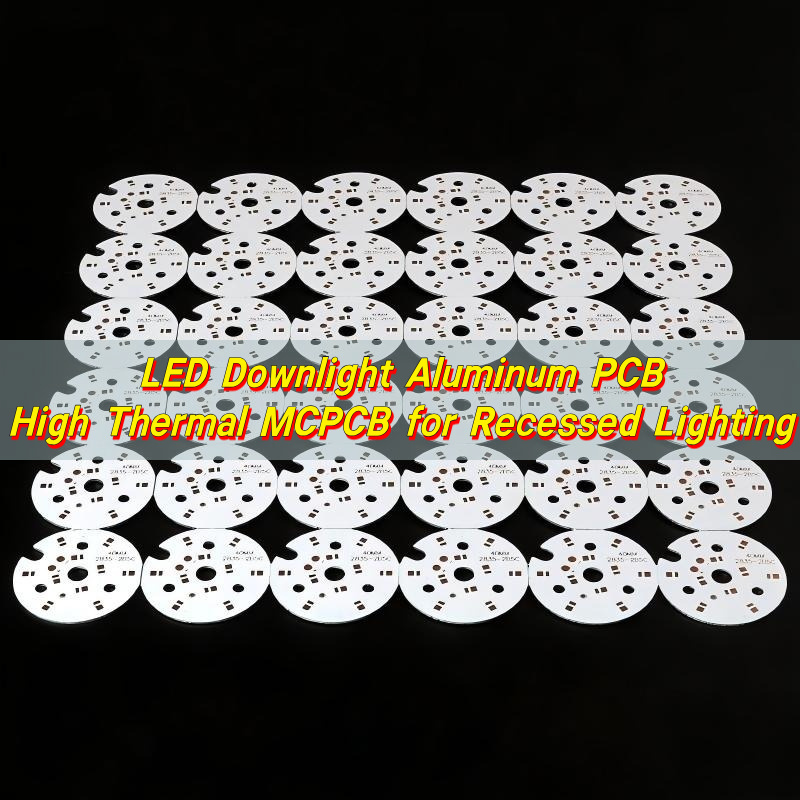
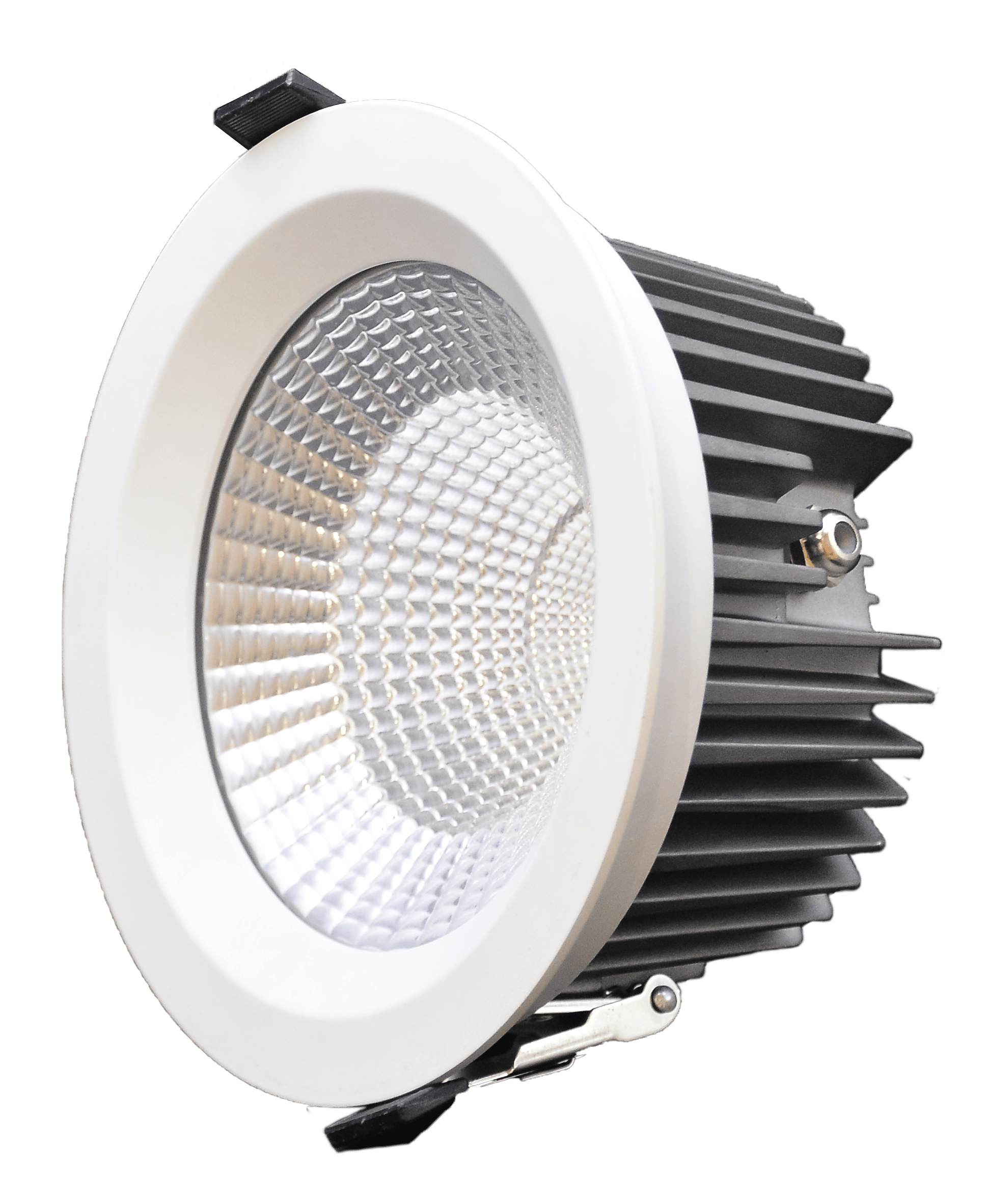
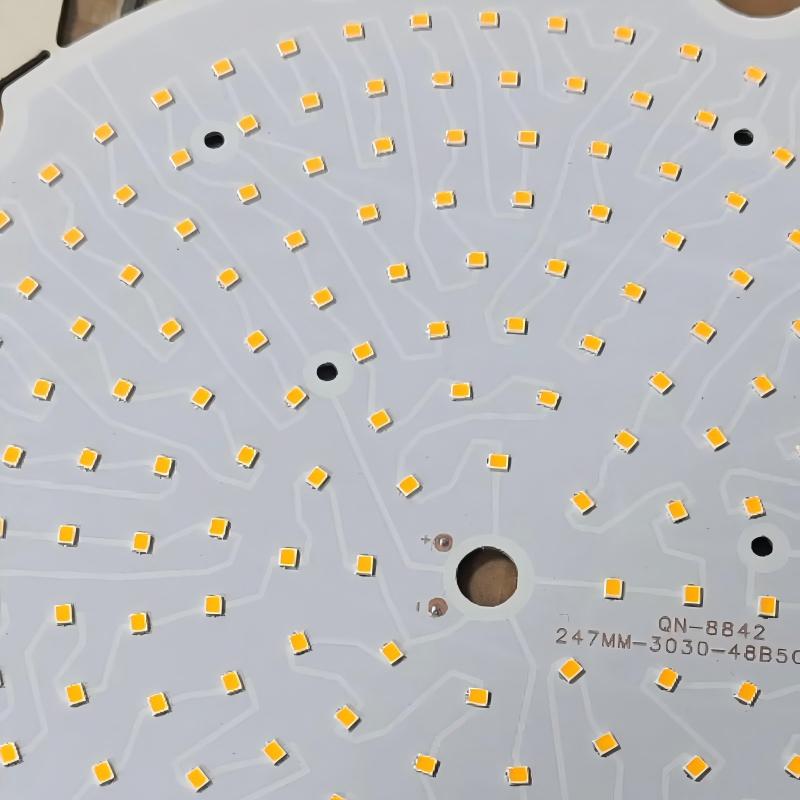
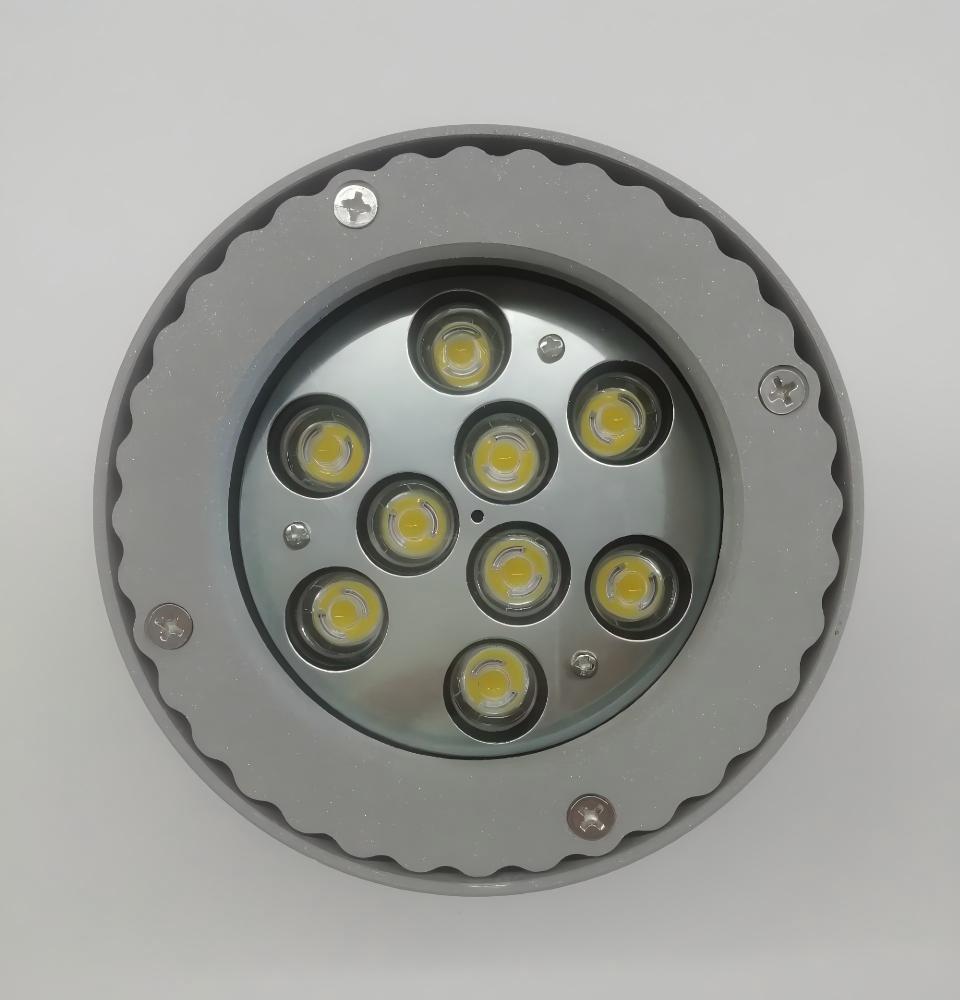
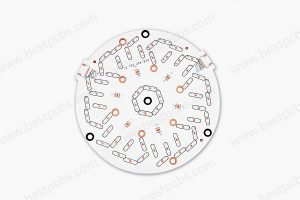
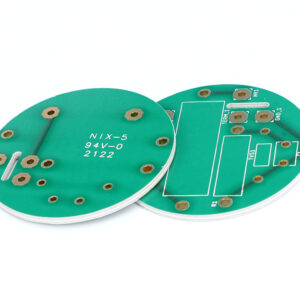
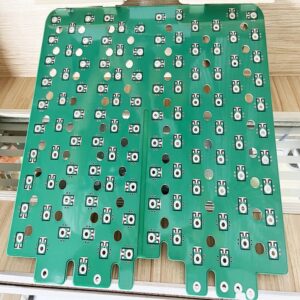
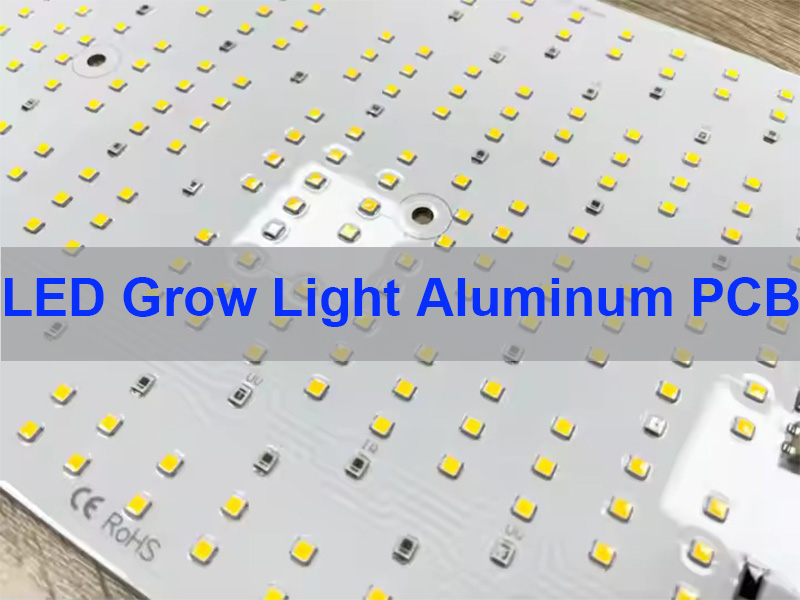
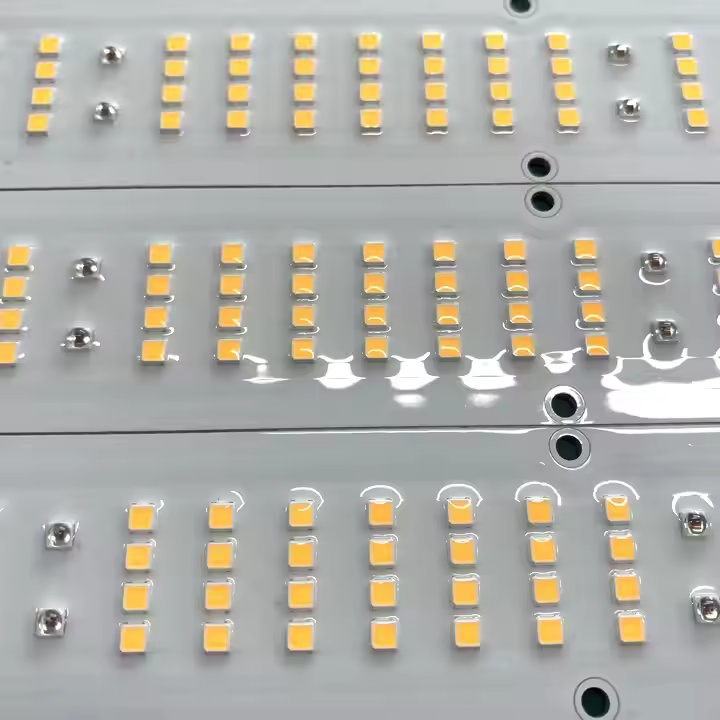
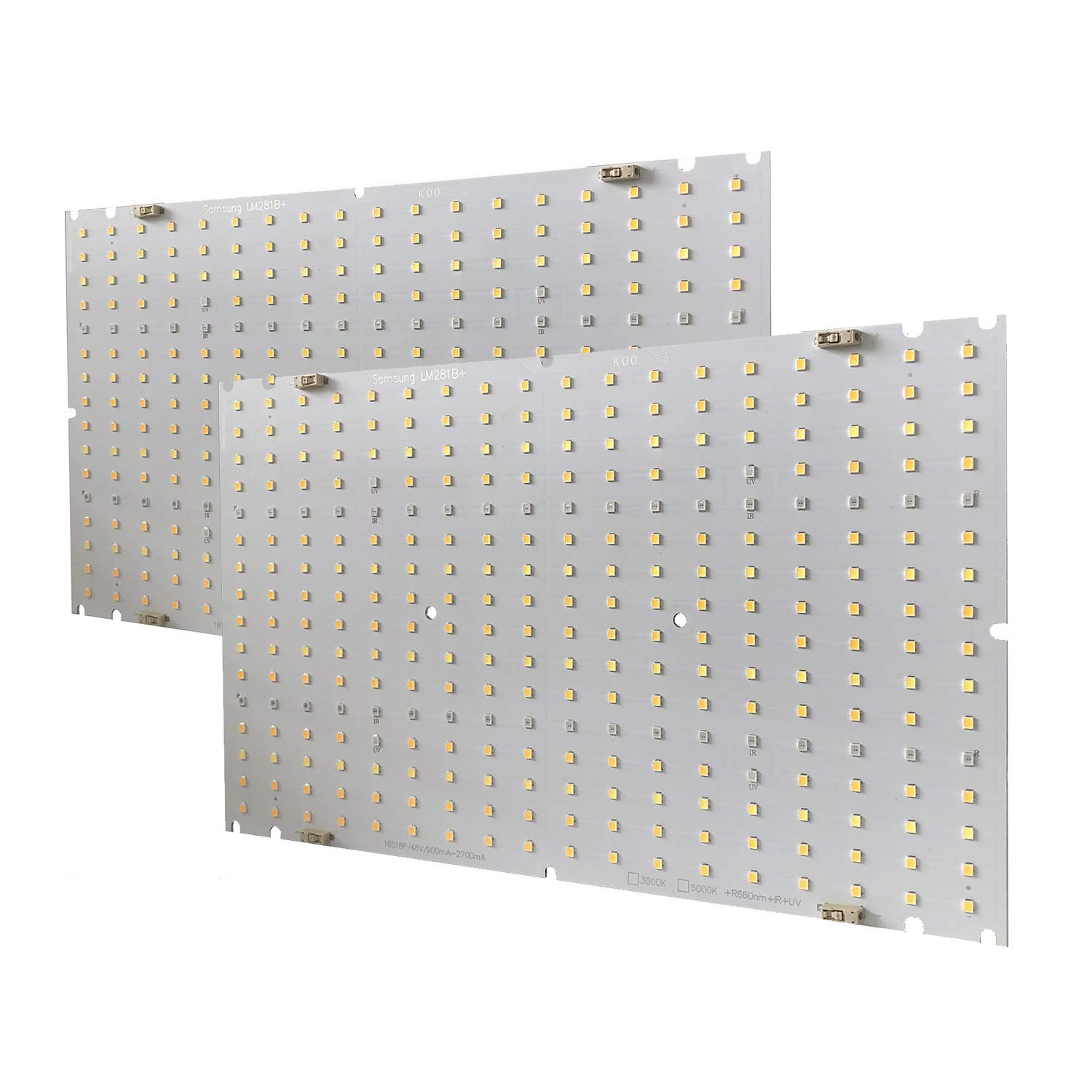
Why Choose EBest for Your LED Downlight Aluminum PCB?
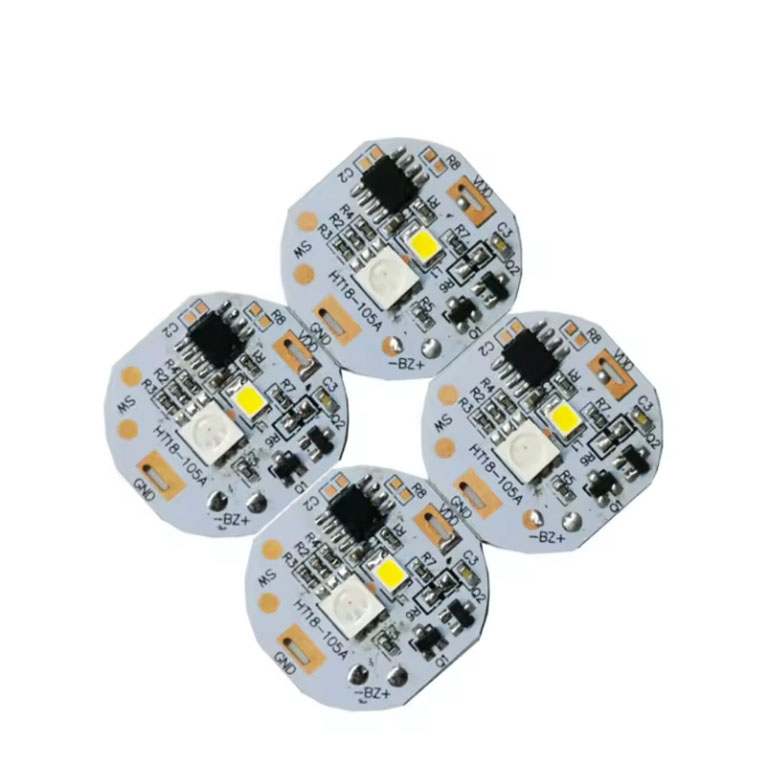
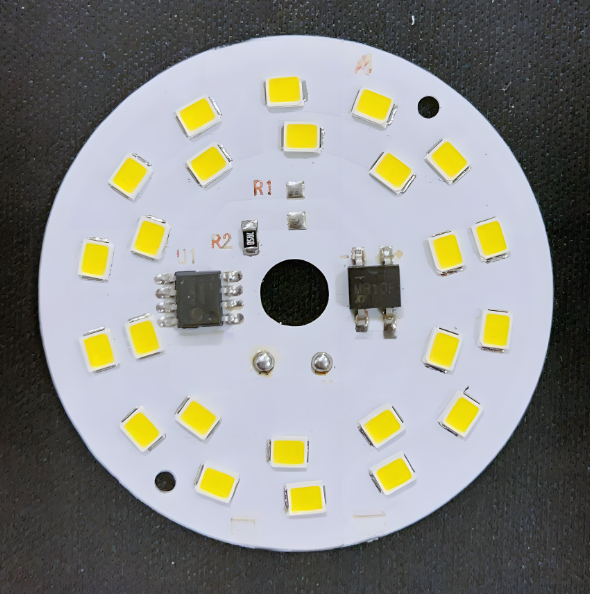
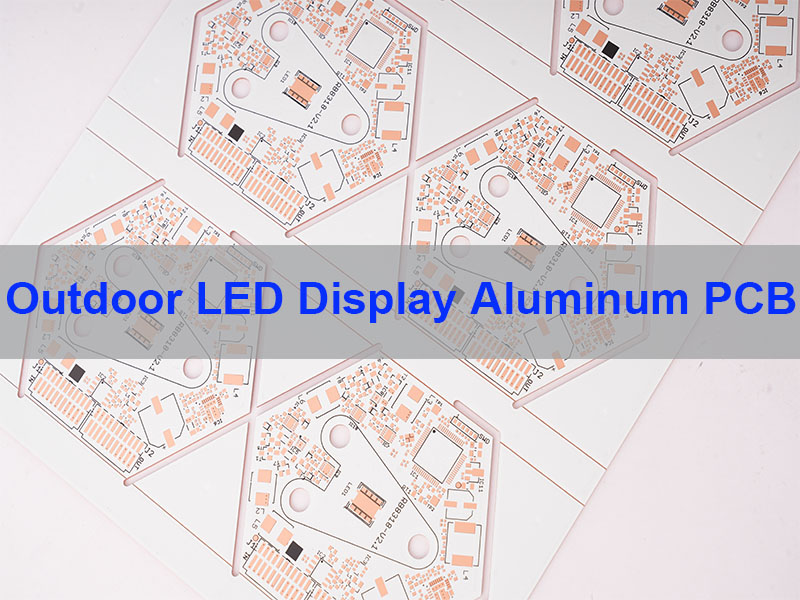
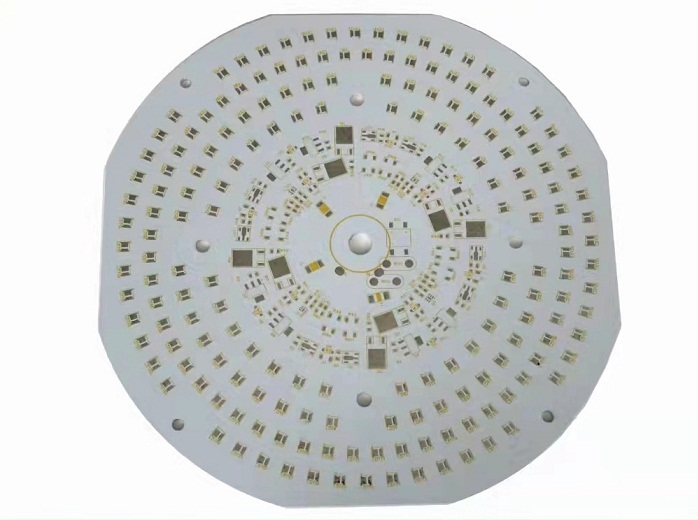
EBest is your first choice for high-performance LED Downlight Aluminum PCB, with core parameters designed to meet the strict demands of LED downlight applications. Our products feature thermal conductivity ranging from 1.0 to 4.0 W/m·K, copper thickness of 1oz-4oz, and operating temperature range of -50℃ to 100℃, ensuring stable performance in all scenarios.
We offer customizable sizes, precise dimensional tolerance of ±0.01mm, and compatibility with SMD, BGA, and QFN components. For a reliable, long-lasting LED Downlight Aluminum PCB that boosts your product’s lifespan and efficiency, place your order with EBest today.
Why Choose Us for LED Downlight Aluminum PCB?
Quality: Our LED Downlight Aluminum PCB undergoes 100% full inspection before delivery, with strict quality control throughout the production process, complying with global industry standards.
Delivery: With a monthly production capacity of 260,000 square feet, we offer expedited service—urgent LED Downlight Aluminum PCB orders can be shipped within 24 hours.
Service: We provide one-stop solutions, from custom design and component sourcing to assembly, with 24/7 technical support for all your LED Downlight Aluminum PCB needs.
Supply Chain: Our stable, integrated supply chain ensures a consistent raw material supply, avoiding delays and ensuring steady production of your LED Downlight Aluminum PCB.
What Are the Key Advantages of LED Downlight Aluminum PCB Over FR-4 PCB?
LED Downlight Aluminum PCB outperforms FR-4 PCB primarily in heat dissipation, which is critical for LED downlight longevity. An aluminum PCB’s thermal conductivity is 3-8 times higher than that of FR-4, preventing LED overheating and light decay.
Feature
LED Downlight Aluminum PCB
FR-4 PCB
Thermal Conductivity (W/m·K)
1.0-4.0
0.3-0.4
Operating Temperature Range
-50℃ to 100℃
-40℃ to 85℃
LED Lifespan Impact
Extends lifespan to over 100,000 hours
Shortens lifespan due to poor heat dissipation
Mechanical Strength
High hardness, strong load-bearing capacity
Good toughness, easy to process but less durable
How to Design LED Downlight Aluminum PCB for Optimal Heat Dissipation?
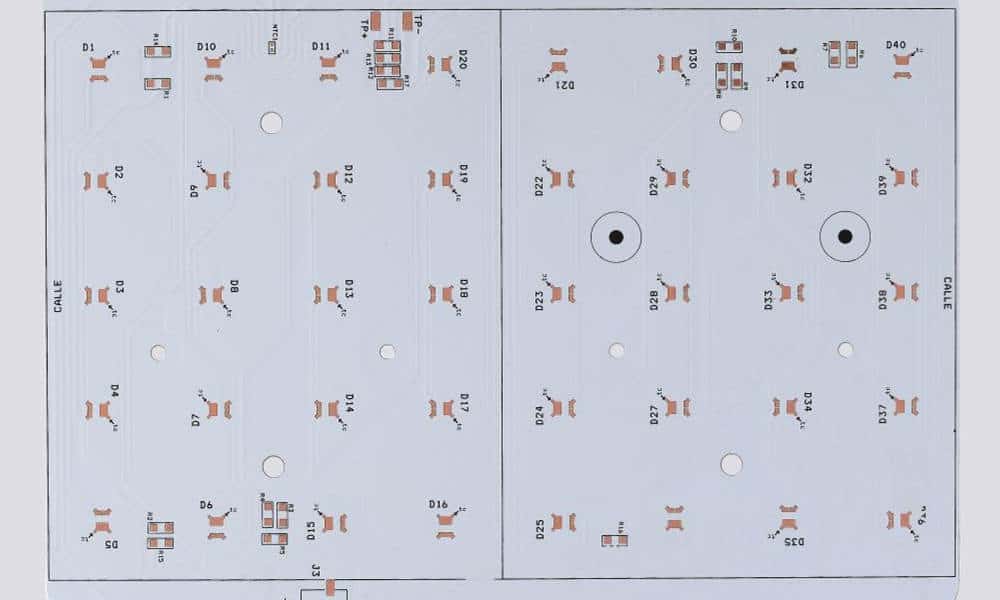
Optimal heat dissipation for a LED Downlight Aluminum PCB starts with three key design steps: expand heat pads, add sufficient thermal vias, and use appropriate copper thickness.
Key Design Tips for Heat Dissipation
1. Enlarge heat pads: Extend LED pad areas to increase heat transfer, avoiding minimal pad sizes that trap heat.
2. Add thermal vias: Use 0.3mm vias spaced 1.5mm apart, with plugging and copper cladding to form a 3D heat dissipation channel.
3. Choose proper copper thickness: Use 2oz (70μm) copper for LEDs over 1W to enhance heat conduction efficiency.
What Are the Most Commons with LED Downlight Aluminum PCB, and How Do We Solve Them?
Many users face issues like poor heat dissipation, unstable performance, and delivery delays with LED Downlight Aluminum PCB. EBest addresses these with targeted, proven solutions.
How to Fix Poor Heat Dissipation in LED Downlight Aluminum PCB?
Solution: We use high-quality aluminum substrates and optimize layout, adding thermal vias and enlarged heat pads to reduce junction temperature by 20-30℃, extending lifespan significantly.
How to Ensure Consistent Quality for LED Downlight Aluminum PCB?
Solution: Real-time production monitoring, from raw material inspection to final testing, ensures 100% compliance with industry standards.
How to Avoid Long Delivery Times for LED Downlight Aluminum PCB?
Solution: Our large production capacity and expedited service deliver standard orders in 3-5 days and urgent orders within 24 hours.
How to Simplify Customization for LED Downlight Aluminum PCB?
Solution: Our R&D team provides personalized design support, tailoring size, copper thickness, and thermal parameters to your needs.
What Industries Rely on LED Downlight Aluminum PCB? 4 Real-World Cases
LED Downlight Aluminum PCB is widely used in industries that demand efficient, reliable lighting solutions. Below are four key industries and our successful cases.
1. Residential Lighting
Case: We supplied LED Downlight Aluminum PCB for a global residential lighting brand, reducing LED light decay by 40% and extending the product’s lifespan to 100,000 hours, meeting household durability needs.
2. Commercial Lighting (Malls & Retail Stores)
Case: For a large shopping mall chain, our LED Downlight Aluminum PCB with enhanced heat dissipation supported 24/7 operation, reducing annual maintenance costs by 35%.
3. Office Lighting
Case: We customized LED Downlight Aluminum PCB for an office building project, ensuring uniform brightness and low energy consumption, cutting the client’s lighting energy costs by 25%.
4. Industrial Lighting (Factories & Warehouses)
Case: Our LED Downlight Aluminum PCB with high-temperature resistance (-50℃ to 100℃) was used in a manufacturing plant, withstanding harsh industrial environments and reducing downtime by 50%.
How to Choose the Right Thickness for LED Downlight Aluminum PCB?
The right thickness of a LED Downlight Aluminum PCB depends on LED power, installation space, and heat dissipation needs. We recommend matching the thickness to your specific application for optimal performance.
Thickness Selection Guide
1. 1oz (35μm) copper: Suitable for low-power LED downlights (≤1W), ideal for small, compact designs.
2. 2oz (70μm) copper: The most common choice for medium-power downlights (1-5W), balancing heat dissipation and cost-effectiveness.
3. 3-4oz (105-140μm) copper: For high-power downlights (>5W), providing maximum heat conduction and stability.
What Are the Key Technical Specifications of High-Quality LED Downlight Aluminum PCB?
A high-quality LED Downlight Aluminum PCB must meet strict technical standards to ensure performance and reliability. Below are the core specifications you should prioritize.
• Thermal Conductivity: 1.0-4.0 W/m·K (higher is better for heat dissipation)
• Copper Thickness: 1oz-4oz (customizable based on power needs)
• Dimensional Tolerance: ±0.01mm (ensures precise fit with LED components)
• Operating Temperature: -50℃ to 100℃ (adapts to various environments)
• Insulation Resistance: ≥10^12Ω (prevents short circuits and ensures safety)
How Does LED Downlight Aluminum PCB Improve LED Downlight Lifespan?
LED Downlight Aluminum PCB directly extends LED downlight lifespan by solving the core issue: heat buildup. LEDs fail prematurely when their junction temperature exceeds 85℃, and aluminum PCB efficiently dissipates heat to keep temperatures in check.
By conducting heat away from LED chips quickly, LED Downlight Aluminum PCB reduces thermal stress on components, slowing aging and light decay. This extends the downlight’s lifespan from 50,000 hours (with FR-4 PCB) to over 100,000 hours.
What Services and Certifications Does EBest Offer for LED Downlight Aluminum PCB?
EBest provides comprehensive services for LED Downlight Aluminum PCB, supported by global quality certifications to ensure reliability and compliance. Below are our service and certification details in table form.
IATF 16949, ISO 9001:2015, ISO 13485:2016, AS9100D, REACH, RoHS, UL
Can LED Downlight Aluminum PCB Be Customized for Specific Applications?
Yes, LED Downlight Aluminum PCB can be fully customized to meet your specific application needs. EBest offers flexible customization options to match your design requirements.
We customize size, shape, copper thickness, thermal conductivity, and component compatibility. Whether you need a compact design for residential downlights or a high-power solution for industrial use, we tailor the LED Downlight Aluminum PCB to your exact specifications.
What Is the Difference Between LED Downlight Aluminum PCB and Copper PCB?
While both aluminum and copper PCBs offer excellent heat dissipation, they differ in performance, cost, and application. Choose based on your LED downlight’s power and budget.
Feature
LED Downlight Aluminum PCB
Copper PCB
Thermal Conductivity (W/m·K)
1.0-4.0
300-400
Application
1-10W LED downlights (residential, commercial, office)
Difficult to process, higher production complexity
FAQ: Common Questions About LED Downlight Aluminum PCB (Answered)
1. How long does LED Downlight Aluminum PCB last?
LED Downlight Aluminum PCB has a lifespan of over 100,000 hours when used with proper heat dissipation. This aligns with the lifespan of high-quality LEDs, ensuring long-term reliability without frequent replacement.
2. Can LED Downlight Aluminum PCB work in high-temperature environments?
Yes, our LED Downlight Aluminum PCB operates reliably in temperatures ranging from -50℃ to 100℃. It is suitable for both indoor and outdoor LED downlights, including industrial environments with high heat.
3. How to test the quality of LED Downlight Aluminum PCB?
Test quality by checking thermal conductivity (using a thermal tester), insulation resistance (with a megohmmeter), and dimensional accuracy (with a caliper). EBest provides a full test report for every batch of LED Downlight Aluminum PCB.
4. Do you offer prototype service for LED Downlight Aluminum PCB?
Yes, we offer prototype service for LED Downlight Aluminum PCB, with quick turnaround times to help you test and validate your design before mass production. Prototypes can be shipped within 24-48 hours.
5. How to ensure LED Downlight Aluminum PCB is compatible with my LED components?
Our engineering team reviews your LED component specifications (size, pin layout, power) and designs the LED Downlight Aluminum PCB to ensure perfect compatibility. We also offer sample testing to confirm fit and performance.
6. What is the lead time for LED Downlight Aluminum PCB orders?
Standard orders take 3-5 days, while urgent orders (for prototypes or small batches) can be shipped within 24 hours. Our large production capacity ensures we meet even tight deadlines.
Is There a Better Alternative to LED Downlight Aluminum PCB for High-Power Downlights?
For high-power LED downlights (>5W), the only alternative to LED Downlight Aluminum PCB is copper PCB, which offers higher thermal conductivity (300-400 W/m·K) but is more complex and costly to produce.
Aluminum PCB remains the most cost-effective and practical choice for 1-10W downlights, balancing heat dissipation, performance, and production efficiency. EBest offers both aluminum and copper PCB options to meet your needs.
How to Maintain LED Downlight Aluminum PCB for Long-Term Performance?
Maintaining LED Downlight Aluminum PCB is simple and ensures long-term performance. Follow these easy steps to keep your PCB in top condition.
1. Keep the PCB clean: Remove dust and debris regularly to avoid blocking heat dissipation channels.
2. Avoid overvoltage: Use a stable power supply to prevent damage to PCB components and LED chips.
3. Inspect regularly: Check for signs of corrosion or damage, especially in outdoor or harsh environments.
We provide high-quality LED Downlight Aluminum PCB with customizable solutions, strict quality control, and fast delivery. Whether you need prototypes, small batches, or mass production, place your order with EBest today. For inquiries and orders, please contact us at sales@bestpcbs.com
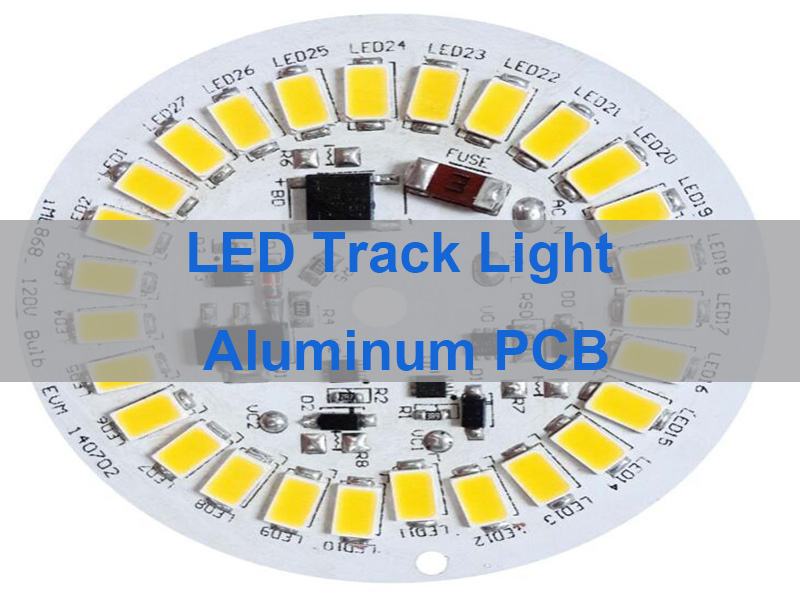
LED Track Light Aluminum PCB is a metal core printed circuit board specifically engineered to support high-power LED track lights, excelling in thermal management to ensure stable performance. This blog will explore what LED track light aluminum PCBs are, their unique advantages, how to select a reliable manufacturer, and why EBest Circuit stands out as your ideal partner.
Are you struggling with common challenges when sourcing LED track light aluminum PCBs for your clothing store lighting projects?
Inconsistent thermal performance leading to premature LED failure
High manufacturing costs eating into profit margins
Limited customization options for unique lighting designs
Unreliable suppliers causing production delays
Poor thermal management ruining lighting display quality in clothing stores
At EBest Circuit, we specialize in solving these exact issues with targeted solutions:
Deliver high power LED aluminum PCBs with guaranteed thermal conductivity
Optimize production processes to offer competitive pricing without compromising quality
Provide custom LED track light aluminum PCB design services to match your specific needs
Ensure on-time delivery through our streamlined supply chain and strict production scheduling
Implement advanced LED track light PCB thermal management to maintain consistent lighting performance
EBest Circuit is a leading LED track light aluminum PCB manufacturer with two decades of experience in producing high-quality metal core PCBs for commercial LED track lighting. Our state-of-the-art facilities, expert engineering team, and commitment to innovation allow us to deliver custom solutions that meet the most demanding thermal and design requirements.
At EBest Circuit (Best Technology), we have star salespeople and engineers who have worked with the company for over a decade. These key team members have accumulated extensive project experience over the years. Whether you need standard aluminum PCBs or a more specialized thermal solution for LED lighting, our team is ready to support your project with practical engineering expertise. Pls feel free to contact us at sales@bestpcbs.com to discuss your requirements.
What is LED Track Light Aluminum PCB?
LED Track Light Aluminum PCB, also known as LED track light MCPCB or metal core PCB for LED track light, is a type of printed circuit board that uses aluminum as its base material instead of traditional fiberglass. This unique construction is designed to efficiently dissipate heat generated by high-power LED track lights, which is crucial for maintaining optimal performance and extending the lifespan of the lighting system, especially in commercial settings like clothing stores where consistent, high-quality lighting is essential.
Key Features:
Aluminum base for superior heat dissipation
Thin dielectric layer for efficient thermal transfer
Compatible with high-power LED components
Lightweight yet durable design
Customizable to fit various track light configurations
In summary, LED track light aluminum PCBs are the backbone of modern commercial track lighting systems, providing the thermal stability and reliability needed to keep your clothing store’s lighting running smoothly.
Why Use Aluminum PCB for LED Track Lights?
Choosing aluminum PCBs for LED track lights offers a multitude of benefits that make them the preferred choice for clothing store lighting projects. From enhanced thermal performance to cost-effectiveness, these PCBs address the unique needs of high-power LED lighting systems.
Core Advantages:
Superior Thermal Management: Aluminum’s excellent thermal conductivity efficiently draws heat away from LED components, preventing overheating and ensuring consistent light output—critical for highlighting clothing displays accurately.
Extended LED Lifespan: By reducing operating temperatures, aluminum PCBs can double the lifespan of LED track lights, minimizing maintenance costs for clothing store owners.
Lightweight Design: Aluminum PCBs are significantly lighter than traditional PCBs, making them easier to install and reducing the structural load on track lighting systems.
Cost-Effective Production: Aluminum is a readily available material, making aluminum PCBs more affordable than other high-performance alternatives like ceramic PCBs, without sacrificing quality.
Customization Flexibility: Manufacturers can easily create custom LED track light aluminum PCB designs to fit unique track light shapes and sizes, perfect for creating tailored lighting layouts in clothing stores.
In short, aluminum PCBs combine performance, durability, and affordability, making them the ideal solution for powering LED track lights in clothing store environments.
How Does Aluminum PCB Improve Heat Dissipation in Track Lighting?
LED track lights generate heat in a small space. In clothing stores, they often run for long hours and stay at high brightness. If heat cannot move out quickly, the lamp may run hotter, lose brightness faster, and shorten its service life.
An aluminum PCB helps by moving heat away from the LED source more efficiently. Its metal base spreads heat across a wider area, instead of letting it stay concentrated under the LED. Then the heat can pass into the lamp housing and release into the air more smoothly.
This is why aluminum PCB is common in track lighting. It gives a practical thermal path without making the product too complex or too expensive.
Why Aluminum PCB Helps in LED Track Lights
• Spreads heat away from the LED pad faster • Reduces local hot spots on the board • Helps the housing share the cooling job • Supports more stable brightness over long operating hours • Improves reliability in compact fixtures
Main Thermal Path in a Track Light
Step
What Happens
LED chip
Generates heat during operation
PCB surface
Transfers heat away from the LED package
Aluminum base
Spreads heat across the board
Lamp housing
Receives and releases heat
Surrounding air
Carries the heat away
What Happens If Heat Dissipation Is Poor?
• Higher LED junction temperature • Faster lumen decay • More thermal stress on solder joints • Higher risk of driver overheating • Shorter fixture lifetime
A well-designed aluminum PCB helps reduce these risks. For commercial track lights, that means better stability and more dependable long-term use.
Aluminum PCB vs Ceramic PCB in Thermal Performance
Ceramic PCB has stronger thermal capability than aluminum PCB. It is a higher-end option for designs with tighter thermal limits.
But that does not mean ceramic PCB is always the better choice.
For most LED track lights, aluminum PCB already provides enough heat dissipation. It is also easier to process, more widely used, and more cost-effective for volume production. That is why it remains the mainstream option in commercial lighting.
Aluminum PCB vs Ceramic PCB
Item
Aluminum PCB
Ceramic PCB
Thermal performance
Good for most track lights
Better for higher thermal loads
Cost
Lower
Higher
Production
Mature and widely used
More specialized
Best fit
Commercial LED track lights
High-end or high-density thermal designs
When Is Ceramic PCB Worth Considering?
• Very high power density • Smaller fixture size with less thermal margin • Premium lighting products • Designs that need stronger insulation and heat transfer
For standard clothing store lighting, aluminum PCB is usually the more practical choice.
Are There More Advanced Thermal Materials Than Aluminum PCB?
Yes. In advanced electronics, materials such as diamond are known for extremely high thermal conductivity. This is why diamond is often discussed in AI chips and other high-power semiconductor applications.
However, that does not make it suitable for LED track lights.
For commercial lighting, the material must also make sense in cost, sourcing, processing, and product structure. In that context, aluminum PCB is still the right mainstream solution. Ceramic PCB is the next step up. Diamond belongs to a much more specialized class of thermal management.
Thermal Material Comparison
Material
Positioning
Typical Use
Aluminum PCB
Mainstream thermal solution
Commercial LED lighting
Ceramic PCB
Higher-performance substrate
Demanding lighting and electronics
Diamond-based material
Advanced thermal solution
AI chips, RF, specialized electronics
Quick Conclusion
• Aluminum PCB is the mainstream choice for LED track lights • Ceramic PCB offers better thermal performance, but at higher cost • Diamond is a top-tier thermal material, but not a practical choice for commercial track lighting
For clothing store lighting, aluminum PCB gives the best balance of heat dissipation, cost, and manufacturability.
How to Choose a Reliable LED Track Light Aluminum PCB Manufacturer?
Selecting the right LED track light aluminum PCB manufacturer is critical to ensuring the success of your clothing store lighting project. With so many options available, it’s essential to evaluate key factors to find a partner that can meet your quality, cost, and delivery requirements.
Key Selection Criteria:
Industry Experience: Look for a manufacturer with a proven track record in producing aluminum PCBs for commercial LED track lighting, preferably with experience working with clothing store projects.
Technical Expertise: Ensure the manufacturer has a team of skilled engineers who can provide custom LED track light aluminum PCB design services and solve complex thermal management challenges.
Quality Certifications: Check for certifications like ISO 9001 and IATF 16949, which indicate a commitment to quality control and consistent production standards.
Production Capacity: Verify that the manufacturer has the facilities and resources to handle your project volume, whether you need a small batch or large-scale production.
Customer Support: Choose a manufacturer that offers responsive customer support, from initial design consultations to post-delivery technical assistance.
Pricing and Lead Times: Compare quotes from multiple manufacturers to find a balance between competitive pricing and reasonable lead times, avoiding suppliers that offer unrealistically low prices or long delivery delays.
Sample Availability: Request samples to test the manufacturer’s product quality and thermal performance before committing to a large order.
By carefully evaluating these factors, you can select a reliable LED track light aluminum PCB manufacturer that will deliver high-quality products on time and within budget.
EBest Circuit (Best Technology) is a professional LED Track Light Aluminum PCB manufacturer with strong experience in designing and producing boards for demanding retail lighting applications. We understand the real concerns behind track light projects, from secure PCB mounting for frequently adjusted fixtures, to compact thermal design, stable heat dissipation, cost-effective mass supply, and reliable connection performance that supports longer service life. For LED track light projects for clothing store lighting, a warm welcome to call us at +86-755-2909-1601 to discuss your requirements with our team.
Top 10 LED Track Light Aluminum PCB Manufacturer in China
China is a global leader in PCB manufacturing, with numerous companies specializing in LED track light aluminum PCBs. Here are the top 10 manufacturers known for their quality, innovation, and reliability:
Rank
Manufacturer Name
Key Strengths
1
EBest Circuit
Custom LED track light MCPCB
2
Kingboard Holdings
Large production capacity
3
Unimicron Technology
strict quality control
4
Shennan Circuits
quick turnaround times
5
TTM Technologies
Global presence
6
Kinwong Group
Specialized in high-power LED PCBs
7
Fast Print Circuit
flexible order quantities
8
Multek Electronics
Advanced R&D capabilities
9
Compeq Manufacturing
reliable supply chain
10
HannStar Board
consistent product quality
These manufacturers offer a range of services, from standard aluminum PCB production to custom LED track light aluminum PCB design, making them ideal partners for clothing store lighting projects of all sizes. Pls feel free to contact EBest Circuit anytime at sales@bestpcbs.com to discuss your project and take the first step toward brighter, more reliable lighting.
Why Choose Best Technology As Your Reliable LED Track Light MCPCB Manufacturer?
EBest Circuit (Best Technology) stands out as the premier choice for LED track light aluminum PCBs, offering a unique combination of expertise, quality, and customer service that sets us apart from the competition.
Our Competitive Advantages:
Tailored Solutions: We specialize in custom LED track light aluminum PCB design, creating solutions that perfectly match your clothing store’s lighting layout and performance needs.
Advanced Thermal Management: Our high power LED aluminum PCBs feature enhanced thermal conductivity, ensuring efficient heat dissipation and extended LED lifespan.
Quality Assurance: We adhere to strict ISO 9001 quality standards, with rigorous testing at every stage of production to ensure consistent product performance.
On-Time Delivery: We understand the importance of meeting deadlines, and our streamlined supply chain ensures your orders are delivered on time, every time.
Expert Support: Our team of experienced engineers is available to provide technical support from initial design to post-delivery, ensuring a smooth and successful project.
At EBest Circuit, we help turn lighting ideas into reliable products with strong aluminum PCB solutions for LED track lights. We do not aim to win business through price cutting alone. Instead, we focus on product quality, stable production, and responsive engineering service. If you are working on a clothing store lighting project, pls feel free to email us at sales@bestpcbs.com to discuss your design and production needs.
In conclusion, LED Track Light Aluminum PCB is a critical component for efficient, reliable clothing store lighting, providing superior thermal management to keep LED track lights performing at their best. This blog has covered everything from the basics of aluminum PCBs to how to select a reliable manufacturer, highlighting the unique benefits of choosing EBest Circuit as your partner.
EBest Circuit is your trusted source for high-quality LED track light aluminum PCBs, offering custom design services, advanced thermal management solutions, and exceptional customer support. With our expertise and commitment to quality, we can help you create the perfect lighting environment for your clothing store.
FAQs About LED Track Light Aluminum PCB
Q: What is the difference between aluminum PCB and MCPCB?
A: Aluminum PCB is a type of MCPCB (Metal Core PCB). MCPCBs include any PCB with a metal base, while aluminum PCBs specifically use aluminum as the core material, making them the most common and cost-effective type of MCPCB for LED track lights.
Q: Can aluminum PCBs be used for high-power LED track lights?
A: Yes, high power LED aluminum PCBs are specifically designed to handle the heat generated by high-power LED components, making them ideal for use in clothing store track lighting systems that require bright, consistent light output.
Q: How long do LED track light aluminum PCBs last?
A: With proper installation and maintenance, aluminum PCBs can last up to 25,000-50,000 hours, depending on the operating conditions. This extended lifespan reduces the need for frequent replacements, saving you time and money.
Q: Can I customize the design of my LED track light aluminum PCB?
A: Absolutely. Most reliable manufacturers, including EBest Circuit, offer custom LED track light aluminum PCB design services to match your specific track light dimensions, LED configurations, and thermal requirements.
Q: What is the typical lead time for custom aluminum PCB orders?
A: Lead times vary depending on the complexity of the design and order volume, but most manufacturers offer lead times of 7-14 days for standard custom orders, with expedited options available for urgent projects.
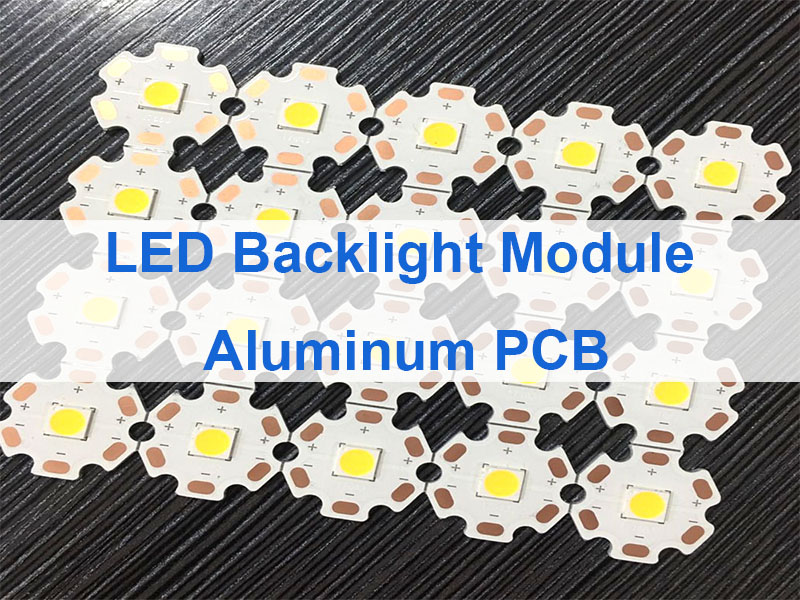
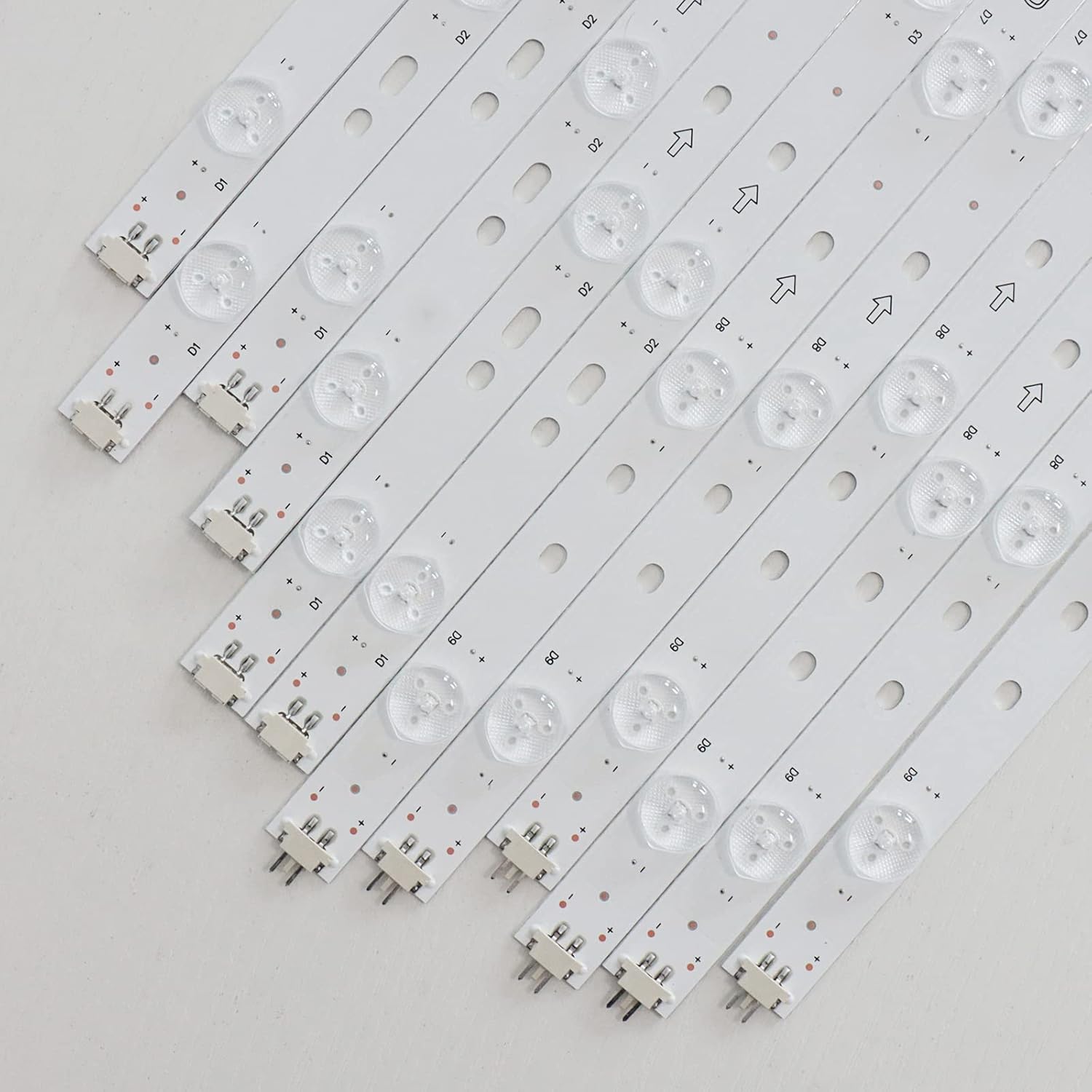
LED Backlight Module Aluminum PCB is a specialized printed circuit board designed to efficiently dissipate heat generated by LED backlight units in TVs and monitors, ensuring stable performance and extended lifespan. This blog will explore what this PCB is, its benefits, material composition, applications, selection tips, and more, while also offering solutions to common pain points faced by industry professionals.
Have you been struggling with these common issues?
Frequent LED burnout due to poor heat dissipation in backlight modules
Bulky, heavy cooling systems that increase product weight and design complexity
Inconsistent performance across batches of PCBs for LED backlight modules
High production costs from using inefficient thermal management solutions
Difficulty finding custom aluminum PCB for LED backlight module that fit unique design specs
At EBest Circuit (Best Technology), we understand these challenges deeply. As a leading manufacturer specializing in high-performance PCBs, we’ve developed targeted solutions to resolve each of these pain points:
Deploy high thermal conductivity aluminum PCB for LED backlight module to reduce LED operating temperatures by up to 30%
Integrate slim, lightweight aluminum core designs to cut product weight by 25% while maintaining superior heat transfer
Implement strict quality control processes to ensure 99.8% batch consistency for LED backlight aluminum module PCB
Optimize material sourcing and production efficiency to lower overall costs by 15% without compromising quality
Offer end-to-end custom aluminum PCB for LED backlight module services, from design consultation to prototype production
EBest Circuit (Best Technology) is a trusted name in the PCB manufacturing industry, with 20 years of experience producing high-quality, thermal-efficient circuit boards. We specialize in custom solutions for LED applications, leveraging advanced production facilities and a team of engineering experts to deliver products that meet the most stringent industry standards. Our state-of-the-art factory in China is equipped to handle both small-batch prototypes and large-scale production runs, ensuring on-time delivery and consistent quality. For inquiries about our LED backlight module aluminum PCB solutions, pls feel free to reach out to us at sales@bestpcbs.com.
What Is an Aluminum PCB for LED Backlight Module?
An Aluminum PCB for LED Backlight Module is a type of metal core printed circuit board that uses aluminum as the base material instead of traditional fiberglass. It is engineered to efficiently transfer heat away from LED components in TV and monitor backlight systems, preventing overheating and ensuring stable operation.
Thin dielectric layer to facilitate rapid heat transfer
Copper circuit layer optimized for LED current distribution
Lightweight yet durable construction
Compatible with surface-mount device (SMD) LED components
In summary, this specialized PCB acts as a critical thermal management component, addressing the core issue of overheating in modern LED backlight systems.
Why Use Aluminum PCB for LED Backlight Module Design?
Choosing an Aluminum PCB for LED Backlight Module design offers significant advantages over traditional FR-4 PCBs, especially in high-power LED applications.
Core Benefits:
Superior Heat Dissipation: Aluminum’s thermal conductivity is 10-20 times higher than FR-4, effectively reducing LED junction temperatures
Extended LED Lifespan: Lower operating temperatures can increase LED lifespan by up to 50%
Slimmer Design: Eliminates the need for bulky heat sinks, enabling thinner TV and monitor designs
Improved Reliability: Reduces thermal stress on components, minimizing failure rates
Cost Efficiency: Lower long-term maintenance and replacement costs due to enhanced durability
Overall, aluminum PCBs are the optimal choice for LED backlight module design, directly addressing the overheating challenges highlighted in our title.
How Does a PCB for LED Backlight Module Improve Heat Dissipation?
The heat dissipation mechanism of a PCB for LED Backlight Module relies on its layered structure and material properties to efficiently transfer heat away from LED components.
Heat Transfer Process:
Heat Generation: LEDs produce heat during operation, which accumulates at the junction
Conduction: Heat moves from the LED through the solder joint to the copper circuit layer
Dielectric Layer Transfer: Thin, thermally conductive dielectric material transfers heat from the copper layer to the aluminum core
Aluminum Core Distribution: The aluminum base spreads the heat across a larger surface area
Convection/Radiation: Heat is released into the surrounding environment through natural convection or radiation
Efficiency Data:
PCB Type
Thermal Conductivity (W/mK)
Typical LED Temperature Reduction
FR-4 PCB
0.3-0.8
5-10°C
Aluminum PCB
1-5
20-30°C
High-Performance Aluminum PCB
5-10
30-40°C
In conclusion, the layered structure and material selection of aluminum PCBs create an efficient heat dissipation pathway that directly solves the overheating problem in TV and monitor backlight modules.
EBest Circuit (Best Technology) is a professional metal core PCB manufacturer of LED Backlight Module Aluminum PCBs, offering reliable solutions with strong expertise in thermal management, structural design, and custom production. Pls feel free to contact us at +86-755-2909-1601 to discuss your project requirements.
What Materials Are Used in LED Backlight Module Aluminum PCB?
LED Backlight Module Aluminum PCB consists of three main layers, each using specialized materials to balance thermal performance, electrical insulation, and mechanical strength.
Layer Composition:
Aluminum Base Layer:
Material: 1060, 6061, or 5052 aluminum alloy
Purpose: Provides structural support and heat spreading
Purpose: Forms the electrical circuit for LED power distribution
Thickness: 1oz-3oz (35μm-105μm)
Material Selection Guide:
Application
Recommended Aluminum Alloy
Dielectric Type
Copper Thickness
Small Monitors
1060
Standard epoxy
1oz
Large Smart TVs
6061
High-performance ceramic-filled
2oz
Industrial Displays
5052
High-temperature epoxy
3oz
To summarize, the combination of aluminum alloy, thermally conductive dielectric, and copper creates a PCB that excels in thermal management for LED backlight modules.
Where Are Aluminum PCBs for LED Backlight Modules Used?
Aluminum PCBs for LED Backlight Modules are essential components in a wide range of display devices, where efficient heat dissipation is critical for performance and longevity.
Key Applications:
Smart TVs: From 32-inch budget models to 8K ultra-large screens
Computer Monitors: Including gaming monitors, professional displays, and all-in-one PCs
Digital Signage: Large outdoor displays and indoor advertising screens
Automotive Displays: In-car infotainment systems and instrument clusters
Industrial Displays: Rugged monitors for manufacturing and control rooms
Market Growth Data:
Global LED backlight PCB market is projected to reach $4.2 billion by 2028
Automotive display applications are growing at a CAGR of 8.5%
Demand for high thermal conductivity aluminum PCB for LED backlight module is increasing with the adoption of mini-LED and micro-LED technologies
In short, wherever there’s an LED backlight system in need of reliable thermal management, aluminum PCBs play a vital role.
How to Choose the Right Aluminum PCB for Backlight Module Applications?
Selecting the right Aluminum PCB for Backlight Module applications requires careful consideration of several key factors to ensure optimal performance and cost-effectiveness.
Selection Criteria:
Thermal Requirements: Calculate the total heat output of your LED array and choose a PCB with sufficient thermal conductivity
Aluminum Alloy Type: 1060 for general use, 6061 for higher strength, 5052 for corrosion resistance
Dielectric Layer Performance: Match dielectric thermal conductivity to your heat dissipation needs
Copper Thickness: 1oz for low-power LEDs, 2-3oz for high-density backlight modules
Customization Options: Ensure the manufacturer can provide custom aluminum PCB for LED backlight module with specific shapes and sizes
Quality Certifications: Look for IPC-A-600, ISO 9001, and RoHS compliance
Cost vs. Performance: Balance thermal performance requirements with budget constraints
Quick Selection Checklist:
[ ] Calculate LED power consumption and heat output
[ ] Determine required thermal conductivity
[ ] Select appropriate aluminum alloy and dielectric material
[ ] Choose copper thickness based on current requirements
By following these guidelines, you can confidently select the best aluminum PCB for your specific backlight module application.
What Are the Benefits of Custom PCB for LED Backlight Module Projects?
Opting for a custom PCB for LED backlight module projects offers significant advantages over off-the-shelf solutions, especially for specialized or high-volume applications.
Advantages of Customization:
Tailored Thermal Performance: Design the PCB layout and material specifications to match your exact heat dissipation needs
Space Optimization: Create unique shapes and sizes to fit compact or irregular backlight module designs
Cost Reduction: Eliminate unnecessary features and optimize material usage to lower production costs
Improved Reliability: Custom layouts can reduce trace resistance and improve current distribution, enhancing overall system stability
Faster Time-to-Market: Partner with a manufacturer that offers end-to-end custom services to streamline the design and production process
Scalability: Develop a custom solution that can be easily scaled from prototype to mass production
Competitive Edge: Differentiate your products with unique features and performance characteristics
Customization Process at EBest Circuit:
Design Consultation: Our engineers work with you to understand your requirements and propose optimal solutions
Prototype Development: We create a small batch of prototypes for testing and validation
Design Optimization: Based on test results, we refine the design for optimal performance
Mass Production: Once the design is finalized, we handle large-scale production with strict quality control
Delivery and Support: We ensure on-time delivery and provide ongoing technical support
In summary, custom PCBs enable you to create LED backlight modules that perfectly meet your specific design requirements, performance goals, and budget constraints.
All in all, LED Backlight Module Aluminum PCB is a specialized thermal management solution that effectively addresses the overheating challenges in TV and monitor backlight systems, ensuring stable performance and extended component lifespan. This blog has covered everything from the basics of what this PCB is to advanced topics like material selection, customization benefits, and application scenarios, while also providing practical solutions to common industry pain points.
At EBest Circuit (Best Technology), we pride ourselves on delivering high-quality, custom aluminum PCB solutions for LED backlight module applications. With our advanced production capabilities, engineering expertise, and commitment to quality, we can help you create display products that stand out in the market. For more information about our services or to request a quote, please contact us at sales@bestpcbs.com.
FAQ About Aluminum PCB for LED Backlight Module
Q: What is the typical lifespan of an Aluminum PCB for LED Backlight Module?
A: With proper design and usage, aluminum PCBs can last 10-15 years, matching the lifespan of most LED backlight systems.
Q: Can Aluminum PCBs be used for outdoor LED displays?
A: Yes, with proper corrosion-resistant coating and material selection (such as 5052 aluminum alloy), aluminum PCBs are suitable for outdoor applications.
Q: How does the cost of an Aluminum PCB compare to a traditional FR-4 PCB?
A: Aluminum PCBs typically cost 2-3 times more than FR-4 PCBs, but the long-term savings from reduced maintenance and extended LED lifespan often offset the initial investment.
Q: Can I get a custom aluminum PCB for LED backlight module with unique shapes?
A: Yes, most specialized PCB manufacturers, including EBest Circuit, offer custom cutting and shaping services to meet unique design requirements.
Q: What is the maximum size of an Aluminum PCB for LED Backlight Module that can be produced?
A: At EBest Circuit, we can produce aluminum PCBs up to 1200mm x 600mm, suitable for large-format TV and monitor backlight modules.
Q: How long does it take to produce a custom aluminum PCB for LED backlight module?
A: The production time varies depending on complexity and order size, but typically ranges from 7-14 days for prototypes and 15-25 days for mass production.
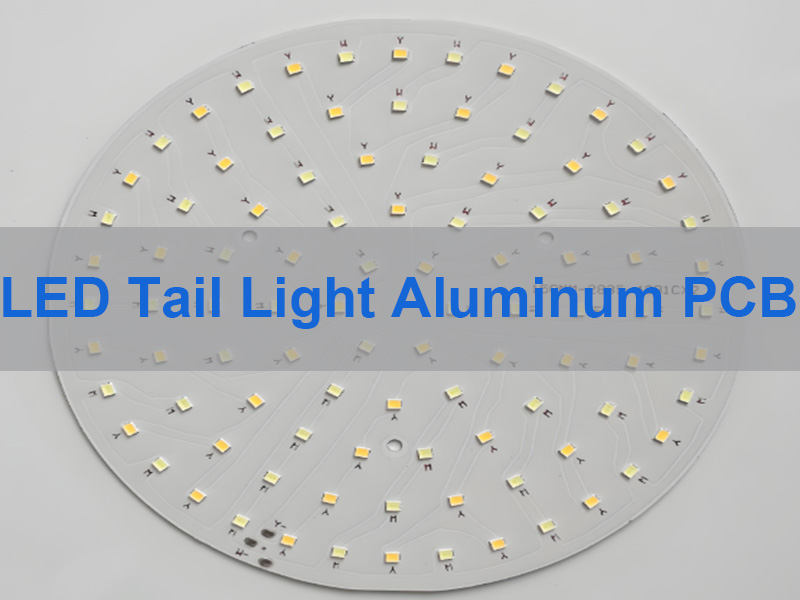
LED Tail Light Aluminum PCB is a thermally efficient metal-core PCB used in automotive rear lighting to carry circuits, support LEDs, and move heat away from the light source for safer and more stable performance. This article explains the common challenges in tail light PCB design, the matching manufacturing solutions, and the technical factors that matter when choosing the right aluminum PCB for automotive tail light applications.
Have you ever struggled with tail light boards that look acceptable in the prototype stage but later show heat buildup, uneven brightness, poor fit, or reliability concerns in real vehicle use?
Lamp structures are slim, but the PCB layout is crowded
Vibration and temperature cycling reduce reliability
Suppliers offer low prices but weak engineering support
Matching Manufacturing Solutions
Use aluminum-based structures to improve heat transfer
Optimize LED spacing and copper layout for thermal balance
Adapt the PCB outline to compact lamp housing geometry
Strengthen process control for automotive-grade consistency
Provide DFM review before production to reduce hidden risks
EBest Circuit (Best Technology) is a professional PCB and PCBA manufacturer with strong experience in aluminum PCB fabrication for demanding lighting applications. We support customers from design review to production with practical engineering input, stable manufacturing control, and fast response for both prototype and volume projects. For automotive rear lighting programs, we focus on thermal design, dimensional accuracy, and dependable assembly quality to help customers reduce risk and improve product consistency. For project support or quotations, please feel free to contact us via sales@bestpcbs.com.
What Is LED Tail Light Aluminum PCB in Automotive Applications?
A LED Tail Light Aluminum PCB is a metal-core circuit board built for automotive rear lighting modules where heat, vibration, and space constraints must all be managed at the same time. In tail light systems, the PCB is not only a carrier for electrical traces. It also works as a thermal path and a structural support for the LED assembly.
The basic structure usually includes a copper circuit layer, a thermally conductive dielectric layer, and an aluminum base. The copper carries current and forms solder pads. The dielectric electrically isolates the circuit while allowing heat to pass downward. The aluminum base then spreads that heat more efficiently than a conventional FR4 substrate.
This is especially valuable in automotive tail lights because rear lamp housings are often enclosed and visually compact. Heat can accumulate around the LEDs, particularly in brake light or signal light zones with higher brightness demand. A board with better thermal conductivity helps protect light output stability and supports longer service life.
Core Functions of a LED Tail Light Aluminum PCB
Function
Why It Matters
Circuit Support
Connects LEDs, resistors, drivers, and connectors
Heat Transfer
Moves heat away from LED junction areas
Mechanical Support
Holds components firmly in slim lamp structures
Dimensional Stability
Helps maintain fit in long or narrow housings
Reliability Support
Improves long-term performance in vehicle conditions
In practical automotive use, this type of board may appear in brake lights, tail lamps, turn signals, rear combination lamps, and decorative rear lighting systems. Some projects also use LED Tail Light PCB Aluminum structures when thermal stability must be combined with a compact optical layout.
In short, a LED Tail Light Aluminum PCB is a functional part of the lighting system, not just a passive substrate. It supports thermal control, layout efficiency, and product durability at the same time.
Why Is Aluminum PCB for LED Tail Light Preferred for Heat Dissipation?
Aluminum PCB for LED Tail Light is preferred because thermal management is one of the most important design priorities in automotive rear lighting. LEDs are efficient light sources, but they still generate heat during operation. If that heat is not moved away quickly, the lamp can suffer from lower luminous efficiency, color inconsistency, and faster material aging.
In tail light assemblies, the challenge becomes more serious because the housing is often sealed and compact. Airflow is limited. Heat cannot escape easily. As a result, the PCB itself must become part of the thermal solution.
An aluminum-based structure helps by creating a shorter and more stable heat path. Instead of allowing heat to accumulate under the LED pad area, the board transfers it through the dielectric and into the aluminum base. That heat is then spread across a wider metal surface, reducing local hot spots.
Why Aluminum Performs Better in Tail Light Thermal Design
Faster Heat Spreading The metal base distributes heat more evenly across the board.
Lower Local Temperature Rise Reduced hot spots help protect LEDs and solder joints.
Better Suitability for Sealed Housings It supports thermal control even where airflow is limited.
More Stable Light Output Lower junction temperature helps preserve brightness consistency.
Longer Service Life Potential Thermal stress is reduced during repeated automotive use.
A simplified heat transfer relationship is often described as:
Q = k × A × ΔT / d
Where Q is heat flow, k is thermal conductivity, A is transfer area, ΔT is temperature difference, and d is thickness. This is one reason material choice and dielectric design matter so much in a Tail Light Aluminum Based LED PCB.
The thermal advantage does not come from aluminum alone. Good results also depend on dielectric conductivity, copper thickness, LED spacing, and contact with the lamp structure. Even so, aluminum gives the designer a much stronger thermal foundation.
To sum up, Aluminum PCB for LED Tail Light is widely preferred because it helps tail lights run cooler, shine more consistently, and remain more stable in real vehicle environments.
How Does Tail Light LED Aluminum PCB Improve Automotive Reliability?
A Tail Light LED Aluminum PCB improves automotive reliability by reducing thermal stress, supporting mechanical stability, and helping the full lighting module perform more consistently over time. In automotive use, reliability is not only about whether the light turns on. It is also about whether brightness, response, and appearance remain stable after years of heat, vibration, and weather exposure.
Tail lights are installed in an environment where road shock, temperature cycling, humidity, and long operating hours are all normal. A weak PCB structure may pass basic testing but later show solder fatigue, brightness drift, or intermittent electrical failure in the field. This is why the choice of board material has a direct effect on long-term reliability.
Reliability Benefits of Tail Light LED Aluminum PCB
Reduced Thermal Fatigue Lower operating temperature helps reduce stress on LEDs and solder joints.
Stronger Mechanical Base The aluminum substrate offers better rigidity in long and narrow lamp boards.
More Stable Electrical Performance Thermal balance supports more predictable LED behavior.
Improved Resistance to Temperature Cycling A robust board structure helps the assembly cope with repeated heating and cooling.
Better Support for Automotive Assembly Consistency Controlled board flatness and dimensional stability help improve SMT quality.
Lower Risk of Visible Performance Degradation Reliable thermal design helps reduce patchy light output and uneven aging.
Typical Reliability Concerns and PCB Impact
Reliability Issue
PCB Influence
Solder Joint Stress
Lower heat reduces fatigue risk
LED Light Decay
Better heat transfer slows degradation
Board Warpage
Metal base improves structural stability
Intermittent Function
Stable assembly supports reliable connection
Uneven Brightness
Thermal balance helps keep output uniform
Many automotive projects also consider Tail Light LED PCB solutions during early development, but where thermal load is higher, an aluminum-based option is usually more practical. That is especially true in compact rear lamp modules with high LED density.
Overall, a Tail Light LED Aluminum PCB improves reliability because it supports both thermal and mechanical integrity, which are two of the most important factors in long-life automotive lighting.
What Design Factors Matter Most for LED Tail Light Aluminum Circuit Board?
Designing a LED Tail Light Aluminum Circuit Board requires more than simply placing LEDs on a metal-core substrate. The best results come from balancing thermal behavior, mechanical fit, manufacturability, and optical goals from the start of the design process.
A tail light board often needs to fit a narrow or curved housing, align with light guides or reflectors, and maintain consistent LED performance under long operating cycles. If the layout only focuses on electrical connection, the project can later face heat concentration, uneven brightness, or assembly difficulty.
Most Important Design Factors
LED Spacing LED density affects thermal concentration and light uniformity.
Copper Layout Trace design should support both current flow and heat spreading.
Dielectric Performance Thermal conductivity and thickness strongly affect heat transfer.
Board Shape and Tolerance The PCB outline must match the lamp housing accurately.
Mounting Method Contact points influence heat dissipation and mechanical stability.
Connector Position Connector placement affects assembly efficiency and wiring path.
Surface Finish and Solderability Stable pad quality supports reliable LED attachment.
Compact Design Review Table
Design Factor
Main Concern
Engineering Priority
LED Layout
Hot spots
Thermal balance
Copper Thickness
Current and heat flow
Electrical + thermal support
Dielectric Layer
Heat transfer efficiency
Controlled thermal path
PCB Outline
Housing fit
Dimensional accuracy
Component Placement
Assembly access
Manufacturability
Mounting Contact
Heat escape route
Mechanical and thermal coupling
A well-designed PCB for LED Tail Light Aluminum should also account for the real use condition of the lamp. For example, a decorative rear light bar may require a long narrow board, while a brake light module may need stronger thermal focus under higher brightness zones.
In summary, the most important design factors for a LED Tail Light Aluminum Circuit Board are the ones that connect thermal control, structural fit, and production stability into one coherent solution.
How Does PCB for LED Tail Light Support Compact Lamp Design?
A PCB for LED Tail Light supports compact lamp design by helping designers fit thermal performance, circuit routing, and LED placement into increasingly slim rear lighting housings. Modern automotive tail lights are often narrow, layered, and visually sharp. This makes internal space much more limited than in older lamp designs.
The challenge is that the lamp still needs to deliver stable brightness, proper heat dissipation, and reliable assembly quality. The PCB must therefore do more work in less space. It has to follow the lamp structure closely while still leaving enough room for connectors, resistors, drivers, and optical alignment.
How the PCB Helps Compact Tail Light Structures
Supports Slim Board Profiles Aluminum PCBs can fit narrow lighting layouts with better thermal support.
Allows Precise LED Positioning Controlled placement helps match optical and styling requirements.
Reduces Need for Extra Thermal Parts The board itself becomes part of the heat path.
Improves Structural Integration The outline can be adapted to the housing shape more easily.
Supports Long and Irregular Geometries Useful for modern light bar and segmented lamp concepts.
A PCB for Tail Light LED is especially helpful when the rear lamp uses multiple light functions in one housing. The PCB can support different LED zones while still fitting a tight structure. This becomes even more valuable in modern vehicles where rear lamp styling is part of the brand image.
Overall, a PCB for LED Tail Light helps compact lamp design by making the internal structure more efficient, more thermally stable, and easier to control in production.
Why Is PCB for Aluminum LED Tail Light a Good Fit for Modern Vehicles?
PCB for Aluminum LED Tail Light is a good fit for modern vehicles because today’s rear lighting systems demand higher thermal efficiency, thinner lamp profiles, and longer service life than before. Automotive lighting is no longer only functional. It is also part of styling, safety communication, and product identity.
Modern vehicles often use sleek rear lamp designs with continuous light bars, layered optics, and multiple LED functions in one module. These designs increase the need for a PCB that can support thermal performance without taking up too much space. Aluminum-based boards answer this need well.
Why Modern Vehicles Benefit from Aluminum-Based Tail Light PCBs
They Support Slim and Premium Lamp Styling Rear lights can remain compact without ignoring heat control.
They Match High LED Density Designs More LEDs can be used in limited space more safely.
They Improve Thermal Stability in Sealed Housings Important for modern enclosed lamp structures.
They Help Maintain Long-Term Appearance Better thermal control supports steady brightness and color consistency.
They Suit EV and Advanced Vehicle Platforms Modern vehicle programs often demand efficient and compact lighting systems.
They Support Scalable Production Good material and process control help from prototype to mass production.
Why Aluminum Fits Current Automotive Trends
Vehicle Trend
Why Aluminum PCB Helps
Slim Tail Light Styling
Better heat management in small spaces
Higher LED Count
Improved thermal spreading
Longer Service Expectations
Reduced thermal stress
Premium Visual Consistency
More stable light output
Platform Standardization
Easier engineering repeatability
A PCB for Aluminum Tail Light LED is therefore not only a material choice. It is also a response to how automotive lighting has evolved. The board helps lighting engineers meet both performance and styling targets without introducing unnecessary complexity.
In conclusion, PCB for Aluminum LED Tail Light is a strong fit for modern vehicles because it supports the thermal, structural, and aesthetic demands of current automotive lamp design. EBest Circuit (Best Technology) is a trusted LED Tail Light Aluminum PCB manufacturer, specializing in waterproof, vibration-resistant, and thermally stable PCB solutions for reliable automotive tail light performance. We help customers improve signal clarity, product consistency, and long-term durability in demanding vehicle environments. A warm welcome to call us at +86-755-2909-1601 for your project discussion.
What Makes Aluminum Based PCB for LED Tail Lights Suitable for Long-Term Use?
An Aluminum Based PCB for LED Tail Lights is suitable for long-term use because it helps maintain lower working temperatures, stronger structural stability, and more consistent performance over the service life of the lamp. In automotive applications, long-term value comes from stability rather than short-term brightness alone.
A tail light may operate for years in changing climates, rough roads, and repeated stop-and-go cycles. Over time, heat and vibration become cumulative stress factors. If the PCB design is weak, the lamp may show faster LED aging, solder fatigue, or visible output inconsistency. A stronger thermal platform helps slow those effects.
Why Aluminum-Based Tail Light PCBs Last Longer
Lower Average Operating Temperature Cooler operation supports longer LED life.
Reduced Thermal Shock on Solder Joints More stable heat distribution reduces fatigue.
Better Mechanical Strength The metal base helps resist deformation.
Improved Performance Consistency Thermal balance supports stable output across long use.
More Suitable for Repeated Automotive Cycles Better endurance under vibration and temperature variation.
Stronger Base for High-Reliability Production Controlled materials and process help improve field performance.
Long-Term Use Factors
Long-Term Factor
Aluminum PCB Advantage
LED Aging
Lower junction stress
Solder Joint Life
Reduced thermal cycling damage
Structural Stability
Better rigidity
Visual Consistency
More stable brightness over time
Automotive Endurance
Better fit for harsh real-use conditions
This is also why terms such as Aluminum Based PCB for LED Tail Lights and Aluminum Tail Light PCB are often associated with durable automotive lighting programs. The board material supports the long service expectation that vehicle manufacturers and end users both require.
To sum up, an Aluminum Based PCB for LED Tail Lights is suitable for long-term use because it supports heat control, structural integrity, and repeatable reliability throughout the life of the product.
How Do You Choose the Right Aluminum Tail Light PCB Supplier?
Choosing the right Aluminum Tail Light PCB supplier is critical because the final performance of the lamp depends not only on design, but also on manufacturing discipline, material consistency, and engineering support. A supplier that only offers low pricing without application knowledge may increase risk later in the project.
For automotive rear lighting, the supplier should understand heat dissipation, LED mounting quality, dimensional control, and the practical needs of lamp assembly. It is not enough to fabricate the board. The supplier should also know how the board behaves in a real automotive lighting module.
What to Check When Selecting a Supplier
Application Experience Look for experience in automotive lighting or metal-core LED boards.
Thermal Engineering Understanding The supplier should understand dielectric choice, copper layout, and heat path design.
Manufacturing Capability Check aluminum PCB fabrication, SMT quality, and process consistency.
DFM Support Early review helps prevent hidden layout and assembly issues.
Quality Control System Stable inspection and traceability reduce production risk.
Prototype-to-Volume Support The supplier should support both development and scaling.
Communication Efficiency Fast and clear technical feedback saves time in project revisions.
Quick Supplier Evaluation Table
Supplier Check Point
Why It Matters
Aluminum PCB Experience
Reduces process errors
Thermal Design Knowledge
Improves heat performance
Dimensional Accuracy
Supports lamp housing fit
SMT Control
Protects LED assembly quality
DFM Review
Finds risk before production
Stable Delivery
Supports project schedule
At EBest Circuit (Best Technology), we support customers with aluminum PCB manufacturing and PCBA service for thermally demanding LED applications. Our team focuses on practical design review, stable process control, and responsive project support to help automotive lighting customers move from concept to production more smoothly. For inquiries, please feel free to contact us via sales@bestpcbs.com.
Overall, the right Aluminum Tail Light PCB supplier should combine fabrication capability, thermal understanding, and dependable engineering support rather than competing on price alone.
In a nutshell, LED Tail Light Aluminum PCB is a thermally efficient and structurally reliable PCB solution that helps automotive tail light systems achieve better heat dissipation, stronger durability, and more stable lighting performance. This article has explained the customer pain points, the matching manufacturing solutions, and the core design, reliability, and sourcing factors behind successful aluminum PCB use in modern vehicle tail lights.
EBest Circuit (Best Technology) offers practical engineering support, stable aluminum PCB manufacturing, and dependable PCBA capability for automotive LED lighting projects that require both thermal performance and production consistency. For quotations or technical support, please feel free to contact us via sales@bestpcbs.com.
FAQs About LED Tail Light Aluminum PCB
1. Why is aluminum preferred over FR4 for LED tail light PCBs?
Aluminum PCBs, also known as Metal Core PCBs (MCPCBs), offer superior thermal conductivity compared to standard FR4. In automotive LED tail lights, high-intensity LEDs generate significant heat. An aluminum base acts as a highly efficient heat sink, transferring heat away from critical components to prevent “thermal roll-off,” ensuring the LEDs maintain consistent brightness and a longer operational lifespan.
2. What is the typical thermal conductivity required for automotive LED PCBs?
For automotive applications like tail lights or brake lights, a thermal conductivity range of 2.0 W/m-K to 3.0 W/m-K is standard. While basic aluminum PCBs start at 1.0 W/m-K, the high-vibration and enclosed environment of a vehicle’s light housing often require high-thermal dielectric layers to ensure reliability under extreme temperature fluctuations.
3. Can aluminum PCBs support double-sided component mounting for tail lights?
Standard aluminum PCBs are typically single-sided because the metal base is conductive. However, for complex tail light designs requiring high component density, Double-Sided Aluminum PCBs can be used. These consist of two layers of copper circuitry with the aluminum core sandwiched in the middle, or a sophisticated multi-layer structure, allowing for complex signaling circuitry in a compact space.
4. How does vibration resistance affect the choice of LED tail light PCB materials?
Automotive PCBs must pass rigorous vibration and shock testing (such as ISO 16750). Aluminum PCBs are naturally more rigid than thin FR4 boards, providing better mechanical support for Surface Mount Technology (SMT) components. This prevents solder joint fatigue and cracking, which are common causes of failure in vehicle lighting systems exposed to constant road vibration.
5. What surface finishes are best for LED tail light aluminum boards?
HASL (Lead-Free) and OSP (Organic Solderability Preservatives) are common, but ENIG (Electroless Nickel Immersion Gold) is often preferred for high-end automotive lighting. ENIG provides a flat surface for precise LED placement and offers excellent oxidation resistance, which is vital for the long-term durability of safety-critical components like brake and signal lights.
6. Are there specific waterproof requirements for LED tail light PCBs?
While the PCB itself is not inherently waterproof, the aluminum substrate must be compatible with conformal coatings or potting compounds. Since tail light housings can experience moisture ingress or condensation, the aluminum PCB is typically treated with a silicone or epoxy coating to protect the circuitry from corrosion while still allowing the metal base to dissipate heat effectively.
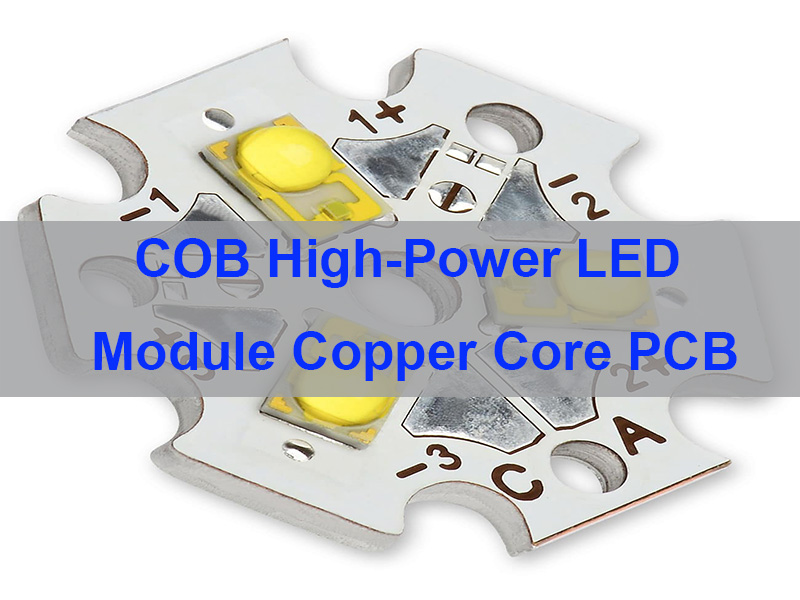
COB High-Power LED Module Copper Core PCB is a copper-based thermal PCB designed for high-power COB LED modules that require efficient heat dissipation, stable brightness, and reliable long-term operation. This article explains what COB High-Power LED Module Copper Core PCB is, why it is used in high-power LED applications, and how the right thermal structure helps improve brightness stability, manufacturing reliability, and product lifespan.
EBest Circuit (Best Technology) is a professional manufacturer of COB High-Power LED Module Copper Core PCB solutions for demanding lighting applications. We understand that in high-power COB projects, poor thermal conductivity can lead to chip burnout, module scrap, unstable brightness, and shortened service life. That is why we focus on stable thermal performance, mature production control, and optimized heat-dissipation structures that support both manufacturing reliability and design performance.
For customers who care about thermal conductivity, thermal resistance, structure design, test data, and cost-effective supply, we provide dependable copper core PCB solutions backed by practical engineering experience and consistent quality control. For professional COB High-Power LED Module Copper Core PCB support, pls feel free to call us at +86-755-2909-1601.
Why More Demanding Lighting Projects Prefer Copper Core PCB for COB LED Modules?
When a COB LED module needs to run at high power for long hours, the board is no longer just a carrier for circuits. It becomes part of the thermal system. That is why many demanding lighting projects move toward COB High-Power LED Module Copper Core PCB solutions instead of using ordinary structures that struggle to handle concentrated heat.
A high-power COB module puts many light-emitting chips into a compact area. This gives excellent brightness density, but it also creates a very focused heat source. If the heat cannot move away efficiently, the result is usually easy to see in real use. Brightness becomes less stable, color performance can drift, and long-term reliability becomes harder to maintain.
At EBest Circuit (Best Technology), we provide COB High-Power LED Module Copper Core PCB products for customers who need better heat transfer, stable production quality, and practical engineering support from design review to manufacturing. If you are sourcing a project with demanding thermal requirements, you can send us your files for evaluation and production support.
Typical parameters customers often care about
Item
Typical Focus
Base type
Copper core
Main value
High thermal conductivity
Application
High-power COB LED module
Design goal
Better heat spreading and stable output
Common structure
Single-sided metal core or enhanced thermal path
Common finish
ENIG, OSP, or project-based selection
Therefore, copper core PCB is often chosen not because it sounds more advanced, but because the lighting module needs a stronger thermal foundation to keep performance stable in real working conditions.
What Is COB High-Power LED Module Copper Core PCB?
A COB High-Power LED Module Copper Core PCB is a copper-based metal core board designed for COB LED modules that operate under relatively high thermal load. In this kind of module, multiple LED chips are integrated into one compact light-emitting area, so heat builds up much faster than in lower-density LED layouts.
The role of the copper core is simple in concept but very important in practice. It spreads and transfers heat away from the LED source more efficiently than standard PCB materials. That helps the module maintain more stable operating temperature, which in turn supports brightness consistency and longer service life.
This kind of PCB is widely used in applications where light density is high, operating time is long, or heat must be controlled more carefully. Examples include industrial lighting, automotive lighting, stage lighting, and outdoor high-output fixtures.
In practice, this board type is best understood as a thermal-performance platform. It supports the LED electrically, but its real value is how it helps the whole module manage heat more effectively.
Why Is Copper Core Better for High-Power COB LED Modules?
For high-power COB LED modules, copper core is often preferred because it handles heat spreading and current carrying more effectively than many common alternatives. Once power density increases, the weakness of a less capable substrate becomes more visible.
Copper has stronger thermal conductivity than aluminum, and both are far ahead of standard FR4 in heat management. In practical LED design, that means the board can move heat away from the hot zone faster and more evenly. This matters a lot when the light source is compact and the module is expected to remain stable over long operating periods.
Quick comparison of common substrate options
PCB Type
Thermal Performance
Common Use
Main Limitation
FR4
Low for high-power LED use
Low-power control boards
Heat builds up quickly
Aluminum core PCB
Good for many standard LED products
General LED lighting
Less thermal headroom for very high power density
Copper core PCB
Excellent for high heat load
High-power COB modules
Requires stronger manufacturing control
Ceramic PCB
Excellent
Premium high-reliability applications
Supply chain and process are more specialized
In engineering work, copper core usually becomes the better option when the module has high drive power, limited cooling space, compact packaging, or strict brightness consistency targets. In those cases, the board must do more than hold components. It must help the whole lighting system stay thermally balanced.
As a result, copper core is not simply a material upgrade. It is often a design decision made to protect thermal stability, luminous performance, and long-term reliability.
How Does Thermal Conductivity Influence Brightness Stability?
Brightness stability is closely tied to temperature. When the thermal path is weak, heat remains concentrated around the LED source. Once junction temperature rises too much, the module may still light up normally at first, but performance becomes harder to hold steady over time.
In real products, this usually shows up in several ways. Initial brightness may look fine, but output starts to drop earlier during continuous use. In more demanding applications, uneven temperature distribution can also affect color consistency and accelerate material stress around the LED area.
A copper core board helps because it spreads heat more efficiently across the base and moves it toward the external heat sink more quickly. That reduces local overheating and gives the COB module a more stable thermal environment.
This is one reason why brightness stability is not only about the LED chip itself. The substrate, the thermal path, the mounting method, and the heat-dissipation structure all work together. If the board is weak, the optical performance usually pays the price sooner or later.
From an engineering perspective, better thermal conductivity is one of the most direct ways to help a high-power COB module keep its output more stable in continuous operation.
How Is a High-Power COB Copper Core PCB Structured?
The structure of a High-Power COB LED Module Copper Core PCB usually includes a top circuit layer, an insulating thermal layer, and a copper base. Each layer has a different role, and the final thermal performance depends on how these layers work together.
The top copper layer carries current and forms the circuit pattern for the LED module. The insulation layer provides electrical isolation while still allowing heat to move downward. The copper base then acts as the main heat spreader and mechanical support structure.
In some projects, the structure is enhanced to improve the thermal path even further. This may include optimized thermal pad areas, special dielectric selections, or more direct heat-transfer designs under the COB mounting zone.
Typical structure overview
Layer
Function
Circuit copper
Electrical routing and current carrying
Solder mask / finish
Solderability and surface protection
Thermal insulation layer
Electrical isolation with heat transfer
Copper base
Main heat spreading and support
One important point is that the copper base alone does not determine final performance. The insulation layer also matters a great deal. If that layer is poorly selected, it can become the bottleneck in the whole thermal path.
In real-world applications, the best-performing boards are usually the ones where the full stack-up is designed as a thermal solution, not just a standard PCB build with thicker metal underneath.
How Should You Design COB High-Power LED Module Copper Core PCB for Better Results?
A good design starts with thermal logic, not only with electrical routing. In a high-power COB LED module, the layout should help heat move away quickly and evenly, while also keeping the board easy to manufacture and assemble consistently.
The hot zone under the COB area should be treated as the center of the thermal design. That means current paths, copper area, pad structure, and mechanical mounting all need to support heat flow instead of interfering with it. If heat must travel through unnecessary restrictions, the advantage of the copper core is reduced.
Practical design points that matter
Keep the thermal path short The area under and around the COB should allow heat to move into the base efficiently.
Avoid unnecessary heat concentration If the thermal design is too compact without enough spreading area, local hotspots become more likely.
Use copper distribution carefully Copper area is helpful, but it should be planned around both current flow and thermal spreading.
Match pad design to assembly reality Good solderability and stable thermal contact depend on pad geometry and process compatibility.
Think about the full system The board, heat sink, interface material, and enclosure condition all affect final temperature.
A layout that looks clean on the screen may still perform poorly if thermal flow was not considered early enough. That is why good copper core LED design usually comes from combining thermal thinking with manufacturing logic.
Overall, the best design is not the most complicated one. It is the one that balances heat dissipation, manufacturability, and stable repeat production.
What User Pain Points Usually Matter Most in These Projects?
In this type of product, the real pain points are usually very practical. Customers are not only asking whether copper core is better in theory. They want to know whether the module will actually stay bright, run cooler, assemble smoothly, and remain consistent from batch to batch.
One common problem is excessive heat concentration under the COB area. Another is brightness drop after long operating time. Some projects also struggle with uneven quality between prototype and mass production, which often comes from a design that was not optimized for repeatable manufacturing.
Delivery consistency is another major concern. A board may perform well in a sample stage, but if the structure or process window is not stable, the production result can vary. That creates risk for lighting brands that need predictable quality in volume orders.
Common pain points and how we address them
Pain Point
Typical Cause
Our Approach
Hotspots under COB
Weak thermal path design
Thermal-focused structure review
Brightness instability
High operating temperature
Copper core design matched to application
Inconsistent assembly results
Poor pad or process compatibility
DFM and production coordination
Prototype and mass production mismatch
Layout not optimized for repeatability
Engineering review before release
Quality variation between batches
Weak process control
Controlled fabrication and inspection
Sourcing uncertainty
Fragmented supplier chain
One-stop manufacturing support
What customers usually need is not just a board supplier. They need a manufacturing partner who understands how thermal design, assembly behavior, and production stability connect to each other.
To sum up, the strongest solution is a board that is not only thermally capable, but also designed and produced with real manufacturing conditions in mind.
Why Choose Us for COB High-Power LED Module Copper Core PCB?
If you are looking for COB High-Power LED Module Copper Core PCB, choosing the right supplier makes a direct difference to product stability. This type of board must support heat management, assembly control, and long-term consistency at the same time.
At EBest Circuit (Best Technology), we focus on practical manufacturability, not just nominal capability. That means we look at how the board will actually be built and used, not only how it appears in the drawing.
Why many customers prefer working with us
Quality-oriented production We pay attention to thermal structure, fabrication stability, and process discipline.
Reliable lead time control For LED module projects, timely and repeatable delivery is often as important as the board specification itself.
Engineering support We can review project files and help identify risks related to structure, heat flow, and manufacturability.
Integrated supply coordination One-stop support reduces communication gaps between PCB fabrication and assembly stages.
Project-focused service We work from actual application needs rather than using a one-size-fits-all approach.
If you need High-Power COB LED Module Copper Core PCB, Copper Core PCB for COB High-Power LED Module, or similar products, you can contact us with your project details and order requirements.
Notably, customers often stay with a supplier not because the brochure looks good, but because the boards arrive stable, consistent, and ready for real product use.
What Services and Certifications Should a Reliable Supplier Have?
A reliable supplier for this product should offer more than just board fabrication. In high-power LED projects, customers usually need a combination of engineering review, process support, quality control, and dependable manufacturing execution.
That is especially true for copper core PCB because the board affects not only electrical connection, but also heat transfer and long-term module behavior. A supplier without enough process understanding may still make the board, but the result may not perform well in the final lighting product.
Recommended service scope
Service
Why It Matters
DFM review
Finds structural and process risks early
Copper core PCB fabrication
Controls the main thermal substrate quality
Assembly support
Improves consistency from board to finished module
Prototype to volume transition
Keeps engineering logic aligned through scale-up
Inspection control
Helps screen workmanship and process drift
Traceability support
Supports batch control and quality review
Recommended certifications
Certification
Value
ISO 9001
General quality management
ISO 13485
Process discipline for regulated manufacturing
IATF 16949
Strong system control for demanding quality environments
AS9100D
Advanced quality framework for high-reliability sectors
UL-related support
Compliance and product safety relevance
RoHS / REACH
Material compliance support
Certificates alone do not guarantee a good product, but they do show whether the supplier has system-level discipline. For high-power LED boards, that matters because repeatability is often just as important as performance.
This means, the ideal supplier combines engineering understanding with controlled manufacturing systems, rather than treating the job as a basic file-processing order.
How Does the Manufacturing Process Affect Reliability?
In Module LED COB High-Power Copper Core PCB, reliability depends heavily on how the board is manufactured. Even when the design is correct, weak process control can reduce thermal performance, hurt assembly stability, or create variation between batches.
Material preparation is the starting point. Copper base flatness, dielectric consistency, and circuit accuracy all affect how the finished board behaves. After that, pattern formation, thermal area control, surface finishing, and assembly parameters must all remain stable.
The COB mounting zone is especially sensitive. If that area is not produced carefully, thermal transfer may suffer even if the drawing itself looks correct. The same applies to soldering consistency. Uneven solder volume or unstable processing can change both electrical connection and heat conduction.
Main process stages that influence reliability
Process Stage
Why It Matters
Material control
Affects thermal foundation and structural stability
Circuit fabrication
Influences current flow and geometry accuracy
Thermal area control
Protects the heat-transfer path
Surface finish
Supports solderability and process compatibility
Assembly process
Affects contact quality and repeatability
Inspection
Helps identify drift before shipment
Reliable boards usually come from stable process execution, not from material claims alone. That is why strong manufacturing discipline matters so much in high-power LED projects.
In short, the board only performs as well as the process that builds it. Thermal design and production control must support each other from start to finish.
What Industries Commonly Use Copper Core PCB for High-Power COB LED Modules?
This kind of board is widely used in lighting products where high brightness, concentrated heat, and long operating time come together. In those conditions, a stronger thermal substrate brings visible value.
One major application area is outdoor lighting. Flood lights, facade lighting, and high-output architectural fixtures often run for long hours and may face limited airflow in enclosed housings. A copper core board helps support stronger thermal stability in those conditions.
Another important area is automotive lighting. Compact size, demanding temperature cycles, and stable output expectations all make heat management more critical. Stage and entertainment lighting is also a strong fit because those products often require compact, intense light with dependable performance through extended use.
Industrial lighting and machine vision systems are also relevant. These products often rely on concentrated light output and consistent optical behavior, so substrate stability becomes part of overall system performance.
Four popular application industries
Industry
Why Copper Core Is Useful
Outdoor and architectural lighting
Long operation and high thermal demand
Automotive lighting
Compact structure and reliability pressure
Stage and entertainment lighting
High light density and stable output need
Industrial inspection lighting
Consistency and concentrated brightness
From a product standpoint, copper core boards appear most often where the thermal load is too high for ordinary board structures to remain comfortable over time.
How Do Real PCB Cases Show the Value of This Board Type?
The value of Copper Core PCB for High-Power COB LED Module becomes easier to understand when viewed through real application logic. In most cases, the main requirement is not “use copper core.” The real requirement is “make the module stay stable under demanding heat conditions.”
In an outdoor high-bay or flood-light project, the challenge is usually long operating hours and limited natural cooling. A copper core structure helps spread heat faster and more evenly, which supports more stable light output.
In an automotive auxiliary lamp, the challenge is often compact design plus temperature cycling. The board must help the module stay thermally controlled even when working conditions change frequently.
In a stage-lighting engine, the challenge is high brightness from a small optical space. That means the heat is concentrated, and the board needs to work hard as part of the cooling path. In an industrial inspection light, output consistency is often more important than maximum brightness alone, so thermal stability has direct practical value.
These cases show why this board type is usually chosen for a clear engineering reason. It solves a system problem, not just a material preference.
Therefore, the hotter and more compact the light engine becomes, the more valuable a well-designed copper core PCB tends to be.
How Should You Select the Right Supplier for High-Power COB Copper Core PCB?
Choosing a supplier for High-Power COB LED Module Copper Core PCB should be based on engineering capability, process stability, and application understanding. A supplier that only focuses on the board outline and thickness may miss the thermal priorities that matter most in real LED module work.
A good supplier usually asks practical questions. What is the drive power? How long will the module run continuously? What is the ambient environment? Is the module installed in an enclosed housing? What lifetime or brightness stability target matters for the project? These questions show that the supplier understands why the board matters.
Key evaluation points
Evaluation Point
What to Check
Thermal understanding
Can they discuss heat path and thermal structure clearly
Fabrication capability
Can they support copper core builds with stable quality
Process control
Do they have a repeatable manufacturing method
Quality system
Are there formal certifications and inspection control
Application familiarity
Do they understand LED module project logic
Communication
Do they provide engineering-based feedback
A weaker supplier may only quote by size, thickness, and quantity. That may be enough for simple boards, but it is usually not enough for high-power COB projects.
As a result, supplier selection should follow product logic. The better the supplier understands the module’s real thermal and manufacturing needs, the lower the risk in later production.
FAQs About COB High-Power LED Module Copper Core PCB
What is COB High-Power LED Module Copper Core PCB? It is a copper-based metal core board made for COB LED modules that need stronger heat dissipation, better thermal stability, and more reliable performance under higher power operation.
Why use Copper Core PCB for COB High-Power LED Module? Because copper spreads heat more efficiently, supports higher thermal demand, and helps the LED module maintain more stable brightness during continuous use.
How does High-Power COB LED Module Copper Core PCB improve brightness stability? It helps lower heat concentration around the LED source, which supports more controlled operating temperature and reduces the chance of early output drop.
What is the difference between LED Module High-Power COB Copper Core PCB and aluminum core PCB? Copper core usually provides stronger thermal conductivity and better heat spreading, while aluminum core remains suitable for many standard LED applications with lower thermal stress.
How do I know whether Module LED COB High-Power Copper Core PCB is necessary? It is usually a strong option when your module has high power density, compact structure, long operating time, or strict requirements for brightness stability and reliability.
How should Copper Core PCB for High-Power COB LED Module be designed? The design should focus on short thermal paths, good copper distribution, suitable pad structure, assembly compatibility, and a full-system view of how heat leaves the LED area.
What industries use High-Power COB LED Module Copper Core PCB most often? Common industries include outdoor lighting, automotive lighting, stage lighting, and industrial lighting where compact high-output modules need stronger thermal support.
How can I order COB High-Power LED Module Copper Core PCB from EBest Circuit? You can send us your project files and requirements, and we can review the design, confirm the suitable structure, and support production based on your application needs.
LED Pixel Light Aluminum PCB is widely used in pixel-based lighting products that need stable brightness, efficient heat dissipation, and long service life. In this guide, we will explain what LED Pixel Light Aluminum PCB is, how it works, what design points matter most, and how to choose a reliable manufacturing partner for custom projects.
EBest Circuit (Best Technology) is a professional LED Pixel Light Aluminum PCB manufacturer with deep experience in designing and producing boards for modular pixel light applications that require both reliable thermal control and stable splicing performance. For projects where poor PCB compatibility can cause connection failure after splicing, we provide well-matched board structures, controlled dimensional accuracy, and stable heat dissipation to help improve assembly consistency and product yield. For flexible decorative lighting designs, we focus on balancing thermal conductivity with splicing adaptability, so the PCB can better support both structural fit and lighting performance.
For volume purchasing needs, we offer dependable quality, scalable production capacity, and practical manufacturing support, helping customers achieve better consistency across batches. We also pay close attention to heat distribution after module splicing, using suitable aluminum-based structures and thermal materials to support more uniform brightness and stronger long-run reliability. For custom LED Pixel Light Aluminum PCB projects, pls feel free to call us anytime at +86-755-2909-1601.
Why More Buyers Choose LED Pixel Light Aluminum PCB for Demanding Lighting Projects
If a pixel lighting product needs to stay bright, uniform, and stable over long operating hours, the board material matters from the beginning. A well-designed LED Pixel Light Aluminum PCB helps move heat away from the LED packages faster, which supports better brightness consistency and reduces thermal stress on the assembly. It also gives the product better mechanical support, which is useful for linear modules, façade lighting, signage, and custom pixel arrays.
What customers usually care about
Better heat dissipation
Stable light output over time
Good flatness and structural strength
Clean electrical routing for addressable pixels
Reliable production for custom designs
What we can support
At EBest Circuit (Best Technology), we provide LED Pixel Light Aluminum PCB manufacturing for custom lighting projects, from prototype support to production builds. We help customers optimize board structure, layout manufacturability, and thermal performance so the final product is easier to assemble and more dependable in the field.
Typical parameters customers ask for
Item
Common Option
Board type
Single-layer aluminum PCB
Copper thickness
1oz, 2oz, or custom
Board thickness
1.0mm to 2.0mm
LED type
2835, 3535, 5050, custom packages
Surface finish
HASL, ENIG, OSP
Application
Pixel bars, pixel dots, signage, façade lighting
Build type
Bare PCB or assembled PCB
Therefore, choosing the right board is not only about getting LEDs mounted on metal. It is about building a lighting product that stays visually stable and easier to manufacture at the same time.
What Is LED Pixel Light Aluminum PCB?
A LED Pixel Light Aluminum PCB is a metal-core circuit board designed for pixel lighting applications where each LED or LED group acts as a controllable light point. Its basic structure includes a copper circuit layer, a thermally conductive insulating layer, and an aluminum base. This structure allows heat from the LEDs to move down into the aluminum substrate instead of building up near the LED pads.
Why this structure matters
In pixel lighting, LEDs are often packed closely together and may run animated effects for long periods. That combination creates more thermal load than many ordinary LED products. If the board cannot spread heat efficiently, the result may be reduced brightness stability, color inconsistency, and more stress on solder joints.
Where it is commonly used
Building exterior pixel lights
LED pixel modules for signage
Decorative linear pixel bars
Outdoor dot light systems
Specialty lighting arrays
In practice, this type of board is selected because it solves a real operating problem. It helps pixel lighting products manage heat more effectively while supporting compact layouts and long runtime.
Why Is Aluminum Better Than Standard FR4 for Pixel Lighting?
For many pixel lighting products, aluminum offers a more suitable base than standard FR4 because heat is one of the main design limits. FR4 remains useful in general electronics, but it does not remove LED heat as efficiently as an aluminum-backed structure. When LEDs are dense, bright, and continuously active, that difference becomes more obvious.
Aluminum PCB and FR4 comparison
Comparison Item
Aluminum PCB for LED Pixel Light
Standard FR4 PCB
Heat spreading
Stronger
Weaker
Brightness stability
Better under long runtime
More affected by heat buildup
Structural rigidity
Better for long modules and bars
Moderate
Suitability for dense LED layout
Strong
Limited in higher thermal loads
Support for long-term lighting use
Better
Depends more on additional thermal design
What this means in actual projects
If a product uses addressable pixels, long light chains, or compact modules, thermal stress increases quickly. In those cases, aluminum often helps maintain more even optical performance and reduces the risk of visible brightness variation across the board.
In short, aluminum is not chosen only because it sounds more advanced. It is chosen because it offers a more stable platform for real pixel lighting products.
How Does LED Pixel Light Aluminum PCB Improve Thermal Performance?
The main advantage of LED Pixel Light Aluminum PCB is that it creates a more direct thermal path away from the LEDs. Heat generated by the LED package moves through the copper and dielectric layer into the aluminum base, where it can spread more efficiently across the board.
How the heat path works
Copper layer This carries current and also helps spread local heat around the LED pads.
Thermal dielectric layer This layer provides electrical isolation while still allowing heat to pass through.
Aluminum base This acts as the main heat spreader and gives the board mechanical support.
Why this matters to pixel lighting
When heat is removed more efficiently, the LEDs can run under more stable temperature conditions. That supports more uniform brightness, better color consistency, and reduced long-term stress on the assembly. In dense pixel arrays, this is especially helpful because thermal accumulation tends to happen fast.
As a result, a better thermal path improves more than temperature numbers. It also improves the visible performance and service stability of the final lighting product.
What Core Design Parameters Matter Most for LED Pixel Light Aluminum PCB?
Many buyers start with board size, LED count, and shape. Those are important, but the most valuable design parameters usually relate to current handling, thermal behavior, and assembly practicality. A good board should work well electrically, thermally, and mechanically at the same time.
The main parameters to confirm early
Parameter
Why It Matters
LED density
Affects heat buildup and optical uniformity
Copper thickness
Influences current capacity and voltage behavior
Input voltage
Impacts layout and power distribution
Control method
Affects signal routing and module compatibility
Board thickness
Supports rigidity and thermal spread
Surface finish
Influences solderability and storage condition
Connector position
Affects installation and wiring reliability
Mounting features
Important for final assembly and support
Application environment
Impacts structure and protection needs
What is often overlooked
Current path length is frequently underestimated in pixel lighting boards. If the board carries too much current through narrow traces or long paths, the product may show dimming or color change from one end to the other. That is why layout planning matters as much as material choice.
From an engineering perspective, the best results usually come from getting the parameters right before layout is finalized. That saves redesign time and improves manufacturing stability.
How Do You Design High-Density LED Pixel Light Aluminum PCB Correctly?
A high-density pixel board should be designed around three priorities from the start. Heat distribution, power distribution, and signal stability must all be considered together. If only one of them is addressed, the design may still struggle during production or field use.
Useful design priorities
Distribute LEDs with thermal logic Avoid creating small hotspots with too many LEDs concentrated in one area unless the board size and thermal path are designed for it.
Keep high-current paths practical Use wider copper in heavy-load sections and think about how power enters and moves across the board.
Protect signal routing Addressable pixel boards need clean data routing and stable grounding, especially when pixel count increases.
Design for assembly Leave enough process margin for soldering, polarity control, testing, and mechanical handling.
Support real installation needs Add mounting holes, connector spacing, and routing direction that make the board easier to use in the actual product.
Overall, good design is not about fitting the most LEDs into the smallest area. It is about balancing density with manufacturability, stability, and practical product performance.
How Do You Reduce Voltage Drop and Color Shift in Pixel Light Boards?
Voltage drop is one of the most common problems in pixel lighting. A board may look fine near the power input, while the far end shows weaker brightness or visible color difference under higher load. This often becomes more obvious when many LEDs are running bright at the same time.
Common causes
Long current paths
Copper traces that are too narrow
Power entering from only one point
High pixel count on a single board
No allowance for real operating load
Better ways to handle it
Problem
Better Design Response
Long board length
Add multiple power entry points
Narrow power traces
Increase copper width or copper thickness
Uneven brightness
Divide board into better-powered sections
Signal instability
Improve data routing and grounding
Heavy full-load operation
Design with electrical margin
Why this deserves early attention
Color shift is not always caused by the LED itself. In many cases, the issue comes from the board layout and power strategy. That is why a pixel light board should be treated as an electrical distribution platform, not just a mounting surface for LEDs.
In real-world applications, better power planning makes the final lighting effect look more uniform and more professional, especially in long modules and high-density arrays.
How Is LED Pixel Light Aluminum PCB Manufactured for Stable Quality?
Manufacturing quality has a direct impact on thermal stability, soldering consistency, and final lighting performance. Even a well-designed board can become unreliable if the process is not well controlled. For this reason, LED Pixel Light Aluminum PCB production should focus on both board fabrication precision and stable assembly execution.
Typical manufacturing flow
Aluminum material preparation
Circuit imaging and etching
Surface treatment
Solder mask application
Solder paste printing
LED and component placement
Reflow soldering
Optical and electrical inspection
Functional test if needed
Packing and shipment preparation
What supports better production yield
Consistent pad design Balanced pad design helps reduce soldering variation across the board.
Controlled reflow process LED packages and control components require stable thermal processing during assembly.
Clear polarity control Pixel products often include many LEDs and driver parts, so polarity accuracy is critical.
Board flatness management Long or narrow aluminum boards need good process control to stay stable during placement and soldering.
Defined test criteria Electrical continuity, lighting behavior, and basic performance checks improve shipment confidence.
Notably, stable quality does not come from one inspection step alone. It comes from a controlled process from material selection through final verification.
Why Choose Us for LED Pixel Light Aluminum PCB?
When choosing a supplier for LED Pixel Light Aluminum PCB, customers usually care about four things. They want consistent quality, predictable lead time, responsive service, and a manufacturer that understands real project risks before production starts.
Why customers look for a stronger manufacturing partner
Quality A stable process reduces brightness inconsistency, solder defects, and avoidable reliability problems.
Lead time A manufacturer with integrated support can help move projects faster from file review to delivery.
Service Good engineering communication helps catch design risks earlier.
Supply coordination When the project includes LEDs, connectors, drivers, and assembly, coordination matters.
Why work with EBest Circuit (Best Technology)
At EBest Circuit (Best Technology), we provide LED Pixel Light Aluminum PCB manufacturing support for custom projects that require dependable thermal design, practical production feedback, and production-ready execution. We help customers move from concept to actual build with better manufacturability and clearer communication.
This means, choosing the right supplier is not only about placing an order. It is about reducing mistakes before they become delays, rework, or field issues.
What Services and Certifications Support More Reliable Orders?
A strong pixel lighting supplier should offer more than bare board fabrication. In many projects, customers also need assembly support, design review, and production coordination. Reliable service becomes even more important when the product is customized for special shapes, pixel counts, or installation conditions.
Certificates do not replace engineering ability, but they do show that the company works within recognized quality frameworks. For many customers, that adds confidence when a project needs stable documentation, controlled processes, and repeatable output.
To sum up, good service and quality systems make custom LED pixel lighting projects easier to manage from both the engineering side and the order side.
What Common Pain Points Do Pixel Lighting Buyers Face and How Do We Solve Them?
Most pixel lighting projects run into similar problems. The board runs hotter than expected. Brightness looks uneven. The far end of the module does not match the front end. Assembly becomes difficult because the layout is too tight. Or the product works in testing but becomes unstable after installation. These are common industry issues, not isolated mistakes.
Typical pain points and practical solutions
Pain Point
Typical Cause
How We Help
Uneven brightness
Voltage drop and thermal concentration
Better power layout and board structure
Shorter LED life
Excess heat around LED packages
Improved thermal path and layout review
Data instability
Poor routing or interface planning
Cleaner signal structure and design feedback
Low assembly yield
Tight spacing and weak process margin
DFM support before production
Custom project delays
Incomplete file planning
Early engineering communication
Inconsistent repeat orders
Process variation
Controlled production workflow
How we approach projects
We do not treat LED Pixel Light Aluminum PCB as a generic LED board. We review it as a functional lighting product that needs thermal logic, current control, assembly practicality, and long-term stability.
Notably, if you need LED Pixel Light Aluminum PCB for a custom module or production project, we can support the build with more practical engineering feedback and manufacturing coordination from the start.
What Industries Commonly Use LED Pixel Light Aluminum PCB?
This type of board is widely used in projects where brightness control, compact structure, and thermal performance need to work together. Some industries use it more often because their products depend on long runtime and consistent visual output.
1. Architectural lighting
Building façade lighting, bridge decoration, and outdoor media lighting often use pixel-based systems. These applications benefit from aluminum boards because they support thermal management in long-running outdoor installations.
2. Commercial signage
Retail signs, brand displays, and decorative commercial lighting frequently use pixel modules for animated effects. A stable board helps maintain more even light output across the display.
3. Entertainment and themed spaces
Bars, clubs, event spaces, and immersive environments use pixel lighting to create dynamic visual scenes. In these projects, layout density and long operating cycles make board quality more important.
4. Display-related lighting modules
Some specialty display modules and close-view lighting products rely on compact LED arrays. In these cases, thermal consistency helps improve visual uniformity and long-term stability.
In short, LED Pixel Light Aluminum PCB creates the most value in applications where thermal load, lighting consistency, and installation reliability all matter at once.
How Should You Order Custom LED Pixel Light Aluminum PCB for Better Results?
A good custom order starts with complete technical inputs. Many project delays happen because the board outline is defined, but the electrical and thermal requirements are still vague. The clearer the requirements, the easier it is to create a board that works well in both production and final use.
What to confirm before placing an order
Input voltage
LED model and quantity
Pixel control method
Board dimensions and shape
Copper thickness
Board thickness
Connector type and position
Mounting method
Indoor or outdoor use
Bare PCB or assembled product
What a strong supplier should help with
File review A proper review should identify layout risks before manufacturing starts.
Structure recommendation The board stack and copper design should match the real operating conditions.
Manufacturing advice Good advice improves soldering stability, testing, and repeatability.
Assembly feedback This helps avoid avoidable issues in placement, polarity, and connector fit.
Overall, better orders come from better preparation. When the technical details are clear early, the project moves more smoothly and the result is more dependable. If you are looking for a dependable supplier for LED Pixel Light Aluminum PCB, EBest Circuit (Best Technology) can support your custom project with manufacturing and production-oriented engineering support. We provide LED Pixel Light Aluminum PCB products for custom applications. For inquiries or orders, please contact us via sales@bestpcbs.com.
FAQs About LED Pixel Light Aluminum PCB
What is Aluminum PCB for LED Pixel Light? It is a metal-core PCB designed for pixel lighting applications, using an aluminum base to improve heat dissipation and support more stable LED performance over time.
Why use Aluminum-Based LED Pixel Light PCB instead of ordinary PCB? Because pixel lighting products often generate more heat and require better brightness stability. Aluminum provides a stronger thermal path and better structural support than ordinary PCB materials in these conditions.
How does Pixel Light LED Aluminum PCB improve brightness consistency? It helps reduce temperature buildup around the LEDs, which supports more even light output and lowers the chance of visible brightness drift across the board.
How do you design Aluminum-Based PCB for LED Pixel Lighting with high pixel density? The design should balance LED spacing, copper width, power entry planning, and signal routing. High density works best when thermal and electrical limits are planned together.
What makes High-Density LED Pixel Light Aluminum PCB harder to manufacture? Tight spacing, thermal process control, polarity management, and handling of longer or narrower boards all make manufacturing more demanding. Good layout and stable process control help solve this.
Why choose Aluminum Core PCB for LED Pixel Arrays in outdoor projects? Outdoor pixel products often run for long periods and face stronger thermal cycling. Aluminum helps improve heat spread and mechanical support, which is useful for long-term outdoor stability.
How does Thermal-Conductive Aluminum PCB for LED Pixel Light Application help reduce color shift? By improving heat dissipation and supporting better power distribution, it helps the LEDs operate more evenly, which reduces visible color and brightness differences across the lighting module.
Car LED Ambient Light Aluminum PCB is a thermally enhanced metal-core circuit board designed for automotive interior lighting, helping LED ambient light modules stay cooler, more uniform, and more stable inside the cabin. This article explains how to choose, design, and manufacture the right Car LED Ambient Light Aluminum PCB so auto interior brands can improve lighting consistency, reliability, and product value.
EBest Circuit (Best Technology) is a professional Car LED Ambient Light Aluminum PCB manufacturer with strong experience in thermal-focused PCB design and production for automotive interior lighting applications. We understand that compact ambient light boards must do more than fit into tight spaces. They also need stable heat dissipation, solid vibration resistance, and reliable long-term performance, so production teams can improve product quality and reduce failure risk. For design teams, we support compact structures, efficient heat transfer, and custom board solutions that better match modern automotive interior styling without sacrificing thermal performance.
For supply chain and automotive program sourcing, we offer dependable quality control, scalable production capacity, and responsive delivery support, while for advanced development projects, we continue to optimize high-temperature materials and heat-dissipation structures to improve cabin adaptability and product durability. For project discussion or order support, please call us at +86-755-2909-1601.
What Is Car LED Ambient Light Aluminum PCB?
A Car LED Ambient Light Aluminum PCB is a metal-core printed circuit board built for automotive cabin lighting, where heat control, board rigidity, and stable LED mounting matter more than in many ordinary consumer applications.
Its basic structure usually includes a copper circuit layer, a thermally conductive insulation layer, and an aluminum base. This structure helps move heat away from the LED area more efficiently than a standard board used only for general signal routing.
Why this structure fits interior lighting
Automotive ambient lighting often runs in slim enclosed spaces. That means the board must support steady lighting output while fitting into trim pieces, door panels, dashboards, and center console assemblies.
What makes it different from a regular PCB
The value of this product is not just that it carries current. It also helps manage heat, supports a cleaner lighting effect, and provides a stronger base for decorative LED modules used in modern vehicle interiors.
In real-world applications, this board type is chosen because it helps turn a lighting concept into a product that looks refined and behaves predictably over time.
Why Is Aluminum Better Than Standard FR4 for Automotive Ambient Light Boards?
For automotive ambient lighting, aluminum is often preferred when thermal stability is an important part of the design target. The reason is simple. LEDs are sensitive to heat, and the board itself becomes part of the thermal solution.
Aluminum PCB and FR4 comparison
Factor
Aluminum PCB
FR4 PCB
Heat spreading
Better suited for LED thermal control
More limited in thermal transfer
Support for long light bars
More favorable in many thermal layouts
Often needs more help from the housing
Structural rigidity
Good for many rigid lighting modules
Common and versatile, but less thermal-focused
Use in decorative cabin lighting
Strong fit
Depends more heavily on the total design
Why thermal performance matters in visual products
When heat is not controlled well, the lighting effect can become less stable over time. Brightness consistency and long-term appearance are closely tied to how well the board supports heat flow.
Overall, aluminum gives automotive ambient light boards a more practical thermal platform and supports a more stable interior lighting product.
Why Is a Better Car LED Ambient Light Aluminum PCB Supplier Worth Choosing Early?
If you are developing automotive interior lighting, supplier choice affects much more than board delivery. It shapes thermal performance, visual consistency, assembly stability, and the ease of moving from prototype to production.
A good Car LED Ambient Light Aluminum PCB supplier does not simply build to print. The supplier should also understand light uniformity, thermal transfer, tight mechanical envelopes, and the practical needs of automotive interior modules.
What customers usually want from this product
Customers often look for slim board structures, dependable heat dissipation, stable LED mounting, and support for long light bars or decorative lighting modules. In many projects, the PCB must also fit narrow trims, curved housings, or customized interior parts.
What EBest Circuit can support
EBest Circuit (Best Technology) provides Car LED Ambient Light Aluminum PCB solutions for custom automotive lighting applications. We support engineering review, custom fabrication, process optimization, and scalable production for auto interior manufacturers.
Typical product parameters
Item
Typical Option
Board type
Aluminum PCB for automotive ambient lighting
Base material
Aluminum core
Copper thickness
1 oz to 3 oz
Board thickness
0.8 mm to 2.0 mm
Surface finish
ENIG, HASL, OSP
LED support
Monochrome, RGB, RGBW, side-emitting LED
Typical uses
Door trim light, dashboard strip, footwell light, console light
Therefore, selecting the right supplier early helps reduce redesign risk and improves the chance of getting a cleaner, more stable lighting result from the first build.
Why Choose Us for Car LED Ambient Light Aluminum PCB?
The main reason is straightforward. Customers need a supplier that can balance quality, lead time, manufacturability, and consistent execution without making the project harder than it needs to be.
Quality that supports visual consistency
For ambient light products, poor board quality often becomes a visible problem. Uneven soldering, poor flatness, unstable surface finish, or weak process control can all affect how the lighting looks after assembly.
We focus on stable fabrication control so the final LED Car Ambient Light Aluminum PCB is easier to assemble and more consistent across batches.
Lead time that supports product development
Automotive lighting programs often move through sample review, design updates, validation, and launch preparation. Fast response during those stages helps customers keep the project moving without unnecessary interruption.
Service that solves technical issues earlier
We support file review, design-for-manufacturing suggestions, and practical process feedback. This helps customers discover thermal, mechanical, or assembly issues before they become production problems.
Supply coordination that improves continuity
Long-running programs need stable execution. Our approach helps reduce variation between lots and supports more consistent delivery for interior lighting applications.
In practice, customers stay with a capable supplier because stable results matter more than a simple board quote in automotive lighting programs.
What Services and Certifications Support Reliable Automotive Ambient Lighting PCB Production?
A reliable ambient light PCB supplier should provide more than fabrication alone. Customers often need coordinated support covering file review, prototype builds, PCBA planning, and documented quality systems.
Our service scope
Service
What It Helps Achieve
Custom aluminum PCB fabrication
Thermal-focused board structure for interior lighting
DFM review
Better manufacturability and fewer production surprises
As a result, strong service coverage and recognized certifications give customers more confidence that the supplier can support both technical execution and long-term program control.
What Problems Commonly Delay Car LED Ambient Light Aluminum PCB Projects?
Most project delays do not come from one dramatic issue. They usually come from a series of small but critical mistakes in thermal planning, LED layout, process fit, or mechanical coordination.
Common problems customers face
Problem
Why It Happens
Our Practical Response
Uneven light output
LED spacing or optical path is not optimized
Support layout review and build coordination
Heat concentration
Thermal path is too weak
Improve aluminum-core structure planning
Assembly instability
Pad design or process window is not ideal
Apply DFM review before production
Fit problems in narrow trims
Outline or connector position is unsuitable
Support customized profile and structure
Batch inconsistency
Process control is not stable
Use controlled fabrication and inspection flow
Why these issues matter
Ambient lighting is a highly visible product. Small defects that might be tolerated in hidden electronics become obvious in a vehicle cabin, especially at night or in premium interior designs.
From an engineering perspective, solving these issues at the PCB stage improves both visual performance and production repeatability.
How Does Thermal Design Affect Car Ambient Light LED Aluminum PCB Reliability?
Thermal design affects how the lighting behaves across time, not just on day one. If the LED area runs too hot, the result may be faster brightness decline, more color variation, and added stress on solder joints and nearby components.
What reliable thermal design tries to achieve
A good thermal design should move heat away from the LED source efficiently, reduce concentrated hot areas, and maintain stable operating conditions across the light module.
What helps improve thermal behavior
Design Point
Why It Helps
Aluminum base selection
Improves heat transfer path
Balanced copper layout
Supports current flow and heat spreading
Sensible LED spacing
Reduces local thermal crowding
Proper board-to-housing interface
Helps the full module release heat better
Early thermal review
Reduces redesign risk later
Why this matters for interior products
Interior ambient lighting is close to the user’s eye. Any instability in brightness or color can affect the perceived quality of the whole vehicle interior.
In short, better thermal design helps the lighting stay more stable, more consistent, and more suitable for long-term automotive use.
How Can LED Layout Improve Light Uniformity in Ambient Light Car LED Aluminum PCB Designs?
Light uniformity starts at the layout stage. Even with good LEDs and a good diffuser, poor board layout can still create hot spots, dim zones, or visible point sources.
Layout decisions that influence the final visual result
The spacing between LEDs, the direction of light output, the distance to the diffuser, and the way the board fits the optical path all affect how smooth the final lighting looks.
Common layout-related visual issues
Visual Issue
Likely Cause
Hot spots
LEDs are too close or too exposed
Dark gaps
LED pitch is too large
Uneven brightness
Current or thermal balance is inconsistent
Visible point light
Optical blending is not sufficient
What a better layout review should consider
A useful review should look at the PCB, the diffuser, the housing, and the desired light effect together. Treating the board as a separate electrical item is rarely enough for ambient lighting products.
Notably, good layout improves both appearance and manufacturability, which makes it one of the highest-value design decisions in these projects.
How Do You Reduce Flicker and Improve Electrical Stability in LED Ambient Light Car Aluminum PCB Applications?
Flicker is one of the fastest ways to make an ambient lighting product feel low-grade. Even if the board looks fine physically, unstable dimming behavior can hurt the user experience immediately.
Where flicker problems often begin
The root cause is usually related to driver behavior, dimming strategy, grounding, current path design, or noise control in the total circuit.
Practical methods that help
Method
Benefit
Stable dimming design
Smoother visual output
Controlled current paths
Better electrical consistency
Cleaner grounding strategy
Lower risk of unstable behavior
Sensible component placement
Better overall control of the circuit
Early validation testing
Helps catch visual issues before production
Why this matters more in cabin lighting
Ambient lighting is usually observed in dark or semi-dark conditions. Small fluctuations become easier to notice, especially in decorative light strips and premium interior settings.
This means, electrical stability is not just an engineering target. It is part of the visual quality customers experience directly.
How Is Car LED Ambient Light Aluminum PCB Manufactured Step by Step?
The manufacturing flow should protect both thermal structure and assembly readiness. For automotive interior lighting boards, consistent process control is essential because the final product is expected to look good and perform steadily.
Typical production flow
Engineering file review
Material preparation
Circuit imaging and etching
Drilling or profile shaping
Solder mask and surface finish
Electrical testing
Inspection and verification
Assembly support if required
Final packing and shipment
Where process control matters most
The most sensitive points often include insulation layer consistency, board flatness, circuit precision, profile accuracy, and surface quality before LED mounting.
Why process discipline matters
A board that is only electrically correct is not enough for ambient lighting. It must also be structurally stable, cleanly finished, and ready for consistent LED assembly.
To sum up, controlled manufacturing is what turns a design file into a lighting board that works reliably in real automotive interior products.
What Design Rules Help Aluminum PCB for Car LED Ambient Light Perform Better?
Design quality affects how easily the board can be built and how well it performs after installation. The best results usually come from treating thermal, electrical, optical, and mechanical factors as one connected system.
Useful design priorities
Design Topic
Why It Matters
Copper routing width
Supports current handling and voltage stability
LED pitch
Influences uniformity and light blending
Board outline
Determines fit inside trim or housing
Connector position
Affects assembly convenience
Pad structure
Impacts solder quality
Thermal path planning
Supports steady LED operation
A practical design mindset
Good design is not only about making the circuit work. It is also about making the board easier to assemble, easier to integrate, and less likely to create downstream problems.
From a product standpoint, design for manufacturability helps protect both engineering intent and production stability.
What Testing Should Be Used for Aluminum PCB for Automotive LED Ambient Lighting?
Testing should confirm more than continuity. For automotive interior lighting boards, testing needs to support appearance quality, dimensional consistency, and reliable assembly performance.
Typical inspection and verification items
Test or Check
Why It Matters
Electrical test
Confirms continuity and isolation
Dimensional inspection
Verifies fit in the housing
Surface inspection
Checks cleanliness and finish quality
Solderability review
Supports stable LED assembly
Light-up validation
Helps confirm functional behavior
Thermal verification
Supports stable operation in use
Why testing should match product reality
A board may pass a simple electrical check and still create problems later if flatness, profile accuracy, or thermal behavior was not reviewed properly.
Consequently, good testing helps ensure the board is not only functional, but also suitable for the visual and structural demands of automotive cabin lighting.
What Applications Use Aluminum PCB for Automotive LED Ambient Lighting Most Often?
This product is mainly used in automotive interiors where decorative lighting needs to look refined, fit into tight spaces, and remain stable over long operating periods.
Common applications
Application
Why This PCB Fits Well
Door trim light bars
Slim profile and steady light effect
Dashboard accent strips
Stable decorative lighting in visible areas
Center console lighting
Good fit for narrow structured spaces
Footwell lighting
Reliable support for cabin atmosphere lighting
Four high-demand industry directions
Segment
Typical Need
Passenger vehicles
Stylish and consistent interior light effects
Electric vehicles
Smart cockpit lighting and modern cabin design
Premium vehicle interiors
Higher expectations for visual refinement
Commercial vehicle cabins
Durable decorative lighting for frequent use
Likewise, this board type is chosen when lighting is expected to be part of the cabin experience, not just a small functional add-on.
How Do Real Project Cases Show the Value of Car LED Ambient Light Aluminum PCB?
Case-based thinking helps make the product easier to understand. In real projects, the board is often selected because it solves a combination of thermal, structural, and visual challenges at the same time.
Case 1 Door trim ambient light strip
A long and narrow door light module needed smoother visual output without concentrated bright points. A thermal-focused aluminum board structure supported a more even result after optical integration.
Case 2 Dashboard decorative light bar
A dashboard assembly required a rigid board that could fit a slim space while keeping the brightness effect stable across the visible line. The aluminum structure helped support that target more effectively.
Case 3 Center console accent lighting
The project required a compact light module placed near premium trim parts. Better board planning supported stable assembly and reduced the risk of visual inconsistency after installation.
Case 4 Footwell RGB ambient module
This type of module often needs good color consistency and repeatable assembly results. A well-controlled board and process flow help reduce variation between builds.
Meanwhile, these cases show that the right PCB does not just support the LED. It supports the final interior experience the customer actually sees.
How Can You Start a Car LED Ambient Light Aluminum PCB Project with EBest Circuit?
The best time to involve the supplier is before the design becomes difficult to change. Early review helps identify issues in board structure, LED layout, profile design, and production readiness.
What you can send us
Gerber files
Board thickness requirement
Copper thickness requirement
Mechanical drawing or outline file
LED type or light module description
Surface finish request
Application details
What we can help with
EBest Circuit (Best Technology) provides Car LED Ambient Light Aluminum PCB products for automotive interior lighting projects. We support customized fabrication and practical engineering review based on your actual design needs.
If you need Car LED Ambient Light Aluminum PCB products, EBest Circuit (Best Technology) is ready to support your project. Pls feel free to send your requirements or order inquiry to sales@bestpcbs.com.
Ultimately, early technical communication helps shorten revision cycles and makes the final product easier to move toward stable production.
FAQs About Car LED Ambient Light Aluminum PCB
Why use Aluminum PCB for Car LED Ambient Light instead of a regular PCB?
Because ambient lighting modules benefit from stronger thermal support and better structural stability. In many automotive interior designs, aluminum gives the board a more suitable foundation for long-term LED use.
How does Aluminum PCB for Automotive LED Ambient Lighting help light quality?
It helps the lighting system stay more thermally stable, which supports better brightness consistency and a more controlled visual effect over time. It also works well in slim interior lighting modules where heat needs extra attention.
Can Car LED Ambient Light Aluminum PCB support RGB or RGBW lighting designs?
Yes. It can be used for monochrome, RGB, and RGBW interior lighting modules, provided the board structure, layout, and assembly plan are matched to the product design.
What files are usually needed to order Aluminum PCB for Car LED Ambient Light?
Most projects start with Gerber files, board thickness details, copper requirements, profile drawings, LED information, and basic application notes. The more complete the input, the easier it is to review the project accurately.
A well-designed aluminum PCB helps automotive ambient lighting stay cooler, look more uniform, and integrate more smoothly into modern interior products.
Indoor LED Display Aluminum PCB is a metal-core printed circuit board designed for indoor LED display modules, using an aluminum base to improve heat dissipation, enhance structural stability, and support reliable long-term display performance.
At EBest Circuit (Best Technology), we provide Indoor LED Display Aluminum PCB manufacturing with engineering support, fast response, and production control for stable indoor LED applications. We support customers who need dependable heat spreading, solid soldering performance, and repeatable quality for batch orders.
Core parameters customers often ask for
Base material aluminum core / metal core structure
Copper thickness 1oz, 2oz, or project-based design
Board thickness custom according to module structure
Thermal dielectric selected for indoor LED heat transfer needs
Surface finish HASL, ENIG, OSP, or project requirement
Quality controlled fabrication and assembly process for stable display modules
Lead time responsive support from sampling to volume builds
Service engineering communication that focuses on manufacturability and project fit
Supply continuity one-stop coordination for PCB fabrication and related assembly support
Therefore, a well-built aluminum PCB is not just a substrate choice, but the thermal foundation of indoor LED display reliability. In practice, buyers who start from board structure usually reduce downstream instability in the full module build.
What Is an Indoor LED Display Aluminum PCB and How Does It Work?
An Indoor LED Display Aluminum PCB is a metal-core circuit board designed to carry LED packages and related circuitry while moving heat away from the light source more efficiently than a standard FR4 board. It typically includes a copper circuit layer, a thermally conductive dielectric layer, and an aluminum base that spreads heat across a wider area.
For indoor LED displays, this structure matters because dense LED layouts can create local heat concentration. When heat is guided away quickly, the display is more likely to keep stable brightness, cleaner color performance, and longer service life.
Basic structure
Layer
Function
Why It Matters for Indoor LED Displays
Copper Circuit Layer
Carries current and signal paths
Supports LED connection stability and layout accuracy
Thermal Dielectric Layer
Transfers heat while keeping electrical insulation
Helps control heat flow from LEDs to the base
Aluminum Base
Spreads and releases heat
Improves thermal balance and mechanical support
Overall, this board type is chosen when thermal control and dimensional stability matter as much as electrical connectivity. This means it is especially suitable for indoor LED modules expected to run for long periods in conference and presentation environments.
Why Is Aluminum Better Than Standard FR4 for Indoor LED Display Thermal Control?
For many indoor LED display projects, aluminum offers a more practical thermal path than standard FR4 because it spreads heat faster and supports better mechanical rigidity. This is especially valuable in fine-pitch or high-density indoor displays where localized heating can affect both image quality and solder joint life.
FR4 still works in many electronics, but indoor LED display modules often benefit from the metal-core approach when brightness stability and long operating time are priorities. Aluminum also helps support flatter panel construction, which is useful when multiple modules must align into one seamless display surface.
Aluminum PCB vs FR4 for indoor LED display use
Item
Aluminum PCB for Indoor LED Display
Standard FR4 PCB
Heat spreading
Strong
Moderate
Suitability for dense LED arrays
High
Lower in thermal-heavy designs
Board rigidity
Better mechanical support
General-purpose support
Risk of thermal accumulation
Reduced with correct stack-up
Higher in high-density LED zones
Fit for quiet indoor display design
Very suitable
More limited in passive thermal design
As a result, aluminum is often the safer choice when the display must stay visually stable without relying heavily on extra cooling methods. From an engineering perspective, that makes the board itself part of the thermal solution rather than just a wiring platform.
How Does an Aluminum PCB Improve Meeting Room LED Display Performance?
In meeting rooms, the display is viewed at close distance, often for long sessions, so thermal consistency directly affects visual experience. A better thermal base helps the screen keep uniform brightness, cleaner white balance, and lower risk of color variation across modules.
It also supports quieter system design. Many indoor meeting room displays prefer passive or low-noise thermal strategies, and a well-designed Aluminum PCB for Indoor LED Display helps make that possible.
Performance gains that matter in meeting rooms
More stable brightness during long presentations
Lower thermal stress on LED packages and solder joints
Better module flatness for close-view visual consistency
Reduced chance of hotspots in dense pixel layouts
Improved fit for quiet indoor environments
In real-world applications, meeting room screens are judged by visual comfort as much as technical output. Notably, thermal control at the PCB level helps support both at the same time.
What Pain Points Do Buyers Face with Indoor Aluminum PCB LED Display Projects?
Buyers usually do not struggle with naming the product. They struggle with whether the board will stay stable after assembly, run cool enough in dense layouts, and remain consistent across batches. The most repeated concerns are warpage, poor heat flow, solder fatigue, uneven brightness, and production inconsistency from one build lot to another.
These issues often appear when the substrate choice, dielectric performance, copper design, and assembly process are not aligned from the start. That is why many indoor LED projects fail quietly during long operation, not during first power-on testing.
Common pain points and how we address them
Pain Point
What It Causes
How EBest Circuit Helps
Heat buildup in dense LED areas
Brightness drift and shorter life
Thermal-focused stack-up and process review
Board warpage or flatness variation
Poor module alignment and visual inconsistency
Controlled fabrication and dimensional inspection
Solder joint stress
Intermittent failures over time
Process control for stable assembly compatibility
Batch-to-batch inconsistency
Mixed display performance across modules
Standardized production control and traceable workflow
Unclear technical support
Design delays and manufacturability issues
Engineering communication before mass build
In short, the biggest risk is not one dramatic defect, but many small inconsistencies adding up in the finished display wall. To sum up, choosing a supplier that understands both PCB fabrication and LED display application logic helps prevent that chain reaction.
How Should PCB Aluminum for Indoor LED Display Be Designed for Better Heat Dissipation?
The answer is to treat thermal design as a full-board system, not a single material choice. A strong PCB Aluminum for Indoor LED Display design combines the right base thickness, proper dielectric selection, current path planning, copper balance, LED spacing, and interface design with the module frame or cabinet.
Many overheating problems come from poor heat path continuity. Even if the board uses aluminum, the result will be limited if copper distribution is uneven, thermal bottlenecks remain near LED clusters, or module contact to the supporting structure is weak.
Design focus areas
Keep heat-generating LEDs evenly distributed where possible
Use copper layout that supports both current carrying and heat spreading
Avoid sharp local thermal concentration under dense pixel zones
Match board flatness needs with module and frame requirements
Consider assembly process compatibility from the layout stage
Recommended design checkpoints
Checkpoint
Why It Matters
Dielectric thermal performance
Controls how effectively heat moves to the aluminum base
Copper balance
Supports thermal spreading and dimensional stability
LED package spacing
Reduces hotspot concentration
Panel flatness
Helps maintain seamless indoor display alignment
Assembly compatibility
Improves solder reliability and production repeatability
Meanwhile, the best thermal result usually comes from coordinated board and mechanical design rather than isolated PCB optimization. This means the aluminum substrate should be planned as part of the full display module architecture.
How Do We Manufacture LED Display Indoor Aluminum PCB for Stable Quality?
Stable manufacturing begins with material control and continues through imaging, etching, lamination, profile control, surface finishing, and final inspection. For LED Display Indoor Aluminum PCB products, process discipline is important because indoor LED modules require both thermal function and dimensional consistency.
Even small process variation can affect flatness, solderability, or thermal transfer behavior. That is why a production flow for LED display aluminum boards must focus on repeatability, not just output speed.
Typical manufacturing flow
Material confirmation based on thermal and structural requirement
Circuit pattern creation and copper processing
Dielectric and base structure control
Drilling, routing, and profile shaping
Surface finish selection for assembly compatibility
Electrical and dimensional inspection
Packing protection for safe shipment and module assembly readiness
What we pay special attention to
Dimensional stability across batches
Clean surface condition for reliable assembly
Flatness control for seamless module installation
Traceable production workflow for project consistency
From a manufacturing standpoint, indoor LED boards require consistency more than visual complexity. In practical terms, that consistency is what protects the final display from uneven module behavior after installation.
What Services and Certifications Should You Expect from an Indoor LED Aluminum PCB Supplier?
A capable supplier should provide more than bare board fabrication. You should expect technical communication, project review, documentation support, quality traceability, and clear manufacturing control for indoor LED applications. Certifications also matter because they indicate that the quality system is managed, repeatable, and suitable for customers who need dependable supply.
At EBest Circuit (Best Technology), we support LED-related PCB and PCBA projects with coordinated service from inquiry to delivery. For customers building Indoor Aluminum PCB LED Display products, this reduces handoff friction and helps keep engineering and production aligned.
Our service scope
Service Item
What It Supports
PCB fabrication
Aluminum and application-matched board manufacturing
Engineering review
Manufacturability and project feasibility check
Assembly support
Better connection between bare board and final product build
Project communication
Faster clarification of drawings and production needs
Traceable workflow
Improved batch control and follow-up support
Certificates
Certificate
What It Signals
ISO 9001
Managed quality system
ISO 13485
Controlled quality practices for medical-related manufacturing environments
IATF 16949
Automotive-oriented process discipline
AS9100D
Aerospace-oriented quality management capability
RoHS / REACH compliance support
Material and regulatory alignment for many global projects
Likewise, certifications alone do not guarantee a good project result, but they do show whether the supplier is operating with structured control. For buyers, that structure often translates into more predictable performance and smoother communication.
What Related Questions Do Buyers Commonly Ask Before Ordering Aluminum Indoor LED Display PCB?
Before placing an order, most buyers ask practical questions rather than abstract ones. They want to know which stack-up fits indoor fine-pitch modules, how flat the board can stay, whether the surface finish supports reliable assembly, and how to match the board to the module frame and display cabinet.
These questions are useful because they reveal the real success criteria of the project. A good supplier should answer them clearly before production starts.
High-interest questions often asked during inquiry
What board structure is best for indoor fine-pitch LED modules?
How do you control flatness for seamless indoor display assembly?
Which surface finish is better for LED module soldering?
How do you verify thermal performance in a dense LED layout?
Can the board design support long daily operating hours?
How do you maintain consistency across repeat production lots?
Besides, clear answers at the inquiry stage usually reduce revision loops later in the project. In engineering terms, early question quality often predicts final manufacturing smoothness.
How Does Display Indoor LED Aluminum PCB Support Long-Term Reliability?
Long-term reliability comes from controlling temperature, stress, and process variation together. A Display Indoor LED Aluminum PCB improves the first part by giving heat a faster path away from LEDs, but the full reliability result also depends on flatness control, soldering compatibility, and consistent material behavior over time.
When these factors work together, the display is more likely to maintain image uniformity and resist gradual degradation during long operation cycles. That matters in meeting rooms where the display must look stable every day, not only during initial testing.
Reliability factors linked to board design
Reliability Factor
Board-Level Impact
Heat control
Helps reduce LED aging speed
Mechanical stability
Supports better module alignment
Solder compatibility
Improves joint integrity over long use
Batch consistency
Keeps screen performance more uniform
Clean manufacturing
Reduces hidden process-related failure risk
By comparison, a board chosen only for basic connectivity may pass early testing but create hidden weakness later. Hence, reliability in indoor LED display projects should be designed into the substrate from the beginning.
What Are the Best Application Cases for Aluminum Indoor LED Display PCB?
The strongest application cases are indoor environments that demand close viewing, long operating time, and strong visual consistency. In these settings, Aluminum Indoor LED Display PCB products help support cleaner thermal performance and better screen stability than many standard board approaches.
Four industries stand out because they depend heavily on indoor display clarity and operating consistency. These examples also show why the board choice matters at the system level.
Typical industry cases
Industry
Typical Use
Why Aluminum PCB Helps
Corporate Meeting Rooms
Presentation walls and boardroom screens
Supports stable brightness and quiet thermal behavior
Control Rooms
Continuous-operation monitoring displays
Improves long-run thermal stability and screen consistency
Retail and Showrooms
Indoor branding and product presentation walls
Helps maintain visual uniformity during long opening hours
Education and Training Spaces
Lecture screens and collaborative display systems
Provides reliable operation for repeated daily use
Example use case
A fine-pitch indoor conference display with long daily operating time usually needs more than visual resolution. It also needs a board that supports uniform heat spreading across many closely packed LEDs, especially when the system is expected to remain quiet and visually consistent during extended meetings.
Ultimately, the best application is any indoor LED display where stable image quality matters over time. For that reason, aluminum PCB structures are often selected in projects that value both visual precision and operational confidence.
How Should You Choose the Right Supplier for LED Indoor Display Aluminum PCB?
You should choose a supplier that understands how PCB fabrication affects final display behavior. That means the supplier should be able to discuss thermal structure, flatness, copper design, assembly compatibility, process consistency, and project documentation with confidence.
A strong supplier is not only a factory. It is also a technical partner that can identify hidden manufacturability risks before they turn into module instability or field complaints.
What to evaluate during supplier selection
Experience with LED-related thermal board applications
Ability to communicate technical details clearly
Consistency in fabrication control and inspection
Support for repeat production with stable quality
Service response during design and order preparation
Quality system and certification visibility
Why many customers choose us
EBest Circuit (Best Technology) combines PCB manufacturing capability with application-focused support for demanding projects. For buyers of LED Indoor Display Aluminum PCB, that means smoother technical discussion, controlled production, and a stronger path from drawing to delivery.
Correspondingly, the right supplier helps reduce technical uncertainty before the first production lot begins. Overall, that is one of the most valuable advantages in indoor LED display manufacturing. If you are looking for a dependable supplier for Indoor LED Display Aluminum PCB, EBest Circuit (Best Technology) is ready to support your project. We provide professional Indoor LED Display Aluminum PCB products for indoor display applications. For inquiries and orders, pls feel free to contact us at sales@bestpcbs.com.
FAQs About Indoor LED Display Aluminum PCB
How does Indoor Aluminum PCB LED Display improve thermal performance?
It improves performance by transferring heat from the copper layer through a thermally conductive dielectric into the aluminum base, where heat can spread more efficiently. This helps reduce hotspot buildup and supports more stable long-term display operation.
Why use LED Display Indoor Aluminum PCB in meeting room screens?
Meeting room displays are viewed at short distance and often run for long sessions, so thermal stability directly affects image uniformity and reliability. Aluminum PCB structures help support quiet operation, stable brightness, and better module flatness.
How do you choose PCB Aluminum for Indoor LED Display?
Start by checking thermal requirements, LED density, board thickness, copper design, assembly compatibility, and flatness needs. The right choice is the one that matches both the electrical design and the mechanical structure of the display module.
What is the difference between FR4 and Indoor LED Aluminum PCB Display?
FR4 is a general-purpose substrate, while aluminum PCB includes a metal base that spreads heat more effectively. For indoor LED display modules with dense LED layouts, aluminum usually offers stronger thermal support and better dimensional stability.
How can EBest Circuit support Display LED Indoor Aluminum PCB projects?
We support customers with PCB fabrication, engineering communication, controlled production workflow, and quality-focused service for indoor LED applications. This helps reduce manufacturing risk and improves consistency from sample stage to repeat orders.
Can Aluminum Indoor LED Display PCB support long operating hours?
Yes, when the stack-up, dielectric, copper layout, and assembly conditions are designed properly, aluminum PCB structures are well suited for indoor displays that need stable thermal behavior during extended daily use.
An Outdoor LED Display Aluminum PCB is used because it moves heat away faster, supports stable mounting, and helps the display hold brightness and color consistency over time. This article explains how to choose, design, and source the right Outdoor LED Display Aluminum PCB for waterproof applications. It covers board structure, thermal path design, waterproof strategy, reliability control, application examples, qualification points, and the service strengths of EBest Circuit (Best Technology).
EBest Circuit (Best Technology) is a professional manufacturer of Outdoor LED Display Aluminum PCB, with strong experience in waterproof, UV-resistant, and high-thermal aluminum PCB solutions for outdoor display applications. We help customers solve common issues such as short circuits, aging, uneven heat dissipation, black spots, and brightness decay under harsh outdoor conditions. Our team focuses on reliable thermal performance, structural fit, and stable quality, so customers can achieve more stable results in outdoor environments. We also support projects that need a good balance of reliability, qualification, and long-term supply stability. For Outdoor LED Display Aluminum PCB inquiries, please call +86-755-2909-1601.
Why Choose a Proven Outdoor LED Display Aluminum PCB Partner for Stable Waterproof Performance?
If you are sourcing Outdoor LED Display Aluminum PCB products, the right supplier should deliver more than bare fabrication. You need a partner that understands thermal structure, outdoor sealing, solder joint fatigue, uniformity control, and volume consistency.
EBest Circuit (Best Technology) supplies Outdoor LED Display Aluminum PCB solutions for demanding outdoor use. We support prototyping and production with engineering review, stack-up recommendation, DFM feedback, process alignment, and fast response for display projects that need both heat control and weather resistance.
Core parameters customers usually care about
Base material: aluminum metal core
Typical structure: copper circuit layer + dielectric + aluminum base
Typical board type: single-sided aluminum PCB, with selected hybrid structures when needed
Typical applications: billboards, transportation displays, stadium screens, building media walls
Why many buyers shortlist us
Quality: controlled fabrication and inspection flow for LED metal core boards
Lead time: responsive engineering support for urgent display programs
Service: technical communication that goes beyond simple quoting
Supply continuity: support for repeatable production and project follow-up
Therefore, the best supplier for this category is not just a board maker but a thermal and reliability partner. In practice, that directly affects brightness stability, installation life, and field maintenance frequency.
What Is an Outdoor LED Display Aluminum PCB and Why Is It Better for Waterproof Use?
An Outdoor LED Display Aluminum PCB is a metal-core circuit board built for LED systems that must run at higher current density and survive outdoor exposure. Its aluminum base spreads heat away from LEDs and driver-related hot zones much more effectively than standard glass-fiber boards in the same use case.
For outdoor display service, the board is only one part of the protection chain, but it is a critical one. It supports thermal control, mechanical rigidity, and better long-term dimensional stability in assemblies that operate in sun, rain, dust, and humidity.
Basic structure
Copper layer: carries current and LED interconnect routing
Dielectric layer: provides electrical insulation while passing heat downward
Aluminum base: spreads heat into the housing or thermal structure
Why this matters outdoors
Lower hotspot accumulation
Better support for high-brightness duty
Improved mechanical support for module installation
Better match for thermal management assemblies
As a result, Aluminum PCB for Outdoor LED Display projects usually deliver a more stable operating platform than ordinary FR4-only designs. From an engineering perspective, that stability is what turns a bright screen into a durable outdoor product.
Why Does Aluminum PCB Matter So Much in Outdoor LED Display Thermal Design?
The short answer is heat. Outdoor displays operate under sunlight, high ambient temperature, dense LED placement, and long daily runtime. If heat is not moved away quickly, brightness drops, color shifts increase, and solder joints age faster.
In many outdoor LED systems, thermal load is not just generated by the LEDs themselves. Driver devices, current distribution, enclosure heat buildup, and limited airflow can raise the entire module temperature. That is why the thermal path must be planned as a full system, not just as a board material choice.
Where the heat goes
LED junction generates heat
Heat passes through solder and copper pad
Heat crosses the dielectric layer
Aluminum base spreads heat laterally
Heat transfers into the module frame or heat-dissipation structure
What a good thermal design improves
Brightness retention
LED lifetime consistency
Solder joint reliability
Color uniformity across the panel
Reduced risk of local overheating
In real-world applications, thermal performance is the first reason buyers move from standard PCB concepts to Outdoor Aluminum PCB LED Display structures. Overall, better heat flow means better visual stability and lower field failure pressure.
How Is an Outdoor LED Display Aluminum PCB Built for Heat Transfer and Mechanical Strength?
The board is usually built as a layered thermal structure rather than a standard multilayer logic board. The goal is to keep electrical routing simple and the thermal route short, direct, and repeatable.
Most outdoor display aluminum boards use a copper circuit layer on top, a thermally conductive dielectric in the middle, and an aluminum base underneath. The exact dielectric choice matters because it must balance insulation and heat transfer while surviving assembly heat and outdoor service stress.
Typical design considerations
Copper thickness: chosen to handle current and voltage drop
Dielectric performance: important for thermal resistance and insulation reliability
Aluminum thickness: affects stiffness and heat spreading
Board flatness: important for LED placement and waterproof mechanical fit
Mechanical advantages
Higher rigidity than very thin conventional boards
Better support for module fastening
Reduced deformation risk during installation
Improved contact with metal housings or thermal interfaces
In short, a good LED Display Outdoor Aluminum PCB is both a circuit carrier and a thermal-mechanical platform. Notably, that dual role is one reason it remains the preferred base for high-output outdoor LED modules.
How Does Waterproof Design Work in PCB Aluminum for Outdoor LED Display?
A waterproof outdoor display is never achieved by the PCB alone. It comes from a complete sealing system that includes the board surface, LED package area, connectors, cable exits, gasket interfaces, screws, rear cover, and enclosure design.
The aluminum PCB still plays an important role because its rigidity and thermal behavior support a more stable assembly. However, rain resistance, dust protection, and moisture control depend on system-level integration.
Main waterproof design elements
Protective mask and controlled surface finish compatibility
Sealant-compatible module edges
Waterproof connectors and cable entry control
Rear cover sealing and vent planning
Conformal protection where the design requires it
Drain path planning to avoid trapped water
Design Area
What It Must Control
Why It Matters
PCB surface protection
Moisture, contamination, corrosion
Protects conductive features and solder joints
LED and component interface
Seal continuity and material compatibility
Prevents moisture ingress near active parts
Connector area
Water entry through wiring paths
Common field failure point
Cabinet interface
Rain splash, dust, temperature cycling
Defines long-term outdoor sealing stability
Drainage and venting
Condensation and trapped moisture
Reduces hidden water accumulation
This means, a robust PCB Aluminum for Outdoor LED Display design should be reviewed as a full outdoor module system. To sum up, the best waterproof result comes from sealing, drainage, coating, and thermal design working together.
What IP Level Is Common for Outdoor LED Aluminum PCB Display Systems?
For most outdoor screen modules, buyers usually expect front-side protection around IP65 or above, while rear-side protection depends on cabinet structure and installation conditions. The actual target should match the use environment, service method, and enclosure design.
In practical sourcing, it is a mistake to ask only whether the board is waterproof. The better question is whether the entire Outdoor LED Aluminum PCB Display module is engineered to meet its intended outdoor protection level in real installation conditions.
How to interpret the protection need
Front side: exposed to rain, dust, washing, and wind-driven water
Rear side: depends on enclosure type and site exposure
Connector area: often needs separate protection review
Maintenance style: front service and rear service affect sealing design
Outdoor Condition
Typical Protection Expectation
Design Priority
Urban billboard
High front-side weather resistance
Rain sealing and heat management
Building facade
Stable front protection with controlled rear area
Module sealing and cable entry control
Coastal installation
Higher corrosion resistance focus
Anti-moisture and anti-salt strategy
Harsh climate zone
Enhanced sealing and thermal margin
Condensation control and reliability reserve
From an engineering perspective, protection level should be defined by the installation scenario, not by marketing language alone. In practice, that is how a sourcing team avoids under-designed outdoor modules.
How Does Outdoor Heat, Rain, Dust, and Humidity Damage LED Display Boards?
Outdoor LED boards do not fail from one cause only. Real failures often come from combined stress such as heat plus humidity, rain plus poor sealing, or thermal cycling plus weak solder joints. That is why reliability planning must be multidisciplinary from the start.
Heat can reduce brightness stability and accelerate aging. Moisture can trigger corrosion, leakage, and intermittent faults. Dust reduces heat release efficiency. Salt and pollution make corrosion more aggressive in coastal or industrial environments.
Common field risks
Brightness drop under high temperature
Color inconsistency after long operation
Dead pixels caused by thermal fatigue or moisture damage
Corrosion on exposed conductive areas
Short circuit risk from water ingress or condensation
Mechanical stress from daily temperature swings
What reliable designs do differently
Build thermal margin into the board and housing
Protect vulnerable regions from moisture entry
Control contaminants during fabrication and assembly
Validate the module under realistic outdoor conditions
Overall, outdoor reliability depends on preventing compound failure modes rather than fixing one issue in isolation. Therefore, a serious Outdoor LED Display Aluminum PCB program should always include both thermal and environmental validation.
Why Do Buyers Often Ask About User Pain Points Before Ordering Outdoor LED Display Aluminum PCB?
Because the same problems appear again and again in outdoor LED projects. Buyers want to avoid screens that run too hot, fail after rain, show uneven brightness, or become difficult to maintain after installation. Those concerns are far more common than abstract material questions.
Across public discussions and application-focused content, the recurring pain points are clear: sealing confidence, real thermal performance, corrosion resistance, long-term uniformity, and the gap between quoted spec and field behavior.
Typical buyer pain points
Not sure whether the board can support high brightness continuously
Concern about rain, condensation, and seal aging
Worry about dead pixels and solder fatigue after thermal cycling
Need stable quality across repeat orders
Need engineering support instead of quote-only communication
Want simpler sourcing with a responsive manufacturer
How EBest Circuit (Best Technology) addresses them
Engineering-first review for thermal path and manufacturability
Clear communication on board structure and application fit
Process control for repeatable quality
Support for outdoor-use reliability expectations
Responsive service for prototype and production stages
Notably, buyers usually stay with suppliers who reduce technical uncertainty early. As a result, choosing a supplier that understands real field pain points can shorten development cycles and improve launch confidence.
What Services and Certifications Should You Expect from an Outdoor LED Display Aluminum PCB Supplier?
A credible supplier should offer more than fabrication capacity. For this product category, you should expect engineering support, manufacturability review, stable process execution, inspection discipline, and documented quality systems.
EBest Circuit (Best Technology) supports customers with LED PCB manufacturing and technical communication for outdoor applications. Buyers also look for certificate visibility because it shows the factory operates with formalized systems rather than informal process control.
Service scope you should expect
Engineering review for structure and manufacturability
Prototype support for fast verification
Production support for volume continuity
Inspection control for board consistency
Technical communication through project follow-up
Category
What It Shows
Why It Helps Buyers
Quality management certification
Controlled documented processes
Improves confidence in repeat production
Environmental compliance support
Material and process conformity awareness
Helps global sourcing coordination
Manufacturing process discipline
Inspection and control checkpoints
Reduces variation risk
Engineering support capability
Problem-solving before production
Improves project efficiency
In real-world sourcing, certifications do not replace engineering capability, but they do strengthen trust. In short, the best supplier combines documented quality systems with practical LED thermal know-how.
What Design Rules Improve Manufacturability for Aluminum PCB for Outdoor LED Display?
A board can look good in layout software and still perform poorly in manufacturing or field service. Good manufacturability means the design is easy to fabricate, easy to assemble, thermally balanced, and stable during long-term use.
For Aluminum PCB for Outdoor LED Display products, manufacturability is especially important because LED arrays expose every inconsistency. Uneven pad design, copper imbalance, poor spacing decisions, and weak mechanical planning can all show up later as visible display defects.
Important design priorities
Keep thermal paths short and direct
Use balanced pad and copper planning for uniform heat spread
Maintain good spacing for assembly quality and contamination control
Consider flatness and module mounting from the start
Match connectors and sealing features to service conditions
Review current carrying capacity, not just routing completion
Typical DFM review points
Review Point
Why It Matters
Impact on Outdoor Use
Pad design consistency
Improves solder quality
Reduces uneven optical performance
Copper distribution
Supports heat spread and flatness
Improves stability under thermal load
Mounting hole strategy
Protects board integrity
Helps cabinet integration
Surface protection compatibility
Supports coating and sealing
Improves weather durability
This means, manufacturability is not separate from reliability in outdoor LED boards. From an engineering perspective, good DFM choices reduce both process risk and field repair pressure.
How Does Outdoor LED Display Aluminum PCB Compare with FR4 for High-Brightness Screens?
For low-power electronics, FR4 is a proven standard material. For outdoor high-brightness LED display boards, aluminum-based structures are often the better fit because they handle heat spreading and mechanical support more effectively.
The decision is not about one material being universally better. It is about matching the substrate to the thermal load, brightness target, operating environment, and service expectations of the final product.
Item
Outdoor LED Display Aluminum PCB
FR4 PCB
Heat dissipation
Strong heat spreading through metal base
Much lower thermal conduction in standard form
Mechanical rigidity
Good structural support for LED modules
Depends on thickness and support design
Outdoor high-brightness suitability
Very suitable
Limited for thermally stressed designs
Thermal path simplicity
Direct and efficient
Often needs extra thermal measures
Typical use focus
LED lighting and display modules
General electronics and control circuits
Overall, aluminum becomes the practical choice when heat and outdoor duty cycle drive the design. Therefore, many high-output display projects move to Outdoor LED Display Aluminum PCB when they need stronger thermal margin.
How Is an Outdoor Aluminum PCB LED Display Project Manufactured Step by Step?
The manufacturing route must protect both electrical quality and thermal integrity. Unlike a generic board flow, an outdoor LED metal-core board needs tighter attention to dielectric handling, surface consistency, routing quality, and final flatness.
A stable process also helps later waterproof assembly because a well-controlled board fits more predictably into module housings, gaskets, and sealed mechanical structures.
Typical process flow
Engineering file review and manufacturability confirmation
Material preparation and metal-core laminate selection
Circuit imaging and etching
Drilling, routing, and profile control
Solder mask and surface finish processing
Dimensional, appearance, and electrical inspection
Packing and shipment control for board protection
What the factory must watch closely
Dielectric integrity
Trace and pad precision
Board flatness
Surface cleanliness
Edge quality for later sealing and assembly
As a result, production quality on this board type is tightly linked to final display reliability. Notably, buyers who review process discipline early usually avoid many later installation issues.
What Four Industries Commonly Use LED Display Outdoor Aluminum PCB Solutions?
The most active sectors are those that need high brightness, reliable outdoor visibility, and long operating hours. In these applications, the board must support stable light output while tolerating weather and installation stress.
1. Outdoor advertising and media
Large billboards and building screens need stable brightness, color consistency, and low maintenance pressure. The LED Display Outdoor Aluminum PCB helps manage thermal load in dense, high-visibility installations.
2. Transportation and traffic information
Roadside information boards, station displays, and public guidance systems need dependable operation in changing weather. Good thermal design and sealing reduce service interruptions.
3. Stadium and event screens
These projects face strong daylight, long runtime, and visibility demands. Board stability matters because hot spots and module inconsistency quickly become visible on large display surfaces.
4. Retail facade and commercial exterior signage
Exterior brand displays need slim structures, stable brightness, and attractive long-term appearance. Aluminum PCB solutions help balance compact design with thermal control.
Industry
Main Need
Why Aluminum PCB Helps
Advertising
Long runtime and brightness stability
Better heat handling for continuous operation
Transportation
Outdoor reliability
Supports stable thermal and mechanical performance
Stadiums
High visual consistency
Reduces thermal unevenness across modules
Retail exteriors
Compact structure and weather resistance
Improves heat spread in limited space
In practice, these industries choose aluminum boards because visibility and uptime are directly linked to revenue or public function. To sum up, the board is not just a material choice but a performance enabler for outdoor display systems.
How Should You Evaluate a Supplier Before Ordering Outdoor LED Display Aluminum PCB?
Before placing an order, look at engineering fit, process stability, communication quality, and repeatability. A visually attractive quote means little if the supplier cannot explain thermal structure, protection strategy, and application compatibility.
Useful evaluation questions
Do they understand outdoor display thermal paths?
Can they discuss dielectric and aluminum structure clearly?
Do they review manufacturability before production?
Can they support repeat orders with stable quality?
Do they communicate clearly on lead time and project status?
Can they align the board with your module and enclosure strategy?
Green flags in supplier communication
They ask about brightness, environment, and service conditions
They review drawings instead of quoting blindly
They discuss reliability, not only board thickness
They show an organized approach to quality documentation
This means, a good supplier reduces project risk before production begins. Overall, the best sourcing decision comes from technical clarity, not from generic product language.
Why Choose EBest Circuit (Best Technology) for Outdoor LED Display Aluminum PCB Orders?
If your project needs a reliable Outdoor LED Display Aluminum PCB, EBest Circuit (Best Technology) can support you with practical engineering communication and production-oriented service. We understand that outdoor LED boards must balance heat transfer, structural fit, manufacturability, and long-term use stability.
We work with customers who need more than a standard board quote. Our goal is to help you move from concept to repeatable production with clearer technical decisions, better fit for outdoor applications, and smoother project follow-up.
What we offer for this product type
Outdoor LED aluminum PCB support for display-related applications
Engineering review before production
Responsive communication during project execution
Prototype to production support for ongoing programs
Quality-focused process control for stable repeat orders
If you are looking for a dependable source for Aluminum PCB for Outdoor LED Display products, EBest Circuit (Best Technology) is ready to support your order. Please send your project files and inquiry to sales@bestpcbs.com.
Therefore, choosing the right partner helps you improve both product confidence and sourcing efficiency. In real-world applications, that can make a visible difference in launch speed and long-term display stability.
FAQs About Outdoor LED Display Aluminum PCB
Why is Outdoor Aluminum PCB LED Display better than standard FR4 in high-brightness use?
Because outdoor screens usually run hotter and longer. Aluminum-based boards spread heat more effectively, which makes them better suited to high-output LED modules exposed to sunlight and changing ambient temperature.
What industries most often use Outdoor LED Aluminum PCB Display products?
The most common industries are outdoor advertising, transportation displays, stadium screens, and exterior commercial signage. These sectors need stable brightness, weather resistance, and long operating life.
How do aluminum PCBs protect outdoor LED signs from extreme weather?
Beyond heat dissipation, aluminum provides high dimensional stability and mechanical durability. Outdoor displays face extreme temperature fluctuations (from freezing nights to scorching days) which can cause standard boards to warp or crack. Aluminum has a lower coefficient of thermal expansion than FR4, meaning the board maintains its shape better. Additionally, most outdoor aluminum PCBs receive specialized surface treatments like anodizing or polyurethane coating to provide a robust barrier against moisture, salt spray, and UV-induced corrosion.
What are the design limitations of using aluminum PCBs for LED modules?
The main trade-off for the thermal benefits of aluminum is limited circuit complexity. Because the base is a conductive metal, aluminum PCBs are typically restricted to single-layer or simple double-layer designs. Creating multilayer stacks is significantly more expensive and technically difficult compared to FR4. Designers must also account for:
Rigidity: Aluminum cannot be used for curved or flexible display designs.
Component Mounting: Only Surface Mount Technology (SMT) is practical; Through-Hole Technology (THT) is generally not possible because the metal base would short the component leads.
Why order Outdoor LED Display Aluminum PCB from EBest Circuit (Best Technology)?
Because we provide product support with practical engineering communication, quality-focused manufacturing control, and responsive service for outdoor LED projects. If you need Outdoor LED Display Aluminum PCB products, contact sales@bestpcbs.com to discuss your order.
LED Grow Light Aluminum PCB is a metal-core printed circuit board designed for grow lighting systems, using an aluminum base to improve heat dissipation, support high-density LED layout, and ensure stable long-term lighting performance. This article explains how LED Grow Light Aluminum PCB designs work, what parameters matter before production, how to improve thermal reliability, and how to choose the right manufacturing partner for custom projects.
EBest Circuit (Best Technology) is a professional LED Grow Light Aluminum PCB manufacturer with solid experience in thermal design, spectrum-compatible PCB structure, and stable production for plant lighting applications. We understand that grow light projects are not only about making a board, but about balancing heat dissipation, spectrum layout compatibility, structural reliability, and long-term operating stability in real working conditions. For customers who care about thermal consistency, optical adaptation, scalable supply, and dependable long-run performance, we provide practical engineering support from PCB design review to manufacturing execution. Whether your focus is product quality, thermal efficiency, structural matching, or batch supply capability, our team can help turn your grow light concept into a production-ready and reliable solution. Pls feel free to contact us anytime at +86-755-2909-1601 to discuss your LED Grow Light Aluminum PCB project.
What Is LED Grow Light Aluminum PCB and Why Is It Common in Plant Lighting?
LED Grow Light Aluminum PCB is a metal-core circuit board built with an aluminum base to improve heat dissipation for LED lighting applications. In plant lighting, it is commonly used because the board must support continuous operation, high LED density, and stable junction temperature under demanding daily use.
Compared with a standard board, an aluminum-based structure moves heat away from the LED package more efficiently. That helps reduce thermal accumulation and supports more consistent optical and electrical performance across the board.
Why it is widely used in grow lights
Supports high-power and medium-power LED arrays
Improves thermal spreading across long bars and panel boards
Provides good mechanical support for thin or extended fixtures
Works well in linear, strip, round, and custom fixture designs
For many horticulture products, the board is not just a substrate. It is a thermal platform. That is why board selection has a direct effect on performance and service life.
Notably, aluminum PCB is common in grow lights because thermal control and structural stability matter every day of operation. To sum up, it offers a practical foundation for reliable LED plant-lighting assemblies.
Why Is Aluminum PCB Better Than Standard FR4 for Grow Light Applications?
For most grow-light boards, aluminum is preferred because the job is thermal before it is decorative. Standard FR4 can still work in lower-power designs, but once LED density rises, heat becomes harder to spread and remove. That is where aluminum PCB offers a clear advantage.
Aluminum PCB versus FR4 for grow light products
Item
Aluminum PCB
FR4 PCB
Heat dissipation
Strong
Moderate
Rigidity
Higher
Moderate
LED density fit
Better
Limited
Heatsink coupling
Direct
Indirect
Typical use
Light engine
Control board
Long-run stability
Better
Lower
This does not mean FR4 has no place. In many fixtures, the driver or control section can still use FR4, while the LED light board uses aluminum. That mixed approach is practical when each board has a different job.
As a result, aluminum PCB is usually the better fit when the LED board carries the real thermal load. From a product standpoint, that helps keep the fixture more stable during sustained use.
How Is an Aluminum PCB LED Grow Light Board Structured?
The structure of an Aluminum PCB LED Grow Light board is simple in appearance but important in function. A typical board contains a copper circuit layer, a thermally conductive dielectric layer, and an aluminum base. These layers work together to carry current, insulate electrically, and move heat downward into the metal substrate.
Main layers in a typical grow light aluminum PCB
Copper circuit layer for electrical routing and LED pad connection
Thermal dielectric layer for electrical isolation with heat transfer capability
Aluminum base layer for heat spreading and structural support
Optional design elements
Solder mask and legend
Reflective white surface for light efficiency in some designs
Mounting holes for direct heatsink fastening
Connector areas for modular assembly
Custom outline for bars, rings, panels, or segmented boards
Good structure selection is not only about thermal conductivity. It is also about assembly compatibility, flatness, and whether the board fits the mechanical design of the final lamp.
In real-world applications, the board stack directly shapes thermal behavior and assembly stability. Therefore, the structure should always be chosen with the final fixture in mind.
Why More Buyers Start with the Right LED Grow Light Aluminum PCB Partner?
If your end product depends on stable brightness, even heat spreading, and repeatable assembly, your supplier choice affects the result from the first file review. A capable manufacturer does more than make a board. They check thermal paths, pad geometry, current load, soldering windows, and the match between board design and final fixture structure.
That matters even more in plant lighting. These products often run for long daily cycles, use dense LED arrays, and work in warm or humid environments. A weak board design can lead to hot spots, color shift, shortened LED life, or uneven performance across the fixture.
What you should expect before placing an order
Core parameter review including board size, aluminum thickness, copper weight, thermal dielectric, voltage, current, LED count, and mounting method
DFM support to improve manufacturability before tooling starts
Assembly compatibility checks for SMT process, reflow profile, connector fit, and final heatsink attachment
Project communication that is fast, clear, and technical enough to solve issues early
If you are sourcing PCB Aluminum LED Grow Light products for a new or ongoing project, EBest Circuit (Best Technology) can support fabrication, assembly, and engineering review in one workflow. Send your files to sales@bestpcbs.com for a technical evaluation and production support.
Therefore, a strong supplier reduces redesign risk before the first batch starts. In practice, that improves manufacturability, thermal stability, and delivery confidence at the same time.
Why Choose Us for LED Grow Light Aluminum PCB?
Buyers do not only compare boards. They compare consistency, response speed, process control, and whether a supplier can support real production conditions. For LED Grow Light Aluminum PCB projects, the most important value usually comes from thermal design awareness, assembly experience, and supply continuity.
Quality focus with controlled manufacturing and inspection for aluminum PCB and LED assembly projects
Lead time support for samples, pilot runs, and repeat production
Engineering service with DFM feedback, stack-up advice, and assembly-oriented review
Supply support for PCB fabrication, SMT assembly, and one-stop project coordination
Communication efficiency so technical questions are solved quickly instead of being delayed between teams
What this means for your project
A grow light board is not just a lighting PCB. It is part of a full thermal and electrical system. We review the board as a working product, not as an isolated drawing. That helps reduce board warpage risk, poor solder joints, current imbalance, and avoidable layout revisions.
For buyers looking for Light Grow LED Aluminum PCB, Grow Light Aluminum PCB LED, or PCB LED Grow Light Aluminum production support, we can help turn design data into a stable and repeatable build.
Overall, choosing the right manufacturer improves both board performance and project coordination. As a result, the product reaches assembly with fewer unknowns and better long-term consistency.
What Services and Certifications Should a LED Grow Light Aluminum PCB Supplier Have?
A qualified supplier should offer more than bare-board fabrication. For horticulture lighting, it is better to work with a manufacturer that can review the design, build the board, assemble the LEDs, and control traceability during production. That shortens communication loops and helps keep thermal and assembly decisions aligned.
Our service scope and certifications
Category
Details
Why It Matters for LED Grow Light Aluminum PCB
PCB Fabrication
Aluminum PCB, MCPCB, custom board sizes, prototype to production
Supports custom thermal structures and LED board formats
PCBA Service
LED SMT assembly, connector assembly, functional support
Improves build consistency for populated grow light boards
Engineering Support
DFM review, pad design check, manufacturability advice
Helps prevent rework and process instability
Supply Coordination
One-stop handling for PCB and assembly workflow
Reduces handoff issues between multiple vendors
ISO 9001
Quality management system
Supports process discipline and documentation control
ISO 13485
Medical quality system capability
Shows strong process rigor and traceability awareness
IATF 16949
Automotive quality system capability
Reflects high expectations for consistency and process control
AS9100D
Aerospace quality system capability
Demonstrates disciplined production management
These capabilities are useful because many grow-light projects move from custom sampling into recurring production. A supplier with stable systems is better prepared for that transition.
From an engineering perspective, service range and quality systems directly affect repeatability. In real-world projects, that means smoother transfer from design files to finished boards.
What Problems Do Buyers Usually Face with LED Grow Light Aluminum PCB Projects and How Do We Solve Them?
Most buyers are not struggling with the basic concept of an aluminum board. They struggle with execution. The common problems are uneven temperature rise, unstable assembly yield, unclear design input, LED mismatch, and uncertainty about how the board will behave once mounted into a real fixture.
Common pain points and our solutions
Pain Point
Typical Issue
Our Support
Thermal hot spots
Uneven heat
Thermal layout review
Unclear files
Missing notes
Early file check
Assembly instability
Solder inconsistency
DFM optimization
Custom dimensions
Hard to process
Shape-based planning
Long-run reliability
Performance drift
Stable material choice
Supplier coordination
Slow handoff
One-stop execution
If you are developing a custom Aluminum PCB LED Grow Light product, we can review the files and help convert concept drawings into a production-ready board structure. Orders and technical inquiries can be sent to sales@bestpcbs.com.
In short, most failures come from the gap between design intent and production reality. This means early engineering review is often the fastest way to protect yield and long-term stability.
What Core Parameters Should You Confirm Before Ordering LED Grow Light Aluminum PCB?
Before production starts, buyers should confirm the board parameters that most affect performance and manufacturability. This saves time, reduces back-and-forth, and helps the supplier make the right recommendations from the start.
Key parameters to confirm
Board size and shape such as strip, round, square, or custom linear panel
Aluminum thickness based on structural and thermal needs
Copper thickness based on current load and routing width
Dielectric type based on insulation and heat transfer targets
LED package and quantity such as mid-power, high-power, or mixed spectrum layout
Input voltage and drive method including series-parallel arrangement
Mounting method such as screws, adhesive interface, or integrated heatsink contact
Environmental expectation including humidity, enclosure style, and operating duration
Why this matters
A board that looks correct on paper may still become difficult to assemble if pad spacing is tight, connector placement is awkward, or the board is too long for stable process handling. Clear data prevents those avoidable issues.
If you need support defining these parameters for Light LED Grow Aluminum PCB or Grow Light LED Aluminum PCB projects, EBest Circuit (Best Technology) can review the requirements before release.
This means better parameter clarity leads to better fabrication and assembly decisions. Overall, early specification control is one of the simplest ways to improve project stability.
How Do Spectrum Design and LED Layout Affect Grow Light Board Performance?
In grow-light products, board design is closely tied to spectrum strategy. The board must physically support the LED mix, spacing, and current distribution needed for plant growth targets. That makes the layout important not only for electrical routing, but also for light uniformity and thermal balance.
What layout decisions usually matter most
LED spacing to avoid clustered hot spots and uneven light distribution
Mixed wavelength placement for full-spectrum or targeted plant-light recipes
Series and parallel planning for current balance and driver compatibility
Board length and segmentation for modular fixtures and easier thermal spreading
Common spectrum choices in grow light boards
Full-spectrum white combinations for general plant growth
Red-enhanced layouts for flowering support
Blue-support combinations for vegetative growth and compact morphology
Mixed custom arrays for specialized horticulture systems
A good layout should keep electrical performance, thermal behavior, and optical goals aligned. If only one of those is optimized, the final product may still feel unbalanced in real use.
From an application view, smart LED placement improves both board reliability and lighting consistency. Notably, layout quality often decides whether a grow light feels engineered or merely assembled.
How Do Thermal Design and Assembly Control the Reliability of LED Aluminum PCB Grow Light Products?
Thermal design is one of the biggest factors behind long-term grow-light reliability. Even a good aluminum board will not perform well if the heat path is incomplete. The substrate, copper layout, dielectric, soldering process, and heatsink interface all need to work together.
Thermal and assembly factors that matter most
Uniform copper distribution to reduce localized temperature rise
Proper LED spacing to avoid thermal crowding
Stable reflow profile to protect solder quality and LED integrity
Flat board condition for strong contact with the heatsink surface
Reliable interface attachment using the right mounting method and contact pressure
Why assembly quality matters
Many field issues do not start from the substrate alone. They start from poor solder joints, uneven contact to the metal body, or layout choices that create current imbalance. A well-built board should be easy to assemble and easy to cool.
At EBest Circuit (Best Technology), we treat LED Grow Light Aluminum PCB products as both a PCB job and an LED assembly job. That approach helps reduce practical risks before the product reaches final housing integration.
In practice, reliability comes from the full thermal path rather than from one material choice alone. As a result, board design and assembly discipline must be developed together.
Which Industries Commonly Use LED Grow Light Aluminum PCB and What Do Real PCB Cases Look Like?
LED Grow Light Aluminum PCB is not limited to one type of customer. The same board technology appears across several controlled-lighting sectors where heat, uniform output, and long runtime matter.
Four common application sectors
Industry
Product Form
PCB Need
Typical Case
Indoor Grow Tents
Light bars, panels
Tight-space cooling
Long bar board
Commercial Greenhouses
High-output modules
Long-cycle stability
Segmented board
Vertical Farming
Slim rack lights
Uniform output
Narrow custom board
Seedling Systems
Compact light units
Precise LED layout
Small-format board
These cases show that the board is often shaped by the final mechanical and agricultural goal. Some projects need long rigid bars. Others need compact boards with careful spectrum grouping. The board structure should match the use case, not the other way around.
To sum up, aluminum grow-light boards are used wherever stable light output and controlled heat matter. In short, the right PCB structure helps each sector build more reliable lighting platforms.
How Should You Compare Different LED Grow Light Aluminum PCB Design Options?
Not every grow-light board should be designed the same way. The best option depends on power density, fixture geometry, assembly plan, and environmental exposure. A good comparison should focus on the working condition of the product rather than on appearance alone.
Comparison of common design directions
Design Type
Best Fit
Main Strength
Engineering Focus
Linear aluminum board
Grow bars, racks
Heat spreading
Flatness, mounting
Round aluminum board
Compact lamps
Center balance
Footprint control
Segmented panel board
Large fixtures
Modularity
Panel planning
Mixed-board system
Split-function products
Flexibility
Board coordination
For custom projects, the right answer usually comes from the product structure, not from a template. That is why supplier review is valuable before finalizing the design for production.
From a design standpoint, comparing options early prevents unnecessary board revisions later. Therefore, board format selection should always support manufacturability and real application use. Finally, if you are looking for a reliable supplier for LED Grow Light Aluminum PCB products, EBest Circuit (Best Technology) is ready to support your project. For technical review, custom manufacturing, or order inquiries, please contact sales@bestpcbs.com.
How Can You Start a Custom LED Grow Light Aluminum PCB Project Smoothly?
The smoothest projects start with complete files and a clear target. You do not need every detail finalized, but the more complete the input is, the faster the technical review becomes. This helps the supplier advise on structure, manufacturability, and assembly readiness from the beginning.
Useful files to prepare
Gerber files
BOM if assembly is required
Pick and place file
Board drawing or dimension notes
Target current, voltage, and LED arrangement details
Mechanical notes for heatsink or housing fit
What happens next
After the files are reviewed, the supplier can check manufacturability, identify risks, and recommend suitable board and assembly choices. That shortens decision time and improves build readiness.
EBest Circuit (Best Technology) provides custom LED Grow Light Aluminum PCB fabrication and assembly support. If you need technical review or would like to place an order, pls feel free to contact us via sales@bestpcbs.com.
Overall, a clear project package leads to faster engineering closure and smoother production launch. As a result, the project becomes easier to scale from sample to ongoing build.
FAQs About LED Grow Light Aluminum PCB
Why use Aluminum PCB LED Grow Light boards instead of standard boards?
Because grow lights often run for long periods and generate concentrated heat. Aluminum helps spread that heat more effectively, which supports board reliability and more stable LED operation.
Why does LED Aluminum PCB Grow Light design need thermal review before production?
Because a board can look electrically correct but still create hot spots, poor heatsink contact, or assembly instability. Thermal review helps catch those problems before they become production issues.
How is Aluminum LED Grow Light PCB different from a normal lighting PCB?
It is usually designed for denser LED placement, stronger heat transfer, longer daily runtime, and closer integration with the fixture body used in horticulture products.
Can EBest Circuit support custom PCB LED Grow Light Aluminum projects?
Can EBest Circuit support custom PCB LED Grow Light Aluminum projects? Yes. We provide custom board fabrication, engineering review, and assembly support for LED grow light applications. You can send your inquiry and design files to sales@bestpcbs.com.
How do I order Light Grow LED Aluminum PCB products from EBest Circuit?
Send your Gerber files, board requirements, and project details to sales@bestpcbs.com. Our team can review the design, support production planning, and help you move toward a stable custom build.
This website uses cookies to enhance your experience, remember your preferences, and help us understand how visitors use our site. You can accept all cookies, reject non-essential cookies, or manage your settings.
This website uses cookies to improve your experience while you navigate through the website. Out of these cookies, the cookies that are categorized as necessary are stored on your browser as they are essential for the working of basic functionalities of the website. We also use third-party cookies that help us analyze and understand how you use this website. These cookies will be stored in your browser only with your consent. You also have the option to opt-out of these cookies. But opting out of some of these cookies may have an effect on your browsing experience.
Necessary cookies are absolutely essential for the website to function properly. These cookies ensure basic functionalities and security features of the website, anonymously.
Cookie
Duration
Description
cookielawinfo-checkbox-analytics
11 months
This cookie is set by GDPR Cookie Consent plugin. The cookie is used to store the user consent for the cookies in the category "Analytics".
cookielawinfo-checkbox-functional
11 months
The cookie is set by GDPR cookie consent to record the user consent for the cookies in the category "Functional".
cookielawinfo-checkbox-necessary
11 months
This cookie is set by GDPR Cookie Consent plugin. The cookies is used to store the user consent for the cookies in the category "Necessary".
cookielawinfo-checkbox-others
11 months
This cookie is set by GDPR Cookie Consent plugin. The cookie is used to store the user consent for the cookies in the category "Other.
cookielawinfo-checkbox-performance
11 months
This cookie is set by GDPR Cookie Consent plugin. The cookie is used to store the user consent for the cookies in the category "Performance".
viewed_cookie_policy
11 months
The cookie is set by the GDPR Cookie Consent plugin and is used to store whether or not user has consented to the use of cookies. It does not store any personal data.
Functional cookies help to perform certain functionalities like sharing the content of the website on social media platforms, collect feedbacks, and other third-party features.
Performance cookies are used to understand and analyze the key performance indexes of the website which helps in delivering a better user experience for the visitors.
Analytical cookies are used to understand how visitors interact with the website. These cookies help provide information on metrics the number of visitors, bounce rate, traffic source, etc.
Advertisement cookies are used to provide visitors with relevant ads and marketing campaigns. These cookies track visitors across websites and collect information to provide customized ads.