PCB manufacturing PCB manufacturing
Home > Blog

PCB on PCB | Reliable Stacked PCB Design & Manufacturing

March 5th, 2026

Our PCB on PCB solutions support high-density assembly, reduced size and enhanced functionality for industrial, consumer and automotive electronics.

PCB on PCB | Reliable Stacked PCB Design & Manufacturing

What is PCB on PCB technology?

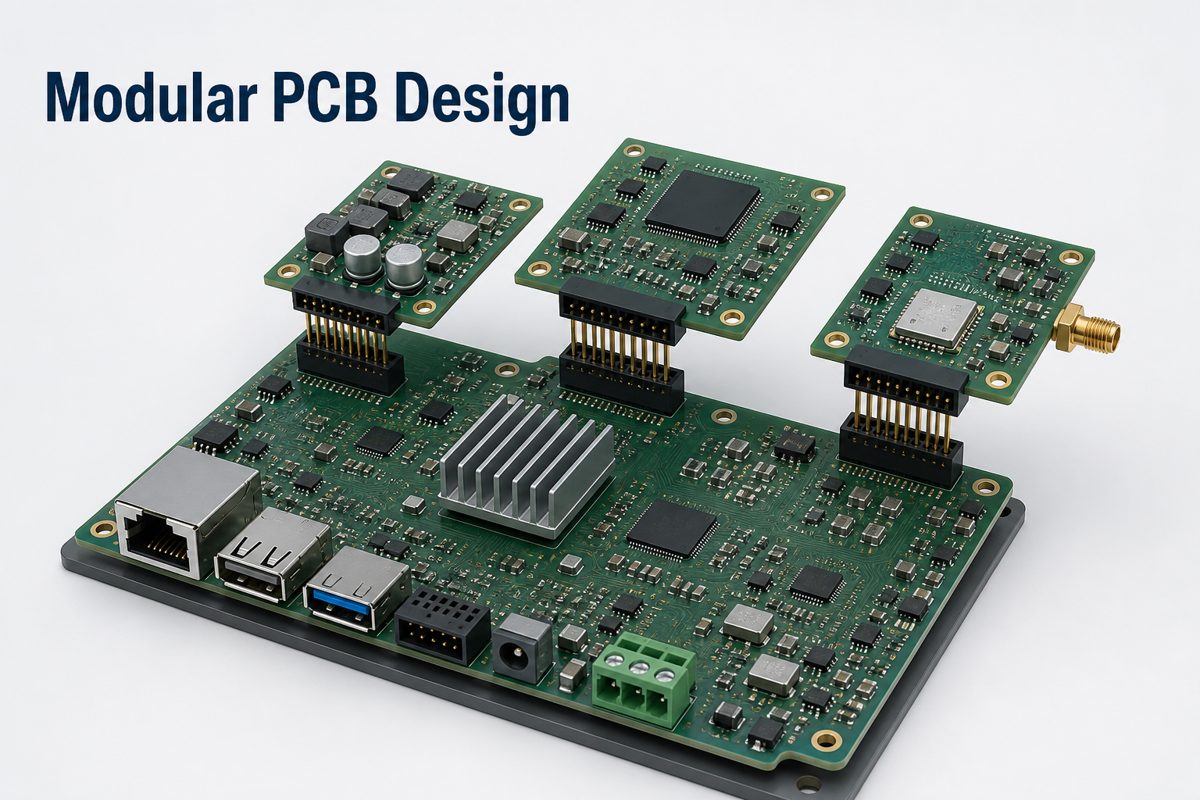
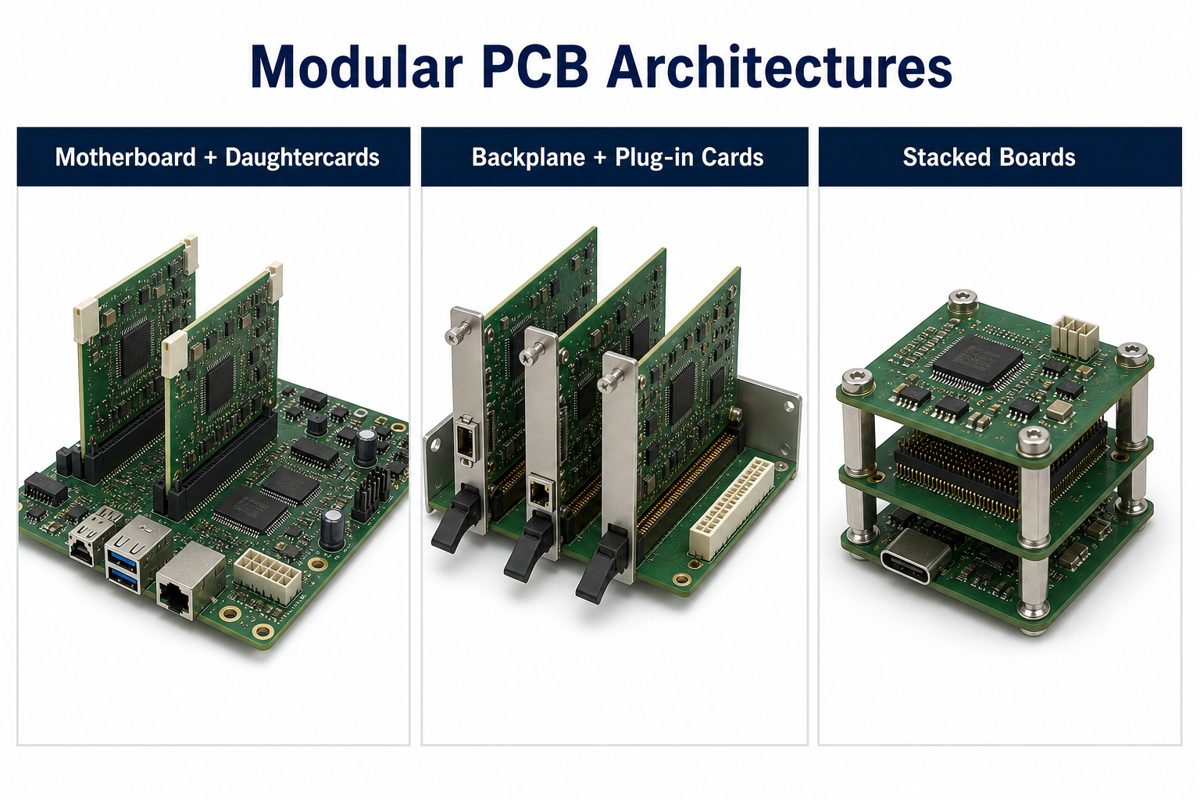
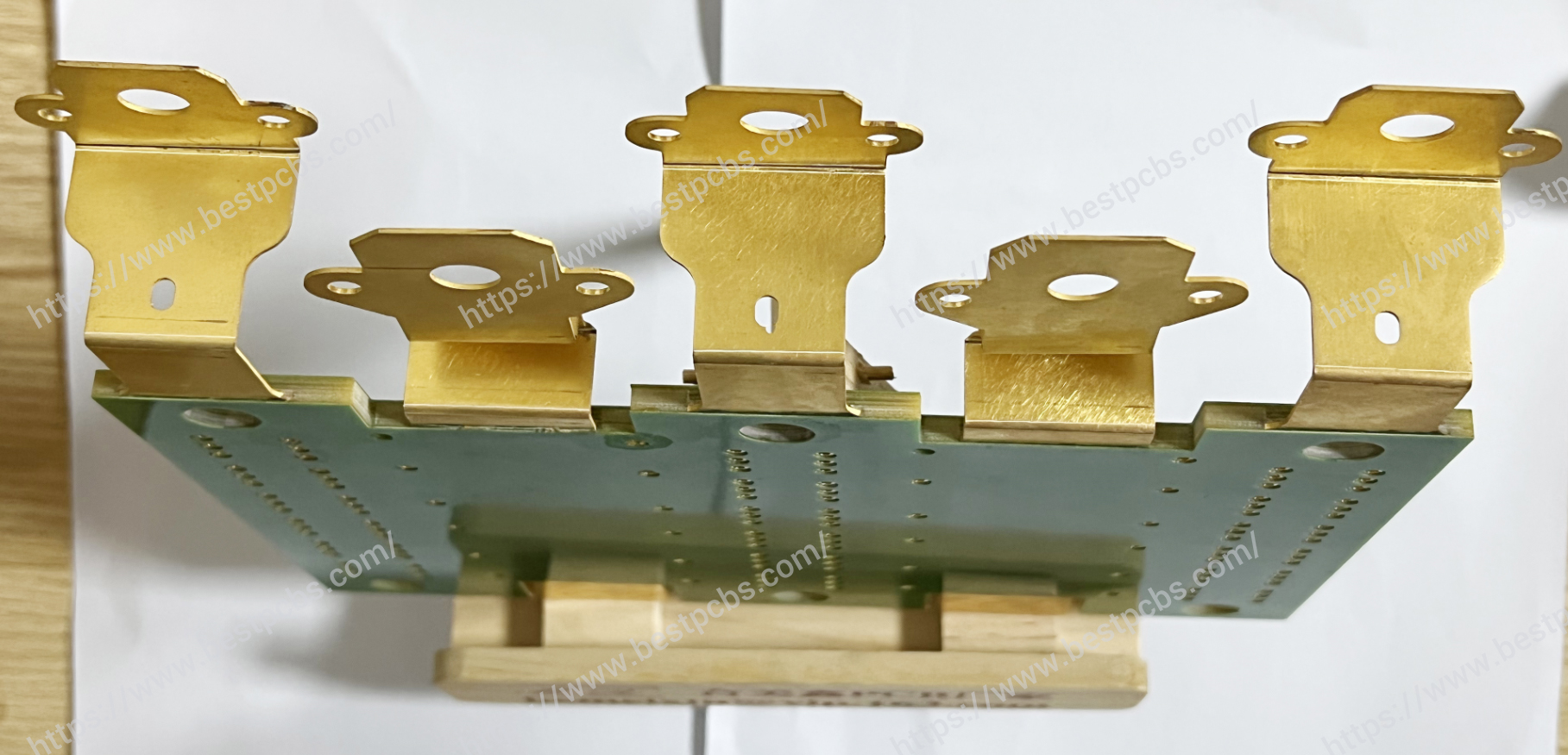
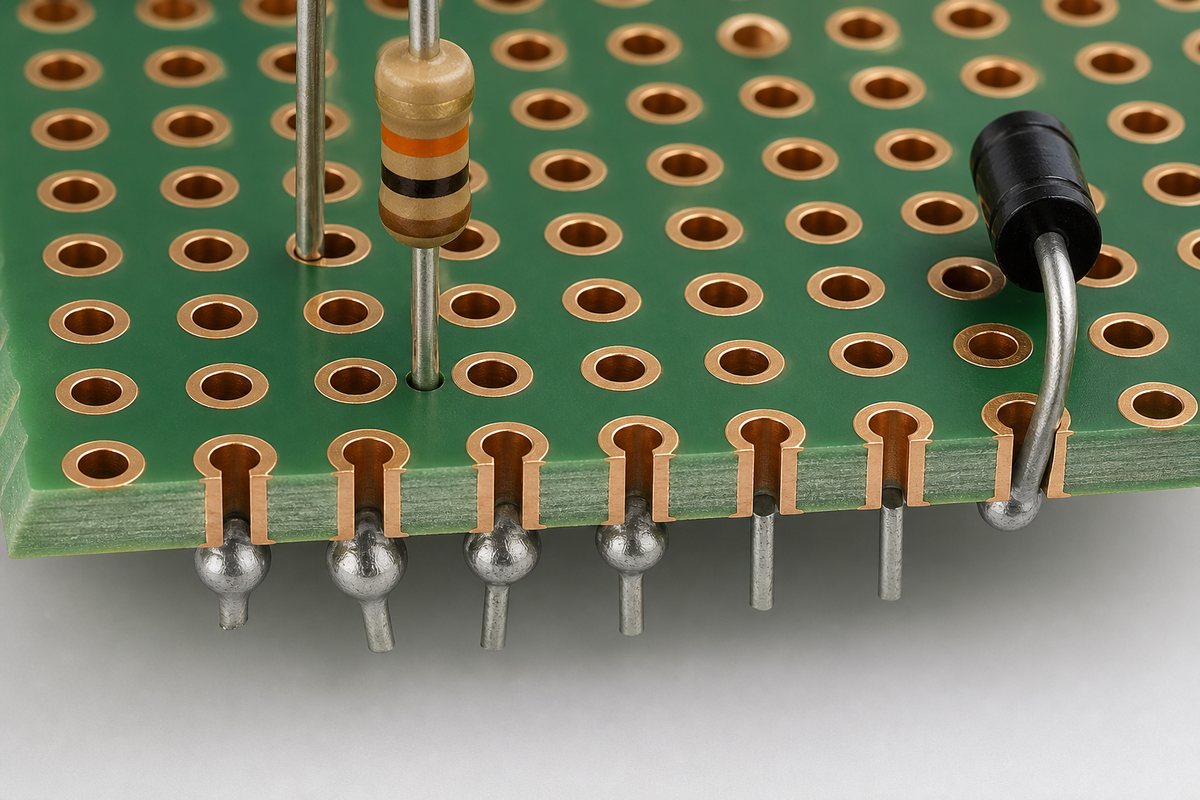
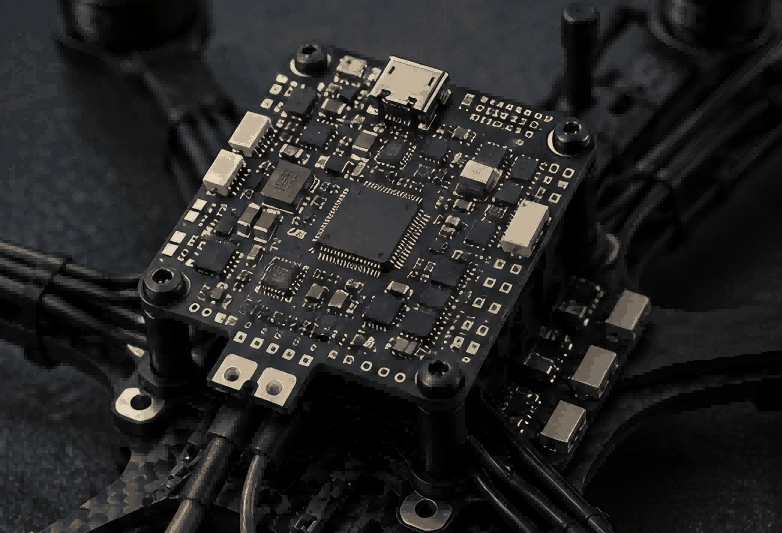
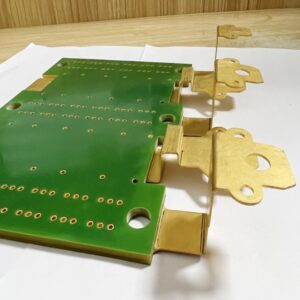
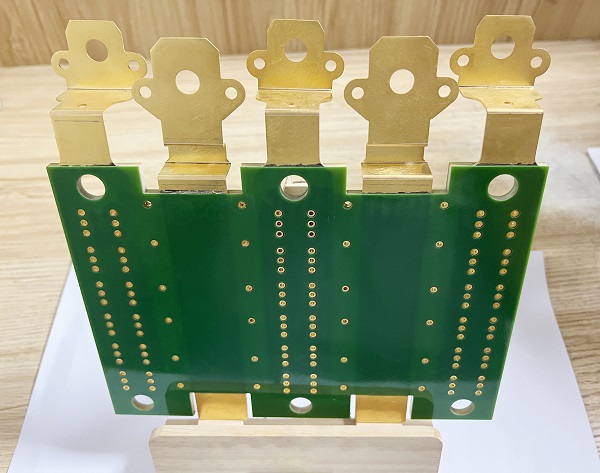
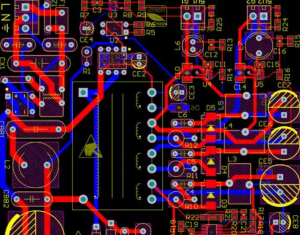
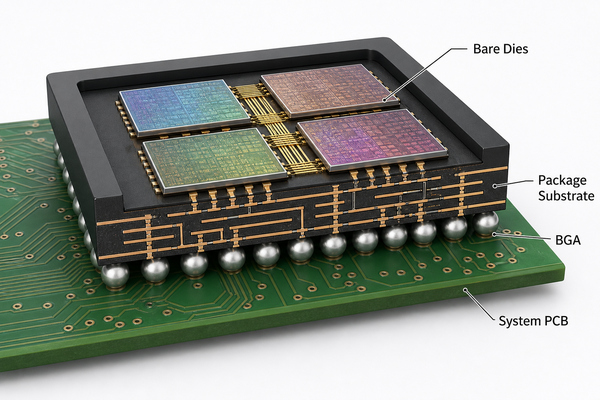
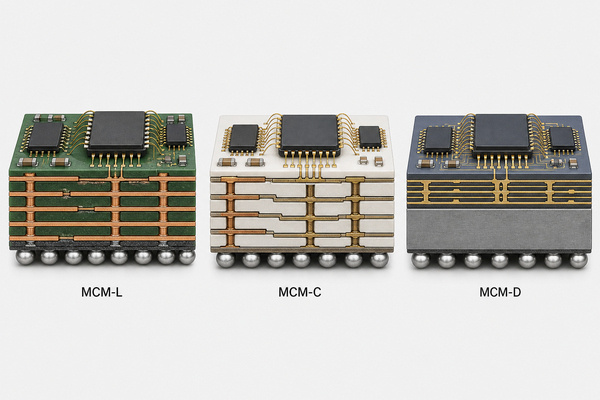
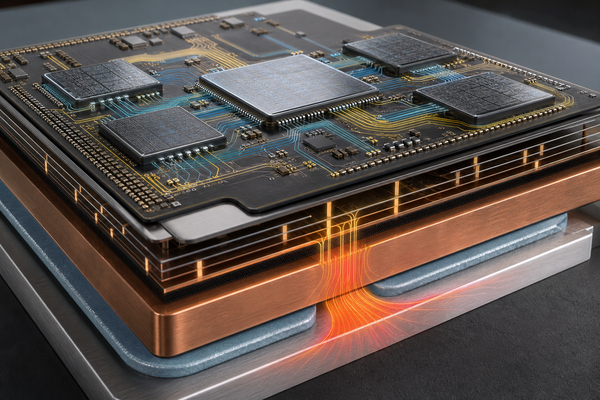
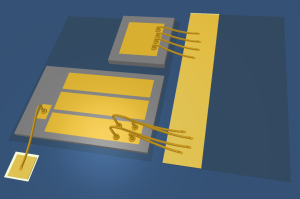
PCB on PCB technology refers to a design method where one printed circuit board is mounted directly onto another printed circuit board. Instead of placing all electronic circuits on a single board, engineers stack two or more boards together to build a compact and efficient electronic system.

In many modern electronic devices, space is limited. Designers often need to add more features without increasing product size. PCB stacking provides a practical solution. By placing boards vertically, engineers can increase circuit density and integrate more functions in a small area.

A typical PCB on PCB structure includes a main board and a secondary board. The main board usually handles core functions such as power management, control circuits, and signal routing. The secondary board may include specialized modules like sensors, communication units, or memory components.

Several connection methods are commonly used for stacked boards. These include:

  • Board-to-board connectors
  • Pin headers
  • Mezzanine connectors
  • Soldered stacking pins
  • Flexible interconnects

Each method serves different design goals. Some offer easy replacement and maintenance, while others provide stronger mechanical stability.

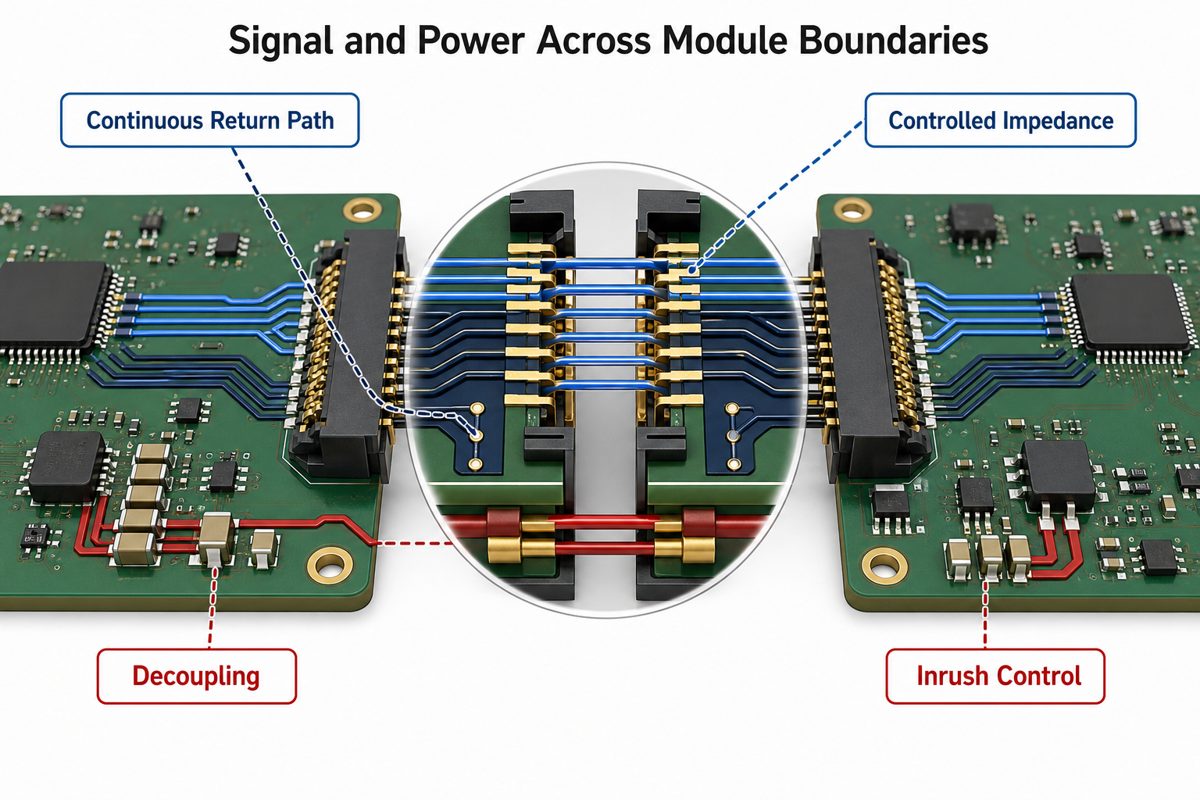
In a PCB on PCB structure, components on a PCB can be distributed across multiple layers. This allows designers to isolate high-frequency circuits, power circuits, and control logic more effectively. It improves signal quality and reduces interference.

Another important aspect of this technology is protective surface treatment. Many stacked boards include coating on PCB surfaces. Conformal coating protects circuits from dust, humidity, and chemical contamination. It is widely used in industrial and automotive electronics. Design engineers also rely on fiducials on PCB surfaces to support automated assembly. Fiducial marks help pick-and-place machines identify accurate component placement positions. When stacking boards, precise alignment becomes even more important.

PCB on PCB technology is widely used in advanced electronics because it provides several clear advantages:

  • Higher circuit density
  • Compact mechanical design
  • Better functional separation
  • Flexible module upgrades

Manufacturers such as EBest Circuit (Best Technology) support stacked PCB designs by offering both PCB fabrication and assembly services. With strong engineering support and precise manufacturing processes, stacked board solutions can be implemented efficiently and reliably.

What are the benefits of PCB on PCB stacking?

PCB stacking offers multiple technical and commercial advantages. It helps engineers create powerful electronic systems while keeping device size small and manufacturing costs under control.

One of the most noticeable benefits is space efficiency. Instead of expanding the board horizontally, stacking allows circuits to grow vertically. This approach is especially useful in compact electronics where internal space is limited. Modern electronic devices demand high functionality. PCB stacking allows designers to separate functions across multiple boards. Each board can focus on a specific task such as power control, signal processing, or wireless communication.

Another benefit is improved design flexibility. Engineers can update or replace one board without redesigning the entire system. This modular design method shortens development cycles and simplifies product upgrades.

Key benefits of PCB on PCB structures include:

  • Compact electronic design
  • Higher circuit density
  • Modular architecture
  • Easier product upgrades
  • Improved signal separation
  • Better thermal management

Stacked boards also help manage heat distribution. When circuits are separated across multiple layers, heat can spread more evenly across the structure. This reduces the risk of overheating and improves system reliability. Another advantage is improved signal integrity. Sensitive circuits can be placed on dedicated boards. This reduces electromagnetic interference and improves overall signal performance.

Protective measures such as coating on PCB surfaces also enhance durability. Conformal coatings protect circuits from moisture, vibration, and dust. This makes stacked boards suitable for demanding environments. Fiducials on PCB surfaces also contribute to precise assembly. Automated assembly equipment uses these markers to align components accurately during manufacturing. Accurate alignment becomes essential when multiple boards must connect perfectly.

Manufacturers like EBest Circuit (Best Technology) provide advanced PCB fabrication services that support stacked board applications. Our experience with complex PCB structures ensures reliable electrical performance and long product lifespan.

PCB on PCB | Reliable Stacked PCB Design & Manufacturing

How does PCB on PCB assembly work?

PCB on PCB assembly involves attaching one circuit board to another while maintaining stable electrical and mechanical connections. The process requires precise manufacturing and careful alignment to ensure long-term reliability.

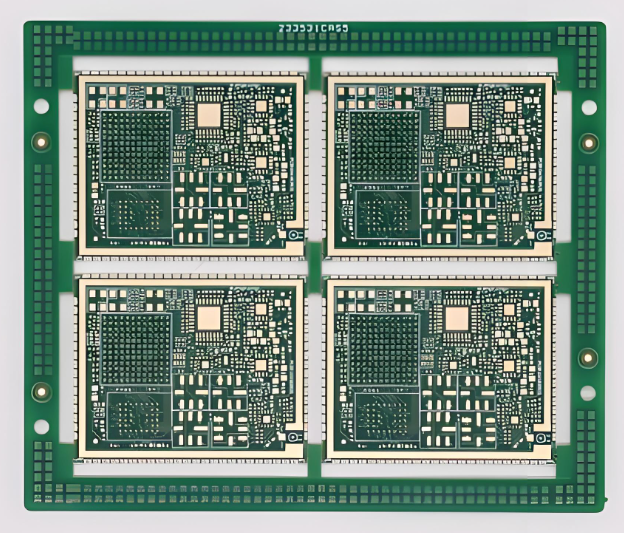
The assembly process usually begins with PCB fabrication. Each board is produced separately according to its design requirements. This includes drilling, copper plating, solder mask application, and surface finishing. Once fabrication is complete, components on a PCB are mounted through standard assembly methods such as surface mount technology (SMT) or through-hole assembly. After individual boards are assembled, the stacking process begins.

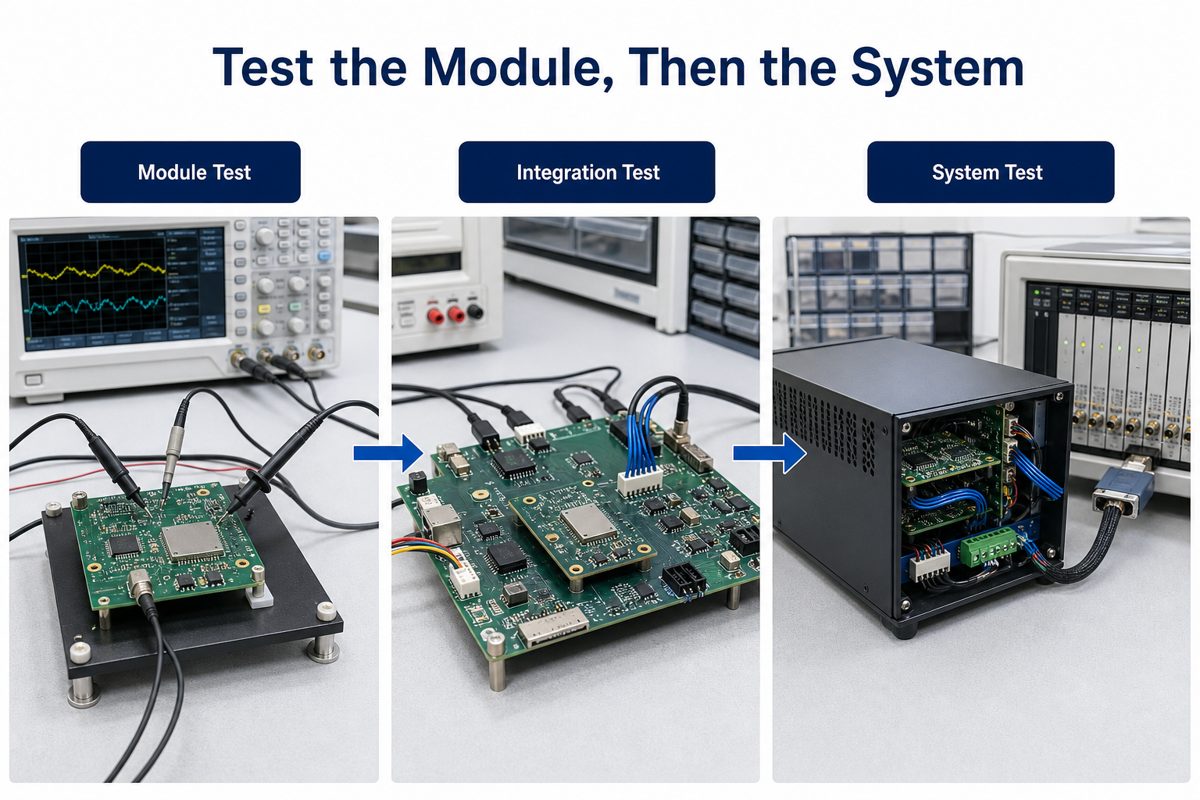
The general PCB on PCB assembly workflow includes several steps:

  • PCB fabrication
  • Component placement and soldering
  • Inspection and electrical testing
  • Board stacking and connection
  • Final functional testing

Different connection methods are used depending on the design. Some stacked boards rely on connectors, while others use soldered pins.

The most common stacking techniques include:

  • Board-to-board connectors
  • Stacking headers
  • Mezzanine connectors
  • Direct solder connections

Board-to-board connectors are widely used because they allow easy maintenance and replacement. Mezzanine connectors provide compact spacing and strong electrical performance. During assembly, fiducials on PCB surfaces play a critical role. Automated equipment identifies these reference marks to align boards correctly. Accurate alignment prevents connection failures and ensures consistent assembly quality.

After stacking, the system undergoes multiple inspection steps. These may include:

  • Optical inspection
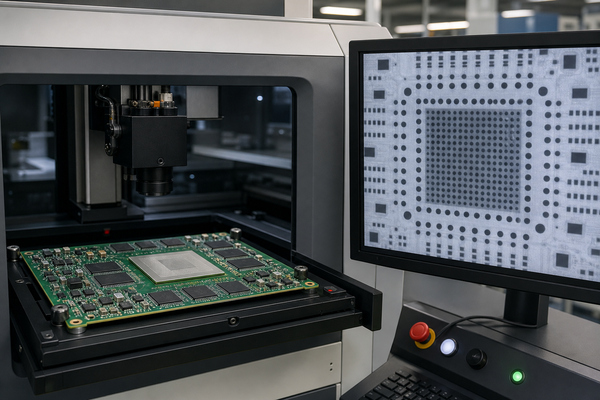
  • X-ray inspection
  • Electrical testing
  • Functional testing

Protective coating on PCB surfaces may also be applied after assembly. This protective layer shields circuits from environmental stress such as moisture or dust.

Reliable PCB assembly requires both precision equipment and experienced engineers. Companies like EBest Circuit (Best Technology) combine automated SMT lines with strict quality control procedures. This ensures that stacked boards meet demanding performance and reliability standards. When properly assembled, PCB on PCB structures provide stable electrical connections and long service life across many electronic applications.

Why use PCB on PCB in electronic design?

Engineers choose PCB stacking because it offers powerful design advantages. As electronic products become smaller and more complex, traditional single-board layouts often reach their limits.

PCB on PCB design allows engineers to break complex circuits into manageable modules. Each board can handle a dedicated function, making the overall system easier to design, test, and maintain. This modular structure improves design efficiency. Teams can develop separate boards simultaneously, reducing development time.

Another major advantage is better signal management. High-frequency circuits, power circuits, and control logic can be placed on separate boards. This physical separation helps reduce signal interference. PCB stacking also improves product scalability. If a new feature is required, engineers can add another board instead of redesigning the entire circuit.

Common reasons engineers adopt PCB stacking include:

  • Compact product design
  • Functional separation
  • Faster development cycles
  • Simplified system upgrades
  • Improved electrical performance

Components on a PCB can be arranged more efficiently when multiple boards are used. High-density components may be placed on a secondary board while the primary board handles core system functions.

Stacked structures also support specialized protection techniques. For example, coating on PCB surfaces protects circuits from environmental hazards in industrial or outdoor devices. Precision alignment is another key factor. Fiducials on PCB surfaces ensure that automated machines place components accurately during assembly. This is especially important when boards must connect perfectly in stacked designs.

Manufacturers such as EBest Circuit (Best Technology) work closely with engineers during the design phase. Our engineering team helps optimize stacked board structures for performance, reliability, and manufacturability. With the growing demand for compact electronics, PCB stacking continues to play a major role in modern electronic design strategies.

How to test capacitor on PCB?

Testing capacitors directly on a circuit board is an important step during troubleshooting and quality control. Capacitors are widely used for filtering, energy storage, and signal stabilization. A faulty capacitor may cause unstable voltage, signal noise, or system failure. Proper testing helps identify issues before they affect the entire circuit.

The first step in capacitor testing is visual inspection. Engineers check for signs of damage such as:

  • Bulging capacitor tops
  • Leakage or corrosion
  • Burn marks
  • Loose solder joints

If physical damage appears, the capacitor should be replaced immediately. Next, electrical testing can be performed using several instruments.

Common testing tools include:

  • Digital multimeter
  • LCR meter
  • Oscilloscope

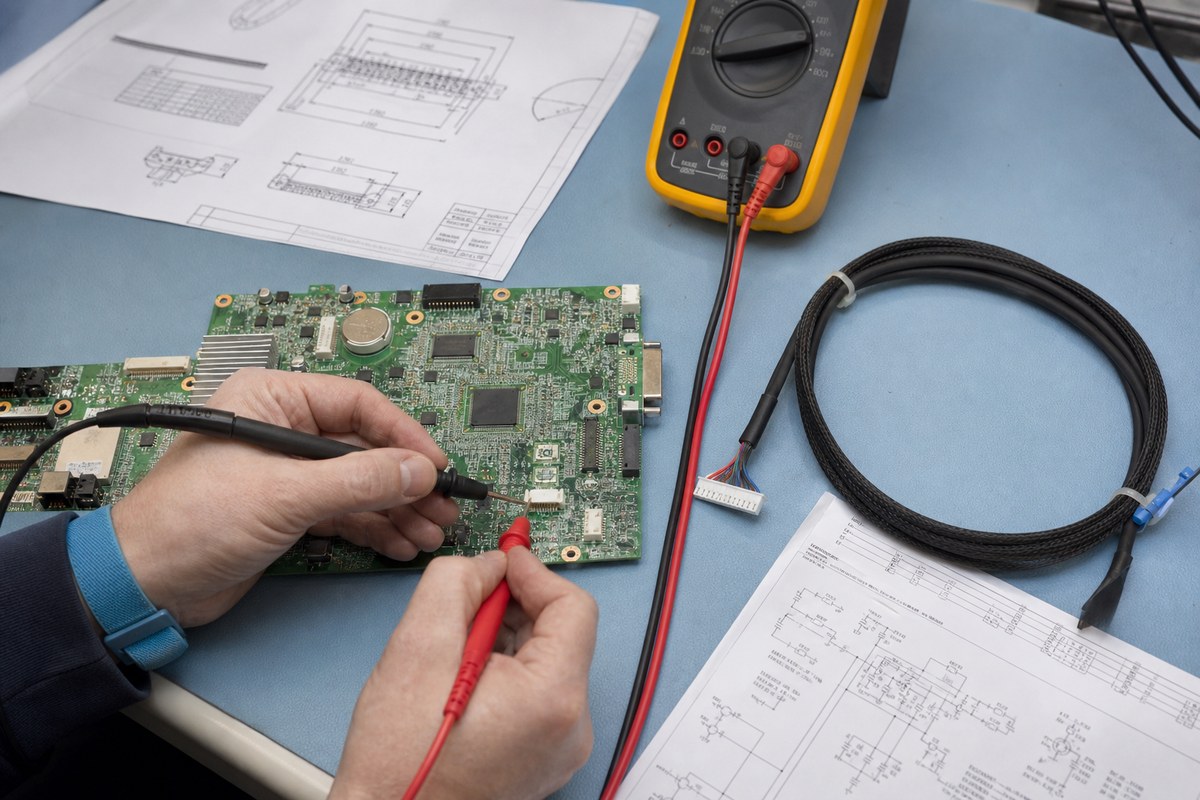
A digital multimeter can check basic capacitance values and detect short circuits. An LCR meter provides more precise measurements including capacitance, resistance, and inductance. When testing capacitors on stacked boards, access may be limited. Engineers must carefully probe test points without damaging nearby components on a PCB.

In some cases, removing the capacitor from the circuit is necessary to obtain accurate readings. This avoids interference from other circuit elements.

Capacitor testing often follows this general process:

  • Power off the device
  • Discharge the capacitor safely
  • Measure capacitance using a meter
  • Compare readings with the rated value

Protective coating on PCB surfaces may slightly complicate testing because probes must contact exposed pads. Engineers should ensure the coating does not prevent reliable measurement. High-quality PCB manufacturing reduces the risk of capacitor failures. Reliable soldering, precise assembly, and careful inspection help ensure long-term circuit stability.

Manufacturers such as EBest Circuit (Best Technology) apply strict quality control during PCB assembly. Our testing procedures help detect potential issues before products reach customers.

How to solder components on PCB?

Soldering components correctly is essential for reliable electronic performance. Poor solder joints can cause intermittent connections, signal loss, or device failure.

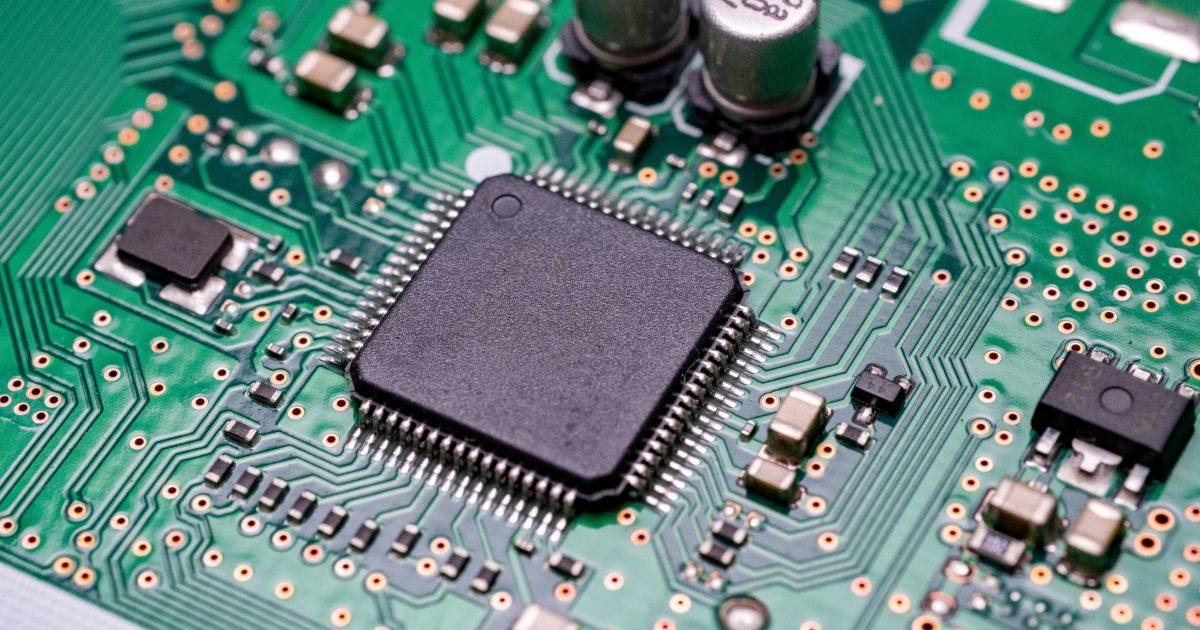
Soldering techniques vary depending on the component type and board structure. Surface mount technology is widely used for modern electronics. Components on a PCB are placed directly on solder pads and then soldered using reflow ovens.

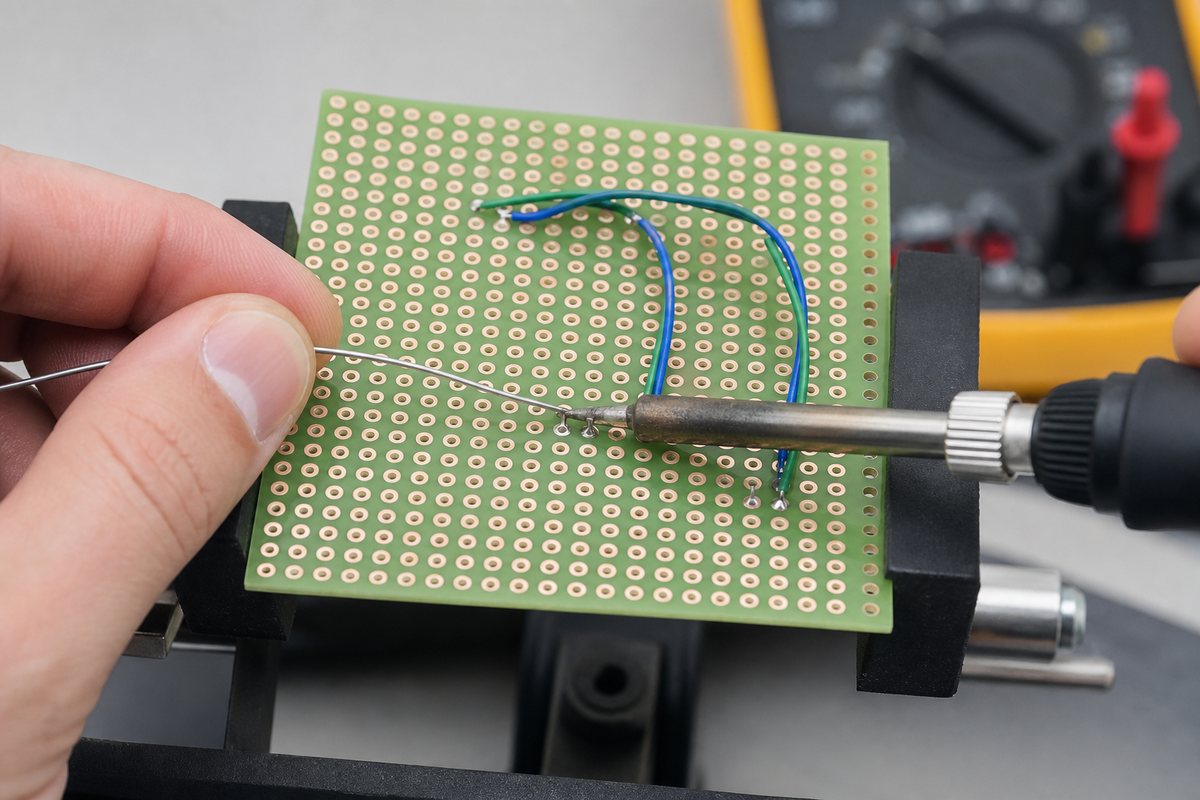
Through-hole soldering is another common method. Component leads pass through drilled holes and are soldered on the opposite side of the board.

Basic PCB soldering steps include:

  • Clean the PCB surface
  • Apply solder paste or flux
  • Place components accurately
  • Heat the joint using a soldering iron or reflow oven
  • Inspect the solder connection

Automated assembly lines often use pick-and-place machines to position components with high precision. Fiducials on PCB surfaces guide these machines during placement. Good solder joints should appear smooth and shiny. They must fully cover the pad and component lead without forming excess solder.

In stacked board designs, soldering becomes more complex because space is limited. Engineers must ensure that solder joints remain accessible for inspection and maintenance. Protective coating on PCB surfaces is usually applied after soldering. This coating protects circuits without interfering with electrical connections.

Professional manufacturers like EBest Circuit (Best Technology) use advanced SMT equipment to ensure consistent solder quality. Automated optical inspection systems detect solder defects early in the production process. Reliable soldering ensures that components remain securely connected throughout the product’s lifetime.

Where is PCB on PCB commonly applied?

PCB stacking is widely used across many industries because it supports compact and high-performance electronics.

Consumer electronics represent one of the largest application areas. Smartphones, wearable devices, and portable gadgets often rely on stacked boards to maximize functionality in small spaces. Industrial electronics also benefit from PCB stacking. Control systems and automation equipment often require modular designs that support easy maintenance and upgrades.

Common applications include:

  • Smartphones and tablets
  • IoT devices
  • Medical monitoring equipment
  • Automotive electronics
  • Communication modules
  • Industrial control systems

In medical devices, stacked boards help integrate sensors, processing circuits, and wireless communication modules within compact housings. Automotive electronics also rely on stacked PCB structures. Advanced driver assistance systems and infotainment systems require high circuit density.

Protective coating on PCB surfaces is especially important in these industries because devices often operate in harsh environments. Fiducials on PCB surfaces ensure accurate assembly during high-volume manufacturing. This precision supports consistent product quality across large production runs.

Manufacturers like EBest Circuit (Best Technology) support these industries with reliable PCB fabrication and assembly services. Our experience with complex PCB structures helps customers achieve dependable product performance.

PCB on PCB | Reliable Stacked PCB Design & Manufacturing

What are the key considerations for PCB on PCB?

Designing a stacked PCB structure requires careful planning. Engineers must consider electrical performance, mechanical stability, and manufacturing feasibility.

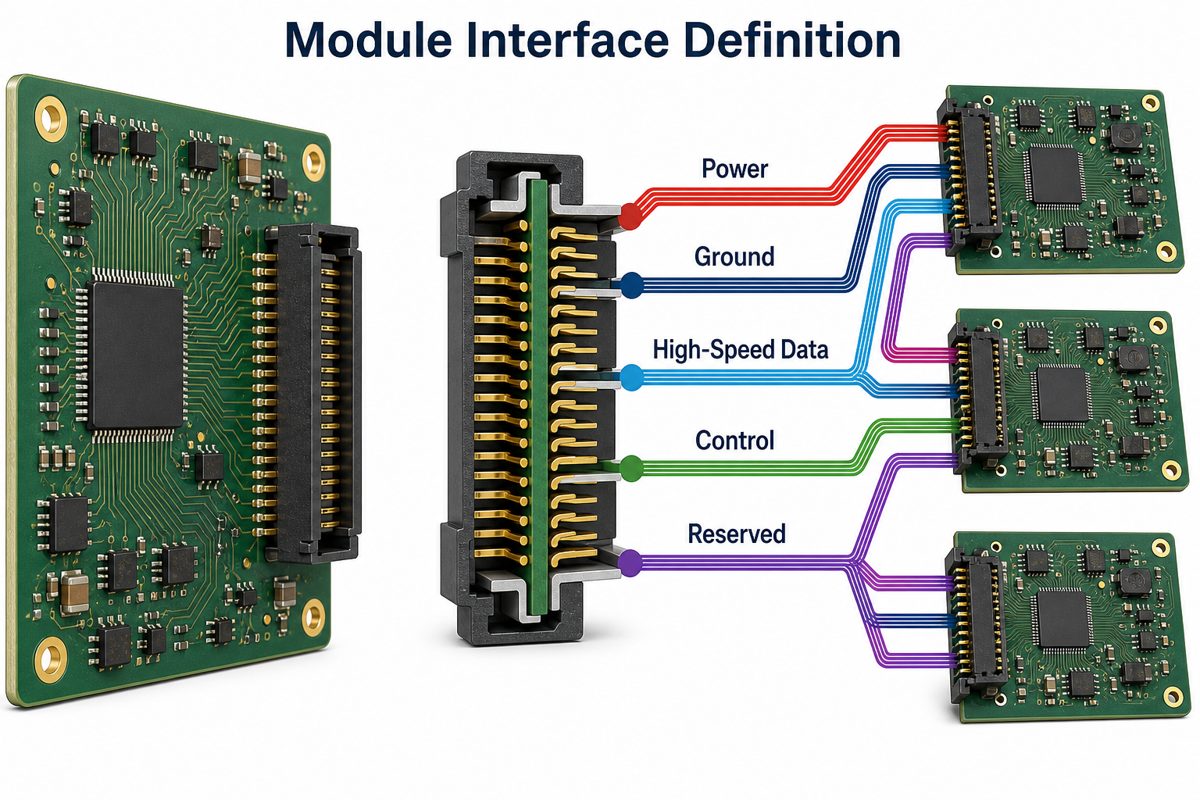
One of the most important factors is board spacing. The distance between stacked boards must allow enough room for components while maintaining compact design. Connector selection is also critical. The chosen connector must support the required signal speed, current capacity, and mechanical strength.

Important design considerations include:

  • Board spacing and alignment
  • Connector reliability
  • Signal integrity
  • Thermal management
  • Mechanical stability

Components on a PCB must be arranged carefully to avoid interference between stacked layers. High-profile components should not block adjacent boards. Thermal management is another key factor. Heat generated by one board should not affect neighboring boards. Engineers may use heat sinks or thermal vias to improve heat dissipation.

Protective coating on PCB surfaces can enhance durability. However, designers must ensure that connectors and test points remain accessible. Fiducials on PCB surfaces are also essential for accurate assembly. Proper placement of these markers ensures reliable alignment during automated production.

Working with an experienced manufacturer greatly simplifies the design process. EBest Circuit (Best Technology) offers engineering guidance to optimize stacked PCB structures and ensure smooth manufacturing.

How to choose PCB on PCB manufacturing services?

Selecting the right manufacturing partner plays a major role in the success of stacked PCB projects. Reliable manufacturers provide both technical expertise and consistent production quality. When evaluating PCB suppliers, engineers should consider several factors including experience, equipment, and quality management systems.

A strong PCB manufacturer typically offers:

  • Advanced fabrication capabilities
  • Automated SMT assembly lines
  • Strict quality control procedures
  • Engineering support for design optimization

Experience with stacked board structures is particularly important. PCB on PCB assembly requires precise alignment and reliable connectors. Manufacturers should also provide inspection and testing services to verify electrical performance.

Important evaluation criteria include:

  • Production capacity
  • Lead time
  • Certification standards
  • Engineering support
  • Quality inspection processes

Protective coating on PCB surfaces and accurate fiducials on PCB placement are also indicators of professional manufacturing standards.

EBest Circuit (Best Technology) has more than 19 years of experience in PCB manufacturing and electronic assembly. The company offers complete services including PCB fabrication, SMT assembly, and stacked board solutions. Our engineering team works closely with customers to ensure each project meets strict reliability requirements. Choosing the right partner ensures that stacked PCB designs are manufactured efficiently and perform reliably throughout the product lifecycle.

PCB on PCB | Reliable Stacked PCB Design & Manufacturing

Summary:

PCB on PCB technology has become an essential solution for modern electronic design. By stacking multiple circuit boards together, engineers can create compact systems with high functionality and improved performance.

This design approach offers several advantages including higher circuit density, flexible modular architecture, and better signal management. It is widely used in consumer electronics, medical devices, automotive systems, and industrial equipment.

Manufacturers such as EBest Circuit (Best Technology) provide professional support for stacked PCB design and production. With extensive experience in PCB fabrication and assembly, We help engineers transform complex electronic concepts into reliable hardware solutions.

If you are exploring PCB stacking solutions or need professional manufacturing support, feel free to contact: sales@bestpcbs.com

You may also like

What is a .BRD File in PCB Design?

March 2nd, 2026

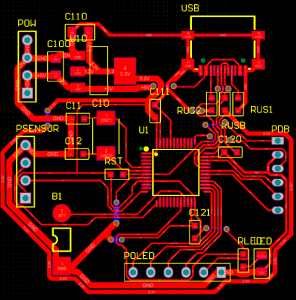
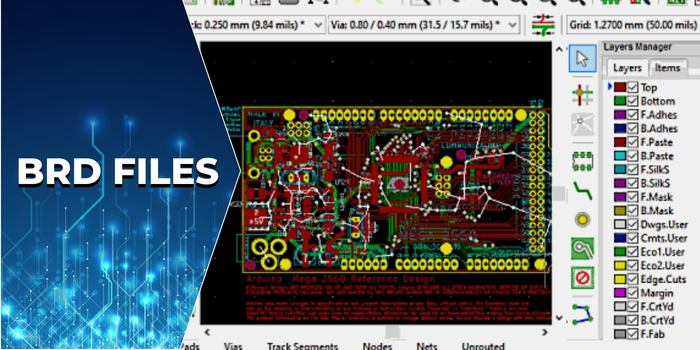
A .brd file is a native PCB layout file used by electronic design automation (EDA) software to store the physical board design of a printed circuit board. Unlike schematic files that represent logical connections, a .brd file defines the actual board geometry, copper routing, layers, drill data, footprints, and manufacturing constraints required for fabrication and assembly.

In practical terms, when an engineer finishes routing traces, placing components, defining stack-up layers, and setting design rules, that layout data is saved as a .brd file. It is the working design file—not the final manufacturing output like Gerber files.

What Is a .brd File?

A .brd file is the board layout file generated by certain Electronic Design Automation (EDA) tools. It stores the complete PCB layout environment, including:

  • Board outline geometry
  • Copper trace routing
  • Via definitions
  • Layer stack configuration
  • Component footprints and placement
  • Design rules and constraints
  • Net connectivity

In simple terms:

  • A schematic file (.sch) defines logical connections.
  • A .brd file defines the physical realization of those connections.

The .brd file represents the stage where abstract circuitry becomes manufacturable hardware.

What is a .BRD File in PCB Design?

What Is the BRD File Format?

The BRD file format is proprietary and software-dependent. Different PCB tools use ā€œ.brdā€ as their internal layout database extension, but the internal structures are not interchangeable.

For example:

  • Autodesk EAGLE uses .brd to store board layout data.
  • Cadence Allegro also uses .brd as its main PCB database format.
  • Mentor Graphics PADS historically used similar board database structures.

Although the file extension is identical, the file encoding, object hierarchy, and internal database schema vary significantly.

This means:

  • An EAGLE .brd file cannot be directly opened in Allegro.
  • An Allegro .brd file cannot be imported natively into EAGLE.

Therefore, when someone shares a .brd file, always confirm:

  1. Which software created it
  2. Which software version was used

Even minor version mismatches can cause compatibility issues.

Information Contained in a .BRD File

A .brd file is essentially the master PCB database. It contains nearly everything required to reproduce the board layout in a design environment.

1. Board Mechanical Definition

The file includes:

  • Board outline dimensions
  • Cutouts and slots
  • Edge contours
  • Mounting hole locations
  • Keep-out regions

Mechanical integrity depends on these parameters. Incorrect outline data can lead to enclosure mismatch or assembly failure.

2. Layer Stack Definition

The layer stack is a critical element stored in the .brd file:

  • Number of layers (2L, 4L, 6L, 10L, etc.)
  • Signal layers
  • Power/ground planes
  • Dielectric spacing
  • Copper thickness

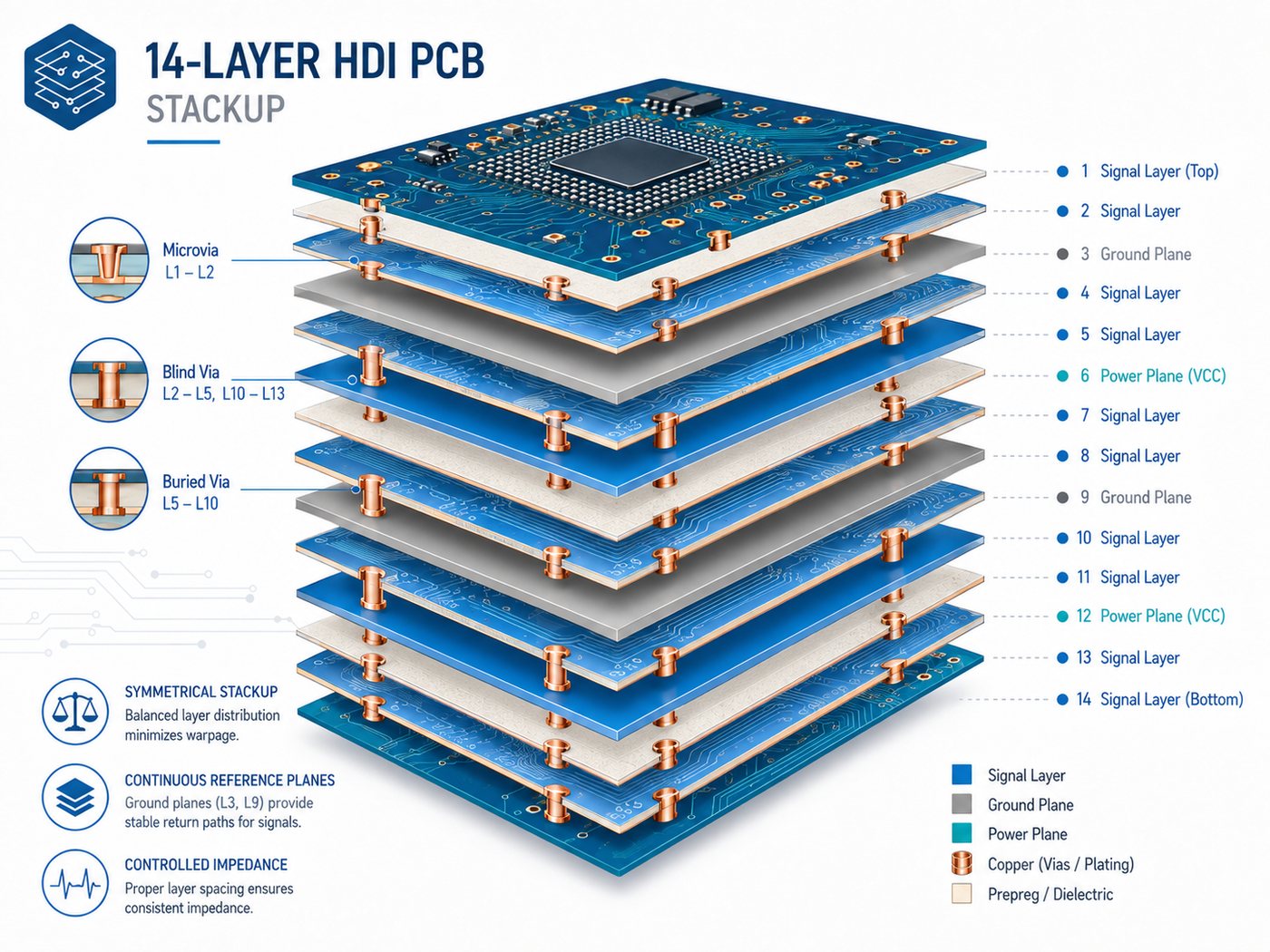
In advanced designs such as HDI or high-speed boards, stack-up configuration affects:

  • Impedance control
  • Crosstalk performance
  • EMI behavior
  • Thermal dissipation

The .brd file stores these definitions so the design rules can reference them dynamically.

3. Copper Routing and Nets

The routing database inside a .brd file contains:

  • Trace width
  • Trace length
  • Via types
  • Differential pair constraints
  • Length matching settings

In high-speed applications (DDR, PCIe, RF), this data is crucial. The .brd file tracks connectivity integrity in real time and allows DRC validation.

Information Contained in a .BRD File

4. Component Placement Data

The file records:

  • XY coordinates
  • Rotation angles
  • Layer (top/bottom)
  • Reference designators
  • Footprint library mapping

This placement information is later used to generate:

  • Pick-and-place files
  • Assembly drawings
  • 3D board models

Without accurate placement data in the .brd file, assembly automation would be impossible.

5. Drill and Via Database

The .brd file includes:

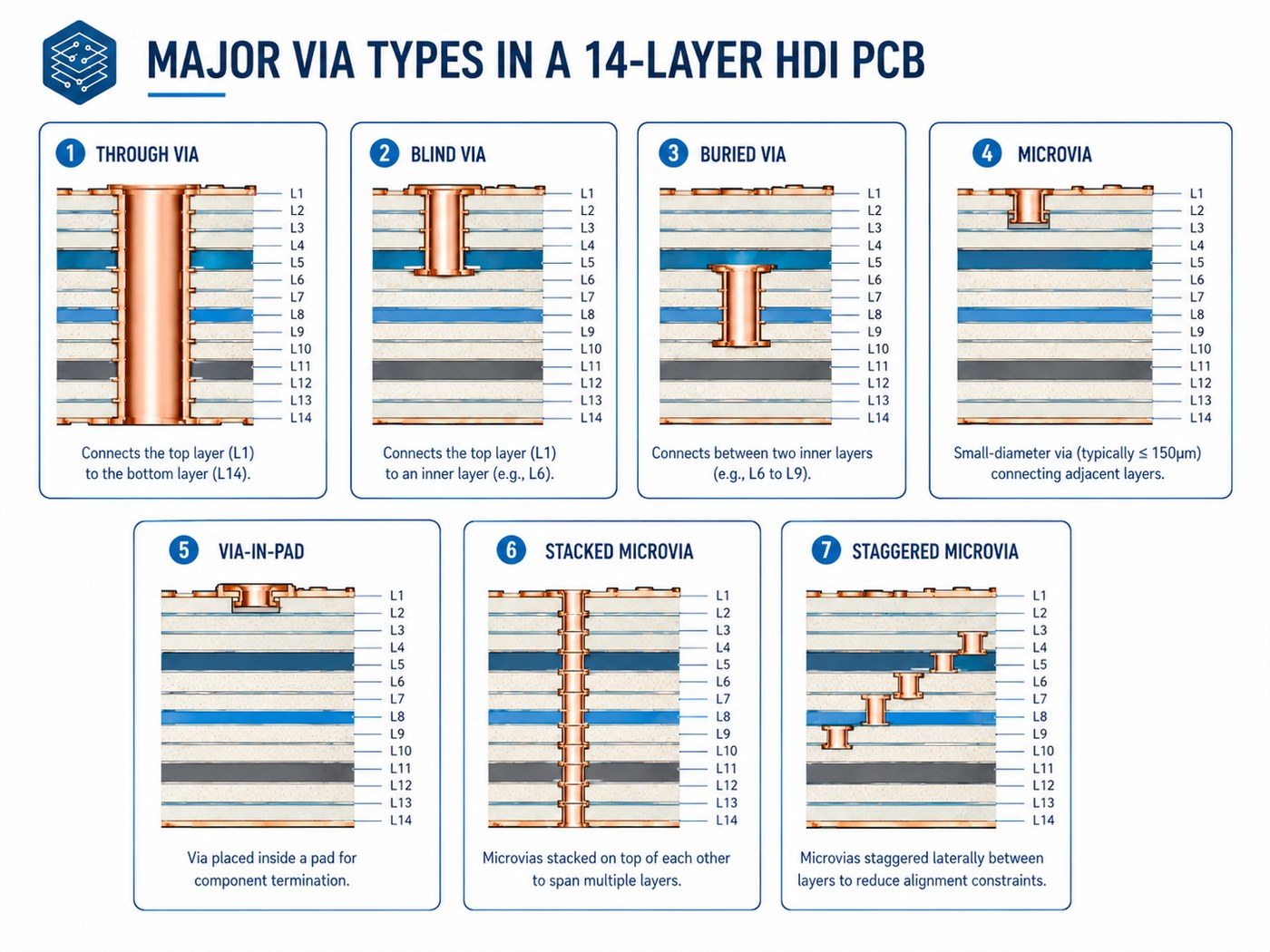
  • Through-hole vias
  • Blind vias
  • Buried vias
  • Microvias
  • Drill diameters
  • Backdrill definitions

These parameters determine:

  • Fabrication cost
  • Reliability
  • Yield rate
  • Manufacturability

Advanced HDI structures rely heavily on precise via definitions stored inside the board file.

6. Design Rule Constraints

One of the most powerful aspects of a .brd file is its embedded DRC rules, including:

  • Minimum trace width
  • Clearance rules
  • Solder mask expansion
  • Annular ring requirements
  • Impedance rules
  • High-voltage spacing

These constraints prevent layout errors and ensure compliance with fabrication capability.

What Opens a .BRD File?

A .brd file must be opened using the software that created it or a compatible tool.

Common tools include:

  • Autodesk EAGLE
  • Cadence Allegro
  • KiCad (import functionality available)
  • Altium Designer (via import wizard)

Before opening a .brd file:

  1. Verify software origin
  2. Confirm version compatibility
  3. Check library dependencies

Missing footprint libraries can cause loading errors.

How to View .BRD File?

If editing is not required, viewing options include:

Option 1: Install Viewer Mode

Some PCB tools provide free viewing licenses.

Option 2: Convert to Neutral Format

Export:

  • Gerber files
  • ODB++
  • IPC-2581

These can be viewed using standard PCB viewers.

Option 3: 3D Export

Many modern tools allow exporting a 3D STEP model for mechanical review.

In professional workflows, contract manufacturers rarely request the .brd file unless DFM modification is necessary. Instead, they prefer Gerber + drill + stack-up documentation.

How to View .BRD File?

Free BRD File Viewer

There is no universal free viewer because the format is proprietary.

However:

  • Autodesk EAGLE offers limited viewing access.
  • KiCad can import certain EAGLE board files.
  • Cadence Allegro provides viewer licenses in enterprise environments.

For external sharing, converting to PDF or Gerber remains the safest method.

How Do I Open a BRD File on a Mac?

Mac compatibility depends on the originating tool.

Mac-supported tools:

  • Autodesk EAGLE
  • KiCad

Steps:

  1. Install compatible software
  2. Launch application
  3. Select File → Open
  4. Load the .brd file

If the file was created in a Windows-only environment such as Allegro, you may need virtualization or request exported files.

How to Import a BRD File?

Importing between platforms requires translation utilities.

1. Import EAGLE to KiCad

    KiCad provides Eagle importer functionality:

    File → Import → Eagle Project

    2. Import EAGLE to Altium

    Use the Import Wizard and select Eagle files.

    After import:

    • Run DRC
    • Validate footprint mapping
    • Check netlist integrity
    • Reconfirm layer stack

    Never assume automated translation is 100% accurate.

    .BRD File vs Gerber File

    Aspect.brd FileGerber File
    TypeDesign databaseManufacturing output
    EditableYesNo
    Contains DRC rulesYesNo
    Software dependentYesNo
    Used for fabricationIndirectlyDirectly

    The .brd file is like the ā€œsource codeā€ of the PCB, while Gerber files are the ā€œcompiled output.ā€

    .BRD File vs ODB++ and IPC-2581

    Modern manufacturing increasingly uses intelligent formats.

    • ODB++ stores full fabrication database.
    • IPC-2581 is an open standard format.

    Unlike Gerber, these formats contain stack-up, drill, and BOM references in a unified package.

    The .brd file remains a design tool format, not a universal production format.

    Why Manufacturers Rarely Need the .brd File?

    From a fabrication perspective, manufacturers require:

    • Copper layer data
    • Drill data
    • Stack-up definition
    • Surface finish requirements
    • Impedance control specs

    All of these can be derived from Gerber + documentation.

    Sharing .brd files may introduce:

    • Intellectual property exposure
    • Software compatibility challenges
    • Version conflicts

    Therefore, most manufacturers prefer standardized outputs.

    How to Convert BRD File to PDF?

    To convert a .brd file to PDF:

    Method 1: Print to PDF

    Open the board in the original software:

    • File → Print
    • Select ā€œPrint to PDFā€

    Method 2: Export Layers to PDF

    Many PCB tools allow layer-by-layer PDF export.

    Method 3: Export Gerber → Use Gerber Viewer → Export PDF

    For professional documentation, designers typically generate:

    • Assembly drawing PDF
    • Fabrication drawing PDF
    • 3D render export

    EBest Circuit (Best Technology) – How We Support Engineer in PCB Design?

    Understanding a .brd file is only the first step. Turning that design into a reliable, manufacturable PCB requires engineering validation, fabrication expertise, and controlled assembly processes.

    Best Technology (EBest Circuit) supports customers from PCB layout verification to full turnkey PCBA production. If you have a .brd file and are unsure whether it is production-ready, our engineering team can assist with:

    • Free DFM review and manufacturability analysis
    • Stack-up optimization and impedance validation
    • Drill structure and via reliability assessment
    • Surface finish and material selection guidance
    • Rapid PCB fabrication and PCBA assembly (prototype to mass production)

    As a PCB + PCBA integrated manufacturer with over 20 years of experience, we help engineers convert design data into stable, repeatable production results. Whether your project involves HDI structures, heavy copper boards, high-speed digital layouts, RF applications, or industrial control systems, our technical team works directly with your design files to reduce risk before fabrication begins.

    If you have a .brd file that needs professional review, quotation, or production support, feel free to contact us at: sales@bestpcbs.com

    Our pre-sales engineering team typically responds within 12 hours to help move your project forward efficiently and confidently.

    You may also like

    HDI PCBs – High Density Interconnect PCB Manufacturer

    February 28th, 2026

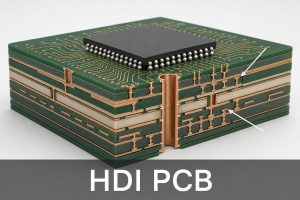
    What Is a High Density Interconnect PCB?

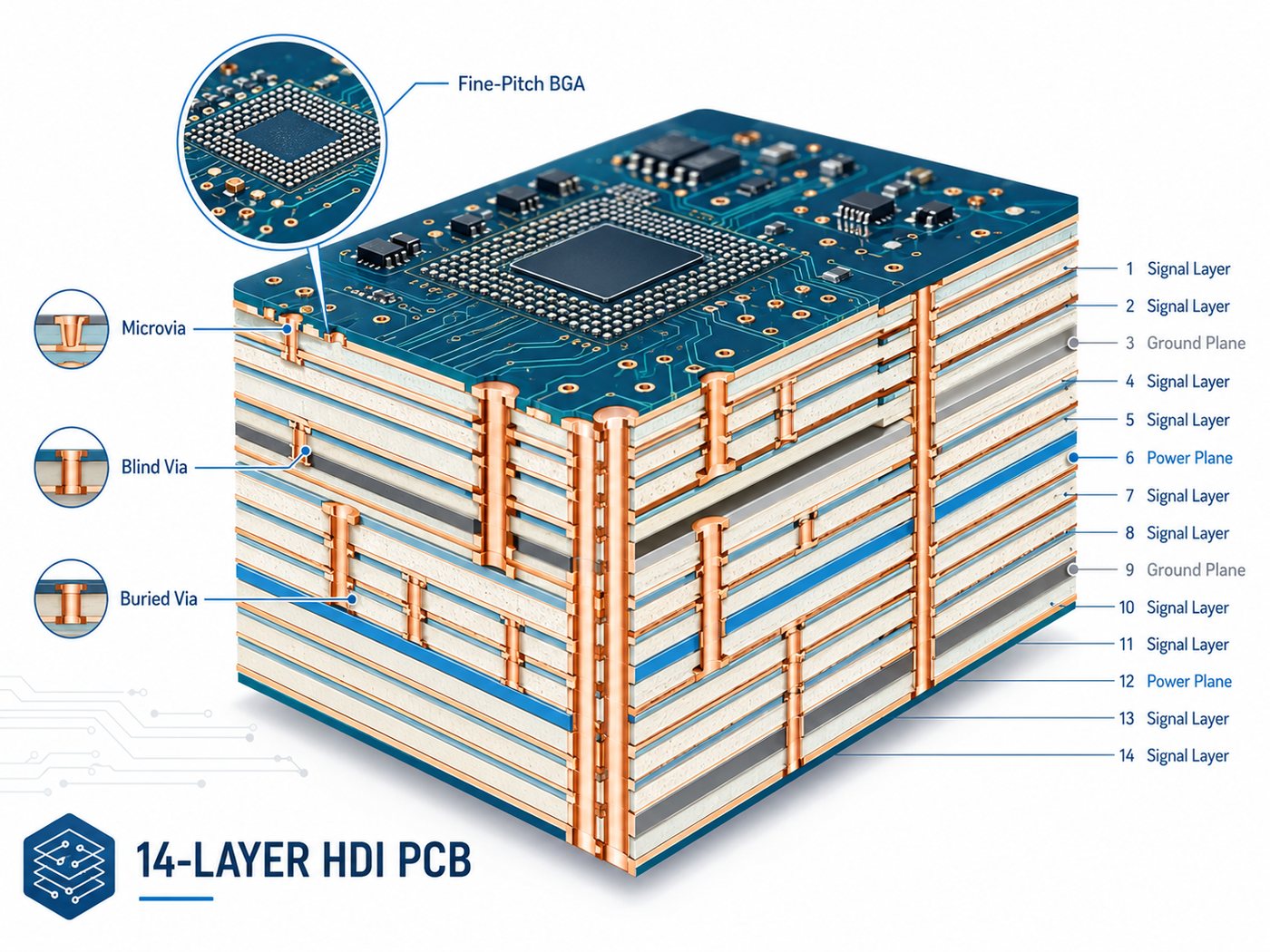
    High Density Interconnect PCB refers to a multilayer structure that uses laser microvias, thin dielectric layers, and sequential lamination to increase routing density and improve electrical performance. Instead of routing signals through long mechanical vias, HDI stackup design focuses on short vertical transitions between adjacent layers. This reduces inductance, improves impedance control, and allows fine-pitch BGA escape without increasing board size.

    Typical HDI electrical parameters used in engineering documentation include:

    • Line width / spacing: 60–75 µm (advanced builds may reach 40 µm)
    • Microvia finished hole: 75–100 µm
    • Dielectric thickness between HDI layers: 40–80 µm
    • Copper thickness: 12–18 µm outer HDI layers, 18–35 µm inner layers

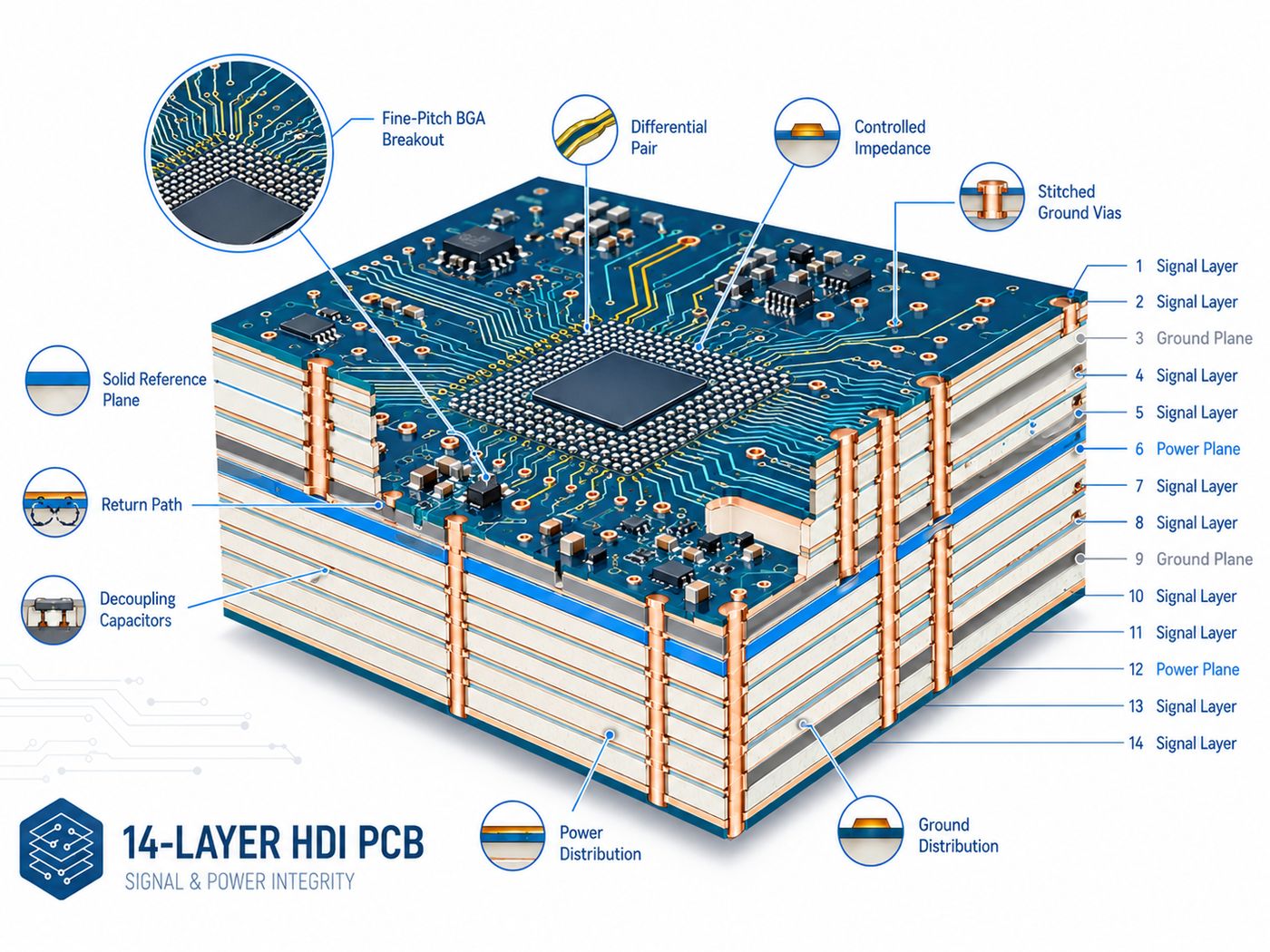
    HDI stackup design emphasizes signal-reference plane proximity. Short dielectric spacing lowers loop inductance and stabilizes return paths, which becomes critical in AI server and high-speed computing boards.

    HDI PCBs - High Density Interconnect PCB Manufacturer

    High Density Interconnect PCB

    When Should You Choose an HDI PCB Instead of a Standard Multilayer PCB for AI Server or High-Speed Systems?

    HDI becomes necessary when routing density or electrical requirements exceed conventional PCB capability. AI server motherboards, accelerator modules, and edge computing boards frequently adopt HDI because processor pin counts and high-speed channels increase dramatically.

    Engineering decision indicators:

    • BGA pitch ≤ 0.5 mm
    • High-speed links above 10–25 Gbps
    • Large processor or FPGA packages exceeding 1000 pins
    • Board size constraints requiring compact layouts
    • Power delivery networks needing dense decoupling arrays

    In AI server designs, HDI reduces via stubs and shortens differential pair transitions. This helps maintain insertion loss budgets and improves eye-diagram margins during high-frequency operation.

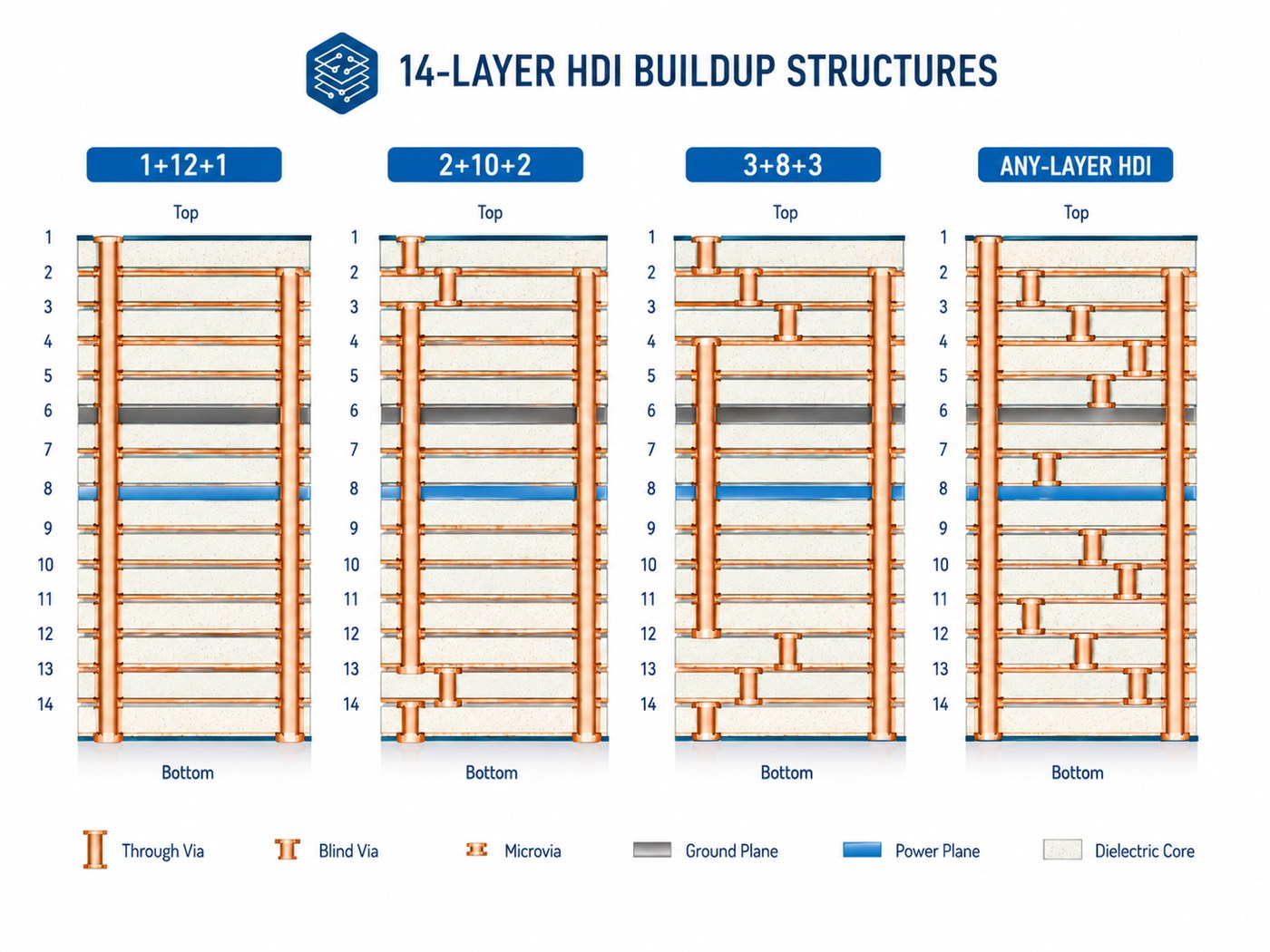
    How Do 1+N+1 and 2+N+2 HDI Stackup Design Strategies Affect Routing Density and Manufacturing Risk?

    HDI Stackup Design Comparison Table

    Stackup TypeTypical Microvia DepthRouting DensityLamination CyclesApplication Example
    1+N+1L1-L2 / L(n-1)-LnMedium2 cyclesRobotics controllers, embedded CPU boards
    2+N+2L1-L2-L3 stacksHigh4 cyclesAI server compute modules
    3+N+3Multi-stack microviasVery High6+ cyclesAdvanced telecom or HPC

    More build-up layers increase routing flexibility but also introduce additional lamination cycles. Engineers often begin with 1+N+1 and evaluate whether further build-up layers are required based on BGA escape results.

    HDI Microvia Engineering Parameter Table

    ParameterRecommended RangeEngineering Impact
    Laser Via Diameter75–100 µmRouting density and plating reliability
    Capture Pad Size150–250 µmAnnular ring control
    Aspect Ratio≤ 0.8:1Prevents plating voids
    Via StructureStaggered preferredImproves thermal reliability
    Copper Fill Thickness15–25 µm capRequired for via-in-pad

    Microvia planning should begin during stackup definition because changing via structure later can require redesigning large portions of the layout.

    When Does Via-in-Pad Become Mandatory in Fine-Pitch HDI PCB and AI Server BGA Fanout?

    Via-in-pad is used when routing channels around BGA pads are insufficient. In AI server processors or high-density networking ASICs, pad pitch often forces vertical signal escape.

    Engineering scenarios where VIP is justified:

    • 0.4 mm pitch GPU or AI accelerator packages
    • High-speed differential pairs requiring shortest path
    • Dense decoupling networks under core voltage rails

    VIP pads require copper filled microvias, planarization to maintain flatness, and careful solder mask design.

    How Does HDI PCB Compare to Standard PCB in Signal Integrity, Size Reduction, and Layer Utilization?

    Engineering MetricHDI PCBStandard PCB
    Via Stub LengthVery ShortLong unless backdrilled
    Routing Channel DensityHighLimited
    Loop InductanceLowerHigher
    Board AreaReducedLarger
    Layer EfficiencyHigh utilizationLower utilization
    EMI PerformanceImproved due to compact loopsDepends on layout strategy

    Shorter vertical transitions in HDI improve signal eye margin in high-frequency environments such as AI servers.

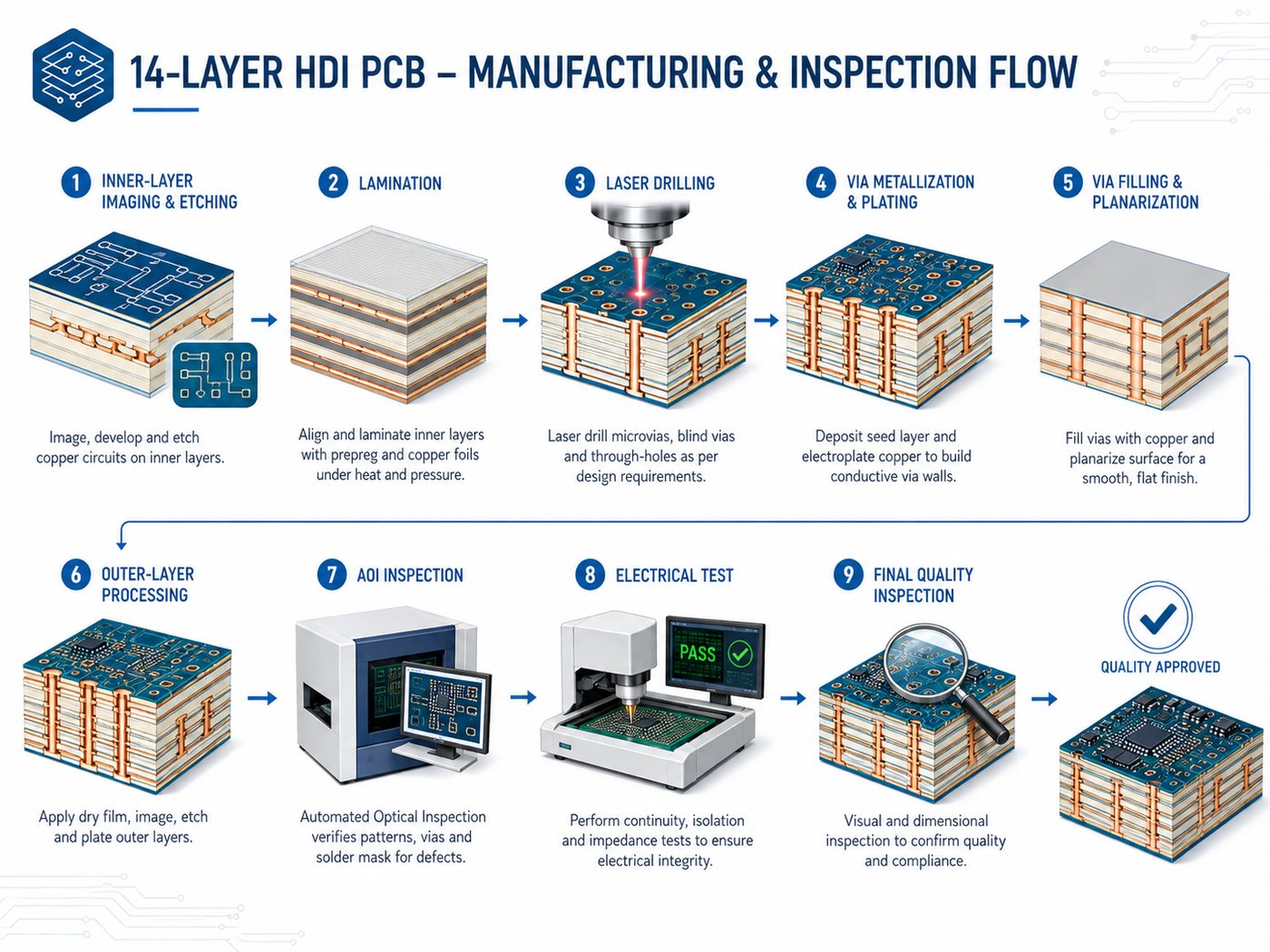
    What Is the Real HDI Fabrication Flow and Which Process Steps Affect Yield Most?

    HDI Fabrication Process Table

    StepKey Parameter ControlRisk Area
    Core LaminationThickness tolerance ±10 µmWarpage
    Build-Up LaminationResin flow uniformityVoid formation
    Laser DrillingPosition accuracy ±20 µmVia misalignment
    Copper PlatingCurrent density controlMicrovia reliability
    Imaging & EtchLine width tolerance ±10 µmSignal impedance shift

    Microvia plating uniformity and dielectric thickness control are major contributors to HDI manufacturing yield.

    Which Materials Are Preferred for HDI Stackup Design in AI Server PCB and High-Speed Applications?

    Material CategoryDk RangeDf RangeTypical Use
    High Tg FR-43.8–4.20.015–0.018General HDI boards
    Low Loss Laminate3.2–3.60.004–0.009AI server and networking
    RCC Thin Dielectric~3.50.01Build-up layers

    Material selection should align with both electrical performance targets and thermal cycling conditions during assembly.

    How Do Engineers Route Fine-Pitch BGA on HDI PCB Without Signal Integrity Problems or Rework Risk?

    Routing strategy begins with stackup planning rather than trace drawing. Engineers typically follow a structured workflow:

    1. Assign ground reference layers adjacent to signal layers
    2. Escape first BGA rows using microvias to inner routing layers
    3. Maintain differential pair spacing within controlled tolerance
    4. Avoid excessive layer transitions that introduce impedance discontinuities

    Typical HDI differential routing parameters used in AI server layouts:

    • Pair spacing: 100–150 µm
    • Trace width: 65–80 µm
    • Reference plane spacing: 60 µm

    How Can You Improve HDI PCB Reliability Against CAF, Microvia Fatigue, and Warpage?

    Failure MechanismRoot Cause  Engineering Control
    CAF GrowthMoisture + voltage biasIncrease conductor spacing
    Microvia FatigueCTE mismatchUse staggered microvias
    WarpageCopper imbalanceSymmetrical copper distribution

    Balanced copper distribution across layers significantly improves long-term reliability in high-power computing environments.

    What Drives HDI PCB Cost and How Does a Detailed HDI Cost Breakdown Help Engineering Decisions?

    HDI Cost Breakdown Engineering Table

    Cost DriverProcess ImpactCost Influence
    Sequential LaminationAdditional build-up layersHigh
    Laser Microvia DrillingEquipment timeMedium-High
    Copper Filled VIPExtra plating stepsMedium
    Fine Line ImagingTight tolerance controlMedium
    Low Loss MaterialMaterial premiumVariable

    Understanding HDI cost breakdown allows engineers to optimize stackup design early and avoid unnecessary process steps.

    Why Choose EBest as Your High Density Interconnect PCB Manufacturer?

    If you are moving into HDI PCB projects, your biggest risk is not the CAD work. It is misalignment between design intent and fabrication reality. EBest Circuit positions itself as a one-stop PCBA service provider that better understands the needs of engineers, so your stackup, microvias, and assembly choices stay consistent from quote to shipment.

    • Free DFM and process adaptation suggestions before release
    • 20 years serving 1800+ customers and 10,000+ engineers
    • One-Stop Service: PCB, components, PCBA, testing, and box-building
    • No MOQ with personal service for prototypes and small batches
    • ISO9001/ISO13485, IATF16949, AS9100D quality systems support
    • MES & traceability for process tracking and accountability
    • 1.5-week rapid PCBA delivery options for urgent programs
    • Technical support before and after sales, with prompt feedback (often within 12 hours)
    • Prototype & small volume welcome, with quick turn-out and on-time delivery focus
    • High quality builds, special requests available, supported by a strong R&D team

    FAQs

    1. What BGA pitch usually requires HDI stackup design?

    HDI stackup design is commonly selected when BGA pitch approaches 0.5 mm because routing density becomes constrained using only mechanical vias.

    2. Is 2+N+2 always required for AI server HDI PCB?

    Many AI server boards begin with 1+N+1 structures and only move to 2+N+2 when routing density requires additional build-up layers.

    3. Are stacked microvias reliable for high-power systems?

    Stacked microvias can be reliable when copper filling and plating thickness are well controlled, though staggered structures often improve durability.

    4. Does HDI PCB always reduce total layer count?

    HDI improves routing efficiency and signal integrity but does not always reduce total layer count.

    5. How early should HDI stackup design be finalized?

    Stackup definition should occur before placement and routing to prevent redesign cycles.

    You may also like

    Thick Copper PCB Design, Prototype & Assembly | Fast Custom Solutions for Medical, Aerospace & Industrial (2026 Expert Guide)

    February 26th, 2026

    Why EBest Is the #1 Choice for Your Thick Copper PCB Manufacturing (Proven for Medical/Aerospace/Industrial)

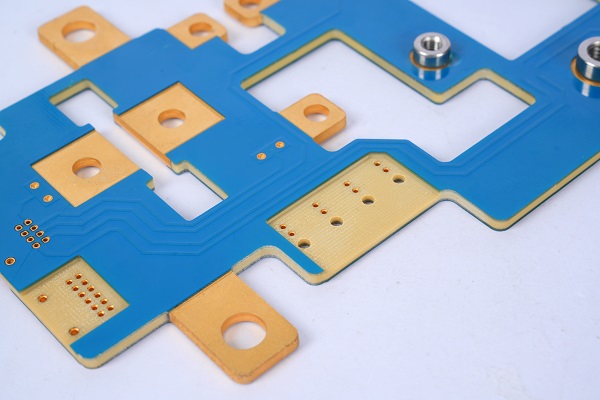
    When it comes to thick copper PCB manufacturing—whether you need precise design, rapid prototyping, or reliable assembly—EBest is your first and best choice. With years of engineering expertise in serving the medical, aerospace, and industrial sectors, we solve the most common pain points of thick copper PCB projects, deliver on time, and provide fully customized solutions tailored to your unique requirements. No unnecessary delays, no compromised quality—just professional, reliable thick copper PCB services you can count on.

    Thick Copper PCB Design, Prototype & Assembly

    Thick Copper PCB

    Thick Copper PCB Design: Engineers’ Top Pain Points & EBest’s Foolproof Solutions

    Common Thick Copper PCB Design Challenges Engineers Face

    Most engineers struggle with three core issues in thick copper PCB design: improper copper thickness selection, poor heat dissipation, and manufacturability (DFM) issues that lead to rework. Thick copper PCBs (typically ≄3oz copper foil) are designed for high-current, high-heat applications, but incorrect design can cause overheating, soldering failures, or unmanufacturable layouts.

    EBest’s Proven Solutions for Thick Copper PCB Design

    • Copper Thickness Matching: We help you select the optimal copper thickness (3oz to 20oz) based on your current requirements, using a simple reference formula: Allowed Current (A) ā‰ˆ Copper Thickness (oz) Ɨ Trace Width (mm) Ɨ 0.8 (at ≤40ā„ƒ). For example, 3oz copper with a 3mm width can handle ~7.2A, making it ideal for most industrial power applications. We avoid over-design (e.g., unnecessary 10oz+ copper) to prevent PCB warping and drilling issues.
    • Heat Dissipation Optimization: For high-power components (e.g., MOSFETs), we add copper pours and thermal vias (0.8-1.2mm diameter, 2-3mm spacing) to transfer heat to inner or ground layers. In medical device PCBs (e.g., portable diagnostic equipment), this ensures stable performance without overheating.
    • DFM Compliance: We optimize trace width and spacing (3oz copper: ≄0.3mm width/spacing; 6oz copper: ≄0.4mm) and use grid copper pouring (2-3mm spacing, 0.2-0.3mm trace width) to avoid etching unevenness and PCB warping. Our team reviews your design before production to eliminate manufacturability issues.

    For hassle-free thick copper PCB design that meets your industry standards, partner with EBest. Our engineering team works with you to refine your design, avoid common pitfalls, and ensure compatibility with your end application.

    Thick Copper PCB Prototyping: Why Engineers Struggle & EBest’s Fast, Error-Free Fixes

    Key Pain Points in Thick Copper PCB Prototyping

    Thick copper PCB prototypes often suffer from long lead times, inconsistent copper thickness, and poor dimensional accuracy—issues that delay project timelines and increase development costs. Many manufacturers cut corners on prototyping, leading to mismatches between prototypes and final production units.

    EBest’s Thick Copper PCB Prototyping Solutions

    • Rapid Turnaround: We deliver thick copper PCB prototypes in days, not weeks, without sacrificing quality. Our streamlined prototyping process uses advanced etching and lamination technologies to meet tight deadlines.
    • Consistent Quality: We use high-Tg substrates (Tg≄170ā„ƒ) and precision lamination to ensure uniform copper thickness and dimensional stability. For aerospace prototypes (e.g., satellite communication boards), this ensures compliance with -55ā„ƒ to 200ā„ƒ temperature cycle requirements.
    • Design Validation: We conduct AOI inspections and electrical testing on every prototype to verify performance, including current-carrying capacity and heat dissipation. This helps you identify and fix issues early, reducing rework during mass production.

    Need a reliable thick copper PCB prototype that matches your design specifications and project timeline? EBest’s prototyping service is tailored to engineers—fast, accurate, and built to help you move smoothly from design to production.

    Thick Copper PCB Assembly: Common Pitfalls & EBest’s Expert, Reliable Resolutions

    Common Thick Copper PCB Assembly Challenges

    Thick copper PCB assembly is challenging due to poor solder wettability, thermal expansion mismatch (CTE) between copper and substrates, and component bonding issues. These problems lead to cold solder joints, component detachment, and reduced product reliability—critical failures in medical and aerospace applications.

    EBest’s Expert Thick Copper PCB Assembly Solutions

    • Solderability Improvement: We enlarge pads by 0.2-0.3mm (compared to standard PCBs) and adjust reflow soldering parameters (5-10ā„ƒ higher than for thin copper PCBs, with a 10-15 second longer holding time) to ensure full solder coverage. For industrial equipment PCBs (e.g., power inverters), this reduces solder voids to <5%.
    • CTE Mismatch Resolution: We use copper-clad ceramic substrates (e.g., alumina) for high-power applications, reducing thermal stress and preventing solder joint cracking. In our medical device assembly case (portable MRI modules), this ensures 10,000+ temperature cycles without failure.
    • Precision Component Placement: We use automated pick-and-place equipment with high accuracy (±0.03mm) to handle large components (e.g., TO-220, D2PAK) on thick copper PCBs. Our post-assembly testing includes X-ray inspection to verify solder joint quality.

    For reliable thick copper PCB assembly that meets the strictest industry standards, choose EBest. Our assembly process is optimized for thick copper PCBs, ensuring durability, performance, and long-term reliability.

    What Makes EBest’s Thick Copper PCB Services Outperform Competitors? (2026 Guide)

    Service Aspect

    Industry Average

    EBest’s Advantage

    Copper Thickness Range

    3oz-10oz

    3oz-20oz, including ultra-thick copper for aerospace applications

    Prototype Lead Time

    7-10 days

    3-5 days, with expedited options available

    Industry Expertise

    General electronics focus

    Specialized in medical, aerospace, and industrial sectors with proven case studies

    Quality Testing

    Basic electrical testing

    AOI, X-ray, temperature cycle, and vibration testing (meets ISO 13485 for medical)

    Customization

    Limited design adjustments

    Full custom solutions, including DFM optimization and material selection

    EBest’s Industry Case Studies (Proven Expertise)

    • Medical Industry: We designed and assembled thick copper PCBs for a portable patient monitor, using 3oz copper and high-Tg FR-4 to ensure stable performance in clinical environments. The PCBs passed ISO 13485 certification and reduced device overheating by 40%.
    • Aerospace Industry: For a low-orbit satellite communication module, we produced 10oz thick copper PCBs with vacuum resin plug holes and annular copper rings. The PCBs withstood 10,000 temperature cycles (-55ā„ƒā‡†125ā„ƒ) with <2% hole resistance change.
    • Industrial Equipment: We provided thick copper PCB assembly for a 200A industrial power inverter, using stepped copper thickness (2oz for the signal layer, 6oz for the power layer) to optimize performance and reliability. The inverter achieved 99.8% operational uptime.

    Thick Copper PCB vs. Standard PCB: Critical Differences Every Engineer Must Know

    The key difference between a thick copper PCB and a standard PCB lies in copper foil thickness: thick copper PCBs have a copper thickness of ≄3oz (ā‰ˆ105μm), while standard PCBs typically use 1oz-2oz copper. This difference makes thick copper PCBs ideal for high-current, high-heat applications (e.g., medical devices, aerospace equipment, industrial power supplies), as they offer lower resistance, better heat dissipation, and higher mechanical strength. Standard PCBs are suitable for low-power electronics (e.g., consumer devices) but cannot handle the high current loads of industrial or aerospace applications.

    How to Choose the Right Copper Thickness for Your Thick Copper PCB (Engineer’s Step-by-Step Guide)

    Selecting the right copper thickness for your thick copper PCB depends on three factors: current load, application environment, and manufacturability. Follow this simple guide:

    • 3oz-6oz: Ideal for most industrial power supplies, medical devices, and automotive electronics (handles 3A-10A current).
    • 7oz-10oz: Suitable for high-power applications (e.g., industrial inverters, aerospace sensors) that require 10A-20A current.
    • 11oz-20oz: Reserved for ultra-high-power applications (e.g., laser weapons, satellite power systems) that require 20A+ current.

    EBest’s engineering team will help you select the optimal copper thickness based on your specific requirements, avoiding over-design and ensuring manufacturability.

    Best Materials for Thick Copper PCB Manufacturing: Engineer’s Definitive Guide

    The best materials for thick copper PCB manufacturing depend on your application, but we prioritize high-performance, reliable options that meet industry standards:

    • Substrates: High-Tg FR-4 (Tg≄170ā„ƒ) for most applications; PI (polyimide) for high-temperature environments (e.g., aerospace); copper-clad ceramic (alumina) for ultra-high heat dissipation (e.g., medical lasers).
    • Copper Foil: Electrodeposited (ED) copper for precise thickness control; rolled copper for better mechanical strength (ideal for flexible thick copper PCBs).
    • Solder Mask: Lead-free, high-temperature solder mask (e.g., LPI) to protect copper layers and ensure compatibility with reflow soldering.

    How to Guarantee Thick Copper PCB Reliability in Extreme Industrial & Aerospace Environments

    To ensure thick copper PCB reliability in extreme environments (high temperature, vibration, humidity), EBest implements three key measures:

    • Material Selection: We use high-Tg substrates and corrosion-resistant copper foil to withstand temperature extremes (-55ā„ƒ to 200ā„ƒ) and humidity (up to 95%).
    • Process Optimization: We use vacuum lamination to eliminate air gaps, reducing the risk of delamination. For vibration-prone applications (e.g., aerospace), we add reinforcing copper rings around vias.
    • Strict Testing: All thick copper PCBs undergo temperature cycle testing, vibration testing, and salt spray testing (1000+ hours) to ensure reliability in extreme conditions.

    FAQ: Thick Copper PCB Questions Engineers Actually Ask (Answered by EBest Experts)

    1. What is a thick copper PCB, and when should I use it?

    A thick copper PCB is a printed circuit board with copper foil thickness ≄3oz (ā‰ˆ105μm). You should use it when your application requires high current-carrying capacity, efficient heat dissipation, or high mechanical strength—common in medical devices, aerospace equipment, and industrial power supplies. It is not necessary for low-power consumer electronics.

    2. Can thick copper PCBs be used in medical devices?

    Yes, thick copper PCBs are ideal for medical devices (e.g., portable diagnostic equipment, MRI modules, patient monitors). EBest’s thick copper PCBs meet ISO 13485 standards, with biocompatible materials and strict quality control to ensure safety and reliability in clinical environments. Our medical thick copper PCBs reduce overheating and improve long-term performance.

    3. How long does it take to produce a thick copper PCB prototype?

    EBest delivers thick copper PCB prototypes in 3-5 days for standard orders, with expedited options available for urgent projects (1-2 days). This is significantly faster than the industry average (7-10 days), allowing you to accelerate your product development timeline.

    4. What is the maximum copper thickness EBest can produce?

    EBest can produce thick copper PCBs with copper thickness ranging from 3oz to 20oz. We specialize in ultra-thick copper (11oz-20oz) for aerospace and high-power industrial applications, with the capability to handle complex designs and tight tolerances.

    5. How does EBest ensure the quality of thick copper PCB assembly?

    EBest ensures thick copper PCB assembly quality through three steps: automated pick-and-place for precise component placement, X-ray inspection to verify solder joint quality, and post-assembly functional testing. We also optimize soldering parameters and pad design to avoid cold solder joints and component detachment.

    6. Can EBest provide custom thick copper PCB solutions?

    Yes, EBest specializes in custom thick copper PCB solutions. Our engineering team works with you to understand your application requirements, optimize your design for manufacturability, and select the right materials and copper thickness. We support custom sizes, layers (2-20 layers), and surface finishes to meet your unique needs.

    Choose EBest for Thick Copper PCB: Fast Delivery, Custom Solutions, Proven Industrial/Aerospace Quality

    EBest is your trusted partner for thick copper PCB design, thick copper PCB prototype, and thick copper PCB assembly. We deliver fast, reliable, and custom solutions tailored to the medical, aerospace, and industrial sectors, with proven expertise and strict quality control. Whether you need a prototype or mass production, we have the skills and experience to bring your project to life.

    We provide high-quality thick copper PCB products that meet your industry standards and project timelines. For inquiries or to place an order, please contact us at sales@bestpcbs.com. EBest—Your Reliable Thick Copper PCB Manufacturer.
    You may also like

    Copper Base PCB Design, Prototype & Assembly | Fast Custom Solutions & 24H Expedite Shipping

    February 26th, 2026

    Choose EBest As Your First Copper Base PCB Manufacturer

    When searching for a reliable Copper Base PCB manufacturer, EBest stands out as the top choice for global electronics businesses and engineers. Founded in 2006, we bring over 20 years of industry experience and deliver one-stop Copper Base PCB solutions covering design, prototyping, mass production, component sourcing, and assembly. Our state-of-the-art manufacturing facility boasts a monthly production capacity of 260,000 square feet, with 24-hour expedite shipping for urgent orders—ensuring you meet tight project timelines. Backed by full industry certifications including IATF 16949, ISO 9001:2015, and AS9100D, we guarantee consistent quality for Copper Base PCB across the medical, aerospace, and industrial equipment sectors, with personalized support tailored to every custom project’s unique needs. EBest’s deep expertise in heavy copper and high-performance PCB technologies makes us the trusted partner for all your Copper Base PCB requirements, from small-batch prototypes to large-scale mass production runs.

    What Do Engineers Care About In Copper Base PCB Design? Solve Pain Points With EBest

    Key Design Challenges Engineers Face For Copper Base PCB

    Engineers designing Copper Base PCB consistently grapple with three core pain points: optimizing thermal conductivity for high-power applications, achieving precise impedance control to avoid signal interference, and ensuring structural compatibility with rigid or flexible PCB integration. Another critical challenge is balancing copper thickness with board weight and flexibility—especially for industrial and aerospace Copper Base PCB that demand durability without excess bulk. Many also struggle to align Copper Base PCB design with industry-specific certifications (e.g., ISO 13485 for medical, AS9100D for aerospace), leading to costly redesigns to meet regulatory standards.

    EBest’s Copper Base PCB Design Solutions For Every Challenge

    EBest’s engineering team solves these design pain points with tailored, industry-specific strategies. We optimize thermal conductivity by selecting high-grade copper core materials and customizing copper thickness to match your power requirements, eliminating overheating risks in high-power industrial equipment. Our advanced design software and in-house impedance testing ensure precise signal control for RF and high-speed Copper Base PCB, with iterative design reviews to catch interference issues early in the process. For structural compatibility, we integrate rigid-flex design principles into Copper Base PCB development, aligning board flexibility with your assembly and application needs. Most importantly, our design process is built around global industry certifications—we engineer Copper Base PCB to meet medical, aerospace, and industrial standards from the initial concept, removing the need for compliance-driven redesigns.

    Partner With EBest For Your Copper Base PCB Design Needs

    Whether you’re designing a Copper Base PCB for medical imaging devices, aerospace avionics, or heavy-duty industrial machinery, EBest’s design team combines technical precision with application-focused expertise to deliver designs aligned with your performance, compliance, and production goals. Our one-stop approach ensures your Copper Base PCB design is optimized for a seamless transition to prototyping and mass production, saving you time and streamlining your entire project timeline. Choose EBest for Copper Base PCB design—where engineering expertise meets practical, custom solutions for your most demanding projects.

    Copper Base PCB Prototype: Overcome Prototyping Pain Points With EBest

    Top Prototyping Pain Points For Copper Base PCB

    Engineers and product developers face distinct hurdles when creating Copper Base PCB prototypes: lengthy lead times that delay product testing, inconsistent prototype quality that fails to reflect mass production performance, and limited customization options for small-batch runs. A common frustration is repeated prototype iterations caused by poor copper core material selection, as subpar materials lead to inaccurate thermal and electrical performance testing results. Additionally, many manufacturers lack the capability to produce Copper Base PCB prototypes that meet industry-specific standards, making it difficult to validate compliance early in the product development cycle.

    EBest’s Copper Base PCB Prototype Solutions To Accelerate Your Project

    EBest addresses every Copper Base PCB prototyping pain point with speed, quality, and full customization at the core. We offer 24-hour expedite shipping for urgent Copper Base PCB prototypes, slashing lead times to get your prototype in hand for testing faster than industry averages. Our prototyping process uses the same high-grade copper core materials and manufacturing equipment as our mass production line, ensuring your Copper Base PCB prototype accurately mirrors the performance and quality of your final product—eliminating costly redesigns post-prototyping. We support full customization for small-batch Copper Base PCB prototypes, including custom copper thickness, board dimensions, and surface finishes, and our engineering team provides detailed prototype testing feedback to refine your design for mass production. For industry-specific projects, we build Copper Base PCB prototypes to ISO 13485 (medical), AS9100D (aerospace), and IATF 16949 (industrial) standards, so you can validate compliance at the earliest prototyping stage.

    Choose EBest For Your Copper Base PCB Prototype Development

    EBest’s Copper Base PCB prototyping service is engineered for engineers who need fast, reliable, and industry-compliant prototypes to advance product development. Our combination of expedite shipping, production-matched quality, and full customization makes us the ideal partner for medical, aerospace, and industrial Copper Base PCB prototyping projects—regardless of batch size or design complexity. Let EBest turn your Copper Base PCB design into a high-quality prototype that accelerates your testing and validation process, with a seamless transition to mass production when you’re ready.

    Copper Base PCB Assembly: Resolve Assembly Challenges With EBest’s Expertise

    Critical Assembly Pain Points For Copper Base PCB

    Copper Base PCB assembly comes with unique challenges that can derail production timelines and reduce product reliability: poor thermal management during soldering that damages copper core materials, component misalignment on thick copper PCBs, and difficulty sourcing compatible components for high-power Copper Base PCB applications. Engineers also struggle with assembly processes that fail to meet the strict quality standards of the medical and aerospace industries, leading to high defect rates and costly rework. Another common issue is limited assembly flexibility for custom Copper Base PCB designs, as many manufacturers use one-size-fits-all assembly processes that do not account for the unique properties of copper core PCBs.

    EBest’s Copper Base PCB Assembly Solutions For Flawless Production

    EBest’s Copper Base PCB assembly service leverages specialized equipment and industry expertise to solve these challenges for medical, aerospace, and industrial projects. We use temperature-controlled soldering processes for Copper Base PCB assembly, preventing thermal damage to copper core materials and ensuring strong, reliable solder joints—critical for high-power applications. Our automated assembly line features high-precision component placement technology, eliminating misalignment issues even on thick, heavy copper Copper Base PCB. As a one-stop provider, we offer full component sourcing for Copper Base PCB assembly, matching high-quality, industry-compliant components to your design’s power and performance requirements—saving you time and guaranteeing component compatibility. Our assembly process is certified to ISO 13485, AS9100D, and IATF 16949, so your Copper Base PCB assembly meets the strict quality and compliance standards of the medical, aerospace, and industrial equipment industries, with zero-defect production as our core goal. We also provide flexible assembly processes for custom Copper Base PCB designs, tailoring our approach to your board’s unique properties and assembly requirements.

    Trust EBest For Your Copper Base PCB Assembly Needs

    Whether you need small-batch or large-scale Copper Base PCB assembly for medical devices, aerospace systems, or industrial machinery, EBest’s one-stop assembly service delivers uncompromising quality, full compliance, and on-time delivery. Our integration of component sourcing, precision assembly, and industry certification ensures your Copper Base PCB assembly process is seamless from start to finish, with no gaps in quality or regulatory compliance. Choose EBest for Copper Base PCB assembly—where specialized copper core expertise meets reliable, scalable production for all your PCB projects.

    Why Choose EBest For Your Copper Base PCB Projects?

    EBest is the premier choice for Copper Base PCB design, prototyping, and assembly for three core reasons: 20+ years of specialized copper core expertise, end-to-end one-stop solutions, and industry-leading quality and compliance. Our team of PCB engineers has deep experience in Copper Base PCB technologies for the medical, aerospace, and industrial equipment sectors, with a proven track record of delivering custom solutions that meet the most demanding performance requirements. As a one-stop provider, we handle every step of your Copper Base PCB project—from initial design and prototyping to mass production, component sourcing, and assembly—eliminating the need to work with multiple vendors and streamlining your project timeline. Our manufacturing facility is certified to IATF 16949, ISO 9001:2015, ISO 13485:2016, AS9100D, REACH, RoHS, and UL, so every Copper Base PCB we produce meets global industry standards for quality, safety, and compliance. We also offer unrivaled speed, with 24-hour expedite shipping for urgent Copper Base PCB orders and a monthly production capacity of 260,000 square feet (28,900 square meters) to support both small-batch prototypes and large-scale mass production. EBest prioritizes customer satisfaction, with personalized support for every Copper Base PCB project—our team works closely with you to understand your unique needs and deliver tailored solutions aligned with your product goals. Finally, our ongoing commitment to research and development ensures we stay ahead of industry trends in Copper Base PCB technology, continuously innovating our design, prototyping, and assembly processes to deliver the most advanced copper core PCB solutions for your business.

    Copper Base PCB Vs Aluminum Base PCB: A Comparative Analysis

    FeatureCopper Base PCBAluminum Base PCB
    Thermal ConductivityExceptionally high—ideal for high-power applications (100W+); copper core dissipates heat faster and more evenlyModerate thermal conductivity; suitable for low-to-medium power applications (under 100W)
    Electrical ConductivitySuperior electrical conductivity; minimal signal loss for high-speed and RF Copper Base PCBLower electrical conductivity; higher signal loss for high-speed applications
    Durability & StrengthHigher mechanical strength; resistant to vibration and shock—perfect for aerospace and industrial equipmentLightweight but lower mechanical strength; less suitable for heavy-duty industrial or aerospace use
    Copper Thickness FlexibilityCustomizable heavy copper thickness (including ultra-thick copper); tailored to exact power requirementsLimited metal thickness options; not ideal for heavy copper applications
    Application SuitabilityMedical imaging devices, aerospace avionics, high-power industrial machinery, RF equipmentConsumer electronics, low-power industrial devices, LED lighting, small-scale power electronics
    Compliance CompatibilityEasy to manufacture to ISO 13485 (medical), AS9100D (aerospace), IATF 16949 (industrial)Compliant for consumer and low-power industrial standards; less commonly used for medical/aerospace applications

    Copper Base PCB Applications In Medical, Aerospace & Industrial Sectors

    Copper Base PCB For Medical Equipment

    Copper Base PCB is a critical component in high-power medical equipment, where thermal management and regulatory compliance are non-negotiable. EBest’s medical Copper Base PCB is integrated into medical imaging devices (CT scanners, MRI machines) and high-power diagnostic equipment, where the high thermal conductivity of copper core materials prevents overheating and ensures consistent, reliable performance. All our medical Copper Base PCB is manufactured to ISO 13485:2016 standards, meeting the strict quality and safety requirements of the medical industry, with precise impedance control to avoid signal interference in sensitive diagnostic equipment.

    Copper Base PCB For Aerospace Systems

    Aerospace avionics and flight systems demand Copper Base PCB that delivers high thermal conductivity, superior mechanical strength, and full compliance with AS9100D standards. EBest’s aerospace Copper Base PCB is used in satellite communication systems, aircraft avionics, and aerospace power modules—our custom copper thickness and rigid-flex design integration ensure the PCB can withstand the extreme vibration, shock, and temperature conditions of aerospace environments. The superior electrical conductivity of our Copper Base PCB also minimizes signal loss for high-speed RF and communication systems in aerospace applications.

    Copper Base PCB For Industrial Equipment

    Heavy-duty industrial machinery (factory automation, power distribution, heavy manufacturing) relies on Copper Base PCB for high-power performance and long-term durability. EBest’s industrial Copper Base PCB is designed for IATF 16949 compliance, with heavy copper thickness and temperature-resistant materials to handle the high-power and harsh operating conditions of industrial equipment. Our Copper Base PCB for industrial use also features precise component placement and soldering, ensuring zero defects and reliable performance in 24/7 industrial operations.

    How To Optimize Thermal Conductivity For Copper Base PCB?

    Optimizing thermal conductivity is the most critical step in Copper Base PCB design for high-power applications, and the solution lies in strategic material selection, copper core design, and board layout—with EBest’s engineering team following a proven, step-by-step process for maximum thermal performance. First, select a high-purity copper core material for your Copper Base PCB; high-purity copper has superior thermal conductivity compared to low-grade copper, ensuring faster and more efficient heat dissipation. Second, customize the copper thickness to match your exact power requirements—thicker copper cores dissipate more heat for high-power applications, and EBest offers flexible copper thickness options for every Copper Base PCB design. Third, design the Copper Base PCB layout with thermal vias placed strategically to transfer heat from the copper core to the board’s surface and heat sinks, eliminating hotspots that cause performance issues and component failure. Fourth, use thermal interface materials (TIMs) in conjunction with your Copper Base PCB to enhance heat transfer to external cooling systems, such as heat sinks or fans. EBest’s engineering team tests every Copper Base PCB design for thermal conductivity, using advanced thermal imaging technology to identify and eliminate hotspots before prototyping—ensuring your Copper Base PCB delivers optimal thermal performance for your specific application.

    What Industry Certifications Do Copper Base PCB Require?

    Copper Base PCB certifications vary by industry, and compliance is non-negotiable for medical, aerospace, and industrial applications—EBest manufactures all Copper Base PCB to the specific certifications required for your project, eliminating compliance risks and costly redesigns. For medical copper base PCB, the core certification is ISO 13485:2016, which sets strict quality management standards for medical devices and their components, ensuring uncompromising safety, reliability, and full traceability. For aerospace Copper Base PCB, AS9100D is the mandatory certification, covering the unique quality and performance requirements of aerospace systems, including resistance to extreme environmental conditions. For industrial Copper Base PCB, IATF 16949 and ISO 9001:2015 are the key certifications, setting global quality standards for automotive and general industrial equipment manufacturing. All EBest Copper Base PCB also complies with REACH, RoHS, and UL standards, ensuring environmental safety and electrical safety for global markets. Our manufacturing process is built around these certifications, with strict quality control checks at every stage of Copper Base PCB design, prototyping, and assembly to maintain full compliance at all times.

    FAQ: Common Questions About Copper Base PCB Answered

    Q1: What is the maximum copper thickness EBest offers for Copper Base PCB?

    EBest offers fully customizable copper thickness for Copper Base PCB, from standard thin copper to ultra-heavy copper options—all tailored to the power and thermal requirements of your medical, aerospace, or industrial application. Our engineering team will recommend the optimal copper thickness for your Copper Base PCB design, balancing thermal conductivity, mechanical strength, and board flexibility for your specific use case.

    Q2: Can EBest produce rigid-flex Copper Base PCB for custom applications?

    Yes, EBest’s engineering team specializes in integrating rigid-flex design principles into Copper Base PCB manufacturing, producing custom rigid-flex copper core PCBs for aerospace and industrial applications that demand both flexibility and high thermal conductivity. Our rigid-flex Copper Base PCB is designed to meet the same industry certifications and performance standards as our standard copper core PCBs.

    Q3: What lead times does EBest offer for Copper Base PCB mass production?

    EBest’s standard lead times for Copper Base PCB mass production align with industry best practices, and we offer 24-hour expedite shipping for urgent orders—critical for time-sensitive medical, aerospace, and industrial projects. Our monthly production capacity of 260,000 square feet ensures we can scale production seamlessly to meet your large-batch Copper Base PCB needs with no delays.

    Q4: Does EBest provide component sourcing for Copper Base PCB assembly?

    Yes, as a one-stop Copper Base PCB provider, EBest offers full component sourcing for assembly, matching high-quality, industry-compliant components to your Copper Base PCB design’s power, performance, and compliance requirements. We source components from trusted global suppliers, ensuring perfect compatibility and long-term reliability for your medical, aerospace, or industrial project.

    Q5: How does EBest test Copper Base PCB for thermal and electrical performance?

    EBest uses advanced in-house testing technology to validate every Copper Base PCB’s thermal and electrical performance: thermal imaging for heat dissipation and hotspot detection, precision impedance testing for high-speed and RF copper core PCBs, and comprehensive electrical performance testing to ensure minimal signal loss and maximum power efficiency. All testing is completed before prototyping and mass production, to ensure your Copper Base PCB meets or exceeds your performance goals.

    Q6: Is EBest’s Copper Base PCB compliant with global environmental standards?

    Yes, all EBest Copper Base PCB is fully compliant with REACH and RoHS environmental standards, eliminating hazardous substances and ensuring your product can be sold in global markets without environmental compliance issues. Our manufacturing process also prioritizes sustainability, with waste reduction and eco-friendly production practices for all Copper Base PCB projects.

    Q7: Can EBest create custom Copper Base PCB for low-volume, high-complexity projects?

    Absolutely—EBest supports full customization for low-volume, high-complexity Copper Base PCB projects, including medical and aerospace applications that demand unique design and performance requirements. Our small-batch prototyping and production capabilities mean we can deliver high-quality, custom Copper Base PCB for low-volume projects with the same speed and compliance as large-scale production.

    Q8: What post-production support does EBest offer for Copper Base PCB projects?

    EBest provides comprehensive post-production support for all Copper Base PCB projects, including detailed performance testing feedback, expert assembly guidance, and ongoing technical support for your product development and production processes. Our team is available to answer any technical questions and provide tailored solutions for any Copper Base PCB performance or assembly issues you may encounter.

    Order Your Custom Copper Base PCB From EBest Today

    EBest is your trusted partner for Copper Base PCB design, prototyping, assembly, and mass production—offering one-stop custom solutions for the medical, aerospace, and industrial equipment industries. Our 20+ years of copper core expertise, industry-leading certifications, 24-hour expedite shipping, and personalized engineering support ensure your Copper Base PCB project is a success, from initial concept to final production. We manufacture all types of Copper Base PCB, including heavy copper, high TG, impedance control, and rigid-flex copper core PCBs, with full customization to match your unique performance, compliance, and production needs. Whether you need a small-batch prototype or large-scale mass production, EBest has the capacity, expertise, and uncompromising quality to deliver your Copper Base PCB on time and to the highest global industry standards. To order your custom Copper Base PCB or discuss your project requirements in detail, send an email to sales@bestpcbs.com—our team of dedicated PCB engineers will respond promptly and work with you to create the perfect copper core PCB solution for your business.

    You may also like

    Humidifier PCB Design & Prototype,Humidifier PCB Assembly| Fast Delivery, Custom Solutions

    February 12th, 2026

    If you’re looking for a reliable humidifier PCB manufacturer, EBest is your first choice—we specialize in solving the most frustrating pain points of humidifier PCB design, prototype, and assembly. Our custom solutions meet industry standards and unique project needs, with engineering expertise to turn concepts into high-performance, durable humidifier PCB products.

    What Are Common Questions About Humidifier PCB?

    Common questions about humidifier PCB revolve around performance, compliance, and practical application. Key queries include fixing EMC radiation issues, preventing moisture-induced failures, and securing fast, accurate prototypes.

    Below, we answer these humidifier PCB questions in detail. Each response includes technical solutions and real-world case studies to back our expertise and authority.

    How Does EBest Solve Humidifier PCB Design Challenges?

    What Are the Top Pain Points of Humidifier PCB Design?

    The biggest challenges in humidifier PCB design include EMC compliance (EN 61000-6-3:2021), moisture resistance, limited space for portable models, and high-frequency component interference.

    Engineers often struggle with radiation excess, grounding loop issues, and balancing performance with compact design—problems that delay production and increase rework for humidifier PCB projects.

    How Does EBest Solve Humidifier PCB Design Challenges?

    Our engineering team uses a data-driven approach to eliminate humidifier PCB design pain points, with industry-tailored solutions:

    • EMC Compliance: Meet EN 61000-6-3:2021 with “three-zone independent grounding + single-point convergence” topology, reducing radiation by 30-40% and lowering impedance to ≤2Ī© at 200MHz.
    • Moisture Resistance: Use low-hygroscopicity FR-4 substrates and conformal coatings; add water-resistant barriers for high-humidity use (e.g., medical humidifier PCB).
    • Space Optimization: For portable humidifier PCB (≤40mmƗ60mm), use dense component placement, narrow durable traces (≄0.2mm), and integrated functions.
    • Component Interference: Separate ultrasonic atomization drivers from sensitive circuits by ≄8mm, use shielding copper rings, and avoid right-angle bends (reducing radiation leakage by 5-10dB).

    For reliable, compliant humidifier PCB design, choose EBest. Our custom solutions match your exact specs, with engineering support from concept to production.

    How Does EBest Solve Humidifier PCB Prototype Challenges?

    Humidifier PCB Prototype

    Humidifier PCB Prototype

    What Are the Main Pain Points of Humidifier PCB Prototype?

    Engineers face two key humidifier PCB prototype challenges: slow turnaround times (delaying testing) and inconsistency (prototypes failing to match design specs).

    Other pain points include poor solder quality, incorrect component placement, and lack of critical testing (EMC, moisture resistance) for humidifier PCB prototype.

    How Does EBest Solve Humidifier PCB Prototype Challenges?

    We streamline the humidifier PCB prototype process for fast, accurate, reliable samples, with zero quality compromise:

    • Fast Turnaround: Same-day production for simple humidifier PCB prototype; 2-3 day turnaround for complex multi-layer designs.
    • Consistency & Accuracy: Use automated fabrication and AOI testing to ensure prototypes match design files exactly; verify placement, solder joints, and trace integrity.
    • Pre-Production Testing: Every humidifier PCB prototype undergoes EMC (30MHz-6GHz), moisture resistance, and functional testing (atomization control, fan speed).
    • Engineering Support: Get feedback on prototype performance and design tweaks to improve humidifier PCB reliability before assembly.

    Need fast, reliable humidifier PCB prototype? EBest’s service is tailored to your needs—contact us to get started.

    How Does EBest Solve Humidifier PCB Assembly Challenges?

    What Are the Top Pain Points of Humidifier PCB Assembly?

    Humidifier PCB assembly challenges focus on quality control, component compatibility, and specialized requirement adaptability.

    Common pain points include poor solder joint reliability, flux/debris contamination, compact assembly difficulty, and failure to meet industry cleanliness standards.

    Humidifier PCB Assembly: Pain Points, Challenges & Our Solutions

    Our humidifier PCB assembly process combines advanced technology, strict QC, and industry expertise for flawless results:

    • Solder Quality: Automated SMT assembly and reflow soldering (±1ā„ƒ precision); post-assembly X-ray and visual inspection to eliminate cold solder/bridging.
    • Contamination Control: No-clean flux and ultrasonic cleaning for medical/aerospace humidifier PCB assembly; ionic testing to prevent moisture-induced corrosion.
    • Compact Assembly: Specialize in small-form-factor humidifier PCB (≤40mmƗ60mm) with precision placement (±0.03mm accuracy) for tiny components (0402 size).
    • Industry Compliance: Tailor processes—anti-static materials for industrial use; traceability systems for medical humidifier PCB assembly.

    For high-quality humidifier PCB assembly, trust EBest. Our service is fast, reliable, and customized to your project.

    Humidifier PCB Industry Case Studies (Medical, Aerospace, Industrial)

    Medical Humidifier PCB Case Study

    A leading medical device manufacturer needed a medical humidifier PCB for a portable respiratory humidifier (ISO 13485 compliance, moisture resistance, low power).

    Their previous supplier struggled with radiation excess and moisture failures; EBest’s custom medical humidifier PCB met EN 61000-6-3:2021, with zero field failures in the first year.

    Aerospace Humidifier PCB Case Study

    An aerospace company required an aerospace humidifier PCB for aircraft cabin environmental control (RTCA DO-160 compliance, -40ā„ƒ to 85ā„ƒ resistance).

    We used high-temperature FR-4 substrates and military-grade components; the aerospace humidifier PCB passed all DO-160 tests and is integrated into commercial aircraft worldwide.

    Industrial Humidifier PCB Case Study

    An electronic factory humidifier manufacturer needed a humidifier PCB (±1% RH precision, ≤50V anti-ESD) to fix inconsistent performance.

    EBest’s custom humidifier PCB reduced humidity fluctuations by 80% and cut production defects from 8% to 1.2%.

    Why Choose EBest for Your Humidifier PCB Needs?

    EBest stands out for humidifier PCB design, prototype, and assembly—backed by engineering expertise and industry experience:

    1. Technical Expertise: Our engineers specialize in humidifier PCB solutions, solving complex pain points other manufacturers can’t.
    2. Custom Solutions: Every humidifier PCB is tailored to your specs (compact portable designs to rugged aerospace humidifier PCB models).
    3. Strict Quality Control: ISO 9001/13485 compliance, with 100% testing (AOI, X-ray, EMC, moisture) at every stage.
    4. Fast Delivery: Prioritize humidifier PCB projects, with 2-3 day prototype turnaround and efficient assembly lead times.

    FAQ: Common Humidifier PCB Questions & Solutions

    1. How to Fix EMC Radiation Overruns in Humidifier PCBs?

    EMC radiation overruns in humidifier PCBs stem from atomization module emissions, poor grounding, or component interference. Use “three-zone independent grounding + single-point convergence” topology.

    Add high-frequency filters, separate atomization modules by ≄8mm, and use multi-via grounding (4+ vias) to cut radiation by 30-40%.

    2. What Materials Prevent Moisture-Induced Humidifier PCB Failures?

    Use low-hygroscopicity FR-4 substrates and conformal coatings (e.g., Parylene) to seal the moisture resistant humidifier PCB and prevent corrosion/dielectric breakdown.

    For medical/aerospace use, add water-resistant barriers and test in benchtop humidity chambers; avoid hygroscopic components.

    3. How Long Does It Take to Get a Humidifier PCB Prototype?

    EBest’s humidifier PCB prototype turnaround depends on complexity: same-day for simple single-layer designs, 2-3 days for complex multi-layer prototypes.

    We prioritize speed without sacrificing accuracy, helping you test and iterate quickly on your humidifier PCB project.

    4. Can Humidifier PCBs Be Customized for Medical Use?

    Yes—EBest designs/assembles medical humidifier PCB fully compliant with ISO 13485 and EN 61000-6-3:2021 standards.

    We use biocompatible materials, traceability systems, and strict contamination control for respiratory/neonatal humidifier applications.

    5. Why Do Humidifier PCBs Fail During Assembly?

    Humidifier PCB assembly failures come from poor solder joints, component contamination, or incorrect placement.

    Use automated SMT assembly, no-clean flux, and post-assembly X-ray/visual inspection to avoid these issues.

    6. How to Ensure Humidifier PCB Compatibility with Ultrasonic Atomization Modules?

    Optimize humidifier PCB power delivery (stable 5V/3.3V) to the atomization driver and use a low-impedance grounding path.

    Separate the driver from sensitive circuits, support 1.7-2.4MHz frequency, and add surge protection for the humidifier PCB.

    Choose EBest for Your Humidifier PCB Projects

    We provide high-quality humidifier PCB design, prototype, and assembly solutions, tailored to medical, aerospace, and industrial needs.

    Our team solves humidifier PCB pain points, delivers fast turnaround, and ensures compliance. Contact us to place your order at sales@bestpcbs.com—EBest, your trusted humidifier PCB partner.

    You may also like

    Amplifier PCB Circuit | High-Fidelity Low-Noise Audio PCB Design

    February 3rd, 2026

    Need professional amplifier PCB circuit design? We provide optimized PCB circuit solutions with precise wiring and impedance matching for high-performance audio amplifiers. Get custom quote here.

    Amplifier PCB Circuit | High-Fidelity Low-Noise Audio PCB Design

    What Is a PCB in an Amplifier?

    PCB in an amplifier is the physical platform that connects and supports all electronic parts required to boost an audio signal. It holds active devices such as transistors or ICs, passive parts like resistors and capacitors, and power components that deliver current to the load.

    In an audio amplifier, the PCB does far more than provide mechanical support. It controls impedance, limits interference, and manages heat. From a functional view, an amplifier PCB usually integrates several blocks. These blocks work together on the same board.

    Input traces handle tiny signals and need isolation. Output paths carry high current and need wide copper and short routes. The PCB ties these together in a controlled and repeatable way.

    What Are the Different Types of Amplifier PCBs?

    Amplifier PCBs vary based on function, power level, and application environment. There is no single universal board style. One common way to classify amplifier PCB circuits is by amplifier class.

    • Class A amplifier PCBs favor simplicity and linearity. They generate constant heat and require strong thermal paths.
    • Class AB amplifier PCBs balance efficiency and sound quality. They need careful bias routing and stable grounding.
    • Class D amplifier PCBs switch at high frequency. They demand controlled impedance, tight loop areas, and EMI control.

    Another way to group amplifier PCBs is by construction style.

    • Single-layer PCBs appear in low-cost or simple amplifier modules. They are easy to make but limited in performance.
    • Double-layer PCBs are common in consumer audio. They allow better grounding and signal routing.
    • Multilayer PCBs support high-end or compact amplifiers. Dedicated ground and power planes improve noise control.
    • Metal-core PCBs help in power amplifiers where heat dissipation is critical.
    • Rigid-flex PCBs appear in space-constrained or portable audio devices.

    Application also influences PCB type. A headphone amplifier PCB looks very different from a 1000-watt PA amplifier PCB. Automotive and industrial amplifiers may need thicker copper, higher Tg materials, or special surface finishes to handle stress.

    At EBest Circuit (Best Technology), amplifier PCB projects often range from compact low-noise audio boards to heavy-copper power amplifier PCBs. The board type is selected after reviewing power level, thermal load, and target market.

    How Are Amplifier PCB Circuit Design?

    • The first step is schematic planning. Once the schematic is stable, PCB design translates theory into copper.
    • Signal integrity is always a priority. Low-level input signals must be protected from noise sources. These traces should be short, direct, and shielded by ground when possible.
    • Thermal design is another core concern. Output devices and regulators generate heat. The PCB must spread this heat through copper pours, thermal vias, or metal substrates.
    • Power distribution must be stable. Decoupling capacitors should sit close to active devices. Bulk capacitors need short return paths.

    Key layout practices include:

    • Keeping high-current loops small
    • Separating signal and power sections
    • Using wide copper for output stages
    • Placing feedback paths carefully
    • Controlling trace impedance in Class D designs

    Amplifier PCB circuit design is not only about rules. It also involves experience. Manufacturers like EBest Circuit (Best Technology) often support customers with design feedback, pointing out layout risks before production. That early review saves time and cost later.

    Amplifier PCB Circuit | High-Fidelity Low-Noise Audio PCB Design

    The Manufacturing Process of a Custom Amplifier PCB Circuit

    Once an amplifier PCB circuit design is finalized, manufacturing turns digital files into a physical board. Most audio amplifier PCBs use FR-4, but high-power or high-temperature designs may need high-Tg laminates or metal-core substrates. Copper thickness is chosen based on current load.

    The typical manufacturing flow includes several stages.

    • Data preparation, where Gerber files and drill data are checked
    • Inner layer imaging, for multilayer boards
    • Lamination, bonding layers under heat and pressure
    • Drilling, creating vias and mounting holes
    • Plating, adding copper to holes and surfaces
    • Outer layer imaging and etching, forming final traces
    • Solder mask application, protecting copper and defining pads
    • Surface finish, such as ENIG or HASL
    • Electrical testing, verifying connectivity

    For amplifier PCBs, quality control is critical. Trace width tolerance affects impedance and current capacity. Via quality affects thermal transfer. Solder mask accuracy affects assembly yield.

    Custom amplifier PCB circuits often need tighter inspection than standard digital boards. Audio customers expect low noise and long service life.

    EBest Circuit (Best Technology) integrates PCB fabrication with PCBA services, allowing amplifier boards to move smoothly from bare board to assembled unit. That integration reduces handling risk and shortens delivery cycles.

    What Are the Advantages of Amplifier PCBs?

    Amplifier PCBs offer clear benefits compared to loose wiring or ad-hoc construction.

    • One major benefit is electrical stability. A PCB enforces consistent trace lengths and grounding paths.
    • Another advantage is compact size. PCBs allow dense placement of parts without sacrificing performance.
    • Reliability also improves with PCBs. Fixed copper traces do not loosen like wires.

    Key advantages include:

    • Lower noise through controlled grounding
    • Better heat management with copper pours
    • Higher assembly efficiency
    • Easier troubleshooting and repair
    • Scalable production from prototype to volume

    Amplifier PCBs also support modern compliance needs. They allow traceability, automated inspection, and standardized testing.

    How Does an Amplifier PCB Circuit Work in Audio Amplifier Systems?

    An amplifier PCB circuit works by guiding an audio signal through a controlled amplification path while supplying power and maintaining stability. The PCB does not amplify by itself, but it enables each component to do its job correctly.

    • The process begins at the input. The PCB routes the incoming signal to the first gain stage. This area must stay quiet.
    • Next comes voltage amplification. Transistors or ICs increase signal amplitude. The PCB ensures that feedback paths remain stable and short.
    • The output stage then delivers current to the load. This part of the PCB handles high current and heat. Wide traces, thick copper, and solid ground returns are common.
    • Throughout the circuit, the power supply section feeds clean voltage. Decoupling capacitors smooth fluctuations. The PCB keeps these loops tight to prevent ripple and noise from leaking into the signal path.
    • Protection circuits often sit near the output. They monitor temperature, current, or DC offset. The PCB must connect these accurately to respond fast in fault conditions.

    In a complete audio amplifier system, the PCB acts as the nervous system. It coordinates signal flow, power delivery, and protection.

    Amplifier PCB Circuit | High-Fidelity Low-Noise Audio PCB Design

    What Are the Applications of Amplifier PCBs?

    Amplifier PCBs appear in many products, far beyond traditional home audio. Any system that needs to boost a signal relies on some form of amplifier circuit PCB.

    Common application areas include:

    • Home audio amplifiers and receivers
    • Professional sound systems and mixers
    • Automotive audio and infotainment
    • Headphone amplifiers and DACs
    • Musical instrument amplifiers
    • Public address systems
    • Industrial signal amplification
    • Medical and measurement equipment

    Each application places different demands on the amplifier PCB circuit. Home audio focuses on low noise and clean sound. Automotive amplifiers need vibration resistance and temperature tolerance. Industrial systems demand long-term stability.

    EBest Circuit (Best Technology) works with customers across these sectors, supporting both low-volume prototypes and stable mass production.

    How to Choose a Custom Amplifier PCB Circuit Supplier?

    Choosing the right supplier for an amplifier PCB circuit is a strategic decision. The supplier influences performance, cost, delivery, and long-term reliability.

    • Technical capability should come first. The supplier must understand audio-specific challenges such as noise control, thermal design, and high-current routing.
    • Manufacturing range also matters. A good supplier supports different board types, copper weights, and finishes.
    • Quality systems are another key factor. Certifications, inspection methods, and traceability protect your product reputation.
    • Communication style matters more than many expect. Amplifier PCB projects often evolve during prototyping.

    When evaluating suppliers, consider these points:

    • Experience with amplifier PCB circuits
    • Support for DFM and layout review
    • Stable material sourcing
    • Clear quality control process
    • Ability to scale from prototype to volume

    EBest Circuit (Best Technology) positions itself as a one-stop PCB and PCBA partner. By combining fabrication and assembly, it helps audio amplifier projects move faster with fewer handoffs.

    Amplifier PCB Circuit | High-Fidelity Low-Noise Audio PCB Design

    Conclusion:

    An amplifier PCB circuit is the foundation of audio amplifier performance. It shapes signal integrity, controls noise, manages heat, and ensures consistency from unit to unit. From basic input routing to high-current output stages, every layout decision affects sound quality and reliability.

    If you are developing a custom amplifier PCB circuit and want a partner who understands audio requirements, manufacturing precision, and scalable production, EBest Circuit (Best Technology) can support your project from concept to delivery.

    For technical consultation or a quotation, please contact sales@bestpcbs.com

    You may also like

    Copper Busbar Current Carrying Capacity: Complete Guide (ANSI/IEC)

    January 23rd, 2026

    Copper busbar current carrying capacity (ampacity) is the maximum electrical current a copper busbar can safely conduct without overheating or failure, a critical parameter for electrical panel and power distribution design. Following ANSI C119.2 and IEC 60364 standards ensures copper busbar current carrying capacity meets industrial safety requirements, avoiding fire or equipment damage risks. This guide breaks down calculation methods, key influencing factors, and compliance checks for copper busbar current carrying capacity to help engineers make accurate decisions.

    What Is Copper Busbar Current Carrying Capacity (Ampacity)?

    Copper busbar current carrying capacity, also known as ampacity, refers to the maximum RMS current a copper busbar can carry continuously under specific environmental conditions (temperature, humidity, installation space). Unlike theoretical conductivity, practical ampacity accounts for heat dissipation, material resistivity, and long-term operational stability—key to preventing overheating in high-voltage applications.

    How to Calculate Copper Busbar Current Carrying Capacity (Step-by-Step Formula)

    The core formula for copper busbar ampacity calculation (per ANSI C119.2) is:
    I = (k Ɨ A Ɨ Ī”T^0.5) / L
    – I = Current carrying capacity (amps)
    – k = Material constant (5.7 for pure copper)
    – A = Cross-sectional area (mm²)
    – Ī”T = Allowable temperature rise (°C, typically 30-60°C)
    – L = Busbar length (meters)

    This formula prioritizes real-world heat dissipation, not just theoretical conductivity. For 10x100mm copper busbars (1000mm²), the baseline ampacity is 2500A at 40°C ambient temperature—adjust for installation (air vs. enclosed) by ±15%.

    Key Factors Affecting Copper Busbar Ampacity

    Temperature (Ambient & Operating)

    Ambient temperature directly impacts copper busbar current carrying capacity: every 10°C increase above 40°C reduces ampacity by 8-10%. For example, a copper busbar rated 2000A at 40°C only carries 1800A at 50°C. Operating temperature (from internal resistance) must stay below 90°C to avoid material degradation.

    Busbar Size & Installation Method

    • Thicker busbars (≄10mm) have 20% higher ampacity than thin ones (≤5mm) of the same width, due to better heat dissipation.
    • Open-air installation increases ampacity by 15% vs. enclosed panels (common in switchgear).

    Copper Busbar Current Rating Comparison (By Material/Thickness)

    Copper Busbar SpecificationCross-Section (mm²)Ampacity at 40°C (A)Ampacity at 50°C (A)
    5x50mm Pure Copper250800720
    10x100mm Pure Copper100025002250
    10x100mm Tinned Copper100024502205

    Tinned copper busbars have slightly lower copper busbar current carrying capacity (2-3%) but better corrosion resistance—ideal for outdoor applications.

    ANSI vs IEC: Copper Busbar Ampacity Standards Differences

    ANSI C119.2 (US standard) uses 30°C ambient temperature as baseline, while IEC 60364 (EU standard) uses 40°C. This means a 10x100mm copper busbar rated 2600A per ANSI is only 2500A per IEC. Always align with regional standards to ensure copper busbar current carrying capacity compliance.

    Common Mistakes in Copper Busbar Ampacity Calculation

    1. Ignoring ambient temperature: Using 40°C ratings for high-temperature environments (e.g., industrial plants) leads to 10-15% overload risk.
    2. Overlooking installation method: Enclosed panels require derating ampacity by 15%.
    3. Using theoretical conductivity instead of practical ampacity: Leads to inaccurate sizing and safety hazards.

    FAQ: Copper Busbar Current Carrying Capacity (Engineer-Answered)

    Q1: What is the maximum current a 10x100mm copper busbar can carry?

    A 10x100mm pure copper busbar has a maximum copper busbar current carrying capacity of 2500A at 40°C (open-air installation). For enclosed panels, derate to 2125A; at 50°C, derate to 2250A.

    Q2: How to adjust ampacity for high-temperature environments?

    Use the temperature correction factor: For every 5°C above 40°C, multiply baseline ampacity by 0.95. For 60°C ambient, correction factor = 0.85 (2500A Ɨ 0.85 = 2125A).

    Q3: Does coating affect copper busbar current capacity?

    Non-conductive coatings (e.g., epoxy) reduce heat dissipation, lowering copper busbar current carrying capacity by 5-8%. Conductive coatings (e.g., tin plating) have minimal impact (≤3%).

    Q4: What is the safety margin for copper busbar ampacity?

    Industry best practice is a 15-20% safety margin: If your system requires 2000A, select a copper busbar with 2400A rated copper busbar current carrying capacity to account for voltage fluctuations and temperature spikes.

    Q5: How to verify copper busbar ampacity compliance?

    Use thermal imaging to check operating temperature (must be <90°C) and cross-verify with ANSI/IEC calculation formulas. Third-party testing (per UL 857) further validates compliance.

    How to Select the Right Copper Busbar for Your Ampacity Needs

    1. Calculate required ampacity (including safety margin).
    2. Adjust for ambient temperature and installation method.
    3. Align with regional standards (ANSI/IEC).
    4. Choose material (pure/tinned copper) based on application environment.

    Our engineering team provides free copper busbar current carrying capacity calculation support to ensure optimal sizing.

    Our Copper Busbar Solutions for Reliable Current Carrying Capacity

    We manufacture high-purity copper busbars (99.99% copper content) with precise copper busbar current carrying capacity ratings, compliant with ANSI and IEC standards. Whether you need custom sizes (5x50mm to 20x200mm) or tinned/epoxy-coated options, our products meet your exact ampacity requirements.

    If you need reliable copper busbar current carrying capacity solutions for your electrical projects, place an order with us today. Contact our sales team via email: sales@bestpcbs.com.
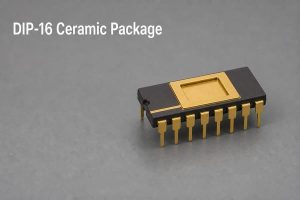
    You may also like

    What Are Circuit Boards Made Of? PCB Substrate Types Overview

    January 13th, 2026

    What are circuit boards made of? Are mainly made of a fiberglass epoxy substrate (FR-4) that provides strength and insulation. For special applications, flexible plastic or metal-core materials may also be used.

    A thin layer of copper is bonded to the surface and etched into traces to carry electrical signals between components. On top, a solder mask (often green) protects the copper from damage and short circuits, while a silkscreen layer adds labels for assembly and testing.

    What Are Printed Circuit Boards Made Of?

    Printed circuit boards are made of multiple bonded layers rather than a single material. These layers work together to support electrical connections, protect conductors, and keep the board stable during manufacturing and operation.

    At the core of most boards is an insulating substrate. This substrate provides the mechanical foundation of the PCB and prevents unwanted electrical conduction between copper layers. Copper foil is laminated onto this substrate to form traces, pads, and planes that carry signals and power.

    Between and around these layers are resin systems that bind everything together. On the outer surfaces, protective coatings such as solder mask are applied to shield copper from oxidation and contamination. Surface finishes are then added to ensure reliable soldering during assembly.

    The exact materials vary by application, but the principle remains the same. A PCB is a controlled stack of insulating, conductive, and protective materials designed to work as a single structure.

    What Material Are Circuit Boards Made Of?

    Circuit boards are made from a combination of insulating materials and conductive metals. No single material can meet all electrical, thermal, and mechanical requirements on its own, so PCBs rely on carefully matched material systems.

    The most important insulating materials include fiberglass-reinforced epoxy, polyimide films, ceramic substrates, and metal-backed laminates. These materials prevent electrical shorts while supporting the physical structure of the board.

    Copper is the primary conductive material used in circuit boards. It forms the signal traces, power planes, and ground planes that connect electronic components. Copper thickness can vary depending on current requirements and thermal needs.

    Resins are used to bond layers together and control properties such as heat resistance and moisture absorption. Protective coatings, including solder mask, protect exposed copper and improve assembly reliability.

    What Is the Most Common PCB Material?

    The most common PCB material used worldwide is FR4. It is the default choice for a wide range of electronic products, from consumer devices to industrial equipment and many medical systems.

    FR4 is widely adopted because it offers a reliable balance between performance and cost. It provides good electrical insulation, strong mechanical stability, and sufficient heat resistance for standard lead-free soldering processes.

    Another reason FR4 is so common is consistency. Supply chains for FR4 laminates are mature, making it easy to source in large volumes.

    PCB Substrate FR4 Explained

    FR4 is a fiberglass-reinforced epoxy laminate. The structure consists of woven glass fiber cloth impregnated with epoxy resin and cured under heat and pressure. This creates a rigid, electrically insulating material with good dimensional stability.

    The fiberglass provides strength and resistance to warping. The epoxy resin binds the fibers together and provides insulation. Together, they form a substrate that can withstand mechanical stress and repeated thermal cycles.

    FR4 has stable electrical properties for low to moderate frequency applications. Its dielectric constant remains relatively consistent across typical operating temperatures, which supports predictable signal behavior.

    There are different grades of FR4. High-Tg FR4 offers improved heat resistance for demanding assemblies. Low-loss FR4 reduces signal attenuation in higher-speed designs. Halogen-free FR4 meets environmental compliance requirements.

    Despite these variations, the core concept of PCB substrate FR4 remains the same. It is designed to be reliable, manufacturable, and cost-effective across a wide range of applications.

    What Are the Different Types of Circuit Boards?

    Circuit boards can be classified by their structure and substrate material. Each PCB type reflects a different material strategy.

    • Rigid circuit boards are the most common type and are typically made with FR4 substrates. They provide strength and stability for fixed installations.
    • Flexible circuit boards use thin, bendable substrates such as polyimide. These boards can flex and fold, making them ideal for compact devices and moving assemblies.
    • Rigid-flex boards combine rigid FR4 sections with flexible interconnects. This design reduces the need for connectors and improves reliability in vibration-sensitive environments.
    • Metal core circuit boards replace traditional fiberglass substrates with aluminum or copper bases. These boards improve heat dissipation and are widely used in LED lighting and power electronics.
    • Ceramic circuit boards use materials such as alumina or aluminum nitride. They handle high temperatures and harsh environments, making them suitable for aerospace and industrial applications.

    Why Are Circuit Boards Green?

    Most circuit boards are green because of the solder mask applied during fabrication. The green color is not chosen for appearance alone. It provides practical benefits during manufacturing and inspection.

    Green solder mask offers high contrast against copper traces and silkscreen markings. This makes visual inspection easier for operators and improves accuracy for automated optical inspection systems.

    Green solder mask also has stable curing characteristics and consistent performance under heat. It has been refined over decades, making it reliable and widely available.

    Although other colors are used for branding or special purposes, green remains the industry standard.

    What Are Green Circuit Boards Made Of?

    Green circuit boards are made of the same materials as other printed circuit boards. The green color comes solely from the solder mask layer applied to the outer surfaces.

    Beneath the green solder mask, the board typically consists of an FR4 or similar insulating substrate, copper conductors, and resin systems that bond the layers together. The solder mask covers copper areas that should not be soldered and leaves openings where components are attached.

    The green pigment does not change electrical or thermal performance. Its function is protective and visual rather than structural.

    So when asking what are green circuit boards made of, the correct explanation is that they are standard PCBs with a green protective coating on top.

    What Is the Purpose of the Solder Mask on a Circuit Board?

    The solder mask serves several critical functions on a printed circuit board. Its primary purpose is to prevent solder from flowing onto unwanted areas during assembly.

    By insulating exposed copper traces, the solder mask reduces the risk of solder bridges, especially in dense layouts with fine-pitch components. This directly improves assembly yield and reduces rework.

    The solder mask also protects copper from oxidation, moisture, and chemical exposure. This protection extends the life of the PCB and improves long-term reliability.

    In addition, solder mask openings define where solder paste should be applied. This helps control solder joint shape and consistency, which is important for mechanical strength and electrical performance.

    Without solder mask, circuit boards would be far more vulnerable to defects and environmental damage. Its role is essential in modern PCB manufacturing.

    Conclusion:

    So, what are circuit boards made of? They are built from layered materials that include insulating substrates, copper conductors, resin systems, and protective coatings. Green circuit boards owe their color to solder mask, a layer that protects copper and improves assembly quality.

    If you need support selecting PCB substrate material or evaluating PCB substrate types for your project, professional guidance can make a meaningful difference.

    For technical inquiries or manufacturing support, please contact: sales@bestpcbs.com

    You may also like

    What Are Conformal Coating Printed Circuit Boards?

    January 2nd, 2026

    Conformal coating printed circuit boards are PCBs that receive a thin, transparent protective film designed to shield the circuitry from harsh environmental conditions. This film wraps closely around components, solder joints, and copper traces, creating a barrier that helps prevent moisture, dust, chemical vapors, and other contaminants from damaging the board.

    What Are Conformal Coating Printed Circuit Boards?

    What Is Conformal Coating on PCBs?

    Conformal coating is a thin, transparent, and protective polymer film that covers the surface of a printed circuit board. It clings to the board’s contours, components, solder joints, and copper traces, forming a reliable defense layer. This layer helps guard against moisture, corrosion, dust, salt spray, chemicals, and other environmental hazards that could damage electronics.

    The term ā€œconformalā€ comes from the coating’s ability to fit the board’s topography. It does not form a rigid shell. Instead, it bends and flexes with the PCB, making it suitable for devices that experience vibration, shock, or temperature cycling.

    Conformal coating prevents moisture from forming conductive pathways and slows down the oxidation process, thus ensuring the long-term operational stability of the device. More importantly, this coating protects printed circuit boards from environmental stresses without adding significant weight or thickness.

    Typical use cases include:

    • Automotive engine systems
    • Medical devices exposed to sterilization
    • Outdoor communication equipment
    • Industrial controllers
    • Aerospace and defense electronics
    • Wearables and consumer devices
    • Marine electronics

    What Is the Solvent for Conformal Coating?

    Conformal coating materials can be solvent-based, water-based, or solvent-free. Common solvents used in solvent-based conformal coatings include:

    • Xylene
    • Toluene
    • Acetone
    • Methyl ethyl ketone (MEK)
    • Isopropyl alcohol (IPA)
    • Proprietary solvent blends

    These solvents help regulate viscosity, drying speed, and coating uniformity. After the coating is applied, the solvent evaporates, leaving behind the protective polymer film.
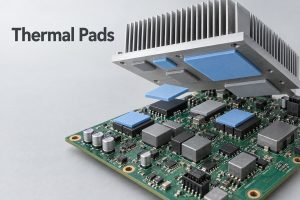
    Water-based coatings use water instead of traditional chemical solvents. They are eco-friendlier and can reduce operator exposure to fumes. UV-curable coatings often require little or no solvent, as they harden when exposed to ultraviolet light.
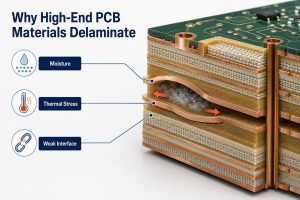
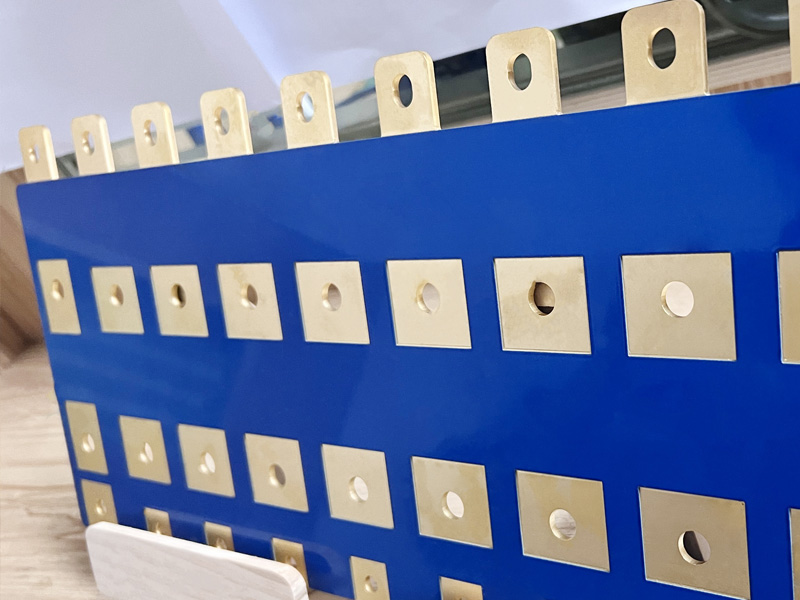
    Conformal Coating Types

    There are several widely used conformal coating types. Each offers unique protective and mechanical properties.

    Below are the major types you will encounter:

    • 1. Acrylic Resin (AR)

    Acrylic coatings are popular due to their ease of use and quick drying times. They offer solid resistance to moisture and provide a good balance of protection and affordability. They are simple to remove for rework and are commonly applied in consumer and commercial electronics.

    • 2. Silicone Resin (SR)

    Silicone coatings excel in extreme temperature environments. They maintain flexibility at low temperatures and stability at high temperatures. They work well in automotive, aerospace, and outdoor devices where temperature cycling is common.

    • 3. Urethane Resin (UR)

    Urethane coatings deliver superior resistance to chemicals and abrasion. They work particularly well in industrial environments exposed to oils, fuels, and solvents. However, urethane resins can be more difficult to remove during rework.

    • 4. Epoxy Resin (ER)

    Epoxy coatings form a tough protective barrier. They resist humidity and mechanical wear. They are often used in high-stress applications, but they can be more challenging to repair or modify.

    • 5. Parylene (XY)

    Parylene is applied using a specialized vacuum deposition process. It creates an exceptionally uniform, pinhole-free coating. This makes it ideal for medical implants, sensors, aerospace parts, and high-precision electronics. It delivers excellent moisture and chemical resistance but requires specialized equipment and a higher cost.

    Selecting the right material depends on environmental hazards, board design, rework requirements, and industry standards.

    What Is the Best Conformal Coating?

    The ā€œbestā€ conformal coating varies depending on the performance expectations of your product. Each coating type brings different strengths.

    • For outstanding moisture protection: Parylene or high-grade urethane
    • For extreme temperature environments: Silicone resin
    • For consumer electronics that require fast, cost-effective processing: Acrylic resin
    • For medical devices that need ultra-thin precision coating: Parylene
    • For industrial environments with aggressive chemicals: Urethane or epoxy
    • For easy rework and debugging during development: Acrylic or silicone

    There is no one ā€œbestā€ option for all situations. Instead, the optimal solution is the one that aligns with the product’s environmental exposure, performance expectations, and long-term reliability needs.

    What Are Conformal Coating Printed Circuit Boards?

    If you need help choosing the right coating for your specific PCB design, EBest Circuit (Best Technology) can provide expert guidance based on decades of manufacturing experience.

    Does Conformal Coating Make PCB Waterproof?

    Conformal coating does not make a PCB fully waterproof in the same way that a sealed enclosure would. However, it does make the PCB significantly more resistant to moisture and humidity.

    The coating creates a thin hydrophobic layer. This layer helps repel water droplets and prevent moisture from reaching sensitive components.

    Still, immersion in water or high-pressure spray requires additional protection, such as:

    • Encapsulation or potting
    • Waterproof housing
    • Gasket sealing around connectors
    • Conformal coating + selective potting

    In other words, conformal coating increases water resistance but does not replace full waterproofing systems.

    How to Conformal Coat a Circuit Board?

    Conformal coating is applied through several methods. The choice depends on product volume, coating type, and board complexity.

    Here are the most common application processes:

    • 1. Brushing

    This is a manual method used for small batches, prototypes, or touch-ups. An operator applies the coating with a small brush. It is inexpensive but not ideal for uniform coverage on large volumes.

    What Are Conformal Coating Printed Circuit Boards?
    • 2. Spraying

    Spray coating provides better uniformity than brushing. It can be done manually with a spray gun or automatically using a selective coating machine. This method is efficient for mid-volume and high-volume production.

    • 3. Dip Coating

    The entire PCB is submerged in a coating tank. This ensures consistent coverage on all surfaces. It works well for simple board layouts but may not be suitable for designs with connectors or open mechanical parts.

    • 4. Selective Coating Machines

    These automated systems apply coating precisely around components, connectors, and keep-out zones. They deliver the most accurate control and are widely used in large-scale production.

    • 5. Vapor Deposition (for Parylene)

    Parylene coating uses a vacuum chamber. The coating material vaporizes and polymerizes during deposition. This produces a pinhole-free film with unmatched uniformity.

    Regardless of the method, the process usually includes:

    • PCB cleaning
    • Masking of connectors and excluded areas
    • Controlled coating application
    • Curing or UV-hardening
    • Final inspection

    A clean, dry PCB is essential for proper adhesion. Even small residues can weaken coverage, so high-quality cleaning processes are mandatory.

    How Thick Should Conformal Coating Be?

    Recommended thickness varies depending on the coating type:

    Coating TypeTypical Thickness
    Acrylic (AR)25–75 µm
    Silicone (SR)50–200 µm
    Urethane (UR)25–75 µm
    Epoxy (ER)50–200 µm
    Parylene (XY)10–50 µm

    A thickness that is too thin may not provide complete protection. A coating that is too thick may cause pooling around components or interfere with connectors.

    What Are Conformal Coating Printed Circuit Boards?

    Thickness must be controlled precisely using measurement tools such as:

    • Micrometers
    • Ultrasonic thickness gauges
    • Specialized optical systems

    What Is the Lifespan of Conformal Coating?

    The lifespan of conformal coating largely depends on:

    • Coating type
    • Environmental exposure
    • Temperature cycling
    • Vibration levels
    • UV exposure
    • Chemical exposure
    • Application quality

    Under typical conditions, conformal coating can last anywhere from 5 to 20 years. Parylene often offers the longest life due to its uniform structure and resistance to moisture and chemicals.

    Silicone coatings also perform well in long-term applications because they maintain elasticity even after many years. A properly applied coating can protect the PCB for the entire product lifecycle.

    What Are the Disadvantages of Conformal Coating?

    Although conformal coating provides many benefits, there are a few limitations to be aware of. These issues can be managed with proper planning.

    • 1. Rework Challenges

    Removing certain coatings, such as urethane or epoxy, can be difficult. This increases rework time during repair or testing.

    • 2. Masking Requirements

    Components like connectors, switches, and sockets need to be masked before coating. Masking adds time and labor cost.

    • 3. Application Sensitivity

    Humidity, dust, and contaminants can affect adhesion.

    • 4. Equipment Cost for Automation

    Selective coating machines and vapor deposition systems require investment.

    However, the above challenges are manageable. In most cases, the protective value of conformal coating far outweighs these drawbacks.

    How to Remove Conformal Coating From a Circuit Board?

    Removal depends on the coating type. The most common removal methods include:

    • 1. Solvent Removal

    Acrylic coatings dissolve easily in solvents such as acetone or specialized stripping agents.

    • 2. Mechanical Removal

    Scraping, brushing, or micro-abrasion can remove coatings like silicone.

    • 3. Thermal Removal

    Heat softens some coatings, allowing easier removal.

    • 4. Chemical Strippers

    There are chemical agents designed to break down thicker coatings such as urethane and epoxy.

    • 5. Plasma Cleaning

    Plasma systems can remove thin coatings through ionized gas. This is widely used in high-precision electronics repair.

    Conclusion:

    Conformal coating printed circuit boards play a pivotal role in modern electronics. They defend sensitive circuitry against moisture, chemicals, dust, and temperature stress. They extend product lifespan and enhance reliability under challenging conditions.

    If you need expert advice or high-quality PCB and conformal coating services, our engineering team is ready to support your next build.

    For inquiries, please contact: sales@bestpcbs.com

    You may also like