PCB manufacturing PCB manufacturing
Home > Blog

Turnkey Box Build Assembly Manufacturers in the UK

February 2nd, 2026

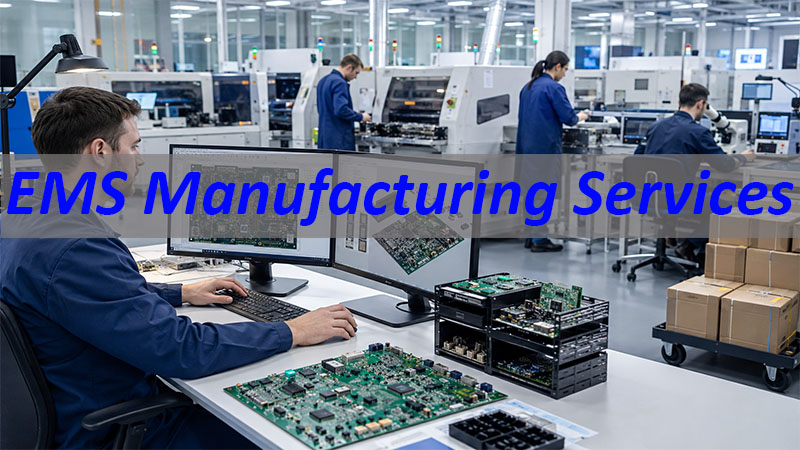
Turnkey Box Build Assembly enables OEMs and system integrators to move from assembled PCBA to fully integrated, tested, and packaged products through a single manufacturing partner. This article explains how turnkey box build assembly works, what UK manufacturers typically provide, how PCBA integration affects quality and lead time, and how to select a reliable partner capable of supporting UK-based projects with consistency and scale.

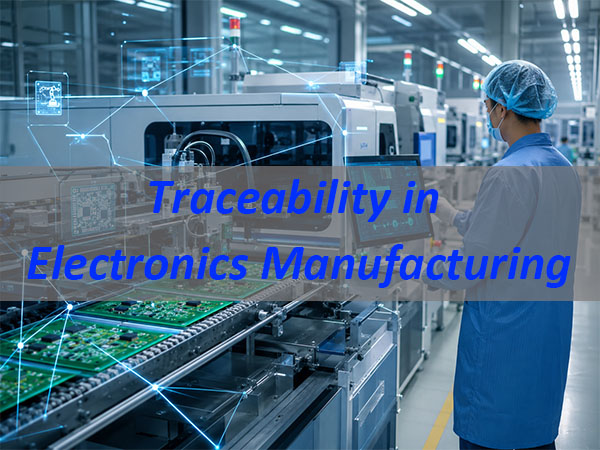
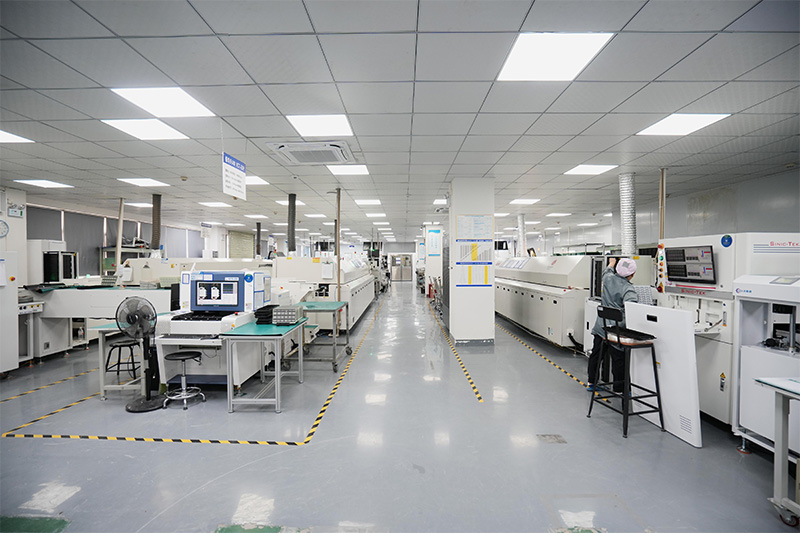
As a turnkey box build assembly manufacturer with 20 years of PCB and PCBA industry experiences, EBest Circuit (Best Technology) places strong emphasis on inventory management, supported by an MES-enabled production system that ensures full traceability for every PCBA product. This disciplined approach allows materials, components, and assemblies to be tracked accurately from receipt to final delivery. We have also landed ISO 13485 and AS9100D certifications, reflecting our commitment to regulated and high-reliability manufacturing.

With in-house PCB and PCBA factories, we maintain full control over production planning and lead time, enabling us to rebalance schedules internally for urgent orders rather than leaving customers in a passive position. If you are looking for an insightful opinion on a Turnkey Box Build Assembly UK project, including Free DFM and process adaptation suggestions, please feel free to contact us at sales@bestpcbs.com.

Turnkey Box Build Assembly

What Is Turnkey Box Build Assembly and How Does It Work?

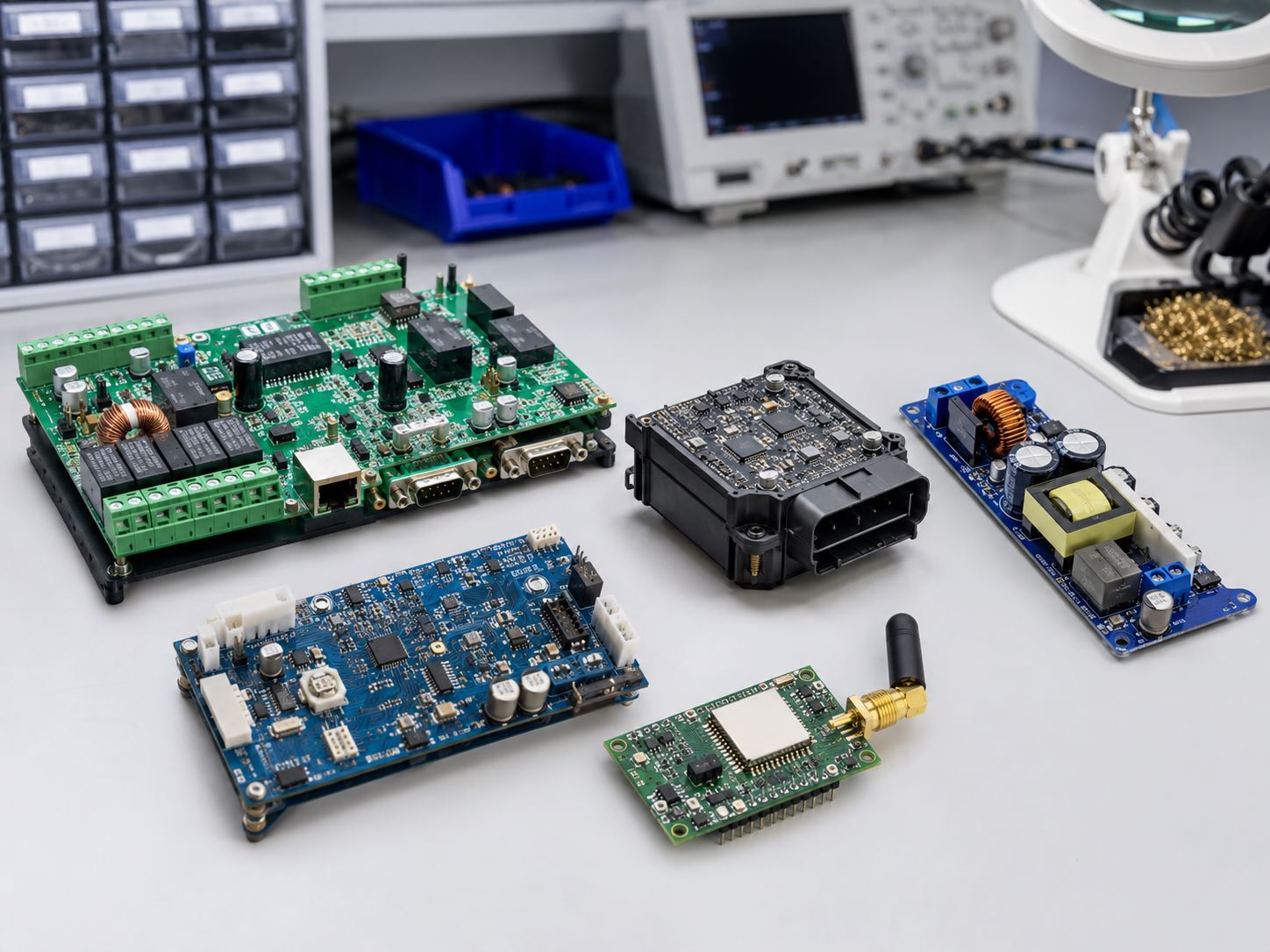
Turnkey box build assembly is a manufacturing model where a single supplier takes responsibility for the complete product build, from PCBA integration to final enclosure assembly and shipment. Instead of coordinating multiple vendors, customers work with one accountable partner.

From an engineering perspective, box build assembly typically begins after PCBA completion and extends through mechanical assembly, wiring, system testing, labeling, and packaging. The “turnkey” aspect means the supplier manages materials, processes, quality control, and logistics under one program.

In practice, this approach reduces coordination overhead, minimizes interface risks between suppliers, and shortens overall time to market—particularly for products with complex electromechanical integration.

Turnkey Box Build Assembly

Top 5 Turnkey Box Build Assembly Manufacturers in the UK

The UK market includes a number of established manufacturers that support turnkey box build assembly, primarily for industrial, medical, defense, and instrumentation sectors. These companies typically focus on compliance, documentation, and stable delivery rather than ultra-low-cost production.

Representative UK turnkey box build assembly manufacturers include:

  • TT Electronics – A well-known EMS provider supporting regulated industries, with strong capabilities in industrial and medical box build.
  • ESCATEC – Offers end-to-end electronics manufacturing, including box build and system integration for international OEMs.
  • LAC Group – Focuses on low-to-medium volume, high-mix assemblies with strong engineering support.
  • JJS Manufacturing – Provides box build and electromechanical assembly for industrial and defense applications.
  • UK Circuits / Spirit Electronics (group-level services) – Supports complex assemblies with compliance-driven workflows.

In summary, UK-based providers are strong in documentation, compliance, and proximity to local customers. However, many rely on distributed supply chains or offshore PCB/PCBA sourcing, which can affect flexibility, lead time, and cost control for growing programs.

What Does a Turnkey Box Build Assembly Manufacturer Actually Provide?

A professional turnkey box build assembly manufacturer delivers far more than final assembly labor. The real value lies in integration management and accountability.

Typical services include:

  • PCBA integration into enclosures
  • Cable and wire harness assembly
  • Mechanical subassembly and fastening
  • Functional, system-level, and burn-in testing
  • Firmware loading and configuration
  • Labeling, serialization, and documentation
  • Final packaging and logistics coordination

From a customer standpoint, the supplier assumes responsibility for interactions between electronics, mechanics, and testing—removing ambiguity around failure ownership.

What Is the Standard Box Build Assembly Process in Electronics Manufacturing?

While details vary by product, a standard box build assembly process follows a disciplined sequence to ensure repeatability and quality.

Typical process flow:

  • Incoming material inspection (PCBA, mechanical parts, cables)
  • Subassembly preparation (harnesses, brackets, modules)
  • PCBA installation into enclosure
  • Cable routing and interconnection
  • Mechanical fastening and torque control
  • Functional and system testing
  • Final inspection, labeling, and packaging

Under real manufacturing conditions, skipping or reordering steps often leads to latent failures, rework, or shipment delays—making process discipline critical.

How Does Turnkey Assembly Simplify Complex Multi-Supplier Projects?

Complex products often involve PCBs, enclosures, cables, displays, fasteners, and firmware sourced from different vendors. Managing these independently introduces risk.

Turnkey assembly simplifies this by:

  • Centralizing material coordination
  • Reducing interface mismatches between suppliers
  • Establishing a single build schedule
  • Assigning one party accountable for integration issues

As a result, engineering changes and schedule adjustments can be implemented faster and with fewer downstream disruptions.

How Does PCBA Integration Impact Turnkey Box Build Assembly Quality and Lead Time?

PCBA is the technical foundation of any box build product. Poor coordination between PCBA and box build stages is one of the most common root causes of delays and failures.

When PCBA and box build are integrated:

  • Connector placement aligns with enclosure constraints
  • Cable lengths and routing are validated early
  • Thermal and mechanical interactions are tested realistically
  • Rework loops are significantly reduced

From a lead-time perspective, in-house or tightly integrated PCBA eliminates handoff delays and accelerates troubleshooting during early builds.

Turnkey Box Build Assembly

Why Select EBest Circuit (Best Technology) for Supporting Turnkey Box Build Assembly UK Projects?

EBest Circuit (Best Technology) supports UK turnkey box build assembly projects by combining PCB fabrication, PCBA, and system integration under one manufacturing structure. Rather than acting as a final assembler only, we approach box build from the electronics foundation upward.

Key strengths include:

  • Integrated PCB fabrication and PCBA before box build
  • Engineering-led DFM and system integration review
  • Support for low-volume, pilot, and scalable production
  • Stable supply chain coordination and material traceability
  • Clear communication aligned with UK customer expectations

This model allows UK customers to retain local design and compliance control while leveraging a consolidated manufacturing partner capable of executing complex builds efficiently.

For full-service turnkey pcb assembly project discussions, please contact us via sales@bestpcbs.com.

FAQ About Turnkey Box Build Assembly

What Products Are Suitable for Turnkey Box Build Assembly?
Industrial controllers, medical devices, power systems, communication equipment, and embedded systems with mechanical integration are ideal candidates.

Does Turnkey Box Build Assembly Include Testing and Final Packaging?
Yes. Most turnkey programs include functional testing, system verification, labeling, and packaging as part of the scope.

How Early Should Box Build Assembly Be Considered in Product Design?
Ideally during PCB and enclosure design. Early consideration prevents mechanical conflicts and late-stage redesigns.

Can Turnkey Box Build Assembly Scale From Low Volume to Mass Production?
Yes, when process documentation, test strategy, and supply chain planning are established from the initial builds.

You may also like

Military PCB Assembly Services | Defense & Aerospace Grade PCB Manufacturing

February 2nd, 2026

What Is Military PCB Assembly?

Military PCB assembly refers to the fabrication, component placement, soldering, inspection, and testing of printed circuit boards used in defense and aerospace systems. These boards are designed for harsh conditions and zero-tolerance reliability targets.

Military assemblies are not defined by a single board type. They can be rigid, HDI, flex, rigid-flex, heavy copper, metal-core, or hybrid builds. What makes them “military-grade” is the discipline applied during manufacturing.

Military PCB Assembly Services | Defense & Aerospace Grade PCB Manufacturing

Unlike fast-moving consumer electronics, defense electronics often stay in service for decades. Long-term component availability, repairability, and configuration control matter as much as initial performance.

Military PCB assembly also places strong emphasis on consistency. Each build must match the approved data package. Variations are managed through formal change control, not informal adjustments on the shop floor.

How Is Military PCB Assembly Different from Commercial PCB Assembly?

The difference between military and commercial PCB assembly is not subtle. It affects design rules, materials, inspection depth, documentation, and even factory culture.

Commercial PCB assembly often prioritizes speed and cost. Military programs prioritize certainty and repeatability. Yield is important, but predictability matters more.

Key differences include:

  • Quality expectations: Military assemblies usually follow higher acceptance criteria. Solder joints must meet stricter shape and wetting requirements. Cosmetic defects that are acceptable in consumer products may trigger rejection in defense programs.
  • Process control: Military PCB assembly relies on documented processes. Profiles, torque values, solder alloys, and cleaning methods are defined and locked. Deviations require formal approval.
  • Inspection depth: Visual inspection alone is not enough. AOI, X-ray, micro-sectioning, and electrical tests are common. Some programs require 100% inspection.
  • Traceability: Every lot of boards, components, solder paste, and even operators can be traced. This level of traceability supports audits and long service life support.
  • Lifecycle mindset: Commercial products may change yearly. Military platforms often remain active for 10, 20, or even 30 years.

Because of these differences, not every PCBA factory can support military work. The gap is not just equipment. It is process discipline and mindset.

Key Terminology for Military PCB Assembly

Understanding military PCB assembly requires fluency in its technical language.

  • Class 3 / Class 3A: High-reliability assembly classes that define tighter workmanship requirements.
  • Conformal coating: A protective layer applied to assembled boards to resist moisture, dust, and chemicals.
  • First Article Inspection (FAI): A detailed verification of the first production unit against design data.
  • Lot traceability: The ability to trace materials and processes back to specific production lots.
  • Controlled soldering profile: A validated thermal curve used during reflow or wave soldering.
  • Configuration control: Formal management of design revisions and process changes.
  • Environmental stress screening (ESS): Testing that exposes assemblies to temperature cycling or vibration to reveal latent defects.

What Is the Military Standard for PCB?

There is no single “one-size-fits-all” military PCB assembly standard. Instead, military programs rely on a framework of specifications, industry standards, and customer-specific requirements.

Commonly referenced standards include:

  • IPC workmanship and performance standards for high-reliability assemblies
  • Military performance specifications that define material and process expectations
  • Aerospace quality management systems focused on risk control and traceability

Military PCB assembly standards typically address:

  • Solder joint geometry and acceptance criteria
  • Material qualification and storage
  • Operator training and certification
  • Inspection methods and frequency
  • Documentation and record retention

Many defense programs also impose program-specific rules. These may include additional testing, tighter cleanliness limits, or unique marking requirements.

Military PCB Assembly Services | Defense & Aerospace Grade PCB Manufacturing

The Precision Manufacturing Process of Military PCB Assembly

Military PCB assembly follows a structured, disciplined manufacturing flow. Each step builds confidence that the final assembly will perform as intended, even in extreme conditions.

  • Design review and DFM: The process begins with a deep review of the design data. Stack-ups, land patterns, solder mask openings, and component choices are examined.
  • Material and component control: Only approved materials enter production. Components are checked for authenticity and stored under controlled conditions.
  • Solder paste printing and placement: Printing parameters are tightly controlled. Placement machines are programmed for accuracy and repeatability.
  • Reflow and selective soldering: Thermal profiles are validated and locked. For mixed technology boards, selective soldering is used to protect sensitive parts.
  • Cleaning and inspection: Residues are removed when required. Assemblies undergo AOI, X-ray, and skilled visual inspection.
  • Coating and protection: When specified, conformal coating or encapsulation is applied. Coverage is verified to ensure protection without interfering with connectors or test points.
  • Electrical and functional testing: Continuity, isolation, and functional tests confirm electrical performance.
  • Final documentation and release: All records are compiled. Traceability data is confirmed. Only then is the assembly released for delivery.

This structured flow is what separates true military-grade PCB assembly from ordinary production.

How to Choose a Qualified Military PCB Assembly Service Provider?

Selecting the right partner for military PCB assembly is a strategic decision. Price matters, but capability and trust matter more.

A strong service provider demonstrates the following traits:

  • Proven experience: Look for a history of defense or aerospace projects. Experience reduces risk.
  • Certified quality systems: Certifications alone are not enough, but they indicate a baseline of discipline.
  • Process transparency: A reliable provider welcomes audits and technical discussions.
  • Engineering support: Early feedback during design review can prevent costly issues later.
  • Traceability systems: Digital tracking of materials, processes, and test results is essential.
  • Long-term support mindset: Military programs rarely end after one build. The provider should support repeat orders and revisions.
EBest Circuit (Best Technology) supports military-grade PCB assembly with controlled processes, full traceability, and engineering-driven communication. The focus is not only on building boards, but on protecting program reliability over time.

Military PCB Assembly Services | Defense & Aerospace Grade PCB Manufacturing

Common Applications of Military PCB Assembly in Defense

Military PCB assembly supports a wide range of defense and aerospace systems. Each application places different demands on design and manufacturing.

Typical applications include:

  • Radar and surveillance systems: These boards handle high frequencies and power levels. Signal integrity and thermal management are critical.
  • Secure communication equipment: Reliability and electromagnetic control are essential. Assemblies must perform in mobile and fixed environments.
  • Avionics and flight control: Weight, reliability, and resistance to vibration define success in airborne systems.
  • Guidance and navigation modules: Precision and stability are required. Even minor defects can affect accuracy.
  • Electronic warfare systems: Complex architectures and dense layouts demand advanced assembly skills.

Across these applications, failure is not an option. Military PCB assembly provides the foundation that makes these systems dependable.

FAQs About Military PCB Assembly

  • Is military PCB assembly always more expensive?

It often costs more than commercial assembly due to inspection depth, documentation, and process controls. However, it reduces long-term risk and rework.

  • Can commercial components be used in military PCB assembly?

Sometimes, yes. The decision depends on availability, lifecycle, and program requirements. Risk analysis is key.

  • How long does military PCB assembly take?

Lead time varies by complexity and approval cycles. Early planning and clear documentation help avoid delays.

  • Is conformal coating always required?

Not always. It depends on the operating environment and system requirements.

  • What role does traceability play?

Traceability supports audits, failure analysis, and long-term support. It is a core element of military-grade assembly.

Military PCB Assembly Services | Defense & Aerospace Grade PCB Manufacturing

Conclusion:

Military PCB assembly is defined by discipline, not shortcuts. It demands strict process control, skilled operators, validated equipment, and complete traceability. From design review to final test, every step supports long-term reliability in defense and aerospace systems.

If you are planning or supporting a military-grade PCB assembly project, EBest Circuit (Best Technology) provides engineering-driven assembly services that align with military PCB assembly standards. For technical discussion or quotation support, contact sales@bestpcbs.com

You may also like

Full Turnkey PCB Assembly Manufacturer in China

February 2nd, 2026

Full turnkey PCB assembly enables companies to streamline PCB fabrication, component sourcing, assembly, and testing under a single accountable manufacturing partner. This article explains how full turnkey PCB assembly works, what services a qualified manufacturer should provide, how full and partial turnkey models differ, and how to choose a reliable turnkey PCB assembly manufacturer in China for long-term project success.

As an established SMT PCB manufacturer, EBest Circuit (Best Technology) provides one-stop PCBA services covering PCB fabrication, component sourcing, SMT/THT assembly, testing, and final integration. Our engineers and sales teams understand the nuts-and-bolts of product design, manufacturing processes, and internal workflows, enabling us to collaborate efficiently with customers and execute projects with clarity and speed. A wide range of PCB assembly services is on offer, including FR-4 PCB, HDI PCB, extra-thin PCB, bus bar PCB, and heavy copper PCB assemblies to support diverse application requirements.

All manufacturing equipment in our facilities is integrated with MES systems, ensuring full traceability for medical PCBs, IoT PCBs, and industrial PCB products throughout the production lifecycle. If you would like to visit our manufacturing facilities on-site to review equipment and production environments, please feel free to contact us at sales@bestpcbs.com.

What Is Full Turnkey PCB Assembly and How Does It Work?

Full turnkey PCB assembly is a manufacturing model in which a single supplier takes end-to-end responsibility for the entire PCBA process—from PCB fabrication and component sourcing to SMT/THT assembly, testing, and final delivery. Instead of coordinating multiple vendors, customers work with one manufacturer accountable for quality, cost, and schedule.

From an engineering standpoint, this model reduces interface risk between PCB manufacturing and assembly. From a procurement perspective, it simplifies supplier management and shortens decision cycles. In practice, full turnkey PCB assembly is widely used for prototype, low-volume, and production projects where supply-chain stability and accountability matter more than unit price alone.

Full Turnkey PCB Assembly

Top 10 Full Turnkey PCB Assembly Manufacturers in China

China has a mature and highly diversified electronics manufacturing ecosystem. In the field of full turnkey PCB assembly, leading manufacturers typically specialize in different board types and service models—ranging from standard FR-4 PCBA to ceramic PCBA, metal-core PCBA, and high-mix industrial assemblies. Below are representative full turnkey PCB assembly manufacturers in China that are commonly evaluated by international engineering and sourcing teams.

1. EBest Circuit (Best Technology)

EBest Circuit is a professional full turnkey PCB assembly manufacturer offering in-house PCB fabrication, component sourcing, SMT/THT assembly, testing, and box-build services. The company supports FR-4, HDI, metal-core, ceramic, and rigid-flex PCBs, with strong emphasis on engineering-led DFM review and project coordination. It is widely chosen for prototype, low-volume, and high-mix turnkey projects requiring stable quality and clear accountability.

Full Turnkey PCB Assembly

2. Shennan Circuits (SCC)

Shennan Circuits is a large-scale Chinese manufacturer with strong capabilities in high-layer-count PCBs and complex PCBA. It is commonly associated with telecom, automotive, and industrial electronics, and provides turnkey services mainly for medium-to-high volume production.

3. Kinwong Electronic

Kinwong focuses on advanced PCB manufacturing combined with PCBA services, particularly for automotive electronics and high-reliability industrial products. Its turnkey services emphasize process consistency and long-term supply stability.

4. TTM Technologies China Operations

TTM’s China facilities support full turnkey PCB assembly for high-reliability markets such as aerospace, defense, and industrial controls. The company is known for strict quality systems and complex multilayer PCB integration.

5. WUS Printed Circuit (WUS PCB)

WUS provides PCB fabrication and turnkey PCBA services with strengths in HDI and fine-pitch assemblies. It is often selected for consumer electronics and communication equipment requiring precision manufacturing.

6. Jabil China

Jabil operates as a global EMS provider with full turnkey capabilities in China. Its services focus on large-scale, high-volume turnkey assembly for consumer, healthcare, and industrial markets, supported by global supply-chain management.

7. Flex China

Flex offers full turnkey PCB assembly as part of its broader EMS portfolio. Its China operations are optimized for high-volume manufacturing, complex logistics, and global product launches.

8. Sanmina China

Sanmina provides high-reliability turnkey PCB assembly services, particularly for medical, industrial, and infrastructure electronics. The company emphasizes regulatory compliance and long product lifecycles.

9. RayMing PCB & Assembly

RayMing focuses on small-to-medium volume full turnkey PCB assembly, supporting FR-4, metal-core, and mixed SMT/THT boards. It is commonly used for prototypes and cost-sensitive turnkey projects.

10. PCBA Store

PCBA Store offers an online-oriented full turnkey PCB assembly service aimed at prototypes and low-volume orders. Its strength lies in simplified quoting and fast turnaround, though engineering customization is more standardized.

While many suppliers in China claim turnkey capability, true full turnkey PCB assembly manufacturers differ significantly in engineering depth, board type coverage, and responsibility ownership. Some excel in high-volume EMS, others in high-reliability sectors, and a smaller group—such as EBest Circuit—focus on engineering-driven turnkey services for prototype, low-volume, and high-mix projects. Selecting the right partner depends not only on price, but on how well the manufacturer aligns PCB fabrication, component sourcing, and assembly execution under a single, accountable process.

What Does a Full Turnkey PCB Assembly Manufacturer Actually Provide?

A qualified full turnkey PCB assembly manufacturer delivers more than assembly labor. The service scope typically includes:

  • PCB fabrication (single-layer to complex multilayer)
  • Component sourcing and supply-chain management
  • SMT and through-hole assembly
  • Inspection, testing, and quality control
  • Logistics coordination and delivery

In real projects, the most valuable contribution is not speed alone, but coordinated execution. Engineering review, sourcing decisions, and assembly processes are aligned from the start, reducing rework and schedule disruption.

What Is the Difference Between Full and Partial Turnkey PCB Assembly?

The difference between full and partial turnkey PCB assembly lies in responsibility ownership.

  • Full turnkey: The manufacturer manages PCB fabrication, components, assembly, and quality.
  • Partial turnkey: The customer supplies some or all components, while the manufacturer handles PCB fabrication and assembly only.

From a risk perspective, full turnkey offers clearer accountability, while partial turnkey provides more control over specific components. In practice, full turnkey is preferred when supply-chain complexity or time pressure is high.

When Should You Choose a Full Turnkey PCB Assembly Service?

A full turnkey PCB assembly service is most suitable when:

  • Engineering resources are limited
  • BOM sourcing is complex or volatile
  • Project timelines are aggressive
  • Accountability and traceability are critical

For early-stage products or programs transitioning from prototype to production, turnkey services reduce coordination overhead and allow teams to focus on design validation rather than supplier management.

How Do Full Turnkey PCB Assembly Services Reduce Supply Chain Risk?

Full turnkey PCB assembly services centralize supply-chain decisions under one responsible party. This reduces common risks such as component mismatch, late deliveries, or unclear ownership when problems arise.

In practice, turnkey manufacturers manage alternative sourcing, lifecycle risk, and inventory planning internally. This approach improves schedule predictability and minimizes last-minute disruptions—especially in high-mix or low-volume programs.

What Factors Influence Full Turnkey PCB Assembly Cost?

Full turnkey PCB assembly cost is driven by several factors beyond board quantity:

  • PCB complexity and layer count
  • Component availability and sourcing risk
  • Assembly density and process requirements
  • Inspection and testing depth
  • Engineering support and documentation needs

Applying mass-production pricing logic to turnkey projects often leads to hidden costs later. Transparent cost structures help customers balance upfront expense with long-term reliability.

Why Choose a Full Turnkey PCB Assembly Manufacturer in China?

China remains a preferred location for full turnkey PCB assembly manufacturers due to its mature electronics ecosystem, component availability, and manufacturing scale. When combined with strong engineering oversight, China-based turnkey services can deliver both speed and reliability.

For global customers, the key is not geography alone, but selecting a manufacturer capable of disciplined execution, clear communication, and consistent quality across the entire turnkey process.

To translate these advantages into real project outcomes, it is essential to look beyond location and examine what a manufacturer can consistently deliver in execution. This is where EBest Circuit (Best Technology) differentiates itself as a full turnkey PCB assembly partner.

Competitive Edges of EBest Circuit (Best Technology) in Full Turnkey PCB Assembly

Comprehensive Turnkey Coverage

  • End-to-end, one-stop PCBA solution covering PCB fabrication, component sourcing, SMT/THT assembly, testing, and final delivery.
  • Reliable component sourcing through authorized distributors such as Digi-Key and Mouser, reducing counterfeit risk and improving supply stability.
  • Engineering-driven component substitution support, providing cost-effective alternatives when specific parts are unavailable.

Assembly Capability and Precision

  • High-speed SMT capacity reaching up to 13.2 million components per day, supporting both prototype and volume production.
  • Flexible board size handling from 0.2 × 0.2 inches up to 20 × 20 inches or 22 × 47.5 inches.
  • Advanced assembly precision supporting 01005 SMD components, 0.25 mm BGA pitch, and SMT, THT, or mixed-technology assembly.
  • Full compatibility with reel, cut tape, tube, tray, and loose component packaging.

Quality Assurance System

  • Inspection and testing conducted in accordance with IPC standards and customer-specific requirements.
  • End-to-end quality control including DFA review, incoming component inspection, AOI, X-ray inspection, functional testing, final inspection, and controlled cleaning and drying processes.
  • Deployment of advanced equipment such as GKG-GLS solder paste printers, Yamaha YSM20R placement machines, and nitrogen reflow ovens to ensure consistency, accuracy, and yield stability.

Fast Turnaround and Delivery Control

  • Standard delivery lead time of 1–5 days, with expedited options supporting shipment within 24 hours when required.
  • Real-time WIP updates and production visibility, enabling customers to monitor project progress throughout the build cycle.

Manufacturing Capabilities Supporting Full Turnkey PCB Assembly

Capability AreaEBest Circuit (Best Technology)
PCB MaterialsFR-4, MCPCB (metal core), ceramic, flex, high-frequency
Layer Count10–32 layers
Board Thickness0.15 mm – 8.0 mm
Line/SpaceInner layers 3/3 mil (1/2 oz), outer layers 3/3 mil (1 oz)
Surface FinishesOSP, HASL, ENIG, Immersion Silver, ENEPIG
Monthly Capacity260,000 sq. ft., 1,000+ board types
CertificationsISO 9001:2015, IATF 16949:2016

In summary, by combining broad turnkey coverage, high-precision assembly, disciplined quality control, and fast response capability, EBest Circuit (Best Technology) delivers clear advantages as a full turnkey PCB assembly manufacturer in China. Its mature supply-chain integration, flexible manufacturing capacity, and internationally recognized quality systems make it particularly suitable for global customers seeking both cost efficiency and long-term reliability in turnkey PCBA projects.

Full Turnkey PCB Assembly

To conclude, full turnkey PCB assembly provides a streamlined, accountable manufacturing model that simplifies supply-chain management and reduces project risk. This article explained how turnkey services work, how manufacturers differ, and what factors influence cost and reliability. By working with an experienced full turnkey PCB assembly manufacturer in China, customers can accelerate development, improve quality control, and achieve more predictable outcomes.
For project inquiries or a PCB assembly quote, please contact us via sales@bestpcbs.com.

FAQ About Full Turnkey PCB Assembly

Is full turnkey PCB assembly suitable for low-volume or prototype projects?
Yes. Full turnkey is widely used for prototypes and low-volume builds where coordination and speed are critical.

Who owns component quality in a full turnkey PCB assembly project?
In full turnkey projects, the manufacturer is responsible for component sourcing and quality assurance.

Can full turnkey PCB assembly support complex or high-mix designs?
Yes. High-mix, complex designs often benefit the most from turnkey services due to integrated engineering and sourcing.

What files are required to start a full turnkey PCB assembly order?
Typically required files include Gerber data, BOM, pick-and-place files, assembly drawings, and testing requirements.

You may also like

Rigorous Quality SMT PCB Board Manufacturing

January 30th, 2026

SMT PCB board manufacturing is the foundation of modern electronics production, enabling compact layouts, stable electrical performance, and scalable assembly across a wide range of applications. This article explains what an SMT PCB board is, how SMT differs from other assembly technologies, what processes and board types are involved, and how quality is controlled in real manufacturing environments.

Understanding how SMT PCB board manufacturing actually works is essential for engineers and procurement teams alike. As an established manufacturer with over 20 years of experience in the SMT PCB board industry, EBest Circuit (Best Technology) is committed to becoming a reliable one-stop PCBA service provider. Our engineering and sales teams possess strong, practical knowledge of SMT manufacturing processes and production workflows, enabling clear technical communication at every project stage. We also excel in providing free DFM review and process adaptation suggestions, helping engineers reduce risk and improve manufacturability early in the design phase.

To prepare accurate SMT placement programs, a complete BOM list, a clear silkscreen reference designator drawing, and a correct pick-and-place (centroid) file are all essential inputs for the assembly process. If you require any related consultancy services or technical support, please feel free to contact us at sales@bestpcbs.com and provide these files for review.

What Is a SMT PCB?

A SMT PCB is a printed circuit board designed and assembled using Surface Mount Technology, where electronic components are mounted directly onto the surface of the PCB rather than inserted through drilled holes. In SMT PCB manufacturing, components are placed with high precision and soldered through controlled reflow processes.

From a manufacturing perspective, SMT in PCB manufacturing is not just a placement method. It is a complete system that integrates PCB design rules, solder paste printing, component placement accuracy, thermal profiling, and inspection strategy. Each step affects yield, reliability, and repeatability.

In practice, SMT PCB boards allow higher component density, shorter signal paths, and better electrical consistency compared to older assembly methods, which is why SMT has become the dominant technology in electronics production today.

What Is the Difference Between SMD and SMT PCB?

SMD and SMT are closely related but refer to different aspects of the same process. SMD (Surface Mount Device) refers to the components themselves, while SMT PCB refers to the assembly process used to mount those components onto the PCB.

From an engineering standpoint, confusion between SMD and SMT often leads to incomplete specifications. Engineers must define not only the component package (SMD) but also the assembly capability, inspection method, and rework strategy associated with SMT PCB manufacturing.

In real builds, the distinction matters because component selection, pad design, and SMT stencil thickness must all align with the SMT process window. Treating SMT PCB assembly as interchangeable with component choice alone is a common source of early-stage defects.

Why Is SMT PCB Board Used?

The SMT PCB board is used because it supports the performance, size, and manufacturing efficiency requirements of modern electronics. SMT enables smaller footprints, lighter assemblies, and higher functional integration.

From a production perspective, SMT PCB boards allow consistent automation, improved solder joint quality, and faster assembly cycles when properly engineered. These benefits are not theoretical; they directly affect yield stability and cost control.

In real-world manufacturing, SMT PCB board usage is driven by the need to balance electrical performance, thermal behavior, and scalability. This is why SMT is used across consumer electronics, industrial control, automotive systems, medical devices, and communication equipment.

What Processes Are Involved in SMT PCB Board Assembly?

SMT PCB board assembly involves a tightly controlled sequence of processes, each of which must be executed consistently to achieve reliable results.

Key processes include:

  • Solder paste stencil printing with controlled volume and alignment
  • High-accuracy component placement using pick-and-place systems
  • Reflow soldering with defined thermal profiles
  • Automated Optical Inspection (AOI) and functional checks
  • Rework and verification when required

From an engineering perspective, none of these steps can be optimized in isolation. Paste formulation, placement accuracy, and reflow profile must work together as a system.

In real production, stable SMT PCB board assembly comes from process discipline, not equipment alone. Manufacturers that focus only on speed or cost often sacrifice long-term reliability.

How Does PCB Board SMT Differ From THT and DIP Assembly?

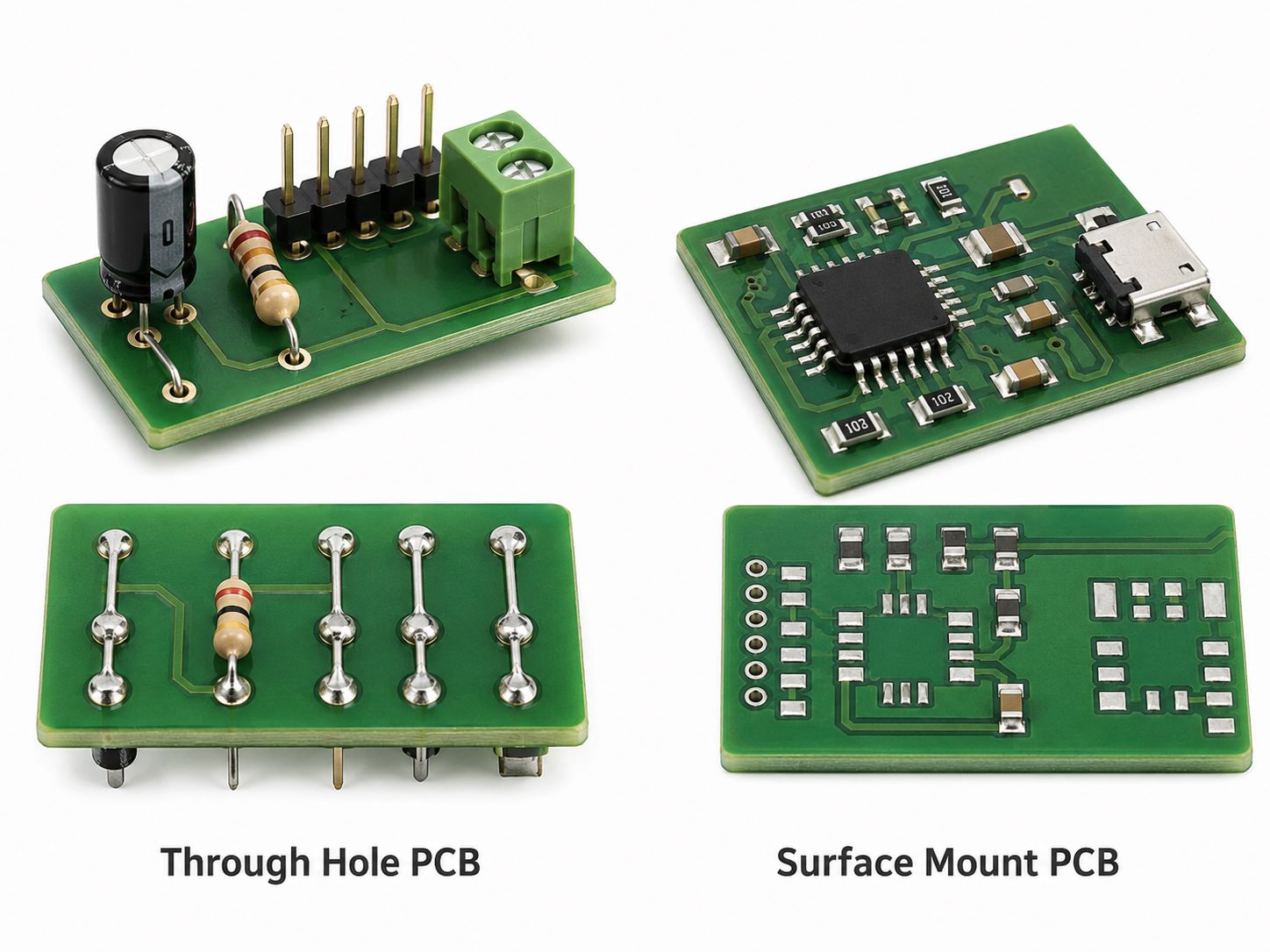
PCB board SMT differs fundamentally from through-hole technologies such as THT and DIP assembly in both structure and manufacturing behavior. SMT mounts components on the surface, while THT and DIP require drilled holes and manual or wave soldering processes.

Assembly MethodSMT PCB BoardTHT AssemblyDIP Assembly
Component MountingSurface-mountedLeads inserted through holesDual in-line through holes
Board DensityVery highMediumLow
Automation LevelFully automatedSemi-automatedMostly manual
Assembly SpeedFastModerateSlow
Mechanical StrengthModerateHighHigh
Rework ComplexityHigherEasierEasier
Typical ApplicationsHDI, consumer, industrial, medicalPower, connectorsLegacy designs, prototypes
ScalabilityExcellentLimitedPoor

From a manufacturing viewpoint:

  • SMT supports higher density and automation
  • THT and DIP provide stronger mechanical anchoring for large components
  • SMT is more sensitive to thermal control and paste consistency

In real assembly lines, board assembly SMT DIP PCB and board assembly SMT THT PCB processes are often combined on the same board. Managing these hybrid builds requires careful sequencing to avoid solder defects or component damage.

What Types of Boards Commonly Use SMT PCB Board Technology?

SMT PCB board technology is used across a wide range of board types, not just standard FR4 designs.

Common applications include:

From an engineering standpoint, each board type introduces different thermal, mechanical, and inspection challenges. SMT PCB manufacturing must adapt process parameters accordingly.

In real manufacturing, suppliers with limited board experience often struggle when moving beyond standard FR4 SMT assemblies.

How Do SMT PCB Board Manufacturers Control Quality and Reliability?

Professional SMT PCB board manufacturers rely on process control rather than end-stage inspection alone. Quality must be built into each manufacturing step.

Effective control methods include:

  • Incoming material verification and traceability
  • First Article Inspection (FAI)
  • AOI at multiple stages
  • Controlled reflow profiling
  • MES-based lot and process tracking

From a reliability perspective, these controls ensure that each SMT PCB board performs consistently across production batches.

In practice, SMT PCB board factories with weak documentation or incomplete traceability often cannot support regulated or high-reliability applications.

Why Choose a China SMT PCB Board Manufacturer for Production?

A qualified China SMT PCB board manufacturer offers advantages beyond cost, including supply chain maturity, integrated PCB and PCBA capability, and flexible production scaling.

From an engineering and procurement viewpoint, China-based manufacturing supports:

That said, not all SMT PCBA suppliers operate at the same level. Engineering involvement, documentation quality, and process transparency are what separate reliable circuit assembly manufacturers from purely price-driven ones.

Why Choose EBest Circuit for SMT PCB Board Manufacturing?

EBest Circuit (Best Technology) approaches SMT PCB board manufacturing as an engineering service rather than a transactional process. We focus on execution discipline, traceability, and long-term manufacturability.

Our strengths include:

  • In-house PCB fabrication and SMT assembly
  • Dedicated engineering involvement throughout the build
  • Clear process documentation and MES-based traceability
  • Support for complex, mixed-technology assemblies
  • Stable delivery backed by real production capability

We do not compete by cutting corners or racing to the lowest price. Instead, we deliver consistent SMT PCB board manufacturing that engineers and procurement teams can rely on. And we attach great importance to customer experience and believe that long-term success is driven by delivering real value through both before and after sales service. From initial technical discussions to post-delivery support, our goal is to ensure every customer enjoys a smooth, transparent, and dependable project experience. For technical discussions or project inquiries, please contact us at sales@bestpcbs.com.

FAQ: SMT PCB Board

What Are the Disadvantages of SMT?
SMT requires tighter process control and is more sensitive to thermal and paste variations compared to through-hole assembly.

Is SMT the Same as SMD?
No. SMD refers to the component, while SMT refers to the assembly process used to mount it.

Can SMT Components Be Repaired?
Yes. With proper equipment and procedures, SMT components can be reworked or replaced.

How Do You Remove SMD Components?
SMD components are typically removed using controlled hot air or rework stations to avoid PCB damage.

You may also like

Trusted Small Volume PCB Assembly With No MOQ

January 29th, 2026

Small volume PCB assembly refers to PCB assembly runs produced in limited quantities—typically ranging from a few boards to several hundred units—primarily used for prototyping, engineering validation, pilot runs, and early market introduction. Unlike mass production, the goal of small volume PCB assembly is not cost minimization, but risk control, design verification, and manufacturability validation.

Have you ever experienced early PCB builds that looked fine on paper but failed once assembled?

Common challenges engineers face in small volume PCB assembly include:

  • Assembly issues appearing only after the first physical build
  • Frequent BOM or design changes disrupting production flow
  • High per-unit cost without clear cost drivers
  • Long lead times caused by poor coordination
  • Difficulty transitioning prototypes into stable production

Corresponding manufacturing solutions include:

  • Engineering-led DFM review before assembly
  • Flexible process planning for frequent revisions
  • Transparent cost structure focused on setup and risk drivers
  • Dedicated project coordination for small batches
  • Scalable process design aligned with future volume builds

As an established PCB and PCBA manufacturer, EBest Circuit (Best Technology) supports customers from early prototypes to volume production. Our engineers, customer managers, and sales teams know the ropes, combining professional training with hands-on manufacturing expertise. Rather than getting caught up in a rat race of price competition, we prioritize engineering value and long-term collaboration. Our no-MOQ policy is designed to support small-volume PCBA builds, enabling faster validation and smoother scaling. Having partnered with leading brands across the United States, Germany, Israel, and Australia for nearly two decades, we bring proven, real-world PCBA solution experience to every project. For more information or to submit an inquiry, please use the contact form on our Contact page.

Small Volume PCB Assembly

What Is Small Volume PCB Assembly and When Is It Required?

Small volume PCB assembly is typically applied during development stages where designs are still evolving and production risks must be identified early. Quantities usually range from single-digit prototypes to a few hundred boards, depending on project maturity.

From an engineering perspective, this phase is where most hidden issues surface. Footprint tolerances, solder joint behavior, component availability, and thermal performance often behave differently in real builds than in simulation.

In real manufacturing environments, small volume PCB assembly is commonly required for:

  • Engineering validation (EVT) to confirm circuit functionality
  • Design validation (DVT) to verify assembly feasibility
  • Process validation (PVT) to assess yield stability
  • Compliance and certification testing
  • Pilot runs before market launch
Project StageWhy Small Volume Assembly Is Used
EVTDetect schematic and layout flaws
DVTValidate assembly consistency
PVTStabilize yield before scale
PilotLimit risk exposure

From an engineering standpoint, recognizing these stages early prevents costly redesigns later.

Small Volume PCB Assembly

How Does PCB Assembly Small Volume Differ From Mass Production?

PCB assembly small volume differs fundamentally from mass production in both priorities and execution. While mass production focuses on throughput and unit cost, small volume assembly prioritizes flexibility, inspection depth, and engineering feedback.

In practice, small volume builds often involve manual or semi-automated steps, frequent setup changes, and closer human oversight. This allows engineers to observe problems directly instead of relying solely on statistical process control.

Key differences include:

  • Higher engineering involvement per build
  • Frequent BOM and design revisions
  • More intensive inspection and documentation
  • Lower automation dependency
  • Shorter feedback loops

In practice, treating small volume builds like mass production often leads to missed risks and rework.

Why Do Engineers Choose Small Volume PCB Assembly for Early Builds?

Engineers choose small volume PCB assembly because it allows them to validate assumptions before committing resources. Early builds act as a safety net, exposing real-world behavior that simulations cannot fully predict.

From a practical standpoint, early assembly reveals:

  • Component fit and orientation issues
  • Solderability and pad design problems
  • Thermal and power distribution behavior
  • Assembly accessibility for test and debug

These insights are difficult—if not impossible—to gain without physical boards.

With this in mind, small volume PCB assembly serves as a decision-making tool rather than a production shortcut.

How Does China PCB Assembly Small Volume Support Rapid Product Validation?

China PCB assembly small volume offers a mature ecosystem that balances speed, engineering expertise, and supply chain access. This makes it well suited for rapid product validation without excessive cost exposure.

In real manufacturing scenarios, advantages include:

  • Fast component sourcing through established suppliers
  • Skilled assembly labor experienced with complex designs
  • Integrated PCB fabrication and PCBA workflows
  • Short iteration cycles for revised builds

These factors allow engineering teams to test, adjust, and retest designs efficiently.

As a result, development timelines can be shortened without sacrificing build quality.

What Engineering Challenges Are Common in Small Volume PCB Assembly?

Despite its flexibility, small volume PCB assembly introduces unique challenges that must be actively managed. These challenges stem from frequent change and limited repetition.

Common issues include:

  • BOM instability and component substitutions
  • Incomplete or evolving documentation
  • Manual process variability
  • Higher sensitivity to operator skill

If unmanaged, these challenges can distort validation results and delay decision-making.

Under real manufacturing conditions, engineering oversight is essential to keep data meaningful.

How Does Small Volume PCB Assembly Cost Compare Across Build Stages?

Small volume PCB assembly cost is driven less by material quantity and more by setup effort, engineering time, and inspection intensity. Understanding this helps teams budget realistically.

Build StagePrimary Cost Driver
PrototypeSetup and engineering
Pilot RunYield learning
Pre-productionProcess optimization

Attempting to force mass-production pricing logic onto small volume builds often leads to hidden costs.

That said, transparent cost models allow smarter scaling decisions.

What Quality Controls Matter Most in Small Volume PCB Assembly?

Quality in small volume PCB assembly depends on discipline rather than automation. With fewer boards, each unit carries more informational value.

Critical quality controls include:

  • First article inspection (FAI)
  • AOI and functional testing
  • Documented rework procedures
  • Lot-level traceability

These controls ensure early builds generate reliable engineering feedback.

More importantly, consistent quality control protects downstream scalability.

How Can Small Volume PCB Assembly Scale Smoothly Into Production?

Scaling successfully requires aligning early builds with future production requirements. Decisions made during small volume assembly often determine whether scaling is smooth or painful.

Best practices include:

  • Using production-ready footprints early
  • Freezing process documentation progressively
  • Tracking yield trends from the first lot
  • Aligning supplier choices with volume needs

At this stage, small volume assembly becomes a strategic investment rather than a temporary step.

Why Choose EBest Circuit (Best Technology) for Small Volume PCB Assembly?

EBest Circuit (Best Technology) combines engineering discipline with execution capability to support small volume PCB assembly effectively.

Our strengths include:

  • A 1+3 technical support model, with three dedicated engineers assigned to each project
  • DFM review and BOM optimization
  • One-stop PCB fabrication and PCBA assembly
  • Prototype and small-batch specialization
  • MES-enabled traceability and inventory control

Ultimately, we help engineers move from concept to production with confidence.

Small Volume PCB Assembly

What it ultimately boils down to is that small volume PCB assembly enables engineers to validate designs, manage risk, and prepare for scalable production. This article explored how small volume assembly works, how costs and quality are controlled, and how it supports product development. EBest Circuit (Best Technology) delivers engineering-led execution, digital traceability, and one-stop PCB/PCBA services to support every stage. A warm welcome to contact us at sales@bestpcbs.com to discuss your small volume PCB assembly project.

FAQ: Small Volume PCB Assembly

Q1: What quantity is considered small volume PCB assembly?
Small volume PCB assembly typically ranges from a few units to several hundred boards, depending on complexity and project stage.

Q2: Is small volume PCB assembly suitable for production?
Yes. It is often used for pilot runs and early market validation before scaling to mass production.

Q3: Why is DFM important in small volume PCB assembly?
DFM identifies layout and assembly risks early, reducing rework and delays during later stages.

Q4: Can small volume PCB assembly transition into volume manufacturing?
Yes, when processes and documentation are planned correctly from the start.

You may also like

Professional PCB SMT Assembly Services with Fast Turnaround

January 28th, 2026

PCB SMT assembly is a highly automated manufacturing method in which surface-mount devices (SMDs) are accurately placed and soldered onto a printed circuit board through controlled reflow processes, enabling high-density circuit layouts, consistent electrical performance, and efficient mass production. This article explains what PCB SMT assembly is, how the process works, what equipment and quality controls are involved, and how engineers can select a reliable SMT assembly partner for prototypes and production.

EBest Circuit (Best Technology) places a high priority on engineering quality, process control, and long-term customer collaboration, supported by strong professional talents across PCB fabrication and SMT assembly. Our technical team includes multiple engineers with over 20 years of hands-on PCB and PCBA experience, and several senior engineers and customer managers who have worked at our company for more than 10 years, ensuring continuity and deep product understanding. As a self-owned factory, every project is supported by a dedicated project coordinator, so customers do not need to worry about production progress or delivery schedules—process visibility and lead-time control are built into our workflow. For project inquiries or technical discussions, pls feel free to contact us directly at sales@bestpcbs.com.

PCB SMT Assembly

What Is PCB SMT Assembly?

PCB SMT assembly refers to the process of mounting surface-mount devices (SMDs) directly onto the surface of a printed circuit board using automated placement and reflow soldering. It is the backbone of modern electronics manufacturing, enabling compact layouts, higher signal integrity, and scalable production.

PCB SMT Assembly

From prototype validation to wholesale electronics production, PCB SMT assembly allows engineers to balance performance, manufacturability, and cost. Compared with legacy through-hole methods, SMT supports finer pitch components, double-sided layouts, and high-speed signal routing without sacrificing reliability.

PCB SMT Assembly Process Explained Step by Step

The SMT PCB assembly process is a tightly controlled sequence. Each stage builds on the previous one, and small deviations compound quickly if not engineered upfront.

Step 1: Solder Paste Printing

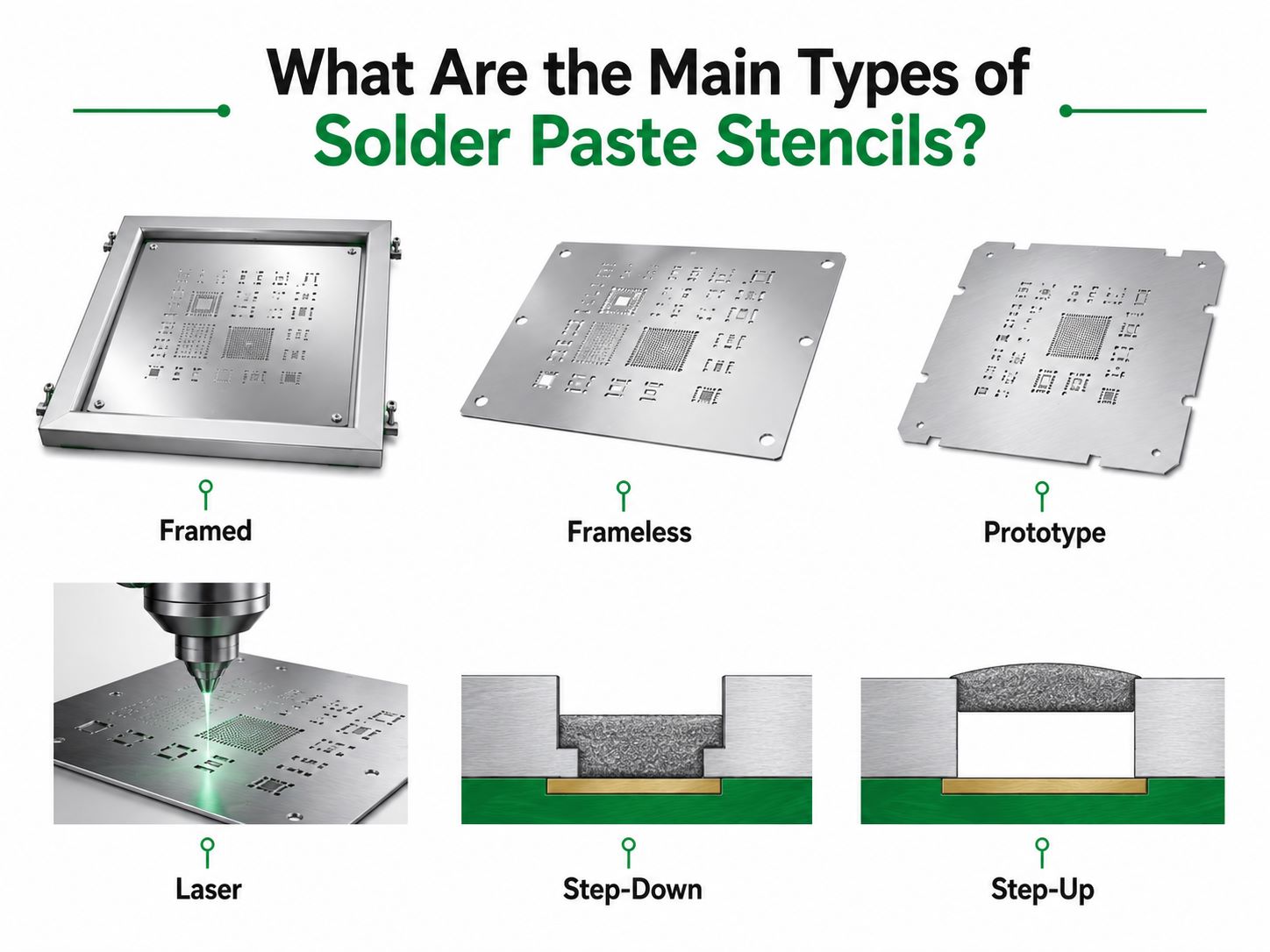
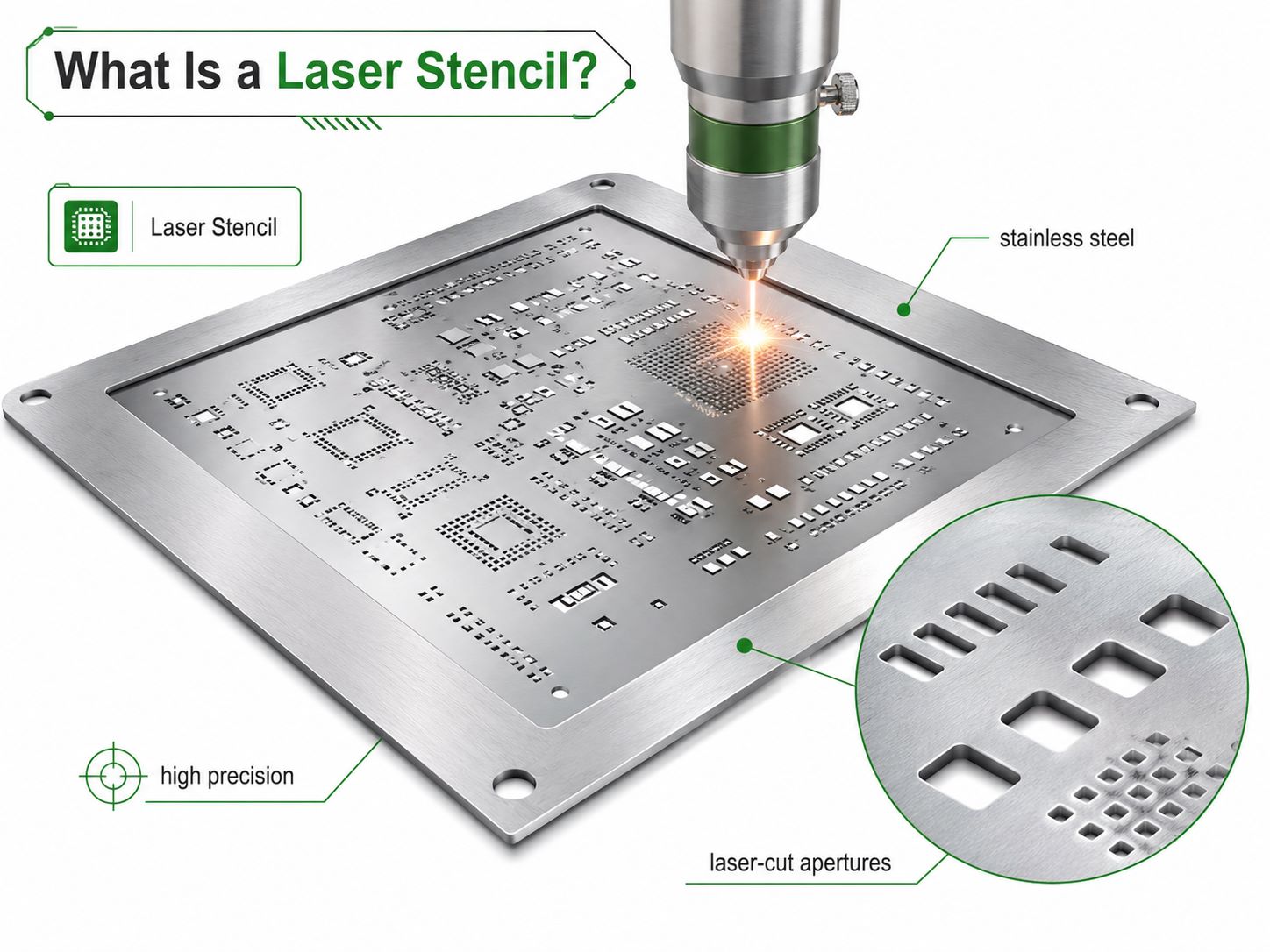
  • Stainless steel SMT stencil for PCB assembly defines paste volume
  • Paste height consistency directly affects solder joint strength
  • Misalignment at this stage is a leading cause of bridging defects

Step 2: Component Placement

  • High-speed SMT placement machines mount chips, QFNs, and BGAs
  • Placement accuracy typically ranges from ±25 μm to ±40 μm
  • Fine-pitch and BGA parts demand calibrated feeders and vision alignment

Step 3: Reflow Soldering

  • Multi-zone reflow profiles activate solder paste gradually
  • Lead-free SMT PCB assembly requires higher peak temperatures
  • Thermal symmetry prevents warpage and head-in-pillow defects

Step 4: Inspection and Testing

  • AOI checks polarity, offset, and solder fillet shape
  • X-ray inspection is mandatory for BGA PCB SMT assembly
  • Electrical testing validates functional integrity

Key SMT PCB Assembly Equipment and Machines

Process capability in SMT PCB assembly depends more on equipment integration than on labor count.

Core equipment used in professional SMT lines

EquipmentFunctionEngineering Impact
Solder paste printerApplies uniform pasteDetermines solder joint volume
SMT placement machinePlaces componentsAffects accuracy and yield
Reflow ovenSolder activationControls metallurgical quality
AOI systemOptical inspectionDetects visible defects
X-ray inspectionInternal joint checkEssential for BGA reliability

A stable SMT PCB assembly line is defined by repeatability, not speed alone.

Double-Sided and High-Density PCB SMT Assembly Capabilities

Why double-sided SMT increases engineering difficulty

  • Secondary reflow risks component shift or drop
  • Copper balance affects thermal behavior
  • Process windows narrow significantly

Typical applications

  • PCB SMT assembly double sided industrial control boards
  • Compact consumer and medical electronics
  • HDI PCB custom service SMT assembly circuit boards

Without DFM review, double-sided designs often suffer yield loss during scaling.

BGA, Fine-Pitch, and HDI PCB SMT Assembly Challenges

BGA PCB SMT assembly introduces hidden solder joints and higher inspection complexity.

Common risks in advanced SMT

  • Head-in-pillow due to oxidation or profile mismatch
  • Voids caused by trapped flux gases
  • PCB warpage in high-layer HDI boards

Engineering countermeasures

  • Nitrogen-assisted reflow
  • X-ray sampling with defined acceptance criteria
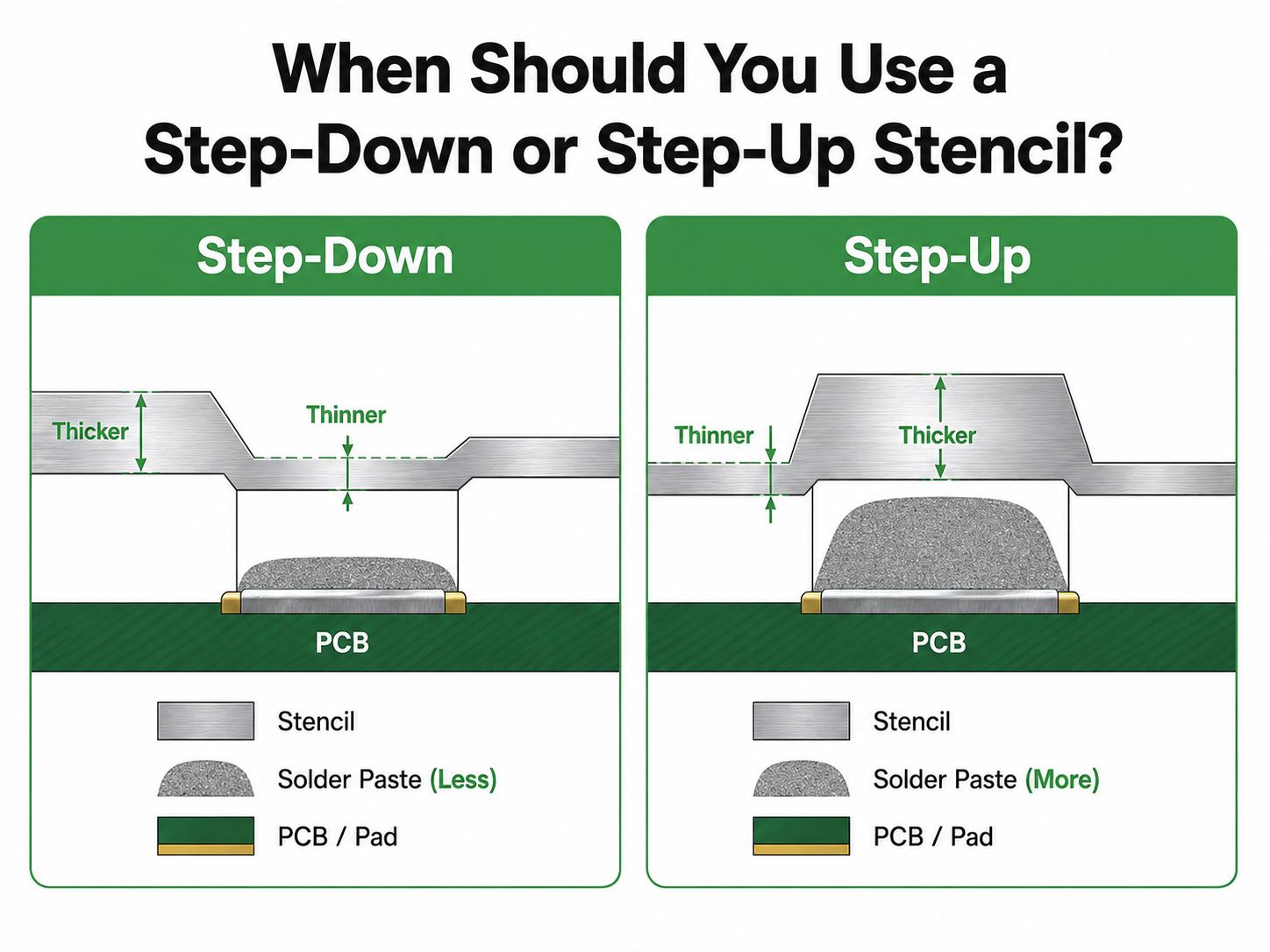
  • Stencil aperture reduction for BGA pads

Prototype vs Wholesale PCB SMT Assembly: Cost and Risk Differences

ItemPrototype SMT PCB AssemblyWholesale SMT PCB Assembly
Primary goalSpeed and validationCost and consistency
BOM flexibilityHighLow
Process tuningManual + adaptiveLocked and repeatable
Risk toleranceHigherVery low

Trying to apply wholesale pricing logic to prototype projects often leads to rework and schedule overruns.

Common SMT PCB Assembly Defects and How to Prevent Them

Typical SMT assembly defects

Defect TypeRoot CausePrevention Method
Solder bridgingExcess pasteStencil aperture tuning
TombstoningThermal imbalancePad symmetry control
Insufficient solderLow paste volumePrinter calibration
BGA voidsFlux entrapmentProfile optimization

Defect prevention always starts at PCB design and SMT assembly guidelines, not at inspection.

Lead-Free and High-Reliability PCB SMT Assembly Standards

Lead-free PCB SMT assembly places significantly higher demands on thermal control and process stability compared with traditional tin-lead soldering, as elevated reflow temperatures reduce the allowable process window and increase stress on both components and PCB materials.

Key engineering implications of lead-free SMT

  • Higher peak reflow temperatures
    Lead-free alloys typically require peak temperatures in the 235–250 °C range, increasing the risk of PCB warpage, component cracking, and solder joint fatigue if profiles are not precisely controlled.
  • Greater sensitivity to PCB material selection
    PCB laminate Tg, Td, and CTE become critical under lead-free conditions. Inadequate material choices can lead to delamination, pad lifting, or micro-cracking during reflow.
  • Stronger need for documented process control
    Lead-free SMT demands tightly defined reflow profiles, verified thermal uniformity, and repeatable machine settings, all supported by controlled work instructions and change management.

For high-reliability PCB SMT assembly, compliance extends beyond soldering itself. These applications require full material and process traceability, validated reflow profiles, and documented inspection criteria such as AOI and X-ray acceptance standards to ensure consistent quality across production batches.

Flex, Rigid-Flex, and Mixed SMT/THT PCB Assembly

Flex PCB SMT assembly

  • Requires dedicated support fixtures
  • Lower placement force to avoid deformation
  • Stress-aware reflow profiles

Mixed board assembly SMT THT PCB

  • SMT completed first
  • THT handled via selective soldering
  • Protects sensitive SMT joints
PCB SMT Assembly

How to Choose a Reliable PCB SMT Assembly Manufacturer?

Engineers should evaluate capability beyond surface claims.

Practical selection criteria

  • In-house SMT PCB assembly equipment
  • DFM review before quotation
  • Proven BGA and HDI experience
  • Digital traceability across materials and processes

A reliable PCB SMT assembly manufacturer explains risks clearly instead of hiding them in pricing.

PCB SMT Assembly Cost Structure and Quotation Logic

What actually drives SMT assembly cost

  • Component sourcing volatility
  • Assembly complexity (BGA, double-sided, HDI)
  • Inspection depth (AOI vs X-ray coverage)
  • Yield risk

Transparent quotations clarify trade-offs and avoid surprises during production.

PCB SMT Assembly

To sum up, PCB SMT assembly is a process-driven manufacturing discipline that directly determines product reliability, yield stability, and time-to-market.

Our strength lies in engineering-led SMT execution (technical team support and DFM pre-review), one-stop PCB manufacturing, component sourcing, and PCBA integration, and fast-turn PCBA delivery with digital traceability. If you need dependable PCB SMT assembly for prototypes or production, pls feel free to contact us via sales@bestpcbs.com.

FAQ: PCB SMT Assembly

Q1: What is SMT in PCB assembly?

SMT in PCB assembly refers to Surface Mount Technology, where electronic components are mounted directly onto the surface of a printed circuit board using automated placement and reflow soldering. This method supports higher component density, smaller board size, and efficient mass production.

Q2: Is SMT PCB assembly suitable for low-volume projects?
Yes. Prototype SMT PCB assembly supports fast design verification.

Q3: How reliable is BGA SMT assembly?
With X-ray inspection and controlled profiles, BGA reliability is very high.

Q4: What files are required for SMT PCB assembly?
Gerbers, BOM, centroid file, assembly drawing, and test requirements.

Q5: Can SMT and THT be combined on one board?
Yes. Mixed SMT/THT PCB assembly is common in industrial designs.

Q6: How long does PCB SMT assembly take?
Typical lead time is 7–10 working days, depending on sourcing.

Q7: How much does PCB SMT assembly cost?

PCB SMT assembly cost depends on factors such as component count, board complexity, package types (BGA, fine-pitch), inspection requirements, and production volume. Prototype assemblies typically cost more per unit than volume production due to setup and sourcing overhead.

Q8: What equipment is used in SMT assembly?

SMT assembly uses solder paste printers, pick-and-place machines, reflow ovens, AOI systems, and X-ray inspection equipment. These machines work together to ensure placement accuracy, solder joint quality, and process consistency.

Q9: What is the difference between PCB fabrication and SMT assembly?

PCB fabrication focuses on manufacturing the bare circuit board, while SMT assembly involves mounting and soldering electronic components onto the finished PCB. Both processes are essential but occur at different stages of electronics production.

Q10: What are the limitations of SMT in PCB assembly?

SMT is less suitable for very large or high-power components that require strong mechanical support. It also demands tighter process control and higher upfront equipment investment compared to traditional through-hole assembly.

You may also like

Circuit Board vs Motherboard: What’s the Difference?

January 27th, 2026

Circuit board vs motherboard is a common comparison, but the two terms are not interchangeable. A circuit board is the basic platform that holds and connects electronic components using copper traces. It is used in almost every electronic product, from simple controllers to complex industrial equipment.

Circuit Board vs Motherboard: What's the Difference?

What is a Circuit Board?

Circuit board is the physical platform that supports and connects electronic components. It provides mechanical stability, electrical pathways, and thermal management for an electronic system. Copper traces etched or printed onto an insulating base material form the conductive routes that allow current and signals to flow between components.

Circuit board is not a finished product by itself. It is a foundation. Components such as resistors, capacitors, integrated circuits, and connectors are mounted onto the board through surface-mount or through-hole methods. Once assembled, the board becomes a functional electronic unit.

In practical manufacturing terms, a PCB board serves several purposes at the same time. It ensures reliable electrical connections, keeps component placement organized, and improves consistency in mass production.

From consumer electronics to industrial automation, circuit boards are everywhere. You will find them inside power supplies, LED lighting, medical monitors, automotive controllers, and communication equipment.

At EBest Circuit (Best Technology), circuit boards range from basic two-layer boards to advanced HDI structures. Each design is tailored to its electrical load, signal speed, and operating environment.

What are the different types of circuit boards?

Circuit boards are not all built the same way. Their structure, material, and complexity vary based on application needs.

Common types of circuit boards include:

  • Single-layer circuit boards: These boards have copper on only one side. They are simple, low cost, and widely used in basic electronics such as toys, adapters, and simple control modules.
  • Double-layer circuit boards: Copper exists on both sides of the substrate. Vias connect the two layers. This design allows higher component density and more routing flexibility.
  • Multilayer circuit boards: These boards contain three or more copper layers stacked with insulating material in between. They support complex routing, controlled impedance, and stable power distribution.
  • Rigid circuit boards: Made from materials like FR-4, rigid boards hold their shape. They dominate most electronics applications.
  • Flexible circuit boards: Built on polyimide films, these boards bend and fold. They are common in cameras, wearables, and compact consumer devices.
  • Rigid-flex circuit boards: A hybrid of rigid and flexible sections. They reduce connectors and improve reliability in space-constrained designs.
Circuit Board vs Motherboard: What's the Difference?

Each of these is still a circuit board. A motherboard belongs to this family, but with a very specific role and structure. EBest Circuit (Best Technology) manufactures all of these PCB board types, adjusting stack-ups, copper thickness, and surface finishes to match functional demands.

What is a Motherboard?

Motherboard is a specialized and highly integrated type of circuit board. Its primary function is to act as the central connection hub of an electronic system. Unlike simpler PCB boards that serve one function, a motherboard coordinates multiple subsystems at once.

In a computer or embedded system, the motherboard hosts the main processor, memory interfaces, power regulation circuits, and communication buses. It allows different modules to talk to each other through well-defined electrical pathways.

The term “motherboard” originated in computing, but today it extends beyond desktop PCs. Industrial controllers, medical devices, networking equipment, and even automotive control units can have motherboard-style PCBs. In these cases, the board may not resemble a PC motherboard visually, but the architectural role is similar.

Motherboards usually demand tighter tolerances, higher layer counts, and stricter signal integrity control. Power delivery and grounding must be carefully planned. Small layout mistakes can cause noise, instability, or overheating.

EBest Circuit (Best Technology) often supports customers who move from simple PCB boards to full motherboard designs as their products mature. This transition requires deeper engineering coordination and manufacturing discipline, especially for multilayer stack-ups and high-speed signals.

What are the different types of Motherboards?

Just as circuit boards come in many forms, motherboards also vary by application and scale.

Typical motherboard types include:

  • Desktop computer motherboards: These boards support CPUs, RAM slots, graphics cards, storage interfaces, and peripheral connectors.
  • Server motherboards: Designed for reliability and continuous operation. They support multiple processors, large memory capacity, and advanced power management.
  • Embedded system motherboards: Used in industrial machines, medical devices, and automation systems. They focus on stability, long lifecycle, and specific I/O requirements.
  • Industrial control motherboards: These boards operate in harsh environments. They may include reinforced power circuits, wider temperature tolerance, and thicker copper layers.

In all cases, the motherboard PCB layers are carefully engineered to balance signal routing, power planes, and thermal paths. EBest Circuit (Best Technology) frequently works on custom motherboard PCB projects where off-the-shelf solutions do not meet performance or size requirements.

Circuit Board vs Motherboard: What's the Difference?

Is the motherboard the same as the circuit board?

The short answer is no, they are not the same, but they are closely related.

A motherboard is a circuit board, but not every circuit board is a motherboard. The distinction is functional rather than material. A circuit board can perform a single task, such as voltage regulation or signal conversion. A motherboard integrates many tasks and coordinates system-level operation.

Think of a circuit board as a component, and a motherboard as a system platform. The motherboard often contains or connects to multiple other PCB boards. These may include daughter boards, expansion cards, or functional modules.

What is the difference between motherboard and circuit board?

From a design standpoint, a circuit board usually focuses on one function. It may amplify a signal, convert power, or control a motor. A motherboard must support many functions at once and ensure they work together without interference.

From a structural standpoint, motherboards often require more layers. High-speed data lines, stable power planes, and controlled impedance routing are common. A simple PCB board may only need one or two layers.

From a manufacturing standpoint, motherboard production involves tighter inspection standards. Layer alignment, impedance testing, and thermal reliability become critical. At EBest Circuit (Best Technology), motherboard PCB projects often go through additional design-for-manufacturing checks before fabrication begins.

Another practical difference lies in lifecycle expectations. Motherboards are expected to last longer and support firmware updates or hardware revisions. Circuit boards used as submodules may be replaced or redesigned more frequently.

How does PCB motherboard design work?

PCB motherboard design is a structured and disciplined process. It starts with system architecture rather than component placement.

The design process typically includes several coordinated steps. Engineers first define functional blocks and interfaces. They then allocate PCB motherboard layers for power, ground, and signals.

Component placement follows strict rules. Processors, memory, and power circuits are positioned to minimize noise and heat. Decoupling capacitors are placed close to critical pins.

Once routing is complete, simulation and verification take place. Signal integrity, power integrity, and thermal behavior are analyzed.

EBest Circuit (Best Technology) supports this process by providing early feedback on stack-up feasibility, copper weight selection, and drilling limits. This collaboration reduces rework and speeds up time to production.

Circuit Board vs Motherboard: What's the Difference?

How many motherboard PCB layers are there?

The number of motherboard PCB layers varies widely based on application complexity. There is no fixed standard, but trends are clear across industries.

Entry-level embedded motherboards may use four layers. This configuration allows basic separation of power, ground, and signals. It suits moderate-speed designs with limited interfaces.

More advanced systems often use six to eight layers. These additional layers improve signal routing freedom and noise control. Industrial and communication products commonly fall into this range.

High-performance motherboards, such as those used in servers or advanced computing, may use ten layers or more. These designs support dense routing, multiple power domains, and high-speed buses.

At EBest Circuit (Best Technology), multilayer PCB capabilities support a wide range of motherboard PCB layer counts. Stack-ups are customized to balance cost, performance, and manufacturability.

Conclusion:

The comparison of circuit board vs motherboard becomes straightforward once roles are clearly defined. A circuit board is the foundation of electronic connectivity, while a motherboard is a specialized circuit board that coordinates an entire system. Every motherboard is a printed circuit board, but only a small portion of PCB boards qualify as motherboards.

Whether you are building a single-function PCB board or a full system motherboard, professional guidance makes a measurable difference.

For technical consultation, PCB fabrication, or PCBA services, you can contact the EBest Circuit (Best Technology) team directly at sales@bestpcbs.com

You may also like

Professional SMD Board Assembly for Prototype and Volume Production

January 27th, 2026

SMD board assembly is the most widely used method for building compact, high-density electronic products today, especially in applications where space utilization, electrical performance, and production efficiency must be tightly controlled. In real production environments, SMD board assembly directly determines electrical reliability, thermal behavior, signal integrity, and long-term field performance, rather than just visual assembly quality.

This article explains how SMD board assembly works in real manufacturing scenarios, what drives its cost, and how engineers and buyers can select a capable SMD board assembly supplier. If you are sourcing SMD board assembly services for prototypes or volume production, EBest Circuit (Best Technology) provides production-ready solutions backed by stable SMT lines and engineering support. For orders or technical discussion, pls feel free to contact us via sales@bestpcbs.com.

What Is SMD Board Assembly and Where Is It Used?

SMD board assembly is the process of mounting surface-mount electronic components directly onto a printed circuit board using automated SMT equipment and controlled soldering processes. It is the dominant assembly method for modern electronics because it enables high component density, repeatable quality, and scalable production.

In practice, SMD board assembly is widely used in:

  • Industrial control and automation boards
  • LED lighting drivers and modules
  • Medical and automotive electronics
  • Power supplies, communication, and IoT devices

Compared to through-hole assembly, SMD assembly allows shorter signal paths, better high-frequency performance, and faster production cycles, making it suitable for both prototypes and mass production.

 SMD Board Assembly

SMD Board Meaning vs SMT Assembly: Are They the Same?

SMD refers to the components themselves, while SMT describes the manufacturing technology used to place and solder those parts onto the PCB. In practical production environments, SMD board assembly brings these two concepts together as a single, well-defined manufacturing workflow. From an engineering perspective, the distinction matters less than the consistency and control of the assembly process.

The key distinction is straightforward:

  • SMD (Surface-Mount Device): the component itself, such as resistors, capacitors, ICs, and LEDs
  • SMT (Surface-Mount Technology): the assembly process, including solder paste printing, component placement, and reflow soldering

In real-world manufacturing, “SMD board assembly” and “SMT board assembly” describe the same production workflow from an engineering and procurement perspective. SMD PCB assembly board and SMT PCB assembly board refer to the same type of assembled PCB. SMD describes the component type, while SMT describes the assembly process. In practical manufacturing, both terms are used interchangeably.

SMD Board Assembly

How Does SMD Board Assembly Work Step by Step?

board assembly SMT SMD follows a controlled and repeatable sequence designed to minimize defects and ensure consistent solder joint quality. Each step is critical and cannot be treated independently.

A standard SMD assembly flow includes:

  • Solder paste printing to define solder volume and joint geometry
  • SPI inspection to verify paste height, area, and alignment
  • Pick-and-place of SMD components using automated placement machines
  • Reflow soldering with a controlled thermal profile
  • AOI inspection to detect placement and solder defects
  • Functional testing to confirm electrical performance

Small deviations at early stages often lead to yield loss later, which is why process control matters more than visual inspection alone.

What Components Are Used in SMD Board Assembly?

SMD electronic components are standardized by package size and mounting style, which allows automation and high placement accuracy. Component selection directly affects assembly yield, thermal reliability, and rework difficulty.

Common components used in board assembly SMD include:

  • Chip resistors and capacitors (0402, 0603, 0805, and smaller)
  • Ceramic and tantalum capacitors
  • QFN, QFP, and BGA integrated circuits
  • LEDs, power MOSFETs, and regulators

From an assembly standpoint, pad design, package type, and moisture sensitivity must be considered together rather than independently.

SMD Board Assembly for LED and Power Applications

LED and power-related boards place higher demands on SMD board assembly due to thermal and electrical stress. In these applications, solder joints are part of the thermal path, not just electrical connections.

Key assembly considerations include:

  • Thicker copper PCBs to improve current carrying and heat spreading
  • Precisely controlled reflow profiles to avoid LED damage
  • Void control on thermal pads to reduce junction temperature
  • Optical, electrical, and aging tests after assembly

Poor assembly control in LED boards often results in early measuring drift or premature failure, even when components are qualified.

SMD Prototype Board vs Mass Production Assembly

SMD prototype assembly prioritizes speed and design verification, while mass production emphasizes consistency, yield, and cost optimization. Understanding the difference helps avoid redesigns later.

Typical differences include:

  • Prototype assembly: flexible scheduling, low MOQ, manual verification
  • Production assembly: automated inspection, stable BOM sourcing, process locking

Designing footprints and layouts with production constraints in mind significantly reduces future revisions and ramp-up risks.

What Equipment Is Required for SMD PCB Assembly?

Professional PCB board SMD SMT assembly relies on a complete set of automated equipment rather than isolated machines. The overall line capability matters more than any single piece of equipment.

Core equipment typically includes:

  • Automatic solder paste printers
  • High-speed and high-accuracy pick-and-place machines
  • Multi-zone reflow ovens
  • AOI and X-ray inspection systems

Equipment accuracy and maintenance level directly influence defect rates, especially for fine-pitch and high-density boards.

SMD Board Assembly Machine and Cost Factors

SMD board assembly machines determine placement accuracy, throughput, and achievable defect levels.
More advanced machines reduce long-term cost by improving yield.

Key cost drivers include:

  • Total component count per board
  • Presence of fine-pitch or BGA devices
  • Single-sided vs double-sided assembly
  • Inspection depth and test coverage

Higher automation usually increases setup cost but lowers per-unit cost in stable production.

China SMD Board Assembly: Quality and Risk Control

China remains the global center for SMD board assembly due to its mature supply chain and manufacturing infrastructure. However, quality is determined by process control, not location.

Reliable SMD assembly factories typically provide:

  • Full material traceability
  • Documented assembly and inspection processes
  • Stable SMT production lines
  • Direct engineering communication

Structured supplier audits and pilot builds are effective ways to control sourcing risk.

How Much Does SMD Board Assembly Cost? (Price Reference)

SMD board assembly pricing is based on structure and complexity rather than a single flat rate.
Understanding the pricing logic helps prevent hidden costs.

Typical reference ranges (excluding components):

  • Prototype: USD 0.10–0.30 per pad
  • Small batch: USD 8–20 per board
  • Volume production: USD 3–8 per board

Actual pricing depends on board size, layer count, component mix, and inspection requirements.

 SMD Board Assembly

How to Choose a Reliable SMD Board Assembly Manufacturer?

Choosing an SMD board assembly manufacturer should be an engineering decision, not a marketing one.
Capability alignment matters more than advertised capacity.

A practical evaluation checklist includes:

  • SMT line configuration and accuracy
  • Inspection and testing coverage
  • Engineering response speed
  • Quotation transparency
  • Track record in similar products

A capable SMD board assembly supplier reduces long-term cost by preventing quality escapes and rework.

All in all, this article outlined how SMD board assembly is executed in real manufacturing environments, how cost and quality are managed, and how engineers can evaluate suppliers for both prototype and volume production.

EBest Circuit (Best Technology) provides a one-stop integrated service covering PCB fabrication, component sourcing, PCBA assembly, and testing, while supporting prototypes and small-batch builds to help engineers validate designs and accelerate product launch. With ISO 9001 / ISO 13485 / IATF 16949 / AS9100D certifications, in-house PCB and PCBA factories, and a digital workshop enabling full material and production traceability within seconds, we ensure consistent quality and reliable lead times. If you are planning an SMD board assembly project or need technical consultation, please feel free to contact EBest Circuit (Best Technology) at sales@bestpcbs.com.

FAQ: Common SMD Board Assembly Questions

Q1: Is SMD board assembly suitable for prototypes?
Yes. With proper setup and engineering support, it enables fast iteration and low-volume builds.

Q2: What files are required to start SMD PCB assembly?
Gerber files, BOM, pick-and-place data, and assembly notes are required.

Q3: Can SMD and through-hole components be combined?
Yes. Mixed assembly is common in industrial and power boards.

Q4: What causes most SMD assembly defects?
Incorrect solder paste volume, poor footprint design, and uncontrolled reflow profiles.

Q5: How long does SMD board assembly take?
Prototypes typically take 3–5 days, while volume production takes 7–15 days.

You may also like

RS485 Cable Pinout, Specification, Usage and Practical Comparison

January 27th, 2026

RS485 is one of the most enduring and widely adopted communication standards in industrial electronics. Despite the rise of Ethernet, wireless communication, and Industrial IoT protocols, RS485 continues to play a critical role in factories, building automation, energy systems, and embedded control applications.

Why has RS485 stood the test of time? The answer lies in its long-distance capability, high noise immunity, multi-device support, and cost-effectiveness. For engineers, system integrators, and OEMs, RS485 remains a dependable solution when reliability matters more than raw bandwidth.

RS485 Cable Pinout, Specification, Usage and Practical Comparison

What is RS485 Cable?

An RS485 cable is a balanced, twisted-pair transmission medium that carries differential signals between devices. Instead of referencing voltage to ground, RS485 receivers interpret the voltage difference between two signal lines, which dramatically improves noise immunity.

In practical installations, RS485 cables usually consist of:

  • One twisted pair for differential data (A/B or D+/D−)
  • Optional signal ground conductor
  • Optional foil or braided shield

The twisting ensures that external electromagnetic interference couples equally into both conductors, allowing the receiver to cancel common-mode noise.

What is RS485 Cable?

In industrial cabinets, shielded RS485 cable is preferred to suppress interference from VFDs, relays, and switching power supplies.

Is RS485 Still Used?

Yes. RS485 is still widely used, and in many industries, it is intentionally preferred.

Despite the rise of Ethernet and wireless communication, RS485 remains common because it solves problems that newer interfaces do not prioritize. These include:

  • Reliable communication over hundreds or thousands of meters
  • Operation in high-EMI environments
  • Simple wiring without switches or hubs
  • Deterministic behavior for control systems

In factories, substations, and infrastructure projects, predictability and noise tolerance matter more than raw bandwidth. RS485 continues to meet these requirements effectively.

RS485 Cable Specification

A stable RS485 network depends heavily on cable characteristics. Typical RS485 cable specifications include:

ParameterRS485 Specification
StandardTIA-485-A (RS-485)
Signaling TypeDifferential (Balanced)
Number of Wires2-wire (half-duplex) or 4-wire (full-duplex)
Conductor TypeTwisted pair
Characteristic Impedance120 Ω (typical)
Maximum Cable Length1200 m (4000 ft)
Maximum Data RateUp to 10 Mbps
Differential Voltage≥ ±1.5 V
Receiver Sensitivity±200 mV
Common-Mode Voltage Range−7 V to +12 V
Maximum Nodes32 (standard)
TopologyLinear bus (daisy chain)
Termination Resistor120 Ω at both ends
Cable ShieldingOptional (Recommended in industrial use)
Ground ReferenceOptional but recommended
Connector TypesScrew terminal, DB9, RJ45
Supported ProtocolsModbus RTU, BACnet MS/TP, DMX512
Noise ImmunityHigh
Typical Cable TypeSTP twisted pair, Cat5/Cat6

Is RS485 2-wire or 4 wire?

RS485 supports both 2-wire and 4-wire configurations.

2-wire RS485 (half-duplex)

  • One twisted pair for transmit and receive
  • Most common in multi-drop networks
  • Requires direction control

4-wire RS485 (full-duplex)

  • Separate pairs for transmit and receive
  • Allows simultaneous communication
  • Typically used in point-to-point links

Most industrial RS485 networks use 2-wire topology due to simpler cabling and easier expansion.

Is RS485 2-wire or 4 wire?

RS485 Pinout

There is no universal RS485 pinout, as RS485 defines electrical signaling—not connectors.

However, common conventions include:

SignalDescription
A (D+)Non-inverting line
B (D-)Inverting line
GNDSignal reference (optional but recommended)

Typical pin assignments may be found on:

  • Terminal blocks
  • DB9 connectors
  • RJ45 connectors (vendor-specific)

A frequent source of commissioning failure is A/B polarity reversal, especially when vendors label signals inconsistently. Always verify with a scope or by swapping lines during testing.

⚠️ Important: Some manufacturers label A and B oppositely. Always verify the device datasheet before wiring.

Is RS485 the Same as Ethernet?

No. RS485 is not the same as Ethernet, although RJ45 connectors are sometimes used for RS485.

FeatureRS485Ethernet
Communication typeSerialPacket-based
TopologyBusStar
DistanceUp to 1200 m100 m (copper)
SpeedUp to 10 Mbps100 Mbps – 10 Gbps
Protocol stackSimpleComplex (TCP/IP)

RS485 focuses on reliability and simplicity, while Ethernet focuses on speed and networking flexibility.

What Type of Cable to Use for RS485?

Recommended RS485 cable characteristics:

  • Twisted pair (mandatory)
  • 120 Ω impedance
  • Shielded (STP) for noisy environments
  • Low capacitance for longer distances

Common choices:

  • Belden 9841 / 9842
  • CAT5e (short runs, low noise only)
  • Industrial RS485-rated cables

What is RS485 Used For?

RS485 is commonly used in applications that require:

  • Long cable runs
  • Multiple devices on one bus
  • Reliable communication under electrical noise

Typical use cases include:

  • PLC and industrial controllers
  • Modbus RTU networks
  • Energy meters and power systems
  • Building automation and HVAC
  • Access control and alarm systems

These systems value stability and predictability over raw data speed.

How Do I Connect My RS-485 to My Computer?

Most computers do not have native RS485 ports. Common connection methods include:

  1. USB to RS485 converter (most popular)
  2. PCI/PCIe RS485 expansion card
  3. RS232 to RS485 converter

After connecting, configure:

  • Baud rate
  • Data bits
  • Parity
  • Stop bits

to match the RS485 device settings.

Does RS-485 Need to Be Grounded?

RS485 does not strictly require grounding, but grounding is strongly recommended for stability and protection.

Best practices:

  • Connect signal ground between devices
  • Use shielded cable
  • Ground the shield at one end only
  • Avoid ground loops

Proper grounding improves noise immunity and prevents communication errors.

How to Quickly Prove Whether RS485 is Working?

When troubleshooting RS485, follow a structured process:

  1. Confirm correct A/B polarity
  2. Check termination resistors at both ends of the bus
  3. Verify biasing resistors are present
  4. Inspect grounding and shield connections
  5. Reduce baud rate to increase noise margin
  6. Observe waveforms with an oscilloscope if available

Most RS485 issues originate at the physical layer, not the protocol level.

RS485 vs RJ45: What are Differences?

RS485 and RJ45 are frequently confused, especially in industrial projects where RS485 signals are often routed through RJ45 connectors.

However, they represent two completely different layers of a communication system, and understanding this distinction is critical to avoid wiring errors, equipment damage, or unstable communication.

1. Standard definition

    RS485 is an electrical signaling standard (TIA-485). It defines:

    • Differential voltage levels
    • Driver and receiver characteristics
    • Noise immunity behavior
    • Multi-drop bus capability

    RS485 says nothing about connectors, pin counts, or cable jackets.

    RJ45 is a connector specification. It defines:

    • 8 physical pins
    • Mechanical dimensions
    • Contact layout

    RJ45 does not define voltage levels, signaling methods, or communication protocols.

    This is the root cause of confusion: RJ45 can carry RS485, Ethernet, CAN, or proprietary signals, depending entirely on how the pins are wired.

    2. Signal transmission method

    This is the most important technical difference.

    AspectRS485RJ45
    RoleElectrical communication standardPhysical connector
    Signal typeDifferential (A/B)None defined
    Noise immunityVery highDepends on protocol
    Defines voltage levelsYesNo
    Defines data formatNoNo

    RS485 uses differential signaling, which allows it to tolerate high EMI, long cable runs, and ground noise. RJ45 itself provides no electrical noise protection; it simply holds contacts in place.

    3. Cable usage and common misconceptions

    A major source of misunderstanding is the use of Ethernet cable with RS485.

    RS485 vs RJ45: What are Differences?

    Many systems run RS485 over:

    • Cat5 / Cat5e / Cat6 cable
    • RJ45 connectors

    This does not make the system Ethernet.

    Why it works:

    • Ethernet cable contains twisted pairs
    • Twisted pairs suit RS485 differential signaling well
    • 100 Ω Ethernet cable impedance is close to RS485’s typical 120 Ω requirement

    Why problems still occur:

    • Pinouts are not standardized
    • Shielding and grounding may differ
    • Termination and biasing are often ignored

    Using an RJ45 connector does not change the fact that the system is still RS485 electrically.

    4. Topology differences

    RS485 topology

    • Bus (daisy-chain)
    • Termination at both physical ends
    • Limited stub lengths
    • Multi-drop without switches

    RJ45-based Ethernet topology

    • Star topology
    • Uses switches and routers
    • Each device has a dedicated link

    This difference matters because star wiring works for Ethernet but often breaks RS485. Engineers accustomed to Ethernet wiring sometimes unknowingly apply the same topology to RS485, leading to reflections and unstable communication.

    5. Distance and speed comparison

    ParameterRS485RJ45 (Ethernet typical)
    Typical distanceUp to ~1200 m (speed-dependent)100 m per segment
    Typical speedkbps to low Mbps100 Mbps – 10 Gbps
    Noise toleranceExcellentModerate
    InfrastructureSimpleRequires switches

    Confusing the two leads to incorrect assumptions about topology, grounding, termination, and compatibility. Once the distinction is clear, RS485 systems become far easier to design, troubleshoot, and maintain.

    FAQs

    1. Is RS485 the same as RS232?

    No. RS485 supports longer distance, better noise immunity, and multi-drop networks, unlike RS232.

    2. Can RS485 run over Ethernet cable?

    Yes, twisted pairs in Ethernet cable can be used, but impedance and shielding must be considered carefully.

    3. What happens if RS485 is not terminated?

    Signal reflections may occur, causing data corruption—especially at higher speeds.

    4. Is RS485 polarity important?

    Yes. Reversing A and B lines typically prevents communication.

    5. Can RS485 support multiple masters?

    Electrically yes, but protocol design must manage bus access carefully.

    You may also like

    Reliable SMT PCBA Process for Turnkey Medical Projects

    January 26th, 2026

    The SMT PCBA process​ is the backbone of modern electronics manufacturing, involving the automated placement and soldering of components onto printed circuit boards. This article provides a comprehensive guide to building a stable SMT production line, with a special focus on the critical engineering controls needed for turnkey medical device projects.

    Launching a medical device often stalls not at design, but at manufacturing—where compliance, reliability, and execution risks quickly compound.

    • Lack of true medical compliance expertise beyond basic PCB assembly (ISO 13485, FDA QSR).
    • Unstable sourcing for long-lifecycle medical components and obsolescence risk.
    • Yield loss and inconsistency when assembling fine-pitch and miniature components.
    • Heavy documentation and validation burdens for regulatory submissions.
    • Fragmented communication in turnkey projects without clear ownership.

    These challenges are addressed by partnering with a medical-focused EMS provider built around process control, traceability, and regulatory readiness.

    • ISO 13485–certified quality system with audit-ready workflows and DHF support.
    • Proactive component lifecycle management through dedicated medical sourcing teams.
    • Precision SMT lines validated for micro-assembly, supported by AOI and AXI.
    • Complete IQ/OQ/PQ, PFMEA, and CPK deliverables included as standard.
    • Dedicated project engineers providing end-to-end ownership from PCBA to box-build.
    At EBest Circuit (Best Technology), we are a specialized provider of turnkey PCBA manufacturing services for the medical industry. Our core strength lies in a deeply engineered SMT PCBA process​ built on precision equipment, statistically controlled workflows, and a quality-first culture. Our SMT production capability is defined by advanced pick-and-place platforms, tightly controlled process flows, and rigorously validated engineering parameters—ensuring every assembly stage meets the stability and repeatability required for medical-grade manufacturing. For a consultation on your next project, contact our team at sales@bestpcbs.com.

    SMT PCBA Process

    What Is The SMT PCBA Process?

    The SMT PCBA process​ refers to the sequence of operations used to populate a bare PCB with electronic components using Surface Mount Technology (SMT). It is the dominant method for high-density, high-volume electronics assembly, including critical medical devices. This process involves applying solder paste, precisely placing components, and using controlled heat to form permanent solder joints. A well-controlled SMT process flow​ is characterized by repeatability, high yield, and the ability to handle increasingly miniaturized components. For a reliable turnkey medical project, understanding and controlling this process is non-negotiable.

    The SMT assembly sequence is commonly broken into three major phases:

    • Pre-Assembly:​ This includes all preparatory steps: solder paste printing (stencil application), adhesive dispensing (if needed for mixed-technology boards), and the critical setup and programming of the SMT pick and place machine.
    • Assembly:​ The core phase where components are placed onto the pasted PCB. This stage is defined by the speed and accuracy of the automated placement equipment.
    • Post-Assembly:​ This encompasses the soldering process (typically reflow soldering), cleaning (for no-clean or water-soluble pastes), and a series of inspections (Automated Optical Inspection – AOI, X-ray Inspection – AXI) to verify quality before any PCBA plug-in assembly​ of through-hole parts.

    In summary, the SMT PCBA process​ is a sophisticated, phased manufacturing methodology that transforms a bare board into a functional assembly. Its effectiveness directly determines the performance, reliability, and longevity of the final electronic product, especially in life-critical medical applications.

    SMT PCBA Process

    SMT PCBA Process Step By Step Explained

    A reliable SMT assembly​ follows a defined sequence where each step builds upon the quality of the previous one. For medical projects, consistency at every stage is paramount. Here is a detailed breakdown of a standard SMT PCBA process step by step:

    • Solder Paste Printing:​ A stainless steel stencil is aligned over the PCB, and solder paste is deposited onto the solder pads. The quality of this print, including volume, alignment, and definition, is the first critical determinant of soldering success.
    • Solder Paste Inspection (SPI):​ An inline 3D SPI system measures the height, volume, and area of each solder paste deposit. This real-time feedback allows for immediate correction of printing defects, preventing a cascade of failures later.
    • Component Placement:​ The PCB moves to the SMT pick and place machine. Components from reels, trays, or tubes are picked up, optically centered, and placed with micron-level accuracy onto their corresponding solder paste deposits.
    • Reflow Soldering:​ The populated board travels through a multi-zone reflow oven on a conveyor. A precise thermal profile melts the solder paste, forms intermetallic bonds, and then cools to create solid, reliable electrical and mechanical connections.
    • Automated Optical Inspection (AOI):​ Post-reflow, an AOI system uses high-resolution cameras to check for placement errors, missing components, polarity issues, and visible solder joint defects.
    • X-Ray Inspection (AXI):​ For medical assemblies with hidden solder joints (e.g., under BGAs or QFNs), AXI is essential. It verifies internal solder ball integrity, voiding percentage, and alignment, which are critical for long-term reliability.
    • Conformal Coating & Final Assembly:​ For medical devices requiring protection from moisture and contaminants, a conformal coating may be applied. Finally, any necessary PCBA plug-in assembly​ of through-hole components is completed.

    This step-by-step SMT PCBA process flow, when executed with precision equipment and strict controls, forms the foundation of a manufacturing line capable of producing medical-grade electronics with the required traceability and zero-defect mindset.

    How Does The SMT Automation Process Work?

    SMT automation is the backbone of modern medical PCBA manufacturing, enabling the speed, placement accuracy, and process repeatability required for regulated devices. Rather than isolated machines, automation links equipment, software, and data into a synchronized production system that minimizes variability and maximizes control.

    At the core of this system is the SMT pick and place platform, supported by automated material handling, closed-loop process control, and centralized data management. Together, these elements form a fully integrated SMT production line designed for consistency, traceability, and validation readiness.

    Key Elements of SMT Automation

    • Material Handling
      Automated loaders and unloaders feed bare boards into the line and remove completed assemblies, enabling continuous, stable operation with minimal manual intervention.
    • Pick and Place Operations
      High-speed and high-precision placement heads handle components ranging from 0201 passives to fine-pitch BGAs, using advanced vision systems for fiducial alignment and placement correction.
    • Process Linking
      Conveyor systems synchronize printers, SPI, placement machines, reflow ovens, and inspection stations into a single, balanced production flow.
    • Data Integration
      A Manufacturing Execution System (MES) tracks each PCB in real time, associating it with feeder setup, stencil ID, reflow profile, and inspection results to form a complete digital record.

    Key Automation Technologies in an SMT Line

    TechnologyPrimary FunctionMedical Manufacturing Impact
    3D SPIPaste volume verificationEarly defect prevention
    High-Precision PlacersAccurate micro-component placementSupports miniaturized designs
    Closed-Loop ReflowStable thermal controlConsistent solder reliability
    AOI / AXIAutomated defect detectionObjective quality evidence

    In practice, SMT automation works as a closed-loop, data-driven environment. Inspection results feed back into placement and printing parameters, while MES data enables statistical process control and full traceability. This structure reduces human variability, stabilizes yield, and generates the documentation foundation required for SMT process validation and regulatory compliance in medical device manufacturing.

    What Engineering Controls Ensure A Stable SMT Production Line?

    For medical SMT PCBA processing, stability is synonymous with safety. Engineering controls are the documented procedures, specifications, and monitoring systems that prevent process drift and ensure every unit meets specification. A stable line is not achieved by chance but through deliberate, scientific control.

    • Standardized Operating Procedures (SOPs):​ Every machine operation and manual task, from stencil cleaning to feeder setup, is governed by a detailed SOP. This eliminates variability between operators and shifts.
    • Preventive Maintenance (PM) Schedules:​ Strict, calendar-based maintenance is performed on all critical equipment (printers, placers, ovens). This prevents unplanned downtime and ensures machines consistently perform within specification.
    • Statistical Process Control (SPC):​ Key parameters are monitored in real-time using control charts. Examples include solder paste volume (from SPI), placement accuracy, and reflow oven temperatures. SPC signals trends before they become defects.
    • Process Capability Studies (Cp/Cpk):​ These statistical measures quantify how well a process (e.g., solder paste printing) can meet its specified tolerance limits. A high Cpk (>1.33 is typical, >1.67 for critical characteristics) indicates a stable, capable process.
    • Comprehensive Traceability:​ A lot-tracking system records the specific materials (paste lot, component reel), machine programs, and operator for every board or panel. This allows for targeted containment and root cause analysis if an issue arises.
    • Environmental Controls:​ Temperature and humidity in the production area are controlled. Solder paste and moisture-sensitive devices (MSDs) are stored and handled according to strict protocols (e.g., IPC/JEDEC J-STD-033).

    These engineering controls transform an SMT line​ from a collection of machines into a predictable, reliable manufacturing system. They are the tangible manifestations of a quality management system like ISO 13485 and are essential for passing audits and ensuring the long-term reliability of medical devices.

    What Are Common PCBA Defects In SMT Assembly?

    Even with a well-tuned process, defects can occur. Understanding their root causes is the first step to prevention. For ODM SMT PCBA rapid patch processing​ providers, rapid diagnosis and correction are key. Common defects include:

    • Solder Bridging (Short):​ Solder inadvertently connects two adjacent pins or pads. Often caused by excessive solder paste, poor stencil design, or incorrect reflow profile.
    • Tombstoning:​ A passive component (like a resistor or capacitor) stands up on one end. Typically caused by unequal solder paste volume or thermal mass on the two pads.
    • Insufficient Solder (Open):​ A solder joint lacks sufficient material to form a reliable connection. Can result from poor paste printing, pad contamination, or an incorrect reflow profile.
    • Component Misalignment:​ A part is offset or rotated from its intended position. Usually a fault of the pick and place machine’s calibration, vision system, or poor fiducial recognition.
    • Voiding (in BGA joints):​ Gas bubbles trapped within a BGA solder ball. While some voiding is acceptable per IPC standards, excessive voids can weaken the joint and impact thermal performance. Often related to paste chemistry or reflow profile.
    • Cold Solder Joint:​ A joint that appears dull, grainy, and has not properly fused. Caused by insufficient heat during reflow or contamination.

    Root Cause & Corrective Action (RCCA) for Defects:

    A stable medical SMT line relies on immediate defect detection (via AOI/AXI) and systematic RCCA. For example, a spike in bridging defects would trigger an investigation of the stencil’s condition, the printer’s settings, and the recent reflow oven profile, ensuring the issue is corrected at its source.

    What Is CPK In SMT Manufacturing Process Control?

    Cpk (Process Capability Index)​ is a crucial statistical measure in SMT process control. It quantifies how well a controlled process can consistently produce outputs within the specified tolerance limits. In simple terms, it tells you if your process is centered and precise enough.

    • The Concept:​ Every process has natural variation. Cpk compares the spread of this natural variation (process width) to the distance between the specification limits (customer/engineering requirements). A higher Cpk indicates the process is well-centered and has a smaller spread relative to the limits, meaning a lower probability of defects.
    • Formula:​ Cpk = min[ (USL – μ) / 3σ , (μ – LSL) / 3σ ]
      • USL/LSL: Upper/Lower Specification Limit
      • μ: Process mean (average)
      • σ: Process standard deviation (variation)
    • Interpretation in SMT:
      • Cpk < 1.0:​ The process spread is too wide and/or not centered. It is incapable​ of consistently meeting specs. Immediate corrective action is required. (e.g., Solder paste height is too variable).
      • Cpk ≥ 1.33:​ The process is considered capable. This is a common industry minimum.
      • Cpk ≥ 1.67:​ The process is highly capable and robust. This is the target for critical characteristics in medical SMT PCBA processing, such as solder paste volume or reflow peak temperature.

    For a medical device manufacturer, reporting Cpk values for key processes (paste printing, placement accuracy) is a powerful demonstration of a mature, stable, and statistically validated production line. It moves quality assurance from a “check-the-box” inspection to a predictive science.

    What Is The PiP Process In SMT Assembly?

    PiP (Pin-in-Paste), also known as Paste-in-Hole or Intrusive Reflow, is a hybrid assembly technique that allows through-hole components to be soldered during the SMT reflow process. This simplifies assembly by eliminating a separate wave soldering or manual soldering step, which is valuable for turnkey projects​ seeking efficiency.

    How it works:

    • The PCB goes through the standard solder paste printing process.
    • Solder paste is deposited not only on SMD pads but also into the plated through-holes (PTHs) intended for PiP components.
    • SMT components are placed as usual.
    • PiP components​ (typically connectors or larger electromechanical parts with long leads) are inserted into the paste-filled holes. This can be done manually or with automated insertion equipment.
    • The entire assembly then passes through the reflow oven. The solder paste in the PTHs melts, flows, and creates a fillet, soldering the PiP component in place.

    Advantages for Medical PCBA:

    • Process Simplification:​ Reduces the number of soldering stages, lowering cost and cycle time.
    • Improved Reliability:​ Can create more robust solder joints for heavy components compared to wave soldering.
    • Design Flexibility:​ Useful for mixed-technology boards where a few through-hole parts are needed alongside dense SMT.

    Considerations:

    Successful PiP requires careful design (adequate PTH size, solder paste volume calculation), specialized stencil design, and process validation to ensure complete hole fill and avoid solder voids.

    SMT PCBA Process

    How Is SMT Process Validation Performed In Mass Production?

    SMT process validation​ is a formal, documented procedure that provides high confidence that a specific SMT process will consistently produce a PCBA meeting all predetermined quality and regulatory requirements. For mass production of medical devices, it is a mandatory gate before commercial launch.

    The validation follows a structured, three-phase approach often aligned with the Installation Qualification (IQ), Operational Qualification (OQ), and Performance Qualification (PQ)​ framework.

    1. Installation Qualification (IQ):​ Verifies that the SMT production line​ equipment (printer, SPI, placer, oven) is correctly installed according to manufacturer specifications and site requirements. This includes checking utilities, calibrations, and software versions. Documentation: Equipment manuals, calibration certificates, installation checklists.
    2. Operational Qualification (OQ):Demonstrates that the installed equipment can operate consistently within established limits and tolerances under “worst-case” scenarios. This involves running the machines with test programs and challenging conditions.
      • Example OQ Tests:
        • Printer:​ Repeatability of paste volume across multiple prints.
        • Placer:​ Accuracy and repeatability of placement using a test board.
        • Reflow Oven:​ Verification of thermal profile consistency across all zones and across the conveyor width.
    3. Performance Qualification (PQ):Also known as Process Validation, this is the most critical phase. It proves that the entire, integrated process, using production-intent materials, can consistently produce acceptable product.
      • A validation lot (typically 3 consecutive production runs) is manufactured.
      • The entire SMT PCBA process flow​ is executed under standard operating procedures.
      • Every unit is subjected to comprehensive inspection and testing (visual, AOI, AXI, functional test).
      • Data is collected and analyzed to prove the process is stable and capable (using statistical tools like Cpk).
      • The outcome is a definitive report stating whether the process is validated for mass production.

    For a medical device manufacturer, a completed validation package is a cornerstone of the Design History File (DHF) and is essential for regulatory submissions to bodies like the FDA. It is the ultimate proof that the manufacturing process is under control.

    SMT PCBA Process

    In summary, the SMT PCBA process​ is a complex yet precisely engineered sequence that forms the critical link between electronic design and a reliable, manufacturable medical device. Mastering this process—from the SMT process flow chart​ to real-time process control​ with metrics like CPK—is what separates a basic assembler from a qualified medical manufacturing partner.

    This article has detailed the steps, controls, and validation frameworks necessary to achieve the reliability demanded by turnkey medical projects. Success hinges on automation, data-driven engineering, and a culture of continuous improvement.

    At EBest Circuit (Best Technology), we have built our service around this principle. Our professional ODM SMT PCBA rapid patch processing​ is supported by a SMT production line​ equipped with advanced inspection technology and governed by a strict ISO 13485 quality system. We understand that for medical devices, the process isthe product. Pls feel free to contact our engineering team anytime at sales@bestpcbs.com​ to discuss your project requirements.

    FAQs

    How Is A PCBA Different From A PCB?

    A PCB (Printed Circuit Board)​ is the bare, unpopulated board—just the laminate, copper traces, and solder mask. A PCBA (Printed Circuit Board Assembly)​ is the completed, functional board after all electronic components (SMT and/or through-hole) have been soldered onto it. The SMT PCBA process​ is what transforms a PCB into a PCBA.

    What Is The Difference Between PCB And SMT?

    This is a common point of confusion. PCB​ refers to the physical board itself. SMT (Surface Mount Technology)​ refers to one of the primary methods used to assemble components onto that PCB. SMT is a PCB assembly process, not the board.

    How Do SMT Assembly Services Handle Component Availability?

    Professional ODM SMT PCBA rapid patch processing​ partners manage this proactively. They maintain long-term relationships with franchised distributors, use component market analysis tools to forecast shortages, and offer DFM (Design for Manufacturability)​ reviews early in the design phase to suggest alternates for parts at risk of obsolescence, which is vital for the long lifecycles of medical devices.

    What SMT Component Sizes Are Hardest To Assemble?

    The greatest challenges come at the extremes of miniaturization: 01005 (0.4mm x 0.2mm)​ and smaller passive components, and ultra-fine-pitch components​ (e.g., 0.3mm pitch BGAs or CSPs). These require ultra-high-precision SMT pick and place machines, specialized stencil designs, and exquisite process control to avoid defects like bridging or misplacement.

    What Are Typical Turnaround Times For SMT Assembly Services?

    Turnaround time depends on project complexity, layer count, component sourcing, and quantity. For a standard prototype run with all parts in stock, rapid patch processing​ can be as quick as 24-72 hours​ for SMT assembly. For new medical projects requiring full process validation and regulatory documentation, the initial timeline will be longer to ensure quality, with subsequent production runs following a predictable schedule.

    You may also like