PCB manufacturing PCB manufacturing
Home > Blog

Performance Qualification (PQ) in Medical PCBA Production

January 12th, 2026

What Is Performance Qualification (PQ) in Medical PCBA Production?

Performance Qualification (PQ) is the documented verification that a validated medical PCBA manufacturing process consistently produces assemblies that meet defined quality and regulatory requirements under normal production conditions.

After Installation Qualification (IQ) confirms that equipment is correctly installed, and Operational Qualification (OQ) confirms that assembly processes operate reliably within defined limits, PQ answers the final and most practical question:
Can this process repeatedly deliver compliant medical PCBAs in real production?

For medical electronics, PQ represents the transition from engineering validation to dependable manufacturing reality.

Performance Qualification (PQ) in Medical PCBA Production

Why Is PQ Essential for Medical PCBA Manufacturing?

Medical devices often operate continuously, support diagnostic decisions, or perform life-sustaining functions. In these applications, a process that works once is not enough.

PQ is essential because it:

  • Demonstrates long-term process stability
  • Confirms consistency across operators, shifts, and lots
  • Reduces the risk of latent defects entering the field
  • Provides objective evidence for regulatory inspections
  • Builds OEM confidence for volume production

From a regulatory standpoint, PQ is often the final gate before full production approval.

How Does PQ Differ From Engineering Trials or Pilot Builds?

Engineering trials and pilot builds are typically conducted under controlled conditions with close supervision. PQ, by contrast, is intentionally performed under routine manufacturing conditions.

This means PQ uses:

  • Standard production operators
  • Normal shift schedules
  • Approved work instructions
  • Regular inspection and test methods

The objective is not to demonstrate ideal performance, but to confirm repeatable, sustainable output under everyday conditions.

How Is Performance Qualification (PQ) Conducted for Medical PCBA?

In medical PCBA production, PQ usually involves multiple production runs designed to represent normal manufacturing variability.

At Best Technology, a typical PQ approach includes:

  • Manufacturing multiple lots using standard processes
  • Running production across normal shifts
  • Applying routine AOI, X-ray, and functional testing
  • Collecting yield, defect, and rework data
  • Reviewing trends rather than single-lot results

This approach ensures that performance conclusions are based on process behavior over time, not isolated success.

How Is Performance Qualification (PQ) Conducted for Medical PCBA?

What Metrics Are Commonly Evaluated During PQ?

PQ focuses on indicators that reflect real manufacturing performance and product reliability. Common metrics include:

  • First-pass yield (FPY)
  • Defect rate and defect trends
  • Rework frequency and causes
  • Functional test pass rates
  • Stability of critical process outputs

These metrics help demonstrate that the process remains in control and predictable, which is critical for regulated medical products.

Why Is PQ Especially Important for Medical Device Reliability?

Medical PCBAs may be exposed to long operating hours, thermal cycling, or repeated use over extended lifetimes. Even small variations in assembly quality can accumulate into failures.

PQ provides assurance that:

  • Quality does not degrade across batches
  • Process drift is identified and controlled
  • Assemblies meet specification consistently over time

For diagnostic, monitoring, and life-support devices, PQ is often examined closely during regulatory audits because it directly reflects real-world manufacturing reliability.

What Risks Exist If PQ Is Weak or Incomplete?

Inadequate PQ can lead to serious downstream consequences, including:

  • Production instability after scale-up
  • Increased field failure rates
  • Corrective and preventive actions (CAPA)
  • Product recalls or shipment holds
  • Loss of OEM trust

In medical electronics, these risks affect not only manufacturing efficiency but also patient safety and regulatory standing.

IQ vs OQ vs PQ: How Do They Compare in Medical PCBA Validation?

The table below summarizes the distinct roles of IQ, OQ, and PQ within medical PCBA process validation:

Qualification StagePrimary FocusKey Question AnsweredTypical ScopeWhen It Is Performed
IQ (Installation Qualification)Equipment & environmentIs everything installed correctly?Machines, systems, utilities, calibrationBefore process testing
OQ (Operational Qualification)Process capabilityDoes the process work within defined limits?Printing, placement, reflow, cleaning, testingAfter IQ
PQ (Performance Qualification)Production consistencyCan we produce compliant boards consistently?Yield, defects, trends, real production outputAfter OQ

Together, these stages form a closed-loop validation framework required for medical PCBA manufacturing.

How Does PQ Build on IQ and OQ?

PQ only has regulatory value when it is supported by solid IQ and OQ foundations:

  • IQ ensures the manufacturing environment is properly installed
  • OQ ensures the process is capable and controlled
  • PQ confirms consistent performance under routine production

Without IQ and OQ, PQ results lack context. Without PQ, IQ and OQ remain theoretical.

How Does Best Technology Support PQ for Medical PCBA Projects?

Best Technology supports medical PCBA customers with a structured PQ approach aligned with ISO 13485 expectations, including:

  • Stable, validated SMT and test processes
  • Full production traceability
  • Data-driven yield and defect analysis
  • Documentation suitable for OEM and regulatory review

This ensures that medical PCBA production is not only compliant, but sustainably reliable at scale.

How Does PQ Fit Into the Complete Medical PCBA Validation Series?

Performance Qualification is the final confirmation that a medical PCBA process is ready for long-term production. To fully understand its role, it is recommended to review the earlier stages of this series:

Together, IQ, OQ, and PQ form a comprehensive, regulator-accepted strategy for manufacturing reliable medical electronics.

You may also like

Operational Qualification (OQ) in Medical PCBA Assembly

January 10th, 2026

What Is Operational Qualification (OQ) in Medical PCBA Assembly?

Operational Qualification (OQ) is the documented evidence that each step of the medical PCBA assembly process operates reliably within predefined and approved operating limits.
After Installation Qualification (IQ) confirms that equipment and systems are correctly installed, OQ focuses on a more critical question: does the process actually work as intended under controlled variation?

In medical electronics manufacturing, OQ represents the technical core of process validation. It is where engineering intent, manufacturing capability, and regulatory expectations converge.

What Is Operational Qualification (OQ) in Medical PCBA Assembly?

Why Is OQ a Critical Requirement for Medical PCBA Manufacturing?

Medical devices rely on electronics that must perform consistently over long service lives, often in safety-critical or continuously operating environments. Final inspection alone cannot guarantee this level of reliability.

OQ is critical because it:

  • Demonstrates that assembly processes are capable, stable, and repeatable
  • Defines acceptable process windows rather than relying on nominal settings
  • Reduces dependence on operator judgment
  • Provides objective evidence for regulatory audits and OEM reviews

From a regulatory perspective, OQ shows that process risks are understood and controlled, not discovered after failures occur.

Which Assembly Processes Are Typically Validated During OQ?

In medical PCBA assembly, OQ usually covers all process steps that can influence product quality, reliability, or compliance. At (EBest Circuit) Best Technology, typical OQ scope includes:

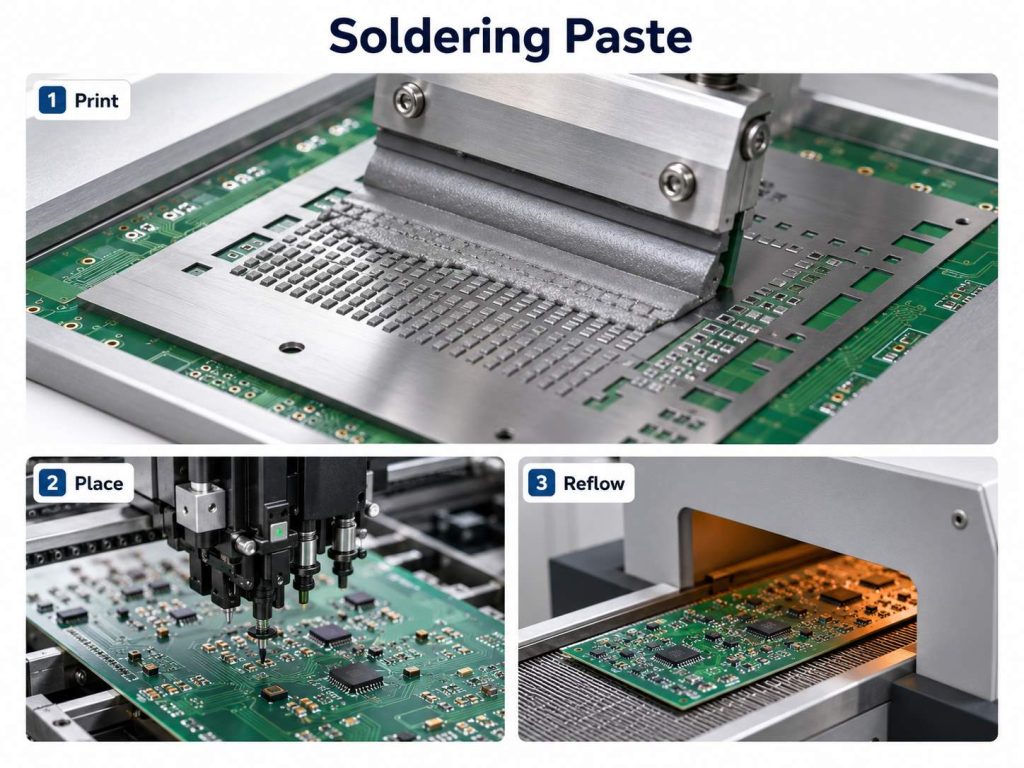
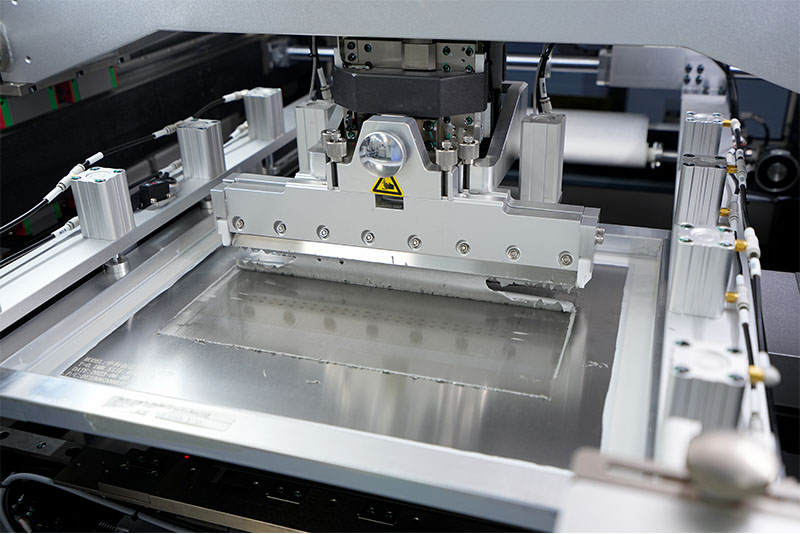
  • Solder paste printing: print speed, squeegee pressure, stencil alignment, and paste release consistency
  • Component placement: accuracy across different package sizes, fine-pitch components, and placement repeatability
  • Reflow soldering: temperature profiles validated at minimum and maximum limits, including soak, peak, and cooling zones
  • Cleaning processes: effectiveness in meeting ionic contamination requirements
  • Conformal coating (if applicable): thickness consistency, coverage, and curing parameters
  • Functional and in-circuit testing: stability of results across defined operating ranges

Each process is evaluated not only at nominal conditions but also near its upper and lower operating limits.

Which Assembly Processes Are Typically Validated During OQ?

How Does OQ Define Safe Process Windows?

One of the primary goals of OQ is to establish validated process windows. Instead of asking whether a process works once, OQ asks whether it continues to work when conditions vary within controlled boundaries.

For example:

  • Can solder joints remain reliable if reflow peak temperature shifts slightly?
  • Does placement accuracy remain acceptable across different component densities?
  • Does cleaning effectiveness remain consistent at different throughput levels?

By answering these questions, OQ transforms unknown variability into documented, acceptable ranges, which is essential for medical PCBA reliability.

Why Is OQ Especially Important for Medical Electronics?

Medical PCBAs often involve:

  • Fine-pitch and micro-pitch components
  • High-density interconnects
  • Mixed SMT and through-hole assembly
  • Sensitive analog, sensing, or signal-conditioning circuits

These characteristics make medical electronics highly sensitive to process variation. Minor deviations can create latent defects such as marginal solder joints or intermittent connections that pass inspection but fail during use.

OQ reduces this risk by ensuring that assembly processes remain stable even when operating near their defined limits.

How Does OQ Reduce Manufacturing and Patient Risk?

By validating process behavior under controlled variation, OQ helps prevent:

  • Weak or inconsistent solder joints
  • Thermal overstress or insufficient soldering
  • Operator-dependent outcomes
  • Process drift over time

In medical applications, such issues are not merely quality concerns—they can directly impact device safety, regulatory compliance, and patient outcomes. OQ provides the engineering evidence that these risks are actively managed.

What Do Auditors and Medical OEMs Expect From OQ Documentation?

During audits or supplier qualification reviews, OQ documentation is often examined in detail. Auditors and OEMs typically expect to see:

  • Clearly defined and justified process parameters
  • Evidence that limits were intentionally challenged
  • Repeatable and reproducible results
  • Documented handling of deviations or anomalies

Well-structured OQ records demonstrate that the manufacturer understands its processes at an engineering level, rather than relying on empirical success alone.

How Does OQ Differ From IQ and PQ?

Although IQ, OQ, and PQ are closely related, each serves a distinct purpose:

  • IQ confirms that equipment and systems are installed correctly
  • OQ confirms that processes operate reliably within defined limits
  • PQ confirms consistent output under normal production conditions
How Does OQ Differ From IQ and PQ?

OQ acts as the bridge between installation and production, translating equipment capability into process control.

How Does (EBest Circuit) Best Technology Perform OQ for Medical PCBA Projects?

(EBest Circuit) Best Technology applies a structured OQ methodology tailored to medical electronics, including:

  • Engineering-defined process limits
  • Controlled variation during validation runs
  • Comprehensive data collection and analysis
  • Documentation aligned with ISO 13485 expectations

This approach ensures that medical PCBA assembly processes are not only functional, but technically understood and defensible.

What Comes After OQ in Medical PCBA Validation?

While OQ confirms that processes are capable, it does not yet prove long-term consistency in real production environments. That confirmation is provided by Performance Qualification (PQ), which evaluates routine manufacturing stability across multiple lots and operators.

Related reading:

Performance Qualification (PQ) in Medical PCBA Production

To fully understand how OQ fits within the complete validation framework, it is also recommended to review:

Installation Qualification (IQ) in Medical PCBA Manufacturing

Together, these stages form a comprehensive, regulator-accepted approach to medical PCBA process validation.

You may also like

What is Installation Qualification (IQ) in Medical PCBA Manufacturing?

January 9th, 2026

What is IQ in Medical Terms?

Installation Qualification (IQ) is the documented verification that all equipment, systems, and infrastructure used in medical PCBA manufacturing are installed correctly and conform to approved specifications.

In regulated medical electronics, IQ is not a procedural formality; it is the foundation of process validation.

Before evaluating solder quality, yields, or test results, manufacturers must first prove that the manufacturing environment itself is controlled, traceable, and suitable for medical production. IQ provides this proof in a structured and auditable manner.

What is Installation Qualification (IQ) in Medical PCBA Manufacturing?

Why Is IQ the First Step in Medical PCBA Process Validation?

Medical regulations emphasize process control over end-product inspection. A compliant output cannot compensate for an uncontrolled environment.

IQ is performed first because it:

  • Establishes baseline manufacturing conditions
  • Confirms equipment configuration and utilities
  • Locks approved software and hardware versions
  • Creates traceable records for future audits

Without IQ, subsequent validation activities such as OQ and PQ lack regulatory credibility.

Which Equipment and Systems Are Included in Medical PCBA IQ?

At Best Technology, IQ for medical PCBA projects typically covers:

  • SMT pick-and-place machines, including placement accuracy and software revision
  • Solder paste printing systems and stencil alignment capability
  • Reflow and curing ovens, including zone configuration and atmosphere control
  • AOI, SPI, and X-ray inspection systems
  • Electrical and functional test platforms
  • ESD protection infrastructure
  • MES-based traceability systems
  • Calibration tools and measurement equipment

Each item is verified against predefined installation requirements, including environmental conditions, utilities, configuration, and calibration status.

What is Installation Qualification (IQ) in Medical PCBA Manufacturing?

Why Is IQ Required for Medical PCBA Compliance?

Medical regulations such as ISO 13485 emphasize process control over final inspection. IQ provides documented proof that the manufacturing environment is controlled, repeatable, and auditable.

IQ is essential because it:

  • Prevents undocumented equipment substitution
  • Establishes a validated baseline for audits
  • Supports long-term traceability for regulated devices
  • Reduces regulatory risk during design transfer and scale-up

Without IQ, even functional medical PCBAs may be considered non-compliant during audits.

What Are the Risks of Skipping or Weak IQ in Medical PCBA?

Incomplete or missing IQ documentation can lead to:

  • Audit nonconformities
  • Delayed supplier qualification
  • Re-validation requirements
  • Increased regulatory exposure for OEMs

Even when PCBAs pass electrical testing, lack of IQ can result in formal non-acceptance during audits or regulatory reviews.

How Does Best Technology Implement IQ for Medical PCBA Projects?

Best Technology applies a structured IQ approach that includes:

  • Approved equipment lists and installation records
  • Verification of utilities and environmental conditions
  • Calibration status confirmation
  • MES and traceability validation
  • Controlled documentation aligned with medical audits

This ensures a repeatable and defensible foundation for all downstream validation activities.

What is the Relation Between IQ and OQ?

IQ confirms that the manufacturing environment is correctly installed, but it does not validate process performance.
Once installation is confirmed, manufacturers must demonstrate that assembly processes operate reliably within defined limits. This is achieved through Operational Qualification (OQ).

Related reading:

Operational Qualification (OQ) in Medical PCBA Assembly

You may also like

A Basic Guide to IQ, PQ, OQ in Medical PCBAs

January 9th, 2026

In medical PCBA (Printed Circuit Board Assembly), IQ, OQ, and PQ are not procedural formalities; they are foundational controls that directly support patient safety, regulatory compliance, and long-term product reliability. Together, they form a structured validation framework required by global medical regulations and expected by auditors, OEMs, and notified bodies.

Below is a clear, manufacturing-focused explanation of why IQ, OQ, and PQ are critical for medical PCBA projects.

A Basic Guide to IQ, PQ, OQ in Medical PCBAs

Regulatory Compliance Is Not Optional in Medical PCBA

Medical electronic assemblies fall under strict regulatory frameworks such as ISO 13485, FDA 21 CFR Part 820, and EU MDR. These regulations explicitly require manufacturers to validate production processes, not merely inspect finished products.

IQ, OQ, and PQ collectively demonstrate that:

  • The manufacturing environment is suitable
  • The process is capable and controlled
  • The output is consistently compliant

Without documented IQ/OQ/PQ evidence, a medical PCBA supplier will fail audits, risk regulatory findings, or cause customer design transfer delays.

IQ (Installation Qualification): Proving the Factory Is Correctly Set Up

IQ answers one fundamental question:

Is the equipment and infrastructure installed exactly as required?

In medical PCBA, IQ typically covers:

  • SMT placement machines (model, accuracy, software version)
  • Reflow ovens (zones, nitrogen capability, temperature uniformity)
  • AOI, SPI, X-ray systems
  • ESD control systems
  • MES and traceability systems
  • Calibration status of measurement equipment

Why IQ matters for medical PCBA:

  • Ensures no unauthorized equipment substitutions
  • Prevents undocumented machine changes that invalidate builds
  • Establishes a baseline configuration for future audits
  • Supports traceability for long-life medical devices

Without IQ, even a “good” PCBA build can be regulatorily unacceptable.

OQ (Operational Qualification): Proving the Process Works Under Defined Limits

OQ focuses on process capability, not just setup.

It verifies that each PCBA process step performs reliably within specified operating ranges, such as:

  • Solder paste printing pressure, speed, and alignment
  • Pick-and-place accuracy at min/max component sizes
  • Reflow temperature profiles and thermal margins
  • Cleaning effectiveness for ionic contamination limits
  • Conformal coating thickness consistency (if applicable)

Why OQ is essential in medical PCBA:

  • Medical electronics often have tight solder joint reliability requirements
  • High-density, fine-pitch, or mixed-technology boards amplify risk
  • Many medical failures are process-induced, not design-induced
  • OQ establishes defensible process windows

Auditors often focus heavily on OQ because it proves engineering control, not operator dependence.

PQ (Performance Qualification): Proving Consistent, Repeatable Output

PQ answers the most important question:

Can we repeatedly build compliant medical PCBAs under real production conditions?

PQ involves:

  • Running multiple production lots
  • Using trained operators
  • Normal shift conditions (not engineering trials)
  • Measuring yields, defects, and key quality metrics

Typical PQ evidence includes:

  • First-pass yield (FPY)
  • Defect per million (DPMO)
  • Functional test pass rates
  • Reliability screening results (as applicable)

Why PQ is critical for medical PCBA programs:

  • Confirms stability over time, not just once
  • Supports design transfer from prototype to volume
  • Reduces field failure risk
  • Protects OEMs from recalls and liability exposure

For implantable, life-support, or diagnostic devices, PQ is often scrutinized line-by-line during audits.

Risk Reduction and Patient Safety

Medical PCBAs frequently operate in:

  • Life-critical systems
  • Continuous-use environments
  • High-reliability diagnostic platforms

IQ/OQ/PQ validation directly reduces:

  • Latent solder joint defects
  • Intermittent electrical failures
  • Process drift over long production cycles
  • Human variability in assembly steps

In medical applications, a single uncontrolled process variable can translate into patient harm. Validation converts unknown risks into controlled, documented ones.

OEM Confidence and Long-Term Supply Stability

From a customer perspective, IQ/OQ/PQ:

  • Shortens supplier qualification timelines
  • Simplifies regulatory submissions
  • Enables faster scale-up
  • Reduces ongoing audit burden

Medical OEMs increasingly select PCBA partners based on validation maturity, not just price or capacity.

A supplier that can present complete IQ/OQ/PQ documentation is signaling long-term manufacturing discipline and regulatory readiness.

Why IQ, OQ, PQ Are Non-Negotiable for Medical PCBA?

In medical PCBA manufacturing:

  • IQ proves the factory is correctly installed
  • OQ proves the process is technically capable
  • PQ proves consistent, real-world performance

Together, they ensure:

  • Regulatory compliance
  • Process stability
  • Product reliability
  • Patient safety

Medical electronics demand more than “working boards.” They demand validated processes that work every time.

You may also like

What Is an SMT PCB Board? SMT PCB Assembly

January 8th, 2026

An SMT PCB board is a printed circuit board designed for surface mount technology, where electronic components are mounted directly onto copper pads on the board surface rather than inserted through drilled holes. This approach allows components to sit flat against the PCB, enabling compact layouts, shorter electrical paths, and efficient automated assembly through reflow soldering. As a result, SMT PCB boards support higher component density while maintaining consistent solder quality.

What Is an SMT PCB Board? SMT PCB Assembly

What Is an SMT PCB?

An SMT PCB is a printed circuit board designed specifically for surface mount technology, where electronic components are mounted directly onto copper pads on the surface of the board. Unlike traditional assembly methods, components do not use long wire leads inserted through drilled holes. Instead, they sit flat against the PCB and are soldered in place using controlled reflow processes.

This structural change enables much higher component density. Components can be placed on both sides of the board, and spacing between parts can be significantly reduced. As a result, SMT PCB boards are smaller, lighter, and more electrically efficient than older designs.

Another key benefit is manufacturing consistency. SMT placement is highly automated, allowing machines to position thousands of components per hour with exceptional accuracy. This repeatability improves yield and reduces defect rates, especially in high-volume production.

SMT PCB boards are now standard across consumer electronics, medical equipment, industrial controls, automotive electronics, and communication systems.

How Does SMT Impact PCB Design?

SMT influences PCB design from the earliest layout stage. Because surface-mounted components have short electrical paths, signal integrity improves, especially in high-speed and high-frequency circuits. This allows designers greater flexibility when routing traces and managing impedance.

Pad design becomes a critical factor in SMT layouts. Pad size, shape, and spacing directly affect solder joint quality and long-term reliability. Improper pad geometry can lead to solder bridging, tombstoning, or weak joints, all of which increase rework risk.

Layer stack-up also changes with SMT. Multilayer boards are common, as designers use internal planes for power distribution and noise control. Thermal management becomes more important as well, since compact components can generate localized heat that must be dissipated efficiently.

Finally, SMT PCB design must align with assembly equipment capability. Package size limits, placement tolerances, and inspection access all influence layout decisions.

Is SMT the Same as SMD?

SMT and SMD are closely related terms, but they are not interchangeable. SMT stands for surface mount technology and refers to the manufacturing process used to assemble components onto a PCB. SMD stands for surface mount device and refers to the component itself.

In simple terms, SMT is the method, while SMD is the part. Factories use SMT processes to place SMD components onto SMT PCB boards.

What Is an SMT PCB Board? SMT PCB Assembly

What Is the Difference Between SMD and SMT PCB?

An SMT PCB describes both the board design and the assembly method, while an SMD describes only the component package. SMT PCBs are designed with specific land patterns that support surface-mounted components and reflow soldering processes.

SMD components include chip resistors, capacitors, integrated circuits, and discrete semiconductors packaged for surface mounting. Without an SMT-compatible PCB, SMD components cannot be properly assembled or soldered.

In practice, SMT PCBs and SMD components always work together, but their roles are distinct.

How Does PCB Board SMT Differ From Through-Hole Assembly?

The difference between SMT and through-hole assembly is structural and operational. Through-hole assembly uses drilled holes where component leads pass through the board and are soldered on the opposite side. SMT places components directly onto surface pads without penetrating the board.

SMT enables much higher component density and allows assembly on both sides of the PCB. This supports smaller board sizes and more complex functionality. Through-hole assembly, while mechanically robust, occupies more space and limits layout flexibility.

SMT also supports full automation, while through-hole assembly often requires manual or semi-automated steps. This difference has a significant impact on cost and scalability. However, some products use both methods together, such as board assembly SMT DIP PCB or board assembly SMT THT PCB designs, where connectors or power components still benefit from through-hole strength.

What Is the Major Advantage of Using SMT?

The primary advantage of SMT PCB assembly is efficiency at scale. Automated placement machines operate at high speed with consistent accuracy, enabling reliable mass production. This efficiency directly reduces assembly time and labor costs.

SMT also supports miniaturization. More functionality fits into less space, enabling thinner, lighter, and more portable devices. Electrical performance improves as well, since shorter lead lengths reduce parasitic effects and signal noise.

Reliability benefits from controlled soldering processes. Reflow soldering produces uniform joints, reducing variation and long-term failure risk.

What Components Are Used in SMT?

SMT supports a wide range of electronic components. Common passive parts include chip resistors and capacitors in standardized package sizes. Integrated circuits appear in formats such as SOIC, QFP, QFN, and BGA, supporting everything from simple logic to advanced processors.

Discrete components like diodes, transistors, and MOSFETs are widely used in SMT designs. Many connectors and RF modules are also available in surface-mount packages, allowing compact system integration.

Each component type requires proper footprint design, accurate stencil thickness, and precise placement to ensure reliable solder joints. Successful SMT PCB assembly depends on matching component selection with process capability.

What Quality Checks Are Used in SMT PCB Assembly?

Quality control is central to SMT PCB assembly. Inspection begins with solder paste application, where volume and alignment are monitored to prevent downstream defects. Automated optical inspection then verifies component placement and visible solder joints.

For components with hidden connections, such as BGAs, X-ray inspection is used to evaluate internal solder quality. Reflow temperature profiles are carefully controlled to avoid thermal damage or weak joints.

Electrical testing confirms circuit continuity and functionality, while final inspection ensures cleanliness and cosmetic quality. These layered quality checks protect product reliability and customer confidence.

What Is an SMT PCB Board? SMT PCB Assembly

Where Do We Use SMT?

SMT is used across nearly every electronics sector. Consumer electronics rely on it for compact form factors and high functionality. Industrial and medical devices depend on SMT for precision, consistency, and long-term reliability.

Automotive electronics use SMT for control units and sensor systems that must withstand harsh conditions. Telecommunications and networking equipment rely on SMT to support high-speed signal performance and dense layouts.

As electronics continue to evolve, SMT PCB assembly remains a foundational technology enabling innovation at scale.

Conclusion:

An SMT PCB board is a circuit board built for surface mount technology, where components are placed on surface pads and soldered by reflow for fast, repeatable production. Compared with through-hole assembly, SMT PCB assembly supports higher density, smaller products, and strong electrical performance, which is why it dominates modern electronics.

To learn more about how Best Technology supports these SMT PCB assembly technologies, please contact us at sales@bestpcbs.com

You may also like

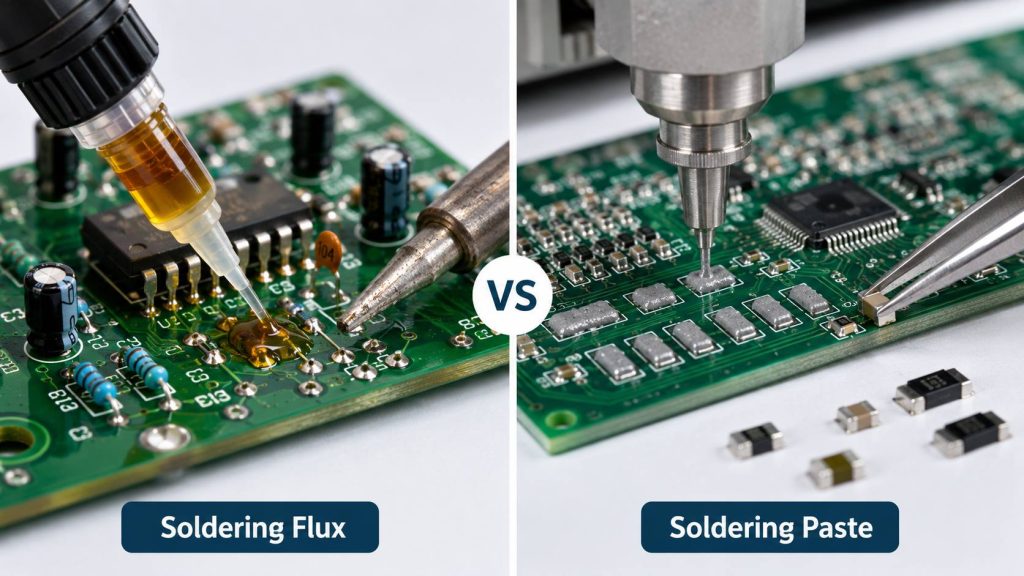
What is Flux in Soldering? Is Flux Conductive?

January 5th, 2026

Soldering remains one of the most fundamental operations in electronics manufacturing, and its reliability depends on far more than just heat and solder alloy. Flux is a quiet but powerful material that determines how well a solder joint forms, how stable the connection remains over time, and how durable a finished PCB assembly will be in the field.

For new engineers, technicians, and even seasoned designers, misunderstandings about flux are common—especially around topics such as electrical conductivity, residue behavior, and flux selection for different soldering environments. This guide provides a detailed but easy-to-read explanation of what flux is, what it does, and whether it conducts electricity. It also highlights practical considerations for real PCB assembly workflows.

What Is Flux in Soldering?

Flux is a chemical agent applied during soldering to prepare metal surfaces and support the formation of reliable solder joints. When copper pads or component leads are exposed to air, oxidation naturally occurs. Even a microscopic layer of oxidation can obstruct solder wetting, causing poor joints, voids, and insufficient fillets.

Flux removes these oxides, shields the surface from further oxidation during heating, and helps molten solder spread smoothly across metal surfaces. It improves consistency, lowers defect rates, and stabilizes the soldering process across different alloys and temperatures.

In PCB assembly—whether reflow, wave soldering, or selective soldering—flux is as essential as the solder itself. Without it, joints would frequently fail, especially on components with small contact areas or on boards that require high-density interconnects.

What Is Flux in Soldering?

Is Flux the Same as Solder?

Flux and solder are very different materials, even though both are packaged together in solder wire or solder paste.

  • Solder is a metal alloy that melts and forms the electrical and mechanical connection.
  • Flux is a chemical compound that prepares the surface and improves the solder’s ability to bond.

Flux does not create a joint by itself. It does not replace the solder alloy. Instead, it ensures the solder achieves a strong, durable bond with copper pads and component leads.

During soldering, flux activates first. As heating continues, solder alloy becomes molten and flows into the prepared surface, producing a joint that is structurally sound and electrically stable.

What Is Flux Made Of?

Flux formulations differ depending on application, activity level, and cleaning requirements, but most contain three major components:

1. Base Material

This forms the bulk of the flux. Common bases include:

  • Rosin (natural resin from pine trees)
  • Synthetic resin
  • Organic acids
  • Water-soluble organic compounds

2. Activators

These compounds remove oxides and enable solder wetting. Examples include:

Halides and halogen-free activators

  • Organic acids
  • Amines

Activators determine how aggressive the flux is and directly influence cleaning requirements.

3. Solvents

Liquids that adjust viscosity and allow the flux to spread evenly. Depending on the type, the solvent may be:

  • Alcohol-based
  • Water-based
  • Mixed solvent systems

Additional additives control stability, residue appearance, heat resistance, and spread behavior.

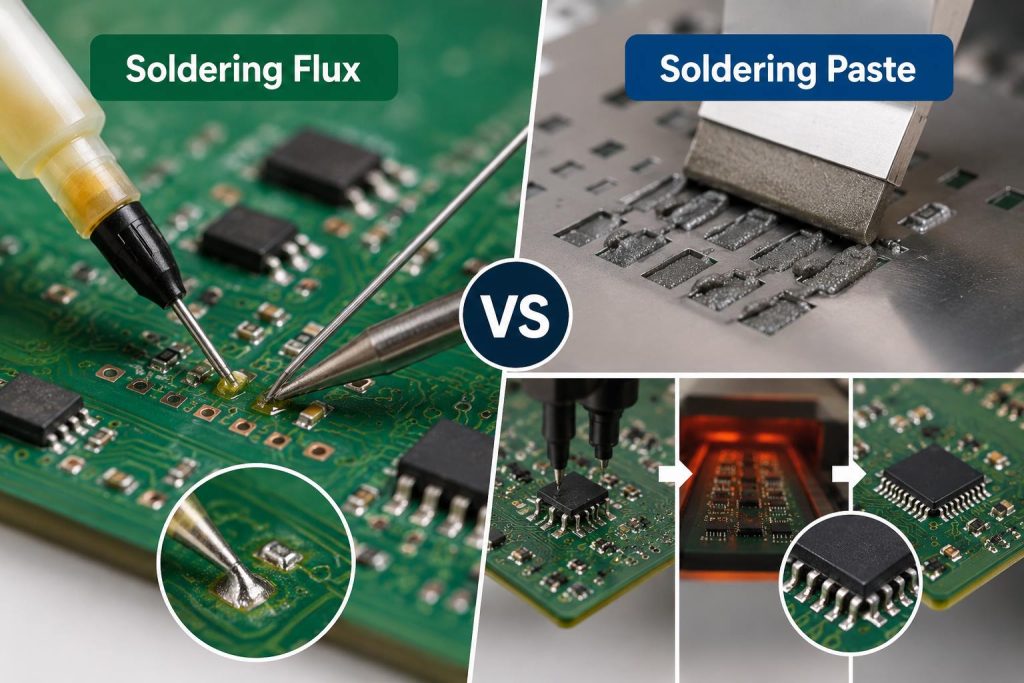
In solder paste, flux is blended with metal powder (tin-based alloy particles). In liquid or pen flux, the chemical composition varies more widely depending on the intended soldering method.

Types of Flux Used in Electronics Soldering

Flux comes in multiple varieties because different electronic assemblies require different performance and cleaning levels.

1. Rosin Flux (R, RMA, RA)

A classic formulation used for decades.

  • R (Rosin): Mild, minimal activity
  • RMA (Rosin Mildly Activated): Balanced activity and reliability
  • RA (Rosin Activated): Strong oxide removal; requires cleaning

Rosin residues are typically hard and non-corrosive but still benefit from cleaning in sensitive electronics.

2. No-Clean Flux

Designed to leave minimal residue that remains safe on the board.

  • Very low activity
  • Ideal for high-volume consumer products
  • Popular in SMT reflow

However, no-clean flux is not “no-clean” for everything. High-reliability sectors such as medical, aerospace, and automotive often still require cleaning.

3. Water-Soluble Flux

It is a strong, highly active flux. It can:

  • Removes heavy oxidation
  • Excellent wetting performance
  • Residue is conductive and must be cleaned with water

This flux is common for BGA, QFN, and fine-pitch applications due to its high activity.

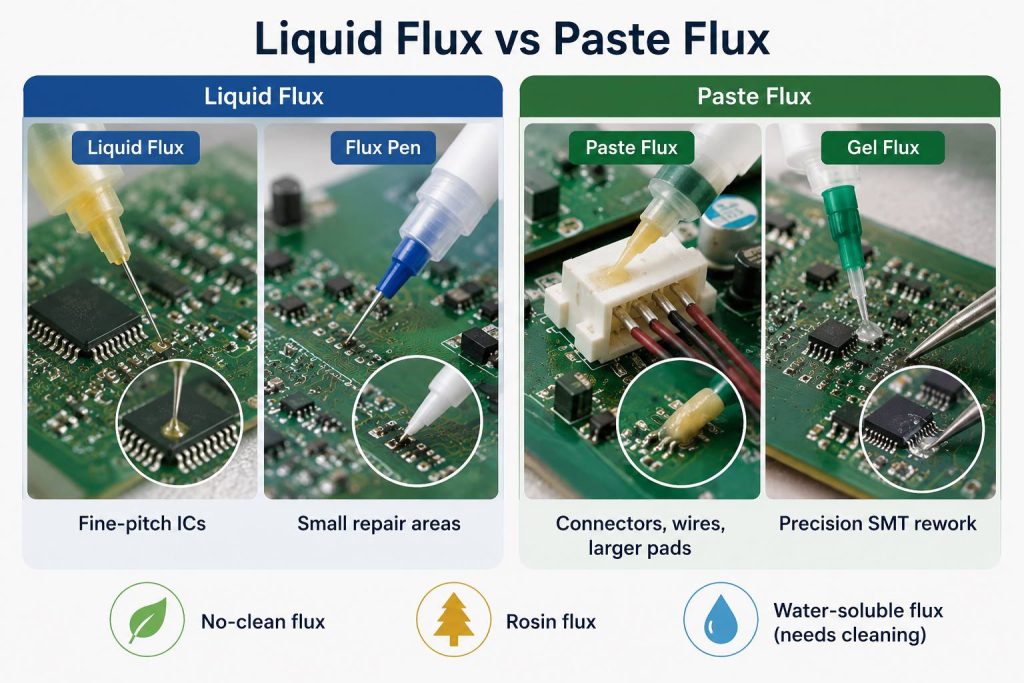
4. Flux Paste, Gel, Liquid, and Pen Types

Each soldering method favors a different form:

  • Flux paste: Hand soldering, rework
  • Liquid flux: Wave soldering and selective solder
  • Gel flux: BGA sphere attachment and reballing
  • Flux pens: Small-area touch-ups

Choosing the right format ensures controlled application and stable process quality.

Types of Flux Used in Electronics Soldering

What Are the Functions of Flux in Soldering?

The main active component in the soldering agent is rosin. Rosin will be decomposed by tin at around 260 degrees Celsius. Therefore, the temperature of the soldering bath should not be too high. In soldering, it is an indispensable auxiliary material and plays an extremely important role.

  • Removes surface oxides from copper pads and component leads.
  • Prevents re-oxidation during heating.
  • Improves solder wetting, allowing the alloy to spread uniformly.
  • Reduces surface tension, enabling smoother flow.
  • Promotes mechanical strength, making joints more reliable.

This combination ensures repeatable and stable solder connections for both prototype and mass production builds.

Is Flux Conductive?

Fresh flux and properly cleaned flux residue are not conductive. Most fluxes are designed to be electrically insulating, even when left on the PCB after reflow or hand soldering.

This is why no-clean flux can remain on many consumer-grade boards without impacting function.

Why Some Flux Residues Become Slightly Conductive?

Although flux itself is non-conductive, residue can become slightly conductive under certain conditions, especially with:

  • Water-soluble (OA) flux
  • Highly activated flux
  • Flux that absorbs humidity over time
  • Ionic contamination left behind after incomplete cleaning

This moisture-dependent conductivity may cause leakage paths, corrosion, or unpredictable behavior in sensitive analog, RF, or high-impedance circuits. That is why aerospace, medical, and automotive assemblies often require a thorough post-cleaning process.

Best Cleaning Methods for Flux Residue

Different assemblies require different cleaning approaches, but the goal is always the same: remove unwanted residue without damaging components or altering board performance. Selecting the right method depends on the flux type, the board’s cleanliness requirements, and the equipment available in your production line.

  • Isopropyl Alcohol (IPA) Wipe or Brush Cleaning

IPA remains one of the simplest and most effective ways to remove rosin-based flux. A soft brush or lint-free wipe helps dissolve residue quickly, making it ideal for rework, repair, or small-batch builds.

  • Precision Flux Remover Sprays

Engineers often choose specialized flux remover sprays for dense assemblies or harder residues. These solutions penetrate tight spaces under components and evaporate cleanly. They are especially helpful when dealing with no-clean flux that has carbonized during reflow.

  • DI Water Cleaning for Water-Soluble Flux

Water-soluble (OA) flux requires complete removal because it contains ionic materials. DI water cleaning, either by hand or in an automated system, rinses away these residues effectively.

  • Ultrasonic Cleaning

For assemblies with fine-pitch packages, BGA components, or complex geometries, ultrasonic cleaning can reach areas traditional brushing cannot. High-frequency waves dislodge residue in hidden spaces. Not all components tolerate ultrasonic energy, so a controlled process is essential.

Best Cleaning Methods for Flux Residue

Common Mistakes When Using Flux

Many soldering issues trace back to improper use of flux. Common mistakes include:

  • Applying excessive flux, which can trap residue under components
  • Mixing different flux types in the same process
  • Using expired flux that has lost its activity
  • Selecting a flux that does not match the solder alloy or temperature profile
  • Not cleaning when required by the flux classification

A disciplined approach helps avoid rework and enhances long-term reliability.

How to Choose the Right Flux for Your Soldering Process?

Select flux based on your assembly method, product reliability, and cleaning capability:

1. Consider the soldering process

  • SMT reflow often uses no-clean or RMA flux.
  • Wave soldering may need higher-activity flux.
  • Hand soldering typically requires easily reactivated flux pens.

2. Match reliability requirements

  • High-reliability industries prefer water-soluble flux with full cleaning.
  • Consumer electronics often adopt no-clean materials.

3. Check board materials and surface finishes

For example, ENIG, OSP, and HASL may react differently to flux activity.

4. Account for reflow temperature

Some fluxes degrade if overheated, reducing wetting efficiency.

FAQs

1. Can you solder without flux?

It is possible but not recommended. Flux ensures strong wetting and consistent joints.

2. Is no-clean flux truly “no clean”?

In most consumer applications, yes. For high-reliability products, cleaning may still be required.

3. Does flux expire?

Yes. Its activity decreases over time, which affects soldering quality.

4. Is flux harmful to PCBs?

Not when used correctly. Incorrect cleaning or high-activity residues may cause long-term issues.

5. Why does flux smoke during soldering?

Flux evaporates and burns off as it activates. This is normal.

6. Which flux is best for sensitive electronics?

Low-residue no-clean flux or water-soluble flux with full cleaning.

You may also like

What Is a Cold Solder Joint? Cold Solder Joint vs Good Solder Joint

January 2nd, 2026

A cold solder joint is one of the most common failure mechanisms in electronics assembly, yet many technicians and engineers encounter it long before fully understanding its root behaviors. When a joint lacks proper heat, does not wet the copper pad, or cools in an uncontrolled manner, the resulting connection becomes unstable. It may pass initial testing, but its long-term reliability declines.

Because modern electronics demand consistent performance—whether in consumer devices, industrial controllers, automotive modules, or medical PCB assemblies—recognizing and preventing cold solder joints remains essential for every design or manufacturing team.

What Is a Cold Solder Joint?

A cold solder joint is a solder connection that forms without reaching the proper temperature for the solder alloy to fully melt, flow, and wet the surfaces. Instead of a smooth, solidly bonded joint, the resulting structure becomes dull, grainy, or cracked. The term “cold” comes from the fact that these joints never reach the temperature required to create a metallurgical bond between the solder and the copper pad or component lead.

In practical terms, the solder solidifies before forming a stable interface. Instead of integrating with the metals it is meant to join, it merely sits on top of the surfaces. The joint may appear attached, but internally it lacks the uniform crystalline structure that defines a reliable connection.

In manual soldering, cold joints often happen due to inconsistent technique. In automated SMT production, they typically arise from incorrect reflow profiles, insufficient preheat, or contaminated pads that prevent proper wetting. Because of these variables, avoiding cold solder joints requires both strong process control and clean material handling.

What Is a Cold Solder Joint? Cold Solder Joint vs Good Solder Joint

Do Cold Solder Joints Still Work?

A cold solder joint may still work, at least at the beginning. This is where confusion begins for many technicians. The joint may pass functional testing, power-on checks, or a quick continuity test. Because the mechanical bond is weak and the electrical interface incomplete, the behavior becomes intermittent.

A device with cold joints may operate well in a static environment but become unstable when exposed to:

  • Temperature swings
  • Vibration or shock
  • Thermal expansion during operation
  • Humidity or oxidation
  • Long-term cycling

While a cold joint can conduct current, it does so inconsistently, and usually with higher resistance. Over time, micro-cracks grow, creating open circuits or signal noise. For that reason, cold solder joints are considered functional only by coincidence, not by design.

Cold Solder Joint Symptoms

Cold solder joints have predictable symptoms. Engineers often rely on these visual or electrical clues to locate the root cause of a circuit failure:

  • Dull, Frosty, or Grainy Surface
  • Irregular Shape or Incomplete Wetting
  • Visible Cracks or Rings
  • Intermittent Performance
  • Increased Resistance
  • Movement When Touched
  • Failure Under Thermal Stress
Cold Solder Joint Symptoms

These symptoms are reliable indicators during repair, inspection, or failure analysis.

What Is the Difference Between a Cold Solder Joint and a Good Solder Joint?

A good solder joint forms a solid intermetallic bond between the solder, the copper pad, and the component lead. It exhibits a smooth, shiny, and uniform shape with complete wetting.

Comparing both joints helps clarify the contrast:

AspectCold Solder JointGood Solder Joint
AppearanceDull, grainy, frosty surfaceSmooth, shiny, uniform surface
Wetting BehaviorPoor wetting; solder sits on top of pad/leadComplete wetting across pad and lead
Mechanical StrengthWeak bond; prone to cracking or movementStrong bond with stable mechanical support
Electrical PerformanceHigher resistance; intermittent continuityLow resistance; stable, consistent conductivity
ReliabilityUnpredictable; often fails under vibration or heatLong-lasting; passes thermal and vibration stress
Internal StructureIncomplete metallurgical bond; voids possibleProper intermetallic layer with solid structure
Common CausesInsufficient heat, oxidized surfaces, poor flux activityCorrect temperature, clean pads, controlled soldering
Inspection ResultRejected under IPC standardsAcceptable and compliant with IPC criteria
Typical SymptomsIntermittent signals, device resets, heat spotsNormal operation with steady performance
Corrective ActionReheat, add flux, reflow or resolderNo action required

How to Identify a Cold Solder Joint?

Identifying cold solder joints requires a combination of visual inspection, tactile testing, and electrical measurement. Here are the most common methods:

  • Visual Inspection

Under a microscope or magnifying lamp, look for dull surfaces, cracks, uneven shapes, or insufficient solder spread. Most cold joints are visible to a trained eye.

  • Continuity and Resistance Testing

Using a multimeter, check whether current flows consistently. Cold joints may pass continuity tests but show higher resistance.

  • Thermal Stress Testing

Heating or cooling the PCB may cause the joint to open or reconnect.

  • X-ray Inspection (for BGA or QFN)

In high-density packages, internal cold joints appear as voids, incomplete wetting, or irregular solder shapes.

  • Mechanical Movement

Applying gentle pressure can reveal looseness in through-hole components.

Early identification is essential in avoiding expensive rework or device failure.

How to Identify a Cold Solder Joint?

Are Cold Joints Acceptable?

Cold solder joints are not acceptable in any professional electronics assembly environment. Industry standards such as IPC-A-610 define cold joints as defects requiring correction. Even in hobby projects, cold joints degrade reliability.

There are no scenarios where cold joints are intentionally tolerated. Any sign of incomplete wetting or insufficient flow must be corrected immediately. or mission-critical industries such as:

  • Medical
  • Automotive
  • Industrial automation
  • Aerospace
  • IoT
  • Telecommunications

cold solder joints represent unacceptable risk.

What Causes a Cold Solder Joint?

Cold solder joints form due to several common process issues. Understanding these causes helps prevent recurrence.

1. Insufficient Heat

If the soldering iron does not fully heat the pad and lead, wetting cannot occur.

2. Contaminated or Oxidized Surfaces

Residue, dust, oxide layers, or aged plating can block wetting.

3. Incorrect Solder Alloy or Temperature

Low heat settings, mismatched solder types, or incorrect thermal profiles lead to poor flow.

4. Poor Flux Activity

Flux cleans surfaces. Weak or expired flux prevents proper bonding.

5. Movement During Solidification

If the lead moves before the solder cools, a cold joint forms.

6. Inconsistent Reflow Profile

In SMT production, a poorly tuned reflow oven produces cold joints, especially on large thermal pads or ground planes.

7. Manual Soldering Technique Errors

Rushed or inconsistent soldering practices can create joints that never heat sufficiently.

What Are the Risks of Cold Joints?

Cold solder joints introduce multiple failure modes, including:

1. The device may work partially, only under specific temperature or vibration conditions.

2. Higher resistance destabilizes signals, especially in RF or high-speed digital designs.

3. Poor conductivity forces current to generate heat, stressing components.

4. Cold joints often degrade quickly in real-world conditions.

5. In power electronics, cold joints increase the risk of arcing or thermal runaway.

These risks emphasize the need for controlled soldering conditions, proper inspection, and strict quality assurance.

How to Avoid Cold Solder Joints?

Preventing cold solder joints requires strong process management, skilled operators, and adherence to IPC and manufacturer guidelines.

1. Ensure Proper Heating

Heat both pad and lead evenly. Maintain appropriate soldering temperatures for the chosen alloy.

2. Use High-Quality Solder and Fresh Flux

Materials is important, Fresh flux ensures clean surfaces and stable wetting.

3. Clean and Prepare Surfaces

Remove oxidation, oil, or contamination before soldering.

4. Maintain Stable Reflow Profiles

For SMT production, program time-temperature profiles to match the alloy. Adjust for heavy copper or large thermal pads.

5. Avoid Movement During Cooling

Secure components so solder can solidify without vibration.

6. Use Proper Tools

ESD-safe irons, clean tips, good tweezers, and inspection magnification help ensure accuracy.

7. Follow IPC Guidelines

Standards such as IPC-A-610 and IPC-J-STD-001 provide industry-accepted criteria for solder quality.

Understanding the distinction between a cold solder joint and a properly formed one helps engineers and technicians diagnose failures accurately. A cold solder joint appears dull, weak, and inconsistent, while a good joint is smooth, shiny, and electrically stable. The difference directly affects device performance and lifespan.

As electronics continue shrinking and integrating more complex components, the need for reliable soldering becomes even more critical. Whether you are working with prototype boards, high-density PCBs, or mission-critical assemblies, eliminating cold joints should always be a priority.

You may also like

What Is a Cold Solder Joint? Meaning, Symptoms, Repair & Prevention Guide

January 2nd, 2026

A cold solder joint is one of the most common reliability defects in PCB and PCBA assemblies, and it continues to be a major source of intermittent failures across consumer electronics, industrial controls, medical devices, automotive modules, and aerospace hardware. At Best Technology, we see the long-term consequences of cold joints in incoming failure analyses from global customers—especially in assemblies where stable conductivity and mechanical strength are critical.

With 19 years of PCBA production experience across China and Vietnam, medical-grade and aerospace-grade certifications, and MES-controlled SMT lines, we understand how cold solder joints emerge, how to eliminate them, and how to engineer assemblies that remain stable throughout the product life cycle.

What Is a Cold Solder Joint?

A cold solder joint forms when solder does not melt or wet the pad and component lead completely. Instead of creating a unified bond, the solder cools prematurely or never flows correctly, resulting in a dull, grainy, or uneven connection.

In the PCBA environment, cold joints are considered a process defect because they weaken the mechanical integrity of a soldered connection and create unstable electrical performance that deteriorates over time.

In high-reliability sectors—medical, industrial, aerospace—these defects are unacceptable and must be removed at the root cause: temperature control, surface condition, solder alloy behavior, and wetting characteristics.

What Is a Cold Solder Joint? Meaning, Symptoms, Repair & Prevention Guide

Do Cold Solder Joints Still Work?

Temporarily, yes. Reliably, no. A cold solder joint may appear functional during a quick test, then fail:

  • When the board heats during normal operation
  • When vibration or slight mechanical stress occurs
  • When humidity or temperature cycles change contact resistance
  • When current load increases

This unstable behavior is what makes cold joints one of the most misdiagnosed failure sources. Many customers approach Best Technology believing they have a “component issue” or “firmware bug,” when the real cause is inconsistent solder metallurgy.

Cold Solder Joint Symptoms

From a PCBA viewpoint, cold joints create early-life failures that escalate under stress. Common symptoms include:

  • Intermittent booting or power instability
  • Flickering LEDs, displays, or inconsistent sensor readings
  • Weak or noisy signals in communication lines
  • Overheating around a soldered component
  • Boards that only work when pressed or tapped
  • Modules that behave differently under temperature changes

During incoming quality analysis at Best Technology, we often find that unstable BGA balls, hand-soldered connectors, and TH pins are common locations for cold joints.

Cold Solder Joint Symptoms

What Is the Difference Between a Cold Solder Joint and a Good Solder Joint?

A good solder joint creates a smooth, bright, and uniform connection that wraps around the lead with full wetting.

A cold joint typically shows:

  • A dull or matte finish
  • Crystalline or grainy texture
  • A ring fracture around the lead
  • A small gap between solder and pad
  • Solder balled up instead of flowing

Experienced technicians immediately recognize these visual cues because they suggest weak mechanical support and unstable electrical conductivity.

How to Identify a Cold Solder Joint?

Both technicians and advanced PCBA factories rely on a few inspection methods:

  • Bright-light and angled inspection to reveal dull or frosted surfaces
  • Magnification to highlight cracks or gaps
  • Gentle mechanical pressure to detect movement
  • Thermal testing to expose resistance changes under heat
  • AOI or X-ray for lead-free and hidden joints
How to Identify a Cold Solder Joint?

In Best Technology’s MES-controlled lines, each soldering step—including reflow, wave, and selective solder—is tied to traceable profiles, making it easier to isolate and prevent cold joints during future builds.

Are Cold Joints Acceptable?

No. Cold solder joints are never acceptable in professional electronics.

They violate:

  • IPC-A-610 standards
  • Reliability requirements
  • Safety and quality regulations

Even in low-cost consumer electronics, cold joints significantly reduce product lifespan and reliability.

What Causes a Cold Solder Joint?

Cold solder joints originate from several process-related or operator-related factors:

  • Insufficient soldering temperature
  • Iron tip or nozzle unable to deliver stable heat
  • Oxidized pads, leads, or old components
  • Expired or poorly stored solder paste
  • Flux burnout or inadequate flux coating
  • Component movement during cooling
  • Large copper areas absorbing heat too fast
  • Incorrect reflow curve in SMT production

With our dual factories in China and Vietnam, Best Technology maintains strict humidity control, paste storage, stencil management, and reflow calibration—reducing these risks dramatically.

What Are the Risks of Cold Joints?

Cold solder joints introduce cascading reliability issues:

  • Intermittent electrical contact
  • Overheating of stressed joints
  • Noise, distortion, or unstable signals
  • Sudden shutdowns during operation
  • Premature component failure
  • Total system outages in critical environments

In medical, industrial, and aerospace PCBAs, even a single cold joint is considered a critical defect (CD level). Best Technology screens aggressively to ensure these defects never leave the factory.

How to Fix a Cold Solder Joint?

Repair is direct, but must be done properly:

1. Clean the joint with isopropyl alcohol.

2. Apply quality flux to re-activate the surface.

3. Reheat the joint until solder melts fully.

4. Add a small amount of fresh solder if needed.

5. Allow full cooling without movement.

6. Inspect visually to ensure proper fillet and wetting.

For SMD components (QFN, BGA, LGA), reflow or hot-air rework ensures even heating.

How to Avoid Cold Solder Joints?

Prevention stems from controlled process engineering:

  • Use calibrated, temperature-controlled soldering equipment
  • Maintain component and PCB cleanliness
  • Follow correct reflow temperature profiles
  • Apply flux or paste with proper wetting characteristics
  • Preheat heavy copper boards
  • Avoid vibration during cooling
  • Use AOI/X-ray to verify solder integrity
  • Enforce operator training and certification

At Best Technology, these practices are embedded into MES workflows, ensuring traceability and repeatability—from prototype to mass production.

FAQ About Cold Solder Joint

1. Can flux prevent cold solder joints?

    Flux improves wetting, but without proper temperature, cold joints still occur.

    2. Can a cold solder joint cause a short?

    Yes. Cracking or partial bonding may create unintended bridges.

    3. Why are cold solder joints more common in lead-free solder?

    Lead-free alloys require higher melting temperatures and tighter process control.

    4. Can a multimeter detect a cold solder joint?

    Sometimes, but intermittent faults often remain hidden until the board is heated or flexed.

    5. Can reheating permanently fix a cold solder joint?

    If the pad and lead are clean and properly wetted, reheating provides a permanent repair.

    6. Do professional PCBA manufacturers still encounter cold joints?

    Rarely, but only because inspection systems, controlled processes, and trained operators keep solder quality consistent.

    When to Consult a Professional or a PCBA Manufacturer?

    If your board shows repeated failures, unstable behavior, or numerous questionable joints, professional evaluation is the safest choice. Best Technology supports global customers with:

    • In-house FA (failure analysis)
    • X-ray and AOI inspection
    • Controlled reflow soldering
    • Medical-grade and aerospace-grade quality systems
    • MES-tracked production across China and Vietnam

    Whether you need prototype repair, DFX recommendations, or full PCBA manufacturing, our engineering teams ensure solder reliability at every stage of the product life cycle.

    You may also like

    How to Test Electronic Circuit Board?

    January 2nd, 2026

    How to test electronic circuit board? Testing an electronic circuit board is a critical step to ensure functionality, reliability, and safety before mass production or deployment. A well-structured testing process helps identify design flaws, assembly defects, and component failures early—saving both time and cost.

    How to Test Electronic Circuit Board?

    How to Test an Electronic Circuit Board?

    To begin, place the board on a stable surface with proper lighting. Before you touch anything, disconnect all power sources.

    Next, perform a visual inspection. This simple act often reveals more information than expected. Look for burned areas, cracked components, lifted pads, poor solder joints, or debris. A magnifying lamp makes this process easier.

    After the visual check, inspect connectors, jumpers, and wires. Loose connections appear harmless but often create intermittent issues that feel impossible to catch. A light touch with tweezers confirms stability.

    Once the board passes the visual stage, move to electrical testing. A multimeter becomes your most trusted tool. Use continuity mode to confirm that important traces are connected. Use voltage mode to verify that power rails provide stable output. Use resistance mode to track suspicious paths.

    During testing. If something feels unusual—temperature differences, unexpected noise, odd smells—pause and investigate.

    By following these steps slowly and calmly, you can test an electronic circuit board with clarity and success.

    How to Test Electronic Components on a Circuit Board?

    Testing individual components is the next logical step because a PCB is only as reliable as each device mounted on it. When a component fails, it often takes down the entire function.

    Start with passive components. Resistors are easy to check using the resistance mode on a multimeter. Measure across both ends. If the value appears close to the labeled rating, the resistor is healthy. If the value is extremely high, open, or inconsistent, it may be faulty.

    Capacitors require a different approach. When testing capacitors, use capacitance mode if available. For electrolytic capacitors, check for bulging or leaking material. These symptoms almost always indicate failure. For ceramic capacitors, inspect for cracks. Even hairline cracks can cause unstable behavior.

    Next, check diodes. These parts allow current to flow in only one direction. Use diode mode on your multimeter. A healthy diode shows one direction with low forward voltage and the other direction with high resistance. If it shows low resistance in both directions, it is bad.

    Transistors require a bit more attention. You can test them using diode mode by checking junction behavior. If the readings do not follow expected patterns, the transistor may be damaged.

    Integrated circuits are more complex to test directly. Instead, check their input and output voltages relative to the datasheet. If the IC receives the correct signals but responds incorrectly, it may be faulty.

    Sensors, connectors, coils, and switches also deserve inspection. Loose contacts or internal breaks lead to intermittent failures that frustrate even experienced technicians.

    How to Test Circuit for Short on Electronic Board?

    A short circuit is one of the most common and stressful PCB issues. The good news is that detecting a short is often easier than expected, especially when using the right steps.

    Begin by switching your multimeter to continuity mode. Touch one probe to the ground reference. Touch the other to various power points such as 3.3 V, 5 V, or 12 V rails. If you hear a beep, it means there is continuity—possibly a short.

    Do not panic if continuity appears at first. Some circuits use intentional low-resistance paths. Instead, look for extremely low resistance, usually near zero ohms. That value often indicates a short.

    Move through the board section by section. Check areas where power lines run close to ground. Solder bridges, damaged vias, and misaligned components cause accidental shorts more often than people realize.

    If the PCB is multi-layer, you may need to isolate regions by lifting components such as decoupling capacitors. Removing them temporarily helps narrow down the exact node causing trouble.

    Thermal cameras, even simple ones, can help detect shockingly fast where the short is hiding. Components sitting on a short path heat up quickly even with tiny amounts of voltage.

    How to Test Electronic Circuit Board?

    How to Test if a Circuit Board Is Bad?

    • First, observe the power behavior. If the board fails to start or shows unstable voltage, there may be a damaged regulator or short. Use your multimeter to check the rails. Healthy boards deliver stable readings.
    • Second, examine functionality. Does the board complete its tasks? Do LEDs light as expected? Does the CPU start? Even small symptoms provide big clues. For instance, an LED flickering instead of glowing steadily indicates unstable current or improper grounding.
    • Next, perform thermal observation. If any component heats too quickly, it may be failing. Healthy boards warm slowly and evenly.
    • Another sign is physical condition. Bad boards often exhibit damaged traces, cracked solder joints, corrosion, or burnt areas.

    Software tools such as oscilloscopes or logic analyzers can also reveal deeper issues. Incorrect waveforms often indicate a bad board even when the components appear intact.

    If several tests reveal inconsistent results, or if the board repeatedly fails under mild load, it is likely defective.

    How Do I Test a PCB with a Multimeter?

    A multimeter is one of the most powerful tools for testing PCBs because it reveals real electrical behavior.

    To begin, ensure the multimeter battery is healthy. Weak multimeter power may give misleading readings.

    Use the continuity mode to trace connections. This test is simple but effective because it verifies whether the PCB’s paths are intact. Place one probe on one end of a trace and the second at the opposite end. If the multimeter beeps, you confirm electrical continuity.

    Use the resistance mode to examine suspicious components. High resistance where there should be low resistance is a warning.

    How to Test Electronic Circuit Board?

    Then use voltage mode on a powered board. Measure power rails to confirm stable output. Move on to test key IC pins. Compare the readings with datasheet requirements. Small deviations may indicate early failures. Larger gaps point to serious issues.

    Finally, use current measurement if necessary. This test should be done carefully. Excess current flow usually points to a short or overheating component.

    Can You Cut a Circuit Board and It Still Work?

    The answer is: yes, a circuit board can still work after cutting, but only under specific conditions.

    Cutting a PCB should be done with extreme care. The board will continue working only if you avoid damaging active traces, copper planes, or functional zones. Many PCBs contain dense routing, so a careless cut could destroy the device.

    If you must cut a circuit board, examine the board layout first. Look for areas without copper. Many boards intentionally include cut-lines for modular use. These areas are safe to cut as long as you stay within the boundaries.

    Use tools designed for PCB cutting such as scoring knives, mills, or board shears. Regular tools may crack the laminate or tear pads.

    After cutting, inspect the edges. Smooth them if needed. Ensure no copper is exposed or touching unwanted surfaces.

    When done properly, a cut PCB can continue working exactly as before. It depends entirely on how well you prepare and execute the cut.

    How to Troubleshoot and Repair Electronic Circuit Boards?

    Troubleshooting a PCB is a blend of logic, patience, and methodical thinking. The process begins with clear observation and continues through structured testing until the root problem is solved.

    • Start with the symptom list. What exactly is the board failing to do?
    • Next, examine power. In many cases, weak or unstable power is the hidden cause behind strange behavior.
    • Move on to signal behavior. Use tools like oscilloscopes or logic probes to check timing and waveform integrity. Unexpected waveforms often signal failing components or broken connections.
    • Then follow a zone-based approach. Break the board into functional regions—power, processing, communication, outputs, and sensors. If you suspect a component, replace one part at a time. Do not replace everything at once.
    • Reflowing solder joints also saves many boards. Cold joints and cracked pads create intermittent issues that vanish after a clean reflow.

    With these methods, troubleshooting and repairing electronic circuit boards will become a predictable process.

    How to Test Electronic Circuit Board?

    Conclusion:

    Whether you are checking components, detecting shorts, verifying power rails, testing the board with a multimeter, cutting a PCB safely, or repairing complex circuits, the process becomes manageable when broken into structured steps.

    If you need assistance with PCB design, manufacturing, or troubleshooting support, feel free to contact us at sales@bestpcbs.com
    You may also like

    Trusted Medical PCB Assembly Services for Modern Healthcare

    January 2nd, 2026

    Medical PCB assembly services​ are the specialized production and system integration of printed circuit boards for life-critical medical equipment. This article explores how partnering with the right provider ensures reliability, compliance, and innovation in healthcare technology.

    Developing a new medical device is a high-stakes endeavor. Key Pain Points for Medical Device Developers:

    • Regulatory Maze:​ Navigating FDA, ISO 13485, and IEC 60601 standards without expert guidance is time-consuming and risky.
    • Design for Manufacturing (DFM) Gaps:​ Prototype designs often have hidden flaws that cause failures during volume production.
    • Supply Chain Insecurity:​ Unreliable component sourcing or offshore delays jeopardize project timelines and device availability.
    • Inconsistent Quality:​ Lack of rigorous process controls leads to field failures, recalls, and patient safety risks.
    • Prototype Bottlenecks:​ Slow turnaround times for design iterations critically delay testing, verification, and time-to-market.

    These challenges demand a partner with specialized expertise. The following solutions are foundational to a trusted medical electronics manufacturing relationship.

    • Proactive Compliance Framework:​ A partner with ingrained quality systems (ISO 13485 certified) guides you through documentation and validation seamlessly.
    • Early DFM/DFA Analysis:​ Expert engineers review designs pre-production to eliminate errors, enhance reliability, and reduce costs.
    • Controlled, Traceable Supply Chain:​ Using a vetted network of component suppliers and US based PCB assembly​ capabilities mitigates shortage and geopolitical risks.
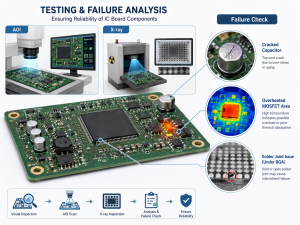
    • Robust Quality & Testing Regime:​ Implementing automated optical inspection (AOI), X-ray, and functional testing ensures every board meets stringent medical-grade specifications.
    • Dedicated Rapid Prototyping Lines:​ Offering quick turn PCB USA​ services accelerates the design-test-iterate cycle, getting you to clinical trials faster.

    EBest Circuit (Best Technology) is a specialized PCB manufacturing and assembly provider focused on the rigorous demands of the medical sector. Our state-of-the-art facility is ISO 13485:2016 certified, and our global production network includes advanced SMT factories in both China and Vietnam. Each site operates under a unified MES-driven manufacturing system, enabling full process traceability, tighter quality control, and consistent performance across all medical projects. Our engineering team is dedicated to merging technical excellence with regulatory mastery, ensuring every medical PCB meets the highest reliability and compliance standards. For a consultation on your next PCBA printed circuit board assembly project, contact us at sales@bestpcbs.com.

    Medical PCB Assembly Services

    How Do Medical PCB Assembly Services Ensure Reliable Performance in Today’s Healthcare Electronics?

    Reliable performance in medical electronics is non-negotiable. Medical PCB assembly services​ achieve this by implementing a multi-layered approach to quality and control that far exceeds commercial standards.

    • Medical-Grade Materials & Components:​ Only using high-Tg laminates, conformal coatings, and components rated for extended life and stable performance in physiological environments.
    • Enhanced Process Controls:​ Strict adherence to controlled procedures for soldering (e.g., lead-free SAC305 profiles), cleanliness (ionic contamination testing), and electrostatic discharge (ESD) protection.
    • Comprehensive Testing Protocol:​ Every board undergoes a battery of tests:
    Test MethodPurpose
    Automated Optical Inspection (AOI)Catches soldering defects, missing, or misaligned components.
    X-Ray InspectionVerifies integrity of BGAs, internal layers, and via fills.
    In-Circuit Test (ICT)Checks electrical performance and component values.
    Functional Test (FVT)Simulates the device’s real-world operation.
    • Full Traceability:​ Lot-by-lot and even board-level tracking of all materials and components is maintained, a critical requirement for FDA audits and potential recall actions.
    • Environmental Stress Screening (ESS):​ Subjecting boards to thermal cycling and burn-in to identify and eliminate early-life failures (infant mortality).

    In summary, reliability is engineered through a combination of superior materials, meticulous processes, and exhaustive verification, ensuring devices perform as intended over their entire service life.

    Medical PCB Assembly Services

    What Is the Difference Between PCB Fab and Assembly?

    The journey from design to a functional board involves two distinct, sequential phases: fabrication (PCB fab) and assembly (PCB manufacturing and assembly). Confusing them can lead to project missteps.
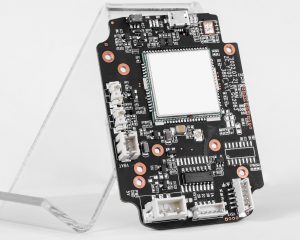

    • PCB Fabrication (Fab):This is the process of manufacturing the bare, unpopulated circuit board. It starts with design files (Gerbers) and involves:
      • Creating the substrate laminate.
      • Imaging and etching the copper layers to form traces.
      • Drilling holes (vias and through-holes).
      • Applying solder mask and silkscreen.
      • Performing electrical testing on the bare board.
      • Output:​ A bare PCB with pads and holes, ready for components.
    • PCB Assembly (PCBA): This is the process of mounting and soldering electronic components onto the fabricated bare board. It involves:
      • Applying solder paste via stencil.
      • Placing components (Surface-Mount Technology – SMT) using pick-and-place machines.
      • Reflow soldering to create electrical connections.
      • Through-hole component insertion and soldering.
      • Cleaning, inspection, and functional testing.
      • Output:​ A fully functional, populated printed circuit board assembly.

    Think of PCB fab​ as printing the wiring diagram and PCB assembly​ as installing all the light switches, outlets, and fixtures. A true turnkey partner, like a professional PCB design company​ turned manufacturer, expertly manages both phases.

    Why Medical PCB Assembly Services Demand Higher Standards Than Conventional PCB Manufacturing and Assembly?

    Medical devices directly impact human life, making failure unacceptable. This fundamental truth elevates every requirement from the component level to the final system integration.

    • Regulatory Scrutiny:​ Medical devices require formal approval (FDA, CE). The entire production process must be documented and validated under standards like ISO 13485. A simple process change in conventional manufacturing can become a major, documented change request in medical.
    • Extreme Reliability & Longevity:​ A consumer device may have a 2-3 year life. An implantable or critical care device must function flawlessly for 10-15+ years. This demands higher-grade materials and accelerated life testing.
    • Risk Management (ISO 14971):​ Every potential failure mode must be identified, analyzed, and controlled. The assembly process itself is a critical control point to mitigate risks like short circuits or cold solder joints.
    • Biocompatibility & Cleanliness:​ Devices contacting patients must not leach harmful substances. Assembly processes must ensure extreme cleanliness to avoid ionic contamination that could cause corrosion or failure.
    • Traceability:​ While batch traceability might suffice for consumer goods, medical devices often require component-level traceability to facilitate targeted recalls if a supplier’s component batch is found faulty.

    Therefore, medical PCB assembly services​ are not just about soldering components; they are about executing a rigorously controlled, documented, and validated protocol where quality is measured in patient safety outcomes.

    How Best Rigid-Flex PCB Assembly Services for Medical Devices Enhance Durability and Miniaturization?

    Best rigid-flex pcb assembly services for medical devices​ unlock innovative form factors by combining rigid boards for component support with flexible circuits for dynamic movement and space savings.

    • Enhancing Durability:
      • Reduced Interconnections:​ Replacing fragile connectors and ribbon cables with soldered flex connections minimizes points of failure.
      • Vibration/Shock Resistance:​ The flexible portions absorb and dissipate mechanical stress, protecting solder joints.
      • Improved Reliability:​ A monolithic rigid-flex structure is more reliable than an assembly of multiple interconnected rigid boards.
    • Enabling Miniaturization & Wearability:
      • 3D Packaging:​ Boards can be folded into compact, three-dimensional shapes, crucial for implants, hearing aids, and endoscopic capsules.
      • Weight Reduction:​ Eliminating connectors and using thin flex layers reduces overall weight—key for portable and wearable monitors.
      • Dynamic Flexing:​ Allows for designs in hinged devices or probes that require repeated movement.

    For a factory wholesale medical PCB assembly service, mastering rigid-flex is a key capability. It requires specialized PCB fab​ expertise for multilayer bonding and precise PCB assembly​ techniques to handle the delicate flex areas during soldering and handling.

    Capabilities of a US Based PCB Assembly Partner for Healthcare OEMs

    A US based PCB assembly partner provides a mature infrastructure, advanced engineering support, and tightly controlled manufacturing systems tailored for the demanding needs of Healthcare OEMs.

    Advanced Engineering Collaboration
    Localized teams provide rapid design reviews, DFM/DFA optimization, and direct engineering communication that shortens development cycles and reduces risk before prototypes are built.

    Highly Controlled Manufacturing Processes
    U.S. facilities apply strict process validation, IPC Class 3 manufacturing, real-time monitoring, and data-driven production oversight aligned with FDA and ISO 13485 expectations.

    Robust Traceability and Documentation Systems
    MES-based traceability, controlled documentation, and production records tailored for medical audits support DHF/DMR requirements and simplify compliance workflows.

    Reliable Quick-Turn Prototyping and Small-Batch Production
    Domestic fabrication and assembly resources enable consistent quick turn PCB USA results, accelerating verification testing and early clinical evaluations.

    Secure and Verified Supply Chain
    U.S. partners maintain qualified suppliers, validated sourcing protocols, and controlled inventory management to support long-term availability and stable BOM planning.

    Specialized Medical Manufacturing Expertise
    Experienced operators, medically trained technicians, and quality teams understand the expectations of Healthcare OEMs—from cleanliness requirements to test coverage and failure analysis.

    A US based PCB assembly partner is not merely a vendor—it is a capability-driven extension of your R&D and manufacturing team, providing the technical depth, control, and confidence required for regulated medical devices.

    How a Professional PCB Design Company Supports Medical Product Development from Concept to Verification?

    A professional PCB design company​ is a vital co-pilot, transforming a conceptual medical device into a manufacturable, reliable, and certifiable product.

    • Concept & Architecture:​ Advises on system partitioning, component selection, and technology (e.g., rigid-flex) to meet size, power, and cost targets.
    • Schematic Capture & Simulation:​ Creates the electrical blueprint and runs signal/power integrity simulations to prevent performance issues.
    • PCB Layout with DFM/DFA Rules:​ Engineers the physical board layout with strict adherence to medical-grade spacing, high-reliability routing, and, crucially, Design for Manufacturing/Assembly​ rules from the start.
    • Design for Test (DFT):​ Incorporates test points and features to ensure the assembled board can be thoroughly validated.
    • Documentation for Compliance:​ Generates the complete design history file (DHF) output needed for regulatory submission, including schematics, layouts, BOMs, and design rationale.
    • Support through Verification & Validation (V&V):​ Works with the assembly partner to troubleshoot prototype builds and provide design revisions.

    This end-to-end support de-risks development, ensuring the design is optimized not just for function, but for manufacturability and compliance from day one.

    Why Many Healthcare Startups Seek Quick Turn PCB USA Solutions for Prototype Acceleration?

    For healthcare startups, speed to proof-of-concept and clinical validation is critical for funding and market entry. Quick turn PCB USA​ services are the engine for this acceleration.

    • Rapid Design Iteration:​ Fast prototype turns (e.g., 24-72 hours for fab, 5-10 days for assembly) allow engineers to test, discover flaws, and refine designs in quick succession.
    • Faster Clinical & Regulatory Milestones:​ Functional prototypes are needed for benchtop testing, animal studies, and human trials. Faster builds compress the overall development timeline.
    • Cost-Effective Exploration:​ Enables affordable testing of multiple design approaches or form factors before locking in final tooling for volume production.
    • Attracting Investment:​ A working, refined prototype is far more compelling to investors than just a CAD model or idea.

    By leveraging domestic quick turn PCB USA capabilities, startups maintain agility and momentum, turning innovative ideas into tangible devices with exceptional speed.

    How Can a Factory Wholesale Medical PCB Assembly Service Ensure Consistent Quality and Compliance for Regulated Healthcare Devices?

    A true factory wholesale medical PCB assembly service​ achieves consistent quality not through luck, but through a systemic, process-oriented approach built for the medical industry.

    • Certified Quality Management System (QMS):​ Operation under ISO 13485:2016 is not optional; it’s the foundational framework that ensures consistent processes, corrective actions, and management oversight.
    • Standardized Work Instructions & Process Validation:​ Every assembly step is defined, documented, and validated to prove it consistently produces a result meeting pre-defined specifications.
    • Advanced Process Control & Monitoring:​ Solder paste inspection (SPI), automated optical inspection (AOI), and real-time thermal profiling of reflow ovens catch deviations in real-time.
    • Rigorous Supplier Management:​ Components are sourced from approved vendors with full lot traceability. Incoming materials are inspected and certified.
    • Independent Quality Assurance:​ A dedicated QA team, separate from production, performs audits and final releases based on data, not production schedules.
    • Continuous Training:​ Personnel are regularly trained on medical device regulations, soldering standards (IPC-A-610 Class 3), and cleanroom protocols.

    This holistic system transforms a factory wholesale​ operation from a cost center into a reliable, compliance-driven partner for regulated device manufacturing.

    Why Partnering With a PCB Design Company Is Essential for Creating Safe and Reliable Medical Electronics?

    Partnering with a PCB design company​ with medical expertise is essential because safety and reliability are designed in, not tested in. They bridge the gap between brilliant medical innovation and real-world, manufacturable hardware.

    • Risk Mitigation by Design:​ Experts incorporate safety standards (like IEC 60601 for isolation and leakage currents) directly into the schematic and layout, designing out potential electrical hazards.
    • Designing for Long-Term Reliability:​ They understand and design for factors like thermal management, signal integrity in noisy environments, and mechanical stress—all critical for devices that must work for years without fail.
    • Avoiding Costly Late-Stage Re-Spins:​ Early DFM/DFA analysis prevents fundamental flaws that would require a complete board redesign after tooling is set, saving immense time and cost.
    • Navigating Regulatory Documentation:​ Their deliverables become a core part of the technical file required for regulatory submission, ensuring the design is presented correctly to auditors.

    Ultimately, this partnership ensures the electronic foundation of your medical device is as innovative, safe, and robust as the medical concept itself.

    Medical PCB Assembly Services

    To sum up, medical PCB assembly services​ form the critical, reliable backbone of modern healthcare electronics, from life-sustaining implants to diagnostic equipment. This article has detailed how specialized expertise in design, fabrication, assembly, and testing converges to meet the unparalleled standards of the medical field.

    Choosing a partner with deep medical market experience, robust quality systems, and a collaborative approach is not just a procurement decision—it’s a strategic investment in your product’s success and patient safety. As an ISO 13485:2016 certified specialist in medical PCB assembly services, EBest Circuit (Best Technology)​ combines engineering precision with regulatory insight to guide your device from prototype to volume production with unwavering quality. For more information or if you would like to send us any inquiry, please send us an email through the contact form at the bottom of our Contact Page.

    You may also like