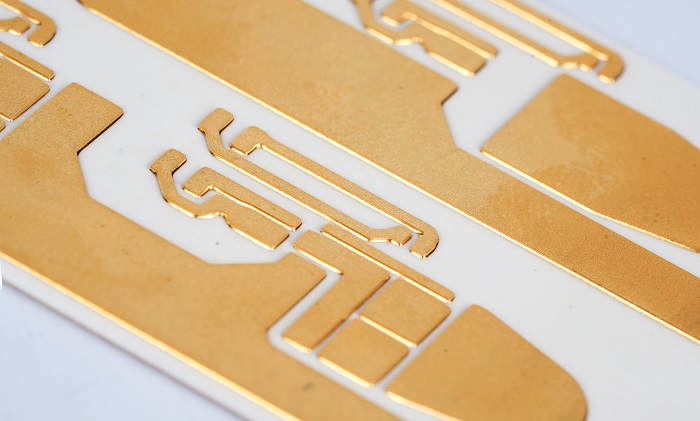
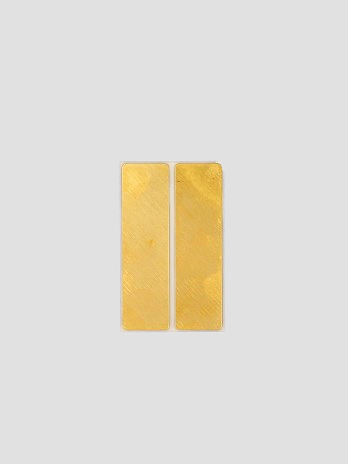
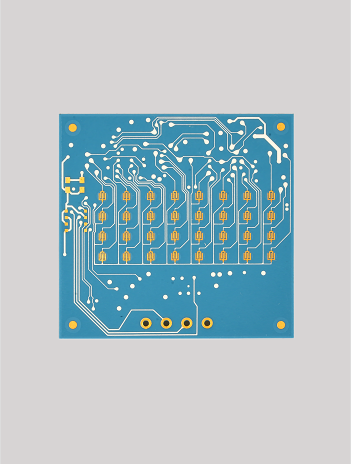
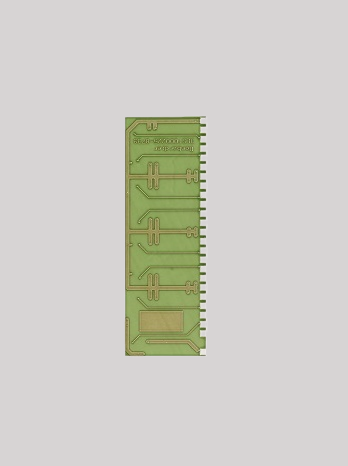
RO3003 is widely used across RF and microwave PCB because it offers stable electrical behavior, low loss, and smooth processing on modern PCB lines. Engineers often choose this laminate when they need predictable impedance, steady phase response, and strong thermal performance at high frequencies. Below is a comprehensive, fabrication-level RO3003 datasheet, covering electrical, mechanical, thermal, chemical, processing, and reliability properties.
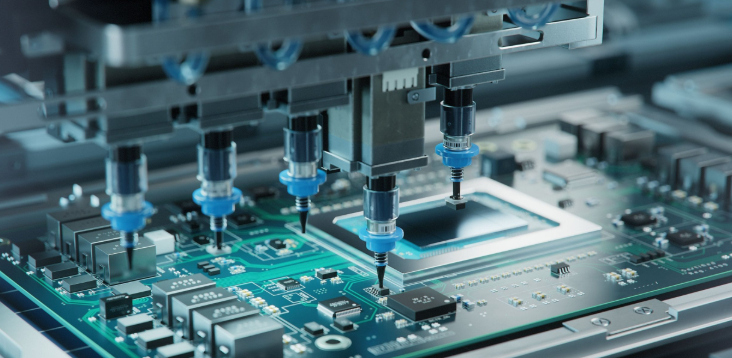
RO3003 is widely used in 77 GHz automotive radar because it withstands large temperature swings without drift.
RO3003™ Comparison Against Other Rogers Materials
Parameter
RO3003
RO4003C
RO4350B
Dk
3.00
3.38
3.48
Df
0.0010
0.0027
0.0037
Moisture Absorption
0.02%
0.04%
0.06%
Thermal Conductivity
0.5 W/m·K
0.3 W/m·K
0.6 W/m·K
Dimensional Stability
High
Medium
High
Fabrication Difficulty
Low
Very low
Low
Cost
Highest
Lowest
Medium
Best For
Radar, mmWave
General RF
Telecom, WiFi, RF modules
RO3003™ Material Stack-Up Examples
1- Layer RF Antenna Stack-Up
Layer
Material
Top Copper
18 ÎŒm RTF
Dielectric
RO3003 10 mil
Ground Copper
18 ÎŒm RTF
2-Layer Balanced RF Module
Layer
Material
Signal Layer
œ oz copper
RO3003 Core
20 mil
Ground Layer
1 oz copper
Hybrid RF + Digital Stack-Up
Layer
Material
Top Copper
RF traces
RO3003
10 mil
Adhesive Layer
â
FR4 Prepreg
Standard
FR4 Core
Digital circuits
Bottom Copper
Ground / digital signals
If your next RF project involves RO3003 or other high-frequency laminates, our engineering team is ready to assist with simulations, stack-up proposals, prototype runs, and volume builds. You are welcome to contact EBest Circuit (Best Technology) for professional guidance and fast support as you move from concept to production.
Our teams support RF designers from the early stack-up stage through final production with careful engineering review, material guidance, and precise process control. Every PCB moves through certified systems, including ISO9001, ISO13485, IATF16949, and AS9100D, which gives customers confidence in long-term reliability.
If you are working on RF or microwave PCB design, the material you choose directly impacts signal loss, phase stability, thermal performance, and overall system reliability. Rogers RO4350B is one of the most widely used high-frequency laminates in telecom, radar, 5G, satellite, and advanced wireless systems. This guide provides a complete breakdown of RO4350B datasheet properties, thickness options, RF advantages, and a comparison against FR4âplus practical manufacturing notes for PCB engineers.
What Is Rogers RO4350B Material?
Rogers RO4350B is a hydrocarbon-ceramic, glass-reinforced laminate engineered for RF and microwave applications from the Rogers RO4000Âź series. Unlike PTFE-based laminates, RO4350B can be fabricated using standard FR4 PCB processesâa huge benefit for cost, lead time, and manufacturabilityâwhile still delivering excellent electrical stability at GHz frequencies.
Key characteristics:
Dk = 3.48 ± 0.05 (10 GHz, z-axis)
Df â 0.0037 (low loss)
High thermal stability
Low moisture absorption (<0.06%)
Compatible with FR4 processes
Excellent for hybrid stack-ups
What Is Rogers RO4350B Material?
What Is RO4350B Used for in RF PCB Applications?
RO4350B is found in nearly every modern RF system. Typical uses include:
5G antennas and base-stations
Phased-array radar modules
LNA, PA, and front-end RF chains
Power amplifiers requiring robust thermal paths
Filters, couplers, baluns, and RF matching networks
Automotive ADAS radar
Satellite communication modules
High-performance mixed-signal and RF/digital hybrid boards
Because it balances cost and performance, RO4350B is ideal for mid-to-high volume RF production.
Rogers RO4350B Datasheet: Full Material Properties Overview
Below is a consolidated summary of all essential RO4350B datasheet values RF engineers frequently use in simulation, stack-ups, and manufacturing notes.
RO4350Bâs thermal conductivity of 0.69 W/m·K is significantly higher than typical FR4 (~0.3 W/m·K).
This means:
Better heat spreading
Higher reliability under RF power loads
Improved board life during thermal cycles
Lower risk of delamination
This makes RO4350B a strong candidate for RF power amplifiers and modules with high current density.
RO4350B Thickness Options & Common Stack-Up Selections
RO4350B thickness availability is wide, giving designers flexibility.
Common RO4350B Thicknesses
0.101 mm / 0.004â
0.203 mm / 0.008â
0.254 mm / 0.010â
0.3048 mm / 0.012â
0.406 mm / 0.016â
0.508 mm / 0.020â
0.813 mm / 0.032â
1.524 mm / 0.060â
Copper options: œ oz, 1 oz, 2 oz.
Common Stack-up Approaches
1. RF-only board:
Single RO4350B core for antennas, filters, or couplers.
2. Hybrid stack-up (RO4350B + FR4):
RF layers on RO4350B
Digital/Power layers on FR4
Best cost-performance balance
3. Multilayer RO4350B stack-up:
For radar, high-power, or mmWave systems requiring uniform RF behavior.
RO4350B vs FR-4: Differences in RF Performance
FR-4 is a good general-purpose material but struggles at higher RF bands. Its dielectric constant shifts with humidity, temperature, and frequency. Loss levels rise significantly above 1â2 GHz, which affects range, efficiency, and signal clarity.
RO4350B addresses these issues with stable electrical behavior, low loss, and stronger control of impedance.
Feature
RO4350B
FR-4
Dk Stability
Very stable
Unstable at high frequency
Loss (Df)
Low
High
High-frequency use
Excellent
Limited
Thermal stability
Strong
Moderate
RF performance
Consistent
Varies widely
Typical use
RF, microwave, antennas
General electronics
For RF paths, RO4350B is nearly always the better choice.
Rogers 4000 Series Materials Overview
The RO4000Âź series includes hydrocarbon-ceramic laminates designed for RF and microwave work. The series offers stable dielectric values, low moisture absorption, and predictable performance across frequency ranges. These materials support antennas, filters, couplers, radar units, medical sensors, and industrial communication systems. RO4003C and RO4350B are the most common choices, though other variants exist for special electrical or mechanical needs. Here are some other RO4000Âź series materials:
Which Rogers Materials Can Be Used for RF & Microwave PCB?
Common Rogers RF materials include:
RO4350B â balanced performance, processable like FR4
RO4003C â lower loss, great for 10+ GHz
RO4835 â improved oxidation resistance and stability
RT/duroidÂź series â PTFE-based ultra-low-loss materials for mmWave
TMMÂź series â ceramic thermoset laminates for precision high-power RF
Choose based on frequency, thermal load, and tolerance requirements.
RO4350B PCB Manufacturing Considerations
Although RO4350B is easier to manufacture than PTFE materials, achieving consistent RF performance requires following specific process guidelines. Here are the key considerations for PCB fabrication:
RO4350B PCB Manufacturing Considerations
1. FR4-compatible processing, but with controlled parameters
RO4350B supports standard PCB processes, but drill speeds, lamination pressure, bake profiles, and final copper thickness must be carefully controlled to ensure stable impedance and dielectric consistency.
2. Hybrid stack-ups require expert lamination control
When combining RO4350B with FR4, differences in CTE (coefficient of thermal expansion) must be managed to avoid warpage, resin starvation, or delamination. Precise prepreg selection and lamination cycles are essential.
3. Accurate impedance control is critical
RF designs often require ±5% or tighter impedance tolerance. Manufacturers must account for:
RO4350Bâs ceramic-filled structure requires optimized drill parameters to prevent smear and maintain high hole-wall quality, ensuring reliable via plating for multilayer RF PCBs.
5. Proper material storage and handling
To prevent moisture absorption and dimensional shift, the material should be kept in a dry, controlled environment and baked before lamination when necessary.
With these practices, RO4350B PCBs can achieve repeatable RF performance from prototype to mass production.
Why EBest Circuit (Best Technology) Is Preferred for RO4350B PCB Fabrication?
When working with RO4350B, choosing the right PCB manufacturer is critical. EBest Circuit (Best Technology) is trusted by RF engineers because:
They stock RO4350B in multiple thicknesses
Provide RF stack-up simulation support
Offer tight impedance control with test coupons
Perform high-precision routing and controlled-depth milling
Support hybrid RO4350B + FR4 multilayers
Provide material certifications and Rogers-lot traceability
If you need consistent RF performance from prototype to mass production, EBest Circuit (Best Technology) is a reliable partner for RO4350B PCB fabrication.
FAQs
1. Does RO4350B support buried or blind vias in multilayer RF boards?
Yes. RO4350B works well in multilayer designs that use blind or buried vias. Its mechanical strength and low z-axis expansion help maintain via reliability during lamination and thermal cycling. When designers use selective RO4350B layers inside a hybrid stack-up, careful lamination scheduling helps control movement and keep impedance stable.
2. Is RO4350B compatible with ENIG, immersion silver, or HASL finishes?
Yes. RO4350B supports common surface finishes, including ENIG, immersion silver, OSP, and certain types of lead-free HASL. Most RF boards use ENIG or immersion silver because these finishes give cleaner surfaces, consistent thickness, and smoother trace edges. A smooth finish helps reduce signal loss at high frequencies. HASL may be less preferred for controlled-impedance lines due to its uneven surface.
3. Can RO4350B be used for power amplifiers that generate heavy heat?
Yes. Many PA modules run on RO4350B because it handles heat better than FR-4 and holds impedance during thermal loads. Designers still need good thermal paths, such as thermal vias under power devices or metal backers for heat spreading. If the PA generates extreme heat, ceramic or metal-backed constructions may be considered. For most communication-grade PAs, RO4350B provides more than enough stability.
4. What stack-up mistakes should designers avoid when using RO4350B?
A common mistake is mixing RO4350B and FR-4 without modeling the transition area. The shift in dielectric constant affects line impedance if the transition is not controlled. Another mistake is routing sensitive RF lines too close to ground via fences, which can create unintended coupling. Over-constraining solder masks around RF traces may also shift the effective dielectric environment.
5. Is RO4350B more expensive than FR-4, and how does it impact project cost?
Yes, RO4350B costs more than FR-4 due to its electrical stability and engineered formulation. The material price is higher, and multilayer stacks may need tighter controls. However, the overall project cost can still drop because fewer design spins occur, RF tuning time is reduced, and system performance becomes more predictable. In many RF designs, the ROI justifies the material cost.
EMS manufacturing, or Electronic Manufacturing Services, is the process where a professional company builds electronic products for other brands. Instead of handling production in-house, businesses rely on EMS partners to manage PCB assembly, component sourcing, testing, and final product build.
BEST Technology supports turnkey EMS services from start to finish. It becomes your extended production team.
What Is EMS in Manufacturing?
EMS in manufacturing refers to Electronic Manufacturing Services, a full set of solutions designed to help companies develop, build, and ship electronic products. These services may include PCB assembly, component sourcing, testing, system integration, packaging, and even shipping.
Instead of managing dozens of suppliers, factories, and inspectors, a business can choose one EMS partner to handle everything. This choice removes stress. It reduces errors. It creates smooth production from the very beginning.
Todayâs market moves fast, and EMS makes it easier to keep up. Even small brands can compete with large corporations because EMS companies offer advanced equipment and skilled teams. When an idea becomes a product through EMS, the entire journey becomes more manageable.
All these phrases point to the same idea: a company that helps design, assemble, test, and deliver electronic products.
EMS partners cover many tasks that once required multiple vendors. This shift allows businesses to operate more efficiently, reduce cost, and shorten production cycles.
What Are the Benefits of EMS Manufacturing Services?
EMS manufacturing services provide a long list of advantages. These benefits help companies grow faster, reduce risk, and maintain stable quality.
1. Lower Production Costs
EMS companies buy components in large volumes. They negotiate better prices and reduce waste during assembly. This power leads to lower overall cost for the customer.
2. Faster Time-to-Market
Speed matters. EMS partners streamline every step, from component sourcing to final testing. Fast production helps a business launch earlier, win more customers, and respond to market changes without delay.
3. Stable and Reliable Quality
EMS companies invest heavily in inspection systems, skilled technicians, and clean production environments. Each product goes through strict testing.
4. Access to Advanced Technology
Modern devices need precise tools and expert handling. EMS companies maintain advanced SMT lines, automated optical inspection, and top-grade testing machines. EMS gives you instant access without the burden.
5. Reduced Operational Risk
EMS partners absorb much of this risk. They handle sourcing challenges, production planning, and quality control while you focus on growing your business.
6. More Time to Focus on Core Strengths
Instead of worrying about solder joints, shipping labels, or testing protocols, your team can focus on design, marketing, and customer needs.
7. Better Scalability
Growth becomes easier. Whether you need 1,000 units or 100,000 units, an EMS partner can adjust production quickly.
BEST Technology is one EMS manufacturing company that offers these benefits through a turnkey model. Many customers appreciate this support because it removes complexity and creates stable long-term partnerships.
What Is the EMS Production Process?
The EMS production process follows a clear path. Each stage adds value and builds the final product with accuracy.
Here is a simple breakdown:
Design and Engineering Support: Some EMS providers offer DFM (Design for Manufacturability) checks. A small adjustment at this stage can prevent costly errors later. It also speeds up manufacturing.
Component Sourcing: EMS companies source parts from trusted suppliers. They check the quality, verify authenticity, and maintain stable stock levels.
PCB Fabrication: Some EMS partners work with PCB factories or own in-house lines. PCB fabrication includes copper plating, drilling, imaging, surface finishing, and other steps.
PCB Assembly (SMT + THT): Here, components are placed on the board. SMT machines place tiny chips with speed and precision. Some components require THT soldering, which adds strength and durability.
Inspection and Testing: It ensures the board works the first time. Common tests include: AOIăICTăFunctional testingăX-ray inspectionăTesting protects you from product failures.
System Integration: If your product includes cables, casings, modules, or displays, the EMS partner assembles everything into one final unit.
Packaging and Shipping: The last stage includes labeling, packaging, and delivery. Many EMS partners offer global shipping to reduce your workload.
BEST Technology follows this type of detailed EMS manufacturing process to ensure accuracy and smooth delivery.
What Are the Three Types of EMS?
EMS services can be grouped into three main types. Each supports different needs.
1. PCB Assembly Focused EMS
These companies specialize in PCB assembly only. They handle SMT, THT, and testing. This option works when you already have designs, PCBs, and cases ready.
2. Box-Build EMS
This type goes further. It includes PCB assembly plus product integration, wiring, case assembly, testing, and packaging.
3. Full Turnkey EMS
This level covers everything from design to shipment. It includes:
DFM checks
Component sourcing
PCB fabrication
Assembly
Testing
Packaging
Logistics
BEST Technology belongs to this category. We provide full turnkey EMS solutions to reduce complexity and help customers scale easily.
What Is EMS & ODM?
EMS focuses on manufacturing. ODM focuses on design. When combined, EMS & ODM gives you both product design and production under one roof.
It reduces development time. You get a ready-to-market product with optimized cost and stable quality.
Companies that need custom solutions often choose ODM + EMS because it improves speed and lowers development risk.
What Is the Difference Between OEM and EMS?
The terms OEM and EMS seem similar, but they are not the same.
OEM (Original Equipment Manufacturer)
An OEM produces products under its own brand or designs products for others. Most OEMs handle design and may outsource manufacturing.
EMS (Electronic Manufacturing Services)
An EMS builds products for OEMs. EMS companies may not own the design. They focus on producing, assembling, and testing the product.
Key differences:
OEM = product ownership
EMS = product manufacturing support
OEM focuses on innovation and branding. EMS focuses on production and manufacturing expertise
Many OEMs team up with EMS companies to reduce cost and speed up production. It creates a strong partnership where each side focuses on its strengths.
What Are the Four Factors of Production in EMS?
EMS production depends on four main factors:
1. Labor: Skilled technicians and engineers operate machines, inspect products, handle assembly, and ensure quality.
2. Machinery: SMT lines, reflow ovens, AOI systems, and other tools make high-volume production possible.
3. Materials: Components, PCBs, solder paste, packaging materials, and more. EMS partners manage sourcing to maintain smooth flow.
4. Processes: Production steps, tests, inspections, and standards guide each build. These processes protect quality and ensure repeatability.
Together, these factors form the backbone of any EMS manufacturing company.
How to Select the Right EMS Manufacturing Company?
Choosing the right EMS partner influences product quality, delivery speed, and market success. Here are key points to consider:
1. Experience and Track Record
Choose an EMS company with years of experience and proven success. A stable track record means fewer risks. BEST Technology, for example, has supported global clients for many years through turnkey EMS.
2. Technical Capability
Check the machinery, testing tools, and engineering support. Modern electronics need advanced equipment.
3. Quality Systems
Ensure the EMS provider follows international standards like ISO9001. Strong quality systems protect your brand.
4. Supply Chain Strength
Component sourcing is the heart of stable production. Make sure the EMS partner has reliable suppliers and partners.
5. Scalability
Your partner should support both small batches and mass production. This helps your brand grow without changing suppliers later.
6. Communication
Clear and quick communication saves time and prevents mistakes. Choose a partner who responds fast and provides updates.
7. Cost Transparency
A reliable EMS partner should provide clear quotations and honest explanations. Hidden fees can hurt project budgets.
8. After-Sales Support
Strong after-sales support builds trust. It also ensures long product life.
9. Turnkey Capabilities
A turnkey EMS manufacturing company reduces your workload. It handles sourcing, assembly, testing, and delivery under one team.
With these points, you can find a partner who supports your goals and protects product reliability. BEST Technology fits this role well for many global clients.
Conclusion:
EMS manufacturing gives businesses a powerful way to build electronic products with speed, accuracy, and cost control. It reduces stress, shortens delivery time, and improves product stability.
If you need turnkey EMS manufacturing services, feel free to reach out. sales@bestpcbs.com
High-power RF and microwave systemsâsuch as RF amplifiers, 5G base stations, radar modules, satellite communication units, and microwave transmittersârequire PCBs that can maintain stable performance under intense thermal and electrical stress. Ordinary FR-4 boards simply cannot handle the dielectric loss, heat generation, tight impedance requirements, and frequency-dependent behavior seen above 1 GHz.
In this guide, we highlight the Top 10 RF microwave PCB manufacturers for high-power applicationsâideal for RF amplifiers, radar systems, 5G infrastructure, satellite communication, and other high-frequency uses.
Why You Need a Specialized RF Microwave PCB Manufacturer?
High-power RF designs introduce challenges such as elevated heat, strict impedance requirements, and performance losses at microwave frequencies. Manufacturers must have:
Expertise in low-loss materials like Rogers, Taconic, or PTFE-based substrates
Multi-layer RF/microwave stackup engineering
High-precision etching and drilling for mmWave designs
Support for heat-sink integration, metal-backed PCBs, or thick-copper construction
Robust quality systems for aerospace/defense-grade reliability
Choosing the right vendor ensures stable power handling, lower insertion loss, and consistent performance across your operating frequency range.
Top 10 RF Microwave PCB Manufacturers for High-Power Applications
1. American Standard Circuits (ASC)
ASC is one of the most experienced RF microwave PCB manufacturers in North America. They specialize in complex high-power designs, including:
Best for: High-power RF, metal-backed microwave PCBs, aerospace/defense
Their engineering support for thermal-management and high-frequency performance makes them ideal for RF amplifiers and transmitters.
2. HT Global Circuits
HT Global produces RF microwave PCBs operating up to 77 GHz and beyond. Their strengths include:
Multi-layer PTFE stackups
2â20 layer RF/microwave builds
Heavy copper up to 6 oz for high-power devices
Hybrid stackups combining FR-4 with RF materials
They are a top choice for automotive radar, mmWave modules, and high-power RF designs.
Best for: mmWave, radar, low-loss PTFE boards, thick-copper RF PCBs
3. Summit Interconnect
Summit Interconnect is known for premium high-frequency and high-reliability microwave PCBs used in:
Aerospace
Defense
Telecom infrastructure
Their fabrication process emphasizes precision drilling, micro-vias, and controlled dielectric thicknessâcritical for high-frequency energy transfer and low insertion loss.
Best for: Mission-critical high-frequency systems
4. KKPCB
KKPCB works extensively with RF laminates such as Rogers, Isola, Taconic, and Panasonic materials. Their capabilities include:
Rigid, flex, and rigid-flex RF PCBs
Controlled impedance routing
Low-loss dielectric materials
High-density microwave layouts
A good mid-cost option for commercial RF/microwave products and 5G devices.
Great for high-frequency testing equipment, RF sensors, and wireless communication modules.
Best for: Broad RF material selection, advanced stackups
7. WellPCB
WellPCB provides high-frequency PCBs up to 64 layers with:
Tight impedance tolerances
Low-loss laminates (Rogers, Isola, Taconic)
Quick-turn RF prototyping capability
A strong choice for R&D labs, engineering teams, and rapid iteration cycles.
Best for: Low-loss microwave PCBs and prototype runs
8. Sanmina Corporation
Sanmina serves enterprise and industrial markets requiring:
High-reliability RF PCB mass production
Telecom and infrastructure RF boards
Integrated assembly + testing
If your product needs scale, Sanmina is a top-tier partner.
Best for: High-volume microwave PCB production
9. TTM Technologies
TTM is one of the worldâs largest PCB manufacturers with deep expertise in:
Microwave PCBs for defense/avionics
Very tight tolerance stackups
Hybrid laminates for both RF + digital
Perfect for mission-critical high-power RF systems.
Best for: High-reliability aerospace/defense RF PCBs
10. EBest Circuit (Best Technology) (BEST TECH)
EBest Circuit (Best Technology) stands out for its deep expertise in Rogers, Taconic, PTFE, ceramic-filled laminates, and hybrid RF stackups. Our core strengths include:
High-power RF PCB manufacturing with thick copper
PTFE microwave PCBs for >10 GHz
Cavity structures, tight impedance control, and controlled Dk/Df
RF prototype-to-production support
We are especially strong in thermal management, cost-effective PTFE processing, and mixed-material high-frequency boards used in RF amplifiers and microwave modules.
When ordering high-power RF microwave PCBs, your manufacturer needs precise engineering data to ensure correct impedance, dielectric performance, and thermal stability. Below is a complete checklist.
1. Operating Frequency Range
Specify the exact frequency band, such as:
1â6 GHz (RF)
10â30 GHz (Microwave)
24â77 GHz (mmWave)
Higher frequencies require lower-loss materials and tighter tolerances.
This allows the PCB manufacturer to determine trace width, spacing, copper thickness, and dielectric thickness.
3. Expected Power Handling / Heat Load
Thermal load affects stackup and material choice, especially for:
RF amplifiers
High-power transmitters
Power combiners/splitters
Manufacturers may include metal-backed substrates or copper coins if required.
4. Material Preferences
List materials if known:
Rogers 4350B, 4003C, 5880, 3006
Taconic TLX, TLY, RF-35
Isola Astra / I-Tera HT / PTFE laminates
Or request material recommendations based on your frequency and power.
5. Stackup Requirements
Specify:
Number of layers
Hybrid stackup (PTFE + FR-4)
Dielectric thickness
Copper weight (e.g., 1oz, 2oz, 3oz+)
High-power RF typically needs high-copper layers for heat dissipation.
6. RF-sensitive Structure Information
Provide details on:
RF cavities
Via fences / Ground vias
Via-in-pad for RF chips
Microstrip or stripline routing
These influence manufacturability and RF performance.
7. Connector Type & Finish
RF connectors need stable surface performance:
ENIG
ENEPIG
Hard gold
Let the manufacturer know if you’re using SMA, MMCX, SMP, or edge-launch connectors. Please remember, the more detailed information you provided, the fast you get your prototype.
What Should You Provide for High-Power RF PCBs?
Why EBest Circuit (Best Technology) Is Your Best Partner?
EBest Circuit (Best Technology) is one of the most leading radio frequency manufacturers in Asia, we have more than 19 years experienced in this field. Our team deeply specializing in high-power RF PCBs and PTFE-based microwave PCB fabrication. Hereâs why we stand out for most years:
1. Expertise in High-Frequency Materials
BEST TECH processes complex RF materials including:
3. Precision Fabrication & Tight Impedance Control
With advanced drilling, lamination, and copper etching technologies, they achieve:
±5% impedance tolerance
Excellent line width stability
Accurate dielectric thickness across the panel
4. RF Prototyping + Mass Production
From engineering samples to volume production, EBest Circuit (Best Technology) supports fast lead times with stable process control.
5. Competitive Pricing for PTFE & Microwave Boards
Compared with Western manufacturers, BEST TECH offers better pricing while maintaining high qualityâideal for startups, R&D teams, and cost-sensitive RF applications.
If you are interested in RF PCB design or want to get your first RF PCB prototype with fast delivery, please do not hesitate to contact us, our sales team are engineered sales, they deeply know the RF PCB, and enable to provide you the best solution and competitive price in short time.
FAQs
1. What is an RF microwave PCB?
An RF microwave PCB is a printed circuit board designed to operate at high frequencies (1â100+ GHz). It uses low-loss materials such as Rogers or PTFE to maintain stable impedance and minimize signal attenuation.
2. What causes high-power RF PCBs to fail?
Common failure causes include:
Excessive heat
Poor thermal design
Incorrect stackup selection
Impedance mismatch
Delamination from improper lamination of PTFE materials
Choosing the right RF PCB manufacturer greatly reduces failure risk.
3. What is the recommended copper thickness for high-power microwave PCBs?
For heat-heavy RF circuits:
2 oz or 3 oz copper is common
4â6 oz for very high-power amplifiers
4. Why is controlled impedance so important in RF PCB design?
Proper impedance ensures:
Lower insertion loss
Minimal signal reflection
Stable RF phase and amplitude
Accurate high-frequency performance
5. Can I use FR-4 for microwave PCBs?
FR-4 is not recommended above 3â6 GHz due to high dielectric loss. For microwave frequencies, PTFE or Rogers materials are necessary.
Industrial PCB manufacturing is the backbone of mission-critical electronic systems in aerospace, automotive, industrial automation, and medical devices. Unlike commercial PCBs designed for consumer-grade use, industrial-grade printed circuit boards are engineered to withstand extreme conditionsâincluding wide temperature ranges (-40°C to 125°C), continuous operation for a decade or more, and high mechanical stress from vibration or shock. With 20 years of expertise, our industrial PCB manufacturing services deliver unmatched durability, precision, and reliability, making us the trusted partner for 300+ leading enterprises (including 20 Fortune 500 companies) in high-stakes applications.
Selecting the right industrial PCB manufacturing partner is critical to avoiding costly downtime, quality issues, and project delays. Our 20-year track record speaks for itself with these industry-leading benefits:
Exceptional Quality: 99.9% defect-free rate (industry average 85%), 10-year trouble-free operation guarantee, and failure rate below 3PPM (parts per million)
Technical Expertise: 50+ senior engineers specializing in HDI, rigid-flex, high-temperature, high-frequency, and high-power industrial PCB manufacturing, with 10,000+ complex projects completed
Rapid Response: Dedicated account managers available 24/7, 1-hour consultation response, and DFM (Design for Manufacturability) reports within 4 hours
Transparent Pricing: Direct supplier pricing with up to 40% bulk discounts, clear pricing for special processes (impedance control, edge plating), and no hidden fees
On-Time Delivery: 98% of orders shipped on time or early, emergency prototyping in as fast as 24 hours, and zero major delivery incidents in 10 years
Industrial PCB Manufacturing Solutions for 3 Key Industry Pain Points
Our industrial PCB manufacturing services are tailored to solve the most pressing challenges faced by engineers and procurement teams:
– Tight Deadlines? IPC Class 3 certified production with 24-hour prototyping for 1-4 layer boards, 48-hour delivery for multi-layer PCBs, and 7-day accelerated mass productionâ3x faster than industry averages
– Quality Concerns? Premium materials including high-Tg FR4 (135°C+), ceramic, and polyimide substrates; copper thickness â„2oz; 10,000-cycle connector durability; and 4-stage testing (AOI, X-ray, thermal cycling, vibration)
– Cost Overruns? Free DFM optimization (reducing production costs by 15% on average), tiered bulk pricing, no minimum order quantity (start with 10 units), and lifetime valid quotes with no price hikes
Whether you need small-batch prototyping, medium-volume pilot runs, or large-scale production, our engineering team provides end-to-end support from design review to delivery, helping clients shorten time-to-market by 30% and reduce overall costs by 20%.
Key Requirements for High-Performance Industrial PCB Manufacturing
The difference between commercial and industrial PCB manufacturing lies in reliability under extreme conditions. We understand that a single PCB failure can cause million-dollar losses, production downtime, or safety hazardsâso our industrial-grade PCBs meet these strict criteria:
Wide temperature tolerance: Stable operation from -40°C to 125°C (covering polar, desert, and high-temperature workshop environments)
Long service life: 10+ years of continuous use (vs. 2-5 years for consumer-grade PCBs) with <0.1% annual aging rate
Harsh environment resistance: Waterproof, dustproof, chemical corrosion resistance, and 48-hour salt spray test pass
Mechanical durability: Vibration resistance (10-2000Hz), shock resistance (50G), and suitability for high-frequency movement in automotive, aerospace, and industrial equipment
These standards are backed by meticulous attention to detail: our specialty substrates cost 60% more than standard materials, copper etching tolerance is controlled to ±0.1mm (industry average ±0.3mm), and plating thickness is â„30ÎŒmâensuring each PCB is a reliable component of critical systems.
4 Core Materials for Industrial PCB Manufacturing
Material selection is critical to industrial PCB manufacturing performance. We partner directly with the worldâs top 3 substrate suppliers to ensure consistent quality:
High-Tg FR4 Substrates (60% Application Rate)
Thermal stability: 135°C+
Ideal for: Industrial control, power electronics, automotive electronics
Advantages: Best cost-performance ratio, 30% bulk pricing discount, fastest delivery time
Metal Core PCBs (High-Power Applications)
Thermal conductivity: 10x higher than standard FR4
Ideal for: LED modules, motor controllers, inverters
Advantages: 40% lower heat dissipation costs, 2x longer service life
6 Critical Processes in Our Industrial PCB Manufacturing
Weâve developed an internal quality control system exceeding IPC standards, with 6 rigorous processes for every industrial PCB manufacturing project:
DFM Intelligent Review: AI + manual double-check to identify design flaws (e.g., insufficient line width, hole misalignment), with optimization plans within 4 hoursâreducing prototyping failure rate by 90%
High-Precision Lamination: Imported pressing equipment with ±0.1mm copper etching tolerance and ±0.05mm layer alignment accuracy to avoid signal interference
Bubble-Free Pressing: Precise temperature (±1°C) and pressure (±0.1MPa) control, with layer peel strength â„1.5N/mm to prevent delamination
Laser Micro-Drilling: Minimum hole size 0.1mm, 99.8% yield for blind/buried holes, suitable for HDI (High-Density Interconnect) designs
Eco-Friendly Plating: ENIG (Electroless Nickel Immersion Gold) or immersion tin processes with uniform plating thickness (±2Όm) for corrosion resistance and easy soldering
10-Year Trouble-Free Warranty + Lifetime Technical Support
1-Year Warranty + Limited Support
Core Industries for Our Industrial PCB Manufacturing Services
Our industrial PCB manufacturing expertise spans diverse high-demand sectors, with proven success in:
Automotive: EV powertrains (supplier to BYD/NIO), ADAS (Advanced Driver Assistance Systems), and automotive extreme environment adaptation
Aerospace: Satellite communication equipment, avionics (supporting COMAC), radiation resistance, and high-voltage testing compliance
Industrial Automation: PLCs (Programmable Logic Controllers), sensor modules (partner with Siemens/Schneider), and high-frequency start-stop support
Medical Devices: Diagnostic equipment, implantable devices (ISO 13485 certified), and biocompatibility + reliability compliance
Energy: Solar inverters, wind turbine control systems (partner with Huawei/Sungrow), and outdoor harsh environment adaptation
FAQ About Industrial PCB Manufacturing
Can You Handle Small-Batch Orders (10-100 Units)? Whatâs the Lead Time?
Yes! We have no minimum order quantityâstart with 10 units. 1-4 layer PCBs are delivered in 24 hours, multi-layer PCBs in 48 hours, 3x faster than industry standards. Small-batch quality matches large-scale production.
Which Material Is Best for High-Temperature/High-Frequency/High-Power Applications?
– High-temperature (105°C+): Polyimide or ceramic substrates – High-frequency (2GHz+): PTFE substrates – High-power (â„50W): Metal core PCBs We offer free material selection consulting for your specific application.
Can You Support Unprofessional Design Schemes?
Absolutely! Our free DFM design review service provides optimization reports within 4 hours of receiving Gerber filesâincluding manufacturability improvements, cost reduction suggestions, and reliability enhancements. Perfect for both new and experienced engineers.
What If Thereâs a Quality Issue?
We stand behind our industrial PCB manufacturing with a 10-year trouble-free warranty. For non-human quality issues, we ship replacement products within 48 hours. For critical projects, we provide backup inventory to ensure zero production downtime.
What Industry Certifications Do You Hold?
All products are certified to IPC-A-600 Class 3, ISO 9001, ISO 14001, and UL 796. Automotive products meet IPC-6012/TS 16949; medical products meet ISO 13485; and aerospace products meet AS9100. Certification reports are available upon request.
Start Your Industrial PCB Manufacturing Project Today
Our production capacity and technical resources are prioritized for high-demand industrial PCB manufacturing clients. Take action now to:
Get a free copy of the “Industrial PCB Manufacturing Selection Guide” + custom DFM review
Access our 24-hour emergency delivery channelâcontact your account manager to lock in capacity
Submit your design files and project requirements, and weâll provide: â Accurate quotation ⥠DFM optimization report âą Production timeline ⣠Warranty planâall within 24 hours. With 20 years of focus, we make industrial PCB manufacturing risk-free, efficient, and cost-effectiveâhelping you launch projects faster and gain market advantage.
RF Microwave PCBs support todayâs most demanding high-frequency and high-power systems. They are essential in radar platforms, satellite communication modules, 5G infrastructures, industrial RF heating, automotive sensing units, and countless wireless products. Once operating frequency rises beyond several gigahertz, PCB behavior becomes highly sensitive. Minor geometric variations, inconsistent dielectric values, or unoptimized routing can degrade system performance.
This guide delivers a clear and practical overview of RF Microwave PCB design requirements, covering materials, layout practices, thermal management, tolerances, testing methods, and common engineering mistakes.
What Are RF Microwave PCBs and Why Do They Matter?
RF Microwave PCBs are circuit boards engineered to operate at radio-frequency (RF) and microwave frequenciesâtypically from 300 MHz up to 300 GHz. These boards carry high-frequency signals that react to even tiny variations in copper roughness, dielectric constant (Dk), or trace geometry. Unlike standard digital PCBs, RF Microwave PCBs must ensure controlled impedance, low insertion loss, low noise, and stable signal integrity.
Modern devices depend on these boards for:
5G base stations
Radar and satellite communication
Automotive ADAS systems
High-power power amplifiers (PAs)
Aerospace and military RF modules
Because these applications operate at extremely high frequencies, RF Microwave PCBs must combine precision materials, tightly controlled fabrication, and robust thermal-electrical design to deliver consistent performance.
Which PCB Materials Work Best for RF Microwave PCBs Above 3â20 GHz?
Material selection directly affects signal integrity, attenuation, matching accuracy, and reliability. Below is a practical comparison of commonly used substrates:
RF Microwave PCB Material Comparison
Material Type
Dk
Loss Tangent (Df)
Thermal Stability
Typical Frequency Range
Notes
FR-4
4.2â4.7
0.015â0.020
Limited
<2.5 GHz
Low cost; not suitable for microwave
Rogers 4003C
3.38
0.0027
Good
10â12 GHz
Entry-level microwave-grade
Rogers 4350B
3.48
0.0037
Very good
20+ GHz
Balanced for frequency + power
PTFE (e.g., RT/duroid 5880)
2.20
0.0009
Excellent
30+ GHz
Ideal for low-loss designs
Ceramic-filled PTFE
3â6
0.001â0.003
Excellent
40+ GHz
High-power, stable dielectric
Alumina Ceramic
~9.8
Extremely low
Excellent
50+ GHz
For harsh, high-power environments
Material Selection Guidelines
Below 2 GHz: Low-loss FR-4 may be acceptable for low-power RF.
2â10 GHz: Rogers 4003C or 4350B are reliable and cost-efficient.
10â20 GHz: PTFE-based laminates provide better loss performance.
20+ GHz: PTFE or ceramic substrates offer the most stability.
High power: Prioritize thermal conductivity and low Df.
Stable dielectric performance across temperature is essential, especially for high-power RF paths where drift can alter matching conditions.
RF Microwave PCB Layout Rules Engineers Must Follow
At high frequency, routing techniques directly influence signal quality. Below are the fundamental layout rules:
1. Transmission Line Options
Line Type
Advantages
Considerations
Microstrip
Simple, cost-effective
Higher radiation loss
Stripline
Shielded, predictable
Requires multilayer stack
GCPW (Grounded Coplanar Waveguide)
Tight control, compact
More via stitching required
Dual GCPW
Useful for 20+ GHz
Sensitive to fabrication
2. Routing Practices
Use tapered or 45° bends; avoid sharp 90° corners.
Maintain continuous ground references under RF traces.
Limit via transitions; each transition adds inductance and loss.
Keep matching networks short, direct, and symmetrical.
Place RF components first, optimizing the signal chain.
Keep matching components close to the device pins.
Separate RF, IF, and digital domains to reduce interference.
How to Manage Heat and Power in High-Power RF Microwave PCB Applications?
In high-power microwave systems, heat results from conductor loss, dielectric loss, and imperfect amplifier efficiency. Effective thermal design extends operating life and improves stability.
Thermal Management Techniques
Technique
Suitable Applications
Benefits
Thicker copper (2â4 oz)
Power amplifiers
Higher current carrying ability
Thermal via arrays
Under QFN/BGA PA packages
Transfers heat to opposite side
Filled/capped vias
High-power localized heat
Improved vertical conduction
Metal core PCB (MCPCB)
Industrial RF heating
Very high heat spreading
Machined cavities + heatsinks
SatCom, radar modules
Direct heat path to chassis
Dense via matrices (0.3â0.5 mm pitch) significantly reduce hotspot formation. Surface thermal pads combined with backside heat spreaders improve long-term stability.
How to Build a Stable Grounding and Shielding System for Microwave Frequencies?
At microwave frequencies, grounding quality determines overall performance.
Grounding best practices:
Use continuous ground planes
Avoid plane splits under RF paths
Apply dense via stitching (1/10 wavelength spacing)
Place grounding vias around transmission lines for containment
Use multiple ground pins for RF connectors
Shielding strategies:
Shield cans for PA, LNA, mixer, and VCO sections
Use cavity isolation for multi-band RF modules
Keep digital circuits outside the RF shield box
Add absorbing material where needed (ferrite sheets, absorbers)
Good grounding/shielding reduces noise, radiation, and EM interference, improving overall RF performance.
What Fabrication Tolerances Matter Most in RF Microwave PCBs?
High-frequency PCBs require tight control of manufacturing parameters. Even slight deviations may affect impedance and phase behavior.
Parameter
Standard PCB
RF Microwave PCB
Impact
Dk tolerance
±0.25
±0.02â0.05
Impedance stability
Trace width tolerance
±15%
±5â8%
Accurate characteristic impedance
Copper surface roughness
Standard
VLP/HVLP
Lower loss
Layer registration
±75 ”m
±25â35 ”m
Stripline/GCPW precision
Copper thickness control
Loose
Tight
Repeatability across band
Precise copper roughness and layer alignment significantly reduce insertion loss at high frequency.
Testing RF Microwave PCBs: What Engineers Should Check Before Final Assembly?
Testing validates whether the fabricated PCB behaves as the simulations predict.
Essential Test Methods
Test Method
Purpose
S-parameter measurement (VNA)
Return loss (S11), insertion loss (S21)
TDR
Impedance verification
Phase stability check
Necessary for phased-array and coherent systems
Thermal cycling tests
Stability under high power
RF leakage scanning
Identifies weak shielding areas
Performance Targets
Return loss (S11): better than â10 dB across intended bandwidth
Insertion loss close to calculated values
Impedance within ±10% tolerance
Does 5G Use Microwaves or Radio Waves?
5G uses both, depending on frequency bands.
Sub-6 GHz bands: radio waves
mmWave bands (24â40 GHz): microwaves
Microwave frequencies give ultra-high data rates but shorter range, requiring massive MIMO and beamformingâboth rely on advanced RF Microwave PCBs.
What Appliances Use RF PCBs?
RF technology appears in everyday consumer products:
Wi-Fi routers
Bluetooth devices
Microwave ovens
Smart home devices
Car key fobs
Radar sensors (ADAS)
Wireless chargers
5G smartphones
These products rely on RF PCBs to transmit and process high-frequency signals reliably.
RF Microwave PCB Practical Mistakes and Cost Traps Engineers Should Avoid
Design teams often repeat similar errors that lead to poor performance or higher manufacturing cost.
Frequent Design Mistakes
Using FR-4 in frequency ranges where loss becomes excessive.
Expecting microwave-grade PTFE to match FR-4 pricing.
Not specifying copper type, resulting in higher loss.
Allowing generic stack-up selection without confirming Dk/Df.
Re-spins caused by missing impedance notes or tolerance requirements.
Pre-Gerber Release Checklist
All RF lines labeled with impedance and modeled.
Solid ground planes maintained under active RF traces.
Matching components located at appropriate distances.
Thermal vias included under high-power components.
Dk, Df, copper type, and stack-up documented clearly.
Why EBest Circuit (Best Technology) Is Your Best Partner?
Designing and building RF Microwave PCBs demands more than basic PCB capability. The materials behave differently, the stack-up must be controlled, and small production variations can change loss, matching, or stability. EBest Circuit (Best Technology) works in this field every day. Our team supports engineers from the first stack-up discussion to the final RF test, helping reduce trial-and-error and shorten the path to a working product. We offer:
Broad laminate coverage, including Rogers, PTFE, ceramic-filled materials, Isola high-frequency substrates, and mixed-dielectric designs.
Consistent impedance control, supported by refined etching, accurate copper profiles, and verified modeling.
Well-structured high-frequency stack-ups, from 4-layer low-loss builds to complex 6â10 layer RF and mixed-signal boards.
Laser microvias, buried vias, and blind vias, enabling compact layouts for front-end modules and antenna circuits.
Stable lamination processes suited for low-loss PTFE and hybrid structures.
Support for high-power layouts, including heavy copper, thermal-via fields, and metal-back options.
We also provide full PCB-to-PCBA services for RF modulesâassembly, shielding, connector installation, antenna matching, RF tuning, and functional testingâso your board can move from layout to a verified RF system without additional vendors.
If your next project involves wireless modules, RF front ends, radar circuits, or custom antenna systems, our engineers can help you refine the design and build a board that performs consistently. Share your files or ask a questionâour team will support you through every step.
For RF engineers and PCB designers tackling high-frequency projects, the rogers ro4003 laminate datasheetis an indispensable toolâone that bridges the gap between design goals and real-world performance. Whether youâre validating material compatibility or fine-tuning signal integrity, therogers ro4003 laminate datasheet packs critical details that save time, reduce reworks, and ensure your projects meet industry standards. This guide cuts through the jargon, addresses the Reddit communityâs most common frustrations, and delivers actionable insights to make the most of this top-tier high-frequency laminate.
Getting the official rogers ro4003 laminate datasheet.pdf is crucialâavoid sketchy third-party sites with outdated versions. Head straight to Rogersâ website (https://www.rogerscorp.com), navigate to âProducts > Circuit Materials > High Frequency Laminates > RO4000 Series > RO4003C,â and download from the âTechnical Documentsâ section. The latest PDF includes updated specs, processing tips, and MSDS for compliance. Save it as âRogers-RO4003-Datasheet-Official.pdfâ for easy reference, and cross-check with Rogers support if youâre confused about any section.
What is Rogers RO4003 Laminate? Key Characteristics
Material Composition & Core Advantages
Rogers RO4003 laminate is a ceramic-filled PTFE material built for high-frequency, high-speed applicationsâno surprise itâs a favorite among engineers tired of FR-4âs limitations. Its unique blend of PTFE resin and ceramic fillers delivers consistent dielectric properties, minimal signal loss, and impressive dimensional stabilityâeven in harsh environments. Unlike some specialty laminates, itâs designed to work with standard PCB manufacturing processes, so you wonât need to overhaul your workflow to use it.
Why RO4003 Stands Out for High-Frequency Applications
When frequencies climb above 2 GHz, signal degradation and impedance drift become major headachesâand thatâs where Rogers RO4003 laminateshines. With a dielectric constant (Dk) of 3.38 (at 10 GHz) and a dissipation factor (Df) of 0.0027, it outperforms FR-4 by a mile, keeping signals crisp and energy waste low. Itâs also moisture-resistant (absorbing less than 0.04% water) and thermally stable up to 280°C, making it ideal for everything from 5G antennas to automotive radar systems. For engineers who need reliability without compromise, RO4003 is the go-to choice.
Critical Technical Specifications from Rogers RO4003 Datasheet
The rogers ro4003 laminate datasheet highlights Dk and Df as make-or-break specs for high-frequency design. Dk sits at 3.38 ± 0.05 (10 GHz), staying consistent across 1 MHzâ40 GHzâso you can predict impedance matching with confidence. Df (0.0027 at 10 GHz) remains low even at elevated temperatures, a game-changer for applications like industrial sensors or outdoor communication gear. These values translate to fewer design iterations and more reliable end products.
Thermal Performance & Mechanical Properties
Thermal stability is non-negotiable for high-stress applications, and the rogers ro4003 laminate datasheet delivers: a glass transition temperature (Tg) of 280°C, well above typical operating limits. Its coefficient of thermal expansion (CTE) matches copper (17 ppm/°C in x/y direction), reducing delamination risk during soldering. Mechanically, itâs tough tooâflexural strength of 269 MPa (tensile) and 310 MPa (compressive) means it can handle the rigors of aerospace, automotive, and industrial use.
One of RO4003âs biggest perks (per the datasheet) is its compatibility with standard FR-4 workflowsâno specialized equipment needed. For drilling, use carbide drills (130â140° point angle) and slow feed rates by 20% to prevent delamination. Etch with ferric chloride or ammonium persulfate below 40°C, and plate using standard electroless copper or tin processesâjust make sure the laminate is thoroughly cleaned first. Itâs a seamless transition for PCB shops, which is why so many engineers swear by it.
Soldering & Through-Hole Treatment Best Practices
Soldering Rogers RO4003 laminate requires temperature control: the datasheet recommends 260°C for 10 seconds (per IPC/JEDEC J-STD-020). Use lead-free SAC305 solder for RoHS compliance, and preheat PCBs to 150â180°C to reduce thermal shock. For through-hole components, use a nitrogen atmosphere in reflow ovens to minimize oxidation. Avoid prolonged heat above 280°Câthis degrades the dielectric and hikes up Df, ruining performance.
Applications Where Rogers RO4003 Excels
Rogers RO4003 laminate is built for high-stakes, high-frequency applications. Top use cases include 5G base station antennas (low loss = longer coverage), automotive radar (24â77 GHz for collision avoidance), satellite communication modules (stable in extreme temps), IoT sensors (low power + compact), and medical diagnostic devices (signal integrity matters for accuracy). The rogers ro4003 laminate datasheet breaks down application-specific limitsâlike maximum power handlingâso you can design with confidence.
Rogers RO4003 vs. RO4350B: Key Differences
Reddit users often debate Rogers RO4003 vs. RO4350Bâhereâs the quick breakdown from the datasheets. RO4003 (Dk=3.38) is cost-effective, works with FR-4 processes, and excels up to 20 GHzâperfect for volume production. RO4350B (Dk=3.48) has tighter Dk tolerance (±0.04) and lower Df (0.0037), making it better for mmWave (24â40 GHz) or aerospace. RO4350B also conducts heat better (0.6 W/m·K vs. 0.5), but costs more. If youâre balancing performance and budget, RO4003 is the smarter pick for most high-frequency projects.
Hybrid Stack-Up Design (Rogers RO4003 + FR4)
Reddit is full of questions about hybrid stack-ups (RO4003 + FR4) to cut costsâand the rogers ro4003 laminate datasheet has the answers. A typical setup: RO4003 for top/bottom signal layers (high-frequency), FR4 for inner power/ground layers. Use low-CTE FR4 (e.g., Isola FR408) to match RO4003âs 17 ppm/°C, and Rogers 2929 prepreg for adhesion. Keep RO4003 layers under 10% of total stack thickness to avoid warping, and place signal layers within 0.5 mm of ground planes to reduce crosstalk. Itâs a budget-friendly way to get high-frequency performance.
Common Quality Issues & Troubleshooting Tips
Warping Prevention in Thin RO4003 Laminates
Thin RO4003 (â€0.305 mm) warps easilyâRedditâs #1 complaint. Fix it with datasheet-proven tips: use an FR-4 carrier during drilling/etching, laminate at 200â300 psi, and cool slowly (â€2°C/min). Avoid over-etching, and if warping happens, bake between steel plates at 150°C for 2 hours. These simple steps keep thin laminates flat and functional.
Reducing Signal Loss in High-GHz Applications
Above 20 GHz, signal loss creeps inâbut the datasheet has fixes. Use wider traces (â„0.2 mm), shorten trace length, and add a ground plane under signal layers. Keep RO4003 dry (pre-bake at 120°C for 4 hours if exposed to humidity) and use thinner laminates (0.203â0.406 mm) for mmWave. These tweaks keep signals strong even at high frequencies.
FAQ: Rogers RO4003 Laminate Datasheet Questions
Where can I get a reliable Rogers RO4003 laminate datasheet.pdf? Only download from Rogersâ official website (https://www.rogerscorp.com) to avoid outdated or fake versions.
What thickness is best for 5G PCBs? 0.813 mm (32 mils) is idealâbalances low loss and compact design. High-power 5G gear uses 1.524 mm.
Does RO4003 work with standard FR-4 manufacturing? Yesâminor adjustments to drilling feed rates and soldering temps (per datasheet) are all you need.
Can I mix RO4003 with FR4 in stack-ups? Absolutelyâuse low-CTE FR4 and Rogers 2929 prepreg to prevent delamination.
Whatâs RO4003âs max operating temperature? 125°C continuous, 260°C for 10 seconds (soldering).
How is RO4003 better than FR-4 for high frequencies? Lower Dk (3.38 vs. 4.4) and Df (0.0027 vs. 0.02) mean way less signal loss above 2 GHz.
How do I avoid warping thin RO4003? Use an FR-4 carrier, control lamination pressure/cooling, and avoid over-etching.
Is counterfeit RO4003 a problem? Yesâbuy from authorized distributors (Digi-Key, Mouser) and verify lot numbers with Rogers.
Where to Source Authentic Rogers RO4003 Laminate
Counterfeit RO4003 fails to meet datasheet specsâso buy from authorized distributors like Digi-Key, Mouser, or Arrow (all listed on Rogersâ site). For volume orders, contact Rogers directly for regional partners. Always check the lot number (on packaging) with Rogers support to confirm authenticity. Avoid eBay/Alibaba sellersâtheir âRO4003â often has inconsistent Dk, poor adhesion, or high water absorption, which ruins designs. Stick to trusted sources to get the real deal.
Microwave PCBs are the foundation of todayâs radar sensors, satellite communication modules, 5G mmWave devices, and high-frequency RF front-end systems. Operating between 300 MHz and 300 GHz, microwave circuits require extremely low signal loss, minimal phase distortion, and precise impedance control. Because of these challenges, engineers and buyers often have many questions when choosing materials, designing stack-ups, or selecting a reliable microwave PCB manufacturer.
This article compiles the common Microwave PCB FAQs, covering materials, stack-ups, design rules, testing, troubleshooting, and how to choose a UL/CE certified microwave PCB manufacturer. Letâs dive in.
1. What is the difference between RF PCB and microwave PCB?
RF PCBs typically operate below 6 GHz, while microwave PCBs are engineered for 6â100+ GHz applications. Microwave boards require lower-loss materials, tighter impedance control, and more precise manufacturing.
2. Can FR4 be used for microwave PCBs?
Generally no. FR4 has high dielectric loss (Df) and unstable Dk at high frequencies, causing significant signal degradation above ~3â4 GHz. Microwave designs typically use PTFE, ceramic-filled PTFE, hydrocarbon ceramics, or hybrid stackups.
Yes. Many microwave designs use 4â12 layer stackups, with PTFE or hydrocarbon layers sandwiched between FR4.
Common structures include:
PTFE outer layers + FR4 inner layers
Full PTFE stack for ultra-low-loss radar systems
PTFE + ceramic for mmWave phased arrays
16. What is the maximum frequency a PCB can support?
It depends on the laminate.
Typical limits:
FR-4: < 6 GHz (with losses)
Rogers 4000 series: ~20â40 GHz
PTFE-based materials: 40â110 GHz
Ceramic-filled materials: up to 110+ GHz and mmWave bands
For 5G, radar, and satellite systems, PTFE or ceramic laminates are recommended.
17. Do microwave PCBs require controlled dielectric thickness?
Yes. Dielectric thickness tolerance is critical because it directly affects:
Impedance accuracy
Coupling and isolation
Phase delay
Overall microwave matching performance
High-frequency PCB fabricators must maintain ±10% or even ±5% dielectric thickness tolerance for mission-critical use.
18. Why is copper roughness important in microwave PCBs?
At microwave and mmWave frequencies, skin depth becomes extremely small. Rough copper dramatically increases:
Conductor loss
Insertion loss
Heating
Many designers specify rolled annealed (RA) copper or low-profile copper (VLP/LP) to keep losses under control.
19. Can microwave PCBs be made flexible (RF flex circuits)?
Yesâflexible microwave PCBs use materials like:
Rogers 3000 series flexible laminates
Polyimide-based low-Dk materials
Applications include antennas, phased arrays, and wearable radar sensors.
20. What is the expected lifetime of a microwave PCB?
With proper material selection and thermal design:
Consumer microwave PCBs: 5â10 years
Automotive radar PCBs: 10â15 years
Aerospace/military microwave PCBs: 20+ years
Failure is usually caused by thermal cycling, moisture absorption, or RF overstress.
21. How long does it take to manufacture microwave PCBs?
Typical lead times:
Standard microwave PCB: 10â15 days
Complex multilayer microwave PCB: 15â25 days
Hybrid stack-up with PTFE: 20â30 days
Fast-turn service (5â7 days) is possible but more expensive.
22. What Is the Typical Thickness of a Microwave PCB?
Dielectric layers:
0.127 mm
0.254 mm
0.508 mm
0.8 mm
Final PCB thickness:
0.4â1.6 mm depending on application.
23. What Are the Main Applications of Microwave PCBs?
Microwave PCBs are used in:
24/60/77 GHz automotive radar
5G mmWave radio units
Microwave antennas
Satellite transceivers
PA/LNA modules
RF filters and couplers
Medical microwave imaging
Wireless base stations
Military radar systems
Above are the common questions that we faced during working, if you have any other questions about microwave PCBs or radio frequency PCBs, just feel free to contact us.
Blank PCB and parts form the base structure of nearly every electronic product. A blank PCB is a printed circuit board without mounted components. It carries copper traces, pads, and vias that guide electrical signals, but it has no chips, connectors, or resistors installed yet. This empty structure becomes the starting point for prototypes, new layouts, and full production builds.
BEST Technology meets these expectations with years of manufacturing experience and a strong focus on quality and service. The company provides dependable blank PCB boards built with strict inspection, solid materials, and fast support. If you have any needs or plan to start a project, feel free to contact: sales@bestpcbs.com
What Is a Blank PCB?
Blank PCB is a printed circuit board with no components added. It carries copper traces, pads, and plated holes, but nothing else. It is the base where resistors, chips, and connectors will sit later.
Blank PCBs come in many forms. Single-layer. Double-layer. Even multi-layer. Some people call them blank PCB boards, blank PCBs, or just blank PCB for short. The names change, but the meaning stays the same. These boards offer a strong, stable, and clean foundation for a design to grow.
Because they carry no parts, blank PCBs stay flexible for many uses. They stand ready for prototyping, testing, training, and evaluation.
What Makes Blank PCBs Different From Assembled Boards?
Blank PCBs focus on structure. Assembled boards focus on full function. This simple difference changes their purpose.
Blank PCBs have no active or passive parts. They hold circuits but no energy flows through them yet. You can work on them, test ideas on them, and adjust layouts if needed.
Assembled boards, on the other hand, already include all components. They can power devices. They can run programs. They can be installed inside a product.
Because of this difference, blank PCBs cost less. They are lighter. They are more adaptable. Engineers use them when they want full control over a design. Assembled boards are used only when all details are finalized.
What Are the Uses of a Blank PCB Board?
Blank PCBs are used in numerous fields. Their flexibility allows them to play a role at countless stages of product development.
They help during early concept work. Designers love blank PCB boards when they start shaping a new circuit layout. They give space to experiment, fix, and refine.
They support prototype builds. Teams place components on blank PCBs to test behavior. If something needs improvement, they change the board.
They fit training and education. Blank PCBs give students hands-on experience. They help beginners learn routing, soldering, and assembly.
They assist small-run production. Blank PCBs are perfect for low-volume builds.
They help repair tasks. When a specific small board needs replacement, they populate a blank one.
They support DIY and hobby projects. Makers and innovators use blank PCBs for personal inventions.
The beauty of blank PCBs comes from their open nature. They can shift roles based on your ideas and goals.
Why Choose Blank PCB Boards for Prototypes?
Prototypes must stay flexible. That is why blank PCB boards win here. You control layout, pads, holes, and shapes.
You reduce risk. If something is not right, you adjust it. A blank board lets you fix a design without a full redesign of the entire product.
You save cost. Prototype components can be added or removed easily. Blank boards give freedom without high waste.
You move faster. Blank PCB boards are available in many sizes. You can quickly test and update the design without delays.
You keep creativity alive. You can test different parts. You can change trace width. You can add new ideas.
How Are Blank PCB Boards Manufactured?
The manufacturing of blank PCBs looks simple on the outside, but inside it requires strict control.
1. Design preparation
The process begins with a PCB layout file. Engineers check trace spacing, hole size, and copper thickness.
2. Material cut
Large sheets of laminate get cut into board size. The laminate often includes fiberglass and copper layers.
3. Image transfer
The circuit pattern transfers onto the copper surface. Light-sensitive film helps protect the needed areas.
4. Etching
Chemical etching removes exposed copper and forms the final traces.
5. Drilling
CNC drills create holes for future component mounting.
6. Plating
Copper plating coats the hole walls to create strong electrical paths.
7. Solder mask coating
A green, black, white, blue, or red coating protects the copper. It prevents oxidation and solder bridging.
8. Silkscreen printing
Labels and markings get printed for easy recognition.
9. Surface finish
Finishes like HASL, ENIG, OSP, or immersion silver protect pads and support soldering.
10. Testing and inspection
Each blank PCB passes electrical checks. This ensures there are no shorts or opens.
The entire flow requires precision. Even small errors can break the final circuit. That is why reliable suppliers take manufacturing very seriously.
What Materials Are Common in a Blank PCB?
Blank PCB and parts rely on stable materials. Each type supports a specific group of applications.
FR4: The most common material. It provides strength, durability, and cost balance. Many blank PCB boards use FR4 because it fits most electronic projects.
Aluminum substrate: Used for LED applications and high-power circuits. Aluminum offers better heat control.
Flexible polyimide: For flex circuits. These boards can bend and twist without damage.
Rogers materials: Used for high-frequency systems. These boards deliver better signal control.
CEM materials: A mix of resin and fiberglass. They fit basic designs at lower cost.
The right material affects performance, durability, and heat handling.
What Factors Affect Blank PCB Quality?
Blank PCBs may look simple, but their quality depends on many points.
Layer alignment: Multi-layer boards need perfect alignment to avoid breaks.
Material purity: High-quality laminates reduce warping and improve lifespan.
Surface finish: A strong finish helps soldering and protects copper.
Solder mask quality: A stable solder mask prevents peeling and cracking.
When these factors stay under control, blank PCB boards become more reliable. They also last longer and support better performance.
Where to Find a Reliable Blank PCB Board Supplier?
Finding a trustworthy supplier of blank PCB boards is very important. A strong supplier gives you confidence. They offer quality, speed, and clear communication.
Look for suppliers with:
Stable process control: A supplier with strong production systems avoids defects and delays.
Long-term experience: Years in the industry translate into better handling of special needs.
Clear certifications: ISO9001, RoHS, and UL show strong quality management.
Material transparency: Suppliers should always share material sources.
Fast feedback and support: A good supplier stays reachable. They answer questions quickly.
Flexible order size: Small prototype orders and large production runs should both be possible.
Strong inspection process: Reliable suppliers test every board, even the blank ones.
BEST Technology Co., Ltd. meets these standards with confidence. The company has been working in the PCB field since 2006 and has earned strong trust from global customers.
Our blank PCB boards go through strict process control, complete inspections, and advanced production steps. We use stable materials, follow ISO9001:2015, and support both small prototype runs and high-volume orders. Our team responds quickly, offers honest technical guidance, and keeps communication smooth from start to finish.
Conclusion:
Blank PCBs may look simple. They create a clean, stable path for components. They help teams test, explore, and refine every detail.
For further help or cooperation, feel free to reach us at sales@bestpcbs.com
A microwave PCB handles signals that run at very high frequencies, and these boards support systems that need clean, stable performance. You will find a microwave PCB in equipment such as radar modules, satellite links, high-speed wireless platforms, and precision test devices. As industries push toward higher data rates and smaller RF systems, the need for dependable microwave boards grows quickly.
Today, many engineers search for rf microwave PCB options that keep loss low and impedance steady. Others look for complete rf & microwave PCB solutions that simplify material choice, stack-up planning, and manufacturing. If youâre evaluating RF microwave PCB materials or sourcing RF & microwave PCB solutions, this article will give you a complete understanding.
What Is a Microwave PCB?
A microwave PCB is a printed circuit board designed to operate at extremely high frequencies, typically:
Microwave band: 300 MHz â 30 GHz
Millimeter-wave (mmWave): 30 â 100+ GHz
At these frequencies, PCB traces behave like transmission lines, and even tiny layout variations can impact signal loss, phase accuracy, antenna performance, and overall system reliability.
Microwave PCBs are commonly used in radar systems, satellite communication, aerospace navigation, and 5G mmWave modules. Compared with standard RF boards, microwave PCBs demand more precise materials, controlled impedance, and stricter fabrication tolerances.
What Materials Are Used for Microwave PCBs?
Material choice is one of the most important decisions in microwave design. Standard FR-4 cannot support microwave frequencies due to high loss and unstable dielectric properties. Instead, microwave PCBs use advanced materials engineered for low loss and tight dielectric tolerances.
Here are the materials most commonly used:
Material Type
Examples
Features
Best Use Case
PTFE (Teflon)
RT/duroid 5880, Taconic TLY
Extremely low loss, stable Dk, best for high GHz
Radar, mmWave, satellites
Hydrocarbon Ceramics
Rogers RO4350B, RO4003C
Low loss, easy to manufacture, cost-effective
1â20 GHz microwave circuits
Ceramic-Filled PTFE
Rogers RO3006/3010
Ultra-stable Dk, low thermal expansion
High-power microwave and phased arrays
Hybrid Stackups
FR4 + Rogers
Performance + lower cost
Mixed-signal RF/microwave designs
The best material depends on target frequency, environmental exposure, and mechanical requirements. Each laminate affects loss, phase stability, and long-term reliability.
Key Design Rules and Layout for Microwave PCB Design
Designing a microwave PCB is very different from routing a standard digital or low-frequency board. At microwave frequencies, each copper trace behaves like a transmission line. Small changes in width, dielectric height, copper roughness, or via structure can shift impedance and alter the entire RF chain. Because of that, layout and stack-up design must follow strict engineering rules to keep signal quality stable.
Below are the core principles used by RF engineers when building reliable microwave layouts.
1. Maintain Tight Impedance Control
Stable impedance is the foundation of microwave design. Even small dimensional changes can introduce reflections or distort the waveform.
Wide microstrip â lower conductor loss, suitable for power amplifiers.
GCPW has become the most popular for microwave work due to its predictable behavior and high routing density.
6. Align Components with the Signal Flow
Component orientation affects load matching and return loss.
Component placement guidelines:
Place RF blocks (filter, LNA, PA, mixer) in the order of the signal chain.
Keep matching networks close to device pins.
Avoid unnecessary gaps between RF parts.
Place RF connectors, such as SMA or SMP, near the board edge for clean transitions.
When Should You Choose Microwave PCB vs. RF PCB?
Many engineers compare microwave PCBs with standard RF boards because both handle high-frequency signals. But the decision depends on frequency, performance targets, and loss tolerance.
Your system needs stable phase and predictable impedance
Applications involve radar, mmWave, or satellite links
In short, microwave PCBs suit high-precision projects where even small layout or material changes can affect real performance. They are the preferred choice for radar, satellite links, and advanced communications.
Microwave PCBs Applications & Industries
Microwave PCBs appear in many sectors because they support stable, low-loss transmission for sensitive circuits. Youâll often see them in systems that require fast data, long-range signal paths, or precise sensing.
Common applications include:
5G and 6G wireless infrastructure
Satellite communication systems (SATCOM)
Automotive radar (24 GHz, 77 GHz)
Military and commercial radar platforms
Microwave filters, couplers, and antennas
High-frequency power amplifiers
Navigation and guidance systems
Medical imaging devices such as MRI coils
Instrumentation and RF test equipment
Industrial microwave heating and sensing
These industries rely on microwave boards because small performance shifts can affect overall system behavior. Stable materials and predictable routing keep these systems accurate and responsive.
Does Size of a Microwave PCB Affect Its Application?
Yes, board size can influence performance because microwave signals respond to physical dimensions. At these frequencies, even a few millimeters can change how energy travels.
Board size affects:
Impedance stabilityïŒLonger traces add more loss and potential phase distortion.
Resonance behaviorïŒLarger boards can introduce unwanted resonances.
Shielding structureïŒCompact layouts may need tighter via fences.
Thermal changesïŒBigger boards may expand more under heat, shifting dielectric spacing.
Antenna performanceïŒAntenna length and board shape affect radiation patterns.
Small boards require sharper tolerance control. Large boards demand stronger handling of expansion and material stability. The ideal size depends on whether the circuit is an antenna, filter, amplifier, or sensor.
How to Tell If a Microwave Control Board Is Bad?
Many users ask this because microwave ovens and industrial microwave systems depend on small control boards. Failures are often easy to spot once you know what to check. Common signs of a bad microwave control board include:
No power, no response, or blank display
Buttons that fail to react
Burning smell or visible damage
Unusual noises or sparking
Microwave stops heating while lights and fan still work
Random behavior such as auto-starting or shutting off
Relays that click repeatedly without function
If above signs occur, you can perform below visual checks safely:
Scorch marks or dark spots
Swollen capacitors
Cracked solder joints
Damaged connectors
Loose ribbon cables
These symptoms point to circuitry or relay failure. For home microwaves, technicians often replace the entire board rather than repair individual components.
How Much Does It Cost to Repair a Microwave Circuit Board?
Repair cost depends on equipment type, part availability, and labor requirements.
Typical consumer microwave repair ranges:
Basic repair: USD 80â120
Control board replacement: USD 120â250
High-end or built-in models: USD 180â350
Industrial microwave equipment repair ranges:
Board-level component repair: USD 250â600
Full board replacement: USD 400â1,200+ depending on complexity
Factors that influence cost include:
Part scarcity
Board size and layer count
Number of relays, sensors, or high-voltage circuits
Whether the board is conformal-coated
Testing and calibration requirements
Consumer microwaves are often cheaper to replace than repair, but industrial microwave systems usually justify board-level repair. EBest Circuit (Best Technology) can repair the microwave circuit board for free if your PCB are ordered from our company.
Where to Get RF Microwave PCB Boards with UL/CE Certification?
Many companies need microwave PCBs that meet safety and compliance standards, especially when the final product enters global markets. UL and CE certifications help confirm material reliability and safety. When sourcing certified microwave boards, a good supplier should provide: