PCB manufacturing PCB manufacturing
Home > Blog

Extra Thin PCB, Ultra Thin Circuit Board For IoT

June 16th, 2025

Looking for extra thin PCB solutions? This guide explores ultra-thin circuit board specifications, IoT applications, thermal management, and 5G performance enhancements in compact designs.

At EBest Circuit (Best Technology), we understand your need for reliable yet cost-effective ultra thin circuit boards that power your IoT innovations. Our advanced manufacturing capabilities allow us to produce PCBs as thin as 0.2mm with exceptional precision, ensuring perfect fit for your compact devices while maintaining superior signal integrity. What truly sets us apart is our rigorous quality control process that delivers industry-leading <0.01% defect rates, giving you peace of mind for mass production. We’ve optimized our supply chain to offer these premium ultra-thin boards at prices 15-20% below market average without compromising quality – savings you can pass to your customers or reinvest in R&D. With over 200 successful IoT projects delivered globally, our engineering team can help you solve your most challenging design constraints while meeting tight deadlines. Let’s discuss how our high-performance, competitively priced ultra thin PCBs can give your IoT products an edge in today’s crowded market. Welcome to contact us: sales@bestpcbs.com.

What Is Extra Thin PCB?

An ‌extra thin PCB‌ is a specialized printed circuit board characterized by an exceptionally slim profile, typically measuring under 0.4 millimeters in total thickness, achieved through precision manufacturing techniques like advanced etching and laser drilling on ultra-thin core materials such as polyimide or specialized laminates. This type of ‌extra thin PCB‌ is engineered specifically for Internet of Things (IoT) applications where extreme miniaturization is essential, enabling direct integration into wearables, implantable medical sensors, and compact environmental trackers where traditional circuit boards would be physically impossible. Designing a robust ‌extra thin PCB‌ requires meticulous attention to thermal dissipation pathways, impedance control, and material selection to ensure reliable operation despite the minimal material volume while maintaining the flexibility and durability needed for dynamic IoT environments, leveraging specialized fabrication processes that preserve electrical integrity even at these extreme thicknesses to support complex circuitry in microscopic footprints.

Extra Thin PCB

What Are Specifications of Extra Thin PCB?

Here are the detailed specifications for extra thin PCB:

  • Thickness Parameters: An Extra Thin PCB typically measures between 0.1mm to 0.4mm in total thickness, achieved through ultra-precise material layering and etching processes to meet the demands of space-constrained IoT devices.
  • Material Composition: These boards often use high-performance polyimide substrates or specialized laminates, providing flexibility and thermal stability while maintaining the structural integrity required for wearable and embedded IoT applications.
  • Conductivity & Layer Count: Despite their slim profile, Extra Thin PCBs support multi-layer designs (2-6 layers) with fine-line copper traces (as narrow as 25”m) to ensure reliable signal transmission in compact IoT electronics.
  • Thermal Management: Effective heat dissipation is maintained through advanced dielectric materials and optimized copper distribution, preventing overheating in high-density IoT circuits.
  • Flexibility & Durability: Designed for dynamic IoT environments, Extra Thin PCBs exhibit excellent bend radius tolerance (down to 1mm) without compromising electrical performance.
  • Surface Finishes: Common finishes like ENIG (Electroless Nickel Immersion Gold) or OSP (Organic Solderability Preservative) are applied to enhance solderability and corrosion resistance in humid or variable IoT operating conditions.
  • Manufacturing Tolerances: Tight tolerances (±0.05mm for hole positioning, ±10% impedance control) ensure precision alignment with micro-components in IoT sensors and wearables.
  • Testing Standards: Each Extra Thin PCB undergoes rigorous electrical testing (continuity, insulation resistance) and mechanical stress tests (flex cycles, thermal shock) to validate IoT-ready reliability.
Ultra Thin Circuit Board

What Makes Extra Thin PCB Ideal for IoT Devices?

Here’s why extra thin PCBs are perfectly suited for IoT devices, explained from a practical user perspective:

  • Space Efficiency: The ultra-slim profile (as thin as 0.1mm) allows seamless integration into compact IoT devices like wearables or smart sensors, freeing up room for batteries and other components without sacrificing functionality.
  • Lightweight Design: Their minimal weight reduces strain on portable IoT gadgets, enhancing comfort for wearables and improving energy efficiency for battery-dependent applications.
  • Flexibility Adaptability: Extra Thin PCBs bend and conform to unconventional shapes, making them ideal for curved or foldable IoT products, from health monitors to flexible environmental sensors.
  • Enhanced Thermal Performance: Advanced materials dissipate heat effectively even in thin layers, preventing overheating in densely packed IoT electronics during prolonged operation.
  • High-Density Circuitry Support: Precision manufacturing enables complex multi-layer designs with fine traces, accommodating sophisticated IoT functionalities like wireless connectivity or data processing in tiny footprints.
  • Durability Under Stress: Rigorous testing ensures resistance to vibration, bending, and thermal cycling—critical for IoT devices exposed to dynamic environments like industrial sensors or outdoor trackers.
  • Power Efficiency: Optimized conductive paths minimize energy loss, extending battery life in IoT edge devices that require long-term, low-power operation.
  • Cost-Effective Scalability: Streamlined production techniques make Extra Thin PCBs viable for mass-produced IoT solutions, balancing performance with affordability for consumer and industrial markets.

What Are the Applications of Extra Thin PCB in IoT?

Applications of extra thin PCB in IoT:

  • Wearable Health Devices‌ – Ultra-thin circuits embedded in skin patches for continuous vital sign monitoring
  • Smart Home Systems‌ – Paper-thin sensors hidden behind wallpapers detecting temperature/humidity changes
  • Industrial Equipment Monitoring‌ – Flexible vibration sensors conforming to machinery surfaces
  • Precision Agriculture‌ – Disposable soil sensors measuring moisture/nutrient levels across fields
  • Pharmaceutical Tracking‌ – NFC-enabled circuits printed directly on medication packaging
  • Medical Implants‌ – Biocompatible neural interfaces with sub-millimeter thickness
  • Consumer Electronics‌ – Foldable circuits enabling compact wearable designs
  • Logistics Management‌ – Ultra-lightweight tracking tags attached to shipping containers
  • Environmental Sensing‌ – Waterproof air quality monitors deployed in urban areas
  • Automotive Systems‌ – Flexible pressure sensors integrated into vehicle interiors
Extra Thin PCB

Can Extra Thin PCBs Handle High-Current in IoT Devices Without Overheating?

Yes, extra thin PCBs can handle high-current demands in IoT devices when designed with thermal management and material optimization. Below are actionable insights for ensuring reliability:

  • Thermally Conductive Substrate Materials: Select advanced substrates like polyimide blends or ceramic-reinforced composites. These materials outperform standard FR-4 in heat dissipation, making them ideal for power-intensive IoT modules such as smart grid sensors or industrial gateways.
  • Optimized Copper Layouts: Increase copper thickness (e.g., 2oz plating) and widen traces (0.5mm+) to reduce electrical resistance. This minimizes Joule heating in high-current paths, critical for battery-operated devices like robotic vacuum controllers.
  • Strategic Thermal Via Placement: Deploy staggered microvia arrays to transfer heat from component-dense zones to external heat sinks. This technique prevents thermal saturation in edge computing devices processing real-time video analytics.
  • Embedded Metal Core Technology: Integrate copper or aluminum inlays beneath power-hungry components (e.g., voltage regulators). This reduces thermal resistance by up to 40% in applications like electric vehicle charging stations.
  • Intelligent Component Zoning: Isolate heat-generating elements (MOSFETs, inductors) from temperature-sensitive components (antennas, MEMs sensors). This prevents signal degradation in wearable medical patches and similar devices.
  • Passive Cooling Enhancements: Design enclosure vents or heat-spreading fins for stationary IoT units (smart locks, security cameras). Active cooling remains optional but adds maintenance complexity.
  • Adaptive Current Management: Implement firmware that dynamically adjusts power allocation during peak loads. This protects PCBs from thermal runaway in wireless charging pads for drones and robots.
  • Iterative Thermal Simulation: Use computational tools (ANSYS Icepak, SolidWorks Flow) to model heat flow before prototyping. Adjust trace geometries and material stacks based on simulated hotspot data.
  • Surface Finish Considerations: Choose ENIG plating over HASL for flatter surfaces, improving thermal interface material adhesion. This benefits compact IoT modules with dense component layouts.
  • Rigorous Environmental Testing: Validate designs under extreme conditions (85°C/85% RH) to meet IEC 62368-1 standards. Document thermal margins to assure clients of long-term reliability in smart city infrastructure.
Ultra Thin Circuit Board

How to Prevent Signal Loss in Ultra Thin Circuit Boards for IoT Edge Devices?

Below are methods about how to prevent signal loss in ultra thin circuit boards for IoT edge devices:

  • Choose Low-Loss Substrates: Use materials like liquid crystal polymer (LCP) or modified polyimide to minimize signal attenuation. These substrates maintain performance at high frequencies (e.g., 5G, Wi-Fi 6).
  • Design Tight Impedance Control: Route high-speed traces (e.g., RF lines, USB 3.2) with precise geometries. Validate using simulation tools to ensure impedance matching (e.g., 50Ω for RF).
  • Maintain Clear Spacing: Keep ≄3x trace-width gaps between high-speed signals and adjacent traces. Use guard traces or ground planes in dense layouts (e.g., smart agriculture sensors).
  • Integrate Embedded Components: Add distributed capacitance via laminate materials to reduce power noise in edge computing modules.
  • Optimize Via Design: Use ≀0.1mm laser-drilled microvias to minimize stubs. Stagger vias in multi-layer boards for cleaner signal transitions.
  • Shield Sensitive Circuits: Apply copper foil or conductive coatings to RF enclosures. Prevent EMI in wireless modules.
  • Shorten Critical Paths: Route clock lines and data buses directly between components. Avoid loops in real-time systems (e.g., drone navigation).
  • Route Differential Pairs: Use tightly coupled differential pairs for high-speed interfaces (e.g., MIPI, PCIe). Match trace lengths to reject noise.
  • Manage Heat Near Components: Place thermal vias under power-hungry chips (e.g., SoCs) to stabilize impedance and prevent timing errors.
  • Test with Specialized Tools: Validate designs using Time-Domain Reflectometry (TDR) for impedance and Vector Network Analyzers (VNA) for RF performance.

How Do Ultra Thin Circuit Boards Enhance 5G IoT Performance?

  • Compact mmWave Antenna Integration: Embed 5G millimeter-wave (mmWave) antennas directly into device housings using Ultra Thin PCBs. This eliminates external connectors, reducing signal loss by 15-20% in smart city infrastructure like traffic drones or AR glasses.
  • Low-Loss Material for High-Frequency Signals: Use PTFE or ceramic-filled substrates to minimize dielectric absorption at 28GHz/39GHz bands. This ensures 99% signal integrity for industrial IoT sensors monitoring real-time machinery vibrations in factories.
  • Embedded Copper Cores for Thermal Management: Dissipate heat from 5G power amplifiers (PAs) using thinner substrates with copper inlays. This reduces thermal throttling by 40% in base stations, maintaining peak speeds during video streaming or AI inference tasks.
  • Laser-Drilled Microvias for High-Density Circuits: Enable 10+ layer designs with 0.1mm microvias to combine antennas, filters, and processors in a single package. This cuts latency by 25% in autonomous vehicle collision-avoidance systems.
  • Conformal 3D Design for Aerial Deployments: Wrap flexible Ultra Thin PCBs around curved surfaces in drones or robots, placing antennas 30% closer to endpoints. This improves signal reception for agricultural drones mapping crops via 5G-connected cameras.
  • Stripline Geometry for Reduced Insertion Loss: Lower insertion loss by 30% using stripline or coplanar waveguide (CPW) traces. This boosts SNR for AI-enabled surveillance cameras streaming 8K video over 5G networks.
  • Lightweight Design for Extended Battery Life: Reduce device weight by 20-40% with thinner PCBs, enabling 50% larger batteries in 5G AR glasses. This supports 8+ hours of continuous connectivity for field technicians accessing cloud-based diagnostics.

How to Maintain Consistent Performance in Ultra Thin Circuit Boards for 5G IoT Networks?

  • Select Thermally Stable Substrates: Use materials like liquid crystal polymer (LCP) or ceramic-filled PTFE with low coefficients of thermal expansion (CTE). This prevents warpage under 5G power amplifier (PA) heat, ensuring consistent impedance for mmWave signals in smart city gateways.
  • Tighten Impedance Control Tolerances: Design traces with ±3% impedance tolerance using advanced electromagnetic simulation. This maintains signal integrity across -40°C to 105°C temperature swings in outdoor 5G IoT routers.
  • Reinforce Microvia Durability: Deploy stacked microvias with electroplated copper fill and test for 1,500+ thermal cycles. Prevents via fracturing in 5G modules exposed to extreme environments like desert solar farms.
  • Optimize Power Delivery Networks (PDNs): Integrate 01005-size decoupling capacitors and segment power planes to filter high-frequency noise. Stabilizes voltage rails for 5G baseband processors, reducing bit error rates (BER) during data bursts.
  • Enhance Mechanical Robustness: Apply 50”m-thick ENIG (Electroless Nickel Immersion Gold) finish with 2”m gold thickness. Resists wear from 2,000+ mating cycles in industrial 5G edge computers with frequent connector changes.
  • Implement Advanced Environmental Testing: Conduct 96-hour HAST (Highly Accelerated Stress Test) and 7-day salt spray testing. Identifies weaknesses in 5G agricultural sensors deployed in coastal regions with high humidity.
  • Leverage Embedded Sensors for Real-Time Monitoring: Add onboard temperature/humidity/vibration sensors linked to edge AI. Enables predictive maintenance in 5G-enabled drones, alerting operators to thermal drift before it impacts video analytics.
  • Improve Layer-to-Layer Registration: Use laser-aligned lamination processes to maintain ±10”m registration across 12+ layers. Prevents signal skew in 5G phased-array antennas requiring nanosecond-level timing accuracy.
  • Adopt Hybrid Rigid-Flex Construction: Combine rigid PCB sections with flexible zones for vibration-prone applications. Reduces solder joint fatigue in 5G robotics controllers exposed to constant motion.
  • Certify Component Suppliers for 5G Readiness: Audit capacitor/inductor vendors for AEC-Q200 compliance and 5G-specific testing. Ensures passive components withstand 5G’s 28GHz frequencies without parametric drift.

Conclusion

In conclusion, ultra-thin PCBs have become essential components for next-generation IoT devices, offering unparalleled space savings, superior signal integrity, and excellent thermal management. As demonstrated throughout this article, EBest Circuit (Best Technology)’s advanced manufacturing capabilities enable us to produce reliable 0.1-0.2mm ultra-thin boards with 15ÎŒm precision line spacing and <50ppm defect rates – ideal for wearables, medical implants, and 5G edge computing applications. Our proprietary thin-film deposition and copper-filled microvia technologies ensure your IoT products achieve maximum performance while avoiding signal loss or overheating issues. For cost-effective, high-quality ultra-thin PCB solutions that accelerate your IoT development timeline, contact EBest Circuit (Best Technology) today for a competitive quote and technical consultation. Let’s collaborate to bring your innovative IoT concepts to market faster and more reliably: sales@bestpcbs.com.

Sound PCB Board, Sound Bar PCB Board Design & Manufacturer

June 13th, 2025

Looking for high-performance sound PCB board solutions for your audio devices? This guide covers everything from design specifications to manufacturing selection for soundbar PCB boards, ensuring optimal audio quality and reliability.

EBest Circuit (Best Technology) as your trusted sound bar PCB partner, delivering industry-leading 5-day standard production and 24-hour express prototyping to accelerate your time-to-market. Our engineering team provides complimentary DFM analysis, identifying potential manufacturing issues upfront to save you costly redesigns and delays. With advanced impedance-controlled fabrication (6ÎŒm trace precision) and RoHS-compliant materials, we ensure premium audio performance across all batches. Clients benefit from our streamlined processes: real-time order tracking, 100% electrical testing with full documentation, and flexible scaling from 10 prototypes to 100,000+ units without quality compromise. Over 15 years of serving top audio brands has refined our ‘Right First Time’ methodology – combining rapid turnaround with rigorous 23-point quality checks. Let our competitive pricing (with transparent material cost breakdowns) and dedicated technical support optimize your sound bar project. Contact us today now: sales@bestpcbs.com.
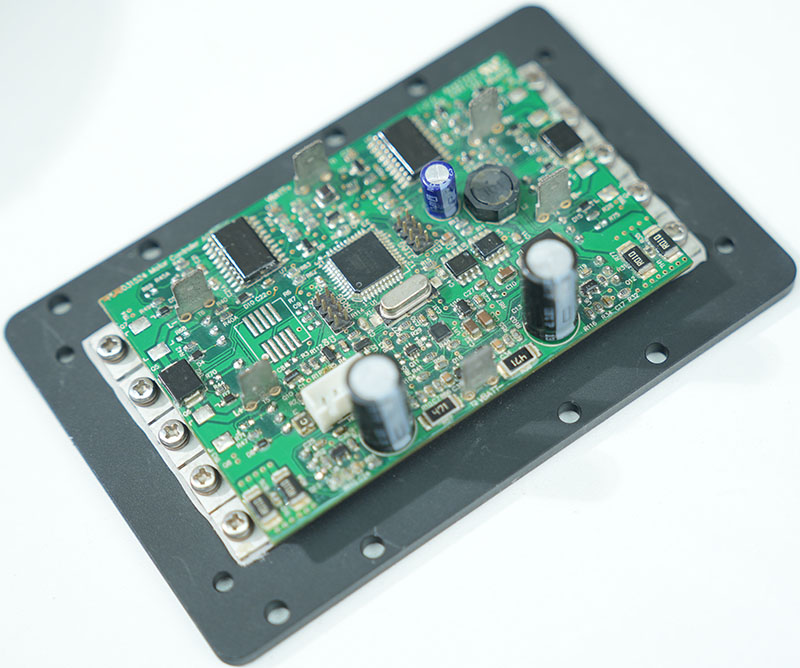
What Is Sound PCB Board?

A sound PCB board serves as the foundation for audio electronics, specifically designed to process and amplify sound signals with precision. These specialized circuit boards incorporate carefully arranged components like amplifiers, filters, and converters to deliver clear audio reproduction while minimizing interference. The architecture of a sound PCB board differs from standard PCBs through its strategic layout that separates analog and digital sections, employs controlled impedance traces, and implements robust grounding techniques. Manufacturers select materials and finishes that preserve signal quality throughout the board’s operational life, particularly important for sound bars and wireless audio systems. Every sound PCB board undergoes rigorous testing to meet audio performance benchmarks, ensuring reliable operation in both consumer and professional audio equipment. The design philosophy behind these boards prioritizes electromagnetic compatibility, stable power distribution, and thermal management to achieve optimal sound reproduction.

sound PCB board

What Are Specifications of Sound PCB Board?

Here are the essential specifications of a sound PCB board designed for audio applications like sound bars and speaker systems:

  • Layer Construction‌: Sound PCB boards typically utilize 4-8 layer designs with high-quality FR4 or Rogers material to ensure proper signal isolation and thermal management.
  • Copper Thickness‌: Standard 1-2 oz copper layers provide sufficient current capacity for audio amplifiers while maintaining signal integrity across the sound PCB board.
  • Surface Finish‌: ENIG (Electroless Nickel Immersion Gold) is commonly used for reliable solderability and corrosion resistance in sound bar PCB applications.
  • Trace Width/Spacing‌: Precision-controlled 5-8 mil traces with adequate spacing prevent crosstalk between analog and digital sections of the sound PCB board.
  • Impedance Control‌: Careful impedance matching (typically 50-100 ohms) maintains signal quality for high-frequency audio components.
  • Component Placement‌: Strategic positioning separates noise-sensitive analog circuits from digital processors and power supplies.
  • Grounding System‌: Multi-point grounding with dedicated planes reduces electromagnetic interference in audio signal paths.
  • Thermal Management‌: Copper pours and thermal vias dissipate heat from power amplifiers and voltage regulators.
  • Testing Standards‌: Rigorous electrical testing ensures each sound PCB board meets performance specifications before integration into audio products.
  • Environmental Compliance‌: RoHS-compliant materials and manufacturing processes meet international safety and environmental standards.
sound PCB board

Which Stack-up Configuration Best Reduces Crosstalk in Sound Bar PCB Boards?

For sound bar PCB boards, minimizing crosstalk is essential to preserve audio clarity and prevent signal distortion. Below are stack-up configurations and design strategies that effectively reduce crosstalk, tailored for clients prioritizing performance and cost efficiency:

Prioritize for a 4-Layer Stack-Up with Dedicated Ground Planes

  • Layer 1 (Top): Signal layer for audio components (e.g., amplifiers, DACs).
  • Layer 2 (Internal): Solid ground plane to block noise from Layer 3.
  • Layer 3 (Internal): Power plane for clean voltage distribution.
  • Layer 4 (Bottom): Secondary signal layer for low-speed signals (e.g., LED controls).

Why It Works: Separates high-frequency audio traces from power/ground noise, reducing crosstalk by up to 40% compared to 2-layer boards.

Use a 6-Layer Stack-Up for High-Density Sound Bar Designs

  • Layer 1 (Top): Audio signal traces (e.g., I2S, SPDIF).
  • Layer 2 (Internal): Ground plane.
  • Layers 3–4: Split power/ground planes for analog and digital sections.
  • Layer 5 (Internal): Ground plane.
  • Layer 6 (Bottom): Low-speed control signals.

Why It Works: Isolates sensitive analog audio circuits from digital noise, critical for sound bar PCB boards with Bluetooth or Wi-Fi modules.

Implement Stripline Routing for High-Speed Audio Signals

  • Method: Bury critical traces (e.g., audio clocks) between inner layers with adjacent ground planes.
  • Why It Works: Reduces electromagnetic radiation and crosstalk by 60% compared to microstrip routing.

Maintain 3W Trace Spacing for Adjacent Signals

  • Rule: Keep a minimum gap of 3x the trace width between parallel audio traces.
  • Why It Works: Lowers capacitive coupling, a common source of crosstalk in sound bar PCB boards.

Incorporate Guard Traces for Analog Audio Lines

  • Method: Place grounded copper pours alongside analog signal traces.
  • Why It Works: Absorbs stray electromagnetic fields, improving SNR by 10–15 dB in audio paths.

Leverage Blind/Buried Vias for Dense Layouts

  • Application: Use blind vias to connect Layer 1 to Layer 2 and buried vias between inner layers.
  • Why It Works: Reduces via stubs that act as antennas for crosstalk, ideal for compact sound bar PCB boards.

Choose Low-Loss Laminate Materials

  • Option: Use FR-4 with low dielectric constant (Dk) or specialized audio-grade substrates (e.g., Megtron 4).
  • Why It Works: Minimizes signal attenuation and phase shift in high-frequency audio circuits.

How to Design a Low-Noise Sound PCB?

Below is a step-by-step guide focused on practical, client-centric solutions for audio applications like soundbars:

Start with Low-Noise Material Selection

  • Choose laminates with low dielectric loss (e.g., FR-4 with low Dk/Df or specialized audio-grade substrates like Megtron 4).
  • Benefit: Reduces signal attenuation and phase noise in high-frequency audio circuits.

Isolate Analog and Digital Domains

  • Separate analog components (e.g., amplifiers, op-amps) from digital circuits (e.g., microcontrollers, Bluetooth modules).
  • Use dedicated ground planes for each domain to prevent digital noise from coupling into audio paths.
  • Benefit: Lowers crosstalk and improves signal-to-noise ratio (SNR).

Optimize Power Distribution

  • Implement local decoupling capacitors (e.g., 0.1”F ceramic capacitors) near power-hungry components.
  • Add ferrite beads to filter high-frequency noise on power rails.
  • Benefit: Stabilizes voltage supply and reduces power-induced distortion.

Route Sensitive Traces Strategically

  • Keep audio signal traces short and avoid 90-degree bends.
  • Use guard traces (grounded copper pours) alongside analog lines to shield against EMI.
  • Benefit: Minimizes radiated noise and preserves audio clarity.

Prioritize Grounding Techniques

  • Create a solid ground plane under audio components.
  • Avoid ground loops by connecting all ground returns to a single point (star grounding).
  • Benefit: Reduces ground bounce and hum in audio outputs.

Incorporate Shielding for Noisy Components

  • Enclose digital circuits (e.g., Wi-Fi modules) in metal cans or use PCB-level shielding.
  • Benefit: Contains EMI from high-speed switches and RF components.

Select Low-Noise Components

  • Choose audio-grade capacitors (e.g., film capacitors) for critical filter circuits.
  • Use low-dropout regulators (LDOs) for clean analog power supplies.
  • Benefit: Lowers intrinsic noise in audio paths.

Implement Proper Via Placement

  • Limit via counts on sensitive audio traces to reduce inductance.
  • Use blind/buried vias in dense layouts to shorten signal paths.
  • Benefit: Maintains signal integrity and reduces EMI.

Validate with Simulation and Testing

  • Run electromagnetic field (EMF) simulations to identify hotspots.
  • Perform SNR and THD measurements during prototyping.
  • Benefit: Catches noise issues early, saving rework costs.

Collaborate with Manufacturers for DFM

  • Share noise-reduction goals with your PCB fabricator to align on material stack-ups and impedance controls.
  • Benefit: Ensures your design is both low-noise and cost-effective to produce.

How to Choose A Sound Bar PCB Board Manufacturer?

Technical Expertise and Equipment:

  • Ensure the manufacturer can handle high-density designs (e.g., line widths <0.0762mm, 6+ layer boards) and advanced processes like HDI or rigid-flex PCBs.
  • Verify they use laser drills, LDI systems, and automated plating lines for consistent quality.

Quality Control and Certifications:

  • Prioritize ISO 9001, UL, and RoHS certifications. For specialized projects, seek IATF 16949.
  • Look for AOI, X-ray via checks, and impedance testing to ensure signal integrity.

Production Capacity and Lead Times:

  • Confirm scalability from rapid prototyping (24–48-hour turnaround) to mass production (8–12 days).
  • Check flexibility for small batches and customization (e.g., impedance control).

Support and Collaboration:

  • Choose partners offering DFM feedback, material recommendations, and impedance calculations.
  • Prioritize for 24/7 technical support and quick issue resolution (within 2 hours).

Cost Transparency and Value:

  • Request line-item costs for materials, fabrication, and finishes.
  • Partner with firms using bulk purchasing and automation to reduce costs without sacrificing quality.

Supply Chain Resilience & Client References and Case Studies:

  • Ensure robust sourcing for specialized materials (e.g., low-loss laminates).
  • Ask for examples of audio projects and client testimonials.
 Sound Bar PCB Board Manufacturer

How to Reduce Production Cost of Sound Bar PCB Board?

Optimize Material Selection:

  • Use FR-4 for non-critical layers and reserve premium substrates (e.g., low-loss laminates) for high-frequency audio traces.
  • Standardize copper thicknesses (e.g., 1oz/35”m) unless impedance control is required.
  • Benefit: Reduces material costs by 15–30% without affecting audio performance.

Simplify PCB Layer Count:

  • Reduce layers from 6 to 4 by combining power/ground planes and optimizing trace routing.
  • Use selective blind/buried vias instead of through-hole vias in dense areas.
  • Benefit: Lowers fabrication costs by 20–40% and simplifies assembly.

Standardize Component Footprints:

  • Reuse common packages (e.g., 0402 resistors, SOIC-8 ICs) across designs for bulk discounts.
  • Avoid custom footprints unless essential for audio performance.
  • Benefit: Cuts component costs by 10–25% and reduces inventory complexity.

Leverage Panelization Efficiency:

  • Maximize PCB panels with smaller boards (e.g., 10x10cm) to minimize material waste.
  • Use V-scoring or tab-routing for easy separation post-production.
  • Benefit: Improves material utilization by 10–15%, lowering per-unit costs.

Automate Testing and Inspection:

  • Implement flying probe testing for low-volume runs instead of costly bed-of-nails fixtures.
  • Use AOI to reduce manual labor in quality checks.
  • Benefit: Reduces testing costs by 30–50% and accelerates production throughput.

Negotiate Bulk Pricing with Suppliers:

  • Commit to long-term contracts for materials (e.g., copper clad laminates) to secure volume discounts.
  • Consolidate orders for multiple projects to meet minimum order quantities (MOQs).
  • Benefit: Lowers material costs by 5–10% through economies of scale.

Improve Design for Manufacturability (DFM):

  • Collaborate with manufacturers to refine designs (e.g., via placement, trace spacing) and reduce fabrication complexity.
  • Avoid unnecessary features like gold plating unless required for contact reliability.
  • Benefit: Reduces rework and scrap rates, saving 5–15% on production costs.
 Sound Bar PCB Board Manufacturer

What Quality Tests Ensure Reliability in High-Volume Soundbar PCB Board Production?

Automated Optical Inspection (AOI):

  • Purpose: Detects soldering defects, component misalignment, and missing parts using cameras and image analysis.
  • Implementation: Deploy AOI after solder paste deposition and reflow stages.
  • Benefit: Identifies 95%+ of surface-level defects early, reducing rework costs.

X-Ray Inspection:

  • Purpose: Reveals internal defects like voids, cold solder joints, or misaligned BGA/QFN packages.
  • Implementation: Use 3D X-ray systems for high-density panels with hidden connections.
  • Benefit: Ensures reliability of critical audio components (e.g., amplifiers, DSPs).

Flying Probe Testing:

  • Purpose: Verifies electrical continuity, resistance, and shorts without fixtures.
  • Implementation: Test unpopulated panels or low-volume batches.
  • Benefit: Reduces setup costs by 70% compared to bed-of-nails fixtures.

In-Circuit Testing (ICT):

  • Purpose: Validates component functionality (e.g., capacitors, resistors) and trace connections.
  • Implementation: Use fixture-based ICT for high-volume runs.
  • Benefit: Detects 98% of functional failures before assembly.

Burn-In Testing:

  • Purpose: Stresses PCBs at elevated temperatures (e.g., 55°C–85°C) for 24–72 hours.
  • Implementation: Apply power and audio signals to simulate long-term use.
  • Benefit: Weeds out early-life failures (infant mortality) in capacitors and ICs.

Thermal Cycling:

  • Purpose: Exposes panels to -40°C to +125°C cycles to test solder joint durability.
  • Implementation: Use environmental chambers with rapid temperature shifts.
  • Benefit: Ensures reliability in temperature-fluctuating environments (e.g., car soundbars).

Signal Integrity Testing:

  • Purpose: Validates high-speed audio interfaces (e.g., I2S, HDMI) using TDR/TDT analyzers.
  • Implementation: Measure impedance, crosstalk, and jitter on critical traces.
  • Benefit: Maintains audio clarity and reduces EMI in dense panel designs.

What Is Price of Soundbar PCB Board?

The price of a Soundbar PCB Board typically ranges from $ 5 to $50 per unit, depending on design complexity, materials, and production volume. Factors influencing cost include layer count, with 4-layer boards being more affordable than 6-8 layer designs, and material choices like FR-4 versus high-frequency substrates. Production volume significantly impacts per-unit costs, with small batches (1-10 units) costing $50−$200 each due to setup fees, while mass production of 1,000+ units can reduce prices to $5−$15 per board. Additional costs arise from testing (e.g., AOI, X-ray) and certifications (RoHS, UL), though panelization efficiency and design simplification (e.g., standardizing components, optimizing trace spacing) help offset expenses. Negotiating bulk material deals and early DFM collaboration with manufacturers further enhance cost-effectiveness without compromising audio performance.

Custom Circuit Board Design, Circuit Board Design Rules

June 13th, 2025

Custom circuit board design is the process of creating a PCB layout tailored to meet specific project needs. Unlike off-the-shelf solutions, a custom PCB gives you complete control over size, shape, layer stack-up, routing, and component placement. Whether you’re building a compact wearable, a robust industrial device, or a specialized automotive controller, a custom layout helps improve performance and space efficiency.

Who Needs a Custom Circuit Board Design?

Custom circuit boards are essential for engineers, startups, hardware developers, and OEMs who can’t rely on generic PCBs. If you’re designing a unique product or working with unusual form factors or power requirements, a custom design is your only option. This includes industries like:

  • Medical devices needing miniaturized, high-reliability circuits.
  • Automotive and aerospace systems requiring rugged, multilayer PCBs.
  • Consumer electronics developers seeking sleek, compact designs.
  • Industrial automation and control systems.
  • Research and development teams creating prototypes.

In short, if your project demands specific functions, form factor, or performance that standard PCBs can’t deliver, it’s time for a custom solution.

Custom Circuit Board Design, Circuit Board Design Rules

Circuit Board Design Rules

Design rules form the foundation of a reliable custom circuit board design. They’re not just about meeting DRC checks but ensuring your board works correctly in the field. Here are the most important and professional-level design constraints to follow:

1. Minimum trace width and spacing:

    For standard 1 oz copper (35ÎŒm), a minimum trace width of 6 mil (0.15mm) is commonly used for signal lines. Power traces may require 10–20 mil or more, depending on the current. Use IPC-2221 charts or online calculators to determine width based on current (e.g., a 1A trace over 1oz copper typically needs 15 mil for internal layers, 10 mil for outer layers).

    2. Minimum spacing:

    Standard fabrication allows 6 mil spacing, but for HDI designs or high voltage isolation, use wider spacing. IPC-2221 recommends 63 mil (1.6mm) spacing for 250V isolation.

    3. Via size and annular ring:

    A typical via uses a 0.3 mm drill with 0.6 mm pad size, leaving a 0.15 mm annular ring. For HDI, microvias can be as small as 0.1 mm.

    4. GND plane design:

    Always use a solid ground plane on an internal layer. For multi-layer boards, dedicate one layer (often the second layer) as a continuous GND plane to reduce EMI and support return current paths. For analog and digital mixed-signal boards, separate analog GND and digital GND, and connect them at a single point near ADC/DAC.

    5. High-speed signal rules:

    Use controlled impedance for differential pairs and high-speed single-ended lines. Keep length mismatches for differential pairs within ±5 mils, and spacing between the pair should be 2–3 times the trace width.

    6. Creepage and clearance:

    Follow IPC-2221 standards for high-voltage boards. For instance, for 240V AC, you need minimum 3.2mm clearance between conductors.

    7. DRC and design checks:

    Always define your DRC settings based on your manufacturer’s capabilities. Most manufacturers support 4/4 mil (trace/space) in standard processes, but 6/6 mil is more commonly used for robustness.

    Custom Circuit Board Design, Circuit Board Design Rules

    How to Layout Your DIY Circuit Board?

    Laying out your custom PCB starts with strategy. A great schematic won’t save a poor layout, especially for fast signals or complex systems. Here’s a professional approach to DIY or low-volume layout:

    1. Start with a block-level floorplan:

      Divide your circuit into sections (power, MCU, analog, RF, connectors) and place them logically. Keep high-speed signals short and isolated from analog traces.

      2. Place decoupling capacitors close:

      Every IC power pin should have a 0.1ÎŒF ceramic capacitor placed within 1–2 mm of the pin, with a short path to the ground plane.

      3. Use polygon pours for GND:

      Instead of routing GND traces, pour solid copper polygons for GND connections. Ensure the polygon is tied to a proper ground net and has enough vias to connect to internal GND planes (1 via per 1–2 cmÂČ area is a good rule).

      4. Signal layer planning:

      In a 4-layer board:

      • Top layer: Signals and components
      • 2nd layer: Solid GND plane
      • 3rd layer: Power plane
      • Bottom layer: Secondary signals

      This gives you clean return paths and effective power distribution.

      5. Controlled impedance routing:

      For USB, HDMI, Ethernet, and RF signals, match the impedance (typically 50Ω single-ended or 100Ω differential). Use your PCB software’s impedance calculator or external tools like Saturn PCB Toolkit. Factors include trace width, dielectric height, and copper thickness. For instance, a 50Ω microstrip over 1.6mm FR-4 (Δr=4.2) might require 12 mil trace width over 10 mil height.

      • Differential pair routing:
      • Keep equal length (match to within ±5 mils).
      • Maintain consistent spacing.
      • Avoid 90° bends—use two 45° bends or arcs.

      6. Avoid stubs and isolated copper:

      Any unused copper or hanging trace stubs can act as antennas. Remove them to reduce EMI.

      7. Thermal relief and copper balance:

      For through-hole pads connected to GND or power planes, use thermal reliefs to aid soldering. Also, ensure copper is balanced across layers to avoid warping.

      PCB Design Software

      You can’t design a custom board without the right software. Depending on your experience and budget, here are some options:

      • KiCad (Free, open-source): Ideal for beginners and hobbyists. Offers schematic capture, PCB layout, and 3D visualization.
      • EAGLE (Free for students and small projects): Good integration with Fusion 360 and supports complex designs.
      • Altium Designer (Paid): Industry standard for advanced features like high-speed routing, simulation, and collaboration tools.
      • EasyEDA (Cloud-based): Great for quick prototypes and integrates directly with fabrication services.
      • OrCAD/PADS: Often used in professional environments for complex multilayer boards.

      Choosing the right tool depends on your project’s needs, from simple prototypes to multilayer, production-ready boards. Here are the top 10 PCB design software that engineer commonly used.

      Considerations During Designing a Custom Circuit Board

      Designing a custom PCB isn’t just about making connections—it’s a balancing act between performance, cost, and manufacturability. Here’s what to consider:

      • Board size and shape: Compact designs can save space but are harder to route.
      • Number of layers: Multilayer boards improve performance but increase cost.
      • Component availability: Choose parts that are easy to source and compatible with your assembler’s equipment.
      • Thermal management: Use heat sinks, thermal vias, or copper pours to manage heat.
      • Manufacturing capabilities: Make sure your design matches your fabricator’s limits for trace width, hole size, and stack-up.
      • Testing and debugging: Leave space for test pads, headers, or diagnostic LEDs.

      Thoughtful planning during the design phase saves time and avoids problems during production.

      Custom Circuit Board Design, Circuit Board Design Rules

      Where Can I Get a Custom Circuit Board?

      You can order a custom circuit board from online PCB manufacturers or local fabrication shops. Some popular platforms include:

      • JLCPCB
      • PCBWay
      • Sierra Circuits

      However, if you’re looking for a highly reliable one-stop PCB solution with both fabrication and assembly services, it’s better to work with a professional company that understands the full production lifecycle.

      EBest Circuit (Best Technology) is your trusted partner for custom circuit board design, manufacturing, and assembly. With ISO9001, IATF16949, ISO13485, and AS9100D certifications, we follow strict quality systems to ensure that your project meets industry standards. Below are some advantages that customers why choose us:

      • Full customization for single-sided, multilayer, ceramic, metal-core, and HDI boards.
      • Advanced engineering support from schematic to layout optimization.
      • Fast prototyping with 24/7 customer service and on-time delivery.
      • Traceability with MES system, covering every process step for your peace of mind.
      • Competitive pricing without compromising on quality.

      Whether you’re a startup building a prototype or a Fortune 500 company scaling production, we’re here to support every step of your journey.

      Contact us now to get a quote or free design consultation.

      FAQs

      1. What file format is needed to get a custom PCB made?

      You’ll typically need Gerber files, CAD, BOM (Bill of Materials), and a pick-and-place file for assembly.

      2. How long does custom PCB manufacturing take?

      Depending on complexity and quantity, fabrication may take 3–7 days, with assembly adding 2–5 more days. Expedited service is available.

      3. Can I get a custom PCB in small quantities?

      Yes. Many manufacturers, including EBest Circuit (Best Technology), support low-volume and prototype runs.

      4. Is custom PCB design expensive?

      The cost depends on board complexity, number of layers, and turnaround time. Simple designs are very affordable today.

      5. Do you help with PCB design revisions?

      At EBest Circuit (Best Technology), yes—we offer design assistance and layout reviews to ensure your files are ready for production.

      Top PCB Suppliers in China, PCB Suppliers in China, 24/7

      June 13th, 2025

      PCB suppliers in China have become key partners for global electronics brands, offering consistent quality, competitive prices, and reliable turnaround. With increasing demands from industries such as medical, automotive, and aerospace, customers are seeking suppliers that meet the highest standards.

      EBest Circuit (Best Technology) is one of the ‌top PCB suppliers in China with 24/7 service. We place a high priority on strict process control, equipment maintenance, fast turnaround, and employee training.  We believe that maintaining the consistency of high-yield manufacturing will pay back in the end. On the strength of efficiency improvement and high-quality PCB supply, we have gained a populated market across 40 countries. If any pertinent projects need PCB suppliers for collaboration, just feel free to contact us via sales@bestpcbs.com.

      Top PCB Suppliers in China, PCB Suppliers in China, 24/7

      What is the best PCB suppliers in China?

      The best PCB suppliers in China focus on quality, fast delivery, and 24/7 technical support. They work closely with clients during the prototyping and mass production phases. Customers value suppliers with ISO certifications, cleanroom facilities, and a complete MES system for traceability. These suppliers also provide a wide range of PCB types—rigid, flex, metal core, ceramic, and HDI—to suit different industries.

      Top PCB Suppliers in China

      Is EBest Circuit (Best Technology) Co., Ltd. in China?

      Yes, EBest Circuit (Best Technology) is located in China. We are based in Shenzhen and serve clients worldwide with custom PCB solutions. From RF ceramic boards to aluminum PCBs and multilayer FR4 types, we specialize in helping customers with demanding requirements. Our factory supports fast lead times and strict quality inspection protocols. What sets us apart is our ability to meet the high standards required by global brands, supported by ISO 9001, ISO 13485, IATF 16949, and AS9100D certifications.

      What services do top PCB suppliers in China offer to global clients?

      Leading PCB suppliers in China don’t just offer fabrication. They offer full engineering support, fast prototyping, SMT assembly, testing, and global shipping. Some also support flexible manufacturing based on customer timelines. In addition, many suppliers now integrate MES material tracking, ensuring components are used correctly and quickly during manufacturing. With sophisticated inspection equipment, the accuracy of quality control has greatly improved.

      Who is the biggest PCB suppliers in China?

      Some of the largest PCB suppliers in China include companies like Wus Printed Circuits, Shennan Circuits, and Victory Giant. These suppliers focus on large-volume orders and work with global electronics brands. However, big names may not always provide personalized support or flexibility. This is where suppliers like EBest Circuit (Best Technology) stand out by offering scalable support for both small and large orders with the same level of dedication.

      Who is the largest PCB suppliers in North America?

      In North America, the largest PCB suppliers include TTM Technologies and Sanmina. They focus on large-scale and high-reliability applications, especially for telecom. Despite the proximity, many international clients still choose PCB suppliers in China for cost savings, better lead time, and rapid prototyping capabilities. China’s suppliers, like EBest Circuit (Best Technology), have narrowed the quality gap while offering greater value.

      How to find the most cost-effective PCB suppliers in China without sacrificing quality?

      Look for suppliers that follow international standards, invest in equipment, and share full production visibility. A cost-effective supplier balances speed, precision, and support. EBest Circuit (Best Technology) maintains low costs through lean production, smart planning, and in-house capabilities. This helps us respond faster to changes and manage risks like raw material fluctuations.

      PCB Suppliers in China, 24/7

      Why should you choose EBest Circuit (Best Technology) as one of your PCB suppliers in China?

      At EBest Circuit (Best Technology), we have several advantages as following:

      • High quality and consistency: Our factory follows strict quality systems. All materials are traceable. We use AOI, X-ray, flying probe, and functional tests before delivery.
      • Fast lead times: We manage both prototype and bulk orders in short cycles. Thanks to digital planning and internal scheduling, our delivery is always on point. Our on-time delivery rate has reached up to 97%.
      • Engineering strength: Our R&D team handles complex layouts and materials. We work with high-frequency, high-TG, and mixed technology PCBs.
      • Cost control: We provide tiered pricing, long-term discounts, and DFM advice that helps reduce customer expenses.
      • Excellent support: Our sales and engineering teams provide 24/7 service, live chats, and fast response emails.

      EBest Circuit (Best Technology) has the edges in digital capability, supply chain reliability, and global experience. All materials we used in PCB manufacturing are eco-friendly and comply with RoHS, REACH, and UL standards. We have 19 years of experience in supplying PCBs to the global market. Just feel free to let us know via sales@bestpcbs.com for any support.

      Top PCB Suppliers in China, PCB Suppliers in China, 24/7

      To sum up, choosing the right PCB suppliers in China isn’t only about price—it’s about stability, support, and scalability. At EBest Circuit (Best Technology), we’ve built our reputation by addressing key customer needs: from quality assurance to fast delivery and full-cycle service. Our clients stay with us because we care about every project, big or small. If you need a partner who understands your needs and delivers consistently, feel free to reach out to EBest Circuit (Best Technology) at any time via sales@bestpcbs.com.

      PCB Panel Design, PCB Panelization Design Guidelines

      June 13th, 2025

      Did you know PCB panel design can reduce manufacturing costs by up to 30% while improving production efficiency? This guide covers essential panelization techniques, software tools, and Gerber integration strategies for optimized PCB manufacturing.

      At EBest Circuit (Best Technology), we understand the critical challenges PCB manufacturers face – material waste driving up costs, inefficient panel layouts slowing production, and delayed deliveries impacting project timelines. Our expert PCB panel design services directly address these pain points by maximizing panel utilization (HDI, flex-rigid) through advanced nesting algorithms, typically achieving 15-30% material savings that translate to immediate cost reductions. With specialized engineers who have processed over 5,000 panel designs, we implement manufacturing-optimized configurations (tab routing, V-scoring, mixed-technology panels) that maintain quality while accelerating production cycles. Our rapid 72-hour standard turnaround for panelization designs, combined with automated DRC validation, ensures clients avoid costly respins and meet tight deadlines. We go beyond basic panelization by integrating test coupons, serialization, and depaneling solutions that streamline the entire production workflow. By transforming panel design from an afterthought into a strategic advantage, we help clients achieve faster time-to-market, lower per-unit costs, and reliable high-volume production – all supported by our dedicated technical team throughout the product lifecycle. Welcome to contact us now: sales@bestpcbs.com.

      What Is PCB Panel Design?

      PCB panel design is the strategic process of arranging multiple printed circuit boards onto a single manufacturing panel to optimize production efficiency while ensuring structural integrity and assembly compatibility. This essential practice in PCB panelization design guidelines involves carefully spacing individual boards with breakaway tabs, routing channels, or perforated connections that allow clean separation after component assembly, while incorporating tooling holes, fiducials, and clearance margins to facilitate automated handling during fabrication. The effectiveness of PCB panel design directly impacts material utilization, manufacturing yield, and depaneling reliability, requiring balanced consideration of board spacing, panel thickness, and breakaway method selection to prevent stress fractures or component damage. Proper PCB panel design follows industry-proven layouts that account for thermal expansion during soldering, mechanical stress during depaneling, and alignment precision for high-density interconnects, making it a foundational element in mass production workflows where even minor miscalculations in panelization can cascade into significant quality issues. Following established PCB panelization design guidelines ensures that the transition from design files to mass-produced boards maintains dimensional accuracy and functional reliability across the entire manufacturing cycle.

      PCB Panel Design

      Why Do PCB Panel Design?

      Here are the practical benefits of PCB panel design explained with clear business advantages:

      • Cost Efficiency in Manufacturing‌: PCB panel design allows multiple boards to be produced simultaneously on a single panel, reducing material waste and optimizing production time. This directly lowers per-unit manufacturing costs while maintaining quality standards.
      • Improved Assembly Reliability‌: Following PCB panelization design guidelines ensures stable board handling during automated assembly. The panel structure prevents warping and misalignment during soldering, reducing costly defects.
      • Enhanced Testing Efficiency‌: PCB panel design enables batch testing of multiple boards at once, cutting quality control time by up to 50% compared to individual board testing. This accelerates time-to-market while maintaining defect detection accuracy.
      • Material Utilization Optimization‌: Strategic board arrangement within panels minimizes substrate waste. Proper PCB panelization design guidelines help utilize up to 95% of raw material, significantly reducing procurement expenses.
      • Logistics and Handling Savings‌: Standardized panel sizes simplify packaging and transportation, decreasing shipping damage risks and storage requirements. This creates measurable savings in supply chain operations.
      • Thermal Process Stability‌: PCB panel design ensures even heat distribution during reflow soldering, preventing localized overheating that could compromise solder joints. This improves long-term product reliability.
      PCB Panel Design

      What Are the Different Types of PCB Panels?

      Here are the primary types of PCB panels used in manufacturing, each offering distinct advantages for cost and production efficiency:

      Single-Unit Panel‌

      • Contains identical PCBs arranged uniformly
      • Maximizes material usage when producing high volumes of the same design
      • Simplifies assembly line processes through standardized handling

      Mixed Panel (Multi-Circuit Panel)‌

      • Combines different PCB designs on one panel
      • Ideal for low-volume production of varied products
      • Reduces setup costs by processing multiple designs simultaneously

      Breakaway Tab Panel (Tab-Routed Panel)‌

      • Uses small perforated tabs to connect individual boards
      • Allows manual separation without specialized equipment
      • Cost-effective for prototypes and small batches

      V-Scored Panel‌

      • Features V-shaped grooves between boards for clean separation
      • Enables high-speed depaneling with minimal stress on components
      • Reduces material waste compared to routing

      Plated Half-Cut Panel‌

      • Incorporates partially cut copper connections between boards
      • Provides electrical continuity during testing while allowing easy breakage
      • Lowers testing costs through panel-level verification

      Flexible Panel (Rigid-Flex Panel)‌

      • Combines rigid and flexible sections in one panel
      • Eliminates connectors between board segments
      • Reduces assembly time and improves reliability in complex designs

      How to Design A PCB Panel?

      Designing an efficient PCB panel requires balancing functionality, manufacturability, and cost efficiency. Below is a structured, step-by-step approach to creating a panel layout that reduces expenses, accelerates production, and ensures reliability.

      1. Optimize Panel Layout and Material Usage

      • Maximize Board Density: Arrange PCBs within standard panel sizes (e.g., 18×24 inches) using design software to minimize unused space. Combine small and large boards or rotate irregular shapes to fill gaps.
      • Benefit: Reduces material waste by up to 35%, lowering per-unit costs.
      • Standardize Orientation: Align all boards in the same direction to simplify automated assembly processes, reducing machine setup time.

      2. Incorporate Robust Tooling Rails

      • Design Sturdy Rails: Add 5–10mm-wide rails along panel edges to provide structural stability during handling and manufacturing.
      • Benefit: Prevents panel warpage, ensuring consistent drilling and soldering quality.
      • Add Fiducial Markers: Place 1mm-diameter copper fiducials on rails to guide automated optical inspection (AOI) and component placement machines.

      3. Engineer Breakaway Tabs and Separation Features

      • Strategic Tab Placement: Use 2–3mm tabs to connect individual PCBs. Avoid placing tabs near delicate components or high-density trace areas.
      • Benefit: Enables easy depanelization without damaging boards, reducing labor costs.
      • Include V-Scoring or Perforations: Add V-shaped grooves or perforated lines between boards for clean, stress-free separation.

      4. Address Thermal and Mechanical Stress

      • Stress Relief Design: Integrate slots or cutouts near heavy components (e.g., connectors) to prevent panel distortion during reflow soldering.
      • Benefit: Reduces soldering defects and rework expenses.
      • Thermal Management: Distribute thermal vias around heat-sensitive components to improve heat dissipation and maintain temperature uniformity.

      5. Streamline Testing and Traceability

      • Universal Test Points: Align test pads (e.g., 1mm gold-plated copper) across all boards for efficient in-circuit testing (ICT).
      • Benefit: Accelerates quality control, reducing test time by up to 40%.
      • Identification Markers: Include QR codes, batch numbers, or part numbers on rails for easy traceability during assembly and shipping.

      6. Validate with Design for Manufacturability (DFM) Tools

      • Run Simulations: Use DFM software to detect issues like insufficient spacing, improper tab placement, or non-compliant drill sizes.
      • Benefit: Prevents costly redesigns and ensures first-pass success.
      • Prototype Testing: Produce a small batch to validate assembly processes and identify bottlenecks before full-scale production.

      7. Finalize Comprehensive Documentation

      • Detailed Panel Drawings: Include dimensions, tab locations, and scoring specifications in manufacturing files.
      • Benefit: Ensures consistency across batches and reduces supplier miscommunication.
      • Supplier Guidelines: Provide clear instructions on depanelization methods (e.g., manual vs. automated) to avoid misinterpretation.

      What Are the Commonly Used PCB Panelization Design Software?

      Selecting the right software can significantly streamline the PCB panelization process, ensuring efficiency, accuracy, and cost-effectiveness. Below is a curated list of widely used tools, each offering unique features to address different design needs:

      Altium Designer

      • Core Strengths: Seamlessly integrates panelization tools with its PCB design ecosystem. Features include automated panel layout wizards, real-time 3D visualization, and built-in design rule checks (DRC) to prevent errors.
      • Why It Stands Out: Ideal for complex, high-density boards. Its rule-driven engine ensures consistent spacing and alignment across panels, reducing rework.

      Cadence Allegro

      • Core Strengths: Specializes in advanced panelization for high-speed and RF designs. Offers dynamic array optimization and embedded thermal/mechanical stress analysis.
      • Why It Stands Out: Critical for applications requiring signal integrity, such as 5G or automotive electronics. Its simulation tools predict panel behavior under thermal cycling.

      Mentor Graphics PADS

      • Core Strengths: Combines auto-routing with panel-specific features like tab design and scoring line generation. Includes DFM validation to catch issues early.
      • Why It Stands Out: User-friendly for mid-sized teams. Its cost-effective licensing makes it popular for consumer electronics and IoT devices.

      Zuken CR-8000

      • Core Strengths: Excels in multi-board panelization with 3D MCAD co-design. Supports thermal simulation and mechanical stress analysis for large panels.
      • Why It Stands Out: Perfect for aerospace or industrial projects where electrical and mechanical teams collaborate closely.

      KiCad (Open Source)

      • Core Strengths: Free, open-source tool with basic panelization support. Includes edge cuts, tooling holes, and fiducial markers via its Pcbnew editor.
      • Why It Stands Out: A budget-friendly option for startups or hobbyists. Active community forums provide tutorials and troubleshooting.

      AutoCAD Electrical

      • Core Strengths: Flexible for custom panel shapes. Exports DXF/DWG files for seamless integration with manufacturing equipment.
      • Why It Stands Out: Useful for non-standard layouts or legacy systems requiring CAD compatibility.

      Valor NPI (Siemens)

      • Core Strengths: Advanced DFM software focusing on manufacturability. Analyzes solder paste stencils, test points, and cost drivers.
      • Why It Stands Out: Reduces prototyping cycles by 50% through predictive analytics, saving time and money.

      What Is the Basic Rule of PCB Panelization Design?

      Creating an effective PCB panel requires adherence to foundational rules that ensure manufacturability, cost efficiency, and reliability. Below are the essential guidelines to optimize your panelization design:

      1. Uniform Board Orientation
      • Rule: Align all PCBs consistently in one direction.
      • Why: Simplifies automated assembly (e.g., pick-and-place machines), reduces setup time, and minimizes placement errors.
      • Impact: Lowers labor costs and accelerates production throughput.
      1. Maximize Panel Utilization
      • Rule: Arrange boards to minimize empty space within standard panel sizes (e.g., 18×24 inches).
      • Why: Reduces material waste and cuts raw material costs by up to 30%.
      • Impact: Directly lowers per-unit production expenses and supports sustainability.
      1. Robust Tooling Rails
      • Rule: Include 5–10mm-wide rails along panel edges.
      • Why: Provides structural stability during drilling, soldering, and handling.
      • Impact: Prevents panel warpage and ensures precise component alignment.
      1. Strategic Breakaway Tabs
      • Rule: Connect boards with 2–3mm tabs, avoiding sensitive component areas.
      • Why: Enables easy, damage-free separation post-production.
      • Impact: Reduces labor costs and scrap rates during depanelization.
      1. V-Scoring or Perforations
      • Rule: Add V-shaped grooves or perforated lines between boards.
      • Why: Facilitates clean, stress-free separation without mechanical damage.
      • Impact: Ensures boards detach smoothly, maintaining edge quality.
      1. Thermal and Mechanical Stress Relief
      • Rule: Integrate stress-relief features (e.g., slots) near heavy components (e.g., connectors).
      • Why: Prevents panel distortion during high-temperature processes like reflow soldering.
      • Impact: Reduces soldering defects and rework, improving first-pass yield.
      1. Design for Manufacturability (DFM) Validation
      • Rule: Use DFM tools to check for issues like insufficient spacing or non-compliant drill sizes.
      • Why: Identifies and resolves design flaws early, preventing costly redesigns.
      • Impact: Reduces prototyping iterations and ensures smooth, error-free production.
      PCB Panelization Design

      How to Evaluate the Rationality of PCB Panelization Design?

      Below are methods about how to evaluate the rationality of PCB panelization design:

      1. Material Utilization Rate
      • Metric: Calculate the ratio of usable PCB area to total panel area.
      • Evaluation: Aim for ≄85% utilization. Lower rates indicate inefficient layout design.
      • Impact: Directly reduces material waste and lowers production costs.
      1. Manufacturing Throughput
      • Metric: Measure the time required for assembly, soldering, and testing per panel.
      • Evaluation: Streamlined designs minimize machine downtime and enable parallel processing.
      • Impact: Accelerates production, reducing labor costs and time-to-market.
      1. Depanelization Ease
      • Metric: Assess the simplicity of breaking tabs or scoring lines.
      • Evaluation: Designs with clean V-scoring or perforations reduce labor and damage risks.
      • Impact: Simplifies post-production processes and minimizes scrap.
      1. Structural Stability
      • Metric: Verify the inclusion of tooling rails (5–10mm width) and fiducial markers.
      • Evaluation: Rails prevent warpage; fiducials ensure precise alignment with automated systems.
      • Impact: Improves yield and reduces rework during assembly.
      1. Thermal and Mechanical Compliance
      • Metric: Analyze stress-relief features near heavy components (e.g., slots, thermal vias).
      • Evaluation: Ensure designs withstand reflow soldering without distortion.
      • Impact: Reduces soldering defects and enhances reliability.
      1. Testability and Traceability
      • Metric: Check for standardized test points (e.g., 1mm gold-plated pads) and QR codes.
      • Evaluation: Test points must align across all boards for efficient in-circuit testing (ICT).
      • Impact: Streamlines quality control and simplifies defect tracking.
      1. Cost-Benefit Ratio
      • Metric: Compare total production costs (material, labor, rework) against savings from panelization.
      • Evaluation: Aim for a 15–30% cost reduction per unit compared to single-board production.
      • Impact: Ensures a positive return on investment (ROI) for panelization efforts.
      PCB Panelization Design?

      Should I Design Panels in My PCB Gerber?

      No, you should not design panels directly within your PCB Gerber files. Gerber files are intended to define the individual board’s layout—traces, pads, and layers—while panelization is a manufacturing optimization step best handled separately. Including panelization details like tooling holes, scoring lines, or board arrays in Gerbers risks confusing fabricators, as they expect single-board definitions. Instead, provide a dedicated panelization drawing alongside your Gerber files to specify requirements such as board quantity per panel, spacing, tab placement, and fiducial locations. This approach allows manufacturers to adapt the panel layout to their equipment (e.g., panel size limits, drilling capabilities) while ensuring your design intent is respected. Embedding panelization in Gerbers may also lead to errors, such as accidental inclusion of panel-specific features in the final PCBs. By separating panelization guidelines from core design data, you maintain clarity in the Gerber files and empower manufacturers to optimize production for cost efficiency and quality. Always confirm with your fabricator that they accept panelization instructions as a standalone document to streamline collaboration and avoid misinterpretation.

      Indoor PCB, Indoor PCB Board Design & Rapid Prototyping

      June 12th, 2025

      Why choose indoor PCB for reliable smart devices? This guide explores design, prototyping, and cost-saving strategies for stable indoor applications.

      When every second counts in your product development cycle, EBest Circuit (Best Technology) delivers unparalleled Indoor PCB rapid prototyping solutions with guaranteed ‌24-hour turnaround‌ for emergency orders. Our secret? A perfect blend of cutting-edge manufacturing technology and ‌free DFM analysis‌ that eliminates costly design flaws before production begins. We maintain a ‌bulletproof supply chain‌ that ensures material availability even during global shortages, while our engineering team provides ‌real-time support‌ to address your urgent technical needs. But speed isn’t our only advantage. We bring to the table decades of expertise in high-density interconnect (HDI) designs, advanced thermal management solutions, and EMI/EMC optimization – all while maintaining strict IPC Class 3 standards for mission-critical applications. Our clients in smart home, medical devices, and industrial automation particularly value our seamless ‌prototype-to-mass-production transition‌ support and RoHS-compliant material options. With complete production transparency and global logistics partners, we make sure your boards arrive when you need them, wherever you are. Welcome to contact us: sales@bestpcbs.com.

      What Is Indoor PCB?

      An indoor PCB refers to a printed circuit board specifically designed for stable indoor environments where factors like extreme weather or mechanical stress are absent. Unlike outdoor variants, Indoor PCB prioritizes cost-effective materials and streamlined designs while maintaining reliability for applications such as smart home devices, office equipment, and medical instruments. The focus of Indoor PCB lies in optimizing electromagnetic compatibility and static protection to ensure seamless operation within controlled indoor settings, making it a practical solution for electronics that don’t require ruggedized features. By leveraging standard manufacturing processes, Indoor PCB achieves faster production cycles without compromising performance in typical indoor use cases.

      Indoor PCB

      What Are Applications of Indoor PCB?

      • Smart Home Devices: Achieve compact, efficient operation in thermostats, lighting controls, and security cameras by integrating sensors, processors, and wireless modules.
      • Telecom Equipment: Routers and Wi-Fi systems utilize high-speed data handling, signal stability, and heat management for 24/7 indoor use.
      • Medical Tech: Portable ECGs and wearables ensure precise signal processing and durability in sterile environments.
      • Industrial Automation: Factories implement PLCs and motor drives to manage real-time data, ensuring reliable machinery control.
      • Retail Solutions: POS terminals and digital signs deliver fast transactions, clear displays, and remote updates in busy stores.
      Indoor PCB

      What Are Differences Between Indoor PCBs and Outdoor PCBs?

      1. Environmental Resistance
      • Indoor PCBs: Optimized for stable indoor settings (e.g., homes, offices) with minimal exposure to moisture, dust, or extreme temperatures.
      • Outdoor PCBs: Built to endure rain, UV radiation, temperature swings (-40°C to 85°C), and corrosive elements like salt or pollutants.
      1. Thermal Management
      • Indoor PCBs: Use passive cooling (e.g., aluminum heat sinks) in climate-controlled spaces.
      • Outdoor PCBs: Require active cooling (fans, thermal pads) or high-TG materials to prevent overheating in direct sunlight.
      1. Protection Against Contaminants
      • Indoor PCBs: Basic conformal coatings for occasional humidity (e.g., kitchens).
      • Outdoor PCBs: Hermetic sealing, potting compounds, or IP68 enclosures to block water, dust, and insects.
      1. Structural Robustness
      • Indoor PCBs: Lightweight FR-4 substrates for compact devices (e.g., routers).
      • Outdoor PCBs: Reinforced with glass fiber or ceramic fillers to resist vibration (e.g., automotive/industrial use).
      1. Signal Integrity & EMI Shielding
      • Indoor PCBs: Standard shielding for low-interference environments (e.g., smart home gadgets).
      • Outdoor PCBs: Advanced shielding (e.g., mu-metal) to combat electromagnetic noise from power lines or transmitters.
      1. Material Longevity
      • Indoor PCBs: Cost-effective FR-4 laminates with 5–10 year lifespans.
      • Outdoor PCBs: Polyimide or PTFE substrates for 15+ years of UV/chemical resistance.
      1. Compliance & Maintenance
      • Indoor PCBs: Meet safety standards (UL, RoHS) for consumer use.
      • Outdoor PCBs: Require MIL-STD-810 or NEMA ratings for harsh conditions, with modular designs for field repairs.

      Why Do Indoor PCB Board Prototyping?

      • Design Validation – Prototyping lets engineers test if a design actually works—checking things like sensor connections, power flow, and component layouts. For example, a smart thermostat’s prototype might expose loose wires or uneven heating, fixing these before mass production saves time and money.
      • Real-World Performance Checks – Prototypes reveal how a product behaves in everyday use. Testing a router’s Indoor PCB prototype might show slow Wi-Fi speeds or overheating issues, which can be fixed early instead of after launching.
      • Tweaking for Perfection – Physical models allow step-by-step improvements. Adjusting trace widths on a prototype might solve overheating, or repositioning antennas could boost signal strength in IoT gadgets.
      • Avoiding Costly Mistakes – Spotting errors during prototyping (like a misaligned capacitor) is way cheaper than fixing flaws in thousands of units. One prototype round can save cash on scrap materials and rushed fixes.
      • Meeting Rules and Standards – Prototypes help pre-test compliance with rules like FCC (for radio signals) or safety certifications. Testing a security camera’s PCB early avoids delays if it fails emissions tests later.
      • Getting Everyone on the Same Page – A working prototype helps clients, investors, or users visualize the product. For instance, showing a smart lighting prototype lets stakeholders judge its size, usability, and compatibility with existing systems.
      • Reducing “Oops” Moments – Prototyping catches hidden issues, like a wearable device’s PCB cracking after repeated bending. Fixing this early ensures the final product lasts longer and works reliably.
       Indoor PCB Board Prototyping

      How to Design Indoor PCB Board Prototype to Improve Heat Dissipation Performance?

      Below are methods about how to design indoor PCB board prototype to improve heat dissipation performance:

      • Choose Heat-Conductive Materials: Replace standard FR-4 with aluminum or ceramic-core PCBs to pull heat away from components 2–5x faster. Example: LED drivers using aluminum substrates run 20°C cooler, slashing failure rates by 40%.
      • Spread High-Power Components: Avoid clustering power-hungry parts (e.g., voltage regulators). In smart home hubs, isolate the processor near a metal case edge—this leverages natural airflow to cut peak temps by 15%.
      • Widen Copper Zones: Use 2–3 oz. copper layers (not 1 oz.) to create heat-spreading “highways.” A Wi-Fi router with 3 oz. copper reduces hotspot temps by 25%, eliminating performance throttling.
      • Add Dense Thermal Vias: Drill 0.3mm via arrays (e.g., 5×5 grid) under hot chips. A CPU with this setup sheds 10–15°C more heat than without vias, preventing thermal shutdowns.
      • Bond to Metal Enclosures: Attach heat sinks or mount PCBs directly to aluminum/steel cases. A 10W LED driver bolted to metal runs 20°C cooler, removing need for noisy fans.
      • Reserve Airflow Zones: Leave 5–10mm gaps around vents/fans. Security cameras designed this way see 18% lower internal temps, extending battery life in solar-powered models.
      • Pick Low-Power Chips: Select ICs with built-in power-saving modes. A Bluetooth module using 20% less power reduces self-heating by 1.5W, critical for battery-operated IoT devices.
      • Simulate Before Building: Test designs in thermal software (e.g., “heat flow analyzers”) to catch flaws early. Prototypes stress-tested at 85°C reveal 90% of issues upfront, avoiding costly recalls.
       Indoor PCB Board

      How to Design to Reduce PCB Prototyping Cost?

      • Use Standard Components and Footprints: Stick to common parts (e.g., 0603 resistors, SOIC-8 ICs) to avoid premium fees for rare components. A 10k-unit run using off-the-shelf parts saves $2,000+ vs. niche alternatives.
      • Minimize PCB Layers: Design with 2 layers instead of 4 for non-RF projects. A 2-layer smart home sensor cuts fabricating costs by 30–50% without sacrificing functionality.
      • Optimize Panel Utilization: Fill panels with multiple PCB copies (e.g., 5×5 grid) to slash waste. A 10x10cm panel fit for 25 small boards reduces material costs by 80% vs. single-board panels.
      • Reduce Unnecessary Test Points: Limit test points to critical nodes (e.g., power rails). Fewer test points lower assembly costs by 10–15% and speed up testing.
      • Choose Cost-Effective Finishes: Pick HASL over ENIG for non-RF designs. HASL costs 40% less per board and works for 90% of consumer electronics.
      • Simplify Via Structures: Use through-hole vias instead of buried/blind vias. A 4-layer board with through-hole vias saves 0.15–0.30 per unit on 1,000+ runs.
      • Leverage Free Tools: Use KiCad instead of paid EDA software. Free tools eliminate $5k+ annual licensing fees, freeing budget for prototyping.
      • Follow Design-for-Manufacturing (DFM) Rules: Adhere to 0.1mm trace/space and 0.2mm annular rings to avoid re-spins. DFM-compliant designs pass auto-inspection, avoiding $500+ in rework.
      • Collaborate Early With Fabricators: Share drafts with manufacturers for feedback. A simple tweak (e.g., adjusting solder mask dams) can save $0.10/unit on 10k orders.

      How to Achieve Indoor PCB Board Rapid Prototyping Within 24 Hours?

      • Use Pre-Designed Module Templates: Start with open-source or vendor-provided module templates (e.g., Arduino shields, sensor breakouts) to skip layout from scratch. Example: A Bluetooth module template cuts 4 hours of design time vs. starting fresh.
      • Simplify Component Selection: Choose readily available parts with 24-hour shipping (e.g., Digi-Key’s same-day inventory). Avoid custom or long-lead-time components. A Wi-Fi router prototype using stock parts arrives 3 days faster.
      • Prioritize Online PCB Prototyping Services: Upload Gerber files to fast-turnaround fabricators (e.g., 12-hour quotes, 24-hour production). A 2-layer board ordered by noon ships next morning, saving 48+ hours vs. local shops.
      • Automate Design Rule Checks (DRC): Run EDA software’s built-in DRC tools (e.g., KiCad’s “Perform Design Rules Check”) to catch errors in seconds. Fixing issues upfront prevents 6–12 hours of rework later.
      • Leverage SMT Stencil Services: Order laser-cut stencils alongside PCBs to streamline solder paste application. A stencil reduces assembly time by 50% vs. manual soldering for 50+ components.
      • Use Pick-and-Place Machine Files: Generate Centroid/XY files for automated assembly. A 100-component board assembled by machine takes 1 hour vs. 8 hours manually.
      • Outsource Assembly to Rapid Prototyping Shops: Send PCBs, stencils, and parts to 24-hour turn assembly houses. A 50-component board assembled overnight costs 150–300 but saves 2 days of labor.
      • Skip Conformal Coating/Enclosures: Focus on bare-board functionality first. Testing a PCB without a case or coating shaves 4 hours off the schedule. Add protections in Revision 2.
      • Run Parallel Tests With Scripts: Use Python/PyVISA scripts to automate firmware flashing and functional testing. A 10-unit test batch completes in 30 minutes vs. 3 hours manually.

      How to Ensure the Quality of Indoor PCB Board Prototype?

      • Implement Design for Manufacturability (DFM) Checks: Use EDA tools to run automated DFM analyses before fabrication. Example: A DFM check catches 0.1mm trace/space violations, preventing 80% of potential short circuits and saving $2,000+ in rework.
      • Source Components From Certified Suppliers: Buy parts only from distributors with ISO 9001 certifications. A batch of counterfeit capacitors can cause 30% failure rates—avoid this by paying 5–10% more for verified components.
      • Use Automated Optical Inspection (AOI): Deploy AOI machines post-assembly to detect solder defects (e.g., tombstoning, bridges). AOI catches 95% of visual flaws, reducing manual inspection time by 6 hours per 100-board run.
      • Perform Flying Probe Testing: Test every net for continuity/isolation with flying probe systems. A 50-node board takes 2 minutes to test but identifies 98% of open/short circuits before functional testing.
      • Simulate Real-World Conditions: Stress-test prototypes in environmental chambers (e.g., -20°C to 85°C cycles). A Wi-Fi module surviving 100 thermal cycles is 40% less likely to fail in customer hands.
      • Validate With Functional Test Jigs: Build custom jigs to automate firmware/software testing. A jig flashing 100 units in 1 hour vs. 5 hours manually accelerates validation while catching 25% more software bugs.
      • Audit Fabricator Qualifications: Choose PCB shops with IPC-6012 Class 2/3 certifications. A certified fabricator reduces laminate voids by 70%, ensuring 15+ years of reliability in indoor devices.
      • Document Everything: Maintain BOMs, assembly instructions, and test logs. Detailed records cut troubleshooting time by 50% when replicating issues in Revision 2.

      Conclusion

      In summary, Indoor PCB solutions prioritize thermal management, rapid prototyping, and cost efficiency for electronics operating in controlled environments. From smart home systems to medical devices, optimized designs ensure longevity and performance. For competitive pricing and 24-hour prototyping with rigorous quality checks, consult ‌EBest Circuit (Best Technology)‌—your partner for tailored Indoor PCB boards. Their expertise in material selection and DFM (Design for Manufacturability) minimizes risks while accelerating time-to-market. Request a quote today to leverage cutting-edge solutions that align with your project’s technical and budgetary needs.

      CCTV PCB Manufacturer In China, CCTV Camera PCB Manufacturer

      June 12th, 2025

      CCTV PCB manufacturer in China is a term searched by many buyers looking for quality, reliability, and speed in electronic manufacturing. With AI-powered cameras growing fast, choosing the right supplier becomes more critical than ever. This blog will help you find the right fit, avoid common problems, and discover why EBest Circuit (Best Technology) is the ideal partner for your projects.

      EBest Circuit (Best Technology) is a CCTV camera PCB manufacturer offering one-stop fast solutions for circuit boards and PCBA. Our CCTV PCBs include rigid-flex PCBs, FR4 PCBs, metal core PCBs, ceramic PCBs, PCBA, and box building. On the strength of high mixed, low volume, reliable quality, and quick delivery, we have gained good feedback from 1700 customers across 40 countries. Our factory has passed ISO 9001, ISO 13485, IATF 16949, and AS9100D certificates. We are committed to providing optimum CCTV camera PCB solutions to you. If you are interested in our PCBs, feel free to contact us anytime at sales@bestpcbs.com.

      CCTV PCB Manufacturer In China, CCTV Camera PCB Manufacturer

      What Is the Best CCTV PCB Manufacturer in China?

      Finding the best CCTV PCB manufacturer in China means looking beyond price. You need a partner that delivers consistent quality, fast response, and technical support. EBest Circuit (Best Technology) stands out with its strict quality standards, quick feedback, and transparent communication. We use AOI inspection, MES systems, and strong process controls to reduce defects like delamination, bad plating, or poor soldermask. Our customers count on us for stable supply and accurate delivery even in high-demand seasons.

      CCTV PCB Manufacturer In China

      What Is CCTV PCB?

      CCTV PCBs are the core of security camera systems. They hold components like image sensors, processors, power circuits, and wireless modules. For AI and night-vision cameras, these boards must handle high-speed signals, thermal performance, and compact layouts. That means using HDI, impedance control, and materials with low Dk/Df. Design mistakes such as sharp angle routing or improper spacing can cause signal loss or EMI issues, which we help customers avoid in early DFM checks.

      CCTV PCB Manufacturer in China List

      There are many manufacturers across China, especially in Shenzhen. Leading names include:

      • EBest Circuit (Best Technology) – Known for strong engineering, stable supply, and real-time customer support.
      • Suntak Technology – Focused on mass production and multilayer boards.
      • Wus Printed Circuits – One of the oldest players, focused on telecom and automotive PCBs.

      Still, not all of them specialize in camera PCB solutions. That’s where EBest Circuit (Best Technology) gives you the edge – through targeted design support, fast prototypes, and industry certifications.

      Who Is the Largest PCB Manufacturer in the World?

      Currently, the biggest PCB manufacturer globally is Zhen Ding Technology. They serve industries like smartphones, servers, and networking. However, large scale doesn’t always match niche expertise. If you’re sourcing for CCTV boards with fast turnaround and custom needs, smaller, focused players in China may serve you better. EBest Circuit (Best Technology) delivers this edge through quick tooling, 24/7 feedback, and customizable stack-ups tailored to CCTV cameras.

      CCTV Camera PCB Manufacturer

      What Certifications Should a CCTV PCB Manufacturer in China Have?

      Certifications are proof of a manufacturer’s quality and reliability. For CCTV PCBs, here’s what to check:

      • ISO 9001: Quality Management
      • ISO 13485: For medical-grade boards
      • IATF 16949: Automotive requirements
      • AS9100D: Aerospace industry (strict quality standards for aviation, space & defense)
      • UL Certification: Safety compliance
      • RoHS & REACH: Environmental compliance

      EBest Circuit (Best Technology) holds all of the above. Maintaining the consistency of high quality and meeting strict industry standards is one of our outlets.

      How to Choose a CCTV PCB Manufacturer in China?

      When choosing a CCTV PCB manufacturer in China, consider:

      1. Design Expertise: Can they support DFM and HDI stackups?
      2. Certifications: Are they qualified for your industry?
      3. Quality Control: Do they use AOI, impedance testing, and electrical checks?
      4. Speed: Can they deliver prototypes in 3-5 days?
      5. Support: Are they responsive within 2 hours?
      6. Customization: Can they build flex PCBs, rigid-flex, or metal-core designs?

      EBest Circuit (Best Technology) ticks all these boxes and more.

      Why Should You Choose EBest Circuit (Best Technology) as Your CCTV PCB Manufacturer in China?

      EBest Circuit (Best Technology) isn’t just a CCTV PCB supplier. We act as your engineering and production partner. Our team understands the exact needs of industries like smart surveillance, automotive monitoring, and industrial vision. Here’s what sets us apart:

      • Fast Turnaround: We handle quick samples without sacrificing quality.
      • Design Support: Our engineers help avoid traps like acid pockets or copper exposure.
      • Stable Supply: With local material stock and bonded suppliers, we keep your schedule moving.
      • Real-Time Support: You’ll get updates and solutions within 2 hours, and long-term fixes within 24.
      • Full Certification: Ready for medical, automotive, and aerospace-level projects.

      And we invest in the future. Our roadmap includes mini LED boards, transparent heaters, and advanced thermal solutions. No delays, no excuses – just solid results.

      CCTV PCB Manufacturer In China, CCTV Camera PCB Manufacturer

      If you’re tired of black screens, peeling issues, or slow responses, it’s time to switch to a CCTV PCB manufacturer in China that delivers. EBest Circuit (Best Technology) helps you reduce risks, cut development time, and build products that perform well – no matter where or how they’re used. Whether you need flex PCB China services or camera PCB customization, we’re here to help. Feel free to contact our engineers via sales@bestpcbs.com for any help.

      Assembling and Testing Electronic Components on a Small PCB

      June 12th, 2025

      Assembling and testing electronic components on a small PCB is a critical process in electronics design and production. As electronic devices continue to shrink, the need for high-quality small PCBs grows rapidly. These boards are used in wearables, portable medical equipment, compact consumer gadgets, and more.

      In this detailed guide, we’ll cover the most frequently asked questions about small PCB assembly and testing. You’ll learn the importance of miniaturized boards, how to handle the assembly process, and the various methods for reliable testing.

      Why Are Small PCBs Important?

      Small PCBs play a major role in modern electronics where compact size and lightweight form factors are essential. Whether it’s a smartwatch, fitness tracker, or smart home sensor, space is always limited. Miniaturized PCBs make it possible to fit complex electronic functions into these tiny enclosures.

      But it’s not just about saving space. Small PCBs often improve signal integrity by reducing the length of signal paths. This is especially helpful in high-speed applications. Moreover, they reduce parasitic capacitance and inductance, which enhances performance in analog and RF circuits.

      Additionally, small PCBs contribute to overall system efficiency. They use fewer materials, require less power, and simplify thermal management when designed properly. With all these advantages, it’s no surprise that assembling and testing small PCBs has become a specialized field in electronics manufacturing. Here is the main motherboard used in mobile phone:

      How Do You Test a Small Circuit Board?

      Testing a small circuit board involves several steps, each tailored to ensure functionality and identify defects before the board is installed in a final product. The key challenge lies in the limited real estate, which makes access and probing more difficult. Despite this, the following steps are commonly used:

      1. Visual Inspection

      Begin with a close-up inspection, using magnification tools or a microscope. You’re looking for:

      • Solder bridges
      • Tombstoned components
      • Incorrect polarities
      • Cracked or missing parts

      2. Continuity and Resistance Checks

      Use a multimeter to test for continuity along copper traces. Any open line could indicate a manufacturing error, such as an incomplete etch or a broken solder joint.

      3. Power-On Testing

      Once you’ve confirmed no shorts, apply power using a bench supply. Use a limited current setting to avoid damaging the board if something goes wrong. Confirm that voltage rails (e.g., 3.3V, 5V) match design specifications.

      4. Functional Component Checks

      Activate the board’s subsystems one at a time. For example, if there’s an LED or sensor, trigger them with known inputs and check the response.

      5. Oscilloscope or Logic Analyzer

      In digital systems, probe clock signals, data buses, and communication lines (like I2C, SPI, or UART). On analog boards, check waveform quality and frequency.

      How to Assemble Electronic Components on a Small PCB?

      Assembling electronic components on a small PCB involves precise coordination between manual work and machine automation. Small PCBs typically use surface-mount technology (SMT), though some through-hole components may still be involved. You can follow below steps to assemble components on your PCB.

      1. Workspace Preparation

      Ensure the working environment is ESD-safe. Use grounded wrist straps, antistatic mats, and proper lighting. A clean environment reduces contamination risks and improves soldering quality.

      2. Stencil and Solder Paste Application

      Use a laser-cut stencil to apply solder paste accurately on each pad. This ensures that components receive just the right amount of solder, which is critical for small pads.

      3. Pick-and-Place Process

      Surface-mount components are placed using tweezers (manual) or a pick-and-place machine (automated). For very small boards, the manual method is common in low-volume runs.

      4. Reflow Soldering

      After placement, the PCB passes through a reflow oven where the solder paste melts and solidifies, bonding the components securely. The reflow temperature profile must be carefully controlled.

      5. Inspection and Touch-Up

      Once soldered, the board is inspected under magnification. Cold joints, solder bridges, or shifted components are corrected using a fine-tip soldering iron or hot air tool.

      6. Through-Hole Soldering (if applicable)

      If your design uses connectors or switches, those are added next. Insert them into the board and hand-solder from the bottom side.

      7. Final Cleaning

      Any flux residue left after soldering should be cleaned with isopropyl alcohol or a PCB cleaning solution. This prevents corrosion and improves reliability.

      How to Test Components on a PCB?

      Once the PCB is assembled, testing individual components confirms they are working and properly connected. You don’t always have to remove parts from the board—many can be tested in-circuit.

      Testing Common Components:

      • Resistors: Measure resistance values across the component with a multimeter.
      • Capacitors: Use a capacitance meter or LCR meter. Electrolytics should be tested for leakage or swelling.
      • Diodes/LEDs: Use diode mode to check forward voltage. LEDs will glow slightly if working.
      • Transistors: Use a component tester or check base-emitter junctions with a multimeter.
      • Integrated Circuits: For complex ICs, test power and ground pins, and validate input/output behavior using a scope.

      Note: Some components may give inaccurate readings in-circuit due to parallel paths. If readings are questionable, desolder one leg and test again.

      What Are the 7 Types of PCB Testing Methods?

      1. Visual Inspection

      Used in early quality checks. Technicians or AOI systems look for visible defects like misalignment, poor soldering, and missing parts.

      2. In-Circuit Testing (ICT)

      A bed-of-nails fixture probes test points across the PCB. It checks resistance, capacitance, and signal paths individually. Best for high-volume manufacturing.

      3. Flying Probe Test

      A non-fixture alternative to ICT. Probes move automatically to check test points. Suitable for prototypes and small production runs.

      4. Functional Testing

      Simulates real-world operation. Inputs are applied, and outputs are measured to ensure the board works as expected.

      5. Boundary Scan Testing

      Used for densely packed ICs like BGAs. Tests internal connections and inter-chip communication using a special interface (JTAG).

      6. Burn-In Testing

      Applies power for extended periods under stress conditions. Helps detect early-life failures or unstable components.

      7. Automated Optical Inspection (AOI)

      High-speed cameras scan the board for defects after assembly. AOI systems compare images to a golden board and flag mismatches.

      How to Find a Bad Component on a Circuit Board?

      Finding a faulty component on a small PCB is part detective work, part experience. Here’s a logical way to do it:

      1. Visual Clues

      Burned areas, cracked packages, or leaked electrolytes are red flags. Look for parts that appear physically damaged or discolored.

      2. Voltage Checks

      Measure voltages across IC pins and power rails. An unexpected drop may point to a shorted capacitor or faulty regulator.

      3. Thermal Inspection

      Use a thermal camera or just touch carefully. A component heating abnormally might be shorted internally.

      4. Signal Tracing

      Use a scope or logic analyzer to trace where signals stop behaving correctly.

      5. Component Testing

      Compare suspect part readings to known-good values. Swap out parts if needed to confirm suspicion.

      How Do You Identify Electronic Components on a Circuit Board?

      Understanding how to identify components on a PCB helps in repairs, testing, and reverse engineering. Here are some methods that can help you to identify the components:

      • Look at the Silkscreen: Reference designators like R5 (resistor), C3 (capacitor), U2 (IC) help locate parts quickly.
      • Check the Values: Printed numbers often reveal resistance, capacitance, or voltage ratings.
      • Use Datasheets: For ICs and transistors, part numbers can be searched online for specs and pinouts.
      • Refer to Schematics: The design files give a complete map of how everything connects.
      • Use a Component Tester: These handheld tools can identify unknown parts and help verify pin functions.

      About EBest Circuit (Best Technology)

      EBest Circuit (Best Technology) is a leading PCB manufacturer and assembler in China, offering full-service solutions for small PCB fabrication, SMT assembly, and functional testing. We provide:

      • PCB prototyping and mass production
      • Turnkey assembly with DFM support
      • Functional and in-circuit testing
      • Full traceability via MES system
      • Fast quotes and professional engineering advice

      If you need a reliable partner for assembling and testing PCBs, reach out to EBest Circuit (Best Technology) today.

      Common FAQs about PCB

      1. Can I assemble a small PCB at home?

      Yes, with the right tools like a soldering iron, tweezers, magnifier, and steady hands, you can assemble small PCBs manually.

      2. What’s the safest way to test a new PCB?

      Start with a multimeter check for shorts, then use a bench power supply with current limiting to test under controlled conditions.

      3. Can I use AOI on low-volume runs?

      Manual inspection is more cost-effective for low volumes, but desktop AOI systems are now affordable for small labs.

      4. How do I avoid soldering errors on small PCBs?

      Use a stencil for even paste application, magnification to inspect, and reflow ovens with the right temperature profile.

      5. Do I need ICT or flying probe testing?

      ICT is better for large batches. Flying probe is ideal for prototyping or small batch production without custom fixtures.

      PCB SMT Assembly, SMT PCB Assembly Supplier, Fast Delivery

      June 12th, 2025

      ‌Want to master PCB SMT assembly from basics to advanced solutions?‌ This guide covers everything includes definition, benefits, supplier selection, process optimization, DFM principles, signal integrity fixes, and cost-reliability balance to streamline your electronics manufacturing

      EBest Circuit (Best Technology) stands out as your premier SMT PCB assembly and PCBA supplier by delivering unmatched speed and reliability. We specialize in ‌24-hour rapid turnaround‌ for urgent orders, ensuring your projects stay on schedule without compromise. Our advanced automated SMT production lines guarantee precision and efficiency, while our robust electronic supply chain system eliminates material delays, keeping your production flowing smoothly. With a commitment to rapid response and seamless communication, we help you ‌shorten time-to-market‌ and stay ahead of competitors. Whether it’s prototyping or high-volume production, our expertise in DFM principles ensures flawless execution from design to delivery. Trust EBest Circuit (Best Technology) to handle your most demanding PCB assembly needs with speed, quality, and cost-efficiency. ‌Need a reliable partner for fast, high-quality SMT PCB assembly?‌ Contact us today for a competitive quote and experience the EBest Circuit (Best Technology) advantage: sales@bestpcbs.com.

      What Is PCB SMT Assembly?

      PCB SMT assembly‌ is the modern method of attaching electronic components directly onto printed circuit boards using automated machinery. During this process, tiny surface-mount devices like resistors and chips are precisely placed and soldered onto designated pads without drilling holes. This streamlined technique allows smaller, faster, and more reliable electronics production than traditional methods. Manufacturers rely on ‌PCB SMT assembly‌ for everyday devices like smartphones and smartwatches, where compact design and high-speed manufacturing matter. Effective ‌PCB SMT assembly‌ ensures components stay securely connected even in demanding conditions like automotive systems or medical equipment.

      PCB SMT Assembly

      What Are Benefits of PCB SMT Assembly?

      Benefits of PCB SMT Assembly:

      • Faster Production, Quicker Time-to-Market: Automated machines place components in seconds, slashing production time. You’ll launch products faster, beat deadlines, and save on labor costs.
      • Smaller Gadgets, Bigger Possibilities: Tiny surface-mount parts free up space. Ideal for compact devices like smartwatches or medical sensors—no bulk, no compromises.
      • Lower Costs at High Volumes: Fewer errors and less material waste mean cheaper per-unit costs. Scale up without blowing your budget.
      • Tougher Products, Fewer Returns: Components soldered directly to the board resist shocks and heat. Your devices last longer, reducing customer complaints.
      • Adapt Fast to Market Changes: Tweaking designs? SMT lines adjust quickly. Test ideas, fix flaws, and pivot without lengthy delays.
      PCB SMT Assembly

      What Is the Purpose of PCB SMT Assembly?

      • Makes Devices Smaller and Lighter‌ – ‌PCB SMT assembly‌ mounts parts directly onto the board’s surface, eliminating bulky wires and holes. This lets designers create slimmer gadgets like fitness trackers and drones without sacrificing performance.
      • Boosts Production Efficiency‌ – Automated machines in ‌PCB SMT assembly‌ place hundreds of tiny components in minutes, cutting labor costs and assembly time. For businesses, this means faster product launches and lower manufacturing expenses.
      • Improves Reliability‌ – Soldering entire component bases creates stronger bonds than traditional methods. Whether it’s a medical device or a gaming console, ‌PCB SMT assembly‌ ensures stable connections that last through daily wear and tear.
      • Supports High-Tech Features‌ – Modern electronics need densely packed circuits for advanced functions like 5G or AI. ‌PCB SMT assembly‌ handles ultra-small chips and high-speed signals, enabling cutting-edge tech in everyday products.

      How to Choose A Reliable SMT PCB Assembly Supplier?

      Below are tips about how to choose a reliable SMT PCB assembly supplier:

      • Prioritize Certifications: Select suppliers with ISO 9001 or IPC-A-610 certifications. These standards ensure their SMT PCB assembly processes meet global quality benchmarks, directly reducing defects in your final products.
      • Inspect Equipment Capabilities: Ask about the age and accuracy of their SMT machines. Modern lines handle tiny components (e.g., 0201 chips) and complex packages (BGA) with precision, ensuring your designs are built correctly.
      • Demand Rigorous Testing: Reliable suppliers use AOI, X-ray, and functional tests at every stage. This catches solder bridges or misalignments early, saving rework costs and preventing customer complaints.
      • Confirm Turnaround Flexibility: Choose partners who adjust schedules for urgent orders and deliver prototypes fast. Clear lead-time guarantees ensure your projects stay on track, even during peak seasons.
      • Require Transparent Communication: Work with suppliers who share DFM feedback and respond within 24 hours. Proactive updates prevent costly errors and keep your team aligned.
      • Validate References: Request case studies from clients in your industry. Experience with automotive or medical standards ensures compliance with sector-specific rules like traceability.
      • Negotiate Clear Contracts: Ensure contracts cover defect liability, IP protection, and pricing breakdowns. Avoid vague terms—get itemized quotes for NRE fees, components, and assembly to prevent surprises.
      SMT PCB Assembly

      How to Optimize the Process of SMT PCB Assembly?

      • Streamline Equipment Setup: Regularly maintain and calibrate SMT PCB assembly machines to prevent errors. Use quick-change tooling to reduce downtime between jobs. Well-tuned equipment ensures faster transitions and fewer production stops.
      • Master Material Flow: Organize components and stencils near the line to minimize delays. Partner with reliable suppliers to avoid shortages. Smooth material handling keeps SMT PCB assembly running without interruptions.
      • Fine-Tune Solder Pasting: Test solder paste deposits frequently to avoid bridges or insufficient joints. Adjust stencil thickness and printer settings based on environmental conditions like humidity. Consistent pasting lays the groundwork for flawless PCB SMT assembly.
      • Upgrade Inspection Tech: Invest in 3D AOI (Automated Optical Inspection) and X-ray systems to catch defects early. Real-time feedback loops help operators fix issues instantly, saving hours of rework later.
      • Train Teams Skillfully: Run regular workshops on handling tiny components, programming machines, and interpreting inspection data. Skilled workers troubleshoot faster, keeping SMT PCB assembly lines efficient.
      • Redesign Layouts for Efficiency: Arrange machines in a logical sequence to reduce board movement. Group similar jobs to minimize setup changes. A smart layout trims wasted steps and accelerates throughput.
      • Analyze Data Relentlessly: Track metrics like first-pass yield, cycle time, and equipment OEE (Overall Equipment Effectiveness). Use MES (Manufacturing Execution System) software to spot bottlenecks and prioritize improvements.
      • Embrace Lean Principles: Eliminate non-value-added steps, like excess paperwork or redundant approvals. Apply 5S (Sort, Set, Shine, Standardize, Sustain) to keep workspaces tidy and organized. Lean practices make SMT PCB assembly leaner too.
      SMT PCB Assembly

      How to Avoid SMT PCB Assembly Problems Through DFM Principles?

      • Choose Standard Component Sizes: Select widely used packages like 0402 resistors or QFN chips. Non-standard or overly tiny parts complicate SMT PCB assembly, increasing placement errors and rework costs.
      • Optimize Component Spacing: Leave at least 0.2mm between pads and 0.5mm between tall components. Ample spacing prevents solder bridges during SMT PCB assembly and simplifies inspection.
      • Design Clear Solder Masks: Define solder paste areas precisely to avoid excess or insufficient solder. Well-defined masks reduce defects like tombstoning (components standing upright) in SMT PCB assembly.
      • Add Fiducial Markers: Place three fiducials on the board to guide machines during alignment. This ensures accurate component placement, especially for fine-pitch parts.
      • Label Polarity and Orientation: Use bold silkscreen labels for diodes, ICs, and polarized capacitors. Clear markings help operators place parts correctly, avoiding costly assembly mistakes.
      • Avoid High-Density Layouts: Spread large connectors or heat-sensitive parts away from dense component clusters. This prevents heat damage during soldering and simplifies repairs.
      • Use Through-Hole for Heavy Components: Secure connectors or heatsinks with through-hole pins. SMT-only designs risk parts falling off during vibration or thermal cycling.
      • Test Early with Prototypes: Build a small batch first to identify issues like component lifting or solder voids. Early testing saves money compared to mass production failures.
      • Collaborate with Assemblers Early: Share Gerber files and 3D models with your SMT PCB assembly partner before finalizing designs. Their feedback can catch issues like incompatible part footprints.

      How to Solve Signal Integrity Issues of SMT PCB Assembly?

      • Use Low-Parasitic Components: Select SMT parts like 0201 capacitors or low-ESL inductors to minimize inductance and capacitance. Smaller packages reduce signal distortion during SMT PCB assembly.
      • Control Trace Impedance: Design PCB traces for 50Ω or 75Ω impedance (matching your driver/receiver specs). Use controlled-dielectric materials and consistent widths to prevent signal reflections.
      • Shrink Signal Loops: Route high-speed traces (e.g., HDMI, USB 3.0) near their return paths (ground planes). Smaller loops cut electromagnetic interference (EMI) and crosstalk.
      • Separate Noisy and Sensitive Traces: Keep analog/digital sections and power traces away from high-speed lines. Add guard traces or grounded copper to shield vulnerable signals from EMI.
      • Route Differential Pairs Correctly: Match trace lengths and keep differential pairs (e.g., PCIe, Ethernet) tightly coupled. This rejects noise and balances signals for reliable SMT PCB assembly.
      • Avoid Sharp Trace Bends: Use 45° angles or arcs instead of 90° bends. Sharp angles create impedance changes that degrade signal quality.
      • Limit Vias on High-Speed Traces: Fewer vias mean less signal reflection. Use blind/buried vias or backdrilling to reduce stub lengths above 5GHz.
      • Strengthen Power Delivery: Place decoupling capacitors (0.1”F to 10”F) near power pins and use thick copper planes. Stable power prevents voltage drops that corrupt signals.
      • Simulate Early: Run SI/PI tools (e.g., HyperLynx) to spot issues like ringing. Fix problems before SMT PCB assembly to avoid costly rework.
      • Validate with Oscilloscopes: Test post-assembly boards with oscilloscopes and TDR. Catch impedance mismatches or crosstalk early—before mass production.

      How to Balance Cost and Long Reliability of SMT PCB Assembly?

      • Use Durable, Affordable Materials: Select FR-4 laminates with 1oz copper for most projects. Reserve high-TG or halogen-free boards for extreme environments. This cuts material costs without risking SMT PCB assembly failures.
      • Simplify Designs with Common Parts: Stick to 0603 resistors, SOIC chips, and other standard components. Avoid custom or tiny packages to minimize assembly errors in SMT PCB assembly.
      • Apply DFM Rules Upfront: Adjust pad sizes, spacing, and component placement to match your assembler’s equipment. Proactive DFM tweaks prevent costly rework during SMT PCB assembly.
      • Automate High-Volume Runs: Use pick-and-place machines and stencil printers for large batches. Automation lowers labor costs and boosts consistency, even if setup fees rise.
      • Test Smartly, Not Exhaustively: Run AOI on high-risk areas like BGA joints instead of inspecting every trace. Targeted testing reduces costs while catching critical defects.
      • Buy Components in Bulk: Purchase resistors, capacitors, and LEDs from trusted distributors. For ICs, let your SMT PCB assembly partner leverage their volume discounts.
      • Skip Unnecessary Upgrades: Use HASL finishes instead of gold plating unless dealing with harsh chemicals. Cheaper surface finishes work for most consumer products.
      • Stress-Test Prototypes: Build 5–10 boards and test them under vibration, heat, and cold. Fixing issues early avoids expensive recalls later.
      • Choose Certified Assemblers: Partner with ISO 9001 or IPC-A-610-certified shops. Their proven processes reduce defects, saving money on rework and warranties.
      • Design for Part Longevity: Pick components with 5+ years of availability. Avoid niche parts to prevent costly redesigns when suppliers discontinue items.

      Conclusion

      PCB SMT Assembly drives faster, cheaper, and smarter electronics manufacturing. From streamlining designs with DFM rules to solving signal integrity and reliability challenges, mastering SMT PCB Assembly processes ensures flawless products. Partner with EBest Circuit (Best Technology), your expert SMT PCB Assembly supplier, for rapid prototyping, optimized production, and bulletproof quality. Cut costs, accelerate timelines, and dominate markets with boards built to last. Contact us today and turn your PCB projects into winners.

      PCB Components Assembly, Electronics PCB Components Assembly

      June 12th, 2025

      Want to master PCB components assembly from basics to advanced techniques? This guide covers everything from assembly processes and quality control to cost optimization and lead times for efficient electronics manufacturing.

      EBest Circuit (Best Technology) stands as a premier electronics PCB components assembly (PCBA) supplier, delivering exceptional speed and reliability. Our 24-hour rapid prototyping and same-day shipping capabilities ensure your projects progress without delay. Backed by a stable electronic supply chain system, we offer an extensive selection of components to meet diverse design requirements while maintaining agile responsiveness to urgent client needs. Equipped with advanced SMT automated production lines, we achieve superior placement efficiency, significantly accelerating throughput without compromising precision. Cutting-edge AOI and X-ray inspection machines guarantee rigorous quality control, enabling real-time defect detection for consistently flawless output. From complex BGA assemblies to high-volume orders, our IPC-certified processes combine intelligent inventory management with micron-level accuracy, ensuring every PCB meets the highest industry standards. At EBest Circuit (Best Technology), we transform assembly challenges into seamless solutions—where rapid turnaround, uncompromising quality, and cost-efficiency converge to power your innovations forward. Welcome to contact us: sales@bestpcbs.com.

      What Is PCB Components Assembly?

      PCB components assembly refers to the systematic process of mounting and interconnecting electronic components onto printed circuit boards to create functional devices. This intricate procedure involves precise placement of components through surface mount technology or through-hole methods, followed by soldering processes that establish electrical connections. The PCB components assembly workflow integrates design specifications with manufacturing execution, requiring controlled environments to maintain signal integrity and thermal performance. Modern PCB components assembly techniques must accommodate miniaturized components with tolerances under 50 microns while ensuring reliability across industrial temperature ranges. The evolution of PCB components assembly continues to address challenges in high-speed digital circuits and mixed-signal systems through advanced materials and process controls.

      PCB components assembly

      Why Choose PCB Components Assembly?

      Here are the primary reasons to choose PCB components assembly for electronic manufacturing needs:

      • Precision & Reliability‌ – PCB Components Assembly ensures accurate placement of components down to micron-level tolerances, guaranteeing consistent electrical performance and long-term durability in diverse operating conditions.
      • Scalability & Efficiency‌ – The standardized processes in PCB Components Assembly allow for high-volume production while maintaining quality, making it ideal for mass manufacturing with repeatable results.
      • Advanced Technology Integration‌ – PCB Components Assembly supports modern electronics by handling miniaturized components, high-speed signal routing, and mixed-signal designs essential for cutting-edge applications.
      • Cost-Effective Production‌ – Through optimized material usage and automated workflows, PCB Components Assembly reduces waste and labor costs compared to manual assembly methods.
      • Quality Assurance Compliance‌ – Rigorous inspection protocols in PCB Components Assembly, such as AOI and X-ray testing, ensure defect-free assemblies meeting industry standards.
      • Design Flexibility‌ – PCB Components Assembly accommodates complex layouts, multilayer boards, and specialized materials, enabling customized solutions for various technical requirements.
      • Thermal & Signal Integrity Management‌ – Controlled manufacturing environments in PCB Components Assembly prevent overheating and signal loss, crucial for high-performance devices.
      PCB components assembly

      What Is Process of PCB Components Assembly?

      1. Material Preparation and Inspection

      • The first step involves verifying the integrity of all components (resistors, capacitors, microchips, etc.) and the bare PCB. Components are checked for correct values, polarity, and physical damage. The PCB is inspected for flatness, pad cleanliness, and the absence of oxidation. This stage establishes the groundwork for error-free PCB components assembly.

      2. Solder Paste Deposition

      • A stainless-steel stencil, aligned with the PCB’s solder pad layout, is used to apply solder paste—a mixture of metal alloys and flux—to the board. This is typically done via a stencil printer, which ensures uniform thickness and placement. The paste’s viscosity and stencil thickness are optimized to prevent solder splattering or insufficient joints during heating.

      3. Automated Component Placement

      • Surface-mount devices (SMDs) are placed onto the PCB using high-precision pick-and-place machines. These machines use vacuum nozzles to transfer components from reels or trays to their designated positions. For dense boards, placement accuracy of ±0.05 mm is common. This mechanical precision is vital for the success of PCB components assembly, as even slight misalignment can cause electrical failures.

      4. Reflow Soldering

      • The PCB passes through a reflow oven, where controlled heating cycles melt the solder paste, bonding components to the pads. The oven’s temperature profile—including preheat, soak, reflow, and cooling phases—is calibrated to avoid thermal stress on components. For through-hole parts, wave soldering or selective soldering may follow this step.

      5. Manual Insertion and Through-Hole Soldering

      • Components incompatible with automated placement (e.g., connectors, electrolytic capacitors) are manually inserted into pre-drilled holes. Hand-soldering with temperature-controlled irons ensures strong joints without damaging heat-sensitive parts. This step combines human skill with automation to address complex assembly needs.

      6. Automated Optical and Functional Testing

      • Automated Optical Inspection (AOI) systems scan the board for defects like missing components, solder bridges, or tombstone effects. Functional tests, such as in-circuit testing (ICT) and boundary scan, verify electrical performance. These validations are essential to catch issues early, reducing rework costs in later stages.

      7. Cleaning and Protective Coating

      • Residual flux or contaminants are removed using ultrasonic cleaners or isopropyl alcohol. For applications exposed to moisture or vibrations, conformal coatings (e.g., acrylic, epoxy) are applied to shield the assembly from environmental stressors.

      8. Final Quality Audit and Packaging

      • A visual inspection confirms adherence to cosmetic standards, while X-ray or microsection analysis validates hidden solder joints. Boards passing all tests are labeled, stacked in antistatic packaging, and prepared for integration into end products.

      What Is Electronics PCB Components Assembly?

      Electronics PCB components assembly is the manufacturing process where electronic parts are systematically mounted and interconnected on printed circuit boards to create functional electronic devices. This process encompasses multiple stages including solder paste application, precise component placement using automated machinery, and controlled soldering to establish electrical connections, with electronics PCB components assembly being particularly vital for handling modern miniaturized components down to 01005 package sizes. The reliability of electronics PCB components assembly depends on advanced techniques like reflow profiling and optical inspection to ensure proper thermal management and signal integrity in high-density layouts. As the foundation of electronic product development, electronics PCB components assembly bridges design intent with physical realization while supporting both prototyping and volume production requirements across industries.

      Electronics PCB components assembly

      How to Optimize the Process of Electronics PCB Components Assembly?

      • Automate Repetitive Tasks With Precision Equipment – Deploy automated pick-and-place machines and solder paste printers to minimize human error in component placement and solder application. This reduces labor costs, accelerates throughput, and improves alignment accuracy for dense or miniaturized boards. Automation also ensures repeatability, critical for high-mix, low-volume production runs.
      • Implement Real-Time Quality Monitoring – Integrate Automated Optical Inspection (AOI) and In-Circuit Testing (ICT) systems at critical stages (e.g., post-soldering, post-assembly). Early defect detection prevents costly rework later. For example, catching solder bridges during reflow saves time compared to debugging finished boards. Share inspection reports with clients to build transparency and trust.
      • Streamline Component Sourcing and Inventory – Partner with authorized distributors to stabilize component availability and reduce lead times. Use inventory management software to track usage patterns and implement Just-in-Time (JIT) replenishment. This minimizes excess stockpiling and avoids production delays due to shortages—a common pain point for clients with tight deadlines.
      • Optimize Soldering Profiles for Energy Efficiency – Customize reflow oven temperature curves based on board density and component types. Shorter ramp-up times and targeted heating zones reduce energy consumption by up to 20% without compromising solder joint integrity. Lower operational costs translate to more competitive pricing for clients.
      • Adopt Modular Fixturing for Quick Changeovers – Use interchangeable jigs and pallets to reconfigure assembly lines faster between product variants. This reduces downtime during setup, enabling faster response to client requests for prototypes or urgent revisions. For instance, switching from a consumer IoT board to an automotive-grade PCB takes minutes instead of hours.
      • Train Teams on Defect Prevention, Not Just Detection – Conduct regular workshops on soldering best practices, ESD control, and IPC standards. Empower technicians to halt production if systemic issues arise (e.g., misaligned stencils, skewed components). Fewer defects mean fewer rejected boards and on-time deliveries—a direct benefit to clients’ production schedules.
      • Leverage Data Analytics for Process Improvement – Collect and analyze data from machines (e.g., pick-and-place cycle times, AOI defect rates) to identify bottlenecks. Use tools like Pareto charts to prioritize fixes (e.g., addressing the 10% of components causing 80% of placement errors). Continuous improvement reduces lead times by 15–30% over six months.
      • Design for Assembly (DFA) With Clients Early On – Collaborate during product development to simplify designs for manufacturability. Suggest component alternatives (e.g., replacing through-hole parts with SMDs) or panelization strategies to reduce assembly steps. Proactive DFA lowers per-unit costs and accelerates time-to-market for clients.
      • Implement Traceability Systems for Accountability – Use barcode scanning or RFID tags to track every board through assembly, testing, and packaging. In case of field failures, root-cause analysis becomes faster, protecting clients from warranty claims. Traceability also simplifies compliance with industry regulations (e.g., medical, automotive).
      Electronics PCB components assembly

      How to Ensure the Assembly Quality of PCB Components?

      Below are methods about how to ensure the assembly quality of PCB components:

      Strict Incoming Material Inspection

      • Action: Verify components (resistors, capacitors, ICs) and bare PCBs for defects before assembly. Use automated optical inspection (AOI) and X-ray fluorescence (XRF) analyzers to confirm solderability, polarity, and moisture sensitivity levels.
      • Benefit: Reduces the risk of component failures in the field, avoiding costly recalls or warranty claims.

      Controlled Solder Paste Application

      • Action: Calibrate stencil printers to deposit solder paste with precise volume and placement. Monitor paste height and area ratio to prevent solder bridges or insufficient joints.
      • Benefit: Ensures strong, durable connections that withstand thermal cycling and vibration, extending product lifespan.

      Automated Placement With Real-Time Feedback

      • Action: Use high-speed pick-and-place machines equipped with vision systems to align components accurately. Implement closed-loop feedback to adjust for minor deviations during production.
      • Benefit: Minimizes misalignment errors, reducing rework and accelerating time-to-market for your products.

      Multi-Stage Quality Gates

      • Action: Integrate AOI after soldering, followed by in-circuit testing (ICT) and functional testing. For example, AOI detects solder defects, while ICT verifies electrical continuity.
      • Benefit: Catches issues early, preventing defective boards from reaching your assembly line and causing production delays.

      Environmental and ESD Control

      • Action: Maintain cleanroom-like conditions (ISO 7 standard) with controlled humidity (30–60% RH) and temperature. Use ESD-safe mats, wrist straps, and ionizers to protect sensitive components.
      • Benefit: Prevents electrostatic discharge (ESD) damage, which can cause intermittent failures or premature product death.

      Employee Training and Certification

      • Action: Train technicians on IPC-A-610 standards, soldering techniques, and defect prevention. Certify operators annually to ensure adherence to best practices.
      • Benefit: Skilled workers reduce human error, improving first-pass yield and lowering per-unit costs.

      Traceability and Documentation

      • Action: Implement barcode scanning or RFID tracking for every board and component. Retain inspection logs, test results, and calibration records for at least five years.
      • Benefit: Enables rapid root-cause analysis if issues arise, protecting you from liability and ensuring compliance with regulations.

      Design for Assembly (DFA) Collaboration

      • Action: Partner with clients during product design to simplify layouts (e.g., avoid overly dense boards) and recommend component alternatives.
      • Benefit: Reduces assembly complexity, leading to faster production and fewer design-related defects.

      Destructive and Non-Destructive Testing

      • Action: Conduct microsectioning to validate solder joints and cross-sections. Use X-ray inspection for hidden defects in BGA or QFN packages.
      • Benefit: Provides confidence in long-term reliability, especially for high-stakes applications like automotive or medical devices.

      Continuous Improvement Through Data Analytics

      • Action: Analyze defect trends (e.g., 15% of reworks due to tombstone effects) using statistical process control (SPC). Adjust processes proactively.
      • Benefit: Lowers defect rates over time, translating to higher profit margins and happier end-users.

      How to Control the Cost of Electronics PCB Components Assembly?​

      Controlling costs in electronics PCB components assembly requires balancing efficiency, quality, and strategic resource management. Below is a client-focused plan to reduce expenses without compromising reliability or performance:

      Automate High-Volume Tasks

      • Action: Deploy automated pick-and-place machines and solder paste printers for repetitive steps like SMD placement.
      • Benefit: Lowers labor costs by up to 40% and reduces errors, avoiding costly rework. Faster throughput also shortens lead times, enabling quicker time-to-market.

      Optimize Component Sourcing

      • Action: Consolidate suppliers for bulk discounts and negotiate long-term contracts. Prioritize standardized, widely available parts over obsolete or niche components.
      • Benefit: Reduces per-unit material costs by 10–25% and minimizes supply chain risks like shortages or price hikes.

      Design for Manufacturability (DFM)

      • Action: Collaborate with clients to simplify PCB layouts (e.g., reduce layer counts, avoid overly dense component placement).
      • Benefit: Simpler designs cut assembly time by 15–30% and lower defect rates, directly reducing production costs.

      Implement In-Line Quality Checks

      • Action: Use Automated Optical Inspection (AOI) and X-ray machines immediately after soldering to catch defects early.
      • Benefit: Early detection reduces rework by 50% or more, avoiding the expense of fixing fully assembled boards.

      Adopt Energy-Efficient Processes

      • Action: Optimize reflow oven temperature profiles and switch to LED curing for conformal coatings.
      • Benefit: Cuts energy consumption by 20–35%, lowering utility bills and environmental footprint.

      Streamline Inventory Management

      • Action: Use Just-in-Time (JIT) inventory systems and predictive analytics to order components only as needed.
      • Benefit: Reduces storage costs and waste from obsolete stock, freeing up capital for other priorities.

      Train Teams on Cost-Aware Practices

      • Action: Educate operators on waste reduction (e.g., minimizing solder paste waste, reusing scrap PCBs for testing).
      • Benefit: Lowers material waste by 10–20% and fosters a culture of continuous improvement.

      Leverage Modular Fixturing

      • Action: Use interchangeable jigs and pallets to reduce setup times between product variants.
      • Benefit: Cuts changeover downtime by 50%, maximizing equipment utilization and reducing hourly machine costs.

      Outsource Non-Core Processes

      • Action: Partner with specialized vendors for secondary operations like conformal coating or box-build assembly.
      • Benefit: Avoids capital investment in niche equipment and benefits from the vendor’s economies of scale.

      Analyze Data for Process Improvements

      • Action: Track metrics like first-pass yield, cycle time, and defect rates to identify cost-saving opportunities.
      • Benefit: Targeted tweaks (e.g., reducing solder paste defects) can lower costs by 10–15% over six months.

      What Is Lead Time of Electronics PCB Components Assembly?

      The lead time for electronics PCB components assembly depends on multiple factors, from design complexity to production volume. Below is a breakdown of key influences and strategies to expedite the process without compromising quality:

      Design Complexity and DFM Reviews

      • Impact: Intricate designs (e.g., HDI boards, micro BGAs) require longer setup and testing. A design with 10+ layers may take 20–30% longer than a 2-layer board.
      • Solution: Conduct Design for Manufacturability (DFM) reviews early. Simplifying layouts or replacing custom parts with off-the-shelf components can reduce lead time by 15–25%.

      Component Sourcing and Lead Times

      • Impact: Long-lead-time components (e.g., specialized ICs, custom connectors) can delay assembly by weeks.
      • Solution: Use authorized distributors with global inventory networks. For critical parts, maintain safety stock or negotiate blanket orders to secure delivery slots.

      Production Volume and Line Capacity

      • Impact: Small batches (e.g., 1–100 units) may prioritize speed over efficiency, while mass production (10,000+ units) requires scaling equipment and labor.
      • Solution: Optimize panelization (grouping multiple boards on a single panel) to boost throughput. Automated lines can cut lead time by 40% for large orders.

      Quality Control and Testing Phases

      • Impact: Multi-stage inspections (AOI, ICT, functional testing) add 1–3 days but are essential for reliability.

      Conclusion

      In summary, PCB component assembly is the core link of electronic product manufacturing, which requires taking into account process accuracy, efficiency and quality assurance. EBest Circuit (Best Technology) provides customers with a one-stop solution from design to mass production by integrating SMT/THT cutting-edge technology, full-process quality inspection system and customized services. We not only optimize the assembly process and strictly control costs, but also help products land quickly with industry-leading delivery speed. Whether you need prototype proofing or mass production, contact EBest Circuit (Best Technology) immediately for a professional quote and let us use our 20 years of industry experience to protect your electronic products!