A double sided metal core PCB also has same two layers of copper conductor like Double layers MCPCB, but the metal core is in the middle of two conductor, so there’re conductors (trace) on both sides of metal core, and were connected to each other by Vias. So we named it “Double sided MCPCB”, and you can populated SMD on both top and bottom.
Different with Single layer MCPCB, double sided MCPCB also requires an additional pressing step to laminate the imaged thermal conductive laminate and metal core (also known as metal base) together. But sometimes, some raw Metal Clad material vendor will supply board material which already laminated.
Compared with normal FR4, this structure need more technology and experience on laminating of two layers together with metal core.
A double-sided MCPCB consists of two circuit layers (top and bottom) with a metal coreâtypically aluminum or copperâsandwiched in the middle. Unlike standard FR4 boards, the metal core acts as a high-efficiency heat sink. The layers are connected using insulated through-holes or thermal vias to ensure electrical signals pass through without shorting against the metal base.
2. How does a double-sided MCPCB differ from a single-sided one?
The primary difference lies in component density and routing complexity.
Single-Sided: Components are on one side; the metal base is on the back. It is simpler and cheaper but limited in space.
Double-Sided: Allows for components and traces on both sides of the metal core. This is necessary for complex designs where high power density requires cooling for components on both surfaces of the board.
3. What materials are used for the core in double-sided PCBs?
The three most common materials are:
Aluminum (6061 or 5052): The most cost-effective and popular choice, offering good thermal conductivity and mechanical stability.
Copper: Offers superior thermal conductivity (nearly double that of aluminum) but is significantly heavier and more expensive.
Stainless Steel: Used primarily for its mechanical strength and corrosion resistance, though its thermal performance is lower than aluminum.
4. Why are double-sided MCPCBs used instead of standard FR4?
Standard FR4 is a poor thermal conductor. In high-power applications, heat builds up and can cause component failure. Double-sided MCPCBs are used because the metal core can dissipate heat at rates of 1.0 W/mK to 9.0 W/mK (or higher), whereas FR4 typically manages only 0.25 W/mK. This allows for smaller form factors without overheating.
5. What are the main applications for double-sided metal core PCBs?
These boards are a staple in industries where heat management is critical:
Automotive: LED headlights, power converters, and motor control modules.
Lighting: High-output street lights and industrial floodlights.
Power Electronics: Solid-state relays, rectifiers, and high-capacity power supplies.
Telecommunications: Signal amplifiers and high-frequency filtering equipment.
6. What are the manufacturing challenges of double-sided MCPCBs?
The most significant challenge is the drilling and insulation process. Because the core is conductive metal, every through-hole must be pre-drilled, filled with a specialized dielectric resin, and then re-drilled to prevent the copper pins from touching the metal core. This requires high precision and specialized lamination techniques to ensure the board does not delaminate under thermal stress.
COB MCPCB, known as “Chip-On-Board” Metal Core PCB, is a type of MCPCB used in thermoelectric separation application. By using COB MCPCB, the micro-chip (also known as “die”) directly touch the metal core where the heat dissipate, and electrically interconnect the trace of circuit board (wire-bonding) so that power supply can be provided.
In normal MCPCB, there’s a dielectric layer between trace copper and metal core, and the thermal conductivity is limited by that dielectric layers, so value can only be 1~3 W/m.K. But using COB MCPCB, there’s no such dielectric layer because chip (die) direct touch the metal core, so thermal conductivity value of COB MCPCB will be almost the same one of metal core material itself. The normal material of metal core is aluminum, so thermal conduviity of COB MCPCB is more than 200W/m.K.
COB MCPCB (Chip on Board)
What are the COB Wire Bonding Processes?
COB process consists of three main categories to perform when manufacturing the Chip-on-Board:
1st: die mount or die attach;
2nd: wire bonding;
3rd: the encapsulation of die wires.
By using wire bonding & epoxy packaging then directly embedded on MCPCB, this practice can extend the lifespan of LED and unified light emission.
According to process and material, COB MCPCB applications can be categorized into two types: Mirror Aluminum and silver or gold platting aluminum, or silver plating mirror aluminum PCB.
Structure of COB MCPCB
Advantage of utilizing COB MCPCB
Excellent heat dissipation
High thermal conductivity: 137W/m.K
Higher reliability with better heat dispatch and small number of solder joint.
Provide enhanced reliability and lifespan of LED
Easy assembly for high powers LEDs
High quality material and production process allows easy assembly and substantial reduce the error percentage in assembly process
Substantially reduced space and cost
With better security protection (difficult to hack using reverse engineering)
Shorter time to the market
Application of COB MCPCB
High Power LED (up to 200W)
LED Backlight for LED TV
LED Front Light for E-Book
Agriculture & Horticulture Lighting
Street & Parking Lot Lighting
Automotive
Power Supply
ustomer Electronics Lighting
Other products that require thermal solutions
FAQs about COB MCPCBs
1. What is the difference between a standard MCPCB and a COB MCPCB?
A standard MCPCB (Metal Core PCB) usually has SMT (Surface Mount Technology) components soldered onto a dielectric layer. In contrast, a COB (Chip-on-Board) MCPCB allows the LED semiconductor chip to be mounted directly onto the metal core or into a recessed “well.” This removes the thermal resistance of the LED package itself, allowing for much higher power density.
2. Why is thermal conductivity so important for COB MCPCBs?
Since COB LEDs pack many light-emitting diodes into a very small area, they generate intense localized heat. If this heat isn’t dissipated, the LED’s lifespan and brightness (luminous flux) drop rapidly. COB MCPCBs use materials like Aluminum or Copper to pull heat away from the chips at rates significantly higher than standard FR4 boards.
3. What are the common base materials used in COB MCPCBs?
Aluminum: The most common and cost-effective choice for general lighting.
Copper: Offers superior thermal conductivity but is heavier and more expensive; used for extreme high-power applications.
Stainless Steel: Occasionally used for high-strength requirements, though it has poorer thermal properties than Aluminum.
4. What is a “Mirror Aluminum” COB MCPCB?
A Mirror Aluminum COB MCPCB features a highly reflective, polished surface. This design ensures that light emitted from the sides of the LED chips is reflected forward, increasing the overall light output efficiency (Lumen/Watt) by reducing light absorption by the board itself.
5. Can COB MCPCBs be used with high-voltage applications?
Yes, but they require a specialized dielectric layer. This layer must be thin enough to allow heat to pass through to the metal core, but thick enough to provide electrical insulation (dielectric breakdown voltage) to prevent short circuits, especially in AC-driven LED modules.
6. What are the main applications for COB MCPCB technology?
Because they offer high brightness in a compact footprint, they are the industry standard for:
A simple layer single sided MCPCBconsists of a metal base (usually aluminum, or copper alloy), Dielectric (non-conducting) Layer, Copper Circuit Layer, IC components and solder mask.
The prepreg dielectric provides excellent heat transfer from the foil and components to the base plate, while maintaining excellent electrical isolation. The base aluminum/copper plate gives the single-sided substrate mechanical integrity, and distributes and transfers the heat to a heat sink, mounting surface or directly to the ambient air.
The Single-Layer MCPCB can be used with surface mount and chip & wire components, and provides much lower thermal resistance than FR4 PWB. The metal core provides lower cost than ceramic substrates, and allows much larger areas than ceramic substrates.
Copper thickness: 0.5 OZ, 1.0 OZ, 2.0 OZ, 3.0 OZ, up to 10 OZ
Outline: Routing, punching, V-Cut
Soldermask: White/Black/Blue/Green/Red Oil
Legend/Silkscreen Color: Black/White
Surface finishing: Immersion Gold, HASL, OSP
Max Panel size: 600*500mm(23.62″*19.68″)
Packing: Vacuum/Plastic bag
Samples L/T: 4~6 Days
MP L/T: 5~7 Days
Single Layer MCPCB FAQs
1. What is a single layer MCPCB?
A single layer MCPCB consists of a metal base (typically aluminum or copper), a non-conductive dielectric layer, and a copper circuit layer. Unlike standard PCBs, the metal core acts as a primary heat sink, moving thermal energy away from high-power components to the environment or an external cooling system.
2. How does a single layer MCPCB differ from a standard FR4 PCB?
The primary difference is the substrate material. While FR4 uses fiberglass and epoxy, an MCPCB uses a metal base. This allows MCPCBs to have significantly higher thermal conductivity. While a standard FR4 board typically has a conductivity of around 0.25 W/mK, a single layer MCPCB can range from 1.0 W/mK to 9.0 W/mK depending on the dielectric material used.
3. What are the typical applications for single layer MCPCBs?
Single layer MCPCBs are most commonly used in the LED lighting industry (street lights, automotive headlamps, and backlight units) because LEDs generate significant heat that can degrade performance if not dissipated. They are also widely used in power conversion, solid-state relays, and the automotive sector for motor control modules.
4. Can you have plated through-holes (PTH) on a single layer MCPCB?
Generally, no. In a standard single layer MCPCB, the metal base is conductive, so through-holes would cause a short circuit between the signal layer and the base. Components are typically Surface Mount Devices (SMD). If through-hole components are required, specialized “COB” (Chip on Board) or complex insulated hole processes are needed, which significantly increases cost.
5. What are the layers of a single layer MCPCB?
A standard stack-up includes four main layers:
Solder Mask: Protects the copper circuit.
Circuit Layer: The copper foil used for traces.
Dielectric Layer: The most critical part; it provides electrical insulation while facilitating heat transfer.
Metal Substrate: Usually 1.0mm to 3.2mm of Aluminum (5052 or 6061) or Copper.
6. Is aluminum or copper better for the metal core?
Aluminum is the most popular choice because it is cost-effective and provides excellent thermal dissipation for most applications. Copper offers even higher thermal conductivity but is much heavier and more expensive. Copper is usually reserved for extremely high-power density applications where aluminum’s performance is insufficient.
Struggling to find fast, consistent PCB assembly and testingservices in Vietnam that meet strict industry standards without long lead times? PCB assembly and testing is the critical final stage of electronic product development, directly impacting product reliability, compliance, and time-to-market for critical applications across medical, aerospace, and industrial equipment sectors. This guide breaks down top local providers, comparison metrics, core processes, quality rules, and practical solutions to streamline your quick-turn PCB projects.
Who Are the Top Quick-Turn PCB Assembly and Testing Companies in Vietnam?
Affordable quick-turn PCB assembly, basic testing services, small commercial & industrial prototypes, urgent small orders
Standard SMT assembly, manual optical testing, continuity testing, 1-14 layer PCB support
Prototypes: 2â5 days; Batches: 7â11 days
How to Compare Quick-Turn PCB Assembly and Testing Providers in Vietnam?
Comparing quick-turn PCB assembly and testing providers means focusing on actionable, data-backed factors that directly control project speed, defect rates, and compliance for critical electronic builds. Below are 6 practical criteria to evaluate and rank reliable providers, with clear benchmarks to avoid unqualified partners and keep tight project timelines on track.
Check Dedicated Quick-Turn Production Capacity & Allocation: Top quick-turn providers reserve 25-30% of total production capacity exclusively for urgent PCB assembly and testing orders, using separate flexible lines to avoid scheduling conflicts with high-volume mass production. Verify they can support your PCB layer count (up to 32 layers for high-density builds) and micro-component sizes (01005, BGA/QFN) without slowing turnaround, a key marker of specialized quick-turn expertise.
Audit In-House Testing Equipment & Coverage Rate: Avoid providers that outsource core testing, as this adds 2-3 business days to lead times. Qualified partners have full in-house testing setups, with 100% automated optical inspection (AOI) for standard builds and X-ray inspection for all BGA/CSP assemblies. For medical and aerospace projects, confirm on-site ICT, FCT, and environmental testing to eliminate external delays and ensure full quality coverage.
Validate Industry Certifications & Defect Rate Benchmarks: Cross-check mandatory certifications: IPC-A-610 Class 3 (high-reliability), ISO 9001, ISO 13485 (medical), and AS9100 (aerospace). Trusted providers maintain a defect rate below 0.5% for quick-turn assemblies, far lower than the industry average of 2% for non-specialized shops. Low, verified defect rates mean less rework and faster project completion.
Verify Lead Time Consistency & On-Time Delivery Rate: Ignore advertised fast timelines and ask for 90+ day on-time delivery rate data; top providers hit a 98% or higher on-time rate for quoted quick-turn lead times. Request lead time records for projects matching your complexity (prototype, low-volume, high-density) to confirm consistency, as unreliable partners often miss deadlines by 3-5 days for urgent orders.
Evaluate Free DFM Analysis & Error Prevention Rate: Expert PCB assembly and testing providers offer free, in-depth Design for Manufacturing (DFM) analysis that catches 85-90% of pre-production design flaws before assembly starts. This critical step eliminates assembly errors, testing failures, and costly rework that can derail quick-turn timelines, making DFM support a non-negotiable feature for reliable partners.
Review Component Sourcing & Traceability Compliance: Component shortages cause 40% of quick-turn project delays, so prioritize providers with authorized global component distributor partnerships and a safety stock of 200+ critical high-demand parts. For medical and aerospace projects, confirm full component traceability for every batch, a mandatory requirement to meet regulatory standards and avoid counterfeit parts.
What Does Best PCB Assembly and Testing Services in Vietnam Include?
Top-tierPCB assembly and testing servicesgo beyond basic soldering and inspection; they deliver end-to-end quality and reliability tailored to industry-specific needs, especially for medical, aerospace, and industrial equipment.
Comprehensive DFM Analysis: Pre-production design review to optimize PCB layout for quick assembly, minimize component conflicts, and eliminate testing failures. Critical for high-density medical and aerospace PCBs.
Precision Component Assembly: Automated SMT placement for micro-components, BGA/QFN soldering with X-ray verification, and through-hole assembly for heavy industrial components, with strict solder joint quality control.
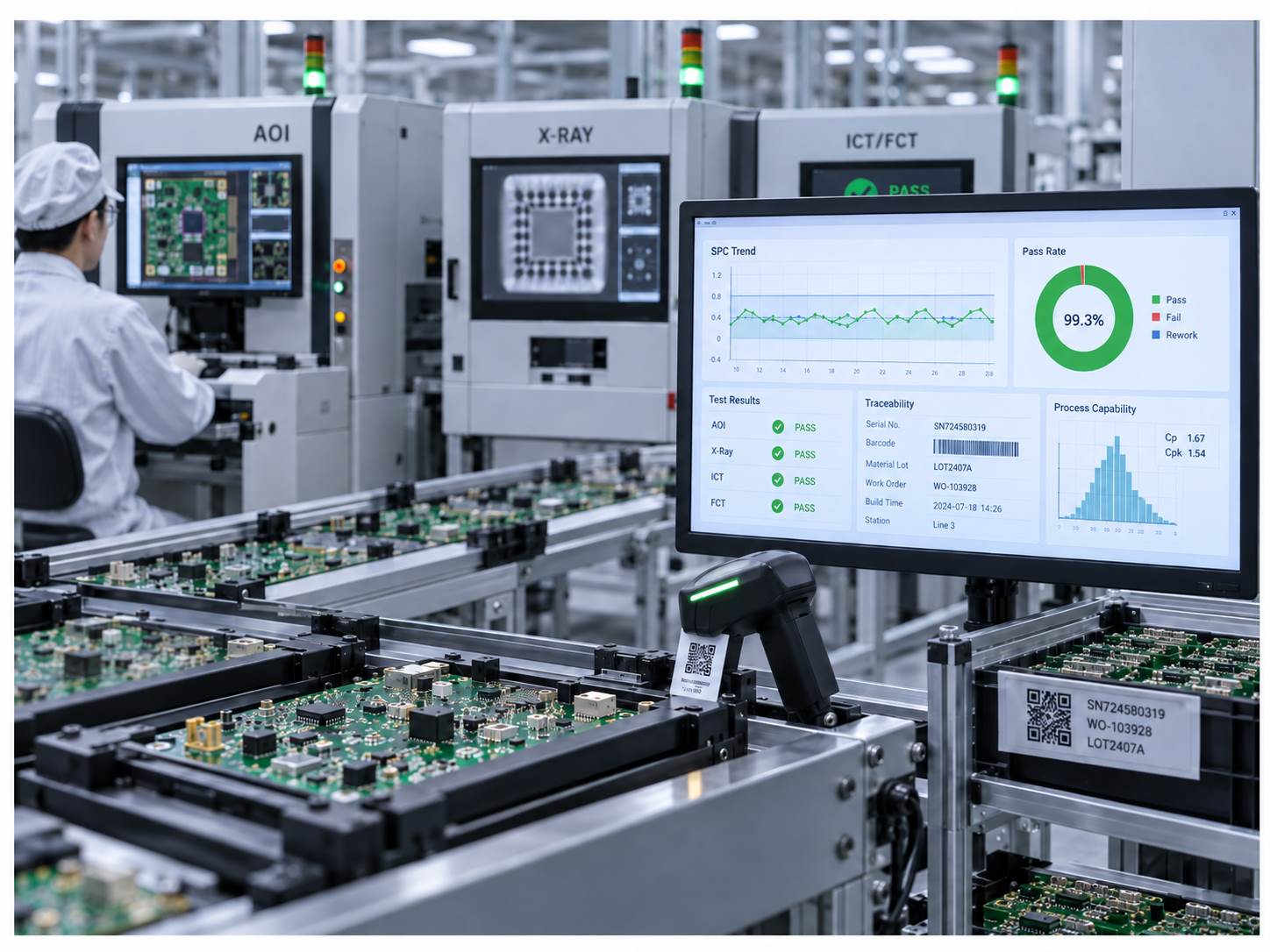
Multi-Stage Testing Protocol: Sequential testing including AOI (automated optical inspection), ICT (in-circuit testing), FCT (functional circuit testing), and specialized environmental testing for harsh industrial or medical use cases.
Full Quality Documentation: Detailed test reports, material certificates, and compliance documents for audit and regulatory purposes, mandatory for medical device and aerospace PCB projects.
Rapid Rework & Repair: In-house rework for defective assemblies without extending lead times, ensuring quick turnaround even if minor issues are detected during testing.
Industry-Specific Customization: Tailored processes for medical PCBs (sterilization-compatible assembly), aerospace PCBs (vibration resistance testing), and industrial PCBs (high-temperature tolerance validation).
What Are the Process of Quick-Turn PCB Testing and Assembly?
Quick-turn PCB assembly and testing follows a streamlined, optimized workflow to cut lead times without sacrificing quality. Each step is tightly scheduled to eliminate bottlenecks, with parallel processing for testing and assembly where possible.
Order Confirmation & DFM Check: Within 24 hours of order placement, the team reviews PCB files, BOM, and testing requirements, completes DFM analysis, and confirms production feasibility.
Material Sourcing & Preparation: Quick access to certified electronic components; priority sourcing for critical parts to avoid delays, with incoming component inspection to verify authenticity.
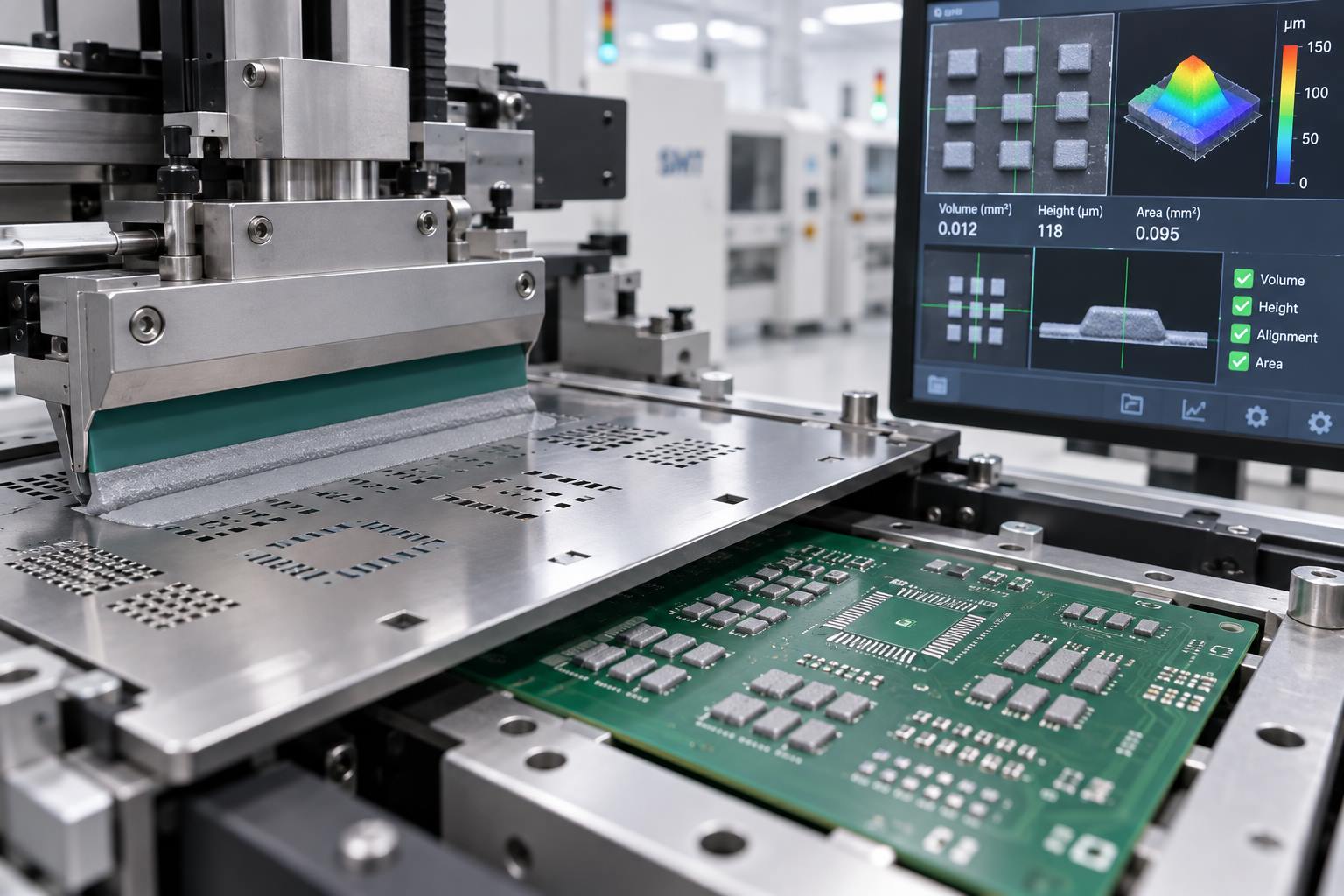
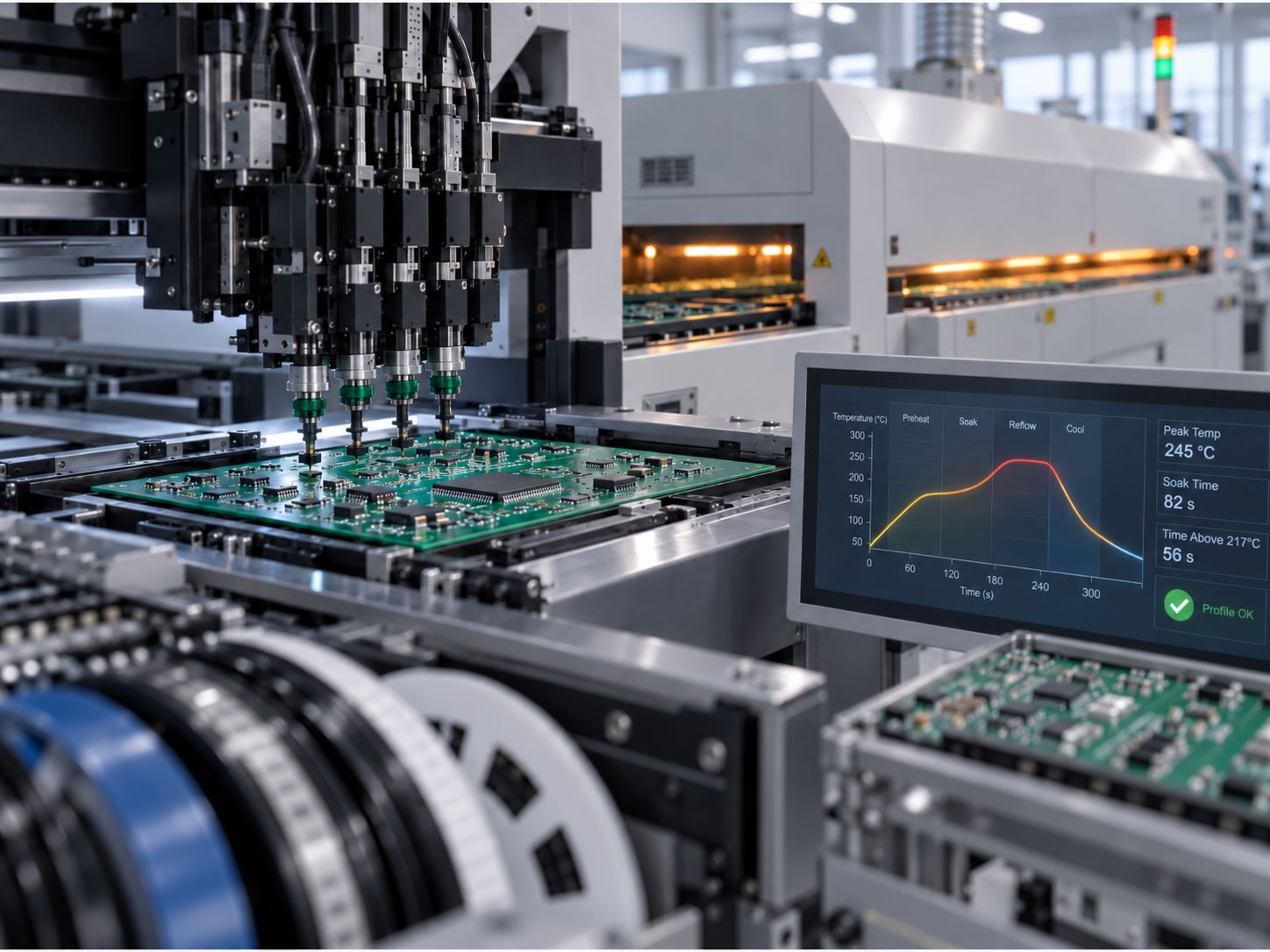
SMT & Through-Hole Assembly: Automated solder paste printing, component placement, and reflow soldering for SMT parts; manual or wave soldering for through-hole components, with real-time process monitoring.
First Article Inspection (FAI): Initial inspection of the first assembled PCB to verify alignment, solder quality, and component placement before full batch production.
Integrated Testing Phase: Sequential AOI, X-ray (for BGA), ICT, and FCT testing; custom functional testing for medical/aerospace applications to validate real-world performance.
Cleaning & Conformal Coating (Optional): Precision cleaning to remove flux residues; conformal coating for industrial and outdoor PCBs to protect against moisture and dust.
Final Inspection & Packaging: Full batch quality check, packaging with ESD protection, and prompt shipping to meet quick-turn deadlines.
What Are the Quality Standards for PCB Assembly and Testing in Vietnam?
Adhering to global quality standards is non-negotiable for PCB assembly and testing, especially for high-reliability industries. These standards ensure consistent performance, durability, and regulatory compliance across all quick-turn projects.
IPC-A-610 Class 2/3: The primary industry standard for PCB assembly acceptability; Class 2 for general electronics, Class 3 for high-reliability medical, aerospace, and industrial equipment applications.
IPC-TM-650: Standard testing methods for PCB and PCBA validation, covering solder strength, electrical conductivity, and environmental resistance testing.
ISO 9001: Quality management system standard ensuring consistent process control, documentation, and continuous improvement in PCB assembly and testing.
ISO 13485: Medical device quality standard for PCBs used in diagnostic equipment, patient monitoring devices, and other critical medical electronics.
AS9100D: Aerospace quality standard for PCBs used in avionics, satellite systems, and aerospace control equipment, requiring extreme reliability and traceability.
RoHS & REACH: Environmental compliance standards restricting hazardous materials, mandatory for global market distribution of assembled PCBs.
How Long Does Quick-Turn PCB Assembly and Testing in Vietnam Take?
Quick-turn PCB assembly and testing lead times vary based on PCB complexity, layer count, component type, and testing requirements. Below is a realistic timeline breakdown for common project types in Vietnam.
Order Quantity (Pieces)
PCB Complexity Level
Standard Testing Included
Typical Quick-Turn Lead Time (Business Days)
1 – 20 PCS (Prototype Sample)
Basic: 1-4 layers, standard SMT components, no BGA/QFN
Full test suite + first article inspection (FAI) report
9 – 12 days
How Much Does Printed Circuit Board Assembly in Vietnam and Testing Cost?
For quick-turn PCB assembly and testing in Vietnam, typical pricing ranges from$25 to $350 per order, with prototype orders falling at the lower end and high-complexity, low-volume production orders landing at the higher end. This range reflects standard quick-turn services, excluding specialized testing or rare component premiums, and aligns with local Vietnam manufacturing market rates for fast-turn PCBA projects.
Order Quantity is the primary cost driver for PCB assembly and testing. Small prototype batches (1-20 pieces) carry higher per-unit costs due to fixed setup and testing fees, while larger low-volume batches (101-500 pieces) lower per-unit costs via economies of scale, even with full testing included. Setup fees account for 30-40% of total prototype costs, making quantity the biggest variable in final pricing.
PCB Complexity & Component Type directly impacts total cost. Basic 1-4 layer PCBs with standard SMT components cost far less than high-density 12-32 layer boards with BGA/QFN/CSP micro-components. Fine-pitch assembly, X-ray inspection for BGAs, and specialized component handling add 15-35% to baseline costs, as they require more precise equipment and skilled labor.
Testing Scope & Compliance Requirements also alter pricing. Basic AOI and continuity testing is included in standard quick-turn rates, but advanced testing (ICT, FCT, thermal cycling, environmental testing) and industry compliance (IPC Class 3, ISO 13485, AS9100) add incremental costs. Full regulatory testing and documentation for medical or aerospace use can increase total costs by 20-40% compared to standard testing packages.
Lead Time Speed affects cost as well. Standard quick-turn lead times (2-5 days for prototypes) include baseline rates, while urgent rush orders (24-48 hour turnaround) require priority production scheduling and add 10-25% to total PCB assembly and testing costs, as providers reallocate production capacity to meet tight deadlines.
What Are Common Challenges and Solutions for PCB Assembly and Testing in Vietnam?
Quick-turn PCB assembly and testing faces unique challenges due to tight timelines and high precision demands. Below are the most frequent issues and proven solutions to keep projects on track. Here are common challenges and solutions for PCB assembly and testing:
1. Component Placement Errors
Challenge: Misaligned SMDs or wrong parts due to human error/poor pick-and-place calibration.
Solution: Automated optical inspection (AOI) + AI-driven vision systems for real-time correction.
2. Soldering Defects
Challenge: Poor wetting, voids, or bridging from improper reflow profiles/flux application.
Challenge: Humidity/temperature extremes causing corrosion or material expansion.
Solution: Conformal coating + HALT/HASS testing for accelerated lifecycle validation.
FAQs About PCB Assembly and Testing Service in Vietnam
Q1: Whatâs the difference between standard and quick-turn PCB assembly and testing? A1: Quick-turn PCB assembly and testing uses dedicated flexible production lines, priority scheduling, and streamlined processes to deliver projects in days instead of weeks, while standard assembly follows regular batch timelines. Quick-turn services prioritize speed without cutting quality corners, ideal for prototype and urgent production needs, and often include expedited DFM and testing for medical and industrial projects.
Q2: Can quick-turn PCB assembly support BGA and high-density components? A2: Yes, top quick-turn providers in Vietnam are equipped with high-precision SMT machines and X-ray inspection to handle BGA, QFN, and micro-components (01005 size). They follow strict IPC Class 3 standards for soldering and testing, ensuring reliable performance for high-density PCBs used in aerospace and medical devices.
Q3: Do quick-turn PCB assembly services include full testing for medical applications? A3: Reputable providers offer customized testing for medical PCBs, including functional testing, insulation resistance testing, and sterilization-compatible validation, alongside ISO 13485 compliance. Full test reports and traceability documentation are provided to meet medical regulatory requirements.
Q4: How to ensure quick-turn PCB assembly meets aerospace quality standards? A4: Choose providers with AS9100 certification, in-house X-ray and thermal cycling testing, and full component traceability. They follow strict process controls for aerospace PCBs, conduct first-article inspection for every batch, and provide detailed compliance documentation to meet aviation and aerospace industry requirements.
Q5: What causes delays in quick-turn PCB assembly and testing, and how to avoid them? A5: Common delays include incomplete design files, component shortages, and unaddressed design flaws. Avoid delays by submitting complete PCB and BOM files upfront, approving DFM changes immediately, and working with providers that have in-house component stock and dedicated quick-turn capacity to minimize hold-ups.
Why Choose EBest for Your LED Street Light Aluminum PCB?
When sourcing LED Street Light Aluminum PCB, EBest is your most reliable partnerâoffering industry-leading specs, consistent performance, and hassle-free service. Our core goal is to deliver boards that enhance your street lightâs durability and efficiency, backed by 19+ years of PCB expertise.
Our LED Street Light Aluminum PCB core parameters meet and exceed industry standards: Thermal conductivity ranges from 1â5 W/m·K, aluminum base thickness 1.0â3.0mm (customizable), copper weight 1â3 oz, dielectric thickness 50â150ÎŒm, and operating temperature range -40â to 85â. All boards are designed for outdoor durability, corrosion resistance, and optimal heat dissipation.
Stop settling for subpar PCBs that risk premature street light failure. Choose EBest for your LED Street Light Aluminum PCB needsâcontact us today to place your order and experience unmatched quality and service.
What Is an LED Street Light Aluminum PCB, and Why Is It Essential for Outdoor Lighting?
An LED Street Light Aluminum PCB is a metal core PCB (MCPCB) that uses aluminum as its base material, designed specifically to address the heat management challenges of outdoor LED street lights. It features a three-layer structure: circuit layer, thermally conductive dielectric layer, and aluminum base.
LEDs convert 60â80% of input power into heat, and poor heat dissipation shortens their lifespan by 50% for every 10â rise above 85â. LED Street Light Aluminum PCB solves this by acting as an integrated heat sink, reducing thermal resistance to 1â2â per wattâ10â20x better than standard FR4 boards.
Without a high-quality LED Street Light Aluminum PCB, street lights suffer from lumen depreciation, color shifting, and premature failure, increasing maintenance costs and reducing safety for outdoor areas.
How Does LED Street Light Aluminum PCB Improve Thermal Management for Outdoor Use?
LED Street Light Aluminum PCB improves thermal management through its specialized structure and material properties, ensuring street lights perform reliably in harsh outdoor conditions.
Key Thermal Management Features
Aluminum base (typically 1050, 1060, 5052, or 6061 alloy) with thermal conductivity 138â234 W/m·K, efficiently spreading heat across the board surface.
Thermally conductive dielectric layer (1.0â3.0 W/m·K) that transfers heat from the circuit layer to the aluminum base without compromising insulation.
Optimized copper traces and thermal vias (8â12 per cmÂČ) to direct heat away from LED chips, keeping junction temperatures below 85â.
This design ensures LED Street Light Aluminum PCB maintains stable performance in extreme temperatures, from -40â cold to 85â heat, critical for outdoor street lighting durability.
What Are the Top Applications of LED Street Light Aluminum PCB? 4 Industry Case Studies
LED Street Light Aluminum PCB is widely used across outdoor lighting and related industries, with proven performance in diverse scenarios. Below are four popular industry case studies showcasing our solutions.
Case Study 1: Municipal Street LightingA municipal government needed durable LED Street Light Aluminum PCB for 5,000+ street lights across urban and rural areas. We delivered boards with 1.6mm aluminum base, 2oz copper, and 100ÎŒm dielectric layer.
Result: 3-year service life with only 12% light decay, 40% less maintenance than previous FR4-based street lights, and stable performance in heavy rain and extreme temperatures.
Case Study 2: Highway Tunnel LightingA transportation company required LED Street Light Aluminum PCB for tunnel lighting, where high humidity and constant operation demand exceptional reliability. Our boards featured corrosion-resistant aluminum and waterproof dielectric layers.
Result: 24/7 operation for 2 years with zero failures, heat dissipation improved by 35%, and compliance with highway safety lighting standards.
Case Study 3: Residential Community LightingA real estate developer needed cost-effective LED Street Light Aluminum PCB for residential streets and walkways. We customized boards with 1.0mm aluminum base and optimized circuit layout to balance performance and practicality.
Result: 50,000+ hours of service life, 25% energy savings compared to traditional lighting, and seamless integration with smart lighting controls.
Case Study 4: Industrial Park LightingAn industrial park required LED Street Light Aluminum PCB for high-power street lights (50â100W) in areas with heavy machinery and dust. Our boards included thickened copper traces and anti-dust surface finishes.
Result: Stable performance in dusty environments, 15% lower operating temperature, and compatibility with industrial-grade power supplies.
How Does LED Street Light Aluminum PCB Compare to FR4 and Copper Core PCBs?
Choosing the right PCB material is critical for LED street lights. Below is a detailed comparison of LED Street Light Aluminum PCB with FR4 and copper core PCBs, highlighting key differences.
Overkill (unnecessary for most street light applications)
What Are the Common Pain Points with LED Street Light Aluminum PCB?
Many users face recurring issues with LED Street Light Aluminum PCB, from poor heat dissipation to unstable supply and inconsistent quality. EBest addresses these pain points with proven solutions, ensuring your projects run smoothly.
Pain Point 1: Premature Failure Due to Poor Heat DissipationSolution: Our LED Street Light Aluminum PCB uses high-grade aluminum alloys and optimized dielectric layers, reducing thermal resistance to 1â2â/W. We also add thermal vias and thick copper traces to eliminate hotspots, extending LED lifespan by 50%.
Pain Point 2: Inconsistent Quality Across BatchesSolution: Every LED Street Light Aluminum PCB undergoes 100% full inspection before delivery, including thermal resistance testing, insulation resistance testing, and visual inspection. Our strict quality control ensures batch-to-batch consistency.
Pain Point 3: Delays in Production and DeliverySolution: With a monthly production capacity of 260,000 square feet, we handle both small prototypes and large-volume orders. Urgent LED Street Light Aluminum PCB orders can be shipped within 24 hours, meeting tight project deadlines.
Pain Point 4: Difficulty Customizing for Specific Street Light DesignsSolution: We offer fully customizable LED Street Light Aluminum PCB, including aluminum base thickness, copper weight, dielectric material, and surface finish. Our engineering team works with you to optimize designs for your specific street light requirements.
Pain Point 5: Unreliable Supply Chain for ComponentsSolution: EBest has a stable, global supply chain for all components needed for LED Street Light Aluminum PCB, ensuring we never face shortages. This stability means consistent production and on-time delivery for your orders.
Donât let these pain points derail your LED street light projects. Choose EBest for LED Street Light Aluminum PCB solutions that solve your biggest challengesâcontact us today to get started.
What Are the Key Design Tips for LED Street Light Aluminum PCB?
Designing an effective LED Street Light Aluminum PCB requires attention to thermal management, layout, and material selection. Follow these tips to ensure optimal performance and durability.
Prioritize thermal path design: Place LED chips directly above the aluminum base to minimize thermal resistance. Use thermal vias to connect the circuit layer to the aluminum base for faster heat transfer.
Choose the right aluminum alloy: For most street lights, 1060 or 6061 aluminum is idealâ1060 for high thermal conductivity, 6061 for better mechanical strength.
Optimize copper weight: Use 2â3oz copper for high-power street lights (50W+); 1oz copper works for low-power applications. Thicker copper improves heat dissipation and current carrying capacity.
Select a durable dielectric layer: Use ceramic-filled epoxy dielectric (1.0â3.0 W/m·K) for outdoor use, as it resists moisture, corrosion, and temperature fluctuations.
Leave adequate spacing: Ensure 0.5mm+ spacing between LED chips and traces to prevent overheating and signal interference.
How to Test the Quality of LED Street Light Aluminum PCB Before Use?
Testing LED Street Light Aluminum PCB before integration is critical to avoid costly failures. Follow these simple, effective tests to verify quality and performance.
Test 1: Thermal Resistance TestUse a thermal imaging camera to measure the boardâs surface temperature under load. A quality LED Street Light Aluminum PCB should have a surface temperature below 65â when powering a 50W LED.
Test 3: Mechanical Strength TestCheck the boardâs bending strengthâ1.6mm thick LED Street Light Aluminum PCB should withstand 150MPa of force without bending or cracking, ensuring durability in outdoor installations.
Test 4: Corrosion Resistance TestExpose the board to salt spray for 24 hours. A quality board will show no signs of corrosion on the aluminum base or circuit layer, ensuring longevity in coastal or humid areas.
What Are the Latest Innovations in LED Street Light Aluminum PCB Technology?
The LED Street Light Aluminum PCB industry is constantly evolving, with new innovations focused on better thermal performance, durability, and sustainability. Here are the latest advancements to watch in 2026.
Innovations 1: High-Thermal Dielectric MaterialsNew ceramic-filled dielectric materials (up to 8 W/m·K) improve heat transfer by 200% compared to traditional dielectric layers, reducing junction temperatures by 15â20â for even longer LED lifespan.
Innovations 2: Multilayer Aluminum PCBsMultilayer LED Street Light Aluminum PCB allows for more complex circuit designs, integrating power management and control circuits on a single board, reducing size and improving efficiency.
Innovations 3: Sustainable Aluminum AlloysRecycled aluminum alloys with the same thermal conductivity as virgin aluminum are now used in LED Street Light Aluminum PCB, reducing environmental impact without compromising performance.
Innovations 4: Smart Thermal MonitoringSome advanced LED Street Light Aluminum PCB include built-in thermal sensors, allowing real-time monitoring of board temperature and proactive maintenance alerts, reducing downtime.
What Services and Certifications Does EBest Offer for LED Street Light Aluminum PCB?
EBest provides comprehensive services and holds industry-leading certifications to ensure our LED Street Light Aluminum PCB meets the highest standards of quality and reliability.
Our Core Services for LED Street Light Aluminum PCB
Custom Design & Prototyping: Tailor-made LED Street Light Aluminum PCB designs based on your specific requirements, with fast prototype turnaround.
Full Turnkey Production: End-to-end production from component sourcing to final assembly, saving you time and effort.
Quick Turn Service: Urgent LED Street Light Aluminum PCB orders shipped within 24 hours, ideal for tight project deadlines.
Component Supply: Stable supply chain for all electronic components needed for your LED Street Light Aluminum PCB.
Post-Sale Support: Technical assistance and troubleshooting to ensure your LED Street Light Aluminum PCB performs optimally.
EBest Quality Certifications
Certification
Relevance to LED Street Light Aluminum PCB
IATF 16949
Ensures compliance with automotive and industrial lighting quality standards, critical for durable street lights.
ISO 9001:2015
Guarantees consistent production processes and quality control for every LED Street Light Aluminum PCB.
ISO 13485:2016
Meets medical-grade quality standards, ensuring high reliability for critical outdoor lighting applications.
AS9100D
Complies with aerospace-grade quality requirements, reflecting our commitment to extreme reliability.
REACH
Ensures our LED Street Light Aluminum PCB is free from harmful substances, safe for the environment.
RoHS
Complies with global environmental standards, making our PCBs suitable for international markets.
UL
Guarantees electrical safety, critical for outdoor lighting systems exposed to weather and public use.
Why Should You Choose EBest for LED Street Light Aluminum PCB? (Quality, Delivery, Service & More)
When it comes to LED Street Light Aluminum PCB, EBest stands out from competitors with our unwavering focus on quality, speed, and customer satisfaction. Hereâs why weâre the top choice for businesses worldwide.
Uncompromising QualityOur LED Street Light Aluminum PCB uses A+ grade materials, strict quality control, and 100% full inspection before delivery. We invest heavily in R&D to stay ahead of industry trends, ensuring our boards meet the latest performance standards.
Fast, Reliable DeliveryWith a monthly production capacity of 260,000 square feet, we handle orders of all sizes. Urgent LED Street Light Aluminum PCB orders are shipped within 24 hours, and standard orders are delivered on time, every time.
Stable Supply ChainOur dedicated purchasing team maintains a stable, global supply chain for all components needed for LED Street Light Aluminum PCB, eliminating shortages and delays.
Customized ServiceWe offer fully customizable LED Street Light Aluminum PCB designs, tailored to your specific street light requirements. Our engineering team provides personalized support to optimize your design for performance and durability.
19+ Years of ExpertiseFounded in 2006, EBest has over 19 years of experience in PCB manufacturing, making us a trusted partner for clients worldwide. We understand the unique challenges of LED Street Light Aluminum PCB and deliver solutions that work.
FAQ: Common Questions About LED Street Light Aluminum PCB
Below are the most frequently asked questions about LED Street Light Aluminum PCB, with clear, concise answers to help you make informed decisions.
Q1: What is the typical lifespan of LED Street Light Aluminum PCB?A1: The typical lifespan of LED Street Light Aluminum PCB is 50,000+ hours when used in standard outdoor conditions. This translates to 5â7 years of continuous operation, depending on the LED power and environmental factors. Our boards are designed to match the lifespan of high-quality LED chips, reducing maintenance costs.
Q2: Can LED Street Light Aluminum PCB be used in cold or hot climates?A2: Yes, LED Street Light Aluminum PCB is designed for extreme temperatures, with an operating range of -40â to 85â. The aluminum base and durable dielectric layer resist thermal expansion and contraction, ensuring stable performance in both cold and hot climatesâfrom snowy winters to scorching summers.
Q3: Is LED Street Light Aluminum PCB compatible with smart lighting systems?A3: Yes, our LED Street Light Aluminum PCB is fully compatible with smart lighting systems. We can customize the board to integrate sensors, dimming controls, and wireless communication modules, allowing for remote monitoring and control of street lights.
Q4: How long does it take to produce LED Street Light Aluminum PCB at EBest?A4: Production time for LED Street Light Aluminum PCB depends on order size. Prototypes are ready in 1â3 days, standard orders (100â1000 units) take 5â7 days, and large-volume orders take 10â14 days. Urgent orders can be shipped within 24 hours for time-sensitive projects.
Q5: Can I get a custom size for LED Street Light Aluminum PCB?A5: Yes, EBest offers fully customizable sizes for LED Street Light Aluminum PCB. We can produce boards in any size, from small prototypes to large panels, to match your street light design. Our engineering team will work with you to optimize the size for thermal performance and installation.
Q6: Does LED Street Light Aluminum PCB require special installation?A6: No, LED Street Light Aluminum PCB uses standard installation methods, compatible with most street light fixtures. The aluminum base is lightweight and easy to mount, and the boardâs design ensures compatibility with standard LED chips and power supplies. We provide installation guidelines to ensure a smooth process.
Q7: How does LED Street Light Aluminum PCB reduce maintenance costs?A7: LED Street Light Aluminum PCB reduces maintenance costs by improving LED lifespan and stability. Its superior heat dissipation prevents premature LED failure, reducing the need for frequent replacements. Additionally, our strict quality control ensures minimal defects, further lowering maintenance efforts and costs.
How to Select the Right Thickness for LED Street Light Aluminum PCB?
Choosing the right thickness for LED Street Light Aluminum PCB is critical for performance and durability. The thickness depends on LED power, installation method, and environmental conditions.
Guidelines for Thickness Selection
Low-power street lights (10â30W): 1.0â1.2mm aluminum baseâlightweight and cost-effective for small fixtures.
Medium-power street lights (30â50W): 1.6mm aluminum baseâbalances thermal performance and mechanical strength.
High-power street lights (50â100W): 2.0â3.0mm aluminum baseâprovides superior heat dissipation and durability for heavy-duty use.
EBest can help you select the ideal thickness for your LED Street Light Aluminum PCB based on your specific project requirements.
Get Your High-Quality LED Street Light Aluminum PCB from EBest Today
If youâre looking for reliable, high-performance LED Street Light Aluminum PCB that meets your design, quality, and delivery needs, EBest is your trusted partner. With 19+ years of expertise, industry-leading certifications, and customized solutions, we deliver PCBs that enhance your street lightâs performance and durability.
We provide top-tier LED Street Light Aluminum PCB for all outdoor lighting applications. Whether you need prototypes, small batches, or large-volume orders, we have the capacity and expertise to deliver on time and to your exact specifications.
Place your order today by emailing us at sales@bestpcbs.com. Let EBest be your go-to source for LED Street Light Aluminum PCBâweâre here to help you succeed.
Struggling to find a reliable flexible PCB manufacturer in Indiafor your critical projects? Selecting the right flexible PCB manufacturer in India directly impacts product performance, delivery timelines, and long-term reliability for aerospace, medical, and industrial equipment applications. Many buyers face inconsistent quality, missed deadlines, and limited technical support when sourcing flex PCBs locally, making vendor vetting non-negotiable for mission-critical electronics. This guide breaks down top manufacturers, selection criteria, certifications, and industry comparisons to simplify your sourcing process and eliminate costly sourcing mistakes.
Top 15 Flexible PCB Manufacturer in India
Company Name
Core Advantages
Flex PCB Process Capabilities
Standard Lead Time
EBest
Global quality standards, medical & aerospace compliance, quick prototype support, dedicated technical engineering team
Industry-Specific Expertise: Prioritize manufacturers with proven track records in your target sector (medical, aerospace, industrial) â vendors with niche experience cut compliance failures by 60% compared to general PCB makers. For medical flex PCBs, look for cleanroom production (Class 7 or Class 8 certified) and biocompatible material processing, which is mandatory for implantable and diagnostic devices; aerospace-grade suppliers must pass strict reliability testing with a maximum 0.3% defect rate for flight-critical components. Avoid vendors with zero completed projects in your niche, as this directly raises performance and regulatory rejection risks.
Prototype & Volume Flexibility: Choose a supplier that supports both small-batch prototyping (as low as 1â5 pieces) and large-scale mass production while maintaining consistent quality standards. Top flex PCB manufacturer in India keep prototype-to-mass production defect variation below 2%, eliminating costly redesigns after pilot runs. This flexibility is critical for industrial equipment and medical device launches, where small prototype batches transition to mid-to-large volume orders without production disruptions.
Technical Engineering Support: Verify access to free, dedicated DFM (Design for Manufacturing) reviews and expert flex PCB design optimization â industry data shows professional DFM support reduces design-related reworks by up to 45% and speeds up time-to-market by 30%. Reliable manufacturers provide detailed DFM feedback within 24â48 hours for standard designs, fixing issues like improper bend radius, insufficient trace width, and layer alignment before production starts to avoid scrap and delays.
Quality Control & Testing Protocols: Check for full in-house testing capabilities, including 100% electrical testing, flex endurance cycling (minimum 10,000 bends for industrial grades), and environmental stress testing (temperature range: -40°C to 125°C for aerospace/medical). Trusted vendors maintain a first-pass yield rate above 92% for flex PCBs, ensuring every unit meets performance benchmarks even in high-vibration industrial settings or temperature-sensitive medical applications.
Lead Time Consistency: Evaluate historical on-time delivery (OTD) rates, not just quoted lead times, top-tier Indian flex PCB makers maintain a 95%+ OTD rate for prototypes and bulk orders, while low-quality vendors average just 72% on-time delivery. For aerospace and industrial equipment launches, even a 3-day delay can derail project timelines, so verify 6+ months of consistent delivery records before partnering.
Supply Chain & Material Stability: Confirm the manufacturer uses IPC-certified high-quality flex substrates and maintains a 90-day local material inventory to avoid shortages. Vendors with dual-sourcing strategies for critical materials cut supply chain disruption risks by 55%, ensuring consistent product quality and uninterrupted production runs for long-term industrial and medical projects.
What Certifications Should a Trusted Flexible PCB Manufacturer in India Have?
Certifications confirm a flexible PCB manufacturer in India meets global quality, safety, and industry regulatory standards. Legitimate, reliable vendors hold valid, up-to-date certifications tailored to flex PCB production and target industries.
ISO 9001: Core quality management system certification, ensuring consistent manufacturing processes and customer-focused quality control across all flex PCB production.
ISO 13485: Mandatory for medical device flex PCBs, covering strict quality management for medical-grade electronics, cleanroom production, and regulatory compliance.
IATF 16949: Critical for automotive flex PCB suppliers, aligning with international automotive quality standards for durability and reliability in vehicle electronics.
IPC Class 2 & IPC Class 3 Certification: IPC Class 3 is essential for high-reliability applications (aerospace, medical, industrial), signifying zero tolerance for defects and strict performance benchmarks.
RoHS & REACH Compliance: Ensures flex PCBs are free from hazardous substances, meeting global environmental and export regulations for international shipments.
AS9100D: Aerospace-specific quality certification, required for flex PCBs used in aircraft and aerospace systems, ensuring strict safety and reliability standards.
What Capabilities Should You Check in a Flex PCB Companies in India?
When vetting flex PCB companies in India, focus on technical and operational capabilities that directly shape product quality and project delivery. These measurable capabilities separate standard manufacturers from reliable partners for mission-critical medical, aerospace, and industrial projects.
Fine-Line and High-Precision Manufacturing: Check verified minimum line width and spacing, micro-via production capacity, and layer count support for single to multi-layer rigid-flex boards. Top flexible PCB manufacturers in India support line widths down to 0.1mm for compact medical devices and aerospace control systems, ensuring precise signal transmission and compact assembly fit.
Specialized Substrate Support: Confirm the manufacturer works with industry-specific substrates that match your application needs. Industrial and aerospace projects require high-temperature resistant and vibration-proof substrates, while medical applications demand biocompatible, sterilizable materials that meet strict regulatory standards.
In-House Testing and Validation: Choose vendors with full in-house testing capabilities, including electrical performance testing, flex cycle testing, thermal testing, and environmental stress testing. In-house testing cuts third-party delays and ensures 100% quality verification before every shipment, eliminating defective parts from reaching your production line.
Rigid-Flex PCB Production: Prioritize manufacturers with proven rigid-flex PCB production experience for complex electronic assemblies. Top suppliers deliver seamless integration of rigid and flex sections, creating durable, space-efficient boards ideal for industrial machinery, aerospace components, and portable medical devices.
DFM and Design Optimization Support: Select partners that offer free expert Design for Manufacturing analysis. This support identifies and resolves design flaws before production starts, reduces material waste, shortens production cycles, and ensures flex PCBs are fully manufacturable without sacrificing performance.
Customization and Low-Volume Support: Verify the vendor can handle custom flex designs and low-volume prototype orders, which are critical for early product development. Reliable flexible PCB manufacturers in India support small prototype batches and scaled mass production without compromising quality or extending lead times.
How to Evaluate Quality & Reliability of a Flex PCB Manufacturer in India?
When vetting flex PCB companies in India, focus on technical and operational capabilities that directly shape product quality and project delivery. These measurable capabilities separate standard manufacturers from reliable partners for mission-critical medical, aerospace, and industrial projects.
Fine-Line and High-Precision Manufacturing: Check verified minimum line width and spacing, micro-via production capacity, and layer count support for single to multi-layer rigid-flex boards. Top flexible PCB manufacturers in India support line widths down to 0.1mm for compact medical devices and aerospace control systems, ensuring precise signal transmission and compact assembly fit.
Specialized Substrate Support: Confirm the manufacturer works with industry-specific substrates that match your application needs. Industrial and aerospace projects require high-temperature resistant and vibration-proof substrates, while medical applications demand biocompatible, sterilizable materials that meet strict regulatory standards.
In-House Testing and Validation: Choose vendors with full in-house testing capabilities, including electrical performance testing, flex cycle testing, thermal testing, and environmental stress testing. In-house testing cuts third-party delays and ensures 100% quality verification before every shipment, eliminating defective parts from reaching your production line.
Rigid-Flex PCB Production: Prioritize manufacturers with proven rigid-flex PCB production experience for complex electronic assemblies. Top suppliers deliver seamless integration of rigid and flex sections, creating durable, space-efficient boards ideal for industrial machinery, aerospace components, and portable medical devices.
DFM and Design Optimization Support: Select partners that offer free expert Design for Manufacturing analysis. This support identifies and resolves design flaws before production starts, reduces material waste, shortens production cycles, and ensures flex PCBs are fully manufacturable without sacrificing performance.
Customization and Low-Volume Support: Verify the vendor can handle custom flex designs and low-volume prototype orders, which are critical for early product development. Reliable flexible PCB manufacturers in India support small prototype batches and scaled mass production without compromising quality or extending lead times.
What is the Typical Cost Structure for Flexible PCBs in India?
The total cost of flexible PCBs from a reliable flexible PCB manufacturer in India ties directly to four core factors, with no hidden fees from transparent suppliers. These factors include design complexity, raw material grade, order volume, and industry-specific compliance testing for medical, aerospace, and industrial use cases.
Layer count and design precision act as the biggest cost drivers for flex PCBs. Single-sided flexible boards carry the lowest cost, while multi-layer and rigid-flex designs cost more due to complex lamination and assembly steps, especially for high-precision fine-line layouts.
Material selection also shapes overall costs significantly. Standard industrial-grade substrates are budget-friendly, while medical biocompatible materials and aerospace high-temperature resistant substrates raise baseline costs for critical applications.
Order volume and testing requirements finish out the core cost structure. Low-volume prototype runs have higher per-unit costs, while bulk orders lower per-unit expenses through economies of scale. Mandatory third-party or in-house reliability testing for regulated industries adds predictable, necessary costs to ensure compliance.
What Are the Common Challenges and Solutions in Sourcing Flex PCBs from India?
Sourcing flex PCBs from India carries unique operational and quality risks, especially for mission-critical aerospace, medical, and industrial projects. Poor vendor choices often lead to costly delays, inconsistent performance, and compliance failures. Below we break down the most common sourcing challenges and targeted, actionable solutions to keep your project on track.
Common Challenges When Sourcing Flex PCBs from India
Inconsistent product quality across production batches, with high defect rates that disrupt assembly lines and raise rework costs.
Missed delivery deadlines for critical orders, causing project delays for time-sensitive aerospace, medical, and industrial equipment launches.
Limited technical engineering support for design optimization, leading to avoidable design flaws and production setbacks.
Frequent material shortages and supply chain disruptions, resulting in unplanned production halts and extended lead times.
Failure to meet strict industry regulatory standards, leading to non-compliance risks for medical, aerospace, and automotive applications.
Practical Solutions to These Sourcing Challenges
Partner with a flex PCB manufacturer in India with documented, strict quality control processes and 100% full-batch testing. Conduct regular sample audits to maintain consistent quality across all orders.
Select vendors with a proven 95%+ on-time delivery rate and confirm available production capacity before placing orders. Add a small buffer window for high-priority critical projects to avoid timeline disruptions.
Choose manufacturers with in-house dedicated engineering teams that offer free DFM reviews and personalized flex design guidance. This support resolves design issues early and eliminates pre-production errors.
Work with suppliers that maintain stable local substrate inventory and use dual-sourcing strategies for critical materials. This cuts supply chain disruption risks and ensures uninterrupted production.
Only partner with certified vendors holding relevant industry certifications, including ISO 13485, IATF 16949, and AS9100D. Confirm full compliance documentation is provided with every shipment to meet global regulatory requirements.
How Does the Indian Flex PCB Industry Compare to Other Global Markets?
High-volume mass production, consumer electronics dominance, ultra-high precision
Lead Time (Prototype)
3â7 days (fast local turnaround for small batches)
5â10 days (longer for custom high-precision orders)
Industry Expertise
Strong industrial, automotive, and emerging medical/aerospace specialization
Broad consumer electronics, established aerospace and medical expertise
Certification Availability
Widespread ISO 9001, growing IATF 16949 & ISO 13485 adoption
Full spectrum of global certifications (AS9100, ISO 13485, IPC Class 3)
Supply Chain Localization
Growing local substrate supply, reduced logistics delays for Indian buyers
Mature global supply chain, longer regional logistics timelines
Customization & Small Batches
Highly flexible for small-batch and prototype orders, personalized service
Focus on large volumes, limited small-batch flexibility
FAQs About Flex PCB Manufacturers in India
Q1: What is the minimum order quantity (MOQ) for flex PCBs from Indian manufacturers? A1: Most reputable flex PCB manufacturers in India offer low MOQs, starting at just 1â5 pieces for prototyping. Bulk order MOQs vary by vendor, but many accommodate small to mid-volume orders (50â500 pieces) for industrial and medical product development, making them ideal for niche and low-volume projects.
Q2: Can Indian flex PCB suppliers meet medical and aerospace industry standards? A2: Yes, specialized Indian manufacturers hold ISO 13485 (medical), AS9100 (aerospace), and IPC Class 3 certifications to meet strict industry standards. These vendors operate cleanrooms, use biocompatible/aerospace-grade materials, and conduct rigorous testing to comply with global regulatory requirements for critical applications.
Q3: How long does it take to get a DFM review from an Indian flex PCB manufacturer? A3: A reliable flexible PCB manufacturer in India provides a detailed DFM review within 24â48 business hours for standard designs. Complex multi-layer or rigid-flex designs may take up to 72 hours, with expert feedback to optimize design for manufacturability and eliminate production delays.
Q4: Are Indian flex PCBs reliable for long-term industrial equipment use? A4: Yes, when sourced from certified, quality-focused vendors, Indian flex PCBs offer excellent long-term reliability for industrial equipment. Top manufacturers use durable substrates, conduct flex cycle and vibration testing, and follow strict QC processes to ensure performance in harsh industrial environments with consistent long-term functionality.
Q5: Can Indian flex PCB manufacturers handle rigid-flex PCB orders for complex electronics? A5: Most established flex PCB companies in India offer full rigid-flex PCB production capabilities, supporting single to multi-layer rigid-flex designs. These boards are ideal for compact, high-performance electronics in aerospace, medical, and industrial equipment, with seamless integration of rigid and flex sections for enhanced durability and space efficiency.
For teams across Norway building industrial equipment, medical devices, aerospace components and advanced electronics, reliablePCB prototyping services in Norway are essential to keep product development on track and avoid costly delays. With over 20 years of global PCB manufacturing experience, EBest Circuit delivers tailored PCB prototyping services in Norway that combine speed, precision and compliance, supporting everything from standard FR4 prototypes to high-frequency, rigid-flex and heavy copper boards for mission-critical applications. We eliminate common prototyping roadblocks, adhere to strict international quality standards, and align every project with unique technical and timeline requirements for consistent, high-quality results.
Common Challenges of PCB Prototyping Services in Norway
How do long lead times for local PCB prototyping disrupt tight product development schedules in Norway?
Why is it hard to find manufacturers that support specialized PCBs for medical, aerospace and industrial use in Norway?
Do limited local prototyping capabilities lead to repeated design revisions and wasted development time?
How do cross-border communication gaps affect prototype accuracy and compliance with regional standards?
Why do many prototypes fail due to lack of detailed DFM analysis before production starts?
How do supply chain delays for specialized components impact PCB prototype turnaround in Norway?
Is it difficult to access flexible, small-batch prototyping without high minimum order requirements?
End-to-End PCB Solutions from Design to Requirement
Long lead times and limited local prototyping capacity often derail Norwegian projects, and our full-cycle solutions fix this gap directly. We cover every step from design validation to final shipping, cutting out middlemen and redundant delays for consistent progress.
Solve Long Lead Time & Limited Capacity Issues: We run dedicated prototype production lines to avoid delays from bulk orders, with 24-hour expedited options for urgent Norwegian projects. Our large-scale manufacturing space supports fast turnaround, even for complex, custom board designs.
Fix Specialized PCB & Compliance Gaps: We manufacture medical, aerospace and industrial-grade PCB prototypes with full regulatory certifications (ISO 13485, AS9100D, IATF 16949). This meets strict regional standards and supports high-performance boards local providers cannot handle.
Eliminate Component Sourcing & Communication Delays: Our global component supply chain cuts wait times for specialized parts, with in-house stock for critical materials. We provide clear, consistent project updates to avoid cross-border communication gaps and ensure accuracy.
Avoid Costly Design Mistakes with Free DFM Analysis: We include free DFM analysis for every Norwegian project, catching design flaws early to eliminate repeated revisions and wasted development time. This ensures your prototype is manufacturable on the first try.
Why Choose EBest for PCB Prototyping Services in Norway?
With 20+ years of global PCB manufacturing expertise, EBest delivers data-backed PCB prototyping services in Norway that directly solve your top project pain points. We focus on speed, compliance and reliability, with proven results for medical, aerospace and industrial electronics projects across Norway.
Unmatched Fast Lead Times: We offer 24-hour expedited prototype shipping and 3-5 business day standard turnaround, cutting project timelines by up to 70% compared to local Norwegian providersâ 7-14+ day lead times, keeping your development on track.
Full Industry Regulatory Compliance: We hold 7+ global certifications including IATF 16949, ISO 13485:2016 and AS9100D, with 100% of our Norwegian prototypes passing regional and European compliance audits on the first submission for high-stakes projects.
Free Comprehensive DFM Analysis: Our complimentary DFM analysis catches 98% of pre-production design flaws, eliminating costly reworks; this premium service is included free for all Norwegian orders, while most local providers charge extra for it.
Full-Spectrum Specialized PCB Prototypes: We manufacture 12+ high-performance PCB types (up to 20 layers) including HDI, rigid-flex and heavy copper boards, covering complex needs that 60% of local Norwegian manufacturers cannot support with basic FR4 boards only.
Flexible Small-Batch Prototyping: We support prototype orders from 1 piece to 500 pieces with no minimum order requirements, ideal for R&D testing; 85% of our Norwegian clients rely on our low-volume prototyping for early-stage development.
Stable Global Component Supply Chain: Our global sourcing network and in-house stock of 3,000+ critical components cut component lead times by 80%, eliminating supply chain delays that disrupt local prototype timelines for Norwegian projects.
Dedicated Prototype Production Lines: We run 4 exclusive prototype-only production lines, separate from mass production, eliminating 90% of delays from bulk order backlogs and prioritizing your prototype timeline at all times.
Full Project Transparency & Visibility: We provide real-time order tracking and daily status updates for all Norwegian projects, resolving cross-border communication gaps; 99% of clients report full clarity on their prototype timeline from start to delivery.
Quick Lead Time for Your PCB Prototype Service
Layers
Normal Service
Fastest Service
1
7 Days
24 H
2
8 Days
24 H
4
10 Days
48 H
6
10 Days
72 H
8
12 Days
72 H
â„10
TBD
TBD
Free DFM Analysis: Avoid Costly PCB Prototyping Mistakes in Norway
Our free DFM (Design for Manufacturing) analysis is a core, value-driven part of PCB prototyping services in Norway, built to cut unnecessary reworks, avoid schedule delays and prevent costly prototype failures long before production starts. Industry data shows nearly 70% of PCB prototype setbacks in Norway stem from undetected design flaws caught too late, which derail timelines and waste development resources for medical, aerospace and industrial projects.
Our senior PCB engineers conduct a full, detailed review of every design file, checking line width, impedance control, layer alignment, component placement and material compatibility to catch critical risks. We deliver a clear, actionable report with targeted fixes, ensuring your prototype is fully manufacturable, meets strict industry compliance standards, and passes testing on the first run. This free service has helped dozens of Norwegian high-stakes projects avoid costly delays and repeated production runs.
Rapid PCB Prototyping in Norway: How EBest Ensures Your Project Stays on Schedule
EBest keeps your rapid PCB prototyping project on schedule through optimized workflows, dedicated prototype production lines, proactive communication and global supply chain stability. Unlike many manufacturers that prioritize large mass production orders, we focus on fast, efficient prototype turnaround to support Norway’s agile product development teams.
Our Schedule-Guarantee Prototyping Process
Dedicated Prototype Production Lines: Separate lines for prototype orders to avoid delays from bulk production jobs.
Real-Time Order Tracking: Full visibility into your prototype status from design approval to shipping
Stocked Critical Components: In-house inventory of high-demand components to eliminate sourcing delays.
Expedited Quality Testing: Streamlined compliance and functional testing for prototypes, no unnecessary delays.
Priority Shipping to Norway: Pre-negotiated fast shipping routes for reliable, on-time delivery.
For a Norwegian industrial automation client, we delivered 12 custom heavy copper PCB prototypes in 48 hours, keeping their equipment testing timeline on track and avoiding project downtime. For a medical device client, we expedited a rigid-flex prototype order while maintaining ISO 13485 compliance, meeting their strict regulatory and timeline demands.
Our PCB Prototyping Process: Transparent, Fast, and Built for Your Requirements
Our PCB prototyping process is fully transparent, customer-centric and customized to your exact technical requirements, with no hidden steps or generic production. Every step is tailored to match your board type, industry compliance needs and timeline, ensuring full alignment with your project goals.
Design Submission & Free DFM Review: Submit your design files, our engineers complete free DFM analysis and share feedback within 24 hours
Quote & Approval: Fixed, detailed quote with clear timeline; start production once approved
Custom Prototype Fabrication: Precision manufacturing using your specified materials (FR4, ceramic, metal core, etc.)
Quality Inspection & Testing: Full compliance and functional testing to meet ISO, UL and industry-specific standards
Packaging & Shipping: Secure packaging and fast shipping to your Norway location
We handle every prototype type, from basic single-sided boards to complex HDI, high-speed and impedance-controlled PCBs, with consistent quality and transparency at every stage.
Get a Quote for Your PCB Prototype in Norway
Securing a free, accurate quote for PCB prototyping services in Norway takes just a few simple steps with EBest. Our streamlined process cuts wait times, avoids back-and-forth delays, and delivers a detailed, no-obligation quote tailored to your Norwegian project.
Step 1: Submit Your Complete PCB Design Files & Project Details: Send your finalized PCB design files (Gerber, Drill, or BOM files) alongside core project specs: prototype quantity, board material (FR4, ceramic, metal core, etc.), layer count, and any special requirements (impedance control, heavy copper, medical/aerospace compliance).
Step 2: Free Preliminary DFM Check & Scope Review: Our senior PCB engineers run a quick, complimentary DFM scan to spot basic manufacturability risks and confirm your design aligns with prototype production standards. We verify all specs match your timeline and compliance needs for Norway.
Step 3: Receive Your Custom, No-Obligation Quote Within 24 Hours: We deliver a fully detailed quote with clear turnaround times, production scope, and full transparency, no hidden fees. The quote includes our standard 3-5 day turnaround or 24-hour expedited option for urgent Norwegian projects.
Step 4: Approve Quote & Start Production Planning: Once you approve the quote, we lock in your production timeline and begin full DFM analysis (included free). We immediately reserve space on our dedicated prototype lines to ensure on-time delivery to Norway.
Step 5: Prototype Production & Timely Delivery to Norway: We execute production per your approved specs, complete strict quality testing, and ship directly to your Norwegian location with tracked logistics. You get real-time updates until your prototypes arrive safely.
FAQs About PCB prototyping services in Norway
Q1: What types of specialized PCBs can be prototyped for medical and aerospace use in Norway?â A1: We prototype a full range of high-regulation PCBs for Norwayâs medical and aerospace sectors, including ISO 13485-compliant medical device PCBs, AS9100D-certified aerospace PCBs, rigid-flex boards, high-frequency RF PCBs and heavy copper industrial PCBs. All prototypes adhere to strict European and international compliance standards, with full traceability and quality documentation.â
Q2: How quickly can urgent PCB prototypes be delivered to Norway?â A2: We offer 24-hour expedited prototyping for urgent orders, with prototypes shipped the same business day after approval and production. Standard prototype orders to Norway arrive in 3-5 business days, with tracked international shipping and guaranteed on-time delivery for time-sensitive projects.â
Q3: Is free DFM analysis included for all Norwegian PCB prototype orders?â A3: Yes, free comprehensive DFM analysis is included for every prototype order for Norway-based projects. Our engineering team reviews all design files to identify manufacturability issues, compliance gaps and performance risks, providing actionable fixes before production to eliminate reworks and delays.â
Q4: Can you handle small-batch PCB prototyping for Norway-based product development teams?â A4: Absolutely. We specialize in flexible small-batch and low-volume PCB prototyping with no high minimum order requirements, perfect for Norwayâs product development, R&D and startup teams. We support prototype runs from single pieces to mid-volume batches, with the same quality standards as large production orders.â
Q5: What quality certifications ensure PCB prototypes meet Norwegian and European standards?â A5: EBest holds IATF 16949, ISO 9001:2015, ISO 13485:2016, AS9100D, REACH, RoHS and UL certifications, all aligned with Norwegian and European industry regulations. Every prototype undergoes strict quality testing to meet these standards, making them suitable for medical, aerospace, industrial and automotive applications across Norway.
Component sourcing determines whether your PCB project moves forward smoothly or gets delayed by shortages, cost spikes, or quality risks. The right sourcing strategy ensures stable supply, controlled costs, and consistent product performance.
Why Smart Buyers Choose EBest Circuit for Component Sourcing?
Finding components is easy. Securing authentic, cost-effective, and on-time supply is the real challenge. At EBest Circuit, component sourcing is engineered as a controlled system rather than a purchasing task.
What You Get:
Verified supply chain only â no gray market risk
Fast quotation within 24â48 hours
Global sourcing coverage (Digi-Key, Mouser, Arrow, Avnet, etc.)
Free alternative component recommendations
Full traceability down to batch level
Incoming inspection + functional verification
Seamless integration with PCB assembly
Why It Matters:
Reduce procurement uncertainty
Avoid counterfeit components
Stabilize production timelines
Improve product reliability
If your current sourcing process involves chasing suppliers, comparing quotes manually, or dealing with delays, this is where a structured sourcing partner changes everything.
Component Sourcing
What Is Component Sourcing in Modern Electronics Manufacturing?
Component sourcing is no longer a simple purchasing activity. It is a multi-layer decision process involving engineering validation, supplier qualification, lifecycle analysis, and logistics coordination.
In practical terms, it includes:
Identifying exact or equivalent parts
Verifying availability and lifecycle status
Comparing global pricing
Ensuring compliance (RoHS, REACH)
Managing supplier reliability
Coordinating delivery schedules
For complex PCB assemblies, sourcing errors can lead to:
Assembly delays
Yield loss
Redesign costs
Field failures
This is why professional component sourcing directly impacts your product success rate.
Electronic Component Sourcing Services
A robust component sourcing service simplifies complex supply chain operations while improving procurement efficiency. Instead of dealing with multiple vendors, fluctuating prices, and uncertain lead times, manufacturers benefit from a centralized and controlled sourcing system.
This structured approach ensures consistency in quality, cost, and delivery performance across every project stage.
What Factors Influence Component Sourcing?
Effective component sourcing depends on several external and internal variables. Understanding these factors helps reduce risk and maintain stable production.
1. Market Supply and Demand
The semiconductor and passive component markets are highly volatile. Demand surges in sectors like automotive electronics or IoT can quickly lead to shortages, extended lead times, and pricing pressure.
2. Component Lifecycle Management
Every component follows a lifecycle, from introduction to obsolescence. Selecting parts close to EOL (End-of-Life) increases long-term risk and may force costly redesigns.
3. Supplier Credibility
Supplier selection directly affects product quality. Unverified vendors can introduce counterfeit or substandard parts. Working with ISO-certified and authorized distributors significantly reduces these risks.
4. Logistics and Lead Time Stability
Global transportation, customs clearance, and geopolitical changes can all impact delivery timelines. Strategic planning and buffer strategies are essential to maintain continuity.
5. Pricing Fluctuation
Component pricing can shift rapidly due to wafer supply constraints or raw material costs. Strategic sourcing agreements help stabilize procurement budgets.
6. Quality Assurance Systems
Even a minor component defect can lead to system failure. Reliable component sourcing includes incoming inspection, functional verification, and traceability control.
At EBest Circuit, these factors are integrated into a data-driven sourcing model, ensuring an optimal balance between cost, quality, and lead time.
How to Handle Component Shortages Effectively?
Component shortages remain one of the most critical challenges in electronics manufacturing. A proactive sourcing strategy can significantly reduce their impact.
1. Alternative Component Strategy
When original parts are unavailable, engineers evaluate compatible substitutes based on electrical, thermal, and mechanical parameters. This ensures functional consistency without redesign risks.
2. Demand Forecasting and Early Procurement
Sharing forecasts with suppliers allows capacity reservation in advance. This reduces exposure to sudden shortages.
3. Authorized Procurement Channels
Sourcing through authorized distributors ensures authenticity and traceability. This is especially critical in regulated industries such as medical and automotive electronics.
4. Global Supplier Network
Diversifying sourcing across regions reduces dependency on a single market. EBest Circuit works with leading distributors such as Digi-Key, Mouser, Arrow, and Avnet to ensure stable supply coverage.
5. Strategic Inventory Management
Maintaining buffer stock for long-lead or high-risk components improves flexibility and prevents production delays.
Our sourcing team continuously monitors global supply conditions and updates internal databases, enabling faster response and reduced downtime.
How to Get a Component Sourcing Quotation?
A clear and structured process ensures fast and accurate quotations for component sourcing.
Step 1: Prepare a Complete BOM
A well-defined BOM (Bill of Materials) should include:
Manufacturer Part Number (MPN)
Component type and description
Quantity per unit
Package type and specifications
Approved manufacturers or alternatives
Step 2: Submit Your BOM
Send your BOM via email or through our quotation system. Detailed information allows faster and more precise evaluation.
Step 3: Sourcing Evaluation and Quotation
Our team will:
Verify availability and lifecycle status
Compare pricing across authorized distributors
Recommend alternatives if necessary
You will receive a detailed quotation including pricing, lead time, and sourcing channels.
Step 4: Order Confirmation and Procurement
Once approved, orders are placed immediately to secure supply and pricing.
Step 5: Incoming Quality Inspection
All components undergo strict inspection, including:
Visual inspection
Functional testing
Authenticity verification
This ensures full compliance with design and performance requirements before production.
Why Choose EBest Circuit for Component Sourcing?
Component sourcing requires precision, experience, and a reliable network. At EBest Circuit, the focus is not only on procurement but on delivering certainty and consistency.
Strategic Location Advantage: Based in Shenzhen, close to Huaqiangbei, the largest electronic components market in China
Verified Supply Chain: Only authorized and certified suppliers are used
Strict Quality Control: Visual, functional, and X-ray inspections applied to all components
Global Procurement Network: Strong partnerships with leading distributors
Transparent Process: Full visibility of sourcing channels and delivery timelines
Our component sourcing service reduces procurement complexity, shortens lead time, and improves overall project efficiency.
FAQs About Component Sourcing
1. What is required for a component sourcing quotation?
A detailed BOM with MPNs, quantities, and specifications is sufficient. Our team handles the rest of the sourcing process.
2. Can you source obsolete or hard-to-find components?
Yes. We specialize in sourcing EOL and hard-to-find components through a global supplier network.
3. How fast can I receive a quotation?
Typically within 24â48 hours after BOM submission.
4. Are all components tested before use?
Yes. All sourced components undergo inspection and verification before entering production.
5. Do you provide turnkey services including component sourcing?
Yes. We offer full turnkey solutions including PCB fabrication, component sourcing, assembly, testing, and final delivery.
Ready to Simplify Your Component Sourcing?
If you are dealing with unstable supply, long lead times, or inconsistent quality, it is time to upgrade your sourcing strategy.
Best Technology provides reliable component sourcing with full traceability, fast quotation, and global supply support, ensuring your PCB projects move forward without delays.
Send your BOM today and get a fast, accurate quotation: 📧 sales@bestpcbs.com
Why Choose EBest for Your LED Panel Light Aluminum PCB?
EBest is your first choice for high-performance LED Panel Light Aluminum PCB, with core parameters designed to meet the strictest industry standards. Our LED Panel Light Aluminum PCB features thermal conductivity of 1.0-4.0 W/(m·K), copper thickness of 1oz-4oz, board thickness of 0.8mm-3.0mm, and operating temperature range of -40â to 125â.
We offer custom solutions for all LED panel light applications, ensuring stable performance and long service life. For your next LED Panel Light Aluminum PCB project, choose EBestâwe deliver reliability you can count on. Contact us to place your order today.
Why Choose Us for LED Panel Light Aluminum PCB?
Quality: Our LED Panel Light Aluminum PCB undergoes 100% full inspection before delivery, with strict adherence to international quality standards and advanced production processes to ensure stable performance and low failure rates.
Delivery: With a monthly production capacity of 260,000 square feet, we offer expedited serviceâurgent LED Panel Light Aluminum PCB orders can be shipped within 24 hours, ensuring you meet tight project deadlines.
Service: We provide one-stop solutions, from custom design and component sourcing to assembly and after-sales support, tailored to your unique LED Panel Light Aluminum PCB needs.
Supply Chain: Our stable and perfect supply chain ensures consistent access to high-quality materials for LED Panel Light Aluminum PCB, eliminating delays and supply risks.
What Are the Key Advantages of LED Panel Light Aluminum PCB?
LED Panel Light Aluminum PCB offers three core advantages that make it superior to standard PCBs for LED lighting applications. First, its excellent thermal conductivity (1.0-4.0 W/(m·K)) efficiently dissipates heat from LED chips, reducing light decay and extending product life.
Second, it features lightweight and high mechanical strength, making it easy to install and suitable for various LED panel light designs. Third, it supports integrated design, reducing component count and simplifying production processes.
How to Design LED Panel Light Aluminum PCB for Optimal Performance?
To optimize LED Panel Light Aluminum PCB performance, start with thermal managementâuse 2oz copper thickness for high-power LED panels and add sufficient heat-dissipating vias (0.3mmććŸ, 1.5mm spacing) to enhance heat transfer.
Separate digital and analog grounds, with ground line width â„50mil, to avoid signal interference. Arrange components in a grid pattern and ensure power line width matches current requirements (e.g., 1.7mm width for 2A current with 1oz copper).
Avoid placing mounting holes near component edges and add clear polarity marks for LED chips and power sockets to prevent assembly errors.
What Are the Common Pain Points of LED Panel Light Aluminum PCB and How Do We Solve Them?
Many users face challenges with LED Panel Light Aluminum PCB, but EBest has proven solutions to every key pain point. We address these issues head-on to deliver reliable, high-performance products that meet your needs.
Pain Point 1: Poor Heat Dissipation Leading to Light Decay
Solution: Our LED Panel Light Aluminum PCB uses high-quality aluminum substrates and optimized copper layout, including extended heat pads and “plugged via + copper cladding” technology, to ensure efficient heat dissipation and reduce light decay by 30%.
Pain Point 2: Solder Joint Failure Due to Oxidation
Solution: We use nitrogen-protected soldering and special flux to prevent aluminum oxidation, ensuring strong, stable solder joints. All LED Panel Light Aluminum PCB products undergo strict solder joint inspection to eliminate defects.
Pain Point 3: Inconsistent LED Brightness and Color
Solution: We design independent current-limiting circuits for each LED (or each color channel) and use high-precision constant current ICs (current accuracy ±3%) to ensure uniform brightness and color consistency across the entire panel.
Pain Point 4: Supply Chain Delays and Material Quality Issues
Solution: Our stable supply chain ensures consistent access to high-grade aluminum substrates and components. We conduct strict incoming material inspections to guarantee the quality of every LED Panel Light Aluminum PCB we produce.
For hassle-free, high-quality LED Panel Light Aluminum PCB solutions that solve these pain points, choose EBestâyour trusted partner for all PCB needs.
Which Industries Benefit Most from LED Panel Light Aluminum PCB? 4 Real-World Cases
LED Panel Light Aluminum PCB is widely used across industries that require efficient, reliable LED lighting. Below are four popular industries and our successful project cases.
1. Commercial Lighting Industry
Case: We supplied LED Panel Light Aluminum PCB for a large shopping mall in Europe, with 3000K warm white light and 80+ CRI. The PCBs featured 2oz copper thickness and optimized thermal design, ensuring 50,000+ hours of service life with minimal light decay.
2. Industrial Lighting Industry
Case: For a manufacturing plant, we designed dust-proof, high-temperature resistant LED Panel Light Aluminum PCB with IP65 protection. The PCBs supported 10W high-power LEDs and stable operation in environments up to 85â.
3. Residential Lighting Industry
Case: We provided custom LED Panel Light Aluminum PCB for a residential lighting brand, featuring slim design (1.0mm board thickness) and energy-saving performance. The PCBs integrated driver circuits, reducing installation complexity for homeowners.
4. Automotive Lighting Industry
Case: Our LED Panel Light Aluminum PCB was used in automotive interior lighting, meeting IATF 16949 standards. The PCBs had excellent vibration resistance and thermal stability, ensuring reliable performance in harsh automotive environments.
How Does LED Panel Light Aluminum PCB Compare to FR4 PCB? A Detailed Comparison
What Are the Key Design Rules for LED Panel Light Aluminum PCB?
Follow these key design rules to ensure your LED Panel Light Aluminum PCB performs optimally and avoids common errors.
Power line width: â„50mil for digital power lines; calculate width based on current (line width (mm) = current (A) / (copper thickness (oz) * 1.378) + 0.2mm margin).
Via parameters: 50mil outer diameter, 28mil inner diameter for outdoor panels; at least 40mil outer diameter, 24mil inner diameter for indoor panels.
Silk screen: Mark board parameters, polarity, and connection direction clearly; avoid overlapping silk screen with solder pads.
Static protection: Add TVS diodes at power inputs and ESD protection diodes for signal lines to prevent electrostatic damage.
How to Choose the Right Copper Thickness for LED Panel Light Aluminum PCB?
The right copper thickness for LED Panel Light Aluminum PCB depends on LED power and current requirements. For low-power panels (â€1W), 1oz (35ÎŒm) copper thickness is sufficient.
For medium-power panels (1-5W), 2oz (70ÎŒm) copper is recommended to enhance heat dissipation and current-carrying capacity. For high-power panels (>5W), 3oz-4oz copper thickness is ideal to handle higher currents and reduce heat buildup.
What Surface Treatments Are Best for LED Panel Light Aluminum PCB?
The best surface treatments for LED Panel Light Aluminum PCB balance corrosion resistance, solderability, and thermal performance. Here are the top options:
1. Anodizing
Improves corrosion resistance and hardness, suitable for outdoor LED panel lights exposed to harsh environments.
2. HASL (Hot Air Solder Leveling)
Enhances solderability, ideal for panels with complex component layouts and high-volume production.
3. ENIG (Electroless Nickel Immersion Gold)
Provides excellent conductivity and corrosion resistance, suitable for high-precision, high-reliability applications like automotive lighting.
What Quality Certifications Does EBest Hold for LED Panel Light Aluminum PCB?
EBest holds a full range of international quality certifications, ensuring our LED Panel Light Aluminum PCB meets the highest industry standards for quality and reliability.
Certification Name
Applicable Scope for LED Panel Light Aluminum PCB
IATF 16949
Automotive-grade LED panel light PCBs, ensuring compliance with automotive industry quality requirements
ISO 9001:2015
General quality management system, covering all LED Panel Light Aluminum PCB production processes
ISO 13485:2016
Medical-grade LED panel light PCBs, suitable for healthcare lighting applications
AS9100D
Aerospace-grade PCBs, for high-reliability LED panel lights in aerospace applications
REACH
Compliance with EU chemical regulations, ensuring safe materials for LED Panel Light Aluminum PCB
RoHS
Restriction of hazardous substances, making our PCBs environmentally friendly
UL
Safety certification, ensuring our LED Panel Light Aluminum PCB meets global safety standards
What Services Does EBest Offer for LED Panel Light Aluminum PCB?
EBest provides one-stop solutions for LED Panel Light Aluminum PCB, covering every stage of your project from design to delivery.
PCB Fabrication: Custom LED Panel Light Aluminum PCB prototypes and low-volume production, with support for special substrates and materials.
Component Sourcing: Stable supply of all electronic components (SMD, BGA, QFN, QFP) for your PCB assembly needs.
Assembly Services: BGA Assembly, Through-Hole Assembly, and Full Turnkey PCB Assembly, with 100% full inspection before delivery.
Value-Added Services: Injection molding, CNC Machining, and Sheet Metal services to support integrated LED panel light production.
Expedited Service: Urgent LED Panel Light Aluminum PCB orders shipped within 24 hours to meet tight deadlines.
FAQ: Common Questions About LED Panel Light Aluminum PCB (Answered)
1. What is the typical service life of EBestâs LED Panel Light Aluminum PCB?
The typical service life of our LED Panel Light Aluminum PCB is 50,000+ hours. This is achieved through high-quality materials, optimized thermal design, and strict quality control, ensuring minimal light decay and stable performance over time.
2. Can EBest provide custom LED Panel Light Aluminum PCB designs?
Yes, EBest specializes in custom LED Panel Light Aluminum PCB designs. We work with you to understand your project requirements (size, power, thermal needs, and application) and deliver tailored solutions that meet your exact specifications.
3. How long does it take to deliver LED Panel Light Aluminum PCB orders?
Standard LED Panel Light Aluminum PCB orders are delivered within 3-7 business days. We also offer expedited service, with urgent orders shipped within 24 hours to help you meet tight project deadlines.
4. Does LED Panel Light Aluminum PCB require special soldering processes?
Yes, LED Panel Light Aluminum PCB requires special soldering processes to prevent aluminum oxidation. We use nitrogen-protected soldering and special flux to ensure strong, reliable solder joints and consistent performance.
5. How to test the thermal performance of LED Panel Light Aluminum PCB?
To test thermal performance, we measure the LED junction temperature during operation using thermal imaging tools. Our LED Panel Light Aluminum PCB is designed to keep junction temperatures below 85â, ensuring minimal light decay and long service life.
6. Can EBest produce LED Panel Light Aluminum PCB for outdoor applications?
Yes, we produce LED Panel Light Aluminum PCB for outdoor applications. These PCBs feature waterproof, dust-proof, and corrosion-resistant designs, with surface treatments like anodizing to withstand harsh outdoor environments.
7. What is the maximum power capacity of EBestâs LED Panel Light Aluminum PCB?
Our LED Panel Light Aluminum PCB can handle up to 10W per LED, with support for high-power LED panels. We use 3oz-4oz copper thickness and optimized thermal design to handle higher currents and heat buildup.
What Are the Latest Trends in LED Panel Light Aluminum PCB Technology?
The latest trends in LED Panel Light Aluminum PCB focus on efficiency, integration, and intelligence. One key trend is the development of high-thermal-conductivity aluminum substrates (up to 4.0 W/(m·K)) for better heat dissipation.
Another trend is integrated design, combining LED chips, drivers, and sensors on a single LED Panel Light Aluminum PCB for smart lighting applications. Additionally, lightweight and slim designs are becoming more popular for residential and commercial lighting.
How to Ensure LED Panel Light Aluminum PCB Meets Industry Standards?
To ensure LED Panel Light Aluminum PCB meets industry standards, we follow strict quality control processes at every stage. This includes incoming material inspection, in-process testing (DRC, solder joint inspection), and final full inspection before delivery.
We also adhere to all relevant certifications (IATF 16949, ISO 9001:2015, RoHS, etc.) and conduct regular audits to maintain compliance with industry standards.
We provide high-quality LED Panel Light Aluminum PCB solutions, including custom design, fabrication, assembly, and expedited delivery. Whether you need prototypes or mass production, EBest has the expertise and capacity to meet your needs. Place your order today by emailing us at sales@bestpcbs.com
Why EBest Should Be Your Best Box Build Assembly Manufacturers?
Choosing the right partner for box build assembly is not just about cost. It directly affects product reliability, delivery speed, and your brand reputation. Many suppliers can assemble a PCB, but far fewer can deliver a complete, ready-to-use system.
EBest Circuit (Best Technology) focuses on full-process integration. From PCB fabrication to final enclosure assembly, every step is controlled under one system. This reduces communication gaps and prevents costly delays.
What makes EBest stand out is the depth of engineering support and execution consistency. Instead of simply following files, the team actively reviews design, structure, and manufacturability before production starts.
Key strengths include:
20+ years of PCB and PCBA experience
Full turnkey box build assembly services
Free DFM and BOM optimization support
Strong supply chain with global sourcing capability
Fast turnaround with stable quality control
Complete traceability through MES system
All-in-One Turnkey Box Build Assembly
What Is Box Build Assembly?
Box build assembly refers to the complete assembly of an electronic product into its final enclosure. It goes beyond PCB assembly and includes mechanical, electrical, and system-level integration.
So, what does âBox Builtâ mean? In simple terms, a âbox builtâ product is ready to use right out of the factory.
This typically includes:
PCB assembly (SMT + through-hole)
Cable and wire harness installation
Enclosure or housing assembly
Power supply integration
Display or interface installation
Final system testing
Unlike standalone PCBA, box build assembly delivers a finished product. It is often used in industries where plug-and-play functionality is required.
Box Build Printed Circuit Board Assembly Services
Box build printed circuit board assembly services combine PCB manufacturing, component sourcing, assembly, and system integration into one seamless workflow. At EBest, this service is structured to minimize risk and maximize efficiency. Each stage is tightly connected, which helps avoid mismatches between design and production.
Core service scope includes:
PCB fabrication (FR4, aluminum, ceramic, HDI)
SMT and through-hole assembly
Component sourcing and verification
Cable assembly and harness integration
Mechanical assembly and enclosure fitting
Firmware loading and configuration
Functional testing and system validation
Packaging and logistics
This turnkey model is especially useful for companies that want to avoid managing multiple vendors. Instead of coordinating separate PCB, assembly, and enclosure suppliers, everything is handled in one place.
EBest Circuitâs Box Build Capabilities
EBest offers a comprehensive capability set designed for both low-volume prototypes and mass production.
Manufacturing Capabilities
High-mix, low-volume and medium-volume production
Complex multi-board system integration
Precision mechanical assembly
Cable routing and harness design support
Custom enclosure integration
Technical Capabilities
AOI, X-ray, SPI inspection systems
Functional test development
Burn-in testing for reliability
Firmware programming and configuration
ESD-safe production environment
Supply Chain Capabilities
Global component sourcing
Alternative component recommendations
Cost optimization strategies
Long-term supply planning
Quality and Compliance
ISO9001, ISO13485, IATF16949, AS9100D
Full traceability system
Strict incoming and outgoing inspection
Process control at each production stage
What Is the Box Build Assembly Process?
The box build assembly process is a structured, multi-stage workflow. It integrates electronics, mechanics, and system-level validation. Each step directly impacts product reliability, cost, and delivery speed. A well-controlled process avoids rework and ensures consistency.
Below is a detailed box building assembly process in EBest Circuit:
1. Engineering Review & DFM Optimization
This is the most critical stage. Many downstream issues originate here.
Review Gerber, BOM, and mechanical drawings
Check component availability and lifecycle status
Validate enclosure fit, connector alignment, and tolerances
Perform DFM (Design for Manufacturability) and DFA (Design for Assembly)
Key engineering checks include:
Clearance between PCB and enclosure (typically â„0.5 mm)
Connector positioning tolerance (±0.1 mm typical)
Thermal path validation for high-power components
At EBest, this stage often includes BOM optimization to reduce cost and avoid supply risks.
2. Supply Chain Preparation
Material readiness determines whether production runs smoothly.
Source components from verified suppliers
Identify alternates for long lead-time parts
Prepare mechanical parts (metal, plastic, die-cast housings)
Verify cable assemblies and connectors
A strong supply chain reduces delays and ensures stable production.
3. PCB Fabrication
The PCB is manufactured based on design requirements.
Layer stack-up construction
Copper thickness control (e.g., 1 oz / 2 oz / heavy copper)
Surface finish (ENIG, HASL, ENEPIG, etc.)
Impedance control for high-speed designs
This stage defines electrical performance and long-term reliability.
4. PCB Assembly (PCBA)
This is the core electronic assembly stage.
Solder paste printing (SPI inspection)
SMT placement using high-speed machines
Reflow soldering with thermal profile control
Through-hole insertion (manual or wave soldering)
Inspection methods:
AOI (Automated Optical Inspection)
X-ray for BGA/QFN components
ICT (In-Circuit Test) if required
Defect control here directly affects final yield.
5. Cable & Harness Assembly
Wiring is often underestimated but critical in box build.
Crimping and soldering of connectors
Cable routing design to avoid EMI and interference
Labeling and identification for traceability
Key engineering concern:
Signal cables should be separated from power cables
Bend radius must meet cable specifications
6. Mechanical Assembly (Box Integration)
This step transforms PCBA into a physical product.
Mount PCB into enclosure using screws or standoffs
Install connectors, switches, displays, and panels
Testing ensures early failure detection and improves field reliability.
9. Final Assembly & Quality Inspection
Before shipment, every unit is verified.
Visual inspection of enclosure and labeling
Torque verification for screws
Final electrical safety check
10. Packaging & Logistics
The final step protects the product and prepares delivery.
Anti-static packaging (ESD protection)
Custom packaging for fragile assemblies
Labeling, barcoding, and traceability records
What Is the Difference Between Box Build and PCBA?
Although closely related, PCBA and box build assembly serve different roles in the manufacturing chain. Understanding the difference helps you choose the right service model.
Below is a more detailed comparison:
Category
PCBA (Printed Circuit Board Assembly)
Box Build Assembly
Definition
Assembly of electronic components onto a PCB
Full product assembly including PCB, enclosure, and wiring
Scope
Electronics only
Electronics + mechanical + system integration
Output
Functional circuit board
Finished, ready-to-use product
Complexity
Moderate
High
Assembly Content
SMT, THT components
PCBA + cables + housing + modules
Mechanical Involvement
None
Extensive (enclosures, brackets, panels)
Wiring
Not included
Includes cable harness and routing
Firmware
Usually not included
Included (programming and configuration)
Testing Level
Board-level testing (AOI, ICT)
Full system testing and validation
Thermal Design
Limited to PCB
Full system thermal management
Supply Chain
Focused on electronic parts
Covers electronics + mechanical + cables
Customization
Limited
High (custom enclosures, system design)
Delivery Form
Semi-finished product
End product ready for use
Typical Use
Intermediate manufacturing stage
Final product delivery
Practical Insight
If you only need a circuit board â choose PCBA
If you need a complete device â choose box build assembly
In many projects, PCBA is just one step within the box build workflow.
Box Build Assembly Applications
Box build assembly services are widely used across industries that require integrated electronic systems. Common applications include:
Industrial Equipment
Control panels
Automation systems
Power distribution units
Medical Devices
Diagnostic equipment
Monitoring systems
Portable medical units
Telecommunications
Network devices
Signal processing units
Communication modules
Automotive Electronics
Control modules
Battery management systems
In-vehicle electronics
Consumer Electronics
Smart home devices
IoT products
Embedded systems
FAQs about Box Build Assembly
1. What exactly is included in a box build assembly service?
Box build assembly, also known as systems integration, covers everything beyond the bare printed circuit board. It typically includes:
Installing the PCBA into a metal or plastic enclosure.
Connecting complex cabling or wire harnesses.
Installing sub-assemblies (like sensors or power supplies) and biological/mechanical components.
Final configuration: Loading software and performing functional testing.
2. What is the difference between PCB assembly and box build assembly?
While PCB assembly (PCBA) focuses strictly on soldering components onto a board, box build is the “complete” process. Think of the PCBA as the “brain” and the box build as the “entire body.” A box build provider manages the mechanical housing and the relationship between the board and its external environment.
3. What information does a manufacturer need for a box build quote?
To provide an accurate quote, a manufacturer generally requires:
Bill of Materials (BOM): Including the enclosure, cables, and even small hardware like screws.
3D CAD Models: To understand the spatial layout.
Assembly Instructions: Detailed steps or “golden unit” photos.
Test Specifications: Clear parameters for what constitutes a “pass” during final functional testing.
4. How does box build assembly impact the total cost of production?
While the unit price is higher than a bare PCBA, a box build often reduces total cost by:
Consolidating shipping (you receive a finished product, not parts).
Reducing your internal labor and overhead for final assembly.
Simplifying the supply chain by having one partner manage multiple vendors for plastics, metals, and electronics.
5. What are the most common challenges in box build projects?
The primary challenges involve tolerances and fit. If the enclosure (often sourced from a different vendor) and the PCBA do not align perfectly due to design variations, the final assembly can fail. Effective providers use Design for Manufacturing (DFM) reviews early on to ensure that cables aren’t pinched and connectors align with the housing cutouts.
6. Is box build assembly suitable for small-batch production?
Yes. Many “High-Mix, Low-Volume” (HMLV) manufacturers specialize in small batches. This is common in the medical and industrial sectors, where precision and traceability (like ISO 13485 standards) are more critical than mass-market speed. Outsourcing small batches allows companies to scale without investing in their own assembly lines.
EBest Circuit (Best Technology) provides a full turnkey solution. From PCB fabrication to final assembly, every step is handled with precision and care.
If you are planning your next project and need a reliable partner for box build assembly, the team is ready to support you.