Circuit card assembly testing is the process of inspecting and verifying a fully assembled PCB to ensure electrical integrity, functionality, and reliability. This article explains key testing methods, workflows, common defects, and how to choose a reliable PCBA manufacturer.
EBest Circuit (Best Technology) is an experienced PCB and PCBA manufacturer providing one-stop support from PCB fabrication, component sourcing, assembly, inspection, and final testing. With strong engineering support, EBest Circuit helps customers review Gerber files, BOMs, assembly drawings, test points, and manufacturability risks before production. Our testing capability can include AOI, X-ray inspection, flying probe testing, ICT, functional testing, and final quality verification based on project requirements. For high-reliability electronics, we also focus on component traceability, process control, defect analysis, and stable delivery from prototype to volume production. Pls feel free to contact us at sales@bestpcbs.com to discuss your circuit card assembly testing project.
What Is Circuit Card Assembly Testing?
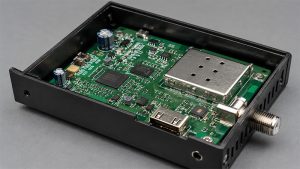
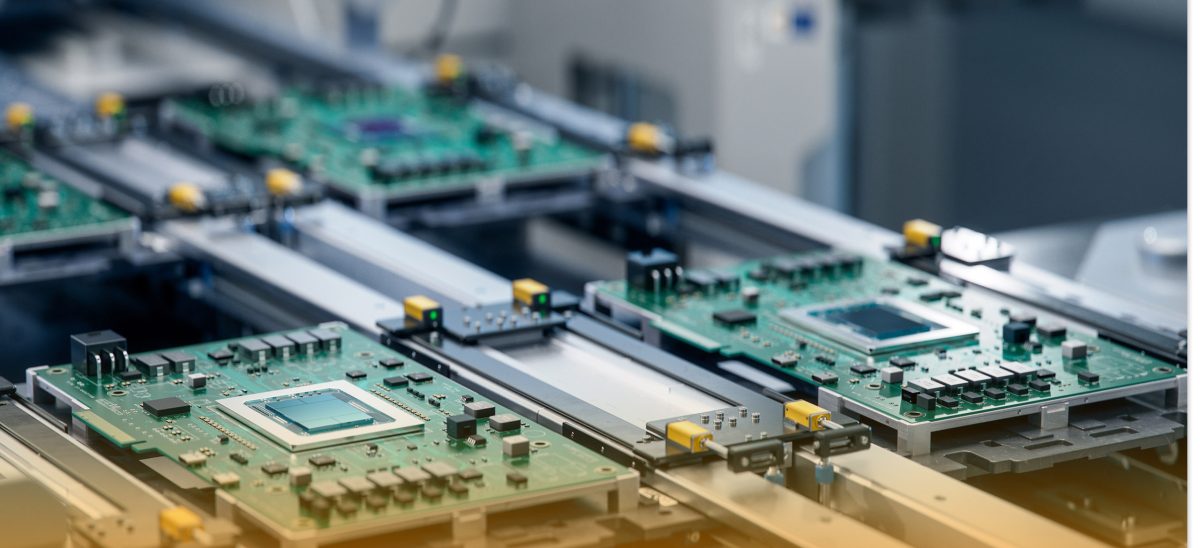
Circuit card assembly testing refers to the systematic inspection and validation process applied to a fully assembled PCB (commonly called a PCBA or CCA) to ensure it performs according to design specifications.
In simple terms, once components are mounted onto the board, testing verifies three critical aspects:
- Electrical connectivity
- Functional performance
- Manufacturing integrity
Unlike bare PCB inspection, circuit card assembly testing focuses on the interaction between components, solder joints, and circuit behavior under real conditions.
For engineers, this stage is not optional. It directly determines whether a product will operate reliably in the field or fail prematurely.
Why Is Circuit Card Assembly Testing Important?
A circuit card assembly without proper testing is essentially an unverified system. Even with precise SMT placement and controlled soldering processes, defects can still occur.
Testing plays several essential roles:
1. Early Defect Detection
Identifies issues such as cold solder joints, missing components, or incorrect polarity before shipment.
2. Cost Reduction
Fixing a defect during production is significantly cheaper than addressing field failures or recalls.
3. Reliability Assurance
Ensures the product meets performance expectations under real operating conditions.
4. Compliance and Certification
Industries such as medical, automotive, and aerospace require documented testing procedures for regulatory approval.
In high-reliability sectors, skipping testing is not just risky—it is unacceptable.
What Are the Main Types of Circuit Card Assembly Testing?
Different testing methods target different failure modes. A robust testing strategy often combines multiple techniques.
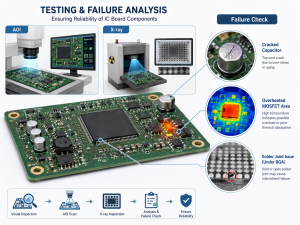
Automated Optical Inspection (AOI)
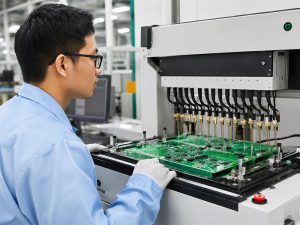
AOI uses high-resolution cameras to inspect the board visually after component placement and soldering.
What it detects:
- Missing or misplaced components
- Solder bridging
- Tombstoning
- Polarity errors
AOI is fast and ideal for high-volume production, but it cannot evaluate electrical performance.
In-Circuit Testing (ICT)
ICT is a fixture-based testing method that probes specific nodes on the board.
Capabilities:
- Measure resistance, capacitance, and voltage
- Detect open and short circuits
- Verify component values
It provides precise electrical validation but requires custom test fixtures, which increase upfront cost.
Flying Probe Testing
Flying probe testing performs similar checks as ICT but without dedicated fixtures.
Advantages:
- Suitable for prototypes and small batches
- Lower setup cost
Limitations:
- Slower than ICT
- Not ideal for high-volume production
Functional Testing (FCT)
Functional testing evaluates whether the assembled board performs its intended operation.
Example:
- Power supply output verification
- Signal processing validation
- Communication interface testing
This is the closest simulation to real-world usage and is critical for product validation.
X-ray Inspection
X-ray inspection is used to analyze hidden solder joints, especially in:
- BGA (Ball Grid Array) components
- QFN packages
- Multi-layer solder structures
It helps detect voids, insufficient solder, and internal defects that are invisible to AOI.
Burn-in Testing
Burn-in testing exposes the board to elevated stress conditions such as high temperature and voltage.
Purpose:
- Identify early-life failures
- Improve long-term reliability
This is commonly used in mission-critical applications like aerospace and medical electronics.
How Does Circuit Card Assembly Testing Work Step by Step?
A typical circuit card assembly with testing follows a structured workflow:
Step 1: Visual Inspection
Initial manual or AOI-based inspection after SMT placement.
Step 2: Electrical Testing (ICT/Flying Probe)
Verification of circuit integrity and component values.
Step 3: Functional Testing
Simulation of actual operating conditions.
Step 4: Environmental or Stress Testing
Optional stage for high-reliability applications.
Step 5: Final Quality Validation
Review and documentation before shipment.
Each step builds on the previous one, creating a layered quality assurance system.
What Defects Can Circuit Card Assembly Testing Detect?
Testing is designed to capture a wide range of manufacturing and design issues:
- Open circuits and short circuits
- Solder joint defects
- Incorrect or missing components
- Component orientation errors
- Signal integrity issues
- Power instability
- Thermal performance problems
In advanced applications, testing can also reveal marginal defects that only appear under load or temperature variation.
What Is the Difference Between Basic Testing and Advanced Testing?
Not all testing strategies are equal. The depth of testing depends on product requirements.
| Testing Level | Coverage | Typical Use Case |
|---|---|---|
| Basic Testing | Visual + AOI | Consumer electronics |
| Standard Testing | AOI + ICT | Industrial products |
| Advanced Testing | AOI + ICT + FCT + X-ray + Burn-in | Medical, aerospace |
For high-value or safety-critical systems, relying on basic testing alone introduces unnecessary risk.
How Does PCB Design Affect Circuit Card Assembly Testing?
Testing effectiveness is heavily influenced by design decisions made early in the PCB layout stage.
Key design considerations:
- Test Point Accessibility
Ensure sufficient test pads for ICT probing. - Component Spacing
Avoid overcrowding that prevents inspection. - Signal Routing
Design for measurable and stable signals. - DFM and DFT Integration
Design for Manufacturability and Design for Testability must be considered together.
A well-designed PCB simplifies testing, reduces cost, and improves yield.
What Are the Challenges in Circuit Card Assembly Testing?
Despite advanced tools, testing still faces practical challenges:
- High fixture cost for ICT
- Limited access in high-density designs
- Increasing complexity of modern electronics
- Time constraints in mass production
- Difficulty testing high-speed or RF circuits
Engineers must balance coverage, cost, and production efficiency when defining a testing strategy.
How to Choose a Reliable Circuit Card Assembly Testing Partner?
Selecting the right manufacturing partner is just as important as the testing methods themselves.
Look for:
- Integrated PCB + PCBA capabilities
- Multiple testing technologies (AOI, ICT, FCT, X-ray)
- Strong DFM and DFT engineering support
- Traceability systems for components and processes
- Experience in your target industry
A qualified partner does not just execute tests—they help optimize your entire product lifecycle.
Real-World Applications of Circuit Card Assembly Testing
Circuit card assembly testing is used across nearly every electronics sector:
- Medical Devices – Ensures patient safety and regulatory compliance
- Automotive Electronics – Validates reliability under vibration and temperature extremes
- Telecommunications – Maintains signal integrity and uptime
- Industrial Control Systems – Guarantees stable long-term operation
- Consumer Electronics – Reduces return rates and improves user experience
The higher the reliability requirement, the more comprehensive the testing approach.
In conclusion, circuit card assembly testing is not just a quality checkpoint—it is a strategic process that directly influences product reliability, cost efficiency, and market success.
From AOI to functional validation and stress testing, each method contributes to building confidence in the final product. Engineers who prioritize testing early in the design and manufacturing process consistently achieve better outcomes.
For companies developing high-performance electronics, investing in a comprehensive circuit card assembly with testing approach is one of the most effective ways to reduce risk and accelerate time to market. Pls feel free to contact us at sales@bestpcbs.com to discuss your circuit card assembly project requirements and get expert support.
FAQs About Circuit Card Assembly Testing
1. What is the difference between PCB testing and circuit card assembly testing?
PCB testing focuses on the bare board, while circuit card assembly testing evaluates the fully assembled product.
2. Is functional testing always required?
For simple products, it may not be mandatory, but for most commercial and industrial applications, it is highly recommended.
3. Can small batch production skip ICT?
Yes, flying probe testing is often used as a cost-effective alternative.
4. How much does circuit card assembly testing cost?
Costs vary depending on complexity, test coverage, and volume. ICT fixtures typically involve higher initial investment.
5. What is the most critical test method?
There is no single answer. Functional testing is often considered the most representative of real-world performance.