PCB manufacturing PCB manufacturing
Home > Blog

Single Sided PCB

April 10th, 2026

Single sided PCB is one of the most practical board types for straightforward electronic designs. With copper circuitry on only one side of the substrate, it offers a simple structure, stable performance, and competitive manufacturing cost for high-volume applications.

At EBest Circuit, we provide custom single sided PCB manufacturing for customers who need dependable quality, fast turnaround, and responsive engineering support. From prototype runs to volume production, our team helps you move from design to delivery with better efficiency and fewer production concerns.

What Is a Single Sided PCB?

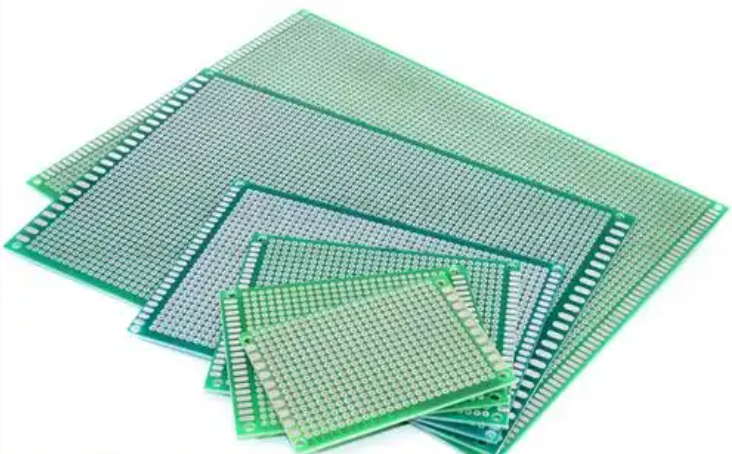
A single sided PCB, also called a 1 layer PCB, is a printed circuit board with conductive copper traces on only one side of the substrate. All components are mounted on the same side, and the electrical paths are routed through a single copper layer.

This is one of the most basic and widely used PCB structures in electronics. Because of its simple layout and efficient production process, a single sided PCB is often chosen for products that do not require complex routing or high component density.

In most cases, the base material is FR4 or another insulating substrate, with a copper foil laminated on one side. The copper is then etched to form the required circuit pattern.

Single sided PCBs are commonly used in:

  • LED lighting products
  • Power supplies
  • Consumer electronics
  • Calculators
  • Simple control boards
  • Household appliances

For straightforward electronic designs, this board type remains a practical and cost-efficient solution.
What Is a Single Sided PCB?

Single Sided PCB

Our Single Sided PCB Manufacturing Capabilities

At EBest Circuit, we support custom PCB manufacturing with a strong focus on manufacturability, quality consistency, and customer-specific requirements. Our single sided PCB service is suitable for both basic commercial products and more specialized industrial applications.

Available Options Include:

  • Custom board dimensions
  • FR4 and other substrate selections
  • Different copper thickness options
  • Multiple solder mask colors
  • Surface finishes based on assembly and performance needs
  • Prototype, small batch, and mass production support
  • Through-hole and SMT compatible designs

We review each project based on the intended application, assembly method, and electrical requirements, helping customers choose a more suitable board configuration before production starts.

How Is a Single Sided PCB Manufactured?

The manufacturing process of a single sided PCB is relatively direct, which is one reason it remains popular for high-volume production and cost-sensitive projects.

1. Circuit Design and Layout

The process starts with PCB design. Engineers create the circuit layout using CAD software, defining component placement, trace routing, hole positions, and board dimensions.

A clean layout is especially important in a 1 layer PCB because routing space is limited. Good design at this stage helps reduce manufacturing risk and improves final board performance.

2. Substrate Preparation

After the design is finalized, the insulating substrate is prepared and cut to the required board size. FR4 is one of the most common materials used, although other substrates may be selected depending on the application.

3. Copper Lamination

A thin copper layer is laminated onto one side of the substrate. This copper layer will later be patterned into the conductive traces needed for the circuit.

4. Photoresist Coating

A light-sensitive photoresist material is applied over the copper surface. This coating protects the intended circuit pattern during the etching stage.

5. Exposure and Development

The board is exposed to UV light through a film or mask containing the circuit image. After development, the unwanted photoresist is removed, leaving the desired copper pattern protected.

6. Etching

The exposed copper is removed through a chemical etching process. Only the protected copper remains, creating the final conductive pathways.

7. Solder Mask Application

A solder mask is applied over the board surface to protect the copper traces from oxidation and reduce the risk of solder bridging during assembly. Green is the most common color, though other colors are also available.

8. Component Assembly and Soldering

Electronic components are mounted in their designated positions. Depending on the design, this may involve SMT assembly or through-hole soldering.

9. Testing and Inspection

The finished board goes through electrical testing and quality inspection to confirm continuity, functionality, and manufacturing accuracy. This step helps ensure the PCB performs as designed before shipment.

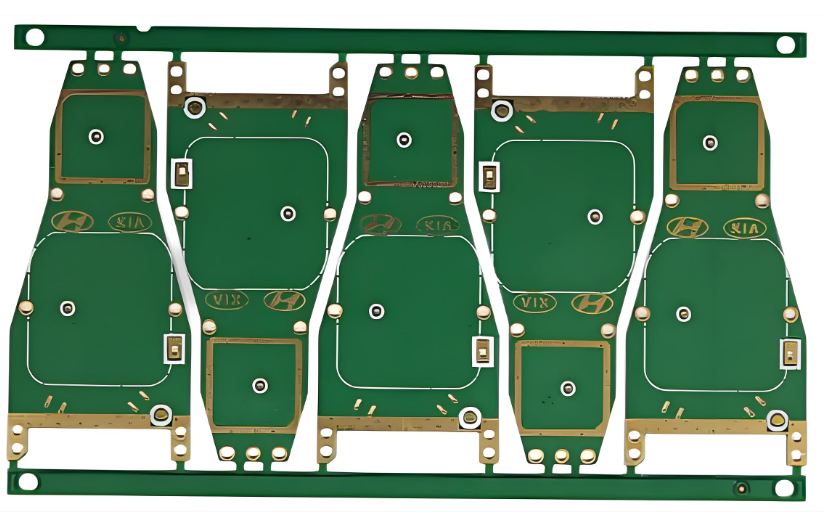
What Is a Double Sided PCB?

A double sided PCB has conductive copper layers on both sides of the substrate. This structure allows components and traces to be placed on the top and bottom surfaces, giving designers more routing flexibility.

To connect the two copper layers, the board uses plated through holes (PTH) or vias. These conductive holes allow electrical signals to move from one side of the board to the other.

Because of this added routing capability, double sided PCBs are suitable for more complex circuits than single sided boards. They are widely used in:

  • Automotive electronics
  • Communication equipment
  • Industrial control systems
  • Power electronics
  • Instrumentation devices

A double sided PCB is often the next step when a single-layer layout can no longer support the required circuit density.
What Is a Double Sided PCB?

What Is a Double Sided PCB?

Single Sided PCB vs Double Sided PCB

Choosing the right board type depends on circuit complexity, layout density, and budget expectations. For many buyers, the first comparison is between single sided PCB and double sided PCB.

ItemSingle Sided PCBDouble Sided PCB
Copper Layers12
Circuit ComplexityLowMedium
Routing FlexibilityLimitedHigher
Manufacturing CostLowerHigher
Production ProcessSimplerMore complex
Through Hole ConnectionNot required for interlayer routingRequired for layer connection
Typical ApplicationsSimple electronicsMore compact and functional products

If the layout can be completed on one layer without excessive jumpers or routing compromise, single sided PCB is usually the more economical option. When routing space becomes tight, double sided PCB offers greater design freedom.

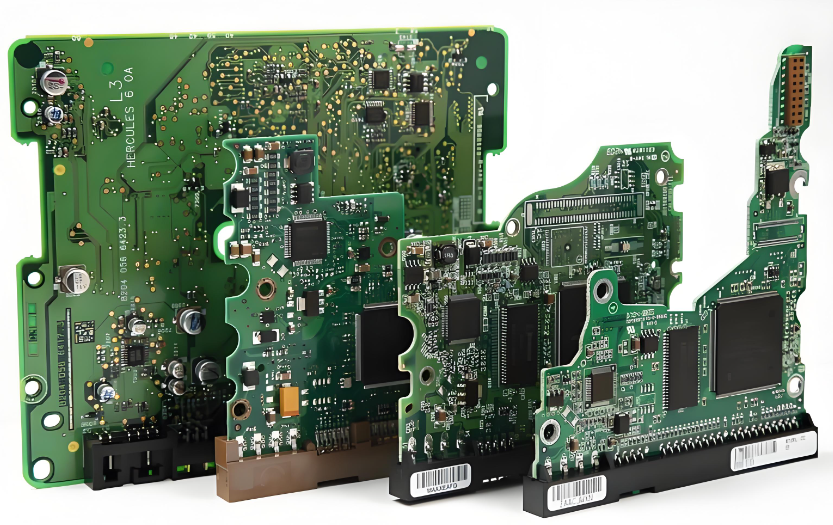
Single Sided PCB vs Multilayer PCB

A multilayer PCB includes three or more conductive layers and is built for more advanced circuits. Compared with a 1 layer PCB, it supports higher density routing, better signal management, and more compact product design. However, many products do not need that level of complexity.

A single sided PCB is usually the better fit when you need:

  • A cost-sensitive board solution
  • Simple electrical architecture
  • Faster production
  • Easier inspection and assembly
  • Stable supply for repetitive orders

A multilayer PCB is more appropriate when the project involves:

  • High-speed signal routing
  • Compact board area with dense components
  • Strict EMI or impedance requirements
  • More advanced system integration

The best choice is not always the most complex structure. It is the one that matches your product’s real design needs.
Single Sided PCB vs Multilayer PCB

Single Sided PCB vs Multilayer PCB

How Thick Is a Single Sided PCB?

The thickness of a single sided PCB depends on the application, mechanical requirements, and manufacturing specification. In many cases, the common finished thickness range is:

  • 0.6 mm
  • 0.8 mm
  • 1.0 mm
  • 1.2 mm
  • 1.6 mm

Among these, 0.8 mm to 1.0 mm is often selected for standard applications because it provides a good balance between strength, weight, and cost.

PCB thickness usually includes:

  • Base substrate thickness
  • Copper thickness
  • Solder mask and surface finish contribution

Thicker boards may be preferred when stronger mechanical support is needed. Thinner boards may be selected for compact or lightweight products.

Choosing the right board thickness should always be based on the end-use environment, assembly method, and overall design requirements.

How to Choose the Right PCB Type for Your Project?

Selecting between a single sided PCB, double sided PCB, and multilayer PCB depends on several practical factors.

Choose a Single Sided PCB If:

  • Your circuit is simple
  • Cost control is a priority
  • Component density is low
  • Fast fabrication is important
  • The product is mature and stable

Choose a Double Sided PCB If:

  • You need more routing space
  • Components must be mounted on both sides
  • A single-layer layout becomes too crowded
  • The product requires moderate complexity

Choose a Multilayer PCB If:

  • The design includes complex signal routing
  • Space is limited
  • High-speed or high-performance performance matters
  • EMI control and signal integrity are critical

A good PCB supplier can review your files and recommend the most suitable stack-up and board type before production begins.

Common Applications of Single Sided PCB

Single sided PCBs are still widely used across many industries because they serve a large number of standard electronic functions efficiently.

Typical applications include:

  • LED modules and lighting controls
  • AC/DC power boards
  • Battery management in simple devices
  • Consumer appliance boards
  • Small motor control circuits
  • Basic sensor and interface boards
  • Chargers and adapters
  • Industrial support electronics

For buyers looking for a dependable and cost-conscious board platform, this type of PCB remains highly relevant.

What Files Do We Need for Quotation?

To provide an accurate quotation and technical review, it is helpful to share:

  • Gerber files
  • Drill files
  • PCB specification details
  • Board size and thickness
  • Copper thickness requirement
  • Surface finish requirement
  • Quantity demand
  • Assembly files if PCBA is needed

If your files are still under preparation, you can also send the available design information first. Our team can help review the project and advise on the next step.

Get a Quote for Single Sided PCB Manufacturing

Looking for a reliable single sided PCB manufacturer for your next project?

EBest Circuit supports custom 1 layer PCB fabrication with responsive engineering service, practical lead times, and dependable production quality. Whether you need a quick prototype or a stable supplier for volume orders, we are ready to support your project.

Send us your design files and specifications for a fast review and quotation.

Email: sales@bestpcbs.com
Rigid Flex Circuit

April 10th, 2026

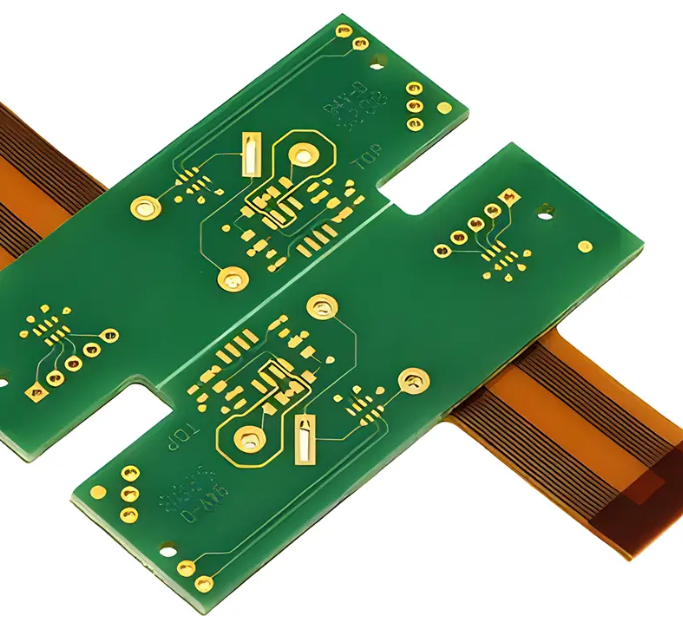
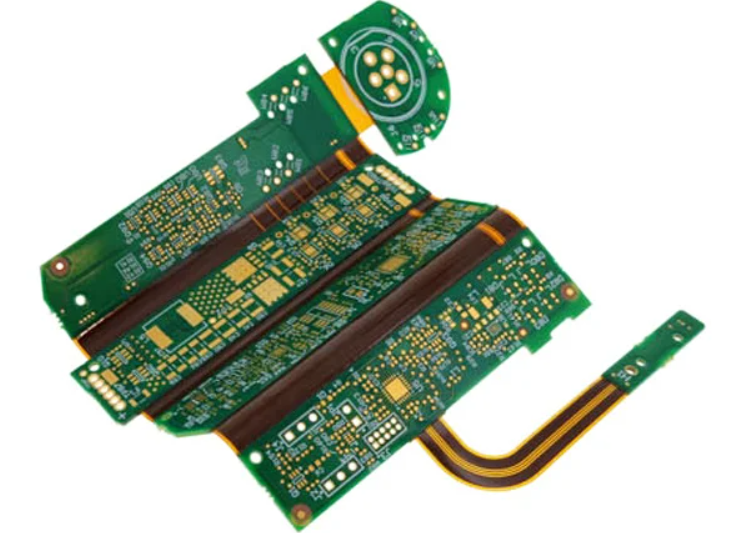
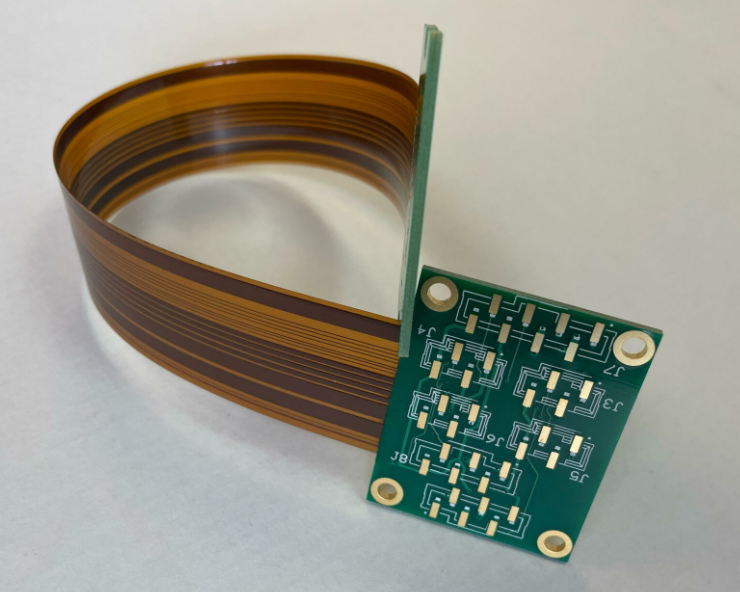
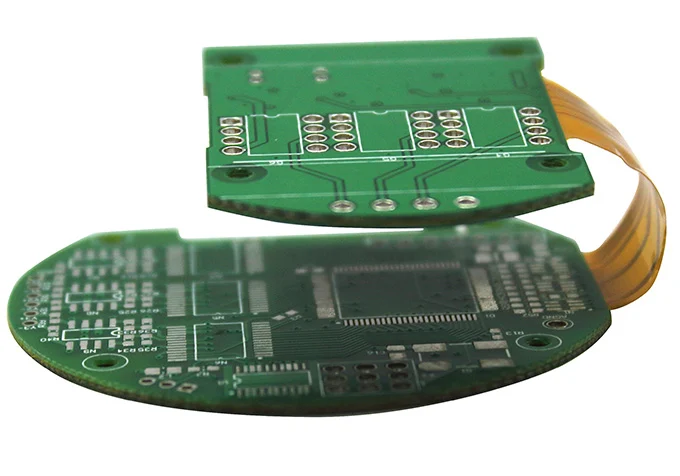
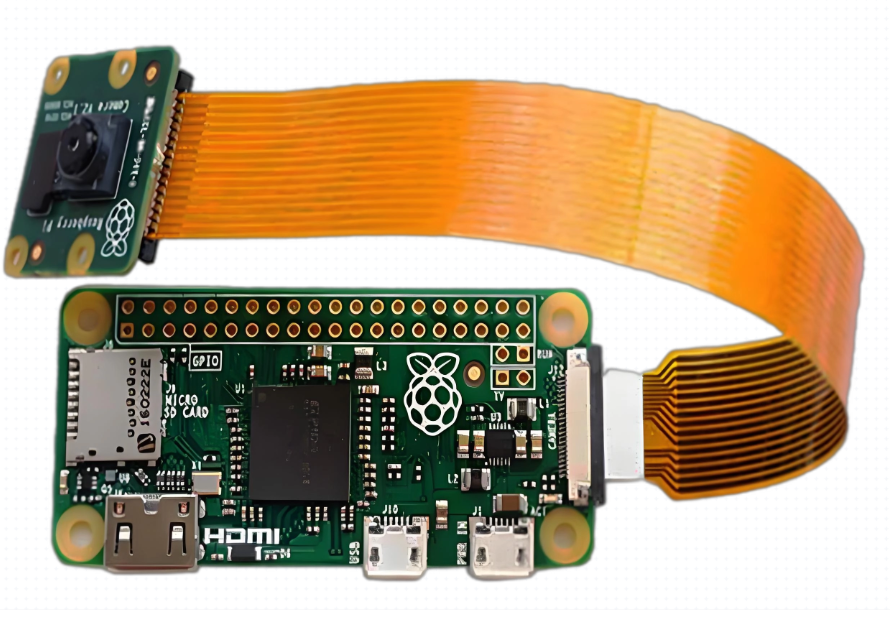
Rigid flex circuit is a PCB structure that combines rigid board sections and flexible circuit layers into one integrated unit. It offers the strength of rigid FR4 boards and the space-saving advantage of flexible circuits. Compared with a standard flex PCB with stiffeners, a true rigid flex board is built with plated through holes (PTH) that electrically connect the rigid and flexible layers inside the structure.

Rigid flex PCBs are widely used in medical devices, aerospace electronics, industrial controls, automotive systems, and advanced consumer products where stable performance and compact structure are required.

What Is a Rigid Flex Circuit?

A rigid flex circuit is a hybrid PCB made by laminating rigid substrates and flexible substrates into one board structure. The rigid sections support component mounting, while the flexible sections allow bending or folding during installation.

This design helps engineers reduce assembly size, simplify internal wiring, and improve product reliability. Instead of using multiple separate boards connected by cables or connectors, a rigid flex PCB combines these functions into one integrated interconnection platform.

Main Features of Rigid Flex PCB

  • Combines rigid and flexible substrates in one board
  • Uses plated through holes for internal electrical interconnection
  • Supports compact and three-dimensional assembly design
  • Reduces connectors, cables, and manual soldering points
  • Improves reliability in high-vibration and limited-space applications
Rigid Flex Circuit

Rigid Flex Circuit

Our Typical Project Cases

Case 1 – Medical Portable Monitoring Device Rigid Flex PCB

Application: Portable medical monitoring system

Board Type: 6 Layer Rigid Flex PCB

Material: FR4 + Polyimide

Surface Finish: ENIG

Key Requirement: Compact size, stable signal, high reliability

Medical Portable Monitoring Device Rigid Flex PCB

Case 2 – Automotive Camera Module Rigid Flex PCB

Application: Automotive camera system

Board Type: 4 Layer Rigid Flex PCB

Material: High Tg FR4 + Polyimide

Surface Finish: ENIG

Key Requirement: Vibration resistance, compact structure

Automotive Camera Module Rigid Flex PCB

Case 3 – Industrial Control System Rigid Flex PCB

Application: Industrial control module

Board Type: 8 Layer Rigid Flex PCB

Material: FR4 + Polyimide

Surface Finish: ENIG

Key Requirement: High density routing, stable interconnection

Industrial Control System Rigid Flex PCB

Case 4 – Consumer Electronics Folding Device Rigid Flex PCB

Application: Foldable consumer electronic device

Board Type: 4 Layer Rigid Flex PCB

Material: FR4 + Polyimide

Surface Finish: ENIG

Key Requirement: Repeated bending, compact layout

Consumer Electronics Folding Device Rigid Flex PCB

Rigid Flex PCB vs. Flex PCB with Stiffener

A rigid flex circuit is different from a flex PCB with FR4 or polyimide stiffeners.

In a flex PCB with stiffener, the stiffener is added only for local support. It is usually attached by adhesive and does not provide plated electrical interconnection between layers.

In a rigid flex PCB, the rigid and flexible sections are laminated into one complete structure, and the layers are electrically connected through plated through holes. This gives the board stronger structural integrity and better long-term reliability.

Key Difference

ItemRigid Flex CircuitFlex PCB with Stiffener
StructureIntegrated rigid and flex laminateFlex circuit with added support layer
Electrical InterconnectionYes, through plated holesNo plated interconnection through stiffener
Mechanical StabilityHigherModerate
Assembly IntegrationBetterLimited
Typical UseHigh-reliability compact productsLocal reinforcement only

Our Rigid Flex PCB Manufacturing Capabilities

Below is a typical reference table for custom rigid flex PCB manufacturing capability.

ParameterTypical Capability
Rigid Flex StructureSingle-sided, double-sided, multilayer rigid flex
Base MaterialsFR4 + Polyimide
Layer Count2L to 50L
Rigid Layer MaterialStandard FR4 / High Tg FR4
Flexible Layer MaterialPolyimide (PI)
Copper Thickness0.5 oz to 4 oz
Board ThicknessCustom build-up
Flex ThicknessBased on stack-up design
Min Line / Space4/4 mil
Min Drill Hole0.2 mm
Surface FinishENIG, HASL, OSP, Immersion Tin, Immersion Silver
Solder MaskGreen, Black, White, Red, Blue, Yellow
CoverlayYellow / Black / White
Stiffener OptionFR4, PI, Stainless Steel
Impedance ControlSupported
Via TypePTH, blind via, buried via, microvia based on design
Assembly ServicePCB fabrication + SMT assembly
Production TypePrototype to mass production
Assembly SupportSMT, THT, mixed technology assembly
File SupportGerber, drill file, stack-up, assembly drawing, BOM

Common Rigid Flex Stack-Ups

Rigid flex PCB structures are usually designed as multilayer constructions. The final stack-up depends on routing density, bend radius, thickness target, and mechanical design requirements.

4 Layer Rigid Flex

Option 1

  • 1L FR4
  • 2L FPC
  • 1L FR4

Option 2

  • 2L FR4
  • 2L FPC

6 Layer Rigid Flex

Option 1

  • 2L FR4
  • 2L FPC
  • 2L FR4

Option 2

  • 1L FR4
  • 4L FPC
  • 1L FR4

8 Layer Rigid Flex

Option 1

  • 2L FR4
  • 4L FPC
  • 2L FR4

Option 2

  • 1L FR4
  • 6L FPC
  • 1L FR4

Option 3

  • 2L FPC
  • 4L FR4
  • 2L FPC

Option 4

  • 1L FPC
  • 6L FR4
  • 1L FPC

Special Rigid Flex Structures for Custom Applications

Besides standard multilayer designs, some projects require custom rigid flex configurations for special packaging or functional needs.

2 Layer Rigid Flex

  • 1L FR4
  • 1L FPC

3 Layer Rigid Flex

Option 1

  • 1L FR4
  • 1L FPC
  • 1L FR4

Option 2

  • 1L FPC
  • 1L FR4
  • 1L FPC

These special designs are often used in compact electronic modules where a simple but integrated board structure is needed.

Design and Manufacturing Considerations

A reliable rigid flex PCB depends not only on layout, but also on manufacturability planning. Early engineering review can help avoid cracking, delamination, poor bend performance, and assembly issues.

Key Points to Consider

  • Stack-up design between rigid and flex areas
  • Bend radius and bending direction
  • Copper balancing in flex zones
  • Coverlay opening design
  • Stiffener placement
  • Hole location near bend areas
  • Final thickness control
  • Component placement on rigid sections only
  • Impedance and signal path planning for high-speed designs

A good rigid flex supplier should review these details before production, not after problems appear.

Typical Applications of Rigid Flex PCB

  • Medical monitoring and portable diagnostic devices
  • Aerospace and defense electronics
  • Industrial control systems
  • Automotive electronic modules
  • Cameras and optical devices
  • Consumer electronics with compact internal layouts

Why Work With EBest Circuit (Best Technology) for Rigid Flex PCB?

EBest Circuit provides custom rigid flex PCB manufacturing for projects that require compact structure, stable interconnection, and reliable quality. With over 20 years of PCB experience, we support customers from design review to fabrication and assembly.

What We Offer

  • Custom rigid flex PCB fabrication
  • Stack-up review and DFM support
  • PCB and PCBA one-stop service
  • Prototype and volume production support
  • Material and process suggestion based on application
  • Fast response for RFQ and engineering questions

Our engineering team understands the practical challenges behind rigid flex structures and helps customers improve both design feasibility and production stability.

What Files Are Recommended for RFQ?

To speed up quotation and technical review, it is helpful to provide:

  • Gerber files
  • Drill files
  • Stack-up information
  • Fabrication drawing
  • Assembly drawing
  • BOM list
  • Pick and place file if assembly is needed

Clear documentation helps reduce back-and-forth communication and improves quote accuracy.

FAQs

1. What is the minimum bend radius for rigid flex PCB?

The bend radius depends on the flex thickness and copper structure. A common guideline is:

  • Single-layer flex: 6–10 × thickness
  • Double-layer flex: 10–15 × thickness
  • Multilayer flex: 15–20 × thickness

Proper bend radius design is critical to prevent copper cracking or delamination during use.

2. Can components be placed on the flexible area?

In most cases, components should be mounted only on the rigid sections.

Placing components on flex areas is possible in special designs, but it requires careful reinforcement, controlled bending conditions, and additional manufacturing considerations. For standard designs, keeping components on rigid areas improves reliability and assembly stability.

3. What materials are used in rigid flex PCB?

Rigid flex circuits typically use:

  • Rigid layers: FR4 or high Tg FR4
  • Flexible layers: Polyimide (PI)
  • Coverlay: Polyimide film with adhesive
  • Stiffeners: FR4, PI, or stainless steel

Material selection depends on temperature requirements, bending cycles, and electrical performance.

4. How many bending cycles can a rigid flex PCB withstand?

The bending life depends on the design and materials. With proper design, rigid flex circuits can withstand thousands to millions of bending cycles.

Key factors include:

  • Copper thickness
  • Flex layer structure
  • Bend radius
  • Material quality

Engineering optimization is important for applications requiring repeated movement.

Get a Quote for Your Rigid Flex Circuit Project

Looking for a reliable rigid flex PCB manufacturer for your next project? Best Technology can support your design with engineering review, custom stack-up guidance, and stable production service.

Send your Gerber files, stack-up details, or project requirements to sales@bestpcbs.com for quotation and technical support.

RF Board

April 10th, 2026

What Is an RF PCB?

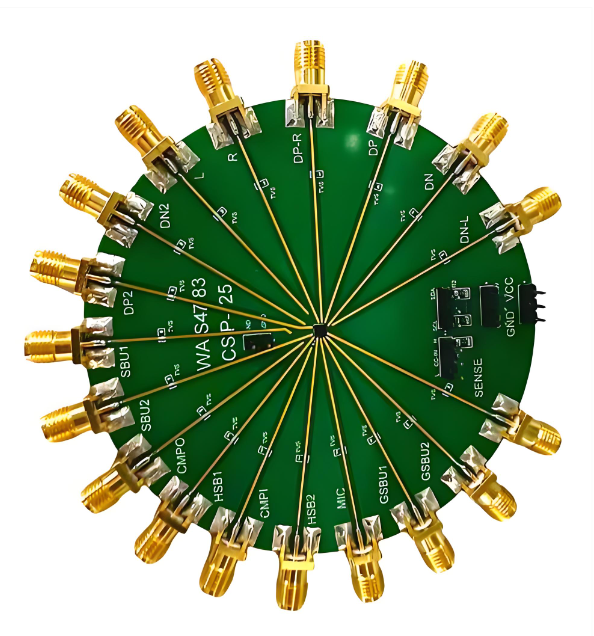
RF board, or Radio Frequency Printed Circuit Board, is engineered for circuits operating at high frequencies where signal integrity becomes highly sensitive to material properties. Typical RF designs work in the range of 300 MHz to 3 GHz, and many advanced systems extend far beyond this.

At these frequencies, standard FR4 materials often fail to maintain stable dielectric performance and low signal loss. As a result, specialized high frequency laminates are required. RF PCBs are therefore built using materials with low dielectric loss (Df) and stable dielectric constant (Dk) to ensure consistent signal transmission.

RF board is ideal for applications with higher operating frequency requirements. Right now, we normally use following material:

These boards are widely used in applications such as:

  • Wireless communication systems
  • RF antennas and modules
  • Automotive radar (ADAS)
  • Satellite and aerospace electronics
  • Microwave devices
  • IoT and high-speed signal systems

Why Use RF PCB Instead of Standard FR4?

FR4 is cost-effective and widely used, but its dielectric properties vary significantly at high frequencies. This leads to signal loss, impedance instability, and reduced system reliability in RF designs.

RF PCB materials solve these issues by offering:

  • Lower signal loss at high frequency
  • More stable dielectric constant across frequency range
  • Better impedance control
  • Reduced signal distortion
  • Improved phase consistency

What Materials Are Used in RF PCB?

Material selection is the core of RF PCB performance. Different applications require different dielectric properties and processing characteristics.

Common RF PCB Materials

1. Rogers Laminates

Widely used in RF and microwave circuits due to balanced performance and manufacturability.

Typical grades include:

  • RO4003C
  • RO4350B
  • RO4233

These materials offer:

  • Stable dielectric constant
  • Low loss tangent
  • Good thermal reliability

2. PTFE-Based Materials (Teflon)

Used in more demanding RF designs where ultra-low loss is critical.

Advantages:

  • Extremely low dielectric loss
  • Excellent high frequency performance

Considerations:

  • More complex processing
  • Higher manufacturing cost

Copper Thickness Range

  • Standard: 1/4 oz to 2 oz
  • Custom: based on current load and thermal design


Rogers is often the practical choice for most RF designs, while PTFE is used when performance requirements are more demanding.

Rogers Laminate Material Parameters

Choosing the right Rogers material directly affects signal integrity, impedance stability, and insertion loss. Below is a comparison of commonly used Rogers laminates for RF PCB applications.

MaterialDielectric Constant (Dk @10GHz)Loss Tangent (Df @10GHz)Thermal Conductivity (W/m·K)Typical Application
RO4350B3.48 ±0.050.00370.62General RF, antennas, automotive radar
RO4003C3.55 ±0.050.00270.71RF communication, microwave circuits
RO42333.30 ±0.050.00250.65High frequency, low loss applications
RT58802.20 ±0.020.00090.20Ultra-low loss, aerospace, high-end RF
RO30033.00 ±0.040.00130.50High stability circuits, precision RF
RO301010.2 ±0.250.00230.95High dielectric designs, compact circuits

RF Board Capability

  • Base material: Rogers/Telfon
  • Board Thickness: 0.5mm~3.0mm(0.02″~0.12″)
  • Copper thickness: 0.5 OZ, 1.0 OZ, 2.0 OZ, 3.0 OZ
  • Outline: Routing, punching, V-Cut
  • Soldermask: White/Black/Blue/Green/Red Oil
  • Legend/Silkscreen Color: Black/White
  • Surface finishing: Immersion Gold, HASL, OSP
  • Max Panel size: 600*500mm(23.62″*19.68″)
  • Packing: Vacuum/Plastic bag
  • Samples L/T: 7~9 Days
  • MP L/T: 8~10 Days

RF PCB FAQs

1. What frequency requires RF PCB instead of FR4?

Typically, designs above 1 GHz or requiring strict impedance control should consider RF materials. Lower frequencies may still use FR4 depending on performance tolerance.

2. Is Rogers better than FR4?

For high frequency applications, yes. Rogers offers lower loss and more stable dielectric properties, which improves signal integrity.

3. Why is PTFE PCB more expensive?

PTFE materials are harder to process and require specialized manufacturing steps, which increases production cost.

4. Can RF PCB be used for mixed signal designs?

Yes. Hybrid stackups combining RF materials and FR4 are commonly used to balance performance and cost.

Start Your RF PCB Project Today

If you are designing RF or microwave circuits, choosing the right PCB is critical to performance.

At Best Technology, we combine material expertise, process control, and engineering support to deliver reliable RF PCB solutions.

📩 Send your design files to: sales@bestpcbs.com

Our engineering team will review your project and provide a fast quotation with optimization suggestions.

High Tg PCB

April 10th, 2026

High Tg PCB is designed for electronic products that need better thermal stability, stronger dimensional control, and more reliable performance under heat. Compared with standard FR4 materials, high Tg PCB laminates maintain better mechanical integrity during elevated operating temperatures, repeated soldering cycles, and demanding thermal environments.

At EBest Circuit, we manufacture custom high Tg FR4 PCBs for customers in automotive, industrial control, LED lighting, power electronics, telecom, and other heat-sensitive applications.

Send your Gerber files, stackup, quantity, and material requirements to sales@bestpcbs.com for a fast quotation and engineering review.

What Is High Tg PCB?

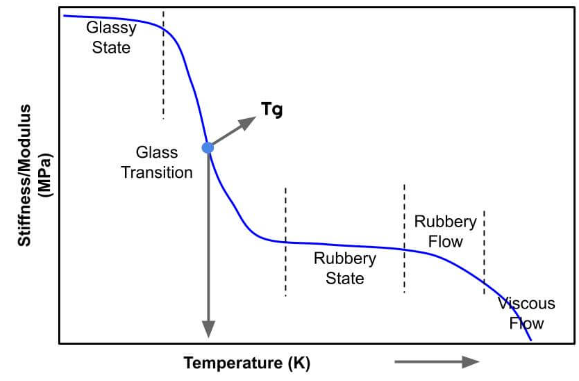
Tg stands for Glass Transition Temperature. It is the temperature at which the PCB base material changes from a hard, glass-like state to a softer, rubber-like state. A high Tg PCB typically uses laminate materials with a Tg above 170°C, making it more suitable for thermal-intensive applications than standard FR4.

This type of PCB is widely used in products where heat is part of the design challenge, not just an occasional condition. That includes automotive electronics, industrial systems, LED modules, power conversion devices, telecom equipment, and other assemblies exposed to repeated or continuous thermal stress.

What Is High Tg PCB?

Why Choose High Tg PCB?

When the operating temperature of a PCB rises beyond the normal range, standard FR4 may no longer provide enough stability. Once the board temperature exceeds its Tg point, the substrate begins to soften, which can increase expansion, reduce dimensional stability, and affect long-term reliability. High Tg PCB materials help reduce these risks by offering better resistance to thermal stress.

A high Tg board is commonly selected when your project requires:

  • Better heat resistance during operation
  • Improved stability during lead-free soldering
  • Stronger resistance to thermal cycling
  • Lower risk of warpage in multilayer structures
  • More reliable performance in demanding environments

In practical design, the Tg value of the PCB material should usually remain above the real working temperature to give the product a better reliability margin.

Standard FR4 vs High Tg FR4

Choosing between standard FR4 and high Tg FR4 depends on the actual thermal load of the product, not only on board cost.

Material GradeTypical Tg ValueTypical Use
Standard FR4130–140°CGeneral electronics
Mid Tg FR4Around 150°CModerate thermal demand
High Tg FR4Around 170°C or aboveHigh-temperature and high-reliability designs

High Tg FR4 is often preferred when the design involves multiple lamination cycles, multilayer structures, higher soldering temperatures, stronger thermal stress during assembly, or elevated working temperatures during long-term operation.

Key Benefits of High Tg PCB

Better Thermal Stability

High Tg materials can withstand higher temperatures without softening as quickly as standard materials. This helps the board remain more stable during operation and assembly.

Lower CTE

A lower coefficient of thermal expansion helps reduce stress on copper circuits, plated holes, solder joints, and mounted components.

Improved Mechanical Strength

High Tg laminates offer better dimensional stability under thermal cycling, which is important in products exposed to repeated heating and cooling.

Enhanced Reliability

These materials are widely used in industrial, automotive, aerospace, and other harsh-environment electronics because they support more stable long-term performance.

Better Dimensional Stability

High Tg materials show smaller dimensional change under high temperature and humidity, which helps reduce manufacturing and reliability issues caused by environmental variation.

Key Benefits of High Tg PCB

High Tg PCB Materials We Can Support

Different projects require different material systems. We can support a wide range of high Tg laminate options based on your application, stackup, and reliability target.

For standard high Tg FR4 projects, S1170 is often used when the customer does not specify a laminate brand.

What Parameters Matter in a High Tg FR4 Datasheet?

When selecting a high Tg PCB material, engineers and buyers should review more than just one Tg number. Important parameters include:

  • Tg value
  • CTE
  • Dielectric constant
  • Flammability rating, typically UL94 V-0
  • Thermal stability in actual application conditions

These values help determine whether the material fits the electrical, mechanical, and thermal requirements of the final product.

For specific datasheet of high Tg materials, please download:

  • Download (PDF) S1170 Download (PDF) S1000-2 Download (PDF) FR406
  • Download (PDF) FR408
  • Download (PDF) IS410
  • Download (PDF) DS370HR
  • Download (PDF) N4000-6
  • Download (PDF) N4000-11
  • Download (PDF) Rogers 4350B

Tg vs Td: What Is the Difference?

Tg is the temperature where the PCB material begins to soften and lose rigidity. It mainly affects mechanical behavior and dimensional stability.

Tg vs Td: What Is the Difference?

Td, or decomposition temperature, is the point where the material starts to chemically break down. This is irreversible and can cause permanent board failure.

PropertyTgTd
Full NameGlass Transition TemperatureDecomposition Temperature
Main EffectMechanical softeningChemical breakdown
ReversibleGenerally reversible after coolingNot reversible
Engineering FocusDimensional stabilityMaterial survival limit

Typical Applications of High Tg PCB

High Tg PCB is widely used in applications where thermal reliability matters more than using the lowest-cost standard laminate.

Automotive Electronics

Suitable for control units, lighting electronics, and other systems exposed to elevated temperatures and repeated thermal cycling.

Industrial Controls

Supports stable performance in control systems that operate in demanding factory or field environments.

LED Lighting

Offers better thermal tolerance than standard FR4 in LED modules and lighting drivers with higher heat dissipation needs.

Power Electronics

Useful in designs that handle higher currents, power conversion loads, and continuous heat generation.

Telecom Equipment

Supports more reliable operation in communication systems where thermal stability can affect performance consistency.

Aerospace and Harsh Environments

Applicable in electronics that require stronger reliability under wide temperature swings and long service cycles.

Our High Tg PCB Manufacturing Capabilities

ItemCapability
Product TypeHigh Tg FR4 PCB, multilayer PCB, custom thermal-stable PCB
Material OptionsShengyi, Isola, Hitachi, Nelco, Rogers and other specified brands
Order VolumePrototype, pilot run, and mass production
Support ServiceEngineering review, material selection support, DFM assistance
Application CoverageAutomotive, industrial, LED, telecom, power electronics, aerospace-related projects
Supply SupportChina and Vietnam factory support for global customers

When Should You Consider Ceramic Instead?

High Tg FR4 is a strong upgrade over normal FR4, but it is not the right answer for every thermal design. If the board working temperature rises far beyond the normal range of high Tg FR4, such as in very high-temperature power or special industrial environments, ceramic PCB may be the better solution.

High Tg PCB is stronger than standard FR4, more cost-effective than ceramic in many applications, and suitable for a wide range of industrial and commercial electronics.

Why Work With EBest Circuit for High Tg PCB?

  • 20+ years of PCB manufacturing experience
  • Custom high Tg PCB support for different industries and reliability levels
  • Quick-turn prototype service
  • Flexible order quantities
  • Engineering support for material and stackup review
  • Strict quality control during fabrication
  • China and Vietnam factory support
  • Convenient export quotation support for overseas customers

For OEMs, EMS providers, and purchasing teams, a reliable high Tg PCB supplier should do more than fabricate the board. The supplier should also help confirm whether the selected material, structure, and production route truly match the end-use temperature and reliability target.

Custom High Tg PCB Services

We can support high Tg PCB projects for:

  • Prototype builds
  • Pilot runs
  • Mass production
  • Multilayer high Tg FR4 boards
  • High-temperature industrial control boards
  • Automotive-grade thermal-stable PCB projects
  • LED and power electronics boards
  • Application-specific material selection support

If your project already has Gerber files, stackup details, and material requirements, we can quote directly. If not, our engineering team can help review the design and recommend a suitable high Tg option based on temperature, process, and cost targets.

FAQs About High Tg PCB

What is considered a high Tg PCB material?

In most PCB applications, materials with a Tg around 170°C or higher are considered high Tg materials.

Is high Tg FR4 better than standard FR4?

For higher-temperature or high-reliability applications, yes. High Tg FR4 offers better thermal stability and dimensional control than standard FR4.

Can high Tg PCB be used for LED applications?

Yes. High Tg PCB is often used in LED products that generate more heat than general electronic assemblies.

What is the difference between Tg and Td?

Tg is the temperature where the material softens. Td is the temperature where the material starts to decompose chemically.

Is high Tg PCB suitable for multilayer boards?

Yes. High Tg materials are often selected for multilayer boards because they provide better dimensional stability during lamination and soldering processes.

Can you support prototype and mass production orders?

Yes. EBest Circuit supports prototype, pilot, and mass production orders for custom high Tg PCB projects.

Request a Quote for High Tg PCB

Looking for a dependable high Tg PCB manufacturer for your next project?

Send us your Gerber files, stackup, quantity, copper thickness, board thickness, material preference, and application requirements. Our engineering team will review your project and recommend a suitable high Tg PCB solution for both prototype and production.

Email: sales@bestpcbs.com
Heavy Copper PCB

April 10th, 2026

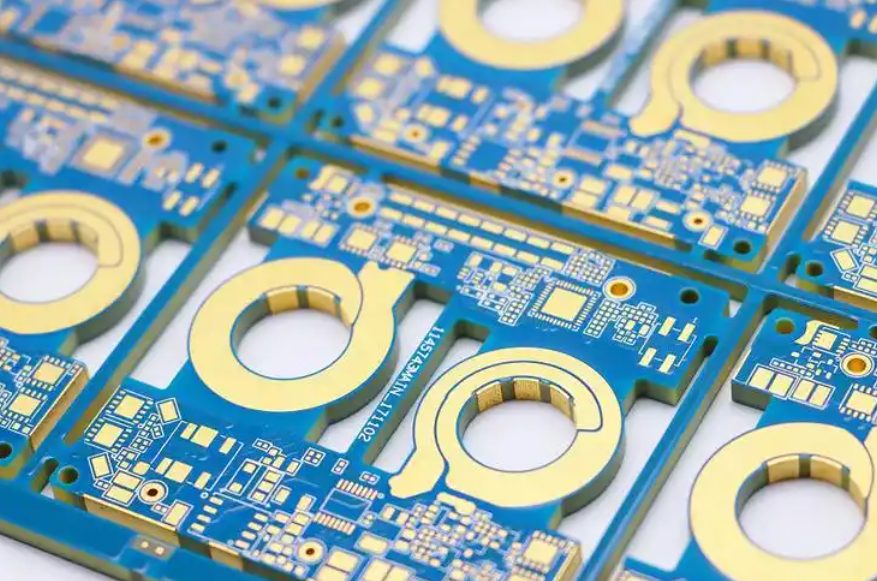
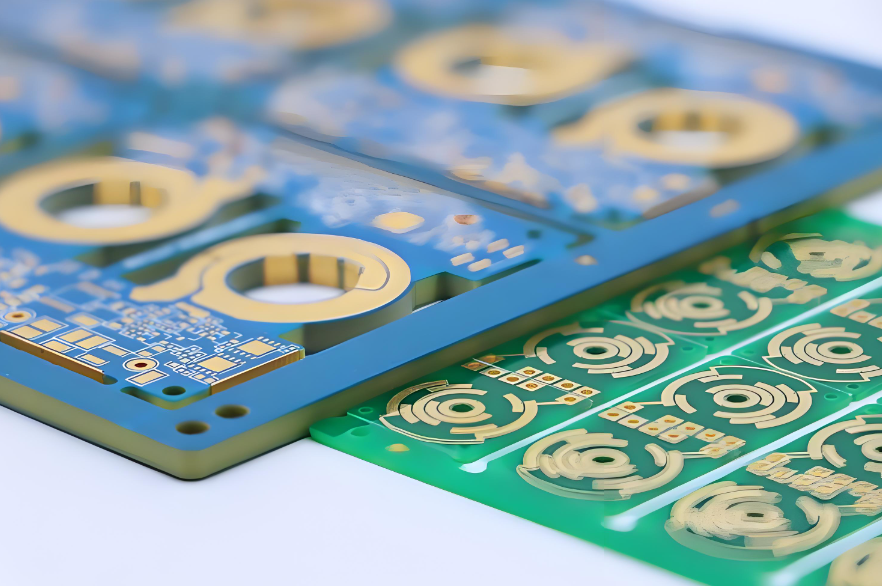
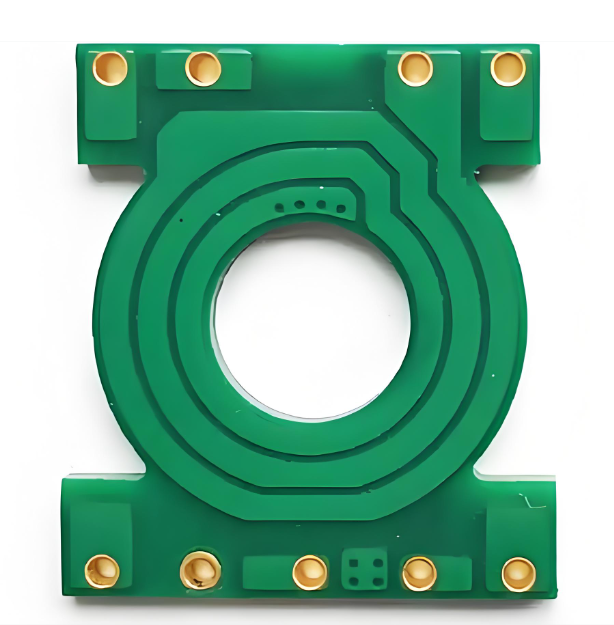
Heavy copper PCB is designed for applications that need higher current capacity, stronger thermal performance, and better mechanical reliability than standard circuit boards can offer. It is widely used in power electronics, industrial control, automotive systems, energy equipment, and other high-load environments.

At EBest Circuit, we manufacture heavy copper boards with stable process control, practical DFM support, and flexible build options for both prototype and production orders.

What Is a Heavy Copper PCB?

A heavy copper PCB is a printed circuit board built with much thicker copper conductors than a conventional PCB. In the PCB industry, the term usually refers to boards with 3 oz/ft² to 10 oz/ft² copper on the inner layers, outer layers, or both. For more demanding power applications, extreme heavy copper PCB can reach 20 oz/ft² to 200 oz/ft².

These boards are built to handle:

  • Higher current loads
  • Better heat transfer
  • Improved resistance to thermal stress
  • Longer service life in harsh operating conditions

Compared with standard copper boards, heavy copper PCBs are better suited for power conversion, current distribution, and heat-intensive designs.

Heavy Copper PCB

Heavy Copper PCB

Why Choose Heavy Copper PCB?

When a design involves high current, high power density, or repeated thermal cycling, standard copper thickness may no longer be enough. Heavy copper PCB provides a more reliable platform for these conditions. Below are the key benefits of using heavy copper PCB:

Higher Current Carrying Capacity

Thicker copper traces can carry more current safely and reduce the risk of overheating.

Better Thermal Management

Heavy copper helps spread and transfer heat more effectively, which supports stable performance in power circuits.

Improved Mechanical Strength

The copper structure adds durability and helps the board withstand demanding operating environments.

Better Reliability in Harsh Conditions

Heavy copper boards perform well in applications exposed to vibration, thermal shock, and continuous electrical load.

Fewer Design Limits for Power Routing

For power electronics, thicker copper offers more flexibility when routing high-current paths.

Heavy Copper PCB

Heavy Copper PCB

Typical Applications of Heavy Copper PCB

Heavy copper PCBs are widely used in products where electrical load and heat generation are significant.

Common Applications Include:

  • Power distribution systems
  • Power converters
  • Planar transformers
  • Industrial control equipment
  • Motor drives
  • Automotive power electronics
  • Solar and renewable energy systems
  • Battery charging and energy storage equipment
  • Welding equipment
  • Heat dissipation modules

If your project needs stable current flow and efficient heat handling, heavy copper PCB is often the more suitable choice.

Heavy Copper PCB Design Considerations

Heavy copper board design is different from standard PCB design. Thicker copper affects current capacity, thermal behavior, trace geometry, and manufacturability. A good design should balance electrical performance with production feasibility.

1. Current Carrying Requirements

The minimum conductor width and copper thickness should be based on:

  • Required current
  • Acceptable temperature rise
  • Board layout space
  • Heat dissipation conditions

Wider traces and thicker copper improve current handling, but they also affect routing density and process difficulty.

2. Copper Profile and Manufacturing Impact

Heavy copper traces may not form a perfect rectangular shape after fabrication. The final conductor profile depends on plating and etching methods. This should be considered in spacing and tolerance planning.

3. Board Thickness

Heavy copper layers can increase total PCB thickness. This may affect:

  • Mechanical assembly
  • Connector matching
  • Drilling process
  • Stack-up design
  • Final product dimensions

4. Preferred Fabrication Method

For many heavy copper boards, additive plating processes are preferred over subtractive etching. Additive processing offers better copper build-up control, though it usually increases fabrication cost.

5. Tolerance

Typical tolerance for conductor width, spacing, and thickness is around ±20%, although tighter control may be achievable depending on the board structure and manufacturing process.

Pls visit heavy copper PCB design guide for more information about design guide, or visit heavy copper PCB FAQ to make your heavy copper PCB design meet DFM better.

Our Heavy Copper PCB Capabilities

We support heavy copper PCB manufacturing for a wide range of power and thermal applications.

ItemCapability
Base MaterialFR4 / Aluminum
Copper Thickness4 oz to 10 oz
Extreme Heavy Copper20 oz to 200 oz
Board OutlineRouting, Punching, V-Cut
Solder Mask ColorWhite, Black, Blue, Green, Red
Surface FinishImmersion Gold, HASL, OSP
Max Panel Size580 × 480 mm (22.8″ × 18.9″)

If your project has special stack-up, thermal, or current requirements, we can review the design and suggest a more manufacturable solution.

How We Support Heavy Copper PCB Projects?

For heavy copper PCB, engineering review is often as important as manufacturing itself. We work with customers on the practical points that affect both performance and yield.

Our support can include:

  • Copper thickness selection
  • Trace width and spacing review
  • Stack-up recommendation
  • Thermal structure assessment
  • Panelization suggestion
  • DFM optimization before production
  • Process evaluation for extreme heavy copper requirements

Heavy Copper PCB FAQ

1. What copper thickness is considered heavy copper PCB?

In general, heavy copper PCB refers to boards with copper thickness from 3 oz to 10 oz on inner or outer layers. Boards above this range, such as 20 oz to 200 oz, are often called extreme heavy copper PCB.

2. What is the main advantage of heavy copper PCB?

The main advantage is the ability to handle higher current and better heat dissipation compared with standard copper PCBs.

3. Can heavy copper PCB use aluminum base material?

Yes. Heavy copper PCB can be built on FR4 or aluminum base material, depending on the thermal and structural needs of the application.

4. Is heavy copper PCB more difficult to manufacture?

Yes. Thicker copper increases the complexity of plating, etching, drilling, and tolerance control. That is why DFM review is important before production.

5. What industries use heavy copper PCB most often?

Heavy copper PCB is commonly used in industrial control, automotive electronics, renewable energy, power conversion, and power distribution systems.

Request a Quote for Heavy Copper PCB

Looking for a reliable heavy copper PCB manufacturer?

EBest Circuit supports your project from design review to mass production with engineering-driven solutions and stable manufacturing capability.

Send us your Gerber files, stack-up, and technical requirements today.

📧 Email: sales@bestpcbs.com
📞 Tel: +86-755-2909-1601

Extra Thin PCB

April 10th, 2026

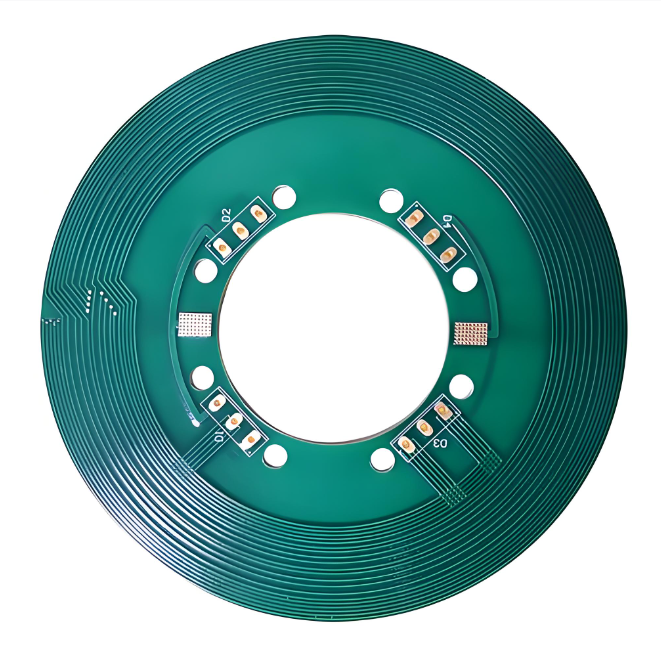
What Is an Extra Thin PCB?

An extra thin PCB is a printed circuit board made with a much thinner profile than standard FR4 boards. In most applications, conventional PCB thickness ranges from 1.0 mm to 2.0 mm. By contrast, extra thin PCBs are typically manufactured in thicknesses such as 0.30 mm, 0.25 mm, 0.20 mm, and even 0.15 mm.

These boards are often called thin PCB, ultra thin PCB, or very thin PCB. They are designed for products where space is limited, weight matters, or a slimmer structure is required for the final assembly.

As electronic devices continue to become smaller, lighter, and more portable, extra thin PCB is being used in a growing number of compact electronic products.

Why Are Extra Thin PCBs Used?

Extra thin PCBs are widely used when a design needs to reduce overall thickness without switching to a flexible circuit. In many cases, they offer a practical middle ground between standard rigid PCBs and FPCs.

Compared with regular FR4 boards, extra thin PCBs help:

  • save installation space
  • reduce product weight
  • support compact internal layouts
  • improve product portability
  • lower cost compared with some flexible circuit solutions

Extra thin FR4 PCB can also provide a certain degree of bendability during assembly, especially in very low thickness designs. While it is not the same as a flexible PCB, it can still be useful in products that need a slim and semi-rigid structure.

What Thickness Can Extra Thin PCB Reach?

At EBest Circuit, extra thin PCB can be produced in the following common thicknesses:

  • 0.15 mm
  • 0.20 mm
  • 0.25 mm
  • 0.30 mm

These boards can be made with or without solder mask, depending on the application requirement. Available copper thickness options include:

  • 0.5 oz
  • 1 oz
  • 2 oz
  • 3 oz

The actual structure will depend on the layer count, copper requirement, mechanical strength, and final product usage.

Extra Thin PCB vs Flexible PCB

Extra thin PCB and flexible PCB may look similar in very slim designs, but they are not the same product.

Extra thin PCB is still based on FR4 material, which keeps the board rigid or semi-rigid.
Flexible PCB, on the other hand, is made from flexible substrates such as polyimide and is designed for repeated bending.

Here is the practical difference:

ItemExtra Thin PCBFlexible PCB
Base MaterialFR4Polyimide / Flex material
StructureRigid or semi-rigidFlexible
Typical Minimum Thickness0.10–0.15 mm0.06 mm for 1L FPC
BendabilityLimitedExcellent
CostUsually lowerUsually higher
Typical UseCards, compact modules, slim devicesFolding, dynamic bending, cable replacement

If your board thickness needs to go below 0.10 mm, a flexible circuit is usually the better option.

Where Are Extra Thin PCBs Commonly Used?

Extra thin PCBs are commonly used in compact electronic products where traditional PCB thickness is too large for the mechanical design.

Typical applications include:

  • SIM cards
  • TF cards
  • NFC devices
  • mobile phone charging modules
  • wearable electronics
  • sensor cards
  • drawing boards
  • metro tokens or smart transit devices

Extra Thin PCB Manufacturing Capability

EBest Circuit provides extra thin PCB manufacturing with stable process control and flexible specification support.

Manufacturing Capability Table

ItemCapability
Base MaterialFR4 Tg130 / Tg170 / Tg180
Board Thickness0.10 mm – 0.30 mm
Copper Thickness0.5 oz / 1 oz / 2 oz / 3 oz
Surface FinishENIG, OSP, ENEPIG, HAL-LF
Solder MaskBare / White / Black / Blue / Green / Red
Silkscreen ColorWhite / Black
Min Via Size0.10 mm
Min Trace/Space4/4 mil
Outline ProcessingRouting, Punching, V-Cut, Laser Cutting
Max Panel Size500 × 500 mm or 1000 × 350 mm
Min Panel Size3.5 × 3.5 mm
Min Single Size25 × 25 mm
PackingVacuum Packing
Sample Lead Time7–9 Days
Mass Production Lead Time8–10 Days

What Makes Extra Thin PCB Manufacturing More Challenging?

Although the process flow is similar to standard FR4 PCB manufacturing, extra thin PCB requires much tighter process control.

Because the board is much thinner, it is more sensitive during fabrication. Problems such as panel deformation, handling marks, instability during transfer, and stress during drilling or plating must be controlled carefully.

For this reason, extra thin PCB production often needs:

  • more precise panel handling
  • better lamination control
  • careful drilling and imaging setup
  • optimized plating parameters
  • suitable support tooling during processing
  • controlled packing to protect flatness and surface quality

At EBest Circuit, we apply stricter production control for ultra thin boards and use appropriate equipment to ensure smooth processing throughout each manufacturing stage.

Stack-Up Options for Extra Thin PCB

The stack-up of extra thin PCB is usually simpler than standard multilayer boards because the total board thickness is highly restricted.

The board structure is still based on standard FR4 construction, but it uses thinner core and prepreg materials to achieve the required profile.

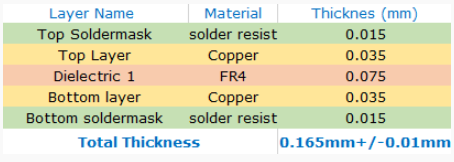
Typical 2-Layer Extra Thin PCB Structure

A 2-layer extra thin PCB usually includes:

  • top copper layer
  • thin FR4 core
  • bottom copper layer
  • optional solder mask on one or both sides
Typical 2-Layer Extra Thin PCB Structure

This type of structure is commonly used in card-like products and compact electronic modules.

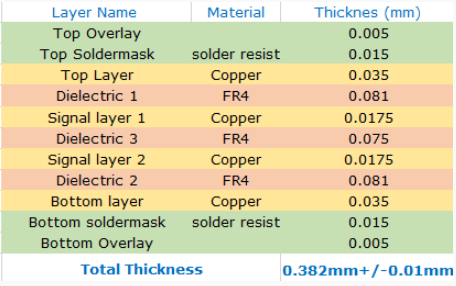
Typical 4-Layer Extra Thin PCB Structure

A 4-layer extra thin PCB is possible, but the thickness is usually around 0.6 mm or above depending on the copper and dielectric design.

A 4-layer thin PCB stack-up generally includes:

  • top copper
  • thin prepreg/core
  • inner copper layers
  • thin prepreg/core
  • bottom copper
Typical 4-Layer Extra Thin PCB Structure

The exact construction should be reviewed based on impedance, mechanical strength, via design, and assembly method.

Why Choose FR4 Extra Thin PCB Instead of Standard PCB?

FR4 extra thin PCB is a strong choice when you need a thinner board but still want the advantages of rigid PCB processing.

It offers several benefits:

  • better rigidity than flexible PCB
  • lower material cost in many designs
  • easier assembly in some rigid product structures
  • good compatibility with standard PCB surface finishes
  • reliable electrical and mechanical performance for compact devices

For products that do not need repeated bending, an extra thin FR4 PCB can be a cost-effective and stable solution.

How EBest Circuit Supports Extra Thin PCB Projects?

At EBest Circuit, we understand that ultra thin boards require more than just standard PCB production capability. They require careful engineering review, suitable material selection, and stable process control from start to finish.

We support customers with:

  • extra thin FR4 material options
  • thickness recommendations based on application
  • copper and solder mask selection
  • stack-up review for 2L and 4L thin boards
  • suitable surface finish suggestions
  • production control for thin board handling
  • vacuum packaging for safe shipment

Whether your project is for wearable electronics, smart cards, NFC modules, or other miniaturized devices, our team can help evaluate the most suitable structure for your design.

FAQ About Extra Thin PCB

1. What is considered an extra thin PCB?

An extra thin PCB usually refers to a rigid FR4 PCB with a thickness significantly below standard boards, typically in the range of 0.10 mm to 0.30 mm.

2. Can extra thin PCB replace flexible PCB?

In some static applications, yes. If the board does not need repeated bending, an extra thin FR4 PCB can be a lower-cost alternative. For dynamic bending, flexible PCB is still the better choice.

3. What is the thinnest FR4 PCB you can make?

Extra thin FR4 PCB can be made as thin as 0.10 mm to 0.15 mm, depending on the layer count and structure.

4. What copper thickness is available for extra thin PCB?

Common copper options include 0.5 oz, 1 oz, 2 oz, and 3 oz.

5. What surface finishes are available?

Available finishes include ENIG, OSP, ENEPIG, and HAL-LF. ENIG and OSP are commonly selected for thin board applications.

6. What applications are suitable for extra thin PCB?

Extra thin PCB is suitable for SIM cards, TF cards, NFC devices, wearable products, charging modules, sensor cards, and other space-limited electronics.

Get a Quote for Extra Thin PCB

If you are looking for a reliable extra thin PCB manufacturer, EBest Circuit can support your project with stable processing capability, thin board experience, and fast response.

From 0.15 mm to 0.30 mm ultra thin FR4 PCB, we help customers turn compact product concepts into manufacturable boards with dependable quality.

Contact us today to discuss your extra thin PCB design and get a quotation for prototype or mass production.

HDI PCB

April 8th, 2026

HDI PCB, or High Density Interconnect printed circuit board, is built for electronic products that demand more routing space, finer features, smaller vias, and higher circuit density in a limited footprint. Compared with conventional PCB structures, HDI boards support finer lines and spaces, smaller capture pads, and more interconnections per unit area, making them ideal for compact, lightweight, and high-speed devices.

At Best Technology, we provide standard HDI PCB, HDI flex PCB, 2–16 layer HDI multilayer PCB, any-layer HDI PCB, rigid-flex PCB, and high-frequency PCB solutions for customers who need reliable performance, stable manufacturing, and fast turnaround. Our uploaded source also states a monthly production capacity of 260,000 square feet (28,900 square meters), with expedited service available for urgent projects.

What Is HDI PCB?

HDI PCB is the abbreviation of High Density Interconnect PCB. It is a printed circuit board designed with high integration, high precision, and miniaturized interconnection structures. HDI technology uses advanced processes such as microvia formation, via filling, and metallized interconnection to achieve reliable signal transmission and dense circuit routing.

In practical terms, HDI PCB helps designers place more functions into a smaller board area. This makes it a preferred solution for modern electronics that require smaller product size, lighter weight, faster data transfer, and improved electrical performance. The source material describes HDI boards as having finer lines and spaces below 100 μm, smaller vias below 150 μm, and smaller capture pads below 400 μm than conventional PCB technology.

HDI PCB

Why Choose HDI PCB?

HDI PCB is widely used because it gives engineers more design freedom without sacrificing reliability.

Higher Circuit Density

HDI boards use tighter routing, smaller line width and spacing, and more advanced via structures. This allows more components and more functions to fit into the same board outline.

Better Signal Performance

Shorter signal paths and lower impedance help reduce signal delay and transmission loss. This is especially valuable in high-speed digital and high-frequency electronic applications.

Smaller and Lighter Product Design

HDI construction supports thinner, lighter, and more compact products. It is well suited to the ongoing trend toward portable and space-saving electronics.

Strong Reliability

With precise layer buildup, microvia structures, and better interlayer support, HDI boards can provide stable electrical performance and dependable mechanical structure in demanding assemblies.

Our HDI PCB Capabilities

We support a wide range of HDI PCB manufacturing solutions for both prototype and production requirements, including:

ItemCapability
Layer Count2–16 Layers (HDI), Any-Layer HDI Available
Min Line Width / Space3/3 mil (HDI)
Min Via Size~4 mil (Laser Microvia)
Via TypeBlind, Buried, Microvia, Via-in-Pad
Copper Thickness0.5 oz – 3 oz
Surface FinishENIG, ENEPIG, OSP, HASL, Immersion Silver
Board Thickness0.2 mm – 3.2 mm
BGA CapabilityDown to 0.3–0.4 mm pitch
Material OptionsFR4, High-Tg, Low Dk/Df, Polyimide
Max Panel SizeUp to 1200 mm × 360 mm
TestingAOI, X-Ray, Flying Probe, ICT

We also support fast-response manufacturing for urgent orders. According to the provided content, urgent boards can be shipped within 24 hours under suitable project conditions.

HDI PCB Types

According to layer up different, currently DHI board is divided into three basic types:

1) HDI PCB (1+N+1)

HDI PCB (1+N+1)

Features:

  • Suitable for BGA with lower I/O counts
  • Fine line, microvia and registration technologies capable of 0.4 mm ball pitch
  • Qualified material and surface treatment for Lead-free process
  • Excellent mounting stability and reliability
  • Copper filled via

Application: Cell phone, UMPC, MP3 Player, PMP, GPS, Memory Card

2) HDI PCB (2+N+2)

HDI PCB (2+N+2)

Features:

  • Suitable for BGA with smaller ball pitch and higher I/O counts
  • Increase routing density in complicated design
  • Thin board capabilities
  • Lower Dk / Df material enables better signal transmission performance
  • Copper filled via

Application: Cell phone, PDA, UMPC, Portable game console, DSC, Camcorder

3) ELIC (Every Layer Interconnection)

ELIC (Every Layer Interconnection)

Features:

  • Every layer via structure maximizes design freedom
  • Copper filled via provides better reliability
  • Superior electrical characteristics
  • Cu bump and metal paste technologies for very thin board

Application: Cell phone, UMPC, MP3, PMP, GPS, Memory card.

What is HDI Material?

1. Substrate

The substrate is the basis of HDI PCB. Commonly used organic insulating materials include thermosetting resins (such as phenolic resins and epoxy resins) and thermoplastic polyesters (such as polyimide and polytetrafluoroethylene). The choice of substrate depends on the needs of specific applications, such as rigid or flexible PCBs.

2. Copper foil

As a conductive material, the thickness of copper foil is generally between 0.3mil-3mil. The specific choice depends on the current carrying size and etching accuracy. The quality of copper foil directly affects the surface quality and electrical performance of the product.

3. PP (B-stage resin)

When making multi-layer PCBs, PP is an indispensable material as an interlayer adhesive.

4. Photosensitive materials

Including photoresists and photosensitive films, divided into wet films and dry films. These materials will undergo chemical changes under light of a specific wavelength, affecting their solubility in the developer, thereby achieving precise production of circuits.

5. Solder mask (ink)

As a solder mask, solder mask is used to prevent the adhesion of liquid solder, and its performance affects the welding quality and circuit protection of PCBs.

6. Film

Similar to the polyester film used for photography, the film is used to record image data and requires high contrast, sensitivity and resolution while ensuring fine lines and dimensional stability.

HDI PCB Manufacturing Process

The uploaded source outlines a typical HDI PCB manufacturing flow, covering the core steps from design to final inspection.

1. Design Review – define the circuit structure, layer count, and stackup

2. Material Preparation – prepare substrate, copper-clad material, covering layers, and inner layers

3. Laser Drilling – create small vias for interlayer electrical connection

4. Lamination – press the inner and outer layers into a stable structure

5. Etching – remove excess copper and keep the required conductive pattern

6. Plating – improve conductivity and oxidation resistance

7. Assembly – insert and solder components if assembly service is included

8. Testing and Inspection – verify quality and electrical performance

Typical Applications

HDI PCB is widely used in products that require compact design and high functional density. The original material lists applications such as:

  • Cell Phones
  • UMPC
  • PDA
  • GPS Devices
  • Memory Cards
  • Portable Game Consoles
  • Digital Cameras
  • Camcorders
  • Notebook Computers
  • Network Communication Equipment
  • Chip Carriers for Large-Scale IC Packaging

Why Work With EBest Circuit?

We position HDI PCB service around what engineering teams and sourcing teams actually need: broad process coverage, quick response, stable quality, and one-stop manufacturing support. The source content also highlights experience in high-end HDI, multilayer PCB, high-frequency PCB, high-speed PCB, FPC, rigid-flex PCB, SMT processing, and PCBA OEM service.

What You Can Expect

  • Wide HDI product range
  • Prototype to production support
  • Fast turnaround for urgent projects
  • One-stop PCB and PCBA service
  • Competitive pricing with manufacturing support

FAQs About HDI PCB

1. What is the difference between HDI PCB and standard PCB?

HDI PCB uses finer lines, smaller vias, and higher connection density, allowing more circuits in less space compared to standard PCB.

2. When should I use HDI PCB?

HDI is recommended when your design includes fine-pitch BGA, high-speed signals, or strict space constraints.

3. Is HDI PCB more expensive?

Yes, due to more complex processes and tighter tolerances. However, it can reduce overall system size and improve performance.

4. What is the minimum via size in HDI PCB?

Typically around 4 mil (laser drilled microvia), depending on manufacturer capability.

5. Can HDI PCB improve signal integrity?

Yes. Shorter routing paths and better layer control can improve signal performance in high-speed designs.

6. How long does HDI PCB manufacturing take?

Prototype lead time can be as fast as 24 hours, while standard production depends on complexity and volume.

Get a Quote for Your HDI PCB Project

If your project requires microvias, fine-pitch BGA routing, higher wiring density, or compact multilayer construction, HDI PCB may be the right solution. A well-designed HDI board can help reduce product size, improve routing efficiency, and support stronger electrical performance in advanced electronics.

Send us your Gerber files, stackup requirements, and project specifications. Our team can review your design and recommend a suitable HDI PCB manufacturing solution.