





A custom PCB supplier should help buyers turn design files into manufacturable boards, assembled PCBAs, inspected parts, and a quote that reflects the real build scope. BestPCBs supports custom PCB fabrication, PCB assembly, component sourcing, DFM review, and RFQ support for prototype, low-volume, and production projects.
If you are comparing PCB suppliers, do not judge only by unit price. A useful supplier review checks the design package, board type, material, assembly scope, test requirements, revision control, component sourcing risk, and the quotation assumptions before production starts.

Custom PCB Manufacturing Capabilities at a Glance
BestPCBs can support buyers across bare PCB fabrication, PCBA assembly, component sourcing, and project quotation review, with final manufacturing limits confirmed from the released design files.
| Capability area | What buyers can request | How it is confirmed |
| Custom PCB fabrication | FR4 PCB, metal core PCB, ceramic PCB, HDI PCB, rigid-flex PCB, special PCB and related board families | Gerber or ODB++, stackup, fabrication drawing, material and quantity review |
| PCB assembly | SMT assembly, through-hole assembly, mixed assembly, prototype PCBA, quick-turn PCBA and project-specific assembly review | BOM, CPL, assembly drawing, test notes and component availability review |
| Component sourcing | BOM review, availability check, substitute discussion and sourcing coordination | Manufacturer part numbers, approved alternates and do-not-substitute parts |
| DFM and quotation support | Manufacturability questions, quote assumptions, file conflicts and process-risk checks | Engineering review before production release |
| Quality and testing support | Inspection and test scope aligned with bare PCB or PCBA risk | Project requirements, customer acceptance criteria and agreed reporting scope |
Is This Custom PCB Service Right for Your Project?
This custom PCB service is right for projects that need more than a quick prototype checkout: design-file review, board technology matching, assembly coordination, sourcing control, test planning, and a supplier who can explain quote assumptions.
It is especially useful when the project includes controlled stackup, special materials, PCBA, BGA or fine-pitch components, repeat production plans, quality records, or a schedule that depends on component availability. If you only need a hobby board with no DFM discussion, a self-service prototype cart may be enough. If you need supplier accountability, quotation review, and production planning, a project-based supplier is a better fit.
PCB Types, Materials, and Layer Counts We Support
BestPCBs supports multiple PCB product families, and the final layer count, material, stackup, copper, finish, and tolerance are confirmed during engineering review for each project.
Relevant board categories include FR4 printed circuit boards, metal core PCB, ceramic PCB, HDI PCB, and rigid-flex PCB. Buyers should send a stackup or performance requirement instead of guessing which material is cheapest.
| PCB type | Common buyer reason | RFQ detail to include |
| FR4 PCB | General electronics, controls, communication boards and prototypes | Layer count, Tg requirement, copper, thickness, finish and impedance needs |
| Metal core PCB | Thermal management for LED, power and heat-generating electronics | Base metal, dielectric requirement, copper, isolation and thermal target |
| Ceramic PCB | High-temperature, high-power or thermal-conductivity applications | Ceramic material, metallization, thickness, finish and inspection needs |
| HDI PCB | Dense routing, compact devices and fine-pitch packages | Microvia structure, via-in-pad, build-up layers and reliability requirements |
| Rigid-flex PCB | Folded electronics, tight enclosures and interconnect reduction | Bend area, stiffener, coverlay, flex layer count and static or dynamic bend use |
Prototype, Low-Volume, and Production PCB Options
Prototype, low-volume, and production orders should be quoted differently because each stage has a different risk: first-build uncertainty, repeatability, or long-term supply stability.
Prototype work focuses on file readiness, DFM feedback, component availability, first-build inspection, and fast revision handling. Low-volume work adds repeatability, test planning, and sourcing control. Production work requires stable revision control, approved materials, packaging, inspection records, and change management.
For assembled projects, BestPCBs can connect the discussion with prototype PCB assembly and quick-turn PCB assembly planning so buyers can plan the move from first build to repeat order.
Trace, Spacing, Drill, Copper, and Board Thickness Limits
Trace, spacing, drill, copper, and board thickness limits should be checked from the actual design package, not assumed from a generic web table.
When you request a quote, include the fabrication drawing, drill table, copper weight, finished thickness, via structure, controlled impedance requirements, and any special tolerance notes. The engineering review should confirm whether the design is standard, special, needs adjustment, or requires a revised stackup before fabrication.
This is a safer approach than publishing broad limits that may not apply to every material, layer count, surface finish, or production route. For high-density, heavy copper, ceramic, metal core, or rigid-flex designs, the file review matters more than a single isolated number.
Surface Finishes and Special PCB Processes
Surface finish and special process choices should match the assembly method, component pitch, storage plan, application environment, and quality requirement.
Buyers can request common PCB finish and process options during quotation, but the best choice should be confirmed after the supplier reviews the board type and assembly plan. Fine-pitch components, contact pads, thermal loads, corrosion risk, multiple reflow cycles, or bonding needs can all change the finish decision.
Special processes such as heavy copper, controlled impedance, HDI structures, rigid-flex construction, metal core construction, ceramic substrates, carbon ink, edge plating, castellated holes, countersink, and special testing should be described clearly in the RFQ.
Custom PCB Assembly and Component Sourcing
A custom PCB supplier becomes more useful when bare board fabrication, PCB assembly, component sourcing, inspection, and test requirements are reviewed together.
BestPCBs has service paths for PCBA and SMT assembly, component sourcing, through-hole assembly, BGA assembly, prototype assembly, quick-turn assembly, and box-build assembly. For a reliable PCBA quote, send BOM, CPL, assembly drawing, polarity notes, approved alternates, test method, and any firmware or programming instructions.

DFM Review Before PCB Manufacturing
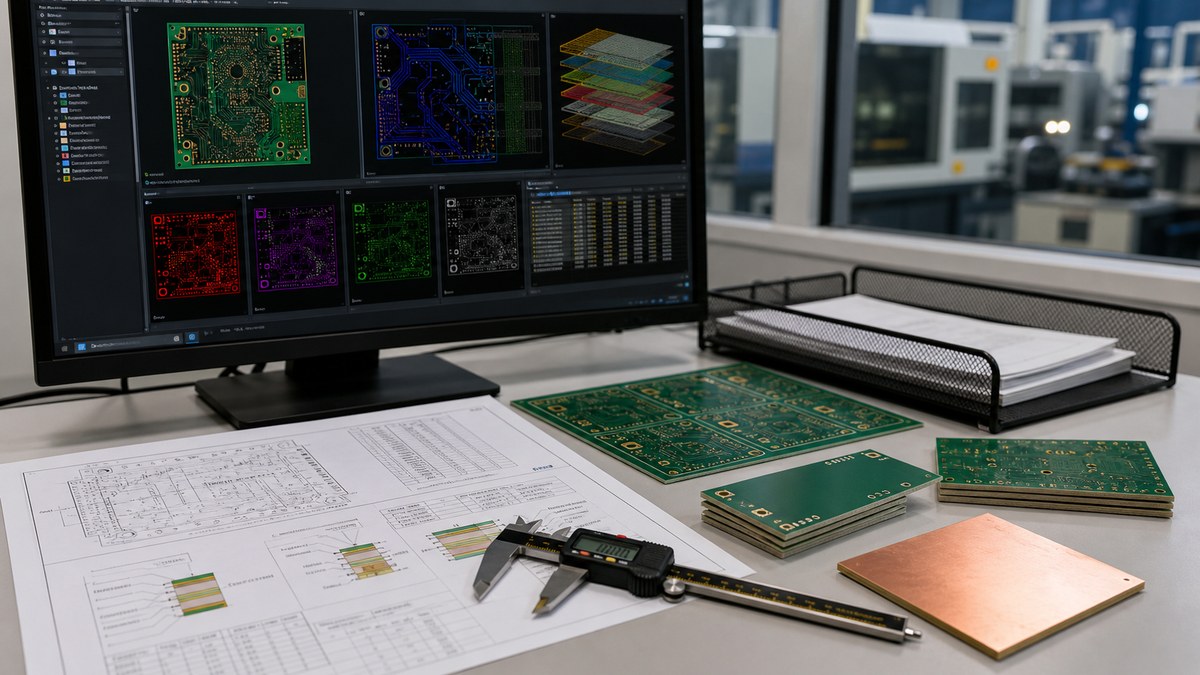
DFM review should happen before production release because many PCB problems begin as small file conflicts, tolerance gaps, or assembly assumptions.
A practical DFM review may check annular ring, drill-to-copper clearance, solder mask dams, copper balance, board outline, panelization, stackup, controlled impedance, material availability, surface finish compatibility, footprint accuracy, polarity, component spacing, BGA escape, thermal relief, and test access.
PCB Testing and Quality Control
PCB testing and quality control should match the risk of the board and assembly instead of using one inspection package for every order.
For bare PCBs, the required scope may include visual inspection, dimensional checks, electrical test, solderability review, impedance review, microsection, material records, or customer-defined reports. For PCBA, the scope may include first article inspection, AOI, X-ray for hidden joints, functional testing, programming, cleaning, coating inspection, and final visual inspection. The buyer should state the required acceptance evidence in the RFQ.
PCB Certifications and Industry Requirements
Certification and industry requirements should be confirmed from the project scope and current company records, then stated in the quotation or quality documentation where applicable.
If your product requires IPC acceptance criteria, RoHS or REACH documentation, automotive, medical, aerospace, industrial, lighting, power electronics, telecom, or export-related requirements, include those needs in the RFQ. A supplier cannot price or document a requirement that was never stated.
For formal compliance-sensitive work, ask which certificates, reports, material declarations, inspection records, or traceability documents can be provided for your specific order type.
What Determines Custom PCB Cost?
Custom PCB cost is determined by board complexity, material, quantity, process difficulty, assembly scope, component sourcing, testing, documentation, and lead-time expectations.
| Cost factor | Why it changes the quote |
| Layer count and stackup | More layers and controlled structures add material, lamination, registration and inspection work |
| Board size and panel use | Panel utilization changes material yield and handling efficiency |
| Material and copper | Special laminates, thermal substrates, ceramic materials and copper weight change availability and process windows |
| Drill and via structure | Small holes, microvias, via filling and special drilling add process and inspection steps |
| Surface finish | Finish choice affects solderability, shelf life, flatness, process cost and application fit |
| Assembly and sourcing | Component availability, placement complexity, inspection and test requirements change PCBA pricing |
| Lead time | Urgent schedules may require faster engineering response, material action and production planning |
Prototype and Production Lead Times
Prototype and production lead times depend on file completeness, material availability, board complexity, assembly scope, test requirements, engineering questions, and buyer approval speed.
The fastest quote is usually possible when the buyer sends one controlled file package and responds quickly to DFM or sourcing questions. The slowest projects often involve missing drill files, unclear stackup, incomplete BOM, unapproved substitutes, changed revisions, or test requirements added after pricing.
How to Request a Custom PCB Quote
A complete custom PCB quote request should define what to build, how to inspect it, how many to make, and when the buyer needs it.
| RFQ item | Send this information |
| PCB fabrication files | Gerber or ODB++, NC drill, fabrication drawing, stackup, board outline and revision number |
| PCB specifications | Material, finished thickness, copper, layer count, solder mask, silkscreen, surface finish and tolerances |
| Assembly files | BOM, CPL, assembly drawing, polarity notes, test method, programming or firmware notes |
| Commercial details | Prototype quantity, production quantity, target lead time, delivery address and packaging needs |
| Risk and quality requirements | Impedance, thermal, high current, coating, reports, certificates, traceability and acceptance criteria |
Custom PCB Project Examples
Custom PCB projects vary by board type, assembly scope, sourcing risk, test requirement, and production stage, so examples should be used to clarify the buying path rather than promise one fixed process for every design.
| Example project type | Typical supplier review |
| FR4 prototype moving to pilot build | File readiness, stackup, DFM issues, revision control and pilot quantity planning |
| Metal core PCB for thermal applications | Base material, dielectric, copper, isolation, thermal target and surface finish |
| PCBA with sourced components | BOM availability, substitutes, assembly drawing, inspection, test and packaging |
| HDI or rigid-flex design | Via structure, bend area, stackup, manufacturability and reliability controls |
How to Evaluate a Custom PCB Supplier
Evaluate a custom PCB supplier by checking whether the supplier can prove technical fit, DFM review, sourcing discipline, quality control, communication, and quote clarity for your specific design.
- Ask whether the supplier can build the board type, material, stackup and process you need.
- Confirm how DFM questions are raised before production release.
- Check whether component substitutions require buyer approval.
- Ask which inspection and test records are available for your order type.
- Compare what each quote includes and excludes.
- Confirm revision control for prototype, pilot and production builds.
- Ask how quality, schedule and sourcing risks are communicated.
Common PCB Sourcing Risks and How to Avoid Them
Most PCB sourcing problems start when the buyer and supplier do not agree on files, materials, substitutions, inspection, lead time, or acceptance criteria.
| Sourcing risk | How to reduce it |
| Quote changes after order | Send complete files and define all special requirements before pricing |
| Wrong material or finish | State material, finish and compliance needs in the fabrication drawing |
| Component substitution errors | Mark approved alternates and do-not-substitute parts in the BOM |
| Assembly defects | Provide CPL, assembly drawing, polarity notes and test requirements |
| Unclear inspection standard | Define reports, tests and acceptance criteria before order release |
| Revision confusion | Use one controlled revision package and archive old files |
Why Buyers Choose Our Custom PCB Services
Buyers choose a custom PCB supplier when they need a clear path from design files to fabrication, assembly, sourcing, quality review, and quotation support.
BestPCBs is a practical fit when buyers want one discussion covering PCB product type, PCBA scope, component sourcing, prototype or production stage, DFM questions, and inspection requirements. The strongest first step is to send a complete project package, not only a screenshot or board name.
Frequently Asked Questions About Custom PCB Sourcing
Custom PCB sourcing questions usually focus on files, supplier fit, cost, lead time, quality evidence, and how to avoid quotation mistakes.
What is a custom PCB supplier?
A custom PCB supplier manufactures printed circuit boards to buyer-specific design files, materials, stackup, finish, quantity, testing, and delivery requirements. Some suppliers also support assembly, component sourcing, inspection, and testing.
What files do I need for a custom PCB quote?
Send Gerber or ODB++, drill files, fabrication drawing, stackup notes, material, thickness, copper, surface finish, quantity and target lead time. For PCBA, also send BOM, CPL, assembly drawing and test requirements.
Can one supplier handle both PCB fabrication and assembly?
Yes, many custom PCB suppliers support both bare board fabrication and assembly. This is useful when DFM, BOM review, component sourcing, assembly inspection, and functional test requirements need to be coordinated together.
How do I know whether my PCB is manufacturable?
The supplier should review trace and spacing, drill sizes, annular rings, stackup, material, copper, solder mask, surface finish and assembly access. Any issue that changes cost, yield or lead time should be clarified before production release.
What affects custom PCB cost the most?
Common cost drivers include layer count, board size, material, copper weight, small drill or HDI structures, surface finish, quantity, assembly complexity, component availability, testing, documentation and urgency.
Should I choose the lowest custom PCB quote?
Not automatically. Compare what is included in the quote, which files were reviewed, whether materials and tests are defined, how substitutions are handled, and whether the supplier can support the next production stage.
Can a prototype supplier support production later?
Sometimes, but verify repeat-order control, material availability, component sourcing, testing, packaging, documentation and revision management before relying on the same supplier for production.
How should I request a fast quote?
Send one controlled file package with all required fabrication and assembly inputs. State the target lead time, quantity and any must-have quality or compliance requirements. Fast quotes are easier when the supplier does not have to guess.
Final Custom PCB RFQ Recommendation
A custom PCB supplier should help you complete a sourcing task: confirm supplier fit, send the right files, understand quote drivers, control quality risks, and know what to approve before production. The more complete the RFQ package, the more useful the supplier’s engineering review and quotation will be.
If you are preparing a custom PCB or PCBA project, send Gerber or ODB++ files, drill data, stackup notes, BOM, CPL, assembly drawing, quantity, material, surface finish, testing requirements and target lead time to sales@bestpcbs.com. BestPCBs can review the package for DFM, fabrication, assembly, sourcing and quotation requirements before production starts.