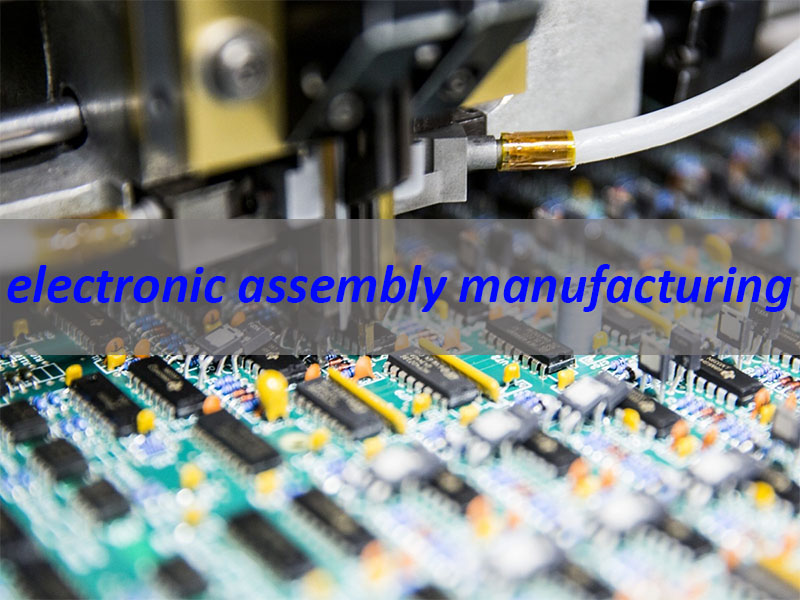
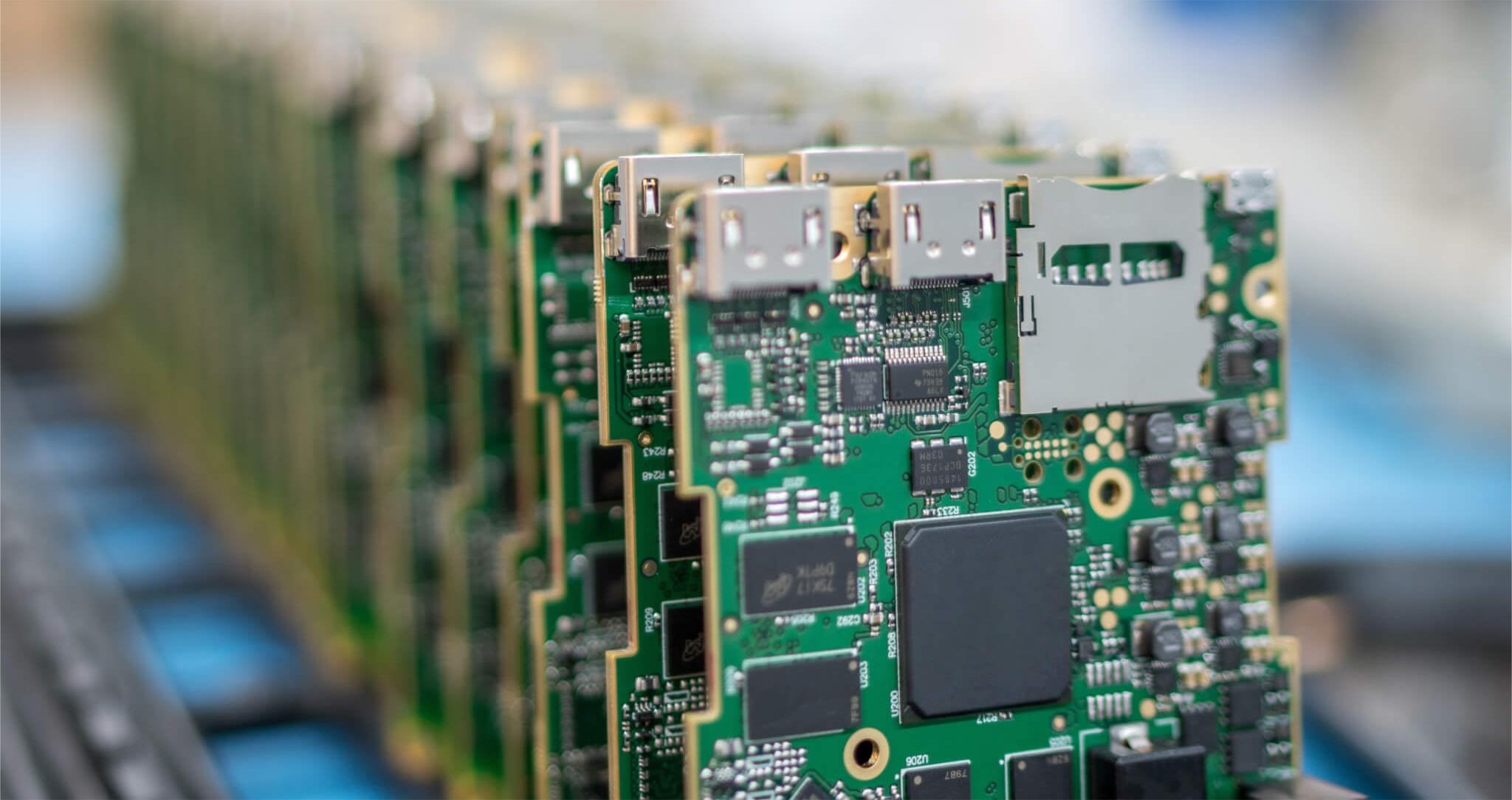
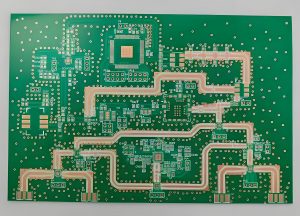
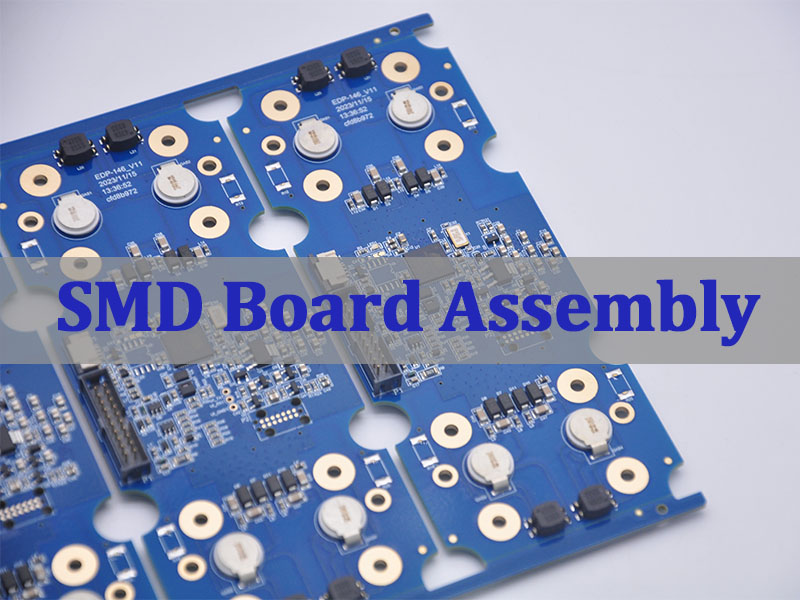
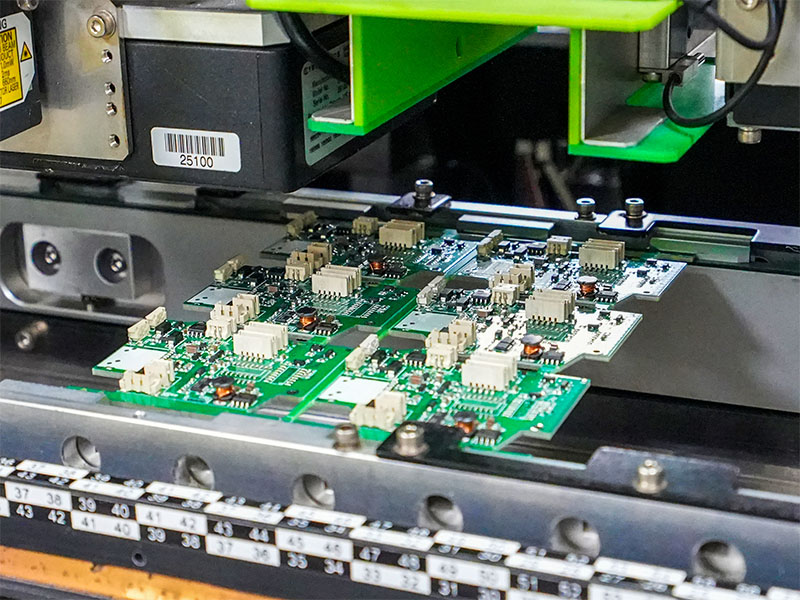
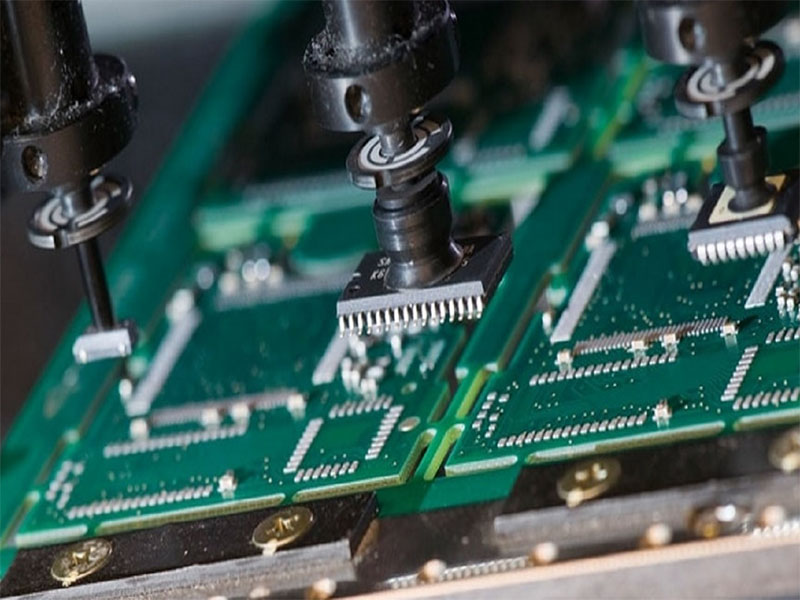
Electronic assembly manufacturing refers to the end-to-end process of building functional electronic products from bare printed circuit boards (PCBs), components, wiring systems, and enclosures. It goes far beyond simple PCB population. It includes SMT and THT assembly, cable and wire harness integration, testing, and full box build.
For engineers and sourcing teams, understanding how electronic assembly manufacturing works—and how to evaluate the right supplier—directly impacts product reliability, lead time, and total cost.
Is Manufacturing and Electronic Assembly the Same Thing?
No, they are not the same.
Manufacturing is a broad concept covering the entire production lifecycle. Electronic assembly manufacturing is a specialized subset focused on assembling electronic systems.
These tools enhance production visibility and consistency.
In conclusion, electronic assembly manufacturing is where engineering design becomes a real product. Precision, process control, and integration capability all converge at this stage. For companies building advanced electronics, selecting the right electronics contract manufacturing assembly partner is not just about production—it defines product quality, scalability, and long-term success. If you are looking for a reliable electronic assembly manufacturing partner, feel free to contact us at sales@bestpcbs.com for a fast quotation and engineering support.
FAQs About Electronic Assembly Manufacturing
What is electronic assembly manufacturing? Electronic assembly manufacturing is the process of assembling PCBs, components, cables, and enclosures into functional electronic products.
What is contract manufacturing electronic assembly? It means outsourcing production to a specialized company that handles assembly, testing, and integration.
What is electronic manufacturing assembly service? It is a full-service solution covering PCB assembly, sub-assembly, and final system build.
What is the difference between EMS and electronic assembly manufacturing? EMS is broader and includes logistics and supply chain, while electronic assembly manufacturing focuses on production.
What are electronics assembly machine manufacturers? These companies produce equipment such as pick-and-place machines, reflow ovens, and inspection systems.
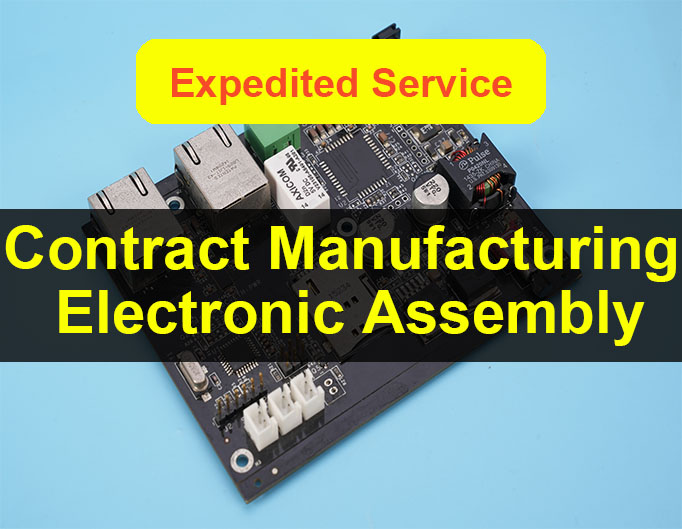
Contract manufacturing electronic assembly is a strategic manufacturing model that helps OEMs turn PCB designs into finished, tested, and scalable electronic products with better speed, process control, and supply chain coordination. This article explains the engineering workflow, thermal calculations, sourcing integration, capability evaluation, production scaling, design support, electro-mechanical assembly, quality control, and global market landscape behind expedited electronic assembly services.
Common Customer Pain Points Often Look Like This:
DFM issues are found too late and delay launch.
PCB fabrication, sourcing, and assembly are split across too many vendors.
Thermal and current limits are not verified early enough.
Prototype success does not transfer smoothly into volume production.
Supplier communication is slow when urgent changes happen.
How A Manufacturer Responds To Those Pain Points:
Review Gerber, BOM, and assembly risks before release.
Combine PCB fabrication, sourcing, and PCBA under one workflow.
Validate thermal paths and current carrying capacity during engineering review.
Build processes that support both low-volume and mass production.
Use responsive project management for expedited service execution.
EBest Circuit (Best Technology) is a professional PCB and PCBA manufacturer focused on prototype, low-volume, and medium-batch electronic products that require fast turnaround and dependable engineering support. We provide PCB fabrication, component sourcing, SMT, DIP, testing, and box-build integration with a practical engineering mindset, helping customers shorten development cycles while improving manufacturability and delivery reliability. For project support, pls feel free to contact us via sales@bestpcbs.com.
What Engineering Processes Are Included In Contract Manufacturing Electronic Assembly From DFM To Final Testing?
A strong contract manufacturing electronic assembly process is not just about placing parts on a PCB. It is a controlled engineering chain that starts with design review and ends with validated product output. For expedited service, each step must be linked clearly to the next.
Typical Engineering Flow
Stage
Main Task
Core Output
DFM Review
Check manufacturability risk
DFM comments
BOM Review
Verify parts, alternates, lifecycle
BOM optimization
PCB Fabrication Prep
Confirm stack-up, finish, panelization
Fabrication release
SMT/DIP Process Setup
Define stencil, fixture, profile
Process package
Assembly Execution
Mount, solder, inspect
Assembled PCBA
Testing
AOI, X-Ray, ICT, FCT
Test records
Final Inspection
Verify workmanship and labeling
Shipment approval
Key Engineering Elements
DFM Review: pad design, spacing, via structure, solder mask clearance, fiducials, panel strategy.
In practical terms, electronics assembly contract manufacturing works best when engineering, purchasing, production, and QA are aligned from day one. That alignment is what turns a rush order into a controlled build rather than a reactive one.
How To Calculate Thermal Dissipation And Current Carrying Capacity In Contract Manufacturing Electronic Assembly Designs?
For expedited builds, thermal and electrical validation cannot be treated as a late-stage check. In contract manufacturing electronic assembly projects, overheating, trace overload, and poor heat spreading can quickly undermine reliability even if assembly quality looks fine.
1) Thermal Resistance Calculation
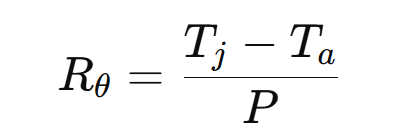
A simple thermal model begins with:
Where:
(R_{\theta}) = thermal resistance (°C/W)
(T_j) = junction temperature
(T_a) = ambient temperature
(P) = power dissipation (W)
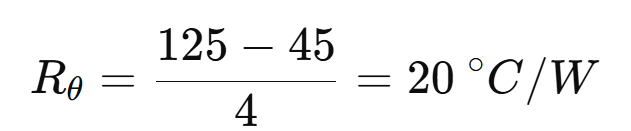
Example: If a device has a junction limit of 125°C, ambient is 45°C, and power is 4 W:
That means the full thermal path from junction to air must stay at or below 20°C/W.
2) PCB Trace Current Carrying Capacity
A widely used engineering expression based on IPC practice is:
Where:
(I) = allowable current
(\Delta T) = temperature rise
(A) = conductor cross-sectional area
(k) = layer constant
Quick Design Factors
Factor
Higher Value Effect
Engineering Impact
Copper Thickness
Increases current capacity
Better for power lines
Trace Width
Lowers resistance
Reduces temperature rise
Copper Plane Area
Improves heat spread
Better thermal stability
Thermal Vias
Moves heat vertically
Helps hot components
Airflow
Improves cooling
Lowers junction temp
What Engineers Should Check
Power components near thermal bottlenecks
Copper thickness on high-current nets
Internal vs external trace conditions
Via-in-pad or thermal via arrays under power packages
Safe margin between actual and allowable temperature rise
An experienced electronic assembly contract manufacturer does not only assemble what is drawn. It also flags thermal imbalance, copper weakness, and layout risks before they become field failures. That is especially important in power supplies, motor control boards, LED drivers, telecom modules, and industrial control systems.
In short, thermal dissipation and current capacity calculations help convert a fast build into a reliable one. Speed without thermal validation is fragile. Speed with engineering discipline is scalable.
How Do Electronic Assembly Contract Manufacturers Handle PCB Fabrication, Component Sourcing, And PCBA Integration?
Customers often struggle when PCB fabrication, procurement, and assembly are managed by separate vendors. A mature electronic assembly contract manufacturer reduces that friction by integrating the full chain into one coordinated workflow.
Logistics Coordination: incoming material control, line kitting, build scheduling, traceable shipment release.
What Good Integration Looks Like
Area
Poor Coordination Result
Integrated Result
PCB + BOM Timing
Idle assembly line
Synchronized material arrival
Shortage Handling
Last-minute delay
Approved alternates ready
Engineering Change
Document mismatch
Controlled ECO execution
Build Planning
Mixed priorities
Clear production scheduling
Practical Benefits
Fewer handoff errors.
Faster feedback between sourcing and engineering.
Shorter turnaround for prototypes.
Better traceability from bare board to final assembly.
Easier root-cause analysis when issues appear.
This is where electronic assembly contract manufacturing becomes more than a purchasing model. It becomes an execution model. For expedited service, that execution discipline is often the difference between an on-time build and a delayed launch.
What Manufacturing Capabilities Should You Evaluate In Electronic Assembly Contract Manufacturing Partners?
Not all partners that offer electronic assembly contract manufacturing have the same engineering depth or production fit. A useful evaluation should go beyond brochure language and focus on capability that affects yield, lead time, and product consistency.
Production Flexibility: prototype, NPI, low-volume, repeat batch, mass production.
Traceability System: lot control, barcode tracking, process records, test history.
Engineering Support: DFM, DFA, BOM review, alternate recommendation, process optimization.
Fast Screening Table
Capability
Why It Matters
Fine-Pitch SMT
Supports dense modern designs
BGA/X-Ray
Controls hidden solder joints
Prototype + Volume
Enables growth path
Material Sourcing Team
Reduces shortage risk
Test Engineering
Improves outgoing reliability
Process Traceability
Supports regulated industries
Questions Worth Asking
Can the supplier support both quick-turn NPI and stable repeat production?
Can it manage difficult packages and mixed assembly processes?
Does it provide engineering feedback before production starts?
How does it respond to shortages and urgent ECOs?
What evidence does it provide for quality control?
A reliable partner in electronics assembly contract manufacturing should make your product easier to launch, easier to scale, and easier to control. If it only offers placement capacity without engineering support, the risk remains with the customer.
How Does Electronics Contract Manufacturing Assembly Support Low Volume Prototyping And Mass Production?
One of the biggest challenges in electronics contract manufacturing assembly is moving smoothly from prototype to scale. A rushed prototype may prove function, but it does not automatically prove manufacturability. Good contract assembly service bridges both stages with process continuity.
Low-Volume Prototype Priorities
Fast engineering review
Manual or semi-automated flexibility
Rapid material substitution handling
Frequent revision support
Quick debug feedback
Mass Production Priorities
Stable approved BOM
Standardized work instructions
Line balancing and fixture planning
Yield monitoring
Controlled logistics and replenishment
Comparison Table
Build Type
Main Goal
Typical Focus
Prototype
Verify design
Speed and flexibility
Pilot Run
Validate process
Repeatability
Mass Production
Deliver volume
Stability and cost control
How A Good Manufacturer Supports Both
Keeps the same engineering data structure from NPI to production.
Records process settings that can be reused later.
Captures defects early and feeds them back to design.
Builds scalable sourcing plans around real demand.
Aligns inspection depth with product risk and stage.
This is why contract manufacturing electronics assembly is valuable for OEMs that expect growth. It is not just about assembling today’s boards. It is about building a repeatable path from first article to mature production.
What Engineering Services Are Provided In Contract Design And Manufacturing Electronic Assembly Projects?
In contract design and manufacturing electronic assembly projects, the supplier may contribute far more than assembly labor. The right engineering service can reduce redesign cycles, improve reliability, and speed up qualification.
Common Engineering Services
DFM and DFA review
BOM optimization
Alternate component evaluation
PCB stack-up suggestion
Thermal and current path review
Panelization support
Test point planning
Fixture and stencil design
Process profile development
Service Breakdown
Service
Value To Customer
DFM Review
Prevents fabrication and assembly defects
BOM Optimization
Improves availability and cost stability
Thermal Review
Reduces overheating risk
Test Planning
Makes debugging and validation easier
Process Setup
Improves yield on first build
Where This Helps Most
New product introduction
Mixed-technology boards
Dense PCBs with thermal load
Long-lead or shortage-prone BOMs
Products needing fast release
A supplier that supports contract design and manufacturing electronic assembly well is acting as an engineering extension of the customer, not just a production stop. For expedited service, that shared engineering effort saves time where it matters most: before material is committed and before defects multiply.
What Is Electro-Mechanical Assembly For Electronics Contract Manufacturing And Where Is It Used?
Electro-mechanical assembly for electronics contract manufacturing refers to the integration of electronic assemblies with mechanical elements such as enclosures, harnesses, connectors, switches, fans, brackets, displays, and power modules. It takes the product from board level toward system level.
Typical Scope
PCB + enclosure integration
Cable and wire harness assembly
Connector installation
Mechanical fastening
Display and HMI integration
Fan, sensor, and power module mounting
Final box-build and system test
Common Applications
Industrial control units
Medical devices
Telecom equipment
EV charging modules
Security systems
Consumer electronics
Embedded control products
Typical System-Level Benefits
Fewer assembly handoffs.
Better fit between PCB and housing.
Lower shipping and handling damage risk.
Simpler final product logistics.
More complete outgoing testing.
When OEMs need more than bare PCBA, this service becomes highly practical. It is especially useful when cable routing, connector access, thermal layout, or final mechanical packaging affects field performance.
How Does Contract Manufacturing Electronics Assembly Ensure Quality And Supply Chain Stability?
For expedited orders, quality and supply chain stability must move together. A fast build with weak sourcing control creates shortage risk. A well-sourced build with weak process control creates field risk. Strong contract manufacturing electronics assembly addresses both.
Quality Control Structure
Incoming material inspection
SPI for solder paste consistency
AOI after SMT
X-Ray for BGA and hidden joints
ICT or flying probe for electrical checks
Functional test for product behavior
Final visual and packaging inspection
Supply Chain Stability Methods
Approved vendor lists
Alternate part strategy
Lifecycle monitoring
Safety stock for repeat projects
Lot traceability
Shortage escalation process
Condensed Control Table
Control Area
Stabilizing Method
Material Quality
Incoming IQC
Solder Process
SPI + profile control
Hidden Joints
X-Ray inspection
Functional Confidence
ICT/FCT
Part Shortages
AVL + alternates
Traceability
Barcode and batch records
What Customers Should Expect
Transparent shortage communication.
Evidence-based quality records.
Controlled handling of substitutions.
Repeatable build documentation.
Fast response when corrective action is needed.
This is where electronics assembly contract manufacturing shows its real value. It protects both the schedule and the shipment quality. In expedited service work, those two goals must be managed together, not separately.
Who Are The Largest Electronic Contract Manufacturers For PC Board Assembly In The Global Market?
The largest electronic contract manufacturers for pc board assembly usually operate at massive global scale, serving consumer electronics, automotive, telecom, industrial, and computing markets. They are important benchmarks, but they are not always the best fit for every OEM.
Large Global EMS Players Are Known For
Very high production capacity
Broad regional manufacturing footprint
Mature supply chain influence
System-level integration capability
Strong process standardization
But Size Is Not The Only Buying Criterion
Large Global EMS
Agile Mid-Sized Specialist
Best for huge volume
Best for responsive support
Strong purchasing power
Faster engineering feedback
More layered communication
More direct project contact
High process maturity
Better fit for NPI and mixed batch
What Many OEMs Actually Need
Faster response than a mega-EMS can offer
Better support for prototypes and low-volume orders
Stronger engineering discussion during DFM and BOM review
Easier customization for mixed products
A more practical expedited service path
For many PCB-centered projects, the ideal partner is not necessarily the biggest. It is the supplier with the right mix of engineering support, assembly control, sourcing agility, and communication speed.
Ultimately, contract manufacturing electronic assembly is a high-value manufacturing approach that helps OEMs transform PCB designs into reliable products through coordinated engineering review, sourcing control, assembly execution, testing, and scalable production support. This article covered the core workflow from DFM to final testing, thermal and current calculations, integration of PCB fabrication and sourcing, partner evaluation, prototype-to-volume transition, design support, electro-mechanical assembly, quality assurance, and the global EMS landscape.
EBest Circuit (Best Technology) combines PCB fabrication, component sourcing, PCBA assembly, testing, and responsive engineering service to support expedited electronic manufacturing projects with stronger control and better communication. For RF boards, industrial controls, power electronics, medical devices, and other demanding applications, we help customers move faster with practical manufacturing support and dependable execution. If you have any electronics assembly contract manufacturing needs, pls feel free to contact us at sales@bestpcbs.com.
FAQs About Contract Manufacturing Electronic Assembly
What PCB Thickness Is Typically Used In Contract Manufacturing Electronic Assembly Projects? Most PCB assemblies use board thickness between 1.0 mm and 1.6 mm, with 1.6 mm being the most common standard for industrial electronics. However, compact devices such as IoT modules may use 0.8 mm or thinner boards, while high-power or connector-heavy designs may require 2.0 mm–3.2 mm thickness to improve mechanical rigidity and thermal performance. PCB thickness must also match connector specifications, enclosure tolerance, and impedance requirements.
What Copper Thickness Is Recommended For High-Current PCB Assemblies? Copper thickness determines how much current a trace can safely carry. In most electronics assembly contract manufacturing projects, standard copper weight is 1 oz (35 μm). For power electronics or motor control boards, engineers may choose 2 oz (70 μm) or 3 oz (105 μm) copper. Heavy-copper PCBs above 4 oz are sometimes used in power converters, LED drivers, and industrial equipment where current paths exceed 10–20 A.
What Is The Typical Reflow Soldering Temperature Profile For SMT Assembly? In electronic assembly contract manufacturing, the SMT reflow profile depends on the solder alloy used. For common lead-free SAC305 solder, the typical parameters are:
Stage
Typical Temperature
Duration
Preheat
150–180°C
60–120 s
Soak
180–200°C
60–90 s
Reflow Peak
235–250°C
20–40 s
Cooling
−3°C/sec typical
Controlled
The peak temperature must remain below most component limits, which are usually 260°C maximum.
What Is The Typical Placement Accuracy In Modern SMT Assembly Lines? Modern SMT production equipment used in electronics contract manufacturing assembly can achieve placement accuracy between ±30 μm and ±50 μm depending on machine class and component size. High-precision machines used for fine-pitch QFN, CSP, and 0201 components may achieve ±25 μm accuracy. Accurate placement is critical for preventing solder bridging, improving yield, and ensuring consistent assembly quality in high-density PCB designs.
This website uses cookies to enhance your experience, remember your preferences, and help us understand how visitors use our site. You can accept all cookies, reject non-essential cookies, or manage your settings.
This website uses cookies to improve your experience while you navigate through the website. Out of these cookies, the cookies that are categorized as necessary are stored on your browser as they are essential for the working of basic functionalities of the website. We also use third-party cookies that help us analyze and understand how you use this website. These cookies will be stored in your browser only with your consent. You also have the option to opt-out of these cookies. But opting out of some of these cookies may have an effect on your browsing experience.
Necessary cookies are absolutely essential for the website to function properly. These cookies ensure basic functionalities and security features of the website, anonymously.
Cookie
Duration
Description
cookielawinfo-checkbox-analytics
11 months
This cookie is set by GDPR Cookie Consent plugin. The cookie is used to store the user consent for the cookies in the category "Analytics".
cookielawinfo-checkbox-functional
11 months
The cookie is set by GDPR cookie consent to record the user consent for the cookies in the category "Functional".
cookielawinfo-checkbox-necessary
11 months
This cookie is set by GDPR Cookie Consent plugin. The cookies is used to store the user consent for the cookies in the category "Necessary".
cookielawinfo-checkbox-others
11 months
This cookie is set by GDPR Cookie Consent plugin. The cookie is used to store the user consent for the cookies in the category "Other.
cookielawinfo-checkbox-performance
11 months
This cookie is set by GDPR Cookie Consent plugin. The cookie is used to store the user consent for the cookies in the category "Performance".
viewed_cookie_policy
11 months
The cookie is set by the GDPR Cookie Consent plugin and is used to store whether or not user has consented to the use of cookies. It does not store any personal data.
Functional cookies help to perform certain functionalities like sharing the content of the website on social media platforms, collect feedbacks, and other third-party features.
Performance cookies are used to understand and analyze the key performance indexes of the website which helps in delivering a better user experience for the visitors.
Analytical cookies are used to understand how visitors interact with the website. These cookies help provide information on metrics the number of visitors, bounce rate, traffic source, etc.
Advertisement cookies are used to provide visitors with relevant ads and marketing campaigns. These cookies track visitors across websites and collect information to provide customized ads.