PCB manufacturing PCB manufacturing
Home > Blog

metal core printed circuit board

Metal Core Circuit Board Manufacturer | From Prototype to Mass Production
Wednesday, April 22nd, 2026

A metal core circuit board (MCPCB) is a specialized printed circuit board designed to solve one critical issue in modern electronics—heat. By replacing traditional FR4 with a thermally conductive metal base, MCPCBs significantly improve heat dissipation, making them essential for high-power and high-reliability applications.

Common Challenges in High-Power PCB Design

  • Component Overheating
    High-power components generate excessive heat, reducing efficiency and lifespan.
  • Thermal Fatigue Failures
    Repeated heating cycles weaken solder joints and increase failure rates.
  • Limited Power Density
    FR4 materials restrict compact, high-power layouts.
  • High Cooling Cost
    External heat sinks and fans increase BOM and assembly complexity.
  • Supplier Instability
    Difficulty finding a reliable partner for both prototyping and volume production.

Our Tailored MCPCB Solutions

  • Efficient Heat Dissipation
    Heat transfers directly through the metal base, improving thermal performance.
  • Extended Product Lifespan
    Lower operating temperatures reduce stress and improve reliability.
  • Compact Design Support
    Higher power density enables smaller and lighter products.
  • Reduced System Cost
    Integrated thermal design reduces need for external cooling.
  • One-Stop Manufacturing
    From prototype to mass production with stable quality and pricing.

EBest Circuit is a professional metal core printed circuit board manufacturer specializing in high-performance thermal solutions. We support applications from LED lighting to telecom and automotive systems. Our strength lies in combining material expertise with strict process control. Whether you need a single double sided metal core printed circuit board prototype or large-scale production, we ensure consistent thermal and electrical performance. For fast quotation and engineering support, pls feel free to contact us via sales@bestpcbs.com.
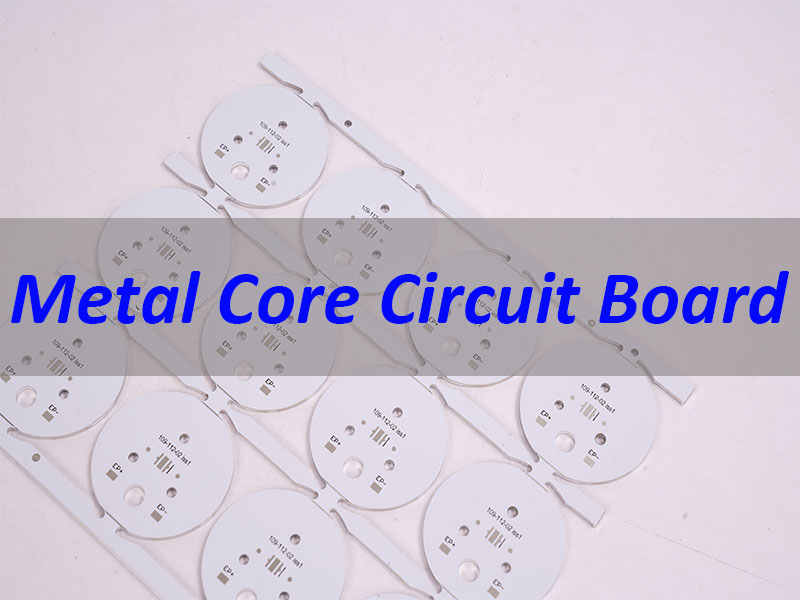
Metal Core Circuit Board

What Is a Metal Core Circuit Board?

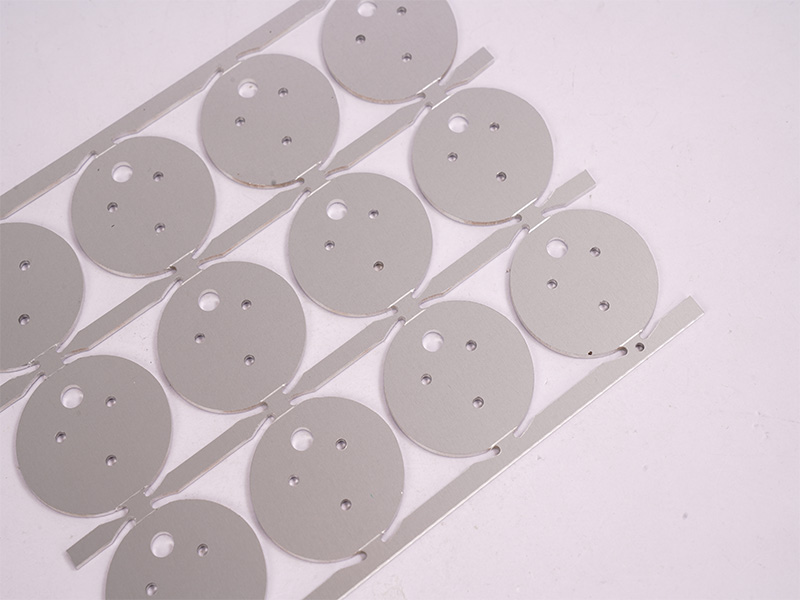
A metal core circuit board replaces the standard FR4 substrate with a metal base, typically aluminum or copper. This metal layer acts as a heat spreader, allowing heat to move away from critical components efficiently.

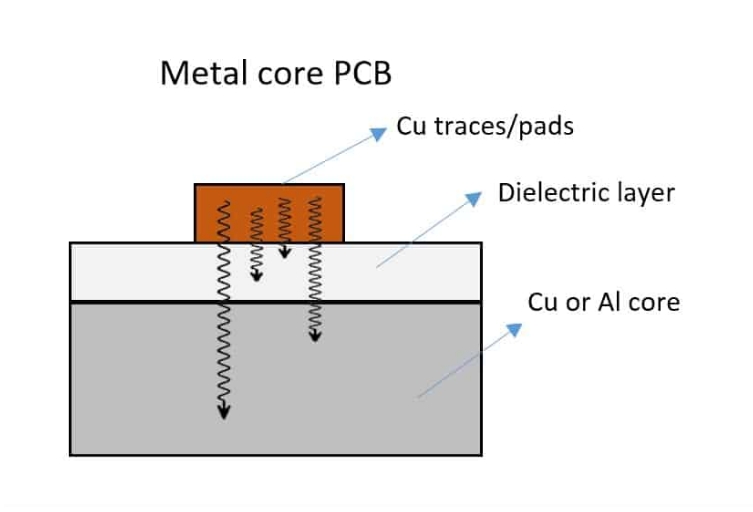
The typical MCPCB structure includes:

  • Circuit Layer – Copper traces for electrical connection
  • Dielectric Layer – Thermally conductive insulation
  • Metal Core – Heat dissipation base

In practice, MCPCB integrates heat management directly into the PCB itself, making it ideal for high-power electronic designs.
Why Choose MCPCB Over FR4?

The key difference lies in thermal performance. FR4 is cost-effective but thermally inefficient, while MCPCB is designed specifically for heat management.

MCPCB vs FR4 Comparison

FeatureFR4 PCBMetal Core PCBDesign Impact
Thermal Conductivity~0.3 W/mK1–8+ W/mK3x–25x better heat transfer
Heat DissipationPoorExcellentLess external cooling needed
Mechanical StrengthGoodHighBetter durability
CostLowHigherUsed in high-power designs
ApplicationsGeneral electronicsLED, power, automotiveThermal-critical systems

As a result, MCPCB is the preferred choice when heat directly impacts performance and reliability.

What Materials Are Used in MCPCB?

The performance of a metal core printed circuit board depends on three key materials:

1. Metal Core

  • Aluminum – Most common, cost-effective, good thermal performance
  • Copper – Best thermal conductivity, higher cost
  • Steel – Used for structural or shielding needs

2. Dielectric Layer

  • Provides electrical insulation
  • Transfers heat to metal core
  • Typical conductivity: 1.0–8.0 W/mK

3. Copper Layer

  • Forms electrical circuits
  • Thickness varies based on current requirements

From a design perspective, selecting the right material combination directly determines thermal efficiency and reliability.

Types of Metal Core Circuit Boards

TypeStructureKey BenefitTypical Use
Single-SidedOne copper layerLow cost, high efficiencyLED modules
Double-SidedTwo copper layersMore routing flexibilityPower circuits
MultilayerMultiple layersHigh density designRF, aerospace
Flexible MCPCBBendable structureSpace savingWearables

In real applications, the choice depends on circuit complexity, thermal requirements, and budget.

How MCPCB Improves Thermal Management

MCPCB improves thermal performance by creating a direct heat path:

  • Heat flows from component to copper layer
  • Passes through dielectric layer
  • Transfers into metal core
  • Spreads across board surface

This significantly reduces thermal resistance and prevents hot spots.

For engineers, this means higher power handling, better reliability, and more compact designs.

Typical Applications of MCPCB

MCPCBs are widely used in heat-intensive applications:

  • LED Lighting – street lights, automotive headlights
  • Power Electronics – converters, motor drivers
  • Automotive Systems – ECU, battery modules
  • Telecom & RF – power amplifiers, transmitters
  • Industrial Equipment – inverters, control systems

In high-power scenarios, MCPCB is often the only practical solution to manage heat effectively.

How to Choose the Right Manufacturer

Selecting a reliable metal core circuit board manufacturer is critical.

Key Evaluation Points:

  • Material Expertise – aluminum, copper, dielectric selection
  • Process Capability – multilayer, heavy copper, thermal vias
  • Prototype to Volume – seamless scaling
  • Engineering Support – DFM and thermal design advice
  • Certifications – ISO, automotive standards

This means your supplier should not just produce boards, but also optimize your thermal design.

Top Metal Core PCB Manufacturers in China

ManufacturerStrengthBest For
EBest CircuitLarge-scale productionHigh volume
FastprintAdvanced PCB techHDI & IC
Sihui FujiLED specializationLighting
JLCPCBLow-cost prototypeStartups
PCBCartEngineering supportCustom design
KinwongThermal expertiseHigh-reliability MCPCB

In practice, the best choice depends on your project scale, complexity, and support needs.

What Affects MCPCB Cost?

Key cost drivers include:

  • Material Type – copper vs aluminum
  • Thermal Conductivity – higher = higher cost
  • Layer Count – multilayer increases complexity
  • Copper Thickness – heavy copper adds cost
  • Board Size & Shape – affects material usage
  • Order Volume – larger quantity reduces unit price

As a result, optimizing design early can significantly reduce total cost.

In short, a metal core circuit board is not just a PCB—it is a thermal solution. By integrating heat dissipation into the board itself, MCPCBs enable higher performance, longer lifespan, and more compact designs.

For projects that demand reliable thermal management, choosing the right partner is essential. EBest Circuit provides full support from prototype to mass production, ensuring your design meets both electrical and thermal requirements. Pls kindly note that free DFM and thermal design support available. A warm welcome to get a fast quote within 24 hours via sales@bestpcbs.com.

Technical FAQs About Metal Core Circuit Board

1. Why Is an Aluminum PCB More Reliable Than FR4 for LED Surgical Lights?

Aluminum PCBs are better suited for surgical lighting because their high thermal conductivity helps prevent lumen depreciation and color shifting during critical procedures. Unlike FR4, which tends to trap heat, an aluminum substrate quickly transfers thermal energy away from the LED dies. This helps maintain a stable junction temperature, so light output remains consistent and the color rendering index (CRI) stays reliable. For medical lighting, that level of stability is essential.

2. What Are the Primary Cost Drivers in MCPCB Manufacturing?

The cost of a metal core PCB is mainly influenced by the thermal conductivity of the dielectric layer and the choice of base material.

  • Thermal conductivity of the dielectric layer:
    High-performance dielectric materials, such as 3.0 W/mK and above, are usually much more expensive than standard 1.0 W/mK options.
  • Base material selection:
    Copper substrates provide stronger thermal performance, but they are much more expensive and heavier than aluminum substrates.
  • Secondary processing requirements:
    Extra processes such as ENIG surface finish, heavy copper foil, or complex mechanical routing for custom housings will also increase the total cost.

3. How Is Dielectric Breakdown Prevented in High-Voltage MCPCB Designs?

Dielectric breakdown is prevented by selecting an insulating layer with sufficient dielectric strength to handle the maximum operating voltage of the application. In power electronics and automotive systems, the insulation layer between the copper circuit and the metal base must provide stable electrical isolation. High-quality MCPCBs are often designed to pass Hi-Pot testing from 2000 VAC to 6000 VAC, depending on the dielectric thickness and material composition.

4. How Do Metal Core PCBs Perform in Extreme Outdoor Environments?

Metal core PCBs perform very well in harsh outdoor environments because they offer strong mechanical stability and excellent resistance to thermal shock. In applications such as street lights and construction warning lights, the metal base helps prevent warping during repeated temperature changes. At the same time, the rigid aluminum or copper core protects solder joints from cracking under vibration or physical impact, which is a common issue with traditional FR4 boards used outdoors.
You may also like

What is the full form of MCPCB
Friday, August 16th, 2024

What is the full form of MCPCB

mcpcb full form is metal core printed circuit board
Attach the original printed circuit board to another metal with better heat conduction effect to improve the heat dissipation at the circuit board level. Metal-based PCBs usually consist of three layers: circuit layer (copper foil layer), thermal conductive insulation layer and metal base layer.

What is MCPCB

Metal Core PCB is a printed circuit board whose substrate uses metal material as a support layer or heat dissipation layer, usually an aluminum substrate or a copper substrate. It has excellent electrical conductivity and thermal conductivity.
Metal Core PCB is usually composed of a metal substrate, an adhesive and copper foil. It is characterized by high reliability, good heat dissipation, and is suitable for high-speed transmission and high-frequency circuits.

What is MCPCB

What is MCPCB

What is mcpcb led

Metal-based LED lamps are LED lighting fixtures that use metal-based circuit boards (MCPCBs) as light source boards. This type of circuit board, called aluminum-based copper-clad circuit boards (ALPCBs), has excellent thermal conductivity and high cost-effectiveness, and has rapidly become the first choice for light source boards of LED lighting fixtures since 2007. The basic structure of a metal-based circuit board includes a conductive layer (copper foil layer), an insulating heat dissipation layer, and a metal base layer (mostly aluminum or copper), which together provide good electrical insulation and heat dissipation.

In LED lamps, it can conduct heat quickly, which is very effective in dealing with the problem of high heat generation of LEDs. Aluminum substrates also support surface mount technology (SMT), which effectively handles heat diffusion in circuit design solutions, ensuring that LED lamps have better performance and longer service life

What is the thermal conductivity of Mcpcb?

The thermal conductivity of MCPCB ranges from 1.0-4W/mK, while high-performance MCPCB can reach 230W/mK.

What is the thermal conductivity of Mcpcb?

The thermal conductivity of MCPCB depends on its design and the materials used. ‌Generally speaking, the thermal conductivity of MCPCB is between 1.0-4W/mK, which can already meet the heat dissipation needs of most electronic devices. ‌However, for applications that require higher thermal conductivity, MCPCBs with thermal conductivity as high as 230W/mK have appeared on the market. This high-performance MCPCB uses special materials and designs to provide better heat dissipation. ‌

MCPCB material

  1. Aluminum substrate: Aluminum substrate is a metal-based copper-clad plate with good thermal conductivity and electrical insulation properties. It is usually composed of an aluminum alloy base layer and an insulating dielectric layer, and is suitable for electronic devices that require efficient heat dissipation, such as LED lighting and power supplies. Aluminum substrates can not only effectively conduct heat from the circuit board to the heat sink, but also have good mechanical strength and electromagnetic shielding effects.
  2. Copper substrate: Copper substrates are known for their excellent electrical conductivity and can provide low-resistance paths, which helps improve circuit performance. Copper’s thermal expansion coefficient is similar to that of many semiconductor materials, which helps reduce thermal stress and increase component reliability.
  3. Tungsten substrate: Tungsten substrate has good high-temperature stability and is suitable for electronic devices in high-temperature environments. Tungsten has a low thermal expansion coefficient, which helps maintain the dimensional stability of components at different temperatures, and is suitable for high-performance electronic devices that require compact designs.
  4. Nickel substrate: Nickel substrate has good magnetic properties and is suitable for the application of magnetic components. Nickel substrates exhibit excellent corrosion resistance and mechanical strength under certain environments, and are suitable for electronic devices in some special environments. ‌
  5. Stainless steel substrate: Stainless steel substrate is well-known for its excellent corrosion resistance and is suitable for electronic devices in some special environments. The durability and stability of stainless steel substrate make it an ideal choice for some harsh environments.

Advantages of MCPCB

  1. High thermal conductivity: The thermal conductivity of metal substrate PCB is much better than that of traditional plastic substrates such as FR4. It can effectively conduct the heat generated by components, reduce the operating temperature of components, and improve the reliability and life of circuit boards.
  2. Good thermal stability: Metal substrate PCB can maintain good dimensional stability and electrical performance in high temperature environments, and is suitable for high temperature working environments.
  3. High strength and rigidity: Metal substrate PCB has high mechanical strength and rigidity, is not easy to deform and break, and can withstand large external forces and vibrations.
  4. Excellent electrical insulation performance: Through the special insulation layer design, good electrical insulation performance is guaranteed to avoid electrical short circuits between components.
  5. Low impedance: The conductive layer of metal substrate PCB is made of metal material, which has low impedance, which is conducive to signal transmission and processing.
  6. Good processability: Metal substrate PCB can be processed by conventional mechanical processing methods such as drilling and cutting, which is convenient for the production of circuit boards with complex shapes and sizes. ‌
  7. Widely used: Aluminum substrates are widely used in audio equipment, computers, automobiles, lamps and lighting. Copper substrates are suitable for high-frequency circuits and areas with large changes in high and low temperatures.

Application of MCPCB

  1. Automotive electronics: The stability and reliability of metal-based PCBs make them an ideal choice in the automotive electronics field, ensuring the stable operation of automotive electronic systems.
  2. Medical devices: In medical devices, the high reliability and good electromagnetic compatibility of metal-based PCBs are essential to ensure the accuracy and safety of medical equipment.
  3. Industrial automation: Industrial automation equipment has high requirements for reliability and performance. The mechanical strength and high thermal conductivity of metal-based PCBs make them the preferred choice in the field of industrial automation.
  4. Communication base stations and radar systems: Communication base stations and radar systems need to process a large amount of data transmission and high-frequency signals. The excellent electrical properties and high-frequency characteristics of metal-based PCBs meet the needs of these applications.
  5. Antennas and filters: In the field of wireless communications, the electromagnetic shielding performance and stability of metal-based PCBs are essential to improving communication quality and reducing electromagnetic interference.
Application of MCPCB

How to make MCPCB

The process flow of metal-based PCB includes inner-layer circuit production, lamination, drilling, hole metallization, outer-layer dry film, outer-layer circuit, silk-screen printing, surface processing and post-processing. ‌

  1. Inner-layer circuit production: This step is mainly to produce the inner-layer circuit of the PCB circuit board, including cutting, pretreatment, lamination, exposure, DE (development, etching, film removal) and other processes, the purpose is to produce the inner-layer circuit of the PCB circuit board. ‌
  2. Lamination: Press the copper foil, prepreg and brown-treated inner-layer circuit board into a multi-layer board. This step is to press multiple inner-layer boards into one board. ‌
  3. Drilling: Use a drilling machine to drill holes of different diameters and sizes on the board according to customer requirements, so that the holes between the boards are convenient for subsequent processing of plug-ins, and can also help the board dissipate heat. ‌
  4. Hole metallization: Metallizing the non-conductor part on the hole wall can make the subsequent electroplating process more convenient. ‌This step is to plate copper in the hole so that the circuits on each layer of the board are conductive. ‌
  5. Outer layer dry film: The required circuit is exposed on the dry film through graphic transfer technology, in order to facilitate the subsequent process to make the circuit. ‌
  6. Outer layer circuit: The purpose is to plate the copper thickness to the thickness required by the customer and complete the circuit shape required by the customer. ‌
  7. Silk screen printing: The protective layer of the outer layer circuit is used to ensure the insulation, protective plate, and solder mask of the PCB. ‌
  8. Surface processing: Complete the processing according to the customer’s requirements, and test it to ensure the final quality audit. ‌Both THT and SMT parts are installed on the PCB using machinery and equipment. ‌
  9. Post-processing: Complete the processing according to the customer’s requirements, and test it to ensure the final quality audit.

Metal PCB Manufacturers

Welcome to our website! With over 18 years of experience in designing and manufacturing MCPCBs, we take pride in being your one-stop supplier. Our original factory spans 30,000㎡, and with a team of 229+ staff and advanced equipment, we achieve a daily peak production of up to 100k pieces.


As a trusted supplier, we hold certifications including UL, ISO13485, ISO9001, IATF16949 and SGS, enabling us to meet the high standards of clients across Europe, America, Israel, India, and so on. Our success is built on core values such as honesty, integrity, teamwork, appreciation, self-confidence, pragmatism, continuous learning, self-discipline, and fostering win-win cooperation. Experience reliability, efficiency, and quality with us. Explore our services and let us help you fulfill your MCPCB needs.

Metal PCB Manufacturers

Printed circuit board assembly metal core

The preparation processes of metal matrix composite materials include contact reaction method (CR method), mixed salt reaction method (LSM method), hot pressing preparation process, stirring casting method, semi-solid composite casting method, impregnation solidification method (MI technology) and centrifugal casting method.

  1. Contact reaction method (CR method) is to mix the matrix element or alloy powder and the strengthening element or alloy powder in a certain proportion, cold press into a prefabricated block with a certain density, and then immerse it in an alloy melt at a certain temperature. After the reaction, a fine strengthening phase is generated in the alloy melt, and after stirring and standing, it can be cast into various castings. This method has been used to prepare a variety of metal matrix composite materials, such as Al-based, Mg-based, Cu-based, Ti-based, Fe-based, Ni-based composite materials, showing excellent mechanical properties. ‌
  2. The mixed salt reaction method (LSM method) is to mix salts containing Ti and B, such as KBF4 and K2TiF6, and add them to high-temperature metal melt. The Ti and B in the salt are reduced by the metal under high temperature and react in the melt to form a reinforcing phase. After slag removal, it can be cast to obtain a reinforced metal matrix composite material. ‌
  3. The hot pressing preparation process is a solid phase composite process for preparing metal matrix composite materials by diffusion bonding continuous fibers and matrix alloys at a certain heating temperature and pressure.
  4. The stirring casting method is to add ceramic particles to the molten metal, and after uniform stirring, pour it into the mold to obtain products or secondary processing blanks. This method is easy to achieve mass production and has low cost, but the main disadvantage is that the combination of matrix metal and reinforcing particles is limited. ‌
  5. The semi-solid composite casting method is developed from the semi-solid casting method. Through strong stirring, the dendrite network skeleton is broken and the dispersed granular structure is retained, which improves wettability and promotes interface bonding. ‌
  6. The impregnation solidification method (MI technology) is a method of impregnating a pre-prepared reinforcement phase formed body with a high porosity into a molten matrix metal, allowing the matrix metal to penetrate the preform and then solidify it to prepare a composite material. ‌
  7. The centrifugal casting method is widely used in the casting of hollow parts. It forms a bimetallic layered composite material through a two-step casting method. This method is simple and has the advantages of low cost and high density of the casting, but the interface quality is not easy to control.

You may also like