PCB manufacturing PCB manufacturing
Home > Blog

High Frequency Sound Board Manufacturer, Rapid Prototyping

September 9th, 2025

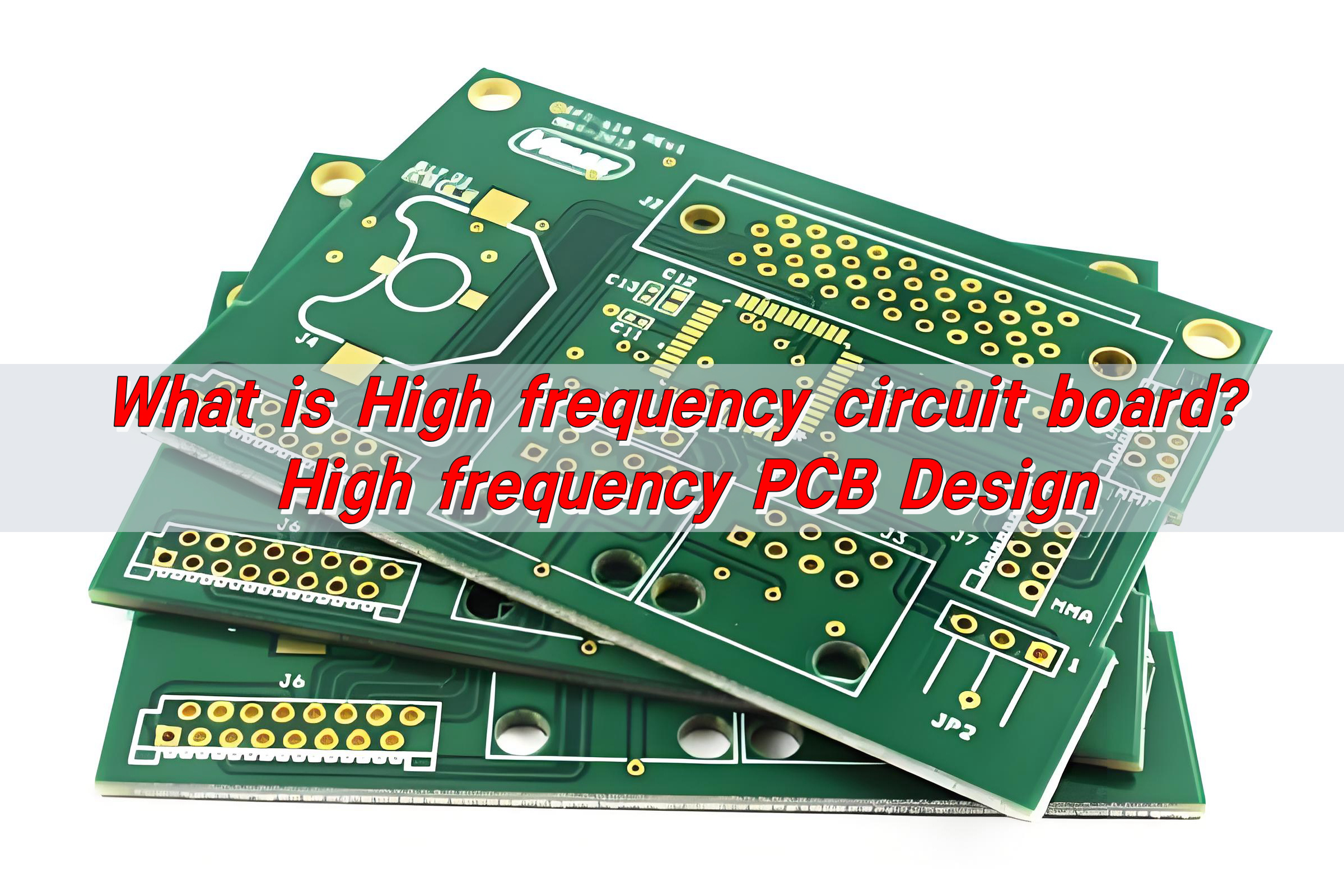
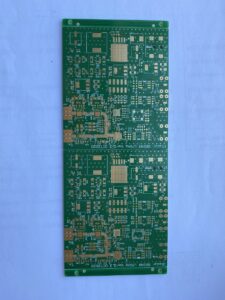
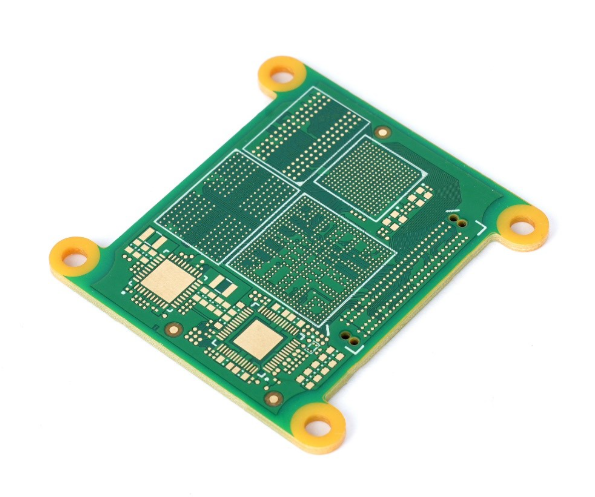
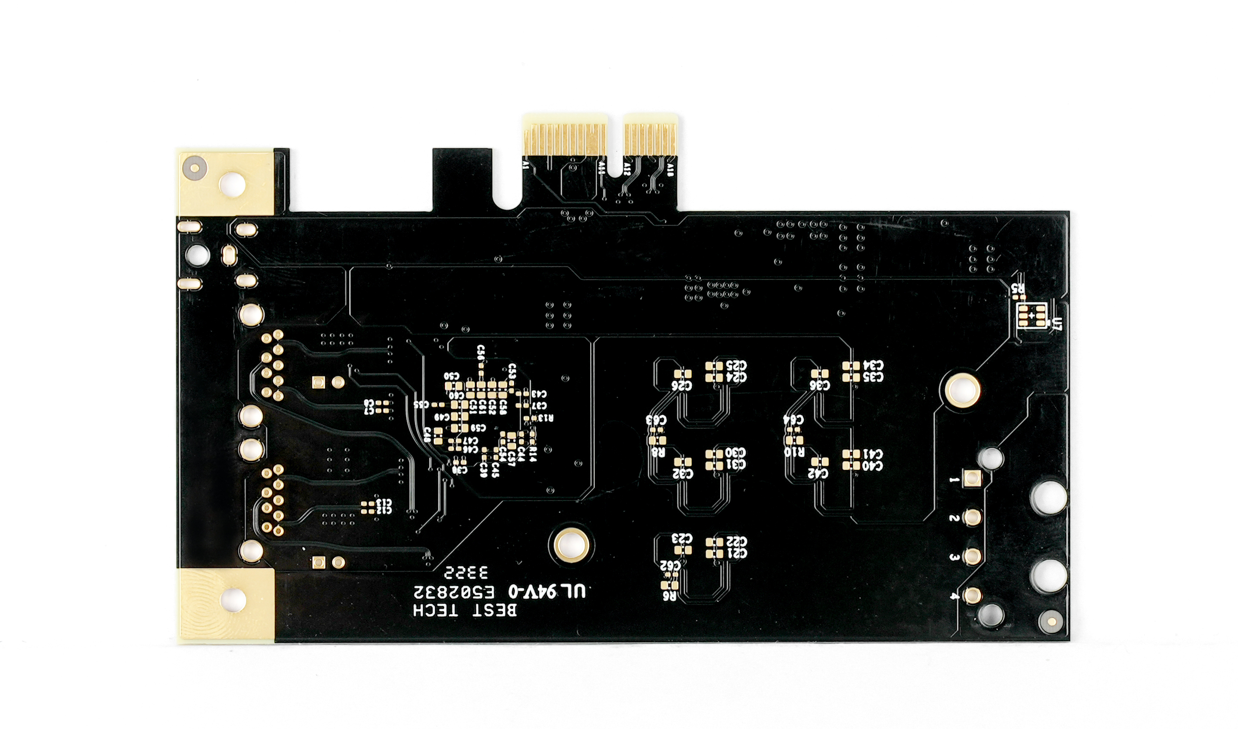
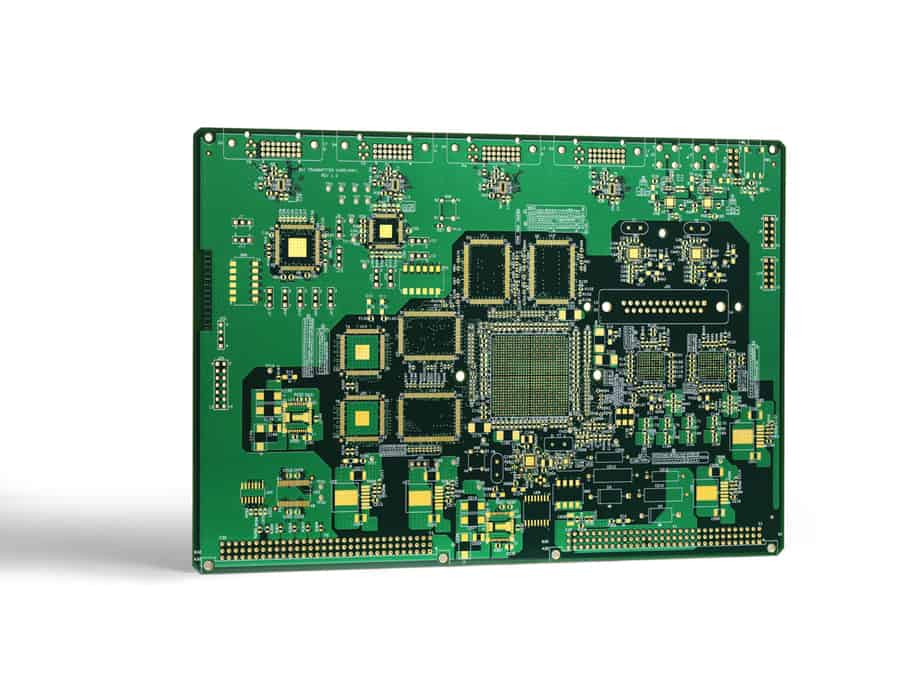
What is high frequency sound board? Let’s discover its material, function, application, lifespan, how to set up and connect sound board to your computer through this blog.

Are you troubled with these questions?

  • Signal integrity issues? High-frequency interference messing up ADC sampling, raising test costs?
  • Prototyping delays? Spotting design flaws late, holding up projects?
  • Welding yield low? Tiny parts having defects, slowing production?

As a sound board manufacturer, EBest Circuit (Best Technology) can provide you service and solution:

  • Full SI simulation: See signal loss clearly from design to product.
  • 72-hour fast prototyping: With DFM review and backup plans.
  • Micro-spacing welding: Custom solutions, guaranteeing 85%+ first-article yield.

Welcome to contact us if you have any request for sound board design, manufacturing and assembly: sales@bestpcbs.com.

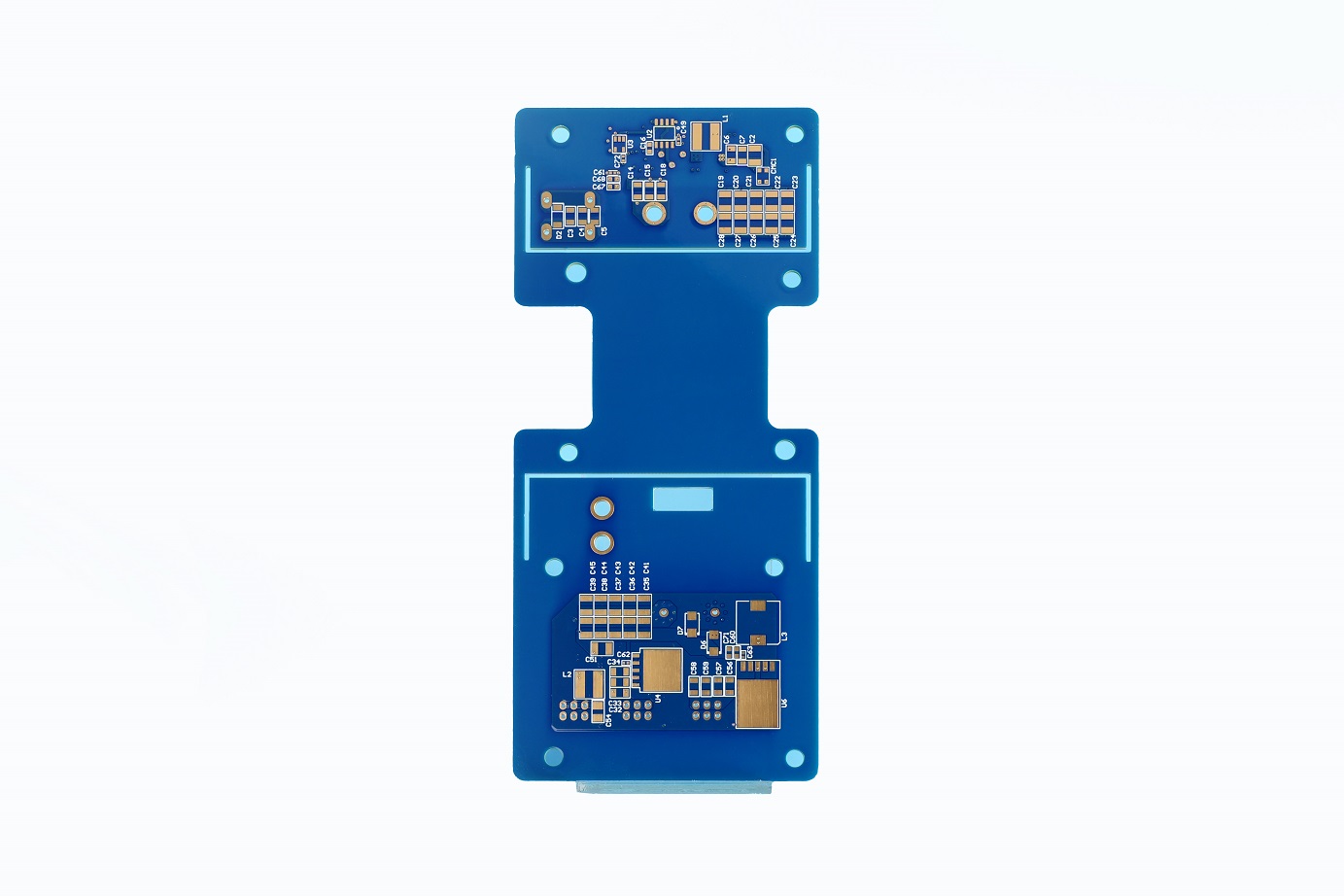
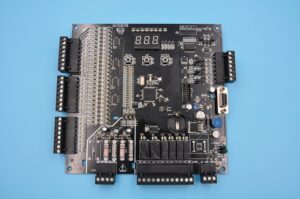
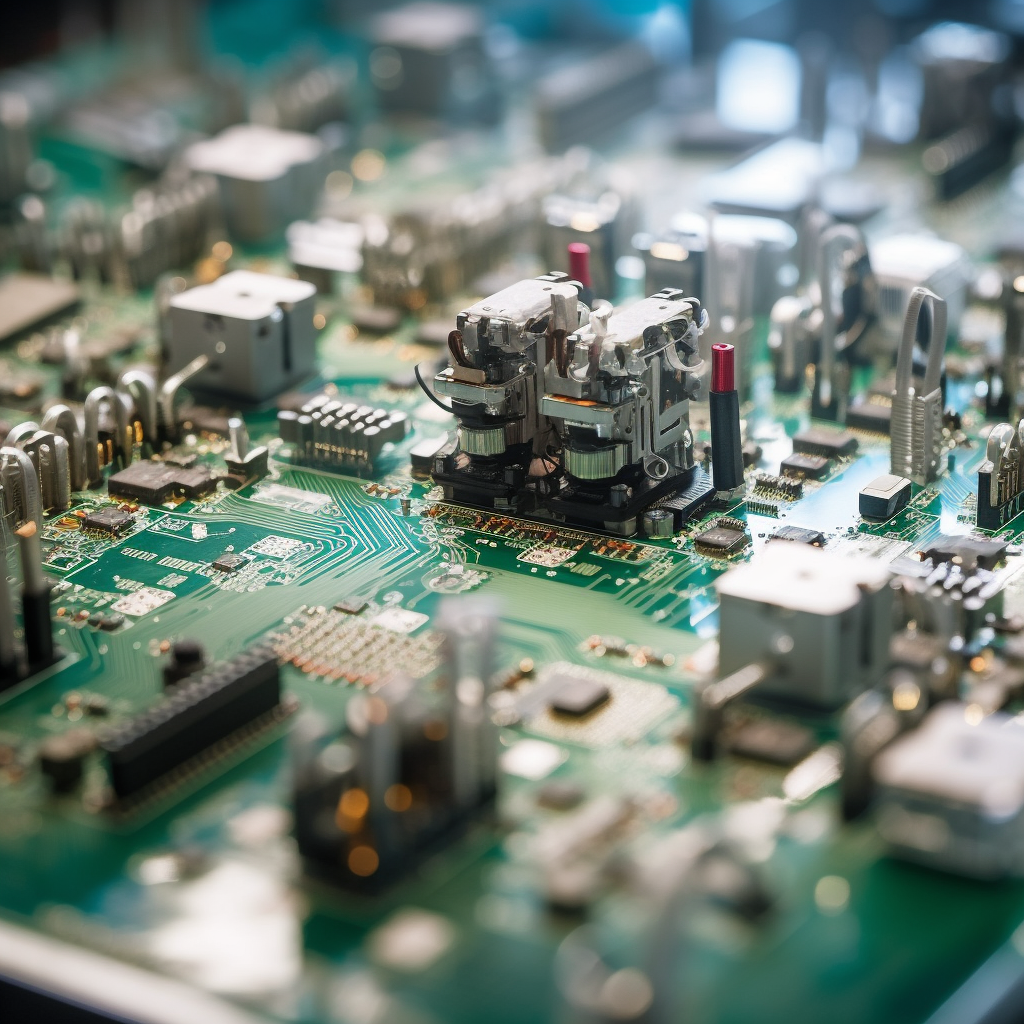
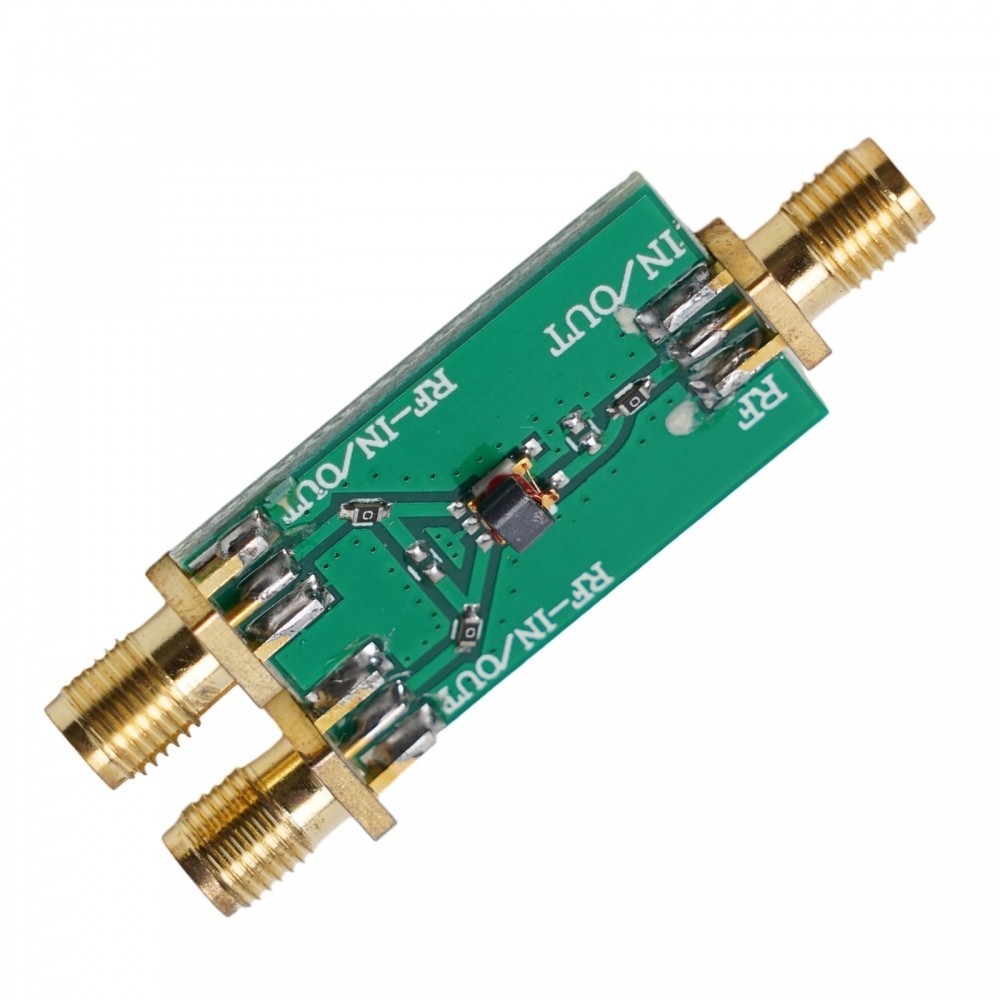
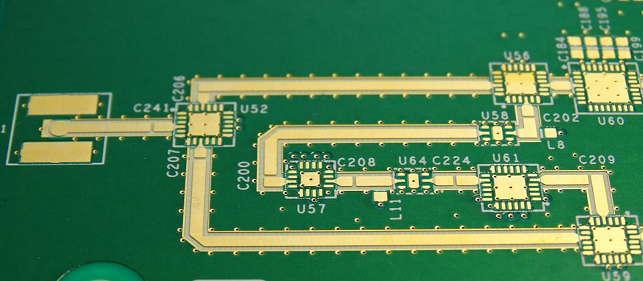
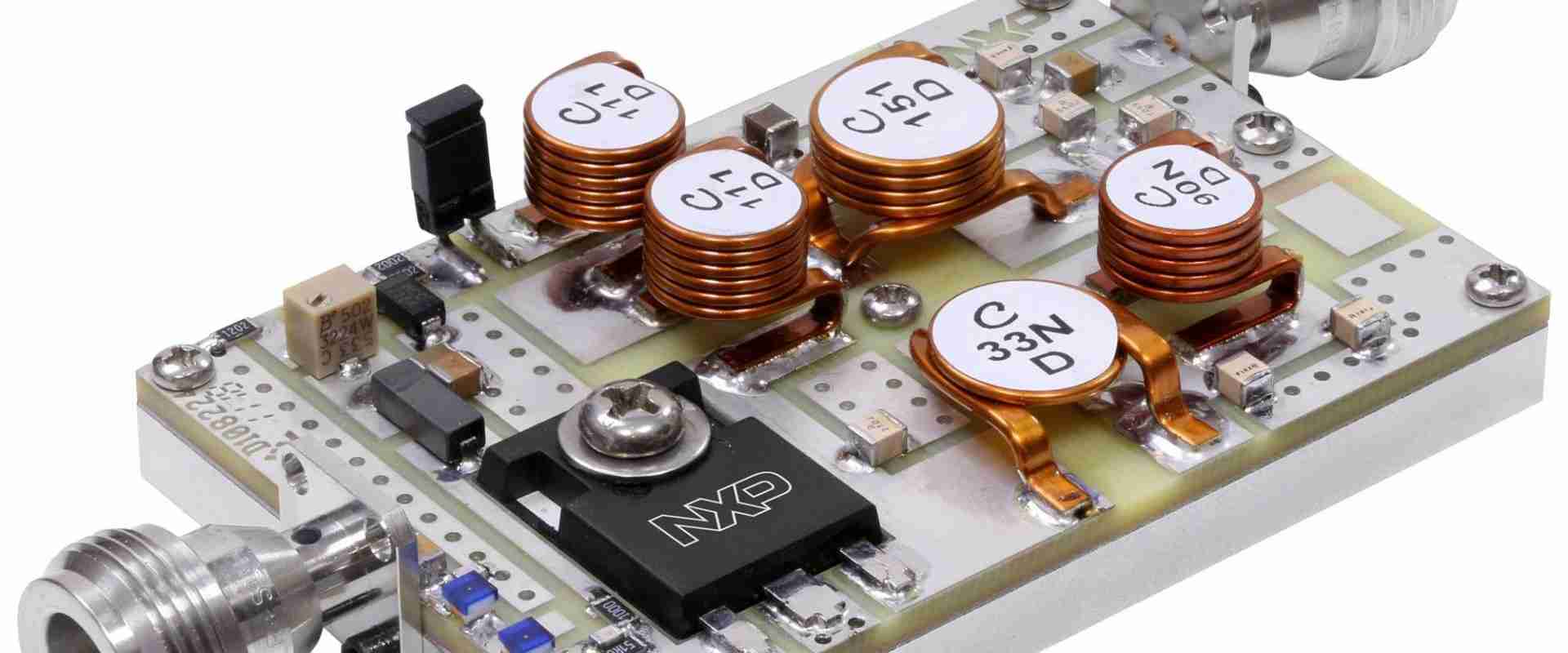
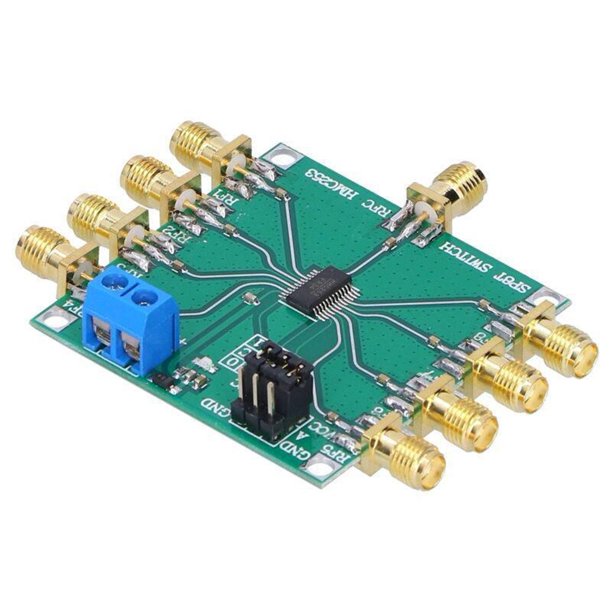
What Is High Frequency Sound Board?

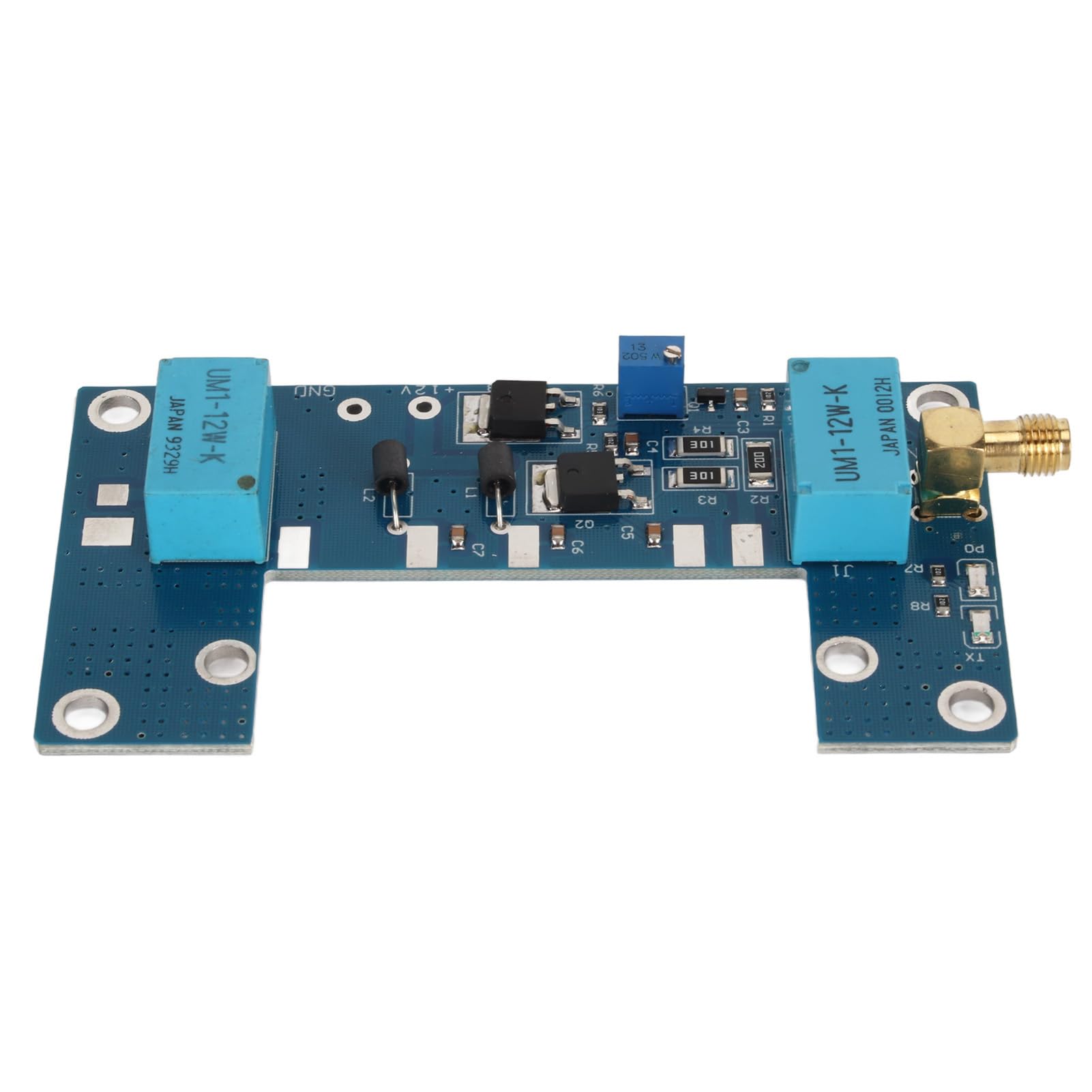
High Frequency Sound Board usually refers to a device or software capable of generating, processing, or playing high-frequency sounds (generally above the upper limit of human hearing range, i.e., above 15,000–20,000 Hertz).

What Is High Frequency Sound Board?

What Material is the High Frequency Sound Board Made of?

Polytetrafluoroethylene (PTFE, Teflon)

  • Features: Ultra-low dielectric loss, high-temperature resistance, chemically stable.
  • Applications: High-frequency fields above 5GHz (e.g., satellite communications, radar).
  • Advantages: Minimal signal loss, high integrity.
  • Limitations: High cost, requires reinforcement.

Modified Polyphenylene Oxide (PPO)

  • Features: Balanced performance and cost, low high-frequency loss.
  • Applications: 1-10GHz range (e.g., automotive collision avoidance systems).
  • Advantages: Cost-effective.
  • Limitations: Limited in ultra-high-frequency applications.

Cyanate Ester Resin

  • Features: High-temperature resistance, excellent insulation.
  • Applications: Aerospace communication equipment.
  • Advantages: Stable in extreme conditions.
  • Limitations: High cost, difficult processing.

Epoxy Resin

  • Features: Low cost, easy processing, but high high-frequency loss.
  • Applications: Low-frequency circuit boards, consumer electronics.
  • Advantages: Suitable for mass production.
  • Limitations: Not ideal for high-frequency sound boards.

FR-4/PPO Composite Substrate

  • Features: Combines FR-4 cost with PPO performance, moderate loss.
  • Applications: Automotive radars, industrial sensors (1-10GHz).
  • Advantages: Balanced performance and cost.
  • Limitations: Insufficient for ultra-high frequencies.

Hydrocarbon (PCH) Resin

  • Features: Low loss, high-frequency performance close to PTFE, lower cost.
  • Applications: 5G base stations, RF modules.
  • Advantages: High cost-effectiveness.
  • Limitations: Long-term stability requires validation.

What Are Function of High Frequency Sound Boards?

Functions of High-Frequency Sound Boards

  • Low-Loss Signal Transmission: Minimize dielectric loss and attenuation for clear signal integrity in satellite, radar, and 5G systems.
  • Impedance Matching: Match component impedance (antennas, transmitters) to reduce reflections and ensure efficient power transfer.
  • Thermal Management: Dissipate heat from resistive and dielectric losses to prevent performance drops and extend component life.
  • Mechanical Stability: Provide a rigid base for mounting components, reducing vibration noise and ensuring consistent electrical performance.
  • EMI Shielding: Use shielding layers or grounding to block interference in crowded RF environments.
  • Frequency Filtering: Integrate passive filters (microstrip) to reject unwanted frequencies in radio receivers and analyzers.
  • High-Speed Digital Support: Enable low-crosstalk, controlled-delay data transmission for servers, data centers, and advanced computing.
What Are Function of High Frequency Sound Boards?

What Is a High Frequency Sound Board Used for?

Applications of high frequency sound board:

  • Wireless Communication: 5G networks, Wi-Fi, Bluetooth, satellite links.
  • Radar & Navigation: automotive ADAS (collision avoidance), aviation/maritime navigation.
  • Medical Imaging: MRI machines, ultrasound devices, surgical lasers.
  • Aerospace & Defense: Electronic warfare, secure military communications, space exploration satellites.
  • Computing & Data Centers: High-speed server interconnects, cloud computing, AI/big data processing.
  • Consumer Electronics: Smartphones, wearables (smartwatches, fitness trackers), smart home devices.
  • Industrial & Scientific Research: Non-destructive material testing, particle accelerators, environmental monitoring sensors.

How to Properly Set up a Sound Board?

1. Hardware Connection and Basic Checks

  • Confirm Interface Types: Identify XLR, TRS, USB, or Thunderbolt interfaces based on your sound board model and match them with microphone, instrument, or computer connections.
  • Test Cables: Use intact cables to connect devices to avoid signal interruptions or noise caused by poor contact.
  • Power Supply and Grounding: Ensure the sound board has an independent power supply (e.g., external power adapter) and avoid sharing sockets with other devices.

2. Driver and Software Configuration

  • Install Official Drivers: Download and install the latest drivers (e.g., Universal Audio Apollo) from the official website to ensure system recognition of the sound board.
  • Set Sample Rate and Bit Depth: In audio software (e.g., DAW), set the sample rate to 44.1kHz/48kHz (for music production) or 96kHz/192kHz (for professional recording). Choose a bit depth of 24-bit or 32-bit floating point to enhance dynamic range.
  • Select Input/Output Channels: Specify the sound board’s inputs (e.g., microphone channels 1-2) and outputs (e.g., monitor headphones/speakers) in the DAW or system audio settings.

3. Input Channel Setup

Gain Adjustment (Gain Staging):

  • Speak softly into the microphone or play an instrument, and slowly increase the gain knob until the input level stabilizes between -18dB and -12dB (avoid clipping distortion).
  • Observe the sound board’s level meters or DAW input signals to ensure no continuous red overload indicators.

Phantom Power:

  • If using a condenser microphone, enable 48V phantom power for the corresponding channel (press the “48V” or “PHANTOM” button).

Input Type Switching:

  • Switch high-impedance instrument inputs (e.g., electric guitar/bass) to “Hi-Z” mode (if available) to avoid signal attenuation.

4. Signal Processing and Equalization (EQ)

  • High-Pass Filter (HPF): Enable the high-pass filter (usually set at 80Hz-120Hz) to filter out low-frequency noise picked up by the microphone (e.g., footsteps, air conditioning hum).
  • Three-Band EQ Adjustment for High Frequencies: Enhance clarity for vocals or strings (e.g., 3kHz-5kHz) and reduce harshness (e.g., above 8kHz).

5. Auxiliary Send and Monitor Control

Auxiliary Output (Aux Send):

  • If connecting effects units (e.g., reverb, delay) or singer in-ear monitors, adjust the corresponding channel’s AUX knob to an appropriate volume.
  • Set up auxiliary tracks in the DAW, load effect plugins, and adjust send levels.

Monitor Mix:

  • Adjust the “MONITOR” or “CUE” knob on the sound board to balance direct and return signals for clear feedback during operation.
  • Use a headphone distributor (if available) to provide independent monitor mixes for multiple users.

6. Main Output and Bus Setup

Main Output Level (Main Out):

  • Connect the sound board’s main outputs (L/R) to speakers or recording devices and adjust the main fader to control overall volume.
  • Ensure correct speaker polarity (consistent positive/negative connections) to avoid sound cancellation.

Bus Processing (Optional):

  • Create bus tracks in the DAW (e.g., drum bus, accompaniment bus) for unified processing of similar signals (e.g., compression, EQ, effects).

7. Testing and Fine-Tuning

Signal Chain Check:

  • Test each microphone/instrument channel individually to confirm no muting (MUTE), phase inversion, or wiring faults.
  • Record a short audio clip and check for complete waveforms (no truncation or excessively low levels).

Environment Adaptation:

  • Adjust speaker positions based on room acoustics (e.g., avoid reflective surfaces) or use acoustic treatment materials (e.g., acoustic foam, diffusers).
  • If feedback occurs, reduce the corresponding frequency’s EQ or move the microphone away from speakers.

How Do I Connect a Sound board to My Computer?

1. Check the audio board’s interface type:

  • Look for USB, 3.5mm audio jacks (microphone/headphone), TRS/XLR (pro gear), or PCIe slots (internal cards).
  • Choose the right connection based on the interface.

2. Connect via USB:

  • Plug the USB cable into the audio board and your computer (use USB 2.0 or higher).
  • Most USB boards work automatically; some pro models may need official drivers.

3. Connect via 3.5mm audio jacks (analog signals):

  • For audio output (e.g., headphones), link the board’s 3.5mm output to your computer’s “Line In” or mic port (check port function).
  • For input (e.g., mic), connect the board’s input port to your computer’s mic port.

4. Connect via TRS/XLR (pro equipment):

  • Use adapters like XLR-to-3.5mm or TRS-to-6.35mm to match your computer’s ports.
  • After connecting, manually select the board in your computer’s sound settings (e.g., “Realtek Audio” or board brand).

5. Install a PCIe internal sound card:

  • Turn off your computer and unplug it. Open the case, find an empty PCIe slot, and insert the board firmly.
  • Restart and install drivers (usually from the manufacturer’s website or included CD).

6. Install drivers:

  • Download the latest drivers from the manufacturer’s site.
  • Run the installer, restart your computer, and verify the board appears in your sound settings.

7. Set up audio settings:

  • Open sound settings (Windows: Settings → System → Sound; Mac: System Preferences → Sound).
  • Choose the audio board as the default for both output (playback) and input (recording).
  • Adjust volume and test audio.

8. Test and fix issues:

  • Play music or record to check for sound.
  • No sound? Check cables, enable the device, or reinstall drivers.
  • Noise? Try a new cable, adjust the sample rate (e.g., 44.1kHz/16bit), or close other audio apps.

9. Use optional audio software:

  • Some boards include tools for sound effects, mixing, or multi-channel output (e.g., ASIO drivers). Install and explore for pro features.
    How Do I Connect a Sound board to My Computer?

    How Long Does a High Frequency Soundboard Last?

    The lifespan of a high frequency soundboard typically ranges from 5 to 15 years, depending on factors such as device quality (industrial-grade components can last over 10 years, while consumer-grade models may only last 3-5 years), usage environment (high temperatures and humidity accelerate aging), and maintenance frequency (regular cleaning and firmware updates can extend its lifespan). Replacement should be considered if frequent failures occur, performance no longer meets requirements, or spare parts become unavailable.

    How Long Does a High Frequency Soundboard Last?

    Why Choose EBest Circuit (Best Technology) as Sound Board Manufacturer?

    Reasons why choose as high frequency sound board manufacturer:

    Competitive Pricing Without Compromising Quality

    • No hidden fees, transparent pricing tailored to your budget and project scale.

    Fast Lead Times & Rapid Prototyping Service

    • 7–10 working days for prototype production; 3–4 weeks for bulk orders (industry-leading speed).
    • For urgent orders, we provide 48 hours rapid prototyping service.

    Premium Quality Assurance

    • 100% AOI (Automated Optical Inspection) and X-ray testing for soldering reliability.
    • Certification: ISO9001:2015; ISO13485:2016; REACH; RoHS; IATF16949.

    Free DFM (Design for Manufacturability) Review

    • Our engineers analyze your design before production to identify cost-saving tweaks, improve manufacturability, and avoid delays.

    One-Stop Service From Prototype to Mass Production

    • We will handle everything from design, prototyping, mass production and PCBA to save your time and energy cost.

    Customization Flexibility

    • Tailor sound boards to your needs: shape, size, input/output ports, control interfaces, and firmware.
    • Support for analog/digital mixing, wireless connectivity (Bluetooth/Wi-Fi), and AI-powered noise reduction.

    Eco-Friendly & Sustainable Practices

    • Lead-free soldering and recyclable packaging minimize environmental impact.
    • Energy-efficient factories powered by renewable energy (where available).

    Welcome to contact us if you have any request for high frequency sound board: sales@bestpcbs.com.

    You may also like

    High Speed ADC Board Design & Assembly, Turnkey Solution

    September 8th, 2025

    What is high speed ADC board? Let’s discover its components, types, benefits, application, design and assembly processes and recommended assembly service supplier.

    Are you troubled with these problems?

    • Signal integrity issues? High-frequency interference messing up ADC sampling, raising test costs?
    • Prototyping delays? Spotting design flaws late, holding up projects?
    • Welding yield low? Tiny parts having defects, slowing production?

    EBest Circuit (Best Technology) can provide you service and solution:

    • Full SI simulation: See signal loss clearly from design to product.
    • 72-hour fast prototyping: With DFM review and backup plans.
    • Micro-spacing welding: Custom solutions, guaranteeing 85%+ first-article yield.

    Welcome to contact us if you have any request for high speed ADC board assembly: sales@bestpcbs.com.

    What Is High Speed ADC Board?

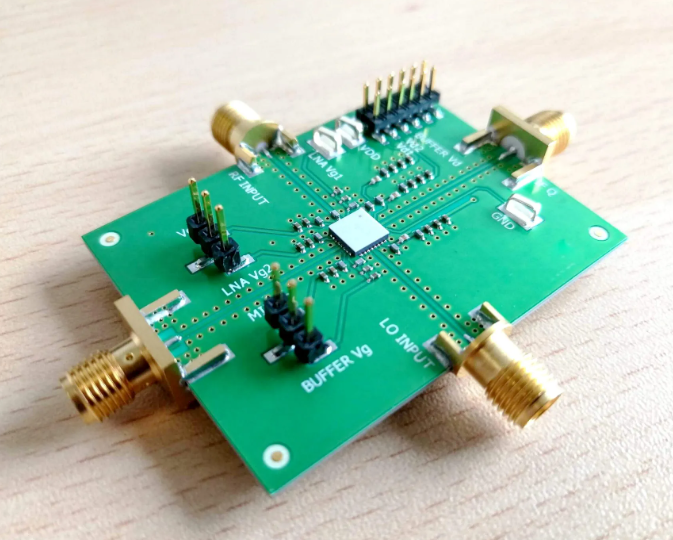
    A High Speed ADC Board is an electronic hardware device designed to convert high-frequency analog signals (such as radio waves, laser pulses, or rapidly changing sensor outputs) into digital data within extremely short timeframes.

    Its core function is to capture instantaneous signal details through ultra-fast sampling (billions of samples per second) and integrate signal conditioning circuits with high-speed data interfaces to ensure rapid, accurate data transmission to processors or storage systems.

    What Is High Speed ADC Board?

    What Are Components of High Speed ADC Board?

    • ADC Chip: Core component converting analog to digital signals, supporting high sampling rates (GS/s) and resolution (12-16 bits).
    • Analog Front-End Circuitry: Preprocesses signals with amplifiers, filters, and buffers to reduce noise and match ADC range.
    • Clock Management System: Provides low-jitter, synchronized clocks via precision sources and distribution networks.
    • Power Supply Subsystem: Supplies clean, stable voltage using regulators and filters to minimize noise impact.
    • Digital Interface Module: High-speed interfaces (e.g., LVDS, JESD204B/C) connect ADC to processors for data transmission.
    • Control Logic Unit: Uses microcontroller/FPGA for ADC configuration, data management, and real-time control.
    • PCB: Multi-layer design with high-speed routing, impedance matching (50Ω), and grounding to reduce interference.
    • Thermal Management: Includes heat sinks or fans to dissipate heat for stable operation.
    • Connectors: External ports (e.g., SMA, BNC) for signal access and system integration.
    • Memory Module (Optional): FIFO buffer RAM for temporary data storage to prevent overflow.

    What Are Types of High Speed ADC Boards?

    General-Purpose High-Speed Data Acquisition Boards:

    • Features: Versatile, with GS/s sampling and 12 – 14-bit resolution.
    • Applications: Lab tests, industrial data collection, and research like signal and sensor analysis.

    ADC Boards for Communication Systems:

    • Features: Optimized for 5G/LTE, with high-speed serial interfaces (JESD204B/C) for low-latency data transfer. High dynamic range and anti-interference.
    • Application: Base stations and RF front-end modules.

    ADC Boards for Radar & Imaging:

    • Features: Used in radar, medical imaging (MRI/ultrasound), and military. High-frequency processing (>10 GS/s) and low noise. Built-in FPGAs for real-time processing, support pulse compression and image reconstruction.
    • Applications: Radar signal and medical imaging processing.

    FPGA-Integrated ADC Boards:

    • Features: Combine high-speed ADCs with FPGAs (Xilinx/Intel). Flexible interfaces (FMC/HSMC) for custom logic.
    • Application: AI acceleration and embedded system development.

    PCIe High-Speed ADC Cards:

    • Features: Connect via PCIe for >10 Gbps data transfer.
    • Application: PC-based data collection like audio/video testing and production line monitoring.

    Networked Remote ADC Modules:

    • Features: Support Ethernet/Wi-Fi for distributed data and IoT. Low power and remote control.
    • Application: Wireless signal monitoring and remote experiments.

    Customized ADC Boards:

    • Features: Designed for special needs like aerospace. Optimized for size, power, or temperature. Radiation-resistant for extreme conditions.
    • Application: Data collection in harsh environments.
    What Are Types of High Speed ADC Boards?

    What Are Advantages of High Speed ADC Board?

    • Low Power Consumption Design: Employs open-loop amplification or monotonic capacitor switching techniques, reducing power consumption by 60% – 81%.
    • High Dynamic Performance: Supports a high signal-to-noise and distortion ratio (SNDR ≄ 57 dB) and has low total harmonic distortion (THD ≀ -76 dB), meeting the requirements of precision measurement applications.
    • Simplified System Integration: Integrates a digital output buffer (supporting a 0.5V low-voltage interface) and on-chip decoupling capacitors, minimizing the number of required external components.
    • Strong Scalability: Provides standardized interfaces (such as FMC connectors), facilitating easy integration with FPGA platforms.
    What Are Types of High Speed ADC Boards?

    What Are Applications of High Speed ADC Board?

    Communication

    • 5G base stations handle high-speed and high-frequency analog signal transmission.
    • Satellite communication ground stations receive and demodulate weak satellite signals.
    • Optical fiber communication equipment converts analog electrical signals after optical reception.

    Radar

    • Military air defense radars identify air target information.
    • Weather monitoring radars grasp precipitation and storm changes.
    • Automotive anti-collision radars judge the danger of obstacles ahead.

    Medical

    • CT scanners generate images of internal human body structures.
    • Ultrasound diagnostic instruments display dynamic images of human organs.
    • MRI equipment constructs high-resolution images of human tissues.

    Aerospace

    • Aircraft navigation systems calculate flight attitude, position, and speed.
    • Spacecraft telemetry systems monitor operational status parameters.

    Scientific Research

    • Particle accelerator experiments record particle collision information.
    • High-energy physics experiments obtain precise data of weak signals.

    How to Design High Speed ADC Evaluation Board?

    1. Power Design Considerations

    Isolation & Decoupling:

    • Use separate power domains (AVDD, DVDD, CLKVDD) to prevent digital noise coupling.
    • Place multi-stage decoupling capacitors (0.1ÎŒF + 10ÎŒF + 100ÎŒF) near each power pin.

    Power Sequencing:

    • Follow the ADC’s specified power-up order (e.g., PVDD before DVDD) to avoid latch-up.

    Noise Suppression:

    • Add ferrite beads (e.g., BLM18PG) or inductors on LDO outputs for high-frequency isolation.

    2. Clock Design Considerations

    • Low-Jitter Source: Use a dedicated low-jitter clock (e.g., SiT9102) with jitter <10% of ADC aperture jitter.
    • Distribution & Matching: Control differential clock impedance (100Ω ±10%) and match trace lengths (±50mil).
    • Isolation: Keep clock traces away from digital signals and add AC coupling caps (0.1ÎŒF) at inputs.

    3. Analog Signal Chain Considerations

    • Impedance Matching: Design matching networks (T/π filters or transformers) for ADC input impedance (e.g., 50Ω).
    • Anti-Aliasing Filter (AAF): Set cutoff at 0.4× sampling rate (80% Nyquist) and avoid high-order filters (>4 stages).
    • Protection: Add clamping diodes (e.g., BAT54S) and keep analog traces short (<500mil) to minimize parasitics.

    4. Digital Interface Considerations

    • JESD204C/LVDS Optimization: Match differential pairs (100Ω) and add 100Ω termination resistors at receivers.
    • Level Compatibility: Use level shifters (e.g., SN74AVC4T245) if ADC output (LVDS/CMOS) mismatches FPGA.
    • Sync & Reset: Include SYNC~ signals for JESD204C synchronization and debounce reset circuits.

    5. PCB Layout & Manufacturing

    • Stackup & Partitioning: Use a 6-layer stackup (Sig-GND-Power-Power-GND-Sig) with analog/digital ground isolation.
    • Critical Routing: Prefer blind/buried vias for high-speed signals and add stitching vias for impedance continuity.
    • Thermal & Reliability: Add via arrays under ADC for heat dissipation and fill via-in-pads with conductive epoxy.

    6. EMC & Testing

    • EMC Protection: Use TVS diodes (e.g., SMAJ5.0A) for ESD and ferrite beads for power noise isolation.
    • Test Points: Reserve test pads for power, clock, and analog inputs without probing high-speed lines directly.
    • Temperature Compensation: Select low-drift references (e.g., ADR4525, ±5ppm/°C) and validate performance at extremes.

    7. BOM & Supply Chain

    • Component Selection: Prioritize automotive/industrial-grade parts (-40°C to +125°C) and validate alternatives via simulation.
    • Lifecycle Management: Avoid obsolete parts (check Digi-Key) and use common packages (e.g., 0402) for cost efficiency.
    • DFM: Add teardrops to pads and avoid 0201 packages for easier assembly.
    How to Design High Speed ADC Evaluation Board?

      How To Assemble High Speed ADC Development Board?

      1. Prepare Tools and Workbench

      • Clean the workbench: Clear the work area of clutter to create a clean and organized environment for assembly.
      • Wear an antistatic wrist strap: Prevent damage to delicate electronic components from static electricity generated by the human body.
      • Gather tools: Prepare precision screwdrivers, tweezers, a soldering iron (or hot air gun), flux, a desoldering pump, and a multimeter.
      • Check components: Cross-reference the Bill of Materials (BOM) to ensure all required parts for assembly are present and that the tools are suitable for fine electronic work.

      2. Verify Components and Circuit Board

      • Component verification: Check each component’s model, specifications, and quantity against the BOM, including the ADC chip, power module, capacitors, resistors, and connectors.
      • Board inspection: Examine the circuit board surface for scratches, shorts, or open circuits.
      • Position alignment: Confirm that each component matches the corresponding pads on the board for accurate installation.

      3. Solder Surface-Mount Components

      Wear an antistatic wrist strap and solder components from smallest to largest:

      • Solder small 0402/0603 resistors and capacitors using drag or spot soldering, avoiding bridges.
      • For BGA-packaged ADC chips, apply flux to pads and heat using a hot air gun or reflow oven following the temperature profile to prevent localized overheating.
      • When soldering QFN/LGA components, align pins carefully and use tweezers for support during soldering.

      4. Install Through-Hole Components
      For components like power connectors, headers, and switches, manual soldering is sufficient:

      • Insert component leads into corresponding holes, heat pads from the back of the board, and remove the soldering iron promptly once the solder melts to keep leads upright.
      • Trim excess leads to less than 1.5mm to prevent short circuits.

      5. Connect External Modules and Interfaces

      Install sub-boards or expansion modules (e.g., clock modules, signal conditioning circuits) as per design requirements:

      • Secure modules with headers or connectors to ensure good contact.
      • Control solder volume when soldering RF coaxial interfaces or high-speed differential lines to avoid signal distortion.

      6. Preliminary Inspection and Cleaning

      • Use a multimeter to test power lines, ground lines, and key signal lines for continuity, shorts, or opens.
      • Clean flux residue and solder splatter from the board using alcohol and an antistatic brush to prevent long-term corrosion and poor contact.

      7. Functional Testing and Debugging

      • Connect power and an oscilloscope, power up gradually, and monitor voltage stability.
      • Input test signals (e.g., sine waves, square waves) and use a logic analyzer or PC software to verify ADC sampling accuracy, signal-to-noise ratio (SNR), and other parameters against specifications.
      • Adjust component parameters (e.g., matching resistors, decoupling capacitors) or optimize layout based on test results until performance meets requirements.

        Why Choose EBest Circuit (Best Technology) as ADC Board Assembly Supplier?

        Reasons why choose us as ADC board assembly supplier:

        • Trusted Industry Leader: 19 years of experience and 500+ clients served, including medical, 5G, and precision instrumentation projects.
        • Turnkey Solution: From design and component sourcing to PCB fabrication, SMT/DIP assembly, and testing, we streamline every step—cutting costs and speeding up delivery.
        • Free DFM: Provide free DFM for optimizing high-speed layouts, power integrity, and signal conditioning for top-tier sampling accuracy and SNR performance.
        • Precision SMT Production: Automated lines handle 0201/0402 components and complex packages (BGA/QFN) with 99.8%+ yield rates and AOI and X- Ray quality checks.
        • Strict Quality Control: ISO 9001-certified, with 100% inspection of critical processes to ensure reliable boards.
        • Flexible & Fast Manufacturing: Support small prototypes (50+ units) to large-scale runs (100K+/month), with 72-hour rapid prototyping for urgent needs.
        • Custom Design Solutions: Tailored PCB stacking, EMC/EMI fixes, and thermal management for industrial, medical, and telecom applications.
        • Cost-Effective & Stable Supply Chain: Long-term partnered with top suppliers to reduce BOM costs by 10–30% while securing stable component availability.

        Welcome to contact us if you have any request for ADC board assembly service: sales@bestpcbs.com.

        You may also like

        PCB board with high frequency laminate​, High frequency PCB

        September 8th, 2025

        PCB board with high frequency laminate is a specialized printed circuit board designed to handle signals in the GHz range with minimal loss. Unlike standard FR-4 boards, it uses advanced laminate materials such as PTFE, ceramic-filled PTFE, or hydrocarbon composites to ensure low dielectric constant and low dissipation factor.

        These properties allow the board to deliver stable electrical performance, maintain signal integrity, and reduce electromagnetic interference. High-frequency PCBs are essential in applications like 5G networks, radar systems, satellite communication, and RF devices, where even small signal distortions can impact overall performance.

        Are you curious about EBest Circuit (Best Technology)’s pcb board with high frequency laminate?

        • What is the maximum operating frequency and substrate type for high-frequency boards?
        • What substrate/copper foil thicknesses are supported?
        • What is the standard lead time?

        EBest Circuit (Best Technology)’s pcb board with high frequency laminate can answer these questions.

        • High-frequency boards use Rogers or Telfon substrates, and their frequencies typically range from 300MHz to 3GHz.
        • Supported substrate thicknesses range from 0.5mm to 3.0mm (0.02″ to 0.12″), and copper foil thicknesses include 0.5oz, 1.0oz, 2.0oz, and 3.0oz.
        • Sample delivery time is 7-9 days, and mass production (MP) lead time is 8-10 days.

        What is the best PCB material for high-frequency?

        Selecting the right PCB material is critical for high-frequency performance. It determines signal integrity, stability, and overall reliability. High-frequency circuits demand materials with low dielectric loss, stable thermal behavior, and minimal signal distortion.

        The most popular materials for high-frequency boards include:

        • PTFE (Polytetrafluoroethylene): Known for its low dielectric constant and excellent signal transmission.
        • Rogers Laminates: A trusted brand offering laminates like RO3000 and RO4000 series for RF and high-speed designs.
        • Ceramic-Filled PTFE: Provides improved mechanical strength and thermal performance compared to standard PTFE.
        • Hydrocarbon Laminates: Offer a balance of cost-effectiveness and electrical properties for mid-frequency designs.

        Each option has its benefits. PTFE remains the top choice for the highest frequency designs due to its superior electrical characteristics.

        Hydrocarbon laminates are often chosen when cost and performance need balance. They work well for mid-range frequency designs while keeping costs lower than pure PTFE boards. The best material depends on your application.

        Which materials have the highest frequency?

        For extreme frequency applications, materials must maintain stable electrical characteristics under high speed. The dielectric constant (Dk) and dissipation factor (Df) must be low and consistent across the operating range.

        • Rogers RO3003: Excellent for frequencies above 10 GHz.
        • Taconic RF Series: Offers stable electrical performance for RF applications.
        • Arlon Laminates: Known for thermal reliability and consistent performance.

        These materials minimize signal degradation even at very high frequencies, making them essential for satellite, radar, and 5G applications.

        Choosing these advanced laminates ensures your PCB can handle frequencies beyond 20 GHz without signal degradation.

        What is considered high-frequency in PCB?

        The term high-frequency refers to boards that handle signals above 300 MHz. However, in most cases, it applies to frequencies in the GHz range.

        Digital systems often reach 50 MHz to 1 GHz. RF circuits start from 300MHz and go beyond 3 GHz. Microwave applications typically work between 20 GHz and 100 GHz.

        As frequencies increase, material choice and design accuracy become more critical. Even minor variations in dielectric constant can cause signal delays or losses.

        For designs above 1 GHz, standard FR-4 material is not suitable. High-frequency laminates are necessary to maintain performance and minimize interference.

        What is the highest frequency PCB?

        The highest frequency PCBs can support signals over 100 GHz. These boards are used in radar systems, satellite communication, and advanced wireless technologies.

        Such boards require:

        • Ultra-low Dk and Df materials
        • Precise impedance control
        • Advanced fabrication processes

        PTFE-based laminates combined with ceramic fillers remain the standard for these extreme-frequency applications. Manufacturing these boards demands strict process control. Small errors in thickness or copper roughness can affect performance significantly.

        What is lamination in PCB?

        Lamination is the process of bonding copper layers to dielectric materials under heat and pressure. It forms the multilayer structure of a PCB.

        In high-frequency boards, lamination is even more critical. It must ensure consistent thickness, strong adhesion, and zero defects.

        The process affects electrical performance, especially impedance control. Incorrect lamination can cause air gaps or uneven layers, which impact signal transmission.

        High-quality lamination keeps your board reliable under high-speed operation. It ensures smooth copper surfaces, accurate layer alignment, and long-term durability.

        How to design a high-frequency PCB?

        Designing a PCB board with high frequency laminate requires attention to detail. Here are the core steps:

        • 1. Choose the Right Laminate

        Select a material with low Dk, low Df, and stable thermal properties.

        • 2. Control Impedance

        Use proper trace widths and spacing to maintain impedance.

        • 3. Reduce Crosstalk

        Keep high-speed signals away from each other. Add ground planes when possible.

        • 4. Minimize Signal Loss

        Avoid unnecessary vias. Use smooth copper to reduce attenuation.

        • 5. Consider Stack-Up

        A well-planned layer stack-up improves performance and reduces EMI issues.

        How to reduce electromagnetic interference in PCB?

        Electromagnetic interference (EMI) can degrade the performance of high-frequency circuits. Here’s how to reduce it:

        • Add Ground Planes: They provide a return path and reduce noise.
        • Use Shielding: Metal enclosures or conductive coatings can block external interference.
        • Shorten Signal Paths: Long traces act as antennas and increase EMI.
        • Filter Power Lines: Use decoupling capacitors to reduce noise on power rails.
        • Maintain Proper Spacing: Keep noisy and sensitive components apart.

        Following these steps ensures a clean signal and improves board reliability. These techniques keep your board stable and interference-free.

        What is the difference between high-speed and high-frequency PCB?

        High-speed and high-frequency PCBs are different, though often confused.

        • High-Speed PCB: Refers to fast digital signals with sharp rise times, typically in MHz or low GHz.

        The main difference lies in signal type and frequency range. High-speed boards emphasize signal integrity for digital data, while high-frequency boards handle analog signals like RF transmissions.

        When should you use high-frequency?

        You should choose a high-frequency PCB when your application works in the GHz range. These boards are essential for wireless communication, radar, and RF systems.

        Use high-frequency PCBs for devices like smartphones, Wi-Fi routers, and 5G base stations. They are also required in satellite equipment, medical imaging systems, and automotive radar.

        Any application needing low signal loss, stable impedance, and consistent performance at high speed requires these boards.

        Standard FR-4 materials cannot provide the stability needed at these frequencies. High-frequency laminates are the only reliable choice.

        If you need expert solutions for high-frequency PCBs, contact us at sales@bestpcbs.com. Our team is ready to provide professional support and the best quality boards for your application.
        You may also like

        How to Choose Copper Busbar Material?

        September 1st, 2025

        How to choose copper busbar material? Let’s discover its material datasheet, material grades and properties, material selection guide, difference between T1 and T2 busbar material through this blog.

        Are you worried about these problems?

        • How to balance insufficient current-carrying capacity with cost?
        • How to ensure lifespan under high-current conditions?
        • Can non-standard designs be delivered quickly?

        EBest Circuit (Best Technology) can provide solutions:

        • High-Conductivity Copper: +15% conductivity with thinner design for cost reduction.
        • Durable Protection: Tin/silver plating + passivation layer, 720h salt spray test.
        • Agile Production: 3-day prototype delivery, supports 0.1mm precision adjustments.

        Welcome to contact us if you have any request for copper busbar: sales@bestpcbs.com.
        What is Copper Busbar?

        Copper Busbar is a rectangular, circular, or tubular copper conductor used in power systems for high-current transmission. As a core component in busbar trunks and grounding systems, it directly carries large currents. Its advantages include high conductivity (superior to aluminum), thermal conductivity, corrosion resistance, and mechanical strength, supporting complex installation needs. Surfaces are often tin/silver-plated for enhanced durability.

        What is Copper Busbar?

        Copper Busbar Material Datasheet

        Parameter CategoryT1/TU1 (Oxygen-Free Copper)T2 (Grade 2 Copper)T3 (Grade 3 Copper)TMY (Hard-State Copper)Tin-Plated Copper (T2 Base)Silver-Plated Copper (T2 Base)
        Conductivity (%IACS)≄101≄100≄98≄97≄98≄99
        Tensile Strength (MPa)200–250220–280240–300350–450220–280220–280
        Elongation (%)≄40≄35≄306–15≄35≄35
        Hardness (HV)40–6045–6550–70100–12045–6545–65
        Density (g/cmÂł)8.948.898.858.898.898.89
        Softening Temperature (°C)200190180150190190
        Typical StandardASTM B152GB/T 5585GB/T 5231IEC 60439ASTM B33ASTM B298

        Common Copper Busbar Material Grade & Properties

        T1 (Grade 1 Copper) / TU1 (Oxygen-Free Copper)

        • Properties: Ultra-high purity (≄99.95%), optimal conductivity/thermal conductivity, excellent plasticity (easy to bend/stretch), but low strength/hardness.
        • Applications: Ultra-precision electrical instruments, high-frequency circuits, vacuum devices, superconducting equipment supports.

        T2 (Grade 2 Copper)

        • Properties: High purity (≄99.90%), good conductivity/thermal conductivity, excellent processability; contains trace oxygen (lower cost than T1).
        • Applications: Most common copper busbar material. Used in power distribution systems (switchgear, transformers), high-current conductors, and busbar connections.

        T3 (Grade 3 Copper)

        • Properties: Purity ≄99.70%, slightly lower conductivity/thermal conductivity than T2, higher strength/hardness, good plasticity, lower cost.
        • Applications: Cost-sensitive or moderate strength needs (e.g., general-purpose electrical connections).

        TMY (Hard-State Copper Busbar)

        • Properties: Typically T2 in hard (R) state. Cold-worked (rolled/drawn) for high strength/hardness, but reduced plasticity/conductivity.
        • Applications: Structural supports, rigid connections, vibration-resistant components (common in distribution cabinets).

        Soft Copper (O-State Copper)

        • Properties: Annealed T2/TU1 in fully soft (O) state. Extremely pliable, highest conductivity (near-theoretical), but lowest strength.
        • Applications: Flexible connections, complex-shaped components (e.g., jumpers, internal device soft links).

        Tin-Plated Copper

        • Properties: T2 copper with tin coating. Enhanced oxidation/corrosion resistance, improved solderability, stable contact resistance.
        • Applications: Marine/outdoor equipment, high-humidity environments, tin-soldered connections.

        Silver-Plated Copper

        • Properties: Silver-coated copper. Superior conductivity (silver is best conductor), low/stable contact resistance, high corrosion/wear resistance.
        • Applications: High-current/high-frequency contacts (e.g., HV switchgear, radar systems), sulfur-rich environments.

        Special Copper Alloys (e.g., Cd, Zr, Cr-Zr)

        • Properties: Copper with trace alloying elements (Cd, Zr, Cr). Slight conductivity loss for high strength/hardness, wear resistance, and elevated-temperature stability.
        • Applications: High-stress/high-heat components (e.g., switch contacts, welding electrodes, furnace busbars).
        Common Copper Busbar Material Grade & Properties

        How to Choose Copper Busbar Material?

        Below are selection guide to copper busbar material:

        1. Material Type and Conductivity

        High-purity copper as the foundation:

        • Electrolytic Tough Pitch (ETP) copper (purity ≄99.9%) is the industry standard, offering ≄98% IACS conductivity for minimal energy loss.
        • Oxygen-Free Electronic (OFE) copper (purity ≄99.99%) is ideal for high-frequency applications (e.g., RF systems) due to its ultra-low oxygen content (<0.0005%), preventing oxide formation at joints.

        Alloy avoidance:

        • Unless mechanical strength is critical (e.g., seismic zones), skip brass or copper alloys, as even 0.5% alloy addition can reduce conductivity by 5–10%.

        2. Surface Treatment and Corrosion Resistance

        Plating strategies:

        • Silver plating (2–5”m): Best for low-resistance contacts in high-current switches (e.g., circuit breakers), but requires laminating films to prevent scratching during installation.
        • Tin plating (5–10”m): Cost-effective for general-purpose use, offering sacrificial protection against oxidation. Avoid in acidic environments (pH <6).
        • Nickel plating (3–15”m): Resists sulfur-rich atmospheres (e.g., chemical plants) but increases contact resistance by 10–15%.

        Edge finishing:

        • Deburr all edges with a 1.5mm radius minimum; use CNC machining for precision. Chamfer angles >45° reduce electric field concentration.

        3. Sizing and Current-Carrying Capacity

        Cross-sectional design:

        • Calculate using the formula: A = I × √(t) / (K × ΔT)
          (Where A = area (mmÂČ), I = current (A), t = time (s), K = material constant (0.049 for copper), ΔT = temp rise (°C)).
        • Example: For 1000A over 1s with ΔT=30°C, A ≈ 1000 × 1 / (0.049 × 30) ≈ 680mmÂČ (use 700mmÂČ for safety).

        Shape optimization:

        • Flat bars: Best for natural convection cooling (e.g., busbar trunks).
        • Hollow tubes: Reduce weight by 40% while maintaining 85% conductivity (ideal for aerospace).

        4. Fabrication and Installation

        Precision processing:

        • Use laser cutting for holes <3mm to avoid deformation. For bending, maintain a bend radius ≄2× thickness to prevent cracking.
        • Clean surfaces with isopropyl alcohol after machining to remove oil residues.

        Connection best practices:

        • Copper-to-copper: Use friction welding for permanent joints (shear strength >200MPa).
        • Copper-to-aluminum: Apply zinc-based dielectric coating (e.g., Dow 17) before bolting to mitigate galvanic corrosion.

        Insulation requirements:

        • Use silicone rubber (Class H, 180°C) for high-temp zones. For outdoor use, add UV-resistant coating.

        5. System Compatibility and Standards

        Standard alignment:

        • IEC 60439-1: Mandates busbar temperature rise ≀70°C under full load.
        • UL 758: Requires flammability rating V-0 for insulation materials.

        Future-proofing:

        • Pre-drill M6/M8 holes with 10mm spacing for future branch connections.
        • Use modular busbar systems (e.g., plug-in units) for easy capacity upgrades.

        6. Quality Assurance & Brand Trust

        Inspection checklist:

        • Visual: No discoloration (blue/green patches indicate oxidation).
        • Dimensional: Use calipers to verify tolerance (±0.1mm for critical dimensions).
        • Electrical: Conduct 4-wire resistance tests (≀0.00001Ω accuracy).

        Certifications:

        • Demand ISO 9001 (quality management) and IEC 62560 (safety for low-voltage systems).

        7. Cost Optimization and Alternatives

        Copper vs. aluminum:

        • Aluminum costs 30% less but requires 1.6× larger area. Use only in dry, low-vibration environments (e.g., solar farms).

        Sustainable options:

        • Recycled copper (95% purity) reduces carbon footprint by 65% but requires rigorous testing for impurities (e.g., lead <0.001%).
        How to Choose Copper Busbar Material?

        Difference between T1 and T2 Copper Busbar Material

        PropertyT1 CopperT2 Copper
        Purity≄99.95% Cu≄99.90% Cu
        Conductivity~100% IACS~97% IACS
        Tensile Strength≄275 MPa≄195 MPa
        Impurity ControlTotal impurities ≀0.05% (minimal P)Total impurities ≀0.1% (trace P allowed)
        ApplicationsHigh-precision instruments, vacuum devicesPower distribution, general electrical connections
        CostHigherLower
        Corrosion ResistanceSuperior (ideal for harsh environments)Good (avoid high-temp reducing atmospheres)
        WorkabilityAvoid high-temp processing (prevent hydrogen embrittlement)Excellent for mass production

        Why Choose EBest Circuit (Best Technology) as Copper Busbar PCB Supplier?

        Reasons why choose us as copper busbar PCB supplier:

        • Global Certifications: ISO 9001 (quality), ISO 14001 (environmental), and UL (flame/current safety) compliant.
        • Cost Efficiency: 15-20% savings via direct factory pricing, no middlemen.
        • Rapid Delivery: 24-hour prototype turnaround; 98% on-time delivery for bulk orders (500+ units).
        • Premium Materials: 99.9% pure T2-grade copper with third-party certifications.
        • Advanced PCBA Integration: In-house SMT lines handle 0201 components and 0.3mm BGA pitch.
        • One Stop Solution: Design→ Prototyping → Mass Production → Assembly.
        • Rigorous Quality Inspection: 4-stage checks (material → process → electrical → aging tests).
        • Custom Flexibility: Multi-layer busbars (up to 6 layers), complex geometries, no MOQ (10+ units).
        • Free Engineering Support: DFM analysis for cost-performance balance; 24/7 technical assistance.
        Why Choose EBest Circuit (Best Technology) as Copper Busbar PCB Supplier?

        Our Busbar PCB Capabilities

        ParameterValue/Description
        Copper Bar Spacing0.8-1.0mm
        Copper Thickness1.0mm-3.0mm
        Current Carrying Capacity50-300A
        BendabilityCustomizable bending upon request
        Surface Finishing OptionsENIG (Electroless Nickel Immersion Gold), Immersion Silver, Gold Plating
        Board Thickness3.0-6.0mm
        Hole Wall Thickness≄25ÎŒm
        Aspect Ratio1:6 or 1:7 (for 1.0mm copper thickness with minimum 0.7mm hole diameter)
        Layer CountTypical 3-4 layers; additional layers require design evaluation
        Maximum DimensionsStandard: 600×400mm; Double-sided: 900×600mm
        Lead Time3-4 layers: 13-15 days; add 3 days per layer beyond 4 layers

        How to Get a Quote for Busbar PCB Project?

        Below is a busbar PCB project quote required materials list:

        1. Technical Specs:

        • Dimensions/shape (include drawings or CAD files).
        • Copper base material (T1/T2/alloy) and surface finish (tin/silver/nickel plating).
        • Performance requirements (strength, conductivity, temperature resistance).

        2. Project Details:

        • Quantity/delivery timeline (e.g., 500pcs, 3 weeks).
        • Certification needs (UL/RoHS/IEC).
        • Testing requirements (e.g., salt spray test).

        3. Commercial Terms:

        • Budget range (optional).
        • Packaging/shipping preferences (anti-static/moisture-proof).

        Welcome to contact us if you have any request for busbar PCB: sales@bestpcbs.com.
        You may also like

        How to Calculate Copper Busbar Ampacity?

        August 29th, 2025

        How to calculate copper busbar ampacity? This guide covers calculation methods, sizing charts (including 12x4mm), and comparisons with aluminum, providing datasheet for electrical system design.

        Are you troubled with these questions?

        • High electricity bills?
        • Overheating issues?
        • Slow custom orders?

        EBest Circuit (Best Technology) can provide you service and solution:

        • Save energy – 15% lower resistance, higher efficiency.
        • Cooler operation – 20% better heat dissipation, longer lifespan.
        • Faster delivery – 72-hour custom production, no delays.

        Welcome to contact us if you have any request for copper busbar: sales@bestpcbs.com.
        What Is Copper Busbar Ampacity?

        Copper Busbar Ampacity refers to the maximum continuous current a copper busbar can safely carry under specific environmental conditions (e.g., temperature, heat dissipation, insulation level). It is determined by factors like cross-sectional area, copper purity, surface treatment, and installation methods (such as dense packing or ventilation).

        How to Calculate Copper Busbar Ampacity?

        Methods about how to calculate copper busbar ampacity:

        1. Cross-Sectional Area Estimation (Single Busbar)

        • Formula: I=W×K
        • W: Busbar width (mm)
        • K: Thickness factor (e.g., 18 for 10mm thickness)

        2. Multi-Layer Busbar Correction

        • Double-Layer: Idouble​=Isingle​×1.58
        • Triple-Layer: Itriple​=Isingle​×2

        3. Temperature Correction

        • Lower Temperature (e.g., 25℃): Icorrected​=I40​×1.18
        • Higher Temperature (e.g., >40℃):Icorrected​=I40​×0.9

        4. Simplified Formula

        • Formula: I=W×(T+8.5)
        • W: Busbar width (mm)
        • T: Busbar thickness (mm)

        5. Environmental & Installation Adjustments

        Parallel Busbars (AC):

        • 2 bars: I×0.8
        • 3 bars: I×0.7
        • 4 bars: I×0.6

        6. Copper vs. Aluminum Conversion

        Formula: Icopper​=Ialuminum​×1.3

        7. Practical Recommendations

        • Refer to Tables: Use standards like Industrial and Civil Power Distribution Design Manual for precision.
        • Safety Margin: Design with 10–20% reserve capacity.
        • Temperature Monitoring: Ensure long-term temperature rise ≀70K (Class F insulation) to prevent aging.

        What is the Ampacity of a 12 x 4 Copper Busbar?

        For a 12×4mm copper busbar (40℃ ambient, ΔT≀50K):‌

        • Vertical mounting‌: ‌~320A‌ (bare copper).
        • Horizontal mounting‌: ‌~280A‌ (12% reduced heat dissipation).

        Key adjustments‌:

        • Tin-plated surface: ‌+8%‌ (→345A vertical).
        • 60℃ ambient: ‌Derate 30%‌ (→~224A).
        What is the Ampacity of a 12 x 4 Copper Busbar?

        Copper Busbar Ampacity Table in MM

        Busbar Size
        (Width × Thickness, mm)‌
        ‌Ampacity(Vertical, A)‌Ampacity
        (Horizontal, A)‌
        Horizontal Reduction Factor‌
        15 × 3               1651450.88
        20 × 52902550.88
        30 × 44003600.90
        40 × 55404850.90
        50 × 67406650.90
        60 × 69008000.89
        80 × 81,4001,2600.90
        100 × 102,3002,0500.89
        120 × 122,9002,6000.90

        Copper Busbar DC Ampacity Chart

        Copper Busbar Dimensions (Width × Thickness, mm)Single-Layer Ampacity (A)Double-Layer Ampacity (A)Triple-Layer Ampacity (A)
        40 × 4480750960
        60 × 68401,3441,722
        80 × 81,2802,0002,560
        100 × 101,8102,8243,620

        Copper vs Aluminum Busbar Ampacity

        Conductivity & Ampacity

        • Copper Busbar: Higher conductivity (58 MS/m). Ampacity ~1.43× aluminum for same dimensions. Supports 2-4A/mmÂČ.
        • Aluminum Busbar: Lower conductivity (35-37.7 MS/m). Requires ~30% larger cross-section to match copper’s ampacity. Supports 3-5A/mmÂČ.

        Physical Properties

        ParameterCopperAluminum
        Density8.9g/cm³ (3.3× aluminum)2.7g/cm³
        Thermal Expansion16.5ppm/°C23.1ppm/°C
        Melting Point1,085°C660°C

        Mechanical Performance

        • Copper Busbar: Higher strength, resistant to deformation/creep. Ideal for high-stress environments.
        • Aluminum Busbar: Softer, prone to creep. Requires surface treatment (e.g., tin plating) to reduce contact resistance.

        Cost & Weight

        • Copper Busbar: 2-3× higher cost per ampacity unit. Heavier (3.3× aluminum).
        • Aluminum Busbar: ~40% cheaper. Lightweight (1/3 of copper’s weight).

        Environmental Adaptability

        • Copper Busbar: Stable at high temps (40°C ampacity = 85% of 25°C). Low oxidation impact.
        • Aluminum Busbar: Sensitive to temp rise (40°C ampacity = 70-85% of 25°C). Forms high-resistance oxides.

        Safety & Application

        • Copper Busbar: Higher melting point reduces arc risks. Critical for data centers/substations.
        • Aluminum Busbar: Lower melting point increases arc hazards. Suitable for residential/light industry.

        Trade-offs

        • Copper Busbar: Compact, durable, high ampacity. Expensive, heavy.
        • Aluminum Busbar: Cost-effective, lightweight. Requires larger size, frequent maintenance.
        Copper vs Aluminum Busbar Ampacity

        Why Choose EBest Circuit (Best Technology) as Copper Busbar PCB Manufacturer?

        Reasons why choose us as copper busbar PCB manufacturer:

        • Global Quality Certifications: ISO 9001 (quality management), ISO 14001 (environmental management).UL certification for flame resistance and current-carrying capacity.
        • Competitive Pricing: Direct factory pricing with no middlemen, reducing costs by 15-20% compared to industry averages.
        • Fast Lead Times: 24-hour prototype delivery for standard designs; 98% on-time delivery rate for bulk orders (500+ units).
        • Premium Material Quality: Uses 99.9% purity copper (T2 grade) with third-party material certification.
        • Advanced PCBA Integration: In-house SMT assembly lines supporting 0201 components and 0.3mm pitch BGAs.
        • One-Stop Service: Covers design optimization → prototyping → mass production → PCBA assembly → testing.
        • Rigorous QC Processes: 4-stage inspection: incoming material check → in-process monitoring → final electrical test → aging test.
        • Customization Flexibility: Supports multi-layer busbars (up to 6 layers) and complex geometries; Accepts small-batch orders (as low as 10 units) with no MOQ restrictions.
        • Engineering Support: Free DFM (Design for Manufacturability) analysis to optimize cost and performance. And 24/7 technical support via email/phone for troubleshooting.
        Why Choose EBest Circuit (Best Technology) as Copper Busbar PCB Manufacturer?

        Our Busbar PCB Capabilities

        ParameterValue/Description
        Copper Bar Spacing0.8-1.0mm
        Copper Thickness1.0mm-3.0mm
        Current Carrying Capacity50-300A
        BendabilityCustomizable bending upon request
        Surface Finishing OptionsENIG (Electroless Nickel Immersion Gold), Immersion Silver, Gold Plating
        Board Thickness3.0-6.0mm
        Hole Wall Thickness≄25ÎŒm
        Aspect Ratio1:6 or 1:7 (for 1.0mm copper thickness with minimum 0.7mm hole diameter)
        Layer CountTypical 3-4 layers; additional layers require design evaluation
        Maximum DimensionsStandard: 600×400mm; Double-sided: 900×600mm
        Lead Time3-4 layers: 13-15 days; add 3 days per layer beyond 4 layers

        How to Get A Quote For Copper Busbar PCB Project?

        Materials Required for Accurate Quotation:

        Design Files

        • 2D CAD drawings (DXF/DWG) or 3D models (STEP/IGES).
        • Cross-sectional busbar dimensions (width × thickness).

        Technical Specifications

        • Current rating (amps) and allowable temperature rise.
        • Copper material grade (e.g., T2, C110).
        • Surface finish requirements (e.g., tin plating, nickel).

        Production Details

        • Order quantity (prototypes/bulk).
        • Lead time expectations (urgent/standard).

        Additional Requirements

        • Certifications (UL, RoHS).
        • Special testing (e.g., hi-pot, thermal cycling).
        • Packaging preferences (anti-static, custom boxing).

        Welcome to contact us if you have any request for copper busbar PCB: sales@bestpcbs.com.

        You may also like

        How to Choose Copper Busbar Suppliers for Bus Bar PCB?

        August 28th, 2025

        Copper busbar suppliers play a vital role in the success of bus bar PCB projects. In this blog, we will write the vital information, includes the definition, applications of copper busbar, copper busbar suppliers, bus bar PCB board, and how to choose copper busbar suppliers for bus bar PCB.

        Do you complain of the following horrible headaches?

        • Unstable supply chain and delayed delivery time?
        • Concerned about the products lacking differentiated competitiveness in the highly homogenized copper busbar market?
        • High pressure about the cost control and efficiency improvement?

        Solutions for addressing such issues are presented in the following parts.

        • Cooperate with the quality copper busbar suppliers, improving the delivery stability.
        • Improving product performance and meeting high-end customers’ needs by customized design, new material using, such as copper core PCB, and thermal conductive layer.
        • Optimizing procurement and supply chain management by making bulk purchases to reduce costs.
        How to Choose Copper Busbar Suppliers for Bus Bar PCB?

        Why are they called copper busbar?

        A busbar is a conductor used for distributing electricity with low resistance. It is called a copper busbar when copper is the base material. Copper has excellent conductivity and mechanical strength, which makes it reliable for power distribution. In PCB design, copper bus bars are often used to carry large currents without overheating.

        What are the relation between copper busbar suppliers and bus bar PCB manufacturer?

        There is a close connection between copper busbar suppliers and PCB manufacturers. Suppliers provide the raw copper strips, plates, or customized profiles. PCB manufacturers integrate these into boards, forming bus bar PCBs. Without strong cooperation, challenges like mismatched material specs, poor solderability, or unstable mechanical fit may occur. A trusted supplier relationship ensures consistent quality and predictable performance.

        Copper busbar suppliers USA

        In the USA, many copper busbar suppliers focus on customized shapes, plating, and precise machining. This supports industries like EV charging, data centers, and renewable energy. When sourcing in the USA, buyers often expect shorter lead times and reliable certifications such as UL and RoHS. Bus bar PCB manufacturers benefit when these suppliers provide stable logistics and material traceability.

        1. Storm Power Components
          Tennessee-based supplier offering custom laminated, flexible, and insulated copper busbars with plating options like tin, nickel, and silver. Certified to AS9100D.
        2. Electric Materials (ElecMat)
          Pennsylvania company known for high-purity copper busbars, up to 20 feet long, serving power distribution, renewable energy, and industrial sectors.
        3. Univertical
          Indiana manufacturer with decades of copper expertise, providing ISO 9001-certified busbars for automotive and high-reliability electronics.

        To sum up, Storm Power, Electric Materials, and Univertical provide customers with reliable, certified busbar solutions tailored to demanding PCB applications.

        Copper busbar suppliers Australia

        In Australia, copper busbar suppliers often serve mining, energy, and transportation industries. For bus bar PCB users, the challenge is balancing cost and quality. Imported material sometimes causes delays. Local suppliers help maintain fast response and flexibility. For companies building high current PCBs, Australian sources give more stability when global supply chains face disruptions.

        1. Primary Metals and Alloys
          Supplies oxygen-free, high-conductivity copper bars and strips, ideal for electrical and PCB applications.
        2. James Coppell Lee (JCL Copper Alloys)
          A century-old supplier in Victoria offering copper alloy bars and castings with fast turnaround.
        3. Fulton Industries
          Provides tinned copper flat bars in 4-meter lengths, widely used in industrial and electrical projects.

        In summary, Primary Metals, JCL, and Fulton Industries stand out in Australia for their quick service and high-quality copper busbar solutions.

        What are the functions of Copper busbar material to high current PCB bus bars?

        The copper busbar material in high current PCB bus bars performs three main roles: conducting electricity, managing heat, and supporting mechanical strength. Its conductivity reduces power loss. Its thermal properties protect sensitive components. Its solid form reinforces the PCB when large currents flow. Choosing the wrong grade of copper may increase resistance and lead to overheating, so proper selection is critical.

        What are copper bus bars used for?

        Copper bus bars are widely used in automotive power modules, EV battery systems, solar inverters, industrial machines, and aerospace systems. In PCB integration, they simplify high current routing while reducing board space. By embedding copper bus bars into the PCB, engineers achieve compact layouts and lower resistance compared with wide copper traces.

        How to Choose Copper Busbar Suppliers for Bus Bar PCB?

        When selecting suppliers, consider these steps:

        1. Check copper purity and plating options such as tin plated copper bus bar for oxidation resistance.
        2. Review mechanical accuracy and tolerances to avoid mismatch during PCB assembly.
        3. Compare ampacity data using a copper busbar ampacity calculator to match your design.
        4. Evaluate supplier certifications and testing capabilities.
        5. Ask about delivery stability and global supply coverage.

        By applying these steps, engineers reduce risks in high current PCB projects and achieve reliable results.

        What are the applications of bus bar PCB board?

        A bus bar PCB board is applied in power conversion, battery packs, industrial controllers, and high-speed data systems. It combines copper busbars with FR4, metal core, or ceramic substrates. This design enables compact high current paths. Applications expand across EV charging, 5G equipment, aerospace modules, and telecom base stations where stable power is critical.

        Why choose EBest Circuit (Best Technology) for copper bus bar PCB fabrication?

        Many customers face pain points such as unstable bus bar supply, long lead times, or weak engineering support. EBest Circuit (Best Technology) addresses these with professional material sourcing, strict quality control, and advanced production lines.

        • Certified under ISO 9001, ISO 13485, IATF 16949, and AS9100D, we ensure that every copper bus bar PCB meets demanding industry standards.
        • Our MES system supports traceability for each batch, which builds reliable and high quality PCBs for our customers.
        • By cooperating with strong copper busbar suppliers worldwide, we reduce risks and improve both performance and delivery stability. Having a stable supply chain gives a competitive edge in cost control and lead time.
        • We have the customization capability for your different copper bus bar PCB needs. We know the high-end products needs is progressively adding up, and pls feel assured that we have a professional engineering team, cutting edge production lines, and enough technical capability to meet your high quality needs. So that you could not worry about the severe homogenized problem of the products.

        Case about bus bars PCB in EBest Circuit (Best Technology)

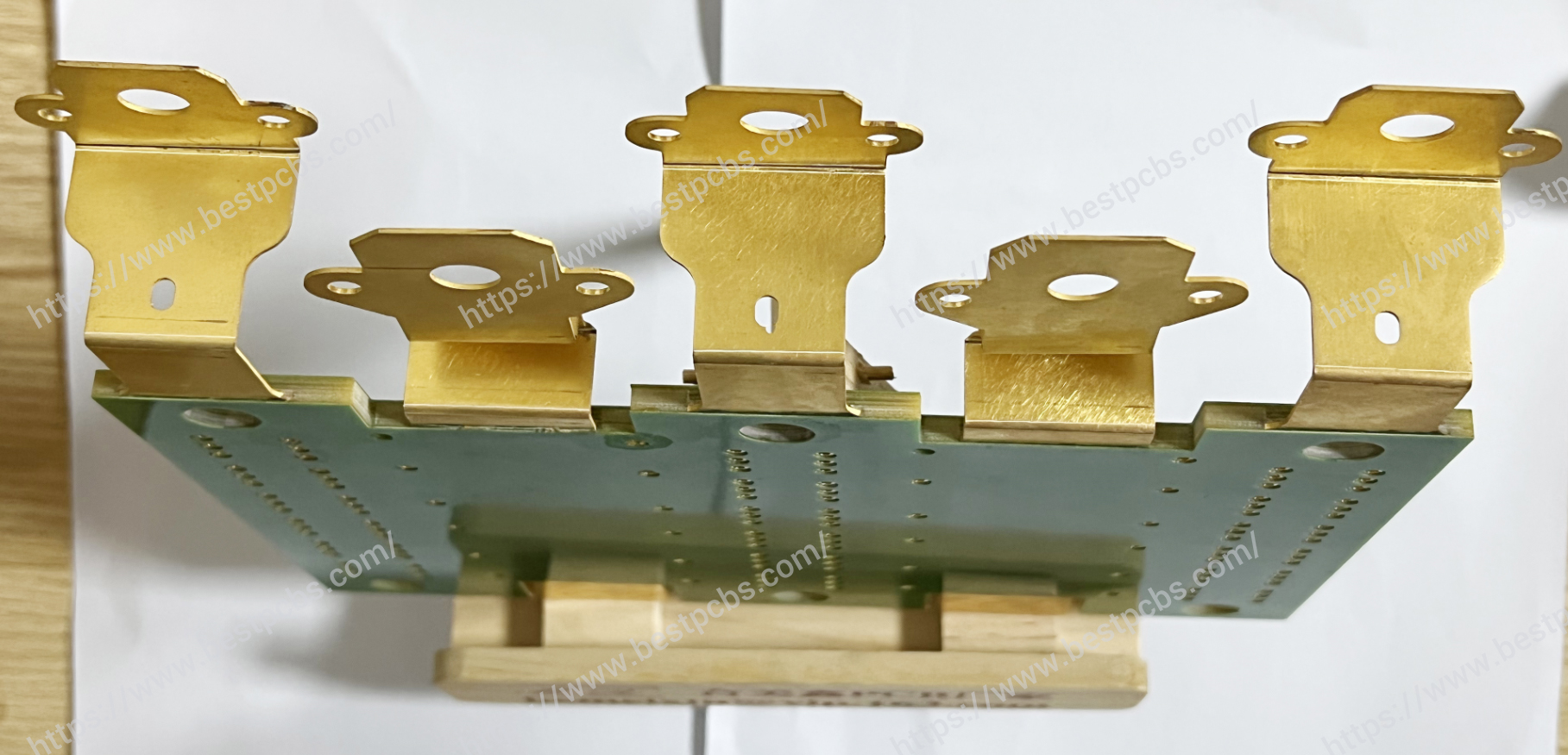
        We have provided power bus bar PCBs in the power battery for our customers. Here are the pictures of our PCB bus bar used in the power battery.

        As for the advancing of the new energy and the energy storage industry, the requirements for the fluctuation of the power pressure and the thermal dissipation become more strict. Since the power density of the power source and battery is increasingly optimized. Choosing copper busbar suppliers to provide copper busbar material for PCB copper busbar manufacturing is extremely important.

        Case about bus bars PCB in EBest Circuit (Best Technology)
        Case about bus bars PCB in EBest Circuit (Best Technology)

        In a nutshell, copper busbar suppliers take a central role in busbar-embedded PCB projects. Making an understanding of copper busbar suppliers and grasping the knowledge of how to choose them will make a different in your ahead to PCB projects. A warm welcome to cooperate with EBest Circuit (Best Technology), we can provide qualitied PCB bus bars and full engineering supports. We solve supply chain risks and improve the final performance of high current PCBs. Pls feel free to contact us via sales@bestpcbs.com to get the quote for the PCB bus bar.

        You may also like

        What Is Flexible Copper Busbar? Flexible vs Rigid Busbar

        August 28th, 2025

        What is flexible copper busbar? Let’s discover its definition, difference between rigid busbar, application, benefits, production processes, price, and market trends through this blog.

        Are you worried about these questions?

        • How to efficiently transmit power in confined spaces?
        • How to prevent copper busbar fractures under frequent vibration?
        • How to balance conductivity and flexibility for high-current applications?

        EBest Circuit (Best Technology) can provide service and solution:

        • Multi-layer copper foil diffusion bonding: enables arbitrary bending with stable current carrying capacity.
        • Arc-embedded design: Reduces fatigue failure, extending lifespan by 300%.
        • Micro-arc oxidation treatment: Achieves contact resistance as low as 0.017ΌΩ·m.

        Welcome to contact us if you have any request for flexible copper busbar: sales@bestpcbs.com.
        What Is Flexible Copper Busbar?

        Flexible copper busbar (also known as soft copper busbar or flexible busbar) is a highly conductive, bendable electrical component designed for high-current transmission in compact or dynamic environments. It combines the current-carrying capacity of rigid busbar with the flexibility of flexible circuits, typically made by stacking copper foil layers and diffusion welding (or other high-pressure bonding methods) to form a seamless, durable connection.

        What Is Flexible Copper Busbar?

        Which is Better Flexible or Rigid Busbar?

        1. Vibration Resistance

        • Flexible Busbar: Specifically designed for high-vibration environments, capable of absorbing mechanical shocks and preventing connection loosening.
        • Rigid Busbar: Structurally stable but lacks elasticity; continuous vibration may lead to stress fatigue and fracture.

        2. Space Adaptability

        • Flexible Busbar: Can be bent/folded, saves 25% installation space, supports curved installation, and requires no custom brackets.
        • Rigid Busbar: Requires precise pre-planning of layout, cannot be adjusted on-site, and has low applicability in compact spaces.

        3. Current-Carrying Capacity

        • Flexible Busbar: Laminated design may limit instantaneous high current.
        • Rigid Busbar: Solid structure supports higher current capacity (>1000A scenarios) with excellent heat dissipation.

        4. Long-Term Stability

        • Flexible Busbar: Repeated bending may reduce durability; requires regular inspection in frequent-movement scenarios.
        • Rigid Busbar: Lifespan up to 30 years, low maintenance needs, and connection points are less prone to aging.

        5. Installation & Maintenance Costs

        • Flexible Busbar: Reduces connector usage by 90%, shortens installation time by 40%, and lightweight design simplifies maintenance.
        • Rigid Busbar: Requires customized production, complex installation, and overall replacement for later modifications, leading to higher total costs.

        6. Material & Manufacturing Costs

        • Flexible Busbar: Higher raw material costs (approx. 20-30% more expensive) but lower total engineering costs.
        • Rigid Busbar: Lower base material costs, but significant customization and processing fees.

        7. Applicable Scenarios

        • Flexible Busbar: Electric vehicle battery packs, robot joints, compact distribution cabinets.
        • Rigid Busbar: Substations, fixed distribution panels, high-power industrial equipment.

        8. Advantages

        • Flexible Busbar: Vibration-resistant, high space utilization, quick installation.
        • Rigid Busbar: High current capacity, long lifespan, strong stability.

        9. Selection Tips

        • Choose Flexible Busbar: For vibration-prone, space-constrained, or rapid-installation needs (such as new-energy vehicles, mobile devices).
        • Choose Rigid Busbar: For extreme current-carrying demands, zero-maintenance requirements, and stable environments (such as data centers, factory main power distribution).
        Which is Better Flexible or Rigid Busbar?

          What Is a Flexible Busbar Copper Used for?

          • New Energy Vehicles: Battery pack module connections, Motor controller high-voltage interconnections
          • Renewable Energy & Storage: PV inverter DC-side links, BESS battery cluster interconnections
          • Data Centers & Servers: GPU high-density power cooling, Cabinet-level short-distance efficient power transmission
          • Industrial Automation: VFD/servo drive power module links, Welding robot power systems
          • Specialized Electrical Equipment: Rail transit traction systems, Medical imaging equipment (e.g., MRI)
          • Consumer Electronics & Appliances: Inverter AC compressor drives, EV charger internal high-voltage circuits

          How to Make a Flexible Busbar?

          Manufacturing Process of Flexible Busbar:

          1. Material Preparation

            • Conductive Material: Select high-conductivity, corrosion-resistant T2 red copper as the primary conductive material to ensure current-carrying capacity and flexibility.
            • Insulation Material: Use high-performance insulating materials such as epoxy resin, rubber, or silicone for electrical insulation.
            • Armor Material: Apply stainless steel or other metal alloys as outer armor to enhance mechanical strength and corrosion resistance.

            2. Copper Plate Cutting & Rolling

              • Cutting & Thinning: Cut copper plates into required dimensions and roll them into thin strips to form flexible conductive busbar structures.
              • Layered Design: The first flexible conductive busbar adopts a dual-layer structure, with each layer composed of multiple fine copper strands for enhanced flexibility.

              3. Softening Treatment

                • Heat Treatment: Anneal or apply high-temperature processing to reduce hardness, improving flexibility and fatigue resistance for repeated bending.

                4. Conductive Busbar Forming

                  • First Busbar Preparation: Roll processed copper into the first flexible busbar, featuring widthwise support ribs on its upper/lower walls.
                  • Second Busbar Preparation: The second flexible busbar consists of multiple arc-shaped connecting pieces forming a cylindrical structure, with internal grooves to accommodate the first busbar.

                  5. Busbar Assembly

                    • Structural Interlocking: Insert the first busbar into the second busbar, ensuring tight contact between support ribs and grooves for stable stacking.
                    • Fixing Method: Secure interfaces of the second busbar via diffusion welding or soldering for robust conductivity.

                    6. Welding & Polishing

                      • Interface Welding: Precision-weld the second busbar’s joints to prevent loosening or fractures.
                      • Burr Removal: Polish welded areas to eliminate sharp edges, ensuring smooth surfaces and avoiding electrical faults.

                      7. Insulation Treatment

                        • Insulation Wrapping: Encapsulate the second busbar with insulating layers (e.g., epoxy/silicone) via dip-coating, controlling thickness for voltage requirements.
                        • Curing: Heat-cure the insulation to ensure bubble-free adhesion.

                        8. Metal Armoring

                          • Armor Wrapping: Cover the insulation with stainless steel armor for mechanical protection against physical damage and corrosion.
                          • Sealing: Achieve seamless integration between armor and insulation for optimal durability.

                          9. Quality Testing

                            • Electrical Tests: Measure resistance, insulation resistance, and withstand voltage to verify compliance.
                            • Mechanical Tests: Conduct bending, tensile, and fatigue tests to validate flexibility and longevity.
                            • Visual Inspection: Check surface smoothness, structural integrity, and joint reliability.

                            10. Packaging & Application

                              • Custom Packaging: Coil or fold busbars based on applications (e.g., EV batteries, robotic joints) for easy transport/installation.
                              • Scenario Adaptation: Provide tailored designs for high-vibration, compact-space, or high-current environments.
                              How to Make a Flexible Busbar?

                              How Much Is a Flexible Copper Busbar Worth?

                              Low-End Flexible Copper Busbars‌

                              • Price‌: ‌$0.23–$1.38 per meter‌.
                              • ‌Features‌: Thin copper layers, standard insulation, and simpler designs for low-current applications.

                              Mid-Range Flexible Copper Busbars‌

                              • Price‌: ‌$2.76–$13.81 per piece‌.
                              • ‌Features‌: Enhanced flexibility, higher current capacity, and improved insulation for industrial or automotive use.

                              High-End Flexible Copper Busbars‌

                              • Price‌: ‌$122.65–$276.24 per piece‌
                              • ‌Features‌: Advanced materials (e.g., T2 copper), precision manufacturing, and specialized insulation for extreme environments.
                              How Much Is a Flexible Copper Busbar Worth?

                              What is the Market Trend of Flexible Copper Busbar?

                              Demand-Side Drivers: New Energy & Electrification Fuel Growth

                                • EV Boom: Global EV sales surpassed 18 million units in 2024, driving 25%+ YoY demand growth for flexible copper busbars as critical battery pack connectors.
                                • Renewable Energy Expansion: China’s 2025 solar installation target of 500GW directly boosts market demand for vibration-resistant flexible busbars in PV/wind power plants.
                                • Industrial Automation Upgrade: Collaborative robot joint wiring needs spur adoption of miniaturized flexible busbars, with market size projected to exceed $300M by 2025.

                                Technological Innovations: Material & Process Breakthroughs

                                  • Thin Copper Foil Adoption: Maturation of 0.05mm copper foil paired with polymer insulation layers has extended busbar bending lifespan to 100,000 cycles (vs. ~50,000 for conventional products).
                                  • Integrated Design Leadership: Tesla’s 4680 battery cells adopt “busbar + heat sink” monolithic structures, reducing volume by 20% and setting industry benchmarks.
                                  • Green Manufacturing Mandates: EU regulations requiring ≄30% recycled copper content push vendors to optimize laser-based paint removal for recycling.

                                  Regional Dynamics: Asia Dominates, Europe/US Target Premium Segments

                                    • China’s Production Hub: Yangtze River Delta/Pearl River Delta clusters account for 60% of global capacity, though price competition has compressed margins below 15%.
                                    • European/US Premiumization: Local producers like Germany’s Vogel command 2x pricing for corrosion-resistant armored busbars, targeting aerospace/defense sectors.

                                    Challenges & Opportunities

                                      • Aluminum Substitution Risks: Experimental aluminum-clad copper busbars reduce costs but suffer 35% conductivity loss, limiting mainstream adoption.

                                      Emerging Applications:

                                      • Data Center Liquid Cooling: Flexible busbars replace traditional cables, cutting wiring space by 80%.
                                      • Humanoid Robots: Tesla Optimus finger joints require <3mm diameter micro busbars, posing steep technical barriers.

                                      Outlook (2026-2030)

                                        • Market Growth: Global flexible copper busbar market to sustain 12-15% CAGR, potentially surpassing $5B by 2030.
                                        • Smartization Trend: Fiber-optic sensor-embedded “smart busbars” enabling real-time temperature monitoring will become standard in high-voltage grids.

                                        Why Choose EBest Circuit (Best Technology) as Copper Busbar PCB Supplier?

                                        Reasons why choose us as copper busbar PCB manufacturer:

                                        Competitive Pricing

                                        • Cost-effective solutions with 15-20% lower pricing than industry averages, without compromising quality.
                                        • Transparent quotes with no hidden fees, optimized for bulk orders and long-term partnerships.

                                        Uncompromising Quality

                                        • ISO 9001-certified production with 100% electrical testing and AOI inspection.
                                        • Premium materials: T2 copper, UL-approved insulation, and RoHS-compliant components.

                                        Fast Turnaround Times

                                        • 7-10 day lead times for standard orders (50% faster than industry average).
                                        • Expedited 48-hour delivery for urgent prototypes.

                                        Customization Flexibility

                                        • Tailored designs for space-constrained applications (e.g., ultra-thin 0.2mm busbars).
                                        • Support for multi-layer stacking, embedded cooling channels, and custom shapes.

                                        Advanced Technical Capabilities

                                        • In-house R&D team with 50+ patents in diffusion welding and stress optimization.
                                        • High-precision laser cutting and CNC machining for complex geometries.

                                        End-to-End PCBA Assembly

                                        • One-stop service: PCB fabrication + SMT assembly + functional testing.
                                        • Integration of flexible busbars with sensors, connectors, and thermal pads.

                                        Dedicated Customer Support

                                        • 24/7 technical assistance via engineers with 10+ years of industry experience.
                                        • Real-time order tracking and proactive risk mitigation for delays.

                                        Industry-Proven Expertise

                                        • Trusted by Fortune 500 companies in EV, renewable energy, and aerospace sectors.
                                        • 98% client retention rate over 5+ years of collaboration.

                                        Welcome to contact us if you have any request for copper busbar PCB: sales@bestpcbs.com.
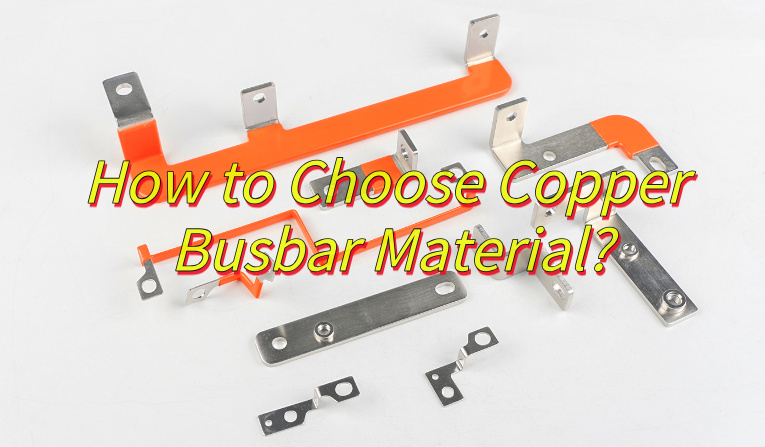
                                        You may also like

                                        Copper Busbar Selection Guide| Copper Busbar PCB Supplier

                                        August 25th, 2025

                                        How do I choose copper busbar? Let’s explore material, application, function, , difference between tin plated copper bus bar, selection guide and lifespan for copper busbar.

                                        Are you troubled with these issues?

                                        • Is your busbar overheating and shutting down?
                                        • Is poor-quality copper causing resistance spikes?
                                        • Are supplier delivery delays disrupting your production schedule?

                                        EBest Circuit (Best Technology) can provide service and solution:

                                        • High-Conductivity, Low-Loss Busbar Customization: Made with 99.99% electrolytic copper, achieving 8% lower energy loss.
                                        • Flexible Production Service: Supports custom thickness cutting (5mm-50mm), with daily production capacity exceeding 300 tons.
                                        • Intelligent Selection Support: Free current-carrying/temperature rise simulation reports provided to precisely match project requirements.

                                        Welcome to contact us if you have any request for copper busbar: sales@bestpcbs.com.
                                        What is Copper Busbar?

                                        A Copper Busbar is a thick conductive strip integrated into a printed circuit board, typically made of highly conductive materials such as copper or aluminum, specifically designed for efficient power distribution and carrying high currents. Its core design breaks away from the traditional PCB reliance on etching copper traces, instead directly achieving circuit connections by embedding thick copper or aluminum strips (up to millimeter-level thickness), significantly enhancing current carrying capacity and conductivity efficiency.

                                        What is Copper Busbar?

                                        Copper Busbar Material Specification

                                        ParameterSpecification
                                        MaterialPure copper (>99.90% Cu) (Soft Copper)
                                        Oxygen Content≀80ppm (Standard Cu) / ≀10ppm (High-purity Copper)
                                        Surface TreatmentTin/Chrome/Hot-dip Galvanized (Tin-plated)
                                        Dimensional RangeWidth:15-400mm
                                        Thickness:1-80mm
                                        Length:100-1000mm (Chrome-plated)
                                        Mechanical PropertiesTensile Strength:200-250MPa
                                        Elongation:15-45%
                                        Hardness:HB≄65 (Galvanized)
                                        Electrical Conductivity>56m/s (Room Temperature) (Standard Cu)

                                        How Do I Select Copper Busbar?

                                        Here’s a selection guide about copper busbar:

                                        1. Define Current Requirements

                                          • Calculate the maximum system current and select a busbar with sufficient cross-sectional area (current density for copper busbars typically ≀4A/mmÂČ).
                                          • Formula: Cross-sectional area (mmÂČ) = Current (A) / Current density (A/mmÂČ).

                                          2. Select Material Type

                                          • Pure copper: Prioritize T1/T2 electrolytic copper (Cu ≄99.9%) for high-conductivity scenarios (e.g., precision instruments).
                                          • Copper alloy: Choose copper-chromium (high-temperature resistance), copper-zirconium (creep resistance), or copper-nickel (corrosion resistance) based on needs.

                                          3. Consider Environmental Adaptability

                                          • Humid/corrosive environments: Prioritize for tin-plated (anti-oxidation) or nickel-plated (acid/alkali resistance) busbars.
                                          • High-temperature scenarios: Select silver-plated (softening temperature up to 300°C) or copper-chromium alloy.
                                          • Radiation/nuclear environments: Use radiation-resistant materials (e.g., special coatings).

                                          4. Verify Mechanical Connection

                                          • Check if screw holes, slots, or custom designs are needed to ensure compatibility with devices (e.g., PCBs, switchgear).
                                          • Prioritize pre-drilled or customizable busbars for simplified installation.

                                          5. Assess Thermal Needs

                                          • For high-current applications, choose thick copper busbars (leveraging copper’s high thermal conductivity).
                                          • For compact devices, opt for copper-aluminum composite busbars (35% lighter, similar thermal performance to pure copper).

                                          6. Match Installation Space

                                          • Measure available space in the device and select busbars with appropriate dimensions (length, width, thickness) to avoid layout conflicts.

                                          7. Validate Standards & Certifications

                                          • Ensure busbars comply with international standards (e.g., IEC 60228, UL 758) for safety and reliability.

                                          8. Balance Cost & Performance

                                          • For general use, select T2/T3 copper busbars (cost-effective). For demanding scenarios, prioritize alloy or plated busbars (performance-first).
                                          • Choose suppliers with ISO 9001 quality certificates to ensure consistent quality. (Like EBest Circuit (Best Technology))
                                          How Do I Select Copper Bus Bar?

                                          What is a Busbar Copper Used for?

                                          • Power Distribution: Connects generators, transformers, switchgear, and other equipment to form main circuits, enabling efficient power transmission and distribution.
                                          • Mechanical Connection: Acts as a rigid conductor with screw holes/slots to directly secure components, simplifying assembly.
                                          • High Current Carrying Capacity: Suitable for industrial power supplies, electric furnaces, rail transit, and other scenarios requiring 100s to 1,000s of amperes (A).
                                          • Thermal Management: Leverages copper’s high thermal conductivity to assist heat dissipation in devices like inverters and LED lighting, enhancing system stability.
                                          • Special Environment Adaptation: Corrosion-resistant coatings like nickel-plated for chemical or coastal facilities; radiation-resistant materials for nuclear equipment.
                                          • Compact Design: Replaces traditional cables to reduce wiring space, ideal for high-density devices such as data centers and photovoltaic (PV) inverters.
                                          • Composite Function Integration: Copper-aluminum composite structures reduce weight for new energy vehicle battery connections.

                                          When to Use Busbar Copper?

                                          Power Systems

                                          • Main wiring of substations (connecting transformers & HV switchgear).
                                          • UPS distribution in data centers.
                                          • LV switchgear internal connections for industrial plants.

                                          Renewable Energy

                                            • PV array convergence (connecting modules & inverters).
                                            • Wind turbine tower cable replacement.
                                            • Inter-module connections in battery energy storage systems.

                                            Rail Transportation

                                              • DC busbar systems for metro traction substations.
                                              • High-speed train rooftop HV equipment interconnection.
                                              • Railway signaling power distribution networks.

                                              Industrial Equipment

                                                • Motor Control Center (MCC) main incoming lines.
                                                • Power transmission for electric arc/medium frequency furnaces.
                                                • Power distribution units in automated production lines.

                                                Building Infrastructure

                                                  • Vertical busway power supply for commercial complexes.
                                                  • Backup power circuits for hospital operating rooms.
                                                  • Hybrid lighting/power systems in airport terminals.

                                                  Special Environments

                                                    • Radiation-resistant power distribution in nuclear containment buildings.
                                                    • Marine propulsion systems for high-salinity environments.
                                                    • Explosion-proof electrical installations in chemical plants.

                                                    Tin Plated Copper Bus Bar vs Copper Bus Bar

                                                    CharacteristicTin-Plated CopperBare Copper
                                                    Corrosion ResistanceExcellent (especially marine/humid environments)Standard (requires protective coatings)
                                                    Electrical ConductivityComparable to pure copper (98% IACS)100% IACS Conductivity
                                                    ApplicationsMarine equipment, appliance grounding, switchboard neutral linesGeneral industrial power distribution
                                                    CostHigher (approx. „8,200/ton)Lower
                                                    WeldabilityEasier to weld (standard soldering)Requires professional welding techniques (brazing/welding)
                                                    Typical DimensionsCommon 300×40×5mm, etc.Wider size range available (thickness 1-80mm)

                                                    What Is the Life Expectancy of a Copper Busbar?

                                                    Copper busbars typically exhibit a service life of 20–50 years, contingent upon material quality, operating environment, and load conditions. Premium pure copper or alloyed busbars maintain long-term stability in dry, low-corrosion environments. Conversely, exposure to humid/corrosive atmospheres or persistent overcurrent loads may degrade performance due to oxidation, creep deformation, or thermal stress. Implementing protective coatings ( such as silver plating) or strength-enhanced alloys ( such as CuCr or CuZr) significantly extends longevity. Under standard industrial maintenance, decades of reliable operation are consistently achievable.

                                                    Why Choose EBest Circuit (Best Technology) as Copper Busbar PCB Supplier?

                                                    Reasons why choose us as copper busbar PCB supplier:

                                                    • Certified Reliability: Full certifications (ISO/UL/IPC/RoHS/REACH) ensure global compliance, reducing clients’ regulatory risks by 40%.
                                                    • High-Current Performance: 20A/mmÂČ current density (33% higher than industry average) cuts copper usage by 30%, saving space/material costs.
                                                    • Strict Quality Inspection: 99.7% defect detection rate + 12-parameter testing minimizes post-installation failures (<0.3%).
                                                    • Free DFM Support: Avoid design errors in advance and reduce production costs by 15%.
                                                    • 24 Hours Rapid Prototyping: accelerate project kickoff by 50%, enabling faster market entry.
                                                    • Turnkey Solution: Providing one-stop service from copper busbar design to assembly, saving customers time and production costs.
                                                    • Transparent Pricing: 12% cost advantage via optimized copper utilization, with all-inclusive quotes (no hidden fees).
                                                    • Long-Term Durability: Uniform copper plating (≀15% thickness variation) enables 20+ years of reliable operation in extreme temperatures.

                                                    Here is a photo of copper busbar PCB we made before:

                                                    Why Choose EBest Circuit (Best Technology) as Copper Busbar PCB Supplier?

                                                    Welcome to contact us if you have any inquiry for copper busbar PCB: sales@bestpcbs.com.

                                                    You may also like

                                                    High Frequency PCB Design Guidelines – RF PCB Basic Acknowledge

                                                    August 20th, 2025

                                                    Are you often curious about these questions about high frequency PCB?

                                                    • Have you ever wondered why some electronic systems lose performance at higher frequencies?
                                                    • Why a well-designed PCB for low-speed circuits often fails when pushed into GHz ranges?
                                                    • How can designers minimize losses above 1 GHz?

                                                    The answer lies in the design of high frequency PCBs. High frequency PCBs also known as RF PCB or radio frequency pcb. They are more important in applications such as 5G, automotive radar, aerospace communication, medical imaging, and satellite systems. These boards must handle signals above 100 MHz and, in many cases, well into the GHz range. At such speeds, signal losses, impedance mismatches, and electromagnetic interference (EMI) can cause severe degradation.

                                                    This blog provides detailed guidelines for designing high frequency PCBs. From material selection to signal routing, impedance control, thermal management, and testing, we will walk through the critical factors engineers must consider.

                                                    What Frequency Range is Considered High Frequency in PCB Design?

                                                    In PCB engineering, high frequency generally refers to signal frequencies above 500 MHz. For RF and microwave circuits, the range extends from 1 GHz up to 100 GHz. Typical applications include:

                                                    • Wi-Fi (2.4 GHz / 5 GHz)
                                                    • Bluetooth (2.4 GHz)
                                                    • 5G NR bands (3.5 GHz / 28 GHz / 39 GHz)
                                                    • Automotive radar (24 GHz / 77 GHz)
                                                    • Satellite communication (Ku-band 12–18 GHz, Ka-band 26–40 GHz)

                                                    The higher the frequency, the more sensitive the PCB becomes to signal loss, dielectric constant stability, and copper surface roughness. For instance, at 28 GHz (5G mmWave), even 0.1 dB/cm of insertion loss can cause serious degradation in system performance.

                                                    High Frequency PCB Design Guidelines - RF PCB Basic Acknowledge

                                                    What PCB Materials are used for High Frequency Applications?

                                                    The dielectric substrate is the foundation of high frequency PCB design. Key material properties include:

                                                    • Dielectric Constant (Dk): Should remain stable across frequency and temperature.
                                                    • Dissipation Factor (Df): Lower values mean lower signal loss.
                                                    • Thermal Conductivity: Crucial for high-power RF designs.

                                                    Common Materials for High Frequency PCBs

                                                    Material TypeDielectric Constant (Dk)Dissipation Factor (Df) @10GHzThermal Conductivity (W/m·K)Typical Use Case
                                                    FR4 (High Tg)4.2–4.70.020–0.0250.3<1 GHz, low-cost boards
                                                    Rogers RO4350B3.48 ±0.050.00370.692–20 GHz, antennas
                                                    Rogers RO30033.00 ±0.040.00130.50mmWave 5G (28 GHz, 39 GHz)
                                                    Taconic RF-353.500.00180.62Microwave circuits
                                                    PTFE (Teflon)2.1–2.60.0009–0.00150.25–0.30Aerospace, radar
                                                    Ceramic-filled PTFE3.0–100.001–0.0050.7–1.2High-power RF

                                                    Data comparison shows that Rogers RO3003 has one of the lowest Df values, making it widely used in 5G mmWave base stations. PTFE-based laminates dominate satellite and radar applications where extreme performance is required.

                                                    How Does Dielectric Constant Affect Signal Speed?

                                                    The dielectric constant (Dk) directly influences the propagation velocity of signals on PCB traces. The relation is:

                                                    How Does Dielectric Constant Affect Signal Speed?

                                                    Where c = 3 × 10^8 m/s (speed of light in vacuum).

                                                    • For FR4 (Dk ≈ 4.5) → v ≈ 1.41 × 10^8 m/s
                                                    • For Rogers RO4350B (Dk ≈ 3.48) → v ≈ 1.61 × 10^8 m/s
                                                    • For PTFE (Dk ≈ 2.2) → v ≈ 2.02 × 10^8 m/s

                                                    This means PTFE substrates allow signals to travel ~43% faster than FR4. In high-speed digital systems (like SerDes 56G PAM4 links), such differences greatly influence timing margins.

                                                    What are the Key Design Rules for High Frequency PCB Layout?

                                                    Designing high frequency boards requires stricter rules compared to conventional PCBs:

                                                    1. Controlled Impedance Traces

                                                    • Single-ended 50 Ω, differential 90–100 Ω are typical.
                                                    • Impedance tolerance must be within ±5% for frequencies above 10 GHz.

                                                    2. Insertion Loss Minimization

                                                    • Use smooth copper foils (Ra < 2 ÎŒm).
                                                    • Keep transmission lines short.
                                                    • Avoid unnecessary vias, which can introduce 0.1–0.2 dB loss per via at 10 GHz.

                                                    3. Ground Plane Integrity

                                                    • Solid reference planes reduce return path discontinuities.
                                                    • Use via fences to confine RF energy.

                                                    4. Crosstalk Reduction

                                                    • Maintain spacing ≄3× trace width between high frequency lines.
                                                    • Place sensitive analog circuits far from digital noise sources.

                                                    5. Thermal Management

                                                    • For power amplifiers, substrates with >0.8 W/m·K thermal conductivity are recommended.
                                                    • Use thermal vias under RF components for efficient heat dissipation.
                                                    What are the Key Design Rules for High Frequency PCB Layout?

                                                    How Thick should a High Frequency PCB be?

                                                    The thickness of the PCB substrate directly impacts impedance and signal integrity. Typical stack-up configurations:

                                                    PCB ThicknessLayer CountDielectric ThicknessFrequency Application
                                                    0.2–0.4 mm2–4L0.1 mm coreHigh-speed connectors, 10–20 GHz
                                                    0.6–0.8 mm4–6L0.2 mm core2.4/5 GHz Wi-Fi, Bluetooth
                                                    1.0–1.6 mm6–10L0.3–0.5 mm coreAutomotive radar, 24 GHz
                                                    2.0+ mm8–12L>0.5 mm core28 GHz 5G, satellite boards

                                                    For example, in 77 GHz automotive radar PCBs, manufacturers often use 0.254 mm or thinner substrates to reduce dielectric loss and keep microstrip lines narrow enough for impedance control.

                                                    How to Reduce Signal Loss in High Frequency PCB Design?

                                                    Signal loss (attenuation) is one of the biggest concerns in high frequency circuits. It is affected by:

                                                    • Dielectric Loss: Higher Df increases insertion loss.
                                                    • Conductor Loss: Surface roughness increases resistance at high frequencies due to skin effect.
                                                    • Radiation Loss: Poor layout or sharp bends radiate energy.

                                                    Example of Insertion Loss Data

                                                    MaterialFrequencyLine LengthInsertion Loss
                                                    FR4 (Df 0.020)10 GHz10 cm-1.2 dB
                                                    Rogers RO4350B10 GHz10 cm-0.25 dB
                                                    PTFE (Df 0.001)10 GHz10 cm-0.05 dB

                                                    This demonstrates why high frequency applications almost never rely on standard FR4.

                                                    In Conclusion

                                                    Designing a high frequency PCB requires more than standard PCB know-how. From material selection to impedance control, routing, thermal management, and advanced testing, every step must be carefully engineered.

                                                    EBest Circuit (Best Technology) is a trusted PCB manufacturer in China with expertise in high frequency PCB fabrication. We offer advanced laminates like Rogers, Taconic, and Isola, alongside ISO9001, ISO13485, IATF16949, and AS9100D certifications. Our team applies rigorous quality control, competitive pricing, professional engineering support, and MES-based traceability to deliver reliable high frequency PCBs for industries such as 5G, automotive radar, medical devices, and aerospace.

                                                    If your project requires precise high frequency PCB solutions, EBest Circuit (Best Technology) is ready to provide professional guidance and manufacturing excellence.

                                                    FAQs

                                                    1. Can FR4 be used for high frequency PCBs?

                                                    Yes, but only for frequencies below ~1 GHz. For anything higher, specialized laminates are required.

                                                    2. What is the most commonly used material for 5G PCBs?

                                                    Rogers RO4350B and RO3003 are widely adopted due to their low loss at mmWave bands.

                                                    3. How do vias affect high frequency performance?

                                                    Each via can add 0.1–0.2 dB loss at 10 GHz, so designers minimize via count in RF paths.

                                                    4. Why is surface roughness important?

                                                    At high frequencies, the skin effect confines current to the outer conductor surface. Rough copper increases resistance and loss.

                                                    You may also like

                                                    Ground Bus Bar, Copper Grounding Bus Bar Manufacturer

                                                    August 18th, 2025

                                                    What is a ground bus bar for? Let’s explore its function, applications, working principle, production processes, design guide for ground bus bar.

                                                    Are you troubled with these problems?

                                                    • Is the copper plate too thin, making it easy to burn through during welding? (Ground bus bar have a larger heat capacity and more stable welding.)
                                                    • High-frequency current transmission losses are high? (Ground bus bar offer excellent conductivity and lower signal attenuation.)
                                                    • Insufficient plate rigidity, making assembly prone to deformation? (Ground bus bar offer high strength, ensuring structural stability.)

                                                    EBest Circuit (Best Technology) can provide services + solutions:

                                                    • Customized Processing Services – Precise cutting according to drawings, reducing secondary processing costs.
                                                    • Fast Delivery Channel – 48-hour shipping for standard specifications, with priority scheduling for urgent orders.
                                                    • Application Technical Guidance – Provide welding parameter recommendations and optimize production processes.

                                                    Welcome to contact us if you have any request for ground bus bar: sales@bestpcbs.com.

                                                    What is a Ground Bus Bar for?

                                                    A Ground Bus Bar (also known as Copper Grounding Bus Bar) is specialized circuit boards designed for efficient power distribution. By integrating solid copper or aluminum conductive traces (up to several millimeters thick), they can carry higher currents and are suitable for high-power applications. Unlike traditional PCBs that use etched copper wires to connect components, the core advantages of heavy copper PCBs lie in their high current-carrying capacity, mechanical strength, and space-optimized design. These advantages reduce heat generation and voltage drop, improve resistance to vibration and thermal cycling, and simplify wiring design.

                                                    What is a Ground Bus Bar for?

                                                    Where Do We Use a Ground Bus Bar?

                                                    Applications of ground bus bar:

                                                    • New energy vehicle charging stations
                                                    • Industrial inverters
                                                    • Consumer electronics fast charging interfaces
                                                    • Photovoltaic inverters
                                                    • Energy storage converters
                                                    • Rail transit traction systems
                                                    • Substation grounding protection
                                                    • Data center server cabinet power distribution units (PDUs)
                                                    • Industrial motor controllers
                                                    • Industrial robots

                                                    How Does a Grounding Bus Bar Work?

                                                    Providing a low-resistance grounding path

                                                    • Thick copper plates (thickness ≄ 1.0mm) create a low-impedance path, quickly conducting fault currents in equipment casings or circuits to the ground, preventing voltage buildup that could damage equipment or cause electric shock.

                                                    Centralizing fault current distribution

                                                    • Serving as the “central grounding point” of the electrical system, thick copper plates integrate multiple grounding wires to ensure even distribution of fault currents (such as short circuits and lightning strikes), preventing local overheating and arc flashovers.

                                                    Suppressing voltage fluctuations and electromagnetic interference

                                                    • The large cross-section design of the thick copper plates reduces inductance effects, stabilizes the system reference potential, mitigates the impact of electromagnetic interference (EMI) on sensitive equipment, and ensures signal transmission quality.

                                                    Suitable for high-current scenarios

                                                    • The high current carrying capacity (50A-300A) of thick copper plates (1.0mm-3.0mm) can handle the instantaneous high current demands of new energy vehicle charging and industrial motor starting, preventing circuit overheating or melting.

                                                    Mechanical and thermal stability

                                                    • Thick copper structure resists vibration and temperature rise (copper thermal conductivity 400W/m·K), maintaining grounding reliability in high temperature or vibration environments, extending equipment life.

                                                    How to Make a Copper BusBar?

                                                    ‌1. Material Preparation‌

                                                    • Substrate Selection‌: Modified FR-4 or polyimide (PI) materials are chosen for their enhanced thermal stability and mechanical strength to withstand thick copper layers (typically ≄3oz/105ÎŒm)‌.
                                                    • Copper Foil Preparation‌: Copper foils are selected based on current requirements (e.g., 2oz–12oz thickness), with surface treatments to improve adhesion‌.

                                                    2‌. Inner Layer Processing‌

                                                    • Lamination‌: Copper foil is bonded to the substrate under controlled temperature/pressure (e.g., 180°C, 300psi) to prevent delamination‌.
                                                    • Photoresist Application‌: Dry film resist is applied to define circuit patterns.
                                                    • Exposure/Development‌: UV exposure transfers the design, followed by chemical development to remove unexposed resist‌.
                                                    • Etching‌: Ammoniacal etchants are used with extended dwell times (20–30% longer than standard PCBs) to account for increased copper thickness. Sidewall compensation of 0.2mm–0.4mm is added to maintain trace accuracy‌.

                                                    3. Layer Stackup & Lamination‌

                                                    • Prepreg Layering‌: High-resin-content prepregs (e.g., 2116 type) are used to fill copper thickness variations, ensuring 85%+ resin fill‌.
                                                    • Multi-Layer Alignment‌: Optical targets align layers within ±25ÎŒm tolerance before pressing at 200°C/400psi for 90+ minutes‌.

                                                    4. Drilling & Metallization‌

                                                    • Mechanical Drilling‌: Carbide drill bits with reduced feed rates (e.g., 1.2m/min for 4oz copper) minimize burring.
                                                    • Hole Wall Roughness‌: <25ÎŒm to ensure plating uniformity‌.
                                                    • Aspect Ratio‌: Limited to 8:1 for reliable plating‌.
                                                    • Electroless Copper‌ Plating: Deposits 0.3–0.5ÎŒm seed layer.
                                                    • Panel Plating‌: Electroplating builds copper to 25–30ÎŒm thickness with low-stress chemistry to prevent cracking‌.

                                                    5. Outer Layer Processing‌

                                                    • Secondary Patterning‌: Repeat inner layer steps with adjusted exposure times for thicker resist‌.
                                                    • Final Etching‌: Differential etching may be used for boards with mixed copper weights (e.g., 3oz signal traces + 8oz power paths)‌.

                                                    6. Solder Mask & Surface Finish‌

                                                    • Solder Mask Application‌: Liquid photoimageable (LPI) solder mask is screen-printed or sprayed, then cured at 150°C for 45 minutes to withstand thermal stress‌.
                                                    • ENIG (Electroless Nickel/Immersion Gold)‌: Common for high-reliability applications (e.g., 3–5ÎŒm Ni + 0.05–0.1ÎŒm Au)‌.
                                                    • Hard Gold Plating‌: Used for edge connectors (e.g., 1–3ÎŒm Au over 5–10ÎŒm Ni)‌.

                                                    7. Electrical Testing & Inspection‌

                                                    • Automated Optical Inspection (AOI)‌: Checks trace width/spacing with ±10% tolerance‌.
                                                    • Flying Probe Test‌: Validates electrical continuity at 100–500V depending on design‌.

                                                    8. Final Processing & Packaging‌

                                                    • Routing/V-Scoring‌: Diamond-coated cutters used for edge finishing; slower feed rates prevent copper tearing‌.
                                                    • Cleaning‌: Ionic contamination controlled to <1.56ÎŒg NaCl/cmÂČ per IPC-6012‌. Packaging‌: Vacuum-sealed with desiccant for moisture-sensitive boards (>2oz copper)‌.
                                                    How to Make a Copper BusBar?

                                                    How to Design a Ground Bus Bar?

                                                    1. Strict Substrate Material Selection Criteria

                                                    • FR-4 or high-TG laminate (such as Isola 370HR) is recommended. Its glass transition temperature (Tg) is ≄170°C, maintaining insulation stability over a wide temperature range of -40°C to 130°C. Experimental data shows that the interlayer peel strength of high-TG laminate reaches 12N/mm at 150°C, far exceeding the 8N/mm of standard FR-4.

                                                    2. Current-Carrying Capacity Quantification Model

                                                    • Based on the IÂČR loss formula, a 4oz copper laminate with a width of 10mm can safely carry 150A. If the current increases to 200A, the copper thickness must be increased to 6oz or the width must be expanded to 25mm to ensure that the temperature rise does not exceed the industry standard limit.

                                                    3. Dynamic Cross-Sectional Area Optimization Strategy

                                                    • Utilizing the “copper thickness-width” collaborative design principle: for every 100A increase in current, the copper thickness can be increased by 1oz or the width by 15mm. For example, for 300A requirements, a combination of 8oz copper thickness and 30mm width can be used, balancing cost and performance.

                                                    4. Practical Application of Voltage Drop Formula

                                                    • Using the formula ΔV = I × R × L, when a 200A current passes through a 50mm long 8oz copper plate, the voltage drop can be controlled within 0.48V (ρ = 1.68 × 10⁻⁞ Ω·m). In actual designs, a 10% margin should be reserved to ensure the final voltage drop is less than 0.5V.

                                                    5. Wiring Topology Optimization Techniques

                                                    • Adopting a “thickened main channel + thinned branch” design: Main lines must have a copper thickness of ≄ 6oz, and branches must have a copper thickness of ≄ 4oz. Combined with a grid-like ground layout, this design can reduce voltage fluctuations in high-frequency circuits to below 0.2V.

                                                    6. Stress Concentration Solution

                                                    • Adding a 2mm radius to the bend area and combining it with a 0.8mm thick reinforcement plate can reduce the stress concentration factor at the bend from 3.2 to 1.5. Aperture design follows the “1.5 times the board thickness” principle. For 4oz boards, the recommended aperture is ≄1.5mm.

                                                    7. Thermal Via Array Design Specifications

                                                    • Five thermal vias are required for every 100A of current. A 0.8-1.2mm diameter aperture is recommended, evenly spaced 3mm apart. Actual measurements show that this design can reduce hotspot temperatures by 18-25°C.

                                                    8. Temperature Rise Monitoring and Control

                                                    • A three-stage test using an infrared thermal imager ensures: no-load temperature rise <10°C, half-load temperature rise <35°C, and full-load temperature rise <50°C. Temperature sensors are installed in key areas (such as under power devices) to ensure surface temperatures ≀90°C (UL standard).

                                                    9. Composite Heat Dissipation Structure Design

                                                    • A “sandwich” layered design is employed: a top layer of thick copper (≄4oz) carries high current, a middle layer is filled with 3M 8810 thermal adhesive (thermal conductivity 1.5W/m·K), and a bottom layer houses high-frequency signal lines. This structure can reduce thermal resistance to 0.8°C/W.

                                                    10. Tolerance Control System

                                                    • “Double Precision” control is implemented: copper thickness tolerance is ±10% (e.g., 3.6-4.4oz for a 4oz board), and hole position deviation is ≀0.1mm. An X-ray inspection system is used to ensure inter-layer alignment error is <0.05mm.

                                                    11. Surface Treatment Options

                                                    • Tin plating (5-10ÎŒm) is suitable for high-temperature soldering applications and can withstand peak temperatures of 260°C. OSP treatment is suitable for no-clean processes and has a shelf life of up to 12 months. Both solutions have passed the 24-hour salt spray test (ASTM B117 standard).

                                                    11. Rigorous Electrical Performance Testing

                                                    • Dielectric strength test: 500V AC for 1 minute without breakdown; contact resistance test: <5mΩ (four-point probe method). High-frequency signal layers must pass S-parameter testing to ensure insertion loss <0.5dB at 10GHz.

                                                    12. Mechanical Environmental Adaptability Verification

                                                    • Vibration test: No cracking after 3g acceleration shock in the 5-2000Hz frequency range.
                                                    • Thermal shock test: 100 cycles from -40°C to 125°C, with interlayer peel strength loss of <15%.
                                                    How to Design a Ground Bus Bar?

                                                    Why Choose EBest Circuit (Best Technology) as Copper Grounding Bus Bar Manufacturer?

                                                    Reasons why choose us as copper grounding bus bar manufacturer:

                                                    • International Certifications: Hold ISO 9001 quality management system certification, UL safety certification, and IPC-6012 Level 3 standards. All thick copper clad products comply with RoHS/REACH environmental regulations, ensuring long-term reliability for industrial applications.
                                                    • Specialized Ultra-Thick Copper Production Line: Equipped with a dedicated 4-20oz thick copper clad production line, this line utilizes pulse plating technology to ensure uniform copper thickness (≀15%) and a current carrying capacity of 20A/mmÂČ, eliminating the uneven plating issues often encountered in traditional processes.
                                                    • Full-Process Intelligent Inspection: Deployed with an AOI + X-ray dual inspection system, this system achieves a 99.7% detection rate for defects such as voids and nodules in thick copper clad plating. Electrical testing covers 12 key parameters, including temperature rise and current carrying capacity.
                                                    • High-Frequency Thick Copper Hybrid Process: Supports composite lamination of high-frequency materials and thick copper, achieving an impedance control tolerance of ±7%, meeting the high power and low loss requirements of applications such as 5G base station power supplies.
                                                    • Industry Case Studies: Over 200 projects with 4oz+ copper thickness have been delivered in the past three years, including industrial-grade applications such as new energy inverters and rail transit power modules.
                                                    • Quick-Response Design Support: 48-hour thick copper clad design and manufacturing (DFM) reports are provided. Our engineering team is capable of optimizing impedance control within ±5%, supporting customized design requirements.
                                                    • Stable Delivery Capabilities: Our dedicated thick copper clad production line achieves a standard 15-day lead time (compared to the industry average of 25 days). Over the past 12 months, our on-time delivery rate has been 98.6%, and urgent orders can be shortened to just 7 days.
                                                    • Transparent Cost Control: Utilizing an algorithm that optimizes copper foil utilization, our 4oz clad production costs are 12% lower than the industry average. Quotes include engineering and testing fees, with no hidden charges.
                                                    Why Choose EBest Circuit (Best Technology) as Copper Grounding Bus Bar Manufacturer?

                                                    Our Ground Bus Bar Capabilities

                                                    ParameterSpecification
                                                    Minimum distance between copper bars0.8-1.0mm
                                                    Copper thickness for bar1.0mm-3.0mm
                                                    Current carrying capacity50-300A
                                                    Surface finishingENIG, immersion silver, gold plating
                                                    Board thickness3.0-6.0mm
                                                    Hole wall thickness>=25um
                                                    Thickness to diameter ratio1:6 or 1:7 (for 1.0mm copper with a minimum of 0.7mm holes).
                                                    Layer counttypical 3-4 layers; additional layers possible with design evaluation
                                                    Maximum dimension600*400mm for standard bus bar PCB, 900*600mm for double sided PCB
                                                    lead time3-4L bus bar PCB is around 13-15days, add 3days per layer over 4 layers
                                                    Custom optionsSupport bending if customer has requirements

                                                    How to Get a Quote for Copper Grounding Bus Bar?

                                                    1. Basic Specifications

                                                    • Dimensions (L x W x D, e.g., 24″ x 2″ x 0.25″)
                                                    • Shape (Straight, L-shaped, U-shaped, Custom Bend)
                                                    • Copper Thickness (e.g., 4oz, 5oz, 6oz)

                                                    2. Quantity and Delivery

                                                    • Order Quantity (Sample, Small Order, Large Quantity)
                                                    • Target Lead Time (e.g., “Within 3 Weeks” or “Expedited”)

                                                    3. Material and Process

                                                    • Substrate Type (FR-4, Metal Substrate, Ceramic)
                                                    • Surface Finish (Tin Plating, Galvanized Plating, Bare Copper)
                                                    • Special Processes (e.g., Segmented Plating, Thick Copper Fill)

                                                    4. Certifications and Testing

                                                    • Required Certifications (UL, ISO, RoHS)
                                                    • Additional Testing (Salt Spray Test, High-Temperature Aging, Electrical Performance Testing)

                                                    5. Additional Requirements

                                                    • Packaging Standards (Vacuum, Moisture-Proof, Wooden Rack Mounting)
                                                    • Technical Documentation (CAD Drawings, 3D Models, Design for Implementation (DFM) Feedback)

                                                    Get an accurate quote now! Contact us today if you have any inquiry for copper grounding bus bar: sales@bestpcbs.com.
                                                    You may also like