PCB manufacturing PCB manufacturing
Home > Blog

The Difference Between 2L MCPCB and Double Sided MCPCB

February 27th, 2023

In our last article, we know what a metal core PCB is, in this post, we will introduce what is the difference between 2L MCPCB and Double sided MCPCB. Please continue to read if you want to know more about metal core printed circuit board.

Today we will explain from these four contents as following:

  1. Stack up (structure)
  2. Heat dissipation
  3. SMD populate
  4. Manufacturing technology

Stack up of 2L MCPCB and Double Sided MCPCB

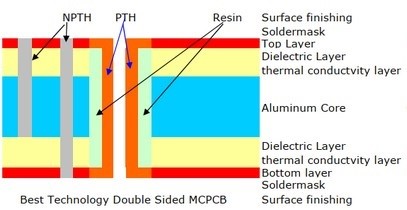
For a 2L MCPCB, the metal core is positioning on the bottom side of the MCPCB as a cooling carrier to the whole MCPCB, while the metal base of double sided MCPCB is located in the middle of two copper trace. In generally, some PTH (plated-through-hole) vias are needed to designed to connect the bottom and top traces.

Below are the stack ups of these two kinds of products, from the structure, we can easily distinguish which one is 2L MCPCB and which one is double sided MCPCB.

Heat dissipation of 2L MCPCB and Double Sided MCPCB

Due to the different structure of the two products, their heat dissipation performance is also different. The main reason is the heating of double-sided metal core circuits can be spread out through both top and bottom side, while the heating generate by SMD components of 2 layers circuit only can be dissipated through bottom (metal) side and the heat need to go down layer by layer. In addition to this, the dissipation of FR4 is not good than metal materials, so double-sided metal core printed circuits perform better heat dissipation performance than 2 layers MCPCB.

Surface mounted locations (SMD populate)

Nowadays, surface mounted technology (SMT) is widely used in printed circuit board industry, more and more designers prefer to populate electronic components of the circuit surface to achieve high density, stable electrical performance and high reliability. 2L metal core circuit boards and double-sided metal core circuits also show their different mounted locations in this aspect.

The populate location of a 2L MCPCB only available on copper trace side, that is top side. And a double-sided metal core PCB can mount components on both top and bottom side, because both of them exist copper trace on it.

Manufacturing technology

May somebody will curious about “Are these two products produced in the same process/technology?”

The answer is obvious “NO, they have a different laminate process when fabricating.”

Different with single layer MCPCB, double sided MCPCB requires an additional pressing step to laminate the thermal conductive layer and metal core together. But sometimes, some raw Metal Clad material vendor will supply board material which already laminated.

For 2 layers metal core PCB, due to it is made of a single MCPCB and a double-sided FR4 PCB, the first thing we should make a double sided FR4 PCB, then laminate the PCB together with the single MCPCB. But due to the thermal conductive layer (pure adhesive) is easy to overflow during laminating process, which will cause the poor adhesion and crack between metal core and FR4 PCB. In the meantime, to avoid such problem, an experienced operator is needed to proceed the laminated process. That is why the lead time and cost of a 2 layers metal core circuit is much longer and expensive.

This is the end of this post, if you still have some questions or difficulties about the metal core PCB, welcome to contact us at sales@bestpcbs.com, our professional sales team and engineering team will give you a best solution for free.

What is the DBC Ceramic Copper Oxidation Technology

February 20th, 2023

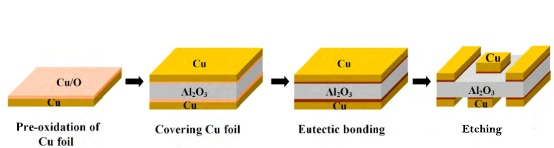
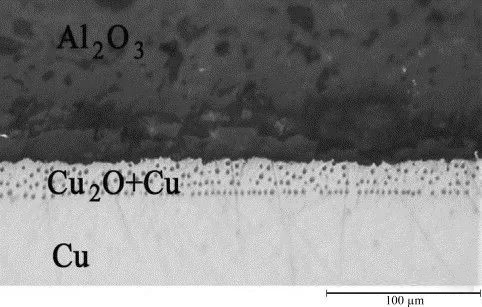
DBC (Direct Bond Copper) ceramic PCB also known as DCB ceramic, which is widely used in various type of high-power semiconductor, especially in IGBT package material by means of its excellent electricity and thermal conductivity of copper and the advantages of high mechanical strength and low dielectric loss of ceramics. DBC technology uses the oxygen-containing eutectic solution of copper to directly apply it to the ceramic. The key factor in the preparation process is the introduction of oxygen element, so the copper foil needs to be pre-oxidized in advance. Do you want to know what is the copper foil oxidation technology during the DBC ceramics manufacturing? Hereinbelow, we will introduce the oxidation process for you.

Oxidation technology of copper foil

Copper oxidation is divided into Wet Air Oxidation (including soaking oxidation and spraying oxidation) and Dry Oxidation.  Both oxidation methods can form CuO or Cu2O on the surface of copper foil.

  • Wet Air Oxidation (WAO)

i. Soaking oxidation

First, the copper is pickled with 3% dilute sulfuric acid, and then washed by the spray washing machine after overflow. Next, sent the copper into the mixed solution of potassium permanganate and copper sulfate (the concentration of potassium permanganate is about 31.6mg/L and the copper sulfate is about 95.4mg/L) for soaking and oxidation.  The oxidized copper is then washed with water and three-stage countercurrent washing, and then slowly pulled for dehydration and drying (the temperature is about 100℃) to complete soaking and oxidation.

ii. Spraying oxidation

Spraying oxidation is a kind of WAO, only the oxidation method become spraying. Spray oxidation is to spray copper with mixed solution of manganese nitrate and copper nitrate (concentration of about 3%) after pickling and washing.  The sprayed copper is dried directly in the tunnel kiln (the temperature is about 200℃).  In the drying process of tunnel kiln, the manganese nitrate and copper nitrate sprayed on the copper sheet are decomposed into copper oxide and manganese oxide.  The ratio of soaking oxidation and spraying oxidation treatment of copper sheet is about 5:5.

  • Dry Oxidation

Dry oxidation is very easy to process, put the copper into oxidation oven firstly, then heating up to 600~800oC for oxidizing around 30mins and then subjected to air cooling annealing.

Wet Air Oxidation VS Dry Oxidation

At present, the existing industry is widely used to finish the high-temperature annealing oxidation of copper then sintering with ceramic substrate, that is dry oxidation.  But this high temperature annealing, oxidation in one way has some drawbacks as following:

  1. Uneven oxidation. It will directly cause sintering defects during sintering, and the peeling strength will change greatly.
  2. Leaving conveyor belt marks.  Because the high temperature and oxidation process is transported by the conveyor belt, the existence of the conveyor belt mesh will affect the temperature distribution of the entire copper is not uniform, leaving marks/traces of the conveyor belt.  The result of sintering is to leave the corresponding trace on the bonding surface of CuAl2O3.
  3. High temperature annealing and oxidation will accompany the grain growth of copper. In the subsequent sintering process, the grain will continue to grow, which brings adverse effects on the mechanical properties and surface treatment of copper.  The copper surface grain produced by wet oxidation is fine, which is conducive to improving the mechanical properties of copper and eliminating the traces of conveyor belt. The main difference between wet oxidation and dry oxidation is shown in the bending resistance, heat resistance cycle performance and peeling strength, and these three indicators are significantly better than dry oxidation. Wet oxidation products can better meet the requirements of bending strength and heat resistance cycle performance.

So, this is the end of this post, EBest Circuit (Best Technology) specialized in fabricating ceramic PCB (including DBC, DPC, AMB, HTCC and LTCC technology) for more than 16 years, we have rich engineering team and professional sales team can provide one-stop service for you. Welcome to contact us if you have any inquiries about ceramic PCB.

How to choose surface finish on Printed Circuit Board?

December 17th, 2022

When finish the PCB design, we should choose a suitable surface finish to protect traces from corrosion. Nowadays, the most popular surface treatments for PCB manufacturer to use are HASL/LF HASL, OSP and ENIG.

Different surface treatment has its unique functionality and the cost also is different. This article we will show you the pros and cons of the three surface finishing which use while the PCB manufacturing process.

HASL Surface Finish

HASL (Hot Air Solder Level) can be known as tin-lead HASL and lead-free HASL, it was the mainstream surface treatment technology in the 1980s, but with the increased of “small and high density” demands in PCB, there are less and less circuit boards use the HASL technology because it will cause the defective products due to the solder point are easy to leave on the board surface during SMT process. In view of this situation, some PCB board manufacturers or designers prefer use OSP or immersion gold to ensure the good quality products as well as smooth production process.

  • Tin-lead HASL

Advantages:

1) Economical and widely available.

2) Excellent solderability.

3)Better mechanical strength & lustrousness than lead-free HSAL.

Disadvantages: it is harmful to environment and violates RoHS compliance.

  • Lead-free HASL

Advantages: low cost, good solder performance and environmental.

Disadvantages: mechanical strength & lustrousness are not good than lead HASL.

In additional, due to the poor surface flatness of HASL circuit boards, neither leaded nor lead-free HASL is not suitable for soldering fine-pitch components or plated through-holes, because it will cause the short circuits and poor welding during the assembly process.

(LF_HASL)

OSP

OSP (Organic Solderability Preservatives) also named as pre flux, the working principle is to generate a layer of organic film chemically on the copper surface to protect the surface from oxidation or vulcanization in the room environment. Meanwhile, OSP also can increase the oxidation resistance, heat shock resistance and moisture resistance of a PCB. 

OSP is equivalent to an anti-oxidation treatment, the protective thin film can be easily removed by the flux quickly under the high soldering temperature, then it makes the exposed copper surface immediately combined with the molten solder in a very short time to become a solid solder spot.

At present, the usage of OSP surface finishing process has increased significantly because it is appropriated for both low and high-end products. If your application has no surface connection functional requirements or storage life limitations, the OSP process is the most desirable surface treatment process.

(OSP_surface_treatment)

Advantage:

1)With all the advantages of bare copper soldering, expired (more than 3 months) boards can also be resurfaced, but one time is better.

2)Good for fine-pitch, BGA and smaller components.

3)Low cost and easy to rework.

4)Simple process and easy to ensure quality.

Disadvantage:

1)OSP is easily affected by acid and humidity, so must be packed with vacuum.

2)Need to do surface treatment again if storage time more than 3 months.

3)It should be used within 24 hours after unpacking.

4)OSP is an insulating layer, so the test point must be printed with solder paste to remove the original OSP layer for electrical testing.

ENIG

ENIG (Electroless Nickel/Immersion Gold) is one of a chemical nickel gold deposition method, the working principle is to generate a layer of coating by chemical REDOX reaction to get a thicker gold layer. Currently, ENIG is mainly used in the surface of the circuit board with connection functional requirements and long storage life.

Advantage:

1)Can be stored long time as well as no oxidation.

2)Good flatness surface and suitable for small solder point components.

3)Good solderability.

4)Can be used as the base material for COB wire bonding.

Disadvantage:

1)High cost than other two surface treatments.

2)Easy to exist black-pad issue during production process.

(ENIG)

As we can know from above information, each PCB surface treatment has its own merit and demerit, you can choose the one according to the effect you want to reach, as well as your cost. 

If you don’t know which is best for you, you can send inquiry to us, our professional engineering team and PCB sales will choose the suitable one for you. Welcome to contact us if you have any other questions.

Why ENEPIG More Suitable for Ceramic PCB Wire Bonding?

October 20th, 2022

There are many surface treatment choices that can be used on Ceramic PCB, but why ENEPIG is one of options we always recommend to our customers whom have wire bonding demands?

In the application of Ceramic PCB, COB or wire bonding was widely used for the packaging technology in thin, short, high speed of electronic products. The Chip On Board (COB) technology refers to a technology in which bare chips are directly attached to the PCB board and then connected electronically through metal wires, namely “Wire Bonding”. Due to gold wire has an excellent electrical conductivity, thermal conductivity, corrosion and oxidation resistance, gold wire is often used as a main bonding material in microelectronics packaging.

What is ENEPIG?

ENEPIG, is a type of surface treatment on Printed Circuit Boards and ceramic PCB, the full name of it is Electroless Nickel – Electroless Palladium – Immersion Gold, now it is widely used in wire bonding field.

How does it work and what’s the standard thickness of each layer?

  • Electroless Nickel: Nickel acts as a barrier layer, preventing copper from interacting with the other metals involved in this plating technology, particularly gold. The layer is deposited on the catalytic copper surface using an oxidation-reduction reaction. The result is a layer that is between 2.0 to 5.0 microns thick.
  • Electroless Palladium: Palladium is a relatively stable metal at room temperature, and it is difficult to be oxidized within 400℃. The chemically deposited palladium layer has a neat lattice arrangement, uniform grain size and compact structure. Adding palladium layer between nickel layer and gold layer can effectively prevent the diffusion of nickel layer to gold layer. The Palladium is a layer with a thickness between 0.03 to 0.10 microns, it also depends on the final applications.
  • Immersion Gold: The main function of the gold layer is to bond with the gold wire. If there is no palladium layer as a diffusion barrier between the nickel layer and the gold layer, the gold layer can also bond with the gold wire after reflow, as long as the gold layer reaches a certain thickness. For example, when the thickness of the electroplated nickel gold reaches 0.3um, it can bond with the gold wire. In addition, gold itself has a good bonding ability with gold wire, and in ENEPIG process, due to the palladium layer protects the gold layer from the pollution of nickel, only a thin gold layer (0.03um~0.05umm) is needed to have a good bonding property. This’s why there’s cost advantage of ENEPIG than that of thicker ENIG.
(ENEPIG product)

Why choose ENEPIG?

ENIPIG has a good wiring bonding ability, solder joint reliability, multiple reflow soldering and excellent storage time, can correspond to and meet the requirements of a variety of different assemblies.  Below is a comparison about performance of different surface treatments:

(Comparison-about-performance-of-different-surface-treatments)

Advantages  of ENEPIG

  • “Black Nickel” free — The palladium layer separates the Nickel layer from the gold layer, it can prevents the mutual migration of gold and nickel, so no black nickel will appear
  • Excellent gold wire bondability — the gold plating/coating is very thin, can be used for gold wire bonding as well aluminum wire bonding
  • Palladium acts as an additional barrier layer to further reduce copper diffusion to surface, thus ensuring good solderability
  • Cost-effective than ENIG
  • Lead-free nickel
  • Good compatibility between coating and solder paste
  • Very suitable for packaging components such as SSOP, TSOP, QFP, TQFP, PBGA

EBest Circuit (Best Technology) is a 16+ years PCB manufacturer and we made many ENEPIG PCBs and ceramic PCBs for our customers, welcome to contact us if you have demands on ENEPIG PCB.

X-ray Inspection in PCB Assembly

June 15th, 2022

X-Ray Inspection’s Definition

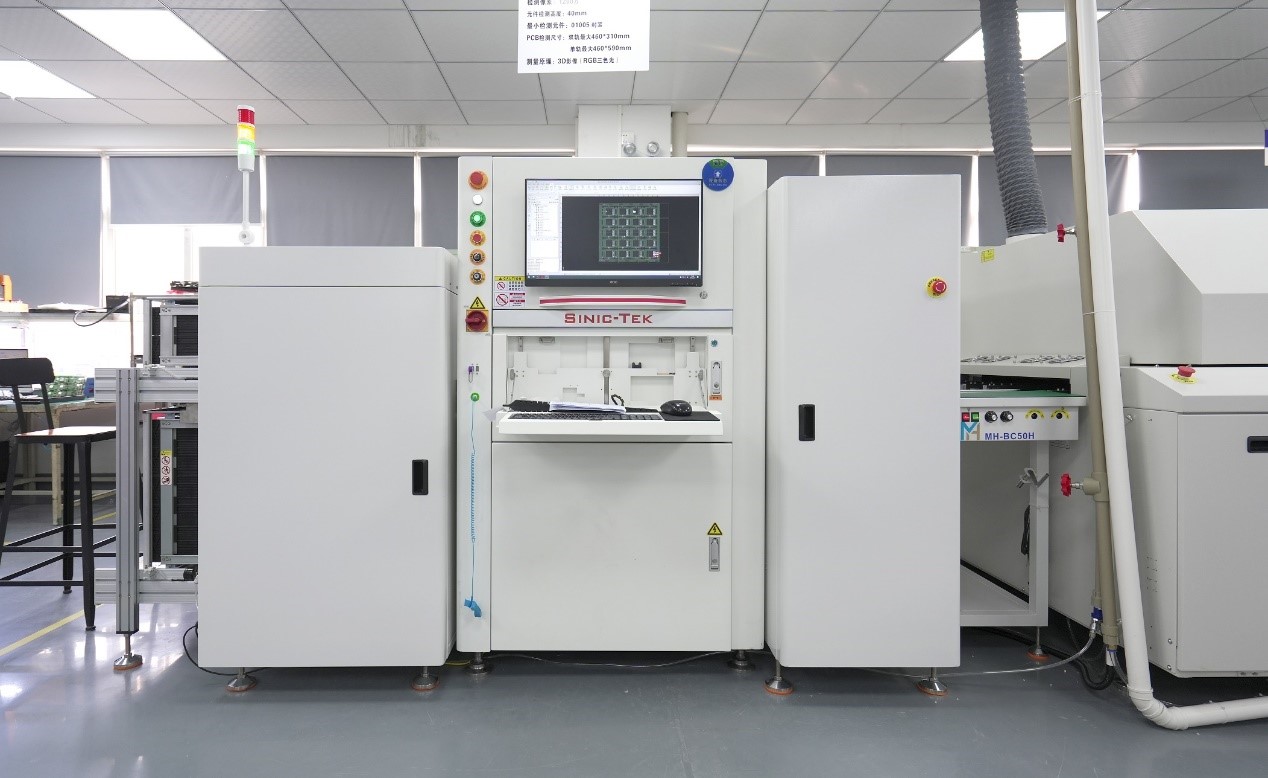
X-ray inspection is a technology used to inspect the hidden features of the target objects or products. As for PCB inspection, X-ray is commonly used in the inspection of PCB assembly in order to test the quality and find the hidden defects, X-ray inspection is one of the most important steps for quality-oriented PCB manufacturers.

X-Ray Machine

X-Ray Inspection’s Working Principle

Generally, there are three elements in the X-ray devices.

  • X-ray tube—to generate the X-ray photons.
  • Operation platform—to move along with the sample so that the sample can be inspected from different angles and magnification.
  • Detector—it can capture the X-ray through the samples and then transfer it into the image so that we can find out whether there are defects on the printed circuit board.

The Hidden Defects that can be Identified by X-Ray

Since PCB has the higher density with the solder joints hidden and holes buried or blind, X-ray enable us to inspect the quality of the PCB and identify various hidden defects. And there are three common hidden defects that can be inspected by X-ray.

PCB’s Image Under X-Ray
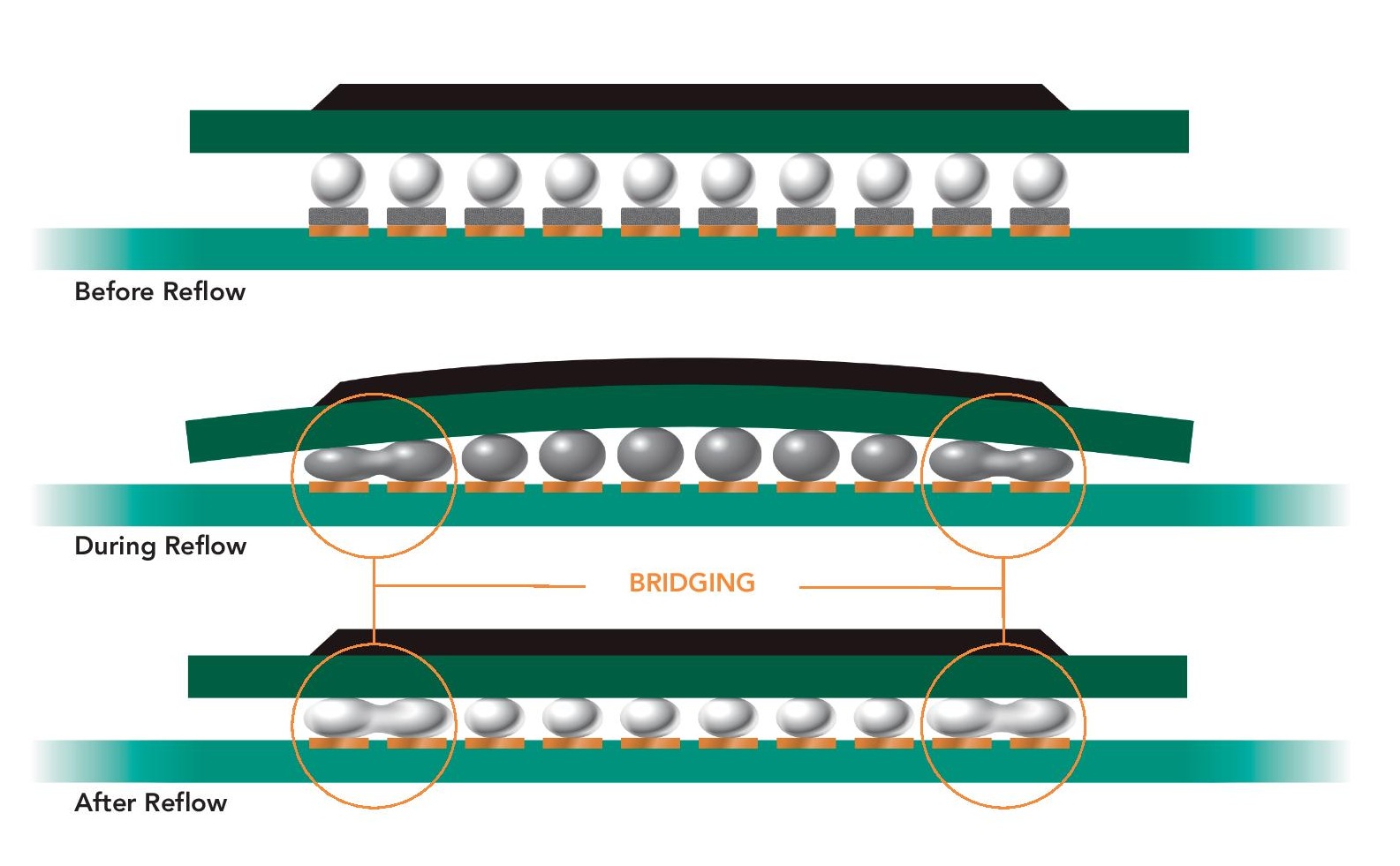
  • Solder bridges—it is a common issue that will occur when the solder joints are so close that they create a connection which is not allowed. And usually, the solder bridges will be covered by some components on the PCB. But they can be easily found with the help of the X-ray device.
  • Solder voids—when gas or flux is entrained during welding, solder voids will be produced, which will lower the thermal conductivity at the solder joint and may cause physical defects. And X-ray can help to  identify the solder voids
  • Pin-hole fills—pin-hole fills issue is a common problem occurring in the plug-in components on the  printed circuit boards. The X-ray device can be used to identify these errors, and can even quantify the missing filling amount.

Our X-Ray Inspection Device

The maximum size of the board that can be put in the device’s operation platform is 510*430 mm, while the maximum inspection size of the device is 435*385 mm. So here is the manifestation of the operation platform’s function. When the size of PCB is over 435*385 mm, the operation platform will move along with the board so that the board can be inspected thoroughly.

And here is a video about operation of our X-ray inspection device.

So, this is the end of this article. In case if you have any questions, you are welcome to contact us via email at  sales@bestpcbs.com. We are fully equipped to handle your PCB  manufacturing requirements.

3M Epoxy Adhesive DP190-Gray & 3M Epoxy Adhesive DP190-Translucent

April 22nd, 2022

Both 3M Epoxy Adhesive DP190-Gray and 3M Epoxy Adhesive DP190-Translucent are a two-part epoxy adhesive that delivers exceptional performance with high shear and peel strength.

They can bond to a wide range of materials, such as metals, ceramics, wood, fiberboard, glass, rubber and many plastics. So, PCB is no exception. But what are the similarities and differences between them?

Similarities

  • Provide tough, strong bonds through high shear and peel strength.
  • Capable of bonding to a wide variety of different materials.
  • Deliver extended work-life, providing additional time for adjustment.
  • Exhibit good environmental aging properties, delivering long-term durability.

Differences

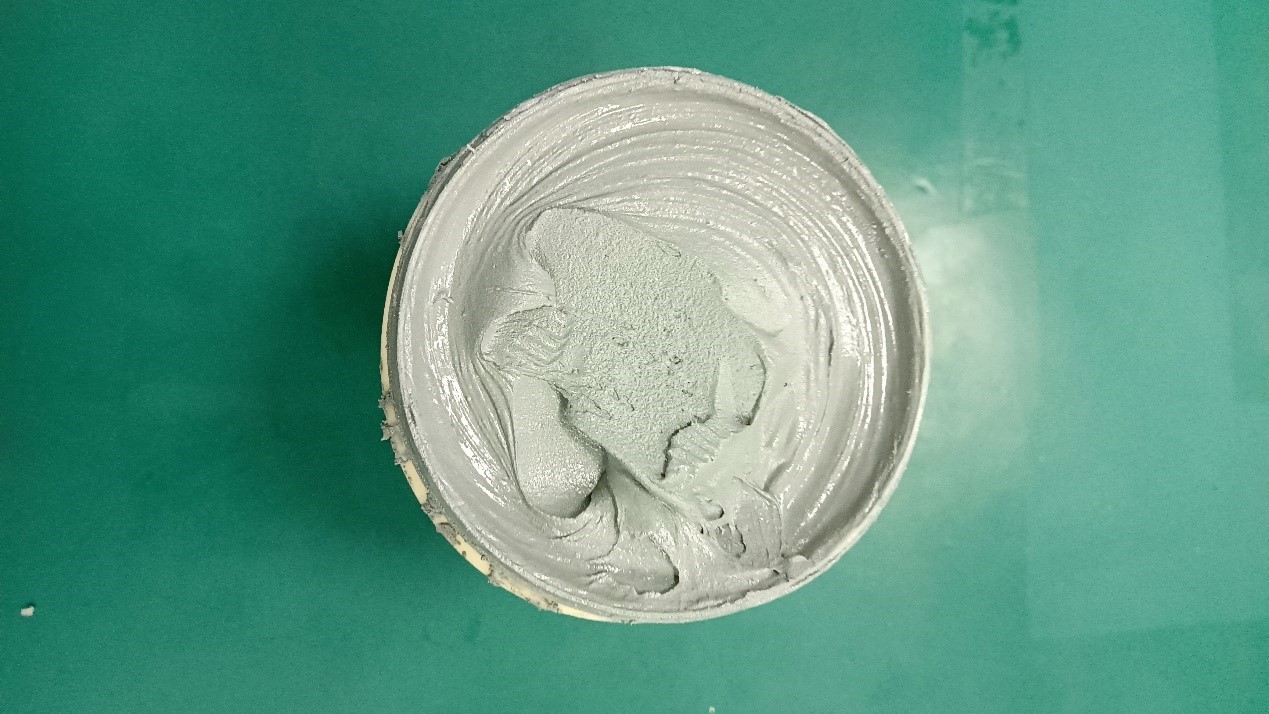
3M Epoxy Adhesive DP190-Gray has a moderately high modulus. With a 90-minute work-life, it reaches handling strength in approximately 10 hours and full cure in 7 days at room temperature.

Additionally, this epoxy adhesive has medium viscosity and self-leveling with a 1:1 mix ratio by volume. But its flexibility and elongation are moderate.

(3M Epoxy Adhesive DP190-Gray)

3M Epoxy Adhesive DP190-Translucent has a moderately low modulus. With an 80-minute work-life, it reaches handling strength in approximately 10 hours and full cure in 14 days at room temperature.

It has low viscosity and self-leveling with a 1:1 mix ratio by volume. Additionally, it features high flexibility and elongation.

3M Epoxy Adhesive DP190–Translucent

This is all about the similarities and differences between the 3M Epoxy Adhesive DP190-Gray and 3M Epoxy Adhesive DP190-Translucent. It is supposed that you have known about them.

But if you still have any questions about them or PCB, please feel free to contact us. Because at EBest Circuit (Best Technology), we are fully equipped to handle your PCB manufacturing requirements.

Electrostatic’ s Power-Trivia Series 2

April 18th, 2022

Last time we have known that electrostatic discharge (ESD) account for the highest proportion of causes leading to the failure of high electrostatic sensitive devices and the generation of it. Therefore, today we are going to talk about what kind of damage the static will cause to the Printed Circuit Board and how to avoid it.

The Influence of Electrostatic

Under different circumstances, the electrostatic voltage carried by the human body ranges from hundreds of volts to thousands of volts. And when people touch the electronic components, there will be ESD, resulting in the damage to devices and the reduction of reliability. To make matters worse, ESD will break down the device and directly scrap the product.

PCBA

Besides, the ESD will lead to a large pulse current, which will generate a lot of heat in the chip and printed circuit board, making them burn out. Moreover, the integrated circuits (IC) are built with denser lithography lines than before so that their ability to withstand electrostatic discharge becomes weaker. Therefore, it is necessary to prevent it.

Elimination of Electrostatic

Since the static will has a great impact on the PCB and electronic components, it is extremely significant to take precautions against the electrostatic by taking some measures. And here are some measures carried for eliminating the electrostatic in our workshop.

  • Putting on anti-static clothes and hats. It is to prevent static existing in clothes and hair from influencing the board.
Anti-static Clothes and Hats
  • Wearing anti-static wrist straps. The principle is to discharge the static from the human body to the ground through the wrist strap and grounding wire.
Anti-Static Wrist Strap
  • Using static elimination instrument. What we have to do is to put just one hand on static elimination instrument, and do not leave our hand from it until the red light turns to green, which aims to eliminate the static existing in our body.
Static Elimination Instrument
  • Keeping a certain humidity in the workshop. Higher humidity is not prone to ESD. The higher the humidity is, the easier it is to conduct electricity. As a result, electrostatic cannot be stored in our body.
  • Using anti-static packaging. When packaging, we have different packaging ways, such as anti-static bags, anti-static bubble film and so forth. And what to be used in packaging is up to our clients.
Anti-static Bags

To sum up, electrostatic will cause damage to the Printed Circuit Board and electronic components so that it is necessary to take some measures to prevent it.

And this is the end of this trivia. If you would like to know more about PCB, you are welcome to contact us.

Electrostatic’ s Power─Trivia Series 1

March 23rd, 2022

The Introduction to Electrostatic

Static, the excess charge on an object, is a phenomenon caused by the unbalanced distribution of charge in the material system. When an object is charged, the charge will remain on the object unless it is removed by other objects, so it is called “static electricity”.

As is known, we cannot touch PCB directly with our hands because of the electrostatic. But most of people have thought lowly of electrostatic’ s power, deeming that it is not strong enough to be harmful to some devices, especially electronic components.

On the contrary, electrostatic can be in some way devastating. According to the statistics, electrostatic discharge (ESD) account for the highest proportion in the ranking of causes leading to the failure of high electrostatic sensitive devices, which is 59%.

Pie Chart

The Generation of Electrostatic

There are various ways resulting in the generation of electrostatic. But, triboelectrification, namely indicating that electrostatic is generated by friction, is the most common one.

Where there is friction, there will be electrostatic. When walking, the shoes will rub with the floor, leading to the triboelectrification. Also, the frictions between our hair and clothes are so easier to generate the static that every movement in the PCB workshop will unintentionally cause the generation of static.

Then the static generated will have a great impact on the PCB and electronic components. But, how great the electrostatic’ s power is, or in other words, what kind of damage can it cause to the printed circuit boards or electronic components? And what can we do to eliminate the electrostatic?

We will talk about it next time, hence if you would like to know more, you are welcome to contact us, or you can continuously follow our blog site, on which we will keep sharing more information about PCB.

What Should be Prepared Before Starting the SMT Process?

February 15th, 2022

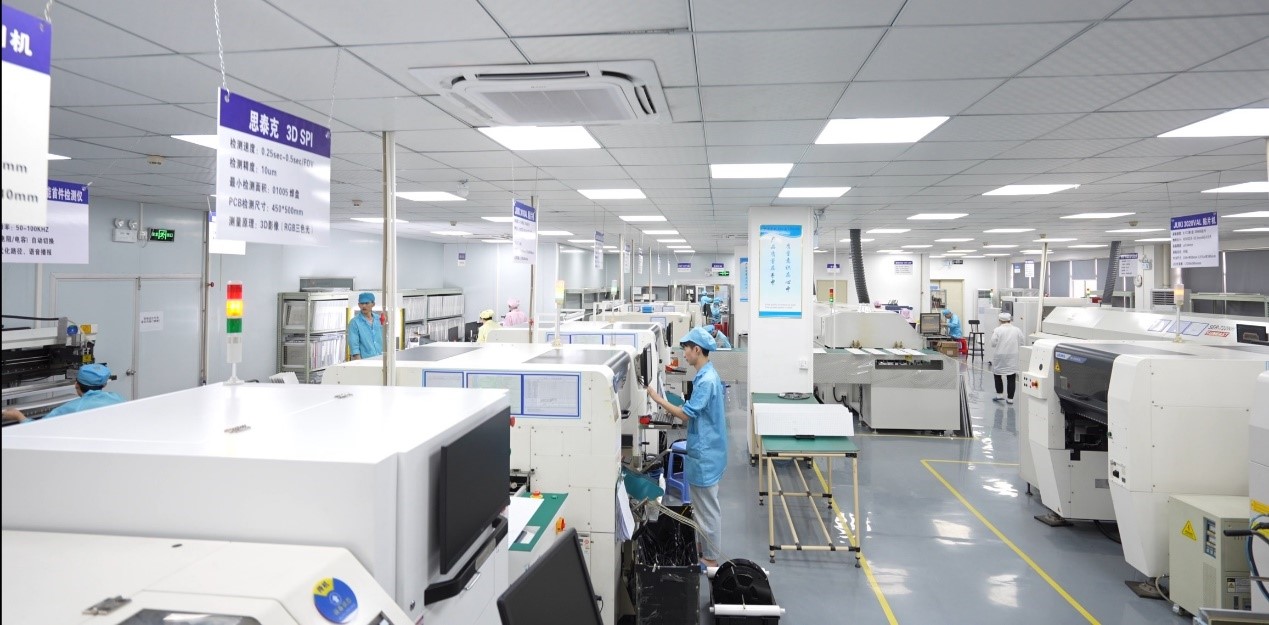
SMT, whose full name is Surface Mounted Technology, is the most popular technology in electronic assembly industry. It refers to process on PCB (Printed Circuit Board), putting various electronic components on PCB, such as resistors, capacitors, inductors, and so forth. Also, there are some dos and don’ts in the whole process of PCBA.

As noted previously, there are all sorts of electronic components that will be used in the assembly process of Printed Circuit Board. Therefore, it is extremely important to take some measures to keep a check on static. Here are three steps before entering the SMT workshop.

First, put on anti-static clothes and hats. It is to prevent static existing in clothes and hair from influencing the board, for static has a potential and tremendous destructive power.

Anti-static Clothes and Hats

Second, what we have to do is to put just one hand on static elimination instrument, and do not leave our hand from it until the red light turns to green, which aims to eliminate the static existing in our body.

Static Elimination Instrument

Third, across the air shower door. In this way, dust that is invisible on our body can be blown off in about 5 seconds.

Air Shower Door

Only finishing the three steps above can we enter the PCB assembly workshop. And after entering the workshop, there are also something needed to be prepared.

  • Solder paste. The storage temperature of solder paste is 2-10 degrees Celcius, hence it has a period of regaining temperature, which conducts in the rewarming machine for 4 hours. Then the solder paste should be rabbled in a blender for 5 mins in order to help three ingredients in it to be fully integrated, which can help to achieve a better printing and back-flow soldering effect.
Solder Paste
  • Oven. This machine is used to get rid of the moisture from materials or boards, ensuring that PCB will not be defective due to moisture during the subsequent assembly process. Moreover, different boards have different requirements. But generally, the baking parameter is 105 degrees Celcius, lasting 1.5 hours.
Oven
  • Dryer. It is used to maintain a set temperature and humility of materials and boards that needs to be processed that day, which is also to avoid that moisture does harm to materials and boards after removing the moisture by oven.
Dryer
  • Tension test of stencils. Before manufacturing, the stencils’ uniformity should be tested by tensiometer, which mainly tests the four corners and the center part of the stencil, guaranteeing the solder paste printing quality. And the parameter should be between 30 and 45.
Stencils

To sum up, although there are lots of preparations should be done before starting the formal assembly process, each of them is significant, for they will probably influence the quality of boards directly. Besides, only a good preparation can make a certain that the follow-up process can keep going. Thus, it is a must to prepare well in advance.

And EBest Circuit (Best Technology) is an experienced electronic company. It not only can provide PCBA service, but can provide other services, such as FPC, FR4 PCB, Rigid-flex PCB and so on. And if you have any questions about SMT, or any other questions about assembly, you are welcome to contact us.

Via Tented, Via Filled & Via Plugged

December 20th, 2021

Via Tented, Via Filled (filled with solder mask) & Via Plugged (Via In Pad – Conductive material or Non-Conductive material)

One of the most confused idea during our PCB design is the difference between Via Tenting, Via Filling and Via Plugging. Designers often get mixed up between them and fail to take full advantage of the process.

Today, let us discuss them, so that you can be confident in specifying your design requirements clearly when submitting PCB files to EBest Circuit (Best Technology) before final manufacturing.

Via Tented

What is via?

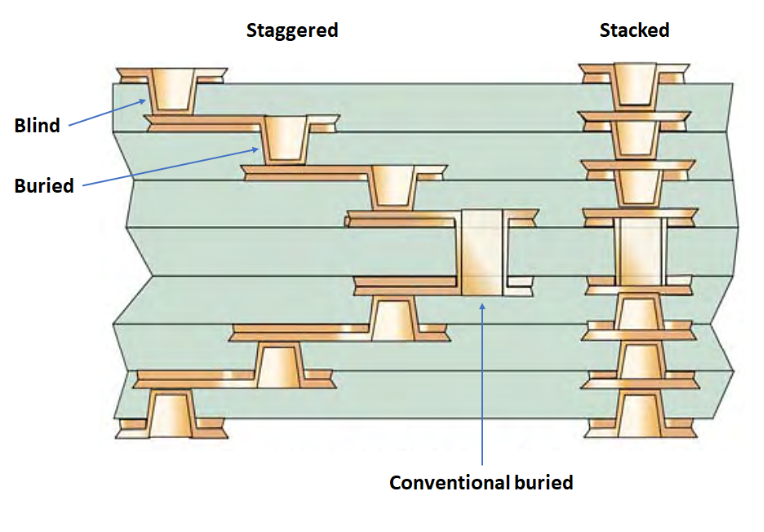
A plated through hole (PTH) in a Printed Circuit Board that is used to provide electrical connection between a trace on one layer of the Printed Circuit Board to a trace on another layer. Since it is not used to mount component leads, it is generally a small hole and pad diameter.

A. Three methods and definitions of via processing

There are three methods for via processing: via hole opening & via hole cover oil & via hole plug oil

1. Through hole opening window: it is the tin on the solder ring of the via (the tin is exposed like a plug-in pad). The window is usually used to debug the measurement signal. The disadvantage is that it is easy to cause a short circuit.

2. Through hole cover oil: it is the welding ring of the through hole (via) covered with solder mask ink

3. Through hole plugging oil: refers to plugging the hole with ink.

Secondly, the inspection standards for a processing method

1. Through-hole opening window is like a plug-in pad, and the window is sprayed with tin. Inspection standard: tin can be tinned, and tin can be easily tinned.

2. The inspection standard of the via hole cover oil: it is not easy to tin in the patch.

3. Inspection criteria for via plug oil: First, it must be opaque, and it must be covered and blocked by ink.

Finally, we are talk for comparison and distinction between via hole cover oil and via hole plug oil:

1. Via plug oil This process is an important supplement to via plug oil, so generally high-quality boards will require via plug oil. And often many engineers who are just entering the industry are stupid and unclear. So how do you distinguish between the two?

2. The requirement of via hole cover oil is that the ring of the via hole must be covered with ink. The emphasis is to ensure the thickness and coverage of the ink on the edge of the hole. The key control is that the ring does not accept false copper exposure and orifice oil. Thin

3. Through hole plugging oil is the production of plug holes with ink inside the holes of the through holes. The emphasis is on the quality and density of the plug holes. After the holes are plugged, no light can be transmitted.

4. The method of plugging the via hole is to first fill the via hole with ink to block the via hole, so that the ink on the solder mask will not flow into the via hole, so as to achieve the situation that the via hole does not appear yellow. (If you have strict requirements and place an order for via hole cover oil, the cover oil is usually not full or yellowish, you can change it to via hole plug oil later). In addition, the smaller the vias are, the easier it is to plug them. The vias of the fortress oil are not easy to be too large (the circuit board proofing plugging oil is directly plugged with ink, and the printing tape is plugged. It is recommended that the vias that need to be plugged are designed to be <0.5mm. This is also free; no additional money is required).

If you have more question Via Tented, Via Filled& Via Plugged, warmly welcomed to contact Best Tech for more FR4 design service.