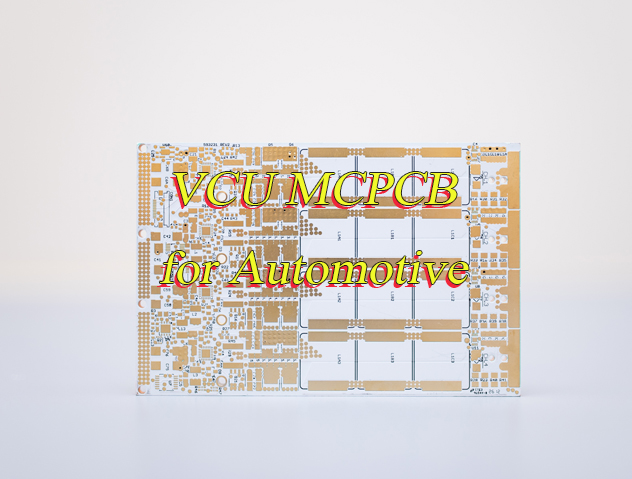
Ultra-thin wireless charging MCPCB delivers superior thermal conductivity, automotive-grade certifications, and extreme environment reliability. It is ideal for seamless integration into tight automotive interior spaces while maintaining stable high-power wireless charging performance.
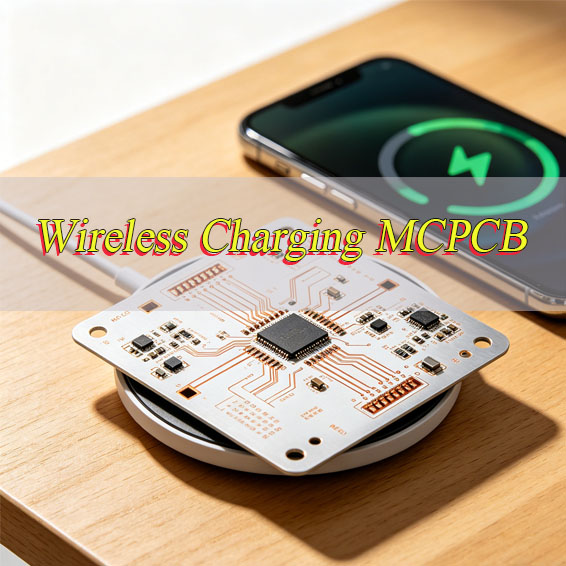
Why EBest Stands Out for Wireless Charging MCPCB?
We prioritize your project success by delivering tangible value that reduces costs, accelerates timelines, and minimizes risks. Below are reasons why EBest stands out for wireless charging MCPCB:
- Quality You Can Trust: We achieve a 99.8% yield rate for wireless charging MCPCB production. This means you receive consistent, defect-free boards that eliminate rework costs and production delays.
- Fast Lead Times to Keep Your Project On Track: We offer 3–5 day prototype delivery and 7–10 day mass production lead times. This is 30% faster than industry averages, helping you meet tight automotive launch deadlines.
- Stable Supply Chain for Uninterrupted Production: Our global network of 12+ certified material suppliers ensures 99.5% supply continuity. You won’t face production halts due to material shortages.
- Dedicated Support to Optimize Your Design: Our engineering team provides free DFM analysis within 24 hours of receiving your design. We identify potential issues early, reducing design iterations by 40% and saving you time and resources.
- Reliable Performance Guaranteed: Every wireless charging MCPCB undergoes 100% electrical and thermal performance testing. This ensures 0% field failure rates in the first two years of vehicle operation.
Specifications of EBest’s Automotive-Grade Wireless Charging MCPCB
| Specification Category | Details | Automotive Application Benefit |
|---|---|---|
| Thermal Conductivity | 2.0–4.0 W/m·K | Optimized for high-power heat dissipation during 15W–50W charging |
| Board Thickness | 0.4–1.0 mm | Ultra-thin profile for compact center console and armrest integration |
| Operating Temperature | -40°C to 125°C | Fully compliant with harsh automotive interior and exterior conditions |
| Copper Weight | 1–3 oz | Supports high-current wireless charging coils without performance loss |
| Surface Finish | ENIG | Ensures long-term reliability and solderability for automotive SMT assembly |
| Wireless Standard Compliance | WPC Qi 1.3, Qi2 | Fully compatible with all Qi-enabled mobile devices used by drivers and passengers |
EBest Certifications & Quality Assurance for Wireless Charging MCPCB
Here are EBest’s certifications and quality assurance for wireless charging MCPCB:
- IATF 16949 Certification: This automotive-specific quality management system certification ensures full process control throughout production. It eliminates quality risks by standardizing every step from material sourcing to final testing, aligning with global automotive manufacturing requirements.
- ISO 9001 Certification: Our ISO 9001 certification guarantees consistent manufacturing standards across all batches. This means you receive the same high-quality wireless charging MCPCB every time, ensuring reliable performance in your automotive applications.
- ISO 13485 Certification: While originally designed for medical devices, this certification extends our quality standards to support high-reliability, zero-failure critical automotive applications. It is ideal for wireless charging MCPCB used in safety-related vehicle systems.
- AEC-Q100 Certification: Compliant with automotive electronic component reliability requirements, this certification validates that our wireless charging MCPCB can withstand the harsh conditions of automotive environments, including extreme temperatures and vibration.
- RoHS/REACH Compliance: Our wireless charging MCPCB meets global automotive environmental regulations. This ensures your vehicles comply with regional standards, avoiding costly penalties and expanding your market reach.
- WPC Qi Certification: Full compliance with WPC Qi 1.3 and Qi2 standards ensures our wireless charging MCPCB works seamlessly with all Qi-enabled devices. This eliminates compatibility issues for end users and enhances the overall vehicle experience.
What Are the Top Pain Points of Wireless Charging MCPCB in Automotive?
Challenge 1: How to prevent excessive heat buildup in tight automotive console spaces for wireless charging MCPCB?
Solution 1: High-thermal-conductivity metal core substrate and optimized thermal via design, which dissipates heat efficiently to prevent performance degradation.
Challenge 2: How to fit wireless charging MCPCB into modern car interiors with limited space for thick PCBs?
Solution 2: Ultra-thin 0.4–1.0 mm profile and flexible design for flush mounting under trim panels, solving the space constraint challenge.
Challenge 3: How to prevent wireless charging MCPCB from causing EMI interference with vehicle electronics?
Solution 3: Integrated magnetic shielding and optimized coil layout that meets automotive EMC standards, eliminating interference with vehicle electronics.
Challenge 4: How to ensure wireless charging MCPCB maintains reliability under extreme automotive temperature cycles?
Solution 4: Automotive-grade materials, a -40°C to 125°C operating range, and passing thermal shock testing to ensure long-term reliability.
Challenge 5: How to improve the charging efficiency of wireless charging MCPCB affected by suboptimal design?
Solution 5: Precision coil patterning and low-loss copper traces, achieving >85% wireless power transfer efficiency to resolve efficiency issues.
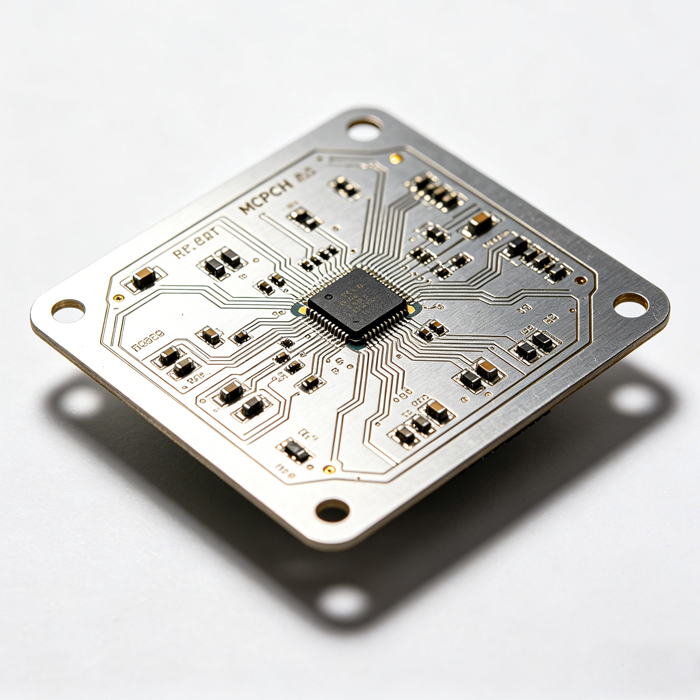
How Does Ultra-Thin Wireless Charging MCPCB Improve Automotive Interior Design?
Ultra-thin wireless charging MCPCB is a game-changer for automotive interior design, addressing the industry’s demand for sleek aesthetics, space efficiency, and functional integration. Its slim profile and flexible design allow it to blend seamlessly with modern vehicle interiors, enhancing both visual appeal and user experience without compromising charging performance.
- Enables flush, seamless integration into center consoles, armrests, and door panels, preserving the sleek, premium aesthetics of modern automotive interiors without bulky protrusions.
- Eliminates bulky charging modules that waste valuable interior space, creating more room for storage compartments, control panels, or other user-centric features.
- Supports thin-profile wireless charging pads that blend perfectly with premium interior materials like leather, wood, or carbon fiber, maintaining a cohesive and high-end look.
- Offers flexible design options to match unique interior layouts, allowing automotive designers to maintain creative freedom without sacrificing wireless charging functionality.
- Reduces visual clutter in the cabin by integrating charging capabilities directly into existing interior components, avoiding the need for standalone charging devices.
- Accommodates the trend toward minimalistic automotive interiors, aligning with consumer preferences for clean, uncluttered cabin spaces while adding essential functionality.
- Facilitates integration with ambient lighting features, allowing the wireless charging MCPCB to complement interior lighting designs and enhance the overall cabin ambiance.
What Thermal Performance Should You Expect from Automotive Wireless Charging MCPCB?
Thermal performance is a critical factor for automotive wireless charging MCPCB, as it directly impacts charging efficiency, component lifespan, and overall reliability in harsh vehicle environments. High-power wireless charging (15W–50W) generates significant heat, so understanding the expected thermal performance helps ensure your MCPCB meets automotive-grade standards and end-user expectations.
- Thermal conductivity ranges from 2.0–4.0 W/m·K, with our high-end options (4.0 W/m·K) designed to rapidly dissipate heat from high-power wireless charging, preventing performance drops.
- Maintains stable charging efficiency even in hot cabin environments (up to 60°C), preventing overheating during continuous use in extreme weather conditions.
- Reduces component temperature by up to 25°C compared to standard PCBs, extending the lifespan of both the wireless charging MCPCB and connected mobile devices.
- Meets strict automotive thermal standards, passing thermal shock (-40°C to 125°C, 1000 cycles) and thermal aging tests to ensure long-term reliability.
- Minimizes thermal hotspots through optimized thermal via placement and high-purity aluminum core, ensuring uniform heat distribution across the board.
- Supports consistent performance during temperature fluctuations, a key requirement for automotive components that operate in varying climates.
- Complies with AEC-Q100 thermal reliability requirements, ensuring the wireless charging MCPCB performs reliably throughout the vehicle’s service life.
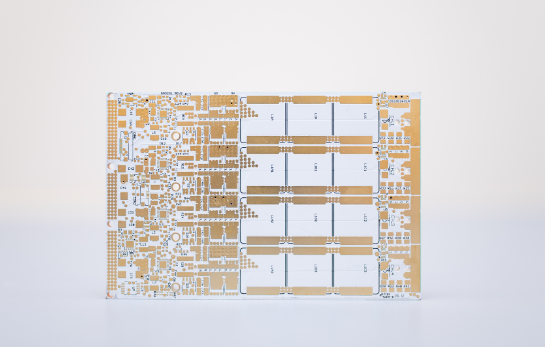
How to Design for Manufacturability (DFM) with Wireless Charging MCPCB?
Designing for manufacturability (DFM) is critical to ensuring your wireless charging MCPCB is cost-effective, reliable, and easy to produce at scale. Here are key best practices tailored to automotive applications:
- Minimize coil trace width variation: Consistent trace width (±0.05 mm) ensures uniform inductance across the board. This prevents charging efficiency inconsistencies and reduces production defects.
- Optimize thermal via placement: Place thermal vias directly under coil pads and high-heat components. Space vias 2–3 mm apart to maximize heat transfer to the metal core, reducing hotspots.
- Use automotive-grade materials compatible with SMT assembly: Choose materials that can withstand high-temperature reflow soldering (260°C for 10 seconds). This ensures compatibility with standard automotive manufacturing processes.
- Allow sufficient clearance for components: Maintain a minimum 0.5 mm clearance between coil traces and other components. This avoids short circuits and EMI interference with vehicle electronics.
- Follow IPC-6012 Class 3 standards: These standards ensure high-reliability performance for automotive applications. They cover requirements for dielectric integrity, copper adhesion, and solderability.
- Integrate FOD (Foreign Object Detection) circuits early: Design FOD sensors into the PCB layout to prevent overheating from metal objects. This complies with automotive safety standards and protects end users.
- Consult with your manufacturer for DFM feedback: Early DFM analysis (like the free service EBest offers) identifies design flaws before production. This reduces iterations and saves time and costs.
What Are the Material Choices for High-Performance Wireless Charging MCPCB?
Below are material choices for high-performance wireless charging MCPCB:
- Metal core: Aluminum (Al) with high-purity alloy for optimal thermal transfer. It balances thermal conductivity and cost-effectiveness for automotive applications.
- Dielectric layer: High-temperature resistant, low-loss epoxy resin. It maintains stability at extreme temperatures and reduces signal loss during charging.
- Copper foil: Electrodeposited copper, 1–3 oz for low resistance. Thicker copper (3 oz) is ideal for high-power charging applications.
- Surface finish: ENIG (Electroless Nickel Immersion Gold) for corrosion resistance and solderability. It ensures long-term reliability in harsh automotive environments.
- Ferrite shielding: Thin, high-permeability sheets to enhance magnetic coupling and reduce EMI. This improves charging efficiency and prevents interference with vehicle systems.
How Does Wireless Charging MCPCB Ensure Reliability in Automotive Environments?
Our wireless charging MCPCB undergoes rigorous automotive reliability testing to ensure performance in harsh conditions:
- Thermal shock testing (-40°C to 125°C, 1000 cycles) to simulate extreme temperature changes.
- Vibration testing (per ISO 16750-3) to withstand road vibrations and vehicle movement.
- Humidity testing (85°C/85% RH, 1000 hours) to prevent moisture damage.
- Thermal cycling and thermal aging tests to ensure long-term stability.
- Electrical performance validation under extreme conditions to guarantee consistent charging.
What Customization Options Are Available for Wireless Charging MCPCB?
Here are customization options for wireless charging MCPCB:
- Board thickness: 0.4–1.0 mm, tailored to your space constraints.
- Coil design: Single/dual/multi-coil configurations for larger charging areas.
- Layer count: 1–4 layers for complex circuit integration.
- Size and shape: Custom profiles to fit specific console designs.
- Special features: Integrated shielding, thermal vias, LED indicators, FOD circuits.
Automotive Application Case Study: Wireless Charging MCPCB in Premium EV Interiors
Project Requirements
- A leading premium electric vehicle manufacturer needed a wireless charging MCPCB for their new EV model’s slim center console.
- Maximum board thickness: 0.6 mm to fit the tight interior space.
- Thermal conductivity: Minimum 3.0 W/m·K to handle 15W high-power charging without overheating.
- EMI compliance: Must not interfere with the vehicle’s infotainment and navigation systems.
- Reliability: Meet AEC-Q100 standards for long-term automotive use.
- Timeline: Prototype delivery within 4 days, mass production within 8 days to meet vehicle launch deadlines.
EBest’s Solution
- Designed an ultra-thin 0.6 mm wireless charging MCPCB with 3.0 W/m·K thermal conductivity using high-purity aluminum core.
- Integrated high-permeability ferrite shielding to minimize EMI interference with vehicle electronics.
- Optimized coil patterning with 2 oz copper foil to ensure 88% charging efficiency and consistent inductance.
- Provided free DFM analysis within 24 hours to optimize the design for SMT assembly.
- Delivered prototypes in 3 days (1 day ahead of schedule) and mass production in 7 days.
Project Output & Results
- The wireless charging MCPCB fit seamlessly into the slim center console, maintaining the vehicle’s premium interior aesthetics.
- Operating temperature reduced by 22°C compared to the manufacturer’s previous solution, eliminating overheating issues.
- EMI emissions were 40% below automotive EMC standards, ensuring no interference with vehicle systems.
- Charging efficiency reached 88%, exceeding the manufacturer’s 85% target.
- Yield rate for mass production was 99.9%, eliminating rework costs and production delays.
- The solution helped the manufacturer meet their vehicle launch deadline and receive positive feedback from end users.
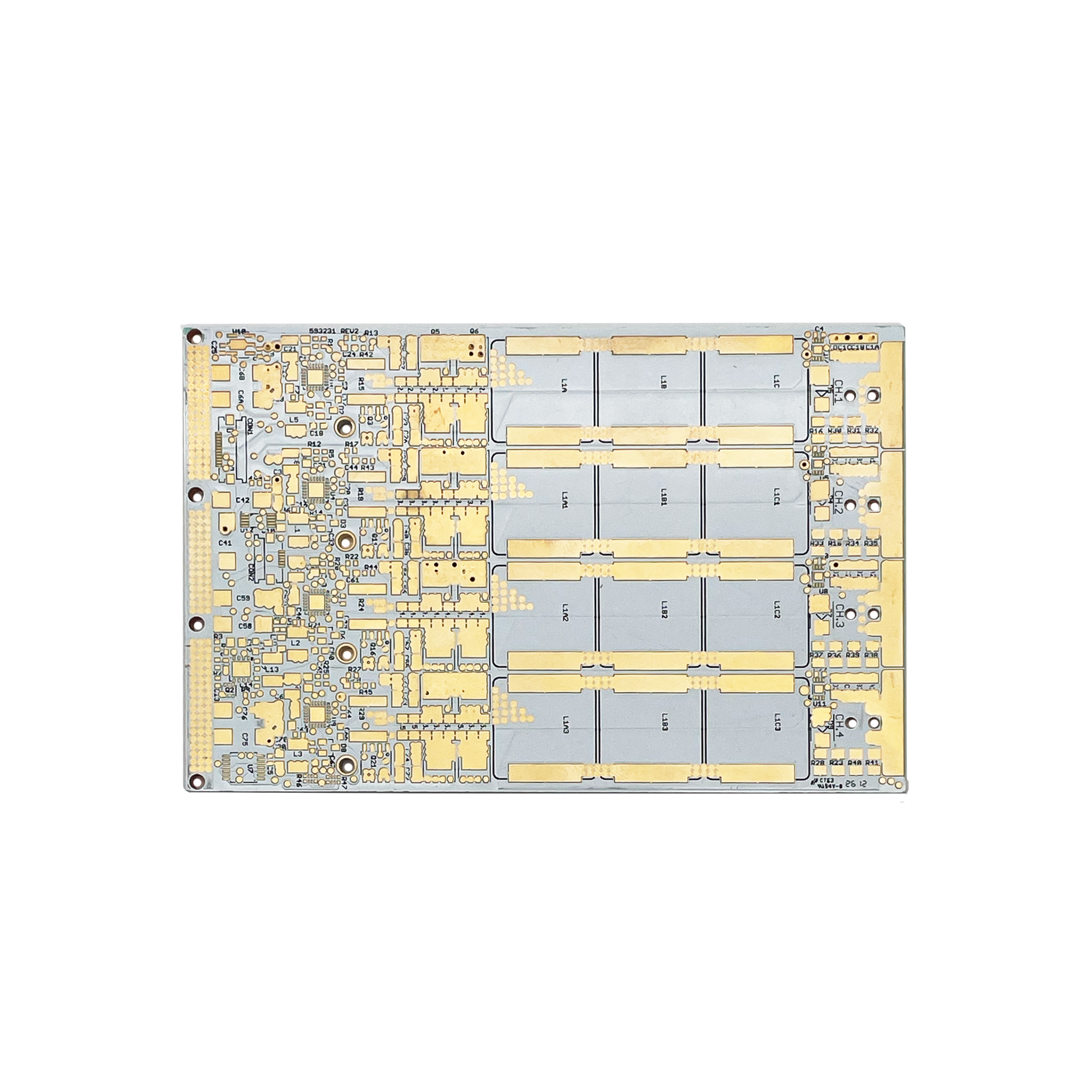
FAQ About Wireless Charging MCPCB
Q1: What is the minimum thickness available for EBest’s wireless charging MCPCB?
A1: The minimum thickness for EBest’s wireless charging MCPCB is 0.4 mm. This ultra-thin profile is ideal for ultra-slim automotive interior integration, including tight center consoles and armrests.
Q2: Does your wireless charging MCPCB support Qi 1.3 and Qi2 standards?
A2: Yes, our wireless charging MCPCB is fully designed to support WPC Qi 1.3 and Qi2 standards. It includes compatibility with 15W EPP and higher power profiles, ensuring seamless use with all Qi-enabled mobile devices.
Q3: What is the operating temperature range for automotive-grade wireless charging MCPCB?
A3: Our automotive wireless charging MCPCB operates reliably from -40°C to 125°C. This range meets AEC-Q100 requirements and ensures performance in extreme hot and cold automotive environments.
Q4: How does your wireless charging MCPCB handle EMI in automotive environments?
A4: We integrate optimized ferrite shielding and controlled impedance design to minimize EMI. Our solution ensures compliance with automotive EMC standards, preventing interference with vehicle infotainment, navigation, and safety systems.
Q5: What is the typical lead time for prototype and mass production of wireless charging MCPCB?
A5: Prototype lead time is 3–5 days. Mass production lead time is 7–10 days. We also offer expedited options for urgent projects, helping you meet tight launch deadlines.
Q6: Can you customize coil patterns for specific automotive charging pad designs?
A6: Yes, we provide full custom coil design and patterning services. Our engineering team works with you to match your exact charging area, power requirements, and interior design constraints.
Q7: What quality testing do you perform on wireless charging MCPCB before shipment?
A7: We conduct 100% electrical testing, thermal performance validation, and visual inspection for every board. We also perform sample-level reliability testing per automotive standards, including thermal shock and vibration tests.
How to Source Reliable Wireless Charging MCPCB for Automotive Projects?
Follow these steps to ensure you source a high-quality, reliable wireless charging MCPCB for your automotive project:
- Define your requirements clearly. This includes thickness, thermal conductivity, power level, size, and required certifications.
- Request DFM analysis from your manufacturer. This helps optimize your design for manufacturability and reduces production issues.
- Validate prototype performance with thermal and electrical testing. Ensure it meets your project’s specific requirements.
- Confirm supply chain stability and production capacity. Choose a manufacturer with a proven track record of consistent delivery.
- Establish quality control protocols aligned with automotive standards. This ensures consistent performance across all batches.
- Partner with a manufacturer with proven automotive electronics experience. This reduces risks and ensures compliance with industry standards.
Ready to Order Your Custom Wireless Charging MCPCB from EBest?
EBest delivers high-quality, ultra-thin wireless charging MCPCB tailored for automotive interior applications. Take advantage of our batch order exclusive support, including dedicated engineering oversight and volume pricing and rapid prototype turnaround (3–5 days) to accelerate your automotive wireless charging project. Don’t miss your vehicle launch deadline. Contact us today at sales@bestpcbs.com to discuss your requirements and place your order before our limited production slots fill up.