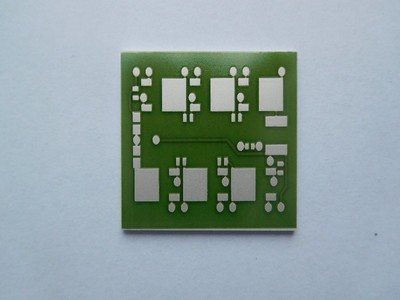
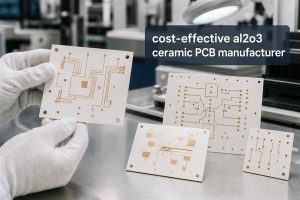
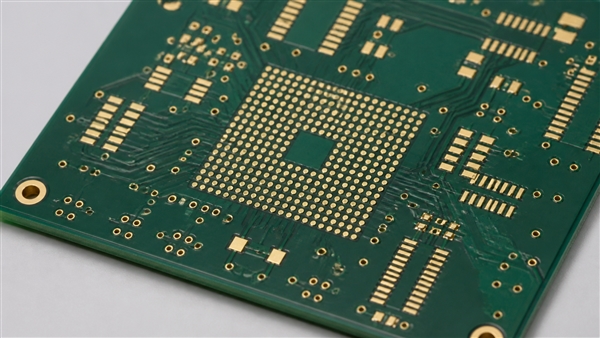
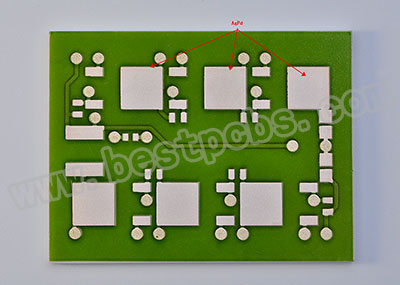
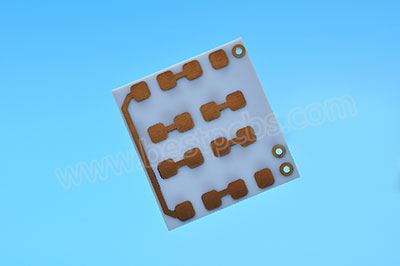
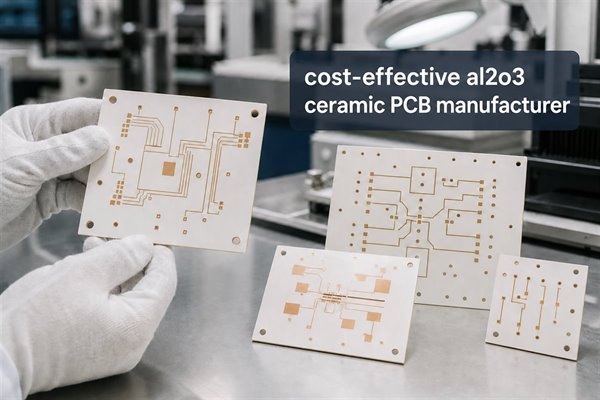
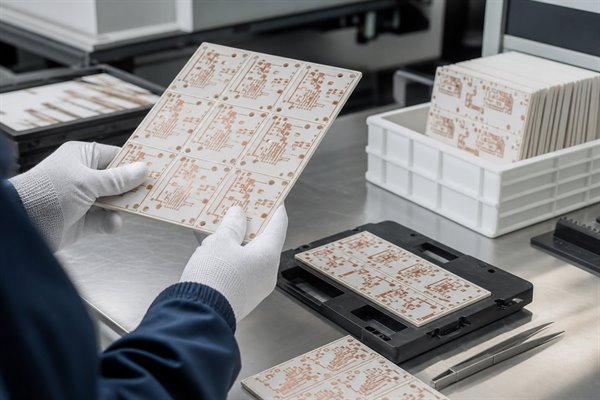
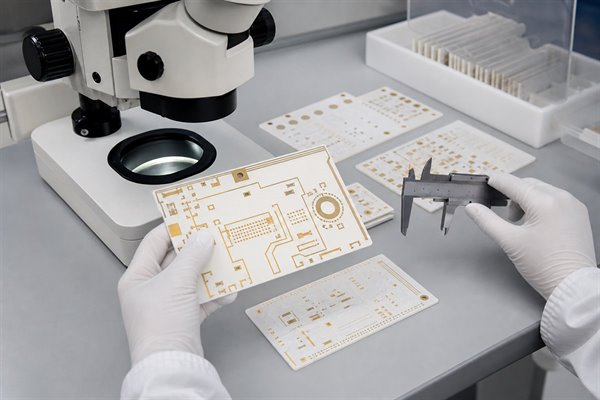
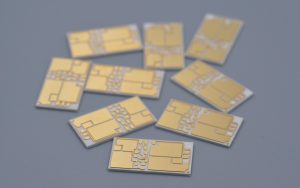
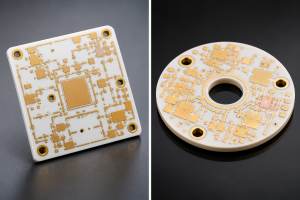
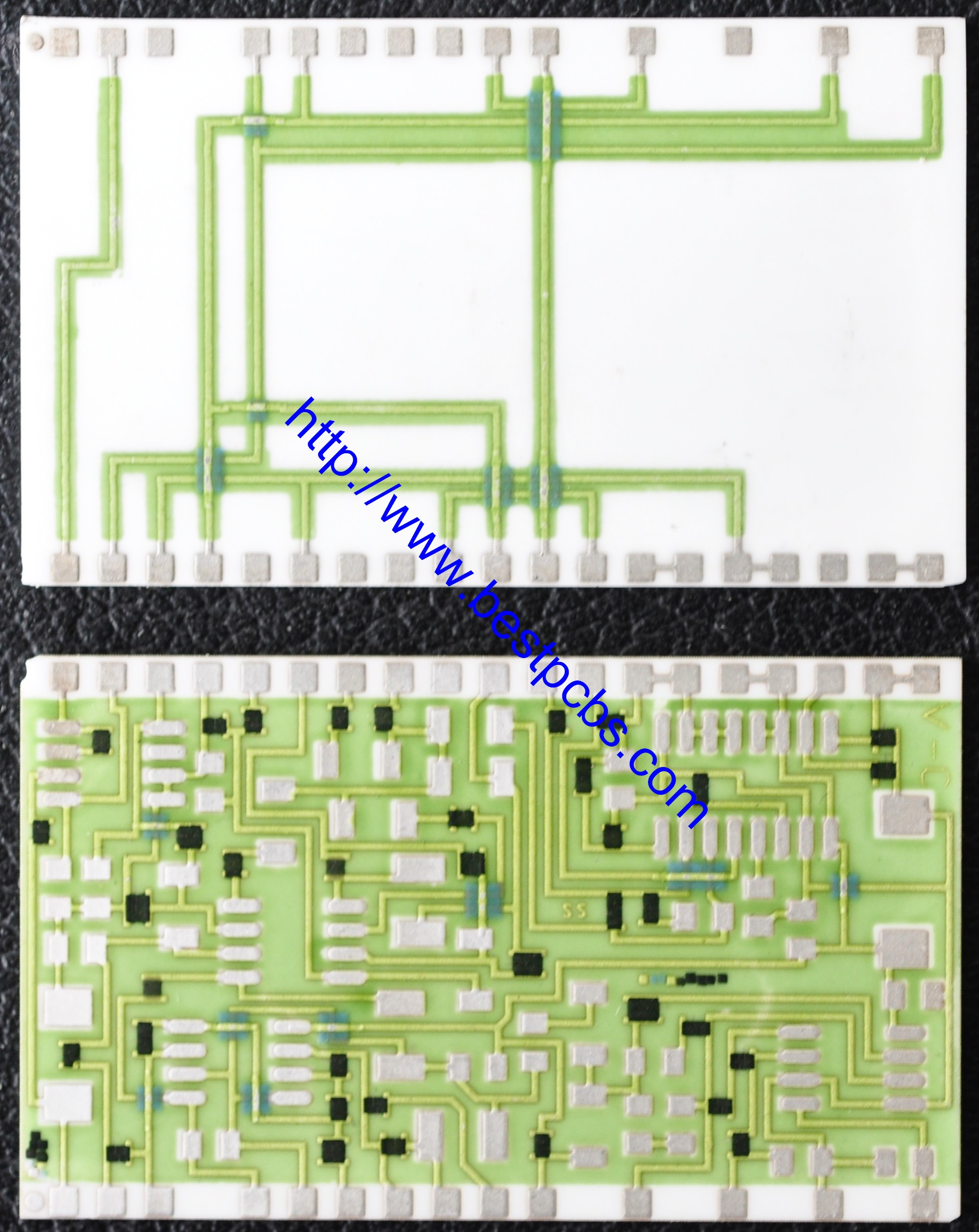
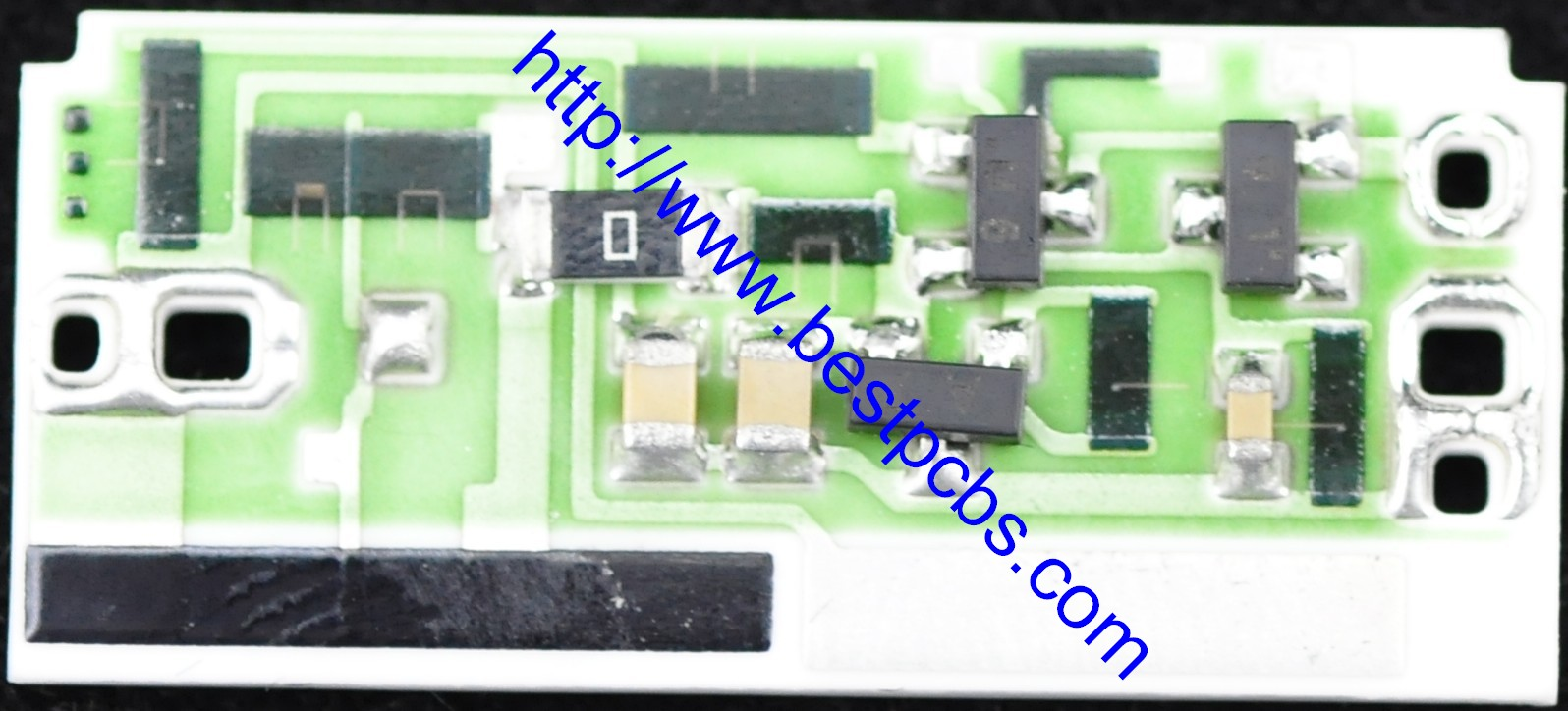
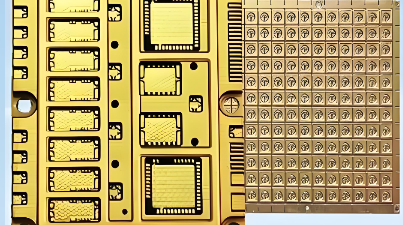
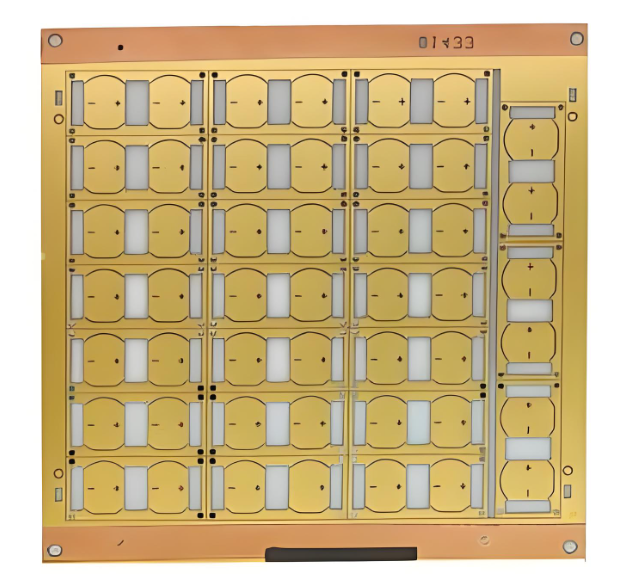
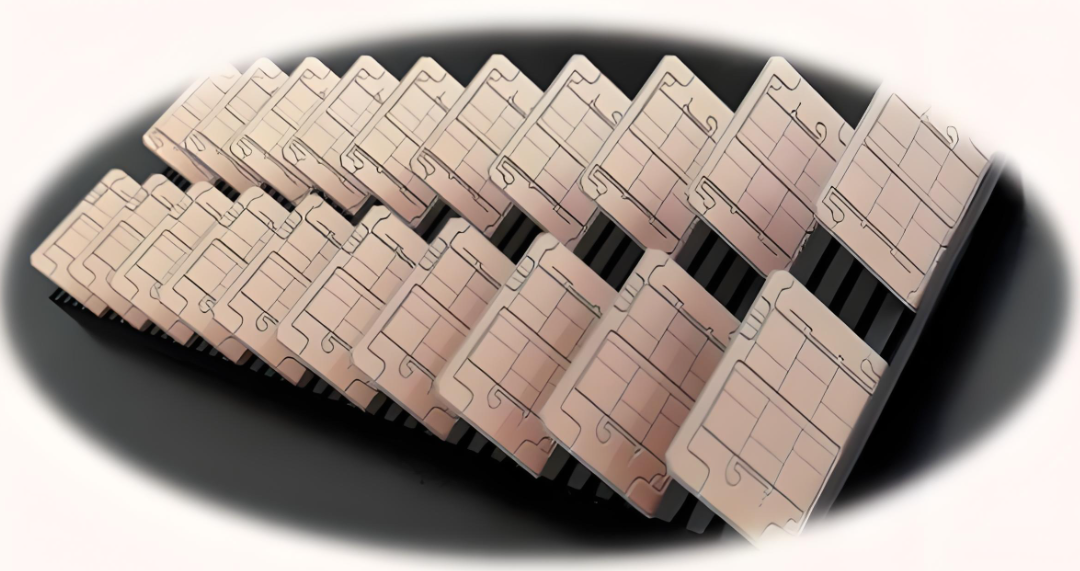
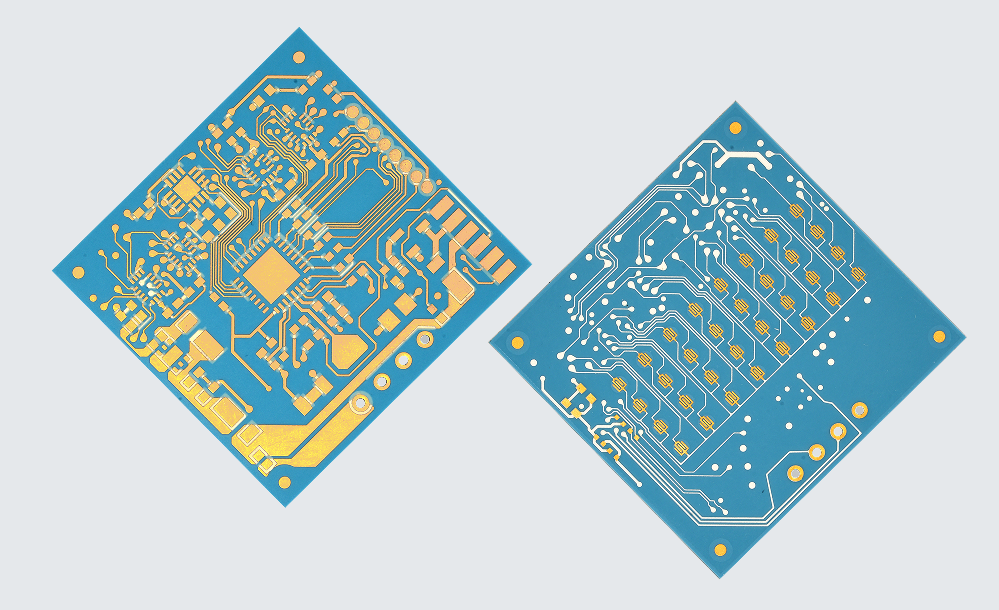
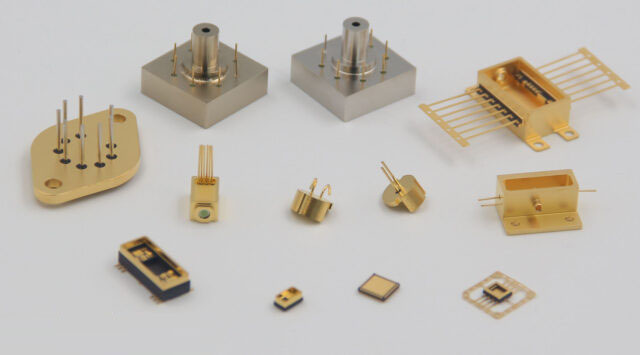
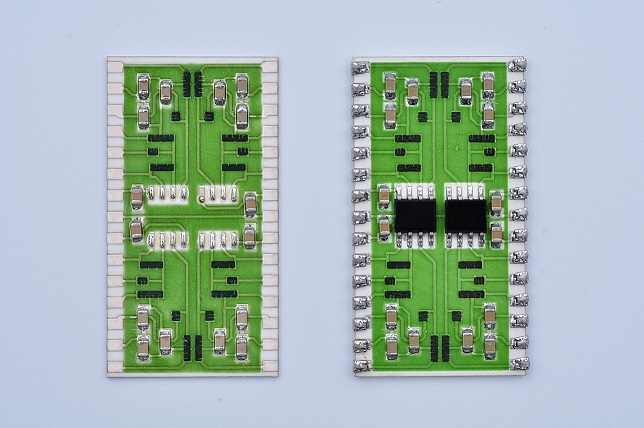
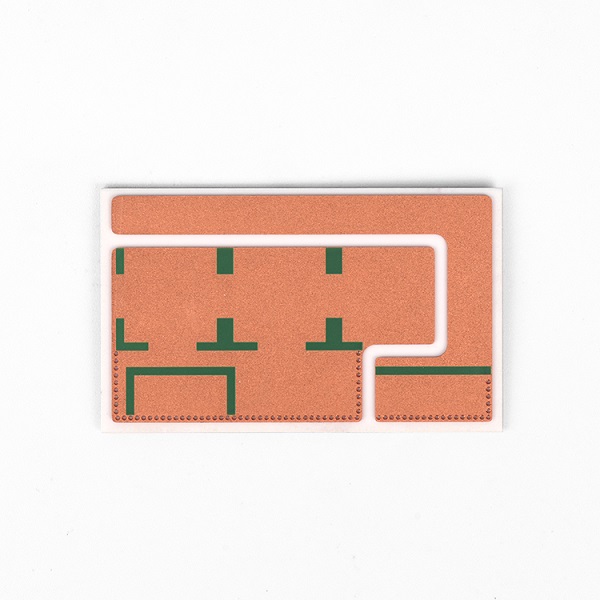
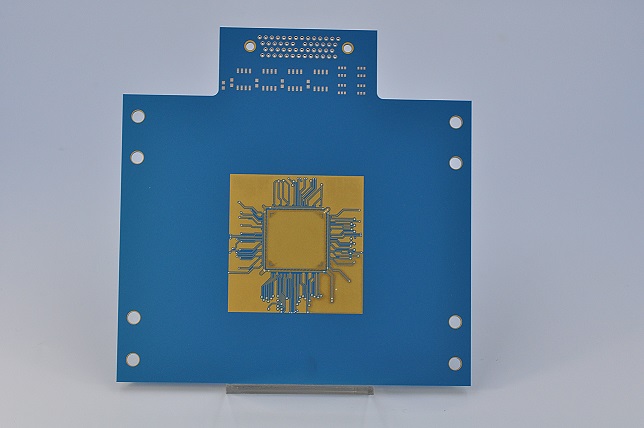
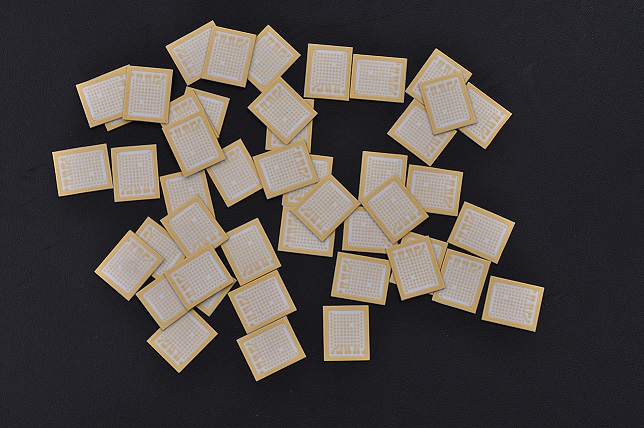
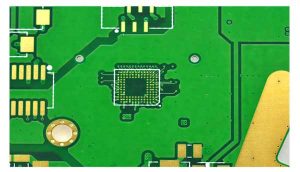
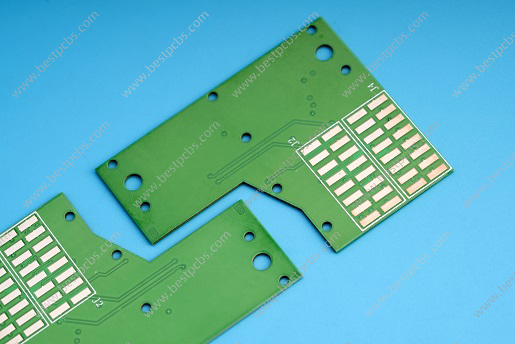
At EBest Circuit (Best Technology), we manufacture custom ceramic PCBs using an alumina substrate as the electrically insulating base. We turn an alumina ceramic substrate into a patterned circuit through thick-film, thin-film or copper-metallization processes. Our manufacturing support covers substrate selection, circuit fabrication and agreed assembly work for hybrid electronics, LED modules and power circuits.
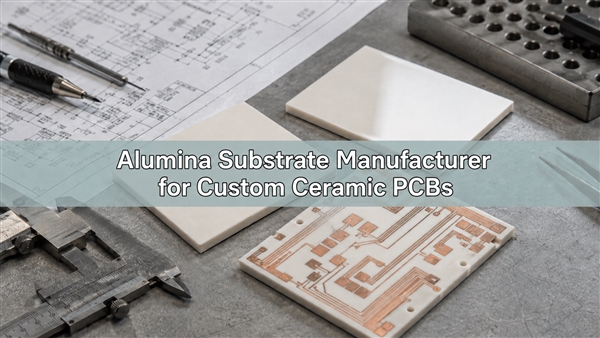
What Is an Alumina Substrate?
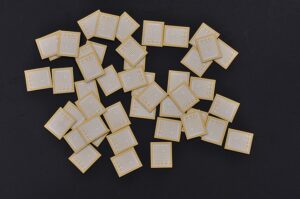
Alumina is aluminum oxide, or Al2O3. A ceramic alumina substrate is a formed and fired plate used as the foundation of an electronic circuit. A bare alumina plate has no conductive pattern; an alumina PCB adds patterned metallization and may include printed resistors, additional dielectric layers and assembled components.
Why is alumina a good substrate? It combines electrical insulation, useful heat conduction, dimensional stability and compatibility with several circuit-forming processes. It is usually opaque white or ivory, not transparent glass. An alumina ceramic insulator also remains mechanically brittle: strong support in service does not make a thin tile resistant to bending or edge impact.
Which Alumina Substrate Properties Matter for Ceramic PCBs?
The physical properties of alumina determine insulation, heat transfer and handling limits. Alumina structure, including grains and pores, changes these results even at similar purity. This alumina property table summarizes representative commercial 96–99.6% electronic-substrate grades, not our finished-board acceptance limits. Use the selected alumina substrate datasheet to confirm alumina material properties for your design.
| Property | Representative value and condition | Practical significance |
|---|---|---|
| Alumina thermal conductivity | 20–29 W/m·K at 25°C | Heat conduction through the ceramic |
| Alumina substrate dielectric constant / relative permittivity | 9.8–9.9 at 1 MHz | Al2O3 dielectric constant affects capacitance and impedance |
| Alumina substrate loss tangent | 0.0002 at 1 MHz for the listed electrical grades | Dielectric loss; not a microwave-frequency guarantee |
| Alumina resistivity | Volume resistivity >1014 Ω·cm at 25°C | Limits leakage through the ceramic body |
| Dielectric breakdown strength | >15 kV/mm, DC material test | Insulation reference, not a finished-board working-voltage rating |
| Alumina substrate CTE | 6.7–6.8 ppm/K over 40–400°C | Alumina CTE affects stress at bonded interfaces |
| Density | 3.60–3.90 g/cm³ | Mass and grade consistency |
| Specific heat capacity of alumina | 750–780 J/kg·K at 25°C | Energy absorbed during temperature changes |
| Flexural strength | 370–500 MPa, three-point bending | One measure of alumina mechanical properties under bending |
| Young’s modulus of alumina | 330 GPa for the listed tested grades | Elastic stiffness, not fracture strength |
| Vickers hardness | 14–16 GPa for the listed tested grades | Wear resistance and machining difficulty |
| Surface roughness, Ra | 0.1–0.4 μm across the listed grades | Surface suitability for deposited circuit features |
| Chemical properties of alumina | Resistant to many oils and chemicals; compatibility depends on exposure | Cleaning must also suit the metal, resistors and coatings |
Alumina strength depends on loading: alumina compressive strength and tensile strength of alumina are not interchangeable with the bending values above. For a brittle alumina board, fracture and edge quality matter more than a metal-style yield strength of alumina specification.
How Do 96% and 99.6% Alumina Substrates Differ?
A 96% alumina substrate is widely associated with thick-film circuits. Its surface and glass-phase chemistry must be compatible with the selected conductor and resistor pastes. A 99.6% alumina substrate is commonly considered for fine thin-film patterns where surface quality and processing consistency are important. Higher purity does not, by itself, guarantee higher thermal conductivity or lower finished-board cost.
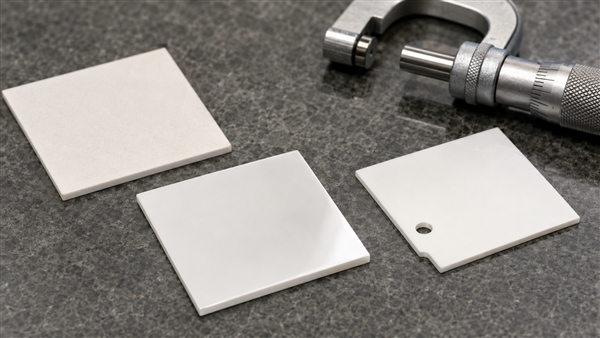
A fine polished alumina substrate can reduce surface irregularities that interfere with fine features. However, polishing is an additional process, not an automatic consequence of selecting a purity. Specify roughness, flatness and acceptable defects separately from composition. Dense alumina is generally appropriate for circuit substrates; alumina porosity must be controlled rather than selected to imitate porous filter ceramics.
For high-purity alumina ceramic substrate development, we match surface finish and metal adhesion to the circuit process. A high purity alumina substrate still needs grade-specific acceptance criteria. A porous alumina substrate is a separate structure, so the dense-grade values above do not apply to it.
How Does Alumina Heat Conductivity Change with Temperature?
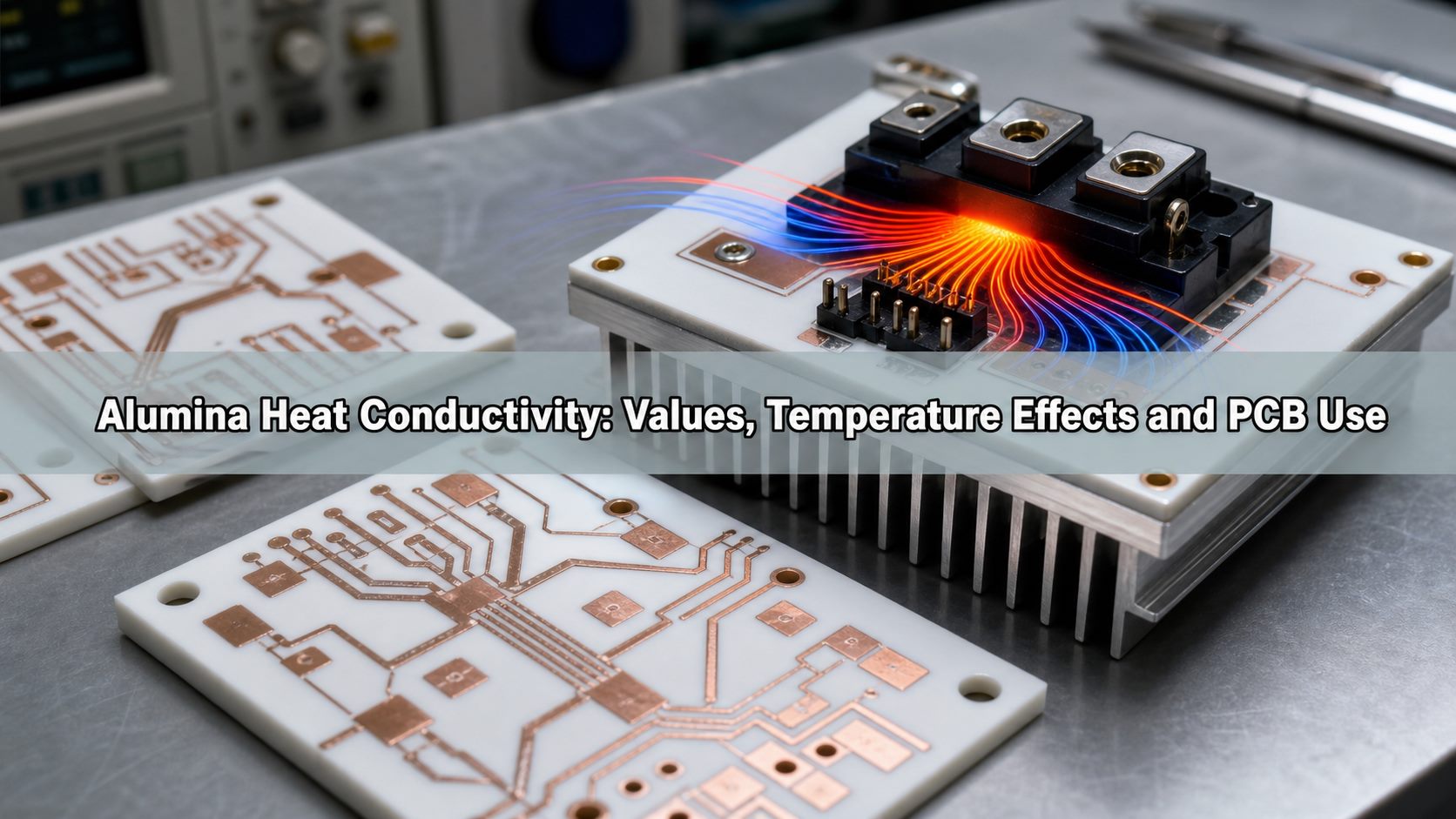
Alumina substrate thermal conductivity generally decreases as temperature rises over the operating range relevant to many electronic modules. Use a grade-specific temperature curve, not a straight line invented from a room-temperature value. Al2O3 thermal conductivity also describes the ceramic material, not the thermal resistance of the complete mounted board.
For a simple one-dimensional estimate, ceramic thermal resistance is R = t/(k × A), where t is thickness, k is thermal conductivity and A is the heat-flow area. At an assumed k of 24 W/m·K, a 0.635 mm plate beneath a 10 mm × 10 mm area gives approximately 0.265 K/W. This is a calculated ceramic-only example: it excludes spreading resistance, solder, copper geometry, thermal-interface material and the heat sink.
Thinning the ceramic can reduce through-thickness resistance, but it also changes handling strength and electrical isolation design. A melting temperature or maximum service temperature for bare alumina must never be used as the continuous operating rating of soldered electronics.
What Is the Thickness Range of Alumina Substrates?
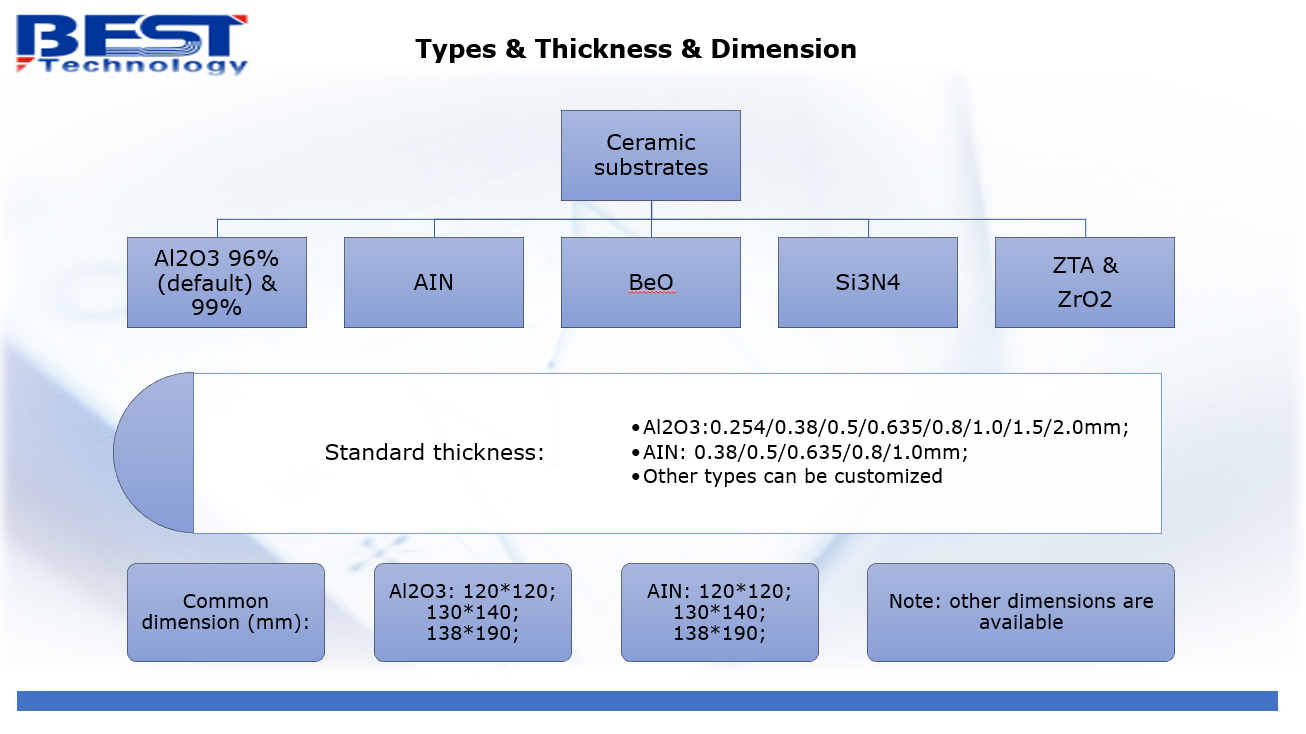
For our DPC ceramic circuits, alumina substrate thickness options include 0.25, 0.38, 0.50, 0.635, 0.80, 1.0, 1.25, 1.5 and 2.0 mm, subject to material selection, board size, tolerance and engineering review. A thinner ceramic lowers through-thickness thermal resistance but leaves less mechanical and electrical insulation margin.
For an alumina PCB substrate, define ceramic thickness separately from copper or printed conductor thickness. The metal thickness of alumina substrate circuitry affects current capacity, conductor resistance and pattern resolution. It should not be hidden inside a single finished-board thickness value.
The term alumina sheet usually describes a thin flat ceramic part, not a flexible film. Handle thin alumina plates on an appropriate support and define the edge condition after singulation. Custom alumina ceramic substrates may need holes or outlines made before or after firing, depending on tolerance and process capability.
- Check flatness and bow against the mounting and assembly method.
- Specify holes, slots and scribe lines before selecting the processing sequence.
- Keep fragile edges and corners away from concentrated mounting loads.
- Review insulation spacing and proof-test requirements for the actual environment.
How Do We Manufacture Alumina Substrate Circuits?
We manufacture alumina circuits through process routes selected for the conductor geometry, electrical load and assembly requirements. Printed paste, deposited films and bonded copper produce different conductor structures; they are not interchangeable simply because all use an alumina base.
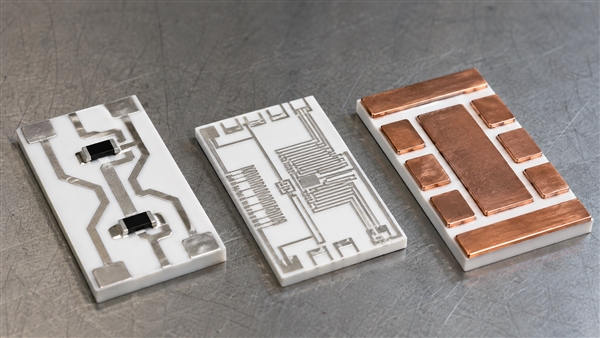
Thick Film on Alumina Substrate
Thick film on alumina substrate uses patterned pastes followed by controlled firing. Conductors and resistors can be integrated on the same ceramic, with additional compatible dielectric layers where required. Our thick-film ceramic PCBs are relevant to hybrid circuits that need printed circuitry rather than a conventional etched copper laminate.
For an alumina substrate resistor circuit, paste selection, firing conditions, geometry and trimming influence final resistance. Material purity alone does not define resistor tolerance or temperature coefficient.
Thin-Film Circuit Patterns
An alumina thin film substrate requires suitable surface quality for deposition and patterning. Our thin-film ceramic PCBs support applications where precise conductor geometry is central to the design. A polished surface may help, but line capability must still be evaluated against the chosen metal stack and production process.
In alumina substrate etching, distinguish patterning the metal layer from machining the ceramic itself. A conductor etchant and a laser used to shape fired ceramic solve different manufacturing problems.
Direct-Bonded Copper and Plated Metallization
Our direct-bonded copper ceramic PCBs combine ceramic insulation with copper conductors for power circuits. DCB, also called DBC, bonds copper foil to the ceramic through a controlled bonding process. DPC instead uses a deposited seed layer and plated copper. Select the route according to conductor geometry, copper requirements and reliability conditions.
A metalized alumina substrate is therefore an incomplete specification. State the conductor material, thickness, adhesion requirements, surface finish and usable circuit area. Heavier copper can improve current handling but also increases thermomechanical stress during temperature changes.
Our DPC ceramic PCB capability includes up to two conductive layers, conductor thickness from 2 to 200 μm and a maximum panel size of 138 × 190 mm. These are process-level capability limits, not a guarantee that every combination is available on every alumina grade or circuit pattern. We confirm the applicable thickness, pattern and panel arrangement for the specific design.
Alumina Substrate vs FR4, AlN and Silicon Nitride
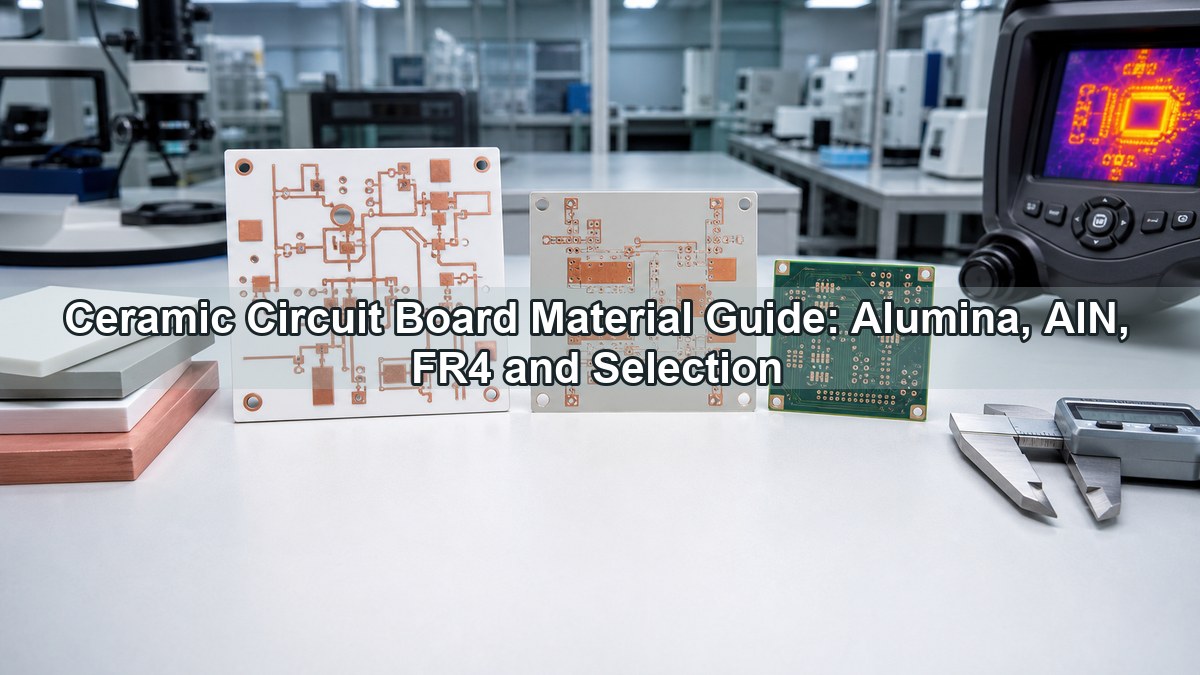
An alumina substrate vs FR4 comparison starts with the circuit’s job: ceramic insulation and heat transfer, or dense multilayer interconnection. Aluminum nitride (AlN) and silicon nitride (Si3N4) address more demanding thermal or mechanical requirements within ceramic power circuits. Typical applications help make those differences concrete.
| Material | Main selection priority | Typical applications |
|---|---|---|
| Alumina, Al2O3 | Balanced insulation, heat conduction and ceramic processing cost | LED circuit substrates, thick-film resistor networks, sensor hybrids and power-module substrates |
| FR4 | Dense multilayer routing and economical general-purpose interconnection | Industrial control boards, computer motherboards and network equipment |
| Aluminum nitride, AlN | Higher heat conduction where the ceramic is a thermal bottleneck | High-power laser-diode cooling assemblies and high-power-density industrial semiconductor modules |
| Silicon nitride, Si3N4 | Fracture toughness and resistance to repeated thermal cycling | EV traction-inverter modules and other power modules with demanding lifetime requirements |
Where Are Alumina Ceramic Substrates Used?
What is alumina used for? In electronics, alumina ceramic substrates support circuits that need electrical isolation, controlled conductor patterns and a stable mounting surface. Their role differs by application.
LED Packages and Lighting Modules
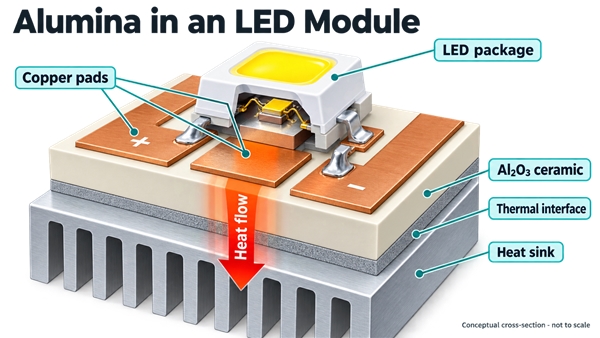
Alumina carries the LED’s conductor pads while electrically separating them from the heat sink. Heat passes from the package through its attachment, ceramic and thermal interface. In our high-power LED ceramic PCBs, pad layout, ceramic thickness and mounting flatness must work together. The conceptual cross-section below identifies the ceramic layer in this heat path.
Power Modules and Converter Circuits
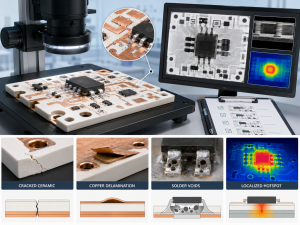
In a power module, copper patterns carry current and provide mounting areas for semiconductor devices. The alumina layer separates these live conductors from the cooled base while transferring heat. Copper thickness, conductor spacing and ceramic edge clearance determine the circuit geometry; solder attachment and temperature cycling affect reliability. Our DCB and DPC routes provide different ways to form these copper structures.
Hybrid Circuits and Sensor Electronics
Thick-film hybrids combine conductors and printed resistors on one insulating tile. Automotive sensor interfaces, resistor networks and measurement electronics use this format where compact, stable circuit elements are needed. Alumina supports paste firing and resistor trimming. Paste compatibility, resistor temperature coefficient and the substrate’s flatness are therefore more useful manufacturing inputs than a purity number alone.
RF and Microwave Circuits
An alumina RF substrate can carry thin-film transmission lines, matching networks and resistors in microwave hybrid circuits. For an alumina substrate for high frequency, use alumina substrate permittivity and loss data at the operating frequency, not only the 1 MHz table values. Surface roughness, metal thickness and conductor dimensions affect impedance and loss, making surface preparation and pattern control central to fabrication.
Thermal Printheads
Thermal printheads can use an alumina base with a glazed surface beneath patterned heater resistors. The ceramic provides mechanical support and a heat path, while the glaze helps control heat near the printing elements. Flatness and heater-layer consistency influence printing uniformity. The glaze profile and protective coating are specialized parts of this heater structure, rather than features of an ordinary bare alumina tile.
What Affects Alumina Substrate Price?
Alumina substrate price depends on grade, thickness, dimensions, polishing, holes, edge processing, conductor formation, inspection and order volume. Comparing a blank tile with a finished multilayer hybrid circuit is not a like-for-like cost comparison.
When comparing quotations from alumina substrate suppliers or alumina ceramic substrate manufacturers, separate the alumina sheet price from metallization, tooling, testing and assembly charges. As a China alumina ceramic substrate manufacturer, we quote the agreed ceramic circuit scope and acceptance requirements so you can compare equivalent boards, not a bare tile against a populated assembly.
Why Choose Us as Your Alumina Substrate PCB Manufacturer?
At EBest Circuit (Best Technology), we provide ceramic PCB fabrication and assembly support from prototype requirements to volume production. We match the manufacturing route to your conductor pattern, substrate grade and assembly needs.
- Process choices matched to the circuit: our ceramic PCB range includes thick-film, thin-film, DCB and DPC options, so conductor structure can be evaluated alongside substrate requirements.
- Defined manufacturing capability: our DPC process supports the layer, conductor-thickness and panel-size limits described above. Our DCB capability includes up to two layers. Applicable limits remain subject to material selection, board dimensions, circuit complexity and engineering review.
- Engineering and assembly continuity: we provide DFM review, PCB prototyping, component sourcing and PCB assembly services. The agreed scope depends on the circuit and assembly requirements.
For your next alumina substrate circuit, contact our team at sales@bestpcbs.com to discuss a custom ceramic PCB manufactured for your application.