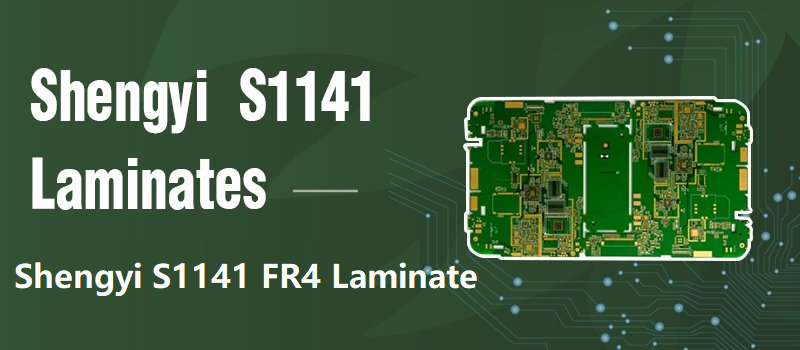
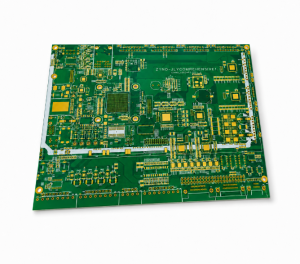
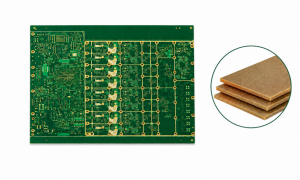
S1000‑2M is a high‑Tg FR‑4 PCB material from Shengyi Technology, with Tg ≥170°C (DSC: 180°C; DMA: 185°C). Engineered for lead‑free assembly and high‑layer‑count PCBs, it delivers stable thermal performance, excellent through‑hole reliability, and superior processability. Widely used in automotive, computing, communications, industrial, and HDI applications.
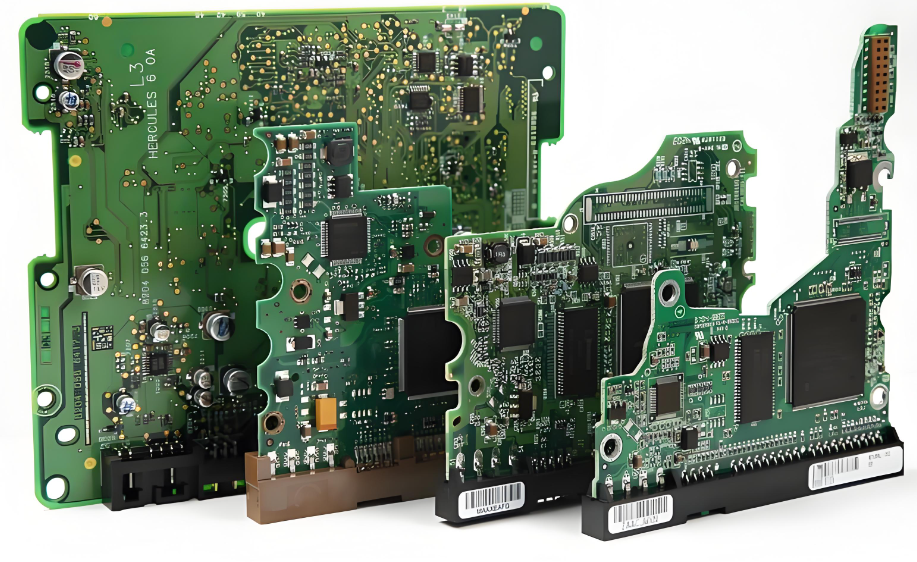
High Tg PCB Material S1000-2M
What Is S1000-2M PCB Material?
S1000-2M is a high glass transition temperature (Tg) epoxy laminate developed by Shengyi Technology. It is widely used in multilayer PCB fabrication where thermal reliability, dimensional stability, and CAF resistance are critical.
Compared with standard FR4 materials, S1000-2M PCB material offers improved thermal endurance and mechanical robustness, making it suitable for demanding applications such as automotive electronics, industrial control systems, and high-density PCB assemblies.
Core positioning:
- Tg: ~170°C (DSC)
- FR4 class with enhanced performance
- Designed for multilayer and HDI boards
- Optimized for lead-free assembly processes
Shengyi S1000-2M Features
- Lead‑free compatible FR‑4 laminate & prepreg
- High Tg 170°C+ (DSC), UV blocking / AOI compatible
- Outstanding heat resistance and high thermal stability
- Low Z‑axis CTE for improved via reliability
- Excellent anti‑CAF performance
- Low water absorption & high temperature/humidity resistance
- Excellent mechanical machining performance
S1000‑2M Datasheet Values
| Parameter | Test Method | Condition | Unit | Typical Value |
| Tg (DSC) | IPC‑TM‑650 2.4.25 | DSC | °C | 180 |
| Tg (DMA) | IPC‑TM‑650 2.4.24.4 | DMA | °C | 185 |
| Td (5% wt loss) | IPC‑TM‑650 2.4.24.6 | TGA | °C | 355 |
| CTE Z‑axis (before Tg) | IPC‑TM‑650 2.4.41 | – | ppm/°C | 41 |
| CTE Z‑axis (after Tg) | IPC‑TM‑650 2.4.41 | – | ppm/°C | 208 |
| T260 | IPC‑TM‑650 2.4.24.1 | TMA | min | 60 |
| T288 | IPC‑TM‑650 2.4.24.1 | TMA | min | 30 |
| T300 | IPC‑TM‑650 2.4.24.1 | TMA | min | 15 |
| Thermal Stress | IPC‑TM‑650 2.4.13.1 | 288°C, solder dip | s | >100s, no delamination |
| Dk (1GHz) | IPC‑TM‑650 2.5.5.9 | 1GHz | – | 4.6 |
| Df (1GHz) | IPC‑TM‑650 2.5.5.9 | 1GHz | – | 0.018 |
| Peel Strength (1oz HTE) | IPC‑TM‑650 2.4.8 | After 288°C thermal stress | N/mm | 1.3 |
| Water Absorption | IPC‑TM‑650 2.6.2.1 | – | % | 0.08 |
| Flammability | UL94 | – | Rating | V‑0 |
| CTI | IEC 60112 | – | Level | 3 |
| Dielectric Breakdown | IPC‑TM‑650 2.5.6 | – | kV | 45+ |
| Volume Resistivity | IPC‑TM‑650 2.5.17.1 | After moisture resistance | MΩ·cm | 8.66E+08 |
| Surface Resistivity | IPC‑TM‑650 2.5.17.1 | After moisture resistance | MΩ | 2.17E+07 |
| Flexural Strength (LW) | IPC‑TM‑650 2.4.4 | 125°C | MPa | 567 |
| Flexural Strength (CW) | IPC‑TM‑650 2.4.4 | 125°C | MPa | 442 |
| Arc Resistance | IPC‑TM‑650 2.5.1 | – | s | 133 |
Remarks:
1. Specification sheet: IPC-4101/126, is for your reference only.
2. All the typical value is based on the 1.6mm specimen, while the Tg is for specimen≥0.50mm.
3. All the typical values listed above are for your reference only and not intended for specification.
4. E=Temperature conditioning in the table
S1000‑2M PCB Material Applications
- High‑layer‑count PCBs
- Automotive electronics
- Computing & servers
- Communications equipment
- Industrial control
- HDI boards
- High‑reliability industrial electronics
S1000-2M vs S1000-2: What are Differences?
| Property | S1000-2 | S1000-2M |
| Material Type | High Tg FR4 epoxy laminate | Enhanced high Tg FR4 epoxy laminate |
| Resin System | Standard epoxy | Modified epoxy system |
| Tg (DSC) | ~150°C | ~170°C |
| Tg (TMA) | ~160°C | ~175–180°C |
| Td (5% weight loss) | ~320–330°C | ≥340°C |
| T260 | ≥30 min | ≥60 min |
| T288 | ≥10 min | ≥15 min |
| CTE Z-axis (<Tg) | ~55–60 ppm/°C | ~45–50 ppm/°C |
| CTE Z-axis (>Tg) | ~280–300 ppm/°C | ~240–260 ppm/°C |
| Thermal Conductivity | ~0.30 W/m·K | ~0.30–0.35 W/m·K |
| Dielectric Constant (Dk @1GHz) | ~4.5 | ~4.3–4.5 |
| Dissipation Factor (Df @1GHz) | ~0.020 | ~0.018–0.020 |
| Volume Resistivity | ≥1×10⁷ MΩ·cm | ≥1×10⁷ MΩ·cm |
| Surface Resistivity | ≥1×10⁶ MΩ | ≥1×10⁶ MΩ |
| Flexural Strength | ≥400 MPa | ≥450 MPa |
| Peel Strength (1 oz Cu) | ≥0.9 N/mm | ≥1.0 N/mm |
| Water Absorption | ≤0.20% | ≤0.15% |
| CAF Resistance | Standard | Enhanced |
| Flammability Rating | UL94 V-0 | UL94 V-0 |
| Lead-Free Compatibility | Good | Excellent |
| Reflow Cycles (Typical) | 2–3 cycles | 3–5 cycles |
| Max Layer Count (Typical) | Up to ~8–10 layers | Up to ~12–16+ layers |
| HDI Suitability | Moderate | Good |
| Warpage Control | Standard | Improved |
| Drillability | Good | Better (lower smear) |
| Application Level | Consumer / general industrial | Automotive / industrial / high reliability |
| Relative Cost | Lower | +5% to +10% |
Choose S1000-2 if:
- Cost is the primary concern
- Product lifecycle is short
- Operating temperature is moderate
- PCB complexity is low (≤6 layers)
Choose S1000-2M if:
- High reliability is required
- Multilayer PCB (>6–8 layers)
- Lead-free soldering is used
- Product operates in harsh environments
- Long lifecycle (>5 years) is expected
FAQs About S1000-2M PCB Material
1. What is S1000-2M Tg value?
S1000-2M has a Tg of approximately 170°C, which supports high-temperature PCB applications and lead-free soldering processes.
2. Is S1000-2M suitable for automotive PCBs?
Yes, it is widely used in automotive electronics due to its thermal stability, CAF resistance, and long-term reliability.
3. Is S1000-2M better than standard FR4?
Yes, it offers higher Tg, better thermal resistance, and improved reliability compared to standard FR4 materials.
4. Can S1000-2M be used for high-frequency designs?
It can be used for general digital circuits, but for RF applications, specialized low-loss materials are recommended.
Get S1000-2M Datasheet & PCB Manufacturing Support
If your project requires high-reliability multilayer PCB material, S1000-2M is a proven and cost-effective choice.
At EBest Circuit, we provide:
- Material selection support
- Stack-up design optimization
- Fast PCB & PCBA manufacturing
📩 Email: sales@bestpcbs.com
📞 Tel: +86-755-2909-1601