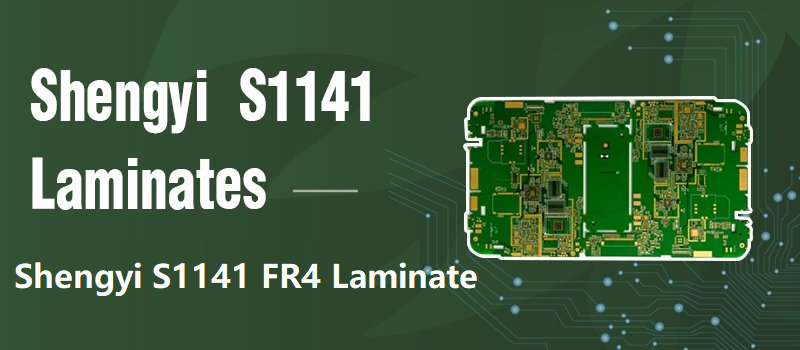
S1000H PCB material is widely adopted in mid-to-high reliability electronics where thermal stability, cost control, and consistent electrical performance must be balanced. As part of the Shengyi material family, it is engineered for multilayer PCB fabrication and supports stable processing in volume production.
Compared with standard FR4 materials, S1000H offers improved glass transition temperature and better dimensional control, making it suitable for industrial control, power electronics, and communication boards.
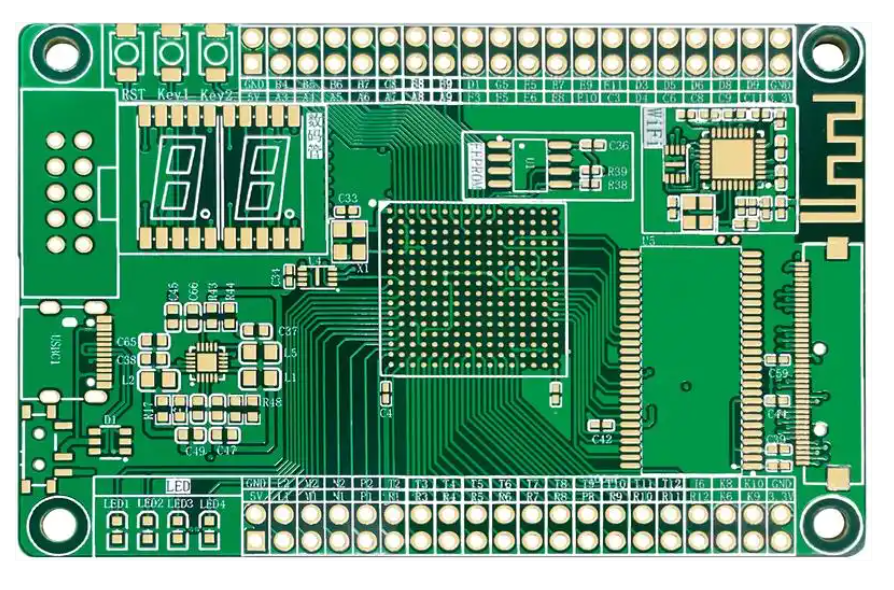
What Is S1000H PCB Material?
S1000H is a high Tg FR4 epoxy laminate developed by Shengyi Technology. It is designed to provide enhanced thermal resistance and mechanical stability while maintaining cost efficiency.
From an engineering perspective, S1000H sits between standard Tg135 FR4 and high-end Tg170 materials like S1000-2M. It delivers reliable performance for multilayer PCB structures without significantly increasing fabrication costs.
Core characteristics:
- Tg around 150°C (DSC)
- Suitable for lead-free assembly
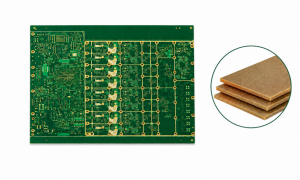
- Compatible with multilayer PCB lamination
- Good CAF resistance and moisture stability
S1000H Datasheet Overview
| Category | Property | S1000H Typical Value | Notes / Engineering Meaning |
| Thermal | Tg (DSC) | ~150°C | Standard high Tg FR4 class |
| Tg (TMA) | ~170°C | Better indicator for Z-axis expansion | |
| Td (5% weight loss) | ≥300°C | Good for lead-free soldering | |
| T260 | ≥10 min | Delamination resistance | |
| T288 | ≥5 min | High-temp endurance | |
| CTE (X/Y) | 14–16 ppm/°C | Matches copper well | |
| CTE (Z-axis, <Tg) | 50–60 ppm/°C | Controls via reliability | |
| CTE (Z-axis, >Tg) | 250–300 ppm/°C | Important for thermal cycling | |
| Electrical | Dielectric Constant (1GHz) | 4.3 – 4.6 | Stable for digital designs |
| Dissipation Factor (1GHz) | 0.018 – 0.022 | Moderate loss | |
| Surface Resistivity | ≥10⁹ MΩ | Prevents leakage | |
| Volume Resistivity | ≥10⁸ MΩ·cm | Insulation stability | |
| Dielectric Breakdown Voltage | ≥40 kV/mm | High insulation strength | |
| Mechanical | Flexural Strength | ≥400 MPa | Board rigidity |
| Peel Strength | ≥1.0 N/mm | Copper adhesion | |
| Modulus (Young’s) | ~20 GPa | Structural stability | |
| Moisture & Reliability | Water Absorption | ≤0.15% | Low moisture sensitivity |
| CAF Resistance | Good | Suitable for dense multilayer | |
| Thermal Conductivity | ~0.3 W/m·K | Standard FR4 level | |
| Process Capability | Lead-Free Compatibility | Yes | Reflow safe |
| Max Layer Count | 20–32 layers typical | Depends on stack-up | |
| Lamination Cycles | Multiple | Suitable for HDI |
Key Features of S1000H PCB Material
As a premium s1000h pcb material, it boasts a suite of features that make it ideal for demanding electronic environments:
- Lead-Free Compatibility: Fully compatible with lead-free soldering processes, meeting global environmental standards and ensuring compliance with modern manufacturing requirements.
- Excellent Thermal Reliability: With a glass transition temperature (s1000h tg150 as the minimum specification, typical Tg values reach 155-160℃ via DSC and DMA testing), S1000H maintains rigidity and performance in high-temperature environments. Its decomposition temperature (Td) of 348℃ and T288 time (time to delamination at 288℃) of 20 minutes ensure durability during soldering and long-term operation.
- Superior Electrical Properties: Low dielectric constant (Dk = 4.6 at 1GHz) and low dissipation factor (Df = 0.011 at 1GHz) minimize signal loss, making it suitable for high-frequency applications. It also features high volume resistivity (1.5×10⁸ MΩ·cm) and surface resistivity (3.5×10⁷ MΩ) for reliable electrical insulation.
- Low Water Absorption & Anti-CAF Performance: With a water absorption rate of only 0.09%, S1000H performs reliably in humid environments. Its excellent anti-CAF (Conductive Anodic Filament) resistance prevents electrical shorts caused by moisture-induced metal migration, enhancing long-term reliability in multilayer PCBs.
- Mechanical Strength & Stability: Boasting a flexural strength of 530 MPa (longitudinal) and 440 MPa (transverse), S1000H ensures structural integrity even in complex multilayer designs. Its lower Z-axis CTE (37 ppm/℃ before Tg, 230 ppm/℃ after Tg) reduces thermal expansion issues, improving via reliability.
- Flame Retardant: Meets UL94 V-0 flammability rating, ensuring safety in various applications including industrial and consumer electronics.
S1000H Dielectric Constant
The S1000H dielectric constant (Dk) typically ranges from:
- 4.3 to 4.6 @ 1 GHz
This value is important for impedance-controlled designs.
What it means in real PCB design:
- Suitable for low-to-mid frequency digital circuits
- Acceptable for general signal routing
- Not ideal for high-frequency RF (>3 GHz) applications
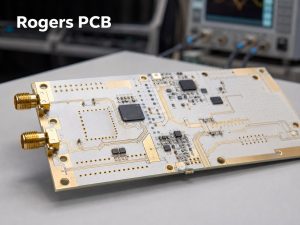
Compared with high-frequency materials (like Rogers), S1000H has higher loss, but for most industrial and power designs, it performs reliably.
Applications of S1000H PCB Material
- Computer and notebook motherboards
- Consumer electronics (smartphones, tablets, wearables)
- Automotive electronics (non-safety critical components)
- Industrial instruments and control systems
- Power supplies and industrial equipment
- Multilayer PCBs (up to 12 layers)
- Instruments and measuring devices
S1000H vs S1000-2M
| Category | S1000H | S1000-2M |
| Material Grade | Mid-Tg FR4 | High-Tg FR4 |
| Tg (DSC) | ~150°C | ~170°C |
| Td | ≥300°C | ≥320°C |
| T260 | ≥10 min | ≥30 min |
| T288 | ≥5 min | ≥15 min |
| CTE (Z-axis) | 50–60 ppm/°C | 45–55 ppm/°C |
| Dk (1GHz) | 4.3 – 4.6 | 4.2 – 4.5 |
| Df (1GHz) | 0.018 – 0.022 | 0.015 – 0.020 |
| CAF Resistance | Good | Excellent |
| Moisture Resistance | Moderate | Improved |
| Thermal Cycling | Standard industrial level | High reliability level |
| Lead-Free Margin | Sufficient | Wide margin |
| Cost Level | Lower | Higher |
| Processing Window | Wide | Slightly narrower but stable |
| Recommended Layers | ≤20–24 layers typical | 20–32+ layers |
How to Choose S1000H for Your PCB Design?
Selecting S1000H depends on your design requirements.
Choose S1000H if:
- Operating temperature is moderate (<130°C continuous)
- Budget is a key constraint
- No high-frequency RF signals are involved
- Standard multilayer PCB is sufficient
Consider alternatives if:
- High-speed or RF design → use Rogers/PTFE
- Extreme thermal cycling → use Tg170+ materials
- Automotive safety systems → higher reliability materials preferred
A practical approach is to combine S1000H with selective high-performance materials only where needed, reducing overall cost.
FAQs About S1000H
1. What is the Tg value of S1000H?
S1000H has a Tg of approximately 150°C (DSC) and around 170°C (TMA), suitable for lead-free assembly.
2. Is S1000H suitable for high-frequency PCB design?
It is not ideal for RF applications above a few GHz. Materials with lower dielectric loss should be used instead.
3. How does S1000H compare with standard FR4?
S1000H offers:
- Higher Tg
- Better thermal stability
- Improved reliability in multilayer boards
4. What thickness options are available for S1000H?
Typical laminate thickness ranges from 0.1 mm to 3.2 mm, depending on stack-up requirements.
5. Can S1000H be used in automotive electronics?
Yes, but mainly for non-critical systems. For safety-critical modules, higher Tg materials like S1000-2M are recommended.