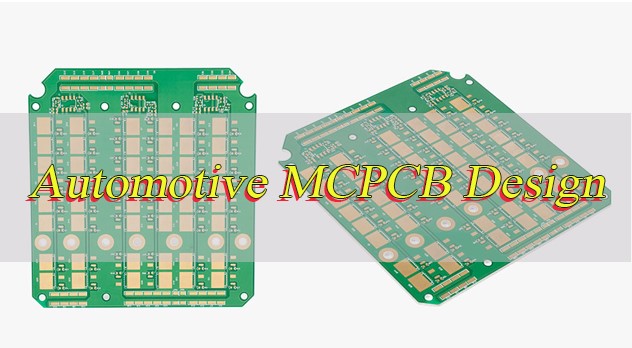
What makes automotive grade MCPCB the most reliable solution for high heat high vibration vehicle electronics, and why should you choose EBest as your long term manufacturing partner? This guide covers core performance, certifications, design rules, real world applications, common pain points, and ordering support for automotive grade MCPCB all backed by EBest’s 20+ years of one stop PCB experience, strict quality systems, and fast delivery to keep your automotive projects on track.
Why Choose EBest as Your Top Source for Automotive Grade MCPCB?
When you source automotive grade MCPCB, you need consistent quality, on time delivery, full supply chain stability, and responsive technical support. EBest delivers automotive grade MCPCB with industry leading thermal conductivity, full automotive qualification, stable mass production yield, and expedited prototyping to meet tight project timelines.
Key specifications include wide operating temperature range, high thermal conductivity dielectric, reinforced mechanical structure, and full compliance with automotive standards.
We provide full life cycle support from prototype design to mass production, with stable material supply and professional technical team to ensure your project runs smoothly. Trust EBest for your next automotive grade MCPCB order and experience reliable performance from prototype to mass production.
What Certifications Back EBest Automotive Grade MCPCB Quality?
EBest holds complete authoritative certifications to ensure every automotive grade MCPCB meets global automotive safety and quality standards. Each certification brings real value to your project and reduces compliance risks.
- IATF 16949: Full process control, fully traceable production, eliminates hidden quality risks for automotive series production.
- ISO 9001:2015: Stable quality management system ensures consistent performance in every batch.
- ISO 13485:2016: High reliability control standard suitable for safety critical automotive electronics.
- AS9100D: Aerospace level stability to withstand extreme temperature, vibration, and harsh environments.
- REACH: Full environmental compliance meeting EU market requirements.
- RoHS: Restriction of hazardous substances, safe for automotive assembly and usage.
- UL: Safety certification for high power and high voltage automotive circuits.
What Are the Biggest Challenges with Automotive Grade MCPCB and How to Fix Them?
In actual automotive research and development and mass production, automotive grade MCPCB often faces multiple pain points that affect performance, yield and delivery. EBest provides targeted solutions for each core challenge to ensure stable application in harsh vehicle environments.
Pain Point 1: Insufficient heat dissipation leads to component overheating and early failure.
EBest’s Solution: Use high thermal conductivity dielectric layers and optimized thermal paths to rapidly dissipate heat and maintain stable component temperatures.
Pain Point 2: Solder joint cracking or board delamination under high vibration and thermal cycling.
EBest’s Solution: Adopt automotive grade base materials and reinforced structural design to enhance mechanical strength and reliability.
Pain Point 3: Low production yield caused by poor design for manufacturing (DFM).
EBest’s Solution: Provide free DFM review and design optimization before production to improve manufacturability and batch consistency.
Pain Point 4: Inconsistent quality and lack of traceability in mass production.
EBest’s Solution: Implement IATF 16949 process control and full material traceability to ensure stable quality in every batch.
Pain Point 5: Long lead times that delay automotive project development and launch.
EBest’s Solution: Offer rapid prototyping and expedited production lines, with urgent orders shipped within 24 hours.
Pain Point 6: Failure to meet automotive industry certifications and customer audit requirements.
EBest’s Solution: Maintain full certifications including IATF 16949, UL, RoHS, and REACH for direct compliance with automotive standards.
Pain Point 7: Unstable performance in extreme high low temperature under hood environments.
EBest’s Solution: Use wide temperature range materials and strict reliability testing to ensure stable operation from -40°C to +150°C.
What Is Automotive Grade MCPCB and How Does It Work?
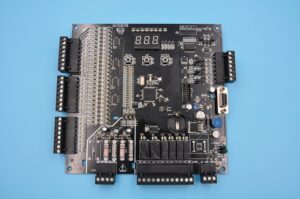
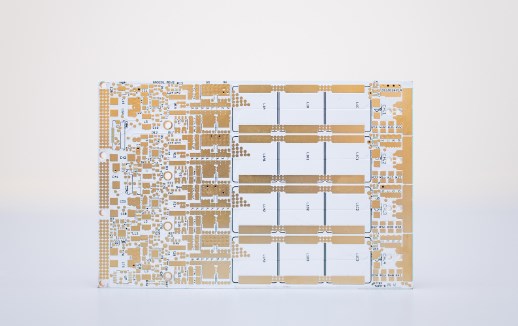
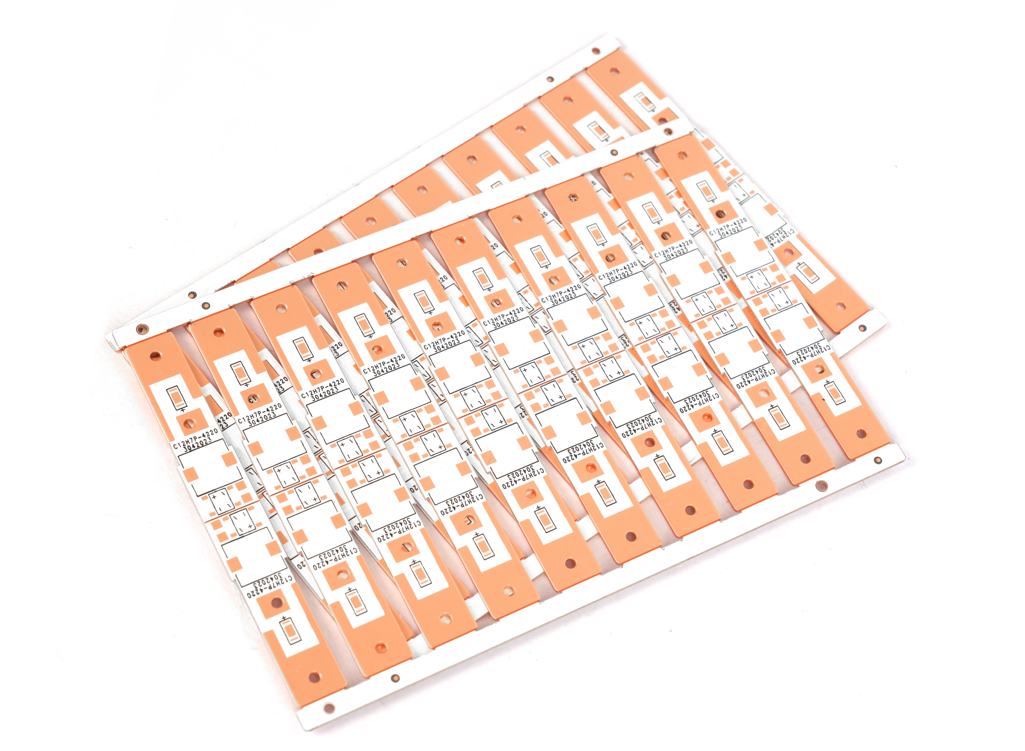
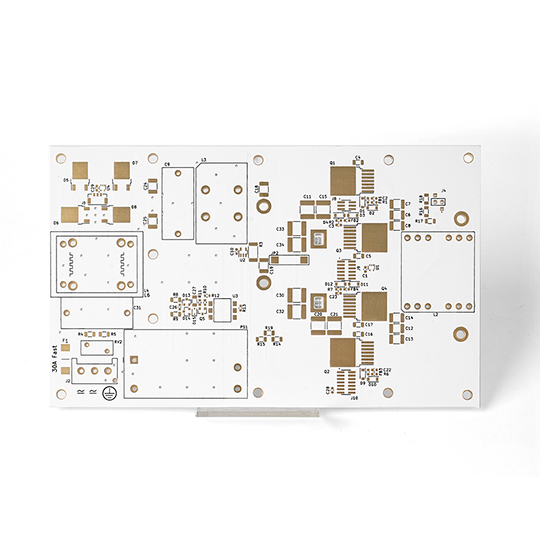
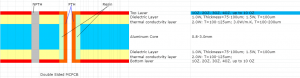
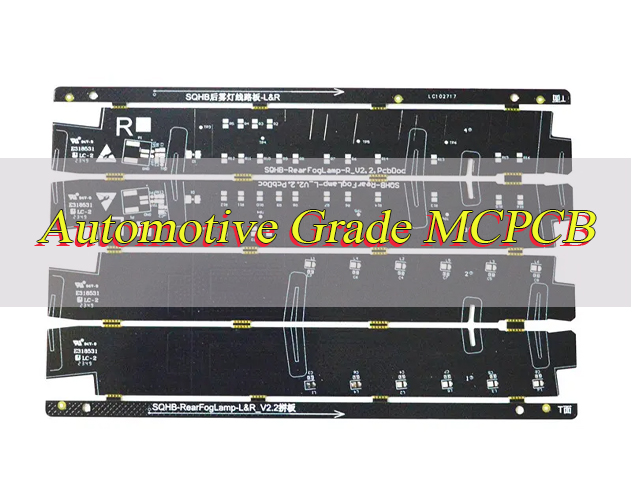
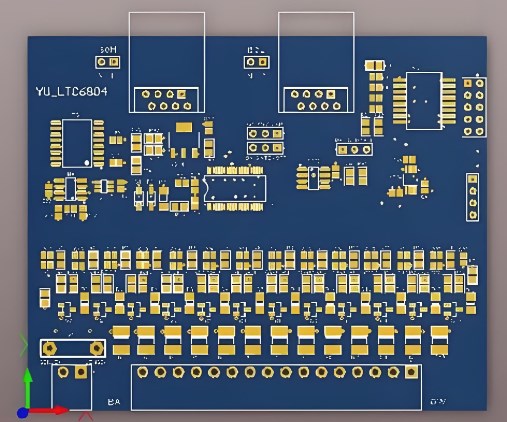
Automotive grade MCPCB is a metal core printed circuit board built specifically for harsh vehicle environments. It uses a three layer structure copper circuit, high thermal dielectric, and metal base plate. This structure quickly pulls heat from power components to lower operating temperatures and extend service life. Unlike standard PCBs, automotive grade MCPCB withstands extreme temperatures, vibration, and thermal cycling without failure, making it the preferred core component for high power and high reliability automotive electronics.
How Does Automotive Grade MCPCB Improve Thermal Performance?
Thermal performance is the core advantage of automotive grade MCPCB, directly addressing the high heat demands of automotive systems. By optimizing material selection and structural design, it achieves efficient heat transfer and stable operation in extreme environments.
- Uses high thermal conductivity dielectric layers to speed up heat transfer
- Metal base (aluminum/copper) provides large area heat dissipation
- Optimized thermal via design enhances vertical heat conduction
- Low thermal resistance reduces component junction temperature
- Wide operating temperature range (-40°C to +150°C) maintains stability
- Stable material properties prevent thermal degradation over long service life
What Are the Applications of Automotive Grade MCPCB?
Automotive grade MCPCB is tailored to meet the reliability and thermal needs of diverse automotive systems, covering both traditional and new energy vehicle modules. It excels in scenarios requiring high heat dissipation, mechanical stability, and long term durability, and is widely used in core systems that determine vehicle safety and performance.
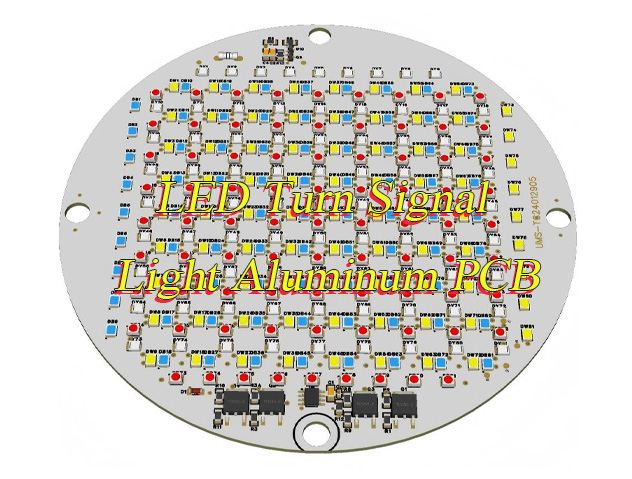
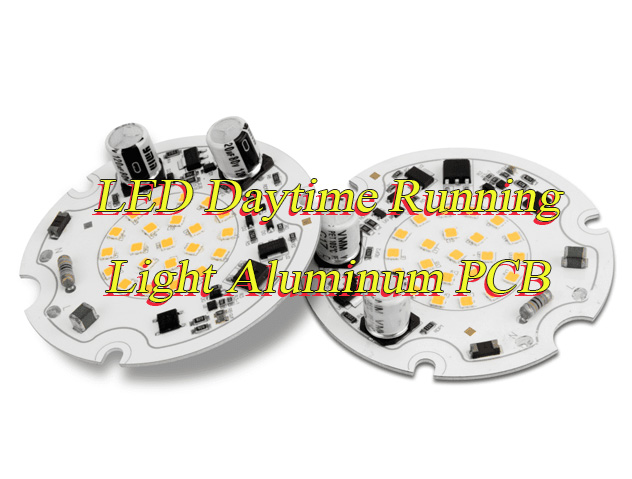
- Automotive LED lighting (headlamps, daytime running lights, taillights)
- EV power systems (inverters, converters, on board chargers)
- Battery Management Systems (BMS) for electric and hybrid vehicles
- Engine control units (ECU) and under hood control modules
- ADAS sensors, radar, and camera processing modules
- Automotive infotainment and display driver circuits
- Motor control and power distribution modules
How to Design a Durable Automotive Grade MCPCB?
Designing a reliable automotive grade MCPCB requires balancing thermal performance, mechanical strength, and manufacturability, with strict adherence to automotive industry standards. Key design principles focus on adapting to extreme environments and ensuring consistent mass production yield. Correct design can directly improve product life, reduce failure rate and lower overall cost.
- Select aluminum or copper core based on thermal and weight requirements.
- Use symmetric layer stack up to reduce warpage and mechanical stress.
- Add thermal vias properly to improve heat dissipation efficiency.
- Follow automotive DFM rules to ensure stable production yield.
- Optimize copper layout and trace design for high current and heat.
- Choose suitable surface finishing for high reliability and solderability.
- Reserve sufficient clearance for high voltage automotive circuits.
How Is Automotive Grade MCPCB Tested for Reliability?
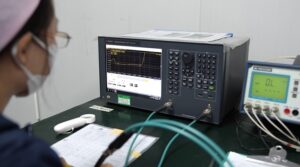
Reliability testing is essential to verify that automotive grade MCPCB can withstand long term use in vehicle environments. EBest conducts a full set of tests to ensure each board meets automotive quality requirements. All test items are formulated according to automotive standards to simulate real road and temperature conditions.
- Temperature cycling test: Withstands rapid high low temperature changes
- Vibration and shock test: Simulates real world vehicle driving conditions
- High temperature storage test: Validates long term durability at 150°C
- Thermal resistance test: Ensures consistent heat dissipation performance
- Dielectric strength test: Verifies electrical safety and insulation stability
- Thermal shock test: Checks resistance to extreme temperature swings
- Solderability test: Confirms good assembly performance in SMT lines
How Is EBest Automotive Grade MCPCB Manufactured?
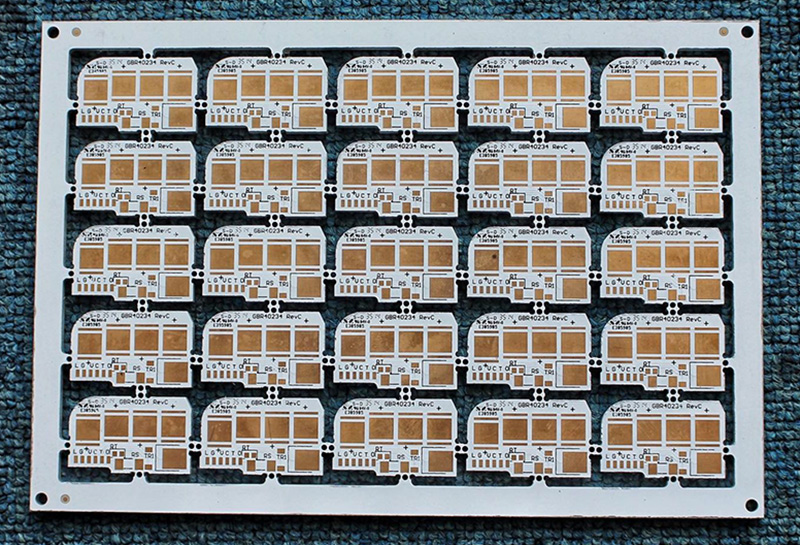
EBest’s automotive grade MCPCB manufacturing process follows IATF 16949 standards, with strict control over every step to ensure quality and traceability. From material selection to final inspection, each step is designed to meet automotive reliability requirements. The whole production line is equipped with precision equipment and standardized operating procedures.
- Raw material inspection using certified automotive grade materials.
- Precision metal core surface treatment for strong bonding.
- High pressure and high temperature dielectric lamination.
- Accurate circuit imaging, etching, and plating processes.
- Controlled drilling, routing, and surface finishing.
- Full electrical, thermal, and reliability performance testing.
- IATF 16949 compliant packaging and traceable shipment.
How to Choose the Right Metal Core for Your Automotive Grade MCPCB?
The selection of metal core directly determines thermal performance, weight and application efficiency of automotive grade MCPCB. It is necessary to select appropriate materials according to actual application scenarios and power requirements.
H2: How to Choose the Right Metal Core for Your Automotive Grade MCPCB?
Selecting the proper metal core is critical for thermal performance, reliability, and stability in harsh automotive environments.
- Aluminum core offers balanced thermal performance, light weight, and strong cost efficiency for most standard automotive applications.
- Copper core provides ultra-high thermal conductivity to handle extreme heat in high-power vehicle systems.
- Choose aluminum core for automotive lighting, sensors, and low-to-medium power control modules.
- Choose copper core for EV inverters, on-board chargers, and high-heat battery management systems.
- Aluminum core supports easier machining and better dimensional stability during mass production.
- Copper core delivers superior heat spreading for long-term durability under continuous high loads.
- Match the metal core to your operating temperature, power density, and installation space requirements.
Real Automotive Case: How Automotive Grade MCPCB Solved LED Overheating?
Automotive LED lighting products often face overheating issues, which lead to lumen decay and shortened lifespan. EBest’s automotive grade MCPCB provides a targeted solution to this problem, with proven results in mass production. The case comes from a well-known automotive lighting manufacturer facing serious performance problems.
- Customer problem: LED headlight lumen decay, short lifespan, and overheating failures
- Solution: EBest high thermal automotive grade MCPCB with optimized thermal vias
- Thermal improvement: Junction temperature reduced by more than 35°C
- Reliability result: Passed all automotive vibration and temperature cycling tests
- Final outcome: Stable mass production, extended service life, and customer approval
FAQ About Automotive Grade MCPCB
Q1: What temperature range does automotive grade MCPCB support?
A1: Automotive grade MCPCB typically operates from -40°C to +150°C for harsh vehicle environments.
Q2: Is automotive grade MCPCB compatible with standard SMT assembly?
A2: Yes, it works with standard SMT and soldering processes with adjusted thermal profiles.
Q3: How fast can you deliver automotive grade MCPCB prototypes?
A3: We offer rapid prototyping in 3 to 5 days and urgent 24 hour shipment for qualified orders.
Q4: Does EBest automotive grade MCPCB meet IATF 16949?
A4: Yes, all our automotive boards are produced under IATF 16949 with full traceability.
Q5: Can you customize automotive grade MCPCB thickness and structure?
A5: We fully customize core thickness, layer count, and layout to match your design.
Q6: How is automotive grade MCPCB different from standard MCPCB?
A6: It uses stricter materials, processes, and certifications to withstand extreme automotive conditions.
Q7: Do you provide design support for automotive grade MCPCB?
A7: We offer free DFM reviews and thermal optimization to improve your design.
How to Order Automotive Grade MCPCB from EBest Quickly?
Ordering automotive grade MCPCB from EBest is straightforward and supported. We provide a simple and efficient ordering process to save your time and speed up project progress. Send your Gerber files and project requirements for review. Get a free DFM check and formal quotation. Confirm prototype or mass production and start manufacturing. Receive on time delivery with full quality documentation.
Order Your High Reliability Automotive Grade MCPCB Today
EBest delivers professional automotive grade MCPCB with fast prototyping, stable mass production, and full automotive certifications. We support urgent orders, batch projects, and custom designs with dedicated service. Get in touch now to lock in your lead time and secure your supply. Our business email is sales@bestpcbs.com, looking forward to your email!