PCB manufacturing PCB manufacturing
Home > Blog

HDI Multilayer PCB Design & Manufacturer, Rapid Prototyping

September 19th, 2025

What is a HDI multilayer PCB? Let’s discover its stackup, applications, technical parameter, design guide and manufacturing process through this blog.

Are you troubled with these problems?

  • Struggling with sub-0.1mm microvia fabrication in traditional PCB processes?
  • Facing high costs from signal loss in high-speed products?
  • Delayed by slow 8+ layer HDI prototyping impacting launches?

As a HDI multilayer PCB manufacturer, EBest Circuit (Best Technology) can provide you service and solutions:

  • Microvia Precision: 0.05mm laser-drilled vias with plasma treatment for compact designs.
  • Signal Stability: End-to-end SI/PI support for 10Gbps+ stable transmission.
  • Rapid Prototyping: 7-day standard lead time for 8-layer HDI, 5 days for urgent orders.

Welcome to contact us if you have any request for HDI multilayer PCB: sales@bestpcbs.com.

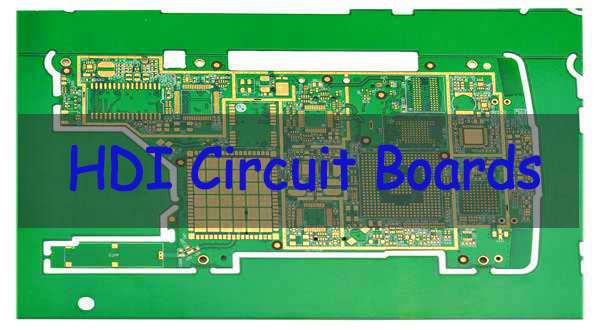
What Is a HDI Multilayer PCB?

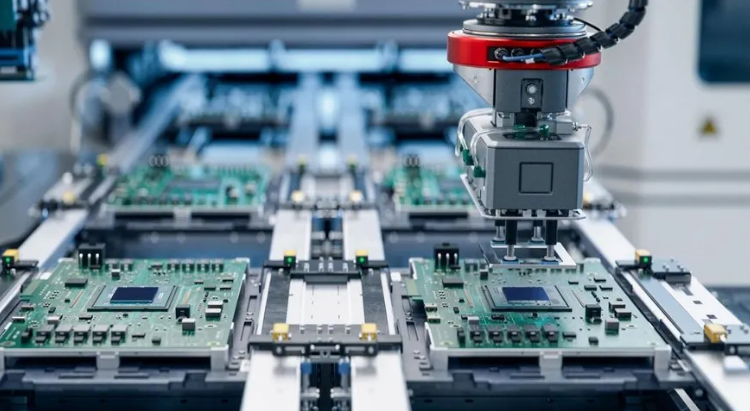
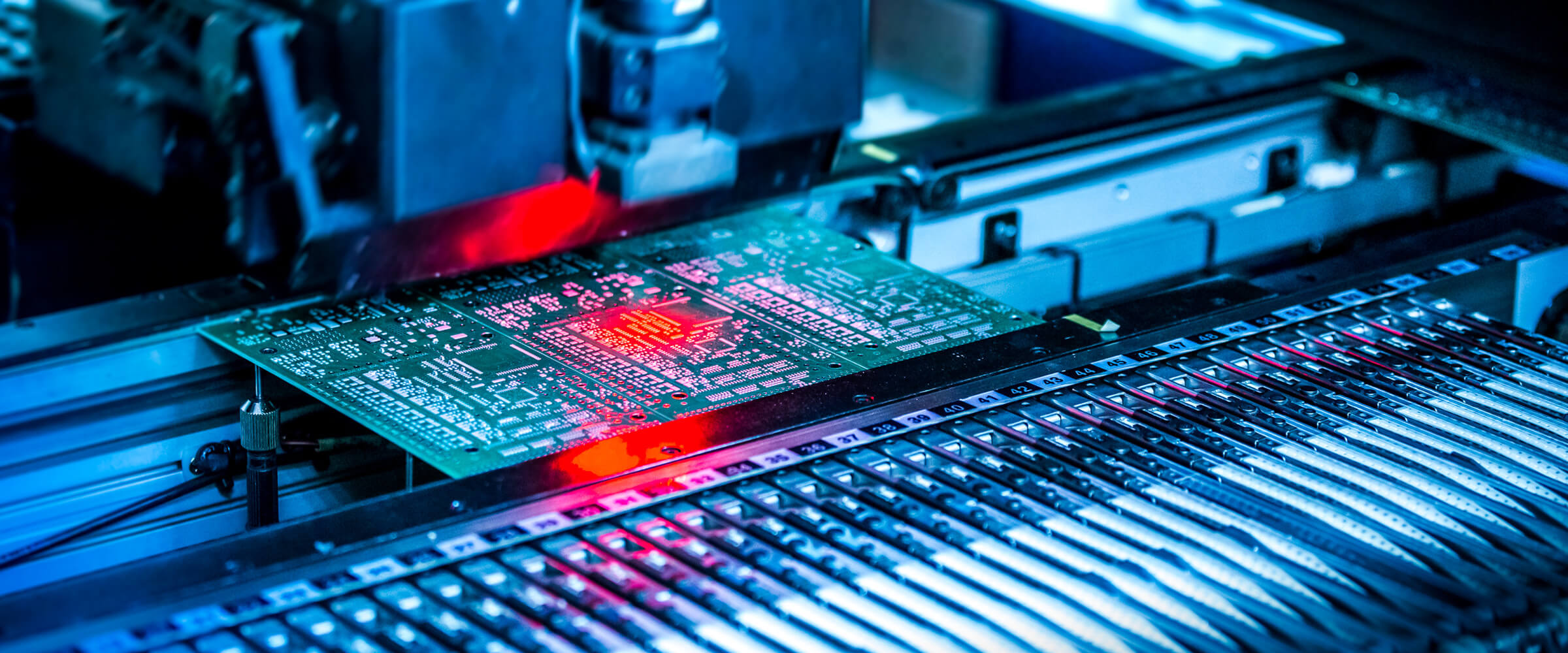
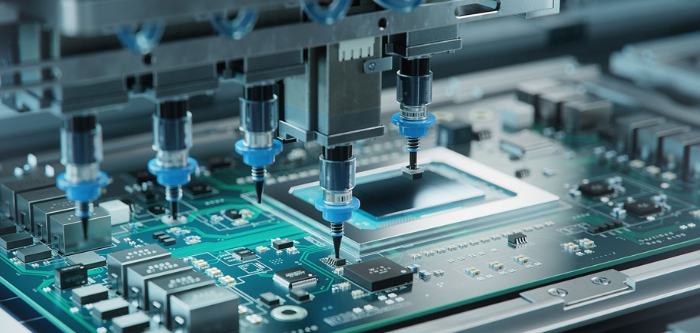
HDI Multilayer PCB (High-Density Interconnect Multilayer Printed Circuit Board) is an advanced circuit board that employs precision microvias (aperture ≀0.15mm), blind/buried via technology, and ultra-fine lines (line width/spacing ≀3mil). Through laser drilling and layer-by-layer stacking processes, it achieves high-density routing across 8 or more layers within compact spaces. This design enhances signal transmission speed, reduces interference, and is specifically engineered for miniaturized, high-performance applications such as 5G devices and wearable electronics.

What Is a HDI Multilayer PCB?

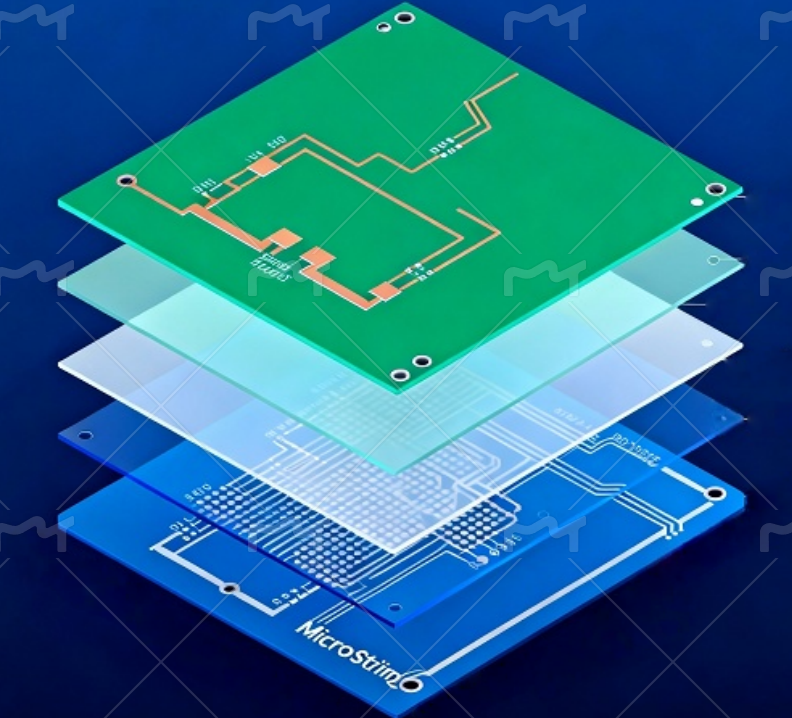
8 Layers HDI PCB Stackup

LayerLayer TypeMain FunctionConnection Method
L1Signal LayerHigh-frequency signal transmission / Critical component routingSurface Blind Via (Connecting to L2)
L2Power/Ground PlanePower distribution / Ground networkBuried Via (Connecting to L3-L6), Blind Via (Connecting to L1/L3)
L3Signal LayerInner-layer high-speed signal routingBuried Via (Connecting to L2/L4)
L4Signal LayerInner-layer control signal routingBuried Via (Connecting to L3/L5)
L5Signal LayerInner-layer low-speed signal routingBuried Via (Connecting to L4/L6)
L6Power/Ground PlanePower distribution / Ground networkBuried Via (Connecting to L5/L7), Blind Via (Connecting to L7)
L7Signal LayerInner-layer auxiliary signal routingBlind Via (Connecting to L6/L8)
L8Signal LayerHigh-frequency signal transmission / Critical component routingSurface Blind Via (Connecting to L7)

What Are Applications of HDI Multilayer PCB?

Applications of HDI multilayer PCB:

  • Smartphones & Mobile Devices: Mobile phone motherboard, Camera module, Sensor module, Antenna system, Automotive Electronics.
  • Engine Control Unit (ECU): In-vehicle navigation system, Airbag control module, Advanced Driver Assistance System (ADAS), In-vehicle entertainment system.
  • Medical Equipment: MRI imaging equipment, Cardiac pacemaker, Implantable medical devices, Precision diagnostic instruments, Communication Equipment.
  • 5G base station: Router/switch, Fiber optic communication module, Satellite communication equipment.
  • Industrial Control: Industrial robot control board, PLC control system, Automated sensor network.
  • Servers & Data Centers: High-performance server motherboard, Cloud computing hardware, Data storage devices.

HDI Multilayer Circuit Board Technical Parameter

Parameters            Specifications
Layer Range8-24 Layers
Minimum Line Width/Spacing40/40ΞΌm
Laser Drill Hole Diameter0.1mm
Mechanical Drill Hole Diameter0.15mm
Blind/Buried Via Diameter75-150ΞΌm
Aspect Ratio<0.8:1
Blind Via Stack Spacingβ‰₯0.3mm
Substrate TypeRogers/Panasonic MEGTRON/FR-4
Surface Treatment     ENIG/Immersive Silver/OSP
Tolerance RangeΒ±7%
Pressing MethodVacuum Lamination
Dielectric Thickness Uniformity≀±10%
Plating Process – Copper Thickness Uniformity≀±5ΞΌm
Thermal Resistance-55Β°C to +125Β°C
Thermal Shock Test Cyclesβ‰₯1000 Cycles
Routing Density>20 pads/cmΒ²
Insulation Resistanceβ‰₯10MΞ©
Reliability Testing                β‰₯500MΞ©

How to Design a Multilayer HDI PCB?

Below is Multilayer HDI PCB design guide:

1. Modular Schematic Design with Precision

  • Divide schematics into functional modules (power, signal processing, interfaces) using hierarchical design.
  • Annotate exact component parameters (e.g., 0.4mm pitch BGA CPU) and solder pad dimensions to ensure logical correctness and manufacturability.

2. Advanced Stack-up Structure Planning

  • Implement “signal-power-ground” alternating stack-up (e.g., 3-layer signal/3-layer power/3-layer ground).
  • Place high-speed signals on outer layers (trace width/space ≀4mil) with microvias (60-150ΞΌm laser-drilled) for layer-to-layer connections.
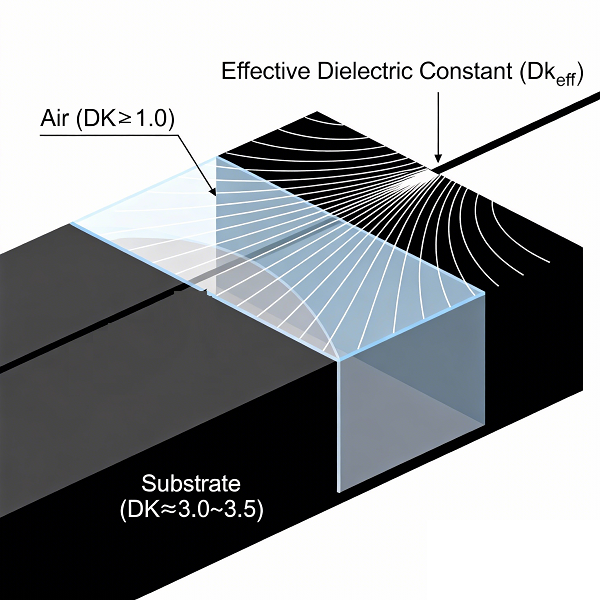
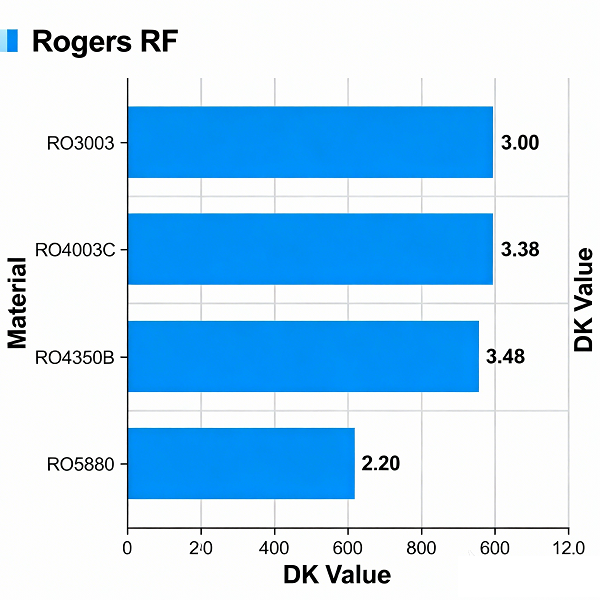
  • Use buried vias for interlayer routing (e.g., 1-2 layer blind via + 3-4 layer buried via) and select materials like Rogers 5880 (Dk=2.2) for high-frequency scenarios or FR4-Tg180 for thermal stability.

3. Intelligent Component Placement with Thermal Optimization

  • Center critical components (e.g., BGA-packaged CPU/FPGA) and position heat-generating devices near thermal via arrays.
  • Use “escape routing” from BGA centers to minimize trace length. Implement grid-pattern thermal vias (β‰₯150 vias/inchΒ², 0.3mm diameter, 1.0mm spacing) and thermal interface materials (TIMs) with β‰₯5W/mΒ·K conductivity for efficient heat dissipation.

4. High-Speed Signal Routing with Strict Rules

  • Enforce differential pair length matching (≀2mil difference) using serpentine routing for via delay compensation (bend radius β‰₯3Γ— trace width).
  • Avoid crossing power splits to reduce crosstalk. Use stacked microvia structures (e.g., VIA1-2 + VIA2-3) for higher routing density and impedance continuity at connectors via “cross-connection + ground shield” (3Γ— trace width spacing) with GND via pairs ≀3mm apart.

5. Optimized Power/Ground Plane Design

  • Segment multi-layer planes with decoupling capacitor networks (0201 package 10nF+100nF parallel) to achieve PDN impedance ≀1Ξ©.
  • Maintain continuous ground planes for low-impedance return paths (≀0.5mΞ©) and use grid-pattern power planes to minimize eddy current losses.

6. Detailed Impedance & Signal Integrity Control

  • Calculate trace width/spacing for target impedances (e.g., 6mil/7mil for 50Ξ© single-ended lines). At connector pads, implement “cross-connection + ground shield” with 3Γ— trace width spacing.
  • Add GND via pairs (≀3mm spacing) for transmission delay compensation and ensure via aspect ratios <0.8 to prevent stress fractures.

7. EMC & Reliability Enhancement with Fine Details

  • Deploy 3-stage EMI filtering (source common-mode choke + board-level filter + cable ferrite) and 360Β° beryllium copper grounding springs at connectors (contact resistance <0.5mΞ©).
  • Apply ENIG/ENEPIG surface finish (β‰₯3ΞΌm thickness) to prevent oxidation and use X-ray inspection for solder joint voids <10%.

8. Comprehensive Design Rule Verification

  • Execute DRC checks (line width/space, via dimensions, impedance compliance) per IPC-6012 Class 3 standards.
  • Collaborate with PCB manufacturers( like EBest Circuit (Best Technology)) for DFM analysis: confirm minimum trace/space 3mil, laser drilling accuracy Β±10ΞΌm, and process margins (etching tolerance Β±0.5mil).

9. Standardized Manufacturing File Generation

  • Output Gerber (RS-274X), drill (Excellon), solder mask, and BOM files with precise version control. Include assembly-specific annotations (e.g., polarity marks, fiducial placement) to streamline manufacturing.

10. Prototype Testing & Iterative Optimization

  • Conduct electrical tests (flying probe for impedance continuity), thermal tests (infrared thermography for hotspot mapping), and mechanical tests (vibration/shock for reliability).
  • Refine designs based on test results (e.g., topology adjustments, additional decoupling capacitors) and prepare for mass production with cost-optimized processes (resin-plugged vias) and quality control measures (AOI/X-ray inspection).
How to Design a Multilayer HDI PCB?

How Are Multilayer HDI PCBs Made?

Manufacturing processes for multilayer HDI PCBs:

1. Inner Layer Substrate Cutting & Pretreatment: Cut high-speed substrates (e.g., FR4, Rogers RO4350B) to design dimensions. Perform chemical cleaning to remove surface oxidation and contaminants, enhancing adhesion between copper layers and prepreg.

2. Inner Layer Pattern Transfer & Etching: Apply dry film, transfer circuit patterns via UV exposure and development. Etch unprotected copper using alkaline solution, followed by AOI (Automated Optical Inspection) to verify circuit integrity.

3. Brown Oxidation & Stack Alignment: Treat inner copper surfaces with brown oxidation to create nano-scale roughness. Stack inner layers, prepreg sheets, and copper foils in sequence, secured with rivets to prevent layer misalignment.

4. Vacuum Hot Pressing: Execute three-stage pressing (heating β†’ main pressure β†’ cooling). Gradually raise temperature at 2-3℃/min to Tg point under 20-35kg/cmΒ² pressure, ensuring resin fills voids without cavities.

5. Laser Microvia Drilling: Use UV/COβ‚‚ lasers to drill blind/buried vias with diameter ≀0.15mm and depth tolerance Β±0.05mm. Clean hole walls via plasma desmear to remove drilling debris.

6. Via Plating & Filling: Deposit copper electrolessly on via walls, then electroplate to 8-12ΞΌm thickness. Implement via-filling plating (e.g., copper paste) to eliminate voids in blind/buried vias, ensuring reliable electrical conduction.

7. Outer Layer Patterning & Etching: Repeat inner layer processes, apply dry film, expose, develop, and etch to form high-precision lines (width/spacing ≀3mil). Strip tin to retain circuit traces and via walls.

8. Solder Mask Printing & Curing: Print UV-curable solder mask ink to protect non-soldering areas. Expose and develop to reveal pads and test points, ensuring soldering reliability.

9. Surface Finish Selection: Apply ENIG (electroless nickel immersion gold), OSP (organic solderability preservative), or ENEPIG (electroless nickel electroless palladium immersion gold) based on application requirements, enhancing corrosion resistance and high-frequency signal integrity.

10. Reliability Testing: Conduct thermal shock (-55℃~125℃ cycles), humidity resistance (85℃/85%RH), vibration (β‰₯5G random), and electrical tests (flying probe/4-wire Kelvin testing) to meet IPC-6012 standards and client specifications.

11. CNC Profiling & V-Scoring: Shape boards via CNC routing, implement V-groove scoring for easy separation, ensuring edge dimensional accuracy ≀±0.1mm without burrs or delamination.

12. Final Inspection & Packaging: Perform FQC (Final Quality Control) to check for defects, dimensional tolerances, and electrical performance. Vacuum-pack products to prevent moisture/oxidation during transport and storage.

How Are Multilayer HDI PCBs Made?

Why Choose EBest Circuit (Best Technology) as HDI Multilayer PCB Manufacturer?

Reasons why choose us as HDI multilayer PCB manufacturer:

  • Cost-Sensitive Design Solutions: Offer tiered pricing systems and material substitution options, optimizing trace width/spacing and substrate selection (e.g., FR-4/high-frequency material ratios) to reduce per-board costs by 10%-15% while ensuring performance, ideal for price-sensitive products like consumer electronics and IoT devices.
  • 24-Hour Rapid Prototyping: Establish dedicated green channels for end-to-end tracking from design file receipt to sample delivery, supporting real-time online progress queries. For urgent needs like prototype validation or exhibition samples, achieve “same-day order placement, next-day shipment” to shorten iteration cycles to 1/3 of traditional timelines.
  • 99.2% On-Time Delivery Rate: Leverage intelligent production scheduling systems and localized supply chain layouts, combined with dynamic inventory alerts, to ensure 10-15 day delivery for regular orders and 5-7 day delivery for urgent orders. Historical data confirms over 99.2% of orders meet agreed timelines, supporting clients’ production plans and market windows.
  • Full-Batch Quality Inspection: Employ dual AOI+X-ray inspection systems to verify 20+ critical parameters including trace width/spacing, hole precision, and impedance matching, alongside electrical testing and thermal shock trials. All batches meet IPC-6012 standards with defect rates below 0.08%.
  • International Authoritative Certification System: Hold ISO 9001, IATF 16949 (automotive), ISO 13485 (medical), and RoHS certifications, enabling global market compliance and reducing re-certification costs for clients targeting EU, North America, and Japan.
  • 19 Years of HDI Technical Expertise: Accumulate over 5,000 HDI process case databases across 19 years, covering mobile, server, and medical sectors. The production error database proactively mitigates 90%+ potential issues, minimizing client trial costs.
  • Free DFM Design Optimization: Provide end-to-end manufacturability analysis from schematics to Gerber files, including package compatibility checks, routing topology refinement, and impedance matching suggestions, to identify design flaws early, shorten manufacturing cycles, and lower redesign expenses.
  • Multi-Tier Material Supply Chain: Strategic partnerships with suppliers like Rogers, Panasonic, and Shengyi ensure stable supply of high-frequency/high-speed materials and eco-friendly substrates, while centralized procurement reduces material costs for clients.
Why Choose EBest Circuit (Best Technology) as HDI Multilayer PCB Manufacturer?

Our HDI PCB Capabilities

ParameterCapabilites
PCB Layers:1-32L
Copper Thickness:Outer Layer:1oz~30oz; Inner Layer:0.5oz~30oz
Min Line Width/Line Space: Normal: 4/4mil; HDI: 3/3mil
Min Hole Diameter:   Normal: 8mil; HDI: 4mil
PTH/NPTH Dia Tolerance: PTH: Β± 3mil; NPTH: Β±2 mil
Surface Treatment: ENIG(Au 4u’’),ENEPIG (Au 5u’’) Gold finger/Hard Gold Plating(Au 50u’’), HASL /LF HASL, OSP, Immersion Tin, Immersion Silver

How to Get a Quote for HDI Multilayer PCB Project?

All files needs to be submitted to get a quote for HDI multilayer PCB:

  • Gerber Files: Include circuit design data for all layers (e.g., signal layers, power layers, silkscreen layers), with annotations for stack-up sequence, impedance-controlled traces, blind/buried via positions, and special process requirements (e.g., via-in-pad, resin plugging).
  • BOM (Bill of Materials): Detail component models, package dimensions (e.g., 0201/0402/QFN), supplier information, tolerance grades (e.g., Β±1% resistors), and material codes, ensuring alignment with component positions in Gerber files.
  • Technical Specifications: Specify layer count range (e.g., 8-24 layers), trace width/spacing (e.g., 40/40ΞΌm), hole diameter precision (e.g., 0.1mm laser drilling), surface finish (e.g., ENIG/immersion silver), impedance control (e.g., 50Β±7Ξ© differential pairs), and substrate selection (e.g., FR-4/Rogers RO4350B).
  • Special Process Requirements: Indicate needs for via-in-pad, back-drilling, stacked blind/buried vias, high-frequency material applications, thermal management solutions (e.g., thermal via arrays), or EMC protection measures (e.g., three-stage filtering).
  • Quantity & Lead Time Requirements: Provide batch order quantities (e.g., 500 pieces/batch), urgent order needs (e.g., 24-hour prototyping), standard lead time expectations (e.g., 10-15 days), and packaging specifications (e.g., vacuum packaging + anti-static bags).
  • Quality Certification & Testing Needs: List applicable international standards (e.g., IPC-6012, ISO 9001), specific test items (e.g., flying probe impedance testing, β‰₯1000 thermal shock cycles), and acceptable defect rate thresholds (e.g., ≀0.08%).
  • Design File Version & Revision History: Include the latest design file version number, revision history, and design change notes to ensure manufacturing accuracy and timeline.

Welcome to contact us if you have any request for HDI multilayer PCB board: sales@bestpcbs.com.

China MCPCB & Metal Core PCB & LED MCPCB Manufacturer​

September 19th, 2025

As a LED MCPCB Manufacturer​, We are proud to provide a wide variety of MCPCBs for the lighting world. With over 19 years of experience in designing and manufacturing MCPCBs, we take pride in being your one-stop supplier.

As a trusted supplier, we hold certifications including UL, ISO13485, ISO9001, IATF16949 and SGS, enabling us to meet the high standards of clients across Europe, America, Israel, India, and so on. Explore our services and let us help you fulfill your MCPCB needs.

China MCPCB & Metal Core PCB & LED MCPCB Manufacturer​

Are you looking for LED MCPCB Manufacturer? Do you have any questions?

  • What types of MCPCBs do you mainly produce?
  • Do you support customized designs?
  • What is the typical delivery time? Do you offer expedited service?
  • What after-sales service and technical support do you provide?

As a MCPCB manufacturer with 19+ years of experience, BEST Technology can tell you:

  • Based on metal substrate type, we offer copper, copper-aluminum, aluminum, and steel substrates. Based on product structure, we offer thermal and electrical separation MCPCBs, rigid-flex MCPCBs, and single- and double-sided multilayer MCPCBs.
  • We offer one-stop customized solutions from design to production.
  • Standard delivery time is 5-10 business days; we also offer expedited service, and urgent boards can be shipped out within 24 hours!
  • Quality inspection and returns and exchanges are included. We also provide design-for-manufacturing (DFM) advice, technical consulting, and troubleshooting services.

What is MCPCB LED?

An MCPCB LED is a light-emitting diode mounted on a Metal Core Printed Circuit Board. Unlike a standard circuit board, an MCPCB uses a metal plate as the base. This metal core, usually aluminum or copper, moves heat away from the LEDs fast. Heat is the main reason LEDs fade or fail. A board that spreads heat keeps them bright and strong.

MCPCB LEDs appear in almost every modern lighting product. LED panels for offices, car headlights, medical lamps, and industrial floodlights all rely on this design. The solid metal base creates a powerful thermal path. That means longer life, steady color, and reliable brightness.

Which board is better for LEDs: MCPCB or standard FR-4?

FR-4 is a fiberglass and epoxy laminate. It works for many electronics. But LEDs run hot and need better heat transfer.

As a MCPCB led manufacturer, BEST Technology can tell you the advantages of MCPCB:

  • Metal base moves heat away quickly.
  • LEDs stay at a safe operating temperature.
  • Brightness and color remain stable for years.

FR-4 costs less for simple circuits. Yet for high-power LED lights, it can become a weak link. Over time heat builds up. That can reduce LED life and cause early dimming.

When a product demands long service and high brightness, MCPCB is the better choice. The small extra cost pays back through fewer failures and less maintenance.

What is a Metal Core PCB and why do LEDs need it?

A Metal Core PCB has a solid metal plate inside the board. Most often that plate is aluminum. Some high-performance designs use copper or a mix of alloys.

The structure is simple but powerful. A thin dielectric layer separates the copper circuit from the metal base. This dielectric must be thermally conductive yet electrically insulating.

LEDs convert electricity into light. That process produces heat. If heat stays near the LED chip, performance drops. Light output falls, and lifetime shortens.

The metal core solves this. Heat flows fast from the LED junction through the dielectric into the metal base. From there it moves to a heat sink or the surrounding air. This keeps the LED at an optimal temperature.

China MCPCB & Metal Core PCB & LED MCPCB Manufacturer​

With a cooler junction, the LED can handle higher current and stay bright. This is why china mcpcb led board manufacturers focus on precise thermal design.

How does the LED PCB assembly process work for MCPCBs?

Building an LED MCPCB involves several careful steps. Professional led pcb assembly lines follow strict procedures:

  • Material Preparation: Aluminum or copper base plates are cleaned and coated with a thin dielectric.
  • Circuit Imaging and Etching: Copper foil is laminated and patterned. Chemical etching forms the circuit traces.
  • Solder Mask and Surface Finish: A heat-resistant solder mask protects the copper. ENIG or OSP finishes create strong solder joints.
  • Component Placement: High-speed pick-and-place machines set LEDs and other parts accurately.
  • Reflow Soldering: Boards pass through a controlled oven. Solder paste melts and bonds components to the pads.
  • Inspection and Testing: Automated optical inspection checks for alignment and solder quality. Electrical and thermal tests confirm performance.

BEST Technology, a top factory in China, completes these steps using advanced SMT production lines. They deliver high volumes without losing precision. This is key for reliable LED products used in street lights, automotive lamps, and large LED panels.

How does a MCPCB led manufacturer solve LED thermal problems?

LED heat management is critical. BEST Technology, an Skilled led mcpcb manufacturers china, addresses this issue in several ways:

  • Metal Core Design: Aluminum or copper spreads heat evenly.
  • High-Conductivity Dielectric: Special materials reduce thermal resistance.
  • Optimized Pad Layout: Careful spacing prevents hot spots.
  • Precise Thickness Control: Balances insulation with thermal transfer.
  • Quality Solder and Mounting: Good solder increases heat flow from the LED to the metal base.

Many manufacturers run thermal simulations during design. We predict how the board will behave in real conditions. This ensures LED panels stay cool even under heavy load.

China MCPCB & Metal Core PCB & LED MCPCB Manufacturer​

Better heat management means brighter light and longer life. As a customer, you get a highly efficient product with lower maintenance requirements.

What materials are used in high-performance Metal Core PCBs?

The choice of materials defines the performance of a Metal Core PCB. Reliable mcpcb led manufacturer facilities use:

  • Base Metal: Aluminum for general use. Copper when very high conductivity is needed.
  • Dielectric Layer: Thin, thermally conductive polymer. Often 1 to 2 W/mΒ·K for standard boards and up to 8 W/mΒ·K for premium boards.
  • Copper Circuit Layer: Usually 1 to 3 ounces per square foot for strong current carrying.
  • Solder Mask: Heat-resistant and protective.
  • Surface Finish: ENIG, OSP, or Immersion Silver for excellent soldering and corrosion resistance.

Some designs add graphite or special composites to improve heat spreading. These materials keep boards stable even in harsh outdoor or automotive conditions.

Which tests prove an LED MCPCB is safe and durable?

Before shipping, every professional led mcpcb manufacturer performs strict tests:

  • Thermal Cycling: Rapid hot and cold cycles confirm the board can handle temperature changes.
  • Hi-Pot Testing: Ensures the dielectric insulates properly between copper and metal base.
  • Vibration and Shock Testing: Checks stability for automotive or industrial uses.
  • Solderability Testing: Verifies pads accept solder without defects.
  • Burn-In: LEDs run at high current for hours to reveal hidden issues.

These tests ensure product performance in real-world environments. You can trust this circuit board for applications in LED displays, medical lamps, and automotive lighting.

What certifications must LED MCPCB manufacturers in China have?

Quality and safety certifications show a manufacturer meets international standards. Important approvals include:

  • ISO 9001:2015: Quality management for consistent production.
  • UL Certification: Safety standard for PCB materials.
  • RoHS and REACH: Proof that materials meet environmental rules.
  • ISO 14001: Environmental management for clean manufacturing.
  • IATF 16949: Required for automotive LED applications.
China MCPCB & Metal Core PCB & LED MCPCB Manufacturer​

BEST Technology holds relevant quality certifications, which proves our ability to provide high-quality products. These certifications are a guarantee of product excellence, ensuring that customers and partners receive good quality assurance.

Conclusion:

LED lighting needs strong thermal control. Metal Core PCBs give that control through fast heat transfer and stable performance. Compared with FR-4, MCPCB boards keep LEDs brighter and longer-lasting.

For dependable LED MCPCBs, EBest Circuit (Best Technology) Co., Ltd. offers proven quality and responsive service. Contact sales@bestpcbs.com for samples or custom quotes.

Meet EBest Circuit (Best Technology) at PCB West 2025!!!

September 19th, 2025

Exciting News! EBest Circuit (Best Technology), a leading PCB assembly manufacturer from China, will be exhibiting at PCB West in Santa Clara California. Join us at Booth No. 414 on Oct 1st (Wednesday). If you missed us at New Tech or Expo Electronica, this is your chance!

At our booth, you’ll have the opportunity to explore our advanced PCB manufacturing and assembly technologies. For reference, here is a booth location detail.

In the exhibition, our team of experts will be available to share in-depth knowledge about PCB assembly, from prototyping to low and high-volume production. We invite all interested professionals/engineers to visit and discover our capabilities in flexible circuit boards, rigid-flex circuits (2 to 50 layers), copper weights from 1/2 OZ to 30 OZ, and ultra-thin PCBs (0.15mm FR4) to heavy copper options. EBest Circuit (Best Technology) offers a full turn-key service including component sourcing, board fabrication (FPC, PCB, MCPCB, Ceramic PCB), final assembly, programming, testing, and more.

Meet EBest Circuit (Best Technology) at PCB West 2025!!!

We welcome you to explore how we manage component wastage and boost efficiency, helping you save time, money, and resources.

Here are some pictures that we attending PCB west last time:

Meet EBest Circuit (Best Technology) at PCB West 2025!!!

Be sure to visit us at Booth 414 to see how we optimize efficiency, reduce component wastage, and help you save on time, money, and energy.

For more details and to register, visit:

Schedule for PCB West 2025

We look forward to seeing you in California!

Low Volume PCB Manufacturer & Assembly, Fast Turnaround

September 18th, 2025

Why choose low volume PCB? Let’s explore meaning, benefits, applications, manufacturing and assembly processes, delivery time for low volume PCB.

Are you troubled with these problems?

  • Waiting 48hours for a quote?
  • Forced to order 10pcs when you need 2?
  • Found silent tweaks in your Gerber files?

As a low volume PCB manufacturer, EBest Circuit (Best Technology) can provide you service and solution:

  • Dedicated Project Ally – A single technical contact handles all needs 24/7, eliminating supplier runarounds.
  • Order Just 1 Board – Pay only for materials used ($0 setup fees), with real-time cost breakdowns.
  • Pre-Production DFM Analysis – Get actionable feedback within 12hrs. Your design intent stays uncompromised.

Welcome to contact us if you have any request for low volume PCB: sales@bestpcbs.com.

What Does Low Volume PCB Mean?

Low Volume PCB refers to a production model with single-order quantities typically ranging from 5 to 500 pieces, providing highly flexible manufacturing services for product R&D, prototype validation, and small-scale trial production. Unlike traditional mass production, it removes high mold fees and minimum order quantity restrictions, enabling rapid design iteration (e.g., design modifications within 48 hours), multi-process compatibility (e.g., high-frequency materials/HDI blind vias), and complex technical verification (e.g., Β±5% impedance control).

What Does Low Volume PCB Mean?

Why Choose Low Volume PCBs?

Advantages of Low volume PCBs:

Lower upfront investment

  • Avoid high tooling costs and material deposits.
  • Ideal for limited R&D/startup budgets.

Faster design iteration

  • Receive prototypes in 72 hours (vs. weeks for traditional manufacturing).
  • Rapidly test and refine designs.

Flexibility for special requirements

  • Support niche materials (ceramic/flex PCBs).
  • Accept customer-supplied components.

Enhanced quality control

  • 100% manual inspection per board.
  • Catch flaws before mass production.

Seamless market testing

  • Launch pilot batches (100-500 units) for user validation.
  • Customize labels/certifications per region.
Why Choose Low Volume PCBs?

When to Choose Low Volume PCB Board?

Applications of low volume PCB board:

  • Smart Wearable Devices: Smart Watch, AR/VR Glasses.
  • Medical Devices: Portable Monitor, High-Precision Surgical Instruments.
  • Industrial Control Systems: PLC Controller, Industrial Robot Core Board.
  • New Energy Vehicle BMS: Battery Management System.
  • IoT Terminals: Smart Meters, Environmental Monitoring Nodes.
  • Aerospace Special Circuit Boards: Satellite Control Modules, Radar Systems.
  • Consumer Electronics: Robotic Vacuum Cleaners, Smart Door Locks.

Low-Volume PCB Manufacturing Processes

1. Material Cutting: Large-size copper-clad laminates are cut to design dimensions, supporting small-batch multi-variety production and minimizing material waste.

2. Drilling: CNC drilling machine creates through-holes/blind vias/buried vias with Β±0.05mm hole position accuracy.

3. Hole Metallization: Chemical copper deposition + electroplating forms conductive layers for multi-layer board interlayer electrical interconnection.

4. Dry Film Lamination: Photosensitive dry film is applied to the board surface as a mask base for pattern transfer.

5. Pattern Exposure: UV exposure machine transfers Gerber file patterns to dry film, forming resist patterns.

6. Pattern Etching: Alkaline etching solution removes unprotected copper to form precise circuit patterns
Solder

7. Mask Printing: Liquid photosensitive solder mask ink is applied and developed to form a permanent protective layer.

8. Surface Finish: Immersion gold/OSP/ENIG and other processes enhance soldering reliability and corrosion resistance.

9. Profile Machining: CNC milling/laser cutting enables rapid shaping of irregular-shaped boards.

10. Electrical Testing: Flying probe/fixture testing completes 100% electrical performance verification, ensuring no shorts/opens.

11. Final Inspection: Manual visual inspection + AOI optical inspection double-verify appearance and dimensional compliance.

12. Packaging & Shipping: Anti-static vacuum packaging + anti-vibration cushioning materials, customized labels with batch/serial numbers, integrated logistics tracking system for full traceability

Low-Volume PCB Manufacturing Processes

Low Volume PCB Assembly Processes

1. Component Preparation: Sorting and inspecting SMD/DIP components per BOM list, supporting small-batch multi-variety needs with rapid material switching capabilities.

2. Solder Paste Printing: High-precision stencil printing with Β±0.02mm thickness control for uniform solder pad coverage.

3. SMD Placement: Modular pick-and-place machines enable high-speed precision mounting of micro-components (01005 chips, BGA packages).

4. Reflow Soldering: 10-zone nitrogen reflow oven achieves lead-free soldering with Β±1Β°C temperature precision for reliable joints.

5. Through-Hole Assembly: Manual/automated insertion machines handle through-hole components, accommodating irregular shapes and precision placement.

6. Selective Soldering: Localized wave/selective soldering for through-hole parts minimizes thermal stress while ensuring consistent joint quality.

7. Functional Testing: ICT/FCT systems validate electrical performance, complemented by AOI/X-ray inspection for micro-defect detection.

8. Conformal Coating: Acrylic/silicone spray applied per requirements to enhance moisture/dust/corrosion resistance.

9. Packaging & Shipping: Custom anti-static packaging with cushioning materials, integrated logistics tracking for secure and traceable delivery.

Low Volume PCB Assembly Processes

Why Choose EBest Circuit (Best Technology) as Low Volume PCB Manufacturer?

Reasons why choose us as low volume PCB manufacturer:

  • One-Stop Solution: Full-link service covering PCB design to assembly, eliminating the need for clients to coordinate with multiple suppliers. Reduces R&D cycle by over 30% and lowers cross-department communication costs.
  • Free DFM Design Optimization: 19-year experienced engineering team provides Design for Manufacturing (DFM) analysis to identify design flaws early, minimize subsequent modification costs, improve first-board success rate by 40%, and avoid rework losses in mass production.
  • 19 Years of Experience Accumulation: Focused on low-volume PCB production, serving over 2,000 clients. Rich process database enables rapid adaptation to complex process requirements, ensuring enhanced production efficiency and yield.
  • Four-Layer Quality Control System: Incoming material inspection, in-process patrol inspection, 100% final product inspection, and reliability testing. Achieves full batch inspection with defect rate below 0.3%, significantly outperforming industry averages and ensuring product reliability.
  • Dynamic Cost Optimization Solutions: Customized cost-reduction strategies based on client budgets, including material substitution, process adjustments, and batch pooling. Reduces costs by 15%-30% while maintaining quality, maximizing cost-effectiveness.
  • 24-Hour Rapid Prototyping: 24-hour expedited prototyping for double-sided boards, 3-day delivery for 4-6 layer boards, 50% faster than conventional timelines. Accelerates design validation and market entry.
  • Flexible Production Scheduling: Dedicated production lines support small-batch orders starting at 50 pieces. Intelligent scheduling system enables rapid line changes (under 2 hours), flexibly accommodating multi-version and multi-batch production needs.
  • Professional Assembly Support: Comprehensive assembly services including SMT placement, DIP insertion, and conformal coating. Combined with precise soldering temperature curve control and solder joint inspection, ensures component assembly accuracy of Β±0.025mm and stable electrical performance.

    Our Low Volume PCB Lead Time

    Lead time for 1-50 pieces

    LayersNormal ServiceFastest Service
    17 Days24 H
    28 Days24 H
    410 Days48 H
    610 Days72 H
    812 Days72 H
    β‰₯10TBDTBD

    Lead time for 50-500 pieces

    LayersNormal ServiceExpedited Service
    14-6 Days2-3 Days
    25-8 Days2-3 Days
    48-12 Days3-5 Days
    68-12 Days4-6 Days
    812-16 Days6-8 Days
    β‰₯1018-20 DaysTBD

    How to Get a Quote for Low Volume PCB Project?

    Essential Quote Submission Checklist for Low Volume PCB Projects

    • Design Data: Complete Gerber files (274X, NC Drill) with layer-specific details (dimensions, copper thickness, via specs).
    • BOM: Detailed component list with part numbers, manufacturers, quantities, and critical component flags.
    • Technical Specs: PCB layer count, material type (e.g., FR4, high-Tg), surface finish (ENIG/HASL/OSP), impedance targets, and special processes (HDI, blind vias).
    • Quantity & Timeline: Annual/batch volume and required delivery dates (prototypes to mass production).
    • Quality Standards: IPC-A-600/A-610 compliance, reliability tests (thermal cycling, vibration), and certifications (RoHS, UL).
    • Assembly Needs (If Applicable): SMT/DIP specs, solder paste type, test protocols (ICT/FCT), and coating requirements.

    Welcome to contact us if you have any inquiry for low volume PCB design, manufacturing, assembly: sales@bestpcbs.com.

    PCB Circuit Board Manufacturers, PCB Factory, No MOQ

    September 18th, 2025

    As a PCB Circuit Board Manufacturers, EBest Circuit (Best Technology) is committed to becoming your partner for high-precision PCBs, providing various types of circuit boards.

    PCB Circuit Board Manufacturers, PCB Factory, No MOQ

    Are you looking for reliable PCB circuit board manufacturers? Do you have the following questions?

    • What industry certifications does your factory have?
    • How many layers of circuit boards can you produce?
    • What types of PCBs do you specialize in?
    • How do you ensure PCB quality?

    EBest Circuit (Best Technology) is your best choice and can solve your concerns~

    • We are ISO 9001, IATF 16949, and UL certified. We strictly adhere to IPC standards for production and inspection, ensuring our quality system meets international standards.
    • We can consistently produce multi-layer boards with 1-32 layers, with a minimum line/space accuracy of 2/2 mil (50ΞΌm) in mass production, meeting most high-precision design requirements.
    • We specialize in high-reliability PCB manufacturing, with extensive experience and technical advantages in high-frequency, high-speed boards, HDI boards, rigid-flex boards, and metal substrates (heat-dissipating aluminum substrates).
    • We utilize comprehensive inspection equipment such as AOI (Automated Optical Inspection), flying probe testing, and X-ray inspection, combined with strict process control (IPQC/IQC) to ensure the quality and reliability of every PCB.

    If you have any PCB needs, please contact us: sales@bestpcbs.com

    How to design a PCB circuit board?

    BEST Technology engineers first define the board’s functionality, power requirements, and size. A simple prototype or schematic follows. Good planning avoids costly rework later.

    Next, designers use electronic design automation software such as Altium or KiCad. These tools map every trace, pad, and via. Each copper path must handle the right current while avoiding interference. Shorter paths mean less signal loss.

    High-speed signals should travel straight and short. Sensitive parts like sensors stay away from noisy circuits.

    After layout, we create Gerber files. Gerber files show each layer, drill hole, and mask. A quick design review catches errors before fabrication.

    Collaboration with experienced circuit board manufacturing companies helps here. BEST Technology engineers will provide more optimal cabling or stacking solutions. This feedback can save time and reduce risks.

    How to make PCB circuit board?

    Once design files pass review, production begins. First comes imaging. The factory prints the circuit pattern onto copper-clad laminate using a photoresist film. Light hardens the image, and unwanted copper is etched away. The result is a clean network of copper traces.

    Drilling follows. Precision machines create micro-holes for vias and through-hole parts. Laser drilling handles very small features common in today’s compact devices.

    Plating adds a thin copper layer inside holes, creating reliable connections between layers. For multi-layer boards, technicians press and heat inner cores together, bonding them with resin.

    Next is solder mask. This green (or sometimes blue, red, or black) coating protects copper and keeps solder only where needed. Silk-screening then prints component labels and logos.

    Electrical testing is critical. Automated probes check continuity and isolation. Any shorts or open circuits trigger rework.

    Finally, the panel is cut into individual boards. Each product is cleaned, packaged, and ready to be shipped to the assembly line or directly to you.

    Which PCB manufacturing steps matter most?

    Every step counts, but three stand out.

    • Imaging and Etching: Accurate imaging ensures the circuit matches design specs.
    • Drilling and Plating: Proper plating guarantees strong inter-layer connections.
    • Testing: Rigorous electrical tests catch defects before assembly.

    BEST Technology uses advanced equipment and strict quality controls during these critical stages. Automated optical inspection, clean rooms, and real-time monitoring protect consistency.

    What is in a circuit board components list?

    A circuit board components list, often called a bill of materials (BOM), details everything needed for assembly. It includes:

    • Integrated Circuits (ICs): Microcontrollers, processors, memory chips.
    • Passive Components: Resistors, capacitors, and inductors that manage current and voltage.
    • Connectors: USB, HDMI, headers, and terminals to link with the outside world.
    • Discrete Semiconductors: Diodes, transistors, MOSFETs.
    • Special Parts: Sensors, antennas, or displays unique to your design.

    Each item specifies part numbers, tolerances, and approved suppliers. A clean BOM speeds sourcing and lowers cost.

    BEST Technology, as an experienced printed circuit board PCB manufacturers, usually helps to complete the list and recommend parts with a stable supply and better prices.

    Which materials do PCB factories use?

    The foundation of a PCB is the laminate. FR-4, a fiberglass-epoxy composite, remains the industry standard. It balances strength, thermal resistance, and cost.

    For high-frequency or high-speed boards, BEST Technology’s factories will use materials such as Rogers or polyimide. These offer lower dielectric loss and better heat performance.

    Copper foil forms the conductive layers. Thickness ranges from 0.5 oz to 3 oz per square foot depending on current needs.

    Solder mask is usually epoxy-based for durability. Surface finishes like ENIG (Electroless Nickel Immersion Gold), HASL (Hot Air Solder Leveling), or OSP (Organic Solderability Preservative) protect pads from oxidation and improve soldering.

    What drives PCB manufacturing cost and speed?

    Several factors influence cost and lead time.

    • Layer Count: More layers mean more drilling, lamination, and testing.
    • Board Size and Quantity: Larger or thicker boards use more material and require longer machine time.
    • Trace Width and Spacing: Fine pitch designs demand tighter process control and raise cost.
    • Surface Finish: Gold plating and advanced coatings cost more than simple HASL.
    • Testing Level: Flying-probe or functional tests add time but ensure reliability.
    PCB Circuit Board Manufacturers, PCB Factory, No MOQ

    To speed up production, BEST Technology, a top PCB manufacturer, uses automated production lines and intelligent scheduling. We also offer a no-minimum-order option, allowing for rapid prototyping without waiting for volume orders.

    What certifications should circuit board manufacturing companies hold?

    Quality certifications prove a factory follows global standards.

    • ISO 9001: Shows strong quality management across the entire process.
    • UL Certification: Ensures boards meet safety standards for flammability.
    • RoHS and REACH Compliance: Confirms materials are free of restricted hazardous substances.
    • IATF 16949: Important for automotive electronics.
    • ISO 13485: Required for medical device PCBs.

    Working with certified circuit board manufacturers protects your product and brand reputation. We hold relevant quality certifications that validated our commitment to provide high quality products. These certificationsact as a guarantee of product excellence, ensuring customers and partners a good quality assurance practices.

    How to pick the best PCB circuit board manufacturer?

    Selecting the right partner means balancing technology, service, and flexibility.

    Start with capability. Does the factory handle your board size, layer count, and finish? Do they support rigid-flex or HDI if you need them?

    • BEST Technology begin to As a printed circuit board (PCB) vendor in Asia, we are dedicated to be your best partner of advance, high-precision printed circuit boards, such as heavy copper boards, mixed layers, high TG, HDI, high frequency (Rogers, Taconic), impedance controlled board, Metal Core PCB (MCPCB) such as Aluminum PCB, Copper PCB, and so on.

    Established PCB manufacturer teams know how to solve complex issues and scale from prototype to mass production.

    • EBest Circuit (Best Technology) provides rapid PCB prototyping services. We provide PCB prototype service with FR4 PCB, Ceramic PCB, MCPCB, HDI PCB, heavy copper PCB, High TG PCB, RF PCB and so on. Pls let us know if you have any questions about PCB.

    Look for transparent communication. A reliable supplier provides clear quotes, fast technical feedback, and regular updates.

    • EBest Circuit (Best Technology) provides full turnkey services in China with more than 19 years of experience, We’ll respond to your inquiries 24 hours a day, providing the best services at competitive prices.

    Evaluate speed and flexibility. A factory offering no MOQ lets you order small runs for testing without penalty.

    • Best technology No MOQ quantity requirement, even 1 piece, we can help you.

    Finally, consider support. Post-delivery service and warranty show confidence in their product.

    • Based on our strict quality control system, we are so confident in our product that will guarantee money-back for any defective products. We will re-fabricate the boards for free or make refund with no reason. You don’t need to worry anything!

    EBest Circuit (Best Technology)’s one-stop serviceβ€”from design input to assemblyβ€”can help you quickly move from idea to market.

    PCB Circuit Board Manufacturers, PCB Factory, No MOQ

    When you seek dependable PCB circuit board manufacturers or a PCB factory with no MOQ, choose a partner with proven experience and strong service. BEST Technology ensures your project starts on time and runs smoothly.

    For inquiries or custom quotes, please email sales@bestpcbs.com

    HMI PCB Board Design & Manufacturer, Free DFM

    September 18th, 2025

    What is a HMI PCB? Let’s discover its components, benefits, function, purpose, application, design technique for signal integrity, optimize layout solution for HMI PCB board.

    Are you troubled with these problems?

    • Touch response lag?
    • PCB overheating issues?
    • Poor multi-device compatibility?

    As a HMI PCB manufacturer, EBest Circuit (Best Technology) can provide you service and solutions:

    • Ultra-Low Impedance Touch: Custom trace design + anti-interference coating for 30% faster response & Β±0.3mm precision.
    • Smart Thermal Control: Thermal-optimized copper layout + high-conductivity materials to cut operating temp by 20Β°C.
    • Plug-and-Play Protocol Library: Pre-configured with mainstream industrial protocols (Modbus/CANopen) for 100% compatibility & 50% faster deployment.

    Welcome to contact us if you have any request for HMI PCB board: sales@bestpcbs.com.

    What Is a HMI PCB?

    A HMI PCB, or Human-Machine Interface printed circuit board, is a specialized interface enabling direct interaction between users and devices like Power Wheelchairs, featuring intuitive controls for seamless operation. This HMI Board integrates tactile buttons, touchscreens, or voice commands to ensure users with diverse needs can navigate Power Wheelchairs safely and efficiently. By prioritizing accessibility and user-centric design, the HMI Board becomes an essential HMI Board in power-assisted mobility, transforming personal mobility experiences.

    What Is a HMI PCB?

    What Are Components of HMI PCB Board?

    Components of HMI PCB Board:

    • Main Control MCU: Low-power microprocessor (e.g., ARM Cortex-M series) for command parsing and system scheduling.
    • Multi-dimensional Input Interfaces: Analog joystick signal conditioning circuit + digital key matrix + assistive device ports (eye tracker/respiration sensor).
    • Display Driver Unit: LCD controller + backlight circuit + LED status indicator array.
    • Real-time Communication Module: CAN/UART transceiver (connects to main controller) + isolated protection circuit.
    • Power Management System: Wide-voltage-input DC-DC converter (12Vβ†’5V/3.3V) + surge suppression devices.
    • Physical Protection Layer: Conformal coating (anti-humidity/dust/corrosion) + EMI shielding can.
    • Feedback Execution Unit: Buzzer driver circuit + haptic vibration motor interface.
    • Firmware Storage Media: SPI flash (program storage) + EEPROM (user configuration storage).

    What Is the Purpose of the HMI Board?

    Purpose of the HMI board:

    • Human-Machine Interaction Hub: Converts touch/key/joystick inputs into executable commands.
    • Real-time Status Visualization: Displays equipment parameters (temp/pressure/speed) & system alerts.
    • Multi-protocol Communication Hub: Enables CAN/UART/Ethernet data transfer with PLC/main controller.
    • Hardware Safety Protection: Electrical isolation + EMI anti-interference design.
    • User Environment Adaptation: Stores personalized settings (screen brightness/sensitivity).
    • Multi-mode Feedback: Audible alarms (buzzer) + haptic vibration + tri-color LED indicators.
    • Assistive Device Integration: Supports eye-tracking/voice modules for accessibility.
    • System Health Monitoring: Diagnoses PCB temp/voltage fluctuations with overheat protection.

    What Are Advantages of HMI Board?

    • Intuitive & Efficient Human-Machine Interaction: Enable rapid command transmission and real-time device feedback through touchscreens, physical buttons, or hybrid inputs, reducing operational complexity and boosting productivity.
    • Industrial-Grade Durability: Built with high-temperature-resistant, dustproof, waterproof, and vibration-resistant materials, ensuring reliable 24/7 operation in harsh environments like manufacturing lines and outdoor equipment.
    • Multi-Protocol Communication Compatibility: Integrate CAN, Modbus, Ethernet, Wi-Fi, Bluetooth, and other interfaces to seamlessly connect with PLCs, sensors, and cloud platforms for device networking and remote monitoring.
    • Highly Integrated Functional Modules: Combine display, control, data processing, and storage into a single board, minimizing wiring complexity and space usage while enhancing system reliability and maintainability.
    • Customizable Interface Development: Support graphical editing tools for quick customization of industry-specific interfaces (e.g., industrial control panels, medical device screens), meeting unique user requirements.
    • Real-Time Data Processing & Feedback: Leverage high-performance processors and dedicated chips for real-time monitoring, fault alerts, and data visualization, optimizing decision-making and production workflows.
    • Energy-Efficient Design: Employ low-power chips and dynamic power management to reduce energy consumption, extend battery life, and align with green manufacturing standards.
    • Robust EMI/EMC Immunity: Ensure stable signal transmission and device safety through compliant designs like shielding layers and filter circuits, minimizing high-frequency noise interference in industrial settings.
    • Rapid Iteration & Upgrade Support: Enable modular design and OTA (Over-The-Air) updates for effortless feature expansion, firmware updates, and security patching, lowering lifecycle costs.
    • Cross-Platform System Compatibility: Compatible with Windows, Linux, RTOS, and other OSes, adapting to industrial PCs, embedded devices, and mobile terminals for flexible system integration.

    What Are Applications of HMI Circuit Board?

    • Electric Wheelchair Smart Control
    • Industrial Robot Teach Pendants
    • Smart Wearable Devices
    • EV Charging Stations
    • Medical Device Control Panels
    • Smart Agricultural Machinery
    • Port Gantry Crane Remote Control
    • Automated Production Lines
    What Are Applications of HMI Circuit Board?

    How to Design HMI Control Board for Signal Integrity?

    Signal Integrity Design Strategies for HMI Control Boards

    Impedance Matching & Stackup Optimization

    • Utilize Saturn PCB Toolkit for 50Ω±10% controlled impedance design in microstrip/stripline structures.
    • Adopt 4-layer stackup (Signal-GND-Power-Signal) for HMI Boards, ensuring USB2.0 signal integrity per IPC-2141.
    • Example: Electric wheelchair HMI boards require impedance continuity to minimize reflection losses.

    High-Speed Routing Guidelines

    • Enforce 3W rule (trace spacing β‰₯3Γ— width) and differential pair length matching (Β±5mil).
    • Use serpentine routing for length compensation and 45Β°/rounded corners.
    • Prioritize inner-layer routing for IΒ²C buses in touchscreen interfaces to reduce EMI.

    Power Integrity Enhancement

    • Place 0.1Β΅F ceramic capacitors within 0.1mm of IC power pins for HF decoupling.
    • Integrate LDO regulators and TVS diodes in battery-powered HMI Boards (e.g., electric wheelchairs).
    • Validate PDN with Altium PI-DC simulation, ensuring ≀3% voltage drop.

    Grounding & Shielding Techniques

    • Implement star-point grounding for digital/analog/shield grounds.
    • Shield touch controllers with grounded copper enclosures and mesh ground fills.
    • Add ferrite beads near CAN transceivers in HMI Boards to suppress noise per IEC 61000-4-2.

    Simulation-Driven Validation

    • Pre-layout simulation via Cadence Sigrity/Ansys SIwave to predict SI/PI risks.
    • Post-layout eye diagram tests for USB3.0/HDMI interfaces.
    • Vibration testing per IEC 60068-2-6 for mechanical robustness in mobile HMI applications.

    Material & Thermal Management

    • Select high-Tg FR4/polyimide substrates for -20Β°C~85Β°C operation (e.g., outdoor electric wheelchairs).
    • Optimize thermal vias placement via ANSYS Icepak to maintain safe junction temperatures.

    Testing & Reliability Assurance

    • Flying probe tests for open/short detection and TDR for impedance verification.
    • Monitor touch latency (≀5ms) and bus error rates in HMI Boards.
    • HTOL testing per AEC-Q100 for β‰₯5-year lifespan validation.
    How to Design HMI Control Board for Signal Integrity?

    How to Optimize HMI Board Layout for Cost-Effective Manufacturing?

    Cost-Effective HMI Control Board Layout Optimization Strategies

    Layer Reduction & Stack-Up Synergy

    • Implement 4-layer “Signal-GND-Power-Signal” PCB stack-up, validated by Ansys SIwave simulation to achieve 50Ω±10% impedance matching for HMI interfaces (USB2.0/IΒ²C). This reduces lamination costs by 35% compared to 6-layer designs. Compliance with IPC-2221A ensures signal integrity across -20Β°C~85Β°C operating ranges, minimizing rework costs from impedance mismatches.

    Material Selection for Cost-Performance Balance

    • Optimize for FR4 substrate (Tgβ‰₯135℃) instead of high-cost polyimide, cutting material costs by 40% while meeting IEC 60068-2-1 thermal shock requirements. DSC verification confirms thermal stability for HMI applications like electric wheelchair control panels. Low-loss FR4 (Ξ΅r=4.2-4.5) maintains signal loss ≀2dB/m for touchscreen high-frequency signals.

    Modular Functional Partitioning

    • Divide HMI board into touch control, power management, and communication modules using QFP/BGA standardized packages. For electric wheelchair HMI boards, touch modules integrate capacitive touch controllers and signal conditioning circuits. Altium Designer pre-layout simulation optimizes inter-module trace length (≀5cm), reducing debugging time by 20% and achieving 99.5% SMT yield.

    Manufacturing Process Precision Control

    • Adopt IPC-7351B standard pad dimensions (e.g., 1.0mmΓ—0.5mm for 0402 packages) with lead-free soldering. AOI + flying probe testing ensures 100% open/short detection. For HMI touch interfaces with β‰₯0.5mm pad spacing, optimized reflow profiling (245℃±5℃) reduces soldering defects to ≀0.5%, cutting rework costs by 15%.

    Enhanced Design-for-Testability (DFT)

    • Place β‰₯100mil-spaced test points on critical paths (CAN bus/IΒ²C) for ICT/flying probe testing. IEEE 1149.1 boundary scan reduces HMI board test time by 50%. Electric wheelchair examples include JTAG interfaces for rapid firmware flashing and functional verification, lowering production line testing labor costs by 30%.

    Thermal-Mechanical Co-Design

    • ANSYS Icepak thermal simulation guides power device placement with thermal via arrays (0.3mm diameter, 1mm pitch) under processors to maintain junction temperatures ≀85℃. IEC 60068-2-6 compliant “grid” stiffener design improves mechanical robustness, reducing transport damage scrap rates by 20% for mobile HMI applications.

    Supply Chain & Inventory Optimization

    • “Common components + custom modules” strategy uses mainstream ICs (e.g., STM32 series) for supply chain stability. MRP systems precisely calculate component usage, reducing inventory holding costs by 15%. Local procurement of touchscreen modules in electric wheelchair projects shortens lead times to ≀5 days, lowers logistics costs by 25%, and enhances production flexibility.
    How to Optimize HMI Board Layout for Cost-Effective Manufacturing?

    Why Choose EBest Circuit (Best Technology) as HMI PCB Board Manufacturer?

    Reasons why choose us as HMI PCB board manufacturer:

    19 Years of PCBA Expertise & HMI Specialization

    • Deep involvement in PCBA for 19 years with focus on HMI control board R&D, accumulating top-tier industrial process databases and failure analysis cases.
    • Clients inherit mature technical solutions, reducing R&D trial costs by over 30%, achieving 99%+ yield rate, and shortening time-to-market by 40%.

    Free DFM Optimization for Manufacturability

    • Full-process free DFM analysis identifies design flaws early and optimizes layouts (e.g., component spacing, pad dimensions, thermal design).
    • Avoids mass production rework, cuts design change costs by 50%+, boosts first-pass yield to 98%, and saves millions in development expenses.

    Rapid Delivery with 99.2% On-Time Rate

    • “24-hour response + 7-day extreme delivery” mechanism with intelligent production scheduling ensures 99.2% on-time delivery.
    • Enhances supply chain turnover by 35%, prevents million-dollar order losses from delays, and ensures precise project milestone control.

    Six-Level Quality Control

    • Six comprehensive inspections from raw materials to finished products (e.g., AOI, X-RAY, functional testing).
    • Achieves <0.05% defect rate, reduces after-sales costs by 80%+, raises end-user satisfaction to 98%, and strengthens brand reputation.

    Dedicated HMI Production Line & Custom Capability

    • HMI-specific SMT line with core technologies (high-density wiring, microvia filling, high-temp solder).
    • Supports complex designs (touch + display integration, anti-interference circuits), outperforms industry by 15%, and meets premium market demands.

    Full-Chain After-Sales & Lifetime Tech Support

    • 7Γ—24 technical support with 48-hour on-site resolution and free documentation updates.
    • Ensures worry-free usage, cuts O&M costs by 30%, extends product lifecycle, and boosts loyalty/repurchase rates.

    Modular Platform & Rapid Iteration

    • Standardized module library (display, button, power modules) enables rapid assembly and functional expansion.
    • Increases iteration speed by 50%, supports small-batch multi-variety production, meets customized needs, and captures market opportunities.

    Transparent Traceability & Data-Driven Management

    • MES system enables full-process data visualization and traceability from raw materials to finished products.
    • Clients monitor real-time production/quality data, enhance supply chain transparency, reduce quality risks, and strengthen trust.

    Welcome to contact us if you have any request for HMI PCB board: sales@bestpcbs.com.

    Copper Coin PCB Design & Manufacturer, Fast Delivery

    September 17th, 2025

    What is copper coin PCB? Let’s explore its benefits, applications, technical spec, cost reduction solution, production process and market analysis for copper coin PCB.

    Are you worried about these problems?

    • Is your electronics product throttling due to inadequate heat dissipation, causing performance loss?
    • Are traditional PCB cooling solutions eating into your profit margins with skyrocketing costs?
    • Does complex multi-layer stacking design keep your product yield below 90%?

    As a copper coin PCB manufacturer, EBest Circuit (Best Technology) can provide you service and solution:

    • Embedded copper coins slash thermal resistance by 60%, run devices at full power, no derating.
    • Integrated heat dissipation design eliminates extra cooling modules, cutting total costs by 25%.
    • Standardized copper coin insertion process boosts yield to 95% and shortens lead time by 30%.

    Welcome to contact us if you have any request for copper coin PCB design and manufacturing: sales@bestpcbs.com.

    What Is Copper Coin PCB?

    Copper Coin PCB is a specialized design that embeds solid copper blocks (copper coins) into multi-layer printed circuit boards. These copper coins directly connect heat-generating components to external heat sinks, creating high-efficiency thermal paths. Features include copper coin placement under high-power devices (in shapes like circles, rectangles, or stepped designs) to maximize contact area, boosting thermal dissipation efficiency by up to 55x compared to traditional methods like thermal vias or heat sinks.

    What Is Copper Coin PCB?

    Advantages of PCB Copper Coin

    Benefits of copper coin PCB:

    • High Thermal Conductivity: Copper’s excellent heat dissipation properties rapidly transfer heat away from components, reducing device operating temperatures and enhancing stability and longevity.
    • High Current Carrying Capacity: Thick copper layers or coin-shaped structures enable higher current handling, minimizing resistive losses for high-power applications.
    • Enhanced Mechanical Durability: Copper coin designs strengthen PCB resistance to vibration and impact, reducing physical damage risks during transport or use.
    • Cost Efficiency: Optimized copper layout reduces precious metal usage or replaces external heat sinks, lowering overall manufacturing costs.
    • Improved Reliability: Reduced thermal stress minimizes component failures, lowering post-sale maintenance costs and extending product lifecycle.
    • Simplified Design Process: Integrated heat dissipation and current pathways eliminate the need for external cooling modules, shortening development cycles and streamlining assembly.

    Applications of Copper Coin- Embedded PCB

    • Aerospace & Space Exploration: Core modules of onboard computers in satellites, Mars rovers, and other space equipment.
    • 5G Base Stations & RF Modules: Power amplifiers (PA) and RF front-end modules in 5G base stations.
    • Electric Vehicles & Power Control: Motor controllers, battery management systems (BMS), and IGBT modules in electric vehicles.
    • High-Performance Computing & Servers: High-performance computing (HPC) modules, GPU accelerators, and CPU/GPU thermal management modules in data centers.
    • Industrial Control & Frequency Converters: Industrial PLCs, frequency inverters, and variable-frequency drives.
    • Miniature Medical & Wearable Devices: Cardiac pacemakers, implantable medical devices, smartwatches, and other compact electronic devices.

    Copper Coin PCB Technical Specifications

    Parameter CategoryDetailed Specifications
    Substrate MaterialFR4 (Tg170), Rogers RO4350B, Aluminum-composite
    Copper Layer Thickness1-10 oz (35-350ΞΌm)
    Copper Coin StructureDiameter 0.3-10mm, Height 0.2-5mm, embeddable in single/multilayer PCB
    Thermal PerformanceThermal conductivity β‰₯380W/mK (pure Cu), Ξ”T ≀20Β°C@100W
    Electrical PerformanceImpedance control Β±10%, insertion loss ≀0.5dB@10GHz
    Mechanical StrengthVibration resistance: IEC 61373, shock β‰₯50G
    Manufacturing ProcessMin trace/space 0.1mm, min laser drill diameter 0.1mm
    Temperature RangeOperating: -55Β°C~150Β°C, Storage: -65Β°C~170Β°C
    Surface FinishENIG, OSP, HASL
    Reliability TestingCompliance with AEC-Q200, MIL-STD-883 standards

    How to Design Copper Coin PCB to Reduce Production Cost?

    1. Streamlined Layer Architecture

    • Design Principle: Minimize layer count (e.g., 2-layer vs. multi-layer) to reduce material costs (FR-4 substrate) and simplify lamination/drilling.
    • Cost Impact: 4-layer boards cost 30–50% more than 2-layer equivalents.
    • DFM Alignment: Collaborate with manufacturers to optimize panel layout (e.g., 18Γ—24 inch standard panels) for 10–20% less material waste.

    2. Standardized Material & Copper Coin Integration

    • Material Selection: Use cost-effective FR-4 for general applications; avoid high-frequency/specialty substrates unless required.
    • Copper Thickness: Optimize for 1 oz (35Β΅m) instead of 2 oz+ to reduce copper usage unless high current is critical.
    • Coin Embedding: Pre-shape standard copper coins to avoid custom machining; embed via pre-milled grooves for flat alignment during lamination.

    3. Optimized Drilling & Via Design

    • Via Standardization: Use β‰₯0.4mm drill sizes for cost efficiency; avoid filled/buried vias unless necessary.
    • Via Reduction: Consolidate ground/power planes to minimize via count and drilling time.
    • Hole Quality: Ensure smooth hole walls via deburring to reduce rework costs.

    4. DFM-Driven Layout & Trace Design

    • Trace Parameters: Maintain β‰₯8mil line width/spacing to avoid precision etching costs.
    • Grid-Based Layout: Minimize signal path lengths and copper area to reduce material usage.
    • Thermal Management: Place heat-generating components on embedded copper coins for passive cooling, reducing heat sink costs.

    5. Cost-Effective Surface Finishes

    • OSP/HASL Preference: Choose OSP for short-term storage or HASL for budget-friendly solderability over ENIG/gold plating.
    • Gold Finger Exception: Use thick gold plating (>30ΞΌin) only for high-wear contacts (e.g., gold fingers).

    6. Component & Assembly Efficiency

    • Component Standardization: Use common footprints (through-hole/SMT) to reduce assembly complexity.
    • Placement Optimization: Group high-speed components to minimize trace lengths and EMI risks, lowering testing costs.

    7. Avoid Over-Engineering

    • Simplified Outlines: Use standard rectangles/circles instead of complex shapes to avoid routing/sawing complications.
    • Dynamic Compensation: Pre-press alignment grooves for copper coins ensure flatness, avoiding post-lamination rework.

    8. Early DFM Integration

    • Design Rule Checks: Use tools like Cadence DRC/DFM to flag costly errors (acid traps, starved thermals) pre-fabrication.
    • Manufacturer Collaboration: Validate design choices with fabricators to align with their capabilities and cost structures.
    How to Design Copper Coin PCB to Reduce Production Cost?

      Copper Coin PCB Production Process

      1. Copper Coin PCB Production Process

      • Operations: Cutting large-size copper-clad laminate into production panels, edge grinding, rounding, washing, and baking (dry treatment).
      • Parameters: Edge reserved 8-15mm for process margin; dimensions adjusted for equipment compatibility (e.g., 3Γ—3 matrix panels from 41Γ—49 inch sheets).

      2. Inner Layer Circuit Production

      • Pre-treatment: Brush/sandblast to remove copper oxidation and oil, enhancing adhesion.
      • Photoresist Application: Coat liquid/dry film, cure at 80Β°C.
      • Exposure & Development: Transfer pattern via UV exposure, develop with Naβ‚‚CO₃ to expose copper for etching.
      • Etching & Stripping: Acidic etchant (CuClβ‚‚) removes unprotected copper; NaOH strips cured film.
      • AOI Inspection: Optical detection of shorts, opens, and defects.

      3. Lamination

      • Brown Oxidation: Create rough organic-metal layer on inner copper for interlayer adhesion.
      • Stacking & Pressing: Layer inner boards, prepreg (PP sheets), and copper foil; vacuum hot-press at ~180Β°C, 350psi.
      • Post-treatment: Cooling press, trimming excess resin for uniform thickness.

      4. Drilling

      • Positioning & Drilling: X-ray locates holes; high-speed drill (150k RPM) creates via holes (down to 100ΞΌm).
      • Deburring: Remove burrs and residue for smooth hole walls.

      5. Hole Metallization & Plating

      • Chemical Copper Deposition: Deposit 1ΞΌm copper on hole walls/board surface.
      • Electroplating: Thicken copper to 20-25ΞΌm; outer layers coated with tin for protection.

      6. Outer Layer Circuit Production

      • Process: Similar to inner layers but uses positive film process: tin-plating protects circuits, etching removes excess copper, then tin stripped.
      • Parameters: Line width/spacing meets design specs (e.g., min 6mil), avoiding film residue/shorts.

      7. Solder Mask & Silkscreen

      • Solder Mask: Apply green ink; expose/develop to expose pads/holes (20-30ΞΌm thickness).
      • Silkscreen: Print text/symbols; UV-cured for permanent marking.

      8. Surface Finish

      • Common Processes: HASL (spray tin), ENIG (chemical gold), OSP, or electroplated nickel-gold.
      • Special Applications: Gold fingers require >30ΞΌin thick gold for durability.

      9. Profiling

      • Cutting Methods: CNC milling, stamping, laser cutting, or V-cut (for easy breakaway).
      • Precision: Edge smoothness, Β±0.1mm tolerance, chamfered edges to prevent stress.

      10. Electrical Testing

      • Methods: Flying probe or dedicated testers for continuity, impedance, and short/open checks.

      11. Final Inspection & Packaging

      • Inspection: Visual/AOI checks for defects (scratches, exposure), dimensional accuracy, hole tolerance.
      • Packaging: Cleaned, dried, vacuum-packed/moisture-barrier bags with inspection reports and labels.
      Copper Coin PCB Production Process

      Copper Coin PCB Market Trends Analysis in 2025

      Accelerated Technology Standardization

      • IPC will release the IPC-7095D standard in Q2 2025, specifying embedded copper coin tolerances (Β±0.05mm) and thermal cycling test protocols.
      • Industry yield rate rises from 85% (2023) to 92%, reducing SMEs’ design cycles by 30%.

      NEV Emerges as Primary Growth Market

      • Global EV production will hit 28 million units (DIGITIMES 2024), with >52% adoption of SiC MOSFETs in powertrains (operating >150℃).
      • Automotive-grade Copper Coin PCB demand surges 40%, priced 3.8Γ— higher than standard FR-4 PCBs.

      Hybrid Substrate Solutions Gain Traction

      • Copper-Aluminum Nitride (AlN) substrates achieve 650W/mΒ·K thermal conductivity (96% CTE match), with costs dropping 25% due to mass production.
      • Penetration in data center GPU thermal modules reaches 38% (vs. 12% in 2023).

      Regional Supply Chain Restructuring

      • North American players (TTM/Ventec) dominate aerospace (55% share), but China’s “New Infrastructure” policy boosts local players like SCC (share up from 19% to 28%).
      • Geopolitical tensions drive copper raw material price volatility (Β±18%).

      Environmental Regulations Drive Tech Innovation

      • Revised EU WEEE Directive (2025) mandates β‰₯90% PCB copper recovery, increasing chemical etching waste treatment costs to $85/ton.
      • Laser etching investments grow 200%, reducing copper waste by 12%.

      Why Choose EBest Circuit (Best Technology) as Copper Coin PCB Manufacturer?

      Reasons why choose us as copper coin PCB manufacturer:

      19 Years of Manufacturing Expertise

      • 19 years of expertise in Copper Coin PCB manufacturing, mastering end-to-end core technologies from design to mass production.
      • Thermal management efficiency improved by 50%, product reliability increased by 30%, meeting high-demand scenarios such as aerospace and 5G.

      24-Hour Rapid Prototyping Capability

      • Laser drilling + automated SMT lines enable sample delivery within 24 hours, supporting design iteration validation.
      • Saved 2 weeks of development time for smart wearable projects, seizing market opportunities.

      Complimentary DFM Design for Manufacturability

      • Optimizes trace width/spacing and hole tolerance during design phase to avoid solder mask bridge risks.
      • Provides standardized Gerber file checks, reducing design errors by 40% and improving production efficiency by 20%.

      Integrated PCBA Solutions

      • Integrates full-process solutions including PCB manufacturing, SMT placement, DIP insertion, programming testing, and burn-in testing.
      • Supports ISO 13485/IATF 16949 certifications, reducing supply chain costs by 15%-25% through process simplification.

      Advanced Embedded Copper Coin Technology

      • Adopts 3.0Γ—3.0mm to 60Γ—80mm stepped copper coins with thermal conductivity 30-200 times higher than conventional materials.
      • Enhances heat dissipation efficiency by 50%, reduces power module temperature by 30%, suitable for new energy vehicles and IGBT modules.

      Flexible Order Processing & Fast Delivery

      • Supports orders from small batches to large volumes, with 4-layer PCB designs replacing 6-layer structures to improve material utilization by 30%.
      • Shortens lead time to 3-5 days, increases emergency order response speed by 40%.

      Professional Engineering Support

      • Circuit design engineers + process engineers execute 8D problem-solving processes.
      • First-article verification + hourly patrol checks + final-article comparison, improving production yield to 98%.

      High Reliability Testing & Validation

      • 100% flying probe testing, thermal stress testing (288Β°C solder furnace reflow x3), and humidity aging (85Β°C/85%RH for 168 hours).
      • Extends product lifespan, reduces failure rates, and enhances trustworthiness.

      Welcome to contact us if you have any request for copper coin PCB: sales@bestpcbs.com.

      Are MOSFETs and CMOS Same? Types of MOSFETs

      September 17th, 2025

      No, a MOSFET is an individual transistor that can switch or amplify electrical signals, while CMOS is a technology that combines complementary MOSFETsβ€”both N-channel and P-channelβ€”to create highly efficient digital circuits. One is a building block, and the other is a design method that uses thousands or even billions of those blocks. To really see the difference, let’s walk through what each term means and how they connect in today’s electronics.

      What is a MOSFET?

      A MOSFET stands for Metal-Oxide-Semiconductor Field-Effect Transistor. It is one of the most widely used electronic components in the world. Think of it as a tiny switch that can turn current on and off in a circuit. Unlike older switches that rely on mechanical movement, MOSFETs work by using an electric field to control the flow of charge. This makes them fast, efficient, and durable.

      MOSFETs appear in everything from power regulators to memory chips. They can handle both high power and delicate signal processing, which is why they are everywhere in modern electronics. Because they are scalable and reliable, engineers continue to rely on MOSFETs as the backbone of both analog and digital systems.

      Are MOSFETs and CMOS Same? Types of MOSFETs

      Does A MOSFET is Composed of Four Elements?

      Every MOSFET has four terminals, and each one has a unique role:

      • Source – This is where the current carriers, usually electrons or holes, enter the device.
      • Drain – This is where the carriers leave the device after passing through the channel.
      • Gate – This is the control terminal. By applying a voltage here, you decide whether the channel between source and drain is open or closed.
      • Body (or Substrate) – This is the underlying layer of material that holds the structure together. It usually connects to a fixed potential to stabilize the device.
      Does A MOSFET is Composed of Four Elements?

      Together, these four parts make the MOSFET function like a controlled valve. Imagine turning a faucet on and off with your hand. The gate in a MOSFET does the same job, but it uses voltage instead of physical effort.

      Types of MOSFET

      MOSFETs are classified based on their channel type, conduction mode, and power handling. Choosing the right type depends on the application. Here’s a detailed overview:

      N-Channel MOSFET

      • Uses electrons as majority carriers.
      • Requires a positive voltage at the gate relative to the source to turn on.
      • Often used for low-side switching, where the source connects to ground.
      • Advantages: High electron mobility allows faster switching and higher efficiency.

      P-Channel MOSFET

      • Uses holes as majority carriers.
      • Requires a negative gate voltage relative to the source to turn on.
      • Commonly used for high-side switching, where the source connects to the positive supply.
      • Slightly slower than N-channel MOSFETs due to lower hole mobility.

      Enhancement Mode MOSFET

      • Normally off when the gate-source voltage is zero.
      • Requires a gate voltage to enhance conductivity.
      • Most modern MOSFETs are enhancement mode, especially in digital circuits and power applications.

      Depletion Mode MOSFET

      • Normally on at zero gate voltage.
      • Applying a gate voltage reduces conductivity.
      • Less common but useful in some analog circuits.

      Power MOSFET

      • Designed to handle high currents and voltages.
      • Often used in power electronics, such as inverters, motor drives, and LED drivers.
      • Features low on-resistance to reduce power loss.

      Why MOSFETs are Important in Power Electronics?

      We can say, MOSFETs are the backbone of modern power electronics. Their role goes far beyond simple switchingβ€”they determine efficiency, thermal performance, and the reliability of electronic systems. Here’s why they are indispensable:

      • High Switching Speed

      MOSFETs can turn on and off in nanoseconds. This rapid switching is crucial for high-frequency applications such as DC-DC converters, switch-mode power supplies, and motor drivers. Faster switching reduces energy loss in the form of heat, enabling compact designs and higher efficiency.

      • Low On-Resistance (Rds(on))

      Power MOSFETs have extremely low on-resistance, meaning less voltage drop across the device when conducting. Lower resistance translates directly to less heat generation and higher efficiency. For example, in a 12V power supply handling 10A, a MOSFET with an Rds(on) of 10mΞ© will lose only 1.0W, keeping the system cool and energy-efficient.

      • Minimal Gate Drive Power

      Unlike bipolar transistors, MOSFETs require almost no current to control the gate. A small voltage is enough to switch large currents on and off. This allows microcontrollers and digital circuits to drive MOSFETs directly without additional amplifiers, simplifying the circuit design.

      • High Current and Voltage Handling

      Power MOSFETs can manage high currents (tens or hundreds of amps) and high voltages (up to thousands of volts). This capability makes them ideal for industrial inverters, electric vehicle motor controllers, and LED drivers. Designers can achieve higher power density without sacrificing reliability.

      What is CMOS?

      CMOS stands for Complementary Metal-Oxide-Semiconductor. Instead of being a single component, CMOS refers to a technology for building logic circuits. It combines two types of MOSFETs:

      • NMOS (n-type MOSFETs) – These conduct when a positive voltage is applied to the gate.
      • PMOS (p-type MOSFETs) – These conduct when a negative voltage is applied to the gate.

      By using both NMOS and PMOS in pairs, CMOS circuits achieve something very valuable: low power consumption. A CMOS gate only draws significant current when it switches states. In steady operation, it hardly wastes any energy. This is why CMOS has become the standard for digital electronics. From smartphones to cloud servers, CMOS technology powers almost every digital device you know.

      What is CMOS?

      What is the Difference Between a CMOS and a MOSFET?

      The distinction is clear once you see their roles:

      • A MOSFET is a transistor, a single device used to switch or amplify signals.
      • CMOS is a circuit design method that arranges MOSFETs in complementary pairs to create logic gates and larger systems.
      FeatureMOSFETCMOS
      DefinitionA single transistor used for switching or amplificationA circuit technology using pairs of MOSFETs (NMOS + PMOS)
      LevelDevice level (individual component)Circuit/system level (logic gates, processors)
      Power ConsumptionDepends on usage; can consume more when switchingVery low static power; only draws current during switching
      UsagePower electronics, amplifiers, signal processing, regulatorsDigital logic circuits, CPUs, memory, sensors
      ScalabilityUsed alone or in small groupsScales to billions of transistors in integrated circuits
      ExampleVoltage regulator in a laptop chargerProcessor inside a laptop or smartphone

      In simpler words, MOSFETs are the bricks, and CMOS is the architectural style that uses those bricks to build skyscrapers. Without MOSFETs, CMOS would not exist. But a single MOSFET by itself is not CMOS.

      Does CMOS Use MOSFETs?

      Yes, absolutely. CMOS is built entirely from MOSFETs. Each logic gateβ€”whether it’s an inverter, AND, or OR gateβ€”uses a pair of MOSFETs working together. One MOSFET pulls the output high, while the other pulls it low. Because only one of them conducts at a time in steady states, the circuit hardly consumes static power.

      This is why CMOS chips run cool compared to older technologies like TTL (Transistor-Transistor Logic). It is also the reason why CMOS scaled so well into modern processors and memory chips. Without the efficiency of MOSFETs, today’s electronic devices would overheat or drain batteries far too quickly.

      Do Modern CPUs Use MOSFETs?

      Yes, and not just a few of them. Modern CPUs contain billions of MOSFETs, all arranged in CMOS configurations. Each transistor acts as a tiny switch, controlling whether a bit of information is a β€œ0” or a β€œ1.”

      As manufacturing processes advanced, engineers learned to shrink MOSFETs to nanometer sizes. Today, CPUs use MOSFETs that are only a few dozen atoms wide. This scaling has allowed CPUs to pack more power into smaller chips while keeping energy use under control.

      For example, a high-end processor from a decade ago may have had a few hundred million transistors. Today, advanced CPUs in smartphones and servers have tens of billions of MOSFETs, all functioning in harmony thanks to CMOS technology.

      Do Modern CPUs Use MOSFETs?

      Why Do People Confuse MOSFETs and CMOS?

      The confusion comes from the overlap in terminology. Since CMOS circuits are built from MOSFETs, people sometimes use the terms loosely. However, the key difference is scope. A MOSFET is an individual transistor. CMOS refers to an entire circuit style that depends on using many MOSFETs in complementary pairs.

      It’s a bit like confusing a single letter with a whole alphabet system. The letter is part of the system, but not the same thing as the system itself.

      Conclusion

      So, are MOSFETs and CMOS the same? No, they are not. MOSFETs are individual transistors, while CMOS is a circuit design style that relies on MOSFET pairs. One provides the building blocks, and the other organizes them into powerful digital systems.

      At EBest Circuit (Best Technology), we understand how critical both MOSFETs and CMOS are in modern circuit design. Our PCB manufacturing services support advanced semiconductor packaging and power management needs. With certifications like ISO9001, ISO13485, IATF16949, and AS9100D, we deliver boards trusted by industries from medical to aerospace. Using MES systems, we guarantee full traceability and rigorous quality control.

      If you are designing circuits that involve MOSFETs, CMOS, or advanced digital logic, EBest Circuit (Best Technology) is here to provide the PCB solutions you need with precision, reliability, and competitive pricing.

      FAQs

      1. Why are MOSFETs important in electronics?

      MOSFETs act as fast switches that control current with very little power. This makes them ideal for both power and signal applications.

      2. Why is CMOS more efficient than other logic technologies?

      Because only one transistor in a CMOS pair conducts at a time, it consumes very little power in a steady state.

      3. Can you have CMOS without MOSFETs?

      No. CMOS is entirely built from MOSFETs. Without them, CMOS circuits would not exist.

      4. How many MOSFETs are in a CPU?

      Modern CPUs can contain billions of MOSFETs, each working as a tiny on/off switch to perform logic operations.

      5. Are MOSFETs used only in digital circuits?

      No. MOSFETs are also widely used in analog circuits, power supplies, amplifiers, and motor controllers.

      What is Single Throw Double Pole Switch PCB?

      September 17th, 2025

      The single throw double pole switch PCB is an essential component in modern electronics, offering a reliable way to control two independent circuits simultaneously with a single action. The points of this blog revolve around the key aspects of Single Throw Double Pole (DPST) Switch PCBs, including their definition, core features, different types, practical applications, working principle on PCBs, selection guidelines, wiring diagrams, and others.

      Have you faced the following difficulties during the single throw double pole switch PCB project?

      • Insertion loss, return loss, and isolation parameters do not meet expectations, resulting in unstable performance?
      • Mechanical structure and materials affect long-term reliability, and lack environmental adaptability?
      • Lack of sufficient customization options to meet specific needs?
      • Difficult for validation, since high-frequency switch testing requires complex equipment and methods?

      EBest Circuit (Best Technology) gives viable solutions as follows.

      • Optimized design and material selection.
      • Provide customized switch designs according to customer requirements, including dimensions, packaging, and interfaces.
      • Offer technical support and testing services.
      • Optimize supply chain management, shorten lead times, and ensure customers receive products on schedule.
      • Establish a strict quality control system to ensure products meet customer requirements.

      As a established PCB and SMT factory, EBest Circuit (Best Technology) gives full engagement including single throw double pole switch PCB prototypes, material procurement, fabrication, assembly SMT, and box build service. All material we used are fully compatible with ISO 9001, ISO 13485, IATF 16949, AS9100D, UL, REACH, and RoHS. Our engineers provide full support from design to mass production, ensuring short lead times and faster market entry. If you interested in our PCB services, pls email us at sales@bestpcbs.com.

      What is Single Throw Double Pole Switch PCB?

      • ​Pole (P):​​ The number of ​completely separate, electrically isolated circuits​ that the switch can control simultaneously.
      • ​Throw (T):​​ The number of ​different output connections​ that each pole’s common terminal can be connected to.
      What is Single Throw Double Pole Switch PCB?
      • Single Throw Double Pole Switch PCB: A printed circuit board (PCB) that integrates a switch component with two independent circuits (double pole) and only one switching position per circuit (single throw).

      Functional Definitions of the Three Switches

      1. Single Pole, Single Throw (SPST)

      This is the most fundamental form of a switch, providing binary operation.

      • ​Structure:​​ It consists of ​one set of contacts​ (one movable contact and one stationary contact).
      • ​Function:​​ Its sole purpose is to ​open​ or ​close​ a single electrical path. It has two states: ​ON (closed)​​ or ​OFF (open)​.

      ​ON:​​ Terminal 1 ↔ Terminal 2 (connected)
      OFF:​​ Terminal 1 β‰  Terminal 2 (disconnected)

      • ​Application:​​ Used for basic power switchingβ€”turning a circuit completely on or off (e.g., a power kill switch, a simple light circuit).

      2. Single Pole, Double Throw (SPDT)

      This switch adds the function of ​path selection​ or ​signal routing.

      • ​Structure:​​ It has ​one common movable contact​ and ​two stationary contacts. The common contact can be connected to either one of the two stationary contacts.
      • ​Function:​​ Routes one input circuit between two output paths. It connects a common terminal (COM) to either Terminal A or Terminal B. It typically has three states: ​Connect to A, Open (center-off), Connect to B.

      COM ↔ Terminal A
      COM ↔ Terminal B
      (Note: Some SPDT switches include a center-off position where COM is disconnected from both A and B.)

      • ​Application:​​ Used for selecting between two sources or paths (e.g., switching an audio amplifier’s input between a CD player and a radio tuner, selecting a device’s operating mode).
      What is Single Throw Double Pole Switch PCB?
      What is Single Throw Double Pole Switch PCB?

      3. Double Pole, Double Throw (DPDT)

      This is a compound switch enabling ​synchronous control of two independent circuits.

      What is Single Throw Double Pole Switch PCB?
      • ​Structure:​​ It contains ​two independent sets of SPDT contacts. The switching mechanisms for both sets are ​mechanically linked​ and operated by a single actuator. Each side of a DPDT switch functions like an individual SPDT switch, so it can effectively be used as two SPDT switches. K2 is a Double Pole Double Throw (DPDT) switch, while K1 and K3 are Single Pole Double Throw (SPDT) switches.
      • ​Function:​​ It simultaneously switches the operating states of two independent circuits. It can synchronously change Circuit 1 and Circuit 2 from one connection mode (e.g., A1–A2) to another mode (e.g., B1–B2).
      • ​Application:​​
        • ​Motor control:​​ Reversing the direction of a DC motor by swapping the polarity of the power connection to its terminals.
        • ​Signal routing:​​ Switching a stereo audio signal, routing both the left and right channels to different destinations simultaneously.
      FeatureSPST PCBSPDT PCBDPDT PCB
      ​Core Function​Make or Break a circuitSelect between two pathsSynchronous switching of two circuits
      ​Primary Action​On/OffChangeoverPolarity Reversal / Complex Switching
      ​Key Differentiator​Basic switchingAdds ​selection​Adds ​synchronous control​

      In essence:

      • Use a ​DPDT​ PCB when you need to ​control the state of two circuits at once​ in a coordinated manner.
      • Use an ​SPST​ PCB when you only need to ​connect or disconnect​ a circuit.
      • Use an ​SPDT​ PCB when you need to ​choose between two paths​ for a single circuit.

      What are the Features of Single Throw Double Pole Switch PCB?

      From a design and application perspective, a high-quality DPST switch PCB offers the following five core characteristics:

      1. Synchronous Dual-Channel On/Off Control
      Essential Feature: With a single mechanical action, it synchronously controls two completely independent circuits to turn on or off at the same time. This is the fundamental difference compared with SPST (Single Pole Single Throw) and SPDT (Single Pole Double Throw) switches.

      2. High Electrical Isolation and Safety
      Key Metrics: The insulation resistance between the two contact sets (typically >100MΞ©) and dielectric withstand voltage (e.g., AC 1500V for 1 minute) are exceptionally high. This allows safe and independent control of both the live (L) and neutral (N) lines, providing true power-level isolation that goes far beyond the safety of cutting only a single line.

      3. Robust PCB-Integrated Structure
      Mechanical Feature: The switch body is soldered directly onto the PCB through multiple pins, offering superior structural strength, vibration resistance, and fatigue durability compared with wire connections. The PCB serves as the base, providing resistance to torque and lateral stress, ensuring that pads remain intact even under frequent operation.

      4. Excellent Current-Carrying and Voltage Endurance Performance
      Electrical Parameters: The contact material (such as silver alloy) and structural design determine the rated current (e.g., 10A/125VAC, 5A/250VAC) and rated voltage. The copper trace width on the PCB must be matched accordingly to avoid thermal bottlenecks across the entire conduction path.

      5. Standardized Packaging for Automated Production
      Manufacturing Advantage: To support SMT or wave soldering processes, DPST switches typically adopt standardized pin spacing (e.g., 5.08mm, 7.62mm) and package dimensions. PCB layouts must strictly follow the recommended pad pattern and thermal profile for reflow soldering to maintain high yield.

      All in all, a DPST switch PCB is not a simple on-off component. It is a mechatronic module optimized for high reliability and safety in dual-channel synchronous power control. Its characteristics revolve around five key dimensions: synchronization, isolation, robustness, high power handling, and manufacturability.

      What are the Types of DPST Switch?

      DPST (Double Pole Single Throw) switches are available in various forms to meet different functional and design requirements. Each type can be adapted for PCB mounting, which helps engineers maintain a clean layout and reduce wiring errors. The main types include:

      1. Mechanical DPST Switch
      Mechanical DPST switches are the most common type. They operate by physically opening and closing circuits through a mechanical structure. Typically, they feature a lever, knob, or toggle actuator. Rotating or pressing the actuator moves the internal contacts to connect or disconnect the circuits. This type is robust, reliable, and widely used in industrial or power applications.

      2. Electronic DPST Switch
      Electronic DPST switches represent a modern approach. Instead of mechanical contacts, they use semiconductor devices to control circuit switching. The operation is often via a button, touchscreen, or other electronic interface. This type offers faster response times, precise control, and enhanced durability, making it ideal for signal detection, automation, or safety-critical applications.

      3. Common Form Factors of DPST Switches

      • Push Button DPST Switch: Activated by pressing, suitable for reset functions or manual control.
      • Toggle DPST Switch: Simple lever operation, commonly used for power mode selection.
      • Slide DPST Switch: Compact sliding action, ideal for small electronics or dual-mode devices.
      • Rocker DPST Switch: Ergonomic design, suitable for frequent on/off applications.
      • Micro DPST Switch: High-precision, small footprint, excellent for signal detection and safety features.

      Each form factor can be selected based on application requirements, PCB layout constraints, and desired user interaction.

      What are the Usage of Single Throw Double Pole Switch PCB in PCB?

      DPST (Double Pole Single Throw) switches are versatile components widely used in PCB design. Their ability to simultaneously control two independent circuits makes them ideal for multiple practical applications:

      1. Power Control
      DPST switches can disconnect both positive and negative lines at the same time, providing enhanced safety for electronic devices and reducing the risk of accidental shorts.

      2. Signal Switching
      They are well-suited for audio, communication, and control circuits that require simultaneous dual-path switching. This ensures consistent signal routing and minimizes signal interference.

      3. Mode Selection
      DPST switches can toggle between two operation modes of a device with a single action. This simplifies user interaction and reduces the number of components required for mode control.

      4. Circuit Protection
      By controlling two circuits together, DPST switches help prevent accidental overloads or short circuits. This adds an extra layer of protection to sensitive electronics.

      Integrating DPST switches directly onto PCBs helps reduce wiring complexity, improve layout cleanliness, and enhance overall system reliability. This addresses common customer concerns about circuit failures, maintenance difficulties, and assembly errors.

      DPST switches are widely applied across various electrical devices and systems:

      • Home Appliances: Control of lights, sockets, and other household devices.
      • Industrial Equipment: Control and protection of machines and production systems.
      • Power Systems: Switching and protection of electrical circuits in power distribution networks.

      By combining dual-circuit control with PCB integration, DPST switches offer both operational efficiency and enhanced safety across multiple sectors.

      How Does a Single Throw Double Pole Switch Work on a PCB?

      A DPST switch controls two independent circuits simultaneously through a single actuator. It operates in two basic states:

      • Open (Off) State: In this state, the moving contacts are separated from the fixed contacts, and no current flows between the two terminals. The circuit is effectively disconnected.
      • Closed (On) State: When the switch is actuated, the moving contacts make firm contact with the fixed contacts, completing the circuit and allowing current to flow.

      The actuatorβ€”commonly a lever, knob, or toggleβ€”moves the contacts from one position to another, enabling simultaneous switching of both circuits. This dual-path control ensures consistent operation for applications requiring synchronized circuit management.

      How It Connects and Operates on a PCB?
      When integrated on a PCB, the DPST switch is typically soldered directly onto designated pads via multiple pins. This setup provides several key benefits:

      • Mechanical Stability: The PCB acts as a solid base, supporting the switch against torque and lateral forces. This prevents loosening or pad damage, even under frequent switching.
      • Electrical Reliability: Each pole connects to PCB copper traces sized according to the switch’s rated current and voltage. Proper trace width ensures safe current flow and prevents overheating.
      • Operational Simplicity: Users actuate the switch through its handle or lever, which moves both poles simultaneously. The PCB layout guarantees clean routing for both circuits, minimizing cross-talk and interference.

      Advantages of Integrating a DPST Switch Directly on a PCB
      Choosing PCB-mounted DPST switches instead of traditional wire-based connections provides multiple advantages:

      • Reduced Wiring Complexity: Direct soldering eliminates the need for extra wires, reducing assembly errors and cluttered layouts.
      • Enhanced Safety and Reliability: With a DPST switch controlling two circuits simultaneously, power lines can be fully isolated, improving overall system safety.
      • Ease of Maintenance: Fewer discrete connections mean lower chances of loose connections or accidental shorts. Troubleshooting becomes faster and more straightforward.
      • Support for Automated Manufacturing: Standardized pin spacing and pad layouts allow seamless integration with SMT and wave soldering processes, ensuring consistent quality and high production yield.

      To sum up, on a PCB, a DPST switch is more than a simple on-off component. Its dual-circuit control, robust PCB integration, and standardized design make it a reliable and safe solution for applications that require synchronized operation of two independent circuits.

      How to Select the Right DPST Switch for Your PCB Project?

      For engineers and procurement specialists, selecting the correct DPST (Double Pole Single Throw) switch is a critical decision that impacts product safety, reliability, and manufacturability. This guide provides a focused, actionable framework for evaluation.

      1. Define Electrical Requirements

      • ​Voltage/Current Rating:​​
        • ​AC/DC:​​ Specify whether your application is AC or DC. The switch’s rated voltage and current ​must exceed​ the system’s maximum operating values.
        • ​Load Type:​​ This is critical. ​Derate heavily for inductive loads​ (e.g., motors, relays). A switch rated for 5A resistive load may only be suitable for a 1-2A inductive load due to inrush currents.
      • ​Contact Resistance:​​ Target <20 mΞ© for power applications and <50 mΞ© for signal-level switching to minimize heat generation and signal loss.
      • ​Isolation & Dielectric Strength:​​ For safety-critical isolation (e.g., switching both Line and Neutral), ​verify dielectric strength​ (e.g., >1500VAC for 1 minute) and ​insulation resistance​ (e.g., >100 MΞ©).

      2. Match Mechanical & Physical Specifications

      • ​Mounting Style:​​
        • ​Through-Hole (THT):​​ Provides superior mechanical strength and solder joint reliability. ​Preferred for most applications.​​
        • ​Surface-Mount (SMD):​​ Saves board space but requires careful inspection of mechanical stability, especially under repeated actuation.
      • ​Terminal Pitch & Footprint:​​ Ensure the pin spacing (e.g., 5.08mm, 7.62mm) and overall footprint ​exactly match​ your PCB layout. Always use the manufacturer’s recommended land pattern.
      • ​Actuator Type:​​ Choose (Toggle, Rocker, Pushbutton) based on human-machine interface (HMI) design, panel cutout, and user experience requirements.

      3. Evaluate Reliability and Lifetime

      • ​Electrical Life (Cycle Life):​​ This is the key metric. Ignore mechanical life. Check the datasheet for the number of cycles ​at your specific rated load​ (e.g., “10,000 cycles at 5A/250VAC”).
      • ​Contact Material:​​ ​Silver Alloy​ contacts (e.g., AgSnOβ‚‚, AgCdO) offer superior resistance to arcing and welding compared to pure silver, especially for inductive loads.
      • ​Housing Material:​​ Must be made of ​high-temperature, flame-retardant​ plastic (e.g., PBT, PA66 rated UL 94V-0).

      4. Verify Environmental Compliance and Certifications

      • ​IP Rating:​​ Determine the required level of ingress protection (e.g., IP67 for dust and water resistance) based on the operating environment.
      • ​Safety Certifications:​​ ​Mandatory.​​ The switch must carry the required certifications for your target market (e.g., ​UL/cUL, TUV, CE, CQC). Do not proceed without this.

      Actionable Selection Checklist

      ParameterKey Question / Action
      ​Load Type​​Is my load resistive or inductive?​​ (If inductive, derate current rating significantly).
      ​Ratings​​Are the voltage/current ratings above my max operating values?​​ (Confirm for both AC and DC).
      ​Safety​​Does the dielectric strength meet my safety isolation requirements?​​ (Check >1500VAC).
      ​Certifications​​Does it have the necessary end-product safety certifications?​​ (UL, CE, etc.)
      ​Footprint​​Does the pin pitch match my PCB layout?​​ (Verify with manufacturer’s drawing).
      ​Mounting​​Is through-hole or SMD better for my assembly process and reliability needs?​​
      ​Environment​​What IP rating do I need for my product’s operating environment?​​
      ​Samples​​HAVE I ORDERED SAMPLES TO TEST FIT, FEEL, AND FUNCTION?​​

      ​Final Expert Advice:​​

      • ​Always get samples.​​ Physically test the switch in your actual application circuit and environment.
      • ​Engage supplier FAEs early.​​ Provide them with your exact application details (voltage, current, load type) for tailored recommendations.
      • ​Specify clearly on your BOM.​​ Beyond the part number, add descriptors (e.g., “DPST, 5A/250VAC, Toggle, THT, UL Listed”) to prevent procurement errors.

      Wiring and Diagrams for DPST Switches on PCB

      A DPST (Double Pole Single Throw) switch is essentially two independent SPST switches mechanically linked to operate simultaneously with a single actuator.

      CRITICAL: Always verify pinout with manufacturer datasheet! Below shows the most common configuration.

      Pin #Terminal NameFunction
      1NO1 (Normally Open 1)Output for first circuit
      2COM1 (Common 1)Input for first circuit
      3NO2 (Normally Open 2)Output for second circuit
      4COM2 (Common 2)Input for second circuit

      Operation: When switch is actuated, COM1 connects to NO1 simultaneously with COM2 connecting to NO2.

      1. Essential Wiring Diagrams

      • Application 1: Safety Power Disconnect (Line/Neutral Switching)

      Complete AC Power Isolation

      AC Input          DPST Switch          PCB Load
         L o───────┬─────| COM1   NO1 |──────┬─────[FUSE]─────▶ (Board VCC)
                   β”‚     |           |       β”‚
                   β”‚     β””β”€β”€β”€β”€β”€β”€β”€β”€β”€β”€β”€β”˜       β”‚
         N o───────┼─────| COM2   NO2 |──────┴───────────────▶ (Board GND)
                   β”‚     |           |
                   β”‚     β””β”€β”€β”€β”€β”€β”€β”€β”€β”€β”€β”€β”˜
              

      Implementation Rules:

      • AC input β†’ Switch COM terminals β†’ NO terminals β†’ Fuse β†’ Load
      • Maintain β‰₯3.2mm creepage between L and N traces (250VAC)
      • Place fuse AFTER switch for complete circuit protection
      • Application 2: Dual Circuit Synchronous Control

      Independent Circuit Control

      Power Source 1 ────| COM1   NO1 |─────▶ Device 1 (e.g., 24V Motor)
                         |           |
      Power Source 2 ────| COM2   NO2 |─────▶ Device 2 (e.g., 5V LED Indicator)
                         β””β”€β”€β”€β”€β”€β”€β”€β”€β”€β”€β”€β”˜
              

      Implementation Rules:

      • Maintain complete electrical isolation between circuits unless designed otherwise
      • Add RC snubber circuits at NO terminals for inductive loads
      • Include local decoupling capacitors near load connections

      2. PCB Layout Engineering Rules

      Mechanical Implementation

      • Mounting: ALWAYS use mechanical fasteners – solder joints alone won’t survive repeated actuation
      • Strain Relief: Add M3 mounting holes at switch corners for panel mounting
      • Orientation: Position actuator perpendicular to board flex direction

      Trace Routing

      • Current Capacity: Minimum 2.5mm trace width for 10A current (2oz copper)
      • Routing Priority: Keep power traces short and direct – avoid 90Β° angles
      • Isolation: Maintain β‰₯3.2mm clearance between high-voltage traces

      Silkscreen Requirements

      • Outline switch body with clear boundary
      • Label all pins (COM1, NO1, COM2, NO2) adjacent to pads
      • Mark ON/OFF positions relative to actuator
      • Add rated specifications (V/A) near component

      3. Pre-Fabrication Checklist

      • Verified footprint against manufacturer datasheet (pin spacing critical)
      • Confirmed creepage/clearance distances meet safety standards
      • Added mechanical mounting holes with proper keepout zones
      • Derated current handling for inductive loads (50-70% of nominal rating)
      • Included snubber circuits for motor/relay loads
      • Silkscreen includes pin labels and ON/OFF indicators
      • Performed 1:1 print verification of component placement

      4. Pro Tips from the Field

      Reliability Enhancement: Apply silicone conformal coating around switch base to prevent dust ingress in high-cycle applications

      Thermal Management: For high-current applications (>5A), connect multiple vias to internal ground planes under COM/NO pads

      Safety First: Always implement redundant isolation methods (slot cuts, guard traces) when switching mains voltage

      How Does a DP Switch Work?

      A Double Pole Single Throw (DPST) switch operates based on the following principles and states:

      1. Open Circuit State (Off Position)

      • When the DPST switch is in the open circuit state, the moving contacts are separated from the fixed contacts. There is no electrical path between the two terminal pairs, preventing current flow through either circuit. Current can only pass through the switch when the operating mechanism is activated to transition it to the closed state.

      2. Closed Circuit State (On Position)

      • When the DPST switch is in the closed state, the moving contacts make physical and electrical contact with the fixed contacts. This creates a complete conductive path between both pairs of terminals, allowing current to flow simultaneously through both independent circuits.

      3. Switching Operation

      • The DPST switch features an operating mechanism, typically a toggle lever, rocker, or rotary knob. When this actuator is manipulated, it mechanically moves both contact poles simultaneously from their open positions to closed positions (or vice-versa). This synchronized action ensures both circuits are switched concurrently, maintaining identical states in both paths at all times.

      The key operational characteristic is that both poles are mechanically linked to operate in unison with a single control action, providing simultaneous make-or-break operation for two separate circuits.

      In summaryβ€Œ, the single throw double pole switch PCB is an indispensable component for safe, reliable, and efficient circuit control. The blog aims to provide engineers and designers with a comprehensive understanding of DPST PCB, helping them make informed decisions when integrating these switches’ PCB into their projects. If you need any PCBs, just feel free to reach out to us at sales@bestpcbs.com.
       

      FAQs

      1. What’s the difference between SPDT and DPDT?

      • SPDT (Single Pole Double Throw): Controls one circuit and can connect a single input to one of two outputs (e.g., input C β†’ output D1 or D2).
      • DPDT (Double Pole Double Throw): Controls two independent circuits simultaneously. Each pole works like an SPDT switch, so it can switch two inputs at the same time (e.g., input A1β†’A2 and input B1β†’B2). Each circuit has two destination options (double throw), and the switching of the two circuits is mechanically linked and synchronized. Essentially, a DPDT is like two SPDT switches operated together.

      2. Can a DPDT be used as an SPDT?

      • Yes. A DPDT switch can act as an SPDT by using only one of its two poles. The other pole can remain unused or be connected to perform a separate function. This makes DPDT switches versatile in applications where either single or dual circuit switching is needed.

      3. What are the four types of switches?

      • Switches are generally categorized based on pole and throw:
      1. SPST (Single Pole Single Throw) – Simple ON/OFF switch for a single circuit (e.g., A–B).
      2. SPDT (Single Pole Double Throw) – Switches one input between two outputs (e.g., Cβ†’D1 or D2).
      3. DPST (Double Pole Single Throw) – Switches two independent circuits simultaneously ON or OFF (e.g., A1β†’B1, A2β†’B2). A1β†’B1 represents the first circuit: when closed, current flows from A1 to B1. A2β†’B2 represents the second circuit: when closed, current flows from A2 to B2.
      4. DPDT (Double Pole Double Throw) – Switches two independent circuits between two sets of outputs simultaneously (e.g., A1β†’A2 and B1β†’B2).
        For example: Previously: The upper path leads to A1, and the lower path leads to A2.
        Afterward: They simultaneously change to the upper path leading to B1 and the lower path leading to B2.
        To conclude, each path has two destination options (double throw), and the switching of the two paths is mechanically linked and synchronized.

      What is high speed board design? High Speed Design Guidelines

      September 16th, 2025

      High speed board design is the process of creating printed circuit boards that handle signals with extremely fast rise times and high data rates. Impedance, crosstalk, and signal reflections become critical factors, so every layout detail matters.

      What is high speed board design? High Speed Design Guidelines

      Unlike standard PCBs, high speed boards require controlled impedance traces, precise layer stack-ups, and low-loss materials. Designers plan the stack, routing, and grounding from the start to maintain clean waveforms and stable timing. The goal is to move large amounts of data quickly while preserving signal integrity and meeting strict electromagnetic compatibility standards.

      Do you have the following questions about high-speed PCB design?

      • What are the consequences of impedance mismatch in high-speed PCB design?
      • What are the effects of close traces in high-speed PCB design?
      • How can a PCB both be affected by and generate interference?
      • How should return current paths be considered in high-speed PCB design?
      • This can cause signal reflections and waveform distortion (such as overshoot and ringing), leading to data errors and timing errors, seriously impacting system stability.
      • This primarily causes crosstalk, which is electromagnetic coupling interference between adjacent signal lines. This can contaminate signal quality, affect impedance, and exacerbate electromagnetic radiation (EMI) issues.
      • High-speed signals on PCBs are inherently high-frequency noise sources that can emit electromagnetic interference (EMI) through radiation or conduction. Furthermore, external electromagnetic fields can couple onto PCB traces, making them receptors for interference.
      • For high-speed signals, a complete reference plane (ground or power plane) must be provided close to the signal lines to ensure a continuous, low-inductance return path and avoid plane segmentation. When changing layers, ground vias should be added next to signal vias to provide a path for return current.

      BEST Technology ensures high-frequency, high-speed performance and reliability of PCBs through comprehensive material, design, and process control.

      We test material Dk values ​​to provide scientific stackup and linewidth solutions, and rigorously control the production process to ensure impedance matching.

      We also provide Design for Factoring (DFM) analysis to proactively mitigate crosstalk and EMI risks, and offer a variety of high-frequency material options to meet EMC requirements.

      We also utilize a symmetrical stackup design with strict control over alignment and hole metallization processes to ensure a complete and reliable return path.

      What is a high speed PCB?

      High speed PCBs are designed specifically for high-speed digital circuits. They are primarily optimized for high-frequency signals (typically 100MHz to several GHz) and high data rates (such as PCIe 4.0, which reaches 16Gbps). Their design must address transmission line effects such as signal reflection, crosstalk, and impedance matching.

      High-speed PCBs have the following core features:

      1. Signal Integrity Control:

      • Differential signaling, impedance matching (e.g., 50Ξ© or 100Ξ©), and shielded grounding techniques are used to reduce signal distortion.
      • Electrical rule-driven routing simultaneously calculates overshoot and crosstalk, outperforming traditional physical rule-driven routing.

      2. Materials and Processing:

      • High-frequency laminates (such as Rogers and Isola FR4 high-speed grades) are used to minimize the frequency variation of dielectric loss (Df) and dielectric constant (Dk).
      • Copper foil roughness must be extremely low (e.g., HVLP type), and routing accuracy must reach micron levels. β€Œβ€Œ

      3. Thermal Management and EMC:

      • Multi-layer board design optimizes heat dissipation paths and keeps power and ground planes close together to reduce noise. β€Œβ€Œ
      • Verify electromagnetic compatibility using simulation tools (such as Ansys HFSS). β€Œβ€Œ

      4. Strict Routing Rules:

      • Shorten critical signal paths (such as clock lines), avoid right-angle routing, and use differential pair routing.
      • Multi-layer board design provides a complete ground plane to reduce electromagnetic interference (EMI).

      5. Power Integrity (PI):

      • Optimize the power distribution network (PDN), reduce power supply noise, and use decoupling capacitors and low-impedance power planes.

      Typical Application Scenarios:

      • 5G ​​communications equipment
      • High-speed data converters (ADC/DAC)
      • Servers and high-end computing hardware
      • Radar and RF systems
      What is high speed board design? High Speed Design Guidelines

      What makes high speed boards different from standard PCBS?

      The main differences between high-speed PCBs and standard PCBs (ordinary PCBs) lie in design requirements, material selection, and manufacturing processes. The specific differences are as follows:

      • Design Principles

      High-speed PCBs prioritize signal integrity (SI), electromagnetic compatibility (EMC), and power integrity (PI). They employ differential pair routing and impedance matching techniques to minimize signal loss. Standard PCB design focuses primarily on circuit functionality, with lower requirements for signal integrity and EMI.

      • Material Selection

      High-speed PCBs often utilize substrate materials with low dielectric constant (Dk) and low loss (e.g., FR-4, Rogers), and may use thicker copper foil to increase current carrying capacity. Standard PCBs typically use lower-cost substrates such as FR-2/3 and thinner copper foil.

      • Manufacturing Process

      High-speed PCBs require precise control of trace width and spacing, and employ blind and buried via technology to optimize signal transmission. Standard PCB manufacturing processes are relatively simple, prioritizing a balance between cost and functionality.

      • Stackup Structure

      High-speed PCBs feature multi-layer designs (six or more layers) with integrated ground and power planes to reduce EMI. Standard PCBs typically have two to four layers, and power and ground planes may be incomplete.

      • Performance Requirements

      High-speed PCBs require rigorous testing to verify signal timing performance and prioritize thermal management to maintain stability in high-temperature environments. Standard PCBs have lower requirements for heat dissipation and signal integrity.

      What is high speed PCB design?

      High-speed PCB design is a circuit board design technology designed for high transmission rates and high signal frequencies. It is primarily used in high-speed digital signal transmission scenarios and must address issues such as signal reflection, crosstalk, and electromagnetic interference.

      Through techniques such as impedance matching, differential signal design, and layered routing, signal stability is ensured during transmission, preventing distortion and interference.

      Key Technical Points:

      • Impedance Matching: aligning transmission line impedance with terminal impedance to reduce reflections;
      • Differential Signal Design: utilizing differential pair transmission to reduce crosstalk;
      • Layered Routing: optimizing signal paths through a multi-layer structure to reduce crosstalk;
      • Electromagnetic Compatibility (EMC): minimizing the effects of electromagnetic radiation through shielding and grounding.

      How to follow high speed board design guidelines?

      Follow these steps to avoid common issues and create stable boards.

      • 1. Start With a Clear Schematic

      Keep signal paths short and direct. Identify clocks and other critical nets early. Mark high speed nets clearly for the layout stage.

      • 2. Define the Stack-Up First

      Determine layer sequence, dielectric thickness, and copper weight. Lock these details before routing. Controlled impedance depends on accurate stack-up data.

      • 3. Control Trace Impedance

      Calculate trace width and spacing for each layer. Use microstrip or stripline geometry as required.

      • 4. Keep Return Paths Clean

      Always provide a continuous ground plane. Avoid splits or gaps under high speed traces. A clean return path limits radiation and keeps impedance stable.

      • 5. Minimize Crosstalk

      Separate aggressive signals from sensitive ones. Increase spacing between differential pairs when possible. Route high speed lines over solid reference planes.

      • 6. Reduce Via Count

      Every via adds inductance and reflection. Use them only when needed. If a via is required, back-drill or use blind/buried vias to shorten the stub.

      • 7. Plan Power Delivery

      Place decoupling capacitors close to each IC pin. Use multiple values to handle different frequency ranges. Ensure the power plane is wide and continuous.

      Transitioning between them carefully ensures the design remains stable from concept to production.

      What are the key considerations for designing a high speed PCB?

      What is the frequency of a high-speed PCB?

      The operating frequency range for high-speed PCBs typically starts at 300MHz and can reach tens of GHz. Depending on the application scenario and technical requirements, these frequency bands can be categorized into the following typical bands:

      What is high speed board design? High Speed Design Guidelines
      • 1. High-frequency starting point: 300MHz-1GHz (commonly used in wireless communications, RF modules, and other applications)
      • 2. High-frequency/RF range: Above 1GHz (Wi-Fi, Bluetooth, 5G, and other applications)
      • 3. Microwave band: 300MHz-30GHz (including 5G Sub-6GHz, satellite communications, radar, and other applications)
      • 4. Millimeter-wave band: Above 30GHz (such as 5G indoor millimeter-wave applications)

      What material is used for high speed PCB design?

      Material choice is critical. Standard FR-4 can work up to a point, but its loss and dielectric constant may not stay stable at very high frequencies.

      Popular options include:

      • Rogers laminates with low dielectric loss and tight Dk control.
      • Isola high speed materials for stable performance across temperature.
      • Megtron series for ultra-low loss in 10 Gbps and faster systems.

      When selecting materials, consider cost, availability, and the required frequency range.

      What layer stack-up works for high speed boards?

      High-speed circuit boards typically use a six-layer stackup, a design that balances signal integrity, power management, and electromagnetic shielding requirements. A typical high speed PCB might use:

      • Top signal layer for components and short traces.
      • Ground plane directly beneath for clean return paths.
      • Internal signal layers sandwiched between power and ground.
      • Bottom signal layer for low-speed connections.

      For higher-frequency applications (such as FPGAs and high-end CPUs), eight or more layers may be used to support multiple power domains and complex bus designs.

      How to control EMI in high-speed design?

      Controlling EMI in high-speed designs requires multiple approaches, including device selection, layout optimization, and signal processing.  Careful layout reduces EMI and keeps devices compliant with regulations.

      What is high speed board design? High Speed Design Guidelines

      Here are proven methods:

      • Continuous Ground Planes: Provide a low-impedance return path to reduce loop area.
      • Short Traces: Keep high speed lines as short as possible to limit radiation.
      • Proper Termination: Use series or parallel termination to prevent reflections.
      • Shielding: Place ground pours or metal shields near critical circuits.
      • Differential Pairs: Route balanced differential signals to cancel magnetic fields.

      Combining these strategies lowers emissions and helps pass EMC tests on the first attempt.

      Conclusion:

      EBest Circuit (Best Technology) Co., Ltd. brings nearly two decades of expertise in creating low-loss, controlled-impedance boards for 5G, networking, medical, and advanced consumer electronics. For expert support or to request a quote, contact sales@bestpcbs.com