PCB manufacturing PCB manufacturing
Home > Blog

What is Radio Frequency PCB? RF PCB Design Guidelines

December 2nd, 2025

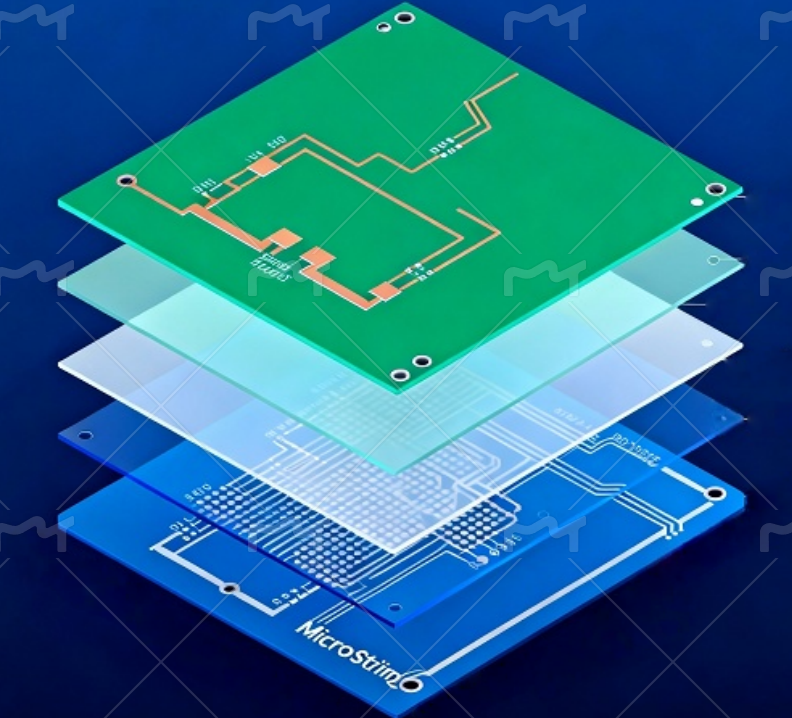
When it comes to wireless systems—WiFi, Bluetooth, cellular IoT, radar, GPS, or any RF module—the performance of the radio frequency PCB (RF PCB) directly determines signal integrity, radiation efficiency, and product stability. A radio frequency PCB operates in high-frequency environments where small layout changes may shift impedance, weaken gain, or create unwanted noise. Because of this, a radio frequency PCB requires strict engineering rules, carefully selected materials, and a routing method that protects signal quality.

This article explains what an RF PCB is, the characteristics you must consider, the right FR PCB materials, the correct RF PCB routing rules, and a complete RF PCB design guideline you can follow for your next high-frequency design. Hope this guide is helpful and give you a best solution to design your RF PCB.

What is Radio Frequency PCB? RF PCB Design Guidelines

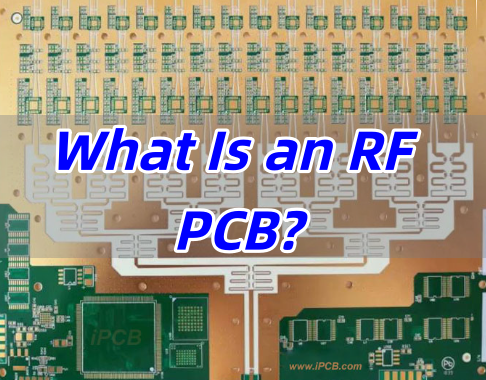
What Is a Radio Frequency PCB?

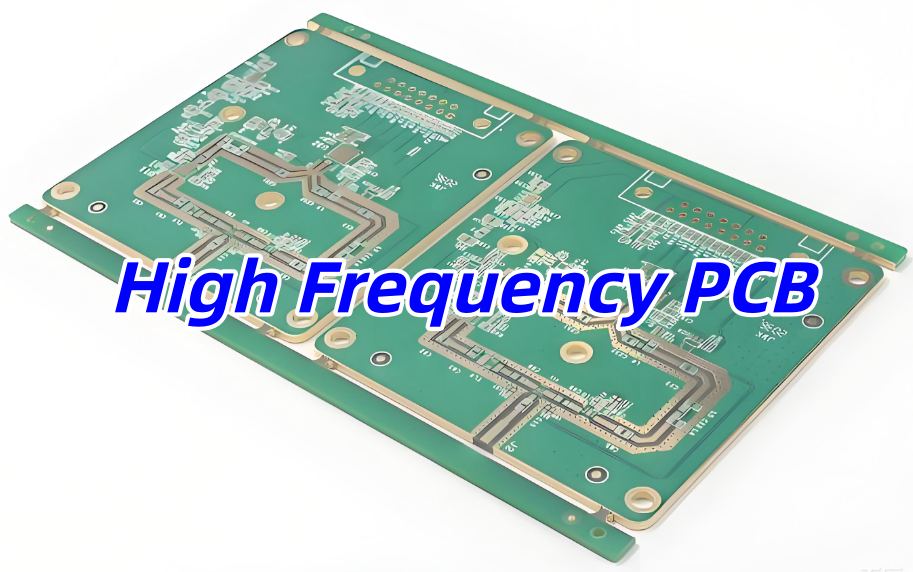
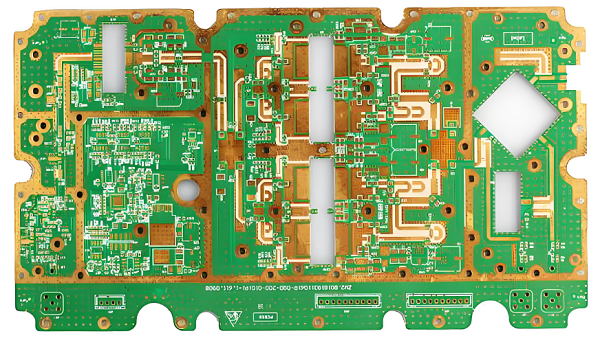
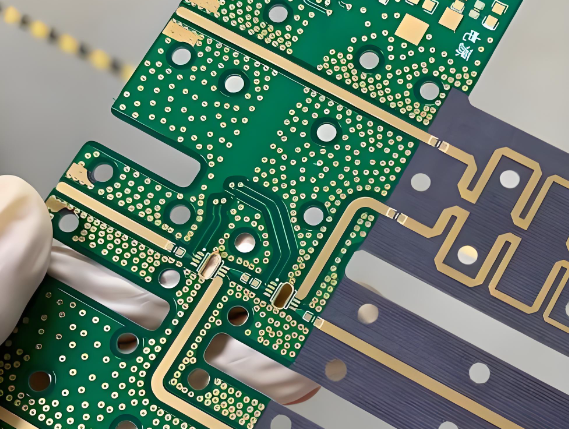
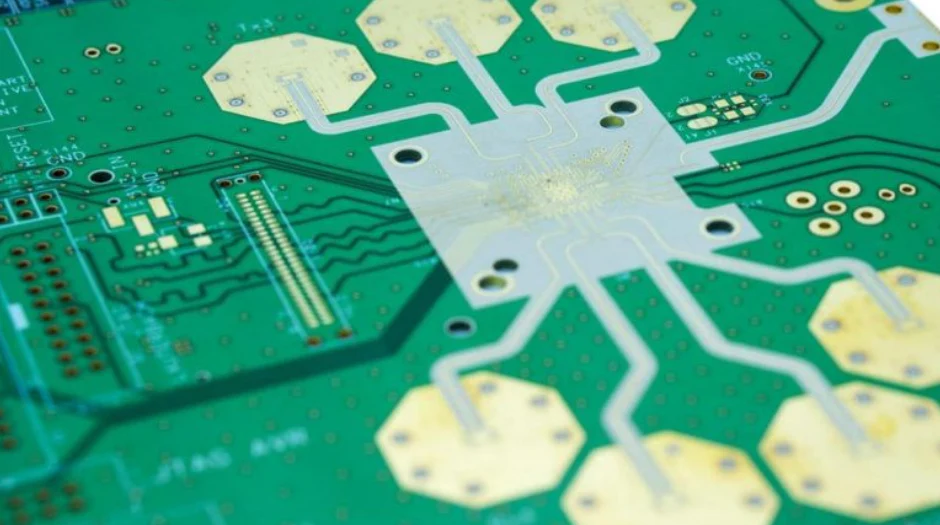
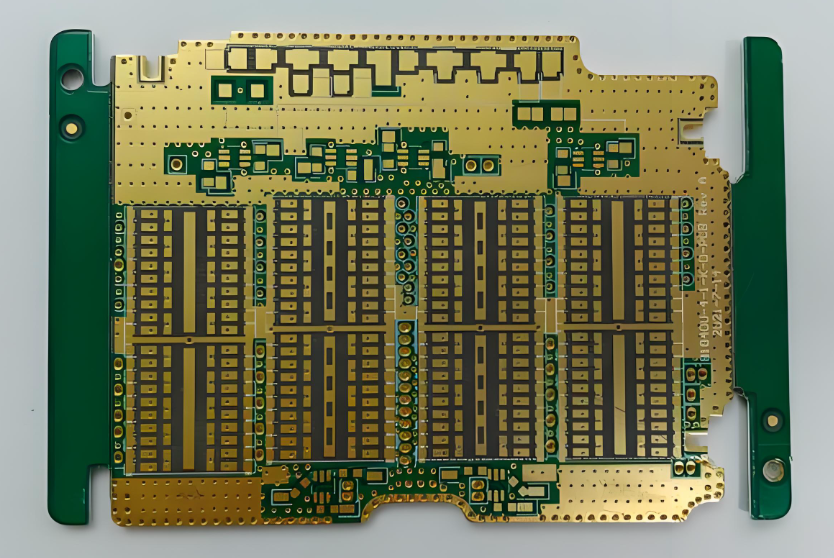
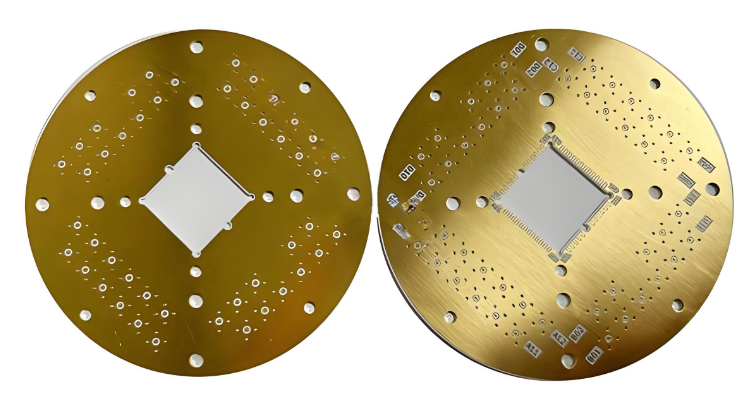
A radio frequency PCB, or RF PCB, refers to a board used to transmit and receive signals at high frequencies—from hundreds of megahertz to multiple gigahertz. These boards are widely used in wireless modules, IoT devices, GPS systems, consumer electronics, radar sensors, and communication infrastructure.

Unlike standard FR4 boards, RF PCBs involve dedicated dielectric materials, controlled impedance structures, and strict layout rules to keep signal integrity stable. The entire PCB—from stack-up to routing—must support predictable propagation velocity, stable loss characteristics, and smooth energy flow.

RF PCBs are used in:

  • Wireless modules
  • GPS receivers
  • Sub-GHz transmitters
  • 5G communication units
  • Radar sensors
  • IoT devices
  • RF amplifiers and mixers
  • Antenna feed circuits

Their performance depends on trace geometry, ground stability, and how cleanly the RF path is designed.

What Is a Radio Frequency PCB?

What Is a Radio Frequency PCB?

Characteristics of an RF PCB

RF PCBs typically have the following characteristics:

  • Controlled impedance routing for RF signal paths
  • Low-loss PCB materials to minimize attenuation
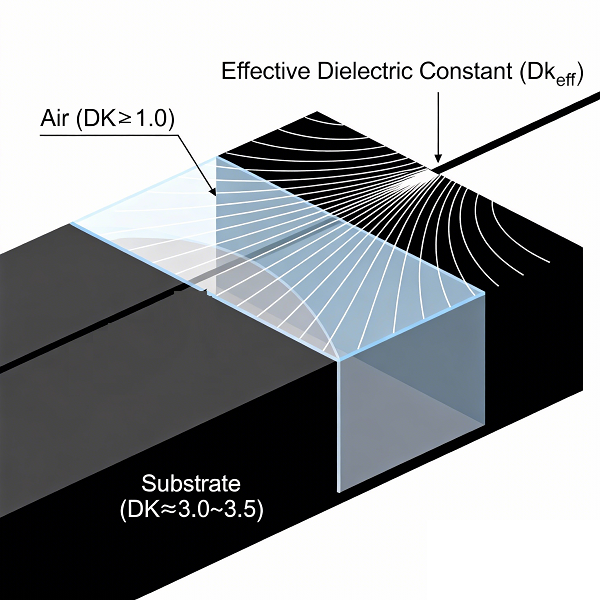
  • Stable dielectric constant (Dk) over temperature and frequency
  • Strict EMI/EMC requirements
  • Short, direct RF trace routing
  • Careful grounding strategy (dedicated ground plane, stitching vias)
  • Special treatment around matching networks and antenna feeds

Because RF energy behaves like waves rather than simple electrical current, the PCB becomes part of the RF system itself—meaning the layout, stack-up, and materials must be engineered for high-frequency behavior.

What Is the Frequency Range of RF PCB?

RF PCBs typically operate in the following ranges:

Frequency BandRangeTypical Applications
Low RF300 MHz – 1 GHzISM band, sub-GHz transmitters
Mid RF1 GHz – 6 GHzWi-Fi, Bluetooth, GPS
High RF6 GHz – 30 GHz5G, radar
Millimeter Wave30 GHz – 80 GHzAutomotive radar, high-speed links

Most IoT devices today (BLE, WiFi, Zigbee, Sub-GHz RF) fall between 433 MHz – 6 GHz.

What Is the Best PCB Material for RF?

Choosing the right laminate affects signal quality, trace accuracy, and overall loss.

  • FR4 PCB Material

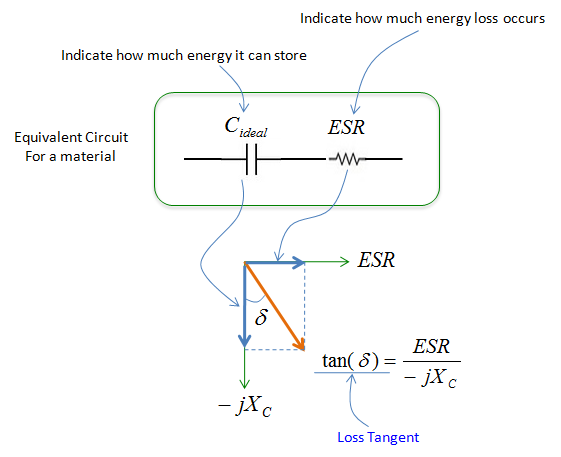
FR PCB material, typically FR4, works for low-frequency RF designs below 2.4 GHz. It offers low cost and good mechanical strength. However, its dielectric properties vary with temperature and frequency. Loss tangent is higher than PTFE, so it works best for short RF paths or low-power consumer wireless modules.

  • Rogers RF Materials

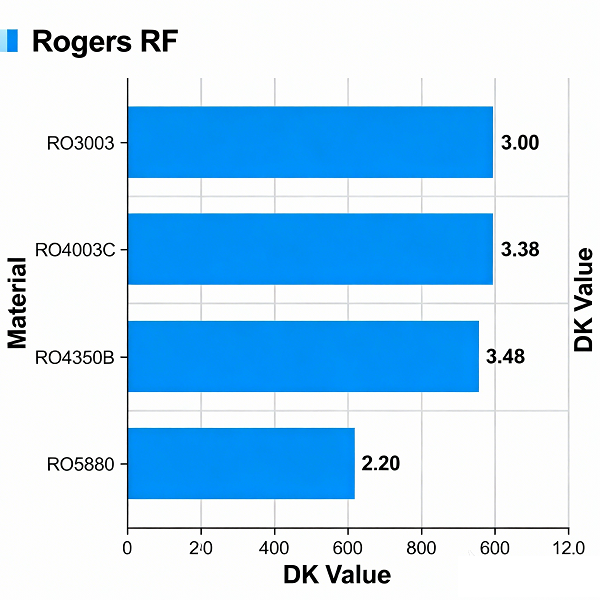
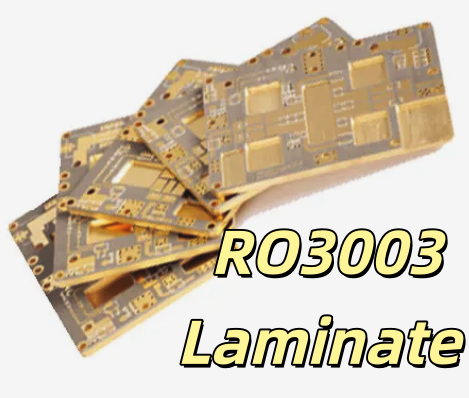
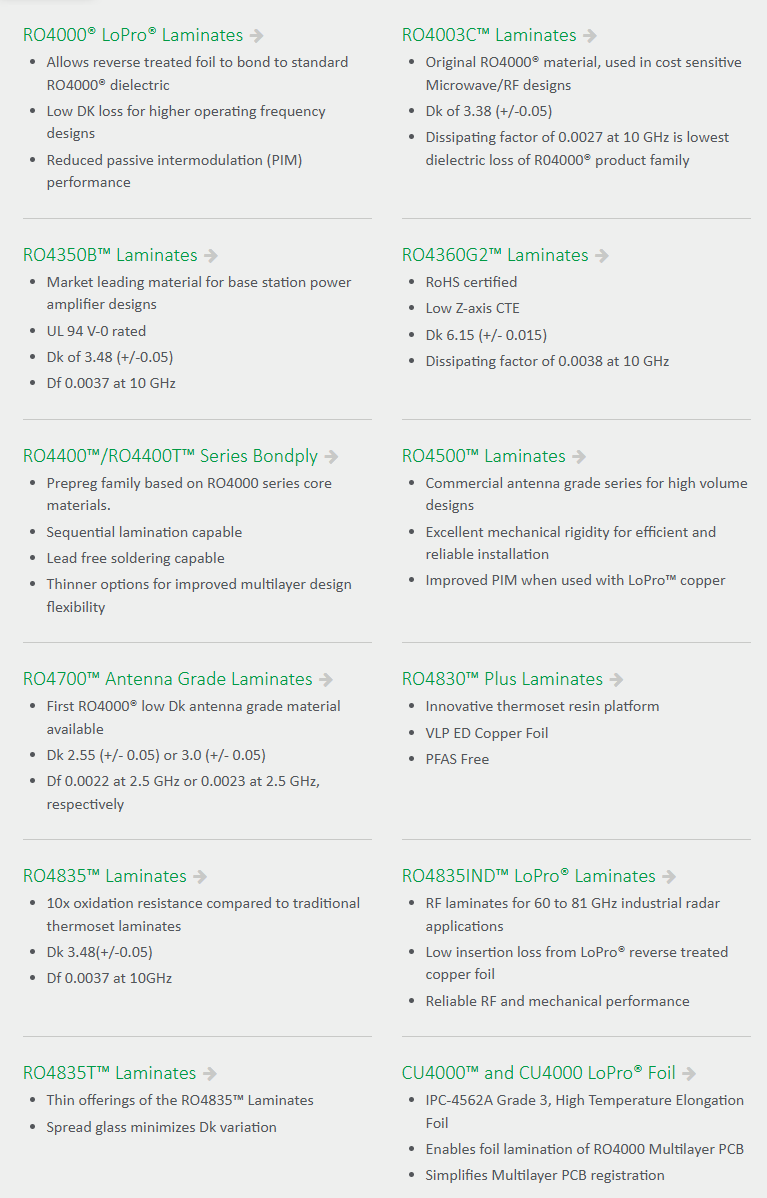
Rogers laminates such as RO4350B, RO4003C, and RO5880 are widely used for RF designs due to:

  • Low loss tangent
  • Very stable dielectric constant
  • Smooth copper surface
  • High processing consistency

These materials are ideal for GPS, radar, Wi-Fi 6, UWB, sub-6G, and millimeter-wave applications.

  • PTFE / Teflon Laminates

PTFE offers excellent RF performance, especially for microwave and radar. It has very low loss and highly stable characteristics. Fabrication needs tight process control due to soft substrate behavior.

  • Ceramic Substrates

Ceramics substrate provide strong thermal stability and high dielectric precision. They work well in high-power RF amplifiers, satellite communication modules, and advanced radar systems.

Here is a common radio frequency PCB material table:

SubstrateTg (°C)Td (°C)DkLoss TangentBand
FR4~135~295< 4.4~0.022 (parasitic ignored)X–K
Isola MT402003603.38–3.750.0028–0.0035W
IS680 AG-3482003603.480.0029W
IS680 AG2003603.00–3.480.0020–0.0029W
IS6802003602.80–3.450.0025–0.0035W
Isola MT772003603.000.0017W
Rogers 3003NR5003.000.0013W
Rogers 3006NR5006.150.0022X–Ka
Rogers 4360>2804076.150.0038X–Ka
RT Duroid 6010.2LMNR50010.700.0023X–Ka
RT Duroid 6202NR5002.900.0015X–Ka
RT Duroid 6006NR5006.450.0027X–Ka
RT Duroid 6035NRNR3.500.0013X–Ka

(Note: NR means Not Reported)

PCB Design Guide for Radio Frequency RF Boards

Designing RF PCBs involves stack-up planning, controlled impedance, grounding, spacing, matching networks, and EMI reduction. Below are the recommended RF PCB guidelines and routing rules you can apply to achieve stable wireless performance.

1. Start With Complete RF Design Information

Successful RF PCB design begins long before the first trace is drawn. Engineers must collect all essential RF parameters to avoid redesigns later. This includes:

  • Functional description and operating frequency band
  • Current and voltage requirements of each RF stage
  • RF component list and package dimensions
  • PA gain, receiver sensitivity, and system isolation targets
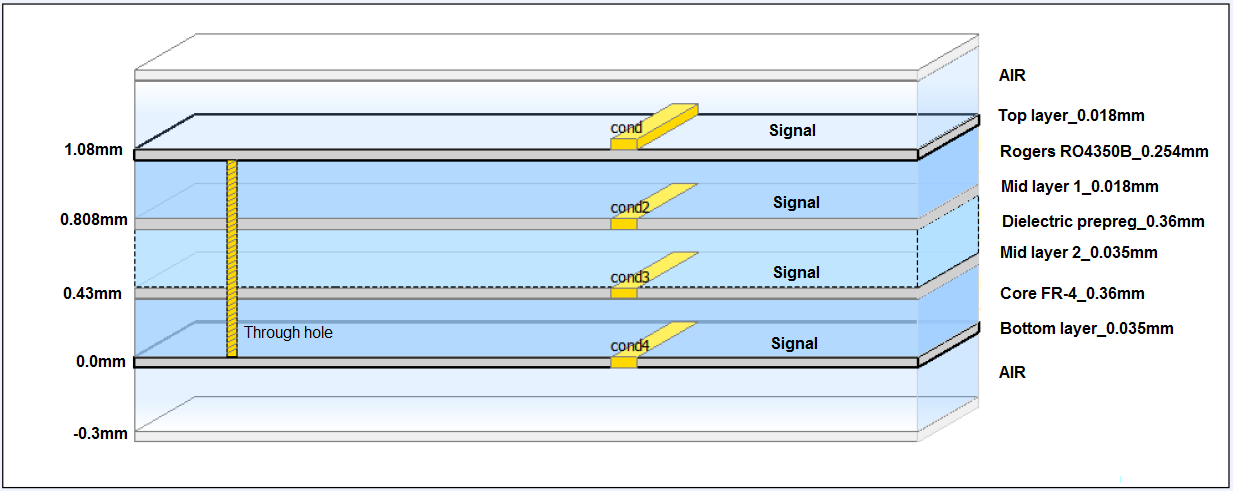
  • Planned PCB stack-up structure
  • Controlled impedance values
  • Mechanical constraints and enclosure limits
  • Shielding frame or metal-can dimensions
  • Matching network reference designs
  • Simulation results for power amplifiers and LNAs

Gathering this information early ensures that layout decisions align with system-level RF performance.

PCB Design Guide for Radio Frequency RF Boards

PCB Design Guide for Radio Frequency RF Boards

2. Physical Zoning of the RF PCB

Physical zoning organizes the board according to how RF signals flow.

  • RF Signal Flow Placement

Place RF components in the exact order of the signal chain. A short, direct, and linear path minimizes insertion loss, improves impedance stability, and preserves gain.

  • RF Component Orientation

Rotate filters, PAs, LNAs, couplers, and mixers so their input/output pins align with the straightest possible RF path. Avoid unnecessary detours or bends.

  • Isolation Through Ground Structures

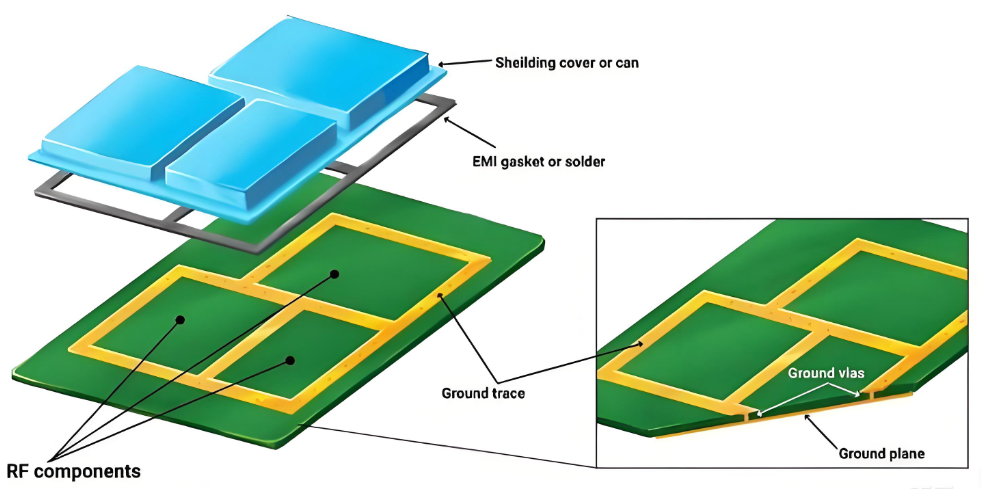
To prevent RF coupling and cross-interference, isolate RF sections using:

  • Ground shielding walls
  • Via-fence structures
  • Shield cans over sensitive circuits
  • Copper barriers or partitions

These structures keep RF and digital noise apart, improving overall stability.

PCB Design Guide for Radio Frequency RF Boards

3. Electrical Zoning

Electrical zoning separates different circuit domains so they cannot interfere with each other.

  • Power section: Power management ICs, regulators
  • Digital control section: MCUs, logic circuits, clocks
  • Analog RF section: LNAs, PAs, filters, mixers, antennas

These zones should not overlap in routing. Digital switching noise or PLL jitter can easily couple into RF paths if the layout is not properly divided.

4. RF Transmission Line Structures

RF PCBs commonly use one of three controlled-impedance transmission line types:

Microstrip Line

  • RF trace on the top layer
  • Continuous ground plane directly beneath (Layer 2)
  • Impedance determined by trace width and dielectric height
  • Ideal for simple and low-to-mid–frequency RF designs.
Microstrip Line

Stripline

  • RF trace routed on an inner layer
  • Sandwiched between two solid ground planes
  • Provides superior isolation and uniform impedance
  • Useful in compact or high-frequency designs where shielding is critical.
Stripline

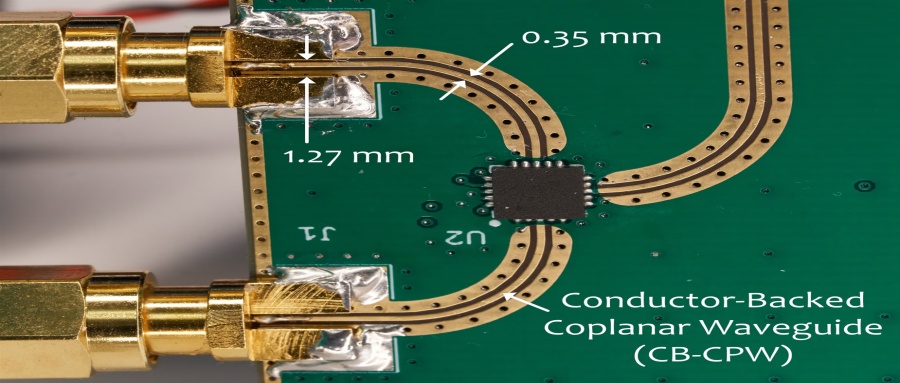
Grounded Coplanar Waveguide (GCPW)

  • Top-layer trace with ground on both sides
  • Ground plane below the trace
  • Excellent isolation and impedance control
  • Often preferred when space is tight or when multiple RF lines run in parallel.
Grounded Coplanar Waveguide (GCPW)

5. Impedance Selection and Calculation

Achieving the correct characteristic impedance (typically 50Ω) requires considering:

  • Trace width
  • Copper thickness
  • Dielectric constant (Dk)
  • Dielectric height between layers

Use tools such as Polar SI9000 or your PCB manufacturer’s impedance calculator.

Impedance Selection and Calculation

6. RF Trace Bending Rules

Straight RF traces are ideal, but bends are sometimes unavoidable.

Follow these rules:

  • Minimum bend radius ≥ 3× trace width
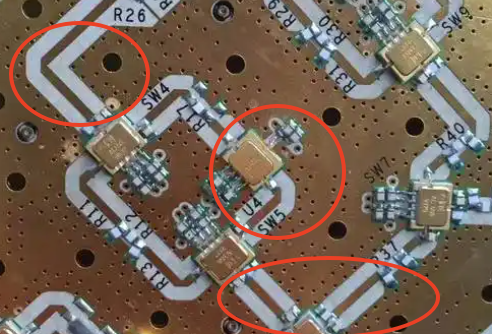
  • Avoid 90° bends (cause impedance discontinuity)
  • Use 45° bends or smooth arc/bowed shapes
  • Apply mitering to compensate for impedance changes

For critical RF links, simulate bends in an EM solver to validate performance.

7. Layer Transitions for RF Traces

RF traces should stay on one layer. If a layer change is unavoidable:

  • Use two vias at minimum
  • Via diameter should match the RF trace width
  • When space is tight, use three smaller vias in parallel

Multiple vias reduce via inductance and minimize impedance mismatch.

8. Signal Isolation Rules

Isolation is as important as impedance control in RF design.

a) RF Lines

  • Keep RF traces well separated
  • Avoid long parallel runs
  • Use GCPW for noisy or densely packed areas
  • Keep sensitive microwave lines away from high-power circuits

b) High-Speed Digital Signals

  • Route digital clocks on different layers
  • Avoid crossing beneath RF paths
  • Switching noise can modulate RF signals if not isolated

c) Power Lines

  • Use a dedicated power layer for stable distribution
  • Place bypass capacitors close to RF IC power pins
  • Keep power traces away from RF transmission lines

9. Ground Area Design

Ground integrity determines the quality of RF performance.

  • Use solid, continuous ground planes
  • Avoid slots, gaps, and return-path interruptions
  • Do not route signals across RF ground regions
  • Add abundant ground stitching vias
  • Reduce inductance in ground loops

In RF PCB design, a 4-layer RF PCB design is widely considered the most balanced structure for modern wireless modules because it provides stable impedance, strong isolation, and efficient routing without dramatically increasing manufacturing cost. While 2-layer boards are cheaper and 6-layer boards offer more routing space, the 4-layer stack-up delivers the best performance-to-cost ratio for most RF applications under 6 GHz.

Below is the recommended stack up:

  • Layer 1 (Top Layer): RF traces + components
  • Layer 2 (Ground Plane): Continuous ground reference
  • Layer 3 (Power Plane): Power routing + local shielding below RF areas
  • Layer 4 (Bottom Layer): Non-critical routing or power distribution

RF PCB Routing Rules You Must Follow

1. The length of the RF traces should be kept as short as possible, and ensure that the surrounding densely arranged holes are shielded. The intervals should be approximately 50 mils.

2. RF traces must not have vias, meaning they cannot cross layers. It is preferable to use 135° angle traces or circular traces.

3. Near the RF traces, there should be no high-frequency signal lines. Pay attention to the UART signal line being shielded by a ground layer, and add ground holes around it for protection.

4. The RF traces should be as close as possible to the size of the pads.

5. For the RF traces, matching networks and the area around the antenna socket > 0.8mm, copper cannot be laid; they need to be hollowed out.

6. The RF traces should be kept as far away from the battery holder as possible, with a distance of at least 5mm or more.

7. A π-type matching circuit needs to be reserved on the RF path, and this π-type matching circuit should be placed close to the chip end like below diagram show:

RF PCB Routing Rules You Must Follow

IPC Standards for Radio Frequency PCB

The following IPC standards are typically referenced for RF PCB and high-frequency designs:

  • IPC-6018 – Qualification and Performance Specification for High Frequency (Microwave) PCBs
  • IPC-2221/2222 – General & rigid PCB design rules
  • IPC-2141 – Controlled impedance design
  • IPC-TM-650 – Test methods for dielectric materials
  • IPC-4103 – High-frequency base materials

These standards help ensure reliability, board performance, and manufacturability for RF and microwave applications.

Your Reliable RF PCB Manufacturer – Best Technology

Best technology is an experienced RF PCB manufacturer in China, we offer stack-up consultation, material selection, transmission line simulation, and impedance guidance for complex RF modules. Our production lines use SI9000 modeling, fine etching control, and well-controlled lamination parameters. Our radio frequency PCB manufacture capability including:

  • Rogers, SY, Isola, PTFE, and hybrid RF PCB materials
  • Tight-tolerance controlled impedance
  • 4–10 layer high-frequency stack-ups
  • Laser drilling, buried/blind vias
  • Ceramic-filled dielectric PCB options
  • Full DFM & design support for RF modules and antennas

In addition to this, we offer one-stop PCB & PCBA service covers RF tuning, antenna matching, shielding assembly, coaxial connector installation and final functional RF tests.

Whether you’re building Bluetooth modules, RF front ends, radar circuitry, or custom antennas, our engineering team ensures high yield and reliable RF performance—helping you bring your wireless product to market faster.

FAQs about RF PCBs

1. What materials are recommended for radio frequency PCB?

Rogers RO4350B, RO4003C, RO5880, PTFE, and high-stability ceramics work best for RF or microwave applications.

2. Can I use FR4 for RF PCB?

Yes, if the operating frequency is low and the RF path is short. Many 433 MHz and 2.4 GHz consumer modules still use FR4.

3. Why should RF traces avoid vias?

A via adds inductance and disrupts impedance. RF energy prefers a continuous layer.

4. What routing structure is most common?

Microstrip and grounded coplanar waveguide are widely used due to predictable impedance.

5. Does Best Technology support RF PCBA assembly?

Yes, including antenna tuning, shielding, coaxial connector mounting, and final RF testing.

Reliable BNC PCB Solutions for Precision RF Connectivity

December 2nd, 2025

BNC PCB refers to the integration of BNC (Bayonet Neill–Concelman) connectors directly onto printed circuit boards, providing a robust interface for RF (radio frequency) signals in applications ranging from test equipment to communication devices. This article explores the types, selection criteria, layout practices, and performance considerations for implementing BNC connectors on PCBs, with a focus on achieving reliable high-frequency connectivity.

Are you struggling with signal loss, impedance mismatches, or mechanical instability in your RF designs? Many engineers face recurring challenges when integrating coaxial interfaces like BNC connectors onto PCBs. Common frustrations include:

  • Poor impedance continuity leading to signal reflections and degraded performance.
  • Mechanical strain causing connector loosening or PCB pad damage.
  • Inadequate grounding strategies that increase electromagnetic interference (EMI).
  • Difficulty selecting the right connector type (vertical, right-angle, or edge-mount) for spatial and electrical needs.
  • Time-consuming prototyping cycles due to footprint or layout errors.

These issues can be systematically addressed with thoughtful design and manufacturing support. Here’s how a specialized PCB provider can help:

  • Impedance-controlled routing ensures minimal signal distortion from connector to trace.
  • Robust anchoring features (like through-hole pins or metal brackets) enhance mechanical stability.
  • Optimized ground plane design and via fencing reduce EMI and crosstalk.
  • Expert guidance on connector selection based on frequency, space, and mounting orientation.
  • Rapid prototyping services with validated footprints to accelerate development.

At BEST Technology, we specialize in high-frequency PCB solutions, including precision-engineered BNC interconnects. Our team supports your design with impedance-matching expertise, durable board materials, and fast turnaround for prototypes and production. A warm welcome to contact us at sales@bestpcbs.com to discuss your project requirements.

BNC PCB

What is a BNC PCB?​

A BNC PCB incorporates a BNC connector—typically a BNC PCB connector—directly mounted to the board, serving as a coaxial interface for RF signals. These connectors use a bayonet coupling mechanism for quick, secure connections and are designed to maintain a 50-ohm or 75-ohm characteristic impedance.

  • Signal Support:
    The BNC PCB connector preserves signal integrity by providing a shielded path from the cable to the PCB traces.
    Its coaxial structure minimizes EMI, while the board layout ensures impedance continuity between the connector’s center conductor and the microstrip or stripline transmission line.
  • Applications:
    Commonly used in video equipment, RF test instruments, and data communication systems where frequent connection cycles and RF performance are critical.
    In summary, a BNC PCB enables efficient RF signal transition between external cables and internal circuitry, with careful attention to impedance matching and shielding.
BNC PCB

​What Types of BNC Connector PCB Mount Options Are Most Common in RF Boards?

Engineers can choose from several mounting styles, each suited to different mechanical and spatial constraints.

  • Vertical Mount (BNC PCB mount):
    The connector stands perpendicular to the board, ideal for applications where space is limited in the horizontal plane.
  • Right-Angle Mount (BNC connector PCB mount right angle):
    The connector body parallels the board, saving vertical height—useful for compact modules or stacked assemblies.
  • Edge Mount (BNC edge mount PCB):
    Installed on the board’s edge, often used when the connector must align with an enclosure panel.
  • Surface-Mount or Through-Hole:
    Through-hole versions offer stronger mechanical retention, while surface-mount types suit automated assembly.
    The BNC connector PCB mount style is selected based on layout density, cable orientation, and shielding requirements.

How Do You Choose the Right BNC Female PCB Mount Connector for Your Design?​

Selecting the appropriate BNC female PCB mount connector involves evaluating electrical, mechanical, and environmental factors.

  • Impedance: Ensure the connector matches the system impedance (e.g., 50 ohms for most RF applications).
  • Frequency Range: Standard BNC connectors perform up to 4 GHz; verify the model’s rated frequency.
  • Mounting Style: Choose vertical, right-angle (BNC female right angle solder PCB mount connector), or edge-mount based on space and cable routing.
  • Termination Type: Soldering (through-hole or surface-mount) vs. crimping; through-hole provides better strain relief.
  • Material and Plating: Brass with gold or nickel plating ensures corrosion resistance and stable conductivity. A well-chosen BNC female PCB connector minimizes VSWR (voltage standing wave ratio) and withstands mating cycles.

What Layout Rules Matter Most When Creating a Reliable BNC Connector PCB Footprint?​

The BNC connector PCB footprint must maintain impedance integrity and mechanical stability. Key rules include:

  • Impedance Matching: Design the pad pattern and adjacent ground structures to match the connector’s characteristic impedance (e.g., 50 ohms).
  • Grounding: Place grounding vias near the connector’s shield pins to create a low-inductance path to the ground plane.
  • Pad Size and Shape: Follow the manufacturer’s datasheet to avoid tombstoning or solder voids.
  • Keep-Out Zones: Avoid placing components or traces under the connector body to prevent short circuits.
  • Strain Relief: Include metal anchors or epoxy trenches for high-vibration environments. A precise BNC PCB footprint is critical for signal fidelity and long-term reliability.

When Should Engineers Use a BNC Right Angle PCB Mount Instead of a Vertical One?​

A BNC right angle PCB mount is preferred when:

  • Vertical Space is Limited:
    Such as in slimline instruments or stacked PCBs.
  • Cable Routing Constraints:
    The cable must exit parallel to the board to avoid sharp bends.
  • Panel-Mount Alignment:
    The connector interfaces with a side-panel port. In contrast, a vertical BNC PCB mount is better when cables connect from above, as in rack-mounted equipment.
    The right-angle version (90 degree BNC PCB mount) reduces mechanical leverage on the PCB, lowering the risk of pad lifting.

How Does an Ultra-Tiny BNC Jack PCB Help in Compact RF Modules?​

An ultra-tiny bnc jack pcb(e.g., sub-miniature versions) saves space without sacrificing performance. Benefits include:

  • High Density: Enables more connectors per board area in portable devices.
  • Lightweight Design: Critical for aerospace or handheld instruments.
  • Preserved Performance: Maintains impedance control and shielding despite smaller dimensions. These jacks are ideal for high-density RF systems like multi-channel data acquisition boards.

What Routing Practices Improve Performance When Working With a 90 Degree BNC PCB Mount?​

For a 90 degree BNC PCB mount, follow these routing guidelines:

  • Impedance Continuity: Use controlled-impedance traces from the connector pin to the IC, avoiding abrupt width changes.
  • Minimal Stub Length: Keep the transition from the connector pad to the main trace as short as possible.
  • Ground Plane Integrity: Ensure an unbroken ground plane beneath the trace; add grounding vias near the connector.
  • Avoid Sharp Bends: Use curved or 45-degree trace bends to reduce reflections. Proper routing ensures that the BNC right angle PCB maintains low VSWR and insertion loss.
BNC PCB

Why Do RF Teams Rely on Best Technology for BNC Prototype PCB Production?​

RF teams choose Best Technology for BNC prototype PCB manufacturing due to:

  • Impedance Expertise: We control dielectric thickness and trace geometry to achieve precise impedance matching.
  • High-Frequency Materials: Expertise with Rogers, Taconic, or FR-4 hybrids for optimal RF performance.
  • Rapid Prototyping: Quick-turn services with validated designs to accelerate testing.
  • Quality Assurance: Rigorous testing for VSWR, insertion loss, and mechanical stability. Our capability to produce reliable BNC prototype PCB assemblies reduces iteration cycles and ensures performance compliance.

In a nutshell, BNC PCB solutions enable precise RF connectivity by integrating robust coaxial interfaces directly onto circuit boards. This guide has detailed connector selection, layout techniques, and routing practices to ensure signal integrity in high-frequency designs. At BEST Technology, we combine engineering support with advanced manufacturing to deliver reliable BNC PCBs for prototyping and production. Pls feel free to reach out to us at sales@bestpcbs.com for your next RF PCB project.

FAQs about BNC PCB​

Is BNC better than SMA?​

  • BNC offers quick bayonet coupling for frequent connections but is typically rated to 4 GHz. SMA uses a threaded interface for higher frequencies (up to 18 GHz) and better EMI shielding. Choose BNC for ease of use in lower-frequency applications.

Is BNC better than Ethernet?​

  • BNC is designed for RF signals (e.g., video, radio), while Ethernet (RJ45) carries digital data. They serve different purposes; BNC provides superior impedance control for analog RF.

Is BNC the same as RF?​

  • BNC is a type of RF connector. “RF” is a broad term for radio frequency signals, while BNC refers to a specific connector family commonly used for RF interconnects.

How to crimp a BNC?​

  • Strip the coaxial cable to expose the center conductor and shield. Insert the center conductor into the connector pin and crimp. Slide the shield braid over the body, and crimp the outer sleeve. Use a BNC crimping tool for consistent results.

Custom MMCX PCB Design for Mini RF Modules

December 2nd, 2025

MMCX PCB is the backbone of modern miniaturized radio frequency (RF) modules, providing the critical interface for high-frequency signal transmission in extremely limited spaces. This comprehensive guide explores everything from connector selection and design best practices to manufacturing advantages, equipping you to master custom MMCX PCB design for your compact wireless devices.

Do you struggle to balance performance, size, and reliability in your mini RF modules? You’re not alone. Designing with MMCX PCB connectors presents unique challenges:

  • Signal degradation from impedance mismatches.
  • Mechanical failure due to poor connector choice or board mounting.
  • Complex layout constraints in high-density designs.
  • Difficulty sourcing reliable, high-quality MMCX PCB.
  • Managing costs while meeting stringent RF performance specs.

The good news is that these challenges have proven solutions. By focusing on a few key areas, you can achieve robust and high-performing designs.

  • Precise impedance control calculations and simulation prevent signal issues.
  • Selecting the correct MMCX PCB mount connector type ensures mechanical stability.
  • Adhering to RF-optimized layout rules overcomes space constraints.
  • Partnering with an experienced RF MMCX PCB manufacturer​ guarantees component quality.
  • Optimizing the design for manufacturability from the start controls costs.

At BEST Technology, we specialize in best possible high-frequency PCB solutions. Our great technical expertise ensures your custom MMCX PCB design​ is built with rigorous quality control, superior materials, and rapid turnaround. Pls feel free to contact us at sales@bestpcbs.com to bring your mini RF module to the real life.

MMCX PCB

What Is an MMCX PCB?

An MMCX PCB integrates Micro-Miniature Coaxial (MMCX) connectors directly onto a printed circuit board, creating essential RF interfaces for compact wireless devices. This configuration is particularly valuable for space-constrained applications where reliable high-frequency connections are critical.

Key Characteristics:

  • Miniaturization:​ MMCX connectors are significantly smaller than traditional RF connectors like SMA, making them ideal for modern compact electronics.
  • Board-Level Integration:​ These connectors are designed specifically for PCB mounting, providing a permanent and robust RF interface solution.
  • High-Frequency Capability:​ Properly designed MMCX PCBs maintain signal integrity at frequencies up to 6 GHz, suitable for most wireless applications.

The effectiveness of an MMCX PCB design hinges on maintaining precise impedance control and ensuring a seamless transition from the connector to the PCB’s transmission lines.

MMCX PCB

Types of MMCX PCB Connectors Used Today

Selecting the appropriate MMCX connector type is fundamental to achieving both optimal electrical performance and mechanical stability in your design.

Primary Connector Variants:

  1. By Orientation:
    • Vertical Mount:​ Standard orientation for straightforward vertical cable connection
    • Right-Angle Mount (MMCX R PCB):​ Ideal when cable routing parallel to the board surface is preferred
  2. By Gender Configuration:
    • Standard Gender:​ Conventional male/female pairing
    • Reverse Polarity (MMCX LR PCB):​ Gender-reversed versions used for specific compatibility requirements
  3. By Mounting Style:
    • Surface Mount (SMD):​ Preferred for automated assembly and space-constrained designs
    • Through-Hole:​ Offers enhanced mechanical strength for high-vibration environments

Understanding these options enables designers to select the most suitable MMCX PCB connector​ for their specific application requirements.

How to Choose the Right MMCX PCB Mount Connector?

Selecting the optimal connector requires careful consideration of multiple technical and practical factors.

Selection Criteria:

  1. Performance Requirements:
    • Frequency range and insertion loss specifications
    • Impedance matching (typically 50Ω) and VSWR requirements
  2. Mechanical Considerations:
    • Expected mating cycles and durability needs
    • Board space constraints and height restrictions
    • Cable exit direction and strain relief requirements
  3. Manufacturing Factors:
    • Compatibility with automated assembly processes
    • Soldering temperature tolerance and thermal mass

A systematic evaluation against these criteria ensures the selected MMCX PCB mount connector​ will meet both performance and reliability targets.

MMCX Male PCB vs MMCX Female PCB Differences

Selecting the correct connector gender for PCB mounting is critical for both mechanical integrity and electrical performance in RF designs. The primary differences lie in their physical structure, typical applications, and design implications.

1. Physical Structure and Interface

  • MMCX Female PCB Connector (Jack):​
    This component features an internal receptacle with a slotted, spring-loaded center contact.
    It is the standard interface soldered onto the board.
    The MMCX female PCB connector​ is designed to accept and grip the male pin, providing a secure and reliable connection.
  • MMCX Male PCB Connector (Plug):​
    This type has a central pin that extends from the connector body.
    The MMCX male PCB​ is inserted into the female jack, and the connection is maintained by the jack’s internal spring mechanism.
MMCX PCB

2. Typical Applications and Usage

  • Standard Board-Level Interface (Female Jack):​
    The MMCX female connector PCB mount​ is the predominant choice for the fixed connection point on a circuit board.
    It is used for connecting to antenna cables, external modules, or test equipment.
    Its design protects the central mating interface from physical damage.
  • Specialized Applications (Male Plug):​
    The MMCX male PCB​ connector is less common. Its typical uses include:
    • Board-to-Board Interconnects:​ Directly connecting two PCBs in a stacked or coplanar configuration.
    • Adapter Boards:​ Functioning as an MMCX PCB adapter​ on a small circuit board to convert interfaces.
    • Specific Cable Exit Requirements:​ Used when a particular mechanical layout demands a male connector on the board itself.

3. Design and Sourcing Considerations

  • Mechanical Reliability:​
    The female jack, once soldered to the PCB, generally offers better resistance to mechanical stress because its sensitive internal parts are housed and protected.
    The protruding pin of a male connector is more susceptible to bending or damage.
  • Polarity and System Planning:​
    Using a standard MMCX female PCB jack​ simplifies system design, as most cables are terminated with male plugs.
    Employing a male connector on the board requires careful planning to ensure cable and interoperability.
  • Supply Chain Simplification:​
    The MMCX female PCB connector​ is a standard, widely available component.
    Opting for this standard streamlines sourcing and reduces compatibility risks compared to the less common male-board-mount variant.

In summary, for most designs where the PCB serves as the fixed base for a removable cable, the MMCX female PCB connector​ is the recommended and conventional choice. The MMCX male PCB​ connector is reserved for specific, specialized interconnect scenarios.

MMCX PCB Jack Design Points for RF Stability

Achieving RF stability requires meticulous attention to both component selection and layout implementation.

Critical Design Considerations:

  1. Footprint Accuracy:
    • Strict adherence to manufacturer-recommended land patterns
    • Proper pad dimensions and spacing for reliable soldering
  2. Impedance Continuity:
    • Smooth transition from connector pin to transmission line
    • Controlled trace width matching the system impedance (50Ω)
  3. Grounding Implementation:
    • Continuous ground plane beneath the connector
    • Strategic via placement for effective RF return paths

Proper implementation of these design principles ensures the MMCX PCB jack​ maintains signal integrity across the required frequency spectrum.

How MMCX PCB Adapter and MMCX Pigtail Improve Routing?

MMCX PCB adapters and pigtails offer distinct and complementary solutions for overcoming spatial and mechanical challenges in compact RF module design. They enhance flexibility, reliability, and performance by redefining the connection point between the PCB and the external RF world.

1. MMCX PCB Adapter:

An MMCX PCB adapter is a board-mounted component that provides a permanent interface conversion.

  • Function:​ It acts as a standardized port on your PCB, typically converting the MMCX interface larger, more common type like SMA.
  • Routing & Design Improvement:
    • Saves Space:​ Allows the use of a tiny MMCX footprint on the PCB while enabling connection to standard test equipment cables without a dedicated, space-consuming SMA connector.
    • Facilitates Testing:​ Provides a robust, dedicated point for connecting test equipment (e.g., vector network analyzers) during development and debugging, preventing damage to fragile direct solder points.
    • Design Reusability:​ A single PCB design can be adapted for different external connectivity needs simply by changing the onboard adapter.

2. MMCX Pigtail:

An MMCX pigtail is a short, flexible cable with a pre-attached connector.

  • Function:​ It creates a short, shielded RF bridge between the PCB and a component like an antenna.
  • Routing & Design Improvement:
    • Decouples Component Placement:​ It physically separates the antenna or sensor from the main PCB, allowing it to be positioned optimally for performance (e.g., away from interference, near a housing window) without being constrained by the PCB’s location.
    • Absorbs Stress:​ The flexible cable absorbs strain, vibration, and torsion that would otherwise transfer directly to the solder joints of a board-mounted connector, significantly improving mechanical reliability and long-term durability.
    • Simplifies Assembly:​ Enables modular assembly, where the PCB and antenna can be installed separately and connected last, streamlining the manufacturing process.

Summary:

ComponentSolves This ProblemPrimary Benefit
MMCX PCB Adapter​Interface incompatibility and need for test pointsProtocol Conversion​ on the board itself.
MMCX Pigtail​Physical layout constraints and mechanical stressSpatial Flexibility​ and Strain Relief.

In practice, these components are often used together. For example, a PCB might feature an MMCX PCB adapter​ for external connectivity, while an internal MMCX pigtail​ connects to an antenna mounted elsewhere inside the device. This combination delivers maximum routing flexibility and reliability for custom MMCX PCB designs in mini RF modules.

China RF MMCX PCB Manufacturing Advantages

Partnering with specialized manufacturers offers distinct benefits for producing high-quality RF circuits.

Key Advantages:

  1. Technical Expertise:
    • Extensive experience with high-frequency materials (Rogers, Taconic)
    • Sophisticated impedance control capabilities (±5% or better)
  2. Economic Benefits:
    • Competitive pricing without compromising quality
    • Efficient supply chain management reducing lead times
  3. Comprehensive Support:
    • Design for manufacturability (DFM) feedback
    • Rapid prototyping and volume production flexibility

These advantages make partnering with a specialized RF MMCX PCB manufacturer​ a strategic choice for developing high-performance wireless modules.

How to Request RF MMCX PCB Quotes from a Factory?

Obtaining accurate quotations requires providing comprehensive project information.

Essential Documentation:

  1. Technical Specifications:
    • Complete Gerber files with all layer stack-up details
    • Detailed bill of materials (BOM) with component specifications
  2. Requirements Definition:
    • Quantities needed (prototype vs. production volumes)
    • Impedance control requirements and testing criteria
    • Required delivery timeline and quality expectations

Providing clear, complete information enables manufacturers to generate accurate RF MMCX PCB quotes​ and identify potential production issues early in the process.

MMCX PCB is well-suited for compact medical electronics, delivering stable RF performance in space-limited designs. They are frequently integrated into devices such as portable patient monitors and pulse oximeters due to their reliable signal transmission. With ISO 13485 certification, Best Technology supports full-process MMCX PCB manufacturing and SMT MMCX PCB assembly services. If you have a project to discuss, feel free to submit your requirements through the contact form on our Contact Us page.

MMCX PCB

Ultimately, an MMCX PCB is a precision component that forms the reliable RF link in today’s miniaturized wireless electronics. Mastering its design, from connector selection to layout and manufacturing partnership, is key to module success. BEST Technology combines engineering expertise with stringent quality control to deliver high-performance custom MMCX PCB solutions​ that meet your specifications and timeline. For your next mini RF module project, pls feel free to contact our team at sales@bestpcbs.com for a consultation and quote.

Stable Quality RF Connector PCB with Fast Delivery

December 2nd, 2025

An RF connector PCB is a specialized printed circuit board designed to interface with radio frequency connectors, ensuring stable signal transmission in high-frequency applications. This article provides a comprehensive guide to RF connector PCBs, covering types, materials, layout considerations, and how to select the right components for your needs.

Are you struggling with signal loss, unreliable connections, or delays in sourcing radio frequency boards? Many engineers encounter challenges when integrating RF components into their designs. Common pain points include:

  • Impedance mismatch leading to poor signal integrity.
  • Difficulty selecting the right PCB material for specific frequency ranges.
  • Complexities in RF connector PCB layout causing performance issues.
  • Challenges in sourcing mini RF PCB connectors for compact designs.
  • Long lead times and unstable quality from suppliers.

Fortunately, these challenges can be overcome with expert manufacturing support. As a specialized RF PCB producer, we address these issues by:

  • Implementing precise impedance control techniques.
  • Offering a range of high-frequency materials like Rogers and Taconic.
  • Providing DFM support for optimal RF connector PCB layout.
  • Supplying various mini RF PCB connectors for space-constrained applications.
  • Ensuring stable quality and fast delivery through advanced manufacturing processes.

As a reliable RF PCB manufacturer in China, BEST Technology specializes in high-frequency PCB solutions, combining rigorous quality control with rapid turnaround times to meet your project requirements. Whether you require a simple SMA connector PCB prototype or a complex multilayer RF PCB design with stringent impedance control, BEST Technology has the specialized engineering expertise to deliver reliable solutions. Pls feel free to contact us at sales@bestpcbs.com for reliable RF connector PCB solutions.

RF Connector PCB

What is RF Connector PCB?

An RF connector PCB is a PCB engineered to host RF coaxial connectors and provide a controlled-impedance signal transition from the connector to the PCB’s RF traces, ensuring stable high-frequency performance. These boards are engineered to maintain characteristic impedance (typically 50Ω or 75Ω) and minimize signal loss across high-frequency ranges.

  1. Core Function: The primary role is to provide a stable transition from the PCB’s transmission lines to various PCB mount RF connectors, such as SMA female angle PCB mount RF connector​ or vertical mount PCB RF connector​ types.
  2. Key Characteristics: They feature precise dielectric materials and controlled geometries to preserve signal integrity up to GHz ranges.
  3. Applications: Commonly used in telecommunications, radar systems, and high-speed data applications.

In summary, the RF connector PCB is a fundamental component in any high-frequency electronic system, ensuring reliable signal transmission between the board and external RF components.

What is the Best PCB Material for RF?

In practical RF PCB applications, designers commonly work within the 500 MHz to 3 GHz range, which covers most wireless communication and IoT systems. Frequencies above 3 GHz generally fall into the microwave domain. Selecting the proper PCB material is crucial for optimal RF performance. The “best” material depends on your specific frequency, loss, and cost requirements.

1. FR-4 for Entry-Level RF Designs (Below ~2.5–3 GHz)

FR-4 can still be used in many low-to-mid RF applications when cost is the priority.

When FR-4 Works Well

• Operating frequency below 2.5–3 GHz
• Short RF trace lengths
• Moderate insertion-loss tolerance
• Consumer-grade wireless products (BLE, WiFi 2.4 GHz, NB-IoT, RFID)

Limitations

• Dielectric constant varies with frequency and temperature
• Higher loss tangent causes signal attenuation in long RF traces
• Not suited for multi-GHz precision RF connectors (e.g., 2.92 mm)

Usage Strategy

Many engineers use hybrid stackups:
FR-4 for non-RF layers + a high-frequency laminate for the RF layer.

2. Rogers Laminates for Stable, Low-Loss RF Structures

Rogers materials are widely considered the industry standard for RF PCBs.

Advantages

  • Very stable dielectric constant (Dk):≈ 2.9–3.7
  • Very low loss tangent (Df):≈ 0.001–0.003
  • Excellent impedance consistency
  • Ideal for SMA connectors, IPEX interfaces, micro RF connectors, and other high-frequency transitions.
  • Strong performance up to 10–15 GHz, providing significantly more bandwidth capability than typical RF PCB applications require.

Common Grades for RF Connector PCBs

• RO4003C → best cost/performance balance
• RO4350B → higher thermal stability
• RO4835 → oxidation-resistant for higher reliability

Application Scenarios

• LTE, WiFi, GNSS front-ends
• RF connector transition zones(SMA, SMB, 2.92 mm edge-mount)

Rogers is often the first choice for stable-quality RF connector PCBs.

3. Taconic Laminates for Higher-Frequency or Stricter Loss Requirements

Taconic materials perform exceptionally well in microwave and low-mmWave ranges but are also suitable for high-end RF PCBs.

Advantages

• Ultra-low loss tangent
• Strong dimensional stability
• PTFE-based options suitable for precision launch structures

Best Use Cases

• Suitable for microwave applications in the 3 GHz to 10 GHz range.
• Radar, satellite, phased-array antennas
• RF connector regions requiring extremely low VSWR

For regular RF PCB (500 MHz–3 GHz), Taconic is a premium option when you want lower loss than Rogers but can accept higher cost.

4. Isola High-Speed Materials for Mixed RF + Digital PCB Designs

Isola laminated materials are ideal for boards combining RF and high-speed digital.

Advantages

• Good electrical stability up to 6–20 GHz
• Lower cost compared with top-end RF laminates
• More compatible with multi-layer constructions and HDI

Usage Scenarios

• Multi-layer RF/digital mixed systems
• WiFi routers, gateways, small base stations
• Designs requiring balanced performance/cost

5. How to Choose the Best Material for Your RF Connector PCB

The choice depends on your engineering priorities:

Performance Priority

→ Rogers RO4003C / RO4350B

Ultra-Low Loss or Microwave Range

→ Taconic TLX / RF Series

Cost-Sensitive RF Products

→ FR-4 or Hybrid Stackup

Mixed RF + Digital

→ Isola High-Speed Laminates

To sum up, for most RF connector PCB applications within the 500 MHz–3 GHz range, Rogers RO4003C provides the most consistent balance of low loss, stable dielectric behavior, manufacturability, and cost. FR-4 hybrid structures also work well for budget-sensitive designs. Taconic and Isola materials offer elevated performance for more demanding or mixed-signal applications.

What are the Common RF Connector PCB Types?

Various PCB RF connector types​ are available to meet different mechanical and electrical requirements. Understanding these options helps in selecting the right component for your design.

  • SMA Connectors PCB: The most common type, including SMA female angle PCB mount RF connector​ and RP-SMA female adapter PCB edge-mount solder RF connector. Excellent for frequencies up to 18 GHz.
RF Connector PCB
  • SMB Connectors PCB: Smaller snap-on alternatives, like the PCB type SMB RF connector, suitable for applications up to 4 GHz where space is limited.
RF Connector PCB
  • Miniature Connectors PCB: This category includes mini RF PCB connector​ and micro RF PCB connectors​ such as IPEX PCB RF connector, designed for compact devices like smartphones and IoT modules.
RF Connector PCB
  • Edge-Mount Connectors PCB: Such as 2.92 mm edge-mount RF connectors, which require careful attention to PCB thickness​ for proper mounting and performance.
RF Connector PCB
  • Stacked and Vertical Options: PCB mount stacked RF connector​ and vertical mount PCB RF connector​ save horizontal space on the board.
RF Connector PCB

Selecting the correct RF connector PCB type ensures reliable performance and simplifies assembly, contributing to a stable quality RF circuit board. For more information or if you would like to send us any inquiry, please send us an email through the contact form at the bottom of our Contact US Page.

How is the RF Connector PCB Size?

The size of an RF connector PCB is determined by the connector’s footprint, the controlled-impedance transmission line requirements, and the mechanical space needed for reliable assembly. Even a small connector can require a broader PCB area once RF constraints are considered.

1. Connector Footprint and Keep-Out Requirements

Every RF connector—whether a mini RF PCB connector, IPEX, MMCX/MCX, or SMA female angle PCB mount RF connector—comes with a manufacturer-specified footprint.
This footprint defines:

• pad dimensions for the signal and ground pins
• mounting holes (for flange-type connectors)
• mechanical keep-out zones under the connector
• required distance to the PCB edge for edge-mount types

These constraints establish the minimum PCB area around the connector.

2. RF Transmission Line Geometry

The center pin of the connector must transition into a 50-ohm microstrip or stripline.
The trace width depends on:

• PCB material (FR-4, Rogers, Taconic)
• dielectric constant (Dk)
• core thickness above the ground plane

For example, a 1.6 mm FR-4 board may require a 2.5–3.0 mm microstrip width.
This transition also needs space for:

• a tapered pad-to-trace region
• anti-pad clearance
• ground-via fencing along both sides

These RF structures often increase the required PCB width.

3. Mechanical Clearance and Grounding Needs

Additional area is required for:
• connector installation and solder access
• avoiding tall components near the mating area
• dense ground-via rows that provide a low-inductance return path
• optional reinforcement for high-torque connectors like SMA

These mechanical factors further influence the PCB outline.

4. Example: Edge-Mount SMA Connector

Edge-mount SMA connectors illustrate how size is defined by multiple constraints:

• PCB thickness must match the connector specification
• board-edge notches may be required
• wide RF trace transitions need space
• ground-via fences must be placed around the landing area

Thus, even a compact SMA connector results in a relatively wide layout region.

In summary, RF connector PCB size is not fixed—it emerges from a combination of:
• connector footprint
• impedance-controlled RF trace geometry
• mechanical clearance
• grounding and via-fence patterns

The correct approach is always:
Choose the connector → follow its datasheet → calculate RF geometry → build the PCB layout around these constraints.

How to Do RF Connector PCB Layout?

A proper RF connector PCB layout​ is paramount for minimizing losses and reflections. Here are the key considerations.

  • Impedance Matching:
    Use controlled impedance routing (typically 50Ω) from the connector pad to the IC.
    This requires precise calculation of trace width based on the dielectric constant and thickness of the PCB material.
  • Grounding:
    Provide an uninterrupted ground plane adjacent to the RF trace.
    Use numerous grounding vias around the RF coaxial connector PCB​ pad to create a low-inductance return path.
  • Via Placement:
    Minimize the use of vias in the RF path.
    When necessary, use via fencing to suppress unwanted mode propagation.
  • Component Placement:
    Place matching components (like capacitors and inductors) as close as possible to the connector to reduce stray inductance and capacitance.

A disciplined layout approach, often supported by EM simulation tools, is essential for a successful stable quality RF connector PCB.

How to Select Mini RF PCB Connector for Compact RF Modules?

Choosing a mini RF PCB connector​ for compact modules involves balancing size, frequency, and reliability.

  • Frequency Range: Ensure the connector (e.g., IPEX PCB RF connector​ or micro RF PCB connectors) supports your operating frequency without excessive insertion loss.
  • Mating Cycles: Consider the durability required; some miniature connectors have lower mating cycle ratings than full-sized ones.
  • Board Real Estate: Evaluate the footprint and height to ensure it fits within the mechanical constraints of your module.
  • Assembly Process: Check if the connector is suitable for reflow soldering and compatible with your assembly capabilities.

Selecting the right miniature connector is key to achieving both miniaturization and reliable performance in compact RF designs.

Design Considerations for SMA Female Angle PCB Mount RF Connector in High-Frequency Boards

Integrating an SMA female angle PCB mount RF connector​ into a high-frequency board requires specific attention to mechanical and electrical details.

  • Grounding Connection: Ensure the connector’s outer shell has a robust, low-impedance connection to the board ground plane using multiple vias.
  • Board Edge Clearance: For edge-mounted types, maintain the recommended clearance from the board edge to ensure mechanical stability.
  • Impedance Continuity: The transition from the connector’s center pin to the PCB microstrip line must be smooth to avoid impedance discontinuities.
  • Polarization: Utilize the connector’s polarization key (if available) to prevent incorrect mating during field installation.

Proper design ensures that the SMA female angle PCB mount RF connector​ performs reliably over its intended lifespan.

Why Choose Best Technology as Your RF Coaxial Connector PCB Supplier?

BEST Technology​ stands out as your ideal partner for RF coaxial connector PCB​ manufacturing. Selecting the right partner for RF connector PCB manufacturing is critical for achieving stable high-frequency performance. We deliver a combination of engineering depth, manufacturing capability, and quality assurance that RF projects depend on.

• One-Stop PCB & PCBA Capability:
We provide complete manufacturing services from RF substrate PCB prototyping, fabrication to full PCBA assembly. So your RF connector PCB, matching networks, shielding blocks, and coaxial interfaces are built under one unified process with consistent quality control.

• Specialization in High-Frequency PCB Fabrication:
Our production lines are optimized for RF materials such as Rogers, Taconic, and high-speed Isola, allowing us to meet demanding requirements for dielectric stability, low loss, and controlled impedance across 500 MHz to 3 GHz RF systems.

• Proven Expertise with Multiple RF Connector Types:
We support SMA, SMB, MCX, MMCX, IPEX, mini RF PCB connectors, and precision 2.92 mm edge-mount connectors, ensuring that your design receives the correct footprint, mechanical alignment, and RF launch transition.

• Engineering-Driven RF Layout Support:
Our technical team understands RF connector PCB layout principles—proper pad geometry, via fencing, return-path control, microstrip/stripline transitions—and provides DFM guidance to help customers avoid common RF pitfalls.

• Strict Impedance & Signal Integrity Control:
By using calibrated stackups, impedance modeling, and controlled-etch processes, we maintain consistent 50-ohm transitions from connector pad to RF trace, reducing reflection, insertion loss, and EMI issues.

• Advanced Quality Assurance Built for RF Boards:
AOI, impedance testing, X-ray inspection, and microsection analysis are integrated into our process, ensuring that every RF coaxial connector PCB meets its electrical and mechanical specifications before shipment.

• Fast Turnaround with Stable, Repeatable Quality:
With streamlined RF manufacturing workflows and in-house process monitoring, we deliver stable quality and reliable lead times, enabling customers to accelerate prototype validation and shorten product launch cycles.

• Global Customers Trust Our RF Work:
From wireless communication modules to GNSS front-end boards, radar subsystems, and IoT RF platforms, our RF connector PCBs are used in real-world applications where performance and reliability cannot be compromised.

In a nutshell, an RF connector PCB is the foundation for reliable high-frequency signal interconnection. This guide has explored the key aspects of designing and sourcing these critical components. For your next RF coaxial connector PCB project, partner with BEST Technology for Stable Quality RF Connector PCBs with Fast Delivery. Our expertise ensures your designs perform as intended. A warm welcome to contact us at sales@bestpcbs.com to discuss your requirements.

How to Choose the Right RF Circuit Board?

November 27th, 2025

An RF circuit board is a specialized printed circuit board designed to operate at radio frequencies, typically from around 100 MHz up to about 2 GHz, where signal integrity and controlled impedance are paramount. Above this range, designs are usually classified as microwave PCBs, which follow similar principles but face even tighter constraints on materials, layout, and loss control. This guide will walk you through the critical considerations—from materials and design to supplier selection—for choosing the right RF PCB for your application.

Selecting the right RF circuit board is a complex challenge that can make or break the performance of wireless modules, communication systems, and radar equipment. Common frustrations include:

  • Unexpected Signal Degradation:​ High-frequency signals are susceptible to loss and interference, leading to poor performance.
  • Impedance Control Challenges:​ Achieving and maintaining a consistent characteristic impedance (e.g., 50Ω) is difficult but critical for signal integrity.
  • Material Selection Confusion:​ Choosing the wrong RF PCB material can result in inefficient thermal management and unacceptable dielectric losses.
  • Complex Design and Layout:​ RF PCB design requires specialized knowledge; a small routing error can severely impact functionality.
  • Finding a Reliable Manufacturing Partner:​ Many standard PCB manufacturers lack the expertise and equipment to reliably produce high-quality microwave PCBs.

Overcoming these challenges is possible with a clear understanding of RF fundamentals and a partnership with an experienced RF printed circuit boards supplier. The solutions directly address these pain points:

  • Superior Materials:​ Utilizing low-loss laminate materials with stable dielectric constants to minimize signal degradation.
  • Precision Engineering:​ Employing advanced design and fabrication techniques to ensure tight impedance control and consistent performance.
  • Expert Material Guidance:​ Providing recommendations on specialized materials like PTFE or ceramic-filled laminates for optimal thermal and electrical properties.
  • Adherence to Strict Design Rules:​ Following established RF PCB design guidelines to avoid common layout pitfalls.
  • Partnering with a Specialized Supplier:​ Choosing a manufacturer like Best Technology, which specializes in RF and microwave printed circuit boards, ensures access to the necessary expertise and quality controls.

At Best Technology, we are a specialized manufacturer of high-frequency circuit boards. With 19 years of extensive experience in advanced materials and precise fabrication processes, we are committed to delivering RF circuit boards that meet the most demanding electrical specifications. Pls feel free to contact us at sales@bestpcbs.com to discuss your RF circuit boards project requirements.

RF Circuit Board

What Is an RF Circuit Board?

An RF (Radio Frequency) circuit board is engineered to transmit, receive, and process high-frequency signals typically ranging from hundreds of megahertz (around 100 MHz) up to approximately 2 GHz. Unlike standard PCBs used for low-frequency electronics, the performance of an RF circuit board is highly sensitive to its physical properties—including dielectric constant, layer stack-up, trace geometry, and impedance control—which must be precisely managed to ensure stable, low-loss signal propagation.

  • Core Function:​
    The primary role of an RF PCB is to guide RF signals with minimal loss, distortion, or radiation.
    This is crucial in applications like smartphones, GPS units, and wireless networking equipment.
  • Key Characteristics:​
    These boards are defined by controlled impedance traces, specific material selection, and specialized structures like ground planes and shielding to contain electromagnetic fields.
    Proper RF circuit board design​ is fundamental to their operation.

In summary, an RF circuit board is a high-performance platform where the board itself is an integral component of the circuit’s functionality.

RF Circuit Board

What Is the RF Circuit Board Material?

The choice of material is arguably the most critical decision in RF PCB design. Standard FR-4 is often insufficient for high frequencies due to its high loss tangent and unstable dielectric constant.

  • Low Loss Tangent (Df):​ Materials with a low dissipation factor (Df) are essential to minimize energy loss converted into heat. Common options include PTFE (Teflon), ceramic-filled PTFE composites (e.g., Rogers RO4000® series), and hydrocarbon ceramics.
  • Stable Dielectric Constant (Dk):​ A stable dielectric constant (Dk) across frequency and temperature is vital for predictable impedance and phase response.
  • Thermal Management:​ High-frequency circuits can generate heat, so materials with good thermal conductivity (e.g., ceramic-filled laminates) are often preferred.
  • Common Materials:​ Popular RF PCB material​ choices are Rogers RO4350B (a balance of performance and cost), PTFE-based materials for extreme high-frequency applications, and specialized China PTFE laminate circuit boards for RF and microwave industries.

Selecting the right RF circuit board material​ ensures signal integrity, thermal stability, and overall reliability, forming the foundation of a successful RF PCB project.

What Are the Differences Between RF and Microwave Printed Circuit Board?

The terms “RF” and “microwave” are often used interchangeably, but there is a technical distinction that influences design and material choices.

  • Frequency Range:​
    While the broader radio frequency spectrum spans from kilohertz up to hundreds of gigahertz, in PCB engineering practice RF PCBs usually refer to boards operating in the ~100 MHz to 2 GHz range, and microwave PCBs to those above 2 GHz.
    As frequency increases, wavelengths shorten, and the circuit board’s physical dimensions become a more critical part of the circuit.
  • Design Complexity:​
    Microwave PCB​ design often deals with transmission line effects, wave propagation, and parasitic effects that are less pronounced at lower RF frequencies.
    This requires more sophisticated modeling and simulation.
  • Material Requirements:​
    While both require low-loss materials, microwave PCBs​ demand materials with exceptionally stable Dk and ultra-low loss tangents, such as pure PTFE, to function effectively at these higher frequencies.

In practice, the design principles for RF and microwave printed circuit board​ are similar, but microwave applications push the requirements for precision and material performance to a greater extreme.

What Parts of a Circuit Board Confine RF Transmission Signals?

Containing RF energy within designated pathways is essential to prevent interference and signal loss. Key structures achieve this confinement.

  • Controlled Impedance Transmission Lines:​ Microstrips and striplines are the primary conduits. A consistent cross-section and proximity to a ground plane create a controlled electromagnetic field around the trace.
  • Ground Planes:​ A solid, unbroken ground plane beneath signal layers is critical. It provides a return path for the signal and helps contain the electromagnetic field.
  • Shielding:​ Circuit board RF shielding, often in the form of metal cans or fences soldered to the board, physically isolates sensitive RF sections like amplifiers or oscillators from radiating or receiving interference.
  • Vias:​ A “via fence” or a row of grounding vias around a microstrip line can act as a barrier, further confining the signal and reducing coupling to adjacent circuits.

Proper RF PCB routing​ and the use of these structures are fundamental to ensuring signals travel only where intended.

What Is a Radio RF Pass-Through Circuit Board?

An RF pass-through, or feedthrough, is a specialized circuit board feature designed to allow an RF signal to pass from one environment to another—for example, from the interior of a shielded enclosure to an external antenna—with minimal signal degradation.

  • Function:​ It replaces a coaxial cable connector in space-constrained applications, providing a more integrated and reliable connection. It typically uses a controlled impedance transmission line that passes through the board edge or a cutout.
  • Construction:​ It often involves a circuit board mount antenna connector RF coax​ header or a carefully designed trace that transitions the signal. The key is maintaining impedance continuity at the transition point to prevent reflections.

This component is vital for compact wireless devices where a standard connector is not feasible.

How to Identify an RF Antenna on a Circuit Board?

Identifying an RF antenna is a key skill for debugging or reverse-engineering. Here’s how to identify an RF antenna on a circuit board:

  • Physical Shape:​ Antennas are often distinct geometric shapes—a meandered trace, a zig-zag pattern, a circular loop, or a simple straight trace—typically located on the board’s periphery.
  • Connection Point:​ The antenna trace will usually connect to a single component, such as an RF transceiver chip or a RF module, via a matching network (small capacitors and inductors).
  • Lack of Connections:​ Unlike other traces, the antenna trace will be isolated and not connected to a dense network of other components.
  • Associated Components:​ Look for a circuit board mount antenna connector RF​ or a dedicated IC near the antenna for signal processing.

In an x10 motion detector circuit board RF antenna, for instance, you would typically find a simple, quarter-wave trace along the edge of the board.

What Is a Coupon in an RF Circuit Board?

A coupon, or test coupon, is a dedicated section included in the panel of an RF circuit board that is fabricated simultaneously with the main board but is intended for testing, not for functional use.

  • Purpose:​ It allows the manufacturer and the designer to verify that the fabrication process meets specifications without damaging the actual product board. Tests performed on coupons include:
    • Impedance Verification:​ Measuring the actual characteristic impedance of a trace.
    • Plating Quality:​ Checking the thickness and uniformity of copper plating.
    • Layer-to-Layer Registration:​ Ensuring all layers are aligned correctly.

Using a coupon is a best practice in practical RF printed circuit board design​ as it provides objective data on the board’s quality.

How to Do RF Circuit Board Design?

Successful RF circuit board design​ requires meticulous planning and adherence to specific guidelines, often detailed in an RF PCB design guidelines pdf.

  1. Plan the Stack-up:​ Define the layer stack-up early, ensuring symmetrical construction and dedicated ground planes to control impedance and provide shielding.
  2. Control Impedance from the Start:​ Use a PCB field solver tool to calculate the correct trace width for your target impedance (e.g., 50Ω) based on your chosen material’s dielectric thickness and constant.
  3. Mindful Component Placement:​ Group RF components closely to minimize trace lengths. Isolate noisy digital sections from sensitive analog/RF sections.
  4. Implement Careful RF PCB Routing:
    • Keep RF traces short, straight, and wide enough for the target impedance.
    • Avoid 90-degree bends; use 45-degree angles or curved bends.
    • Provide generous spacing between RF traces and other signals.
  5. Use a Continuous Ground Plane:​ Do not route other signals on the ground plane layer; splits or cutouts can ruin performance.
  6. Incorporate Proper Shielding and Vias:​ Use ground vias generously, especially around RF traces, to suppress unwanted modes and provide shielding.

Following these steps is essential for creating a functional RF amplifier circuit board​ or any other high-frequency circuit.

How to Evaluate RF Printed Circuit Boards Supplier?

Choosing the right RF printed circuit boards supplier​ is as critical as the design itself. Key evaluation criteria include:

  • Technical Expertise:​ Do they understand RF microwave circuit board design​ principles? Can they provide feedback on your stack-up and material choices?
  • Manufacturing Capability:​ Do they have the equipment for controlled impedance testing, laser drilling of small vias, and tight tolerance etching?
  • Material Experience:​ Do they stock or have easy access to a wide range of specialized RF circuit board materials?
  • Quality Control:​ What is their process for testing impedance, electrical continuity, and quality? Do they provide test coupons and data?
  • Proven Track Record:​ Ask for examples of past RF PCB projects​ or client testimonials in your frequency range.

A reliable supplier acts as a partner in ensuring your design is successfully realized.

Why Choose Best Technology for RF Printed Circuit Board Fabrication?

When your project’s success depends on high-frequency performance, partnering with a specialist is non-negotiable. Best Technology stands out as a premier RF printed circuit boards supplier​ for several reasons:

  • Deep Material Knowledge:​ We provide expert guidance on selecting the optimal material, from standard FR-4 to advanced Rogers or Taconic laminates, ensuring your board meets electrical and thermal requirements.
  • Precision Manufacturing:​ Our advanced fabrication processes are tailored for RF and microwave printed circuit board​ production, guaranteeing tight impedance control and minimal signal loss.
  • Rigorous Quality Assurance:​ We implement comprehensive testing, including impedance verification on coupons, to ensure every board shipped meets your exact specifications.
  • Engineering Support:​ We offer more than just manufacturing; we provide valuable RF PCB design​ support to help optimize your layout for manufacturability and performance.
  • Proven Expertise:​ Our portfolio includes successful RF PCB projects​ for demanding applications in telecommunications, aerospace, and medical devices.
RF Circuit Board

All in all, an RF circuit board is the backbone of any high-frequency electronic system, where material properties and physical layout directly dictate performance. Choosing the right RF receiver circuit board involves a deep understanding of RF circuit board materials, practical RF printed circuit board design principles, and manufacturing capabilities. By addressing common design challenges and partnering with an experienced RF printed circuit boards​ manufacturer like Best Technology, you can ensure your RF circuit board design​ product meets its performance goals. A warm welcome to contact our team at sales@bestpcbs.com to discuss your specific RF printed circuit board​ needs.

What is High frequency circuit board? High frequency PCB Design

November 25th, 2025

High frequency circuit board is a PCB built to handle signals that move at very high speeds with minimal loss. It uses special materials that keep signals stable, even when the frequency rises. These materials help reduce noise, keep impedance steady, and maintain strong signal integrity.

What is High frequency circuit board? High frequency PCB Design

What Is a High-Frequency PCB?

A high frequency circuit board, sometimes called a high frequency printed circuit board, is a board made to carry signals at very high speeds. These signals often run above 500 MHz and can climb to several GHz.

That means the board must offer tight control, low loss, and stable performance even when the signal moves at extreme velocity. In simple terms: A high frequency PCB helps a device talk fast, respond fast, and stay accurate.

The layout, the copper, the materials, and even tiny distances all matter more here than on standard boards. Every trace acts like a small transmission line. Every layer impacts performance.

Because of this, these boards follow strict high frequency PCB design guidelines to keep everything stable.

What Are the Advantages of High Frequency Circuit Boards?

High frequency boards bring real-world advantages that normal boards can’t offer. If you need to transfer data quickly and keep it accurate, then you can choose this.

  • They Deliver Faster, Cleaner Signals

High-frequency signals can be delicate. They hate distortion. They hate delay. A high frequency board keeps signals clean even at high speed. This helps products work with precision and smooth flow.

  • They Offer Strong Performance Stability

High frequency materials stay stable even when temperatures shift. This leads to reliable data flow, fewer losses, and greater accuracy.

  • They Support High-Quality Wireless Performance

WiFi, radar, GPS, and 5G all rely on clean high-frequency signals. A high frequency PCB handles these signals without breaking a sweat.

  • They Enable Slim, Compact Designs

Better materials and tighter control allow compact layouts. This makes devices smaller, lighter, and more stylish. They Improve Power Efficiency

Lower loss means better conversion and lower waste. The device stays cool and runs longer.

These advantages feel small one by one, but together, they create a powerful boost across the entire system.

Which High Frequency PCB Materials Work Best?

Materials are the heart of performance for a high frequency board. In fact, everyone believes that material selection is the primary decision that determines everything else.

Why Material Matters So Much?

High-frequency signals react to even tiny changes in dielectric properties. If the material is unstable, the signal weakens. If the material is too lossy, the device feels slow. If the material varies with temperature, the system becomes unreliable.

What is High frequency circuit board? High frequency PCB Design

Most Popular Options

  • PTFE-Based Materials: These are common in high-end RF and microwave designs. They offer low loss and stable dielectric values. They also work well with GHz-level signals.
  • Ceramic-Filled Materials: These deliver excellent thermal stability. They support consistent performance across temperatures.
  • Hydrocarbon-Based Materials: These offer good performance but are easier to fabricate than PTFE. Great for designs that need both quality and reasonable cost.
  • Modified Epoxy Systems: These are good for mid-frequency applications. They work well for cost-sensitive projects that still need solid stability.

Each material fits a different level of performance and budget. The “best†one depends on speed, cost, thermal needs, size, and end-use demands.

How Does a High-Frequency Circuit Differ From a Standard PCB?

The difference between high-frequency circuits and standard PCBs is significant. They may look similar at first glance, but their internal structures are completely different.

Key Differences

  • 1. Material Characteristics

Standard FR4 does not offer stable performance at high frequencies. It cannot maintain low loss or tight impedance at high speeds. High frequency PCBs use advanced materials that keep everything stable.

  • 2. Signal Integrity Requirements

A standard PCB tolerates more variation in length and width. A high frequency circuit cannot. Even small changes can shift impedance and distort the signal.

  • 3. Stricter Design Rules

High frequency PCB design follows guidelines for trace width, spacing, ground layout, and layer stack. Standard PCBs are more flexible.

  • 4. Tighter Manufacturing Tolerances

A tiny shift in etching can affect performance. So fabrication must be more accurate.

  • 5. More Sensitive Thermal Behavior

High frequency materials react more predictably to heat. This adds stability during real-world use.

In short, high frequency boards are built for speed, clarity, and precision.

What Affects High Frequency PCB Performance?

High frequency performance depends on a chain of factors. One weak link affects the whole system. Here are the main forces that steer performance.

  • 1. Dielectric Constant (Dk)

The dielectric constant shapes how signals travel through the board. If Dk is unstable, the signal wobbles. A steady Dk makes the circuit feel sharp, clean, and fast.

  • 2. Dissipation Factor (Df)

This controls energy loss. Lower Df means the signal stays clean and strong. Higher Df means more heat and weaker flow.

  • 3. Copper Roughness

Smooth copper helps signals glide with less loss. Rough copper slows everything down.

  • 4. Trace Width and Spacing

These shape impedance. Small changes can shift impedance and hurt signal quality.

  • 5. Via Design and Placement

Each via adds inductance. Too many vias interrupt the path. Smart via design keeps the system balanced.

  • 6. Layer Stack-Up Structure

Stack-up controls grounding, shielding, and loss. A good stack-up enhances signal flow.

  • 7. Ground Layout

Ground shape and size guide return paths. Poor ground layout causes noise. Strong ground layout protects the signal.

  • 8. Temperature Stability

High frequency boards must keep dielectric values steady across temperature changes.

What is High frequency circuit board? High frequency PCB Design

These factors bring life to the entire system and shape how smoothly it performs.

What Are the Applications of High-Frequency PCBs?

High frequency PCBs show up everywhere today. They power advanced technologies that shape modern life. The following are their main application areas.

  • 5G Telecommunications: 5G needs fast, stable, high-frequency signals. These boards make that possible.
  • Satellite and Aerospace Systems: Navigation and communication systems rely on accurate RF circuits. High frequency boards offer stability under extreme conditions.
  • Radar Systems: Vehicle radar, weather radar, and military radar all depend on precision. Only high frequency PCBs can handle the demands.
  • Automotive Electronics: ADAS, blind spot systems, radar sensors, and infotainment systems rely on fast, clean signals.
  • Medical Devices: MRI scanners, imaging systems, and mobile medical tools use high frequency signals.
  • Consumer Electronics: WiFi routers, Bluetooth devices, smart home hubs, and high-speed wearables rely on these boards.
  • Industrial Control Systems: Factories need accurate, fast data movement.
  • IoT Systems: Smart sensors communicate at high frequencies to stay fast and efficient.

In each field, the board supports speed, accuracy, and reliability.

What Matters Most in High-Frequency Circuit Design?

High-frequency PCB design is extremely delicate. All components must work in harmony to achieve perfect balance. Here are some of the most important parts.

  • Impedance Control: Impedance must stay consistent along every trace. This keeps reflection low and signal quality high.
  • Return Path Design: A clean return path keeps noise low and improves clarity.
  • Layer Stack Strategy: A stable stack sets the foundation for signal flow.
  • Trace Routing: Shorter paths help signals move quickly. Smooth curves reduce reflection. Clean routing limits crosstalk.
  • Material Selection: This affects loss, speed, temperature stability, and cost.
  • Grounding and Shielding: Strong grounding protects signals from noise. Shielding helps maintain signal integrity.
  • Controlled Transitions: Via transitions must stay smooth.
  • Thermal Management: High frequency circuits generate heat.
What is High frequency circuit board? High frequency PCB Design

These design choices protect the signal like a shield. They keep performance strong and predictable.

What Problems Often Occur in High Frequency PCB Design?

Despite the maturity of high-frequency PCB design technology, challenges remain. Most problems stem from the extremely high frequency sensitivity of signals. Below are some frequently encountered issues.

  • 1. Signal Loss

Loss grows as frequency rises. If materials or copper are not ideal, performance drops.

  • 2. Impedance Problems

Wrong trace width, copper changes, or bad stack-up cause impedance mismatch. Mismatch creates reflections.

  • 3. Crosstalk

When traces sit too close, they talk to each other. This hurts accuracy.

  • 4. Poor Via Design

Too many vias act like road bumps. They disrupt the signal flow.

  • 5. Weak Ground Design

A poor ground path increases noise. Noise spreads across the system.

  • 6. Thermal Drift

Temperature changes can shift dielectric constant. This affects timing and performance.

  • 7. Fabrication Tolerance Issues

High frequency designs rely on tight tolerances. Even small etching errors can create problems.

  • 8. Material Incompatibility

Some materials require special fabrication steps. If not handled correctly, results suffer.

Smart planning and strong guidelines help avoid these issues and keep performance at its best.

Conclusion:

High frequency circuit board plays a powerful role in modern electronics. It guides signals at high speed. It improves clarity. It boosts wireless strength.

If you need high-quality high-frequency PCB support or professional guidance, feel free to reach out anytime at: sales@bestpcbs.com

RF Prototype Board Design & Manufacturer, Rapid Prototyping

November 11th, 2025

Why do RF Prototype board? Let’s discover benefits, applications, design technical spec, production process, cost and lead time for RF board prototype.

Are you worried about these problems?

  • Is design validation stuck in endless iterations?
  • Are small-batch prototypes too costly?
  • Can urgent orders meet deadlines?

As a RF prototype board manufacturer, Best Technology can provide you service and solutions:

  • 24-Hour Rapid Prototyping: Dedicated line for urgent needs, sample delivery within 24 hours. Cuts validation time by 60%, accelerates time-to-market.
  • Cost-Optimized Design Guidance: Leverage 5000+ case database and free DFM analysis. Optimizes material selection, routing, and process steps to reduce small-batch costs by 15–30% without compromising quality.
  • Full-Batch Inspection & Traceable Quality: ISO 19001-certified process with 100% batch inspection. Combines systematic visual checks and manual verification, maintaining 99.2%+ yield and <3% rework rate. Each board’s quality is fully traceable.

Welcome to contact us if you have any request for RF PCB design, prototyping, mass production, assembly: sales@bestpcbs.com.

What Is A RF Prototype Board?

A RF Prototype Board is an initial physical circuit board created specifically for testing and validating RF circuit designs. As a physical sample during the design phase, it is used to actually measure RF performance characteristics (such as impedance matching, signal integrity, gain, and noise), verify the feasibility of high-frequency board material selection, layout, routing, and functionality, and provide a reliable basis for subsequent design iterations or mass production. Its core value lies in quickly exposing design problems at a controllable cost, ensuring that the final product meets stringent RF performance requirements.

What Is A RF Prototype Board?

Why Do RF Board Prototype?

Advantages of RF board prototype:

  • Verify Design Feasibility and Save Costs: RF circuits are highly sensitive to high-frequency signal paths and impedance matching. Prototyping quickly validates whether physical parameters like microstrip line width and via placement meet 50Ω impedance requirements, preventing mass production failures that could cost tens of thousands of dollars in rework expenses.
  • Ensure Performance Compliance: Prototyping enables real-world testing of critical metrics (e.g., S-parameters, phase noise). By analyzing S11/S21 via vector network analyzers, engineers can pinpoint impedance mismatch issues and adjust component values (capacitors/inductors) to meet specifications like -100dBm receive sensitivity or +30dBm output power, enhancing device range and stability.
  • Address EMI and Thermal Challenges Early: Prototypes allow early detection of electromagnetic interference (EMI) hotspots through near-field scanning and thermal issues via infrared imaging. This facilitates rapid optimization of ground plane segmentation, shielding structures, or heat dissipation designs—reducing time and budget by over 50% compared to post-production modifications.
  • Accelerate Iteration and Align with Customer Needs: Physical prototypes serve as tangible validation tools for client demos or field testing. For example, in 5G small cell development, prototypes integrated into customer systems enable real-time feedback on coverage and data rates. This iterative process (3–5 cycles) ensures design alignment with market requirements, cutting time-to-market by 30% or more.
  • Meet Regulatory and Industry Standards: Prototyping facilitates pre-compliance testing for certifications like FCC/CE. By verifying adherence to standards (e.g., EN 300 328 for 2.4GHz devices or 47 CFR Part 15), designers can proactively adjust parameters (filter cutoff frequencies, shield dimensions) to ensure first-pass certification success, avoiding delays in product launch.
Why Do RF Board Prototype?

When to Use RF Prototype Board?

Applications of RF prototype board:

  • First-Version Verification of New RF Architectures: When implementing complex designs for the first time (e.g., millimeter-wave arrays or multi-stage LNA chains), real-world measurement of nonlinear effects and inter-stage interference is mandatory, as simulation cannot fully replicate these phenomena.
  • Evaluation of High-Frequency Material Transitions: When switching substrate suppliers (e.g., Rogers to Tachyon) or adopting cost-effective alternatives, prototype boards are required to quantify differences in insertion loss and phase stability.
  • On-Site Antenna System Matching: When antenna impedance is influenced by mechanical components or human-machine interactions, prototypes enable real-environment debugging of matching networks (e.g., compensating for 5G antenna frequency shifts caused by smartphone chassis).
  • Pre-Certification EMC Risk Mitigation: Prior to FCC/CE submission, prototypes are used for self-testing radiation spectra to identify issues like clock harmonics or switching noise coupling, preventing certification failures that delay projects.
  • Production Process Limit Testing: When evaluating risky processes such as low-cost FR4 hybrid high-frequency materials or ultra-fine-pitch BGA soldering, prototypes validate mass production feasibility (e.g., tolerance of 77GHz microstrip lines in automotive radar).
  • Multi-Board System Integration Debugging: When integrating RF subsystems (e.g., FEM + transceiver chips) with digital boards, prototypes expose cross-board ground bounce and crosstalk issues often overlooked in simulation models due to connector parasitics.
  • Customer Acceptance Prototype Delivery: For customers requiring advance validation of hardware metrics (e.g., contractual PA efficiency requirements for base station OEMs), prototype boards serve as the sole legally binding deliverable.
When to Use RF Prototype Board?

RF Prototyping Board Design Technical Requirements

Technical ParameterTypical Requirement
Operating Frequency RangeDC-40 GHz (Millimeter-Wave Extended to 80 GHz)
Single-Ended Impedance Tolerance±5% (Strict Scenarios ±3%)
Differential Impedance Tolerance±7%
Dielectric Constant (Dk) Tolerance±0.2 (e.g., Rogers 4350B@10GHz)
Loss Tangent (Df)≤0.003@10GHz
Line Width/Spacing Tolerance±0.02mm (High-Speed Board) / ±0.05mm (Conventional)
Interlayer Alignment Error≤0.075mm
Back-drilled Stub Length≤0.1mm (>5GHz Required)
Hole Wall Roughness (Ra)≤1.5μm
Copper Foil Type and RoughnessRTF/VLP Copper Foil (Rz≤2μm)
Immersion Gold Thickness0.05-0.2μm (ENIG Process)
Material Thermal Conductivity≥0.6 W/mK (e.g., Rogers TMM Series)
Multi-Channel Phase Consistency±2°@Target Frequency
S21 Insertion Loss Variation≤±0.3dB/inch (@40GHz)

RF Circuit Board Prototyping Process

1. Material Selection: Choose low dielectric constant (Dk) and low loss (Df) substrates (e.g., Rogers RO4000, PTFE ceramic composites). Use reversed copper foil to reduce high-frequency skin effect.

2. Panel Cutting: Cut 1020mm×1020mm copper-clad laminates to design dimensions, optimizing panel size to improve material utilization (e.g., n-division cutting of raw materials) and reduce waste edge costs.

3. Drilling and Hole Metallization: Perform high-precision CNC drilling for through-holes/blind holes with hole diameter tolerance ≤±0.1mil. PTFE materials require plasma desmear treatment. Use chemical copper plating + electroplating thickening to ensure hole wall copper thickness ≥20μm for interlayer electrical connectivity.

4. Imaging and Etching: Adopt LDI (Laser Direct Imaging) technology to precisely replicate circuit patterns via high-energy UV laser scanning of photoresist dry film, achieving line width tolerance ±0.1mil. Remove non-circuit copper with acidic/alkaline etching solutions, combined with side-etch control to maintain impedance consistency (deviation ≤±5%). Validate via AOI/AVI for line width deviation and copper residue defects.

5. Lamination and Pressing: For multilayer boards, use symmetric stack-up structures (e.g., 3+3 layers) pressed at 180℃/300PSI to prevent warpage. High-layer-count boards employ stepped pressing for staged stacking to ensure uniform interlayer bonding. After outer layer circuit completion, apply solder mask (green oil) printing and silkscreen marking, forming protective layers via exposure and development.

6. Surface Finish and Profiling: Surface finishes include ENIG, HASL (Hot Air Solder Leveling), OSP, etc. Gold fingers are plated with hard gold for wear resistance. Use CNC routing/V-scoring for precise board separation, with rounded corners/edge grinding for smooth edges.

7. Electrical Performance Testing: Conduct flying probe tests/test fixtures to detect open/short defects. Use four-wire low-resistance testing for precise low-resistance measurement. Validate impedance consistency (deviation ≤±10%) via TDR (Time Domain Reflectometry) and measure S-parameters (insertion loss, return loss) with VNA (Vector Network Analyzer) to ensure RF performance compliance.

8. Environmental Reliability Testing: Verify material stability through thermal cycling tests and assess extreme environment adaptability via thermal shock tests. Use microsection inspection to check hole wall copper thickness and interlayer alignment accuracy (error ≤5μm), ensuring no delamination or warpage defects.

9. Visual and Functional Inspection: Identify circuit defects via AOI (Automated Optical Inspection) and assist manual inspection with AVI (Automated Visual Inspection) systems. Conduct FQA (Final Quality Audit) to ensure flawless appearance. Perform 100% electrical testing across all test points to eliminate functional defect leakage.

10. Sample Delivery and Validation: Execute final inspection before delivery, with ESD (Electrostatic Discharge)-compliant packaging and attached test reports/process specifications. Customers conduct soldering tests and signal integrity validation post-receipt, providing feedback for design iterations (e.g., trace width adjustment, layout optimization).

RF Circuit Board Prototyping Process

How Long Does A RF PCB Prototype Take?

Layer CountStandard Prototyping TimeExpedited Service Options
Double-sided RF PCB3–5 days24 hours
4-layers RF PCB5–8 days48 hours
6–8-layers RF PCB10–15 days               96 hours

How Much Does a RF PCB Prototype Cost?

Layer CountSubstrate TypeEngineering Fee Manufacturing CostEstimated Total (10 pcs)
Double-sided RF PCBRogers RO4000 Series$70–$150$180–$450$250–$600
4-layers RF PCBHybrid (FR4 + High-Frequency)$120–$300$300–$800$420–$1,100
6–8 layers RF PCBHigh-Frequency Multilayer Lamination$250–$600$800–$2,000$1,050–$2,600

Why Choose Best Technology as RF Prototype Board Manufacturer?

Reasons why choose us as RF prototype board manufacturer:

  • Extreme Cost-Sensitive Solutions: Offer industry-leading price competitiveness with customized cost-optimization designs, directly reducing clients’ RF prototype development budgets. Ideal for cost-sensitive innovation projects, achieving a win-win of high performance and low investment.
  • 24-Hour Rapid Prototyping for Urgent Orders: Address needs during critical R&D phases with a commitment to complete urgent orders within 24 hours, significantly shortening product validation cycles and accelerating market entry by over 40%.
  • 99.2% On-Time Delivery Rate: Leverage intelligent supply chain management to achieve a 99.2% on-time delivery rate, far exceeding industry averages. Ensures client project timelines remain on track, avoiding delays and associated costs.
  • Authoritative Certification Backing: Hold certifications including ISO 19001, IATF 16949, medical-grade standards, and RoHS compliance. Covers high-demand sectors from consumer electronics to medical and automotive, enabling clients to leverage shared certifications for faster regulatory approval.
  • 19 Years of Industry Expertise: With 19 years focused on RF prototype board manufacturing, accumulate over 5,000 case studies and a proprietary production error database. Proactively optimize designs using historical data to help clients avoid common defects and reduce rework costs by 30%.
  • Free DFM Design Optimization: Provide expert free DFM (Design for Manufacturability) analysis, guiding material selection, process paths, and wiring optimization. Identify design risks early to reduce modification costs and boost first-pass success rates to 98%.
  • Agile Production Capacity: Equip multiple smart production lines to support seamless transitions from small-batch prototypes to volume production. Quickly adjust capacity to meet full lifecycle needs from R&D to market launch, avoiding wasted resources.
  • 24/7 Dedicated Technical Support: Offer round-the-clock technical response with a senior engineer team providing one-on-one support. Ensure client issues are addressed within 8 hours and solutions provided within 48 hours, safeguarding project success throughout.

Our Lead Time for RF Board Prototype

LayersNormal ServiceFastest Service
17 Days24 H
28 Days24 H
410 Days48 H
610 Days72 H
812 Days72 H
≥10TBDTBD

How to Get a Quote for RF Board Prototyping?

List of materials required for RF PCB prototyping:

  • Gerber Files: Complete PCB design files including circuit layers, solder mask layers, and silkscreen layers (must specify version and design software information, e.g., Altium Designer 24.x format).
  • BOM (Bill of Materials): Detailed list of all electronic components with model numbers, brands, package specifications, and quantities (must include key parameters for RF components such as resistance/capacitance values and transistor specifications).
  • Stack-Up Specifications: Clear description of substrate types for each layer (e.g., Rogers RO4003C), copper foil thickness (e.g., 1/2 oz reversed copper foil), dielectric layer thickness, and layer stacking sequence (e.g., L1 signal layer/L2 ground layer/L3 power layer).
  • Impedance Control Requirements: Specified impedance values and tolerance ranges (±5%~±10%) for RF paths (e.g., 50Ω microstrip lines, striplines), with annotated trace width/spacing parameters for matching.
  • Surface Finish Selection: Explicitly state surface finish process type (e.g., ENIG, OSP, immersion silver), with special annotations for gold finger plating thickness and wear resistance requirements.
  • Special Process Requirements: For processes such as blind/buried vias, back drilling, via-in-pad plugging, or electroplated fill holes, provide specific hole size ranges (≥0.2mm) and position annotations.
  • Test Verification Requirements: Include electrical performance tests (e.g., flying probe test, four-wire low-resistance test), RF parameter tests (S-parameters, insertion loss), and environmental reliability tests (thermal cycling, thermal shock).
  • Quantity and Lead Time: Specify prototype quantity (e.g., 5-10 pieces), standard lead time requirements (e.g., 5-8 days), and expedited service options.

Welcome to contact us if you have any request for RF board prototyping: sales@bestpcbs.com.

RF Shield PCB Assembly Manufacturer, Direct From Factory

November 6th, 2025

Why choose RF shield PCB? Let’s discover benefits, applications, design technical parameter and consideration, production processes for RF shield PCB.

Are you worried about these problems?

  • Is RF interference ruining your signal integrity?
  • Is high-frequency loss slowing down data transmission?
  • Are EMI tests failing repeatedly, forcing costly board redesigns?

As a RF Shield PCB Manufacturer, Best Technology can provide you service and solutions:

  • Microstrip-Shielding Cavity Co-Design: Reduces interference by 70% with proven stability.
  • High-Frequency Loss Optimization + Low-Dielectric Materials: Cuts signal loss by 30% at 2.4G/5G bands for seamless data flow.
  • Shielding-Grounding-Layout Trio Debugging: Solves EMI issues at the source, ensuring first-pass test success and slashing rework costs.

Welcome to contact us if you have any request for RF PCB shielding: sales@bestpcbs.com.

What Is RF Shield PCB?

RF Shield PCB is a specialized circuit board designed to suppress electromagnetic interference (EMI) by integrating metal shields or conductive coatings in critical RF areas. This isolates high-frequency signals from external environments, ensuring signal integrity and system stability.

Through shielding cavities, sensitive circuits are separated from strong radiation sources, while layouts like I-shaped or L-shaped optimize signal flow. Wiring standards include 50Ω impedance control and curved routing to minimize crosstalk. The technology relies on low-loss materials such as polyimide and precise layer stack-up designs to support high-frequency signal transmission from 100MHz to 2GHz. By combining physical shielding structures with material science and circuit design principles, RF Shield PCBs maintain reliable performance in demanding environments, from consumer electronics to industrial systems.

What Is RF Shield PCB?

Why Choose RF Shield PCBs?

Advantages of RF Shield PCBs:

  • Eliminate Signal Interference, Ensure Purity: Internal EMI between components (e.g., processors, memory, RF modules) degrades signal quality. RF shielding physically isolates critical circuits, preventing cross-talk and external/internal interference to stabilize wireless connectivity and data fidelity.
  • Accelerate EMC Compliance: Global EMC regulations are increasingly stringent. Built-in EMI reduction in RF Shield PCBs streamlines FCC, CE, and other certifications, expediting time-to-market and reducing regulatory risks.
  • Optimize Signal Integrity: High-frequency signals are sensitive to impedance mismatches. Controlled impedance designs and low-loss substrates (e.g., polyimide) minimize reflections and losses, ensuring robust signal transmission from chip to antenna.
  • Enhance System Reliability: Unpredictable EMI causes system crashes and errors. Shielding protects sensitive circuits, enabling stable operation in complex electromagnetic environments and reducing field failures and maintenance costs.
  • Enable High-Density Integration: As component spacing shrinks, cross-interference risks surge. Metal shielding structures allow compact module placement on constrained PCB real estate, supporting miniaturization without compromising performance.
  • Simplify System Design: Post-production EMI fixes (e.g., external shields, filters) inflate costs and complexity. Integrated PCB shielding pre-addresses EMI, reducing assembly steps and BOM costs.
  • Improve Noise Immunity: Products operating in noisy RF environments require defense against external interference. Shielding blocks noise ingress, boosting sensitivity for high-gain receivers and signal-to-noise ratios.
  • Ensure Long-Term Stability: Component drift or software updates may introduce new interference risks over time. Robust shielding maintains consistent performance throughout the product lifecycle.
  • Enable Precise Impedance Matching: High-performance RF chips demand ideal 50Ω transmission environments.
  • Strengthen Market Positioning: Reliable connectivity, superior communication quality, and environmental resilience build user trust and loyalty.

When to Use RF Shield PCB?

Applications of RF Shield PCB:

  • Base station and satellite communication equipment
  • Medical imaging equipment (MRI, ultrasound)
  • Implantable medical devices (pacemakers, brain-computer interfaces)
  • Aerospace radar and navigation systems
  • Defense electronic warfare equipment
  • High-speed digital circuits (CPU, GPU high-frequency circuits)
  • RF front-end modules (PAMiD, LNA)
  • Consumer electronics (smartwatches, smart home devices)
  • Automotive electronics (onboard radar, GPS)
  • Industrial automation equipment (PLC, robots)
  • Precision instruments (spectrum analyzers, oscilloscopes)
  • Research equipment (quantum computers)
  • Internet of Things (IoT) devices (sensors, gateways)
  • Power electronics equipment (inverters, power modules)

RF Shield PCB Design Technical Parameter

Parameter CategorySpecification/RequirementTest Condition/Standard
Material SelectionNickel Silver alloy, thickness 0.25mmRoHS compliance verification
Shielding EffectivenessMeets EIA-481 standardRadiated Emission (RE) testing
Grounding DesignPeripheral via spacing < λ/10~λ/20High-frequency impedance analyzer validation
Operating Frequency Range100MHz to 2GHzNetwork analyzer sweep testing
Installation MethodSurface Mount Technology (SMT)IPC-A-610G soldering standard
Testing StandardsRadiated Emission (RE) & ImmunityIEC 61000-4-3/6 compliance
Thermal ManagementCentral ground plane with max viasInfrared thermal imaging for temperature rise monitoring
Shielding Enclosure TypeDeep Drawn structure preferred3D electromagnetic field simulation validation

RF Shield PCB Design Considerations

1. Structural Design and Mechanical Fit

  • Cavity and Chamfer Design: Shielding enclosure depth must cover the tallest component with a 0.1–0.3mm clearance reserved. Chamfer radius ≥0.5mm to avoid stress concentration. For irregular components (e.g., power amplifiers with heat sinks), an additional 0.5mm assembly allowance is required. CNC precision machining ensures edge flatness ≤0.1mm.
  • Installation Hole Alignment: Screw hole diameters should exceed screw sizes by 0.1–0.2mm, with hole position alignment to PCB layout controlled within ±0.05mm. Pempress press-fit nuts are recommended over traditional screw holes to improve installation efficiency by 30% and reduce hole misalignment risk.
  • Material Selection: Prioritize Nickel Silver or tin-plated steel with 0.1–0.2mm thickness to balance shielding effectiveness and weight. For 5G high-frequency applications, aluminum-magnesium alloy shielding enclosures (0.3mm thickness) with anodized surface treatment achieve surface resistance up to 10â¶Î©/â–¡ while reducing weight by 40%.

2. Layout and Isolation Strategy

  • RF Partition Planning: Centralize RF circuits (e.g., PAs, LNAs, filters) in “U”-shaped or “L”-shaped layouts to minimize high-frequency signal path lengths. For multi-band systems, a “grid” partition scheme with 0.5mm-wide isolation strips filled with copper foil connected to ground planes is recommended.
  • Sensitive Signal Protection: Clock lines and IQ signal lines must be kept away from digital circuits and power supplies. Ground shielding layers or isolation strips are required where necessary. For high-speed differential pairs above 10Gbps, embedded microstrip structures with dedicated signal layers and copper shielding in inner PCB layers achieve >60dB isolation.
  • Power Decoupling: Place 0.1μF and 10pF capacitors near each RF IC power pin to suppress low-frequency and high-frequency noise. For power amplifiers, add a third-stage LC filter (L=10nH, C=100pF) to suppress power noise below -50dB.

3. Grounding and Shielding Integrity

  • Via Array Design: Ground via spacing must be ≤λ/10 (λ being the highest frequency wavelength). For 10GHz signals in FR4, spacing ≤1.2mm. In critical areas (e.g., around RF transceiver modules), a 2mm×2mm dense via array (0.8mm spacing) forms a continuous Faraday cage.
  • Low-Impedance Ground Path: Shielding enclosure ground pads must connect directly to the complete ground plane, avoiding thin traces. For multi-layer PCBs, a “ground plane-shielding enclosure-ground plane” sandwich structure with multiple vias achieves <5mΩ impedance.
  • Shielding Enclosure Seam Treatment: Seams should align parallel to signal flow to reduce leakage. Long-edge seams require conductive gaskets. For high-frequency leakage-sensitive scenarios, laser welding seams with conductive silver paste filling achieves >80dB shielding effectiveness.

4. Material and Stackup Design

  • High-Frequency Substrate Application: RF regions use low-loss substrates like Rogers RO4350B (Dk=3.48, Df=0.0031) for stable dielectric constant control. For millimeter-wave applications, Panasonic Metoceram ceramic substrates (Dk=9.8) with LTCC processes achieve ultra-low loss (Df<0.001).
  • Stackup Optimization: 4-layer or more designs place RF signal layers adjacent to ground planes, with layer spacing ≤0.2mm to reduce crosstalk. For hybrid high-speed digital-RF boards, a “signal-ground-power-signal” stackup with tight coupling between power and ground layers (spacing ≤0.15mm) suppresses power noise.
  • Impedance Control: 50Ω microstrip widths are calculated based on substrate Dk. Surface traces avoid crossing ground plane splits. For differential pairs, coplanar waveguide structures (spacing=2×line width) with side ground shields achieve 100Ω differential impedance matching.

5. Thermal Management Considerations

  • Thermal Path Design: High-power devices (e.g., PAs) use thermal via arrays (0.3mm diameter, 1mm spacing) connected to inner ground layers. For heat flux >10W/cm², embedded 1mm copper blocks with thermal grease reduce thermal resistance to 5°C/W.
  • Shielding Enclosure Ventilation Holes: Top hole diameters ≤λ/20 (e.g., ≤1.5mm at 10GHz) to prevent EM leakage. For natural convection, honeycomb vent arrays (3mm pitch) improve cooling efficiency by 20% while maintaining shielding.
  • Thermal Expansion Compensation: Maintain ≥0.3mm clearance between shielding enclosures and components to avoid thermal stress. For enclosures >50mm, segmented designs with elastic conductive gaskets accommodate -40°C–125°C temperature swings.

6. Manufacturing and Test Compatibility

  • Soldering Process Compatibility: Shielding enclosure pads must match reflow profiles (peak temperature 240–250°C) to avoid solder joint defects. For large enclosures, selective wave soldering with pre-fluxing and precise time control ensures >50N pull strength.
  • Test Point Reservation: Reserve key signal test points outside shielding (e.g., RF output, power monitoring) for debugging. High-frequency signals use SMA or 2.92mm connectors with RF probes for non-intrusive measurement.
  • Detachable Design: Clip-on or screw-fixed shielding enclosures facilitate maintenance. For prototype boards requiring frequent debugging, magnetic shielding enclosures with neodymium magnets enable <10-second installation/removal.

7. Signal Integrity Optimization

  • Routing Topology Optimization: RF traces avoid 90° bends; use 45° angles or circular arcs (radius ≥3×line width) to reduce impedance discontinuities. Differential pairs use serpentine routing for length matching (error <1mm) with 0.5mm-wide crosstalk suppression strips.
  • Split Plane Avoidance: Signals must not cross ground plane splits. Add 100pF bridge capacitors for return paths if necessary. For unavoidable crossings, Ï€-type filters (bridge capacitor + series resistor) suppress crosstalk below -40dB.
  • Parasitic Parameter Control: Maintain ≥0.5mm clearance between shielding enclosures and components to reduce parasitic capacitance. For sensitive circuits (e.g., LNA inputs), apply ferrite coatings inside enclosures to suppress cavity resonance-induced parasitic variations.

8. Cost and Maintainability Balance

  • Modular Shielding Solutions: Multi-band circuits use divided shielding to reduce complexity. Separate shielding for 2.4GHz Wi-Fi and 5GHz modules via shared ground planes reduces material usage by 30%.
  • Alternative Material Evaluation: For applications ≤6GHz, conductive coatings (e.g., silver epoxy) cut costs by 30% with ~50dB shielding. Consumer electronics may use 1mm conductive plastic shielding with embedded metal grids for >40dB shielding and 50% weight reduction.
  • Standardized Design: Rectangular shielding enclosures minimize customization costs and lead times. For irregular shapes, modular splicing designs with standard sub-modules reduce mold costs and improve production flexibility.
RF Shield PCB Design Considerations

RF Shield PCB Assembly Manufacturing Processes

1. Advanced Material Science & Substrate Engineering

  • Low-Loss Substrate Selection: High-frequency RF designs demand substrates with ultra-low dielectric loss (tan δ < 0.002) and stable Dk (±0.01). Materials like PTFE-based composites (e.g., Taconic TLY-5) or ceramic-filled hydrocarbons outperform standard FR4 in GHz applications. Batch-to-batch consistency is validated via microwave probe stations measuring phase delay.
  • Copper Cladding Optimization: Rolled annealed copper (RA-Cu) with grain structure control minimizes skin-effect losses. Thin copper layers (0.3–1.0 oz) are surface-treated with anti-tarnish coatings to prevent oxidation during soldering. Embedded copper coins in ground planes reduce thermal resistance in high-power RF amplifiers.
  • Hybrid Laminate Systems: Blind/buried via structures require sequential lamination with laser-drilled microvias (aspect ratio ≤ 0.8:1). Thermal-management layers use copper-invar-copper (CIC) composites for controlled expansion matching.

2. Precision Shield Fabrication & Integration

  • Shield Geometry Design: 3D-modeled shields with optimized vent patterns balance thermal dissipation and EMI containment. Laser-cut stainless steel shields (0.2–0.5 mm thickness) offer superior rigidity compared to stamped alternatives. For flex circuits, vapor-deposited aluminum shields provide conformal coverage.
  • Solderable Surface Finishes: Shields are pre-plated with ENIG (Electroless Nickel Immersion Gold) or OSP (Organic Solderability Preservative) to ensure reliable solder joints. Grounding tabs are designed with spring-loaded contacts for mechanical resilience under thermal cycling.
  • Shield-to-Board Adhesion: Mechanical bonding via press-fit pins or conductive epoxy ensures robust attachment. For high-reliability applications, laser welding creates hermetic seals between shields and PCB pads.

3. High-Precision Component Placement & Soldering

  • RF Component Specifications: Surface-mount capacitors (X7R/NP0) with ±5% tolerance and inductors with Q-factors >100 are selected. BGA packages for RF ICs utilize non-conductive film (NCF) underfill to mitigate thermal stress.
  • Solder Paste Optimization: Type 4/5 solder powder with 3–5 wt% flux ensures void-free joints. Stencil design incorporates step-down apertures (70–80% pad area) for fine-pitch components. 3D SPI measures paste height to ±10 μm accuracy.
  • Vapor Phase Reflow (VPR): Uniform heating via PFC-free refrigerants achieves precise temperature profiles. Nitrogen inerting reduces dross formation on large ground planes. For mixed-technology assemblies, selective laser soldering handles delicate components.

4. Advanced Electrical & Environmental Testing

  • High-Frequency Validation: Vector Network Analyzers (VNAs) measure group delay and phase imbalance across 0.1–40 GHz. TDR/TDT systems verify controlled-impedance traces (50±2 Ω for microstrips).
  • EMC/EMI Compliance: Pre-compliance testing using near-field probes identifies hotspots. Fully-anechoic chambers validate radiated emissions per CISPR 32/FCC Part 15. Conducted immunity testing simulates ESD/surge events.
  • Accelerated Life Testing: Thermal shock (-55°C to +150°C, 1000 cycles) and biased humidity testing (85°C/85% RH, 1000 hours) uncover latent defects. X-ray computed tomography (CT) inspects solder joint integrity post-testing.

5. Design for Excellence (DFX) Strategies

  • DFM/DFA Integration: Design rules enforce minimum trace spacing (3W for RF lines), via stitching density (≥5 vias/cm²), and ground plane partitioning. Automated DRC tools flag violations in real-time during layout.
  • Thermal Management Co-Design: Copper pours under RF power transistors are linked to thermal vias (min 0.3 mm diameter) connected to heat sinks. Conjugate heat exchange simulations predict hotspot temperatures.
  • Sustainability Considerations: Lead-free solder alloys (e.g., SAC305) meet RoHS/REACH standards. Recyclable shield materials (e.g., aluminum 6061) reduce carbon footprint. Conflict mineral tracking ensures ethical supply chains.

6. Smart Manufacturing & Process Control

  • Industry 4.0 Implementation: IoT sensors monitor oven temperature gradients and conveyor speed in real-time. Machine learning algorithms predict solder joint quality based on process parameters.
  • Blockchain Traceability: QR codes embedded in PCBs track material origins, assembly steps, and test results. Immutable ledgers ensure compliance with ISO 13485/IATF 16949 for medical/automotive applications.
  • Automated Optical Inspection (AOI) 2.0: AI-powered AOI systems detect solder bridge risks and component polarity errors with 99.97% accuracy. 3D AOI inspects shield attachment height and coplanarity.

7. Collaborative Engineering & Global Standards Compliance

  • Cross-Border Design Reviews: Cloud-based collaboration tools (e.g., Altium 365) enable real-time co-design between offshore design teams and contract manufacturers. Weekly design reviews address DFM/DFT feedback loops.
  • Regulatory Harmonization: Designs adhere to IEC 60601 (medical), DO-160 (aerospace), and MIL-PRF-31032 (military) standards. Harmonized testing protocols reduce duplication in multi-region certifications.
  • Vendor Qualification & Audits: Supplier audits evaluate process capability indices (Cpk > 1.67 for critical dimensions). Onsite process audits ensure adherence to IPC-A-610 Class 3 standards for high-reliability electronics.
RF Shield PCB Assembly Manufacturing Processes

Why Choose Best Technology as RF Shield PCB Assembly Manufacturer?

Reasons why choose us as RF shield PCB assembly manufacturer:

  • 19-Year Craftsmanship in Assembly Precision: With 19 years of dedicated refinement in RF shield PCB assembly, we’ve accumulated a database of 5,000+ successful projects spanning consumer electronics to industrial IoT. Every solution embodies industry-leading technical expertise and process wisdom, ensuring reliability from concept to mass production.
  • Full-Link High-Frequency Signal Mastery: Our proprietary “Signal-Shield-Ground” trinity design system achieves ≤0.8dB signal loss at 10GHz, guaranteeing pristine, lossless data transmission for 5G terminals, smart cockpits, and other high-frequency applications.
  • Micro-Assembly Innovation at Nanoscale: Leveraging 0.08mm ultra-fine pad laser positioning and nanoscale conductive adhesive jetting, we enhance solder joint reliability by 40%. This enables flawless placement of 01005-sized components, transforming precision assembly into a benchmark of artistry.
  • End-to-End Acceleration Engine: Integrated EDA-MES platforms streamline design-to-production workflows from schematic design and shielding simulation to process planning. This cuts design iteration time by 60% and delivers prototypes within 48 hours, accelerating time-to-market.
  • Modular Agility for Custom Needs: Our 200+ standard shielding module library, paired with flexible production line scheduling, supports customization from single-board prototypes to full-system integration.
  • Material Science Breakthroughs: Graphene-ceramic composite shielding films combined with phase-change thermal materials deliver ≥85dB shielding effectiveness across -50°C to 180°C. This innovation achieves 30% weight reduction without compromising durability.
  • Sustainable Cost-Efficiency Synergy: ISO 14001-certified eco-friendly lines employ lead-free reflow and closed-loop water systems, cutting energy use by 25%. Strategic material alliances and DFM optimization reduce core costs by 18%, balancing environmental responsibility with cost leadership.
  • 24/7 Expert Support Network: A team of 15+ senior engineers with 15+ years of experience provides round-the-clock support—from shielding design and process optimization to troubleshooting mass production challenges. Response times are guaranteed within 2 hours.

Welcome to contact us if you have any inquiry for RF shield PCBs: sales@bestpcbs.com.

RF Microwave PCB Board Design & Manufacturer, No MOQ

October 31st, 2025

Why choose RF microwave PCB? Let’s discover definition, benefits, applications, design spec and layout, recommended PCB manufacturer for RF microwave PCBs.

Are you worried about these problems?

  • High-frequency signal loss is high, how to improve RF performance?
  • Above 5GHz, interlayer crosstalk is hard to control, how to ensure signal stability?
  • High-power device thermal design, how to achieve precise temperature control?

As a RF Microwave PCB manufacturer, Best Technology can provide you service and solutions:

  • Substrate customization by frequency band: match low-loss materials with 20% impedance margin to reduce loss.
  • Dual-verified impedance control: error within ±2mil, TDR measured deviation <5%, crosstalk suppressed >20dB.
  • Thermal solution: solder pad + via array + 2oz copper top/bottom layers, thermal resistance <5℃/W, hotspot temperature <85℃.

Welcome to contact us if you have any request for microwave RF PCB: sales@bestpcbs.com.

What Is RF Microwave PCB?

RF Microwave PCB is a specialized circuit board designed for carrying and processing high-frequency signals, typically covering radio frequency (RF) from approximately 300 kHz to 300 GHz and microwave frequencies from 1 GHz to 300 GHz.

Unlike conventional PCBs, it utilizes high-frequency substrate materials such as Rogers, Teflon, or ceramic-filled composites. These materials feature extremely low signal loss, stable dielectric constant, and excellent thermal performance. Its design and manufacturing are highly precise, emphasizing signal integrity through exact control of trace impedance, optimized transmission line structures like microstrip and stripline, minimized parasitic effects, and strict regulation of laminate processes and surface treatments. This ensures efficient, low-distortion, and low-interference transmission of high-frequency or microwave signals on the board.

What Is RF Microwave PCB?

Why Choose RF Microwave PCB?

Benefits of RF Microwave Printed Circuit Board:

  • Stable High-Frequency Signal Transmission: Utilizes low-loss substrates and precise impedance control technology to support GHz-level high-frequency signal transmission. This reduces signal attenuation and crosstalk, ensuring signal integrity in high-speed scenarios such as 5G communications, radar, and satellite equipment, thereby enhancing the reliability of terminal products.
  • Reduced System Energy Consumption and Heat Dissipation Pressure: Optimizes circuit layout and high-performance dielectric materials like PTFE and ceramic-filled composites to achieve low insertion loss and efficient thermal management. This minimizes energy waste, lowers device heat generation, extends product lifespan, and reduces cooling module costs.
  • Compact Design for Miniaturization Needs: Enables high-density multi-layer routing to integrate complex RF modules. This allows precise arrangement of high-frequency components such as filters and amplifiers within limited space, meeting stringent miniaturization and lightweight requirements for smartphones, IoT devices, and other applications, boosting market competitiveness.
  • Superior Anti-Interference and Electromagnetic Compatibility: Incorporates shielding layers, optimized grounding, and electromagnetic simulation validation to effectively suppress high-frequency noise and external interference. This ensures stable device operation in complex electromagnetic environments like industrial control and automotive electronics, reducing failure rates and customer maintenance costs.
  • Accelerated Product Development Cycle: Standardized design processes and mature manufacturing techniques such as laser drilling and electroplating via filling shorten prototype verification and mass production timelines. Combined with Design for Manufacturability (DFM) guidance, this reduces trial production iterations, helping clients seize market opportunities and lower overall development costs.
  • Significant Long-Term Cost Efficiency: Although initial material and process costs are higher, the high reliability, low failure rate, and long-term stability result in reduced repair and replacement frequencies, lowering the total lifecycle cost. This makes it particularly suitable for high-reliability sectors like medical and aerospace applications.
Why Choose RF Microwave PCB?

When to Use RF Microwave PCB Board?

Applications of RF Microwave PCB Board:

  • 5G/6G Communication Base Stations: 5G Massive MIMO Antenna Array (AAU), Base Station RF Front-End Module, Millimeter Wave Small Cell.
  • Satellite Communication Systems: Satellite Onboard Transponder, Ground Station Antenna Feed Network, Low-Earth Orbit Satellite Constellation Terminal.
  • Radar Systems: Automotive 77GHz Millimeter Wave Radar, Military Phased Array Radar, Weather Radar Antenna Feeder.
  • Aerospace Electronics: Airborne Radar System, Satellite Navigation Receiver (GPS/BeiDou), Aircraft Communication Data Link.
  • Microwave Test Instruments: Spectrum Analyzer Signal Processing Module, Network Analyzer Test Port, High-Frequency Signal Generator.
  • Medical Devices: Microwave Ablation Therapy Probe, Medical MRI RF Coil.
  • Wireless Infrastructure: Microwave Backhaul Equipment (Point-to-Point Transmission), Indoor Distribution System Combiner.
  • Automotive Electronics: V2X Vehicular Communication Module (5.9GHz), In-Vehicle Satellite TV Receiver.

RF Microwave PCB Design Technical Parameter

Parameter NameTypical Value/Range
Impedance Control50Ω (Common) / 75Ω (Video)
Dielectric Constant (ε)2.2-10 (FR4: 4.3-4.8)
Loss Tangent (tanδ)0.001-0.025 (High-frequency Boards <0.005)
Substrate Thickness0.2-3.2mm
Copper Foil RoughnessRa<0.5μm (High-frequency Applications)
Glass Fiber EffectWeave Density >7628
Thermal Expansion Coefficient (CTE)X/Y Axis <18ppm/℃, Z Axis <50ppm/℃
Thermal Conductivity0.3-2W/(m·K)
Surface FinishENIG/Immersion Silver/OSP
Line Width Tolerance±10% (Conventional)/±5% (High-frequency)
Layer-to-Layer Alignment Accuracy±25μm (Multilayer Boards)
Dielectric UniformityΔε<5%

RF Microwave PCB Board Design & Layout

1. Substrate Selection and Characteristic Matching

  • Material Expansion Selection: For high-frequency scenarios, recommend Rogers RO4350B, Taconic TLX series; for high-precision scenarios, select Panasonic Megtron 6 (Dk=3.3±0.05, loss<0.002@10GHz) or Isola I-Tera MT40 (Dk=3.45, loss<0.003@5GHz). FR-4 is limited to low-frequency test boards or cost-control scenarios, requiring gold-plating/immersion silver to reduce surface roughness impact.
  • Dynamic Parameter Verification: Use Agilent 85070D Dielectric Constant Tester to measure Dk values, combined with temperature-humidity aging tests to verify long-term stability. Thickness tolerance control requires collaboration with substrate supplier capabilities (e.g., ±5% high-end substrates), and design margin is increased to 25% to address processing errors.
  • Special Scenario Adaptation: Millimeter-wave (>30GHz) applications recommend Liquid Crystal Polymer (LCP) substrate (Dk=3.0, loss<0.0015), paired with microvia arrays for ultra-low loss transmission.

2. Precise Impedance Control and Verification

  • Multidimensional Calculation Verification: Cross-validate using Polar SI9000 and Altium Designer 2D/3D impedance calculators. For non-standard impedances (e.g., 75Ω video signals), optimize line width/dielectric thickness combinations via Taguchi method to ensure process window ≥±3mil.
  • TDR In-Depth Application: Set reference planes near TDR test points, measure single-ended/common-mode impedance via differential probes, and synchronously verify signal integrity metrics (rise time<20ps). For high-speed digital-RF hybrid circuits, use eye diagram instruments to validate timing margins.
  • Differential Pair Optimization: For serpentine differential pairs, validate bending radius impact on impedance via electromagnetic simulation, ensuring length matching error<0.5mil@10GHz.

3. Stack-Up Structure Optimization Design

  • Multilaminate Expansion Scheme: 8-layer boards recommend “Signal-GND-Power-Signal-Power-GND-Signal-Signal” structure with dual GND layers in the middle for dual shielding. 4-layer boards are only suitable for low-power RF modules, requiring blind/buried via technology for interlayer interconnection.
  • Interlayer Coupling Suppression: Insert low-dielectric isolation layers (e.g., Arlon AD300) between adjacent signal layers to reduce interlayer crosstalk>20dB. Power-GND spacing is optimized via finite element analysis to ensure capacitance coupling>90%.
  • Mixed-Signal Processing: For digital-RF hybrid circuits, use “island GND” technology to isolate digital noise, paired with beads/inductors to construct low-pass filter networks.

4. Signal Path Layout Specifications

  • Trace Process Refinement: Use tapered line width technology for smooth impedance transition (e.g., 50Ω to 75Ω) to avoid impedance discontinuity reflections. For microwave signals, adopt coplanar waveguide (CPW) structure with ground via arrays forming a continuous reference plane.
  • Via Optimization Design: Laser microvia technology achieves 0.1mm microvias, paired with back-drilling to eliminate stubs. High-frequency vias require parasitic parameter verification via Ansys Q3D to meet design thresholds.
  • Shielding Structure Upgrade: Set electromagnetic shielding walls around critical signal paths, using nickel/gold plating to enhance shielding effectiveness. For radiation-sensitive devices, use shielding covers + thermal gel composite heat dissipation solutions.

5. Grounding and Shielding Strategies

  • Hybrid Grounding Enhancement: Low-frequency modules use “star grounding” to the main ground terminal; high-frequency modules use “mesh grounding” to reduce ground bounce noise. RF front-end modules adopt “GND-Signal-GND” sandwich structure for dual shielding.
  • Shielding Effectiveness Verification: Use EMxpert near-field scanner to measure shielding effectiveness>60dB@1GHz. Sensitive devices require 3D electromagnetic simulation to validate shielding structure effectiveness.
  • Ground Via Arrays: Adopt “honeycomb” via array layout with spacing≤λ/20@operating frequency to form a continuous Faraday cage. Vias require plating fill technology to enhance reliability.

6. Power Integrity Optimization

  • Decoupling Capacitor Strategy: “0.01μF high-frequency + 10μF low-frequency” capacitor combinations paired with beads to construct multi-stage filter networks. Power noise-sensitive devices use embedded capacitor technology (e.g., buried capacitor layers).
  • PDN Simulation Enhancement: Use Ansys SIwave for full-wave electromagnetic simulation to verify PDN impedance<0.5Ω@3GHz. High-frequency power noise uses power plane segmentation + capacitor bridging technology.
  • Power Plane Optimization: Mesh copper pour enhances current carrying capacity, paired with thermal vias for thermal-electrical co-design. Power planes are validated via voltage drop simulation to ensure drop<3%.

7. Thermal Management and Heat Dissipation Design

  • Heat Dissipation Structure Upgrade: High-power devices use “thermal pad + thermal via + heat sink” three-tier cooling solutions, paired with thermal interface materials to achieve thermal resistance<5℃/W. Millimeter-wave devices use diamond heat sink substrates.
  • Thermal Simulation Verification: Use Ansys Icepak for thermal simulation to validate hotspot temperature<85℃. For high-density layouts, use thermal-electrical-structural co-simulation to ensure thermal stress<material yield strength.
  • Copper Thickness Selection: Top/bottom layers use 3oz copper for enhanced thermal diffusion; inner layers use 1oz copper to balance cost and performance. Extreme environment applications use gold-plating/immersion silver for corrosion resistance.

8. Design for Manufacturability and Testability

  • DFM Check Expansion: Includes line width uniformity, pad size consistency, minimum annular ring verification, etc. Use Valor NPI software for automated checks to meet IPC-6012 standards.
  • Test Point Deepening Design: Use 50Ω SMA interfaces paired with calibration kits for precise testing. High-speed digital signals use differential test points paired with eye diagram instruments for timing validation.
  • File Delivery Expansion: Includes complete Gerber files (impedance layer, pad layer, silkscreen layer, stencil layer) paired with process specification documents (back-drill depth, blind/buried via positions). Use Git version control for document traceability.

9. Simulation Verification and Document Delivery

  • Simulation Tool Expansion: Besides ADS/HFSS, use Keysight ADS Momentum for planar electromagnetic simulation or ANSYS HFSS 3D Layout for full-wave simulation. For time-domain response validation, use SPICE models paired with eye diagram instruments.
  • Document Package Enhancement: Includes design specifications, simulation reports, Gerber files, BOM lists, process specification documents, test reports, etc. Use PDF/A format for long-term readability, paired with digital signatures for tamper-proof validation.
  • Risk Management Strengthening: Use FMEA tools for risk assessment, clarify potential failure modes (crosstalk, hotspots, soldering defects) and solutions. Establish design change tracking systems to ensure all changes are validated and documented.
RF Microwave PCB Board Design & Layout

Why Choose Best Technology as RF Microwave PCB Board Manufacturer?

Reasons why choose us as RF microwave PCB board manufacturer:

  • International Certification Assurance: Holds ISO 9001 quality management system certification and complies with industry-mandated certifications (e.g., medical, automotive, RoHS), ensuring product compatibility with global stringent application scenarios.
  • Free DFM Design Verification: Offers free Design for Manufacturability (DFM) analysis to identify and resolve potential design issues early, reducing development costs and risks while ensuring first-pass manufacturing success.
  • Competitive Pricing: Achieves cost control through optimized production processes and supply chain management, delivering cost-effective RF microwave PCB solutions particularly suitable for budget-sensitive projects.
  • 24-Hour Rapid Prototyping: Supports sample production within 24 hours, enabling quick response to customer needs, shortened R&D cycles, and market opportunity capture, ideal for urgent project validation.
  • Flexible Low-MOQ and Small-Batch Production: Accepts low minimum order quantities (MOQ) and small-batch orders to meet R&D testing, small-scale production, or customization needs, reducing customer inventory pressure and capital tie-up.
  • Strict Full-Process Quality Control: Implements end-to-end quality control from raw material inspection, production monitoring, to final product testing, ensuring each PCB meets high reliability standards and minimizes defect rates.
  • Expert Technical Team Support: Features a team of experienced RF microwave engineers providing full-process technical support from design optimization and material selection to process adjustments to resolve complex technical challenges.
  • Efficient Supply Chain Management: Collaborates deeply with high-quality raw material suppliers to ensure stable material supply and rapid delivery, coupled with optimized production scheduling for on-time and reliable delivery.
  • Customized Service Capability: Offers tailored solutions for special requirements, including high-frequency material selection, impedance control optimization, and specialized surface treatments, to meet diverse project needs.
  • Responsive Customer Service: Provides 24/7 customer support for quick responses to inquiries, order tracking, and after-sales issues, delivering professional advice and solutions to enhance customer experience and trust.
Why Choose Best Technology as RF Microwave PCB Board Manufacturer?

Our RF Microwave PCB Capabilities

ParameterSpecification
Base material:Rogers/Telfon
Board Thickness:0.5mm~3.0mm(0.02″~0.12″)
Copper thickness:0.5 OZ, 1.0 OZ, 2.0 OZ, 3.0 OZ
Outline:Routing, punching, V-Cut
Soldermask:White/Black/Blue/Green/Red Oil
Legend/Silkscreen Color:Black/White
Surface finishing:Immersion Gold, HASL, OSP
Max Panel size:600*500mm(23.62″*19.68″)
Packing:Vacuum/Plastic bag
Samples L/T:7~9 Days
MP L/T:8~10 Days

Our Quality Certification

  • ISO9001:2015: Universal quality management system covering design, production, and service. Enables continuous improvement via internal audits, KPI monitoring, and customer-centric processes.
  • ISO13485:2016: Medical device-specific certification focusing on lifecycle risk management, regulatory compliance, and supply chain traceability. Includes design validation, sterilization verification, and adverse event reporting.
  • RoHS: Environmental standard limiting 10 hazardous substances (e.g., Pb, Hg, Cd) in electrical/electronic equipment. Mandates homogeneous material testing and supplier declarations of conformity.
  • IATF16949: Automotive quality standard emphasizing defect prevention through APQP, PPAP, SPC, and FMEA. Ensures supply chain collaboration and customer-specific requirement compliance.
  • AS9100D: Aerospace quality system for safety-critical components. Mandates configuration management, design change traceability, NDT testing, and first article inspection (FAI) via ERP/MES systems.

How to Get A Quote for Your RF Microwave PCB Project?

Checklist for RF microwave PCB project quotations:

  • Layer and Structure: Specify layer count (e.g., 4/6/8 layers), board thickness (e.g., 1.0mm/1.6mm), and core layer positions.
  • Substrate Parameters: Indicate high-frequency substrate model (e.g., Rogers RO4350B), dielectric constant (Dk), and dissipation factor (Df).
  • Trace Precision: Minimum trace width/spacing (e.g., 50μm/50μm), impedance value (e.g., 50Ω±10%).
  • Surface Finish: Select options like ENIG, OSP, or electroless nickel gold, with thickness specifications (e.g., ENIG: 3-5μm Ni / 0.05-0.2μm Au).
  • Drill Requirements: Minimum mechanical/laser drill diameter (e.g., 0.15mm/0.075mm), hole wall copper thickness (≥25μm).
  • Testing Standards: Include impedance testing (TDR), signal integrity testing (e.g., S-parameters), and reliability testing (e.g., thermal shock).
  • Quantity & Lead Time: Clarify order quantity (e.g., prototype: 5pcs) and phased delivery timelines (e.g., engineering review: 3 days, production: 10 days).
  • Documentation: Provide Gerber files, BOM, assembly drawings, and process specifications.
  • Environmental Compliance: Meet RoHS/REACH standards, offer halogen-free options, and specify flame retardancy rating (e.g., UL94-V0).
  • Special Requirements: Include thermal management (e.g., metal-core boards), EM shielding, embedded components, or rigid-flex structures.

Welcome to contact us if you have any request for RF microwave PCB: sales@bestpcbs.com.

How to Choose Rogers 4003C Material for High Frequency PCB?

October 23rd, 2025

Why choose Rogers 4003C for high frequency PCB? Let’s discover Rogers 4300C’s benefits, application, datasheet and cost, difference between 4350B.

Are you troubled with these problems?

  • Struggling with high-frequency signal loss control?
  • Worried about inconsistent dielectric constants affecting performance?
  • Concerned about delamination or warping during processing lowering yield rates?

Best Technology can provide you solutions:

  • 30% loss reduction with specialized low-loss substrates, cleaner signals, faster designs.
  • ±2% dielectric constant stability through proprietary stabilization tech, consistent performance, every time.
  • Process-friendly custom materials that align with mainstream lamination processes, 50% lower delamination risk, smoother mass production.

Welcome to contact us if you have any request for Rogers 4003C materials: sales@bestpcbs.com.

What Is Rogers 4003C Material?

Rogers 4003C is a high-performance high-frequency circuit board substrate (laminate) produced by Rogers Corporation, belonging to its RO4000® series. It is composed of ceramic-filled hydrocarbon resin and glass fiber reinforced materials. Main Features include a stable dielectric constant of approximately 3.38 at 10 GHz, an extremely low loss factor of about 0.0027 at 10 GHz, and a thermal expansion coefficient matched to copper foil (X/Y axis approximately 11 ppm/°C).

It is specifically designed for RF/microwave/millimeter-wave applications requiring low signal loss and high reliability, such as base station antennas, automotive radar, and satellite communications. Additionally, it offers processing advantages similar to standard FR-4 materials.

What Is Rogers 4003C Material?

Rogers 4003C Datasheet

Parameter NameValue + Unit
Dielectric Constant (Dk)3.38 ± 0.05
Loss Factor (Df)0.0027
Z-axis Coefficient of Thermal Expansion (CTE)46 ppm/°C
Glass Transition Temperature (Tg)>280 °C
Thickness Range0.203-1.524 mm
Processing TechnologyCompatible with FR-4
Flame Retardancy RatingNot Compliant with UL 94 V-0
Application FieldsBase Station Antennas / Automotive Radar / Satellite Communications
Thermal Conductivity0.6-0.8 W/(m·K)
Surface TreatmentImmersion Gold / OSP (Organic Solderability Preservative)
Minimum Trace Width/Spacing3mil/3mil
Minimum Hole Diameter4 mil
Maximum Panel Size540×1200 mm
Impedance Control Tolerance±8%

Applications of Rogers 4003C Material

  • 5G base station antenna PCBs
  • Satellite navigation equipment
  • Automotive millimeter-wave radar
  • Aerospace precision circuits
  • Medical and IoT devices
  • Microwave communications and power amplifiers
  • Industrial automation PCBs
  • Radar and RFID systems
  • Extreme environment circuits
  • Multi-layer high-frequency PCB design

What Is the Difference between Rogers 4003C and 4350B?

Material Composition:

  • Rogers 4003C: Ceramic-filled hydrocarbon laminate with silica (SiOâ‚‚) ceramic particles composite polyolefin matrix. Halogen-free formula compliant with RoHS/REACH environmental standards. Surface treatment typically uses sodium etching to enhance copper adhesion.
  • Rogers 4350B: Glass fiber reinforced hydrocarbon matrix using E-glass or low-dielectric constant glass cloth. Contains trace halogen components (e.g., brominated flame retardants). Compatible with FR4 processes, supporting conventional chemical copper plating and pattern plating.

Dielectric Constant (Dk):

  • Rogers 4003C: Nominal Dk=3.38±0.05 (tested at 1GHz), recommended design value 3.55 (accounting for frequency drift compensation). Stability within ±1% at 10GHz, suitable for millimeter-wave bands (e.g., 28GHz/39GHz) for precise impedance control.
  • Rogers 4350B: Nominal Dk=3.48±0.05 (tested at 1GHz), recommended design value 3.66 (including process tolerance). Low Dk variation with temperature, ideal for wide-temperature operation (-55℃~125℃).

Loss Factor (Df):

  • Rogers 4003C: Typical Df=0.0021@1GHz, 0.0027@10GHz. Dielectric loss tangent (Tanδ) as low as 0.0004 at high frequencies. Signal attenuation coefficient (α) 15%-20% lower than 4350B, suitable for ultra-low loss requirements like satellite communication payloads.
  • Rogers 4350B: Typical Df=0.0031@1GHz, 0.0037@10GHz. Tanδ=0.0006 at high frequencies. Slightly higher loss but cost-effective, suitable for medium-power scenarios like automotive radar (77GHz) mass production.

Thermal Performance:

  • Rogers 4003C: X/Y-axis CTE≈4-6ppm/℃, Z-axis CTE≈30-40ppm/℃. Thermal conductivity≈0.6W/(m·K). Excellent dimensional stability, multi-layer alignment accuracy ≤±25μm, ideal for high-precision RF modules.
  • Rogers 4350B: X/Y-axis CTE≈10-12ppm/℃, Z-axis CTE≈50-60ppm/℃. Thermal conductivity≈0.8W/(m·K). Superior thermal performance in high-power scenarios, but Z-axis expansion requires attention to via reliability.

Mechanical Strength and Processability:

  • Rogers 4003C: Flexural strength ≥270MPa, outstanding fatigue resistance for vibration environments (e.g., aerospace). Drilling parameters require control (e.g., spindle speed ≤20krpm, feed rate ≤0.8m/min) to avoid substrate cracking.
  • Rogers 4350B: Flexural strength ≥240MPa. FR4-compatible processes (e.g., mechanical drilling, plasma etching). Supports automated assembly lines, but glass cloth texture may affect microstrip edge roughness.

Thickness Range:

  • Rogers 4003C: Standard thickness from 0.008 inch (0.203mm) to 0.060 inch (1.524mm). Ultra-thin 0.004 inch (0.101mm) requires customization. Thickness tolerance ±3%.
  • Rogers 4350B: Conventional thickness from 0.004 inch (0.101mm) to 0.060 inch (1.524mm). Offers prepreg options, supporting thin laminate structures (e.g., 0.002 inch stack) for compact designs.

Application Scenarios:

  • Rogers 4003C: High-frequency communication base stations (e.g., 5G macrocells), phased array antennas, low-noise amplifier (LNA) modules, precision test fixtures. Ideal for scenarios demanding stringent signal integrity.
  • Rogers 4350B: Automotive ADAS radar (24GHz/77GHz), military radar systems, high-power RF front-ends (e.g., power amplifiers), consumer wireless devices (e.g., Wi-Fi6/6E routers). Balances cost and performance.

Cost and Environmental Compliance:

  • Rogers 4350B: Unit area cost 15%-30% lower than 4003C. Suitable for large-scale production projects. Contains trace halogens, requiring attention to terminal product environmental certifications.
  • Rogers 4003C: Halogen-free formula certified by UL, compliant with EU ELV directives. Suitable for medical, rail transportation, and other fields with mandatory environmental requirements. Higher unit price requires budget consideration.

How Much Does Rogers 4003C Cost?

The price range for Rogers 4003C high-frequency PCB material is influenced by multiple factors, including thickness, number of layers, surface treatment, and order volume. Market research shows that single-sheet prices range from $2.99 ​​to $8.99 (e.g., 60-mil thick double-sided boards), and $20 to $30 (including surface treatments such as immersion gold/silver/tin).

The prototype cost of a multi-layer board (e.g., a 4-layer board) is approximately $150 to $320, and the price per square foot is approximately $7 to $12 per square foot. Price fluctuations are also related to material specifications (e.g., 8-mil to 60-mil thickness), process complexity (e.g., blind and buried vias, resin plugged vias), and exchange rate fluctuations. Asian suppliers (e.g., China) generally offer more competitive prices due to their production volume advantages, while North American/European suppliers may impose higher costs due to certification standards (e.g., MIL-SPEC) or small-volume orders.

How Much Does Rogers 4003C Cost?

Why Choose Rogers 4003C for High Frequency PCB?

Reasons why choose Rogers 4003C Material for High Frequency PCB:

  • Signal stability: Dk = 3.38 ± 0.05 (10 GHz), Df = 0.0027, low attenuation in millimeter-wave communications, and faster and more accurate data transmission.
  • Environmental durability: Z-axis thermal expansion of 46 ppm/°C with copper foil, Tg > 280°C, no warping in deserts and polar regions, minimal failures, and long lifespan.
  • Cost-effectiveness: FR-4-compatible process eliminates special processing, reducing costs by over 30%, making it suitable for mass production.
  • Application adaptability: Stable above 10 GHz, suitable for radar, base stations, automotive radar, RFID, and other applications, improving recognition accuracy.
  • Long-term stability: High strength, low crack resistance, low water absorption, stable in humid and hot environments, and low maintenance and risk.
Why Choose Rogers 4003C for High Frequency PCB?

How to Choose Rogers 4003C Material for High Frequency PCB?

Rogers 4003C High-Frequency PCB Material Selection Guide

1. Electrical Performance Advantages

  • Dielectric constant (Dk) stabilized at 3.38±0.05 (10GHz) with minimal frequency fluctuation, ensuring precise signal transmission.
  • Low loss tangent (Df) of 0.0027 (10GHz), significantly lower than traditional FR4 materials, reducing high-frequency signal transmission loss.
  • Suitable for high-frequency scenarios such as 5G millimeter-wave, radar systems, and high-speed data transmission.

2. Thermal Stability and Mechanical Reliability

  • Z-axis coefficient of thermal expansion (CTE) of 46ppm/℃ matches copper foil, reducing risks of delamination and warpage under temperature changes.
  • Glass transition temperature (Tg) exceeding 280°C supports lead-free soldering processes, ensuring dimensional stability in extreme thermal environments.

3. Processing Compatibility

  • Compatible with conventional FR4 epoxy/glass cloth processing techniques, eliminating the need for specialized treatments like plasma etching or PTFE material through-hole processing.
  • Supports standard PCB production processes such as solder mask grinding, plated through-holes, and fine-line circuit fabrication.

4. High-Frequency Application Scenarios

  • Widely used in automotive radar (77GHz/24GHz), 5G base station antennas, satellite communication, RFID, microwave power amplifiers, and other high-frequency applications.
  • Particularly suitable for millimeter-wave bands (e.g., 67GHz projects) due to low loss characteristics, ensuring stable signal coverage and high-speed data transmission.

5. Cost Efficiency and Alternative Solutions

  • Cost-effective compared to traditional microwave laminates (e.g., PTFE-based materials), offering superior performance-to-cost ratio.
  • For safety-critical applications requiring UL 94V-0 flammability ratings, alternatives like RO4835™ or RO4350B™ can be considered.

6. Material Characteristic Comparison

  • Outperforms FR4 in dielectric constant stability, high-frequency loss control, and thermal expansion matching.
  • Compared to RO4350B™, RO4003C exhibits lower loss (0.0027 vs. 0.0037), making it ideal for gain-sensitive systems.

7. Design Considerations

  • Attention to moisture absorption rate (0.06%) impacting long-term reliability.
  • Optimization of transmission line structures (e.g., grounded coplanar waveguides) and simulation verification for circuit performance.
How to Choose Rogers 4003C Material for High Frequency PCB?

Why Choose Best Technology as High Frequency PCB Manufacturer?

Reasons why choose us as high frequency PCB manufacturer:

  • Two Decades of High-Frequency PCB Expertise: With 20 years of specialization in high-frequency PCB manufacturing, has delivered over 10,000 high-end projects including 5G base station antennas, automotive radars, and satellite communication modules. Masters cutting-edge technologies such as 0.004-inch ultra-thin panel processing and HDI (High Density Interconnect).
  • Authoritative Certifications Backing Strength: Holds concurrent certifications including ISO 9001 (Quality Management), ISO 14001 (Environmental Management), UL Safety Certification, and AEC-Q200 (Automotive Grade), satisfying stringent compliance requirements across automotive, medical, military, and other sectors.
  • Top-Tier Material Quality Assurance: Selects premium high-frequency substrates like Rogers 4003C/4350B, combined with ceramic-filled hydrocarbon technology, achieving dielectric constant fluctuation ≤±0.05 (at 10GHz) and ultra-low loss tangent of 0.0027, ensuring zero signal attenuation for 5G millimeter-wave, radar systems, and other high-frequency scenarios.
  • Cost Advantage Breaking Industry Bottom Line: Reduces costs by 30% through scaled procurement and automated production line optimization, with unit area costs 15-20% below industry average. For million-unit orders, prices drop by 25%, empowering clients to seize market opportunities ahead of competitors.
  • Industry-Leading Rapid Delivery: Offers 7-day rapid prototyping service and compresses mass production lead time to 15-20 days (40% shorter than industry average). Equipped with intelligent production scheduling system for 24/7 real-time order tracking, ensuring urgent projects like 5G base station antennas are delivered 3-5 days earlier to capture market windows.
  • Full-Cycle Customization Services: Provides end-to-end solutions from DFM design support to final testing, supported by on-site senior engineering teams to resolve impedance matching and thermal management challenges. Accommodates specialized processes including blind/buried vias and resin plugging.
  • Strict Quality Control System: Implements triple-layer quality assurance via AOI optical inspection, flying probe testing, and X-ray laminography, achieving >99.2% yield. Each batch undergoes 288°C solder float test (IPC-TM-650), 1,000-hour 85°C/85%RH humidity aging test, and -55°C to 150°C thermal cycling, meeting aerospace-grade reliability for defect-free delivery.

Welcome to contact us if you have any request for high frequency circuit board: sales@bestpcbs.com.