PCB manufacturing PCB manufacturing
Home > Blog

High Speed PCB: How to Design It?

July 3rd, 2024

In today’s tech-driven world, creating efficient high speed PCB (Printed Circuit Board) is critical for ensuring devices can handle rapid data transfer without issues. These high speed PCBs are popular in the wireless devices which needs high signal transfer. Crafting high-speed circuits requires careful planning and precise execution to maintain signal quality and overall performance. In this blog, we introduced the basics of high-speed PCB design, offering practical tips and insights into the best materials and techniques for high-frequency applications.

What is a High Speed Circuit PCB?

High-speed PCB is a circuit board that can support signal transmission. High-speed signals usually refer to signals with frequencies higher than 50MHz, such as high-speed digital signals, high-speed analog signals, etc. These fast transitions can introduce challenges like signal reflections, electromagnetic interference (EMI), and crosstalk, which can disrupt performance if not properly managed.

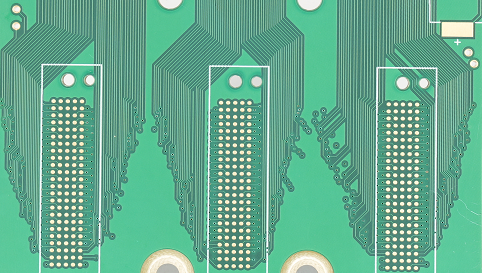
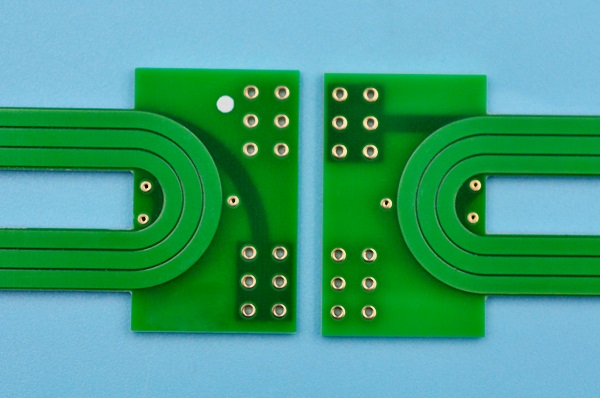
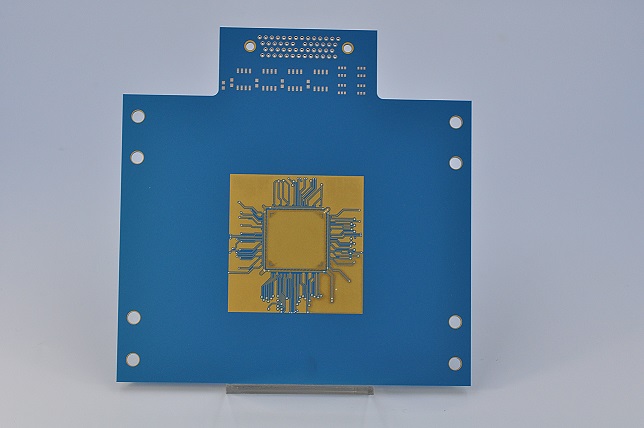
Additionally, these signals will be affected by board materials, layout, wiring and other factors during transmission. Therefore, a specially designed circuit board is required to ensure the integrity and reliability of the signal. Here is a 4 layers high speed PCB for Iradar device with 50ohm single-ended impedance control.

high speed pcb for Iradar

Features of High-Speed PCB

  • High frequency
  • Low permittivity and low loss factor
  • Multilayer design
  • Strict impedance control
  • High-precision manufacturing
  • Low noise characteristic
  • High density circuit layout (micro-vias)
  • High performance

What is Considered High-Speed PCB Design?

High-speed PCB design focuses on managing the complexities that come with high-frequency signals and fast switching. Key considerations include:

– Signal Integrity: Ensuring signals travel without distortion or loss.

– Power Management: Distributing power effectively to minimize noise and voltage drops.

– Heat Handling: Managing heat from high-speed components to prevent overheating.

– Impedance Matching: Keeping impedance consistent to reduce signal reflections and loss.

– Differential Pair Routing: Reducing EMI and crosstalk by routing complementary signal pairs together.

This type of high speed pcb design requires a solid understanding of electromagnetic principles, advanced simulation tools, and precise manufacturing techniques. For those new to high-speed PCB design, EBest Circuit (Best Technology) offers expert guidance and solutions.

What’s the Best Material for High-Speed PCB Design?

Choosing the right material for high speed pcb is vital for maintaining signal integrity and achieving optimal performance. The material impacts the board’s dielectric constant (Dk), loss tangent, and overall signal quality. Common materials include:

– FR4: Widely used but not ideal for very high frequencies due to higher loss tangent.

– Rogers (RO4000 series): Preferred for high-speed designs thanks to its low dielectric constant and loss tangent.

– Teflon: Excellent for high-frequency applications but more expensive and harder to process.

Selecting the appropriate material ensures the PCB can handle high-speed signals without compromising performance.

Where is the High-Speed PCB Commonly Used in?

High-speed circuit boards are widely used in signal transmission applications, the typical fields are including:

1. Communication equipment – such as 5G base stations, optical fiber communication equipment, etc.

2. Data center – like high-performance computing, storage servers, etc.

3. Consumer electronics in our daily life – high-end smartphones, tablets, gaming devices, etc.

4. Aerospace and military – high speed are always used in high-end devices. For example, radar, navigation systems and other equipment with high reliability requirements.

What is the 3H Rule in High Speed PCB Design?

The 3H rule is a guideline suggesting that signal traces should be spaced at least three times the height of the dielectric (3H) between the signal layer and the adjacent ground or reference layer. This helps minimize crosstalk and maintain signal integrity, particularly for high-speed digital signals with rise times of 1 ns or less. Key aspects include:

– Trace Spacing: Keeping traces apart by at least 3H reduces electromagnetic coupling and interference.

– Signal Integrity: Adequate spacing helps maintain clear signals in high-speed circuits.

– Effectiveness: This rule is especially beneficial for fast digital signals, reducing the risk of crosstalk and interference.

For instance, if the dielectric height between the signal layer and the reference layer is 0.2 mm, traces should be at least 0.6 mm apart to follow the 3H rule.

How to Design a High-Speed Board?

Designing a high-speed PCB involves several strategies to ensure effective signal transmission, power distribution, and minimal EMI. Here’s a step-by-step approach:

Component Placement and Layer Stack-Up

Place high-speed components to minimize signal paths and interference. Group related components to simplify routing. In addition, create a layer stack-up that supports controlled impedance and reduces signal loss. Use ground planes between layers for a return path for high-frequency currents.

Trace Routing and Impedance Control

Keep high-speed traces short and direct, avoiding right-angle bends. Use microstrip or stripline configurations for controlled impedance and minimal noise. For impedance control, calculate and ensure consistent impedance for traces. Use differential pair routing for high-speed signals to reduce EMI and crosstalk.

High Speed PCB: How to Design It?

Power Distribution and EMI Mitigation

Use decoupling capacitors near high-speed components to filter noise and stabilize the power supply. Design a robust power distribution network to minimize impedance and ensure stable voltage. And employ proper grounding and shielding techniques. Route high-speed signals on inner layers between ground planes to reduce EMI and provide a consistent return path.

Simulation and Testing

Use signal integrity analysis tools like SI or PI to simulate the PCB layout, predicting signal behavior and identifying potential issues. Analyze aspects like eye diagrams to assess signal quality.

High-speed PCB design is a complex but rewarding endeavor that ensures your electronics perform efficiently in high-frequency environments. By understanding the fundamentals and applying the right techniques and materials, you can create robust, high-speed boards. EBest Circuit (Best Technology) is here to assist you with expert advice and solutions for your high-speed PCB needs.

What Are the Differences Between Active and Passive Components?

July 3rd, 2024

In PCB electronics, components are classified into two main categories: active and passive components. Understanding these differences is crucial for anyone working with electronic circuits. Active components control electricity flow and require an external power source. Passive components do not control electricity and do not need an external power source.

What are active and passive components meaning?

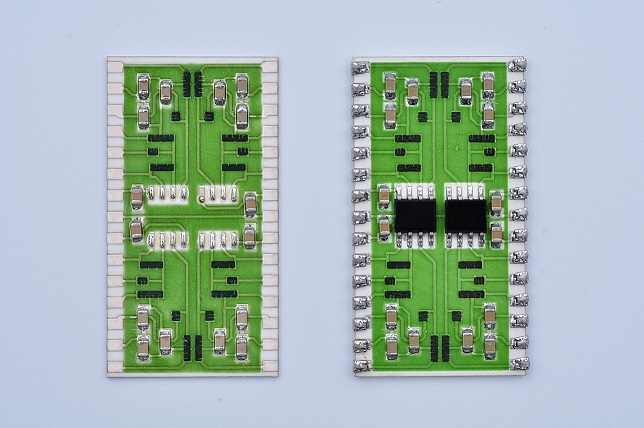
Active and passive components, simply say, the device that needs an energy (electrical) source is called an active device, and the device that does not need an energy source is a passive device. Active components, such as transistors and diodes, require external power to function. They can control the flow of electricity. Passive components, like resistors and capacitors, do not need external power. They cannot control electrical flow but can store, resist, or filter energy. Both passive and active components are common useful in PCB assembly and SMT technology.

Active components play a dynamic role in circuits. They can amplify signals, switch currents, and perform various complex functions. These components rely on an external power source to operate and influence the behavior of the circuit. For instance, a transistor can amplify a weak signal, making it stronger and more useful for further processing.

What Are the Differences Between Active and Passive Components?

Passive components, on the other hand, are more static in nature. They cannot amplify signals or control current flow but are essential for other functions like energy storage and signal filtering. Resistors, capacitors, inductors, and transformers are common examples. Each of these components has a specific role in maintaining the stability and functionality of an electronic circuit.

What are the key differences between active and passive components?

The main difference between active and passive components is their ability to control electricity. Active components can amplify signals and perform complex tasks. Passive components can only store, resist, or filter energy. They cannot amplify signals or control current.

Active components are energy-dependent. They require an external source of power to function and can influence the flow of electricity within the circuit. For example, an integrated circuit (IC) can perform multiple functions like amplification, switching, and signal modulation, all of which require external power.

Passive components, in contrast, do not require an external power source. They can only perform their functions passively. For instance, a resistor can limit the current flowing through a circuit without needing additional power. Similarly, a capacitor can store electrical energy and release it when needed, all without external energy input.

Common active components in electronics

Active devices are the main components of electronic circuits. From the physical structure, circuit function and engineering parameters, active devices can be divided into discrete devices and integrated circuits.

1. Discrete devices

  • Bipolar transistor, generally referred to as transistor or BJT
  • Field effective transistor
  • Thyristor
  • Semiconductor resistors and capacitors – resistors and capacitors manufactured by integrated technology are used in integrated circuits.

2. Integrated circuit

Integrated circuit can be divided into analog IC and digital IC. Analog integrated circuits mainly deal with continuous analog signals, such as sound, light, temperature, etc., and retain the continuity and accuracy of the signal through amplification, filtering, mixing and other operations. In contrast, digital integrated circuits are used to process discrete time digital signals, convert the signal into binary digital form, and then perform logical operations and processing.

Basic analog integrated circuit devices generally include:

  • Integrated operational amplifier (operation amplifier)
  • Comparator
  • Logarithmic and exponential amplifiers
  • Multiplier/divider
  • Analog switching circuit (analog switch)
  • Phase lock loop
  • Integrated voltage regulator
  • Reference source
  • Wave-form generator
  • Power amplifier

Digital integrated circuit including:

  • Logic gate circuit
  • Flip-flop
  • Register
  • Decoder
  • Data comparator
  • Driver
  • Counter
  • Shaping circuit
  • Programmable Logic Device (PLD)
  • Microprocessor (MPU)
  • Microcontroller (MCU)
  • Digital signal processor (DSP)

Common passive components in electronics

Passive devices in electronic systems can be divided into circuit components and connection components according to the circuit functions they play. These components are essential for functions like energy storage, filtering, and impedance matching in electronic circuits. The common passive components are including:

Circuit components

  1. Diode
  2. Resistor
  3. Resistor network
  4. Capacitor
  5. Inductor
  6. Transformer
  7. Relay
  8. Key
  9. Speaker
  10. Switch

Connection components

  • Connector
  • Socket
  • Cable
  • PCB (printed circuit board)

Why are active components crucial in modern electronics?

The ability of active components to control and manipulate electrical signals makes them indispensable in a wide range of applications.

In computers, for example, active components such as processors and memory chips perform complex calculations and store large amounts of data. In communication systems, active components amplify weak signals, making long-distance transmission possible. Without these amplifiers, the signal would decay with distance, leading to a decline in communication quality. Power electronics, another key area of modern development, relies heavily on active components. Devices like power converters, inverters, and motor controllers use transistors and integrated circuits to efficiently convert and control electrical energy. This efficiency is crucial for applications ranging from renewable energy systems to electric vehicles.

It’s fair to say that without active components, devices like computers, smartphones, and TVS wouldn’t function the way they do today, and our era of big data wouldn’t be moving as fast as it is today.

How do passive components complement active components?

Both active and passive components are indispensable in a circuit. They depend on each other and complement each other. Without active components, the circuit cannot be activated or perform a specific work. Without passive components, the circuit cannot be controlled and adjusted, nor can it achieve a stable operating state. Such a relationship between the two is like the relationship between the “dynamic” and the “static” of a circuit.

What Are the Differences Between Active and Passive Components?

For example, in an audio amplifier circuit, the power supply and amplifier are the active components, and the load and resistance are the passive components. The power supply provides energy, the amplifier amplifies the signal, and controls and limits it through load and resistance, and finally realizes the amplification and regulation of the audio signal. In signal processing, inductors filter out high-frequency noise and protect sensitive active components from interference. Transformers, on the other hand, enable efficient power transfer between different parts of the circuit, allowing active components to operate within their optimal voltage range.

Comparing the Energy Requirements of Active and Passive Elements

Active components need an external power source to function. They consume energy during operation. Passive components do not need external power and generally do not consume energy, except for minor resistive losses. This difference impacts the design and efficiency of electronic circuits.

Active components, such as transistors and integrated circuits, rely on external power to operate. This power requirement means that active components consume energy during their operation. The amount of energy consumed depends on the specific component and its application. For instance, a power amplifier consumes more energy than a simple transistor switch.

Passive components, in contrast, do not need external power to function. They operate solely based on the electrical energy present in the circuit. Resistors, capacitors, and inductors do not consume significant energy, except for minor resistive losses in resistors. This low energy requirement makes passive components more efficient in certain applications.

What Are the Differences Between Active and Passive Components?

The difference in energy requirements between active and passive components impacts the overall efficiency of electronic circuits. Designers must carefully balance the use of active and passive components to achieve optimal performance and energy efficiency. For example, using passive filters instead of active ones can save energy in low-power applications.

Active and Passive Component Images and Symbols

Recognizing symbols are essential for reading and designing circuit diagrams. They provide a visual representation of the components and their functions, helping designers understand the overall structure and operation of the circuit. Recognizing these symbols is a fundamental skill for anyone involved in electronics. Here is a detailed images and symbols listing of common active and passive components.

Above all is the introduction to passive and active components, hope it is useful for every engineers. EBest Circuit (Best Technology) is a professional PCB and PCBA manufacturer in Asia. We have our own factory in China and Vetnam. Welcome to contact us if you have any questions about components and PCB assembly.

Your Reliable LED PCB Board Manufacturer – EBest Circuit (Best Technology)

June 27th, 2024

Nowadays, LED lighting has become increasingly popular in our daily life. With its rapidly rise in popularity, the term LED PCB has become commonplace. LED PCB also referred to as LED circuit board, LED aluminum PCB, or simply LED PCB board. Today, our team will share some informational knowledges about LED PCB circuit board, let’s keep reading if you are interested!

What is a LED PCB Circuit Board?

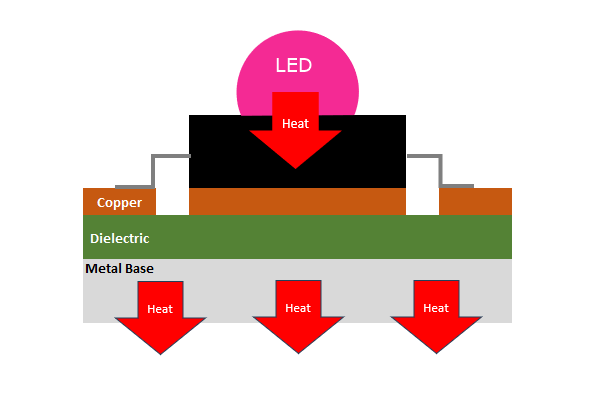
A LED PCB circuit board is a unique type of board crafted to hold and connect light-emitting diodes (LEDs). They are specially designed for lighting applications, like LED car headlights, pool lighting, UV LED, hotel lighting, grow light, high bay lights, stair lights, supermarket lighting, street light, etc. They are used almost everywhere. These boards provide the support and connections needed for LEDs to function efficiently and last longer. They are crucial in areas like lighting, automotive, and electronics, thanks to their ability to manage heat effectively and enhance the lifespan of LEDs.

What are the Different Types of LED PCB?

LED PCB boards are preferred over traditional lighting methods like fluorescent and incandescent bulbs. There are in total five types of LED PCBs, each designed for specific applications:

  • Aluminum based LED PCB

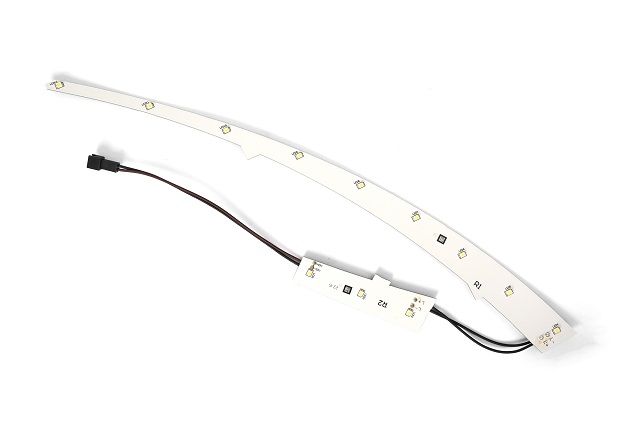
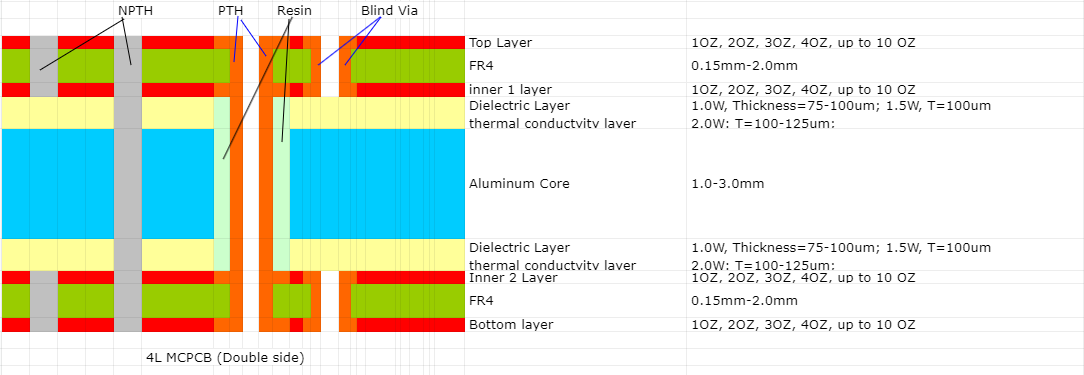
An LED PCB board, often made of aluminum alloy, serve as the base for mounting LEDs. This is the most common type of LED PCB, since it has good thermal management and cost-effective compared to other materials. The thermal conductivity of aluminum can be 1.0-3.0W/m.k, it can meet the almost heat requirements of low-middle power applications, like streetlights and floodlights. Additionally, EBest Circuit (Best Technology) developed a new product called semi-flexible aluminum PCB for specific device. It can be bent and folded when necessary.

  • Copper core LED PCB

Copper core LED circuit board can be divided into two types: normal copper core LED PCB and thermoelectric separation copper-based LED PCB. The copper material has higher thermal conductivity than that of aluminum, and it can up to 400W/m.k when made by thermoelectric separation technology. Copper based LED PCB board commonly used in high power devices like new energy vehicles.

  • Ceramic LED PCB

Ceramic LED PCB boards are made from ceramic substrates like aluminum oxide (Al2O3) or aluminum nitride (AlN). They have superior thermal management, and it can withstand extreme environment when used in high-temp and low temperatures. Ceramic substrates can handle high power and thermal cycling better than other materials, making them ideal for automotive, aerospace, and high-power LED applications.

  • FR4 LED PCB

FR4 LED PCB boards are made from woven fiberglass cloth with an epoxy resin binder, which provides good mechanical strength and insulation properties. FR4 is a widely used material for general-purpose PCBs due to its cost-effectiveness and versatility. While it has lower thermal conductivity (around 0.3W/m.k) compared to aluminum or copper, FR4 LED PCBs are suitable for low to medium power applications where thermal management is less critical. These PCBs are commonly used in consumer electronics, LED displays, and indoor lighting.

  • Flexible LED PCB

Flexible LED PCB boards are constructed using flexible plastic substrates like polyimide or polyester. This flexibility allows the PCBs to be bent, folded, and shaped to fit various applications. Flexible LED PCBs are ideal for products that require dynamic or complex designs, such as wearable electronics, flexible displays, and medical devices. Despite their lower thermal conductivity compared to rigid PCBs, flexible LED PCBs offer unique design advantages and are increasingly used in innovative LED applications.

What are the Benefits of Using Aluminum LED PCB Boards?

Aluminum LED PCB boards offer numerous advantages that other materials cannot achieved.

1. Better Heat Management: LED PCBs, particularly aluminum ones, help in cooling LEDs, preventing overheating and extending their lifespan.

2. Compact and Light: These boards are small and lightweight, making them perfect for applications with space and weight constraints.

3. Dimensional stability: Aluminum LED PCB board has good dimensional stability compared with flexible LED PCBs. And it has low CTE during the manufacturing.

4. Cost-Effective: Producing aluminum LED PCBs is relatively affordable, making them a budget friendly option for various applications.

5. Versatile: Available in different shapes and sizes, Aluminum LED PCBs can be customized to meet specific needs, enhancing their usefulness in various scenarios.

The Structures of a LED PCB Board in Manufacturing?

A LED PCB is similar to traditional rigid board, the only one difference is the LED mounting on the pads. Herein, we listing the basic composition of a LED pcb board, let’s see it together.

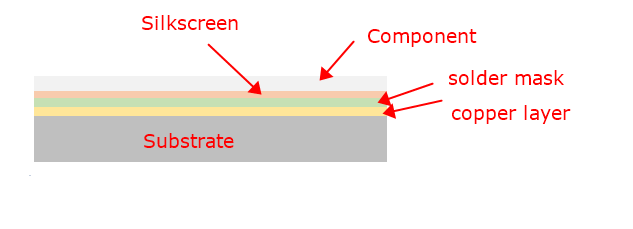
1. Substrate – The base of the PCB, which can be flexible (like polyimide), metal alloy (aluminum, copper), or ceramic, depending on the required thermal performance.

2. Copper foil – A thin layer of copper is used for forming the circuit paths on the PCB.

3. Solder mask – This is a protective layer covers the copper paths to prevent oxidation and short circuits. It also aids in SMT (surface mounted technology) soldering.

4. Silkscreen – Used to print labels, logos, vendors, symbols, and pick and place on the PCB for easy identification during assembly.

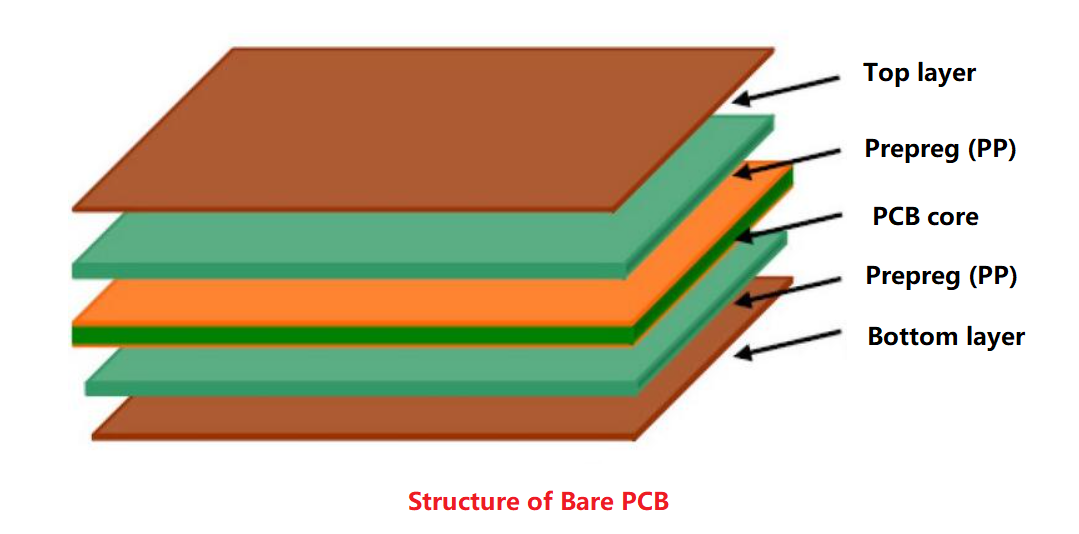
5. Adhesives – Aiming to bond different PCB layers, different material used different adhesive, always are prepreg (PP).

6. LEDs: The main components mounted on the PCB, available in various sizes, colors, power ratings, voltages and so on.

Your Reliable LED PCB Board Manufacturer – EBest Circuit (Best Technology)

EBest Circuit (Best Technology) stands out as a leading manufacturer of high-quality LED PCB boards. We offer a wide range of products and services to cater to various needs. With extensive experience and expertise in the industry, we are committed to providing reliable and cost-effective solutions.

  • Advanced Facilities

We are equipped with advanced machinery and technology, ensuring precision and efficiency in production.

  • Experienced Team

Our skilled professionals are dedicated to delivering topnotch LED printed circuit boards. Most of our core members has more than 10 years-experience in the PCB manufacturing.

  • Quality Assurance

We have passed ISO9001, ISO13485, IATF16949 certifications, and integrated them into our daily manufacturing process. These strict quality control measures can make sure every product meets the highest standards of industry.

  • Customization

We offer tailored customized LED PCB board solutions to meet customer specific requirements.

  • Competitive Pricing

EBest Circuit (Best Technology) has our own factory in China and Vietnam, we can provide most affordable solutions without compromising on quality.

Choosing EBest Circuit (Best Technology) means opting for excellence, reliability, and superior service. Partner with us for your LED PCB needs and experience the difference we bring.

PCB Design for PICE Card, Industrial PCB Design Cases

June 25th, 2024

EBest Circuit (Best Technology) has been a leader in PCB manufacturing and design for over 17 years. Our R&D team allows us to offer customers quick and valuable PCB design solutions. Here, we share one of our industrial motherboard design for PICE card for your reference.

PICE card

[1]: Main chip: XCKU11P

[2]: 30A maximum current

[3]: Single pair differential line, 10G optical network

[4]: 14 layers PCB

If you need a custom industrial PCB design, please feel free to contact us.
Video Decoder Hardware PCB Design Case Example

June 25th, 2024

A video decoder PCB design comprises several critical components that ensure efficient video signal processing. It includes the video decoder IC, memory modules (such as DDR RAM), power management units, and connectors for video input and output. You can see a video decoder pcb design example as following:

Video decoder

[1]: Xlinx: XC7K325T, Hisilicon: HI3521DV100_VI

[2]: Single pair differential line, 10G optical network, memory of DDR4

[3]: 12 layers PCB

Why choose us?

We are a China based fabricator with over 17 years experience, what we provide not only including PCB design service, but also PCB fabricating, PCB duplicating and component sourcing and so on. Choose EBest Circuit (Best Technology) you can enjoy:

  • Professional engineer evaluation
  • DFM analysis
  • One-time successully on prototyping
  • SI analysis of signal integrity
  • Electromagnetic compatibility (EMC) analysis

Contact us if you have any questions.

High Speed PCB Design Guidelines, PCB Camera Design Case

June 25th, 2024

When designing high-speed PCBs, several critical factors must be considered to ensure optimal performance. These include signal integrity, impedance control, and minimizing electromagnetic interference (EMI). Below is an ultra high speed camera PCB solution made by EBest Circuit (Best Technology):

An ultra-high-speed camera rigid-flex circuit board

[1]: XCKU060 chip

[2]: 20A maximum current

[3]: Four DDR4 channels

[4]: 20 layers PCB

High Speed PCB Design Guidelines, PCB Camera Design Case

Camera PCB design considerations:

1. When the Camera adopts a connector: when the MIPI differential signal passes through the connector, the adjacent differential signal pairs must be isolated using GND pins; If it is not convenient to punch holes, the spacing between the difference pairs is at least 15mil.

2. If there is a reserved test point for the Camera connection seat, it should be close to the connection seat, and the Stub on the cable should be as short as possible.

3. Decoupling capacitors of AVDD/DOVDD/DVDD power supply need to be placed as close as possible to the Camera connection base.

4. The Camera layout needs to be far away from high-power radiation devices, such as GSM antennas.

5. CIF/MIPI and other signals, if there is a board to board connection through the connector, it is recommended that all signals be connected with a certain resistance value (between 2.2ohm and 10ohm, depending on the SI test), and reserve TVS devices.

EBest Circuit (Best Technology) offers one-stop solutions for our values customers. And we provide free technical support for our customers. If you have similiar requirements, welcome to contact us at any time!

Differential Signal PCB Design, Fiber Optical SFP Module

June 25th, 2024

PCB design is one of an important process before the PCB manufacturing, it determines the overall performance of the whole product. We are an experienced PCB design and manufacturing vendor, with our professional technical team and advanced evaluated tools, we can make sure the PCB design one-time success. Today, we shared a example of fiber optical SFP modules design:

32X100G(QSFP28) large capacity convergence shunt

[1]: Marvell: 98CX8522

[2]: Single pair differential line, 25G optical network

[3]: 16 layers PCB

How to design a SFP optical module PCB?

SFP optical module interface PCB design depends on many aspects, including interface signal processing, timing control, power management and so on.

1. Determine the interface standard: SFP optical module interface standards, such as SFP, SFP+, QSFP and so on, you need to choose the appropriate interface standard according to the specific needs.

2. Choose the chip solution: According to the interface standard, choose the appropriate chip solution, usually including constant voltage source, amplifier, comparator, clock generator, EEPROM, etc.

3. Signal processing: For receiving and sending signals, filtering, amplification and comparison are required to ensure signal quality and stability.

4. Timing control: The timing and frequency of the clock signal need to be accurately controlled to ensure the correctness and stability of data transmission.

5. Power management: SFP optical module interface requires multiple power supplies, including Vcc, VCC-TX, VCC-RX, etc. Reasonable power management is required to ensure the stability and reliability of the power supply.

6. PCB design: According to the above requirements, PCB design is carried out, considering signal isolation, layering layout, status separation, signal integrity and other factors.

Feel freely to send message us if you are interested in PCB design.

Motherboard Network Adapter PCB Design Solution Example

June 25th, 2024

A motherboard network adapter PCB comprises several key components, each playing a vital role in ensuring effective network connectivity. And between them, the PCB is the most important. Now, best technology is sharing an example about motherboard network PCB design.

10G/100G large capacity convergence shunt

[1]: Marvell: 98DX8548

[2]: 21A maximum current

[3]: Single pair differential line, 10G and 25G optical networks

[4]: 10 layers PCB

What are the considerations before PCB design?

PCB design involves several steps and some considerations need to be noticed. If you are a designer, think about these points before starting the design.

  • Manufacturing: prototyping study or mass production.
  • What it will be used in?
  • What kind of production technology it will used?
  • Material?
  • How many layers you want?
  • Whether need to do impedance control?

EBest Circuit (Best Technology) has more than 17 years in this industry, we have served for over 1200 customer all around the world. Our goal is to provide customer with best solutions and top notch quality products, and it is luckily that we did a good job. If you want to work with us or need a PCB manufacturer in Asia, contact us right now!

High Speed PCB Design, Industrial PCB Case Sharing

June 25th, 2024

A high-speed circuit handles signals that switch quickly or operate at high frequencies, typically above 50 MHz, though some advanced systems may go into the GHz range. EBest Circuit (Best Technology) is a one-stop PCB manufacturer that covers pcb design, pcb layout, pcb diagram, DFM, SI, PI analysis, PCB manufacturing and so on. In the following, you can see a high speed pcb design solution for industrial switch that we cooperated with our customer.

32 x 400GE industrial switch

[1]: Marvell-400G chip

[2]: 200A maximum current

[3]: Single pair differential line 56G optical network

[4]: 24 layers high power PCB

What’s the Best Material for High-Speed PCB Design?

Choosing the right material is vital for maintaining signal integrity and achieving optimal performance. The material impacts the board’s dielectric constant (Dk), loss tangent, and overall signal quality. Common materials include:

  • FR4: Widely used but not ideal for very high frequencies due to higher loss tangent.
  • Rogers (RO4000 series): Preferred for high-speed designs thanks to its low dielectric constant and loss tangent.
  • Teflon: Excellent for high-frequency applications but more expensive and harder to process.

Selecting the appropriate material ensures the PCB can handle high-speed signals without compromising performance.

For the PCB design service, we can make sure the one-time success to save much time and money for customers. Our goal is to work with customers together and win more market with our clients. Just feel free to contact our technical team if you have similiar designs.

Network Motherboard Design for Network Switching Cases

June 25th, 2024

Best technology offers numerous PCB design solutions for our customer, from HDI design, high speed device PCB design, AI optical module design and network motherboard design for network switching. Below is one of our network motherboard design solutions:

An ATCA network switching motherboard

[1]:BCM88XXX, BCM55XXX chips

[2]:60A maximum current

[3]:8口10G optical network

 [4]:  8 x DDR3 chips

Network Switching Differential Pair Design Guide

  • Each TrxP/TrxN signal group (where xcx0-3) shall be routed as a differential pair. This includes the entire length of wiring processing.
  • The individual differential correspondences are packed together as tightly as possible. Impedance calculations are usually started by selecting the smallest line blank (4-5mil). The tracking width is then adjusted to achieve the necessary impedance.
  • Differential line group resistance of Ethernet is calculated at 100 ohms.
  • In general, when routing the four differential pairs of the Gigabit Ethernet to the r45 connector, at least one pair will pass through to the opposite outer layer.
  • Priority should be given to differential pair wiring. Terminals should be added after the routing is determined
  • The values of all resistance terminals in the Ethernet front end should be 1.0% tolerance
  • All capacitor termination Ethernet front ends in the module should have strict tolerances and high quality product media (npo)

You are welcome to contact us if you want to get your DIY network switching PCB designs.